Episode: 462
What Makes a Good Life? The Science of Better Relationships with Dr. Nicholas Epley
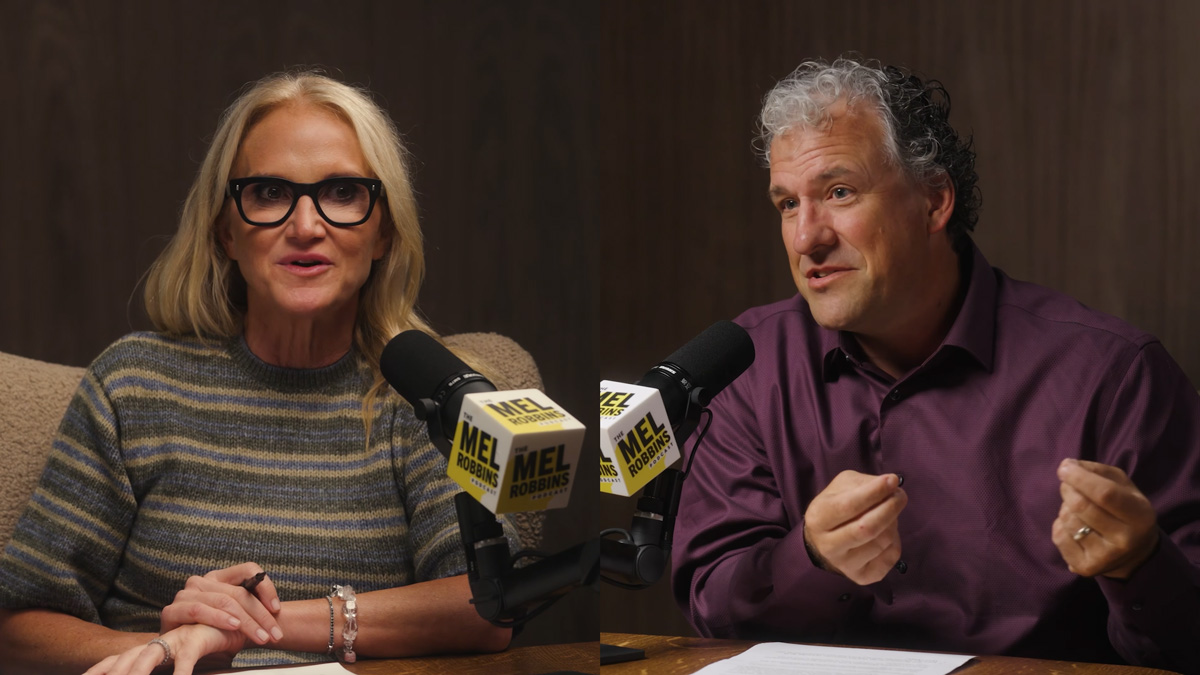
with Professor Nick Epley
In this episode, you’ll learn the secret to a better, happier life: connecting with the people around you.
Dr. Nicholas Epley is a psychologist and behavioral scientist at the University of Chicago who has spent years studying how we connect with other people, why we so often get it wrong, and what we miss out on when we don't say something in these moments: friends, lovers, colleagues, and magic.
His research has found that happiness isn't just about the occasional big moment in life. It's about all the little good moments you have every day.
Dr. Epley studies why we so often pass up the tiny moments of connection around us. And a lot of it comes down to the things we tell ourselves will happen: They probably don’t want to talk to me. I’ll just bother them. This is going to be awkward.
But his research shows that when people start those conversations - it goes better than they expected.
Dr. Epley says we’re like magnets. How you approach someone changes how they respond. You smile, and they’re more likely to smile back. You share something about yourself, and they’re more likely to open up, too. And that creates more happiness, connection, and less loneliness.


Social connection isn’t something that just happens to us. It’s a choice that we make.
Professor Nick Epley
All Clips
Transcript
Nick Epley (00:00:00):
Every friend you have was at one time a stranger next to you in the grocery line or in class.
Mel Robbins (00:00:06):
Today on the Mel Robbins Podcast, one of the top business school professors from the University of Chicago, Dr. Nick Epley is here to teach you how to connect with anyone.
Nick Epley (00:00:19):
You've got more power than you think you do to reach out and connect and engage with other people.
Mel Robbins (00:00:24):
And communicate with more confidence and ease.
Nick Epley (00:00:28):
Our social anxiety is often misplaced. It's often wrong. Social connection isn't something that just happens to us. It's not something magical that just occurs. It's a choice that we make. When in doubt, reach out.
Mel Robbins (00:00:48):
Professor Nick Epley, welcome to the Mel Robbins Podcast.
Nick Epley (00:00:51):
Thank you so much for having me here, Mel.This is wonderful.
Mel Robbins (00:00:53):
I am so excited to talk to you. I've been a fan of your work for almost a decade. And here's where I want to start. What should the person who's listening get excited about based on all the research you're going to share and all of the practical takeaways that you're going to give us? What's exciting about what we're going to talk about?
Nick Epley (00:01:15):
So I think there are two things, at least from my research that I think are exciting for me, things that have changed the way I live my life. One is that I think the takeaway from our research is fundamentally empowering. You've got more power than you think you do to reach out and connect and engage with other people. And second is that other people are often better than you might imagine them to be. What our research suggests, we try to understand why is it that highly social creatures like us so often are choosing not to reach out and engage with each other. And what we find over and over again is that there are lots of opportunities that we have to reach out and connect that we choose not to take. And if you take some of those opportunities, those opportunities that you're pessimistic about, it makes your life better.
(00:01:59):
And it makes you think better of other people too because other people are kinder and nicer often than you think. And I think that's both empowering and uplifting. It's powerful.
Mel Robbins (00:02:06):
I agree. It's very powerful. And especially in this particular moment when people feel like they don't know their neighbors and that the world is so divided that having your research remind us that no, actually people are really good and reaching out to them makes a huge difference in your life and connecting with people.
Nick Epley (00:02:26):
They can respond well to us for sure. Social connection isn't something that just happens to us. It's not something magical that just occurs. It's a choice that we make. It's a choice we make over and over again over the course of any given day to reach out and engage and connect with somebody or to hold back and avoid them. And all too often we find in our work we hold back a little too often. And if you recognize why it is we're holding back, and particularly when we're doing this mistakenly, you can learn to reach out a little more and create better connections with other people.
Mel Robbins (00:02:56):
So what ways might the daily life of the person who's listening change if they really take to heart what you're going to recommend that we do?
Nick Epley (00:03:04):
Yeah. So I think lots of small ways. These are not massive big changes. The way you change your life is in the moments of your life, I think, not in the massive big impacts because it's the moments of our lives that really determine our happiness, our wellbeing. Happiness is really like a leaky tire. You kind of get used to everything. You pump it up with this great thing and then you get used to it and it deflates. We adapt to almost everything. And so the secret to living a consistently better, happier life that's better connected to other people is to reach out and engage routinely, even in small moments. So turn into the person who sits down next to you on the train or the park bench or walks up next to you on the sidewalk and smiling and saying hello, starting a little conversation when you could.
(00:03:47):
Once you're talking, having a little deeper conversation than you might otherwise have. If you've got a kind thought, you pass it along to somebody. You notice somebody a second time, you go up and say hello, you ask their name, you write it down so you remember it the next time. When you feel grateful, you express it rather than keeping it to yourself. When you need help, you reach out and ask for it. When you see somebody who needs help, you reach out and offer it to other people. And those little moments, you string those together. You've got one of those in the morning, that's a good morning. You got one in the afternoon, that's a good afternoon. You got one in the evening, that's a good evening. That becomes a good day. You string those days together, you get a good week, you string those weeks together, you got good months, eventually you get a good life.
Mel Robbins (00:04:26):
I love that you just said that the secret to living a happier life is really in these small little moments.
Nick Epley (00:04:34):
It's in the moment. So it turns out the better predictor of your positive mood is not the intensity of the positive experiences you have, it's the frequency of them. And that's a longstanding finding.
Mel Robbins (00:04:45):
What I like about this, and here's why I want to nail this point for the person that's listening. Sometimes when you hear about these small changes and you're struggling financially or somebody that you love is dying or you just got a cancer diagnosis or you can't find a job, it feels a little bit tone deaf and like an eye roll. Really talking to a stranger is somehow going to help. But when you put it in the context of the fact that as a human being, if you're drowning in life, you need a raft and a life jacket that keeps you above the waves. And is that what these small social interactions help you do?
Nick Epley (00:05:23):
Yeah. And they're not necessarily small. I think that's the point. They have a bigger effect on us than you think.
Mel Robbins (00:05:28):
Tell me what you mean.
Nick Epley (00:05:28):
That moment that you have a nice conversation with somebody on the train ride into the University of Chicago like I do often most mornings, that can make me feel great for most of the day. That can be a conversation I remember for years afterwards. I remember having a conversation with Jalen years ago. He's sitting up on the top level of the car, handsome young man wearing a bow tie. I sit down and I ask him, "What's your story? You're looking sharp today. You're off to do something important. What's your story?" And he told me this most amazing story about how he got to where he is today, kind of hardscrabble upbringing. He's now in an internship on the north side of town at Northwestern. I mean, it was a really amazing story. I remember that for years and years and years. Plus those little moments also can become big over time.
(00:06:17):
Every friend you have was at one time a stranger next to you in the grocery line or in class. So not only do these moments matter for our wellbeing and outsized ways in the moment, but they're also the thing that creates social connections that last and memories that last.
Mel Robbins (00:06:33):
That's one of the things that I think is so magical about life. Just stop and consider some of the most favorite people of your lifetime you haven't even met yet, and they might be standing in line -
Nick Epley (00:06:42):
Right there.
Mel Robbins (00:06:43):
Right there at the grocery store today.
Nick Epley (00:06:45):
How many of your listeners do you think have a spouse or a best friend who they could have not talked to or could have missed that makes it seem almost magical? And then you can ask yourself, how many other best friends have you avoided because you haven't said hello to the person sitting next to you? How many people like that have you missed?
Mel Robbins (00:07:06):
Well, that's how I met my husband. I ordered a bourbon on the rocks to go. I wanted them to put it in a plastic cup at a bar.
Nick Epley (00:07:13):
If you're driving home.
Mel Robbins (00:07:14):
No, I was going to take the subway, go talk to somebody after having my bourbon on the rocks. And I heard a voice behind me say, "That sounds great. Make it too." And I turned around.
Nick Epley (00:07:27):
There you go. Good for him.
Mel Robbins (00:07:28):
Good for me.
Nick Epley (00:07:29):
Good for both of you. That's power.
Mel Robbins (00:07:31):
30 years we're celebrating our anniversary and it might never have happened.
Nick Epley (00:07:35):
When you start thinking about your life in terms of the moments you're living rather than just the big things, you start to see things that you can do. When we ask people in our experiments, think about yesterday, just think about all the hours you were awake yesterday. And for every hour, could you have reached out and been a little more social in that hour? Said hi to somebody, walked with somebody to get coffee, had a deeper conversation, called an old friend while you were commuting rather than keeping to yourself, had a drink with somebody else at the end of the day rather than by yourself, watched the sports game that night with a neighbor rather than sitting alone. On average, out of those 14 hours roughly that they were awake, on average they said they could have been a little more social about seven of those hours.
Mel Robbins (00:08:18):
Seven?
Nick Epley (00:08:18):
Half of the day. Yeah. Those are lots of opportunities that people are otherwise overlooking. That's a lot of power that you have to change your moments if you choose to take them. And I think that's the thing that's most interesting to me about our research, that people are happier when they reach out and connect with other people. That's something psychologists have known for decades and decades how important social connection is. What's interesting to me is if reaching out and connecting with other people is so darn good, why are we spending half of our day choosing not to do it? Why are we missing so many of these opportunities?
Mel Robbins (00:08:54):
Do you think it's because we don't understand the profound impact on our wellbeing and happiness so we don't prioritize it?
Nick Epley (00:09:02):
I don't actually think that's the big barrier.
Mel Robbins (00:09:03):
What's the big barrier?
Nick Epley (00:09:04):
It's that we don't understand how much other people appreciate it. We don't understand how positively somebody else will respond when
Mel Robbins (00:09:11):
You
Nick Epley (00:09:11):
Turn to them and say, "Hey, I love those glasses. What's the brand? Those look awesome." Or, "Hey, make that two bourbons rather than one." Or, "I love your socks. Those are great." Or, "You've meant so much to me in my life. I can't believe it's taken me 30 years to tell you." Or, "You're going through a horrible moment right now and I don't know what to say to you, but I would just like to give you a hug at this moment." We fail to appreciate how much those moments are going to turn out well, and therefore we're overly reluctant. We're pessimistic about other people, that's the problem.
Mel Robbins (00:09:43):
Professor Epley, what, based on all your research, do you think we get wrong about other people?
Nick Epley (00:09:50):
I think the big thing, and this is a subtext that runs through all of our research, is that we misunderstand the power of reciprocity. We tend to think about social interactions and other people as if we're marbles. We bring them together, there's no necessary attraction to each other. The outcome is going to depend on a bunch of independent factors, but there's no meaningful connection between us. In fact, we're more like magnets. The way I reach out to you has a huge effect on how you respond to me. It really constrains your behavior, right? If I say hi to you, what do you do back to me?
Mel Robbins (00:10:23):
Hi.
Nick Epley (00:10:24):
If I wave to you, what are you back to me?
Mel Robbins (00:10:26):
Wave.
Nick Epley (00:10:27):
If you want more highs and waves in your life, what do you do? Wait for them to come to you. No, you can reach out and elicit them from other people. And I think that's what people really misunderstand. So they think if I say, talk to this stranger sitting next to me on a train or in a bar or at a game or on a plane or whatever, anything can happen. I don't know what's going to happen, right? Almost anything, not almost anything. Mostly when you reach out to connect with other people in positive ways, they tend to reach back to you in ways that are consistent with that. The norm of reciprocity is the most dominant social norm on the planet. It shows up everywhere on earth. It governs our social relationships and being overly pessimistic, not realizing that when I reach out to you, you're mostly going to reach back, not always, but mostly going to reach back.
(00:11:13):
I think that's the biggest misunderstanding.
Mel Robbins (00:11:16):
I love that because what I really got as I was listening to you is how powerful we all are. If you've ever had an experience where you go to a concert and you're just bringing great energy to the section or you're at a baseball game and you're sharing your peanuts and you're talking to the people around you, there becomes this enerergetic vibe that you can create. And I also think about a simple example of if you've ever walked into, nobody goes to a mall anymore, but if you ever used to go to a mall, there's two sets of doors and if somebody gets the first set of doors for you, you don't even think you trip over yourself to hold the other one open for this stranger. Perfect
Nick Epley (00:12:03):
Example. It's
Mel Robbins (00:12:04):
Just part of the wiring and you are making me think about the fact that it's not even how this is going to lift you up through your day and make your day feel a little better, but it also helps you realize that you're actually powerful and you have an impact on other people.
Nick Epley (00:12:20):
We had this experience, this dawned on me, this hit me like a bat to the face years ago. We were in Ethiopia and we've adopted three children over the years, two from Ethiopia and our youngest is from China. And we were going through rural Ethiopia, very rural place. It was clear to us why we needed to get a professional driver given the nature of these roads. And we were taking our children who we just adopted with one of our other biological sons to where they were born to see the place. And we're driving down these roads and I have never in my entire life felt like more of a foreigner. We were driving down, I had the windows down and there were all these people living alongside the road and these mud houses called Tuklus, and they were looking at us as if we were like dead people.
(00:13:14):
Their faces were just totally blank. I felt like a foreign invader coming into the country to take these children away. It was horrifying. And I felt totally empty. It was very troubling. And it occurred to me though, I had this lightning bolt back to the face moment where I went, wait a minute, I'm not smiling at them either. I'm looking at them in the same way they're looking at me. So I decided to try something different. Instead of doing that, I started waving and saying hi and hello. And then I got waves out the window and kids are running out to the road and the driver has to stop because the kids are coming so close so that we can high five as we're going by. Nobody waves, but almost everybody waves back. And I was able to take that moment and seize power that I didn't have to lift other people up just to be nice to them, civil to them.
(00:14:04):
And it also made me realize that, man, I'm maybe walking around in a lot of the rest of my life by not using that power to lift people up. You can make people feel wonderful like that. You can also be a fart in a room too. You can make people feel not so good. You can bring a room down. And once you realize that power of a wave or a kind word or a hello, it becomes kind of addictive. It's hard not to use it.
Mel Robbins (00:14:30):
Wow. And it reminds me of another thing that I shared with the team. I saw that I'm a sucker for feel good stories, and there was one of a little kid who was being raised by a single mom, dad had left, and he was very sad and lonely and did not have a lot of friends at school. It's like six years old, and he started just standing in his front yard waving at neighbors. And they lived in a community like a lot of us do, which feels very weird given how you probably grew up, and maybe as you're listening, you grew up in a neighborhood where you knew everybody and you knew your neighbors' names and maybe you saw your neighbors on the weekends and there were barbecues or whatever, and it doesn't feel like that's the way anymore. And so this little kid would stand in his front yard and just wave.
(00:15:19):
And the neighbor across the street looked surprisingly like Santa Claus, and he was a gentleman that lived alone. And after a couple days of this little kid waving at him, he walked across the street and they became friends. And then this kid started waving at all the neighbors that would drove by, and he gathered together a group of seven or eight senior citizens who became his
Nick Epley (00:15:45):
Adopted
Mel Robbins (00:15:46):
Grandparents. They go to his baseball games, they came to his birthday party, and it all began with a simple wave. And what you're telling us is the power of human connection is so powerful and needed in your life, and it is the antidote to a world that feels discouraging, disconnected, and scary.
Nick Epley (00:16:14):
It is empowering, I think.
Nick Epley (00:16:16):
My youngest Lindsay, who has Down Syndrome, we adopted her from China when she was two, she has no filter on her hello. I mean, she shows me how to live every day. She's the most fun person to go grocery shopping with ever because she says hello to everybody, and that's true at school as well. And as far as I can tell, she is the most popular kid in her school. Everybody knows Lindsay. When I walk around town, everybody says hi to Lindsay. They know her because she says hi to everybody. And we heard this winter, she loves to stay out at recess. She doesn't want to come in. And she knows she has an aide who's wonderful. Maryanne Crisp is her name. She's an amazing human being. She's 80 years old and has stayed out of retirement for a few years to be with Lindsay, but Lindsay knows that Mrs.
(00:17:04):
Crisp will not go up to the top of the ice pile to get her down at recess time. So she'll just sit up there, criss-cross applesauce, and the whole school, the entire third grade will stand out there and chant Lindsay's name to get her come in. It's lovely.
Mel Robbins (00:17:21):
What has your daughter Lindsay, who has Down Syndrome taught you about the power of connection and saying hello?
Nick Epley (00:17:29):
She shows me my data every single day. She shows me the results that I see in our research over and over again because she reaches out to other people positively, and to watch the way people respond to her is so uplifting. We go through the grocery store. It's my favorite. Go down the aisles, everybody's got their resting dead face on, looking at their list and just trying to get this damn thing over with. And she's, "Hello, hello, hello, hello, hello." And to watch people light up, it's almost like they've got a switch on their back that turns them from dead to alive. And she just goes down the aisles flipping people's switches and making them come alive. It's beautiful.
Mel Robbins (00:18:08):
Is it possible for all of us to flip the switch on other people?
Nick Epley (00:18:11):
I think so. I think so. Lindsay's pretty darn adorable. That's a high standard, but I think it absolutely is. I do this all the time. In fact, we find, and this is some brand new research that we just hot off to Pressus. We just analyzed this a few days before we're talking now. We find that people's resting face looks a lot like the face that they make when they're asked to look unfriendly. And the face that they make when they're asked to look friendly, like they want somebody to come up and say hello to them looks very different from their resting face. And when I reach out to people, I've seen this over and over again. I often refer to it as the switch. You turn to somebody and you say hi. They turn to you, their face changes so much they almost look like a different person.
(00:18:57):
We see that in people's behavior, right? You can be very outgoing one moment, very introverted another moment, and you can see that in their faces. Somebody can look very unfriendly one moment. You turn to them and say hi, and they can look like a completely different person if you choose to reach out and flip that switch.
Mel Robbins (00:19:13):
I think that's powerful. One thing I want you to take away as you're listening is really internalize how much power you have, that there is this ability that you have inside yourself if you can absorb what Professor Epley is teaching you and understand that you have the power in your life every day, how you move through your life to activate this life force energy in other people, and then it comes shooting back at you.
Nick Epley (00:19:41):
I think the way to think about this, at least the way the psychologist would think about it is you are other people's situation.
Mel Robbins (00:19:47):
I don't know what that means.
Nick Epley (00:19:52):
I am your context, right? The way you respond in a given situation is determined a lot by how I respond to you. So when I walk into my office and I pass all of my colleagues and the custodial staff and the administrative staff, I am their situation when I walk through. I put them in a moment where either I'm friendly or not, and how they respond is not determined hugely by the type of person they are, it's also determined hugely by the type of situation I've just put them in.
Mel Robbins (00:20:20):
Oh.
Nick Epley (00:20:20):
I say hi to you, you tend to say hi back. That's a huge effect regardless of who you are, that's a huge effect. I am your situation and I can uplift a room or I can be a fart in a room and drag it down too.
Mel Robbins (00:20:33):
Well, I don't want to be a fart in a room.
Nick Epley (00:20:35):
Nobody wants to be the fart.
Mel Robbins (00:20:36):
No, I try to hide those if that's happening. I have a phrase for this.
Nick Epley (00:20:42):
Yeah?
Mel Robbins (00:20:42):
And the phrase that I have, and I don't know if it's attributed to somebody else in leadership research, but I love this, "You bring the weather."
Nick Epley (00:20:50):
Oh yeah, that's great. No, that's all you, Mel, but that is the thing.
Mel Robbins (00:20:54):
You can either be a sunny blue sky with your energy and your warmth and your optimism and your generosity, or you can be a thunderstorm. And we have all dated or worked for or been raised by people who are thunderstorms. We know who these people are. And just the truth of that and what you're talking about in terms of you create these moments for other people too, that is the power of your energetic field, positive or negative, whether you have a resting dead face and you're a human fart walking through the room bringing everybody down, or you are like a life force avenger.
Nick Epley (00:21:37):
The sunshine, yeah.
Mel Robbins (00:21:37):
The sunshine.
Nick Epley (00:21:38):
Yeah, yeah. This is why people love you, Mel. You take arcane ways that academics speak and make it so that people can understand it.
Mel Robbins (00:21:44):
That's beautiful. I'm trying to use it. That's why Professor Epley.
Nick Epley (00:21:47):
No, that's a great way to think about it.
Mel Robbins (00:21:48):
And I don't mean to be disrespectful. I'm just like really respect your research so much that I want to make sure, because I have seen the power of your research fundamentally change my life. And people look at me and say, "Well, she's just that way. She's Midwestern. She's extroverted. She's this, she's that." I decided to be a person who is warm. I decided I wanted connection. I decided that I wanted to walk into the coffee shop every day and have a small relationship with the person I see most mornings.
Nick Epley (00:22:22):
Yeah. You decided you wanted to have all the people who work for you cheer for me when I walked in this morning.
Mel Robbins (00:22:27):
Yes, because you got on a plane and because you took time from your life and you came here to make a difference in the person's life who's listening and in the lives of the people that they share this with. And I wanted you to immediately feel the gratitude, and that's why we do that. That's why we do that.
Nick Epley (00:22:44):
I did. That analogy that you bring the weather is beautiful because the contrast to weather is climate. Climate is the stable trait, right? And I think we often think that people are climate. They're warm or they're cold people and that's stable. And that can be true. We get into habits, but you can also be weather. You can vary widely, and you can also choose to be sunshine.
Mel Robbins (00:23:08):
Now, you know I am a loyal Verizon customer, and now Verizon is rewarding my loyalty. Verizon gives customers money back, epic experiences and incredible deals all year round. And what better time to switch to Verizon than the holidays when Verizon Shine is dropping epic fan moments with NFL and NHL stars, chances to meet Hollywood icons and unique shopping experiences. On top of these unreal events, every month, you also get 3% cash back just for paying your bill. This holiday season, switch to Verizon and snag yourself a once in a lifetime experience plus cash back every month. Find out what you can get just for being a Verizon customer on verizon.com or the Verizon app. Must be 18 plus, no purchase necessary. Additional terms apply. See Verizon Shine for details.
Mel Robbins (00:24:03):
I'd love to have you explain, Professor Epley, what does the data say about being overly pessimistic about other people?
(00:24:13):
How does that impact your life?
Nick Epley (00:24:14):
Yeah. So what it says about
Mel Robbins (00:24:17):
Being
Nick Epley (00:24:17):
Overly pessimistic is that
Mel Robbins (00:24:18):
We're
Nick Epley (00:24:18):
Overly avoidant. We avoid these opportunities too much because we underestimate how well it'll turn out. And I mentioned that kind of the thing we really underestimate about other people is how responsive they can be when we reach out to connect with them, when we try to have a deeper conversation, when we have an opportunity, when we say hello, when we wave to them. We think anything's possible. In fact, you kind of constrain it to be they'll reach back to you in a way that's similar. And I can show you that in the data. Do you want me to show you with
Mel Robbins (00:24:49):
The
Nick Epley (00:24:50):
Visual?
Mel Robbins (00:24:50):
Yes. Yes, professor. Show us.
Nick Epley (00:24:53):
So this is what it actually looks like in terms of the numbers. So here's what we had people do.
Mel Robbins (00:24:58):
Okay.
Nick Epley (00:24:59):
And this is another opportunity I think we have to connect with people that we often choose not to take in conversation, that is we spend too much time in small talk.
Mel Robbins (00:25:08):
Oh, I hate small talk.
Nick Epley (00:25:10):
The word hate and small talk are always conjoined together like Siamese twins for a reason. People tend not to like it. But the question is, if you hate small talk, why do we spend so much time in it? You could go deeper. That's true. You could have a deeper question. The nature of the conversation is up to you. When we ask people to have a deeper conversation than they normally would, I do this. I've done this now with thousands of people. I give them a list of questions, things that they're going to talk about with another person. I do this in an audience of people. Questions like, "If I was going to become a good friend of yours, what would be most important for me to know about you? What are you most grateful for in your life? Can you tell me about it? Can you tell me about one of the last times you cried in front of another person?" So what I do is I put these questions up on the screen and before the conversation, they predict how they're going to feel at the end of that conversation.
(00:25:59):
They then go have the conversation, they come back and they report how they actually feel.
Mel Robbins (00:26:03):
Okay. So in the experiment, you're telling me that I need to go up to a stranger and say, "If I were to be a good friend of yours, what would you need me to know?"
Nick Epley (00:26:14):
So the person you're going to go -
Mel Robbins (00:26:16):
When's the last time you cried? That's correct. This is the icebreaker, professor?
Nick Epley (00:26:20):
We go deep pretty quick. Now the other person's in the room, so they know what's involved. So there's full disclosure. Everybody knows what's going to happen. You're going to have a conversation about these questions.
Mel Robbins (00:26:29):
I still don't want to do it.
Nick Epley (00:26:30):
You don't want to do it, right?
Mel Robbins (00:26:31):
You think it's going to be
Nick Epley (00:26:32):
Weird.
Mel Robbins (00:26:32):
What does the data show about how people feel?
Nick Epley (00:26:33):
I'll show you. So here's what we do. We do a couple of things. First, we ask people how they think they're going to feel. They think it's going to be pretty awkward. Turns out to be much better than they think. But we've also asked people, out of a hundred folks who have gone through this, how many do you think on a scale that went from zero to 10, on a scale from this would be terrible, I wouldn't enjoy this at all, to I'd enjoy this a lot, how many out of those hundred said zero? How many said one? How many said two? How many said 10? I'll enjoy it a lot. So we essentially give people a scale like this, right?
Mel Robbins (00:27:07):
Okay. So he's putting mason jars. If you're saying I'm missing anything, he's putting mason jars out.
Nick Epley (00:27:11):
I want to mason jars. This one says not at all enjoy. That's how I think I'm going to enjoy this conversation. That's maybe a one, that's maybe a two. I'll enjoy it a little more. This is kind of mediocre in the middle of the scale, this third jar. This fourth jar is, I'll enjoy it quite a bit. And this last jar is, I think it's going to be very enjoyable. I'm going to enjoy it a lot.
Mel Robbins (00:27:32):
So people are predicting.
Nick Epley (00:27:34):
They're predicting out of a hundred folks, how many are going to say not at all enjoyable? And they say quite a lot.
Mel Robbins (00:27:44):
Wow. So everybody kind of has the same reaction that I had, which is, I don't think this is going to be fun.
Nick Epley (00:27:50):
That's not going to be so good.
Mel Robbins (00:27:51):
Yes.
Nick Epley (00:27:51):
That's not going to be great. But they also, we ask them, how many are going to say it's going to be somewhat enjoyable? They say, well, fair number of people will say that. How many in the middle?
Mel Robbins (00:28:01):
Okay. So people are predicting.
Nick Epley (00:28:03):
They're kind of saying... That's in the middle jar. They're kind of saying anything is possible is what they're doing. So I don't know how it's going to work out. How could you feel almost anything? I'm going to enjoy it quite a bit. That's the fourth jar. And the top one, I'm going to enjoy it very much. Also has some, but what you see when people predict how they're going to feel or predict how people do feel when they go through this, they kind of think anything's possible. We're marvelous.
Mel Robbins (00:28:39):
Kind of like, I have no idea.
Nick Epley (00:28:40):
Exactly. I don't know. It could be anything.
Mel Robbins (00:28:42):
I could have a wacko. I could have a -
Nick Epley (00:28:43):
Exactly. Exactly. Right. And these are what the data actually looks like.
Mel Robbins (00:28:47):
Okay. Now he's got a chart. We are in class, people. Professor.
Nick Epley (00:28:50):
I'm a professor. It's a requirement of my contract.
Mel Robbins (00:28:52):
How enjoyable will this be?
Nick Epley (00:28:53):
So we ask people, how enjoyable would this conversation be? And we ask them to predict, out of a hundred folks, how many people actually experience it as a zero? How many experiences at a one? How many is a two? How many three? All the way up to very enjoyable. And what the red line on this graph that I'm showing you shows is that it's pretty flat. They kind of think anything is possible. In fact, they think from five or below the midpoint of the scale down to zero is about half of the conversations, 44.3% to be precise. The likelihood they think of having one six or higher and having one that's actually quite enjoyable is about 55%, but they're really uncertain how it's going to turn out. Again, it's like bringing two marbles together. I don't know how it's going to... It could be anything, right?
(00:29:42):
But this is not an optimal odds ratio, right?
Mel Robbins (00:29:46):
No, but this is why we don't do it because I don't know how it's going to go.
Nick Epley (00:29:48):
I don't have any idea. Oh gosh, it could be horrible. It might be great, but it could be horrible. Anything could happen.
Mel Robbins (00:29:53):
And I could jump in the deep end with this idiot and now I'm stuck here and how do I get out of this conversation? I don't want to start this.
Nick Epley (00:29:58):
Exactly. Put these questions up on the screen. I just feel a pall fall on the room. Everybody starts eyeing the door. It's like, "Oh God, why did I come today?" It's not good. I then get them up, I pair them together, they go off, have the conversation. Now I have a hard time getting them to come back. Now when they come back, they report how the conversation actually went. So this is how people think folks in this crowd are going to feel.
Mel Robbins (00:30:24):
I have no idea.
Nick Epley (00:30:24):
I have no idea. How do they actually feel? It turns out there's nobody down here.
Mel Robbins (00:30:29):
Nobody?
Nick Epley (00:30:30):
So nobody gives the lowest response that zero or one out of the thousands of data points I've had. We don't have anybody who gives.
Mel Robbins (00:30:39):
Not a single person says that wasn't enjoyable.
Nick Epley (00:30:41):
It can happen. I haven't seen it. Nobody says it was terrible. Nobody says it was terrible. How many say it was pretty bad? Basically almost nobody.
Mel Robbins (00:30:54):
Almost nobody?
Nick Epley (00:30:56):
Nobody. In fact, almost all of the responses, almost all of the experiences are on the positive end in varying degrees, but on the positive end. And in fact, the most common response is not here this mediocre sort of okay. The most common response is that one. That's the overwhelming response is they max out the scale. In fact, this is what the scale actually looks like. These are what the data looked like. So this blue line here shows how much people actually reported enjoying it. And what you see here is there's basically none from that midpoint or below. They're almost all appear at this top end and 30% of people give the top rating on this scale when people only expect about 10% of folks will. So that's a massive gap. And it's the gap between this red line and this blue line, I think, that at least for me is the most informative about why we're not necessarily living the social lives we could be.
(00:32:05):
We hate small talk, right? You could be having deeper conversations, but people are choosing not to because they're not sure it's going to turn out. It could be terrible. And we're just wrong about that. We're not marbles towards each other. We're magnets. When I open up to you and share something meaningful about me, what do you do in return?
Mel Robbins (00:32:23):
I share something meaningful about myself or I feel more deeply connected to you. If you're listening, I just want to explain that just crashing and rolling that you heard was all of the marbles that were in jars where people predicted, "I'm going to hate this. I'm not going to enjoy this. This is going to be uncomfortable." That's what they felt going into the exercise of having to talk to a stranger. And what the actual experience was, was not what they predicted. The vast majority of people found it very enjoyable. And it was so powerful to see the marbles spilling over because not only are we wrong about how much we're going to enjoy it, but your research, Professor Epley, proves that the positive boost it gives you is also like the marbles spilling out over the jar. It's like the energy that bubbles up in you when you push yourself.
(00:33:26):
It's very similar to exercise.
Nick Epley (00:33:28):
Very.
Mel Robbins (00:33:29):
I personally have been exercising now for probably 45 years and there's maybe 13 days that I've actually wanted to do it. And yet when I'm done doing it, I'm like, "I love this. I feel so good, but I don't have that feeling ever before I start." And your data is proving to us that yes, we know we want this. Yes, we're lonely. Yes, we know we need this. And yet we are telling ourselves it's not going to go well, so I'm going to avoid it and we're wrong.
Nick Epley (00:34:05):
Right. I am more optimistic that we can update our beliefs about this than I am about exercise because exercise is hard. It's hard. It's not necessarily pleasant while you're doing it feels good afterwards. True, true. But getting started is hard. But the kinds of mistakes that people are making in our data are not about themselves. It's not that we're misunderstanding ourselves so much. It's that we're misunderstanding other people. And when you become more optimistic about other people, you recognize this is going to be a more enjoyable experience. That is one I think you can update. Now it's going to take a lot. We find that just like with exercise, you feel great afterwards and you think your conversation next is going to turn out really well. A week later, if we bring people back into lab as Stavatir and I have done, they're right back where they were, just as pessimistic as they were a week before.
(00:34:57):
So it takes lots of experiences, but people who practice this a lot, like folks who are more extroverted or more optimistic about how their social interactions are going to turn out and they're more calibrated as a result. In our data, the people who are most mistaken about say how these conversations are going to turn out are the people who start out most pessimistic to begin with. All right, let me move these off so that I'm not clanking around making too much noise with our party doors here.
Mel Robbins (00:35:22):
We still love you if you do. It's all right. I love the marbles flying everywhere. I feel like I lost my marbles half the time.
Nick Epley (00:35:27):
You know you're doing good work when you're making a mess,
Mel Robbins (00:35:29):
Right? I love that. Yes. Let's make a mess today.
Nick Epley (00:35:34):
Let them make a mess.
Mel Robbins (00:35:35):
Yes, exactly.
Nick Epley (00:35:36):
We've got marbles falling all over the place.
Mel Robbins (00:35:39):
Professor Epley, how do you start a conversation with anyone?
Nick Epley (00:35:43):
So people will ask me that a lot. How do you start a conversation with someone? And often what they're thinking is, what are the magic words?
Mel Robbins (00:35:51):
Yes. Tell me.
Nick Epley (00:35:52):
Tell me, what are the words? There's six of them. You tell me what those are that will bring the best out of anybody. And I actually think that's the wrong question.
Mel Robbins (00:35:59):
Oh.
Nick Epley (00:36:00):
Because there aren't a perfect set of words that works in every occasion. There are some, but they're pretty basic.
Mel Robbins (00:36:05):
Can you give them to us? Because I'm thinking, I'm just going to be honest, I'm thinking about being somebody that is surrounded by people and you're feeling very lonely and you're lined up waiting to go into an exercise class or you're standing at a gym by the weight rack and there's somebody else standing there and you're both waiting for, in my case, the five pounders, in your case maybe the 40s.
Nick Epley (00:36:34):
That was my old case.
Mel Robbins (00:36:35):
For somebody that is really going to go out on a limb here, as you're listening, maybe you're thinking to yourself, I'm the pessimistic person. I have social anxiety. I know I need to, but I don't know how to start. And when you start going, tell me your hopes and dreams, I want to die.
Nick Epley (00:36:51):
Yep, yep, yep. When you walk around taking an interest in other people, when you recognize that everybody's got an interesting story to tell you if you search for it and find it and ask them about it, right? Bill Nye, famous science guy, once said quite wisely, everyone you ever meet knows something you don't. He's right about that. He's right about that. And when you adopt the mindset of taking an interest in another person, other people, being curious about them, wanting to get to know them, then the questions you would ask somebody are going to change across context, but they're going to be appropriate to the context that you're in. And they're also going to suggest people to talk to. So if you start taking an interest in other people, you'll start noticing things you hadn't noticed before. You'll notice the cool bracelet you have on, that big chunky one.
(00:37:43):
That's neat, right?That's cool.
Mel Robbins (00:37:44):
There's a big story about that.
Nick Epley (00:37:46):
Well, there you go. But if I give you a line about bracelets, that's not going to work across situations. But if I take an interest in you, then I'll pay attention to you and I'll notice things that I can ask you about and I can ask you, do you love that?
Mel Robbins (00:37:58):
Yes, I love this.
Nick Epley (00:38:00):
And then you'll tell me -
Mel Robbins (00:38:00):
It has magical powers, that's why I wear it.
Nick Epley (00:38:02):
And then you'll tell me the story about the magical powers of a bracelet,
Mel Robbins (00:38:06):
Right? Yes.
Nick Epley (00:38:06):
So I think that is the most important thing that people miss is that as a listener, as somebody approaching somebody else, you have a huge effect on the nature of that conversation and how it turns out. And the way to make them go well is to approach other people with curiosity and interest.
Mel Robbins (00:38:21):
Got it.
Nick Epley (00:38:21):
They've got something interesting to tell you. And if you approach them trying to find it out, you'll learn cool things. Like Jalen, who I encountered on the train one morning, dressed in this amazing suit with his bow tie. I noticed him. I compliment him right away on how awesome he looked. He's going to kill it today, whatever he's doing. And then I asked him, "What's your story? How did you get here today looking like that?" Now, that's not something I would ask him somewhere else, but because I was curious and interested, that opened up that opportunity. I'm sitting next to somebody on a plane.
Mel Robbins (00:38:53):
Well, they're trapped, so that's a good one.
Nick Epley (00:38:54):
They're trapped is a good one. But those can be terrible conversations too if you just piddle around in small talk for the whole, right?
Mel Robbins (00:39:00):
Mostly you hope they're not going to fart.
Nick Epley (00:39:05):
That is going to be my legacy from this, I'm afraid. Don't be a fart.
Mel Robbins (00:39:12):
So true.
Nick Epley (00:39:14):
So I've sitting down as this guy, I'm never going to see him again. He's got this amazing hair. I tell him, "I got hair envy right now. That is awesome." And he's got some tattoos on his arm, I notice, that are kind of cool. And I say, "Can you tell me about those tattoos?" And he starts telling me and there's a story there and it gets to what he's doing for a living. And it turns out he's a DJ. I know nothing about being a DJ. I'm curious what's involved in being a DJ. Do you love being a DJ? Yes, it's always been his dream to do, but it's not how he started. He tells me this amazing life story. And towards the end, it turns out he is adopted. And I asked him, because we've adopted children too, I kind of know a little something about this.
(00:39:56):
I asked him, "Have you stayed in touch with your birth mother? Do you know anything about her?" He said, "Yes, we are connected, but I'm the child of a sexual assault, and so it's hard." And I can't tell you how powerful that moment was. It's not often you're holding the hand of someone on a plane, but I'm not going to give you those words to ask somebody as a question. That came to me because I was taking an interest in getting to know him and his story, even though I may never see this young man again. We had a fabulous two-hour conversation where I'm holding onto his knee and hand at some point because he's just revealed something so meaningful about himself, so powerful that revealed the grace of two amazing people, his birth mother and the family who adopted him. It felt magical, like I was holding a unicorn there at that moment.
(00:40:49):
I can't get you into that conversation by getting you a magic set of words, but the mindset that you go into a conversation with can get you there if you're curious.
Mel Robbins (00:40:57):
I want to make sure you really got what Professor Epley is teaching
Nick Epley (00:41:01):
You, that
Mel Robbins (00:41:02):
Step one to applying this to your life
Nick Epley (00:41:05):
Is
Mel Robbins (00:41:05):
Changing your mindset. It's getting out of the dead face mode. It's recognizing your pessimistic and avoidant nature, and it is changing your mindset to one of curiosity. This sense, Bill Nye, everyone you meet knows something you don't, and everybody that you see has a story that they would love to tell you. I actually kind of think about it like a scavenger hunt,
Nick Epley (00:41:35):
That
Mel Robbins (00:41:35):
There are people
Nick Epley (00:41:35):
That
Mel Robbins (00:41:36):
Are in front of
Nick Epley (00:41:36):
You
Mel Robbins (00:41:37):
For
Nick Epley (00:41:37):
A
Mel Robbins (00:41:37):
Reason. And there is somebody that you're going to cross paths with today, and I love that you said tattoos because my easiest on-ramp to a conversation are socks, nails, smiles, hair and tattoos.
Nick Epley (00:41:53):
Tattoos, yeah.
Mel Robbins (00:41:54):
A compliment about any one of those. And then if you don't know what to say next, you then can be self-deprecating. I don't know if I have the courage to wear socks like that. Have you always worn socks like that? What advice do you ever... What kind of socks should I... All of a sudden, it's wide open.
Nick Epley (00:42:14):
Yep. Yep. Conversation, I often think is, particularly with a stranger or if you're going to have a deep conversation with someone, it's like a speed bump at the top of a hill.
Mel Robbins (00:42:23):
Wait, it's like a speed bump?
Nick Epley (00:42:24):
Speed bump at the top of a hill. You got to work to get over it, but then once you're over it, then it's kind of downhill once it gets started. So how do you open a conversation? So you wanted some exact words. Anything that gets it started. It's hard to go wrong with, "Hi, my name is Nick." I mean, not Nick, obviously use your own name. "Hi, my name is... "Those are the most powerful words anybody has for starting a conversation, just introducing yourself to somebody else and
Mel Robbins (00:42:50):
Revealing
Nick Epley (00:42:51):
That personal thing about yourself, which is your name. That name also turns out to be powerful. I've adopted a little trick, by the way, because it's hard to remember people's names. It's just very hard. So after I have a conversation with somebody where I introduce them, they give me their name, I try to pay attention to that. And then after I'm done, I write it down on my phone. But starting just with that introduction, that's the way to get going. But then the way to think about those first things you start talking about as conversational launchpads.That's where you start. Something that's kind of common, you can see it in the environment, that's where you start, "Hi, my name's Nick. Do you come here a lot?" Or, "Where are you going today on the plane?" You can start, "What do you do for a living?" That small talk is like a conversational launchpad, maybe like a trampoline that you can start with to just get the conversation going.
(00:43:36):
Then you can go deeper more quickly than I think people often think they can.
Mel Robbins (00:43:40):
I think the one, because we always ask, "What do you do?" A good launch next for me is always, "Do you actually like it?"
Nick Epley (00:43:49):
I have one I like even more.
Mel Robbins (00:43:51):
Ooh, give it to me.
Nick Epley (00:43:52):
The word that I love to use, and this comes from a guy named Dave Fleischer, who's in LA, he's a community organizer. He goes to people's homes who are supposed to hate him, essentially. He's on the other side of the political aisle from him. And what he tries to do in his conversations is to get as quickly as he can in his conversation with someone to talking about someone they love. So what a deep conversation means is that we're talking about something meaningful to you, meaningful thoughts, meaningful beliefs, meaningful emotions. And so I like the word love for signaling, I like to know something meaningful. I really would like to get to know - What do you love about what you do? Do you love your work?
Mel Robbins (00:44:32):
Yes.
Nick Epley (00:44:33):
Or even do you hate your job? So a deep conversation is one about meaningful emotions. I remember having a conversation with an ER doc one time and we were talking about this and he decided he was going to adopt approach when folks were in the ER to ask about who do you love who cares about what happens here today?
Mel Robbins (00:44:53):
Oh, that's beautiful.
Nick Epley (00:44:55):
I want to know who I'm working for to fix you up.
Mel Robbins (00:44:57):
Oh, what a beautiful thing to say.
Nick Epley (00:45:00):
And so I think if you can get the word love in to a second question somehow, do you love where you're flying today? Do you love your job? That's a good approach.
Mel Robbins (00:45:12):
I am so excited that Hyundai is a new sponsor of the Mel Robbins Podcast because winning an award over and over again takes a real commitment to being the best, and that's exactly what Hyundai has done. Hyundai has been named America's Best SUV brand for 2026 by US News and World Report. Now that's the fifth time in six years. So they're on a roll and they're award-winning and they're consistent at doing it. So whether you're driving the kids around town or heading out on a road trip, Hyundai has an SUV for you. There's the Tucson Hybrid packed with technology for your everyday life, the Santa Fe hybrid built for that fun adventure that you want to go on, and the Palisade hybrid with premium features and class leading interior space. Plus, with available H-Track all-wheel drive up to an EPA estimated 619 miles of range, view US News best cars at cars.usnews.com and call 562-314-4603 for complete details.
(00:46:14):
I am so thrilled that Expedia is one of the sponsors of the Mel Robbins Podcast because they cover two things that I love in life. Number one, I love traveling. I spend my money on experiences and Expedia makes it so easy to book incredible experiences. And that's the second thing they do. They make it easy, your life easy, and they've done it again. If their site wasn't good enough, they've made rewards even better. Let me tell you about Expedia One Key, okay? Because somewhere along the way, rewards got so complicated. You got loyalty programs, point system, tiers, promo codes. Oh my, that's not a reward. That's work. Not with Expedia. Expedia One Key changes all of it. It's so simple. You get instant savings on tons of amazing hotel options. Plus you earn one key cash to use toward your next trip. One Key is free to join, no membership fees or subscriptions.
(00:47:08):
Every time you book a trip on Expedia, you're already building toward the next trip. It's rewards that are rewarding. Expedia, the one place you go to go places.
Mel Robbins (00:47:20):
Professor Epley, what do you say to the person who is listening to all your research about the power and importance of these small human connections in your day-to-day life? They say, "Yeah, and I have social anxiety. I can't do this."
Nick Epley (00:47:33):
Social anxiety is tough because it's self-fulfilling, because the anxiety keeps you from reaching out and getting the data you would actually need to learn that your beliefs are misguided a little bit. Stefan Hoffman, who's a cognitive behavioral therapist, he treats social anxiety. He's one of the world's experts on treating social anxiety disorder. He's the one who discovered the power of what clinicians often refer to as exposure therapy, which just exposing you to the thing that you are afraid of. If you are socially anxious, you're worried that having a conversation with a stranger is going to go terribly, so they ask you to have a conversation with a stranger. He noted in his book, CBT for social anxiety was a great practical guide to dealing with social anxiety. He wrote, "Fear is like a parasite. It can't live on its own. It can only survive if it is being fed and protected by avoidance." The avoidance is self-fulfilling.
(00:48:28):
So social anxiety is tough because it keeps you from reaching out and getting the data you need to correct it. And it turns out the only way then to correct that social anxiety is to go out and experience the thing that you are nervous about to test it. I'm actually very optimistic about dealing with social anxiety because it is one thing that really can be addressed with exposure and our social anxiety is often misplaced. It's often wrong. Exposure therapy doesn't work for everything. It works only if you're mistaken about the thing. If you're afraid of being shot with a bullet, exposure therapy is not going to -
Mel Robbins (00:49:04):
No, it's going to kill you.
Nick Epley (00:49:05):
Yeah, exactly. You're dead on right about that. But if you're worried about having a meaningful conversation with somebody or your ability to start up conversation at a party or whether other people like you or whether you have things in common with other people, if you're overly nervous about that, you're going to find out that you're wrong when you actually try it. So my advice is to recognize easy opportunities routinely. Essentially what you're asking about, if you have extreme social anxiety, you're trying to do a hard thing, a hard behavioral change thing, and you've got this red flag that's popping up in your mind that's keeping you from doing the thing. What we do in our research is we test those flags and we find out often that those flags are misplaced, they're miscalibrated. And that's, I think, what somebody with social anxiety needs to try to do.
(00:49:50):
Just take one of those flags, recognize that that's a barrier that's keeping me from reaching out and engaging. I'm making a choice now to avoid connecting with somebody when I could engage with them. That's recognized. You don't have to do the hard thing at once. If you're going to run a marathon, nobody trains you to start the first day running a marathon. You start small. So pick something easier. So take the stairs to work for a while. Start with a walk around the neighborhood. Find an easy time in your life. Maybe like me, you commute on public transportation, you got strangers sitting down next to you in the morning. That's easy to talk to them. You don't have to go -
Mel Robbins (00:50:24):
Compliment the socks.
Nick Epley (00:50:25):
Compliment the socks. Talk about the tattoos. Notice somebody's bracelet, compliment their hair. If you just walk around looking for compliments to give to people, that's magical. That works really well. That's an easy way to start. Easy. Sometimes we think too narrowly about the opportunities we have to connect. I'm having lunch, that's eating lunch. Well, you could add some vitamin S to that as Paul Von Longa, who's a psychologist in the Netherlands, refers to social connection, vitamin S. You could add another person to your lunch to create this social opportunity that's otherwise alone. You're commuting home from work by yourself. It kind of sucks. You're in traffic. Call somebody on the phone in that moment. I call my kids up when I'm driving. That's what I do all the time, or my folks sometimes. And then routinely, that's the key part is the routinely part. You talked about how you've changed your life in ways to become more sociable as a habit.
(00:51:15):
We talked earlier about the importance of moments, doing these things over and over again. And in terms of calibrating your beliefs, you need to be a good experimentalist about your own beliefs. If you have anxiety, you're worried about how this thing will turn out, run the experiment on yourself. Run the kinds of experiments that we run on people out in the world or in our lab. Run that on yourself. Try it a few times. Collect the data in your own life. Don't do it just once. Do it routinely, multiple times so that you can turn it into a habit. And then when you do it routinely, you see, oh, wait a minute. I had 10 conversations on the train or on the bus or on a plane and eight of them were great and two of them were just kind of okay. Those are pretty good odds.
(00:51:55):
I think I can do it. You'll lose some of that anxiety once you start to collect the data. So I think that's an important thing. Recognize easy opportunities routinely. Each of those I think will help give you some guidance to overcome some of that misplaced anxiety.
Mel Robbins (00:52:09):
Well, Professor Epley, what I love about how you explained all your research inside the context of the research and the advice of one of the world leading experts on this is that you're basically saying to somebody that struggles with this deep fear and this uncertainty when they think about either connecting with other people or going to a social engagement or being in a large group. First of all, you've normalized that we largely all feel uncertain about it.
Nick Epley (00:52:42):
Oh yeah, for sure.
Mel Robbins (00:52:42):
And so the fear and the uncertainty is 100% normal. And part of the issue is that we all lean back and avoid, but if you avoid it too much in your life, it becomes overwhelming. But the solution is the same for all of us, whether it is truly a clinical diagnosis or you feel the normal fears that all of us do, the solution is the same. It's looking for those moments in your day-to-day life where instead of leaning back, you just lean in.
Nick Epley (00:53:15):
So there's always some tension for us as behavioral scientists or researchers in how we apply our research to somebody's daily life. I ride the train, that's where I ran the experiments because we had access to it. I don't know what this looks like in the lives of all of your listeners. Their day-to-day lives look different than our experiments. They might think, "Well, I don't ride the train. Well, I don't do this or that. I don't live in a big city," whatever. I don't know what it looks like in the lives of every one of your individual listeners, but your listeners do. What we do in our experiments is we look for places where people could connect, they could reach out and engage, and they may choose or choose not to, and we look to see whether the beliefs that might be holding them back are calibrated or not.
(00:54:01):
And that's what I suggest your listeners do. They don't have to believe me.
Mel Robbins (00:54:06):
Oh, Professor Epley, you will be the professor. I'll be the friend. Everybody needs that friend that's a pain in the ass, and I will tell you this is true, and I will tell you that everywhere in your life, the grocery store, the sidewalk, the sidelines of a soccer game, the Zoom calls, walking across campus, there are people, and you're either making moments and bringing in the weather and waving and lifting yourself and others up, or you're a human fart with a dead face feeling lonely.
Nick Epley (00:54:39):
You're a good friend, Mel. Thank you.
Mel Robbins (00:54:40):
Well, I mean it, because I feel like we have gotten to a point where we live our lives indoors, we live our lives in our heads, and it is slowly killing our vitality and happiness and energy and health.
Mel Robbins (00:54:55):
There are a bazillion excuses, and I have made them too. And one of the biggest excuses, Professor Epley, that I hear right now is social battery. My social battery is drained. I realized that can be a real thing, but what are your thoughts, Professor Epley, on this social battery phenomenon?
Nick Epley (00:55:12):
So one of the things about being a behavioral scientist or a psychologist is that I'm not alone. Everyone is a psychologist or behavioral scientist in their everyday lives. We all think about why other people do what they do. We all are psychologists in our everyday lives, but we don't all employ the same kind of scientific methodologies that we do in the sciences. And so there are concepts that can come up out in the world that I don't see a lot in the actual data, and the social battery concept is one of them. So it's a little hard to nail down, but my understanding is that the concept of a social battery is that social interaction is tiring, and I only have so much capacity for it. And other part of this belief is that people vary in how much battery capacity that they have, and in particular that extroverts get energized by social interaction.
(00:55:59):
They charge their battery that way and introverts get depleted by it. The only problem with that is I don't see a lot of evidence for that in the data. There's a lot of evidence for that in people's intuitions, in people's beliefs. So there is a strong belief that extroverts enjoy interacting with other people more than introverts do. But in fact, if you look in the data, those personality traits tend to predict people's beliefs about themselves and therefore their choices that they make, their expectations about how much they're going to enjoy social interaction better than it predicts their actual experiences. So extroverts tend to be a little more optimistic about a conversation compared to introverts, but when they're actually in conversation, they both like it on average, roughly similarly. And what researchers learned is that's because extroverts and introverts are making different choices about how to behave.
(00:56:53):
And if you ask people in a lab experiment, a short one, half hour, over an hour, a couple hours, in field experiments over a week or maybe even longer, when you ask people to act extroverted, they report experiencing more positive mood over the course of their day. When you ask people to act more introverted, they report feeling less positive affect, and that's true regardless of how extroverted or introverted you are in most experiments.
Mel Robbins (00:57:17):
I love that you're really teaching us the research and the data around this because I want to be very clear, and correct me if I'm wrong, Professor Epley, if you're listening and you consider yourself extroverted, or you are a shy person, or you do have a lot of uncertainty and fear around putting yourself out there, you're not saying that extroverts are better than anybody. You're not saying that. What Professor Epley is saying is very important for you to consider, which is pushing yourself through that awkward moment and leaning into this powerful research around micro connection, even though it's awkward, even though you're uncertain, even though it might be a new muscle, will, based on the data, give you tremendous positive rewards in your day-to-day life, and it'll go way better based on the research than your fears are telling you.
(00:58:19):
I have a theory as to why people that are more introverted or have not flexed the muscle of just talking about socks and tattoos and waving to people, is because if you are trying something for the first time, you're probably in a little bit of a stress response, and that can really empty the fuel tank in your body because you're pushing yourself to do something you've never tried before. And so just consider that the exhaustion that comes after is actually a really cool thing because it's a sign that you pushed yourself through something and now you're like, "Oh, I did it." Kind of like when you first start exercising. When you first start exercising, holy shit, is it hard? And you get to the gym and you confront how hard it is and how out of shape you are and how, "I though I could hop on this treadmill and run three miles.
(00:59:12):
I can't even walk for three miles. I got a lot to do." And you leave, you feel uplifted, but then I'm exhausted that night. And so I love this data that's basically saying, "Yes, and please don't use that as the excuse for not tapping into this wellspring of unbelievable richness and meaning in your life that's right there right today."
Nick Epley (00:59:37):
I think the way to think about this, at least the way I think about this, is that our sense of who we are, our own personality contains lots of beliefs about ourselves and what we enjoy and what we don't and how we think other people respond to us. And some of those beliefs that are keeping us from connecting with other people, and to be clear, not everybody necessarily wants to change their behavior, but if you are If you are someone who would like to have a little more connection in your life, believing that you are introverted doesn't mean that you don't like social interaction or that you can't try it or that you don't get energy from those. Just test that belief. Just test it.
Mel Robbins (01:00:14):
That's one of the major takeaways from this conversation is that if you believe that talking to strangers or reaching out more isn't going to go well, the data says you're wrong.
Nick Epley (01:00:25):
The data says you're wrong, but if you believe that, it won't go well because you won't try.
Mel Robbins (01:00:28):
Correct. So we want you to use the data as evidence to just test.
Nick Epley (01:00:32):
Test it.
Mel Robbins (01:00:33):
And that brings me to this extremely important thing I want to ask you, Professor Epley.
Mel Robbins (01:00:40):
If the person listening takes just one action, after learning about all this extraordinary research and the power of these micro connections all day long and the benefit it has to you, what is the single most important thing that they should do or could do today?
Nick Epley (01:00:59):
I like the 10-5 rule, a whole big bunch.
Mel Robbins (01:01:02):
What is the 10-5 rule?
Nick Epley (01:01:02):
Which this comes from the world of hospitality and the Ritz-Carlton. It's not actually clear what its origins are, but the notion was that this was used by the Ritz-Carlton to create a more hospitable, friendly kind of environment in their hotels where they train their workers. When somebody's 10 feet away from you, you smile at them. When they're five feet away, say hello. So you get over your resting grinch face or you're resting dead face and you just convey more warmth to other people. You start that opportunity, you open the door for connection in a way that you might not otherwise. And that's an easy thing to make a habit and it changes the way you approach other people. I think you'll be surprised if you make that a habit in your life, how many more conversations you have, how many more people you meet, how many more kind thoughts you pass along, how many more get turned back to you, and how many more random strangers that sometimes end up doing amazing things.
(01:01:58):
So it's a 10-5 rule is my tip.
Mel Robbins (01:02:01):
I'm doing it. And I'm going to invite you as your listener watching, I want you to do this today. And when you follow the 10-5 rule, you wave -
Nick Epley (01:02:09):
10 feet away.
Mel Robbins (01:02:11):
Or nod. Give them the nod.
Nick Epley (01:02:12):
Five feet away, you say hello.
Mel Robbins (01:02:13):
Say hey. Good morning. Yes.
Nick Epley (01:02:14):
Now you pick and choose a little bit if you're walking down the street of New York City, that's going to be hard to do.
Mel Robbins (01:02:20):
You make eye contact. Hey, good morning.
Nick Epley (01:02:23):
So these are opportunities where you can do this when somebody's around, just say hi a little more often.
Mel Robbins (01:02:27):
Yeah.
Nick Epley (01:02:28):
That tends to come back to you.
Mel Robbins (01:02:30):
I'm doing it and I'm going to challenge you as you're listening. This isn't just a listening and learning podcast, it's a doing. And so all of this means nothing if you don't try it. And I want to hear what happens if you live by the 10-5 rule. Nod, smile, 10 feet away, say hello five feet away and see what happens in your day.
Nick Epley (01:02:49):
Can I give you one more?
Mel Robbins (01:02:50):
Yes.
Nick Epley (01:02:50):
Even a second one?
Mel Robbins (01:02:51):
Bring it on.
Nick Epley (01:02:52):
So I'm also a big fan of compliment walks.
Mel Robbins (01:02:55):
Compliment walks.
Nick Epley (01:02:56):
Yeah. So this notion I got from Celine McGee, who's a telecommunications executive in Philadelphia, who walks around, she's feeling kind of down, just keeping an eye out for things to compliment people on and just watch how that works. Now you can be a little selective in it. So men and women live in different worlds. Women might be worried. So Celine mostly compliments other women, not other... And fine, so filter that however you want to. But when you start keeping an eye out for nice things to notice about other people, you become a friendlier person, they respond in a friendly way back to you. That one's also very powerful. That starts a lot of conversations.
Mel Robbins (01:03:35):
Compliment walk. We're doing it.
Mel Robbins (01:03:38):
Professor Nick Epley, what are your parting words?
Nick Epley (01:03:42):
When in doubt, reach out. So our data don't suggest that every time you reach out to connect with somebody, it turns out well, or that you should be spending your entire life reaching out and connecting to other people any more than your doctor is advising you because exercise is good for you that you should be doing it twenty four seven. Our data suggests that we have beliefs about how other people might respond to us that are keeping us at times from reaching out and connecting with other people. And the times where I think you really have a margin to make your life better are those moments where you're conflicted, where you'd like to reach out, you'd like to say hi, feel safe and comfortable and so on, but you're not sure how they're going to respond to you. Those are the moments where that mistaken belief, that moment is likely keeping you from having a more meaningful interaction than you could otherwise in a better moment and a better day and a better week and a better life than you might have.
(01:04:29):
Otherwise, it's those moments when you're conflicted, when you're in doubt that you ought to test that belief and reach out.
Mel Robbins (01:04:36):
I love that. When in doubt, reach out. And I want to tell a quick story about you.
Nick Epley (01:04:41):
Okay.
Mel Robbins (01:04:42):
So before we started taping, because I think the person who's listening or watching would be very moved and would find it very relatable to know that you kept hearing me talk about your work, and then you also started seeing so many of your friends and colleagues appear on this show and you started to create a belief that everybody else was getting invited to the party. "What's wrong with me?" And he started feeling lonely, surrounded by all these people that he saw on this podcast.
Nick Epley (01:05:17):
Yeah. All my friends are talking to Mel.
Mel Robbins (01:05:19):
Yes. "What's wrong with me?" And he, when in doubt, reached out. And you've been on our list, but we received an email from you and you challenged your own belief. You reached out and we immediately were like, "Of course. Oh my God.
Nick Epley (01:05:39):
Yes.
Mel Robbins (01:05:39):
You're on the list. We've been talking. It's the perfect time, Nick."
Nick Epley (01:05:44):
Yep.
Mel Robbins (01:05:44):
Yep.
Nick Epley (01:05:44):
I was a data point in my experiment for sure.
Mel Robbins (01:05:47):
As the best researchers always are. You are extraordinary. Baudelaire, our amazing producer on this, told me that we would talk for five hours and we would just literally are cut from the same cloth. I love the work that you do. It is so important and I love the spirit in which you are sharing it with us. There's no doubt in my mind that this conversation is truly going to lift people up around the world and will be a resource both for people to connect with other people in their life and to also challenge the beliefs that are holding them back from tapping into the magic that is right there in front of them. So thank you.
Nick Epley (01:06:27):
Thank you, Mel. You also, I want to say, you give scientists like me an opportunity to connect with folks who otherwise would never hear about our research. And so that's a huge benefit to the science as well. And so I'm very grateful to the work that you do for that. Thank you so much.
Mel Robbins (01:06:42):
You're welcome. We're honored to have you here and we're also honored to have you here. Thank you for making the time to listen to this conversation, and I also hope that you will do something with it. I hope you'll challenge and change your belief. I hope you will follow the 10-5 rule. I hope you will go on a compliment walk. I do believe, because I've experienced this in my own life, that you will be startled by how these little moments where you lean in and connect and you flip the switch and somebody else brings back this extraordinary wave of goodness to your life and you deserve it. All right. In case nobody else tells you today, as your friend, I also wanted to tell you that I love you and I believe in you, and I believe in your ability to create a better life.
(01:07:22):
I also believe in Professor Epley's research, that these micro moments are the path that create really good days, really good weeks, and a really good life. So I hope you truly take this episode and you put it to use in your life. Thank you for watching all the way to the end here on YouTube. Thanks for being a subscriber. It's the best way to say, "Hey, thanks for all the support you're giving me, and thanks for these amazing experts." I know you want to watch another episode, and so since you love this one, this is the next episode of the Mel Robbins Podcast you're going to want to check out. I'll welcome you in the moment you hit play.
Key takeaways
You have more power than you think to reach out, connect, and engage, because other people often respond with more kindness, warmth, and reciprocity than you expect.
If you want a happier life, focus on the frequency of positive moments: a hello, a deeper conversation, or an act of gratitude can make an ordinary day better.
When you assume a conversation might go badly, you become overly avoidant; the research shows people often enjoy deeper conversations far more than their pessimism predicts.
You do not need magic words to connect; approach people with curiosity, interest, and a desire to learn their story, because everyone knows something you don't.
If social anxiety makes you avoid people, start with easy opportunities and test your fears repeatedly, because avoidance protects anxiety while experience gives you new data.
Guests Appearing in this Episode
Professor Nick Epley
Dr. Nicholas Epley is a University of Chicago behavioral scientist and leading researcher on human connection, social behavior, and how we understand others.
- Visit Epley’s website
- Check out Epley’s University of Chicago faculty profile
- Discover Epley’s publications
- Discover Epley’s full body of research on ResearchGate
- Connect with Epley on LinkedIn
-
A Little More Social: How Small Choices Create Unexpected Happiness, Health, and Connection
There is a paradox at the core of human life. We are a highly social species uniquely equipped to connect with other people and doing so is better for us. Yet we so often choose to be unsocial. We avoid talking to the stranger who sits next to us. We struggle to move beyond small talk with an acquaintance. We are reluctant to express our gratitude to people we appreciate. Every day, we avoid opportunities to connect with strangers, neighbors, colleagues, friends, and family. By missing those moments, we miss out on all the benefits of a more social life—one that is happier and healthier for everyone.
University of Chicago psychologist and author of Mindwise, Nicholas Epley has spent his career studying the way we connect, and he has found that our social fears often keep us from reaching out.
Bridging the gap between two people is easier than we think, and success more likely, if we choose to be a little more social.
Resources
-
- Scientific American: The Surprising Power of Social Outreach
- Chicago Booth Review: Be a Little Bit Nice
- Quartz: The emotional benefits of small talk outweigh your fear of being awkward
- Greater Good Science Center: How Being a Little More Social Can Change Your Life
- Association for Psychological Science: Asking Questions Increases Likability
- Chicago Booth Review: Talk to a Stranger: It’ll Make You Happier
- Social Connection Guidelines: Is it good or bad to talk to strangers?
- CDC: Social Connection
- Greater Good Science Center: We Want to Have Deeper Conversations With Strangers. Why Don’t We?
- Stanford University: Asking for help is hard, but people want to help more than we realize, Stanford scholar says
- Chicago Booth Review: Deep Conversations with Strangers Are More Fulfilling than Small Talk
- Association for Psychological Science: You Probably Made a Better First Impression Than You Think
- Harvard Medical School: 3 ways to create community and counter loneliness
- University of Texas Austin: Writing Thank You Notes Is More Powerful Than We Realize, Study Shows
- Chicago Booth Review: The Person Stopping You from Being Happier Is Probably You
- Greater Good Science Center: Why Loving Moments With Strangers Carry Lasting Benefits
- National Institute of Aging: Loneliness and Social Isolation — Tips for Staying Connected
- Harvard T.H. Chan School of Public Health: How to feel less lonely
- Harvard Medical School: One way to combat loneliness? Strengthen relationships you already have
- Harvard T.H. Chan School of Public Health: The importance of connections: Ways to live a longer, healthier life
- Trends in Cognitive Sciences: Undersociality: miscalibrated social cognition can inhibit social connection
- Current Directions in Psychological Science: A Prosociality Paradox: How Miscalibrated Social Cognition Creates a Misplaced Barrier to Prosocial Action
- Journal of Experimental Psychology: General: Mistakenly seeking solitude
- Journal of Personality and Social Psychology: Overly shallow?: Miscalibrated expectations create a barrier to deeper conversation
- Psychological Science: The Liking Gap in Conversations: Do People Like Us More Than We Think?
- Personality and Social Psychology Bulletin: Social Interactions and Well-Being: The Surprising Power of Weak Ties
- Journal of Personality and Social Psychology: Insufficiently complimentary?: Underestimating the positive impact of compliments creates a barrier to expressing them
- Psychological Science: Undervaluing Gratitude: Expressers Misunderstand the Consequences of Showing Appreciation
- Journal of Experimental Psychology: General: Experimental manipulation of extraverted and introverted behavior and its effects on well-being
2 Million Readers.
1 Life-Changing Newsletter
Simple and Straight-to-the-Point...
Just Like Mel.