Episode: 352
Your Grief & Heartbreak Will Get Better the Moment You Listen to This
with David Kessler
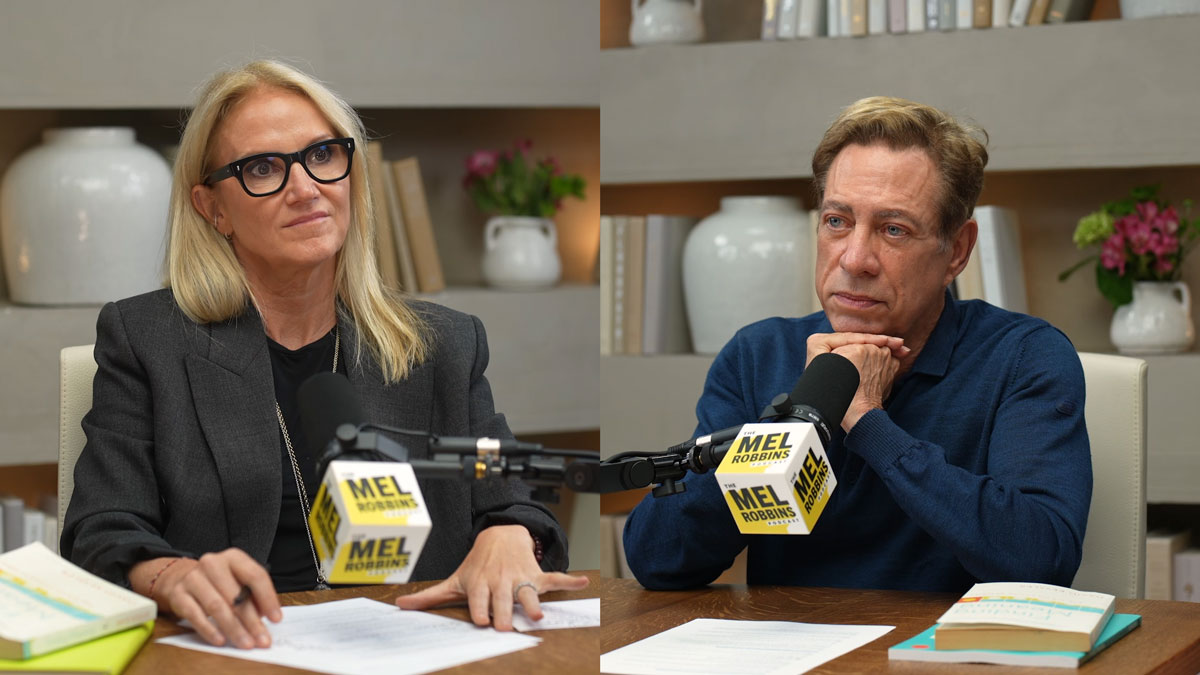
A powerful, honest conversation about grief and loss with David Kessler. You’ll learn what no one tells you about grief, why you’re not doing it wrong, and how real healing begins.
In today’s episode you will hear grief and loss explained in a way you’ve never heard before.
World-renowned grief expert David Kessler shares the 3 things nobody tells you about grief and loss. You’ll learn why grief is not a problem to fix, why your emotions aren’t “wrong,” and how healing can become possible. David shares practical tools for navigating guilt, anger, regret, and how to support others. If you feel overwhelmed, confused, stuck in sadness this conversation will bring clarity, comfort, and real hope.
Listen on:




What we run from pursues us. What we face transforms us.
David Kessler
All Clips
Transcript
David Kessler (00:00:00):
I know it. You know it. No one's talking about this topic. No one wants to talk about it. It is the most needed requested topic that no one wants to talk about.
Mel Robbins (00:00:12):
What nobody tells you about grief and loss. I needed the right person to guide you and me through this topic. And that person is David Kessler. David has over 30 years of experience helping people through unimaginable loss. He's lived it, he's studied it, he's taught it. And today he is here in our Boston Studios for you and the people that you care about. How is my life going to be different?
David Kessler (00:00:39):
Your life is going to be fuller and bigger today. If people can find a way to grieve fully, they will live. Fully loss in our life pushes our bandwidth for pain, but it also pushes our bandwidth for happiness and joy and laughter. To me, the goal of grief work is to eventually remember with more love than pain. When you release the pain in your own way, in your own time, you will be connected only in love off our life was with them then Our life is with us now and we have to continue to live it. No feeling is final. It is going to change. Take the next step. Wake up.
Mel Robbins (00:01:33):
It can be done.
David Kessler (00:01:34):
It can be done.
Mel Robbins (00:01:38):
Please help me welcome David Kessler to the Mel Robbins podcast. It is so great to see you. Thank you, thank you. Thank you for making the trip here to Boston to be on the Mel Robbins podcast.
David Kessler (00:01:50):
I am thrilled to be here.
Mel Robbins (00:01:52):
How does it feel to know that this is the topic that is one of the most requested topics that we have received from listeners around the world?
David Kessler (00:02:06):
I know it is the most needed requested topic that no one wants to talk about.
Mel Robbins (00:02:16):
I want to start by having you talk about how is my life going to be different If I take everything to heart that you're about to share with us and I apply it to my life, how will my life be different, David?
David Kessler (00:02:33):
This is going to sound strange, but I can almost guarantee it. If you were to do this work, listen to this, share it. Your life is going to be fuller and bigger and it's going to be richer. And I am evidence of that. Loss is about subtraction. We need to find ways to bring addition into this. And so I'm going to throw every tool I can think of at everyone, at everyone to really help folks have ways to find their inner wholeness.
Mel Robbins (00:03:17):
Well, what's interesting is I listened to you already, is nobody can go through life without experiencing some kind of devastating loss.
David Kessler (00:03:25):
I have been studying the statistics. Here they are. It's a trend. Death rate. A hundred percent, a hundred percent. I hate to laugh every listen, and I always tell people to begin with, you come from a long line of dead people like every ancestor you have has died. There is something in us that knows how to do this. I'm teaching people what our great grandparents knew how to do. And the thing is today, if people can find a way to grieve fully, they will live fully.
Mel Robbins (00:04:06):
If people can find a way to grieve fully, they can live fully.
David Kessler (00:04:13):
And lemme tell you the most bizarrest concept. I spent so much of my life in hotel meeting rooms giving talks. There were days it was 10 people and 50 people and 300 people. And after the talks, it happened more than once. We're in a large meeting room, the hotel, there's the realtors are in the next room. And after the day the staff would say, what were you teaching? And I would go, why? And they would go, because your room was laughing the most. And I would go, grief. And they would go, what kind of grief? I would go that kind of grief like someone's dying or someone's already died and they couldn't understand it. And here's why that happens. Loss in our life pushes our bandwidth for pain, but it also pushes our bandwidth for happiness and joy and laughter. People in my rooms learning about it, they probably did cry a little harder, but they also laughed harder.
Mel Robbins (00:05:22):
I love that promise that in grief, yes, it expands your capacity to feel pain, but it also expands your capacity to feel joy and laughter and all of these other aspects of life. And you say that not just as somebody, David who has spent your life counseling, people going through grief, educating other health practitioners, mental health practitioners, medical professionals in the actual
David Kessler (00:05:55):
Teach doctors how to give bad news
Mel Robbins (00:05:57):
Like in the field of grief. But you experienced a loss of your own. Your son David died and that shifted how you think about and how you talk about grief. So could you just share what happened with your son?
David Kessler (00:06:16):
Sure. And let me start with I was a grief expert for decades. I had lost my mother when I was 13. Horrible tragedy. So I grew up in grief and was looking for my own healing. And I'll tell you, when my mom died, when I was young and people will get this, I thought I was the only person that ever lost a parent. I didn't know this happened to other people. At 13, you asked about my son David.
(00:06:56):
I adopted two boys, four and five years old. David had been born drug exposed. I really thought love would conquer all. They had an amazing childhood, great childhood. And when he hit his teenage years, his trauma and addiction began to come up. And I was thrown into that hell that anyone who's living with a loved one with addiction knows what that's like. And he worked so hard to get through that and he struggled and struggled and made it and was doing well and met an incredible social worker. He was dating and at 21 was in program sober doing well. He and his girlfriend hit a bump that anyone at 21 year olds do called up some friends. They got high again. They lived, he died. I was on the floor and I'll tell you, I didn't know if I would get up again. One of the things I remember, people always want to know, what did you learn that you didn't know? How intense the pain can be. I had forgotten that. I wanted to write every parent that ever had a child die that I'd counseled a note saying I didn't get it. And then I got to tell you, I was someone who used to dish out, oh, go to a grief group, read a book, go to a grief counselor. And then I had to do that Mel. And I went to a grief group. It took me three times to get there. I went to a grief group, took my contacts out, put my glasses on Facebook app. I had to literally sit five feet from my books and I couldn't tell anyone. I'm that expert. I couldn't be him. I actually was in that place. So stuck, didn't know if I'd come out of it. And that's an important place we go through. If you haven't been stuck, you haven't been in grief.
Mel Robbins (00:09:41):
How did that experience of losing your son David, shift the way you understand and talk about grief?
David Kessler (00:09:53):
First of all, the biggest thing is I got to tell you, when people show up for themselves, when they reach out to a friend, and if you are a friend, you need to listen to this. If someone reaches out to you, your job is to applaud them. If they say, I'm stuck, I need help. I don't know what to do next. Applaud them for reaching out. It's so hard to do. I think that's the biggest thing I want everyone to know. Just you got to reach out for help. And it's the hardest thing in the world. And we live in a grief illiterate world that thinks it's like tv. We've all seen tv, right? TV episodes are episode one, person dies. Episode two, we cry. Episode three, back to life. Grief has a longer shadow. Grief is in three episodes.
Mel Robbins (00:10:57):
What is it?
David Kessler (00:10:57):
I'll tell you something that'll blow you away.
Mel Robbins (00:10:59):
Tell me.
David Kessler (00:11:01):
Talk to a lot of my colleagues. When do you think is the time most people reach out to a professional and say, I hope this was going away. I was wishing it away. I thought I was kind of working on it, but I need some support. One month, six months, nine months, five years,
Mel Robbins (00:11:24):
Five years?
David Kessler (00:11:26):
Five years. Mel, people are living with pain five years before they reach out and Mel. Those are the lucky ones. There's a lot of people that never reach out. We know them. Yes. Don't you all have someone in your life that like something happened and they just never recovered?
Mel Robbins (00:11:49):
I want to stay on this for a minute. I do observe that sort of with some people, the tragedy happens or the death happens. You spend a week or two celebrating the person planning. It's a flurry of people and the memorial and the celebration. And then for a lot of people it's like, okay, let's move on.
David Kessler (00:12:15):
Now, I have a name for them.
Mel Robbins (00:12:17):
What is it? What is it?
David Kessler (00:12:18):
Practical grievers.
Mel Robbins (00:12:19):
Practical grievers.
David Kessler (00:12:20):
Practical grievers.
Mel Robbins (00:12:21):
Okay,
David Kessler (00:12:22):
That's okay. That's who they are. And by the way, they were practical about everything. They were practical. Practical about the divorce, practical about the move. They were practical. That's just who they are. It's going to be. And we always think, oh, when they get to a big moment, a big loss, they're going to change. They don't. They're consistent and it drives everyone else nuts because we think they don't have enough feelings. And by the way, they think we have way too many feelings. So these are just different styles of grieving and that's okay. We don't need to change them. They don't need to change us.
Mel Robbins (00:12:59):
If you're listening and you either are like, oh yes, that family is definitely practical, grievers or my brother is a practical griever. Or you're listening and you're like, oh, well that's me. What do you want us to know about what's going on beneath the surface when somebody is very practical and then we move on, but something's lingering. What do you want us to know?
David Kessler (00:13:27):
Well, I would first ask, is this something lingering, a projection of ours or is it real? Because in real practical, grievers, nothing's lingering.
Mel Robbins (00:13:36):
For real?
David Kessler (00:13:36):
For real.
Mel Robbins (00:13:37):
That's possible?
David Kessler (00:13:38):
Yep. They're done. They went to the funeral. I mean, a practical griever doesn't go to therapy. I mean a practical griever will say therapy. I got friends for that. Why would I ever go to a therapist or a coach? Why would I do that? No practical grievers have events and move on. That's them. Nothing wrong with them, it's just they're from another planet. Most of us on this planet don't get them. But it's okay. It's okay. We need to make sure we're not going to practical grievers for support. Oh, because they're very pragmatic and that's how they deal with grief. They're like, it's time. It's time. Move on. No pity parties, let's move on. That's your practical griever. Oh my gosh. And I have a lot of them in my life. I've had to become a champion of not making them wrong.
Mel Robbins (00:14:32):
What do you do if you're married to a practical griever?
David Kessler (00:14:34):
Let them be themselves.
Mel Robbins (00:14:35):
But you are trying to be a practical griever, but you're not.
David Kessler (00:14:41):
Well in grief. It is a time when our best friends, our spouses can feel like strangers, but strangers can feel like friends and family. Here's the thing. If your spouse, if your best friend, if your sister who gets everything, doesn't get your grief, let it go. Like the saying, you can't walk up and down the aisle of a hardware store hoping to find milk. Let it go. Let them off the hook. They're not your support. I tell people the issue isn't that they can't support you. The issue is you're going back to them after they're saying, I don't have the tools. I love you, but got no tools except move on. But there's other people out there and you got to be like a GPS and go, okay, alright. Not spouse, not spouse, not spouse, and switch over to someone else.
Mel Robbins (00:15:39):
Do you have a name for the other types of grievers you've talked about practical grievers. Do you have
David Kessler (00:15:44):
Sometimes people call them feeling grievers, but I think that just sort of makest he others.
Mel Robbins (00:15:49):
So it's like practical grievers and everybody else.
David Kessler (00:15:51):
Everyone else, yes.
Mel Robbins (00:15:52):
Got it. So for somebody who's listening, because when we poured over the more than 18,000 emails that have come in, a lot of the same sentence was written, I don't know how to move forward. And I want to read a passage from your bestselling book, finding Meaning and you're writing in the introduction. This is on page nine about the early days after losing David, your son. In the early days after losing my son David, amazing people like my partner and my spiritual teacher, one of the godmothers for my son, spent countless hours with me listening, talking, trying to help in any way they could. My friend Diane, who is also a bereaved parent herself told me, I know you're drowning. You'll keep sinking for a while, but there will come a point when you hit bottom, then you'll have a decision to make. Do you stay there or push off and start to rise again?
David Kessler (00:17:08):
The problem is most people don't have other people in their life to say that. And when someone's sinking, we say, you're sure sinking too long. Swim. And they're still sinking. And we need to just be there with them, not change them. The one thing I know for sure slows healing down is judgment.
Mel Robbins (00:17:45):
And what are surprising ways that judgment shows up? Because let's just take the dynamic where you are somebody who is really stuck in this loss,
Mel Robbins (00:18:01):
But you're surrounded by, as you said, practical grievers like, okay, let you kind of move on. Pull up your big girl pants, your big boy pants, and let's move on. And so you are sinking, but you're getting that message. It's time to move on. Can you give us some of those subtle ways that you may feel judged because you're not able to rise up yet?
David Kessler (00:18:28):
And the problem is that outer judgment is contagious and we also catch it. So what happens is people go enough long enough, you got to get back to life. The divorce, the death, it was this long ago. It's time you are doing. And here's no matter what they're saying, they are saying this, you are doing it wrong.
(00:18:53):
You are doing grief wrong. And one of the biggest things, I don't even do one-on-one support anymore. I do all group work. I think we need to find other people. I mean, if you can find other people who get it, great. If you can't get support, sometimes people go, oh, I should just get through this. And I'm like, I have a maintenance plan on my tires. If my tires, I hit a pothole, I bought a maintenance plan. And somehow we get to the hardest moments and I tell people that we don't get it. If you are going through loss, you are probably in one of the hardest moments of your life.
(00:19:41):
Get support. And if you don't have it around you find it. I've got it. Other people have it. Find it. We find ourselves in each other's stories and we find our healing in each other's stories. I'll tell you, if you were to listen in to my groups, you would hear me say a couple of things over and over. I'm constantly saying to people, you're not crazy. You are in grief. You are not crazy. You are in grief. And the other thing I tell people is, you're doing grief, right? And people will say to me, if I'm talking to a practical griever, they'll go, well, no, but they're not. They're staying at home. I can't tell 'em they're doing it right. And I'll go, well, you're telling them they're doing it wrong. How's that working? How does showering them with you're doing it wrong? Is that really helping them get out of bed? Is that helping them enjoy life more? Hearing you're wrong. And the griever it, we in our moments alone go, maybe I am doing it wrong. Maybe I am stuck. Maybe I'm in trouble. Maybe this is it forever and it doesn't have to be.
Mel Robbins (00:21:02):
Yeah. I'm so glad you gave us that research that the average amount of time that passes before somebody seeks help is five years. Because I can see as you're laying this out, especially the difference between a practical griever, which is very helpful, and again, everybody grieves differently. Everybody's timeline is different.
David Kessler (00:21:26):
Our grief is unique as our fingerprint,
Mel Robbins (00:21:28):
Our grief is as unique as our fingerprint. And so there's nothing wrong with being a practical griever, it's your style of grieving.
David Kessler (00:21:36):
Correct.
Mel Robbins (00:21:37):
But recognizing that's your style versus I'm more of a feeler. I'm somebody that needs to process this. I think it's a really beautiful,
David Kessler (00:21:45):
I need to talk about it.
Mel Robbins (00:21:46):
I need to talk about it.
David Kessler (00:21:47):
We're talkers. Yes. I'll tell you practical grievers are like, oh my God, enough with the talking like stop with the talking. They're like, it's too much. Well, what I'm laughing about is, well, we all have 'em. We know these people. That's why I,
Mel Robbins (00:22:02):
Here's the thing, as a deeply feeling person, I'm probably judgmental of people who are practical as they are of you. I also appreciate the door that you're opening because one of the things, David, that really catches people off guard is how you can think that you're through it, but then all of a sudden grief comes out of nowhere. You know what I mean? Suddenly you're crying in the grocery store or it's a random Tuesday and it's been years and you're just flooded with sadness.
Mel Robbins (00:22:37):
Why does grief ambush you like that?
David Kessler (00:22:40):
Let's talk about that. I call those grief bursts, grief bursts, grief bursts. You're at work, things are fine. Something happens. You go there, it comes up, it overwhelms you. It's a grief burst. So I want to normalize that. Okay, see, this is why we have to talk about all this because people now, not only is there a grief burst, I want you to think about this with anyone in my life, my son. I didn't just love my son, I love him. Oh my gosh. Like anyone in our life, some days we're pissed at them. Some days we really love them. Some days they touch our heart. Other days not so much. Not only do we have grief bursts after someone dies, we have love bursts.
(00:23:24):
We just get filled with love. And both of those things are normal. And I think I mentioned the five year mark, but I also want to know the second time people show up for support is after the one year mark thinking, I thought this was going to go away at a year. Isn't that what's supposed to happen? Not true. I often think of early grief, and this is what people need to know, especially if you've got a friend out there and you are wondering when they're going to get over this. I think of early grief as the first two years. Early grief is the first two years, your friend that's taking too long is still in early grief.
Mel Robbins (00:24:10):
I would say 99% of the people that wrote in 18,000 emails are feeling guilt and pressure that you feel to move on.
David Kessler (00:24:28):
And then that becomes their self-judgment.
Mel Robbins (00:24:29):
Yes,
David Kessler (00:24:30):
They're doing it wrong, and it's really important to hold true to yourself and not to the people who are giving you advice. Listen, most people when I'm talking to them, they'll go, my sister, my brother, my person says, it's time to move on. And I'll go, oh, and they did that in six months when their husband, wife, sister, brother, parent died. And they go, oh, no, no, their loved one's still alive. And I go, wait a minute. You're taking advice from someone whose loved one's alive that hasn't gone through what you're gone through. I tell people, you've just become the grief expert, not them. Don't listen to someone who's never gone through it. Don't take that on. Trust yourself.
Mel Robbins (00:25:27):
What is the number one thing you wish people know about grief?
David Kessler (00:25:32):
Don't put it on a timeline. Get it off the timeline. I think the other thing is that grief just isn't being sad and crying in the corner. Grief is sometimes anger. Grief is sometimes just annoyance. Challenges in life. I often say there's so many different colors to grief. There's no one way to do it. In my group, every week we take on a topic, jealousy, anger, some feeling, who would they be if they were still alive? All kinds of things and tons of people share. And I purposely do that. I want people to know there's not one voice in grief, not even mine, not anyone like there's a hundred opinions and we need to get so many different ways to do your grief.
Mel Robbins (00:26:33):
Why do you think grief shows up in so many different ways and is so unpredictable, and are there ways that you can help start to recognize, oh, this is the grief. For example, I can think about somebody that may lose their spouse and they're coming home from a long day at work and you walk in the door and it hits you.
Mel Robbins (00:27:00):
It's just you. It's just you and the kids and there's anger and frustration. But a lot of times you probably think it's about the workday or the mess in front of you, and it's deeper than that because what you're really tapping into is the loss of your partner who's not there.
David Kessler (00:27:19):
I always say when people have had a spouse die, it's like being half a pair of scissors. It's like being half a pair of scissors. Now here's the thing. Sometimes we make a mistake in our modern world and use toxic positivity. Your mom whose spouse died, says it's brutal to sit across from that empty chair. Sometimes we think, oh, let's throw some spirituality at them. Oh mom, dad's always with you. And here's the thing, we miss them in that moment. We miss them. Grief must be witnessed. And so our work, the harder work is to say, what's it like to sit across from that empty chair? Mom, tell me what that feels like tonight. Talk to me about it. And here's the thing. For anyone supporting anyone in grief, what they say is going to make you uncomfortable and you're going to want to fix them. I'm a fixer, Mel. Give me three problems. I got solutions. I get to grief and there's no fixing because no one's broken. And it's really important, this idea of just sitting with them. I just got back from Australia and I was talking to a researcher who told me she goes to these small villages and in the village, the night someone dies, everyone in the village has to change something in their house or in their yard. And the researcher said, why do you do that? And they said, because when the family wakes up the next morning, we want them to know now that you are loved, one has died, everything has changed.
(00:29:26):
That's witnessing grief now that your spouse, your parent, your sibling, your child, your friend has died. All of us get everything's changed. And people say to me so many times, I just want mom back. I just want my friend back. I want dad back. And I say, they'd love to be that person they were before also. Here's the bad news. They can't be that person again. We'd have to bring someone back from the dead, dead. And that's beyond our powers. So they've got to accept this different life that they're in. They're not the old them anymore. And you have to accept your friend, your family member, not the old them either. Be with them who they are now, love them, who they are now, right where they are. Even if you think they're doing it wrong, love them.
Mel Robbins (00:30:30):
I love that image. Half a pair of scissors. Is there a way that you think about the type of grief that a parent has when you experience the loss of a child?
David Kessler (00:30:44):
I think in our modern world, I worked early in my career in children's hospital. I knew children died. The world used to be full of bere parents. Every parent was a bere parent a hundred years ago. Luckily, it doesn't happen as often, but it still does. And we don't understand the depth of that pain and the additional support they're going to need. There's a lot of things that complicated. It can be a sudden death. It could be death of a child addiction, mental health issues. When it becomes complicated grief, it's going to just take longer and you're going to need more support.
Mel Robbins (00:31:26):
How do you know it's complicated grief, David?
David Kessler (00:31:29):
Here's how I think about it. Grief is like a river. The river of grief will take us to our healing. The river of grief. Some of us step into, its slowly as a loved one's really sick. Some of us are thrown into it and we're drowning on a random Tuesday, but the river will take you to your healing.
David Kessler (00:31:53):
Imagine a little branch falling in the river. That little branch might slow the river down for a second. I didn't tell dad I loved him the day he died afterwards. You're like, okay. He knew I told him a lot. But imagine a big branch falling in the river. If you've seen a big branch falling in a river, the water begins to go in a circle. It's no longer it evolving. It's revolving. Our grief is going in a circle, it's going nowhere. That's the complicated grief I tell people, it's a big branch. It fell in the river. It's slowing the grief down. We've just got to get in there, examine it, be with it, talk about it.
Mel Robbins (00:32:38):
What is the most important thing for somebody to do if they resonate with that description, whether it's a year out or five years out or 25 years out, that there's still something about that experience that is having them swirling. What's the most important first step to take other than recognizing it?
David Kessler (00:33:00):
I would first of all tell them, I maybe didn't get how brutal this is. And I see you're still having such a hard time and maybe I heard this podcast and I realized of course you are. Of course you're having a hard time. Why was I thinking you would be over that in six months like the TV show? I would have that discussion with him and almost apologize.
(00:33:33):
I didn't recognize even the word bereaved comes from an old Latin word that means to be robbed. You've been robbed of your right arm, your left leg, and it's not coming back. And to say to that person, oh my gosh, I'm here with you in this. You don't have to be alone anymore. No matter how stuck I thought you were or you might think you are, whatever you are, you're not alone anymore. That will be magic. That will be magic. And I'll tell you one of the problems we think this is about words. Everyone wants to find the right words.
Mel Robbins (00:34:19):
What is it about? If it's not about words and talking,
David Kessler (00:34:21):
It's about our presence. Here's the thing I want you to know. Your presence is all that matters. Your presence is all that matter. Some of the most amazing work, I have a grief certificate program that I teach therapists and coaches and folks who want to turn their pain into purpose and I bring some folks on to work with them. I'm giving this away, but it's amazing to see. I purposely bring someone on who's had a murder, a child die, spouse of 50. I mean the worst, worst things you could imagine, child die, parents, both parents killed. I bring them on and I ask them to tell me about their loss. I say, tell me about your loss. Tell me about the person who died and tell me a story about them. Tell me one of your favorite stories about them.
(00:35:22):
That's it. And I sit there and I listen for the rest of the time. I listen. And I got to tell you, hundreds of people watching go, oh my gosh, that was amazing. How did you do it? And I point out I didn't do anything. I listened. I listened. I didn't need to intervene. I didn't need to come up with three interventions. I sat. It's the power of sitting. There's a strange thing. This is a tough concept to get for ourselves and for others. This is not self-help. This is self-acceptance. And when we accept ourselves and our friends exactly where they are, then we change. That's the weird thing. We come into this going, you've got to change. And they resist. But if we go in and say, if you are right here for the rest of the time, I'm going to sit with you and you'll never be alone. And they say, if this is it, I'll sit with it. It's okay. Then we begin to change. It's such a paradox. It's not doing. It's being.
Mel Robbins (00:36:41):
I think a lot of the push to want to get through it is you don't want to feel the pain. Because a lot of times, for example, David, for somebody who's experienced a loss and they just can't stop crying, and they feel stuck in this raw sadness and they can't even imagine what it's going to feel like without the sadness that they feel right now. Because if you let go of the sadness, you are letting go of the person that you lost.
David Kessler (00:37:14):
All right, so a few things,
David Kessler (00:37:16):
Many times I'll say to that person who says to me, you don't get it. I'll never stop crying. I'll say, I've been with thousands, hundreds, millions. I don't even know how many. Everyone stops crying. Everyone stops crying. They may cry again, but everyone stops. Now this idea that we think, because sometimes I'll work with vets who tell me this pain of my best friend dying in war or whatever it is, is a badge of honor. I'll go, yeah, pain's not a badge of honor. Love is. So I say to people when they say, I need to hold onto the pain or I'll lose them, I say to them, let me tell you this, when you release the pain in your own way, in your own time, you will be connected only in love. When you release the pain, the love will be there. I want to tell you a story around this in the pandemic. Maybe week two, a friend of mine, practical griever comes over. We're going to take a walk six feet apart in the middle of the street. We're walking. A young woman walks up to me probably 20 years old in tears, one of my neighbors, and she goes, Aren, aren't you the grief person? And I went, yeah. And she goes, my wedding's just been postponed. She's in tears. And she says, I don't know how I'm going to make it. And she's crying and she's devastated. And I talked to her and I listened and I talked about it. And after a few minutes after we talked, she thanked me and she said, can we talk again? And I said, sure. My friend turns to me and said, oh my gosh, I can't believe how she was going on and on to you. I mean, you've been to shootings in nine 11 and your son died. And here her wedding's been postponed. And I said to my friend, so little about grief.
(00:39:37):
First of all, whenever you compare, we are in our mind and we don't have a broken mind. We have a broken heart. So first of all, let go of the comparing. People want to know David, which grief is the worst? Is it a murder? Is it a child's death? Is it a divorce where they're alive rejecting you every day on the planet? Is it sexual abuse that robbed you of a life? It feels like? What's the worst grief? And I always say yours. Yours is the worst grief. Other people's grief don't matter. Now here's what goes wrong. People think grief is like a pie. I have my pie of grief, and all of a sudden the 20-year-old wedding's postponed is taking a piece of my pie. No, there's room in this world for all our losses. Here's a tough thing that I work with therapists on a lot and coaches, people who run bereavement groups. Let's say in a bereavement group. There's a woman there, her fiance died after three months,
(00:41:00):
And there's someone else who's been married for 40 years. She says to a woman who had three months, oh my gosh, your grief is nothing. Three months is nothing. Try 50 years. The top line I would say is we don't compare griefs. There's enough room, blah, blah, blah, blah. I give her that speech. We're not going to judge each other's grief in this group. Hopefully I've said that at the beginning. But what I want therapist, coaches and friends to know, the person who's saying, Hey, they're getting too much, is really saying, my grief hasn't been witnessed enough.
Mel Robbins (00:41:40):
Oh,
David Kessler (00:41:40):
We got to go. The person who's complaining that someone else is getting too much attention or doing too well is saying to us, I'm still in need and you're missing me. And that's the thing that if you don't have the grief training therapists, coaches, all of us can easily miss.
Mel Robbins (00:41:59):
Let's talk about denial. So for the person,
David Kessler (00:42:03):
I love denial, by the way.
Mel Robbins (00:42:04):
Why do you love denial?
David Kessler (00:42:06):
What a grace. What a gift the universe has given us. Here's the thing, Mel. When someone dies, there's a divorce, a tragedy. Your psyche couldn't take the pain in one day you would be down and never get up again. There's a grace in denial. Denial helps us pace the feelings over time. When someone says, my loved one's in denial, I go, thank goodness. Thank goodness. Wow, your psyche's working. When someone says, I'm numb, I'm stuck. I go, Ugh. What an amazing wise mind you have that your psyche is titrating these feelings. It knows not to give you too much. It's brilliant. Denial's amazing. Is there too long of a period to be in denial? I think your psyche knows that. And I'll tell you, sometimes people show up with a lot of shame. We even have a group just for older losses. People will show up at the 5, 10, 20 year point ready to deal with something with shame and regret that they didn't deal with it. And I will say to them, you're ready now. It's perfect. Sometimes we can shame those people and go, that's what happened. When you go into denial, learn that. No, you are ready now.
(00:43:39):
Good for you. It's time.
Mel Robbins (00:43:41):
Oh, I love that.
David Kessler (00:43:42):
It's time. You're strong enough.
Mel Robbins (00:43:44):
I love that. I love that. You're ready now.
David Kessler (00:43:50):
You are ready now.
Mel Robbins (00:43:52):
I absolutely love that. How affirming.
David Kessler (00:43:56):
And to your friend that you think is in denial, let them be there. It's okay. Trust their psyche. Trust their psyche.
Mel Robbins (00:44:05):
There are so many people in my life that I want to send this to simply to have them hear you say, it chokes me up. You're ready now. You're ready. Now, for somebody that's just really struggled for years or decades,
David Kessler (00:44:19):
And imagine if you've struggled for decades and you finally get ready and people come over and hold you and say, I love you. I'm here for you. Good for you. Amazing work. How does that feel versus someone going, it's about time. We knew you should have done it five years ago. I mean, how hideous is that judgment? How hideous is that judgment? Well, and I think it's so viewed by the way, can before we go, what's that sadness about in your eyes?
Mel Robbins (00:44:52):
Oh, I have a number of people who are frozen in grief and I know that they're frozen because they are either scared of their feelings or they're surrounded by practical grievers or they don't know how to feel the pain. And so they're forcing themselves to just go on. And I think it's a beautiful thing to have this conversation, and I think it's really amazing that if somebody sent this to you that they're saying, you're ready now.
David Kessler (00:45:29):
You're ready now
Mel Robbins (00:45:30):
They're saying there is life that is available to you. There's an expansion. Your book is entitled Finding Meaning. And Cameron who produced this episode lost her father and
David Kessler (00:45:46):
I'm laughing, I know where this is going.
Mel Robbins (00:45:48):
And you see the title Finding Meaning and Death, and you're like, fuck you, David. I don't want to find meaning. Why am I supposed to find I'm supposed to? Oh, I needed to lose that person to find meaning. It's like another phrase that I don't like. Everything happens for a reason. I don't believe that.
David Kessler (00:46:03):
You know what? Someone said that to me after my son died, everything happened for a reason. I went, yeah, what do you got? I could use a good reason.
Mel Robbins (00:46:09):
What do you got? Well, I think the mistake with that phrase is things happen and you choose whether you find a reason to go on. You choose whether you find a reason to learn from this. You choose whether or not to find some meaning from this experience, not meaning in the death, but a reason to lean into life and love again.
David Kessler (00:46:42):
Here's the thing that I really got. I remember maybe at a year sitting in pain going, I don't know about this one. And I thought about, I live in a little neighborhood and all these little cute houses, and I thought about 20, 30, 40 years in the future, the teenagers would be riding their bike and they'd go, Hey, what's that house there with the spiderwebs? Is it a haunted house? And they would go, oh, that broken down dilapidated house, it's grief expert whose son died and he never came out again. Mel, I could find that in me. I could find lock the door and never come out again. And I'll tell you, I'm not the only one that feels that way. And I had to really understand it is a decision and meaning helped me get to that decision,
Mel Robbins (00:47:52):
But not meaning in the death. What are you finding meaning, meaning in? Oh, that's
David Kessler (00:47:55):
One of the first things I learned when I was researching this book is that the meaning is not in the horrible event. There's no meaning in a child's death, a spouse death, a parent death, a tragedy. There's no meaning in all these losses. Meaning is after we excavate the pain, and I want to underline that after we excavate the pain, the meaning is revealed underneath and it's in us. It's who we become. This is really about finding your way through that darkness.
Mel Robbins (00:48:30):
Well, and it's like that saying, everything happens for a reason. Sometimes the reason why something happens is you're unlucky. You're in the wrong place. Life's unfair. But what that actually is saying to you is you get to choose the reason why you move forward. You get to choose the reasons why you grow. It's like the after.
David Kessler (00:48:54):
And there's one thing I'd love to just tell you here that I think is so important in this. One of the things I say about meaning is your loss is not a test, a lesson, something to handle, a gift or a blessing loss is what happens in life. Meaning is what you make happen after the loss, after the pain,
Mel Robbins (00:49:23):
After your son died. You said that acceptance not enough.
David Kessler (00:49:29):
How much do we hate acceptance? I mean, when we tell people in grief, you've got to accept it. First of all, there's not one acceptance. It's not like it was in the top drawer. I looked everywhere. But no, there's a million acceptances over the years. You're going to have to keep accepting it. And I think people think acceptance means you like it or you're okay with it, but it really just means you acknowledge the reality of it.
Mel Robbins (00:49:59):
Is that how you, because? Because one of the questions I want to ask you is how do you start living the life that you're in even though you don't want to accept it? You can't stop grieving the life you imagined you know need to accept the life you're now living. How do you do that?
David Kessler (00:50:24):
I understand that freedom is found reality, and I have to live in reality. And sometimes when you're in grief, when you're in the breakup, the divorce, the death, that reality is brutal for a long time and you have to be in it and go through it. And then you will begin to see little lights of acceptance. You might just get through an hour and little by little you let that grow and realizing you're going to hate it. It's never the life you want. Grief rips us off of this road that we were on with this person and puts us on a new road that we don't know how to travel down and why would you want to accept that new road or them dying? But little by little, we just allow it and sit in it and it will begin to move through us. And that's why for me, I often thought acceptance isn't enough. The journey can't end here. There's a finality that never wanted. And so I thought there has to be more. And that's really what led me to research, meaning I wanted to find meaning that my son lived. I wanted to find meaning that all these people have died.
Mel Robbins (00:52:03):
I want to read to you from your bestselling book, finding Meaning about this topic. In my work with grieving people, I've often been asked, where am I trying to find meaning, the death, the loss, the event, the life of the person I loved, or am I trying to find meaning in my own life after the loss? My answer is yes, yes, yes, and yes. You may find meaning in all of those things which will lead you to deeper questions and deeper answers. Maybe your meaning will come by finding rituals that commemorate your loved one's life or by offering some kind of contribution that will honor that person. Or the loss of your loved one may cause you to deepen your connection to those who are still with you or to invite back into your life, people from whom you've been estranged or it may give you a heightened sense of the beauty of the life we are all so privileged to have as long as we remain on this earth.
David Kessler (00:53:10):
And Mel, people sometimes hear that and think, oh, am I supposed to start a charity? Am I supposed to do a foundation? No meaning is in the moments, meaning is in the simple moments.
Mel Robbins (00:53:25):
What can that look like in everyday life for somebody who is grieving?
David Kessler (00:53:34):
First of all, if you think about meaning and you want to throw the book, that means you're still in anger. You still got pain. So allow that the book is meant to be thrown, allow it, allow the pain. Go through it.
Mel Robbins (00:53:51):
In chapter 12, page 1 91, you have this beautiful section. The common belief is that grief is all about pain. Anyone who has been in grief would certainly agree with that, but I believe there is more. There is love. Why do we believe that? The pain we feel is about the absence of love? The love didn't die when the person we love died. It didn't disappear. Love remains. The question is how do we learn to remember that person with more love than pain? This is a question, not a mandate. I am the first to say that there is no getting around the pain. You have to go through it because it is an inevitable result of the separation we are experiencing. It's a brutal forced separation. You have been robbed of what is dearest to you. The pain you feel is proportionate to the love you had, the deeper you loved the deeper the pain. But you'll find that love exists on the other side of the pain. It's actually the other face of pain. What does that mean? It's the other face of pain.
David Kessler (00:55:09):
People always go, I don't know why this pain's so intense. And I go, because the love was so intense.
(00:55:15):
You lived maybe a little grief. You loved a lot. You're going to have a lot. And that's the reality of it. And I also say to people, don't give death any more power than it has. Death has the power to physically take your loved one. It doesn't have the power to end your love. It doesn't have the power to end your relationship. I spend every New Year's Eve with my mother who died decades ago. I in my heart for just a few minutes. I still parent my son even though he's somewhere else that I can't find him and don't know where that is. The love doesn't die. Don't let it die. Keep it alive. The love will take you to your healing.
Mel Robbins (00:56:09):
I would love to have you put us at that moment where you're either standing before the closet of somebody's clothes or you're walking into the bedroom that has been left exactly as it was years ago, the day the person died. Is it important to change the room? Is it important to go through the clothes?
David Kessler (00:56:46):
I'm going to open this up a bit. We sort of really make that horrific and wrong. Well, here's the questions I would ask. I would say I'd love to hear about that room. I'd love to see it. I'd love for you to take me there. My questions would be, tell me about you when you come into this room. I'm looking, here's the kind of things I teach. I'm looking for frequency, duration, and intensity. I'm wanting to know your loved one's room that's still intact. Are you going into it once a week, eight hours a day, once a month? What's the intensity? Do you go in for five minutes? Do you go in for three hours? Do you spend the weekend in there? Does it bring you comfort or discomfort? I mean, I can't just say wrong, right? There's so much there. There's so much there. That's really important to understand that. And part of where some people might get stuck in that moment is they need something to hang on to. And a lot of times when I'm working with people and they're saying, help me begin to release this possession, here's what I tell 'em. That changes everything. You are hanging on to this because you believe it's evidence that you are loved one existed and we're all asking you to get rid of the evidence that they were here. And I tell them, I want to point out the biggest piece of evidence that your loved one existed. You are the living, breathing evidence that they existed. You are the storyteller. You are the memory keeper in time. When you're ready, once you integrate that, that you are the evidence, you can begin to let those things go. And I tell people practically take a picture of everything. We get the same emotional response from a picture as we do the article.
Mel Robbins (00:59:16):
What a brilliant idea.
David Kessler (00:59:17):
Take a picture of it all.
Mel Robbins (00:59:18):
You could make a whole photo album of all these things.
David Kessler (00:59:20):
Beautiful album of everything. So not only do you get a picture of your husband's suit, your child's graduation, whatever it may be, your parents' baseball cap, you get all that. You get those pictures and then they get to go on and have meaning for someone else. The suit helps someone get a job someone can't afford. Literally someone was telling me their child can't afford graduation cap and gown right now. Someone else could use that in that school probably.
Mel Robbins (00:59:56):
What a beautiful thing. When you're ready,
David Kessler (00:59:58):
When you're ready in your own time, in your own way
Mel Robbins (01:00:03):
In finding meaning. You write about how anger is pain's, bodyguard, and there's so much anger and feeling of unfairness when it comes to grief or loss that this isn't fair. This shouldn't have happened. Why did this happen to me? This didn't happen to that person. Why do grief and anger tend to travel together?
David Kessler (01:00:34):
Anger is pain. It's an expression of pain. Now let me tell you, when we often get bad news, many folks have two responses. We sit and cry and to the person who sits and cries, well rush over. Here's tissues. We're here for you. I'm the one who gets angry.
Mel Robbins (01:00:57):
Me too.
David Kessler (01:00:58):
When I get angry, people are like, and you get that handled and then we'll talk to you. Everyone treats you like a porcupine, right? And you are in as much pain. The thing we have to do is make that translation. It looks like they're in rage, but they're actually in pain. And if I can try to hug the porcupine, which is a hard thing to do, but I can tell you as the porcupine, I need a hug as much as anyone. Even though I'm like back everyone, I still need a hug in that moment. I will melt if you give me a hug in that moment. Now, here's what goes wrong. So many of us have old wounds and trauma from unhealthy anger that we don't know how to find healthy anger. And anger in grief is the healthy anger that we need to express.
Mel Robbins (01:02:06):
What's a healthy way to express it?
David Kessler (01:02:08):
Hit a pillow. Scream in your car, exercise and run. Whatever it takes. You need to get it out. Grief, yoga people don't know about that. What is it? Grief yoga is literally Paul Denton does grief yoga, and it is, he created it. It is around, he says, not the pretzel yoga, but it is around the feelings that get stuck in our grief, finding ways to get them out and move because here's what he says, our emotions need motion. Go take a walk with your anger. Let it out. Let it go through.
Mel Robbins (01:02:53):
One of the things that I think about is that when my husband's dad died, it was due to complications of a surgery that they rushed to have. And in the aftermath of his death, there were so many what ifs. We should have gotten a second opinion.
Mel Robbins (01:03:11):
If only, if only they didn't get behind the wheel. If only I had picked up the phone call. If only they hadn't gotten in the car, on the plane, whatever. How do you get out of that stage where you're bargaining with the past? Because the present is so painful to accept. I mean, and this was almost 20 years ago, and I know my husband, who is a death doula, who has volunteered with hospice for over a decade, who counsels people as a death doula. I know there's still in the back of his mind if only he'd gotten a second opinion.
David Kessler (01:04:00):
Okay, here's what I would say a few things. Guilt is griefs. Companion guilt is right on that road with grief often. And here's what people don't understand. Our mind would always rather feel guilty than helpless.
Mel Robbins (01:04:27):
Explain that. You'd rather feel guilty than helpless,
David Kessler (01:04:30):
Than helpless.
Mel Robbins (01:04:30):
So guilt, even though it's not great to feel, it feels a little better than feeling completely helpless.
David Kessler (01:04:37):
I got some control. Oh my gosh, here's my control. Second opinions are the key. So I'm just making this up for your husband. I don't know him or anything, but it becomes, as long as I know to get second opinions for the rest of my life, I'm keeping everyone safe.
Mel Robbins (01:04:53):
That makes so much sense. Because otherwise
David Kessler (01:04:56):
We live in a world where, oh my God anyone can die
Mel Robbins (01:04:58):
And we do.
David Kessler (01:04:59):
So guilt is that false control that we need for our survival. And here's what I have people do. I go through all the what ifs and I have people write down, what if we'd gotten a second opinion? If only we had seen all those what ifs after I have them list the what ifs. And if onlys, give it space, let it breathe. Talk about them. People go, don't talk that way. You can't bring your dad back. Shut up. Let me talk. People talk. I listen. We go through the what ifs. I give them their due. Then I have them cross out the what if and go even if.
(01:05:47):
Dad got a second opinion, he would've died. Even if that's the reality. Now, if I was talking to your husband, I would especially say this, knowing he's a death doula, I would say to him, I worked for over a decade in a hospital system. We had in the hospital system, we had the person that would show up early for the appointment. They would research everything. They would get second opinions. They would do everything right, Mel, and they would still die. How unfair. And then we'd have someone else. They wouldn't show up for their appointment, they wouldn't take the medicine, they wouldn't do the therapy. They wouldn't do the procedure, and we couldn't kill them. Part of this is out of our control.
Mel Robbins (01:06:47):
So much of it is
David Kessler (01:06:49):
So much. Well, life and death for sure. And in that guilt, we think we have control. And I'll say to people, well, what are you going to do if you stood outside a hospital and said everyone? Second opinion. Second opinion. Do you think there'd be no more deaths in that hospital? No. People would still die.
Mel Robbins (01:07:10):
If someone that you love is grieving, how do you help them?
David Kessler (01:07:16):
I think of the threes. Show up at three days, show up at three weeks. Show up at three months, just show up. And a lot of times we ask the person in grief, what do you need? Oh my gosh, I'm barely breathing, and you want a list of needs. I don't know what I need. We know what they need. They need food. They need their car taken in. They need groceries. They need the kids to get to soccer. Like use your imagination. You know what they need. One of the things that I remember, it touched my heart after my son died, there was probably, I don't know, three weeks later, I was hungry. There was no food. I opened up the freezer and there was a frozen lasagna in there that I could see the brand that it's not a brand that anywhere near me. And I thought someone had the wherewithal to slip that in my freezer knowing this night would come. How amazing. Show up two things.
Mel Robbins (01:08:33):
What are the things you should never say to somebody who's grieving?
David Kessler (01:08:38):
Well, we've talked about a few. At least there's a reason for this. They're in a better place now. Context is everything. If you're talking to your clergy, I actually want my clergy to say maybe they're in a better place. I get it. I don't want other people to say it because I would go, the better place is here with me now. I don't want to hear about another place. I don't want to hear God needed another angel. What's this God that's got a angel shortage? I don't want to hear that. That's crazy.
Mel Robbins (01:09:12):
What should you say instead?
David Kessler (01:09:15):
I don't have the words. I don't know what to say. I don't even know that there are right words. I don't know what your path is going to be like, but you're not going to walk it alone. I'm going to be here with you. I'm going to be here with you angry. Be angry, sad. Be sad, stuck. Be stuck. I'm here with you.
Mel Robbins (01:09:37):
You have this practice, David called a Living Amends contract. Will you walk me through it and just explain why it works?
David Kessler (01:09:46):
Sure. And living amends have been around for a long time. Living amends is this idea that sometimes the person's not here to make an apology to. So for example, maybe my loved one died and our last words were an argument. Maybe I didn't tell them. I love them that day. So I always say, if you still have something to say in your heart, if you say it purely in your heart, they'll hear it in theirs. And a living amends is you literally write down. And I have it in here. People can find it online. I apologize for not saying I love you at the end. My living amends to you is for the rest of my life. When I make a mistake, I'm going to apologize quickly in your honor, and it's going to be my living breathing apology. We died. And my last words were an argument. Oh my gosh, my living amends is going to be for the rest of my life. I will never leave an argument like that again with anyone. And every time I'm in an argument, I will do my best to at least end it with kindness and love, even if we disagree. And that's my living breathing apology to you.
Mel Robbins (01:11:20):
A lot of people writing in talked about this lingering feeling of guilt for laughing or starting to date again, or falling in love, or even just catching yourself enjoying a normal day because it feels like in order to move on, you're letting go of the person that you love.
David Kessler (01:11:48):
I have a disloyalty checklist I walk people through. It's things like this.
Mel Robbins (01:11:52):
What's the disloyalty checklist? What is that?
David Kessler (01:11:54):
It's literally things like you said. Here's the disloyalty checklist. You find yourself laughing, having fun, feeling guilty for making a big decision, trying something new, doing something for yourself, making a new friend, like people feel disloyal about these things, saying goodbye to the person's clothes, accepting an invitation, changing something about yourself or where you lived, changing something about the trips you take, skipping a tradition moving, forgetting a birthday. There's a million little disloyal moments and they interrupt the pure grief because we think it's about disloyalty, and the truth is disloyalty doesn't live in the heart, it lives in the mind. And if we can release that and go, I'll tell you something. That was one of my loyalties. I had to cancel a lot of lectures after my son died. I had to then go back and pick them up months later and didn't know how I would do that.
(01:13:16):
We sent out the same brochure that was originally sent, new dates, blah, blah, blah, and people wrote in and said, he's smiling. I happen to know his son died, and you send me a brochure with him smiling and I had to go, oh my gosh, I get that's an old picture, but should I not smile? Does that look bad? And I had to go disloyalty belief. Not true. Did my son David dislike my smile? No. He loved my smile. Would he want me to never smile again in his honor? Absolutely not. I need to release that disloyalty. It doesn't serve those who have died and it doesn't serve us. Disloyalty serves no one and gets in the way of healing it.
Mel Robbins (01:14:12):
If you are left with a mess in the wake of a loss, whether it's the bills, the paperwork, the family tension that can happen in death and in divorce, and number of other things that create grief for us. What can someone do if you are the one having to deal with this mess now,
David Kessler (01:14:39):
Number one, this is a moment when all your friends are saying, let us know if you need anything to go. I do. Hey, who's good with bills? Hey, who's good with I need you. I have grief brain. People don't realize grief brain is real. What is grief? Brain? Grief Brain is that fog you are in. That confusion you're in where things that would've normally just you would've plowed through. You can't figure them out. Now, get support. I also work with a company called Empathy, and empathy helps people with the logistics of grief. And one of the things people don't realize is grief makes the logistics harder, and the logistics make the grief harder. So we need help. I mean, Mel, my son, had a bank account. I think it must've had probably $300 in it, not enough to get a lawyer. I went to the bank. I saw the awkwardness in their face when I said, my child died. I need to close an account. They bumbled. They didn't know what to do. Then they finally, someone said, you need a death certificate. And I got it. Oh, it's not the original. I mean it was killing me. And I'm a grief expert and I got help, literally get help from people.
Mel Robbins (01:16:08):
David, I want to ask you some of the questions that we received from listeners, and this one comes from Aaliyah. My life took a turn I never expected. A LS is a brutal disease with no cure. And watching my dad slowly lose his abilities has been heartbreaking. It's hard to accept that he may not be there to see me graduate, get married, or have kids. The emotional weight of that at 21 is exhausting. How do you deal with anticipatory grief?
David Kessler (01:16:41):
So heartbreaking. So the first thing I would say is to recognize that grief before the death is real. People think, oh, it's just what comes after. It's real little by little. She's having to say goodbye to him. Each one of those moments is a grief in itself. Anticipatory grief is what's going to happen when he dies and that they're anticipating that very slowly, which is the most painful calling practically. And to understand, be present, grieve each of those moments and don't attend the funeral early. He's still here. Those moments will mean a lot. And the biggest thing, I always say this to caregivers and care partners get support, and if anyone out there has a friend that's dealing with an illness, take them to lunch. Bring them lunch, bring them groceries, take them out, give them a 15 minute break to take a walk.
Mel Robbins (01:17:53):
How do you do that? How do you experience the moments as you're watching somebody that you love die or succumb to Alzheimer's or just you're grieving the life you thought you would have while you're still living the life with this person that's not gone yet?
David Kessler (01:18:10):
Yeah, you have to have people in your life or find them, whether it's online, we have anticipatory grief groups, caregiver groups. There's a million things out there. You have to have people that you can go to and say, you can't talk anymore today. And you got to be able to process that and feel it and do it with other people. It comes down to anticipatory grief. Just like other grief needs to be witnessed. You think you don't know how to help your friend, just listen. Just listen. That's how you help them.
Mel Robbins (01:18:45):
Jack writes, in my mom's birthday would've been next week. I can't shake this.
David Kessler (01:18:50):
Birthdays are so brutal After someone died, how do you celebrate a birthday when they've died?
Mel Robbins (01:18:55):
No. How do you,?
David Kessler (01:18:56):
It's just the most hideous. It's hideous. Some people go, there's no more birthdays. Other people still get a cake, a candle wish them well.
Mel Robbins (01:19:08):
Any way you want to do it is okay.
David Kessler (01:19:09):
Any way you want to do it and what's right for your neighbor isn't right for you.
Mel Robbins (01:19:14):
Jack continues. I can't shake this feeling that there will come a day where I will have spent more years without her than with her.
David Kessler (01:19:23):
Yes,
Mel Robbins (01:19:24):
I want to honor her on her birthday, but can't shake this sadness
David Kessler (01:19:30):
Because the sadness is not done. And quit trying to shake it. Instead, just let it be. Feel it, be with it. Just be with it.
Mel Robbins (01:19:42):
Why should you just be with it?
David Kessler (01:19:44):
Because that's how it will move through us. We're the first generation that has tons of half felt feelings. Oh, I got to shake this sadness. I throw it behind me, it sits behind me. Half felt anger inappropriate. I throw it behind me and we've got buckets of half felt feelings. You got to feel them. Once you feel them, they move through you and you just go to another feeling. We are afraid that this gang of feelings is going to get us, and you just have to allow it.
Mel Robbins (01:20:16):
Siema writes, two years ago, I lost my husband to cancer. I'm 54. How do you navigate grief after losing your partner late in life and having to reinvent yourself when you feel like the best years of your life are behind you?
David Kessler (01:20:33):
That is a feeling we have in grief. The best years with him are behind her. May not be the best years of her life, but the best years with him are behind her and she does need to grieve them and eventually hopefully see that there is a life to still be lived. That's hers. I have and will try to link it to the show, a worksheet that helps people have had a spouse die, move from we to I. How brutal to move from a we to an I. That's the challenge.
Mel Robbins (01:21:23):
It can be done?
David Kessler (01:21:24):
It can be done, it can be done, and it needs to be done. And it's your work and your destiny and your life. We feel like our life was with them. Of course, it does end the pain of grief. Our life was with them then. Our life is with us now and we have to continue to live it.
Mel Robbins (01:21:51):
David, if you take just one action from absolutely everything that you have taught us, that you have shared with us, that you have poured into us today, what is the most important action that I can take from this conversation?
David Kessler (01:22:14):
Show up for yourself or someone else. Show up and do one thing to just move towards healing. And I remind people healing doesn't mean forgetting. Healing means the event no longer controls us. I don't want the deaths in my family to control me. I want their lives to impact me. So really just step towards that. What are your parting words? It's so natural to run from this pain. Of course. Of course. And what we run from pursues us and what we face transforms us.
Mel Robbins (01:23:12):
You are a gift. Thank you for doing this work. Thank you for showing up. You promised that we would laugh. We even had some F-bombs in there, was not expecting that. As we're talking about grief, I view this conversation as a life-changing and a lifesaving and a life-giving resource that I will use for the rest of my life to lift other people up, to help myself when this inevitably happens. I just feel so grateful that you do this work and that you came to Boston to have this conversation so that this will live as a resource for people around the world.
David Kessler (01:23:59):
Thank you, Mel,
Mel Robbins (01:24:00):
For ever going to be grateful. And I'm grateful that you are here. And I want to thank you for being so generous with your love and with this conversation and sharing this with people that you care about. Some of the people that I'm going to be sharing this with are people who experienced the loss a decade ago, experienced the loss a couple years ago, somebody that went through a divorce and hasn't quite found their center again. And I know you have people like that too. And so bookmark this, share it. And one more thing in case no one else tells you. I wanted to tell you as your friend, I love you and I believe in you, and I believe in your ability to create a better life. And what I am so hopeful about is that I do feel with my full heart after learning from David today, that there is a big, beautiful life that is waiting for you and the people that you love on the other side of the losses that we're all going to go through.
(01:25:05):
And I know that this gave you the tools and the perspective and the stories that you needed to believe it to. Alrighty, I will see you in the very next episode. I'll be waiting to welcome you in the moment you hit play. Thank you for watching all the way to the end. And one thing, my team was just showing me that 58% of you are not subscribed to watch this channel. You know that that's you if the subscribe button is lit up. And so just hit subscribe. It's a way that you can support me and I know that you want to support people that support you. And also lets us know that you're enjoying the guests and the content that we bring you here on YouTube for free. And that way you're not going to miss a thing. And speaking of miss a thing, I know you're like, alright, Mel, I hit subscribe. Gotcha. Now you got to get me. Mel, what's the next video I should watch? Great question. You're going to love this one and I will welcome you in the moment you hit play. I'll see you there.
Key takeaways
Grief has no “right timeline” people grieve in different ways and at different speeds. Sadness, anger, fear, guilt, relief - all of it is considered normal and must be felt.
Fully feeling your grief is what allows you to fully live again. Letting yourself experience the emotions instead of fighting them is what eventually creates space for joy and meaning.
Grief must be witnessed, not fixed. When someone you love is grieving, recognize where they are now, and let them be seen in their pain.
Your loss is not a test, a lesson, or a blessing. Loss is what happens. Meaning is what you make happen after.
Healing only becomes possible when you stop fighting your emotions and start letting them move through you.
Guests Appearing in this Episode
David Kessler
David Kessler is one of the world’s most trusted experts on grief and loss. The founder of grief.com and a bestselling author of eight books, he has spent more than 30 years helping millions navigate every kind of loss. His research, compassion, and honesty have made him a leading voice in understanding grief and healing.
-
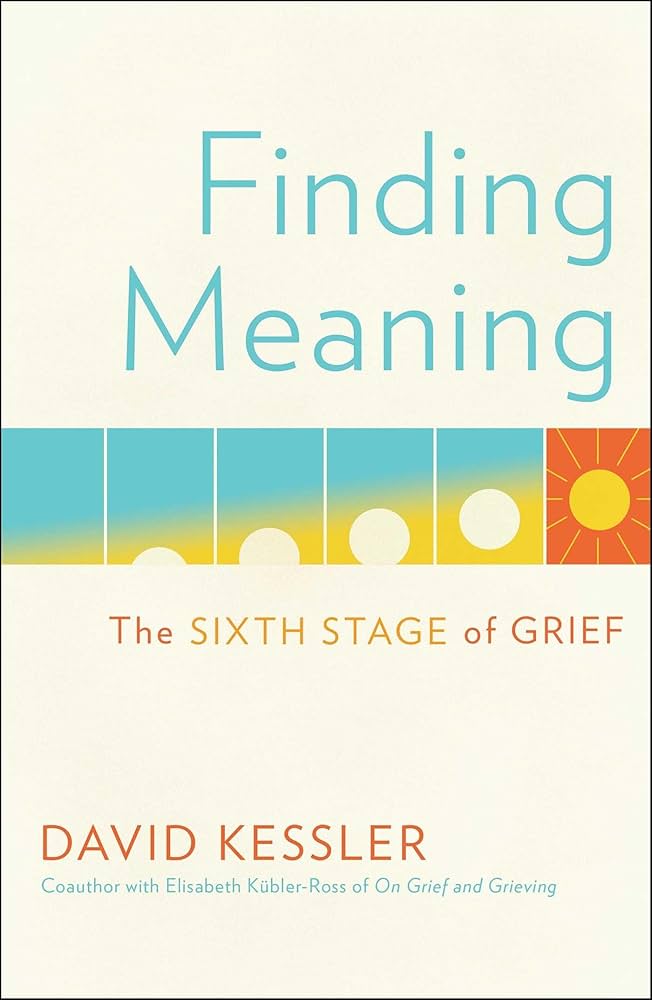
Finding Meaning: The Sixth Stage of Grief
In 1969, Elisabeth Kübler-Ross first identified the stages of dying in her transformative book On Death and Dying. Decades later, she and David Kessler wrote the classic On Grief and Grieving, introducing the stages of grief with the same transformative pragmatism and compassion. Now, based on hard-earned personal experiences, as well as knowledge and wisdom gained through decades of work with the grieving, Kessler introduces a critical sixth stage: meaning.
Kessler’s insight is both professional and intensely personal. His journey with grief began when, as a child, he witnessed a mass shooting at the same time his mother was dying. For most of his life, Kessler taught physicians, nurses, counselors, police, and first responders about end of life, trauma, and grief, as well as leading talks and retreats for those experiencing grief. Despite his knowledge, his life was upended by the sudden death of his twenty-one-year-old son. How does the grief expert handle such a tragic loss? He knew he had to find a way through this unexpected, devastating loss, a way that would honor his son. That, ultimately, was the sixth stage of grief - meaning. In Finding Meaning, Kessler shares the insights, collective wisdom, and powerful tools that will help those experiencing loss.
-
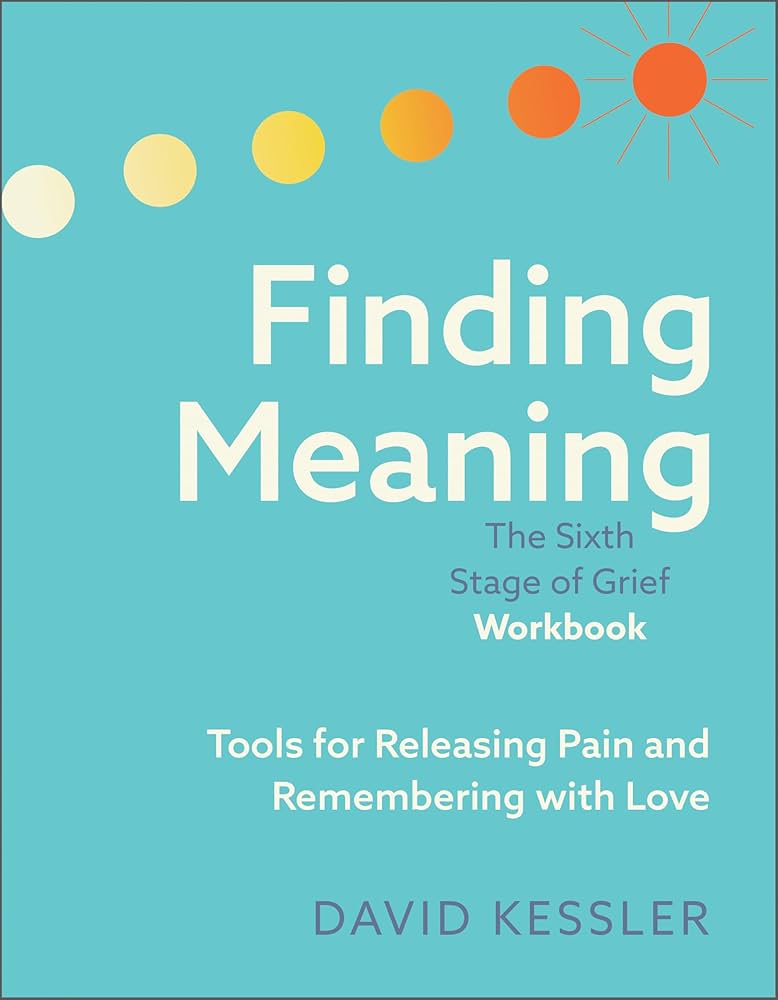
Finding Meaning: the Sixth Stage of Grief Workbook: Tools for Releasing Pain and Remembering with Love
Love is the antidote for the pain of grief.
When you experience grief, your world can feel overwhelming. It can be difficult to imagine a future. You feel lost and hopeless.
International grief expert and noted author David Kessler has spent decades working with thousands of people experiencing the depths of their grief. He knows the pain deeply, personally. And he also knows the path to begin to find hope, and healing, again.
In this companion workbook to David’s bestselling book Finding Meaning: The Sixth Stage of Grief, you will come to understand your unique and personal experience with grief and begin to work through the loss, releasing the hurt and learning to grieve with more love than pain... because love never dies.
And it is in that love where you can find meaning.
Written with warmth, sensitivity, and unique insight, you’ll feel like you are sitting with David, having a conversation along your path to healing.
Resources
-
- Cleveland Clinic: What Is Grief? Types, Symptoms & How To Cope
- Mayo Clinic: Complicated grief
- Massachusetts General Hospital: A Guide Through Grief
- CDC: Grief
- American Psychological Association: How grieving changes the brain, with Mary-Frances O’Connor, PhD
- Dana-Farber Cancer Institute: Strategies and Tips for Grieving
- Crisis & Trauma Resource Institute: How to Support Someone Through Grief
- Time Magazine: 21 Ways to Help Someone You Love Through Grief
- Verywell Mind: Dating a Widow or Widower Can Be Complex—Here Are Some Things to Consider
- Harvard Medical School: Getting stuck in long-term grief
- Full Circle Grief Center: Finding Meaning From Grief
- The Guardian: Finding meaning in the life of a loved one who dies is part of grief
- The New York Times: Making Meaning Out of Grief
- Healthdirect: Grief before death – understanding anticipatory grief
- Caregiver Action Network: Grief for Family Caregivers: Understanding Anticipatory Grief
- David Kessler: Free Suicide Loss Support Series
- David Kessler: Love, Loss, and Parenting Is Forever
- David Kessler: Navigating The Unique Grief - When A Spouse Dies
2 Million Readers.
1 Life-Changing Newsletter
Simple and Straight-to-the-Point...
Just Like Mel.