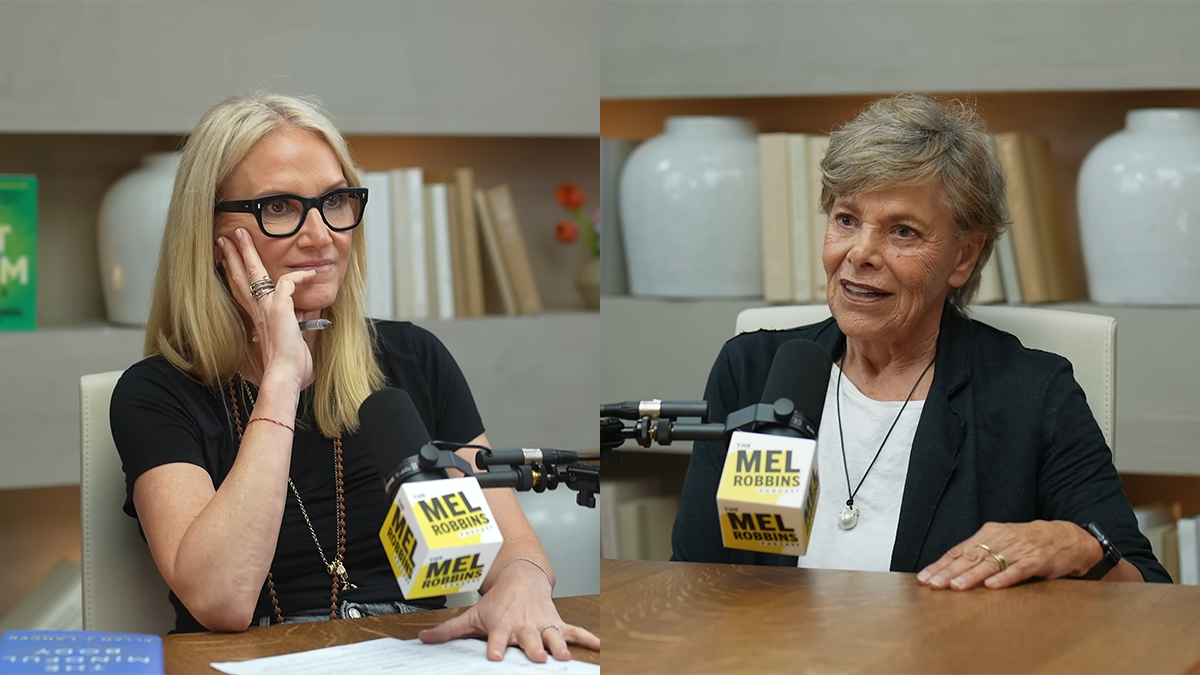
Episode: 353
#1 Mindset Expert: Simple Mindset Shifts That Transform Your Body, Energy, & Life
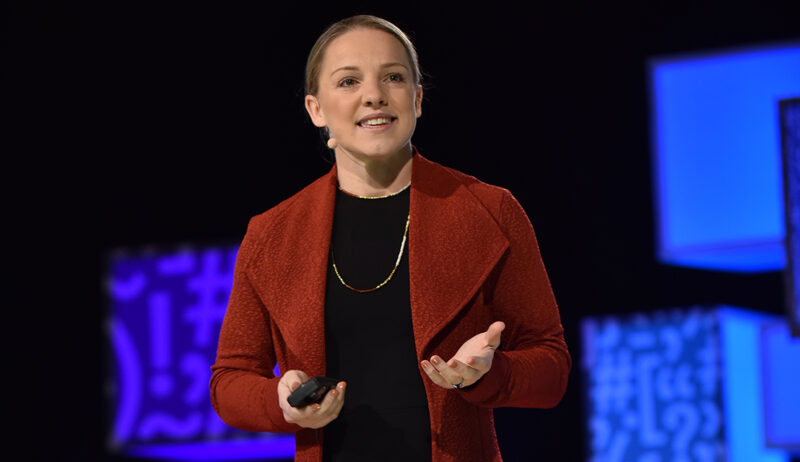
with Dr. Alia Crum
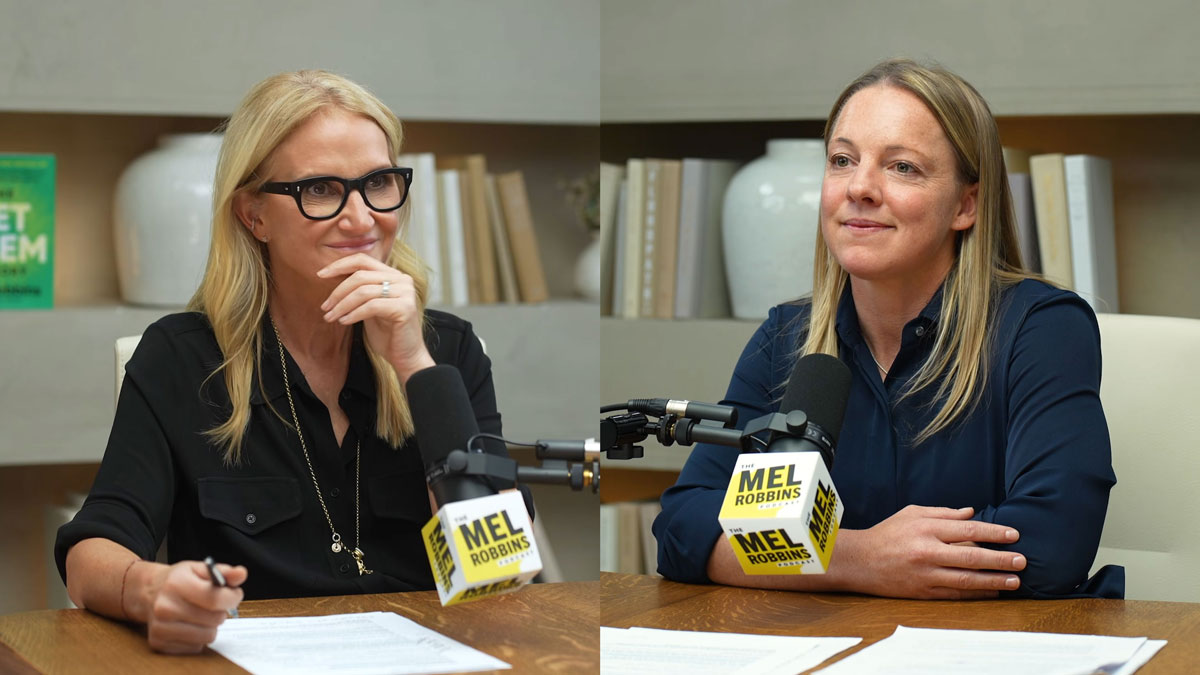
Today, you are going to learn scientifically proven ways you can use your mind to upgrade your life, starting with your body, energy, and confidence.
In this episode, Stanford professor and leading psychology and mindset researcher Dr. Alia Crum reveals the science behind how your thoughts shape your body, your energy, and your health.
She’s proven over and over again that your thoughts about exercise, stress, and food are working against you – and how you can change them.
If you are tired of criticizing yourself, tired of your fears and anxiety, and tired of never seeing the results you deserve, Dr. Crum is going to teach you, step by step, exactly how to change the settings in your mind to achieve anything you want.
Once you hear this, you’ll start noticing shifts in places you never expected.
Listen on:




Your beliefs were intended to protect you, but they are actually creating the reality you fear most.
Dr. Alia Crum
All Clips
Transcript
Dr. Alia Crum (00:00:00):
Do you believe the world is dangerous or safe? That's a mindset. Do you believe the world is just or unjust is a mindset? Do you believe the world is abundant, full of resources, enough for all of us to go around? Or do you believe it's scarce? That's a mindset. These mindsets, Mel, they're not true or false. They're not right or wrong. They're oversimplified, highly evaluative judgments, but they matter in shaping our lives. In fact, they create our realities.
Mel Robbins (00:00:41):
Today, the world's number one expert in mindset, Dr. Aaliyah Crum, is here in our Boston studios. Dr. Aaliyah Crum is a Stanford professor and she runs the Stanford Mind and Body Lab. She has proven in her research over and over again that your thoughts are working against you.
Dr. Alia Crum (00:01:02):
My life's work is to understand the power of the human mind. Mindsets are quite literally settings of the mind. Wait a minute. Hold on a second. Okay. And now I feel almost like an idiot. So the total effect of anything we do, whether that's medication or what we eat, for example, is a combined effect of what's actually in it and what you believe to be true about it. It no longer needs to be, oh, is it the mind over matter? No, it's mind and matter.
Mel Robbins (00:01:40):
Dr. Aaliyah Crum in the house, thank you and welcome to the Mal Robbins Podcast.
Dr. Alia Crum (00:01:46):
Thank you, Mel. It's so exciting to be here.
Mel Robbins (00:01:48):
I am so excited because I really want to make being super fit and healthier and happier easy. And I do believe that you can help me change my mindset. So here's how I want to start. Could you tell the person listening, how would my life be different? How might it be better if I take all of this amazing research and all the tools you're about to teach us and I just apply it to my life? What's going to happen?
Dr. Alia Crum (00:02:19):
So Mel, my life's work as an academic, but also as a human is to understand the power of the human mind. So I think we all know this, right? There is this power of belief, of mindset, and the people who are listening to your show are especially clued into this fact. But I'd like to go a little deeper and be a little bit more specific. So when we say things like, "Oh, just believe or think positive or change your mindset." What do we really mean?
Mel Robbins (00:02:59):
I don't know. I'm hoping you're going to tell me because I think that a lot of us do feel like, okay, I just have to believe, but you're here to teach us, no, there's actually something deeper and there's something more accessible.
Dr. Alia Crum (00:03:13):
Yeah. I think we need to be more specific. So say you have something stressful on the horizon like a job interview or say you're trying to lose weight or get healthier or say you were just diagnosed with cancer or some other health diagnosis. It really matters to know what should you believe? What is the best mindset to have? How much does that matter? And most importantly, what can we do to adopt more useful mindsets? So the goal, as I see it for our conversation today, is to help people to become more sophisticated and more skillful and understanding and applying the power of the human mind.
Mel Robbins (00:04:00):
Whoa. I love the idea that there is this skill that you can develop to be able to tap into the power of your mind.
Mel Robbins (00:04:11):
It goes way beyond sort of just your beliefs, but rather understanding the mechanics of how it works. Now, Dr. Crum, given that you are a world-renowned researcher on mindset, maybe we should just start with vocabulary. What exactly is mindset? What does that mean?
Dr. Alia Crum (00:04:31):
Yes. So mindsets are quite literally settings of the mind. So they're-
Mel Robbins (00:04:38):
Wait a minute. Hold on a second. Okay. And now I feel almost like an idiot because I've never heard anybody explain what is so obvious now that you said it. Mindset is the settings in your mind.
Dr. Alia Crum (00:04:58):
Exactly. Now they're settings, they're lenses or frames of mind which orient us to a particular set of experiences.
Mel Robbins (00:05:08):
Okay.
Dr. Alia Crum (00:05:09):
Okay. So our minds can be set in many ways. The mindsets that I'm interested in that have sort of occupied my thinking and research are the mindsets that are set by our core beliefs.
Mel Robbins (00:05:22):
Okay.
Dr. Alia Crum (00:05:23):
So our core beliefs are our beliefs about the essence of what something is and why it matters.
Mel Robbins (00:05:31):
Okay. Can you give me an example? Because already I'm like, I don't know if I'm following this.
Dr. Alia Crum (00:05:35):
So an example. So we have mindsets about many things in the world. In fact
Mel Robbins (00:05:40):
And let me just, because I want to track with you because I'm so excited to really think about mindset as simply the settings in your mind. And what I love about the idea of thinking about mindset as the settings in your mind is that even somebody like me who is not a world renowned Stanford researcher like you understands at a basic level, wait a minute, if there are settings in my mind, then clearly someone or something put those settings in place. And if there's settings in my mind and I know about them, I have the ability by learning from you, Dr. Crum, how to change the settings.
Dr. Alia Crum (00:06:17):
Exactly. Yes. That's what we're learning today? That's what we're learning.
Mel Robbins (00:06:20):
Oh my God, I love this.
Dr. Alia Crum (00:06:21):
And anybody can become aware of and change the settings.
Mel Robbins (00:06:24):
Okay. So give us an example of what you mean when you say settings in the mind and how it impacts your life maybe right now and you didn't even realize it.
Dr. Alia Crum (00:06:34):
Yes. So we have mindsets about many things. My colleague Jared Clifton does great work looking at mindsets about the world as one big place. So do you believe the world is dangerous or safe? That's a mindset. Do you believe the world is just or unjust? Kind of where you are on that continuum is a mindset. Do you believe the world is abundant, full of resources, enough for all of us to go around? Or do you believe it's scarce? That's a mindset. Carol Dweck, David Yeager have done really good work on mindsets about intelligence or your abilities. So do you believe that your intelligence is fixed, set in stone, or do you believe it's malleable? It can grow, it can improve, it can change. The work that we do in our lab is looking at mindsets about things related to our health. So take stress.
(00:07:33):
Do you believe that stress is going to kill you or is it going to make you stronger? What's your belief about healthy food? Do you believe healthy foods are the disgusting and depriving option or do you believe healthy foods are actually indulgent and delicious? What about cancer? Do you believe that cancer is an unmitigated catastrophe or might cancer be manageable? Might it even be an opportunity to make positive changes in your lives? So these mindsets, Mel, they're not true or false. They're not right or wrong. They're oversimplified, highly evaluative judgments about the nature of these things,
(00:08:18):
But they matter in shaping our lives. In fact, they create our realities and they create our realities not through some kind of magic, but by design. So our mindsets change what we pay attention to. If you believe the world is dangerous, you're going to see more danger in the world. Our mindsets change how we feel and expect to feel emotionally. Our mindsets change what we are motivated to do and how we actually engage and behave in the world. And what our work has shown is that our mindsets also change our bodies. They change how our bodies physiologically prepare and respond to different things.
Mel Robbins (00:09:02):
I think that last thing is super fascinating, and it's going to help us understand why the settings in our mind, which we can change, matter so much. When you were coming all the way here, we were all so excited and the production assistant on this show got over a decade long fear of flying simply by listening to your TED Talk and repeating to herself over and over again, she would say on this flight, "This is just an old setting in my mind."
(00:09:41):
And she says that that one technique from you helped her get over her fear of flying. In fact, I want you to hear from Alyssa.
Alyssa (00:09:52):
Hi, Dr. Crum. I've been afraid of flying for 10 years, and every time I fly, I get super overwhelmed with the idea that I could potentially have a medical emergency in flight after an experience 10 years ago, and my body follows suit with physical symptoms that I'm sick. But since listening to your TED Talk, I was really able to update the setting in my mind and remind myself that my physical sensations only feel so real because I'm working myself up into believing them. So last week I flew round trip from Boston to LA, and for the first time in forever, I felt no sickness or anxiety. It's been so incredible putting your work into practice to make my mindset work with me not against.
Mel Robbins (00:10:34):
I love this. And here's what I want to ask you because I have personally the desire to turn this now into a personal coaching session for settings of my own mind and my kids' minds. But what I want to know is if she were on the plane and she were repeating to herself, "This is just an old setting in my mind." And that intentional saying, these are just old settings in my mind, allowed her to not get all worked up and feel the physical sensations that freaked her out. Can you explain, Dr. Crum, what's actually happening in this example?
Dr. Alia Crum (00:11:18):
Yeah. Well, first of all, Alyssa, thank you for sharing that. It's always so wonderful to know that the work we are doing is useful. What's happening there is really powerful, right? Which is first, going back, her mind was set by probably some experience that she had as a child where she maybe got sick on a plane or maybe was on a plane and felt deep fear and anxiety or lack of control or whatever it was on that plane. And that memory kind of forged in her mind as a setting that if you fly, you will feel horrible. You will feel out of control, you will feel sick, you will feel ... I don't know what it was, but I'm guessing there was some association that was made between flying and physical symptoms. Now, what's kind of glitchy about the mind and the body is that learning that what the mind does is thinks, "Oh, I need to protect you from ever experiencing that again." So it thinks, let's avoid planes, let's avoid any kind of situations when you're going to feel like that again.
(00:12:37):
But it also perpetuates this belief that if she flies, she's going to feel those things.
(00:12:42):
Now, the belief and the kind of desire to protect was well-intended, but what happens is that belief creates the reality. So when she gets on a plane feeling, "I'm afraid to fly because I'm going to get sick." Go back to those four mechanisms. What does she start paying attention to? All the ways in which she's a little clammy, all the ways in which she's a little nauseous, all the ways in which she might feel her heart racing, maybe she's going to pass out. We all have these symptoms all the time. This is what's so interesting about our bodies. If you ask yourself to pay attention to your body, you realize sometimes we do feel nauseous. Sometimes our heart races. It's happening all the time. Now she has a reason to find that.
(00:13:25):
So that belief changed her attention, changed her emotions, anxiety off the charts, fear off the charts. It probably changed what she was motivated to do. I'm assuming she didn't take many flights for many years and physiolologically those symptoms get created. So the beliefs were intended to protect her. The settings of the mind were intended to protect her, but they were actually creating the reality that she feared most. So what's beautiful in her example is that you don't need 10 years of therapy necessarily to kind of shift the settings in your mind. Now don't get me wrong, I'm all for therapy and sometimes we do need many years to explore the origins of our beliefs. But in her case, she realized, oh, I don't need that setting anymore. Thank you body for trying to protect me, but I don't need that. I just don't need that setting anymore. And that alone, that awareness sometimes is enough to let it go.
Mel Robbins (00:14:32):
There's so much I want to make sure that we unpack in that. And I love what you said when you said sometimes you don't need 10 years of therapy to figure it out. And I don't remember who said it, but I love this saying that if you didn't talk yourself into it, you probably can't talk yourself out of it. And your work and what you're teaching us today is that the experiences of your life, they create settings in your mind and they may work for periods of your life, but there will come a moment in your life where you can start to access your research and say, wait a minute, if I don't like the way I'm experiencing something, let me just consider that there's old settings in my mind that I don't need anymore. And anytime I decide to, I can change the settings.
(00:15:20):
And I also would assume that you don't necessarily have to know the originating event. You just have to know that there are certain settings in your mind that every time you get on a plane or every time you get a little tingle in your stomach, you feel like, "Oh gosh, I'm going to throw up." And then you start working yourself up into a tizzy. That's an old setting. And so I love that because I feel like this is almost like myself doing tinkering with my own settings in my mind for any kind of situation. There's another thing that you said very quickly that I want to make sure I understand. You basically said the reason why settings are so important, if I'm getting this right, please correct me if I'm wrong, is that these settings, the way you see the world, affect four mechanisms. And if I heard you correctly, it's that these settings in your mind tell you what to focus on. They have an impact on the emotions you feel. They also impact what you're motivated to do or not do, in this case, getting on a plane or not, and they have a physiolological impact. So could you take the example of being afraid of flying, which is an old setting? A lot of people have that one.
(00:16:44):
And tell me exactly how does the setting that I'm either going to get sick on this plane or this plane's going to go down or something terrible's going to happen, the old setting, how does that setting impact your attention, your emotions, your motivation, and your physiology? Just so we kind of get the power of these settings over these four things and how that then impacts your behavior.
Dr. Alia Crum (00:17:10):
Yeah. So the first thing I would want to do is figure out what the setting was. So sometimes fear of flying is about the core belief about flying. Flying is dangerous. I think in Alyssa's case, what I'm hearing, I'd like to talk with her more about it, was actually a core belief about her body, that she was worried that she was going to get sick, that she was going to have a medical emergency on that flight. And so it was the setting of her mind that was a distrust in her body. My body is not only not capable, but might turn on me in this very moment. Gotcha. And flying was fearful for her because there's no help to be had on a flight. You can't get any further from medical attention when you're up in the air. And so that belief of my body, it can't be trusted.
(00:18:10):
If we can work with that, how does that change what she pays attention to?
(00:18:16):
She starts noticing all the ways in which her body is a little off today, isn't really working for her. She starts feeling anxious, which as you know, further exacerbates physical symptoms in the body. Maybe behaviorally, and Alyssa, sorry if I'm putting words in your mouth and you can correct the record if it's wrong, but a lot of people, they take pills or they drink, which could cause more physical symptoms on the flight. So these mechanisms of what do you notice? What are you doing? How are you feeling emotionally and what is going on physically are all kind of working together. And they're working together, ironically, to create the reality that you fear most, which is your body is going to turn on you in that moment.
Mel Robbins (00:19:05):
I've never had anybody explain the actual science of the mind, body, and the connection and really do it in a way where I now think I understand what you mean when it's that your mindset is creating the reality.
(00:19:24):
What you're teaching us and what your research proves is that the settings in your mind ... Let's take a bunch of ones that people have just to start throwing it out and then we'll get into the health stuff, is that if you believe that you've completely screwed up your life, it's too late to change, you're never going to get out of debt, you're never going to find the one, whatever it may be, that setting in your mind becomes the ... It drives what you focus on. So you start to see everybody that's coupled up, you see everybody that's successful, you start to think that you're the only one that creates a lot of emotions for you, that probably makes you feel very unmotivated to do the things that would change your life pretty drastically over time. And your work also says those settings in your mind that, "I'm too late, I can't change, things don't work out for me, " absolutely changes the way your body feels physiologically.
(00:20:21):
And so we're going to talk about some of the ways we can leverage this both for self-awareness, but more importantly, to make change easier and to have us learn how to change the settings so that our minds are helping us and positively helping us stay motivated and focus on the right things and feel what we want to feel, which Alyssa just did by just watching your talk, which is Incredible.
Dr. Alia Crum (00:20:49):
I just want to say that I think I just feel for all of us, right? We're doing our best. You really want to find the love of your life, and you haven't found them yet and your brain wants to help, but it latches on to these oversimplified statements like, "I'll always be alone," or, "I'll never be enough." Or you want to be healthy, but something happens and you think, "Oh, my body's not good enough." Again, these are mindsets. They're core beliefs about the nature essence of who we are, how our bodies are, what life has in store for us. But I'll say it again. They're not true or false. They are not right or wrong. They're oversimplified, highly evaluative judgments that we make in order to simplify things, but they matter. So choose wisely and know that the choices that you make interact with the world in ways that make it so. And the other thing I'll just say in response is we shouldn't be to blame for our beliefs, our settings in the mind, and we can talk about this.
Dr. Alia Crum (00:22:10):
They're shaped by our cultures, by our upbringing, by our parents in ways that we may never fully understand. But while we shouldn't be to blame for them, we should know that we can be empowered to change them. At any given moment, at any given time, you have the power to flip the switch.
Mel Robbins (00:22:33):
Let's dig into it. One of your favorite topics is the placebo effect. What is the placebo effect? How does it work in our minds and our bodies? And then let's talk about how your research proves that we can use it to our advantage.
Dr. Alia Crum (00:22:47):
Yes. So the placebo effect is typically understood in the context of a randomized placebo controlled trial.
Mel Robbins (00:22:54):
Which is for somebody who doesn't know what the heck that means, what is that?
Dr. Alia Crum (00:22:57):
Yeah. So in a clinical trial, people are brought in and they're randomly put into two different groups. It's typically to test a new drug or medication. And half of the people will get the active drug or medication.
Mel Robbins (00:23:10):
You mean like the real one?
Dr. Alia Crum (00:23:11):
The real one, the real thing. The other half will get the exact same sort of capsule, but there'll be nothing in it or it'll be an inactive substance. So that is called the placebo.
Mel Robbins (00:23:24):
Okay.
Dr. Alia Crum (00:23:24):
Now, clinical trials are important for testing the specific efficacy or effect of a new drug.
(00:23:32):
So in a clinical trial, they'll bring people in, they put them in these two groups, they'll measure the effect, and then they'll subtract out any effect that happens to occur when you're on the placebo because the assumption is that's not real. What's real is in the capsule. If anything else happened because you believed you were getting a real pill or you were just taking a pill, the act of taking a pill or the feeling of being cared for, that's not real medicine. So let's just subtract that out. Okay. Now what's interesting and people have caught on with is that in almost all of these trials, the placebo tends to work to some degree. So,
Mel Robbins (00:24:13):
Let me just translate this so make sure I'm tracking. So if you're doing some sort of clinical trial and you've got the real drug that's supposed to treat some medical condition or whatever, you got that group taking that and then you measure whether or not the drug works. There's this whole other group taking the placebo. Basically you're getting a sugar pill that's fake. It's not got any clinical research behind it in terms of its ability to do anything. But the mere fact that you believe that you are getting medication to help with this condition, you're saying physiologically, biologically, people's symptoms do tend to get better in some cases. So what does that tell you about what the placebo effect actually is?
Dr. Alia Crum (00:25:00):
Yeah. So it's really interesting, and it's lots of different things. So like a placebo, simply believing that you're taking a pain reliever relieves your pain. Simply believing you're taking a sleep aid helps you fall asleep. Placebos can calm your asthma, reduce your immune response, lower your blood pressure. And it's not just that these placebos make people say they feel better, but they're actually real neurobiological correlates. So believing you're taking a real pain medication can release endogenous opioids in the brain. Placebo Parkinson medications activate dopaminergic systems in the brain. You can condition placebo immune responses. So it begs the question as you just asked, what is actually happening?
Mel Robbins (00:26:00):
What is happening?
Dr. Alia Crum (00:26:00):
So obviously it's not the fake pill. There's no magic in the sugar pill. What we think is happening is it's essentially the combined effect of three things. So first is the ability of your body to heal itself with time.
(00:26:17):
Now, this often gets discounted, but I don't think we should discount it. Your body has an incredible, remarkably efficient systems. You have a growth promoting endocrine system, you have a adaptive immune system, you have a regulating nervous system, and they're all trying to work for you. So those systems in the body, and they heal us from most things we experience in life, even when we're not paying attention. But those natural systems in the body can be activated by our mindsets, by the belief that you're in good hands, that this condition is managed, that you're going to be okay. Those beliefs prioritize and prepare the systems to align in your body. And the other thing that's important here is it's not ... Your beliefs don't come out of nowhere. They're shaped by the social context, the words the doctor shares, their bedside manner, the label or branding of the drugs, the white coat, the medical credentials, the medical ritual.
(00:27:34):
All of these things can shape our mindsets, which can in turn activate the body's self-healing systems.
Mel Robbins (00:27:42):
So are you saying that the settings in your mind can act almost like a placebo and turn on things like ... How do you use this to your advantage? Because I know that the advice is not we're going to pop a sugar pill and then pretend that now I'm motivated to exercise.
Dr. Alia Crum (00:28:04):
Yes. So that's such a good question because we get kind of fascinated by placebo effects. We're like, "Ooh, how cool." You respond by doing nothing. A fake pill magically makes you feel better. But if you think about it, while the randomized control trial is good for testing the specific effects of the medication, what we forget when we actually go out and prescribe the medication or in the practice of medicine, in the reality of medicine, when we take a pill, any effect of that pill is going to come not just from the drug inside, but from the belief that the pill is going to work. So the total effect of anything we do, whether that's medication or what we eat, for example, is a combined effect of what's actually in it and what you believe to be true about it. So this is really empowering, right?
(00:29:10):
It no longer needs to be, oh, is it the medication or the mind? Is it the mind over matter? No, it's mind and matter,
(00:29:20):
It's mind and medication. So if you want to heal, if you want to improve your symptoms, take the best medication we have if it's relevant to you, but also adopt useful mindsets about it. I think one study that really helps to kind of make this, what I'm saying concrete, is this great study. It was done by Cam Hansen and colleagues. And what they did was they took people who had persistent migraines and they followed people as they got these migraines in their life. And every time they got a migraine, they were given a Pill. Now, sometimes they were given the real pill, a Maxalt, which is an actual real medication for migraines. Other times they were given a placebo, an inactive fake pill. So like their regional clinical trial, but they had a catch to it. So what they did was sometimes when they were given the Maxalt, they told the people it was Maxalt.
(00:30:27):
Other times they gave people the real Maxalt, but they told them it was a placebo. When they gave people a placebo, sometimes they told them it was Maxalt and other times they told them it was a placebo. So now you're able
Mel Robbins (00:30:42):
It really screwed everybody.
Dr. Alia Crum (00:30:43):
Okay.
Mel Robbins (00:30:44):
So what did you find?
Dr. Alia Crum (00:30:44):
These are fun studies. What they found was fascinating. So the most pain relief came from the Maxalt labeled Maxalt.
Mel Robbins (00:30:54):
Okay. So when you were told it was the right pill and you took the pill, you got the most relief.
Dr. Alia Crum (00:30:59):
Yeah. When you had the real pill and believed it was a real pill, you had the most relief.
Mel Robbins (00:31:03):
So you got settings in the mind and the biology together.
Dr. Alia Crum (00:31:06):
Exactly.
Mel Robbins (00:31:06):
Got it.
Dr. Alia Crum (00:31:07):
But now get this, when they were given the real pill but told it was a placebo, it worked significantly less.
Mel Robbins (00:31:15):
Whoa. So you've got the real pill, you got the biology, but because of the settings in your mind not believing it, your mind reduced the effectiveness of the pill being able to work on the biology. That's crazy.
Dr. Alia Crum (00:31:28):
Right? And it still worked, but just not as well as the pill plus the belief. And in fact, it worked about the same as a placebo pill labeled Maxalt.
Mel Robbins (00:31:40):
No way. So then you get the settings that you think you're getting the medicine, but the biology isn't there and your mind still works as if you're taking the pill. Exactly. That's crazy.
Dr. Alia Crum (00:31:54):
It's crazy. And it was beautiful because it was sophisticated and skillful how they separated these things. But those conditions, what they suggest is that the pain relieving effect of the pill was about the same as the pain relieving effect of the belief. Now, another fun, an interesting thing they found in the study was the placebo labeled the placebo was also better than doing nothing. So that's a whole other conversation on understanding that.
Mel Robbins (00:32:27):
But why do you think taking a pill that you know isn't the prescription, but taking it anyway has a positive impact on your health?
Dr. Alia Crum (00:32:37):
I think it's because people still believe that something might work for them here. Ted Kapchuck, who's an incredible person and scientist has been doing a lot of research on what he calls open label placebos and they tend to work, but I think we still don't really know why. I personally think it's the belief in placebos, but we need more research to understand that.
Mel Robbins (00:33:04):
But it points back to what you're teaching us today, which is the settings in your mind are wildly powerful. So change the settings to align with the outcome that you want. I want to just tease this apart a little bit because I love what you're saying and I personally, I 100% believe this is true. 1000% believe that it's true. And at the same time, I want to be sure that the person listening or who's watching right now and spending time with us, that they really get what you're talking about because it can be a little confusing when we talk about belief versus what's actually happening physically. So if somebody has cancer or if somebody is really struggling to lose weight, just believing that you're going to heal, that doesn't cure cancer. That's not what you're saying, right?
Dr. Alia Crum (00:34:00):
This question about cancer is really important. It shouldn't be mind over matter, right? It should be mind and matter. So if you're diagnosed with cancer, you should get the best treatment for you. We have great drugs and therapies for cancer. Many of the cancers that were incurable 10, 20 years ago are curable now. And that is a beautiful thing thanks to hardworking biologists and scientists. So we should take those, right? But what I would add is we should also think about our mindsets. So what are the mindsets we have about cancer, about what it means for our life? What are our mindsets about the treatment and the care we're getting? It turns out those mindsets matter too, and they can radically shape the whole experience that someone is having when they are going through cancer.
Mel Robbins (00:34:59):
As a world-renowned researcher on mindset and its impact on health, what is the mindset that is the best mindset to have when you are going through a cancer treatment or you're facing some other kind of scary health diagnosis?
Dr. Alia Crum (00:35:16):
Yeah. So we've been working on this question for nearly 10 years now working with Dr. Lydia Shapira, Dr. Jonathan Barrick, David Spiegel, Shan Zion, and others. And what we've found is that the best mindset to be in when you have cancer, first it's not just think positive. It's not just believe you don't have cancer, believe you'll be okay. Those are actually acts of denial. The best mindset to be in when you have cancer is the mindset that this is manageable. Contrast that to the mindset of this is a catastrophe. It's unmanageable. Another mindset that we found is very useful for people going through cancer is the mindset that their bodies are capable. Many people who are diagnosed with cancer feel like their bodies have let them down,
(00:36:15):
That their bodies have turned on them or at best are just sort of not working right now. And what we've found in a number of studies, including trials where we work to inspire people into different mindsets is that moving to adopt the mindset that cancer is manageable, their bodies are capable, is profoundly transformative in shaping their whole experience. So it changes their quality of functioning in life. And it also reduces physical symptoms like nausea and fatigue and upset stomach and other things when they're going through chemotherapy. So we don't know, right now we're doing another trial looking at how to change these mindsets and we are measuring people's blood samples and we're looking at immune markers that are associated with cancer outcomes. So we don't know yet the results of those trials, but I would bet a lot of money that these mindsets don't just stay above the skin, they're getting down and they're influencing our body's response.
Mel Robbins (00:37:19):
Well, I'm excited that you're explaining the mechanisms in the brain and the research that proves that your mind and body are linked and the settings impact your biology. And I would love to have you explain your famous milkshake study. If there was ever a scientific study that I wanted to be a subject in, I think it would be a study called the Milkshake Study, but could you explain what this study is, how you conducted it? And more importantly, what did you find in the famous milkshake study and what does it tell us about what's possible regarding the settings of your mind and the power that it has over your health?
Dr. Alia Crum (00:38:02):
Yes. Great. So the milkshake study was very simple, actually. We brought people into the metabolic research lab. This was done at Yale University and we had them come in two time points and we had them drink a 350 calorie milkshake.
Mel Robbins (00:38:19):
Okay. What flavor?
Dr. Alia Crum (00:38:20):
It was vanilla.
Mel Robbins (00:38:21):
Okay.
Dr. Alia Crum (00:38:22):
Just simple vanilla milkshake. And meanwhile, while they were drinking this milkshake, we had them hooked up to an IV. And the reason we had them hooked up to an IV is we were measuring their blood. And in particular, we were interested in this hormone called ghrelin.
Mel Robbins (00:38:37):
Ghrelin.
Dr. Alia Crum (00:38:37):
Ghrelin.
Mel Robbins (00:38:38):
Okay. Ghrelin.
Dr. Alia Crum (00:38:39):
So ghrelin, medical experts call this the hunger hormone. So the hunger hormone is thought to help regulate hunger and metabolism. So when ghrelin levels are high, that signals to your brain, "Hey, seek out food." And it also slows metabolism until you actually secure and consume that food. And theoretically, it had been assumed that in proportion to the amount of calories you eat, ghrelin levels will drop. So if we go out and have a burger and a milkshake and a lot of calories, ghrelin levels will plummet, which signal to the brain, okay, you can stop prioritizing food consumption and rev up the metabolism in the body to burn the food that you just ate. Now, of course, if we didn't get food or if we only ate a little bit of food, ghrelin levels would drop only slightly, therefore kind of perpetuating those hunger signals and keeping metabolism slow.
Mel Robbins (00:39:35):
Okay. Okay. So you give these people these milkshakes, you put an IV in them, and what do you suspect would happen?
Dr. Alia Crum (00:39:42):
Yes. So if we had just given them the same milkshake at two different time points, and it's the same person, both time points, same milkshake, we would assume that their bodies would respond exactly the same.
Mel Robbins (00:39:56):
Okay. So what did you do in the study though?
Dr. Alia Crum (00:39:59):
Yes. So here's the catch. So I'm a psychologist, so I like to play around with how does changing what we believe to be true change how our bodies respond. So in the study, we actually, even though we gave them a 350 calorie milkshake, at one point we told them it was an indulgent milkshake, 620 calories, high fat, high sugar. This is really the decadence you deserve. We even had on the label like decadence you deserve. And the other time point, we told them it was a sensible shake. It was called the sensor shake. It was light and fit. It was 140 calories, low fat, low sugar. This is sort of your diet shake often.
Mel Robbins (00:40:42):
Okay. So just so I'm tracking.
Dr. Alia Crum (00:40:44):
Yes.
Mel Robbins (00:40:44):
I'm in your study. One day I come in and you give me the sensible shake and I'm told, and I believe it's 140 calories and that's one shake.
Dr. Alia Crum (00:40:55):
Yes.
Mel Robbins (00:40:56):
Another time I come in at the exact same time I am told ... Now it's the same shake I'm drinking, but I am told and it is labeled the indulgent shake and it's 600. It's the luxury that I deserve. And so that's the information I'm told, and I'm assuming these are now manipulating the settings in my mind about what I'm actually consuming. What did you find when you did that with people?
Dr. Alia Crum (00:41:22):
Essentially, the labels were setting their minds. The label either put them in the mindset of indulgent high caloric shake or the mindset of sensibility somewhat of restraint, the low fat option. What we found was that their ghrelin response differed in response to simply changing the mindset. And in particular, when they thought they were consuming the indulgent shake, their body's ghrelin levels dropped at a threefold rate compared to when they thought they were consuming a sensible shake. So in essence, what this means is when they thought they were consuming indulgently, their bodies responded as if it had had more food.
Mel Robbins (00:42:07):
What? Wait, so you're saying that by changing just the settings in the mind, by having somebody believe that the shake was more caloric and more indulgent, it actually changed the biology that you could measure in someone's body. The body responded based on the mindset changes.
Dr. Alia Crum (00:42:32):
Yep, that's exactly right.
Mel Robbins (00:42:33):
That's insane.
Dr. Alia Crum (00:42:34):
But surprising because we have this kind of oversimplified assumption that a healthy weight is kind of calories in, calories out, but it's really not that simple. And what this study shows is that our mindsets also matter. The settings of the mind that we're in when we eat will change how we experience that food, both on a taste level, but also on a physical level.
Mel Robbins (00:43:01):
I think this is so exciting. And one of the things that I really like about this is that, okay, so I'm going to dumb this down for myself. So I would've thought that if you slurped down a milkshake, whatever it is that you drank, that would be the singular input that your body then processes and responds to. But what you're saying is that the research is very clear that when you get very intentional about the settings in the mind, the settings in the mind also are communicating to the body at all times and also sending information to the body that changes the biology of what you're experiencing. That's extraordinary.
Dr. Alia Crum (00:43:43):
Yep. I don't do research only because it's interesting. I do research in large part because I have problems I want to solve or I see problems in others that I want to help solve. So in fact, the idea for the milkshake study came from a problem that I was struggling with myself, and that was struggling with diet and weight, which a lot of people have. And the idea actually for the milkshake study came to me when I was having dinner at the Cheesecake Factory. Oh my God. Okay. So you with me here. I assume you've been to a cheesecake factory at some point.
Mel Robbins (00:44:27):
Absolutely. Yes.
Dr. Alia Crum (00:44:28):
And so I was at the Cheesecake Factory with my mother.
Mel Robbins (00:44:31):
And if you haven't been to the Cheesecake Factory, they have a menu that is spiral bound and probably has what, 400 items on it? It is the biggest menu I've ever seen in my entire life and they give monster portions. Okay. So we're at this restaurant, you're with your mom, great place to go to celebrate or hang out with somebody.
Dr. Alia Crum (00:44:51):
Yes. So I'm with my mom. We had a great meal. It was the end of the meal. The plates were cleaned and cleared and I was faced with this obvious but existential question. Are you going to have dessert? Yeah. Or am I going to order the cheesecake? Okay. So you're with me here. So anybody here who's struggled with their weight or diet knows that this is a stressful question.
(00:45:18):
And it's stressful because it's really a catch 22. You're faced with two bad options. So on the one hand, you could let yourself go and have the cheesecake. But if you're watching your weight, you're eating it with this sneaky sense of guilt and shame as you eat. Or you could be virtuous and restrain. But if you're like me, that would leave you leaving the whole experience somewhat unsatisfied. It is the cheesecake factory after all. So here I was agonizing over that decision when the thought occurred to me, what if our beliefs, what if my beliefs about this cheesecake could change my body's response to it? And I thought, I hoped, I was like, maybe like the placebo effect, if I just believed this cheesecake was good for me, that my body would respond as if it was good for me. So that's where the idea for the milkshake study was born.
Mel Robbins (00:46:23):
Oh.
Dr. Alia Crum (00:46:24):
Yeah. So fast forward, we did the study
Mel Robbins (00:46:25):
Hold on did you order the cheesecake?
Dr. Alia Crum (00:46:28):
I didn't order the cheesecake. And the reason I didn't order the cheesecake was that at the time I had been obsessively counting calories. I had been struggling with my weight. I had disordered eating. I had gone through a period of bulimia. I was recovered at that time, but it was still sort of a like ... I was well over the 2000 calories that I had allotted myself. I was like, I will not have this cheesecake, but it was not a very pleasant state to be in. So I hoped like, okay, maybe I can find a way to literally have my cake and eat it too if I just believed good things about it. So I kind of went into that study with this wishful thinking. And fast forward to what we found, which as you know, is that our beliefs did matter, right? What we believed about the cheesecake, in this case, what people believed about the milkshake changed their body's physical response.
(00:47:27):
Now that alone was radical as we've discussed because it took that calories in, calories out equation and flipped it on its head. But when I started to apply these results in my own life, when I was like, "Okay, what did I learn from this? How can I make this useful to me? " What I realized was that the lessons from the milkshake study were even more profound and important. And I realized that what I thought was going to happen was the exact opposite as what actually happened. So if you're eating, what you want to have happen is you want your ghrelin levels to drop Because that will signal to your brain that you've had enough. But what we found was when people thought they were eating healthy, sensibly, sort of restraining their eating, their bodies responded as if they weren't getting enough. It was actually the mindset of indulgence that was the better mindset to have because the mindset of indulgence, even though it was the exact same milkshake, led to them the appropriate, the ideal response of ghrelin levels falling.
Mel Robbins (00:48:40):
Wow.
Dr. Alia Crum (00:48:41):
So this was mind blowing for me because I realized I had been going about it all wrong. I had been sort of gritting my teeth trying to diet, but I was doing all the hard work in a mindset of restraint, a mindset of sensibility, a mindset of I'm not getting enough. And that setting of my mind was counteracting the hard work that I was at dieting. So I realized it's not about the milkshake, it's not about the cheesecake. The real gem in this study is that the mindset of indulgence is the best mindset to be in when you eat. And let me be clear about what I mean by indulgence, right? Indulgence by the original definition of the word, it means to allow oneself to enjoy the pleasure of. So does this license you to eat cheesecake and milkshakes all the time? No, of course not.
(00:49:45):
But now when I eat, whether that's a cheesecake or a salad or like a side of veggies, I try to eat in a mindset of indulgence. So if I find myself back at the Cheesecake Factory, I'll eat the whole meal in that mindset. And what I've found is that when I eat the whole meal in that mindset, I don't even want the cheesecake. Of course, sometimes I'll have cheesecake. And when I have cheesecake, if I really want it, I'll eat that in a mindset of indulgence too.
Mel Robbins (00:50:18):
This we have to unpack because this is amazing. What you're saying is that when you have settings in your mind that are all around healthy eating and can only have certain calories and I'm trying to be good, and all of those kinds of settings, regardless of what you're eating, signal to your body that you're not actually full because you are in a mindset, the settings in the mind of restriction and scarcity, and you got to just follow this certain thing versus what the research shows biologically is that if the settings in the mind are that I am going to be in a mindset where I am in the indulgent setting, meaning I am allowing myself to enjoy this regardless of what I'm eating, that setting in the mind lowers all of the craving and hunger. That's incredible. And you have the research to prove it.
Dr. Alia Crum (00:51:28):
Yeah. And also, the research is one thing, but I can say that this study alone changed my life. That insight for me totally just, it changed everything. And I can literally say I no longer struggle with eating. I enjoy what I eat. I feel good about what I eat and it's all because of this striving for this mindset of indulgence.
Mel Robbins (00:51:50):
So if you go a little deeper into your own settings, what were the old settings in your mind that kind of kept you in that restrictive scarce, mowed around food? And then what were the new settings? Just so the person that's with us, because I know this is going to be like share, share, share, wait a minute, indulgent mind, because it makes a lot of sense. What specifically was the old setting and what specifically was the new setting that allowed you to have that big of a life transformation?
Dr. Alia Crum (00:52:24):
Yeah. The old setting was one that was focused on the behavior. What am I doing? It's all about, I shouldn't eat this, I should eat that. And when you do that and you eat the thing you should, but not the thing you want, you put yourself into a mindset of restraint, like you're avoiding the thing you want,
(00:52:44):
Which leads to the setting of the mind of, I'm restraining myself. I'm not getting what I really want. And that mindset, it turns out to be unhealthy physiologically with respect to hunger signals and ghrelin. The new mindset was, okay, sure, still try to eat healthy, right? Still try to eat nutritiously, say, but the more important goal that I have is not focused on what I eat, but what mindset I'm in when I eat it. So the goal whenever I go about a meal is to ask myself, what would it take here to eat in a mindset of indulgence, to enjoy whatever it is that I'm eating for the sake of the pleasure in that food? And I would say that it is this tricky difference in indulgence. Don't misunderstand it as, "Oh, this is licensing you to just whatever it is just for the sake of eating it.
Mel Robbins (00:53:45):
I don't hear that.
Dr. Alia Crum (00:53:45):
No. And what you do is you're just like, "I can. If I really want to eat this dessert, that's okay. Can I eat it in a mindset of indulgence, a mindset of this is enough, this is good, this is pleasurable.
Dr. Alia Crum (00:54:00):
This is what I want right now." So I always look at the dessert menu and I give myself permission to say, "Do I really want anything on this menu?"
Mel Robbins (00:54:12):
This is so cool. I would love given your amazing research and the insights and now the science that we understand, the profound breakthrough that it's had on your life to really kind of break this down into practical tools based on your research. And so I am going to pick up objects that are related to health. And if you're listening, I will describe it. You'll be able to see it if you're watching on YouTube. And then I would love to have you describe what are the settings in our mind, the mindset that we should have if we want better health outcomes. Okay. All right. So the first one ... I'm holding a big head of iceberg lettuce. Okay. If you like a wedge salad, we've got a whole head here waiting for the blue cheese and the bacon.
Dr. Alia Crum (00:55:08):
Okay, great. So I guess I would turn it on you, Mel, and I would say when you look at that lettuce, what's the first thing that comes to mind?
Mel Robbins (00:55:16):
Well, the first thing that came to mind is my mom because she loves iceberg lettuce and a salad.
Dr. Alia Crum (00:55:21):
Oh, interesting.
Mel Robbins (00:55:22):
Yes.
Dr. Alia Crum (00:55:22):
Okay. Well, that's interesting. If you decided you were going to feed your kid, maybe when they were littler, this iceberg lettuce for dinner, what would they think?
Mel Robbins (00:55:40):
Yuck. That's it? Salad. Do I have to eat it? I don't like the texture. That would be Oakley.
Dr. Alia Crum (00:55:49):
Exactly. So that's a mindset.
Mel Robbins (00:55:53):
It is? Picky eaters are a mindset?
Dr. Alia Crum (00:55:56):
Well, the belief that healthy foods are the disgusting and depriving option is a mindset. And we have it actually for good reason. Again, they're set by things outside ourselves. Food companies spend billions of dollars each year trying to teach us that the delicious option, the indulgent option, is the fast food option.
Mel Robbins (00:56:26):
Oh, that's true.
Dr. Alia Crum (00:56:27):
Right. So they're spending billions associating McDonald's cheeseburgers or insert X brand name product with not only taste, but also other things we want, like happiness and attractiveness and freedom. The vegetable industry hasn't spent any money really trying to get us to think about healthy foods in a way that associates them with pleasure and taste and happiness and freedom. Now, of course, I wouldn't say go out and eat a head of lettuce. What we should try to do, again, it's the mind and the matter. Can you take that head of lettuce and make it something that actually looks indulgent, right? Turn it into a salad, add the blue cheese dressing, add the nuts, add the farm-grown tomatoes, add whatever it is that is appealing to you.
Mel Robbins (00:57:25):
Can I say something?
Dr. Alia Crum (00:57:26):
Yeah, please.
Mel Robbins (00:57:28):
Did you just change the settings of my mind? Is my mouth starting to water because you are now encoding in me this sort of indulgent setting related to the salad? Because I started to feel hungry for a salad as you were describing it as an indulgent thing.
Dr. Alia Crum (00:57:49):
Yes. And that's the beauty of our mind. It's connected to every single physical system in the body. So just changing this thought of like, "Oh, I'm going to eat this indulgent salad." Your body's preparing to eat it.
Mel Robbins (00:58:03):
So changing the setting about the things that you don't crave but would be better for you to indulgent is one way to use all this science to help you be more motivated, to stick to your healthier eating goals. That's really cool.
Dr. Alia Crum (00:58:21):
My mom used to, when I would come home after some sport, she would give me V8.
Mel Robbins (00:58:28):
Of course. Remember the lid - Like it would pop?
Dr. Alia Crum (00:58:31):
Yes. Yes. And she would give me V8.
Mel Robbins (00:58:34):
What was it? Thank God I had a V8. What was it? I think I'll have a V8. Oh, that's a Heineken. I think I'll have a Heineken. There's something related to a V8. There's a V8. There is a VA. Unhealthy options get in your head. Oh, you know what? It's indulgent. Come to think of it. I'm out with my work colleagues. I'll have a Heineken, very indulgent, which makes me want one.
Dr. Alia Crum (00:58:52):
And then we'll be smart and happy and connected. But the V8, she would pour in a wine glass. I was like, I don't know, 10, 11. I never got to drink out of the wine glasses and she would put a lemon on it. And so I was just so thrilled to get this indulgent option, which was actually vegetable juice. So we as parents can rethink how we approach healthy eating with our children. Again, it's not don't just focus. Yes, hopefully you can get them to eat more nutritiously in life, but the focus should also be on how can you get them to believe that those things are actually the more delicious option, the more indulgent option. That's so cool.
Mel Robbins (00:59:43):
All right, I'm going to pick up another item. And I think my team is playing a joke on me because I'm going to try to grab a weight and this is 30 pounds. And so I got to use both hands. Okay. This is a 30 pound weight. Oh my God. Okay. I have a lot of settings about how weak I am apparently as I'm lifting this thing. Okay, so let's talk about weights and mindset.
Dr. Alia Crum (01:00:14):
Yeah. So what's the first thing that comes to mind or came to mind when you were lifting it?
Mel Robbins (01:00:20):
I'm almost embarrassed to tell you because the settings are I'm weak. I need to do more weightlifting. I have terrible grip strength. I'm going to die early if I don't get my farmer's carry going that I'm not doing enough. I don't know quite what to do. In terms of the lifting, I know a few moves, but not a lot. And just basically I'm weak. And like I have to.
Dr. Alia Crum (01:00:50):
Yeah. And you're angry at your like, why couldn't they put a 15 pound weight?
Mel Robbins (01:00:54):
Yes. Are you trying to embarrass me? I'm like, "What's going on here?" I don't know why we have 30 pound weights at the office. I don't know who's lifting instead of working,
Dr. Alia Crum (01:01:03):
But it's not me. I heard Stacy Sims was in here. So maybe
Mel Robbins (01:01:06):
Stacy Sims was in here and I have been doing a lot of resistance training, apparently not heavy enough because I can't lift that with one hand.
Dr. Alia Crum (01:01:15):
Well, it's such a beautiful example because it's like the minute you lift it, that triggers a mindset. And for you it was, I'm not strong enough. I'm weak. Yeah. I'm weak. And that again is a mindset. Maybe what if they had brought a 10 pound weight? Maybe if you had lifted that, you would've said, "Ooh, I got this. Oh, that reminds me that I'm strong, that I'm fit, that I'm fitter than most people. "
Mel Robbins (01:01:39):
Well, it's funny because if it had been a 10 pound, I would've lifted that sucker like an Olympic torch. But now that this was 30 pounds, I'm thinking Dr. Stacy Sims is going to see me bending over with a hump on my back like my grandmother because I can't get this thing off the ground. And so a lot of self-destructive settings in the brain. What should I be thinking? Yeah. Well- Because I do want to ... Here's two goals of mine. My goals this year are very simple. I want to take all of the expert advice that I really believe in all of the science. And I do want to make resistance training and getting more complete quality protein in my diet every day. The streaks that I go on, Dr. Crum, I feel like a completely different person, but then I'll go through a busy streak at work. And now we're going to have a psychology session. Is that okay? Because I was consistent for a while and then I fell off the mark because all kinds of crazy stuff started happening in business, all good and life happens to everybody. And I have not been consistent.
Dr. Alia Crum (01:02:50):
Yeah. Yeah. And when you're not consistent or when you go back on what you had hoped you were going to do, this creeping sensation comes in or belief that you're not doing enough, that now you're failing, that now you're going to get unhealthy and you're going to die earlier, you're going to have heart disease. It's like you can see your mind just spiral. And so again here, look, the behaviors matter. I'm not saying don't try to do resistance training or don't try to get more protein or don't try to eat better, but you should focus as much on getting into mindsets that are useful for you.
Mel Robbins (01:03:27):
Okay. Well, let's talk about both.
Dr. Alia Crum (01:03:29):
Yeah, as you are on the behavior. Okay. So you can start to think of the spiral. If you have a busy week and then you're like, oh, I'm not getting enough. Yes. I'll never be able to achieve these goals that I set for myself. I'm just inevitably going downhill.
Mel Robbins (01:03:43):
Yes.
Dr. Alia Crum (01:03:44):
Then what do you start paying attention to? All the ways in which you are. How do you start feeling worse? How's your motivation? Now you don't want to go to the gym. You don't want to do that extra thing. And your body is like, oh, I guess we're going that way. Yes. So if you aren't focused on the mindset, you can really spiral quickly in the wrong direction.
Mel Robbins (01:04:10):
I can really see that. I can see that because I can see how your mindset, if you're like, I blew it, I was good for a while, now I'm bad, just proves more of the same. It means you won't go back and try again.
Dr. Alia Crum (01:04:26):
Yeah.
Mel Robbins (01:04:26):
And it's so subtle, but so powerful.
Dr. Alia Crum (01:04:29):
So powerful.
Mel Robbins (01:04:30):
I love that. I'm capable. Do you get that? We're doing enough and we're capable. And if we just keep saying that, it makes it more likely that you're going to believe it, which makes you more likely to be a little more active.
Dr. Alia Crum (01:04:44):
That's right. Now pick up the weight.
Mel Robbins (01:04:47):
Okay. Okay. I can actually pick it up with one hand. Yeah. Take my capable. Dr. Stacy Sanders proud of me now. I'm going to tip over in this chair though. Okay. We're going to do two hands here. But I felt a little stronger.
Dr. Alia Crum (01:05:01):
Yeah. And that's what's interesting too. It's like once you get into that mindset of capable, then the weight will actually feel different to you. Is that research backed? Some research has shown, yes, that the feeling of a weight in your hand differs depending on the mindset you're in. We need to do a lot more research on that.
Mel Robbins (01:05:22):
I love that because when I saw 30, my setting immediately clicked on and it went, oh no.
Dr. Alia Crum (01:05:28):
Yes.
Mel Robbins (01:05:28):
I don't know if I can lift that off the cabinet. That's right. But after taking on the setting, well, I'm capable and I'm moving my body and I'm doing pretty good here. I just picked that sucker right up. Look at that. Look at that. Mine never matter. Right. Then I'm going to stand up. My God. Okay.
Dr. Alia Crum (01:05:45):
See, Mel, now you've gotten your workout for the day. You don't have to worry about it anymore.
Mel Robbins (01:05:50):
Oh God, I got chocolate. Okay. Okay. I've got chocolate cake right here. It's not quite as big as a cake from the cheesecake factory, but let me show you something. If we did this, this is what a cheesecake factory slice of cake would look like right there. For those of you that don't have the glory of a cheesecake factory. Okay. So I'm going to tip this down this way. I've got a big layered chocolate cake in front of me and now I've got it all over my hands. Okay. So what do we think about this?
Dr. Alia Crum (01:06:32):
Well, I'll ask you again. What's the first thing that comes to mind when you see this?
Mel Robbins (01:06:37):
Well, the first thing that came to mind was actually what came into my nose because it smells delicious. It smells like a really good, expensive, kind of luscious buttercream, chocolate cake. This is not a dry slice of cake, people.
Dr. Alia Crum (01:06:57):
Yeah.
Mel Robbins (01:06:58):
This sucker looks like lubrication for your mind, body, and spirit. That's what this looks like. And when I saw the sprinkles, I thought celebration. When I first saw them bringing this into this, I thought that this was going to be a surprise for somebody's birthday. Somebody recently got married here and I thought that maybe we're going to surprise them with a cake. I didn't realize it was for you. So the first thing that comes to mind is I want a bite of this. It looks delicious.
Dr. Alia Crum (01:07:26):
It's interesting all the language that came to your mind. I feel like you need to lick yourself.
Mel Robbins (01:07:31):
Well, if you're not watching on YouTube, I have chocolate frosting and sprinkles on my pointer finger and my thumb because the cake tipped over on the file cabinet next to me. And I don't know why I picked up the icing. Okay.
Dr. Alia Crum (01:07:47):
Yeah. So I think what I find fascinating is the first thing that came to mind was all these delicious and indulgent words, like luscious, delicious. And again, I think those are settings of the mind that have been set by forces outside of yourself. So you've grown up in this environment that's been telling you.
Mel Robbins (01:08:07):
Oh, well, my grandparents owned a bakery.
Dr. Alia Crum (01:08:10):
Oh, well, there you go. So
Mel Robbins (01:08:13):
I love baked goods.
Dr. Alia Crum (01:08:14):
Yeah. So you love baked goods, but also the baked goods are the luscious, delicious mouthwatering sensations that you can get. And that's great. That's wonderful and that's beautiful. That is actually a mindset of indulgence.
Mel Robbins (01:08:31):
I'm starting to get this because for a long time in my life, if I saw a cake, even if I wanted, I'm like, I can't have that. It's like, whatever, not time for cake right now. I'm going to ruin my appetite. All these settings of don't, don't, don't, don't, don't.
Dr. Alia Crum (01:08:46):
Yeah.
Mel Robbins (01:08:47):
And that would just make me want it more.
Dr. Alia Crum (01:08:50):
Yes. Yeah. Why does that happen? It's a lot of reasons, but one reason is what psychologists call ironic mental brain processing or the white bear effect. So whatever you do in the next 30 seconds, you can think about anything you want, but whatever you do, don't think about a white bear.
Mel Robbins (01:09:11):
Don't think about white.
Dr. Alia Crum (01:09:13):
Ready, go. What do you think about it?
Mel Robbins (01:09:16):
I'm thinking about a polar bear right now.
Dr. Alia Crum (01:09:18):
Exactly. So it's this phenomenon in our brains in which when we try not to think about something, the brain registers, okay, that's a goal. Don't think about that. And then when our brains have a goal, it wants to check in to see how we're doing with respect to our goals. So it's like, let me check in about that goal to not think about a white polar bear. Oh, there it is. Right? So when you're trying not to think about the cake, your brain's like, "Well, what about that cake? What about that cake? You didn't eat that cake." Not to mention your ghrelin levels are probably like, "What about the cake? Melody, you eat the cake, right?" I'm ready to eat the cake. But let me ask you this. So I don't know where this cake came from. Got me either. But here it is.
(01:10:03):
But what if I told you that the cake was actually a store bought cake from not a great store. It's not from your grandparents' bakery, that it's three days old. It's actually kind of dry.
Mel Robbins (01:10:18):
Ew, I don't want that.
Dr. Alia Crum (01:10:18):
Right?
Mel Robbins (01:10:19):
Yes.
Dr. Alia Crum (01:10:20):
It's the same cake.
Mel Robbins (01:10:20):
That's why I'm not eating the frosting of my fingers because God knows what's on that foul cabinet and I don't even know where it came from. And so I just scooped it up and I don't know what, but I want the cake. So it's the same cake. So you describing this as store bought stale, it's got that kind of crust thing on the side of it because it's been out for a little bit.
Dr. Alia Crum (01:10:40):
Yep. And what if I told you that the content in it was not very, it's not real butter, it's crisco, it's all these highly processed ingredients. All of a sudden, the same cake under a different setting of the mind becomes less appealing.
Mel Robbins (01:10:57):
It's true. That's not this cake. So it's still very appealing.
Dr. Alia Crum (01:11:01):
I'm not sure what the cake is, but the point is even regardless of what the cake is, you have the power over your mindset about it. And you can choose to view it and think, okay, this is tasty, this is indulgence, this is what my body really wants and needs right now. And maybe it's for a celebration, right? Maybe it's to celebrate this great podcast that you're doing.
Mel Robbins (01:11:27):
Or the new settings in my mind around indulgence. Yeah, then eat it. Well, I feel like I should, you're my guest. Do you want to bite first before I take a bite or do you not want some chocolate?
Dr. Alia Crum (01:11:36):
Honestly, I don't want any of this.
Mel Robbins (01:11:38):
Okay. Well, I do. I want some luscious chocolate cake, but I only want to bite. I'm not that ... I just want to taste it. Oh my God, that's delicious. And I don't even want anymore. I think this is so fascinating and so interesting. Okay. So another thing that a lot of people have goals around, let me show you something else. I am holding up some money. I've got dollar bills here, four of them, one of which has chocolate frosting on it because the dollar bill hit the frosting. Let's talk about mindset and settings in the mind related to money.
Dr. Alia Crum (01:12:20):
Yeah. So objectively it's what? Four bucks. Four bucks. Okay. So that's the objective reality.
Mel Robbins (01:12:27):
Okay.
Dr. Alia Crum (01:12:28):
The mindset is what is your core belief about it or what is your assumption about the essence of that money?
Mel Robbins (01:12:35):
Well, at the moment, my setting is that, this is going to sound really weird, but that I should give this to somebody, that dollar bills to me feel like something to give to somebody else. And now maybe if this was a hundred, I might not think that, but there's something about ... But there was a period in my life where if I had even just held $4 bills, I would've said, "I better hold onto this because I'm about to lose this. I don't have a lot of money. I can't make money. Something's going to happen with this money. I better hold on to this money. And the belief of ... I don't know. I don't know what settings people should have about money.
Dr. Alia Crum (01:13:27):
Yeah. I think you do, Mel. I mean, we have mindsets about money that it's either scarce, that it's not enough, that it's going away, that it's, "I'll never have enough. I'll never be good with money. I've lost it all. I can't." Or you have the belief that you have enough, that it's there for you, that it's abundant. And when you put your mind to it, you can make whatever it is you need and give away the rest. Those are just beliefs. They're just settings of the mind. Now, of course, the objective amount of money matters too. Of course. But you could start to see how if you were in this mindset of scarcity, that might lead you to think, feel, and behave in ways that actually made the money more scarce in your life. Yes. And it made me less
Mel Robbins (01:14:15):
Responsible with it too, in a very weird way. And what's interesting about this with money is that when you don't have any, it is such a crushing level of stress because you think about it and worry about it all the time. But I could see how changing the settings to, I'm capable of figuring this out, I'm capable of getting through this very stressful period, I'm capable of making more money, and that money will come to me when I start believing that I'm capable of doing that because that'll change the way I act around it.
Dr. Alia Crum (01:14:57):
Yeah. Yeah. And in some cases, it's not about the money. In all these exercises, you're showing one object and we're talking about the object, but usually it's a category of things that the settings about those, the core beliefs about those are the most poignant and powerful. It's not just a head of lettuce. It's what's your belief about healthy eating in general? It's not just, "Oh, can I lift up this weight or not? " It's, "On the whole, do I feel like I'm fit?" That's what matters. And maybe it's not even the money, it's just the belief that you can create the life you imagine.
Dr. Alia Crum (01:15:40):
Those are the beliefs that matter. They're about categories of things like yourself, healthy eating, your fitness, and so forth.
Mel Robbins (01:15:49):
I got to change those settings, Dr. Crum. If the person who's with us right now really wants to put your work into practice today, what's one thing that you think is the most important thing to do after listening and learning all this today?
Dr. Alia Crum (01:16:10):
Yeah. I think what I would say to the person listening or watching is to start where you are, right? To start by acknowledging the problems that you're facing. Start by acknowledging the goals that you have and then take that next step and ask yourself, what mindset could I adopt that would help me address those problems or achieve those goals? To the person who might be struggling with their weight, I would remind them to, sure, focus on eating nutritiously, but focus more on adopting the mindset of indulgence, eating while enjoying the pleasure of doing so. And if you're somebody who's dealing with a health diagnosis like cancer or any health diagnosis for that matter, can you know that mindsets like this is manageable, your body is capable, that those mindsets are well within your grasp.
Mel Robbins (01:17:23):
And what I love is they're also well researched and have extraordinary benefits that you have now explained to all of us. It's so amazing. Dr. Crum, what are your parting words?
Dr. Alia Crum (01:17:38):
Yeah, I think I would say two things. The first is to just get in touch. We've done a lot of research, but we're really just at the tip of the iceberg in understanding the power of our mind. And I don't do this research so it can sit on dusty shelves. I truly do it to solve my problems, our problems. So I really encourage people to get in touch, however that might be, whether that's LinkedIn or through our website, Instagram, and share your stories, share what works, share what doesn't work, share your questions, share your ideas, because this is what makes the research better. This is what enables us to do studies that are relatable. They're relevant and they're applicable at the end of the day. And then lastly, I think I would say most importantly is that you got this, right? There's so much in life that we can't control, that we can't change, but our mindsets are something that we can. So you got this.
Mel Robbins (01:18:49):
And because of you, Dr. Crum, we actually do. So thank you for your research. Thank you for traveling all the way to Boston to be here to teach us all of this. Thank you for everything that you do. And thank you for explaining the power of the settings in your mind in such a way that I totally believe you. And I am going to use everything we talked about today, and I know it's going to make a huge difference in my life. So thank you.
Dr. Alia Crum (01:19:20):
Thank you, Mel. It really is an honor and a pleasure to have this conversation, and I'm so grateful for the work that you do.
Mel Robbins (01:19:27):
Oh, well, thank you for saying that. And I also wanted to say I'm grateful that you're here with us. I love that you spend time listening and watching this show because it is helping you learn, it's helping you grow, it's helping you do better, and it's also an incredible resource. I mean, share Dr. Crum's research with everybody that you care about, how extraordinary to know that there are settings in your mind that are well within your control to change and the research is there and it proves that it creates better outcomes. You're going to feel better, you're going to do better. And in case no one else tells you, as your friend, I wanted to be sure to tell you that I love you. I love you for listening to this. I love you for being interested in this. I love you for taking what you learned today very seriously.
(01:20:14):
And I also believe that if you do that, it will help you create a better life. Alrighty. I will see you in the very next episode. I'll be waiting to welcome you in the moment you hit play. And thank you for watching all the way to the end. And you're going to love this next video and I'll be waiting to welcome you in the moment you hit play.
Key takeaways
You learn that mindset means the settings in your mind, and when you notice an old setting, you can change it so your thoughts stop working against you and start helping.
When you treat fear as an old setting, you shift attention, calm emotions, change motivation, and your body responds differently instead of creating the reality you dread.
You see that beliefs aren’t true or false; they’re simplified judgments that shape what you notice, how you feel, what you do, and even your biology.
You learn the placebo effect proves mind and matter work together, because belief plus treatment creates stronger results than medicine or effort alone.
You discover eating with a mindset of indulgence lowers hunger signals, while restriction tells your body not enough, changing ghrelin and satisfaction.
Guests Appearing in this Episode
Dr. Alia Crum
Dr. Alia Crum is a Stanford professor and director of the Stanford Mind & Body Lab, known for groundbreaking research on how mindset settings biologically shape health and energy.
- Follow Dr. Crum on Instagram & LinkedIn
- Dr. Crum’s website
- Check out Dr. Crum’s Stanford faculty profile
- Explore the exciting research from the Stanford Mind & Body Lab
Resources
-
- Health Psychology: Mind Over Milkshakes: Mindsets, Not Just Nutrients, Determine Ghrelin Response
- Journal of Personality and Social Psychology: Rethinking Stress: The Role of Mindsets in Determining the Stress Response
- Science Translational Medicine: Labeling of Medication and Placebo Alters the Outcome of Episodic Migraine Attacks
- The BMJ: Open label placebo: can honestly prescribed placebos evoke meaningful therapeutic benefits?
- Perspectives on Psychological Science: Mindsets: A View From Two Eras
- Psychological Science: Mind-Set Matters: Exercise and the Placebo Effect
- Psycho-Oncology: Changing cancer mindsets: A randomized controlled feasibility and efficacy trial
- Handbook of Clinical Neurology: The role of mindsets in placebo effects and healthcare
- Journal of Behavioral Medicine: Illness mindsets in health and disease: Development and validation of the Illness Mindset Inventory (IMI)
- Health Psychology Review: Employing illness perceptions and mindsets
- in health contexts: towards an integrative framework
- The Clinical Journal of Pain: Pain Acceptance in Adolescent Chronic Pain: Do Body Mindsets Play a Role?
- American Psychologist: Beliefs that influence personality likely concern a situation humans never leave
- Journal of Experimental Psychology: General: Evaluation of the “Rethink Stress” Mindset Intervention: A Metacognitive Approach to Changing Mindsets
2 Million Readers.
1 Life-Changing Newsletter
Simple and Straight-to-the-Point...
Just Like Mel.