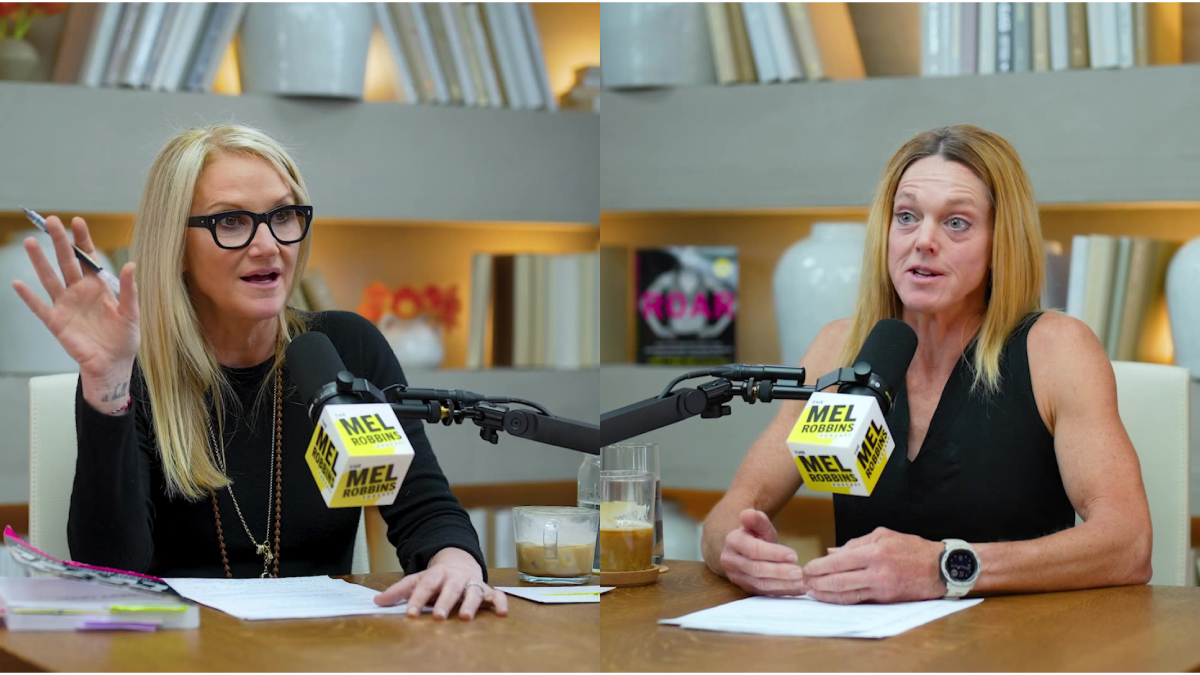
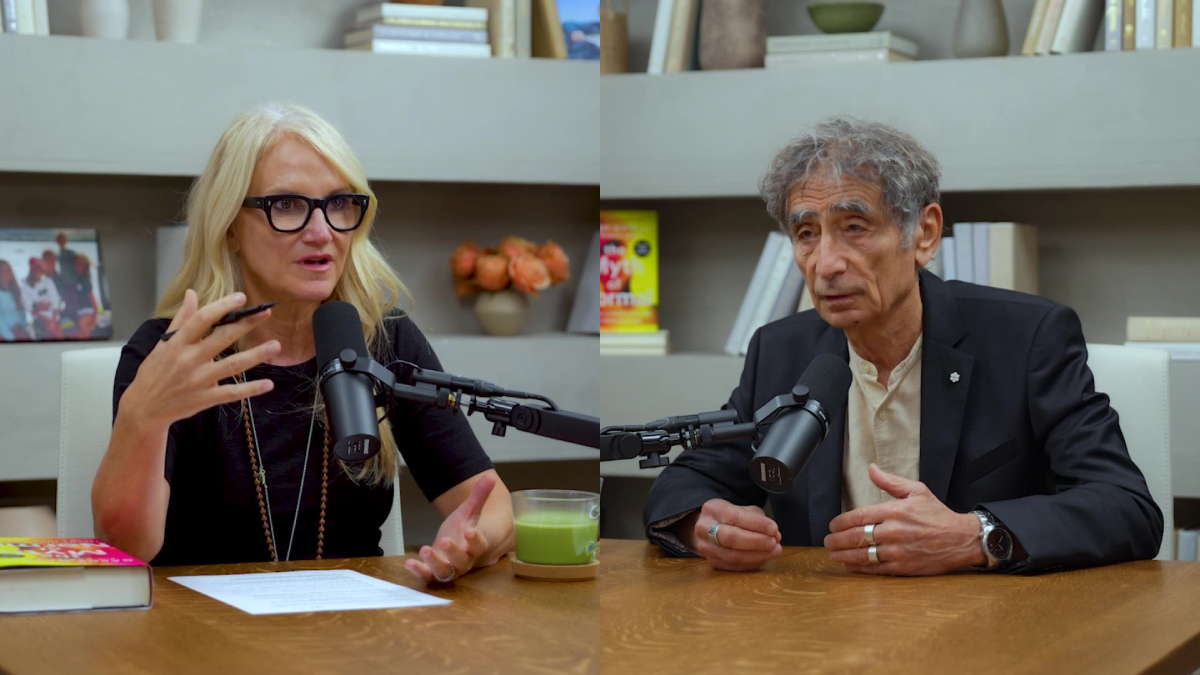
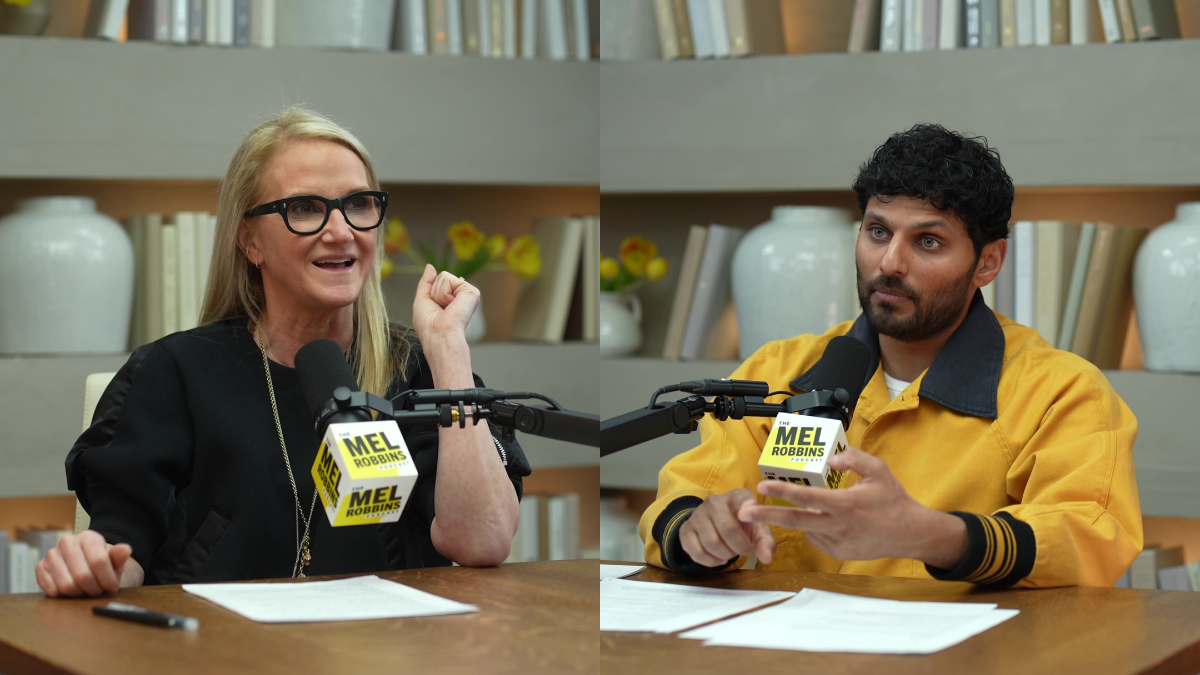
Episode: 355
9 Habits That Will Change Your Life: The Best Expert Advice I’m Using This Year
with Expert Guests
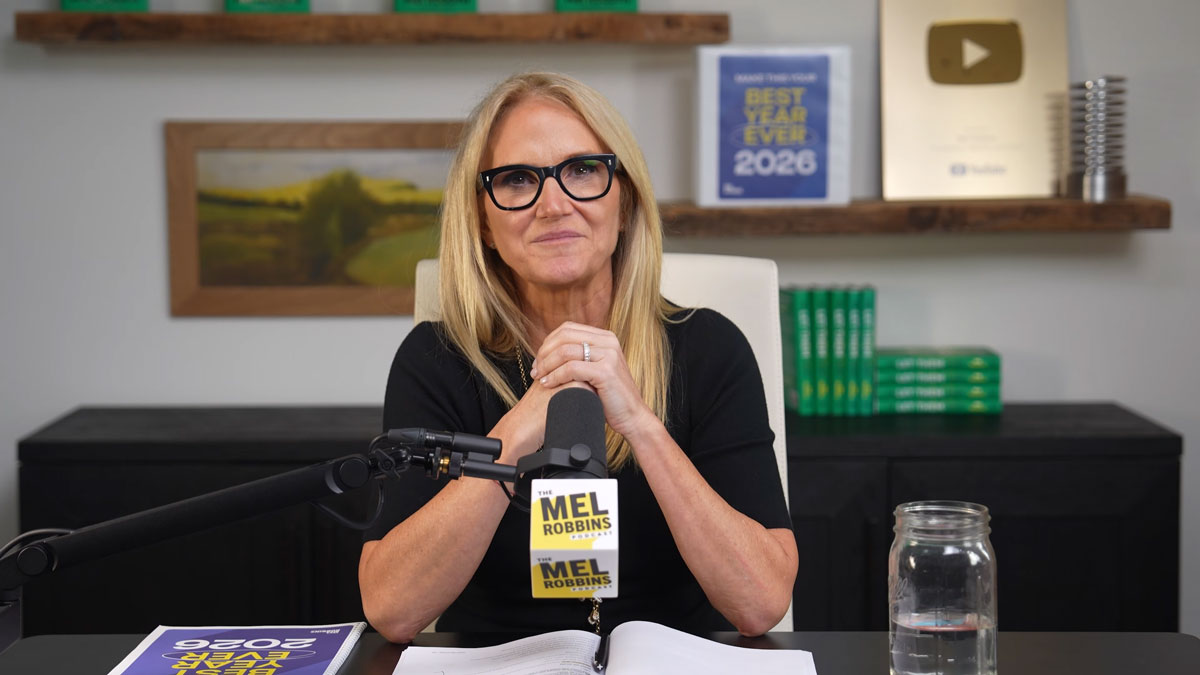
These are the 9 moments people couldn’t stop talking about this year.
In 2025, Mel released 106 episodes of the podcast and featured 75 experts who shared their transformative insights on health, relationships, mindset, and more.
Together, this adds up to thousands of takeaways. Because your time is valuable, Mel is giving you a gift today:
She and her team crunched the data, reviewed hundreds of hours of content, analyzed listener feedback, and pinpointed the moments you saved, replayed, and wrote about – the moments that made people sit up straighter, breathe deeper, and whisper, “Oh… that explains everything.”
Whether you’re new to the podcast, are figuring out which episodes to listen to next, or want to hear the most impactful advice summarized, today’s episode is for you.
Want more from these experts?
Check out the full episodes here:
Jay Shetty: A Process for Finding Purpose: Do THIS to Build the Life You Want | Apple | Spotify | YouTube
Danielle Bayard Jackson: It’s Not You: The Real Reason Adult Friendship Is So Hard & 3 Ways to Make It Easier | Apple | Spotify | YouTube
Dr. Dawn Mussallem: Mayo Clinic Cancer Doctor: 5 Foods That Heal the Body, Starve Cancer, & Prevent Disease | Apple | Spotify | YouTube
Vanessa Marin: Your Guide to Better Sex, Intimacy, & Love From a World-Leading Sex Therapist | Apple | Spotify | YouTube
Jason Wilson: The Real Reason Boys and Men Are Quietly Giving Up & What They Need to Hear | Apple | Spotify | YouTube
Dr. Stacy Sims: The Body Reset: How Women Should Eat & Exercise for Health, Fat Loss, & Energy | Apple | Spotify | YouTube
Dr. Vonda Wright: Look, Feel, & Stay Young Forever: #1 Orthopedic Surgeon’s Proven Protocol | Apple | Spotify | YouTube
Dr. Gabor Mate: Why You Feel Lost in Life: Dr. Gabor Maté on Trauma & How to Heal | Apple | Spotify | YouTube
Bryan Stevenson: This Conversation Will Change Your Life: Do This to Find Purpose & Meaning | Apple | Spotify | YouTube
Listen on:




What I'd like people to remember is that you're not stuck. You are actually grieving a past version of yourself.
Jay Shetty
All Clips
Transcript
Mel Robbins (00:00:00):
I cannot tell you how excited I am for today's conversation. You made this year extraordinary. I mean, this was a year for the record books, and that's why I'm so excited to share the top nine moments from this year with you. See, we released 106 episodes and more than 75 globally renowned experts showed up with their absolute best insights, their most inspiring story, the most relatable and impactful advice. And today we've assembled the top nine. I'm talking the best of the best. And this is not just a highlight reel. This is going to be a masterclass in how to live your best life, how you think about friendship, health, relationships, habits, how to find meaning and purpose in your life, how to get unstuck. And it's also why relistening to these moments is so powerful, even for me. In listening to that with you, I just got a whole new insight that I'm about to share with you.
(00:01:00):
And the clip that you are about to hear hit millions of downloads, millions of listens almost immediately.
Dr. Stacy Sims, PhD (00:01:07):
Women are not small men, and people are like, "Well, of course not. Women aren't small men."
Dr. Gabor Maté, MD (00:01:14):
No siblings grow up in the same house. No siblings have the same parents. No siblings have the same family. No siblings have the same childhood.
Mel Robbins (00:01:23):
This episode was nothing short of a global phenomenon. And now let's jump into it. Let's jump into the top nine moments of this year.
Mel Robbins (00:01:33):
Hey, it's your friend Mel, and welcome to the Mel Robbins Podcast. I am so excited for today. I'm glad you're here. It's such an honor to be together and to spend this time with you. If you're a new listener or you're here because someone shared this with you, I just wanted to take a moment and personally welcome you to the Mel Robbins Podcast family. I cannot tell you how excited I am for today's conversation. And before you and I get started though on these most unforgettable moments of the Mel Robbins podcast in 2025, I just want to say something to you. Thank you. You made this year extraordinary. I mean, this was a year for the record books. And whether you've been with me, listening to this podcast from day one or you've just started listening recently, the fact that you chose to spend your time here with me is something I don't take lightly.
(00:02:21):
And if you're new, I want to welcome you. I'm glad you're here. The Mel Robbins Podcast community has grown like crazy this year. See, after Apple named us the number one most followed show in the world and the number three, I'm talking third largest podcast in the world, the third largest downloads, largest listener base. I was just so happy. And I was happy not because of the ranking, but because the ranking demonstrates something that gives me hope. It makes me feel encouraged. See, every single time you find the time and you make the time. To listen to this podcast, it has a simple mission of inspiring you to create a better life and giving you the tools and the resources and access to these world-renowned experts that are going to help you do it. Every time you make the time to listen to this or to watch this, you're making an investment in you, in your happiness, in your family, in your financial future.
(00:03:24):
I really do believe in my heart that the conversations that you and I are happening, they make you feel clearer. They connect you with what truly matters. They're making you stronger in your body and more hopeful about your life and more confident in how you're showing up every day. I know I feel that way after every single episode that we record, and that's why I'm so excited to share the top nine moments from this year with you. See, we released 106 episodes and more than 75 globally renowned experts showed up with their absolute best insights, their most inspiring story, the most relatable and impactful advice. We looked at everything. We analyzed the episodes you shared the most, the clips you replayed, the ideas that you debated in the comments. Ooh, you got a lot of big opinions. I love that about you. The things that hit you so deeply, you couldn't stop thinking about them.
(00:04:18):
And today we've assembled the top nine. I'm talking the best of the best. And this is not just a highlight reel. This is going to be a masterclass in how to live your best life because these moments that resonated so deeply with you and your fellow listeners around the world, they resonated because they shifted how you think about friendship, health, relationships, habits, how to find meaning and purpose in your life, how to get unstuck. And before we jump into these nine moments, I want to tell you about something that I created for you. It's something very special. It is a thank you from my team and from me, a thank you to you because you listened to the podcast this year, because you watched the podcast on YouTube and because you made the time and invested time in learning how to create a better life.
(00:05:09):
I love that. And so I really wanted to give you something. So what are we giving you? We're giving you a 20-page workbook that is going to help you create the best year of your life. It walks you through the six questions that my husband and I have asked ourselves every year at the end of the year, six questions that have guided us for the last 22 years on getting very clear about what we want, where we are right now, and the things that matter and how to create a plan. It is designed to help you get clear. It's designed to help you get in touch with what matters to you. It's designed to help you make next year amazing. And you can find that at melrobbins.com/bestyar. That's where you download it. Feel free to share it with all the people that you care about in your life.
(00:05:57):
Alrighty. So thank you. And now let's jump into it. Let's jump into the top nine moments of this year.
Mel Robbins (00:06:04):
One moment in particular that shot straight to the top in terms of the top nine moments that made the biggest impact on you came from someone that you and I both adore. I'm talking about none other than Jay Shetty. Now, you may know Jay as the host of On Purpose, one of the biggest, most impactful podcasts on the planet. He's also a number one New York Times bestselling author and the chief purpose officer at Calm. Jay's a former monk and he is someone who has helped millions of people find clarity and meaning. In fact, 50 million people follow him online. But here's why this particular moment on the Mel Robbins podcast this year rose above just about everything else. Jay said something that was so simple, so true, that you could almost hear every single personing listening say, "That's me.
(00:07:05):
That's me. " Because so many of you had moments this year where you just felt off track or you felt unsure or you felt like life was moving, but you were stuck, or maybe you are the person in your family right now who's holding everything together. That's what you've been doing this year, but you are starting to come undone right now. And so if you've thought at all this year, "God, I feel stuck. How do I get unstuck?" You're not alone. And this first moment that resonated so deeply, that's what this is all about. Jay's talking about what it means to be stuck. See, being stuck, feeling like you're still in your life as things are moving, but you're not feeling scared that you'll always be stuck here. This is one of the most universal experiences that you're going to have as a human being.
(00:08:03):
And so many of you felt so much comfort from the way that my friend Jay Shetty described and reframed this experience of being stuck, that I want you to come back to this over and over and over again, whenever you or somebody that you love is feeling stuck in life. So take a listen to Jay Shetty's brilliant insight.
Jay Shetty (00:08:25):
What I'd like people to remember is that you're not stuck, you're actually grieving a past version of yourself. So there's a part of you that's died, that actually you left behind a long time ago, but there's a part of you that still misses it. You still want things to be the same. You still want things to be that way, and that keeps pulling you back. And that's actually blocking you from making the next move. It's stopping you because life used to be this way or life used to feel this way. And so we're stuck not because we don't know what to do next. We're stuck because there's a part of us that wants to hold onto what we have here. There's a beautiful Zen teaching that says what's holding you back is what you're holding onto. There's an identity, an idea, a mindset, a behavior, an attitude that is keeping you held back.
(00:09:15):
And once you let go of that, once you open and release your hands, all of a sudden you feel free. So what identity, what habit, what mindset, what expectation are you letting yourself be held back by that if you were to let go of, you could easily move forward. If you've raised your kids and they've left the house, there's a part of you that misses what the home felt like with their energy. And now you spend all your day thinking about all the memories and the corners. You look in this corner and you remember your child growing up, you look in this corner and you remember Christmas dinner, you look at this place. So you're constantly surrounding yourself with an identity that no longer exists. So you don't have the time or the energy or the presence to be able to even think about what comes next because there's a part of you that still feels affected.
(00:10:01):
If you go through a relationship breakup, you keep looking at pictures of when you went on vacation, you keep looking at the pictures of when you had your first date. You keep looking at the memories of maybe it's a clothing, piece of clothing, maybe it's an item at home, whatever you're surrounded by. So you're still living as if you're still dating that person. And so that's all holding onto something that is an identity that's already moved on in life. Your kids have already moved on, they're at college or they're getting engaged. Your ex has already moved on. They're in a new relationship or they're alone. So reality has moved on, but you've held on to the piece of clothing, the memory, the photo, the whatever it may be. And that's what's keeping you stuck. So my question to everyone is, what is that thing for you and how do you learn to release it?
(00:10:51):
That's the focus. I think we think we're stuck because we don't know what to do next. No, we're stuck because we're still holding onto what's behind us. And as soon as you release it, you propel yourself forward. Have you ever felt that before? And you're holding onto something really tight. If you let go of it, all of a sudden you feel momentum. Momentum doesn't come from knowing where you're going. It comes from knowing that I don't want to be here anymore. And I think if people think about that for a second, what are you holding onto that's holding you back? What are you clinging onto that's keeping you locked in, that's keeping you stuck?
Mel Robbins (00:11:23):
Just let that sit for a minute. What are you clinging onto that's keeping you locked in, that's keeping you stuck? I want to repeat something else that he said because it really struck me. Jay asked you a question. He said, "My question to you is what is that thing for you and how do you learn to release it? " We think we're stuck because we don't know what to do next. Oh my God, that one hit me. It's so true. I've always felt stuck because I'm like, "I don't know what to do. I don't know what to do. " Jay wants you to really consider, no, you're stuck because you're holding onto what's behind you and as soon as you release it, you propel yourself forward. Wow. I mean, no wonder that was one of the most rewatched, re-shared, sent to your sister at midnight moments of the entire year.
(00:12:21):
So many of you wrote in saying the same thing, "I thought I didn't know what to do next, but really I was just scared to let go of what wasn't working or I was scared to admit that a chapter of my life was over and I was still holding onto it and expecting my life to feel the same." No wonder this moment rose to the top. It helped you see your life with more clarity. I know it helped me too. I mean, the truth is we've all done this. You've done this, I've done this. You hold on a little too tightly to something that you've outgrown, the relationship that used to fit, the job that doesn't light you up anymore, the friend group that you used to have so much fun with, but now it just kind of feels stale or maybe you're holding onto the version of yourself and you're afraid to admit that, "My gosh, I've just moved past myself." Jay helps so many of you name that.
(00:13:14):
And once you name it, you can start moving forward again. I mean, that clip, that was a truth bomb, but the entire episode was full of moments just like this. And if you haven't listened to it yet, you have to cue this one up next. It is in the show notes. It'll be linked with all the episodes that we are featuring today that had the top nine moments of the entire year. And that one you want to relisten to because people kept coming back to this conversation with Jay and all the wisdom that he dropped over and over on so many topics like relationships, purpose. I mean, you just have to carve out the time to hear it, to experience the truth bombs. I mean, it was just mic drop after mic drop after mic drop. Now, that was just the first of nine. And after that Jay Shetty moment took off, my team and I noticed something really interesting.
Mel Robbins (00:14:06):
The next topic that you couldn't stop talking about this year was friendship. Every single time we released anything about the topic of friendship, losing them, making them, outgrowing them, navigating conflict with friends, making friends as an adult, the loss of friends when you're in your 20s and your 30s going through different stages of life. I mean, you went wild for it and you want to know what? I get it because nothing will make you feel more confused or more alone than wondering, why does everyone else seem to have this friendship thing figured out except me? Why does everybody else have a group and I don't? You maybe have this experience where you're like, "I know that I'm like a person who needs a tribe, but I can't find a tribe. Where did all my friends go? And how do I make new friends and how do I find the time?" And so when we looked at the data, whether that was the clips that you were saving, the ones that you shared, the comments that you left, there was one voice that kept rising to the top when it came to the experts that appeared on the show.
(00:15:14):
And that voice was Danielle Bayard Jackson. Daniel Byard Jackson is the bestselling author of Fighting for Friendship, and she is the director of the Women's Relational Health Institute where she leads groundbreaking research on the science of female connection. Now, Danielle has this unbelievable gift of taking something that feels personal. It feels painful. Sometimes the lack of friendship and connection in your life or the fact that friends have fallen off, it can feel kind of shameful. You have this feeling, is it just me that feels like this friendship thing is so hard, especially the older I get? And she's going to explain this in a way that will make you think, "Oh, wait, wait a minute. This is happening to all of us." And this next clip, it's one of the top nine clips of the entire year, was one of the most validating things that you heard all year long.
(00:16:14):
You told us it was a relief that it even made you cry. So many people, including me, said, "Oh my gosh, learning this, it finally made sense of the friendships that I've lost. It made me feel like I'm not some idiot or I'm incapable of keeping and making and nurturing friendships." And if you haven't listened to the full episode yet that we've done with Danielle, you have to. It is packed with the kind of clarity and research more importantly. She's got the statistics that lay the foundation and the groundwork that really help you understand the nature of adult friendship. And one of the statistics that really blew my mind, and this goes for men and women, is that you will replace half of your friends every seven years. This is normal. This is what everybody experiences. And that was just the beginning of the research and the frameworks that Danielle taught us this year about adult friendship that made it one of the most powerful moments of the entire year. So let's take a listen to Danielle Bayard Jackson on the Mel Robbins podcast.
Danielle Bayard Jackson (00:17:31):
So men and women. Yeah, there's research that finds that we replace half of our friends every seven years. I hope that that makes people feel a little less ashamed if they have friendships that don't work out because what that says to me is that there's this natural pruning that happens throughout your life. I also hope that that has people release any shame around needing to make new friends because I hear people say, "I'm out here making friends at 42. I should have had all my friends from high school. Really? Because I know some of the friends I had in high school, it would not be appropriate for us to still be friends. It wouldn't make sense to where I am right now or the values I have right now." And so if we are dropping or shedding new friends every seven years, that means we need to be picking up new ones because what does that churn rate look like?
(00:18:22):
How am I positioning myself to invite new friendships into my life? So I hope it shows us that we will always be having to make new friends, but we even kind of promote the idea to young girls. We'll even ask them from a young age, "Is that your best friend? Is that your bestie? Do you want something for your best friend?" And we've got the chains with the hearts from Claire's best friend. So from the very beginning, being trained to identify who that one person is. And I've also heard it said that relationships are a woman's primary resource. And I wonder if it's kind of like this social currency, especially at that age, is how many friends do you have? And we see the girl with lots of friends and what determinations do I begin to make about her? She must be likable and cool. So the girl who's got a lot of friends, but especially if you have a bestie, because that means you matter. This is your alliance. You have somebody who sees you as important. And so that best friend phenomenon I definitely see emerge at that stage.
Mel Robbins (00:19:18):
What would you say to the person who's listening to you right now who either experienced not having a best friend or not feeling like they were part of a good friend group or they're seeing somebody that they care about experiencing it right now?
Danielle Bayard Jackson (00:19:34):
You are not alone. There's some research that finds that 40% of adults don't have a best friend. So there's a lot of people out here who don't have that maybe in this particular season of their life. It doesn't make you any less important or worthy or lovable to not have that one person. And if you don't, ask yourself if you can get all the things you need from the collective rather than the singular. I think it's a romantic notion, this idea of the one person who offers you multiple things. She's your mom friend, your happy hour buddy. It's very cool when that one person satisfies all those things. But until maybe you find that person, can you find that from the collective, from multiple people, you're getting laughter, you're getting growth opportunities, you're sharing resources. Are you getting that from the village? Because maybe right now that's more important than having the one person who satisfies all the things.
(00:20:29):
And so I just need that woman to know you are not alone. There are so many people who are in the same boat and to resist the urge to internalize that and to wonder what's wrong with you because you don't have that right now.
Mel Robbins (00:20:41):
Every time I listen to Danielle, I just feel myself exhale. Don't you? I mean, that's why this was one of the top nine moments of the entire year. Because if you've ever looked around and thought, is it just me? Am I the only adult who's a loser who doesn't have a tight friend group? Danielle proved through research that you're not alone, not even close. This is what the majority of people are feeling. In fact, I want to reflect back a few things that really struck me and changed me, and I know it changed you too because you kept writing in about it and commenting about it. And it's also why relistening to these moments is so powerful, even for me. In listening to that with you, I just got a whole new insight that I'm about to share with you. And so let me reflect back a couple things that really I think are important to take away from that, that number one, for men and women, that every seven years you're going to go through this, she called it a natural pruning or shedding, and you're going to lose up to half your friends.
(00:21:46):
And that's normal. It's a sign that you're growing and changing, and so are the people in your life. And that's a beautiful thing, but you have to be honest with yourself and wake up to the fact that if half are going to naturally come in and out of your life, you got to be proactive about finding new friends, making new friends and adding new friends to your life. It's such a beautiful insight because it doesn't make it personal. It just makes it a priority for you to take this serious. The other thing that really struck me is that 40% of people say they don't have a best friend. Now, in re-listening to that, I want to share something that I just got out of that moment for the very first time. It was a moment where she was talking about how if you don't have that singular person, it doesn't make you less important.
(00:22:34):
And that we have been led to believe this romantic notion that you should be able to get everything from just one person, and that there's this ability to be very satisfied in the collective. And here's what I just realized, that at this stage of my life, I'm 57, I get more from the collective nature of friendship. Having a bestie, bestie, bestie, it can put a lot of pressure on you to always respond. It can put a lot of pressure on that person to be everything. And I find it really powerful to relax into this notion of friendship as a collective versus a singular. And I'm just sharing that because it really dawned on me as I listened to her share this moment again as I've been listening just alongside with you. And that's why I love doing this best of episode because I get something new out of these moments just like you are, even if you heard it when we released the episode for the first time.
(00:23:33):
So I'm so glad that you're here because what Danielle just gave you and me is permission to stop taking friendship changes personally, to stop making it a referendum on your worth, to stop assuming everyone else has got some secret friendship manual that you never received. The truth is your life changes, and that means your friendships will change with it. That's growth. And if you're feeling this strain on your relationship with your bestie, maybe lean into the collective. Maybe your bestie's going through something. Maybe you're going through a really busy part of your life and just take the pressure off because that's going to give space for the friendship to both continue to grow and for you to grow into relationships with other people. I just love this. And here's the part that resonated with so many of you, that if friendships naturally shift, that means you're not behind.
(00:24:27):
You're not starting over. You're simply living your life and as you shift and change, now you're making room for the people who fit into the chapter that you're in right now. What a beautiful way to think about it. Now, I know why this resonated. It resonated because it's the truth of what we're all experiencing. And it also resonated, I know, because it was one of the most shared episodes of the entire year and one of the most popular episodes on Apple of this entire year. And if you haven't listened to the entire conversation yet, please do. If you haven't shared this with people in your life, your friends, people that are struggling with friendship, please take a moment and share it because it will take the pressure off your shoulders. It'll take the pressure off the shoulders of the people in your life that are feeling lonely because they haven't found their people or they're going through that season where they're shedding a lot of people or they're in a new transition and they're having to make new friends.
(00:25:21):
And this conversation will replace that uncertainty with the kind of clarity that every one of us needs.
Mel Robbins (00:25:29):
All right, now let's switch gears and let's turn in a direction that the data was like, ding, ding, ding. Everybody cares a lot about this. What are we talking about? We're talking about health, your long-term health. You cared about your health this year. I'm so proud of you. I love it when the data shows that you are interested in topics that extend the quality of your life. And when we pulled the numbers, we were stunned on a particular episode. It was an episode that we did with Dr. Dawn Mussallem, and it didn't just do well. It took off like a rocket ship. Almost all of you who listened, listened to the entire episode until the very last minute, because it was just that good. You hung on Dr. Mussallem's every word, all the research she was dropping and the takeaway, takeaway, takeaway, takeaway of what she was telling you she tells her patients.
(00:26:30):
Let me tell you about the popularity of this episode and the advice that you're about to hear and the moment I'm about to play for you. This episode was only released a month ago. It's already one of the fastest growing episodes I've ever released. You've written in saying things like Mel, I have sent this to everyone I love and the clip that you are about to hear hit millions of downloads, millions of listens almost immediately. And look, I get it. I was not surprised when this episode hit the top. I was surprised by the numbers and the data that accumulated in just one month because when Dr. Mussallem talks, she makes something as terrifying as cancer and disease feel clearer, calmer, and more in your control than you realize. Let me tell you about Dr. Dawn Mussallem. She is a double board certified Mayo Clinic cancer doctor and a pioneering lifestyle medicine expert.
(00:27:25):
She's also a stage four cancer survivor who specializes in helping people prevent and fight disease through both traditional medicine and lifestyle. The advice she is about to give you went viral instantly because in this moment she's breaking down the specific foods that you and your loved ones need to eat. Why? Because they fight cancer. These are the five specific foods that she tells her patients to eat when they have a cancer diagnosis. These are the five specific foods that Dr. Mussallem ate and focused on when she got her cancer diagnosis. This was so compelling. It's so tactical. The research is so unbelievable. There were four and a half million of you who watched it on Instagram alone. So here is Dr. Dawn Mussallem describing the five foods that fight cancer and the research that explains how they do it.
Dr. Dawn Mussallem, DO (00:28:27):
So there's research with berries that's so exciting, both for breast cancer prevention as well as breast cancer survivorship. You won't believe this. For every two servings a week, it can reduce the risk of breast cancer. And for breast cancer survivor, it can reduce the risk of dying from breast cancer by 25%. This was in the nurse's health study. Such cool data, right? So berries, but guess what? These purple sweet potatoes, can we talk about those?
Mel Robbins (00:28:51):
Yes. So let's talk about the purple sweet potatoes. Dr. Mussallem, why do purple sweet potatoes prevent cancer?
Dr. Dawn Mussallem, DO (00:28:59):
There's 150% more anthocyanins in these purple sweet potatoes than there are in those berries.
Mel Robbins (00:29:05):
Tell me about the word anthianin. What does it do in your body that helps prevent cancer and cure disease and have you live a longer life?
Dr. Dawn Mussallem, DO (00:29:17):
So anthocyanins, like many of these other phytonutrients we see in these vegetables and fruits that we have here, they have the opportunity to come into our body. And what we have is we have tumors, genes that will be turned on, and we have tumor genes that can be turned off. That's how they function with the cancer. And these different molecules can help to either make cancer turn off so that it's not likely to have this proliferation, or they can even turn on things called tumor suppressor genes. These tumor suppressor genes help to be the breaks on any cancer.
Mel Robbins (00:29:47):
Why do vegetables like cauliflower, Brussels sprouts, broccoli, why do these prevent or cure cancer?
Dr. Dawn Mussallem, DO (00:29:55):
These are some of the most powerful vegetables when it comes to breast ... Cancer, and there's so many fun facts with it. So if we look at this cauliflower and broccoli, these are beautiful cruciferous vegetables. And maybe when I'm ready to cook these, I'll chomp on a few of these before I cook it. And you know why?
Mel Robbins (00:30:11):
Why?
Dr. Dawn Mussallem, DO (00:30:12):
Because when they're raw, there's an enzyme in them called mirosinase.
Mel Robbins (00:30:15):
Okay. Myrosinase?
Dr. Dawn Mussallem, DO (00:30:17):
Myrosinase.
Mel Robbins (00:30:18):
Okay.
Dr. Dawn Mussallem, DO (00:30:19):
And that enzyme is really magical for trying to absorb the phytonutrients that are in the broccoli, the cauliflower, the brussel sprouts, the arugula better and more effectively. So when it comes to breast cancer, it helps to make estrogen into a less proliferative form.
Mel Robbins (00:30:35):
What does proliferative mean?
Dr. Dawn Mussallem, DO (00:30:37):
When we think of the breast tissue, we think of the fact that the breast tissue itself can be in a proliferative state where cells can grow more.
Mel Robbins (00:30:45):
Got it.
Dr. Dawn Mussallem, DO (00:30:45):
And what the broccoli can do is it can transition the estrogen actually in our body to a form of estrogen that doesn't cause that proliferation. Proliferation is growth. So you can imagine if something's upregulating growth, that's not a good thing. We want things that try to turn off that growth and it keeps that in check. It's like a master at detoxification.
Mel Robbins (00:31:06):
Let's talk about beans and why do they prevent cancer?
Dr. Dawn Mussallem, DO (00:31:11):
This is an amazing plant protein, but when you think about plant protein, you're not just getting protein, you're getting fiber.
(00:31:17):
And fiber is obviously in all of these plant fits. You only get fiber from plants. There was just something we call an umbrella review, 17 million person years in the study. And what it showed us is that there's class one evidence, this is like the highest quality evidence we have in medicine, that fiber can help to reduce dying from any cause, dying from heart disease. It can also reduce the risk of dying from pancreas cancer in this class one evidence. What? It's really exciting. There was another study, another review of the data that was just published that showed that fiber can help to reduce the risk of cancer by 22%.
Mel Robbins (00:31:51):
Why does edamame prevent cancer?
Dr. Dawn Mussallem, DO (00:31:54):
There are very few things we can consume that God forbid you ever got breast cancer would reduce your risk of dying in edimone are one of those. And one of the most influential times you have that edamame is your young girl. And if you're a young boy, it's going to be very protective for his prostate too. So we know that soy is also good to reduce the risk of prostate cancer. There's even some research that says it reduces the risk of lung cancer. And it's amazing for the gut microbiome. But let me talk about breast cancer because a lot of women with breast cancer avoid soy. Even though that we know this data that it looks protective, they avoid soy. Well, the American Cancer Society's 2022 data on nutrition and exercise update dedicated three paragraphs to the safety of soy and breast cancer survivors.
(00:32:35):
And it didn't just show safety. In this beautiful meta-analysis, it showed that there was a 25% reduction in breast cancer coming back. Let's talk about kiwi. It's super cool. So this really gets on the cellular level. At the level of DNA, it can reduce oxidative stress. So oxidative stress is what comes from us from everything as simple as breathing oxygen from the environment to having any stressors in life.
(00:33:01):
It's just really living. We get this oxidative damage that builds up. Certain foods can even kind of cause this trigger as well. But what these little magical fruits do is they go in and they help to turn off that oxidative stress. They come to the rescue.
Mel Robbins (00:33:15):
I mean, don't you just love her? If this is the first time you're experiencing the magic of Dr. Dawn Mussallem, you have got to listen to the entire episode because she just ... You know what I almost imagine when I'm listening to her? I'm imagining being a patient in a hospital and she walks and you could see her wearing a cape. I love the word. She's talking about science, super cool, beautiful meta analysis, fun facts, tumor genes turning ... I mean, it's just like she has this ability to bring something to the conversation about a topic that's terrifying, cancer. And as you listen to her, you feel hopeful. You have clarity. You believe the science. She's so enthuusiastic about how your body can heal and these things that you can eat that ... I mean, these are her words, tumor genes, turn off. I mean, just photonutrients.
(00:34:17):
I'm so excited by the fact that you have this episode as a resource. I'm excited that you have a world-renowned Mayo Clinic cancer doctor who's a stage four breast cancer survivor who is sharing this with you because cancer is one of those topics that we've tiptoe around. And I know it feels big. It's heavy. It's scary. It's out of your control. You doubt whether or not your body can manage it. But Dr. Mussallem, she doesn't speak to you from fear. She speaks to you from power, from lived experience, and from science, science that she is so excited about. And that's what made this moment explode. Dr. Mussallem is living proof that your body wants to heal and it knows how to heal. And she gave you the very specific takeaways backed by extraordinary research to prove to you that there are things that you can do.
(00:35:16):
She's reminding you that your future, it's not passive. It's your responsibility. She's telling you your choices matter. Your habits matter. The food you eat, it matters. You matter. That's why this episode took off the way that it did. It didn't scare you. It empowered you. It made you smarter. Now, the success of the episode with Dr. Dawn Mussallem didn't surprise me because you deeply care about your health. It's one of the reasons why you listen.
Mel Robbins (00:35:49):
But the next top moment of the entire year of the Mel Robbins podcast was shocking. I did not expect this. The team didn't expect this. I am startled by this next moment. This one was a shocker. When we crunched the data and discovered one of the top moments of the entire year was an episode about sex. Wow. And it came from the episode entitled Your Guide to Better Sex: Intimacy and Love From a World Leading Sex Therapist.
(00:36:22):
This was one of the most talked about, most rewatched, most shared conversations of the entire year. And I get why. Because Vanessa Marin makes this topic feel normal. Vanessa has been in clinical practice as a licensed sex therapist for over 20 years, and she's been married for 16 years. She knows what it's like, and she turns the lights on a topic that so many of us have kept in the dark, literally. She has this way of giving you permission to understand yourself better and communicate better without the shame, without the pressure, without the shoulds, or the hinting or the withholds where you're thinking about it, but you don't really talk about it. And that's why this next moment struck such a nerve. It was kind of like a collective sigh of relief. And I'm kind of happy that this was one of the biggest moments because I think we all want to have a great sex life and we don't really know how to talk about it.
(00:37:20):
And that's why this was also one of the most refreshing conversations of the entire year because one of the things Vanessa talked about is the timing of sex, literally. What's the best time of day to have sex? And when you should have sex and what to do and not do once you're in bed. Now, isn't it interesting that the third largest podcast in the world in terms of downloads and global listeners, that the advice about sex and improving your sex life was something that was one of the most powerful clips globally? I guess we're all kind of struggling with this. We all want to feel more satisfied and more connected. We want to feel more empowered. And this particular piece of advice that I'm about to play for you, it changed my life. It's a piece of advice that I put to use immediately. The second I was done talking to Vanessa, I shared this with my husband, Chris.
(00:38:15):
It is so brilliant. It is so obvious. It is kind of one of those things that once you hear it, you're like, oh my God, I have been so overcomplicating this. Why did I not think about this sooner? Wait until you hear what sex therapist, Vanessa Marin said. When I asked her, "Vanessa, when is the best time of day for sex?"
Vanessa Marin (00:38:37):
Another classic mistake that I see most couples making, which is that we leave sex to the very end of the night. We just have that idea in our heads like, "Oh, we're all teeth brushed, all cleaned up, crawling into bed. That's the time for sex." That is the worst time for sex. By the time you're crawling into bed, you are exhausted. You're thinking about the next day, you're thinking about the crazy day you just had. You're doing that mental math in your head of, okay, if I fall asleep in the next five minutes, then I can get this many hours of sleep. That is the worst time to get excited about sex. So I always encourage couples try to have sex as early in the evening as you can. Obviously, everybody has different schedules. We have different things going on, but try to prioritize it as early as you possibly can.
(00:39:21):
So if it's we're not going to watch TV until we've had sex first, maybe it's even we're going to have sex and then we're going to have dinner or we're going to have dinner, have sex, then we'll come back and clean everything up. But do it earlier so you actually have the energy to have that intimacy with each other.
Mel Robbins (00:39:37):
What I'm hearing from you, which is interesting because I feel myself also having a little bit of a visceral like, oh God, is this idea of you got to plan it. You're like, "Yeah, no kidding, Mel. You have to plan it. " Because I think I believe in the myth that it's just supposed to happen, which is clearly not working. And that's what happens in the beginning of a relationship. When you first, it's brand new, you will literally going to the grocery store is the hottest day on the planet and then you're having sex in the backseat of the car, in the parking lot. Those days are over. So you're saying-
Vanessa Marin (00:40:12):
I want to challenge you on that though.
(00:40:14):
Okay. If you really think back on it, in the early days of a relationship, so I'll talk about Mia and Xander. When we started having sex and then we're planning dates with each other, we're scheduling sex. Because you're planning dates. We're planning dates. I would know. He'd ask me out on Friday, "Hey, you want to go hang out on Friday? We'll go to dinner, come back to my place." We're having sex. That's scheduling sex. It's not that we've never had to schedule sex before and now we're old and boring and we have to do it. We've been scheduling sex our entire relationship.
Mel Robbins (00:40:45):
What are some little things that make a big difference in your sex life?
Vanessa Marin (00:40:49):
Ooh, I'll give you three. First one, gratitude, which you might not expect, but research has shown that gratitude is actually the number one predictor of marital satisfaction. And we talked earlier about how emotional and physical intimacy are really deeply intertwined. So if we want to feel closer to our partner and get the maximum bang for our buck, gratitude is the fastest thing that you can do. It's literally a few seconds to say, "I appreciate this about you. I saw that you did that. Thank you so much for this. " Second thing is some form of physical contact with each other. We talked a lot about non-sexual touch. It's so important to have that non-sexual touch. And in particular, I like a six-second kiss and a 20 to 30-second hug. We actually have research showing that those are the specific timeframes it takes for our body to release oxytocin, the bonding hormone, the trust hormone makes us feel close to each other.
(00:41:47):
And then the third thing, eye contact. It is wild how few couples make eye contact with each other. And I think that there is no greater tragedy than being in a long-term relationship with somebody, but feeling literally and emotionally unseen by them. So those three things, you can do those three things in under a minute every single day, and those will make such a big impact.
Mel Robbins (00:42:11):
I just have to say, hearing this again alongside you, I truly understand why this was one of the most powerful moments of the entire year for all of us. I mean, I'm just going to reflect back to you what changed my life about this. When she said that thing about the fact that you've always been scheduling sex and that basically a date is scheduling sex, I just was like, "Duh, Mel." You just look at it differently when you're in a long-term relationship. Why did I not think about this before? It's so true, isn't it? I mean, because by the time I crawl into bed, I'm wrapped up like a human burrito. I'm horizontal. I'm done. If Chris even breathes in my direction, I'm like, "Okay, how about the morning? How about the morning? I'm too tired." And that's what I love so much about Vanessa's work, that she takes something that so many of us feel embarrassed about or you feel shameful because you think that you're doing something wrong or you can't believe that it's gotten to this point where you're no longer having sex as much as you want to or you're angry and removes every ounce of shame from it.
(00:43:23):
And there's one other thing I wanted to reflect back to you that has made a big difference. You know those three things she said at the end that really impact your sex life all based on research, the first being gratitude, and that's kind of like remembering who you married and being appreciative of all the things they are doing, of how hard they are trying, of the good things that are easy to forget about the person. But the two things that have made a big deal for me is the hugs. The physical contact and that research about a hug needing to last between 20 and 30 seconds. Chris and I were always touchy, feely, but the hug thing, whenever I pass him in the kitchen, we now have this habit where we stop, like one of us will grab the other one by the shoulders and we just hug and 20 seconds is longer than you think and practicing doing an extra long hug like that, it just makes you feel more connected to your person.
(00:44:19):
It's really remarkable how these two simple changes, making it a point to hug a little longer than normal and do it once a day. My rule is if I pass Kris in the kitchen, I stop and I hug him. That's the rule. It happens every day now. And then just scheduling sex, having it before we go out, having it before dinner, having it earlier in the day. Holy cow, small changes, extraordinarily profound impact. So I think it really was such an important moment globally because if you've been silently wondering, why don't I want sex as much as I used to? Is something wrong with me? Is something wrong with us? Why can't it just happen naturally like it used to happen? Well, what we learned from Vanessa is it didn't happen naturally because we were scheduling it through something we used to call dating. And Vanessa just brings this huge collective, "Oh, you're not broken.
(00:45:19):
Your relationship isn't broken. You're just human and your body and your brain are tired at night." It's not that you're not interested. That's why this moment became one of the most replayed, rewatched and shared of the entire year. It didn't make you feel guilty. It made you feel understood. It took the pressures off your shoulders and gave you permission to approach intimacy with more humor, more grace and way less self-judgment. And if you haven't heard the full conversation, you should because it's everything you need more of in your relationships, simple, doable shifts that make sense, that are grounded in research, and that help you make connection easier instead of heavier.
Mel Robbins (00:46:06):
So let's now go somewhere that I really wasn't expecting the data to take us, and that's into the emotional world of men. Now, this moment genuinely surprised me because when we crunched the numbers from the entire year, one of the moments that absolutely took off was about something that most people never really consider, they don't talk about, they don't know what to do about it, and that's what's really going on beneath the surface with the men that you love.
(00:46:41):
And I have to be honest, with an audience that's mostly women. Now, we have a lot of men that listen, but women are the gateway to the Mel Robbins universe. But here's what I was not expecting. I was not expecting the conversation about the emotional life of men to explode in the way that it did, but you devoured it. You shared it with your partners, your sons, your dads, your brothers, your friends, and messages poured in like Mel.
(00:47:10):
This episode finally helped me understand him. I wish I had heard this and knew this years ago. Please, Mel, please have Jason Wilson back. Jason Wilson is the founder and director of the Cave of Adulham Transformational Training Academy, which is a pioneering school in Detroit where young boys learn emotional resilience, discipline, character, and integrity. Jason received the President's Volunteer Service Award from President Barack Obama, and his work with young men was the subject of an award-winning ESPN film documentary, The Executive Producer, none other than Lawrence Fishburne. Jason Wilson is also the author of the bestselling book, The Man The Moment Demands, a guide that reframes what it means to be a whole man in today's world. And I'm encouraged to see that there are so many people right now talking about the state of men and explaining how men are in trouble in terms of their emotional and their mental health, but there's not a lot of people who are telling you and me what to do about it.
(00:48:20):
Once you know that somebody in your life may be struggling, they may not have a lot of friends, they may be kind of shut down and not expressing themselves, what do you do about it? How do you support them in opening up? How do you support them in creating friendships with guys and really living a more healthy life in terms of being happy and connected and more resilient? And how do you do that in a way that really opens the door for not only you to change how you're relating to the men in your life, but for the men in your life to really receive this message and feel inspired and encouraged to change themselves? And that's exactly what Jason Wilson did for you and me. He opened the door to what's underneath the silence and underneath the anger, and he does it with so much love and honesty.
(00:49:11):
This is why this moment became one of the most unexpected and impactful moments of the entire year. And you got to listen to the whole episode. It's just so profound and helpful. And Jason spent a lot of time talking about how the men that he works with, the boys that he works with are either angry or they seem silent and shut down. And I was really interested in this topic because I am married to a man who for a lot of our marriage was very shut down. He was very quiet. He seemed very stoic. And even when you're dealing with somebody like that, there's anger underneath there. And so I was asking Jason, why are these the two things that we see? Why do we tend to see the men and the young men in our life either expressing and holding a lot of anger or just seeming very stoic and silent?
(00:50:12):
And just wait till you hear what Jason Wilson said about the reason why men are either angry or silent.
Jason Wilson (00:50:22):
You can't be weak. You can't be soft. You can't be a simp as they say. If you're just angry, if you're silent, you look stoic now. Oh, he must be strong because nothing ever phases him. And so men, anger is a very safe emotion to express. When our feelings are hurt, we're angry. When we're sad, we're angry. When we lose, we're angry. When our wives express that they want to spend more time with us because they miss us, we're angry. It's a surface emotion. That's why I tell men to dig deep. What are you really feeling? And I can compare it to masculinity to the crayon analogy in this book. As men, we stay within the eight box of crayons. Okay? Yeah. And we may pull out four. Women have 64.
Mel Robbins (00:51:15):
That's why we confuse you so much, Jason.
Jason Wilson (00:51:18):
But this is interesting. We were created for all of those emotions. They're not exclusive to you. That's true. It's there, but we've been hoodwinked by allowing society to define what a man is. And so when women are communicating with us, they may pull out, I'll use analogy of the color violet and all we have is purple. We can't meet the moment. Or even more complex issues, they ask for Lyme and we're trying to put green and yellow together. And because men, we're not used to expressing the gamut of emotions that we have as human beings, we can't meet the moment. And so I need to learn how to express more than my anger. If you don't trust me with the finances, it's not the anger I need to express. It's the hurt you make me feel because my father never trusted me with anything that required responsibility.
(00:52:13):
And so when a man can express his heart to his wife or the woman in his life, a mature woman, she drops her guard and now we can communicate.
Mel Robbins (00:52:24):
I've said this before, and I'm going to say it again. I absolutely love Jason Wilson. I love his work. I love his bestselling books. I love his voice. I love how he can just get in there with a level of conviction. He has this way of saying out loud what so many men are living in silence and frankly, so many women like me need to hear. And once you understand that anger is often the only emotion that men were ever taught to access, everything shifts. The shutdowns make more sense. The short fuse makes more sense. The silence makes more sense. It doesn't excuse hurtful behavior, but it explains the wiring and the experiences underneath it that created it. And that explanation is what so many of you said felt like a lifeline because when you love a man, whether you're talking about your partner or your dad or your brother or your son, you want to understand him.
(00:53:25):
You want to be connected. You want a relationship that's not built on guessing. That Kranbox metaphor was so helpful. So many of you wrote in and commented about that in particular. I've never even thought about it. The men in my life I've judged because they're only doing life with four or five crayons, but there's so many more complex emotions underneath. And just knowing that it makes me feel excited because I can lean in and be curious and be softer and communicate in a different way to help them express it. I'm just so grateful for that conversation and I'm grateful. It really resonated with you, which is why it was one of the top nine moments this year.
Mel Robbins (00:54:07):
Are you ready to shift gears again? Because coming up, the next moment was the top moment for all podcasts everywhere. What you're about to hear comes from an episode that we did on women's health with none other than Stanford University's Dr. Stacy Sims.
(00:54:27):
Dr. Stacy Sims has a PhD in exercise, physiology and nutrition science. She's on the faculty at Stanford University teaching about lifestyle medicine and at Auckland University of Technology where she teaches sports medicine. She is a renowned researcher and has directed research programs at Stanford, Auckland University of Technology and the University of YCado. And she has published. Check this out. 107 peer-reviewed research papers, which in normal person speak is a ton. And you do not want to miss this moment because it's where Dr. Stacy Sims unpacks a fundamental medical truth. Women are not small men. Everything you've been taught about your health, how to take care of yourself, exercise, diet, is working against you. This advice that you're about to hear, it comes from the single most popular episode that the Mel Robbins podcast has ever released in the last three years that we have been doing this show.
(00:55:32):
And it's also from the number one most shared episode of every single episode on the planet on Apple in 2025. That's how inspiring and how empowering this advice is.
Dr. Stacy Sims, PhD (00:55:48):
It started from when I was teaching at Stanford and wanted to wake some of the undergrads up after lunch and afternoon sleepies come in. And I was teaching about sex differences in training or high performance. So I would start it with women are not small men. And people are like, "Well, of course not. " Women aren't small men. But what I mean by that is everything from what happens in utero until we die is different for women than men. So when we talk about women are not small men and we see all the guidelines that are out there for exercise, all the guidelines out there for mental health, for the connections, the sociocultural pressures, we experience things differently as women than men do, but that's not ever really explained. So when we say women are not small men, it makes people take that pause and ask, "Well, what do you mean by that?
(00:56:38):
What topic?" So today, what I mean by women are not small men is we're going to dive into exercise, especially how what we do should change as we move through our lives.
Mel Robbins (00:56:49):
What does that motto women are not small men mean in practice?
Dr. Stacy Sims, PhD (00:56:55):
I think when we look right now at what's being portrayed in social media, fitness trends, the medical trends,
(00:57:04):
All of that data is really drawn from men and just generalized to women, which is a huge disservice. So I want women, especially you as a listener on this podcast, to take a pause whenever you see a new trend come up or someone pushing something to just go, "Well, where did this originate? How does that appropriate for me as a woman in my phase of life?" And when you take that pause, you begin to have an objection to some of the things that are being pushed on you and an objective view of how you should approach things to make it beneficial for you. I mean, if you look at most women who make a point to get up, do some training, go exercise, and it happens so often after four weeks of following the same kind of training program as their male partner, their male partner has gotten leaner, fitter, better cognition, focus, all of the things that you want out of fitness.
(00:57:58):
And the woman's like, "How come I'm fatter and tired and I don't have any increase in my fitness like my partner does." And I see it all the time and I'm always explaining, well, one, your partner might get up and go fasted training. Women's bodies don't respond well to facet training. What's facet training? I don't even what the heck this is. What's facet training? Facet training means you're not having any food before you go do exercise. If I don't have food to counter the fuel that the muscles are needing from a contraction, I need to find a way to supply that fuel. So it goes into a little bit of a tizzy. And one of the first things that starts to get broken down is your muscle mass because muscle is a pretty active tissue. And the hypothalamus is like, well, I don't know if I'm going to be able to supply the food that this muscle needs if I don't have any food coming in.
(00:58:46):
So it's a very small amount of food that a woman needs first thing in the morning to then go be successful in her training. And it doesn't mean a full meal. It could be the protein coffee, it could be a couple of tablespoons of yogurt, a half a banana. It's not a lot, but it's enough to bring your blood sugar up and tell your brain, "yeah, I've got this."
Mel Robbins (00:59:06):
I cannot thank Dr. Stacy Sims enough. This episode changed my life in fundamental ways. There's so many changes that I made. And what we were just talking about, the fact that women forever were basically taught to exercise on an empty stomach to maximize calorie burn and that works against you, I didn't know that. And so a fundamental change that I've made is that when I get up, I eat breakfast, I fuel myself. And that's with everything from making eggs in the morning to making a smoothie, to having one of these pure genius shots. Pure genius is something that's also changed my life. It's why I became the co-founder of this new protein company, Pure Genius. I was inspired to do it because of how much I've been learning from all of these medical experts. Now, after learning from Dr. Stacy Sims, I never, ever, ever exercise on an even empty stomach.
(01:00:00):
I don't even go for a walk on an empty stomach. You have to listen to this episode. It is so packed with eyeopening, research back, validating tactical, effective changes that you and me as women and all the women in your life, we need to make. So there's no question in my mind why this was the number one most shared episode of the entire world across the globe of every single podcast. That's how good it is. So please make the time and spend the time with Dr. Stacy Sims. Learn about the ways that women are not small men and what you and I have been led to believe that's untrue that works against your body.
Mel Robbins (01:00:41):
I know you're going to love it. And since we're in the lane of taking back your health, let's zoom in and switch directions and really focus on something that every single one of us needs to be serious about as we get older.
(01:01:00):
And that is how to protect your strength, your mobility, and your future. See, Dr. Stacy Sims came in and gave us a complete body reset, but then Dr. Vonda Wright came in with a reckoning. Now, let me tell you about Dr. Vonda Wright. Dr. Vonder Wright is one of the leading experts on aging, mobility, longevity, and long-term health. Dr. Wright is a double board certified orthopedic surgeon and internationally recognized researcher whose groundbreaking work on mobility, musculoskeletal aging and longevity is transforming how we understand the aging body. Dr. Wright has treated more than a hundred thousand patients and has multiple number one bestselling books at the University of Pittsburgh. Dr. Wright was the medical director of the UPMC Sports Complex and the director of many of their biggest research groups, including the Performance and Research Initiative for Masters Athletes. She is redefining what's possible for strength, movement, and vitality at every stage of life.
(01:02:17):
When my team and I crunched the numbers for this episode, my chaw hit the floor. This conversation wasn't just one of our top health episodes of the year. It was one of the top episodes of the entire show, period. And the reason is simple. Dr. Vonda Wright doesn't speak about aging like it's a slow decline. She talks about it like it's something you can train for. She doesn't come rolling in with fear. She comes in with fire. Every single person I know who heard that episode said the same thing. Okay. This changes everything. Because she kept saying over and over, "Getting old is inevitable, getting weak is not. This is the moment that I'm about to play for you that made millions of women stand up a little straighter and take ownership of their future because you're about to hear this world-renowned medical researcher and orthopedic surgeon get very choked up and start crying.
(01:03:28):
She's going to describe to you what it's like to see women come into her office. Women who have been so busy taking care of everybody else that they never took the time to take care of themselves. What you're about to hear is the real truth of what you and your loved ones are going to be facing if you don't take your mobility and strength training and truly, truly choosing how you age seriously.
Dr. Vonda Wright, MD (01:04:01):
You know what, Mel? I don't mean to cry in public, but I am still a practicing surgeon. I have looked into the eyes of more than 100,000 people in my lifetime as a doctor. And I started as a cancer nurse, right? But I see the future of people today every day when I take call, and this is what it is. And I've got to solve for this. You and I have got to solve for this. When your Aunt Mary breaks her hip and I'm called to the hospital bed to see her, she is laying there in excruciating pain, balled up at the bottom of the bed with that horrible blue gown on that we put people in, and she doesn't want to be moved up because it hurts too much, right? From bones that she never even paid attention to, never knew she had because we ignored it and now they're screaming.
(01:04:55):
That's number one. Number two, what's happened to her is she's laying there in a pile of her own urine because she was not treated for the gynocourinary syndrome and menopause. Her pelvic floor got weak. So many women do not talk about the fact that they become incontinent in late in life and have urinary tract infection. So she's painful. She is incontinent, which if she even realizes it is pretty ... She feels ashamed about that. I need to do a 45-minute surgery on her where because she's broken her hip, I need to put a rod down that, the size of my thumb actually. I cannot do that if her heart is not healthy enough to withstand anesthesia. And many times her heart is so unhealthy because she's taking care of everybody else in the world except herself, that the hospitalists have a hard time clearing her heart.
(01:05:47):
And do you know what else? She either has a touch of dementia or she has full-blown Alzheimer's.
(01:05:56):
That is the state of women that I see every time I go to fix a hip on call. And do you know in her lucid moments what she is saying to me? She is standing there with her daughter. It's usually the eldest daughter at the bedside. She's looking at me, she's looking at her daughter, and time after time again, she'll say something like, "I've not always been like this. I don't know how I got here. Don't ever let this happen to you. Don't get old." Well, I am not blaming her at all. I see the future of women, Mel. I can't not, not cry. If we know we have within our hands, it changes the trajectory of our future. And if we choose to not be the victims of the passage of time, we don't have to end up like all those women I take care of, 30% of whom after they break a hip will die.
(01:06:52):
We can choose another path, but it takes conscious effort and a belief that we are worth it.
Mel Robbins (01:06:59):
One of the things I love most about Dr. Vonda Wright is that I really feel her passion and her belief that you and I are worth it. I believe her, don't you? When she says, "We have within our hands the ability to change the trajectory of our future if we choose not to be the victims of the passage of time." And I also love that in this episode, she gives you the very specific and simple things you can start doing every day with things that are already in your home to take better care of yourself, to build your strength, to build your mobility.
(01:07:52):
Every time I hear this section of the episode, something inside me goes still. I think of my grandmothers. I think of women in my life who are aging, who have taken care of everybody else, but haven't really taken care of themselves because that's what she's talking about. The women in your life that she's caring for every single day, she sees them in pain, women who didn't know what was happening inside their bodies, who spent decades taking care of everyone but themselves. And now as they age, their health is unraveling. And here's why this moment rose above almost everything else we published this year.
(01:08:46):
Dr. Wright wakes you up without shaming you. She's showing you the cost of ignoring your own needs, of ignoring your body, and then she hands you back your power in the exact same breath because Dr. Wright's whole message is this. "You're not too old. You're not too late. You're not past the point of changing. Your body will always respond to the positive stress that you give it, the strength training, the nutritional changes, the mobility exercises. And when she says you do not have to be the victim of the passage of time, you can feel that in your bones. And you may not even be thinking about yourself. I hope you are. I hope you are. But you may be thinking and have this renewed sense of hope for one of your aunts or maybe for your mom or for your grandma or for your older sister who has been so busy taking care of her aging in- laws that she's let herself go and she's kind of saying, "I don't know how I got here."
(01:09:54):
That's why this episode was one of the biggest across every platform. And Dr. Wright started something that also went viral. She started something called the viral pushup challenge. You loved it. She told you and me that we had to be able to do 11 pushups. I was like on our knees. She's like, " Nope, on your toes. "And she shared how to do this challenge with a level of humor and passion. You can start against the wall. You can start against your kitchen counter. When you're ready to get down on the knees, you can do it on the knees. And over time, she wants you and me to be able to do 11 pushups and you love the challenge and so did I. In fact, I did my pushups this morning. I've been working on them all year thanks to Dr. Wright. I'm still doing a couple on my knees.
(01:10:44):
I'm not to the toes yet. It takes time, but I feel the strength. Now, if you have not listened to the entire conversation or you listened and you're like, " Oh my God, I remember how amazing that was. I got to listen again. "What are you waiting for? Your best years are not behind you. You are building your best years right now and Dr. Wright is here with one of the most popular episodes of all time to give you the playbook on how to do that. Now, after hearing Dr. Wright and feeling that jolt of urgency and the hope about your intelligence and your body and the strength that you can build.
Mel Robbins (01:11:21):
Now I want to pivot and take you somewhere deeper because one of the biggest patterns that we saw when we looked back at the entire year was you weren't just working on your health, you weren't just focused on building better habits, you were also working on healing.
(01:11:42):
And when it comes to healing, there's one voice globally that rose above almost every other guest because he has this ability to help you understand yourself on the deepest level, and that is Dr. Gabor Maté. Dr. Gabor Maté is a world-renowned physician and number one bestselling author whose groundbreaking work reveals how childhood experiences and trauma shape your emotional patterns, your relationships, and even your physical health across a lifetime. His insights have transformed the global conversation on healing and his clarity and compassion help people like you and me finally understand themselves in a way that opens the door to real change, real connection, and real freedom. This episode was nothing short of a global phenomenon because Dr. Gabor gave you the single most viral moment of the entire year. The moment you're about to hear, had 25 million people watch it because it clicked for so many of you.
(01:13:06):
If you've ever wondered, why does my childhood impact me, but it doesn't seem to impact my brother? Why do I have a terrible relationship with my dad, but my sister has a great relationship? Why is it that I'm more sensitive and I don't feel very connected to my family? I feel like an outsider. And one of the things that Dr. Gabor Maté talks about in his work is that understanding how your childhood shapes you gives you more compassion for yourself as an adult and it opens the door for healing and for you to consciously become the kind of person you want to become. And one of the biggest insights that he shared is the fact that your childhood was very different than your siblings. And so let's drop into the moment where Dr. Gabor Maté tells you the truth about your childhood that you need to hear.
Dr. Gabor Maté, MD (01:14:14):
No siblings grow up in the same house. No siblings have the same parents. No siblings have the same family. No siblings have the same childhood. Why not? There are a whole lot of reasons. Number one, there's the birth order. Parents don't relate to the first child the way they relate to the second child. Then there's gender differences. Parents don't relate to ... And I'm not whether parents love the kids or not. I'm talking about what actually happens. The child doesn't experience the parents love. The child experiences the way the parent shows up. Number one. Number two, the parents' relationship might be in a different phase, one child and another. The parents might be in a different economic situation. Their parents' lives might be different. Then each child will evoke a different response from the parent. Like with my three kids or your three kids. "Yeah, you have three children. Yeah, you have two daughters and a son. I have two sons and a daughter." It's not that I loved or we loved any one of them more than the other, but we responded to them differently. And there's one more factor, which is children born with different temperaments, which is they experienced the world differently.
(01:15:22):
So even if I could be the same parent to all my kids, which I couldn't be, they still have three different parents because they would experience me differently.
Mel Robbins (01:15:31):
That moment hit you so deeply. And I know it hit me deeply too, both as a child and also as a parent. No siblings grow up in the same childhood. And when you hear him explain it so plainly without judgment, like I really, in listening to it again with you, I'm thinking about the line that this is not about how you experience love from your parents. It's how you're experiencing the way your parents showed up with you. And when you really take that on, whether you take it on as a parent or you take it on as your experience as a child, that every child experiences a completely different parent. They have a completely different childhood. Suddenly so many things about your life make sense. The roles you took on, the ways you coped and adapted, the guilt you may have carried, the reactions you wish you didn't have, the patterns that you're trying to break.
(01:16:35):
That moment, the one you just heard, was the single most viral moment of the entire year. Because perhaps for the first time, you realize nothing's wrong with you. You were doing the best you could with the version of the world you grew up inside of. And what I love about this episode is that so many of you sent it to your siblings. You sent it to your partner, your therapist, you forwarded it to your group chat. It didn't just explain your past. It gave you permission to stop fighting against it, to heal, to forgive, to understand, to accept the reality of what it's like for absolutely everybody in their childhood. This conversation with Dr. Gabor Maté helped millions of people this year soften toward themselves. It helped you drop the shame you may have been dragging around. It helped you understand your family with a little more compassion.
(01:17:43):
It helped you understand the tension or the frustration or the friction that you may feel with your siblings or with your parents. It helped you feel a little less alone in the ways that you struggle. And if you haven't listened to this episode yet, I'm telling you, do it. It will change the way you see yourself. It will change the way you see the people that you love. It will change what you believe is possible for your own healing. It will help you see your childhood as something that is in the past and your future as an adult as something that you can take control of and change for the better. How amazing is that? Just hearing it. It's so powerful what he says that obviously it's one of the top nine moments of the entire year. And that brings me to the final conversation that we had this year on the Mel Robbins podcast.
Mel Robbins (01:18:44):
It didn't just stay with me. It changed me for the better. It changed the way I see the world, the way I show up in my own life, the way I think about what is possible at this very overwhelming moment in history. Who am I talking about? I'm talking about the conversation we had with the remarkable Brian Stevenson. Now, if you've been with me this year, you already know. Brian isn't just one of the greatest civil rights attorneys of our time. He is one of the single greatest human beings I have ever had the privilege of sitting down with. Brian Stevenson is the founder of the Equal Justice Initiative. He has argued and won landmark cases before the United States Supreme Court. He wrote the number one New York Times mega bestselling book, Just Mercy, which became a major motion picture. And none other than Michael B. Jordan played Brian Stevenson in the movie. Brian Stevenson has also received dozens of words, like the MacArthur Genius Grant and the Gruber Prize for Justice. This was one of the most meaningful conversations of my entire career. And so many of you reached out from around the world and said the exact same thing, that listening to this episode with Brian felt like someone was turning on a light in a very dark room. And this moment in particular that you're about to hear is one that I've gone back to over and over again. So let me take you back to one of the most powerful moments on the Mel Robbins podcast this entire year. It's a moment when I asked Brian Stevenson, how do you find hope in those moments when you start to feel despair?
Bryan Stevenson (01:20:37):
Our hope is what can sustain us when things look bleak and difficult. And that is the reason why I believe that hopelessness is the enemy of justice. Justice will prevail if we allow ourselves to give in to hopelessness. Hope is our superpower. It's the thing that will get some of us to stand up even when people say sit down. It will get some of us to speak even when people say, "Be quiet." It's the thing that will get us to believe we can do things that maybe other people think we can't do. I have to give it to my clients and I can't give someone something I don't have. And so for me, it's an orientation of the spirit. I think learning about hope is a really important action item. Sometimes I think we don't think of learning as an action item, but I do. I think to learn is to do something. And learning the stories of what hopeful people did despite the odds is one of the most important things we can do to prepare ourselves, to train ourselves, our minds and our bodies to do hopeful things in our lives. Just like we have to train ourselves if we want to be fit or run a race. I think we have to train ourselves, prepare ourselves to be hopeful in the midst of so many difficulties. And the world is just filled of stories about hopeful people. And I think we need to learn them and be shaped by them. And I hope we prepare people to be better informed, better citizens, better stewards of the opportunities we have to create a more just world.
Mel Robbins (01:22:15):
I just love Brian Stevenson. Don't you feel lifted up when you listen to him speak? I know I do. And did you catch what he said about hope? That it is an orientation of the spirit. It is something that you can train for and that learning the stories of hopeful people, what they did, how they thought, that's how you can develop this orientation of the spirit. And I know for sure that every time that I hear Brian Stevenson speak, not only about his career, about the stories of the people that he has represented, about the courageous people that have stood up to injustice, it makes me feel more hopeful. It's as if he's handed you and me a flashlight and a compass at the exact moment you think you're lost. Hope makes you realize that you're not. And Brian Stevenson isn't just talking about the justice system.
(01:23:21):
He's not talking about the world at large. He's talking about your life, your relationships, your future, your dreams, your ability to keep going when everything in you feels as though it's going to shut down. Hope is not a mood. It's not passive. It's not something that you just sit back and wait to feel. Hope the way that Brian teaches it, this orientation of your spirit is a discipline. It's a choice. It's a muscle. It's a way of standing in the world, even when the world feels unsteady. And I think that's why this moment rose above so many others this year, because it's true. He's reminding you of something that is inside of you. And so many of you said the same thing to me, that hearing Brian talk about hope made you feel hopeful, a little less overwhelmed, a little less defeated. You felt him pick up your spirit just a bit.
(01:24:35):
You felt more capable of choosing the next right thing, even when life felt heavy. And if you have not listened to that remarkable episode yet, I'm telling you, it's one of the most heart-opening, grounding, clarifying conversations we've ever had on this show. It will stay with you as it stayed with me and it's going to strengthen you. And after a year like this one, we all need a reminder that hope is not naive. Hope is necessary.
(01:25:13):
And I just want to say to you, I am so proud of you. I'm proud of the way that you showed up for yourself this year. I'm proud of you for spending time together with me, sitting side by side with me as we have been learning from all of these remarkable people who have flown in from around the world for one reason. They showed up for you. They showed up because they believe that you can create a better life, and I believe it too. I'm proud of the things you've learned, the things you've questioned, and the ways you've grown this year. And I want to remind you that if there were things that you were inspired to dig deeper into, if there were episodes after listening today that you wanted to go back to, scroll down wherever you're listening through the description and you will see a link to the show notes.
(01:26:01):
The show notes are going to be packed with links to the episodes that we featured today. They'll be packed with resources for you, including this gift that my team and I have for you, which is a 20-page workbook that you can download for free that will walk you through the six questions that my husband and I have been asking ourselves every single year as a way to complete the year and create a plan to make the next year one of the best years of our life. So you can find all that in the show notes as a resource and a gift to you. Thank you, thank you, thank you from the bottom of my heart for letting me be a part of your life. It is truly one of the best gifts I have ever received. And one more thing as your friend. In case no one else tells you this, I wanted to be sure to tell you today that I love you and I believe in you, and I believe in your ability to create a better life.
(01:26:55):
Alrighty. I will see you in the very next episode. I'll be there to welcome you in the moment you hit play. And thank you for watching all the way to end. Thank you for being here with me on YouTube. Didn't you just love this episode? I hope you will take the time to share it with your friends. And one more thing I wanted to ask you, because I know you're the kind of person that loves supporting people that support you. One of my goals is to have 50% of the people that watch the Mel Robbins podcast here on YouTube, be subscribers to the channel. It's free. It's the best way for you to show me and the team that you really love all of this content that we're bringing you, and that way you never miss a thing. So do me a favor if the subscribe button is lit up, just click it.
(01:27:33):
That way you're subscribed and you can help me reach my goal that 50% of the people that watch here on YouTube are subscribers. Thanks for doing that. I really appreciate it and so does the team. All right. I know you're thinking, all right, give me another video, Mel. This was amazing. Here's what I want you to watch next. In fact, this is what we're going to do. I'm going to send you to the video where I walk you through the six questions that are in this 20-page free workbook. The episode goes as a companion to the best year ever workbook. You're going to love it and I will welcome you in and we'll get started the moment you hit play. I'll see you there.
Key takeaways
You think you’re stuck because you don’t know what’s next, but you’re actually stuck because you’re holding onto an old identity that life has already moved past, and releasing it is what creates momentum.
When friendships fall away, it’s not a failure or flaw in you; it’s natural pruning over time, and accepting that reality frees you from shame, comparison, and the myth that you’re somehow behind.
Your health can change; the food you choose daily can actively turn things on or off in your body, reminding you that your habits matter more than fear ever will.
Hope isn’t naive or passive; you can learn how hopeful. Dark moments strengthen your ability to stand up, speak, and keep going.
When men show anger or silence, it’s often because those are the only emotions he learned, and understanding that opens the door to real communication instead of constant guessing.
Guests Appearing in this Episode
Jay Shetty
Jay is a former monk, a New York Times bestselling author, and the host of one of the most successful podcasts in the world, On Purpose.
-
Podcast: On Purpose with Jay Shetty
On Purpose with Jay Shetty is the worlds #1 Mental Health podcast designed to help make you happier, healthier and more healed. Jay interviews experts, celebrities, thought leaders and athletes to grow your mindset, build better habits and uncover a new side of yourself.
-
Book: 8 Rules of Love
Instead of presenting love as an ethereal concept or a collection of cliches, Jay Shetty lays out specific, actionable steps to help you develop the skills to practice and nurture love better than ever before. He shares insights on how to win or lose together, how to define love, and why you don’t break in a break-up. Inspired by Vedic wisdom and modern science, he tackles the entire relationship cycle, from first dates to moving in together to breaking up and starting over. And he shows us how to avoid falling for false promises and unfulfilling partners.
-
Book: Think Like a Monk
In this inspiring, empowering book, Shetty draws on his time as a monk to show us how we can clear the roadblocks to our potential and power. Combining ancient wisdom and his own rich experiences in the ashram, Think Like a Monk reveals how to overcome negative thoughts and habits, and access the calm and purpose that lie within all of us. He transforms abstract lessons into advice and exercises we can all apply to reduce stress, improve relationships, and give the gifts we find in ourselves to the world. Shetty proves that everyone can—and should—think like a monk.
Danielle Bayard Jackson
Danielle is a leading expert on female friendship, the Director of the Women's Relational Health Institute, and the bestselling author of Fighting for Our Friendships.
- Follow her on Instagram
- Check out her website
- Watch her on TikTok
- Explore the Women’s Relational Health Institute
-
Fighting for Our Friendships
Fighting for Our Friendships is one part textbook, one part handbook. Readers will not only learn what the latest research has to say about the mechanics of women's friendships, but they'll walk away with real-life solutions for the most common conflicts that arise in their platonic relationships.
-
Friend Forward Podcast
This is a podcast for modern women looking to understand the complexities of female friendship. Hosted by Danielle Bayard Jackson --female friendship coach and educator-- Friend Forward provides research, strategies, and tough-love truth to answer your questions about how to navigate relationships with other women. Tune in every week for new insights about how to create and maintain better female friendships.
Resources
-
-
- Harvard Medical School: Easy daily ways to feel more connected
- Greater Good Magazine: Seven Ways to Find Your Purpose in Life
- Scientific Reports: Turnover in close friendships
- The Atlantic: The Easiest Way to Keep Your Friends
- Greater Good Magazine: How to Make the Lasting Friendships You Want
- Survey Center on American Life: The State of American Friendship: Change, Challenges, and Loss
- The Guardian: Food as medicine: could prescribing fruit and vegetables become part of healthcare?
- Food Chemistry: Anthocyanins from purple sweet potato (Ipomoea batatas (L.) Lam.) and their color modulation by the addition of phenolic acids and food-grade phenolic plant extracts
- Clinical Nutrition: The impact of dietary fiber consumption on human health
- Healthy Relationships California: Be a Better Partner: 6 Ways Scheduling Sex Can Help
- Frontiers in Psychology: Associations of Intimacy, Partner Responsiveness, and Attachment-Related Emotional Needs With Sexual Desire
- American Institute for Boys and Men: Boys are suffering too. Here’s how we miss that.
- American Journal of Men’s Health: The Crisis in Male Mental Health: A Call to Action
- Experimental Physiology: Physiological sex differences affect the integrative response to exercise: acute and chronic implications
- American Journal of Physiology: Mechanisms of sex differences in exercise capacity
- American Heart Association: How to avoid frailty and stay strong as you age
- Aging Clinical and Experimental Research: Approaches to the diagnosis and prevention of frailty
- The National Council on Aging: How Exercise Helps You Age Well
- Indiana University Health: Generational Trauma: Breaking the Cycle of Adverse Childhood Experiences
- Journal of Depression and Anxiety: Childhood Social Environment, Emotional Reactivity to Stress and Mood and Anxiety Disorders across the Life Course
- Fortune Magazine: The Power of Proximity
- Harvard Kennedy School: 4 Rules For Achieving Peace and Justice | Bryan Stevenson
2 Million Readers.
1 Life-Changing Newsletter
Simple and Straight-to-the-Point...
Just Like Mel.