Episode: 361
The Ultimate Guide to Menopause: How to Boost Your Metabolism, Build Muscle, & Balance Your Hormones
with Dr. Stacy Sims, PhD

Today, you are going to learn the real science and brand-new research of perimenopause and menopause and the simple, research-backed changes that can help you feel stronger, calmer, and more in control, starting now.
For way too long, women have been left guessing about hormone changes, weight gain, sleep issues, mood swings, and why workouts that used to “work” suddenly don’t.
Most of the advice out there is outdated, generalized, or based on bodies that are not female.
That changes today.
In this eye-opening episode, Mel brought back her most popular guest of all time: Dr. Stacy Sims, PhD, to give you the exact plan on how to train your body to adapt to the changes, instead of just “dealing with it.”
Dr. Sims is a professor at Stanford and Auckland University of Technology, a world-renowned exercise physiologist and nutrition scientist, and a leading researcher on female-specific health and nutrition.
She breaks down why menopause is not the end of you. It’s just a transition, and with the right tools, your body can thrive for the next 40 years.
You’ve got answers, and today’s episode has solutions. You do not have to live with symptoms that can be resolved, and you do not have to suffer. You can train your body to adapt to the changes – and you can start this week.
Listen on:




Menopause isn’t happening to you. It’s something you can face and have control over to IMPROVE parts of your life.
Dr. Stacy Sims
All Clips
Transcript
Dr. Stacy Sims, PhD (00:00:00):
Take control and acknowledge the fact that menopause isn't happening to you. It's something that you can face and have control over.
Mel Robbins (00:00:09):
I can have control when my body is going through such crazy changes.
Dr. Stacy Sims, PhD (00:00:13):
Yeah.
Mel Robbins (00:00:14):
And the more we know, the more we control. The most popular guest of all time on the Mel Robbins podcast. I'm talking about Stanford University's Dr. Stacy Sims is back for an incredible episode about menopause and hormones.
Dr. Stacy Sims, PhD (00:00:32):
So if we think about puberty and all the things that are happening from the perspective of a young girl's body, if we're taking it to the other side of things where we start to unpack everything and we're not having estrogen and we're not having progesterone, every system in the body takes a hit.
Mel Robbins (00:00:47):
No, it makes so much sense that if you really think about your own experience of what happened to your body in puberty, when you hit perimenopause and menopause, it's like you're going through a reverse puberty.
Dr. Stacy Sims, PhD (00:00:59):
Right. I'll say there are a lot of tools on the table taking control of your body through strength training. So if you are creating a new pathway or a stronger pathway to be able to lift that load, it improves the neuroplasticity of the brain.
Mel Robbins (00:01:13):
You're literally rewiring your body to work with what you have in it?
Dr. Stacy Sims, PhD (00:01:17):
Yes.
Mel Robbins (00:01:17):
Oh my God.
Dr. Stacy Sims, PhD (00:01:18):
It's never too late to start and you can always become stronger and build muscle. When you have the education and you put the steps into play, then you understand what's happening to your body and you can adapt and change and modify things to counter what's happening. I want women to go away not being afraid because it's such an amazing, powerful tool to have to have that education and to be able to invoke change to improve how you're feeling in the moment and also how you're feeling five, 10, 15 years down the line.
Mel Robbins (00:01:49):
Where do you start?
Dr. Stacy Sims, PhD (00:01:50):
So we want to-
Mel Robbins (00:01:51):
Dr. Stacy Sims, all the way from New Zealand. I am so excited to sit down with you and learn from you today. Thank you for being here.
Dr. Stacy Sims, PhD (00:02:00):
Thanks for having me. I'm looking forward to having a bit of a chat, a little bit of fun.
Mel Robbins (00:02:04):
Oh, we're going to have more than fun because I know it's going to be a life-changing conversation for so many people that listen and then share this. So I'd love to start by having you just talk directly to the person listening. What could they experience in their life that's different if they take everything that you're about to share today about the science of menopause and women's health and exercise to heart and they just put it to use in their life? What's going to be different?
Dr. Stacy Sims, PhD (00:02:32):
I think it's going to be that education component of actually understanding why and what is happening because we have not talked about that. I think we are the first generation of women that is trying to push and understand what is going on and that we're not siloed. So if you as a listener understand what's going on and you start putting some of the practices that we'll discuss into play, you're going to have more empowerment and more ability to take control and acknowledge the fact that menopause isn't happening to you. It's something that you can face and have control over to improve parts of your life.
Mel Robbins (00:03:13):
Really?
Dr. Stacy Sims, PhD (00:03:14):
Yeah.
Mel Robbins (00:03:15):
I'm sitting here processing this because last night I was in my hotel room here in Boston and it was like 2:30 and I had had some sort of stress dream.
Dr. Stacy Sims, PhD (00:03:27):
Yep.
Mel Robbins (00:03:27):
That's a whole different conversation. But so I have this stress dream. I wake up and I kid you not doctors. As I laid there and the clock was kind of casting this light, I was so freaking hot, like a furnace that I could see almost like steam. You were steaming in the bed. I was steaming in the bed.
Dr. Stacy Sims, PhD (00:03:56):
Yeah.
Mel Robbins (00:03:57):
Yep. I can have control when my body is going through such crazy changes.
Dr. Stacy Sims, PhD (00:04:04):
Yeah. Part of it is that women don't know what to expect and what they can do for all of their symptoms. And they hear all this stuff, but they don't actually realize that it's not happening to us. It's just a natural process. And the more we know, the more we control. So for you, waking up in the middle of the night, well, let's look and see what could you have done before you went to bed that's going to help control your temperature and help control the stress. So if we're looking at, okay, let's back it up and see what did you have to eat in the day, what kind of supplements you might be using to help with sleep? Are we looking at using theonine? Are we looking at drinking something that's cold to drop our core temperature before we go to bed? So there's lots of little things that we can do that's going to help improve sleep and kind of attenuate the effect of night sweats and stuff.
(00:04:53):
So it won't necessarily stop it completely, but it'll slow down the rate of intensity. So you might not have that whole awakening as a furnace.
Mel Robbins (00:05:04):
I'm assuming that the pineapple rum daiquiri that I had last night probably is not on the list that I should have taken.
Dr. Stacy Sims, PhD (00:05:13):
But the pineapple daiquiri, it does fit in that 20% of life.
Mel Robbins (00:05:18):
That's true.
Dr. Stacy Sims, PhD (00:05:18):
But if it's a trigger, then you know that.
Mel Robbins (00:05:20):
I think I'm certain that that's probably what it was. And even just one at this point, that's all that it takes.
Dr. Stacy Sims, PhD (00:05:27):
All right.
Mel Robbins (00:05:28):
I would also love to have you speak directly to the person who's listening, who isn't in menopause, and maybe it's a guy that's listening.
Dr. Stacy Sims, PhD (00:05:35):
Yeah.
Mel Robbins (00:05:37):
What will they learn in this episode that will actually help them or help the women and their life regardless of the age of the women in their life?
Dr. Stacy Sims, PhD (00:05:45):
Understanding what's going to happen gives you a lot of ability to manipulate what you're doing so that you're prepared to go through the menopause transition. If your listener is a man and you're like, "Oh, what do I care?" Well, you do want to know what's going on because there's so many women who are kind of siloed in this and they start having mood changes or body comp changes and they don't know what's going on and their partner doesn't either, can't give the support. It's an education for everyone across the board because we haven't talked about it. And the more that we talk about it and normalize it, the more women feel sane, I guess is the best way to put it.
Mel Robbins (00:06:25):
Well, it's also a way that you can support somebody. If you notice that your mom's going through changes or your partner or your sister or somebody that you care about, this conversation today with Dr. Stacy Sims is an extraordinary resource. And I also think it's important because even if you're younger and you're listening to this, we're going to talk a lot about estrogen and hormones, and you're going to unpack for us what the impact of estrogen is in a women's body so that we not only understand menopause as this moment when you're drying up, but it's actually having neurological, physiological, biological mood, like every impact in every functioning of your body. And for my daughters who are 25, I'm excited for them to hear this because they're going through hormone changes every single month. Yep. Can I ask you a question before we go there?
Dr. Stacy Sims, PhD (00:07:24):
Yeah.
Mel Robbins (00:07:24):
You've published 107 peer review studies that focus almost entirely on women and women's health and hormones and fitness, and you participate in your own studies. And so you are a rigorous and world-renowned researcher. And I want to make sure that as you're using the term menopause, for example, that I've put my arm around the person that's listening and we're keeping up with you. So what exactly, Dr. Sims, is menopause just so that as I'm learning from you and as the person that's with us is learning from you, we're kind of thinking about the same.
Dr. Stacy Sims, PhD (00:08:01):
Does that make sense? Yeah, absolutely. So when we talk about the definition of menopause, I tell people it's another birthday because what it marks is one day on the calendar of the preceding 12 months of no periods. So you haven't had a period in 12 months, boom, that day, menopause. The period time before that is perimenopause, the period of time after that is postmenopause. So when we talk about menopause, it's one day on the calendar and we can say, "Happy birthday, new biological state."
Mel Robbins (00:08:31):
This sounds like the adult version of when you get your period and some idiots like, "You're a woman now." So now you're like, "Happy birthday. Welcome to being dry."
Dr. Stacy Sims, PhD (00:08:41):
Yeah, I know. It seems like a negative connotation, but-
Mel Robbins (00:08:45):
It's not going to be after we learn from you, Dr. Sims.
Dr. Stacy Sims, PhD (00:08:49):
Exactly.
Mel Robbins (00:08:50):
Okay.
Dr. Stacy Sims, PhD (00:08:50):
Yeah.
Mel Robbins (00:08:50):
Okay. So menopause is a date on the calendar when you have stopped menstruating for a year. Correct. What do you think are the biggest misconceptions about menopause and its effects on the body and how does that hurt women?
Dr. Stacy Sims, PhD (00:09:08):
I think the biggest misconception is people think it's a female hormone deficiency syndrome, which are big words to say, "You've lost all of your hormones and we need to replace them." And in some extent, yes, it's a natural process of aging. So I want to bring everyone back to puberty. So when we look at the effect of puberty, what's happening in young girls is we see a widening of the hips. We see a change in our center of gravity where it drops from the chest to the hips. We see a widening of our shoulders. So girls are becoming very ungangly. They're putting on body fat. They feel uncomfortable in their bodies and then they get their period. So if we're taking it to the other side of things in menopause or perimenopause, and we're not having estrogen and we're not having progesterone, every system in the body takes a hit.
(00:09:55):
Just like puberty, everything changes because it's getting exposed to these hormones. When we get to the other end, everything's changing because we're having a decrease in these hormone expressions.
Mel Robbins (00:10:06):
That is the coolest way that I've ever heard anybody explain this. No, it makes so much sense that if you really think about your own experience of what happened to your body in puberty, from the buds to the waistline, to the boobs, to getting your ... And even for guys, if you're listening to this and you're a guy and you go through puberty and all of a sudden your body's starting to change. And I remember at one point I'm like, why does our son wear such weird, quirky clothes? And then I'm like, oh my God, he's grown three inches. He doesn't like flooded pants. He just needs new pants because he's suddenly grown. So we've all had that experience of all these body changes that are all driven by hormone changes and by how your body grows during that period, never thought about the fact that when you hit perimenopause and menopause, it's like you're going through a reverse puberty.
Dr. Stacy Sims, PhD (00:11:04):
Right.
Mel Robbins (00:11:05):
Wow.
Dr. Stacy Sims, PhD (00:11:06):
Yeah. Because when we're talking about, we call it the epigenetic expression that occurs with hormones. So if we think about a lock and a key,
(00:11:15):
The hormone comes and it turns the lock and it creates something, right? So if we're thinking about the hormone coming to a young girl's body, turns the lock to put on body fat. So now all of a sudden, instead of being super lean and really fast like the boys, her cynergravity's changed, she's putting on more belly fat. It's estrogen coming and unlocking that. So when we're getting to the other end of things, estrogen's not there and we're like, okay, now what's happening? So we're having a lot of expression of we need estrogen. So we'll see in the brain where there's a big exposure of all these estrogen receptors, but not a lot of estrogen because the body's like, where is the estrogen? Because it's now looking for it to keep going how it has since puberty. Wow. But when we start unwinding it and going, okay, now what's happening when we don't have estrogen?
(00:12:01):
What's happening to the brain?
(00:12:03):
Yes, you have all of these estrogen receptors that are saying, where is it? It's not there. So we start having a downturn and a decrease in the sensitivity of those receptors. So what does that mean? We see a change in our brain volume and function, but that's not just an offshoot of menopause. We see changes in the brain and brain volume and function across the menstrual cycle, but now it's even greater at perimenopause because we don't have a circulation of, okay, estrogens drop now, comes up and then it drops and it comes up. With perimenopause, it's always on a downturn.
Mel Robbins (00:12:40):
I just want to see if I can unpack that because it was such a visual and helpful way to think about this. So when you're going through puberty, the increase in hormones is like the key in the lock, opening up this expression, so to speak, of a new you. And your body responds and it grows in new ways and it all of a sudden can do all these different things because of the hormones that are now present. And your body also responds because it has to create receptors and probably every aspect of your body functioning to be able to accept all the hormones. And you also said something really interesting, which is that even if you're in your 20s, 30s, you still have a period in your 40s, you are going through periods where the key is in the lock and opening things up, and then you're going through periods where, whoa, there's no estrogen and you're experiencing symptoms. So is it almost like your period in PMS is sort of equivalent to some of the things that you experience when you go through menopause?
Dr. Stacy Sims, PhD (00:13:50):
Similar, yeah, because when we're looking at what is PMS and what is all the cramping and everything, it is driven by estrogen, progesterone ratio changes, both of them dropping right before your period starts. And so when that five or seven days before your period starts, as these hormones start to come down, we experience significant mood changes, bloating, probably irregularity in our bowel movements, problems sleeping, craving for carbohydrate, craving for sodium because of the way the hormones affect every system in the body. So when we think about perimenopause, it's not just a monthly cycle. We can have daily perturbations or daily pulses of estrogen that's changing. And when we're seeing that we're having more and more what we call an ovulatory or we're not ovulating and ovulatory cycles, we're not producing progesterone. So now we're having these big flux of up, down, up, down, up, down, up, down, up, down.
(00:14:48):
And as the closer we get to that one point in time menopause, we have even more severe fluxes there.
Mel Robbins (00:14:55):
So I think what would be super helpful is if you could walk us through maybe from the head all the way to wherever to the toes, what is the role that estrogen had been playing and how does a drop in esestrogen or the other one, how does that impact the functioning of that part of our body now that the key is out of the lock?
Dr. Stacy Sims, PhD (00:15:25):
Okay. So when we talk about estrogen, we have to also know that estrogen progesterone. Progesterone is like the Cinderella hormone, but has a lot of effect in the body as well.
Mel Robbins (00:15:35):
What does Cinderella hormone mean?
Dr. Stacy Sims, PhD (00:15:37):
No one really talks about progesterone, but it's really important. Okay. Progesterone is responsible for moderating what happens with estrogen. So that's why I talk about the ratios and it has a lot of effect on our autonomic nervous system. So that's our sympathetic and parasympathetic, our heart rate, our breathing rate. So when we lose progesterone, a lot of those functions start to go awry.
Mel Robbins (00:16:01):
Okay. So now I'm at the point where the key is out of the lock and what happens in your brain? Talk to me about the role that these things played before and now what's going to happen now that I have a brain that's used to having progesterone and estrogen and now it's not getting it.
Dr. Stacy Sims, PhD (00:16:21):
So I'll start with the mood aspect because it's really down to neurotransmitters. So those are the little chemical messengers in your brain that affect your mood. We see that estrogen drives serotonin. People have heard about serotonin in sleep and calming. It also drives dopamine. We see when there's a lot of estrogen, we have a lot of serotonin and a lot of dopamine that come into play. So we have an increase in that calming state. Progesterone drives a couple of other factors that will negate it. So we're looking at progesterone countering some of those serotonin and dopamine responses. So you start to feel a little bit more anxious. When both of those drop off, your neurotransmitters are kind of askew. And so you'll go through a day where you're like, "I feel really great. I don't feel really great." What's going on? So your brain is really confused because some of the key messenger are not really working how they used to when they were affected by estrogen, progesterone.
(00:17:23):
So this is how we get a lot of mood changes. And it's really the six or so years before that one point in time menopause that we see all of these effects and they get worse and worse the closer we get to menopause. Then after that one point in time, we'll have a few years where it's still occurring and then it completely tapers off. When we're looking at estrogen and progesterone in the brain, it also helps with what we call brain metabolism. So that's how your brain fuels itself. We see that glucose is really important. So your blood sugar and the sugars that are in your blood go to the brain and it's an incredible fueling and your brain uses a lot of it.
(00:18:02):
And when we start to lose estrogen progesterone, we lose some of the sensitivity of that glucose. So there's a little misstep in brain metabolism. So we start to have a little bit less of the driver for brain health. We have an increase in total body inflammation as well because estrogen drives inflammatory responses. One of the other offshoots of having greater inflammation from low estrogen is we start to have more what's called esterfied fatty acids. So this isn't- That sounds awful. I know. It's a change in our fat molecules that circulate. It's the structure of the fat molecules that circulate in our blood, and they're read by the liver as something that needs to be taken up and stored as visceral fat. Uh-oh. So this is why we start to see that minopot and-
Mel Robbins (00:18:56):
Is the menopot the flesh fanny pack that you're talking about that I wear in the front?
Dr. Stacy Sims, PhD (00:18:59):
Yeah.
Mel Robbins (00:18:59):
Yes. Okay.
Dr. Stacy Sims, PhD (00:19:01):
And that's the quote dangerous fat because it's metabolically active. It's fat that's packed around our essential organs and this increases our cardiovascular risk factors. We talk about soft tissue and soft tissue injuries. Two of the biggest injuries in menopause or perimenopause, frozen shoulder and plantar fascia. So people are like, well, why is that happening all the time? Because when we're looking at what's driving it is muscle strength and tendon strength. Estrogen is directly responsible for how much lean mass that we can develop, how strong a muscle contraction is, and how we're able to regenerate muscle tissue. Tendon strength is dependent on muscle strength. And we also see that estrogen receptors are in the tendons and the ligaments. We start to lose some of the tension in there and we start to have a little bit of fraying and the responses to it is different. So if we're looking at frozen shoulder, it's because of this change in our ligament and tendon in the-
Mel Robbins (00:20:01):
You're kidding me.
Dr. Stacy Sims, PhD (00:20:02):
No. So we're seeing all these effects and people who are out walking and they get plantar fascia, they're like, "Well, why did I get that? " Calf weakness because we aren't as strong if we're not taking care of it and the tendon changes in our Achilles tendon, which is why it's so common in perimenopausal women. Wow. So then we can get to gut and gut test. Yes. We're seeing a significant decrease in gut microbiome diversity. So what does that mean? We have a decrease in the amount of bugs, different kind of bacteria. And we have that decrease in diversity, then we don't have as much of the butyrates and metabolites that we are naturally producing that then feed forward to vitamin K production, vitamin D utilization, serotonin production.
Mel Robbins (00:20:50):
Is it true that you make more serotonin in your gut than you do in your brain?
Dr. Stacy Sims, PhD (00:20:53):
You do. 95% in the gut, 5% in the brain.
Mel Robbins (00:20:56):
And we need the serotonin because it keeps you calm and it helps you with stress. How the hell do you know all this? It is unbelievable how much you know.
Dr. Stacy Sims, PhD (00:21:04):
Lots of years of research and reading.
Mel Robbins (00:21:07):
No, it's absolutely fascinating. I'm sorry I interrupted you, but I'm just kind of in awe. I feel like I'm in my PhD level class taught by professor Dr. Stacy Sims, which is amazing. So we're in the gut.
Dr. Stacy Sims, PhD (00:21:20):
Yeah.
Mel Robbins (00:21:20):
You've talked about all this stuff that's happening and how it's impacting serotonin levels. What else does the lack of estrogen and progesterone do?
Dr. Stacy Sims, PhD (00:21:29):
We also see that there's a theory called the protein leverage effect because we have this change in our gut microbiome. We also have a drop in estrogen for driving lean mass development. We have an increase in the amount of lean mass or muscle mass breakdown, so an increased amount of circulating amino acids. So that's the building blocks of your muscle cells. So we have an increased need for protein, but the brain is perceiving that stress as a need for carbohydrate because when we are under a lot of stress and that sympathetic drive, we have an increase in cortisol and the brain is like, "Ah, I need quick hits of carbohydrate because I need to either fight or I need to fly." So we have this whole thing going on that is making us want simple sugars, but in fact, we need more protein because that's what the body needs, but there's a disconnect between what the gut is saying and what the brain is saying and what we actually need.
Mel Robbins (00:22:27):
And typically estrogen and progesterone, yet again, we're like the pony express carrying some of these messages back and forth.
Dr. Stacy Sims, PhD (00:22:36):
Exactly.
Mel Robbins (00:22:37):
Wow.
Dr. Stacy Sims, PhD (00:22:37):
And then we get to muscle strength because I have a lot of women who go, "I don't know what happened. I feel squishy and weak overnight. I can't even open the straw of pickles." The same thing happened with the grip strength? Yeah. So the muscle strength and the functionality of the muscle take a hit because we look at estrogen and estrogen drives satellite cell development. So that's your very basic feeder of creating more muscle cells. It's also the driver for how strong a muscle contraction is. Wow. So you start to feel- That's why our muscles start to feel so flabby. Right. And then the third component of the muscle strength and conduction is when we're looking at a nerve coming down to stimulate a muscle contraction, it has to jump this little bit called, it's a little gap and it's called a gap junction. And what allows it to jump and continue, if you're thinking about a bolt of electricity that hits something, so that's your nerve and it hits something and it has to conduct over. The conductor is what we call acetylcholine. That's another neurotransmitter, but it's also very essential for allowing your nerve to actually stimulate a muscle contraction. Estrogen is responsible for how much of the acetylcholine is held right at the base of that little gap. So when we lose estrogen, we lose how much is there. So it slows the nerve conduction, which means we don't have a really strong, powerful muscle contraction.
Mel Robbins (00:24:02):
You just explained the scientific, physiological, neurological, biological breakdown of what's actually happening. I would love to have you explain what that means about what we see in our bodies, like what's happening to our stomachs and our waists and our arms being flat. Why do we gain weight or typically gain weight in certain areas? Why are certain parts of our body? And I know it has to do with every little aspect of what you just taught us, but why is it hanging out in our arms and our bellies?
Dr. Stacy Sims, PhD (00:24:41):
Those become the big fat storage areas. So when we're talking about it hanging out in our belly, it's not necessarily fat under the skin, which is subcutaneous fat. We start to see a minopotter coming out.
(00:24:53):
That's because it's that viscereal fat, that dangerous fat that gets packed in and around the organs, which pushes everything out. So we see an increase in our belly fat, but it's not the easy to move under the skin type fat. It's deep fat. When we look at what we can do to modify that, of course, I'm going to have to say exercise. There's different intensities that will create a feedback mechanism to the liver or get signals to the liver, not to store it, but we'll get to that soon. Okay. Why does it come back here? Because this is another really- Back here, you're doing your, what's this thing called? The tricep. Tricep. Thank you. Yeah. So when we are looking at that, that's a major fat storage area that's specific to XX. So when we're looking at-
Mel Robbins (00:25:41):
XX meaning women.
Dr. Stacy Sims, PhD (00:25:42):
Meaning women.
Mel Robbins (00:25:43):
Why do women store fat in our triceps? I call them my meat wings, but why?
Dr. Stacy Sims, PhD (00:25:48):
Why? Part of it is thermoregulation because we see that you have a different type of fat, what some people say metabolically active brown fat that increases heat production.
(00:25:58):
So we have a little bit of that already, and there's a signal that we need to put more fat there to keep us warm. Gotcha. So we start to put it under our shoulder blades and our triceps, and we get that big minopot. We see a shrinking of our hips and thighs because it's not necessarily fat going away, it's muscle loss. So people are like, "Oh, I don't have any hips and thighs. What happened to my butt?" It isn't because you've lost fat and put it somewhere else. It's because you've lost muscle, but the fat is still there.
Mel Robbins (00:26:27):
Wow. All right. That was incredible and very enlightening.
Dr. Stacy Sims, PhD (00:26:34):
But don't be afraid.
Mel Robbins (00:26:35):
Okay. Well, I'm actually in awe that as this is happening, we're still going through life, we're still showing up for our jobs, we're still taking care of people, we're still trying to sleep through the night. And the message that I'm so excited about that you're going to teach us now is what can you actually do now that this is happening to take better care of yourself and work with the body that you have instead of wishing you were in a different chapter of your life?
Dr. Stacy Sims, PhD (00:27:09):
Correct.
Mel Robbins (00:27:10):
Because you can thrive.
Dr. Stacy Sims, PhD (00:27:11):
Absolutely. Absolutely. And it doesn't require pharmaceutical intervention per se.
Mel Robbins (00:27:17):
Okay. So let's talk about the one thing that makes a huge difference in menopause. What is it?
Dr. Stacy Sims, PhD (00:27:27):
Taking control of your body through strength training. So I'll say there are a lot of tools on the table and we've heard a lot of conversation about menopause hormone therapy. And I will say that that is a very useful tool, but it is not the be all, end all because when you are using it, it just slows the rate of change. It doesn't stop it.
Mel Robbins (00:27:47):
What does that mean? So let's say you're on hormone replacement therapy, which like you, I believe it's an incredibly powerful tool that every woman should at least have discussed with her by a medical professional so that she understands what's available, what's not, the risks, the benefits. But what do you mean by the fact that if you take hormone replacement therapy, it doesn't what did you just say? It doesn't-
Dr. Stacy Sims, PhD (00:28:14):
It slows the rate of change, but it does not stop it. So what I mean by that is our bodies, when it produces our own estrogen, progesterone, different levels and different pulses, so the response is completely different. When we start losing it, we're also having a change in perimenopause of our receptors. So we're down regulating receptors in certain parts, up regulating others. So then when you have a continuous dose of your menopause hormone therapy, it has a different response in the body. Even if it's called bioidentical, micronized, gets in, it's very bioavailable, there's still a different response. And the amount of hormone that's coming in is not the same as reproductive years or the same as an oral contraceptive pill. Those are much higher doses than when we're talking about menopause hormone therapy. So menopause hormone therapy, which I'm calling it, it's not hormone replacement therapy because I'm specific to menopause.
(00:29:09):
Wait, what's the difference between HRT and- MHT. So if we're talking about hormone replacement therapy, that's hormones that can be used at any time of life. So that even includes thyroid.
Mel Robbins (00:29:20):
Oh, so I'm using the incorrect term. So I'm basically walking around wearing an estrogen patch saying I'm on hormone replacement therapy and I'm actually on menopause- Pause hormone therapy. Hormone therapy. Okay, got it.
Dr. Stacy Sims, PhD (00:29:31):
It's a contention point in a lot of the research because people are like, "Oh, everyone says HRT." I'm like, "But I'm not talking about younger women who need thyroid hormone or women who have had breast cancer and need certain different types of hormones." So HRT is like the umbrella. Got it. And
Mel Robbins (00:29:50):
The subset that we're talking about is the menopause
Dr. Stacy Sims, PhD (00:29:54):
Therapy. Therapy. Got it. Thank
Mel Robbins (00:29:56):
You for that.
Dr. Stacy Sims, PhD (00:29:56):
And it is a therapy. So when we're looking at it, because Its effects are different. You're still going to have changes in the body, an increase in fat mass, a decrease in lean mass, a slower rate of a decrease in your bone mass. But you have to put in the work to maintain and to build your lean mass and to build your bone just the same as older men have to because men age in that linear fashion and as they start to get older, they have to focus on building mass, lean mass and bone. So for women, even if you get put on menopause hormone therapy, you still have to put in the work. It's not the be all, end all. If I go on this, then I just have to do my Pilates. No. You go on it, it's a tool in the toolbox. There's still other lifestyle changes that you need to add in order to thrive.
Mel Robbins (00:30:46):
So let's take menopause hormone therapy off the table. Great. Are there things that you can do that stimulate the production of estrogen or progesterone naturally?
Dr. Stacy Sims, PhD (00:30:56):
No. So what we want to look at is how can we apply an external stress to the body that's going to create adaptive changes or changes the way the hormones used to encourage our body to make?
Mel Robbins (00:31:08):
Oh, okay. So hold on a second. Your body is going through this natural process and that there are things that you can do through exercise or intentional stress that creates a response in your muscles, in your gut, everything that you do that changes your body and the receptors for hormones and that has important and unique benefits outside of menopause like hormone therapy that you should be doing to help your body actually adapt to this phase of life. Am I getting this correctly?
Dr. Stacy Sims, PhD (00:31:49):
Absolutely.
Mel Robbins (00:31:50):
That's a completely new idea for me.
Dr. Stacy Sims, PhD (00:31:51):
So I mean, there is a subset of women that can't use their hormone therapy, don't want to go on it. So when we're looking at, like I described, all the things that happen. So let's look at muscle because it's really important. We know that that's one of the most important things we want to hold onto. So when I say estrogen's responsible for muscle contraction, strength, how fast it is and how powerful it is and your lean mass development. Well, if we look at strength training and strength training is a central nervous system response if we do it right.
Mel Robbins (00:32:24):
Okay. What does that mean? Strength training. So in other words, lifting weights. Lifting weights. Is a central nervous system response? Yeah. What is that?
Dr. Stacy Sims, PhD (00:32:34):
So when we first start lifting a load, our nerves respond. Our brain is like, "Oh my gosh, there's this load. What am I going to do? How do I recruit all these muscle fibers to create a contraction so that I can lift this load?"
(00:32:49):
So when we're looking at what's happening and we're losing estrogen that's responsible for how strong everything is, if we go into lifting heavier loads, power-based training, we're stimulating from the brain and the nerves to now say, "Oh my gosh, here's this heavy load. I need to coordinate really quickly. How do I do that? " So then the body's like, "Okay, wait a second. We need more acetylcholine. Where's estrogen? Estrogen's not there. Okay. Well, we'll pull acetylcholine and formulate more and stick it in those vesicles and those holding patterns."
Mel Robbins (00:33:22):
It's almost like ... I'm sorry, I'm like this metaphor, but I'm just trying to track so desperately because I think I'm starting to get this. It's almost like when the star player on a team gets injured and they're out of the game. And now because that player's not there, the coach is like, "Let's look at the bench." And so by strength training and putting your body in an intentional stressed out space, it's going to go and do what it normally does. And normally it would be like, estrogen, where you at? We got groceries to carry. We got a dumbbell to lift. We got something we need to do. Estrogen's not there. You're literally rewiring your body to work with what you have in it.
Dr. Stacy Sims, PhD (00:34:02):
Yes.
Mel Robbins (00:34:03):
Oh my God, really?
Dr. Stacy Sims, PhD (00:34:04):
Yes. And so this is-
Mel Robbins (00:34:05):
That's why this works?
Dr. Stacy Sims, PhD (00:34:07):
Yes. And it also, I talk about the brain effects as well. So if you are creating a new pathway or a stronger pathway to be able to lift that load, it improves the neuroplasticity of the brain. So what I mean by that is the brain's ability to change what it's doing and change how it's used to doing things, which improves cognition. Yes. So when we're talking about strength training as being one of the most important things that a woman midlife onwards could do, it's not for aesthetics. It's for building strength from a central nervous system so that you can have the ability to walk down the street and slip on the snow and not fall over.
Mel Robbins (00:34:45):
Well, it's actually, you're blowing my mind, Dr. Sims, because what you're actually also saying is that the reason why strength training is so important, yes, for all those things, but it's also important because you're now no longer the victim of time and aging. Right. And you're no longer the victim of a very natural process that was perfect when women lived to the age of 50 or 55 and then we're out of here.
Dr. Stacy Sims, PhD (00:35:15):
Or if they're older, then the animal would come and eat them because they couldn't get away. They weren't strong or fast enough.
Mel Robbins (00:35:19):
But what you're actually saying is that through strength training and some other things that you're going to recommend, you can intentionally make your body, brain, and entire functioning adapt so that you can thrive without the estrogen and progesterone that you used to need. You're basically rewiring your body.
Dr. Stacy Sims, PhD (00:35:43):
Right. So this is what I mean.
Mel Robbins (00:35:44):
That's freaking cool.
Dr. Stacy Sims, PhD (00:35:45):
It's great.
Mel Robbins (00:35:45):
I never thought about it that way.
Dr. Stacy Sims, PhD (00:35:47):
So when I see women who start lifting at the late parts of perimenopause into post-menopause, often they find that they're stronger and they have better body composition over the course of five years than they did when they're in their early 30s because it's such a strong, powerful impetus for building that and creating extra feedback from your skeletal muscle to circulating fat and where your body puts fat, not to store it.
Mel Robbins (00:36:18):
I want to highlight what you just said because I think it's really important for you to hear as you're listening. And I think it's very important as you think about who you're going to be sending all of this research that Dr. Sims is sharing with you. And we're about to go step by step by step into what you recommend exactly that we do in terms of the exercise routine. But you just said that our bodies, even at the age of 50 or 60 as we're going through menopause, there's a much stronger response to this kind of exercise than even when you had all the estrogen and progesterone when you were in your 30s. And so it's not too late. Don't sit there and be like, "Well, I never exercised. I've never been to the gym." No, you're actually saying the research shows the opposite.
Dr. Stacy Sims, PhD (00:37:07):
Right. It's never too late to start and you can always become stronger and build muscle. And we see a whole body of research on this.
Mel Robbins (00:37:15):
If you were to really dumb this down for me and I were to get like, all right, Dr. Sims says that this is the minimum that I need to do to be able to take advantage of this extraordinary thing that my body can do to adapt and change how it functions, how my brain works, how my muscle, all of it through this type of exercise, what am I doing in a week exactly?
Dr. Stacy Sims, PhD (00:37:41):
Okay. I'm going to bring it back a step though.
Mel Robbins (00:37:44):
Okay, cool.
Dr. Stacy Sims, PhD (00:37:44):
So if we start talking about strength training and people who've never been in it before, there's where you start and then there's the ideal.
Mel Robbins (00:37:52):
Got it. Okay. Let's go with where do you start?
Dr. Stacy Sims, PhD (00:37:54):
So we want to move people to the ideal, which I'll explain after where do we start? Beautiful. When we start, we want people just to move against the load. So that means maybe body weight to start or maybe light dumbbells to start, but you're adding load to a specific movement. So it could be squats, could be pushups, could be overhead, press, whatever it is, but we want it to be relatively functional and it doesn't have to take a lot of time. So we can think 10 minutes, three times a week.
Mel Robbins (00:38:25):
Great. 10 minutes, three times a week.
Dr. Stacy Sims, PhD (00:38:28):
To start
Mel Robbins (00:38:28):
To start. Okay.
Dr. Stacy Sims, PhD (00:38:29):
To start because then you are getting some of that neural adaptation that I was talking about. The nerves are coming. You're getting stronger, you're learning how to move. Your body's like, okay, this is new. I want to embrace this. Yes, you're going to have some muscle soreness. That's good because that means your body's adapting. And then we're going to work to the ideal and that's going to take time because this is what we're doing for the rest of our lives. It's not a training block for bikini season.
Mel Robbins (00:38:57):
Got it.
Dr. Stacy Sims, PhD (00:38:57):
Okay.
Mel Robbins (00:38:58):
Well, and you have so many incredible resources and we will link to online resources and lots of different things that you can check out after you've listened to this in the show notes. But let's go to what would be the ideal program that Dr. Stacy Sims is telling me. Okay, Mel Robbins, girl, it's time. Let's go.
Dr. Stacy Sims, PhD (00:39:21):
Okay. So we've worked through, you know how to move well, you're comfortable lifting weights. So the ideal would be three times a week total body heavy lifting. So this could be Monday you're going to the gym and you have a squat focus. So what I mean by that is you might start with three by five at 80%. I can see your face. I'm like, "What are we doing?" We got three by five at 80% and then two by three at 85%. What does that mean? So that means that when you go and you get a barbell, you put some weight on and it's at 80% of the most that you can lift. So it changes day to day depending on how you feel. I like women to use what we call rating of perceived exertion. So that means how do I feel on a scale of one to 10?
Mel Robbins (00:40:09):
Okay.
Dr. Stacy Sims, PhD (00:40:10):
And when I'm lifting this weight, I want to feel an eight.
Mel Robbins (00:40:14):
Oh, I love an eight.
Dr. Stacy Sims, PhD (00:40:15):
An eight on a scale of one to 10. So that's around 80%. Okay. You're going to lift that particular weight five reps and then you're going to-
Mel Robbins (00:40:24):
That's it?
Dr. Stacy Sims, PhD (00:40:26):
That's the first set. Okay. But five reps is good. It's good. Full motion, heavy load, five reps. And we're going to do it on the three minute. So you're going to have three minutes where you are going to do five repetitions of that 80%, and then you're going to sit down, you're going to rest the rest of the three minutes. Very important because we are working nervous system. We're not working metabolic stuff. We want the nerves to then go, "Okay, I can do this again." So then you're going to do the exact same thing, another five reps at 80%, write the rest of the three minutes.
(00:41:00):
Then you're going to add a little bit more weight. So you're about almost a nine for your last two sets. So then you're going to go and you're going to go three reps only at 80% in that three minute, you rest the rest of the three minutes.
Mel Robbins (00:41:17):
I'm liking this.
Dr. Stacy Sims, PhD (00:41:18):
And then you do another three at that 85% and rest the rest three minutes. So if you're thinking about it, it's 15 minutes of heavy squat work. If that's all you have time to do in the gym that day, good out of there. If you have a little bit more time and you want to add to it, well, then we can look at a second set of complimentary work. So this might be what we call bulgarian split squats where you have one foot on the bench and the other one in front of you and you have two weights in your hand and you're doing kind of lunges where your front leg is going up and down. Yeah.
Mel Robbins (00:41:55):
I don't do these because I hate these, but now I'm going to be doing these.
Dr. Stacy Sims, PhD (00:41:58):
Yeah, you're going to do this.
Mel Robbins (00:41:58):
Because I only have to do five.
Dr. Stacy Sims, PhD (00:42:00):
Right.
Mel Robbins (00:42:00):
And then I rest.
Dr. Stacy Sims, PhD (00:42:01):
And then you rest.
Mel Robbins (00:42:02):
And then I add a little more.
Dr. Stacy Sims, PhD (00:42:03):
Yep.
Mel Robbins (00:42:04):
And then I rest.
Dr. Stacy Sims, PhD (00:42:05):
Yep.
Mel Robbins (00:42:06):
And then I'm done.
Dr. Stacy Sims, PhD (00:42:07):
Exactly. So that would be Monday. Okay. And then Wednesday we do a push pull. So you're like bench press, overhead press, same thing.
Mel Robbins (00:42:16):
We're done.
Dr. Stacy Sims, PhD (00:42:17):
And then-
Mel Robbins (00:42:17):
We do five?
Dr. Stacy Sims, PhD (00:42:18):
Yep.
Mel Robbins (00:42:19):
That's it?
Dr. Stacy Sims, PhD (00:42:19):
Yeah. And then Thursday, same thing, but we're looking at deadlifts and hip thrust. So we're working all the gluten posterior chain.
Mel Robbins (00:42:26):
And we're going to link to resources that you can check out. And of course, Next Level has all kinds of photos. And this is like a manual that can walk you through it, this amazing bestselling book. For a postmenopausal woman who's walking into a gym today, what would you say the top three things are she should do?
Dr. Stacy Sims, PhD (00:42:46):
Ignore the cardio machines, ignore the classes, and we want to go to where the strength training is. And we look at it as, let's have some fun here. Okay? So it could be dumbbells, it could be the barbell, it could be the sled. I love the sled because it's fun. It's a total body effort where you put some weight on and you push it and then you can pull it and push it and pull it. Completely gasses you. So total body strength. Lots of fun little things you could do, but really try to get out of the mindset that women deserve to be in the elliptical, cardio, treadmill area and not in the weight room because that's not true.
Mel Robbins (00:43:24):
So you mentioned cardio. Are we not doing cardio? I hate cardio. So if you're saying I'm not doing cardio, I'm glad. But are we supposed to do cardio when we're-
Dr. Stacy Sims, PhD (00:43:33):
A little bit. Yep.
Mel Robbins (00:43:35):
And what does a little bit mean? What are we doing that actually helps us activate and change our body?
Dr. Stacy Sims, PhD (00:43:41):
Yep. Okay. So when we're looking at cardio, it's all about the intensity.
Mel Robbins (00:43:45):
And this is for women-
Dr. Stacy Sims, PhD (00:43:49):
Perimenopause onwards.
Mel Robbins (00:43:50):
Okay. So when estrogen starts to drop, progesterone starts to drop, this is the protocol from Dr. Sims. What is it?
Dr. Stacy Sims, PhD (00:43:57):
So we want to either do true high intensity interval training or sprint interval training.
Mel Robbins (00:44:02):
Which one's easier?
Dr. Stacy Sims, PhD (00:44:04):
They're both relatively difficult. It's just sprint interval is much shorter. Okay. I'll take that one.
Mel Robbins (00:44:10):
I'm in. I'm in coach.
Dr. Stacy Sims, PhD (00:44:11):
Okay.
Mel Robbins (00:44:12):
I'm sorry. I'm just being honest here. I want to be successful. So I'd like to know what could I get the biggest bang for my buck? And if I'm not in a class where somebody's screaming at me and I don't feel publicly humiliated if I drop out, I need something that's shorter. So what is actually sprint interval training?
Dr. Stacy Sims, PhD (00:44:34):
So sprint interval training is a subset of high intensity interval training. And I'll explain that one after sprint interval training. So if you look at sprint interval training, it is as hard as you can possibly go for 30 seconds or less, ideally 30 seconds, but some people make 20, and then you have a full minute and a half to two minutes recovery between. And when you go to do this, the recovery is essential because you want to be able to go do that 30 seconds just as hard, if not harder. And it could be a finisher. We call it a finisher. So maybe you've just done your hip thrust and deadlifts and then you go to the assault bike or maybe you go to battle ropes and you go as hard as you can for 30 seconds and then you recover, you do that again, recover and then see, can you hit that same intensity on the third one? If you cannot, then you don't do it. Oh, I love that. So it's all about the intensity and the quality. The one overarching theme when we get to peri and postmenopause, it's not about volume, it's about the quality of the work that you are doing. So you go in, you make it work for you. It's purposeful. You know that you're going to do squats, you make it work for you. You know that you're going to do sprint interval training, make it a finisher, or maybe you're doing it first thing in the morning when you get up in your house and maybe you're running or maybe you have an elliptical, maybe you're doing kettlebell swings, but you make it work for you because it's about the quality, not the quantity.
Mel Robbins (00:45:59):
And here's what I love about what you're teaching us and about all your research is that I think one of the things at least that happened for me and that a lot of my friends and I are complaining about to each other is that if all the things that you used to do are no longer working and you feel discouraged already, I have been telling myself this live, it's actually not true based on the research, that it means I've got to do a lot more.
Dr. Stacy Sims, PhD (00:46:23):
Oh yeah.
Mel Robbins (00:46:23):
And then I feel even more discouraged because I already have no time and I'm already feeling like I'm not at home in my body. And so the idea based on this research and the results that you're getting and the science that you've just explained is that I could be actually more efficient and more effective in less time by understanding my body and what it needs at this moment in my life, that's exciting.
Dr. Stacy Sims, PhD (00:46:52):
Yep. And it's kind of a mind shift for a lot of women who are so used to the idea that we have to go to the gym or we have to go out and smash ourselves for an hour or more and we're not going to get any results. And you feel guilty because you only have 20 minutes and I'd rather do nothing than 20 minutes. Actually, no, 20 minutes is way better because if you're focused and you're doing the right intensities in 20 minutes, that goes so much further for everything that you want than an hour and a half as a slog.
Mel Robbins (00:47:23):
And I also just want to say that one of my friends was like, "Weightlifting, but I don't want to bulk up." And I'm like, "Do you know how long you need to spend in a gym to bulk up like that? "
Dr. Stacy Sims, PhD (00:47:32):
And how much food you need to eat?
Mel Robbins (00:47:33):
That is not happening by accident. So I think that that's one of those concerns that's actually not real.
Dr. Stacy Sims, PhD (00:47:40):
It takes a lot of abundance to build muscle and that's a misconception that if I eat a lot, then I'm going to get fat. If you are strength training, you're going to build muscle. But in order to really bulk up a lot of the Olympians that you see or the professional CrossFitters, that's their job, their job to eat and to lift. For the normal woman who's doing three times a week strength training, they're not going to get bulky. They'll get, I hate the word toned, but that tends to be their rhetoric in a lot of the fitness industry. What word do you like instead? Muscle definition, strength. Yeah, I like that too. Strength. Stronger. You get stronger.
Mel Robbins (00:48:19):
Yeah. Tighter. Stronger. I like tighter.
Dr. Stacy Sims, PhD (00:48:22):
Better posture, better stress resilience,
Mel Robbins (00:48:25):
All of those things. Yeah. And I'd like the lumps and the bumps around my bra straps to go away. That would be awesome. Yeah. Okay, cool. Let's switch gears and talk about nutrition. What are the most common mistakes that women make when it comes to nutrition during peri and Menopause?
Dr. Stacy Sims, PhD (00:48:42):
I will first want to do high intensity interval.
Mel Robbins (00:48:45):
Oh, I skipped it on purpose because I was hoping we were just going to skip that. Yes. I was. Yes. Okay. We can do high intensity, Dr. Sims.
Dr. Stacy Sims, PhD (00:48:52):
I need to do it because I need to define it for you, the listener, because we hear and see so much marketing that's being pushed out by different fitness groups and classes and stuff that is geared for the 40 plus woman. But I see, and I'm notorious for calling them out, so I will not be afraid to call them out. We look at Orange Theory, we look at F45. Their marketing is to the subset of women that are afraid because their body comp is changing in a way that they can't control or think they can't control. And the messaging is you just got to come, you got to smash yourself with these intervals. But what happens in those types of classes-
Mel Robbins (00:49:32):
And this is for 40 and go if you're 20 or 30, but if you're 40 or 50.
Dr. Stacy Sims, PhD (00:49:36):
If you're in your late 30s, early 40s, you are in perimenopause onwards, not appropriate. Why is it not appropriate? Because you don't get into true high intensity. So when we look at what is true high intensity interval training is what we call polarized training, where you go hard in the interval and you have adequate time to recover to be able to go hard again.
Mel Robbins (00:49:58):
Oh, this is what you just taught us, which is that 30 second thing, and then I'm sitting on the bench breathing.
Dr. Stacy Sims, PhD (00:50:04):
Yeah.
Mel Robbins (00:50:05):
Yes. Okay.
Dr. Stacy Sims, PhD (00:50:05):
But with high intensity, not sprint interval, spread interval is 30 seconds or less. High intensity interval training, the interval's a bit longer. It could be one to four minutes and then you have variable recovery. This is more of a metabolic stress, but it's not something that is going to smash you for 45 to 50 minutes because we can't ideally hold the proper intensity that long. So with these classes, women are being put in moderate intensity. And the problem with moderate intensity is it's too easy to be hard to invoke change that we want.
Mel Robbins (00:50:36):
Got it. Okay.
Dr. Stacy Sims, PhD (00:50:37):
And it's too hard to be easy to allow our bodies to recover. So women go to these classes, they feel like they've had a good workout because they're completely smashed, but then they are in a point where they're tired but wired, they can't sleep well, they're not losing belly fat. They're getting injured. It's because they are staying in an intensity that doesn't do much for them.
Mel Robbins (00:51:01):
And if you're doing exercise that is not effective, you're probably also just jacking your cortisol. And since estrogen and progesterone, they've gone and they're not there to help break it down, that's why you're going to feel like you're so stressed. I'm getting this.
Mel Robbins (00:51:21):
What are the biggest mistakes that women who are peri or postmenopausal are making with nutrition?
Dr. Stacy Sims, PhD (00:51:27):
I'll give you a case scenario that I see all the time. Great. Okay. So a woman comes in, she's in her mid-forties, she's doing all the things. She is putting body fat on, even though she's exercising. She thinks she's eating a clean diet and you talk and find out that she's really worried about putting on more weight so she's cut her calories and increased her training. So when I look, I'm like, "Well, we need to drop the training and increase the food and automatically get the eyeball of what? What's going on? You want me to drop my training and increase my food that's going to make me fat?" No, because when we're looking at nutrition, we are under the idea that if we eat more that we put on fat. But for the most part, women who are stressed out and really super busy don't eat enough.
(00:52:19):
We also have this fear of carbohydrate. Women need more carbohydrate. When we're perimenopause into postmenopause and we have issues with insulin and insulin sensitivity, the type of carbohydrate we eat becomes important. Like what? What do we need to eat? So we want to look at more fruit and veg and whole grains.
(00:52:35):
Not only does that help with insulin, but it also helps with their gut microbiome because we want to feed our little gut bugs to be really crazily diverse. So if we are being very restrictive, reducing the amount of carbohydrate that we're having, we often restrict fruit and veg, and that is the food for our gut.
Mel Robbins (00:52:57):
Is the rule of thumb that you should be trying to eat your ideal body weight and protein also count for women in menopause and perimenopause?
Dr. Stacy Sims, PhD (00:53:07):
We try to get women to have about one gram per pound of body weight. And the reason for that is-
Mel Robbins (00:53:14):
What you are now or what you want to be?
Dr. Stacy Sims, PhD (00:53:16):
What you are currently.
Mel Robbins (00:53:17):
Okay.
Dr. Stacy Sims, PhD (00:53:18):
And then as your weight comes down, your protein increase comes down. But ideally if we all-
Mel Robbins (00:53:24):
I don't think I could get 150 grams of protein in.
Dr. Stacy Sims, PhD (00:53:26):
You could.
Mel Robbins (00:53:27):
Really?
Dr. Stacy Sims, PhD (00:53:28):
Yeah.
Mel Robbins (00:53:29):
How am I going to do that? I don't want to eat 15 eggs.
Dr. Stacy Sims, PhD (00:53:32):
No, you don't have to. And I get that a lot. So it's like we're not looking at all animal products and we're not looking at 15 cans of beans. What we're looking at is a wide variety of things. So say you have a salad for lunch, it's not just salad with side of chicken. We're looking at mixed greens. We're looking at putting in some green peas, some nuts, some seeds, maybe some black beans, a little bit of cheese, like feta cheese, a little bit of chicken, and then you're looking at a plate that has around 30 to 40 grams of protein from all different types of sources. Okay. So if we do that a few times a day, you're getting up to 120. And then if you're like your protein coffee, there's your 150.
Mel Robbins (00:54:18):
The protein coffee, which I'm going to explain real quick, is something I learned from you. You literally take protein powder and put it in your milk of choice, stir it up and then put in your espresso, you throw it in the fridge at night and then you wake up in the morning, you got an iced fricking protein coffee that tastes like a smoothie and it has 30 grams of protein in it. Take that puppy on a walk, drive with it to the gym, have it in the car as you're driving the kids to school.That is the most genius tip in the world.
Dr. Stacy Sims, PhD (00:54:48):
So easy and so yummy.
Mel Robbins (00:54:50):
I love that. How do stress and poor sleep make menopause symptoms like hot flashes and brain fog worse?
Dr. Stacy Sims, PhD (00:54:58):
When we think about sleep, no one actually understands why we need to sleep. Because if you think about it from a logical standpoint to be knocked out and unconscious in an area where you could be attacked doesn't make sense. But for some reason, every mammal needs sleep for regeneration purposes, brain transmissions and synapses and everything. So when we get into perimenopause, because we are so stressed from a nervous system standpoint, because again, we're having all these changes in our hormones and we're sympathetically driven, then we can't get into our deep repetitive sleep because we can't actually access parasympathetic responses very well. So I say that there are these primary four buckets that we look at. Okay. First one is mindfulness and sleep. Then we have physical activity, nutrition, and community. So if we are looking at all the things that we're talking about today, I want you, the listener to think about one of those four buckets.
(00:55:55):
Say them again. So we have mindfulness and sleep, they go hand in hand, physical activity, nutrition and community or the social part. Okay. So I want you the listener to pick one of those things to work on over the next two to three weeks. And that's the only thing you have to focus on because making change is huge.
Mel Robbins (00:56:16):
Now, if I want to focus on mindfulness and sleep, what does the research say that I need to do and does the drop in estrogen and progesterone, is that impacting my sleep?
Dr. Stacy Sims, PhD (00:56:28):
Absolutely.
Mel Robbins (00:56:29):
Okay. So what do I do?
Dr. Stacy Sims, PhD (00:56:30):
So what do you do? So when we're talking about mindfulness and sleep, the mindfulness is to increase parasympathetic drive. So I, as a scientist and as someone who's been entrenched in the medical and so very westernized, I still tell people there's been a lot of recent research on cognitive behavior therapy and how much more powerful that is than even using menopause hormone therapy or other supplements for helping with sleep. So mindfulness is part of that CBT. It's not the full, but that's one piece that everyone can action. I find first thing in the morning when no one else is up, that's where I can have my peace. If I don't have that, then the rest of my day is off kilter. So it's something that you can practice on putting in. Does it mean you have to get up at 4:30 in the morning?
(00:57:25):
No, because I want you to spend time sleeping. If you can't find it, but maybe it's you dropped your kids off and now you're sitting in the car before you get into traffic, take those five to 10 minutes with the windows up and just have that peace.
Mel Robbins (00:57:41):
Dr. Sims, what strategies do you recommend that are proven by your research to help manage increased anxiety and mood swings that women experience during menopause?
Dr. Stacy Sims, PhD (00:57:54):
This is where we can look at some of the supplements that are out there. So we look at L-theanine. L-theanine is a non-protein amino acid that is used by the brain for parasympathetic activation.
(00:58:09):
We can also look at apogenin, which is a key component of chamomile tea that relaxes you, that you can get as a supplement. Those two together really do help invoke more parasympathetic and reduces anxiety. I often recommend using it before sleep because then it does help with that parasympathetic. The other thing is creatine. So primarily creatine monohydrate, we look at creapure because then we know that it's pure creatine. If it saturates the brain, we see that there's research to show women who are using three to five grams of creatine can get out of a depressive and anxious episode a lot faster than women who are just using an SSRI. So if we're looking at anxiety meds and how they affect anxiety and depression, I'm not saying get off them, but I'm saying that you can compliment it with creatine or if you're someone who has not gone on them and you're having all these mood swings to use creatine because it is something that significantly helps with the moderation of brain metabolism, which we need to help with our moods.
Mel Robbins (00:59:15):
In your research, have you found connection between the strength training? I mean, we've kind of talked about that grocery example of even holding the bags of groceries, stimulates a nerve response, stimulates this kind of stress response where you're actually training your body to get stronger under a stressful situation, which is basically what you're also doing when you lift weights, right?
Dr. Stacy Sims, PhD (00:59:37):
Right.
Mel Robbins (00:59:37):
You're putting yourself into a stressful body state, which then builds strength. Is there a connection between doing that and lowering anxiety or mood swings or even your stress response?
Dr. Stacy Sims, PhD (00:59:51):
Absolutely. We see a lot of the psychological research that's showing if we're doing strength training and we're modulating brains and apps, we're improving our ability to be stress resilient and that feeds forward to reducing anxiety and depression. There's a really cool study that just came out on boys and girls in puberty who have a really high anxiety and depressive level, strength training three times a week, and their moods and ability to cope completely change over the course of 12 weeks.
Mel Robbins (01:00:24):
Wow.
Dr. Stacy Sims, PhD (01:00:25):
So it's a very powerful tool and it's not a pharmaceutical, which is why I think people don't look at it that way, but exercise, because our body is made to move and adapt, it creates such a positive stress and a positive health outcome that people are like, "Why were we not doing this before?" It's because a lot of people don't understand, they'll give the generalized instruction of just exercise. But when we get down to the nuts and bolts of what is it, how do we do it, why is it for me, we see all these physiological and biological changes that occur that then improve our health outcomes.
Mel Robbins (01:01:04):
It's incredible. Well, it makes so much sense. I mean, you'd said earlier that it's really training your nervous system, and so it would make sense that if you do strength training and you're developing strength in a stressful situation, that you are naturally going to be better at handling stressful situations in life.
Dr. Stacy Sims, PhD (01:01:27):
Yes. Yeah. It's about building stress resilience.
Mel Robbins (01:01:31):
What is it possible to feel in terms of the changes of what your life can feel like if you really implement some of these changes, you implement the strength training, you implement some of the sprint training, you really pay attention to diet and sleep and that 10 minute rule and some of the other things that you've talked about, what is it possible to feel?
Dr. Stacy Sims, PhD (01:01:52):
Empowered. Because when you have the education and you put the steps into play, then you understand what's happening to your body and you can adapt and change and modify things to counter what's happening. Because I think we've gotten to this point with our generation who's been fit and told we can do whatever we want and we can achieve whatever we want and then boom, our bodies aren't playing ball. And now that we're talking about it and we're being educated about what's happening, we can take the reins again and we can be very individualistic to what's happening to me and my body, how can I take control of it and what do I need to do to create the adaptation that I need to improve myself and my symptoms? And there's the generalization of all the guidelines I've given, but if you're someone who's like, "Well, Sprint interval, it doesn't work for me, but high intensity gives me my old feeling of a runner's high and it's improving all these things that I'm finding," then go for it.
(01:02:52):
Strength training, a lot of women don't love it, but you can learn to love it. I didn't love it. Now I love it because I find a sense of elation more than smashing because again, it's central nervous system. So when you get out, you feel like, "Yeah, I feel strong and powerful. I don't feel completely smashed from being in the gym." So there's lots of different things that you can do with the tools and the toolbox to then take and say, "I own you menopause, you don't own me. "
Mel Robbins (01:03:21):
You blew my mind today. I am going to look at the rest of my life completely differently.
Dr. Stacy Sims, PhD (01:03:28):
Fantastic.
Mel Robbins (01:03:29):
I look at what is possible in my body completely differently. I am about to open up my contacts and share this conversation with probably 75 women because I have a totally different understanding of what is possible, of what is happening, of the tools, whether it's menopause, hormone therapy, but more importantly, how you've just educated and empowered me to think about the intelligent and amazing design of my body to be able to adapt, thrive, and win at this next chapter. And so I just am so grateful. What are your parting words?
Dr. Stacy Sims, PhD (01:04:15):
Not to be afraid, because I've had younger women in their 30s say, "I'm so afraid with all this conversation around menopause, I'm so afraid." It's like, well, don't be afraid because it happens to everyone who's had a menstrual cycle in their life. It's coming. It's coming. But having the knowledge and the tools, it's not something to be afraid of. It's something to know that it's there. It's part of life. There are other cultures where there is no word for hot flush. There is no real word for menopause. It is just something that happens. And our culture has made it such a negative thing.
(01:04:51):
I want us to all change that rhetoric and conversation. Women don't die at 40. Research doesn't stop for women at 40. We have another 40 years. Let's not be afraid of it. Let's really figure out what's going on so that we have those tools to be empowered, to be able to make the changes we need. Because again, we're not an algorithm. We don't age the same as men. That's why up to this point, no one's had these conversations. But now that we're having these conversations, we know what to do. So I want women to go away not being afraid. I want you as a listener to take one of these things and implement over the next couple of weeks and then slowly build from there because it's such an amazing, powerful tool to have to have that education and to be able to invoke change to improve how you're feeling in the moment and also how you're feeling five, 10, 15 years down the line.
Mel Robbins (01:05:43):
Well, Dr. Stacy Sims, I'm trying the three days a week of the 20-minute strength training. I am going to be using the programs that we link to. Nice. I cannot thank you enough for hopping on a plane and flying here all the way from New Zealand. And this is one of those conversations that I believe is going to change the trajectory of millions of people's lives. And I personally feel incredibly empowered about this next chapter of my life because I understand what's happening and I actually am excited to try these tools. So thank you, thank you, thank you.
Dr. Stacy Sims, PhD (01:06:19):
You're welcome. I'm excited.
Mel Robbins (01:06:20):
Me too. And I'm also excited for you, and I want to thank you for being here, for listening to this, for sharing this with all of the women in your life. I mean, this blew my mind. I'm sure it blew your mind. The research is incredible. Dr. Sims is incredible, and you're incredible too. And one more thing, in case no one else tells you, I just want to tell you that I love you. And I love you because you're taking time and you don't have a lot of time to learn about your health. You're taking time to empower yourself. I think that is the coolest thing in the world. And because you actually listen to this, I have zero doubt that you have the ability to create a better life and now you have a roadmap to go do it using science, so use it and share it.
(01:07:05):
Alrighty. I will see you in a few days. I'll be waiting in the very next episode to welcome you in the moment you play. I'll see you there. And thank you for watching all the way to the end. And you're going to love this next video and I'll be waiting to welcome you in the moment you hit play.
Key takeaways
Menopause isn’t happening to you; you can take control, use small tools, and feel empowered instead of scared or confused.
When estrogen drops, your brain loses serotonin and dopamine, so mood shifts feel random. Just knowing this helps you stop blaming yourself.
Low estrogen fuels inflammation, makes the liver store visceral fat, and creates the menopause belly. You need signals (like lifting heavy weights) that tell your body: don’t store it.
You feel weaker overnight because estrogen supports muscle contraction, acetylcholine, and nerve speed, so strength work helps your body rewire for power again.
Start strength training for 10 minutes, three times a week, moving against load, so your nervous system adapts, you get stronger, and soreness means growth.
Guests Appearing in this Episode
Dr. Stacy Sims, PhD
Dr. Stacy Sims is a globally recognized expert in women’s health, exercise physiology, and nutrition science. Dr. Sims has a PhD in exercise physiology and nutrition.
- Visit Dr. Stacy Sims’ website
- Follow Dr. Stacy Sims on Instagram
- Subscribe to Dr. Sims' YouTube
- Explore Dr. Stacy Sims’ Women Are Not Small Men Course
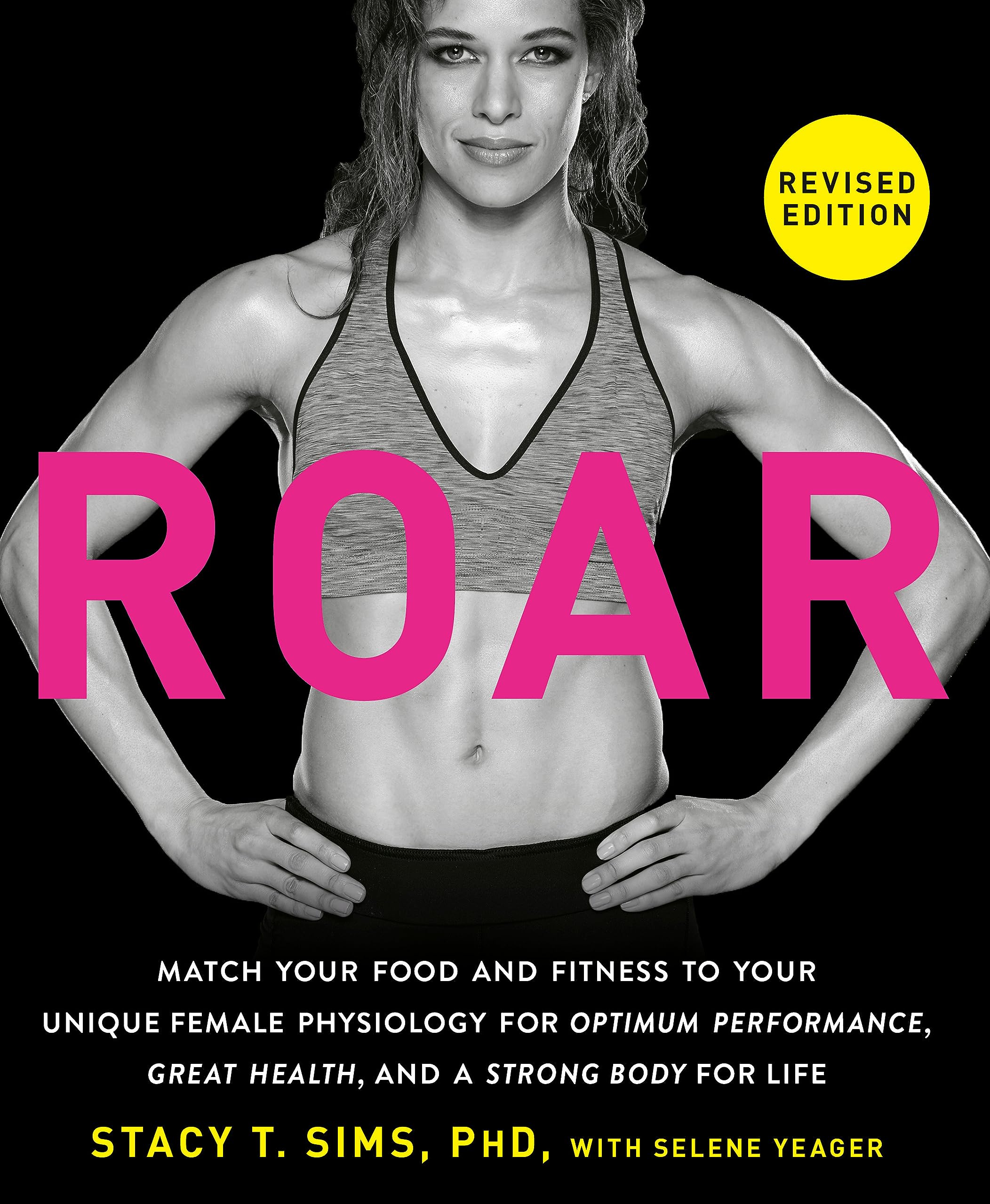
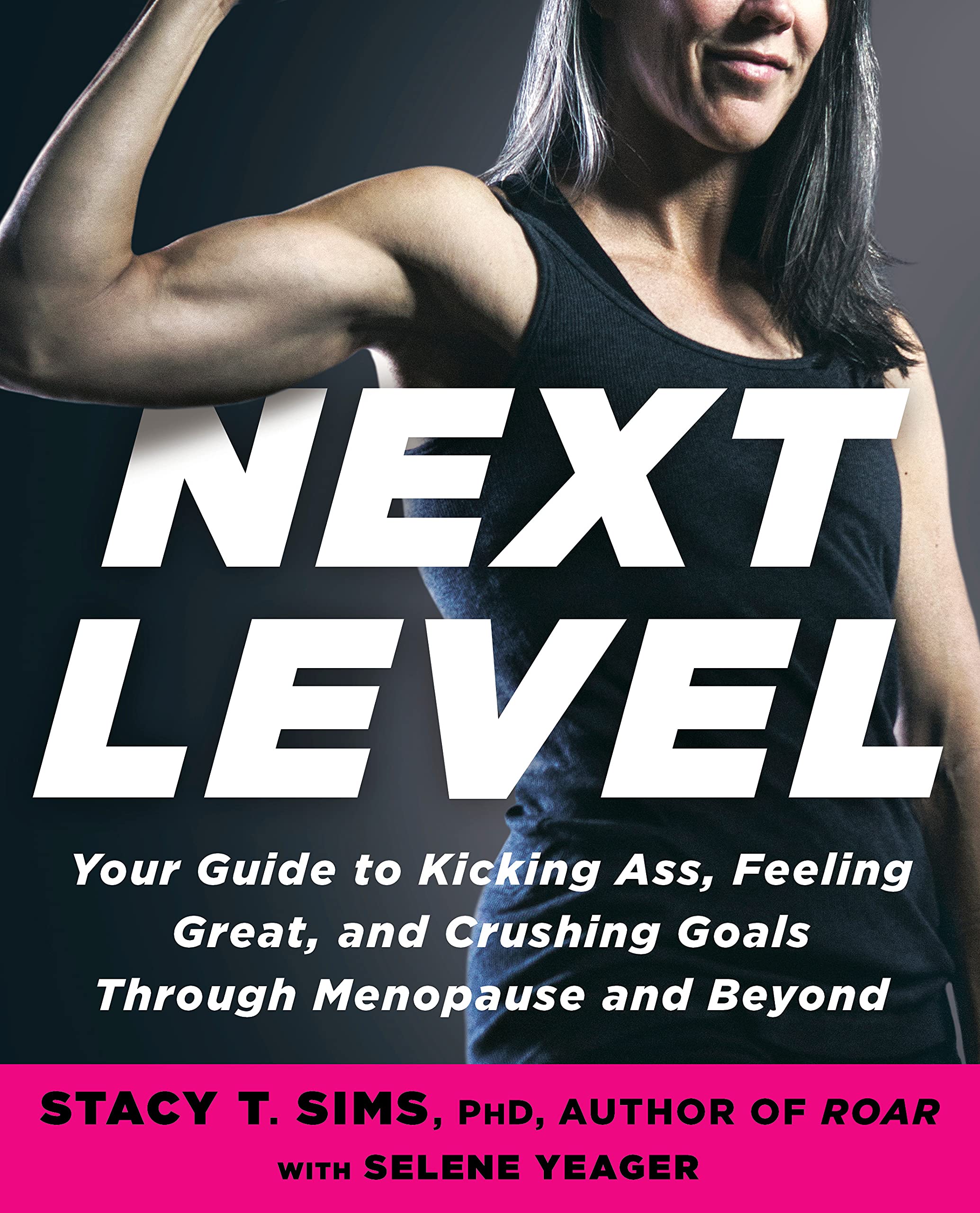
- Read Dr. Sims' bestselling books, ROAR & Next Level
-
ROAR
Women are not small men. Stop eating and training like one.
In ROAR, exercise physiologist and nutrition scientist Stacy T. Sims, PhD, teaches you everything you need to know to adapt your nutrition, hydration, and training to work with your unique female physiology, rather than against it.
By understanding your physiology, you’ll know how best to adapt your lifestyle and build routines to maximize your performance, on and off the sports field. You’ll discover expert guidance on building a rock-solid foundation for fitness and everyday life with tips for determining your high-performance body composition, gaining lean muscle, and nailing your nutrition. Because a women’s physiology changes over time, you’ll also find full chapters devoted to pregnancy and menopause.
-
Next Level
For active women, menopause hits hard. Overnight, your body doesn’t feel like the one you know and love anymore—you’re battling new symptoms, might be gaining weight, losing endurance and strength, and taking longer to bounce back from workouts that used to be easy. The things that have always kept you fit and healthy just seem to stop working the way they used to.
Resources
-
- Yale Medicine: After Decades of Misunderstanding, Menopause is Finally Having Its Moment
- Mayo Clinic: Perimenopause, menopause and … weightlifting? Expert explains value for bone health
- University of New South Wales: Eight hours of interval sprinting can reverse negative effects of menopause
- Trinity Health: Menopause nutrition tips: Support brain, mood & body
- Microbiota Institute: Menopausal Microbiota
- Mayo Clinic: Mindfulness may ease menopausal symptoms
- University of Colorado: Can Taking Creatine Help Women Stay Healthy as They Age?
- Cleveland Clinic: Managing Menopause Without Hormones
- Menopause: Estrogen deficiency in the menopause and the role of hormone therapy: integrating the findings of basic science research with clinical trials
- Drug Discovery Today: Women’s reproductive system as balanced estradiol and progesterone actions—A revolutionary, paradigm-shifting concept in women’s health
- Womens Health Rep: Adverse Changes in Body Composition During the Menopausal Transition and Relation to Cardiovascular Risk: A Contemporary Review
- International Journal of Women's Health: Spotlight on the Gut Microbiome in Menopause: Current Insights
- BMC Womens Health: Resistance training alters body composition in middle-aged women depending on menopause - A 20-week control trial
- Medicine & Science in Sports & Exercise: The Effect of Sprint Interval Training on Body Composition of Postmenopausal Women
- Medicina: Cognition, Mood and Sleep in Menopausal Transition: The Role of Menopause Hormone Therapy
- Journal of Affective Disorders: The effectiveness of mindfulness-based interventions on menopausal symptoms: A systematic review and meta-analysis of randomized controlled trials
- Nutrients: The Importance of Nutrition in Menopause and Perimenopause-A Review
- Journal of Musculoskeletal Neuronal Interactions: Changes in muscle mass and strength after menopause
2 Million Readers.
1 Life-Changing Newsletter
Simple and Straight-to-the-Point...
Just Like Mel.