Episode: 367
The 3 Day Nutrition Protocol: Exactly What to Eat For Your Best Body & More Energy
with Dr. Amy Shah, MD
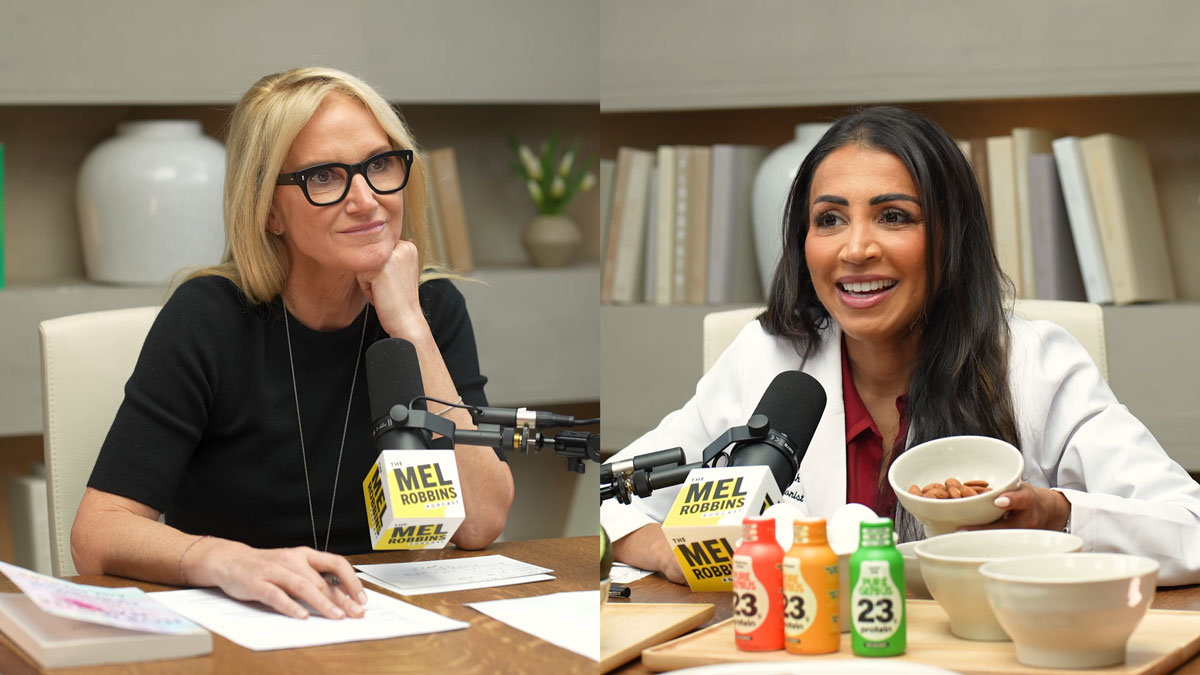
Ever stare into the fridge thinking, “What should I eat to get healthy?” Today you are getting your answer.
In this episode, Dr. Amy Shah, a double board-certified, Harvard-trained doctor and expert in nutrition and immunology, shares her simple, science-backed 30/30/3 plan: 30g protein in your first meal, 30g fiber daily, and 3 probiotic foods.
Learn easy grocery swaps, a quick label trick to spot fake “high-protein” foods, and know which “health foods” backfire. Learn how specific foods boost your energy, stabilize your mood, end cravings, and balance hormones.
Listen on:




Our body changes very quickly. Within three days you can start seeing noticeable changes in your gut health and in your energy levels.
Dr. Amy Shah
All Clips
Transcript
Dr. Amy Shah (00:00:00):
Did you know that every single medication procedure diagnosis that doctors make is based on research that is done on men, and it's mostly done on white men.
Mel Robbins (00:00:11):
So for a century or more medical advice that has been given to women is medical advice that is the result of only studying white men?
(00:00:23):
Dr. Amy Shah is a double board certified medical doctor who trained at Harvard Medical School and has degrees in nutrition and immunology.
Dr. Amy Shah (00:00:31):
Heart attacks were never studied in women. And so when women would have a heart attack, it would be missed 50% of the time because women present differently. They don't have it like crushing chest pain to the left arm. It's like anxiety, like nausea, and you say, oh, you're fine. Go home. And 50% higher mortality. This is shocking. We need to learn to speak up and we need to learn more about our bodies and our bodies are different. And being empowered with information is gonna change your life.
Mel Robbins (00:01:03):
What is the ideal plan or framework for a busy woman who wants better health, longevity, and energy Dr. Shah?
Dr. Amy Shah (00:01:10):
Change your gut, change your hormones, change your brain. The plan is 30 grams of protein in your first meal, 30 grams of fiber throughout the day, and three probiotic foods every single day. There is no framework currently in textbooks for doctors in handbooks, in women's health books. There's never been an accepted framework for women, and we're creating it today.
Mel Robbins (00:01:37):
Dr. Amy Shah, welcome to the Mel Robbins Podcast. Thank you for having me, Mel. I always learn so much from you and here's where I wanna start. What will I experience in my life that will change for the better or could be different? If I take everything that you're about to teach us today and I apply it to my life, what's gonna change Dr. Shah?
Dr. Amy Shah (00:01:57):
Well, Mel, I'm gonna give you the framework to feel better in your body, to feel more energized. And it is the simplest thing that's distilling down thousands of research papers, thousands of women that have come to me, and I am gonna give that to you today.
Mel Robbins (00:02:18):
Wow. So what is this framework and where has it been my whole life?
Dr. Amy Shah (00:02:23):
That, that's a great question. Uh, the framework is 30, 33. Okay. 30 grams of protein in your first meal.
Mel Robbins (00:02:32):
Mm-hmm.
Dr. Amy Shah (00:02:33):
30 grams of fiber throughout the day and three probiotic foods every day. And each of these is based in deep scientific research. And this is something that should have been given to us when we were in health class in whatever, sixth, seventh, eighth grade. It should have been maybe given to us at our doctor's offices, which it wasn't. It should have given to me in medical school wasn't. And it is not till today that we are sharing this with the world.
Mel Robbins (00:03:06):
Dr. Shah, I have interviewed you before, but you seem even more passionate than normal about the research and about the recommendation to women specifically that we be getting 30 grams of protein first thing in the morning, 30 grams of fiber throughout the day, and three probiotic foods, I think you said yes throughout the day. Why are you so excited and passionate about this new protocol?
Dr. Amy Shah (00:03:32):
The reason why is I think that women have been ignored for far too long. Did you know that every single medication procedure, diagnosis that doctors make is based on research that is mostly done on white men? And wasn't until there was a female that actually came in as an NIH director in 1991 and she was like, none of these big research articles include women or minorities. And so she created the revitalization Act in 1993 to actually mandate that they be included because there is this theory that women are complicated. We have hormones, pregnancies, and so they were thinking that it was a favor not to have women in there. But what ended up happening is that very, very big mistakes were happening. For example, heart attacks were never studied in women. And so when women would have a heart attack, it would be missed 50% of the time.
(00:04:33):
And this is still true because women present differently. They don't have the like crushing chest pain to the left arm. It's like anxiety, like nausea and you just say, oh, you are fine. Go home. And 50% higher mortality. That's crazy. Isn't that crazy? I mean, I think women have always, always felt like we are not listened to. Like I know that there are people listening and watching today who are feeling, Hey, nobody's listening to me. I have all of these things going on for me. And that's, that's why we're here because I wanna fill this gap by giving people the tools, the blueprint.
Mel Robbins (00:05:13):
So Dr. Shah, you have now looked at the research. You have crunched the data and you have distilled it down into a brand new formula that you are recommending that women follow. What is this formula and why are you so excited about it?
Dr. Amy Shah (00:05:32):
It's called the 30 33 30 grams of protein, your first meal, 30 grams of fiber throughout the day and three probiotic foods every day. And why are you making this recommendation? Because women have gotten diets, weight loss plans, they have never gotten a framework to make them stronger and to make them happier and to make them more energized.
Mel Robbins (00:05:58):
I love it because I feel like a lot of people are like, oh, just eat healthy. And I'm like, well, what does that actually mean? And so I'm excited to dig into it, but I wanna read to you from your bestselling book, hormone Havoc. This is in the introduction. Wait till you hear this. As I read this, after you've made this simple science-backed nutritional changes, I am recommending in the 30 33 protocol, you can expect the following, improve mood and less anxiety, better sleep, healthy digestion, higher libido, sharper thinking, diminished hot flashes and night sweats, a fitter figure including around your waist, greater energy, less fatigue and more. Your body is changing, cycling through completely normal phases of life that all women journey through. You cannot control how your hormones change, but you can control how you experience it with the protocols and tools that you're about to teach us today. Dr. Shah, you have the power to reframe perimenopause, menopause, and your health in general as an opportunity, not a curse. And Dr. Shah, you're saying with just this protocol 30 33, you can achieve those benefits.
Dr. Amy Shah (00:07:18):
Yes. And it's grounded in research. It's a simple framework that anybody can do and is gonna change your life.
Mel Robbins (00:07:27):
I want this. So let's dig into it. And you mentioned that the first core element of the 30 33 protocol is getting 30 grams of protein first thing in the morning. Why is that the first part of this?
Dr. Amy Shah (00:07:40):
It's the first step towards better health, better mindset, better energy. And if you can start to master that, then you can move on to the 30 grams of fiber. And then lastly, go to the three probiotic foods every day. So step one is the protein in the morning.
Mel Robbins (00:07:57):
Okay, so here's what I wanna do. I wanna take each one of these, of the 30 33 and I wanna start with the 30 grams of protein. And we're gonna go through each one and I want you to really unpack why.
Dr. Amy Shah (00:08:10):
Yes.
Mel Robbins (00:08:11):
What is 30 grams of protein? What counts as protein? And more importantly, the research that explains how getting 30 grams of protein first thing in the morning as part of this 30 33 plan, what the research says about how it makes you healthier, how it makes you happier, what it does in your gut, how it works with the female body. I cannot wait to dig into this.
Mel Robbins (00:08:34):
Dr. Shah, what is protein?
Dr. Amy Shah (00:08:36):
Protein, Mel, is a bunch of amino acids. Now what's an amino acid? And I'll tell you, these are the building blocks. You probably heard about building blocks of muscle. You might have even heard building blocks of your gut lining. But did you know it's a building blocks of neurotransmitters, your brain like dopamine and serotonin. So what I'm saying to you is by eating protein, you are giving your body the building blocks to make more muscle, to make hair, skin, and nails, but also to make more gut lining and to make neurotransmitters like dopamine, which is our motivation, our energy, and our focus.
Mel Robbins (00:09:21):
Okay. I wanna make sure that I'm tracking because I thought that you're supposed to eat protein in order to just help you with muscle mass. Yes. Which of course is important. Yes. Especially for women, especially when you're 35 and up and you're hitting perimenopause. Yes. Understand that. But you just added on a long list of other things that protein does from your neurotransmitters to dopamine and serotonin to your gut lining. Well, how is protein involved in those things?
Dr. Amy Shah (00:09:55):
The reason why there's 30 grams of protein and 30 grams of fiber is that combination of protein and fiber. And we'll get into exactly what that looks like.
Mel Robbins (00:10:02):
Okay.
Dr. Amy Shah (00:10:03):
The combination of protein and fiber is the perfect food for your gut bacteria. Our gut microbiome has trillions with a t organisms that are helping us make decisions like talking to our hormones immune system. And they're starving to death. We're not getting enough protein, we're not getting enough fiber. And so putting them to is the perfect way to feed your gut bacteria. You want it to be a lush Amazon jungle. You don't want it to be a barren wasteland, which is what it looks like for a lot of us. Okay. And that protein is giving signals back to the brain that you're full. And so we know that women, especially who have protein in the morning, they have more of the, um, signals to the brain that you're full. And, and it lowers that craving, especially that three o'clock, that post lunch craving or that nighttime craving that happens. The having protein in the morning helps you control that.
Mel Robbins (00:11:06):
Hmm.
Dr. Amy Shah (00:11:07):
So not only is it helping your muscles, which you like you said, very important, especially as we face that decline in perimenopause.
Mel Robbins (00:11:16):
Just quickly, Dr. Shah, why is eating protein for muscles as a woman super important?
Dr. Amy Shah (00:11:23):
Yeah, that's such a great question because most of us, including myself, I was on that get smaller, get thinner, and we're on this bandwagon of trying to look as small as possible. And what I wanna tell women is you don't wanna be smaller, you wanna be stronger.
Mel Robbins (00:11:40):
Okay?
Dr. Amy Shah (00:11:41):
And the reason why for muscles this matters is that our signaling for muscle growth goes down as we age. So from the age of 35,
Mel Robbins (00:11:52):
Wait, is that why everything's getting flabby?
Dr. Amy Shah (00:11:54):
Yes. It doesn't mean that you're screwed.
Mel Robbins (00:11:57):
Okay.
Dr. Amy Shah (00:11:57):
It just means you need a stronger stimulus. That stimulus that um, you used to have for muscle growth has blunted because our estrogen is going down.
Mel Robbins (00:12:05):
What is the health benefit of me having muscles?
Dr. Amy Shah (00:12:09):
Listen, if you don't have muscle and your bones are brittle Yeah. When you fall, which you will inevitably, we all fall at some point in our lives, we just get up. Right? But if you are in your eighties or nineties and you fall, you don't have the muscles to hold you up and you don't have the bones to withstand the impact of that fall. That is a life ending fall for you.
Mel Robbins (00:12:42):
So muscles are important for longevity. Yeah. Muscles are important for you to feel strong in your body. And muscles also signal other things to other parts of your body. And protein. And the building blocks, you called it amino acids in a protein, are essential for your body to be able to build and maintain muscle.
Dr. Amy Shah (00:13:04):
When you exercise and you eat protein, these, the muscle becomes a sink for your glucose. It's like a sponge that's taking up all the glucose in your system.
Mel Robbins (00:13:17):
What does that mean?
Dr. Amy Shah (00:13:18):
So what ha happens is when we eat a huge meal, we get a big blood sugar spike. Okay? And the goal for all of us is to make sure the spike isn't too big and that it comes down very quickly. Even if the spike is big, as long as it comes down quickly, your muscles suck that in. Mm. It does. The muscles actually, they don't even need insulin. They have these, their own transporters called the glute four transporter. Okay. So one of the best things I find about eating protein and exercising is that you are actually improving your metabolism. So your blood sugar will be lower, you'll have less abdominal fat, you'll be more energized, less crashes. I mean, those are like the benefits we don't talk about enough with protein. Um, is that connection with protein and exercise in the muscle?
Mel Robbins (00:14:06):
Wait, so just as I'm sitting here and I've got some biceps and some quads Okay. And I'm, and I've eaten my protein. Yes. Which I did this morning 'cause I knew you were coming. Um, if I were to eat something that spikes my insulin, the mere fact that I have built my muscles up and I've fed them protein, which is critical to maintaining the muscle, means the muscles themselves almost act like a sponge to suck it outta my body.
Dr. Amy Shah (00:14:33):
Yes. And that, that's why that, that's almost like exercising without exercising. That's right. That's why muscle mass is so important. And think about it, if you pair that with a quick, you know, I'm gonna stand up and do a couple of squats or I'm gonna go for a quick walk, you are actually creating a scenario in your body where those muscles are contracting and they know, okay, I gotta pull some of that into my muscle and they're gonna do such a great job that all of a sudden your blood sugar balances right away. Wow. Instead of being on a crash.
Mel Robbins (00:15:03):
Could you explain the surprising things that happen in your brain or your body when you eat protein?
Dr. Amy Shah (00:15:13):
Yeah.
Mel Robbins (00:15:13):
Especially first thing in the morning as a woman.
Dr. Amy Shah (00:15:15):
The surprising benefits is that it's actually the building blocks of dopamine and serotonin. Dopamine is so needed for us, especially when we're in that midlife and beyond. 'cause our levels are lower. Right? So that motivation, that feeling of energized. Do you know when you feel like so excited to do something that is dopamine and it's like the one that keeps you going on the project? Um, because you want it to be done. It's the one that gets you up out of bed. Hmm. It it's the one that makes you drive across town. Dopamine is so positive. It can be negative too 'cause it's part of addiction. But in the mornings we wanna have our dopamine and our serotonin, our happy hormone serotonin is we want it to be higher. You've heard of GLP-1?
Mel Robbins (00:16:11):
Mm-hmm.
Dr. Amy Shah (00:16:11):
Neuropeptide Y. We wanna have those high so that we can feel full and not have cravings for the rest of the day. So that's a natural way to boost those hormones in our body that make us feel full. And so not only are we more focused and we're more motivated, but we're also less likely to kind of be distracted because we're craving something. And so there's very good studies that show people who eat protein in the early part of the day will get benefits all day long because of the neurotransmitters, because of the craving and um, the s satiation factor of eating.
Mel Robbins (00:16:54):
What is the recommended range? And obviously
Dr. Amy Shah (00:16:57):
Yeah,
Mel Robbins (00:16:57):
Everybody's slightly different, but what is the general range for how much protein you should be getting?
Dr. Amy Shah (00:17:04):
That's a great question. And that varies depending on what your goals are.
Mel Robbins (00:17:07):
My goal is to be healthy and wealthy and happy and to take advantage of all this research.
Dr. Amy Shah (00:17:13):
Okay. So someone like you
Mel Robbins (00:17:14):
Yes.
Dr. Amy Shah (00:17:15):
I would recommend 0.8 grams per pound.
Mel Robbins (00:17:19):
Okay. Point eight.
Dr. Amy Shah (00:17:20):
So between 0.7 and all the way up to one gram per pound is like the range
Mel Robbins (00:17:25):
Okay.
Dr. Amy Shah (00:17:25):
For the high protein diet. And I said that for you because I know that you are working on building more muscle.
Mel Robbins (00:17:33):
Yes.
Dr. Amy Shah (00:17:33):
So I know that you are working to maximize and it's so sad, but that's a lot higher than the RDA.
Mel Robbins (00:17:42):
So what the recommended amount is is much lower. But what your medical opinion is, is if you're between, if you're around 0.8 grams. So that's like, so I just need to make the math easy. Yeah. So if I were to, so if, if you're working with, I dunno, 150 pounds.
Dr. Amy Shah (00:17:59):
Yeah.
Mel Robbins (00:17:59):
And you are going one gram. Yes. That's 150 grams. I'm just trying to like make this simple for myself. And if you were to do 0.8, it is 1 21 20. Yeah. That's a lot of protein. It's a lot of protein. And here's the thing, you know, there's only so many egg bites and smoothies and bars and chicken and steak and fish and meal prepping and like the one can do.
Dr. Amy Shah (00:18:26):
Well that's why we're gonna talk about it. What we'll make some easy, easy kind of breakfast ideas.
Mel Robbins (00:18:31):
Okay.
Dr. Amy Shah (00:18:32):
Um, and I'll tell you some quick easy things that you can add to your diet that is gonna really amp up the protein.
Mel Robbins (00:18:37):
Okay. There was one other thing that you said that I wanted to make sure that you explained, which was you said if you are of age.
(00:18:44):
You're smiling at me, I'm 57. If you're of an age where it's harder for you to maintain muscle mass, can you give me the age where you should be paying at? You should start paying attention to this
Dr. Amy Shah (00:18:59):
Mid thirties.
Mel Robbins (00:19:00):
Mid thirties?
Dr. Amy Shah (00:19:01):
I know. So
Mel Robbins (00:19:02):
Is that that just for women?
Dr. Amy Shah (00:19:03):
Uh, yes. It's more- Men's loss, uh, um, is more gradual.
Mel Robbins (00:19:08):
Okay.
Dr. Amy Shah (00:19:09):
Um, women kind of face a little more accelerated muscle loss.
Mel Robbins (00:19:13):
You're so polite in your language. So we fall off a cliff at like in our thirties Yeah. Because of our hormone changes. Yes. So that makes sense. So which means we are not gonna build a maintain muscle the way the guys are because we are fundamentally different. As Dr. Stacy Sims always says, women are not small men. Small men. Yep. Um, and so the protein first thing in the morning is critical because you need more protein so your body can break it down into amino acids that help you build and maintain muscle. You got it? Oh my god. I just got it. I just got it. Okay. Did you get it as you were listening or watching? I just got why this matters.
Dr. Amy Shah (00:19:50):
That's why it matters. It's so much more than protein for muscles. This is about your health as you get older. It's about your neurotransmitters, it's about your gut lining, it's about your hair, skin and nails. It's about so much more and it's about feeling good in your body.
Mel Robbins (00:20:06):
So could you be lose? I'm sorry, I'm going completely off track now. I'm like, could you be losing hair 'cause you don't have enough protein in your diet because you're missing
Dr. Amy Shah (00:20:12):
Yes.
Mel Robbins (00:20:13):
Here's what I got for the first time. For some reason I had always thought about amino acids for some reason as something that your body is just kind of absorbing that's necessary. And when you explained it so simply, you probably didn't even catch yourself saying it. And I wanna, I wanna highlight this 'cause I really want you to leave this conversation not just understanding 30 33 and this framework for women based on all of the research and science that we now have. And based on hormones and based on everything else. I I really want you to understand that when you eat a protein source, your body breaks it down into these amino acids. And the amino acids do all of this important work in your gut, in your brain, and in your muscles. And that's why you're eating it.
Dr. Amy Shah (00:21:01):
That's right. And you know, one of the things I tell women especially is that we naturally lose muscle mass one to 3% per decade.
Mel Robbins (00:21:12):
Okay.
Dr. Amy Shah (00:21:13):
But when we go into this phase that we call perimenopause,
Mel Robbins (00:21:16):
Which is in your thirties,
Dr. Amy Shah (00:21:18):
Thirties, all the way through your fifties, you have accelerated muscle loss.
Mel Robbins (00:21:23):
Okay. So it's no longer one to 3%, you're just naturally losing.
Dr. Amy Shah (00:21:26):
Yeah. So it's one to 3% per decade. And then when you get into perimenopause, it's one to 3% at the end of a menopause. It's per year.
Mel Robbins (00:21:35):
Per year.
Dr. Amy Shah (00:21:36):
Yeah.
Mel Robbins (00:21:36):
This goes back to the original point. Women's bodies are different. Our hormones are different. Yeah. The way we cycle are different. The amino acids that we need for our muscles to be maintained and to build and for our brains and serotonin and gut different. And if we have accelerated loss of our muscle mass just naturally because of hormone changes in our early thirties, it's important to know that it's important and a lot. Now I understand why you have a formula. Exactly. I love this. Okay. So I want you to show us
Mel Robbins (00:22:11):
What counts when it comes to 30 grams of protein first thing in the morning and how to get it. And I also want you to surprise us because there's probably a lot of things that I'm throwing in my mouth that I think are great sources of protein that might not be you ready? We're ready. Okay, great. So we're gonna bring in some different foods. Our executive producer Tracy is gonna go grab it right now. Okay. So we have all this amazing like food on the table and now I'm starting to salivate because I'm looking at all this stuff. And why don't you walk us through every single one of the food items that you have in front of us and just describe what it is, how much protein there is, and what you want us to know about it.
Dr. Amy Shah (00:22:58):
Love that. All right, let's start with an egg.
Mel Robbins (00:23:01):
Okay.
Dr. Amy Shah (00:23:01):
Do you like eggs?
Mel Robbins (00:23:02):
I love eggs, but there's only so many eggs I can eat. You know what I'm saying?
Dr. Amy Shah (00:23:05):
Yes.
Mel Robbins (00:23:06):
And I feel like this is my go-to for fast protein.
Dr. Amy Shah (00:23:09):
It is the go-to for fast protein. What I love about eggs is that they have 6 grams of protein per egg. But–
Mel Robbins (00:23:16):
That's it?
Dr. Amy Shah (00:23:17):
That's it.
Mel Robbins (00:23:18):
Oh, I thought I was getting more.
Dr. Amy Shah (00:23:19):
So two eggs is not enough.
Mel Robbins (00:23:22):
It's only 12?
Dr. Amy Shah (00:23:23):
Yes. Most women are having two eggs for breakfast.
Mel Robbins (00:23:27):
That's what I for breakfast.
Dr. Amy Shah (00:23:28):
That's too little. You need to have an egg scramble. Okay. You can put one or two yolks because the yolk has a little bit of, um, uh, choline and, uh, fat soluble vitamins in it. But then can put in the whites so then you can get like five eggs. So if you three egg whites, two eggs. Exactly. And, or you could do all eggs, but having all eggs, um, amps up the cholesterol a little bit. So I like to add just like two egg yolks or one for taste. And then the rest egg whites. And the great thing about eggs, uh, they're so versatile. Mm. You can throw it in to a stew. You can throw it in on a side, you can eat it on the side of something else. Whenever I'm in a crunch. That is a go-to really easy food that you can make at home. And then we're gonna go to, one of my favorites is cottage cheese. Now here. So you love cottage cheese. I know,
Mel Robbins (00:24:27):
I do shout out to my mother. She, yes. She always had cottage cheese on the table growing up. It is cottage cheese. First of all, a good source of protein.
Dr. Amy Shah (00:24:34):
It is a great source of protein. You can get in about a cup with a little bit more than a cup. You can get 30 grams of protein.
Mel Robbins (00:24:43):
Wait, a cup of cottage cheese has 30 grams of protein.?
Dr. Amy Shah (00:24:47):
So a half cup has like 14. So a little more than a cup. You are getting all of the breakfast protein in one cottage cheese. I like the probiotic type of cottage cheese. 'cause you'll, you know, you get to hit that probio goal as well. And so what you wanna do is, um, if you add a little bit of fruit to this, this becomes a really delicious kind of parfait. You can add a little honey or you can add some dates to this and it becomes a really easy quick five minute breakfast.
Mel Robbins (00:25:14):
So a cup of cottage cheese with some fruit on top? Yes. That could be. It's about 30 grams of protein. Yeah. And as I'm eating it, my body is breaking it down into those amino acids and I'm doing a good thing for my gut, my brain and my muscles and your hair. Skin and nails and my hair, skin and nails. Wow.
Dr. Amy Shah (00:25:31):
One easiest way to get protein honestly is chicken breasts because you can get kind of 26 grams in one at one serving.
Mel Robbins (00:25:39):
And, and so how big is one serving the,
Dr. Amy Shah (00:25:41):
Like a deck of cards. You can–
Mel Robbins (00:25:42):
Oh, oh wait, hold on. A deck of cards
Dr. Amy Shah (00:25:44):
Yes.
Mel Robbins (00:25:44):
Is 30 grams of protein.
Dr. Amy Shah (00:25:46):
Yes.
Mel Robbins (00:25:47):
Roughly.
Dr. Amy Shah (00:25:47):
Yes.
Mel Robbins (00:25:48):
Oh, I love that.
Dr. Amy Shah (00:25:49):
Isn't that awesome?
Mel Robbins (00:25:50):
That's a great
Dr. Amy Shah (00:25:51):
Visual. It is a such an easy way to get protein in your diet. Um, this maybe you don't wanna have it for breakfast, but you, maybe you're having it for lunch or dinner. 'cause you really wanna get 30 grams in each meal. And if you're like you, which we calculated out to be 120 grams, you're gonna have to get even more. Maybe. So this is maybe a snack.
Mel Robbins (00:26:11):
Wow. Well, when I first met you, I was two thirds deficient in what I needed to get, what else do you have? Do I see? Are there lentils over there?
Dr. Amy Shah (00:26:19):
Yes. Okay. Surprising one.
Mel Robbins (00:26:22):
Yes.
Dr. Amy Shah (00:26:22):
For high protein.
Mel Robbins (00:26:23):
Yes.
Dr. Amy Shah (00:26:23):
Is lentils
Mel Robbins (00:26:24):
Okay.
Dr. Amy Shah (00:26:24):
You get 18 grams of protein from lentils one serving. Isn't that insane?
Mel Robbins (00:26:31):
Okay. So Doctor, hold that up. So Dr. Shah is holding a bowl that is full of just the basic green lentils that you can buy anywhere.
Dr. Amy Shah (00:26:40):
Yeah.
Mel Robbins (00:26:41):
18 grams of protein from one cup.
Dr. Amy Shah (00:26:44):
Yeah. Isn't that crazy? One?
Mel Robbins (00:26:46):
That's really crazy.
Dr. Amy Shah (00:26:47):
I I actually love that because, um, lentils I think are inexpensive.
Mel Robbins (00:26:52):
Yeah.
Dr. Amy Shah (00:26:53):
They're easy. Like even if you're not a chef, like I'm not, you know, the biggest chef, but it's easy to cook them. You just have to boil, soak and boil them. They're like an easy and they're just inexpensive. Especially for those people who think eating healthy or eating protein's gonna be super expensive. This is a great option.
Mel Robbins (00:27:09):
Wow. Dr. Shah, I'm so glad you're giving us a bunch of different options. I do wanna ask a quick question though. Is there a reason why you didn't bring up bacon?
Dr. Amy Shah (00:27:19):
It's not, uh, the problem with bacon is that it is an ultra processed food. In most cases you can get bacon that's not ultra processed,
Mel Robbins (00:27:27):
Meaning you buy it from a local farmer.
Dr. Amy Shah (00:27:29):
Yeah. I want, I wanted to focus on things that could be easy switches that people could make very easily and get their high protein in. Um, and that's why I focus on these, these foods
Mel Robbins (00:27:40):
More whole foods. Yeah. Because the ultra process has chemicals and other stuff in it that sort of counteracts what you're going for.
Dr. Amy Shah (00:27:46):
That's right. Uh, the more ultra process of food is the more likely it is to cause inflammation in your body and long-term health issues, which is why you wanna have as little ultra processed foods in your life as possible.
Mel Robbins (00:28:01):
Now I'm so glad I asked that question because my typical breakfast, especially if I'm traveling, 'cause I find it to be not only surprisingly hard,
Dr. Amy Shah (00:28:11):
Yeah.
Mel Robbins (00:28:11):
To get 120 grams of protein in, but I find it particularly hard when it's a work week or it's a super busy day and I'm racing out the door. Um, and so I would be ordering at a restaurant in the morning or getting takeout and adding bacon in and now I'm realizing while I'm trying to fill the protein gap, I'm actually working against myself because I'm eating something that's ultra processed even though I'm not considering it.
Dr. Amy Shah (00:28:40):
Yes.
Mel Robbins (00:28:41):
What are some other ways that you want us to think about filling that gap, especially on those mornings that it's busy or you're traveling?
Dr. Amy Shah (00:28:48):
Well that's where, that's why I set up some quick options. So,
Mel Robbins (00:28:52):
Okay,
Dr. Amy Shah (00:28:52):
Here's the thing. Not everyone is gonna have time to make a full breakfast. And often we are trying to get, you know, trying to figure out smoothie, but we're getting it's Jamba juice. And you're like, how do I even get enough protein without getting 800 calories Yes. In my, and so you wanna pick options that are good to go. Like this, pure genius has 23 grams of protein in one shot. And so you can get something like this on the go that actually helps you reach your protein goals.
Mel Robbins (00:29:21):
Now, in full disclosure, I am one of the co-founders of Pure Genius and you are on the founding Scientific advisory board. As a medical doctor, why is it that you got involved in this and what is it that is that you want people to know about it?
Dr. Amy Shah (00:29:38):
Well, I got involved first of all because just like you, I'm struggling every single day to get enough protein. And so what this kind of does is gives us an option to have protein in a, and I love that it's in a small container and I loved that I got to be involved to help create something that is something you can be proud of putting in your body. Hmm. And not being like, oh God, I feel so sick and I really shouldn't have done that. Which is what I usually feel like when I'm at an airport or trying to figure out what to eat for protein in the morning when I'm traveling.
Mel Robbins (00:30:16):
Yeah.
Dr. Amy Shah (00:30:16):
And so this was such a great solution and I got to work so closely with the team and you and we got to see how it's being made and so we know what's happening inside of it. That's, that made me really proud.
Mel Robbins (00:30:28):
Well it made me proud too because the thing that surprised me the most when I really started to pay attention to this is how hard it is to get the amount of protein that you need and the fact that there are so many hidden calories.
Dr. Amy Shah (00:30:39):
Yes.
Mel Robbins (00:30:40):
When I saw how much my smoothie, I mean, no wonder it tasted delicious. It was basically the same amount of calories as a freaking milkshake with ice cream.
Dr. Amy Shah (00:30:50):
I know. I mean, I'm gonna share with you kind of the biggest mistake that we're making with protein.
Mel Robbins (00:30:57):
Okay.
Dr. Amy Shah (00:30:57):
Um, and that is thinking that things like peanut butter
Mel Robbins (00:31:01):
Oh god. Don't go for my peanut butter. Dr. Shah,
Dr. Amy Shah (00:31:04):
I love peanut butter. It's a super healthy fat. Okay. Okay. But you would have to have eight tablespoons a peanut butter to get enough of protein to be considered 30 grams,
Mel Robbins (00:31:15):
Eight tablespoons.
Dr. Amy Shah (00:31:17):
Yeah.
Mel Robbins (00:31:18):
So,
Dr. Amy Shah (00:31:18):
So your morning peanut butter, you're using maybe one or two on your toast.
Mel Robbins (00:31:22):
Well, I like my peanut butter, so I'm probably racking up the calories there.
Dr. Amy Shah (00:31:27):
But
Mel Robbins (00:31:27):
With peanut butter.
Dr. Amy Shah (00:31:28):
And that's the issue also with nuts. Okay. So nuts. I love nuts. Like they're, I I eat nuts all the time, right.
Mel Robbins (00:31:35):
So she's holding a, you're holding a thing of almonds,
Dr. Amy Shah (00:31:37):
But the problem with nuts is that you would have to eat 800 calories, worth of nuts to get 30 grams of protein.
Mel Robbins (00:31:46):
Okay. Hold on, let me just present why that's a problem. 800 calories because it just hit me 800 calories and you've only done 30 grams.
Dr. Amy Shah (00:31:57):
Yep.
Mel Robbins (00:31:57):
You still have, for me, I still have another 90 grams of protein to go.
Dr. Amy Shah (00:32:03):
Yes. And so if you're eating 800 calories in nuts, think about how many total calories of the day you'll get if you're including these kind of lower protein foods.
Mel Robbins (00:32:16):
Whoa.
Mel Robbins (00:32:17):
So there are high calorie and low calorie proteins. Is there a hack for how we can evaluate protein?
Dr. Amy Shah (00:32:26):
Okay, I have a hack for you.
Mel Robbins (00:32:27):
Tell me.
Dr. Amy Shah (00:32:28):
Look at the label here.
Mel Robbins (00:32:29):
Okay.
Dr. Amy Shah (00:32:30):
Okay.
Mel Robbins (00:32:30):
Yep.
Dr. Amy Shah (00:32:31):
Look at the label.
Mel Robbins (00:32:32):
Yeah.
Dr. Amy Shah (00:32:32):
And look at the protein grams. Okay.
Mel Robbins (00:32:36):
Protein grams, 23 grams.
Dr. Amy Shah (00:32:38):
Okay. Add zero to it.
Mel Robbins (00:32:40):
Add a zero. So 230,
Dr. Amy Shah (00:32:41):
- Is that more than the calories?
Mel Robbins (00:32:46):
Yeah. 'cause this, this, the pure genius has only a hundred calories.
Dr. Amy Shah (00:32:50):
So that's a high protein food.
Mel Robbins (00:32:52):
You're kidding.
Dr. Amy Shah (00:32:53):
So a really easy hack and it's not perfect, but you pick up something Yep. And you're like, is this high protein food or not? And you're like, all right, let me just add a zero to the protein and look at the calories. So like in this case it would be 230, way more than the calories. This is a very high protein food. That's incredible. Isn't that a great hack? My, my son, 18-year-old son was like, I use this all the time now because we get bombarded with things that say that they're high protein Good for you. And he is like, when I use this trick, I feel like half the stuff doesn't even match.
Mel Robbins (00:33:28):
I now I know the answer to the follow-up question I was gonna ask you. That protein is having a moment.
Dr. Amy Shah (00:33:33):
Yes.
Mel Robbins (00:33:33):
It's in everything. It's in bread, it's in popcorn desserts and chips and desserts and cereals. And now we know if you go and you add a zero and something says, you know, five grams of protein, you're like, okay, now it's a 50. Is it more than 50 calories? Probably. It's probably 200 or 300 calories. Yeah. Now you know that's a low protein source. Yes. Not a high protein source.
Dr. Amy Shah (00:33:57):
And you know, there are exceptions, a few exceptions here and there, but for packaged food, this worked so well.
Mel Robbins (00:34:03):
Wow. What are the foods that people really make a mistake with because they think you're eating a high protein food, but you're actually eating a very low protein food when it comes to calorie versus protein.
Dr. Amy Shah (00:34:17):
Well, I'm picking up these avocados. Okay. Not because I love avocados. Okay. Avocados are beautiful sources of healthy fats. They're a high source of fiber, but they are low source of protein. You need like nine or 10 avocados to get 30 grams of protein. Yeah. Nine or 10. I mean, I love avocados, but I don't wanna have 10 of them to get my protein.
Mel Robbins (00:34:40):
I'll be honest with you. I didn't even know there was any protein in an avocado.
Dr. Amy Shah (00:34:44):
So, okay. Well speaking of things with low protein, I'm sorry Mel, I'm sorry. But there's something that is very,
Mel Robbins (00:34:53):
You're holding red wine. Yes. Why are we're talking breakfast, who is drinking red wine at B? That's a different medical problem. I think if you're having red wine for breakfast.
Dr. Amy Shah (00:35:01):
Okay. Pretend this is a mimosa.
Mel Robbins (00:35:03):
Okay.
Dr. Amy Shah (00:35:03):
Which you would have for breakfast. People have that for breakfast all the time. You, I mean, I'm not telling you to do this at home, but you would need 30 bottles of wine to get 30 grams of protein. It has virtually no protein.
Mel Robbins (00:35:18):
Wow.
Dr. Amy Shah (00:35:19):
So can you imagine
Mel Robbins (00:35:20):
Does coffee have protein in it? No.
Dr. Amy Shah (00:35:21):
No.
Mel Robbins (00:35:22):
Unless you put milk in it.
Dr. Amy Shah (00:35:23):
Yes.
Mel Robbins (00:35:24):
Okay.
Dr. Amy Shah (00:35:24):
So basically people are thinking that maybe it has a little bit of protein. Right. It has virtually no protein. So this is a not a good source of protein. Okay. Another surprising one, one is oatmeal.
Mel Robbins (00:35:39):
Okay.
Dr. Amy Shah (00:35:39):
So oatmeal
Mel Robbins (00:35:40):
Is surprising in what way? Is–
Dr. Amy Shah (00:35:41):
It is it's not a high protein food.
Mel Robbins (00:35:44):
I always thought a big bowl of oatmeal.
Dr. Amy Shah (00:35:46):
Yes.
Mel Robbins (00:35:46):
Had a lot of protein in it.
Dr. Amy Shah (00:35:47):
So a big bowl of oatmeal is great in other ways. It has fiber, you know, it slows the gastric emptying. It's, it's great. But the problem is, is that if you're thinking you're gonna get your 30 grams of protein from oatmeal, you are wrong.
Mel Robbins (00:36:00):
I had no idea oatmeal was a low protein source and then like an idiot. I'm throwing like tons of peanut butter on top because I think I'm adding more protein
Dr. Amy Shah (00:36:09):
That, so that's why I wanted to bring this because oatmeal inherently is a healthy food. Right. But if you're taking this oatmeal
Mel Robbins (00:36:16):
Yes.
Dr. Amy Shah (00:36:17):
This cup of oatmeal.
Mel Robbins (00:36:18):
Yes.
Dr. Amy Shah (00:36:18):
And then you're adding, um, peanut butter to it and you're trying to get to your, um, you know, 30 grams of protein, then you're adding some nuts to it. And then all of a sudden you have this like 800 calorie breakfast,
Mel Robbins (00:36:30):
But it tastes good. I know, it tastes like dessert. That's why I'm eating it.
Dr. Amy Shah (00:36:34):
Which is amazing.
Mel Robbins (00:36:35):
Now I know why it's not working.
Dr. Amy Shah (00:36:36):
Right. Like definitely if you're looking for a high impact, high protein food, that's not it.
Mel Robbins (00:36:41):
Um, you know, a lot of us, uh, I'm just speaking on behalf of myself and women everywhere, have been socialized to believe that you should start your day on an empty stomach, that you should exercise without eating. That fasting in that regard is the way to have better health. But as a medical doctor and somebody with a degree in nutrition science, what, what do you say about protein first thing in the morning for women in particular?
Dr. Amy Shah (00:37:13):
Here's the thing about fasting. We have found that women and men, people who skip a lot of meals Especially when they're eating late into the day, they just have worse health outcomes. And it's been so hard because I love intermittent fasting, but for me it was like study after study after study, seeing that people who intentionally or unintentionally skip meals,
Mel Robbins (00:37:39):
I was more in the unintentional faith. No, just, I'm, I'm, I'm being honest. Yeah. Like I feel like getting your protein in and getting a good breakfast first thing in the morning is really hard. And when I stop and think about it, I would never send my kids to school without a healthy breakfast.
Dr. Amy Shah (00:37:56):
Yeah.
Mel Robbins (00:37:56):
Because there's no way they would make it through the school day. So why on earth am I sending myself into the day without prioritizing getting in a high impact, high protein meal that's gonna fuel me for the rest of the day?
Dr. Amy Shah (00:38:12):
There is many, many studies that show that getting your protein early in the day is beneficial not only for muscle growth, but it's also more likely to help you get to your goal. So people who have protein in the morning, they're more likely to get to their protein goals. They're more likely to make healthier choices all day long, day long. They're less likely to have cravings.
Mel Robbins (00:38:37):
Hmm.
Dr. Amy Shah (00:38:37):
And more likely to feel satiated and energized through the day. And so I thought to myself, well that makes sense. Will you start your day like this? Make it simple for everyone because if you're doing nothing else and you do this, you're gonna make a big impact in your life.
Mel Robbins (00:38:53):
Alright. Here's what I wanna do. I wanna have the team come in and pull the food off the table. So let's get somebody in here to pull this out. All right. You know,
Mel Robbins (00:39:01):
One of the things I'd love to have you talk about Dr. Shah is as you're looking at your label and you gave us that great hack for, is this low protein or is this a high impact high protein food by add the zero? And if the protein count is higher than the calorie count, yeah. There we're in the high protein great payoff. But what should we also be looking for? Like as you're scanning the label that sneaks in there.
Dr. Amy Shah (00:39:25):
Okay. So the biggest thing is added sugars.
Mel Robbins (00:39:29):
Okay.
Dr. Amy Shah (00:39:29):
So a lot of things like, you know, we mentioned smoothies, um, earlier, and if you actually look at the amount of sugar that a smoothie has, sometimes it's like the same as a coke. So like you wouldn't necessarily have a, a co can of coke first thing in the morning, but you would definitely go for a smoothie.
Mel Robbins (00:39:52):
Right.
Dr. Amy Shah (00:39:52):
And that has just much sugar. Now you could argue, oh, it has fruit sugar and like all the things, but it, at the end of the day, you really do wanna watch how many total grams of sugar that you have in a day. So you definitely wanna watch that. And then of course you wanna be looking at the calorie count, the fat, especially trans fats. Those are the most dangerous types of fats. And so that's another thing if you're like just scanning a label that you would wanna look at.
Mel Robbins (00:40:20):
Can you just tell us what should we be looking for in terms of protein? Yeah. Since protein is now finding its way into everything, what are we actually looking for?
Dr. Amy Shah (00:40:30):
A lot of the proteins that we get out there are not complete proteins.
Mel Robbins (00:40:34):
What does complete protein mean?
Dr. Amy Shah (00:40:35):
So a complete protein means it has all the amino acids in order to build muscle. Okay. There's a special amino acid called leucine. Um, that actually is a great stimulus for muscle growth. And that's not in all protein foods. And so you want to find a complete protein and you want it to have leucine if you're really trying to build that muscle.
Mel Robbins (00:40:59):
And what are the forms of protein that don't have leucine in it?
Dr. Amy Shah (00:41:03):
A lot of vegetarian proteins, I'll have to say, are incomplete proteins, but that's why you eat lentils with rice, for example. 'cause lentils are incomplete, but you pair it with rice. But some, some things that are surprising that are not complete proteins is like collagen. I mean, a lot of people are using collagen and thinking it's a replacement for protein and it's great for your hair, skin and nails. Okay. But it's not a complete protein.
Mel Robbins (00:41:27):
So on its own, without it being fortified, it's not having the benefit to your muscles. Terms of the amino acid profile.
Dr. Amy Shah (00:41:35):
That's right.
Mel Robbins (00:41:35):
It is in the pure genius shot.
Dr. Amy Shah (00:41:38):
It is, but it's also, it has a combination of collagen with BLG, which is a component of whey protein. And so that actually makes it a complete protein. You mentioned whey. Yeah. Talk to me about whey protein. So whey protein is so great. So it's derived from milk, it's made from, um, cow's milk.
Mel Robbins (00:41:59):
Okay.
Dr. Amy Shah (00:42:00):
And so the thing I like about whey is that not only is it a complete protein, which a lot of proteins are not, it's also less processed, meaning to turn milk into a white powder that you'll, you're gonna be consuming on a daily basis. It's not that hard. Right. But to turn peas that are green with a taste into a white powder is a lot harder.
Mel Robbins (00:42:27):
Mm.
Dr. Amy Shah (00:42:28):
And so I've really changed my own personal stance on protein powders and also what I recommend to patients because I used to think, well, if it's a vegan source of protein, it must be better. Right. But what I learned is that you have to process that pea or that hemp a lot to get it to be that white powder flavorless powder. Um, and oftentimes PEA in particular can be contaminated with heavy metals because of where it's grown. And so a lot of vegan and vegetarian protein powders you really wanna watch that makes sure they're tested for heavy metals because that is an issue. And last of an issue with the whey proteins,
Mel Robbins (00:43:07):
You mentioned BLG. Talk to me about whey protein and the BLG aspect in particular
Dr. Amy Shah (00:43:14):
BLG is actually the richest source, um, of leucine. And you can really get that muscle stimulus that you want in, um, kind of that BLG portion. And so it seems to be a really great way to add more protein to your diet in a way that stimulates muscle in the right way. Can you eat too much protein Dr. Shah? Yes, absolutely. So, and you can also eat very, very poor quality protein just to get to your goals.
Mel Robbins (00:43:44):
Mm-hmm.
Dr. Amy Shah (00:43:44):
So the way I counsel my patients is your goal is to get around 30 grams per meal. You don't need to go way higher than that. You don't need to like win the contest of the most amount of protein. It can be something that you can have in excess and that's happened. So you really do wanna try to get it 30 grams per meal or a snack, and that's your ideal amount.
Mel Robbins (00:44:08):
Got it. So if we do 33 meals a day and you get it in and the snacks, you're done, you're done.
Dr. Amy Shah (00:44:15):
It doesn't have to be so complicated. Let's just simplify this, get enough, and then it becomes easy. It doesn't have to be like a full-time job.
Mel Robbins (00:44:23):
Can you talk just a little bit about what should the person listening expect to feel if you get 30 grams of protein in for breakfast after a week of doing it?
Dr. Amy Shah (00:44:38):
That's a great question. Our body changes very quickly. People don't understand that within three days you can start getting noticeable changes in your gut health, for example, uh, in your energy levels. You are going to start to have more building blocks, amino acids in your system. And so you're gonna feel more energized, you're gonna feel, so a week is enough to start noticing those little changes. So I always tell people, try for a week. And my, the plan in the book is honestly a seven day plan because it's so simple. Even if you're really hypercritical and you're like, this is not gonna work for me. You can do anything for seven days and see how you feel and make a decision based on that.
Mel Robbins (00:45:19):
Well, if I'm gonna feel more energized after just focusing on 30 grams of protein every morning, I'm doing it. There is a significant difference between the days where I wake up and couldn't get the protein in. And the days where I prioritize doing this and how I feel fueled, I have more energy, I can focus better, I do better work. I can control my emotions a little bit better. Yes. I'm more present. And if you really think about it, it makes sense. 'cause it's fuel.
Dr. Amy Shah (00:45:50):
Yeah. It, it is fuel for your body. And I actually echo that completely. The days where I just scramble out of bed and I'm going to the thing to think to thing, and I'm not eating until late in the day. I just feel like my emotions, my mood, my energy levels, the way I show up in the world is so different.
Mel Robbins (00:46:11):
Hmm.
Mel Robbins (00:46:12):
So the next part of your 30 33 research back protocol is fiber, specifically eating 30 grams of it per day. So let's talk about why is fiber so important and what does it do in the body?
Dr. Amy Shah (00:46:28):
Great question. All right, Mel, how many Americans do you think are getting 30 grams of fiber? Like what percentage?
Mel Robbins (00:46:35):
I don't know.
Dr. Amy Shah (00:46:36):
Like less than 5%.
Mel Robbins (00:46:38):
Less than 5%.
Dr. Amy Shah (00:46:40):
Yeah. And–
Mel Robbins (00:46:40):
So 95% of us are not getting enough fiber.
Dr. Amy Shah (00:46:43):
Uh, yes.
Mel Robbins (00:46:44):
What does fiber do?
Dr. Amy Shah (00:46:45):
Okay, so let me explain this. So a lot of people think of fiber as like the thing that helps you go poop, which it is, it is one of the things that help you go poop. But what it does is that we have organisms that live in our gut and their main source of food is fiber. And by not eating enough fiber, we are starving that entire ecosystem. And it's so bad, Mel, that among generation to generation, we have lost so much of our gut bacteria that we have like 50% of what our ancestors had because of our modern diet. Those bacteria, they regulate how much hormones we have in our system. So when you don't have enough bacteria that are healthy and functioning, you get all kinds of hormonal imbalances. You get all kinds of GI issues because our gut is constantly talking to our brain. And so feeding that gut bacteria becomes extremely important. And here's what happens when you eat fiber, it actually, um, doesn't get digested fully until it gets to the colon and the gut bacteria there, they will eat that fiber. And most of the other food that we ate has already been absorbed.
Mel Robbins (00:48:02):
Hmm.
Dr. Amy Shah (00:48:03):
And so the only food left for them, that whole entire ecosystem is when you're eating fiber. And when you prepare protein and fiber, that's when they get super happy. They produce these things called short chain fatty acids. These are the magical anti-aging, anti-inflammatory compounds that go all over our body, including our brain and lower inflammation.
Mel Robbins (00:48:28):
Wow. Well, I wanna bring out some fiber F foods. So let's bring in a bunch of examples of what fiber is and then you're gonna explain to us what we should be eating in order to get 30 grams of fiber a day.
Dr. Amy Shah (00:48:44):
Let's do it.
Mel Robbins (00:48:44):
Okay. So if you're watching on YouTube, you can see that there is kind of a odd assortment of things in front of Dr. Shah. I'm gonna just tell you as you're listening, I see a carrot, a kiwi hummus, pistachios, a pear, and some things in bowls that you're gonna explain Dr. Shah. So walk us through what does 30 grams of fiber in a day look like?
Dr. Amy Shah (00:49:08):
All right. I have some really easy things that you can add to your diet–
Mel Robbins (00:49:13):
Okay.
Dr. Amy Shah (00:49:13):
That have a lot of fiber and some of them might be surprising. Um, for example, here's a pair. Okay?
Mel Robbins (00:49:19):
Yes.
Dr. Amy Shah (00:49:19):
So the best thing about a pear is that it has like six to seven grams of fiber, which is like double an apple. Isn't that crazy?
Mel Robbins (00:49:30):
I, I'm sorry. I'm just sort of shocked. Do I have to, do I eat the peel? Do I do the inside?
Dr. Amy Shah (00:49:35):
You eat the whole thing like you would eat an apple.
Mel Robbins (00:49:37):
Okay.
Dr. Amy Shah (00:49:37):
But it just is a powerhouse of fiber. Wow. And so I pears. And the next thing I'm gonna show you berries is like the secret hacks to getting more fiber. So I love blueberries, and blueberries are amazing because they have tons of polyphenols. Um, but raspberries are the real fiber powerhouse. Raspberries. Raspberries, they have eight grams per serving. Raspberries are one of the highest fiber fruits or foods you can EAs uh, have. And so easy to add these to like a yogurt or cottage cheese. Berries are such an easy way to add more fiber to your diet.
Mel Robbins (00:50:16):
So if I were to throw frozen blueberries or frozen raspberries into a smoothie, do you still get the fiber benefit?
Dr. Amy Shah (00:50:22):
Yes.
Mel Robbins (00:50:22):
Okay.
Dr. Amy Shah (00:50:23):
As long as you're not juicing it.
Mel Robbins (00:50:24):
No.
Dr. Amy Shah (00:50:25):
Yes.
Mel Robbins (00:50:25):
Just blending.
Dr. Amy Shah (00:50:26):
Yeah.
Mel Robbins (00:50:26):
Okay. We're throwing 'em on top of the Greek yogurt or throwing 'em.
Dr. Amy Shah (00:50:28):
That's right.
Mel Robbins (00:50:29):
A handful in your mouth.
Dr. Amy Shah (00:50:30):
That's right.
Mel Robbins (00:50:30):
Wow.
Dr. Amy Shah (00:50:31):
Isn't that amazing?
Mel Robbins (00:50:32):
That's almost a third of your daily dose.
Dr. Amy Shah (00:50:33):
Yeah. Once you start doing this, you're like, okay, I understand why 95% of people don't eat enough fiber, but it's not so hard to actually eat and MindBlown stat. Okay. For every 10 grams of additional fiber you add to your diet, you are improving your longevity by 10%.
Mel Robbins (00:50:56):
Every 10 grams of fiber you add to your diet, you're improving your longevity by 10%.
Dr. Amy Shah (00:51:03):
That's right.
Mel Robbins (00:51:03):
Why?
Dr. Amy Shah (00:51:04):
Okay, so fiber is that important! It's not just for constipation, it's for everything in life. So we know diseases, inflammatory diseases, we know brain health. And so most average Americans are getting 12 grams of fiber. And so you add 10 grams to that and you are changing their life.
Mel Robbins (00:51:23):
Wow.
Dr. Amy Shah (00:51:24):
Okay.
Mel Robbins (00:51:24):
What else you got?
Dr. Amy Shah (00:51:24):
Alright. My favorite hack this chia seeds. Chia seeds. So chia seeds are my favorite because one tablespoon is gonna give you five grams of fiber. And so you add a tablespoon, two tablespoons to your yogurt and there you go. You got your 10 grams, you got a 10%, you know, increase in your longevity just from a little seed. And I love chia seeds because you can add it to water, you can add it to yogurt. They're very like versatile in the way that you can eat them. Um, and there's this amazing, this recipe is just insane. A raspberry chia jam. So you'd wanna cook the berries, right? Let them kind of simmer, make, get into that jam, like, uh, consistency, add a little squeeze of lemon, little bit of honey, and then you add your chia seeds and it gels up just like a jam. Wow. Like a store bought jam.
Mel Robbins (00:52:16):
So you make jam by taking a couple tablespoons of chia seeds and some raspberries and blend it up with honey.
Dr. Amy Shah (00:52:22):
Yes.
Mel Robbins (00:52:23):
And then you add it to everything and you basically have almost your half or almost all of your serving
Dr. Amy Shah (00:52:29):
Yes.
Mel Robbins (00:52:29):
Of fiber for the day.
Dr. Amy Shah (00:52:30):
That's right. It's amazing. Okay. Another hack. Kiwi fruit. Okay. Kiwi fruit. If you eat it with the skin like an apple, just bite into it. Ew. Are you supposed to do that? You're supposed to do that, Mel. The skin increases the fiber content by 50%. Oh, the crazy thing about kiwi fruit is that there's really great studies looking at constipation and even looking at sleep and looking at mood that these are all the things that it can help you with. And so if you eat it with the skin on, you can bite it in like an apple. You are adding fiber, but you're also getting all the phytonutrients that kiwi has. It's a, it's like a super food.
Mel Robbins (00:53:09):
So how much fiber is in an average kiwi
Dr. Amy Shah (00:53:12):
Uh, kiwi fruit with the, um, skin is about four grams of fiber. Okay. And adding the skin is the magic. Okay. Okay. So you're gonna have that kiwi fruit and then, um, other powerhouses. Black beans.
Mel Robbins (00:53:27):
Okay. Black beans.
Dr. Amy Shah (00:53:28):
Do you like black beans?
Mel Robbins (00:53:28):
I love black beans.
Dr. Amy Shah (00:53:29):
Black beans are a powerhouse that has eight grams, eight grams in one serving a half a cup of black beans has eight grams of fiber.
Mel Robbins (00:53:38):
Wow. Isn't that impressive? Well, I'm starting to realize I could do 30 33 math. So I could have Yes. My egg yolk and egg white omelet. I could throw in some black beans that are leftover from Taco Tuesday.
Dr. Amy Shah (00:53:52):
That's right.
Mel Robbins (00:53:53):
And now all of a sudden I'm combining the 30 grams of protein.
Dr. Amy Shah (00:53:57):
Yes.
Mel Robbins (00:53:57):
And making my 30 grams of fiber. I could take my cottage cheese or my Greek yogurt, or I could drink one of these pure genius shots and get my protein in. And then I could take a handful of blueberries, raspberries, and some chia seed and boom. There you go. I got my fiber and my protein first thing in the morning.
Dr. Amy Shah (00:54:17):
The other thing I love about, you know, uh, fiber is that it's actually really delicious. So hummus is something you might, hummus is a fiber. Yes. How is it a fiber? Isn't that crazy? It's because it's made of chickpeas and that's a high fiber food. And so you could take this outta your fridge. You might have you take a carrot, you four grams here, got some hummus, you got six grams there, got 10 grams right there.
Mel Robbins (00:54:42):
Wow. And I see pistachios.
Dr. Amy Shah (00:54:44):
Do you like pistachios? Pistachios are a high fiber food. 13 grams
Mel Robbins (00:54:50):
What?
Dr. Amy Shah (00:54:50):
In a serving. I know. It's like a high impact, high fiber food.
Mel Robbins (00:54:53):
And that's just for a quarter cup of pistachios.
Dr. Amy Shah (00:54:56):
Isn't that crazy?
Mel Robbins (00:54:57):
13 grams?
Dr. Amy Shah (00:54:58):
Like if you look at it, you take these berries and you take the pistachios or you take, um, and you make up yogurt parfait with the berries, the chia seeds and the nuts, and you got yourself 30 grams. Wow. And one, one survey. So you could be better than 95% of people and not because it's gonna just make you poop, which is an amazing side effect, but because it is going to make you smarter, it's gonna balance your hormones, it's going to improve your immune system. This is going to help you live longer, lower inflammation. I mean, fiber is a key for our gut-brain connection. And so when you eat enough fiber, you are improving your overall life.
Mel Robbins (00:55:40):
All right. Talk to me about bread. Is bread fiber, is there a hack for bread and fiber?
Dr. Amy Shah (00:55:46):
Okay, so bread is a trick question because the white bread, you know, the typical bread that you're getting in, um, Sarah shops, that is not a high fiber food. But the thing is bread can be a high fiber food if you get an Ezekiel bread or sprouted grain bread there you mean the stuff with seeds in it? Exactly. Okay. And or whatout sourdough sour dough sourdough is a really great bread as well because it's fermented and there's some benefits of that fermentation for your gut,
Mel Robbins (00:56:20):
But it's not exactly the same fiber as the seeded breads.
Dr. Amy Shah (00:56:22):
Exactly. A sourdough that's with sprouted wheat, um, is actually a really great option. Um, and then I have a hack. Tell me the hack store your bread in the freezer, whether it's sourdough, whether it's Ezekiel, whether it's regular bread, there is a process, a biological phenomenon that happens when you freeze bread that makes it healthier for you and your gut. What what happens is some of the starch in the bread turns into resistant starch. And resistant starch acts like fiber in our body, our gut bacteria, the ones that eat the fiber, they also love resistant starch. And when they eat that resistant starch, okay? When they're eating that frozen and then thawed bread, it has less of a glycemic impact on your blood sugar and it's actually less caloric. And you get the benefits of the gut healthy benefits of it.
Mel Robbins (00:57:24):
Okay, hold on a second. So if I throw my bread in the freezer, you're telling me that because something biologically big words happens to the bread, when I take it out and toast it or thaw or whatever, it's gonna have less of a glycemic spike. It is gonna act as a better fiber because it's turned something starch resistance, whatever.
Dr. Amy Shah (00:57:48):
Yes. It's better for your blood sugar and it's better for your gut.
Mel Robbins (00:57:52):
Wow.
Dr. Amy Shah (00:57:53):
People ask me is, what about gluten-free bread? What about, is it all kinds sourdough? If you keep it in the freezer, it ends up just being a healthier version of that bread. So if you're gonna, I'm not telling you to have bread morning, noon and night, but when you are having that bread to have it in that way, it is such a better for you food.
Mel Robbins (00:58:13):
Okay, this may sound like a dumb question, but I have to ask it. What about greens like having a salad or spinach or something like that that counts towards fiber?
Dr. Amy Shah (00:58:23):
Leafy leafy greens are an amazing source of fiber. I feel like leafy greens have so many benefits for us. Our gut bacteria love leafy greens because that fiber kind of gets to them and they can chew on that and really thrive. They create these amazing short chain fatty acids. Those are like magical compounds.
Mel Robbins (00:58:42):
So let's just say I'm making a typical salad, right?
Dr. Amy Shah (00:58:45):
Yes.
Mel Robbins (00:58:45):
And just got some leafy greens and some other stuff on it. Like how much fiber is in like your average lunch salad.
Dr. Amy Shah (00:58:54):
So, okay, well that was also a trick question, like the bread question, because the typical salad is using iceberg lettuce. Okay? And that is not a high fiber food.
Mel Robbins (00:59:05):
Okay?
Dr. Amy Shah (00:59:05):
Um, you want to be using, uh, kale or spinach or these higher kind of density greens.
Mel Robbins (00:59:13):
You're coming from my wedge salad. I'm, I'm not having it. Dr. Shah,
Dr. Amy Shah (00:59:16):
I'm coming for a ranch.
Mel Robbins (00:59:17):
I'm kidding. I make the wedge with kale and spinach and like denser. So think farmer's market greens,
Dr. Amy Shah (00:59:22):
Right. Not your iceberg lettuce. Um, you know, just with ranch dressing,
Mel Robbins (00:59:27):
Okay,
Dr. Amy Shah (00:59:27):
We're not looking for that.
Mel Robbins (00:59:29):
How much fiber is in? Let's just say I'm, I'm, I'm, I'm making a salad and I'm, I've got a cup of spinach.
Dr. Amy Shah (00:59:34):
One cup of spinach is actually quite low. It's like 0.7 grams.
Mel Robbins (00:59:39):
What
Dr. Amy Shah (00:59:39):
You need like four to five cups of spinach. But you know what, how spinach is, is
Mel Robbins (00:59:44):
Four to five cups of spinach is only like four grams and I gotta get to 30.
Dr. Amy Shah (00:59:47):
But you know how spinach is, right?
Mel Robbins (00:59:49):
It shrinks,
Dr. Amy Shah (00:59:50):
it becomes like a little bowl. So if you have cooked spinach, you're, you're good. You need to have cooked greens. Greens–
Mel Robbins (00:59:55):
See, I thought that the raw was better, doctor Sean, but I can cheat this.
Dr. Amy Shah (00:59:59):
Yes.
Mel Robbins (01:00:00):
Cook down one big bag and boom, now I got my serving.
Dr. Amy Shah (01:00:03):
And honestly, putting olive oil in your veggies is a great way to get some of those, uh, fat soluble nutrients. And so people will say like, do I not add dressing? Do I add dressing? You can, as long as it's just very simple. Olive oil and vinegar, you're good to go.
Mel Robbins (01:00:21):
Okay. I feel very bummed about how little fibers actually in the finished salads I'm typically having for lunch. But this was super helpful 'cause I can now make different choices. I think berries, chia seeds, they're gonna,
Dr. Amy Shah (01:00:37):
What about the ke? You're gonna eat it like an apple.
Mel Robbins (01:00:39):
I'm gonna try it. I'm gonna slice it and then eat it with the skin.
Dr. Amy Shah (01:00:42):
Yes, you can. And you can get the sun gold that don't have the fuzzy, um, skin.
Mel Robbins (01:00:46):
I, I'm gonna just have to go for it and just try it. So we're gonna remove this 'cause
Mel Robbins (01:00:51):
I wanna get to the third part of your 30 33, which is probiotic foods.
Dr. Amy Shah (01:00:55):
Let's do it.
Mel Robbins (01:00:55):
So the last part of your protocol for women 30 33 is three probiotic foods. What is a probiotic food and why do they matter?
Dr. Amy Shah (01:01:05):
Probiotic foods is something that existed in every culture around the world. Okay. Before we had refrigerators and microwaves, that was how we preserved things. There's this theory that people, even when we were hunter gatherers, we would pick up kind of rotting fruit and food and eat that because that was fermenting. And our body, we knew even back then that we needed that bacteria, that good bacteria to go to our gut,
Mel Robbins (01:01:31):
Either that or we were starving. So we ate it and rolled the dice and then we adapted. But still–
Dr. Amy Shah (01:01:35):
And the gut bacteria, I mean they do so much for us. They are the super moms of our bodies. I mean, they're coordinating all of the signals. So what does the probiotic thing do? So probiotics is bacteria. It's like adding more bacteria to that ecosystem that so badly needs it. And so I am like, you know, 95% of people don't get enough fiber. Can you imagine the percentage of people in America that are not getting enough probiotic foods? It's probably like zero, right? Like it's most, most people. So it's like fertilizer for that Amazon forest in your gut. Okay. So the way I think about it actually is like fiber is fertilizer for the sproutling that are already there. Okay? Probiotics are like seeds where you are gonna add more seeds to your garden because now it's fertilized and now it's gonna grow more. And so probiotics are actual foods that have bacteria in it that can reach our colon and seed there. The problem with probiotics is that, and this is the problem with the whole probiotic industry, it is really hard to get our body not to destroy bacteria when you eat it. So when you eat bacteria, your body just wants to get rid of it. 'cause it's like, oh my gosh, she's trying to, she's eating something that has bacteria in it. Let me kill it. But when we eat it within a kimchi or a probiotic cottage cheese or a yogurt, your body knows to let that through. And so the power of probio–
Mel Robbins (01:03:05):
Because they recognize it as a food group?
Dr. Amy Shah (01:03:07):
Yes. Okay. It recognizes it as part of, kind of in the net of the food. And the thing about probiotics that I love is like, it lowers inflammation, but it also improves mood. Hmm. And so you are eating something that is improving your gut health, but it's actually also improving your mood. There's this whole world out there called psychobiotics where they think that by improving your gut health through probiotics, you can actually improve mental health conditions, including depression, anxiety. Do you believe that adhd? I do believe that. I believe that our gut is a conduit to better mental health and we know through our fecal transplant research that that's the case. Um, but it's really hard because our American diet is devoid of fiber, protein and probiotics. Especially probiotics. I mean, how many people do you know personally and yourself included that eat enough probiotic foods every day?
Mel Robbins (01:04:08):
I, probably nobody.
Dr. Amy Shah (01:04:09):
Even I struggle with, especially when I travel. So we have good data that to lower inflammation, to improve brain health, to improve gut health, we've got to get these probiotic foods in.
Mel Robbins (01:04:21):
Why are probiotic foods so important for getting your energy back?
Dr. Amy Shah (01:04:25):
Our gut is directly connected to our brain.
Mel Robbins (01:04:28):
Hmm.
Dr. Amy Shah (01:04:28):
When your gut feels good, when it's being nourished, when your gut bacteria are dancing, they produce chemicals that go to your brain to tell it to be happy and calm and focused and energized. And we know that the gut changes within three days. What do you mean? There? There was a landmark study where they were looking at how much they could change the gut with just dietary changes. So they changed the diet completely. So it was a huge, it's like taking a, you know, processed McDonald's drive-through shake diet and turning it into a high fiber, high probiotic food, um, high protein diet. Okay. And they found, they thought it was gonna take two weeks or even two months and they were gonna monitor them every day. Every day they monitor them, they found by day three, their gut looked completely different than it did at the start.
Mel Robbins (01:05:24):
Wow. That's how fast you can–
Dr. Amy Shah (01:05:26):
That's how fast you can change it. And have you ever noticed if you go on a three day weekend where you eat really poorly and you sleep really poorly
Mel Robbins (01:05:34):
Like every weekend?
Dr. Amy Shah (01:05:35):
Yes. Don't you feel kind of You feel it, you feel it. And so the opposite is true. If you take this, what we've talked about today, you share this with a friend, you share this with your daughter, with your um, husband, and you start eating this in your daily meals, you are gonna see a difference within three days.
Mel Robbins (01:05:56):
Wow. Alright, well let's bring in some probiotic foods. Let's do it. So in front of you, Dr. Shah, you can see this on YouTube, but if you're listening right now, she has a, what is that? Greek yogurt.
Dr. Amy Shah (01:06:09):
Greek yogurt, yep. And we have kefir
Mel Robbins (01:06:12):
Kee. What the hell is kefir?
Dr. Amy Shah (01:06:13):
It's a little more sour than yogurt. A lot of people, this is my trick. Okay. And I learned this trick, um, from one of the lead researchers in gut health. What he does is, you know how Greek yogurt is really thick?
Mel Robbins (01:06:25):
Yes.
Dr. Amy Shah (01:06:25):
And it almost like, sometimes you don't like the texture, the texture's kind of like very dry almost. So you mix a little bit of fer into your Greek yogurt.
Mel Robbins (01:06:34):
Okay.
Dr. Amy Shah (01:06:34):
And you can mix that and get the right texture. And this is an amazing source of probiotics. And then we have our beautiful kimchi, which is, you know, obviously it's an acquired taste, but you can do sauerkraut. You can even do something as simple as raw apple cider vinegar. That is a probiotic food. And so you can add these things into your day. It's not so hard. Even people who are lactose intolerant, by the way, here's a trick. Okay? If you're lactose intolerant and you want to have more dairy, one of the best ways you can do this, take a probiotic food like a keefer, and you take one spoon every single day and you start to add those bacteria into your gut. But, but if your lactose intolerant isn't keefer for milk, so fermented dairy, because it has the probiotics in it, has less of an impact and is very low lactose, right? So you take a little bit of this, just a spoon, and you train your gut. And then over time, we've seen in studies that people develop their own lactose fermenting bacteria. And so then when you have a slice of pizza, you are not in the bathroom or rolling in bed because you're in pain.
Mel Robbins (01:07:48):
Got it. So you're getting the fiber from the ke for, or you're getting the probiotic benefit, plus you're also training, socializing, and training yourself.
Dr. Amy Shah (01:07:57):
You're, you're kind of adding more friends to, to that Amazon jungle. More organisms. And that can help you digest. And a lot of people feel like they're able to eat way more foods once they start to incorporate more probiotics in their life.
Mel Robbins (01:08:10):
So one of the first times that I sat down with you and learned so much from you on this podcast was three years ago. And you told me that joy and connection change your gut health. That when you're laughing you get healthier. Can you explain Dr. Shah how your gut bacteria responds when you are laughing, when you're feeling joy, when you're connecting with people that you love?
Dr. Amy Shah (01:08:42):
Mel, the gut is as, as I told you, kind of the master regulator of our bodies. And it loves connection. It loves it when you spend time with other people. In fact, you catch bacteria from the people that you spend time with. What do you, what what? Isn't that crazy how there are studies where looking at twins that were separated at birth, identical twins and they looked at their gut microbiome and their gut microbiome looked closer to the people that they connect with, that they spend time with than even their identical twin. Huh? So the people that you love, that you respect, that you think are doing a great job in different parts of their life, you need to connect with them because not only are you spending time with them and enjoying yourself, you're actually catching some of that bacteria.
Mel Robbins (01:09:38):
So how does the bacteria respond when you're laughing and when you're feeling joy and those things?
Dr. Amy Shah (01:09:43):
They are dancing. They dance and they produce these beautiful chemicals that go all over our body, including our brain. Calm, inflammation, make you feel happier. This is the magic. And people always say like, how could the gut bacteria have so much control over our emotions? Our gut bacteria control our emotions. Like when our gut bacteria are happy and they're producing all of these short chain fatty acids, we feel happier and calmer.
Mel Robbins (01:10:14):
That is amazing. I love that. And the kimchi is getting kind of stinky. So I wanna get these probiotic foods outta here 'cause I have a few more questions.
Dr. Amy Shah (01:10:23):
All right.
Mel Robbins (01:10:24):
So Dr. Shah, you have taught us so much and I wanna make sure we kind of bottom line all of the amazing science, the 30 33 protocol. You write about a seven day plan to help you get started in hormone havoc. What do you think is the most important thing you could do in order to implement everything that you just taught us about this 30 33 protocol?
Dr. Amy Shah (01:10:52):
Mel, that's a great question. The reason I wrote hormone havoc is because I feel like women are sitting there and they're feeling miserable and they don't get the advice. 80% of women don't feel like they're getting enough food and lifestyle advice from their doctors. And we're left with looking on the internet where we feel overwhelmed. And so what I want you to do is I just want women to try it. Just try the 30 33 for seven days. Give it a shot. I've laid it out for you in the book with exact meals that you could have. So there's no thinking or calculating involved.
Mel Robbins (01:11:29):
So if I can't get the book 'cause it's not published.
Dr. Amy Shah (01:11:32):
Yeah.
Mel Robbins (01:11:32):
Where I'm listening 'cause we're in 194 countries. What specifically would you recommend I do to get started?
Dr. Amy Shah (01:11:40):
Okay, so the first thing you're going going to do is you're gonna have 30 grams of protein in your breakfast. So you're gonna have an egg scramble with veggies. Great. Or, uh, with cottage cheese on the side or with Greek yogurt on the side, you get your 30 grams right there. Okay. Then you're gonna have a salad and you're gonna put black beans and you're gonna put a, a another source of protein, tofu if you want chicken, if you want, you're gonna get your protein, your fiber, and maybe you use a, uh, apple cider vinegar salad dressing. And then for dinner you're gonna have another source of protein. Maybe it's a fish, maybe it's, um, a chicken if you haven't had it, maybe it's black beans, maybe it's a soup. And you're going to have maybe a side of cottage cheese. Maybe you're gonna have some kimchi or sauerkraut in your meal so that you can get that. And all you have to do is do that for seven days and see how you feel.
Mel Robbins (01:12:35):
When I follow this framework, 30, 33, what changes will I see in my body and my mindset?
Dr. Amy Shah (01:12:42):
Mel, you'll feel more energized. You're going to feel happier because you're gonna have more dopamine and serotonin.
Mel Robbins (01:12:48):
Mm-hmm.
Dr. Amy Shah (01:12:49):
You're gonna feel more motivated. You are going to feel stronger. And remember, I told you all my life and all of your life and all of everyone's life, you've been told to get smaller, get smaller, think smaller, you know, be smaller. And what I'm telling you is to get stronger, be stronger, eat things to make you stronger.
Mel Robbins (01:13:14):
Well, what I love about 30 33 is it's dead simple. I can remember 30 grams of protein first in the morning, 30 grams of fiber throughout the day and three probiotic foods. I can do that.
Dr. Amy Shah (01:13:25):
I cannot tell you how good that makes me feel because there is no framework currently in textbooks for doctors in handbooks, in women's health books. There's never been an accepted framework for women. And we're creating it today.
Mel Robbins (01:13:44):
Dr. Amy Shah, what are your parting words?
Dr. Amy Shah (01:13:47):
You know, Mel, we get 4,000 weeks in life if we're lucky. And most of us, including you and I are done with 2000 of them. So the question I want to ask everyone here is what are you going to do that you're gonna be proud of that makes you feel the best version of yourself, that makes you do all the things that you've meant to do?
Mel Robbins (01:14:15):
Well, I just wanna thank you for giving us a formula and explaining the reasons why this works and the benefits. And you know, if nothing else, I want to feel more energized. I want to be clearer. I want to be stronger and I gotta eat anyway. And so if there are simple changes I can make, and 30 33 is a very simple roadmap that I'm certainly going to put to use and try and I'll report back. And I want you to report back too. Um, I believe you when you say that we're gonna feel all those things. So thank you for distilling the science. Thank you for jumping on a plane. I really appreciate your ability to simplify all this stuff that is based in research so that we can apply it to our busy lives.
Dr. Amy Shah (01:15:00):
Well, thank you so much for giving me a platform to talk to so many people and women that need it.
Mel Robbins (01:15:06):
You're welcome. And thank you. Thank you for being interested in your health and your wellbeing. Thank you for being interested in science. Thank you for watching and listening all the way to the end and sharing this with the people that you care about. I love that you're that kind of person. And in case no one else tells you today, I wanted to be assure to tell you as your friend that I love you and I believe in you, and I believe in your ability to create a better life. And I love the science. I believe that if we focus on getting our protein in and getting our fiber in and getting these probiotic foods in, it's a way to tap into the wiring in your body so that you can feel better, which is going to help you live a better life and you deserve that.
(01:15:49):
All righty, I will see you in the very next episode. I'll be waiting to welcome you in the moment you hit play. I'll see you there. Didn't you love Dr. Shah? Don't you love it when people simplify healthy eating with science? Of course you do. Thank you for sharing this with the people that you care about. I love that you're not only interested in you being healthier, but that you're also interested in supporting the people that you care about in becoming healthier too. Now, if that subscribe button is still lit up, it means you're not a subscriber. One way that you could support your friend Mel, for bringing you all these extraordinary experts is just hit subscribe. It's free. It's a way to show your support. It helps me achieve my goal that 50% of the people that watch the Mel Robbins podcast here on YouTube are subscribers. That way you don't miss a thing. And speaking of miss a thing, you don't wanna miss this video. You're gonna wanna watch this next after Dr. Shah, thanks again for hitting subscribe. I'll welcome you in the moment you hit play.
Key takeaways
When you start your day with 30g protein, you feed your muscles, steady cravings, and give your brain the amino acids that support dopamine and serotonin.
Eat 30g protein in your first meal so you feel full, avoid the 3pm crash, and stop chasing snacks all day.
Don’t let peanut butter, nuts, or oatmeal trick you. If you need 800 calories to hit 30g protein, that’s not a smart breakfast for your body.
Use this label hack: take the protein grams, add a zero, and if that number beats the calories, you’ve found a true high-protein food worth eating.
You’re not just eating fiber to poop. You’re feeding your gut bacteria so they make short-chain fatty acids that lower inflammation and support your brain.
Guests Appearing in this Episode
Dr. Amy Shah, MD
Dr. Shah is a leading expert in the role nutrition plays in health, longevity, and hormone regulation. She has been in clinical practice for 22 years as a double-board certified medical doctor with specializations in nutrition, internal medicine, and immunology. She has a degree in nutrition and trained at Cornell University, Harvard University, and Columbia University. Dr. Shah is the author of two bestselling books about nutrition, hormones, and lifestyle changes, and through her online education platform AmyMD, has helped millions of people to transform their health.
- Follow Dr. Shah on Instagram, TikTok, Facebook, YouTube & LinkedIn
- Check out Dr. Shah’s website
- Pre-order Dr. Shah’s brand new book, Hormone Havoc
- Sign up for Dr. Shah’s newsletter
- Dr. Shah is a Founding Scientific Advisor for Pure Genius!
-
Hormone Havoc: A Science-Backed Protocol for Perimenopause and Menopause: Sleep Better. Think Better. Feel Better
Hot flashes, mood swings, anxiety, weight gain, brain fog—the hormonal flux that comes with menopause and perimenopause may bring some notorious side effects, but that doesn’t mean you have to feel miserable or settle for debilitating symptoms. This isn’t your mother’s menopause!
Double-board certified medical doctor Amy Shah shows you the power of targeted nutrition to manage the chaos that perimenopause and menopause can bring. There’s a growing awareness about perimenopause, the period of hormonal changes leading up to menopause that can begin as early as your late 30s. Starting in perimenopause and continuing through menopause, your immune system, gut, and metabolism get out of balance as your hormones shift.
Dr. Shah’s protocol supports your hormones by increasing key nutrients—including protein, fiber, probiotics, and vitamins and minerals—to realign and nourish your body and heal your gut-brain connection, helping to reduce and relieve unpleasant menopause symptoms while dramatically decreasing the risk of serious diseases from heart disease to depression to osteoporosis. It’s as easy as 30-30-3:
- 30 grams of protein in your first meal to curb cravings
- 30 grams of fiber to diversify and strengthen the gut
- 3 probiotic foods to balance the microbiome.
Pairing this optimal diet with circadian fasting and science-supported lifestyle strategies and 20 recipes to maximize benefits, Hormone Havoc is your all-in-one guide to taking control of your health when you and your hormones feel out of control. You don’t have to settle for feeling awful during perimenopause and menopause—Dr. Shah shows how you can not just feel like yourself again, but feel even better than before.
-
Podcast: Save Yourself with Dr. Amy Shah
Dr. Amy Shah is a double board-certified MD and Nutritionist who is always looking for ways we can "save ourselves." The real needle-mover of personal development is accepting the reality, no one is coming to save you. Don't panic, Dr. Amy believes everyone has the ability to single-handedly transform their own health, mindset, career and life. This podcast was created to equip you with the necessary tools for shifting your approach from helpless to hero.
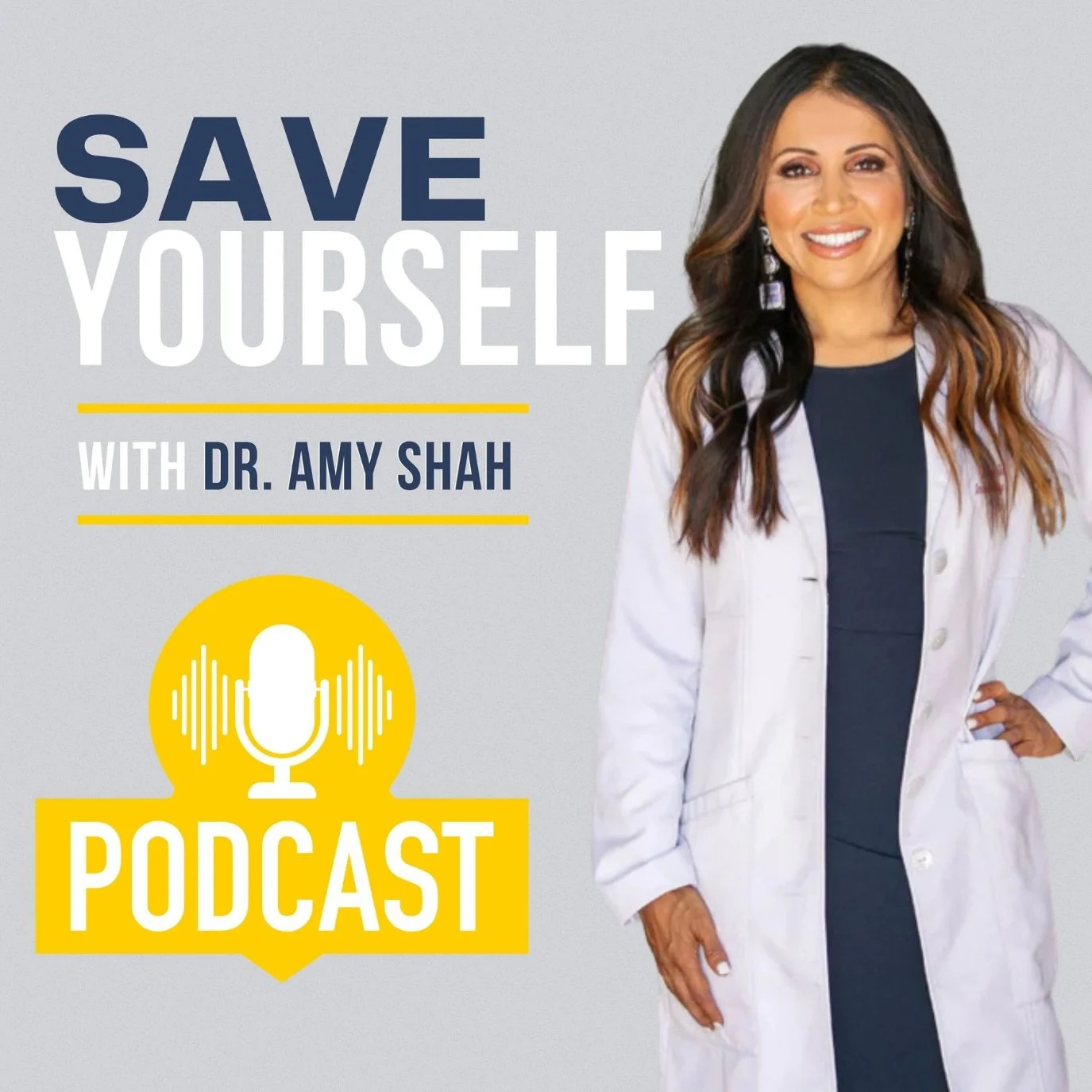
Resources
-
- Mayo Clinic: Are you getting enough protein?
- Mass General Brigham: How Much Protein Do I Need if I Work Out?
- BetterHealth: Protein
- Mayo Clinic: Dietary fiber: Essential for a healthy diet
- Harvard Health: Foods high in fiber: Boost your health with fiber-rich foods
- UCSF Health: Increasing Fiber Intake
- The National Resource Center on Nutrition & Aging: Nutrition Needs for Older Adults: Fiber
- Cleveland Clinic: Probiotics
- Mayo Clinic: Nutrition and healthy eating
- Healthline: 11 Probiotic Foods That Are Super Healthy
- Microorganisms: Sourdough Microbiome Comparison and Benefits
- Nature: Diet rapidly and reproducibly alters the human gut microbiome
- Clinical Nutrition: Dietary fiber intake and all-cause and cause-specific mortality: An updated systematic review and meta-analysis of prospective cohort studies
- Clinical Nutrition Experimental: Effect of high-protein breakfast meal on within-day appetite hormones: Peptide YY, glucagon like peptide-1 in adults
- BMC Microbiology: Cohabitation is associated with a greater resemblance in gut microbiota which can impact cardiometabolic and inflammatory risk
- Journal of The Academy of Nutrition and Dietetics: Kefir improves lactose digestion and tolerance in adults with lactose maldigestion
2 Million Readers.
1 Life-Changing Newsletter
Simple and Straight-to-the-Point...
Just Like Mel.