Episode: 372
How to Design Your Life in 1 Hour
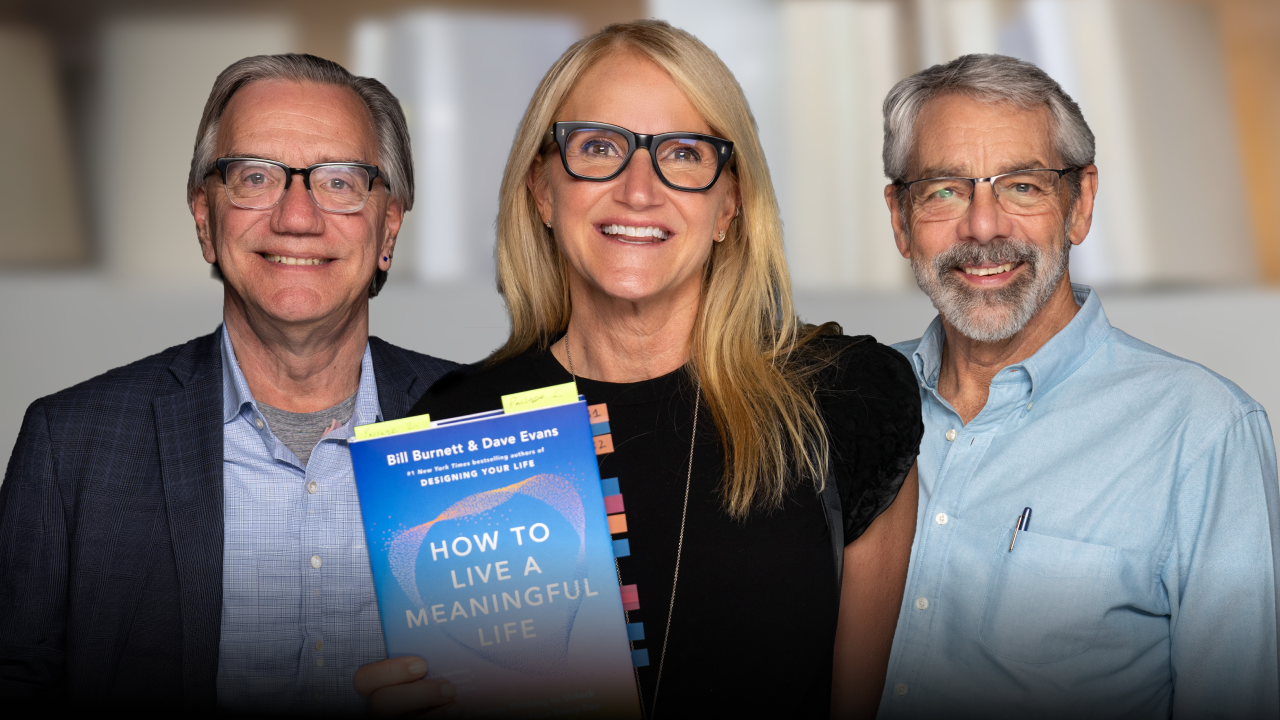
with Dave Evans and Bill Burnett
You can design the life you want. It’s easier than you think.
What if you could teleport into Stanford’s most popular class and walk out knowing exactly how to build the life you want?
In this episode, Stanford professors Bill Burnett and Dave Evans share their proven, step-by-step process to find your purpose and design a meaningful life, even if you feel stuck, uncertain, overwhelmed, or hopeless.
Is it ever too late? The professors will reveal the surprising truth and what to do if time feels like it’s running out.
Plus, you’ll learn the 3 powerful questions that will help you figure out what you really want, and the no-stress way to turn ideas into action.
Listen on:




There is no right life. However, there are lots of good lives.
Dave Evans
All Clips
Transcript
Mel Robbins (00:00):
It's time to design your life. Dave Evans and Bill Burnett are the founders of the Life Design Lab at Stanford University, which has been taught for almost 20 years, and is now being taught at over 600 universities. You can experience more meaning and fulfillment in your life, so grab your seat because class is in session.
Dave Evans (00:22):
The best way to design your life is to recognize there is no getting you right. There is no right life. There's just getting it going. You have it in you to be something you find your way by living into your life. You build your way forward. There is no knowing. There is only doing learning and growing. The job is not working. The marriage isn't working. There's something I'm really unhappy about. But that doesn't mean there aren't other parts of your life where more meaning and more aliveness are lurking, latently, waiting for you to discover them. Don't let those go.
Bill Burnett (00:54):
There's more life in you than you think. There's more possibilities than you think. Just try something, try something really small and see if you can find that little piece of joy or that just like a pointer towards something that, that wakes you up. We know you can do it.
Dave Evans (01:08):
At the end of the day, what we're really doing, we're just giving people permission to live their lives. So instead of working on the what is the meaning of life, we are here to give you tools to design more meaning in life.
Mel Robbins (01:25):
I am so excited for you to experience this episode. It is incredible. You're gonna love these two professors, but first I have an ask of you. See, I just learned from my team that 53% of you that watch the Mel Robbins podcast here on YouTube are not subscribers. I have this goal that by the end of the year, that number drops to 50%. So I'm just talking 3% that 50% of the people that watch here on YouTube are subscribers. It's the best way that you can support me and the team. If the subscribe button is lit up, it means you're not a subscriber. Just hit subscribe. It's free. You're not gonna miss a thing. And it tells us you love this podcast. You love the world renowned experts that we're bringing you here for free. You love this as a resource. I really, really, really appreciate it. And you know what else? I appreciate you. I love that you spend your time watching something that's helping you create a more meaningful life, and that's exactly what this episode is gonna do. So let's get into it.
Mel Robbins (02:18):
Bill Barnett and Dave Evans. Welcome to the Mel Robbins podcast.
Dave Evans (02:22):
Mel, thanks for having us. We're thrilled to be here.
Bill Burnett (02:23):
Yeah, this is fantastic. We're excited.
Mel Robbins (02:25):
You two have been at the top of my list since I started this. I have been waiting for this moment. I hope you don't disappoint me. No, I'm just kidding, you,
Dave Evans (02:35):
You could have called sooner. We would have come sooner.
Mel Robbins (02:39):
Oh my gosh.
Dave Evans (02:40):
Okay.
Mel Robbins (02:40):
Here's where I wanna start. How will my life be different if I take to heart everything that you're about to share with us today?
Dave Evans (02:48):
Yeah.
Mel Robbins (02:48):
And I apply it to my life.
Dave Evans (02:50):
You're gonna get freer. You're gonna feel more agency in your life. You're gonna realize you actually know how to find your way. And as you go along it, you can make meaning every day.
Bill Burnett (03:01):
You know, everybody's so busy and there's so much going on. It, it, it's all, you're gonna learn that it's not about cramming more stuff yet. It's about getting more out of what you've already got and what you can, you know, what you can design for. Um, and I think that helps people just relax, you know, and understand that they, they probably have enough.
Mel Robbins (03:23):
Bill, what do you think it is about the popularity of your, both of your books and the course? What does all of this interest say to you about what we're searching for?
Bill Burnett (03:37):
Yeah. Well, I mean, particularly amongst the students, and I've taught at Stanford and I've taught all over, all over the place. And we've got over 600 schools now teaching the class. We've trained 600 schools with the students. It's, it's really, it's really clear. And it's gotten kind of worse lately in the last five or six or seven years. Social media and other things. It's, um, you know, will I find a good will I have a good life? Will I find a good job in it? You know what, what's, what's, I want meaning and purpose, but people tell me jobs aren't purposeful. Uh, the Gallup pulse is 70% of Americans are disengaged from their jobs. Is that the world I'm going into? It's gonna be that bad. And so the, for the students, it's that kind of anxiety about how do I get started? And, and I had been in office hours for students for years and years and years before Dave and I said, put this together. And it seemed clear to me that designing the, the, the new thing in the world, 'cause I've been teaching designers to design iPhones and iPads and, and websites and things for years. Designing the new thing in the world was just like designing the you. Like, what am I gonna be in my future? And so everybody had that problem. And then we started working with folks like in, you know, sort of mid careers, 35, 45. And, and they're having the same question. You know, it's like, gee, it isn't as much as wasn't as cool as I thought it would be, or kind of done with this job, or I need to pivot
Dave Evans (04:53):
Now what?
Bill Burnett (04:53):
Now what? And I haven't thought about that in a long time, and I don't have any framework for thinking about it. And I've been doing work with folks who are retiring, you know, in their fifties, sixties and, and older. And, uh, or folks that are, um, you know, sub empty nesters. And they're like, well, geez, I organized my whole life. My wife and I are empty investors, organized my whole life, life around with my kids. And now it's just me and my wife. Like, do we even know each other? Do know, do we even like each other anymore? What are we gonna do? So this question just keeps coming up. And it's about, will my, will my life? Will my future be meaningful? Can I find something to do that is got some purpose in it? And, and, and a lot of the sort of, a lot of the structures of that, it used to be, well, you had a community. Everybody grew up in the same town, and so you knew where you fit in. Or maybe you had a faith community or a church or something. And a lot of those communities have gone away. There's this huge loneliness epidemic. People really feel isolated and lonely and things are changing so fast, right? That they, they don't know. They don't know where to turn for even a way to get started.
Mel Robbins (06:01):
You say in your number one New York Times bestselling book, design Your Life that the true way to design a life is to design your lives. What does that mean?
Dave Evans (06:12):
We say all the time, all of us contain more aliveness, more personhood than one lifetime permission to live out. There's more than one of you in there. Which is why, by the way, Maslow's idea about self-actualization through fulfillment is dead wrong. Because he literally says in the 1943 paper, you achieve that by becoming all that one can be. No, you can't possibly be all that you can be because you're way bigger than your own lifetime. Look, I've buried plenty of people. None of them were done. That's the good news.
Mel Robbins (06:42):
Oh, whoa. I wanna make sure that that, that you didn't miss it. We've buried a lot of good people and none of them were done.
Dave Evans (06:49):
Yeah. I mean, I'm in an age. I many know plenty of dead people closely, and they all left with a long to-do list. That's the good news. You're far bigger than your lifetime. So the chance of you being bored or running outta things is zero if you're paying attention. Right? That's the good news. So the best way to design your life is to recognize there is no getting you right. There is no right life. There are lots of good lives. Let's go lean into the, and by the way, you don't know the future. You might have a good idea and implement it poorly. You might have an idea you thought was good and it didn't work out very well. Whoops. Oh, I blew it. No, I learned my way forward and I'm gonna keep going. Yeah. There's no getting it right. They're just getting it going.
Bill Burnett (07:38):
Imagine this listener. Um, we have this linear accelerator at Stanford. It's not the big, and it's not as big as it used to be 'cause we have bigger ones now, but this one's pretty good. Still runs. And I can put you, I can put you in the tube and fire you to the end of the accelerator. It's two miles long. And by the time you get to the end, you're going 99.999% the speed of light, at which point you'll experience the multiverse. And you can have as many lives as you want simultaneously. You could be the astronaut and the ballerina and the mom, and, and you'll know about all the universes at the same time. And then we ask the, the, the, I said on the count of 3, 1, 2, 3, tell me how many lives she won. I go, 1, 2, 3. And people go everywhere from one the really bored, burned out guy. Two infinity. Yeah. Something. But on average, seven, seven or eight is the average. Seven or eight people want eight lives. And I go, well, that just proves our theory. There's more than one life in you. If you could have all those lives, wouldn't it be cool?
Dave Evans (08:39):
And if you have seven lives worth of interest in you, and you get one life, you're going to be 14% of your personhood.
Mel Robbins (08:46):
Right now. Oh,
Dave Evans (08:47):
By the time you die,
Mel Robbins (08:48):
Wait, hold on a second.
Dave Evans (08:50):
Yeah,
Mel Robbins (08:50):
Hold on. Because I imagine a world where your one lifetime
Dave Evans (08:58):
Yeah.
Mel Robbins (08:58):
Could have seven different lives in it.
Dave Evans (09:00):
Sure.
Mel Robbins (09:01):
Which means where you are right now. Right. In this particular chapter is just 14% of what you will experience.
Dave Evans (09:10):
That's also true.
Mel Robbins (09:11):
Which means you have the opportunity if you change your mindset
Dave Evans (09:15):
Yeah.
Mel Robbins (09:16):
To really design the next 14% section, whether it's from age 71 Yeah. To 74, Dave. Yeah. Or I don't know how old you are, Bill. But I,
Dave Evans (09:29):
A little younger.
Mel Robbins (09:29):
A little younger. We won't hold that.
Dave Evans (09:31):
Starts with the six.
Mel Robbins (09:31):
We won't hold that against. Um, but if you really think about it that way,
Dave Evans (09:36):
Right?
Mel Robbins (09:37):
That means you could create whatever you wanted, right. That was meaningful to you.
Bill Burnett (09:41):
Well, and particularly now, I tell my students, don't you hope five, 10 years from you're doing a job that hasn't been even been invented yet? I mean, do you really want to constrain yourself to I'm just gonna be this computer scientist, or I'm just gonna be this economi or something. Because first of all, jobs are gonna change, right? We're in the age of ai, everything's gonna be different. And, and you can look at that and be terrified, or you can look at that and go, wow, there's gonna be so many new things that show up. All I have to do is pay attention. You know, as these jobs disappear and reappear, like when I got outta Stanford long years ago, when, you know, dinosaurs still roed, you know, white plaza, you had to learn drafting to be a designer, drafting on a drafting table with a, with a pencil. Nobody's done that in 40 years. And now I can just do something on my phone and print it on a 3D printer. It's amazing. And so, if you stay in the growth mindset, if you stay curious, the next 10 or 15 years are gonna be amazing for jobs, for careers, for possibilities, and, and get, you know, like get, get your boat in the water now. You know, learn some ai. Get some, get, get, figure out how to, I think it's actually gonna be a renaissance in creativity, because it'll be possible for everyone to do a video, to do a drawing, to do anything, to write a song.
(11:00):
This generation feels a little bit despondent. You know, there's a lot of stuff going on in the, in the news. And I think like, this will be the first generation that doesn't have more than their parents. This will be the first generation that can't afford a home. This is the first gen. The kids aren't getting married 'cause they just don't see a, you know, they don't see a future. And, um, I think the design mindset, um, it's an inherently optimistic mindset. It's like, I can't make the, we are off to this design, but I can make a better one. You know, I can make a better one than the one I've got.
Mel Robbins (11:31):
Could you speak to somebody in their twenties who is feeling that sense of discouragement, which frankly is justified?
Bill Burnett (11:41):
Yeah.
Mel Robbins (11:41):
Given some of the factual research about the cost of living and absolutely changes that are happening. And the headlines, like,
Dave Evans (11:47):
Look, first of all, if you're 20,
Mel Robbins (11:49):
Yes.
Dave Evans (11:51):
Be encouraged by the following fact. Your neocortex, which is the part of your brain that allows you to have an executive function and actually allows you to have full empathy for other people, isn't formed until 27 or 28, a little later in men. Big surprise there. Um, so if you're 20, 21, 22, you're not even here yet. We remind our graduating seniors, you're not broken. You're 22. Your 22-year-old job is not to figure it out because the you, that's you ever maybe even gonna have a shot at figuring it out is six or eight years away from you. So your 20-year-old self job is to give your 28-year-old self some interesting options. Now, don't mean sit on the couch at mom and dad's house and wait for something to land in your lap. Get out there, start living, do things, learn your way forward, all that stuff we talk about in all our books.
(12:41):
But if you're 20 something, it's gonna get more interesting. So don't give up yet. Now, externally, the macro situation we're all living in. I mean, the, the macro situation I was living in in 1976 when I graduated college is pretty radically different from what's going on right now. 50 years later, uh, people are feeling powerless for a good reason because people with power are hanging onto it and exercising it pretty egregiously right now, personal point of view. That being said, okay, there are systems that are bigger than you. The question then says, do you wanna spend your time working on those systems? Uh, Bill's got a son named Ben, who's currently working, you know, in Congress. Yeah. He's gonna go directly after the problem. You know, I'm not going directly after the problem. I'm writing books about meaning making for everybody else. In the meantime, I hope that leaves the campground a little better than I found it. So find what you can do within the constraints of reality. Maybe it's different than your parents' generation. Maybe it's who cares? That was then. This is now what world are you in? What is available to you? How can we make the most of what is not complain about what isn't? But I get that it's hard. It is hard.
Bill Burnett (13:52):
It's hard. And I see this in lots and lots of our students, that they're willing, they're, they're willing to work, really. People say, oh, the Gen Zs don't wanna work hard, and they wanna be pampered. It's like, not the ones we know. The ones I know, they'll do a startup, they'll work a hundred hours a week if they believe in something. And so, you know, it's, it's, I'm, I'm very optimistic about the generation coming up and the generation that's already out there and say, well, you know, what can I do?
Mel Robbins (14:19):
You know, a lot of people feel like they don't even know what they want. But there's this other exercise that you are world famous for called The Odyssey Plan.
Bill Burnett (14:29):
Yep.
Dave Evans (14:29):
Yeah.
Mel Robbins (14:30):
Can you just walk the listener through a little bit? 'cause it can help you see other lives in yourself and how to live a meaningful life to lean into.
Dave Evans (14:39):
So you, so we know you have to have more ideas to get your best ideas.
Mel Robbins (14:43):
Hmm.
Dave Evans (14:44):
And if you get stuck on the one idea, you're gonna get stuck on a corner. So if we're gonna plan the future possibilities, we gotta hear from more than one of you. So three's kinda a magic number because it really gives you some freedom. Um, and one of them is probably the life you're already in. The other one is, if you can't do that, what else would you do? And the third one, the wild card, if money were no object, you know, and nobody would laugh at you, what would you do? That's the wild card. Well, maybe I would open the Beanie Baby store, um, um, or I'd start the button shop, you know, uh, whatever The crazy thing is, the reason we ask people to have a crazy idea, it's not because the crazy idea is a good idea. It's because we need to train you to quiet the internal critic.
Mel Robbins (15:22):
Hmm.
Dave Evans (15:22):
So as soon as you say, well, you know, the 54-year-old woman says, I mean, I'm thinking about going back to medical school. I always wanted to do that. I don't think it's too late, but my friend say I'm all crazy. What do you think? So her internal critic is being encouraged by all of her friend's, internal critic, going, well, that's crazy. You can't do that. Um, and that's the part of the evolution that keeps you from being eaten by the saber tooth tiger. You know? So there's a negative bias built into your brain, evolutionarily less you be eaten. Um, so you have to learn how to overcome that critic. So the Odyssey Plan helps you imagine there's more than one way you can live, and it helps train you to quiet your internal critic so you get the rest of your ideas back.
Mel Robbins (16:01):
So I wanna make sure that you really got that. So the way that you help yourself imagine
Dave Evans (16:08):
Yep.
Mel Robbins (16:08):
Different possibilities in your life, right? Right. Is through the Odyssey planning, you ask yourself three questions.
Dave Evans (16:14):
Right.
Mel Robbins (16:15):
What happens in my life if I change? Absolutely not. Nothing. Keep it going. Where am I for five,
Dave Evans (16:19):
Yeah.
Mel Robbins (16:19):
Five years from now?
Dave Evans (16:20):
And assuming it goes well.
Mel Robbins (16:21):
Yeah. Well, I I, I thank you for that.
Dave Evans (16:23):
Yeah.
Mel Robbins (16:23):
Like, let's just assume it goes well,
Dave Evans (16:24):
Let's assume it goes well,
Mel Robbins (16:25):
What happens in five years?
Dave Evans (16:26):
Yeah.
Bill Burnett (16:26):
Yeah.
Mel Robbins (16:26):
What does my life look like?
Bill Burnett (16:27):
Who am I?
Dave Evans (16:28):
Yeah.
Mel Robbins (16:28):
Who am I? Okay, second one is, all of this disappears.
Dave Evans (16:31):
Yep. Can't do that.
Mel Robbins (16:33):
Can't do that. But I gotta pay my bills and
Dave Evans (16:35):
Plan B.
Bill Burnett (16:35):
Yeah.
Mel Robbins (16:35):
Gotta have a plan B, five years, what am I doing?
Dave Evans (16:38):
Yep.
Mel Robbins (16:38):
What am I doing? And the third is money's no object.
Dave Evans (16:41):
Yep. Whatever you want.
Mel Robbins (16:42):
Whatever you want. Nobody's gonna laugh.
Dave Evans (16:44):
Yep.
Mel Robbins (16:44):
It's gonna work out.
Dave Evans (16:45):
Yep.
Mel Robbins (16:47):
What are you gonna do?
Dave Evans (16:48):
Yep.
Bill Burnett (16:48):
Yeah.
Dave Evans (16:49):
If you do those three, and we've done this with, I mean,
Bill Burnett (16:52):
Tens of thousands,
Dave Evans (16:53):
Tens of thousands of people, including people like, I'm not doing this you know, and we give them 12 minutes.
Mel Robbins (16:59):
12 minutes?
Dave Evans (16:59):
We get 12 minutes to do
Bill Burnett (17:00):
Sometimes longer
Dave Evans (17:01):
Sometimes 15.
Bill Burnett (17:02):
Yeah. Yeah.
Dave Evans (17:02):
Um, and absolutely, I mean, 99.7% of the people do it just fine. I'm standing behind this 57-year-old chiropractor at, you know, we were looking guy at one. We had 600 people in the room. This one guy's sitting back from the room just looking at the paper going, not. So I come up to him, I said, um, so how's it going? Fine. I go, you, you're just gonna sit this one out? He goes, no, no, I'm, I'm doing it. I go, well, you're not doing much. It, you gotta pick up the pen. He goes, yeah, I'm a little stuck. I go, well, what do you do? I'm a chiropractor. Okay, great. You like it? I like it a lot. How long have you been doing that? 27 years. Okay. You wanna die doing that? I said, what? I said, by the time you die, do you wanna still be doing this? He kind of goes, well, I don't think so. I said, oh, then at some point you're gonna do something else. He goes, well, I guess. So I go, and what might that be? He goes, oh, I guess I am gonna do something else, aren't I? I said, yes, you are. Write that down. He goes, oh, okay. I mean, he had it in him. He just had to get over himself.
Mel Robbins (18:06):
I love this. And I'm gonna encourage you as you're listening, unless you're driving a car, do this right now. Think about it. It like, if you, if nothing changes, it goes, well, what does life look like five years if everything disappears and you gotta go to plan B, what does life look like in five years? And what are you doing? Yeah. What's the something else? Yeah. And what is the crazy wild thing that you don't need money and nobody's gonna laugh at you.
Dave Evans (18:29):
Right.
Bill Burnett (18:29):
Yep.
Mel Robbins (18:30):
What is that thing?
Bill Burnett (18:30):
They'll say, that's cool. You know, and here the other thing in our classes and lectures, it's a series of these, these little workshop things and design exercises. So then people get in threes and they read each other. I, I read my Odyssey plan to the other two people and reteach them to listen very generatively. And in tens and tens of thousands of these. The last question I ask when I'm debriefing the class, I say, you know, those wild card plans that you heard from everybody in the class of the listeners? How many of you think that person could actually do the wild card?
Dave Evans (19:01):
It's not nearly as crazy as they think.
Bill Burnett (19:03):
A hundred percent.
Mel Robbins (19:03):
A hundred percent.
Bill Burnett (19:04):
It's not as crazy as you think. And again, we're not trying to get people to quit their jobs and, you know, and join the circus. Join the circus. It's just that it's proof. There's more life in you than you think. There's more possibilities than you think when you think in threes, not binaries or ones
Mel Robbins (19:19):
You, you know, you light up like the Sicko sign in Boston when you talk about this. Yeah. What is your wild card the last time you did this
Bill Burnett (19:27):
Artist
Mel Robbins (19:28):
Be an art like a painter?
Bill Burnett (19:29):
I am a painter. I have been a painter. So I went off to Stanford, which is, was even back when I did. It was kind of expensive. And, um, uh, I wanted to be an art major. And my dad was a pretty practical guy. And he said, look, if you wanna be an art major, yeah. Come back and go to go to UMass. You know, UMass, uh, UMass was $300 a year or something. He said, I'm not paying for Stanford. But I found this design thing, and that was pretty cool. Was that, 'cause art design major was a combination of art, engineering, and psychology. But I did make a promise to that 18-year-old kid that someday I would be an artist. And so I have a studio, I a digital studio for music and one for painting. And painting is my thing. And when I'm in the studio painting, that is flow, that is a constant state of, of, of flow. I don't know if I'm any good. I don't care. Um, Robert Henry is a famous, uh, painting school in New York in the, in the 1920s. His phrase was, the, the goal isn't to make art. The goal is to be in that marvelous state of mind that makes art inevitable.
Mel Robbins (20:29):
Do you know that's the mission of how we do work here.
Bill Burnett (20:34):
Yeah.
Mel Robbins (20:34):
That quote,
Dave Evans (20:35):
Cool.
Bill Burnett (20:35):
I I can tell. So that's on the door of my studio.
Dave Evans (20:39):
Yeah.
Bill Burnett (20:39):
And to be, and to be in that marvelous state of mind, um, yeah. It's, it's, it's a very special place.
Mel Robbins (20:46):
Yeah.
Bill Burnett (20:47):
And so I promised myself that that will be my, that is, that is my wild card. And that is coming up.
Mel Robbins (20:52):
Dave, what's yours?
Dave Evans (20:54):
Well, there are a bunch of them. One probably, uh, came very close to becoming an actor. Um, but there's a particular version of performance art that I've long thought would be really fun to try, which is to be a waiter in an extremely elite restaurant.
Mel Robbins (21:09):
Really?
Dave Evans (21:10):
Yeah. Which I think is absolutely performance art.
Bill Burnett (21:13):
I mean, it's the first time I've ever heard this. So tell me more Dave.
Dave Evans (21:16):
How to read, how to read the room. I mean, so, um, you know, that people are coming in, their expectations are incredibly high. And this couple's having an argument and that, you know, family is celebrating the kids' graduation. And, and can you read, can you read the room? Can you maximize this incredible experience? 'cause you go to a fine dining experience for a particular kind of celebration or a particular kind of, you know, outing and the right wait service catalyzes it beautifully the wrong way. Service wrecks it. And can I deliver the improv performance that has nine different stages at the same time, called tables, playing nine different parts, having every one of those people have an amazing experience in real time. Can I pull that off? I mean, it, running a really, really amazing restaurant is a really, really,
Mel Robbins (22:03):
Oh my god.
Dave Evans (22:03):
Really hard thing. It's really hard.
Mel Robbins (22:04):
That's definitely not on my fantasy.
Bill Burnett (22:06):
No.
Mel Robbins (22:06):
My fantasy list.
Dave Evans (22:07):
I don't wanna be in the kitchen. It's too scary.
Mel Robbins (22:08):
Mine for sure is I want to write a fantasy trilogy.
Dave Evans (22:13):
Oh, okay.
Mel Robbins (22:13):
Yes. All about angels that are among us in the theme of are you born good or bad. Right? Are you born good or bad? And I have this whole, I've been thinking about it for 10 years and I'm, I I'm going to do it.
Dave Evans (22:27):
Yeah, yeah.
Bill Burnett (22:28):
Right.
Mel Robbins (22:28):
I'm going to do it. Like, but it's, it's always in there. And I love that you shared that. And for you listening or watching, I, I want you to share your wild card.
Dave Evans (22:41):
Yeah.
Mel Robbins (22:41):
Either with us or put it in the review or the comment of the show. Or when you share this episode with somebody that you care about, be a little cryptic and say, my wild card is this. And you'll know exactly what I mean when you listen to this. And then I want you to tell me yours.
Bill Burnett (22:59):
Yeah.
Dave Evans (22:59):
You know, Mel, uh, Bill and I have, we talk about the stuff we've been doing for a long time. We often say, at the end of the day, what we're really doing, we're just giving people permission to live their lives. It's really just give, yes, you can. You do know how to do this. You have it in you. You may not have it in you to be an o an Olympian, but you have it in you to be something.
Bill Burnett (23:18):
And because right after the Odyssey plans comes prototyping, what on your plan do you wanna learn about? And then they prototype and they
Mel Robbins (23:24):
Oh, that's the next step.
Bill Burnett (23:25):
They come back. That's the next step. Yeah. They come back to the next class and they go, you know, did you know you can actually make a living in the circus? I had one student who was a gymnast at Stanford, and she wanted to go to medical school. Her parents wanted to go to medical school. She cut a deal. Can I, can I do something before I go to medical school? She's now been C de Soleil in China, and she is a circus clown, which was on her Odyssey plan
Dave Evans (23:50):
And she's having a great time.
Bill Burnett (23:52):
But people have a hard time even imagining something so wild. It's not possible. And when they talk about plan one, it's kinda like, yeah, well, so I'm gonna just keep being an account and I'm gonna do this thing and you know, I'm pretty good at it and da da da. But when they talk about their wildcard, they're like, you know, I really love diving and underwater photography, and I'm wondering if I could be a, a dive instructor who does photography maybe for National Geographic. And I said, well, I happen to know a guy who started a company building underwater cameras. Would you like to have a prototype interview? And they're like, really? They go, yeah.
Dave Evans (24:27):
When you know that you don't know what you're doing. Right. The competence of, you have to be competent at your incompetence. You have to be good at knowing when you don't know what you're doing. Called the future. I haven't figured out yet.
Mel Robbins (24:38):
Yes.
Dave Evans (24:39):
So you make a move then learn something, make a move, learn something, go back. You know, so that, that keep making moves until you finally iterate your way forward through prototyping. That's what we teach. Life is a series of incremental prototypes. You find your way by living into your life. You build your way forward. We keep saying there is no knowing, there is only doing learning and growing.
Mel Robbins (25:02):
So I know I'm gonna get a ton of questions about this. Can you guys give a couple examples of what actually a prototype looks like?
Dave Evans (25:11):
Clowning. Clowning is actually a thing. And, and there's, is it the Shriners? Is it there's, there's some outfit where they trend the members and they do clowning in hospitals to visit kids. Oh. So you could probably call the local hospitals. And does anybody do clowning with the children? Oh, great. Do they have a training for that? So you could go, you know, trust me, there's somebody who will train you to be a clown. Be a little bit of clowning that you could go into the children's ward and try cheering some, maybe just ride along with them. Watch them. You know, I mean, there are ways to get at the thing that you think you're thinking about.
Mel Robbins (25:46):
So you're a 20 something. You see your friends living in Montana. Should I live in New York? Should I go to Montana? Should I go into iBank? Should I be a ski bum? Like, I don't know what to do with my you, you're 28. What, what? Like, what's a, an example of a prototype. Here's another one. A, uh, stay at home mom. The kids are gone. Now it's my turn. Right? What am I doing? Am I going back to nursing school? Am I finishing my degree? Like,
Bill Burnett (26:12):
Am I writing that novel I was thinking of writing?
Mel Robbins (26:14):
Am I writing that novel that I'm thinking about? Like, what does that mean in terms of just a couple specific things that you've seen people do Sure. To give the person listening an idea.
Dave Evans (26:22):
Okay. So I'm sitting with the 57-year-old suddenly empty, nested mom who left a couple of things behind, doesn't know what to do. Great. So let's quickly come up with your list of things that might be at all interesting.
Mel Robbins (26:33):
Okay.
Dave Evans (26:34):
Oh yeah. I'm thinking about being a ski bum. I'm thinking about going back to medical school. Actually talk to a 54-year-old about that. You know, and I'm thinking about being a novelist. Okay, fine. Um, now maybe I should, oh, I'm gonna go back and, and get a master's degree in creative writing and spend three years and $30,000 and then write one blog. And I didn't like it that much. Terrible idea. That's jumping way off the cliff. So the prototype I do would say talk to people, try stuff. So go out and have a bunch of narrative conversations, not with, oh, you're a novelist and how much do you make? And what did you school did you go to? Those are transactional conversations, not narrative conversations. Like, what's it like to be you and what do you enjoy and what do you not enjoy? And tell me all about that. And I have these narrative conversations with people in the world I'm thinking about being in. Yeah. Which is what Dan Gilbert at Harvard, not a bad school would say, is surrogation not simulation. Quit reading about it. Go talk to people about it because you're a person. And when you encounter a person who tells that story, that story becomes real. You'll actually learn more from persons in the world you're thinking about than reading about it.
Mel Robbins (27:35):
You'll feel something too.
Dave Evans (27:36):
You'll feel something, you'll experience something. And then maybe some of 'em can get you a ride along and a visit. And you can, you can do some experimentations, try stuff long before you overcommit. And then eventually after enough iterations you'll make a better decision.
Mel Robbins (27:49):
You know what's interesting? 'cause I wanna build on this.
Dave Evans (27:51):
Yeah.
Mel Robbins (27:51):
'cause so many people probably say to you, well, I have no idea. I have no idea what I wanna do. And I,
Dave Evans (27:57):
That's almost never true.
Mel Robbins (27:58):
I agree with you. And if you're saying that right now, like, I don't know what my life's about. I don't know what I like, I I love this 14% thing and this idea and the invitation you gave us to step into a time machine accelerator of thingy. Yeah. And the average person says, I've imagined eight lives.
Dave Evans (28:15):
Yeah.
Mel Robbins (28:16):
So you're in one of them,
Dave Evans (28:17):
Right.
Mel Robbins (28:17):
You've got another seven.
Dave Evans (28:19):
Yep.
Mel Robbins (28:19):
What are the other seven lives you would imagine in the fantasy of your mind?
Bill Burnett (28:23):
Right.
Mel Robbins (28:23):
And those are the things to then lean into and get curious about. Correct?
Dave Evans (28:27):
Yeah, absolutely.
Bill Burnett (28:28):
I always wanted to be a dive instructor. I love diving, but I don't do nothing better. I always wanna be a photographer. But you can any of these things and find out, like for instance, I, you know, I, I I wanna have a podcast. Okay. Before you jump into a podcast, try writing, you know, a 2000 word essay every day for five days. See how that feels. Oh, that was really hard. It was really lonely. Dave hates writing. 'cause it's lonely. I'm the introvert. He's the extrovert. I love sitting in a room talking to myself all day long. It's wonderful. And he can't stand it. Um, so like, try the trying stuff and the talking to people. If you talk to writers, they'll say, writing is very lonely. If you can't handle that, you're probably not, it's not gonna be a good thing for you. And you wouldn't know that unless you talk to somebody who, so you can have these little, it's, it's almost like time travel.
(29:12):
You can have a little experience of talking to somebody who's the person you think you might wanna be. They're already 10 years down the road doing it. And that experience that, but that conversation is so much more powerful than, oh, I'm gonna look up on the, on, you know, on Google, how many mm-hmm. You know, how many writing hacks are there, you know, when when did the five most famous writers write, you know, they wrote in the morning, they wrote in the afternoon. There's no patterns, any of that stuff. So, uh, you can prototype anything. And, and the lack of the lack of curiosity isn't really true. I, I've got, I have no ideas. So you really have no ideas. Okay. You know, what did you, what was the last show you watched that you think I thought was interesting? Pick something simple. We're not talking about the thing you'll do for the rest of your life. We're talking about what do you wanna do next week?
Mel Robbins (29:57):
So as all of this opens up for somebody and they have this sense of what might create more meaning.
Dave Evans (30:05):
Yeah.
Mel Robbins (30:05):
Right. And I wanna get curious. Yeah. I wanna prototype the fear of failure and the fear of what other people are gonna think.
Dave Evans (30:12):
Yeah.
Mel Robbins (30:13):
Probably comes in like a sledgehammer.
Dave Evans (30:15):
Oh, it's a huge,
Bill Burnett (30:15):
Right.
Mel Robbins (30:15):
What do you say to people in your classes when they get this moment of clarity and then it's like,
Dave Evans (30:22):
Start really small. I mean, get cut yourself some slack for God's sake. I mean, um, we talk about failure immunity because the purpose of a prototype is to learn something not to succeed. We don't prototype to make sure Oh, will it work? No. Just what do I need to know more about? I'm, I'm gonna go ride along, you know, and, and be an auditor of the children's clowns, you know, at the hospital. You know, and I might say the wrong thing. I mean, did I blow it? No, no, no. I'm just, I'm just trying to learn what it's like here. Yeah. So first of all, have your prototypes not bet the farm. You know, like maybe my, maybe what I'll do is I'll, I'll, you know, I'll go to Sheez Panis in Berkeley, you know, one of the most expensive restaurants in all of California. And see, because I know a friend who's really close friends with Alice Waters, and she could probably get me in as the waiter. So my first night as a waiter is in front of Alice Waters in Sheez Panis. That is not a prototype, that's a performance. So cut yourself some slack. And I'm likely to fail.
Mel Robbins (31:18):
I probably wouldn't even wanna serve the bread there.
Dave Evans (31:20):
Yeah.
Mel Robbins (31:20):
So like that's
Dave Evans (31:21):
That's, I mean, so, so make it easy, make it small where almost nothing is at stake. Um, of which there are plenty of opportunities. Give yourself a break. Make it interesting. Make it fun. Cut it down small. Don't shoot too high.
Bill Burnett (31:35):
We're, we're really big on set the Barlow, you know, set the Barlow and clear it. I mean, you've written about this. This is, this is the whole psychology behavior change. Yeah. You're not gonna change if you make something so big. You know, this is the new year and people have made their resolutions, I'm gonna run a marathon this year. It's like, well probably unless you break that into very, very small steps, it's not gonna happen. And so we really, we really go for super simple things. Uh, and that, and that builds up your confidence too. If you try something and you, you know, try some prototypes, you learn some stuff, you get a little more confident eventually, you know, when you flip into these, these designer's mindset, you realize, oh, I can prototype anything. There's really no failure here. You know, the failure is, is just a rule I made up in my head. And, uh, once I get rid of that rule, I'm, I'm much more free. But yeah. Fear drives a lot of people to, to not try.
Mel Robbins (32:25):
Yeah. It’s never too late. I think there's a big fear that it's too late. I've blown it too much. Like,
Bill Burnett (32:29):
Nah, it's never, no, it's never too late.
Dave Evans (32:31):
No,
Bill Burnett (32:31):
No. It's never too late.
Dave Evans (32:33):
I mean, the f uh, um, coming out of a talk, a 54-year-old woman has asked me about, you know, am I crazy to go to medical school? And I said, look, let's, let's just run the numbers really quickly. Okay. Based on the DNA of the gene pool you were born into, what's the likelihood of when you're gonna die? She kind of goes, I'm probably gonna make it to my late eighties, early nineties. I go, great. Let's say we make it healthy to 85, 88. How long do you wanna work? Well, probably 80. I said, okay, great. So we got 26 years to go, um, and, you know, so you applied, said, probably gonna spend a year going to, you know, uh, a medical school application preparatory program. Yeah. You know, called a post-bac program. Spend a year on that. Spend a year trying to get in. That's two, four years to get through medical school.
(33:15):
Now you're in residency. By the way, 90% of medicine is done by residents. So you're already a doctor. You're now practicing medicines. Six years into the program, eventually let's you finish your specialty. You know, we're now eight years into the program that puts you at 64. You got 11, you got 11 to 12 years to go before even backing off maybe 15. Cut out the crap of all this conventional thinking and just ask yourself the question, what's happening? What might it be? I mean, I'm about to get married for the third time because, you know, my wife died on me. And which was not the plan. And uh, a lot of my friends, they make, oh, it's too hard. It's too much work. I don't, Joan, you really wanna go through that again? I go Sure. Um, this is terrific. Um, it's aton of work. It's an absolute mountain of work, you know, but I mean, what, what else am I doing?
Mel Robbins (34:05):
When you go to a funeral, it's very interesting.
Dave Evans (34:08):
Oh yeah.
Mel Robbins (34:09):
The second you walk out of the funeral, you feel more alive and you have more urgency
Dave Evans (34:17):
Yeah.
Mel Robbins (34:17):
To do what you came here to do. Yep. Dave and Bill, you said, we wanna give people permission
Dave Evans (34:24):
Yeah.
Mel Robbins (34:25):
To live their lives. And especially right now when the world feels so overwhelming Yeah. And people are exhausted and there are very big problems. Like it, it is easy to go. It doesn't matter. And when you start to do the math, whether you're telling me that you have seven different lives you could do, you're gonna die with shit on your to-do list and things you never achieved. You, you're 50. So what, you got 40. You're 70. Kidding. You probably got 20 more years left. What are you doing?
Dave Evans (34:52):
Yeah. Look, my, my next milestone is death. I haven't got time to waste.
Bill Burnett (34:57):
You know, uh, uh, well, David and I have been in wonderful communities. I've been in this group of men, a men's group for 32 years. 'cause I started when my son got born and I needed to figure out how to raise a son. Um, and we end up, we've been around long enough that we've had some guys die and we've gone to their funerals and said wonderful things about them. And then we decided, why don't we wait till we die before we send, say wonderful things about each other. So we have a, a protocol in our men's group where you can say, I'm gonna die next week. I'd like everybody to write a eulogy. And then you come in and then, and then you, you know, lay there quietly and you listen to people say the most wonderful things about you. Right. Because eulogies are not about, oh, well, you know, Dave, a big to-do list. He crushed off lots of things, his PowerPoints were very well done. And he always got his budget set on time. Nobody says that. Yeah. They say what? He's a good man. He was a wonderful husband. He was a great father. So, um, do that. Have your friends write your eulogy and find out what you really mean to people. It's amazing.
Mel Robbins (35:56):
You could also, you do that exercise thinking about what you hope or wish is being said about how you lived your life.
Bill Burnett (36:06):
Exactly.
Mel Robbins (36:06):
Because what you don't want it to be is, well, he got to be 70 and had the love of his life and just turned down the opportunity to get married again and do it. And she wanted to go to medical school, but talked herself out of it for 30 years,
Bill Burnett (36:19):
Correct.
Dave Evans (36:19):
No, I'm in a small group of guys for 51 years. Formed in 1974 called TD three Tom and three Dave. So I'm the founding Dave. Um, and, you know, we just went through this exercise of moving into our seventies. And so we said, okay, let's all, first of all announce what age we think we're gonna die at. And then write the eulogy you hope will be true by then. And make sure that the eulogy includes things that aren't true yet. So you can live aspirationally into that.
Bill Burnett (36:51):
Yeah.
Dave Evans (36:51):
Um, and we really do believe that human being is becoming, and that becoming should be a nonstop program. Don't quit early. Now, you might have to have constraints physically, circumstantially, otherwise, but there's always more you can be become into. So which questions do you wanna live into? And by the way, preferably, it does really help to have some people around that you're asking these questions with.
Bill Burnett (37:19):
Yeah.
Mel Robbins (37:19):
So how old did you say you were gonna be when you died? And what was the thing that you haven't done yet that was on the list?
Dave Evans (37:24):
Uh, my light, uh, 85. I'm guessing I'll make it to 85. Um,
Mel Robbins (37:28):
I'd like you to live a little longer.
Dave Evans (37:29):
Well, I, I'm thinking I may work for an extension to the contract, but nonetheless, I, I said at the time, I said 85 and the way I put what I'm aspiring to was when I get to heaven, I want to be recognized as somebody who's already been there. Meaning I've already stepped into profound acceptance and universal love and welcome to all persons at all times.
Mel Robbins (37:50):
Wow.
Dave Evans (37:50):
I wanna look like I'm already doing that by the time I get there.
Mel Robbins (37:53):
I think there's a huge power, and you know this based on the way the brain works in really embracing the truth of everything that you just said in terms of giving yourself permission to not just live a meaningful life now and find moments of meaning, but to really think about what you want to accomplish by the end, you know, I'm thinking about this text. Who do you wanna become? Yeah. Who do you wanna become? I'm thinking about my mother-in-law who's 89, I think she's 89, she 88, I dunno. But she's, she texted in the family wide group chat.
Bill Burnett (38:27):
Yeah.
Mel Robbins (38:28):
I'm gonna be here another 10 years.
Bill Burnett (38:30):
Okay.
Mel Robbins (38:31):
Because I wanna see all the grandkids get married if they choose to get married.
Dave Evans (38:34):
Right.
Mel Robbins (38:35):
And I was like, wow.
Dave Evans (38:38):
She's in the game.
Mel Robbins (38:39):
She's in the game.
Dave Evans (38:39):
Yeah.
Mel Robbins (38:40):
She knows what she's doing.
Dave Evans (38:41):
Yeah.
Mel Robbins (38:41):
And I think that's, there's an invitation to all of us. And so I love that construct of what age do you think you're dying and what are all the things that you wanna accomplish that you haven't done yet? And what do you hope?
Dave Evans (38:55):
Yeah. The specific tool in the book for, that's called the focus question. The focus question. We actually encourage you to come up with the focus question, what focuses your attention on what you're trying to become at this particular moment or season of your life? So can you write down the question that not look, well, I have enough money to retire by then. Those are transactional questions. But, you know, a year from now, two years from now, three years from now, if you live well into the invitation to become more yourself, what question do you hope to be able to answer by the end of the next year? Two or three that you're thinking about? Hmm. So in my case, it was, you know, how will I learn to live out of, get to not got to? Because I think that's a more generous position that might allow me to hit heaven in the right point of view. Um, and so that's the focus question I've got. How do I live deeply into get to, not got to, um, that's my focus question for now. And we, and preferably having some people around you that can help you with that question.
Bill Burnett (39:55):
And by the way, I don't think anybody writing their eulogy or those questions says, I wish I had more. I think I wanna have more money by the time I'm ex because you, you get to the second half of life assuming that money is enough and happy it's not, but, or whatever. But it's hard. You, you start to realize that those kinds of transactional accomplishments, while important and interesting ways of keeping score, um, aren't the things that are gonna make you happy when you, when you're dead. Right. Or when you're trying to get to that point. So I think I, you know, it's, I really encourage, um, the folks who are, you know, thinking about this stuff. Think, think a little, you know, give yourself a little bit of time, turn off the phone and give yourself a little bit of time to think about, you know, what, what would I hope people say about me? And, and how do I become the person that deserves them to say that?
(40:53):
And I bet stuff comes up and this, it, it could be connected to your wild card. It could be just connected to, you know, where you are in your journey. I bet stuff comes up where you, you know, a lot of times when I do these extra, 'cause, you know, one of the first things I said to Dave when we set this up is, you know, we gotta do everything we put in the books. Otherwise, you're the biggest hypocrites on the planet. So we do all this stuff and every once in a while I do this stuff, I lean back and I go, oh wow. Where did that come from? You know, that's a good, like, that's an, that's an idea. Where did that come from? And, you know, it came from some part of me, you know, just needed a little bit of quiet to, you know, to find its voice. So I hope people can do that. 'cause it's really,
Dave Evans (41:32):
Yeah. If you're paying, life is full of invitations. Hmm. I think life is full of invitations to your becoming self if you're paying attention.
Mel Robbins (41:42):
Yeah. You said turn off the phone and take the time, for the person that says, well, I, I just can't, I'm overwhelmed. I have no time. Yeah. What do you wanna say directly to them, Bill?
Bill Burnett (41:51):
Um, I'll bet if I looked at your phone and try find, it would tell me how much time you spend on Instagram, how much time you spend on TikTok, how much time you spent scrolling mindlessly, you know, through, uh, reels or short videos on YouTube. I do it too. And every once in a while I look at that and go, I can't believe I spend an hour on this scrap. So give yourself a power, a pause and, you know, go look at the phone. It'll tell you how much sun you spent. Just do scrolling through stuff. And I, and I always ask people, tell me the last video you were, tell me the last video you watched. They go, I don't know. Tell me the last really what? I don't know. Tell me the last, you know, text you read or the last thing you read on, on x.
(42:30):
I don't know. I said, so if you're doing it and you can't even remember what it was, would you like to reallocate that time to something more interesting? I'm only talking about 20 minutes here. Can you gimme 20 minutes? And, and that, that you would have spent. 'cause I I do the same thing and, and, and, and just be present with yourself and see what comes up. You know, standing in front of a big blank canvas and I'm going, oh, well the world really needs an older white guy painter. 'cause we need more painters in the world and I'm gonna paint something and no one's gonna care. So I go through all that stuff in my head. Yeah. And then if I quiet down for a little while and I, you know, just stare at this thing, I get an idea. Then I get another idea and I get another idea. And pretty soon the painting is painting itself and everything is, is wonderful. But boy, everybody's got that moment where like, oh, this isn't gonna work. Or this is stupid, or this is useless. Yeah. I have that all the time.
Mel Robbins (43:32):
Well, that's the moment.
Bill Burnett (43:34):
Yeah.
Mel Robbins (43:35):
That's what it all comes down to.
Dave Evans (43:36):
Yeah.
Bill Burnett (43:36):
Yeah.
Mel Robbins (43:36):
Because you can stay there or you can lean into the other world you've taught us about,
Bill Burnett (43:41):
Pick up a brush and put something on the canvas and,
Dave Evans (43:44):
And again, set the bar low. Like, oh, I really need to start meditating. So I should do 20 minutes every morning between six and six 20. I gotta get up at five 30, you know, and eat some really pure yogurt first. You know, like, whoa, dude, lighten up. Um,
Bill Burnett (43:59):
Five minutes. Can you gimme,
Dave Evans (44:00):
How about like, we've gotta a thing called the seventh day. Savoring once a week, sit down and pick a moment during the week when you felt deeply alive. Go back and savor it because you didn't have time to fully experience it in real time. You know, you could just go back there and like linger over it. I mean, put, put that, let it sit on your tongue and really get the most out of it. Okay. It's five minutes a week and your prototype is, I'll do that twice. Okay. So two five minutes on a Sunday afternoon. And then ask the question, was that worth it? Did I enjoy that amount a little bit more?
(44:32):
It's okay. You don't have to jump over your head if you're moving, you're, you know, that's moving toward a meaning making practice. So you are designing your way forward.
Mel Robbins (44:44):
I wanna read to you,
Dave Evans (44:46):
Okay,
Mel Robbins (44:46):
From your blockbuster bestseller, how, How to Live a Meaningful Life. And this is page eight. All of us. This longing for more meaning
Dave Evans (44:58):
Yeah.
Mel Robbins (44:58):
May be one of the most universal things that all humans want. Lives that are generative and joyful, fulfilling, and connected lives that are about more than just getting through each day, paying the bills, maybe taking a vacation now and then. And too many people are finding too few an answer for how to get what their hearts keep telling them. They were made for the meaning and purpose that they need. The quest for meaning can seem too big and too overwhelming. But here's the thing, there is something you can do really actually do to experience a more meaningful life today, right now, in this exact moment.
Mel Robbins (45:43):
So, Dave?
Dave Evans (45:44):
Yes.
Mel Robbins (45:45):
What is that one thing?
Dave Evans (45:48):
Well, the first thing is you gotta reframe, you know, in design we do a problem finding. Before we do problem solving, one of the reasons people fail is they're working on the wrong thing.
Mel Robbins (45:56):
Problem finding,
Dave Evans (45:57):
Finding precedes problem solving.
Mel Robbins (46:00):
Okay.
Dave Evans (46:01):
So the question, oh, how do I live a more meaningful life usually frames itself as what is the meaning of my life? I have not yet found my purpose. What is the one true thing that really is what I'm here to do? And we think those are all the wrong questions. 'cause they all treat you as a transaction, as a problem to be solved for which there is a correct answer.
Mel Robbins (46:21):
Okay?
Dave Evans (46:22):
So instead of working on the what is the meaning of life, we are here to give you tools to design more meaning in life.
Mel Robbins (46:31):
Okay, I wanna make sure the person listening got this.
Dave Evans (46:33):
Yeah.
Mel Robbins (46:34):
One of the reasons why I get stuck and you get stuck and the people that you love get stuck is number one, we're asking the wrong question. Which is, how do I find meaning.
Dave Evans (46:42):
The ultimate answer to life? The ultimate is this really it? Have I found it? No, you haven't found it because you're gonna keep growing and it's gonna change. So stop worrying about it and let's work on this.
Mel Robbins (46:55):
Well, what I love about it is, and you know, look, this is why you guys are brilliant, okay? Just gonna say is because as I've been sitting here going, you know, I gotta find it. That that statement in and of itself says it's out there. Right? How do I create more meaning right
Dave Evans (47:11):
Now?
Mel Robbins (47:12):
Here?
Dave Evans (47:12):
Yes. Here. So don't wait for the ultimate answer. No. By the way, we have both in different ways, have worked on the big questions for a long time, and we think the big questions really matter. I'm not saying never think about that. What I'm saying is don't defer. Life is good and worthwhile until you find those answers. What you can do is start living into the moment that you're in. So the first reframe is, how do I find more meaning now? And then the second thing is, and where might I find it?
Mel Robbins (47:40):
Well, I'm glad you said there was a second question. 'cause here's the thing. As somebody who's really screwed up her life for large stretches of it, there are times if you had asked, you had instructed me.
Dave Evans (47:50):
Yeah,
Mel Robbins (47:50):
Mel, the answer is to find more meaning where you are right now, you know what I would've said? Probably F you. F you. Yeah. I don't like where I am right now. Right. And there is nothing meaningful about this, which is why I want something else. Do you know what I mean? So what do you say to the person that's feeling that, right? Like, there is no way to find meaning where I am right now.
Dave Evans (48:11):
That's probably because the thing that's not working, there's something a bit about the job is not working, the marriage isn't working. There's something I'm really unhappy about.
Mel Robbins (48:20):
Yes.
Dave Evans (48:20):
I'm not getting what I wanted from this particular aspect of my life. And so then you say, well find more meaning. You're trying to tell me how to make a bad thing. Good. This is the old, well, when life gives you a lemons, make lemonade. Okay. The problem with a lemonade idea
Bill Burnett (48:33):
Yeah.
Dave Evans (48:33):
Is let's take a bad thing and make a good thing of it. No, no, no, no. Okay. There's something that's not working. I get that. But that doesn't mean there aren't other parts of your life where more meaning and more aliveness are lurking. Latently, waiting for you to discover them. Don't let those go. Hmm. Now, meanwhile, we might want to have some projects to maybe your job is a bad situation. When, when we got asked over and over again, why isn't it more fulfilling? It's, I thought I did everything you guys said, and it still isn't working for me. We're hearing that skyrocket as a question in the last two years. I'm just not having the impact. I want to, well, impact is important, but it's only one form of meaning making. And it's got a very short half life. Like right after you finish doing something successful. 3, 2, 1. What have you done for us lately?
Dave Evans (49:19):
So there are other ways to experience meaning, which happen in this place we call the flow world. Not in this busy world. We're all in most of the time what we call the transactional world. So our big invitation for where that more meaning is, is spending more time in the flow world, which is right here, by the way. But there's a lot more in front of you than you think. This is easier than they told you.
Mel Robbins (49:39):
Okay. That's the part I wanna hang on to.
Dave Evans (49:41):
Yeah.
Mel Robbins (49:42):
This is easier than they told you. And this is also easier than what you're currently doing.
Bill Burnett (49:48):
So flow is that state where time stands still. You're in the moment by definition because that's where you are fully engaged. And, and it's, it's a moment where actually you, you're, you're making energy. Uh, psychologists will say it's a, it's an energy generating moment because it just feels so good and, you know, dopamine and other good chemicals going in the brain. And, um, some of this comes from the work of Dr. Lisa Miller. I think you, you know her, she from Columbia, she kind of updated the left brain, right brain model. We said the right brain was the creative brain, and the left brain is the analytical brain. It's more nuance than that. And her model is, there's the achieving brain, the, the transactional brain, and the awakened brain is where we experience flow, where we experience spirituality, where we experience a connection to something bigger than ourselves. And so all we're arguing for is recognize that those two things, the transactional, the flow world, the achieving brain, the awakened brain, and get a little more into, you know, building your whole brain, which is having, uh, a balance between the two. Um, and being in the flow world and experiencing this awakened sense of yourself connected to the world. That's when we are more human. Right? So we need both sides of the brain. We need both awakened and achieving. Mm-hmm. We need to be in the transaction world and the flow world. Uh, and we, and we're under practiced right at getting into the flow world.
Mel Robbins (51:14):
Can you give me some examples in day-to-day life that really help illustrate for the person listening mm-hmm <affirmative>. Who has never even considered that there's a second world to live in, other than the one in your head,
Dave Evans (51:28):
Right.
Mel Robbins (51:29):
What does it feel like to be in flow? Or what's an example that you might find in somebody's everyday life that you could hold onto go, oh, I've experienced this. I, okay, I understand the, this, this difference.
Bill Burnett (51:41):
If you're an athlete, you're in, you've, you, you felt it, you're in the zone. Yeah. You're in that place where you just know where the ball's gonna be. If you're a runner, it's the runner's high where you, your, your, your brain goes quiet and you're just on the run. Um, I like to cook. For me, it can be as simple as, you know, I'm chopping onions, I'm doing my Meison Plus and preparing everything before I cook and put on some good music and just be in that state. And then I'm not thinking about school. I'm not thinking about, you know, the budget. I'm not thinking about other things. I have a lot of voices in his head that are talking to me all the time. And so learning to just kind of quiet them down and do some, do, do an activity running, cooking something that you enjoy doing, but really being all in, right. Being, you know, totally present and being available to what the experience can be.
Mel Robbins (52:34):
I keep coming back to this 14% thing. I think you, your next book should be the 14% mindset, because I just feel this sense of the invitation
Bill Burnett (52:43):
Yeah.
Mel Robbins (52:44):
Of the unlived life. That there's these two lives. Yeah. That we have one, the you're living
Dave Evans (52:50):
Unfinished business. Yeah.
Mel Robbins (52:50):
Yeah. The one you're living and the one you have yet to create.
Dave Evans (52:53):
Sure.
Mel Robbins (52:54):
And one of the things that you two write about is that you can boil the design your life process into a post-it note.
Bill Burnett (53:03):
Right.
Mel Robbins (53:04):
Bill, what's on the post-it note?
Bill Burnett (53:05):
Well, this, this is, this is hard. Professors don't like to boil their their things down to something so simple that anybody can do it.
Mel Robbins (53:11):
Especially what everybody says. Anybody any idiot can make it complicated. It takes a genius to make it simple.
Bill Burnett (53:16):
Uh, exactly. Um, those Mark Twains, if I had more time, I would've written a shorter letter.
Dave Evans (53:21):
Yeah. It happened on Canadian live tv. We, we were running outta time. The producer goes, we're just about outta time. Can you do the book in a sentence? I said, dude, we're Stanford professors. We don't give short answers to hard questions. He goes, oh, then you're off the air. I said, gimme a minute. I was a marketing guy um, get curious, talk to people. Try stuff. Tell your story. So it's 10 words. It's really not one sentence, but it's get curious, lean in. That's lean into the availability. Talk to people. Go out and engage with the world, you know, because the narrative story is where it's at. Try stuff. Prototype your way forward, then tell the story of what you're learning. You're becoming pay attention. Reflect on what you're learning. You know, Hey, how's it going? Oh yeah, I get, I binge watched Game of Thrones all night last night. Again, what'd you do? That's not that interesting. It was like, well, I was talking to Mel Robinson. She's talking about there's not, there's 14% of the lives I'm living as well as the ones I'm not. I'm really thinking about that. And they kinda go, oh, say more. What's going on with that? So if you're leaning into and living your life and paying attention to it, get curious, talk to people, try stuff, tell your story.
Bill Burnett (54:23):
And it becomes, and keep going. A circular pattern. I'm telling stuff from telling my story. People say, that's very interesting. Have, have you thought about talking to so-and-so or this trying this or this? And it just keeps going. You know, your curiosity leads to more engagement, which leads to more prototypes, which leads to more stories. Once you get that flywheel running, um, you know, it runs by itself. And, and it feels like, Hey, I'm, I'm making progress. I'm going somewhere. I'm not exactly sure where it is, but I'm pretty sure I'm going in the right direction.
Mel Robbins (54:52):
Well, I think it's really cool to just allow yourself to imagine that there are all of these things that you can do.
Dave Evans (55:01):
Yeah.
Mel Robbins (55:02):
And you're, you're gonna die with the to-do list and the experiences and all of the things that you could have become regardless.
Dave Evans (55:09):
Yeah.
Mel Robbins (55:09):
Of whether you mope on the couch or you use these principles.
Dave Evans (55:15):
You gotta move from FOMO to JOMO, from the fear of missing out to the joy of missing out. So people think, the reason I have fomo, right? Fear of missing out. Some cool thing goes by like, you know, oh, oh wow. Oh, we should have done that instead. Shoot, I missed. It says, the person who has fomo, the phrase I missed, it acts as though the world is a scarce place and there's barely enough to make an it of your life. And if you missed a little bit of an it, you are now diminished. Wrong, seeing something cool go by, you haven't got time to do. Just reminds you, the world is a target rich place and you are a highly capacious creature who could be interested in so many more things than you have time for. Isn't that great? So get used to get a comfortable attitude toward wonderful things passing you by just reminds you of the world is a cool place to live and enjoy that which is in front of you.
(56:08):
Look, he talks me into writing a book again. I just, we just wrote this third book and I said, oh my God, if I do that, the next four years of my life are completely spoken for. Do I really wanna do that from 71 to 75?
Mel Robbins (56:23):
Do you?
Dave Evans (56:23):
It's a year or two to write a book and I get a year or two to talk to Mel about it. You know, I feel like, do I really wanna do that at this point in my life? Well, sure. And it comes in packages of yes or no. And the yes to this book has got about 75 nos in it for things I'm not doing right now.
Bill Burnett (56:41):
Yeah.
Dave Evans (56:42):
And I'm perfectly happy living into the life I've chosen. Choose your Life,
Mel Robbins (56:47):
Bill Burnett and Dave Evans. What are your parting words?
Dave Evans (56:54):
You can do this, and I really hope you do. You deserve it.
Bill Burnett (57:04):
At the end of every class. I always used the Gandhi quote be the change you wanna see in the world. But yeah, I, my, my wish for, for folks is just try something, try something really small and see if you can find that little piece of joy or that just like a pointer towards something that, that wakes you up. And, uh, and we know you can do it. We know you can.
Mel Robbins (57:27):
Well, my wish for you is that I am at the table at the night that you do your waitering. And that when you have your opening exhibit for the paintings, you don't think the world cares about that. We're all there to clap for you.
Bill Burnett (57:39):
I will absolutely invite you. Okay.
Mel Robbins (57:42):
I, I'm gonna, I'm gonna make you. I'm gonna be there whether, whether I'm invited tonight. Good. Now I know Dave will text me and tell me even if you don't. No, seriously. I love you too. I love the work you do. Thank you for the difference that you make in all of our lives. Thank you for coming today. Thank you for writing this blockbuster of a book. Now more than ever. I know we are all searching for more meaning.
Dave Evans (58:07):
Yeah.
Mel Robbins (58:07):
And we real, I really am grateful that you're giving us the blueprint to find it where we are. Thank you.
Dave Evans (58:16):
Thank you. You're a dear woman. This was really sweet.
Bill Burnett (58:19):
Yeah. We really appreciate that. Appreciate the opportunity. It was a great conversation.
Mel Robbins (58:22):
It really was. And thank you. I wanna thank you for spending time with us and for making the time to invest in yourself to listen to something that's gonna open up possibilities for your life and your future. Because you deserve, as Bill and Dave said, to live a meaningful life. And this conversation has given you not just tools, but the permission and the encouragement to do so. And in case no one else tells you today, as your friend, I wanna tell you that I love you and I believe in you, and I believe in your ability to create a better life. And as Bill and Dave said, do it for crying out loud. Alright. I'm gonna welcome you into the next episode, the moment you hit play. I'll see you there. And thank you for watching all the way to the end. I really appreciate you being here. I'm so excited to see what your wild card is, and I know you're thinking. All right, Mel, what's the next video I should watch? It's definitely this one. You're gonna love it. And I'll be there to welcome you in the moment you hit play.
Key takeaways
You’re not here to get your life right; you’re here to get it going, because there is no single correct path. Only good lives you design through bold moves, real learning, and daily meaning.
You contain more aliveness than one lifetime can express, so stop chasing the perfect answer and start designing multiple good lives, because you’re far bigger than any single chapter you’re living.
If you feel stuck in your twenties, remember you’re not broken. Your brain isn’t even fully formed yet. Your job is to create interesting options now that your future self can grow into.
When fear screams that your wild idea is crazy, that’s just your internal critic trying to keep you safe; quiet it long enough to imagine three different futures and reclaim your hidden possibilities.
You don’t find meaning by solving the ultimate question of your purpose; you create it by stepping into small moments of flow, where time fades and your energy expands right where you are.
Guests Appearing in this Episode
Dave Evans and Bill Burnett
Bill Burnett is leader of the Stanford Life Design Lab and co-creator of Stanford’s popular Designing Your Life course, a former Apple product designer, and author helping people imagine and create better lives.
Dave Evans is co-founder of the Stanford Life Design Lab and co-creator of the popular Designing Your Life course, and a former Apple engineer and Electronic Arts co-founder.
- Visit Bill & Dave’s website
- Learn more about the Stanford Life Design Lab
- Read How to Live a Meaningful Life
- Check out Bill’s Stanford Profile
- Check out Dave’s Stanford Profile
- Follow Dave on LinkedIn
- Follow Bill on LinkedIn
- Watch Bill’s viral TEDx Talk
-
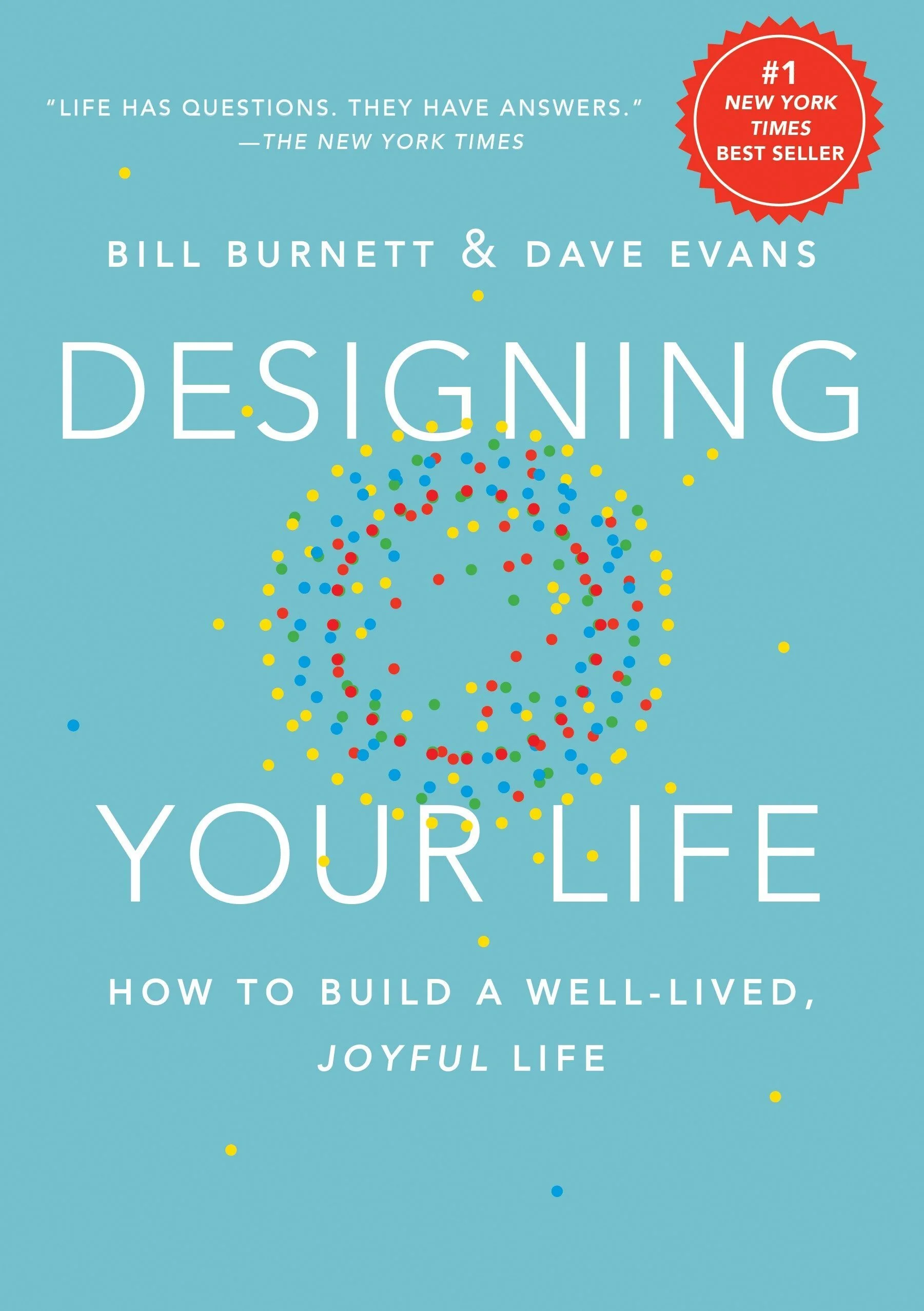
Designing Your Life: How to Build a Well-Lived, Joyful Life
Designers create worlds and solve problems using design thinking. Look around your office or home—at the tablet or smartphone you may be holding or the chair you are sitting in. Everything in our lives was designed by someone. And every design starts with a problem that a designer or team of designers seeks to solve.
In this book, Bill Burnett and Dave Evans show us how design thinking can help us create a life that is both meaningful and fulfilling, regardless of who or where we are, what we do or have done for a living, or how young or old we are. The same design thinking responsible for amazing technology, products, and spaces can be used to design and build your career and your life, a life of fulfillment and joy, constantly creative and productive, one that always holds the possibility of surprise.
-
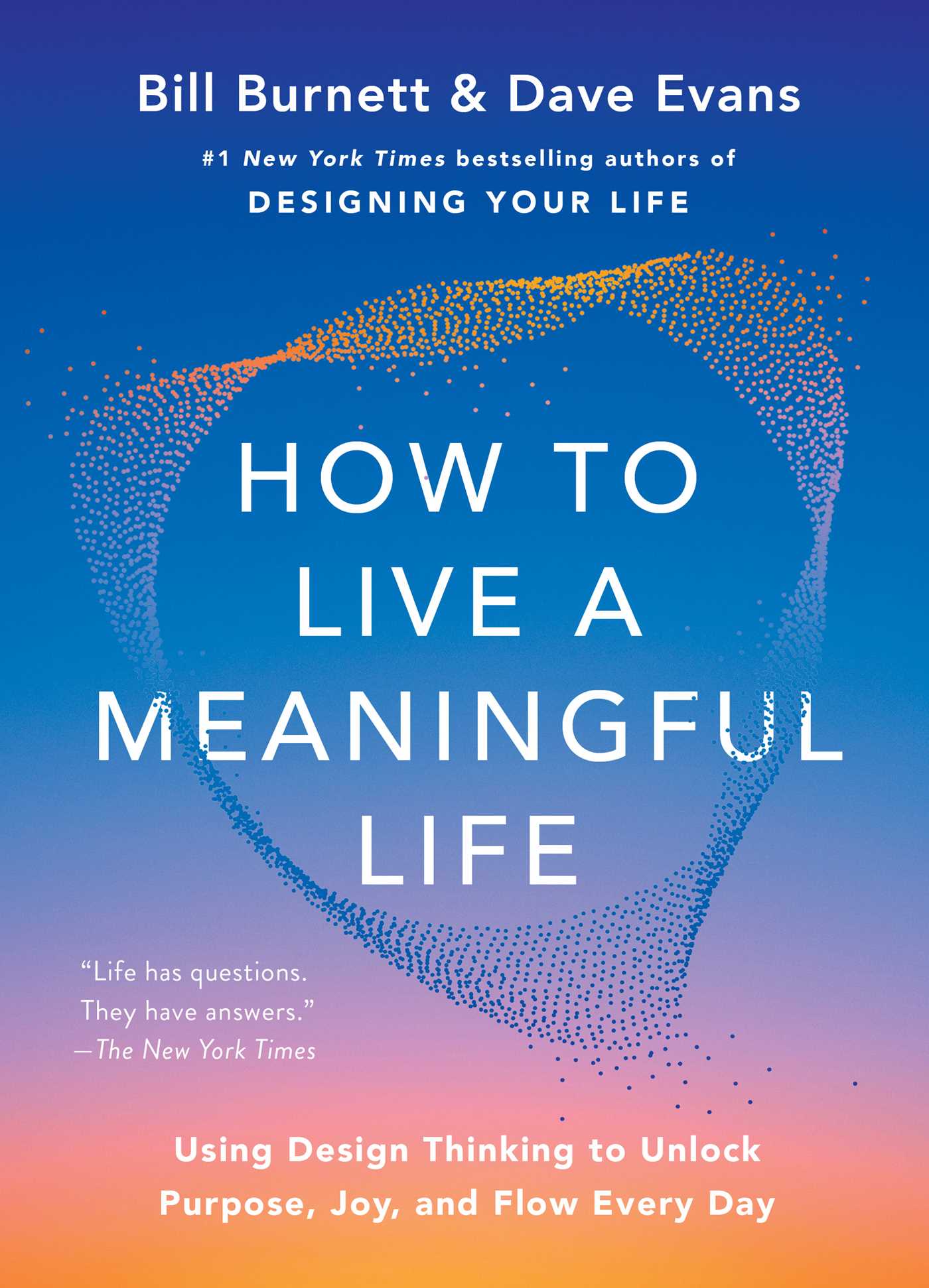
How to Live a Meaningful Life: Using Design Thinking to Unlock Purpose, Joy, and Flow Every Day
Most people aren’t miserable, they’re stuck in “fine.” Good job, full schedule, decent life, and a constant low-grade sense that it should feel like more. In How to Live a Meaningful Life, Stanford design thinkers Bill Burnett and Dave Evans say the trap is chasing the wrong things: the “meaning of life,” your “one true purpose,” or some finish line called fulfillment. Those ideas don’t motivate you, they keep you stuck.
Their fix is practical: stop hunting for meaning and start designing it, in the life you already have. Meaning shows up in moments—if you know how to build for it. Consider this your toolkit for making ordinary days feel worth living, starting now.
Resources
-
- Ted.com: How to use design thinking to create a happier life for yourself
- The Atlantic: The Danger of Really Loving Your Job
- The Atlantic: The Ultimate Career Advice: Make Your Work Your Calling
- Fortune: “You are never stuck”: How to find job satisfaction in an age of upheaval
- Harvard Extension School: Applying the Principles of Design Thinking to Career Development
- Inc.: To Find Your Life Purpose, Ask Yourself This 1 Weird Question
- Journal of Personality and Social Psychology: Maximizing versus satisficing: happiness is a matter of choice
- Stanford University: Improving the Academic Performance of College Students with Brief Attributional Interventions
- International Journal of High Risk Behaviors and Addiction: Effectiveness of Optimism Skills Group Training
- Better Uni Choices: Five mindsets for designing your life
- Designing Your Life Resources
- How to Live a Meaningful Life
2 Million Readers.
1 Life-Changing Newsletter
Simple and Straight-to-the-Point...
Just Like Mel.