Episode: 375
The Most Eye-Opening Conversation on Marriage & Love You Will Ever Hear (From #1 Divorce Lawyer)
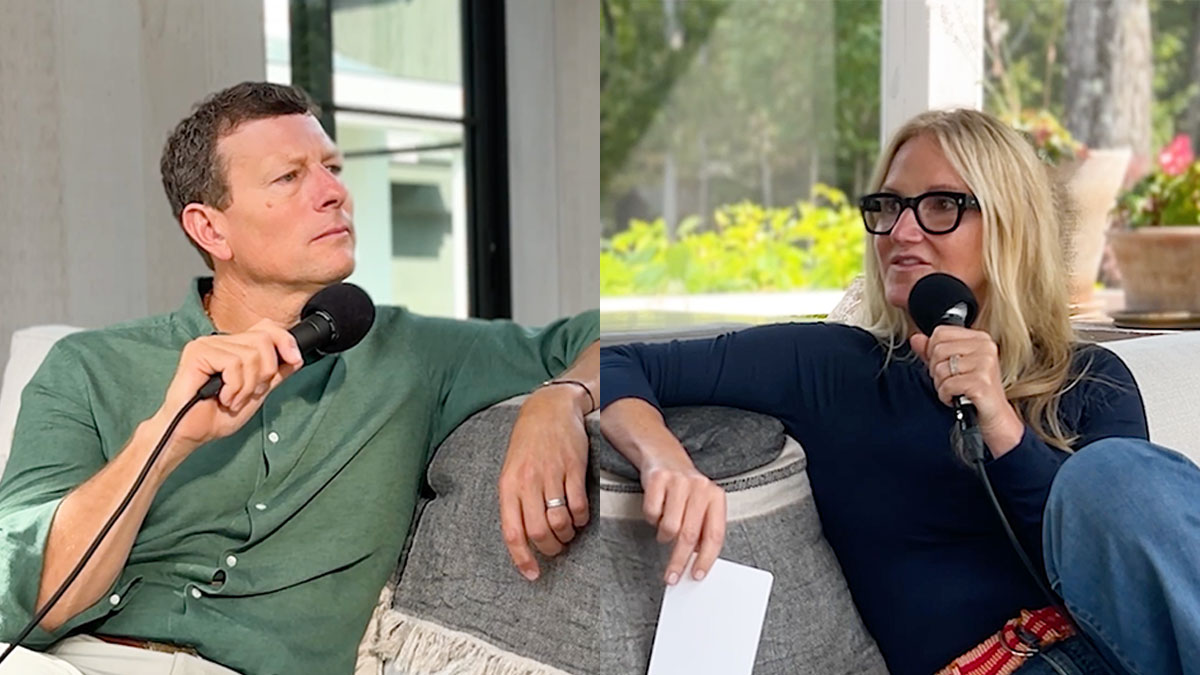
with James J. Sexton, Esq.

Mel calls today’s episode one of the most moving, meaningful, and transformational conversations ever to happen on the podcast. It is the most important relationship advice that she has ever heard and you will ever hear.
Today’s guest, James Sexton, is a world-renowned authority on relationships, but coming from a perspective you may not expect. He's one of the top divorce attorneys in the world, which means for decades he's had a front-row seat to what makes marriages thrive – and the reasons why marriages fall apart.
He’s going to tell you most breakups don’t happen because of something catastrophic. They result from all the little mistakes over time that everyone misses.
You’ll learn:
- How you can save (or strengthen) any marriage in 10 minutes a week
- The #1 thing that leads to infidelity (it’s not what you think) and how to avoid it
- How to tell if your marriage is over
- The reason relationships and marriages fail
- How to argue in a productive way
- How to tell if you’re in the wrong relationship
- The habits of all successful relationships
Today, he’ll teach you what those mistakes are and convince you that a few small changes are the secret to creating a lasting and loving relationship.
And unlike most relationship advice you’ll hear, his advice isn’t theoretical. It’s built on what he’s seen thousands of couples do when it’s working… and when it’s not.
Listen on:




If you’re not scared it’s not brave. It’s only brave if you’re scared and you do it anyway.
James J. Sexton, Esq.
All Clips
Transcript
Mel Robbins (00:00:00):
Today, you're going to learn the best relationship advice that you will ever hear. This is one of the most impactful conversations I have ever had on this podcast.
James Sexton (00:00:12):
Most people who are married would like to have a happy marriage. So just like most people would like to be in good shape. The question is not what do you want? It's what are you willing to trade for it? Because you want happiness. The majority of marriages end in divorce. Over 50% end in divorce. And that's just the ones that catastrophically failed. Think about how many people they're unhappy. They never really become the most authentic version of themselves. They stay together for the kids or because they don't want to give away half their things. Every marriage ends. It ends in death or divorce. Marriage is like the lottery. You're probably not going to win. But if you win, what you win is so fantastic. Why wouldn't you buy a ticket? Why wouldn't you try?
Mel Robbins (00:00:56):
James Sexton is one of the top divorce attorneys in the world. He has had a front row seat to the reason why marriages fall apart. Today, he'll teach you what those mistakes are and convince you that a few small changes are the secret to creating, lasting and loving relationships. What are the signs that you are headed for a breakup or for divorce?
James Sexton (00:01:21):
Disconnection is the number one cause of divorce, but there's a whole bunch of other symptoms that come from disconnection that are easy to point to and say, "Well, that was the cause." But it wasn't the cause. The cause was the disconnection. No single raindrop was responsible for the flood, but the flood's nothing but little raindrops.
Mel Robbins (00:01:37):
If you had to save a marriage with one thing, what would it be?
James Sexton (00:01:41):
In 25 years of practicing matrimonial law, what I'd say to you is ...
Mel Robbins (00:01:47):
Hey, it's Mel. Now, before we get into this episode with James Sexton, which I'm telling you is dynamite like fire. Boy, did you pick a winner? My team was showing me that 53% of you who are watching here on YouTube are not subscribed. My goal is to get that number down to 50% by the end of this year. And so here's my ask. You love supporting people who support you. If you're enjoying the content that we're producing here on the Mel Robbins podcast, please hit subscribe. It's the easiest way for you to say, "Hey, Mel. Hey, Mel's team. Thank you, thank you, thank you. " Best way for you to show support. And it tells us you love the content, you love the guests, and speaking of guests that you love, holy cow. What are the single best guests we have ever had? Thanks for hitting subscribe.
(00:02:34):
Now, please help me welcome James Sexton to the Mel Robbins Podcast. James Sexton, welcome to the Mel Robbins Podcast.
James Sexton (00:02:40):
Great to be here.
Mel Robbins (00:02:41):
I have so many questions for you, but where I want to start is this. How could my life be different if I take everything to heart that you're about to teach me today and I apply it to my life and my relationship? What could change?
James Sexton (00:02:57):
Yeah, I mean, I think as a practicing divorce lawyer for 25 plus years, I have a really unique vantage point. A lot of relationship advice that people get and people give. It's coming from a psychology background. It's coming from a hypothetical, theoretical background. And again, has tremendous value, but it's not in the trenches and it's not this really raw candid version because I think people lie to their therapists all the time, but they don't lie to their lawyer. Your doctor and your lawyer are the two people you should never lie to under any circumstances. Everything we're doing is to protect you and everything we're saying is subject to privilege. So you can tell us the raw, candid truth. And I think that's created in me a unique perspective on ... If you wanted to figure out how to keep your car in good shape, don't talk to the car salesman.
(00:03:49):
All they do is deal with new cars. Talk to the mechanic. Talk to the person who's seen every way a car can break down and will say to you, "Hey, here's the stress points. Here's where I find this model of car tends to break and here's how you could shore that up and prevent it. " So a lot of what I try to give people, instead of platitudes like, "Oh, you need to maintain connection with yourself." What does that mean? I need to know what that means. If I'm trying to fix my relationship or keep my relationship on track and you say, "Stay connected." Okay, do you mean a date night or more sex or should we go on vacation or should I be asking different questions when we're having breakfast together or should we be having breakfast together? What do you mean? I need practical things because as a lawyer, it doesn't matter what I know, it matters what I can prove.
(00:04:35):
So I don't just have to think in these broad ways that maybe a researcher or a psychologist can. I have to think, okay, what can demonstrate something? What is evidence to support what it is that I'm putting out there? So I think what you could walk out of this conversation with is a feeling of I have practical specific things that I can now bring to my relationship that aren't complicated, that don't require me to buy anything. They just require me to buy into a task or a routine. And if you can bring that to the table after this conversation, I think you'll actually see challenges in your relationship potentially improve. Or if you're fortunate enough to be in a place where your relationship is strong, you'll find yourself kind of maintaining that because it's a whole lot easier to maintain fitness than to let it fall apart and then try to get back on track.
(00:05:26):
Those first miles are so hard. And that's really what the goal is, is to help people by learning from the mistakes I've now seen thousands of people make just keep their relationship in a good place.
Mel Robbins (00:05:38):
I am so excited you're here because I don't want to make those mistakes.
James Sexton (00:05:41):
Good.
Mel Robbins (00:05:42):
And what's interesting about that example of fitness, as you said, it can be easier to maintain it. I think it's almost equally easy to let it fall off as it is to maintain it. It's really whether or not you understand those little levers when you start to fall off. Because just like fitness, there are probably areas in your relationship right now where you are falling off and you don't even realize this is a major mistake that will land you in front of somebody like you, James.
James Sexton (00:06:15):
Yeah. And falling feels like flying for a little while.
Mel Robbins (00:06:18):
What do you mean?
James Sexton (00:06:19):
Like, It feels good. When things are sort of coasting and you kind of go, because there's just so much coming at us in the world. And so to go, all right, I got my person. I got that locked down. I can worry about all this other stuff, the kids, work, what's going on in the world, everything else. Because I have this. I'm good. I'm good. Well, we have each other. We're wearing a ring. We're doing the whole thing. We're in. We don't have to worry about that anymore. And meanwhile, no, you got to water that plant.That's a relationship that when you were looking for it, it was so important. And when you found it, you were so happy that you found it. We make the mistake of thinking love is permanently gifted to us. It's lone. Every marriage ends. It ends in death or divorce, but it ends.
(00:07:05):
And it's one of those weird things to say to someone, "I hope it ends in death for you. " But it's the truth. I hope your marriage ends in death because the other way that it's going to end is divorce. And the majority of marriages end in divorce. Over 50% end in divorce. And that's just the ones that catastrophically failed. Think about how many people succeeded in marriage, meaning they didn't divorce, but they're unhappy. They never really become the most authentic version of themselves. They stay together for the kids or because they don't want to give away half their things. What is that? Another 10%, 20%. Now you have something that fails 70% of the time. And yet we are like, let's do it. We got to sign people up for this. It's a great thing. Even if someone says, "I'm getting married," if you were to say, "Really?
(00:07:51):
Why?" It would be rude. That's a rude question to ask. But meanwhile, you're doing something that fails roughly 50 to 70% of the time. It's not unreasonable to say why. And I think the big issue is, and that's why I say falling feels like flying for a little while until you hit the ground. Because sometimes by the time you realize, oh, this marriage is not a good place anymore, it's real far gone and it's real hard to come back. And that's why when people say, "Oh, what's the number one cause of divorce?" It's like disconnection is the number one cause of divorce, but there's a whole bunch of other symptoms that come from disconnection that are easy to point to and say, "Well, that was the cause," but it wasn't the cause. The cause was the disconnection. No single raindrop was responsible for the flood, but the flood's nothing but little raindrops.
Mel Robbins (00:08:40):
Do you believe in marriage?
James Sexton (00:08:41):
I do. Yeah, I do. I mean, I think that's an individual question. I like to look at relationships, romantic relationships as chapters in a long book.
(00:08:52):
And I think like any chapter in a long book, there's some chapters that are tragic and some chapters that are sad and some chapters that are just filled with nothing but joy. I think Orson Wells said that whether a story is a comedy or a tragedy depends on when you end it.
James Sexton (00:09:09):
And I think a lot of relationship stories that we sell to people, rom-coms and things like that, they're kind of the relationship equivalent of pornography. They're just a stylized version of what actual relationships look like without any of the complexity, with just the good part. And I think marriage, I don't think I can learn everything I need to know about myself from myself. I think I need someone who'll see my blind spots, and I think I need that person to be someone I can be really fearless around. And I think at its core, marriage should boil down to four words that I think are potentially the most beautiful words you could say to someone and mean, or have someone say to you and know they're true.
(00:10:00):
And that is, you're my favorite person.
(00:10:04):
What could be more beautiful than being told and knowing that when this person says it, they mean it. You're my favorite person. And to say to someone back, "Yeah, you're my favorite person." What would be better in the world than having that? And so I like to think about the end of things and then reverse engineer. And to me, at the end of your life, if you could look at another person and say, "You helped me become the most authentic version of myself and you're still my favorite person." That's the greatest wedding toast you could ever have. That's the greatest blessing you could have in your life, and I think it'd be the greatest asset you could have in your life. But having represented cops, teachers, firefighters, CEOs, elite athletes, celebrities, we are all equally terrible at this.
Mel Robbins (00:11:03):
What do you wish every couple understood before they got married?
James Sexton (00:11:08):
So two things and they're contradictory. So I say that out front because as soon as I say it, I know it's going to sound like a contradiction, but I think you'll, as a long married person, I think you'll agree. I think they make two contradictory mistakes. One is thinking that marrying this person will change them. So he leaves his socks everywhere, but if we get married, he'll stop doing that or he drinks too much, but if we get married to somebody, she's not very fiscally responsible, but if we get married, she'll shape up and get that together. So thinking that if you marry somebody, they're going to become a better version of themselves and they'll definitely change. This is not a great idea. You're not buying a depressed company that you're hoping the stock will go up. But the contradictory thing is also thinking this person will never change that if we get married, that it'll prevent them from changing.
Mel Robbins (00:11:59):
Oh, I see exactly why these are the same thing.
James Sexton (00:12:02):
Right. Because it's the feeling of, "Hey, this is so good. The sex is so good and our companionship is so good and our conversation is so good and our whole vibe together is so good." If we get married, it's like building a wall around this thing and it's going to keep it amazing. And this is what we have to do. We'll shore up all the defenses against the world and nothing will change. We'll just be happy and having sex and having a great, just like we are right now forever. And that's just ridiculous. There's nothing, there's no way to ... I mean, maybe when people died in their 30s and 40s, that was possible because you had a short window of time. But the truth is to say, "Hey, I'm going to be with somebody 30, 40, 50 years in this very intense, intimate relationship and it'll never change." That's insane.
(00:12:49):
Our bodies change, our goals change, the pressures were done, the society around us is constantly changing, technology's changing. So how would you think that a contract we sign with the government about our relationship is going to prevent it from eroding or having any of the natural things that happen to our bodies, to our lives, to every other relationship we have?
Mel Robbins (00:13:12):
So is there a better question to ask yourself knowing how much change is going to hit you? You know what I'm saying? So if you could grab every young couple by the shoulders who's in that moment where they're like, "I think this is my person. You're my favorite person now, and I'm feeling the pressure, or I really have always wanted to get married, or all my friends are getting married, or I'm the only single one, or I've been divorced for too long and I want to try this. " Is there a question that you wish couples or people personally would just stop and ask themselves the true question?
James Sexton (00:13:49):
I think everything is, what little things can we do to stay connected? And I don't think it's that hard. I think you can dedicate 10 minutes a week to the upkeep of a relationship and stay out of my office a lot of the time.
James Sexton (00:14:06):
I genuinely believe that if you spent 10 minutes a week just saying to your partner, "What did I do this week? Tell me three things I did this week that made you feel loved." I think you'd be surprised at the answer. I think you think you know the answer, but you'd be surprised. I think if your husband, if he said to you, "What are three things I did this week that made you feel loved?" The practical actual answers, you might not be able to predict those. He might not have been able to guess in advance what they are because little things make us feel loved.
(00:14:42):
And by the way, if you have courage and you go into this transaction saying, "Hey, we're going to not hear this defensively. We're going to speak honestly and we're going to hear in a non-defensive way." Then you can ask another question, which is, where did I miss the mark this week? What are three things I could have done better this week? What were three things I did this week that made you feel less than loved or less than seen? You can have fun with it and say, "What are three things I did this week that made you want to have sex with me? " What were three things this week that I did that turned you on? By the way, the answer is bonkers. Absolutely bonkers. Like what? As a heterosexual man, when I've asked that question, it's the weirdest things. It's like, oh, the dogs came in from outside and you were kind of toweling them off and the way they were looking at you. And that made you want to have sex with me.
Mel Robbins (00:15:31):
Where are the dogs?
James Sexton (00:15:32):
I'm trying to get eight pack abs. And meanwhile, this is what makes you feel, but it really ... The things that make-
Mel Robbins (00:15:41):
I understand. Because honestly, when you said what makes you feel ... I was thinking to myself, well, Chris asked me that. While I was here working, he was with his friends skiing and he took our two dogs. And so he spent the day hiking up the mountain and skiing down. The dogs were chasing him. He sent me photos and I felt so loved that he remembered me in the middle of that and sent me that in the middle of the day.
James Sexton (00:16:09):
And see ... And you identify what that really was, which it wasn't just the thing, it's what's underneath it.
Mel Robbins (00:16:14):
Yes.
James Sexton (00:16:15):
That he thought, oh, this is so good. I want to share this with her. Yes. And that's what I mean about you're my favorite person. All that is is just staying a little bit connected and conscious. What did that cost? Nothing.
Mel Robbins (00:16:29):
Nothing.
James Sexton (00:16:30):
Cost nothing. And we get so fixated on these grand gestures. Oh, love is about these grand, I'm going to plan a birthday party, I'm going to make it huge. And listen, there's value in grand gestures, but day-to-day things like that, that's the thing. And by the way, it works in both directions. I guarantee there's some little thing you do that you may not even think is that big of a deal, but that's the thing that makes him feel deeply connected, valued, seen, understood, safe, emotionally and all. Even just the fact that you know he loves the dogs as much as you, because the shared connection of things you love, whether that's your children, whether it's companion animals, whether it's an activity, whether it's a friend group, there's something about knowing like, oh, this person feels this as deeply as I do. This person feels this depth of love and connection for ... I mean, animals for me is a big thing. I'm a dog person, but there's something so beautiful about sharing that with someone and knowing, oh, it's okay. I'm away because this person loves the dogs as much as I do and panders to them as much as I do and will send me photos and will do all the little things that I do when I'm out so that I know that the dogs feel safe and loved. To me, that is so easy to just articulate to each other and remind each other. I don't think it takes the magic away to know that and to hear that. I think if Chris heard you say, "Do you know how special that made me feel? Do you know how beautiful that was? Do you know how much more that makes me love you and feel seen by you when you did that?" I think you'd be like, "I was just taking a picture of the dogs." But meanwhile, it's not the thing, it's what's underneath. It's what it's emblematic of. And I feel like so many of us have so many of those things.
Mel Robbins (00:18:23):
But we don't say it.
James Sexton (00:18:24):
And they're good and bad. If you're the kind of person like me, I like all the dishes out of the sink by the end of the day. And I like doing dishes because unlike the practice of law, there's a middle and end and you're done and it's like, oh, everything's clean. Whereas with cases, it's like I could work 24 hours a day and there'd still be more to do. It's not about leaving a sink full of dirty dishes. It's about what do those symbolize? That symbolizes you know that I like things a certain way and it's not that important to you. You assume I'm going to take care of this thing and that you don't have to ... It's always the thing under the thing. And if early on in a relationship when there's still all this abundance of goodwill and connection and optimism, if that's when you say, "Hey, let's figure out how to keep this here with these little tiny practical discussions, communications." Again, whether it's an email we send each other once a week with that list, or whether it's we go for a walk and it's like our walk and talk once a week and we do this, I think those kinds of practical little things are the way you stay connected, period.
Mel Robbins (00:19:34):
Well, just to make sure as you were listening or you were watching here on YouTube that you got just those two simple questions, the first one was, what are three ways that I made you feel loved?
James Sexton (00:19:43):
Made you feel love.
Mel Robbins (00:19:44):
Yes. And the second one was, what are three ways where I miss the mark?
James Sexton (00:19:48):
Yeah.
Mel Robbins (00:19:48):
That's it.
James Sexton (00:19:49):
And you might want to throw in, here are three ways you made me feel loved this week. Because again, I'm a believer in that positive reinforcement.
Mel Robbins (00:19:58):
Well, you don't beat your dog into becoming well-behaved. You love them into it. You reward good behavior. This is the basic stuff, but we don't do it. We start with, "This is what you did wrong." You know what I mean? You're like, "Ah."
James Sexton (00:20:12):
Right. And the entry point in the conversation is so important because there's so many couples, for example, that there's something I hear all the time, particularly from men is like, "Oh, we don't have as much sex as we used to. We used to have so much..." Okay. So if you walk into your wife and say, "We're just not having sex as much as we used to, " you know the response, "Well, you're not here. And when you're here, you're in a terrible mood." Well, I'm in a terrible mood because work is ... Now where are we going? We're going nowhere good. No one's walking out of that conversation when let's have more sex. Everyone's walking into that conversation going, "Yeah, this is exactly why we're not having more sex." Whereas if you entered that conversation with, God, I was driving down the street the other day and I remember when we were first dating and we went away to that cheap B&B that we didn't have the money to afford and we were supposed to go do it and we ended up staying in bed the whole day.
(00:20:58):
Remember, God, I was just thinking about that day. When we were so connected physically, I just love that about, okay, now- Now you're like, "Let's book the hotel." Right. Because what am I doing? I'm talking about something we did at ... This was us and it's a version of us. Let's visit it for a second. Wasn't it great? What are we doing different?
Mel Robbins (00:21:18):
Here's what I love about that. You can use nostalgia and going back to a better time as a reference point to remind both of you of what you miss and something that's underneath all these little things that have led to all this discontent and disconnection and what therapist Terry Real calls normal marital rage and hostility, I think he called. What's he call it? Normal marital hostility. Yeah, it's called normal marital resentment. That is just about the disconnection because I think the resentment comes from knowing deep down you started in a different place. And I think for a lot of people, you just don't know how to get back. And you think since it feels so off, what's right in front of your nose is what you're pointing out.
James Sexton (00:22:08):
Yeah. Well, we've been told it's supposed to be easy too. I think that we're constantly barraged in media with examples of just effortless love. And I think that there is an aspect of love that's utterly effortless. Love is an emotion, but love's a verb.
Mel Robbins (00:22:25):
What does that mean?
James Sexton (00:22:25):
Love's a verb. I mean, love is an emotion. It's a feeling, but it's a verb. To love someone is to act with love for them.
(00:22:33):
It's a verb. It's a thing you do. So it's not just something you feel, it's something you act upon and to act with love towards someone. And so the acting with love towards someone, loving someone, actively the act of loving them requires A, some understanding of them and their blind spots. What would be wrong with sitting down with your partner at the start of a relationship and saying, look, we're going to get in a fight some point. It's probably going to be my fault. I'm going to say something stupid. I say dumb things all the time. So we're definitely going to have an argument at some point. When we do, what kind of person are you? Do you need a minute? Should I let it air out? Because if I try to force the conversation, we're going to have a big argument. Or are you the like, "We cannot go to bed angry. We got to work this out. We have to talk about this tonight." Because the time to learn that is not when you're in a fight. The time to learn that is when there's this abundance of connection and optimism between the two of you. And then when that moment comes to have the presence of mind, when you have a conflict to go, "Okay, we knew this was going to happen and this is how we talked about we're going to try to navigate this together." Again, everything I'm proposing anybody do in their relationship is free and it usually doesn't take more than a few minutes. And by the way, what you said about nostalgia, I think nostalgia is a powerful tool, but it's not just nostalgia, it's also framing because there are ways to effectively manipulate the emotional state of your spouse-
Mel Robbins (00:24:06):
Please tell us.
James Sexton (00:24:06):
For their benefit.
Mel Robbins (00:24:07):
Please tell us.
James Sexton (00:24:08):
When you think of as a lawyer, my job is to manipulate people's emotional state. That's my job. I want the judge to like my client. I want my client to feel safe. I want the other side to feel scared. I want the court reporter to like me. I want the court officer to like me because they're going to go back in chambers with the judge and I want them to go, Sexton's a really good lawyer. I don't want them to go, "That Sexton's so arrogant." So I got to be real. I want everyone. Not everybody can help me, but damn near everybody can hurt me. So I'm going to do my best in that courtroom to manipulate everyone's emotional state and have no one think I'm doing it.
Mel Robbins (00:24:36):
Well, here's the other thing though, when you're doing it, you're very authentically intentional. 100%. Because that's what you actually want.
James Sexton (00:24:46):
100%. And by the way-
Mel Robbins (00:24:48):
So because people hear the word manipulate, but what you're actually being is you're being super strategic because you do want the court officer to think you're an excellent lawyer.
James Sexton (00:24:54):
Listen, I manipulate the screw because I want the thing to be screwed into the wall.
Mel Robbins (00:24:58):
Yes.
James Sexton (00:24:59):
Manipulation is not in and of itself anything nefarious.
Mel Robbins (00:25:02):
Yes.
James Sexton (00:25:04):
An example I've given before is, so I'm a trial lawyer, so I try to be clean shaven. I don't get to have that like, oops, I didn't know I was sexy stubble that's so popular. So I have to be clean shaven. But on the weekends, I like to not shave. It is a couple days off from it. I don't have to be in court, so it's great. I don't wear a tie and I don't shave on the weekends. But I like the second day, by Sunday, I have scruff and it's kind of coarse. And I was dating a woman who had very sensitive skin and anytime I would go to kiss her, she would go like, "Oh God, your beard's so scratchy." And immediately in me, I went in my head like, "All right, so now I got to shave on the weekends too when I see you. " That relationship didn't work out, not surprisingly, not for that reason, but it didn't work out. My next relationship, she had the exact same issue. She had sensitive skin, but her response, her way of handling it was I would shave and she would invariably come up and go, "God, I love it when you're clean shaven." It's like you remind me of like John Hamm with Don Draper in Mad Men. Dude, I would shave three times a day. I would constantly, I would shave and I'd be like, "Oh, I just shaved today." And she'd be like, "Oh my God, I love it." Okay, what did she do? What did she do but manipulate me in a positive way? All she was doing was say, instead of framing it as something I'm doing wrong, she framed it as, here's this opposite thing you do that, oh, I love it. And now I want to please my partner. I want my partner to feel good about me and think I'm sexy and think I'm ... So of course I'm going to want to move towards that
(00:26:39):
And not pull away from it. So a lot of it is about framing. Nostalgia is a very powerful tool, but it's really like how do we frame what it is we're trying to accomplish here?
Mel Robbins (00:26:49):
And really focusing often on the things that are going well and that you like and tripling down on what they're doing well.
James Sexton (00:26:58):
Because I mean, let's be honest, the world is constantly criticizing us and even constructive criticisms, criticism. And it doesn't feel great to have this person who's supposed to be your favorite person and you're their favorite person and they're criticizing you. Everything is criticizing you. What's right in this connection very often is the cure for what's feeling wrong in it. And criticism is rarely the path there.
Mel Robbins (00:27:27):
If you really think about all those little mistakes, kind of like a mechanic that can tell you what's going to go wrong with the car, what do you feel are the list of mistakes that people make in long-term relationships that lead to divorce or lead to all the problems that we may not realize? And I realize that you've already said that underneath it all is disconnection, but what are those mistakes that we need to really know about?
James Sexton (00:27:59):
Yeah. I mean, I think if you start with where are we when we meet and fall in love? We fall in love super fast. I mean, we really connect with the person so instantaneously. And then we fall apart the same way we go bankrupt, which is very slowly and then all at once. It's like this little tiny little bit, little bit whoomp off the cliff.
James Sexton (00:28:22):
And so I think it's the same thing with falling out of love. And so the big relationship killers are infidelity, financial impropriety, outright deception, and that's huge. I would say a good 85% of the divorces that I'm involved in, infidelity has some role in it.
Mel Robbins (00:28:40):
Why do you think that is?
James Sexton (00:28:41):
Because I think we have a human ... The same reason why so many people want to get married. We have a human desire to connect to another person. I think we're social creatures. This is something in us. We want to connect with another person. We need desperately to be interested and interesting, and we want to feel loved. We want physical connection with another person. We want the attention that comes with physical connection. I think whether it's marriage and the early days of marriage or dating or the early days of infidelity, it's not just the other person that we kind of fall for. It's also who we feel like when we're with them. You stand a little taller when someone sees you as so beautiful or so handsome. You feel like a version of yourself. Everyone I talk to in my office who's had affairs, very often they'll say like, look, I love my spouse.
(00:29:40):
I never stopped loving my spouse, but my spouse doesn't find me beautiful or handsome anymore. And then I met this person and I'm fascinating to them. They tell me how beautiful I am or how handsome I am. And I actually feel that. I feel that way because it's So lovely to be told. You're so wonderful. I'm enjoying being ... Even just the two of us right now talking to each other, there's something so beautiful about like, "Oh, what you're saying is so interesting. I'm enjoying talking to you. "That's such a lovely exchange. So it's a natural human. If you think about the seven deadly sins,
(00:30:20):
All they really are is seven very normal human things taken to the wrong level. We want to eat. Okay, gluttony. We need intimate connection with another person, lust. We get angry when someone hurts us. Wrath. If you look at those things, all it is a normal human thing weaponized. So I think that's where we lose the plot in that we just forget. The most common thing, again, is just that disconnection. And that disconnection can be in the form of, "I'm disconnected from the me you made me feel like. " Which is a me problem, by the way.
Mel Robbins (00:30:57):
Which typically, by the way, I'm sure you see this, is that when you have a relationship where there's been infidelity and the person who's cheating is feeling seen and feeling like they can stand taller and feeling like they're interesting, the person who's being cheated on is like, "Well, I wanted that too in our relationship you asshole." I was missing that too. And so you can see that the disconnection and the lack of feeling cared about is happening for both of them.
James Sexton (00:31:30):
It's happening for both of them. And there were all of these moments where you had a last clear chance to steer out of that. But there's an opportunity for people if they'd communicated early on like, "Hey, I'm not feeling like I feel like my eye is wandering. I don't want my eye to wander. I want to be good at this job." When you marry someone, you're signing on for a job. It's wonderful. It's bliss, all those things, but it's also a job. It's got a job description. And by the way, it's an insane job description. You're going to be my best friend, best co-parent, best roommate, best travel partner. Wow, really? That's a big list. You found one person that can do all of that. We've convinced people that, no, no, this is your person and they should be the best at everything. And if they're not, by the way, maybe your soulmate's out there and you miss the boat and you got to go find that person because life is supposed to be like a hallmark movie.
Mel Robbins (00:32:25):
I feel like anybody that's in a relationship right now is leaning in because it's easy to feel like roommates. It's easy to fall into a lull. There's other people all around you.
Mel Robbins (00:32:36):
You actually have a chapter in your book, How to Stay in Love, Chapter 19. If we were designing an infidelity generating machine, it would be Facebook, Instagram, YouTube, social media. This is page 114. If you're vaguely unhappy with your relationship or marriage, and especially if you're more than vaguely unhappy with it, stay away from social media. The vast majority of what you'll find there is unhappiness. Mast is happiness. It will fuck with your head, your heart, and your relationship. And you talk all about how social media is a single greatest breeding ground ever for infidelity. Nothing that has come before, not swingers, clubs, key parties, chat rooms, workplace temptation. Ashley, Madison, Tinder, Grindr, no, no, no, no, not even porn comes within a thousand miles.
James Sexton (00:33:35):
Yeah, I stand by that.
Mel Robbins (00:33:36):
Why?
James Sexton (00:33:38):
Because it's just a perfect storm of attacks on the institution of a monogamous marriage. A, you have a innocuous reason you should be using this technology.
Mel Robbins (00:33:54):
Oh, meaning you got to cover. You're like, on it all the time for work,
James Sexton (00:33:58):
Or I wanted to see what this person's up to or, oh, the Facebook group of blah, blah, blah is for our kids' thing. There's a million reasons you'd be on your phone that are totally innocuous.
Mel Robbins (00:34:08):
Right. Unlike a strip club.
James Sexton (00:34:09):
Unlike a strip club. Or if, for example, I think that one of the women at one of the moms at my son's soccer practice is attractive. If the only entry point I have for talking to her would be walking up to her at practice, it's not as threatening because you can't really do that without it being ... But now, while we follow each other on social media because we both are part of that group that is a group chat that ... And now I also see her vacation pictures and now I might innocuously say to her, "Oh, I saw you guys went to Tulum. Where did you stay? We're thinking about going. And now I'm talking to you. And I'm talking to you, by the way, privately. I'm in your DMs. We're talking..." So it's not like approaching you at the soccer game. It's like approaching you alone in a restaurant and we're just the two of us talking and no one can see what we're saying.
(00:34:58):
You're just creating this perfect storm for people. And by the way, the performative self, anyone posts is the best pictures of themselves. And when are you on your phone looking at social media? Is it when you're having the greatest day or the greatest moment? No, you're on the subway, you're on the toilet, you're bored, right? You're just bored. You're living your gag reel and you're looking at everyone's greatest hits and you're supposed to walk out of that transaction feeling deeper connected into your real life relationship. No, it's a total distraction, but it's a distraction that is going to create all kinds of enticements and connections that really are not going to be good for your marriage. And you have total plausible deniability if your spouse has any question about why are you on your phone? There's a million reasons we'd all be on our phone.
(00:35:43):
So yeah, it's a perfect storm. As divorce lawyers, we owe the people who made these platforms a debt of tremendous gratitude because they have given us job security.
Mel Robbins (00:35:51):
So if you're in a committed partnership, what is the kind of ground rules around social media for yourself and for your partner?
James Sexton (00:36:02):
I like how you framed that question because I think a lot of this has to do with what are you doing?
Mel Robbins (00:36:07):
Yes.
James Sexton (00:36:08):
Because I think most people who are married would like to have a happy marriage. So just like most people would like to be in good shape. The question is not what do you want? It's what are you willing to trade for it? What are you willing to give up in exchange for that thing? So I think the first question we have to ask ourselves is, am I using this technology in a way that if my spouse was standing here, I would use it differently. Would I be following these people if my spouse was watching who I follow? I'm not suggesting we have to monitor each other's social media. That's, I think, a very personal decision couples have to make. But I think the best entry point is yourself because I have much more control over myself than anything else. So I think starting with, would I be having this communication with this person in this specific way if my spouse was part of the conversation?
(00:37:02):
And sometimes it's very obvious that the answer's no. I genuinely think the cure for the entry points of infidelity is monitoring your own behavior. If my spouse was standing next to me, would I be talking to this person this way? Would I be looking at them this way? Would my body language be what it is if my spouse was standing here? And if the answer is no, okay, then just notice that. Notice that. I'm not saying you have to do it differently, but notice that because you realize, hey, this is a problem. I know I keep bringing things back to food and fitness, but I can control my food environment better than my brain. If there's potato chips around, I'm eating them. So I know, okay, I can't have that in the house. Or if I have it in the house, it's with the understanding that, oh yeah, I'm going to annihilate those potato chips at some point in one sitting.
(00:37:52):
And that's okay. Listen, life is to be enjoyed. But if you goes, discipline is trading what you want now for what you want most. And so what do I want most? I want a long-term satisfying relationship. I want to be happy in this relationship. I want my partner to be happy in this relationship. I want both of us to feel fulfilled. I want both of us to feel loved. That's what I want.
Mel Robbins (00:38:14):
The Mel Robbins podcast is proudly sponsored by Amica Insurance, our exclusive insurance partner. You know what they say? If you want to go fast, go alone. If you want to go far, go together. So go with Amica and get coverage from a mutual insurer that's built for their customers, one that looks after what's important to you together, auto, home, life, and more. Amica can help you protect what matters most. Visit amica.com and get a quote today.
(00:38:45):
Let's say that you're at that point in your relationship where as the person who's here with us right now is listening and having a panic attack, because you realize you're in that phase of the relationship that every long-term relationship goes through.
James Sexton (00:39:03):
Yeah.
Mel Robbins (00:39:03):
You've had the fairytale, now you're in maintenance, now you're noticing the resentment is hitting, you're idsconnected, you're not having sex, you're annoyed at your favorite person all the time. You're wondering if there's somebody better. You wish it wasn't this way, but it's starting to feel like, will we ever get back? What are some of the things that you should do immediately?
James Sexton (00:39:31):
Yeah. I mean, I think in 25 years of practicing matrimonial law, what I'd say to you is you're where most people are who are married.That's where you are. You're where most people are. And you probably got there by this succession of small choices that created this, what I would call a downward spiral. This spiral where, "Well, why should I do that? You don't do that. Well, why should I do that? She doesn't do that. Well, why should..." And the good news is wherever you are, whether that started just recently or whether you are down in the valley, it has just been, I don't remember what it was like and what it felt like when we were in that great place. You can reverse that spiral.
James Sexton (00:40:17):
It works the same. It works the same in the opposite direction. How is the same way that it went wrong?
(00:40:24):
Small, small actions. Start small. Start with leave a note. Leave a note. You're leaving in the morning for work, leave a note. It was really fun hanging out with you last night. I married the prettiest girl in the world. Or, "Hey, thanks for taking care of that thing for me yesterday and calling the cable company. It really means a lot when my big strong man does things like that. " Whatever. Some little courtesy or kindness costs nothing, takes five seconds to do.
Mel Robbins (00:40:55):
You know what you also did? Because you're really good at manipulating and being strategic. You reminded me in that note of how I felt when we first met.
James Sexton (00:41:07):
Yeah.
Mel Robbins (00:41:07):
Prettiest girl in the world, strongest guy, best person on the planet.
James Sexton (00:41:11):
And why not? That's so easy throughout the day. I tell a lot of my male friends, if you text your wife in the middle of the day with a song that was like a song important to you and you send a link to that song and you go, "I heard this song in the coffee shop today and I thought of you. "That's an incredible feeling. It's an intoxicating, wonderful feeling. And it doesn't take much to just bring someone back to that place. And by the way, the person's initial reaction might be, what inspired that? Because if you're down far enough in the valley, you kind of go like, but it's not hard to just say, "You know what? I feel like I have to do a better job of telling you these things." I think of it a lot, but I sometimes don't say it out loud.
(00:41:57):
Who would not want to hear that? How much would it take and how much would it cost? Nothing. We cost nothing. To write your spouse an email, here's 10 things I love about you. 10 things. And by the way, it's not just for them. They'll love reading that. But also it's for you. Remind yourself, why did you choose this person? There's still so much beauty in this person. There's still so much beauty in you. Why wouldn't you take a moment and just enjoy the warmth of that? It's right there. No one's going to advertise this to you because it's free. You don't need to buy a book to learn it. You don't need to take a course. There's nothing I can sell you here. This is just, you have it. It's right there. It's right in front of you. You have to actively steer away from it at some point.
(00:42:51):
And again, and it's never too late to change that cycle.
Mel Robbins (00:42:53):
Well, I'm thinking about the person who hears that.
James Sexton (00:42:57):
Yeah.
Mel Robbins (00:42:59):
The writing the email of 10 things, and I think we can get so sequestered in our corners that your immediate reaction is either, "I can't think of 10 or why aren't they writing it to me?" Or what if they don't respond?
James Sexton (00:43:15):
So those are three separate great questions. And I think I would answer them separately. So the first one is, what if I can't think of 10 things I love about this person, then maybe you should consider getting divorced.
Mel Robbins (00:43:26):
What?
James Sexton (00:43:27):
I mean, if you're telling me you're married to a person and you can't think of 10 things you love about them, there are eight billion people in the world. Maybe you're married to the wrong one. Sometimes happily ever after means happily ever after separately. I'm divorced. My ex- wife is one of my favorite people. She's amazing. I love her very much. There are a lot of people I love that I wouldn't want to be married to. Actually, all of them. All of them. Because it's a very specific kind of relationship. If you're telling me I can't think of 10 things, this person I chose out of eight billion other options to be my most intimate partner in life. I can't think of 10 things I love about that person. Maybe you should consider a divorce because that's an insane reality. And by the way, okay, maybe you've grown so far apart.
(00:44:18):
My ex- wife has been remarried for 15 years to an amazing guy who's absolutely nothing like me personality-wise and perfect for her. And I have to tell you, I love her. I love him. We're like a weird family. But the truth is, God bless. God bless. She found the lid for her pot. Amazing. Amazing. I'm so glad. I have to say something. I can tell you 10 things I love about my ex- wife. She could tell you 10 things she loves about me. I could tell you 10 things I love about almost anyone in my life. So if you're in a place where you're looking at your spouse and going, "I can't even think of 10 things," then I think go to therapy and really try to answer that question and then try to answer the question, why would I be married to a person I can't think of 10 things I love about them?
(00:44:57):
So that's question number one, you answer. Question number two is, what if they don't do it back for me? What if it has ... Okay, that's where it's scary. But what's scarier than that is, well, we just won't even try.
(00:45:11):
I understand so well as a human being how vulnerable it feels to express need. And it's hard for me. I don't know if it is for you, but it's hard for me being that kind of person to say, "I really need help. I can't do this myself." And it's humbling. It's getting easier as I age. It's one of the things I actually like best about aging is that it's okay for me to say like, "Oh, I need some help with this, " or, "Oh, I'm not so good at that. Are you good at that? Can you help me with that? " And maybe there's things I'll be able to help you with. Which by the way, at its best is what marriage is.
Mel Robbins (00:45:44):
So true.
James Sexton (00:45:44):
It's about like, "Hey, how can we become complimentary pieces to each other and to create this beautiful hole together?" So I think that's an amazing opportunity is to really say to yourself like, "Hey, I'm going to try. I'm going to try." And it's brave to try and it's scary. But if you're not scared, it's not brave. It's only brave if you're scared and you do it anyway. So I think that most of us, if love is on the line, if our marriage is on the line, we can be brave. You believed in Santa Claus for seven years. You can believe in yourself for 15 minutes, just really like five, four, three, two, one, go. Just do the thing. So I think try and at least that way you'll know where you stand because if you've now made a concerted effort where you've tried a few times to really reach out to this person in a consistent way and create some connection between, and it's been rebuffed every time, then I think you're going to have a much clearer understanding of where you're really at in that relationship.
(00:46:47):
And that might guide you in a direction like my office. I believe some marriages need to end. I genuinely do. I've seen some people very successfully divorce, many of which then go on to find love that is more deep and connected for them and real joy. They're better people and they're better parents after their divorce. And I think we do the world a disservice to view all divorces as failures.
(00:47:10):
I don't believe it's a failure. I don't believe my divorce was a failure. It produced two amazing children that are now amazing adults. I became a better man by virtue of my connection to her. I'd like to think she would say the same about herself. She went on to find tremendous love in her life. I have too. There's tremendous value in connecting well, disconnecting bravely and maturely if you can do it.
Mel Robbins (00:47:34):
What did you learn about yourself and about relationships by going through your own divorce?
James Sexton (00:47:40):
My divorce was very boring because we're both very reasonable people who concede the possibility of our own error. And we fell in love as teenagers, basically. We met in college and we got married 22 and had a kid at 24, so we were babies. What I learned is that there are a lot of people in the world that I love that I wouldn't be appropriately married to. I also learned that the job description of a husband and of an ex- husband are two different things. I'm a really good ex- husband. I'm a really good father. I'm not a great husband. I don't have the patience. I don't have some of the skills that I think are really good in a husband. I think a husband is very comfortable accommodating their will to that of the other and their patient in some important ways. And as an ex- husband and a co-parent, I was great at it.
(00:48:33):
I was consistent, reliable, dependable, good communicator. I'm a good dad. I put my kids first. I always still, even as adults, I love them and I make time for them and they're always my priority. And I always, as an ex- husband, had a tremendous love and respect for my co-parent. I always, every Mother's Day would make sure my kids had gifts for her. Every birthday, every Christmas, I'd make sure they had things for their mom. Then when she got remarried, I sat down with her new husband at the time and said, "Okay, do you want to get her birthday gift for the boys now?" Because I don't want them empty-handed. They're going to feel self-conscious, but I also don't want to overstep. I'm going to still do Mother's Day because that's what she is to me for my sons, but maybe you'll get the boys' Christmas gifts with her.
(00:49:20):
And we had this discussion. He was a divorced guy himself, so it was this really lovely like, oh, how are we going to shape shift this dynamic? So I learned a lot about how you can disconnect in a very beautiful way and have a non-traditional kind of family that is joyful. I learned a lot about how divorces don't have to always be the kinds of things that I was handling even at that time. I was already a divorce lawyer at that time. And I really thought divorce was always this knockdown, drag out battle that you need someone like me. And you don't always need ... You can do it with a scalpel. You don't always need a chainsaw. I'm kind of a chainsaw. And so it was really lovely for me to learn. Because if you think about divorce, the ones you hear about ... If I go to a cocktail party, I don't go to a lot of cocktail parties, but if I went to a cocktail party and somebody said, "What do you do for a living?" I saw, I'm a divorce lawyer and they go, "Oh my God, you must have stories." And I said, "Oh my God, have I got one?" There was this couple and they got married when they were quite young.
(00:50:24):
And then the Venn diagram of their interests kind of didn't intersect as much and they grew in different directions. And then they amicably divided their property and they continued to co-parent their children that they both loved a whole lot. You'd be like, "That is the most boring story ever." I've talked more about my divorce in this conversation than I probably have in the last five years because it's not that interesting. It's two people.
Mel Robbins (00:50:44):
I actually think it's super interesting because it shows that there is a different possibility in terms of how you can conduct yourself, both during it, during the marriage, at the end of the marriage, during the divorce.
James Sexton (00:50:57):
And it's all about normalizing. So much of what I think has gone right in our culture in the last 10 years is normalizing certain things, like normalizing therapy, normalizing mental health issues. We need to normalize prenups. We need to normalize what a civil divorce can look like, what a cooperative co-parenting relationship can look like. It does not have to be because the kind of people that talk about their divorce constantly are people who were terribly wounded by it. I understand it became a formative trauma in their lives and it became something that everything comes back to. I get that. I've seen a lot of people who've been victimized by that kind of a divorce, but that has now become culturally what we think divorce looks like. And that is the unbelievable minority of divorces. The majority-
Mel Robbins (00:51:49):
So the minority of divorces are the high conflict. People are destroyed for years after. What is the majority?
James Sexton (00:51:56):
The majority is two people that at some point were deeply connected to each other, lost the connection and now have usually children in common or extended family in common and they need to end their relationship, but they don't hate each other. Or if they're angry at each other, their love for their children is much greater than their dislike of each other. I always tell people, a divorce is like a table. It's got four legs. There's you and your lawyer and the other side and their lawyer. All you need is one of those legs to be off. Doesn't matter how nice and straight the other legs are, that table's falling down. One irrational person or one person with bad faith intentions is going to make this into something much uglier than it needs to be.
Mel Robbins (00:52:38):
I want to finish up the topic of the signs and really giving the person listening the just resources or the awareness so that if there's a chance for this to spiral back up, you can. Based on all your experience, what are the signs that you are headed for a breakup or for divorce? The ones that you actually see, because I bet you go to a party or you can walk into a room and you can literally be like, in a year, five years, they're in trouble.
James Sexton (00:53:17):
What you have to do first is look at your baseline. So look at what it was you did when you were still connected to each other.
James Sexton (00:53:28):
How did you interact with each other? How often did you have physical intimacy? How often did you spend time together, just the two of you? What did you do separately and what did you do together? Because until you look at your baseline, you won't know how far you've drifted from your baseline. Relationships change, people change, their bodies change, everything changes. But the question is, did it change by default or by design? Have you ever thought or talked about as a couple why it's changed and are we both okay with that? Or is it something that one or both of us feel like, "Hey, we might've lost something in that process." So I think, again, baseline is a really important thing to be thinking about. Then one of the first things I observe when I'm seeing the cracks in a couple, like when I walk into a room or I'm watching one of those housewife shows and I'm like, "Oh, they're definitely getting divorced and they're definitely getting divorced." I often tell people, to me, the surest indicator of a divorce is not anything anyone says.
(00:54:21):
It's a sound and it's this sound. It's just that when the other person's talking and there's just this like, "Ugh. Yeah, whatever. What? Yeah. Okay. Why are you bothering me with what you're saying?" Or that kind of eye rolling. It's just those subtle discourtesies and disrespects. It's the tone, it's the body language. That's a huge piece. So when you're looking at signs, look at how you physically relate to each other. I mean, you've seen couples, I'm sure, where it's like-
Mel Robbins (00:54:58):
I'm like, why are they married?
James Sexton (00:54:58):
Even when they touch each other, it's like when you're first together, you touch your skin and it's like an electric bolt through you of like, "Oh my God, this person touched me. Oh my God, our legs touched." It's just that ... I mean, and thank God that passes or we just never get anything done. But it's supposed to sort of pass and become still something comfortable and connected because all that person, maybe you don't like holding hands, that's okay, but maybe they're trying to connect with you.
(00:55:27):
So do you want to connect with them? And if it's that I don't like sweaty hands, okay, so put your arm around me. Lean in and do something, meet each other halfway. There's a lot of these little tiny physical and verbal disconnections. Even just the act of when your spouse is talking to you, if you are on your goddamn phone, that to me, watching couples sitting there, one of them is talking and the other one is sort of going through the phone and you see them doing that. All I'm saying to you is you're not important. You're not important. You're not as important as this. And then what do you meet that with? Very often people meet it with, they'll either keep going and condone that behavior or they'll stop and go, "Well, I'll let you finish." Go ahead, no, no, finish what you're doing on the phone.
(00:56:14):
And now that feels accusatory because that person's like, "Well, no, I was trying to look at this thing." They weren't trying maybe to insult you. The two things I say that everybody accuses me of being unromantic that I actually think are two very romantic sentiments is one, marriage is a job. It has a set of roles and responsibilities. You signed up for it, you didn't have to take it. There were other positions available and you chose this one and you can quit if you want to, and you can go get a different one if you want to. So it's a lot like a job and it's a job that theoretically you want to be good at because you want happiness in this exchange.
Mel Robbins (00:56:47):
Is there something that you recommend in the middle of an argument to just diffuse it or diffuse yourself?
James Sexton (00:56:55):
I think the worst time to learn how to fight is when you're in a fight. I think in advance there should be some ... It's almost like what's a safe word? There should be a word that we've agreed in advance is we're ejecting from this conversation and we'll continue it at another time. We both know where the other one lives. We'll find each other. So if you have a phrase, how about them Mets? Something that just has nothing to do with any discussion you're having, that should be the phrase that I don't think this is productive and I think we're going down a road that's dangerous. And you should agree on it in advance and you should make a commitment to each other that, listen, I'm not saying that that ejects us out of this conversation for good because that would be a great way to just ... It's like you get a hall pass in the conversation, we'll never bring it up again.
(00:57:42):
What we're saying is, listen, this will be deferred for 24 hours or this will be deferred for a maximum of X number of hours or days or whatever it might be because the corners you back yourself into, you got to figure out ways to get out of. I mean, think about the commitments you've made to this person. I'm going to love you, you and only you for eternity and you can't make the commitment of, "Hey, listen, if we're in an argument and one of us feels like this isn't productive or we're feeling really hurt, we're going to say this phrase and that phrase will mean we have to call a timeout." And two, you can't really love someone and more importantly, you can't really feel someone's love
(00:58:23):
Until you show them a really honest and vulnerable version of yourself. I'm a great performer in a courtroom and I can present however I need to present, but if in my relationship I am playing the character of the best version of myself, and I don't let this person see any of my soft spots or any of my vulnerabilities or any of the shit I need to work on, any of the things I get wrong, the things I'm afraid of, I'll never feel their love. I'm depriving myself because I'll always have in my head, "Oh, no, no. If they knew me, they wouldn't love me. They love me because they bought the character I'm selling them." So I'm depriving myself by not showing this person these weak, difficult, challenging parts of myself. But here's the thing, if someone is brave enough to show you those things in a fight, if you weaponize those things,
(00:59:24):
That is a despicable and almost irreparable thing to do to someone because when really what is divorce at its worst, but intimacy weaponized because intimacy is not sex. Intimacy is the ability to be completely yourself with another person, like your honest, authentic self with another person. And so to take the vulnerability and the soft spots that a person has shown you in good faith so they could feel connected to you and you guys could trust each other and each feel like you can show each other the soft spots in a fight, in a moment of anger, to weaponize This that is a really, really awful kind of betrayal. So I would always tell people have some ground rules, like no low blows. Listen, I like the UFC. I like a good fight. I've trained Brazilian jiu-jitsu for 20 years. Most of my best friends have broken my nose at some point.
(01:00:17):
I'm telling you, have a fair fight. If you have to have a fight, have an ability to call a timeout and keep it a fair fight. There's a couple of sentences you have somewhere in the back of your head that you know if you said them out loud to him, you would reduce him to a pile of tears in the corner.
Mel Robbins (01:00:36):
Yes.
James Sexton (01:00:36):
And he knows those sentences too about you. He has some sentences he could say that are all of your scaredest, most vulnerable pieces of you. And I know that because you love each other and you've been together a really long time and you can't love someone for that duration with that depth and with that much affection without having been vulnerable to that person.
Mel Robbins (01:00:58):
Or shitty to them.
James Sexton (01:00:59):
Right. But the truth is, is having knowledge of what that is, having that ammunition is an incredible responsibility.
(01:01:08):
And it's like having the nuclear codes of the relationship. And keep them locked. Don't use them because just like nuclear weapons, you get to use them once and then the whole world blows up. So don't do ... I've seen people who in a moment of anger let that fly. And you can't take that back. You can't bring that in. And so really give more thought in advance to when we disconnect. We do, we disconnect. As a parent, who do you love more than your kids? And when they're in middle school, you're telling me you didn't want to kill them. I tell my sons all the time, I'm like, I've never disliked anyone as much as I disliked both of you in middle school. And by the way, I know you disliked yourself more than anything in middle school. You'll never meet a human being in their life who goes, the best years of my life are middle school.
(01:01:58):
It's always the happiest person in middle school is miserable. But the truth is, you love your kids, but you also are like, okay, I have to have some ground rules in how I'm going to interact with them. Moments of love, it's easy. It's moments of tension that you have to think about in advance and figure out how to not back yourself into cornhouses.
Mel Robbins (01:02:18):
That's a great framework thinking about kids or even work. There are those days you want to just go on a tear and if you did, you'd get fired or you cancel yourself.
James Sexton (01:02:28):
But isn't it funny how many things about marriage? We put marriage in this weird category and it's just really another relationship.
Mel Robbins (01:02:35):
It is.
James Sexton (01:02:37):
I often use the analogy of dogs because I love dogs, but I have two senior citizen dogs. I have a 15-year-old and a 16-year-old dog. And I know I'm playing with the house's money at this point. I'm on borrowed time with these guys and I've had them since they were babies.
Mel Robbins (01:02:49):
Receipts are due.
James Sexton (01:02:50):
Yeah. And I'm enjoying every minute I have. But I have to tell you, I've never once looked at my 15-year-old dog who's death and thought, dude, I got to get a puppy. These are just dogs so old and it hardly can hear and I got to carry it downstairs now. Puppies are so cute and they're fun and they run around and we play ball and dig a jog with me. This dog's so old. Dude, I love this dog more than every day. The scent of the dog. But yet with love, our romantic partner, it's this constant feeling of like, oh, well, there's a younger model out there and there's a more compelling model out there. So how you do anything is how you do everything. If somebody said to me, "I'll give you ... " Well, you have dogs, you have two dogs? Okay, all right, let's try this.
(01:03:41):
All right. If I told you I'll give you a hundred million dollars for your dogs, you would say no.
Mel Robbins (01:03:49):
No.
James Sexton (01:03:49):
Okay.
Mel Robbins (01:03:50):
Well, I can pay my bills right now.
James Sexton (01:03:51):
I applaud.
Mel Robbins (01:03:52):
So there's that baseline.
James Sexton (01:03:54):
So if I said to you, God forbid, not going to happen, but you have 30 days left with one of your kids no matter what. Okay? You only have 30 days. Would you take $100 million then for those 30 days? You're going to lose them in 30 days anyway. Would you give me $100 million did I give you for that?
Mel Robbins (01:04:08):
No.
James Sexton (01:04:09):
Because why?
Mel Robbins (01:04:09):
I'm offended.
James Sexton (01:04:11):
The time would even be more precious knowing that it was so short. Okay, that's love. That's love.That's as good of a definition of love as I could ever come up with, that there is something beyond any other kind of value that you attribute to the connection you have to this, no matter how finite it is. Because a hundred years from now, no one you love will be here and no one who loves you will be here. So this is finite. We're losing everything all the time. And I say that as a divorce lawyer for 25 years and I say it as a hospice volunteer for 20 years. We're losing everything all the time. That's what makes it precious. That's what makes it beautiful. That's what makes it worth paying attention to because I don't have unlimited time. Guess what? We don't have unlimited time with anything in our life.
(01:05:00):
So why wouldn't we just commit to this much preventative maintenance?
Mel Robbins (01:05:05):
Well, you do have this really beautiful chapter later in the book, How to Stay in Love that's all about writing a letter.
James Sexton (01:05:15):
Oh, okay. Yeah.
Mel Robbins (01:05:16):
And this is on page 238 and you talk about the power of writing a letter to the person that you're in a relationship with, a really deep personal letter. Would it be weird to write a letter to someone you've shared a bed with for years, whom you see and talk to dozens of times a day? Even for those who can find the right words when speaking, writing things out may help you to better organize ... Why am I getting emotional? You better organize and hence understand what you really want to say. Even if you end up not writing the letter to your partner. I know mediators who encourage their clients to come to the first meeting with a letter to their ex to be because it lubricates communication as one put it to me. If at least some people in the midst of divorce can do that, it should be way easier for those in love, knowing that their partner is receptive to maybe even hungry for communication and intimacy.
(01:06:17):
Anything that might ease communication in a divorce should apply far more effectively in a loving relationship. Write a letter to your partner. List at least five things they do that you appreciate. Tell them a few things they do that upset you. Tell them what you are craving but not getting from them. Tell them a few things you are getting and are incredibly grateful for. Tell them a story from your shared history in as much detail as you can that you remember fondly. Maybe write a mini chronicle of your marriage. It's been said that the unexamined life is not worth living. My experience has taught me that the unexamined marriage is not sustainable, so write your spouse a letter, make it simple or make it detailed, but make it authentic and honest. You love him, right?
James Sexton (01:07:10):
Yeah. Yeah. I stand by that. What I didn't say in there, and I think is worth saying is even if you don't give it to your spouse, it's worth writing that letter. I'll share with you, when my mom passed away 10 years ago after a long battle with cancer, we had a complicated relationship. And I remember talking to my therapist about it and saying, "There's so many things I wanted to say to her that I didn't get to say." Because it just wasn't ... I don't know. She was so ill and there was just no opportunity to have that conversation. And he said, "Write her a letter. Write her a letter and say all the things that you needed to say." So I did. I took the time. I wrote this long letter saying all the things I needed to say. I brought it into therapy and I read it out loud, weeping.
(01:08:03):
And then he said, "I'm going to give you another piece of homework." And I said, "Okay." He said, "Write a letter back from her and say all the things you needed to hear." That was much harder because it forced me to think about what is it I needed from this person? What is it I needed to hear to heal? And so even though she never got to read that letter, and even though the letter I wrote from her was from an imagined version of her,
(01:08:38):
It was one of the most powerful exercises I've ever ... And I've since then used that technique in my life when I'm having a really difficult time with a person in my life where I'll write a letter of all the things that I feel like I needed to say to them, often not that I would ever give them. And then I'll write back, what is it I needed to hear from them? What is it I want to hear from them? What would be their perfect response to this? And very often it reminds me that the answers to these things are sometimes inside me. The wisdom you find on mountaintops is the wisdom you brought up there because sometimes you just find yourself thinking like, "What is it I needed her to say?" Because I know I don't have to hear her say it. I knew it.
(01:09:23):
When I wrote the letter back from my mom, a lot of it was, "Hey, I wasn't mad at you. I've been sick for a really long time and I was in pain and it wasn't you. " And even though she never got to say that, I thought, "Oh, you know that you know that, or you couldn't have written it if you didn't know it. " But just writing it, the act of writing it and giving it voice and reading it out loud, even if there was no one else in the room. So writing a letter to anyone in your life you're having a challenge with, writing a letter back from them with what it is you need to hear from them, even if you never do anything with that, you never edit it and give it to the person or anything like that, you're just framing in your head what's really going on here inside of me because I'm in here. This is what's amazing to me about marriage is I feel like after 53 years of walking around on this planet and 20 in therapy, I get myself like 75% and I'm in here.
(01:10:28):
I'm in here and I get about saying, "What hope do I have of understanding 100% of the person sitting across the table from me or laying in the bed next to me? " I'm in here and I get 75% of it and I'm going to get mad at myself because I don't understand this person 100% and get them what they need 100%. I don't get me what I need 100% of the time. I don't get me what I need 50% of the time. I screw it up constantly and they go, "Why did you do that to yourself?" Give ourselves and each other some grace and just realize that listen, this is just about understanding ourselves, what we need, what we want, this person, helping them understand what they need, what they want, and then figuring out how to do that dance.
Mel Robbins (01:11:14):
If you had to save a marriage with one thing, what would it be?
James Sexton (01:11:18):
I think the most important way to save a marriage is to pay attention. I think we just stopped paying attention. Whoever discovered water, it wasn't a fish. When you're in it, you just stop seeing it. And I think there's so much going on that you just don't see. And I think if you paid attention, you might see, you might step out of the water and see. And I think because marriage is very often about this deep kind of proximity, it becomes the water. It just becomes this thing that's around you all the time and you stop seeing it. And I think if you paid attention to what's going on inside of you and to what's going on with this person, I think most things, the solution comes from that first step.
Mel Robbins (01:12:16):
That's, I think, the most beautiful answer I've ever heard about-
James Sexton (01:12:21):
Thanks. ...
Mel Robbins (01:12:22):
A marriage. And of course, I love David Foster Wallace.
James Sexton (01:12:25):
Yeah. So good. So good. I actually reread that essay-
Mel Robbins (01:12:29):
I do too.
James Sexton (01:12:29):
Quite often because I actually think it's fascinating how often I have to be reminded of that.
Mel Robbins (01:12:36):
If you don't know the essay we're talking about, which became this very, very viral graduation speech that David Foster Wallace, the writer, gave before he died.
James Sexton (01:12:46):
At Kenyon University, it's out there. I think it's called This Is Water. They published it as something called This Is Water, but you can actually watch a video of it.
Mel Robbins (01:12:54):
And there's this poignant moment the essay hangs on where two fish are swimming and they pass another fish and one of them says the other, "Hey, how's the water?" And he says, "What's water?" And then it unravels into this unbelievably profound essay about how much of life you're missing because you're just not present.
James Sexton (01:13:19):
And the thing that was beautiful about that essay is I think he realized something that maybe not every person who's writing the story in their head realizes, which is you could just as easily cast the characters as villains or heroes. And he talks about in the essay how the person in line in front of you who's in a bad mood, you can just say, "Oh, they're an awful person." Or maybe they have a sick relative at home. And this is the only minute that they managed to get out and they're so stressed. And he's like, "And if you just reframe..." It's just as easy to tell yourself that story as it is to tell yourself the story where they're the villain and you're the hero. If you judge me as a parent by my greatest moment of parenting, you're giving me too much credit. And if you judge me as a parent by my weakest, worst moment as a parent, you're not giving me enough credit.
(01:14:13):
I'm really kind of the aggregate of all of those things. Well, that's a lesson to bring to your marriage because in your marriage, anytime someone tells me the story of their life and they're the hero of the story, I'm instantly skeptical.
Mel Robbins (01:14:24):
Well, that's a really good insight because we all have that friend, particularly the one going through a divorce where the narrative is evil, evil, evil, evil, evil, evil, evil, because you're hurt.
James Sexton (01:14:34):
Of course.
Mel Robbins (01:14:34):
And there's no self-awareness to say, "Well, I haven't been affectionate in three years, so I can kind of see how the door opened up for them to walk away or find somebody else, or I really have some reflective..." And just going back to that essay and the moment in the essay of not seeing the water, and also you can choose to write a story about the rude person. It goes back to the original thing that you said. You always have the opportunity to remind yourself that a really good relationship is one, is where you can be in the narrative, "This is my favorite person." Even if they're pissing me off right now, even if I have a lot of evidence for the things that have gone wrong, even if I'm scared or headed for divorce, I can still stand in a narrative that this is my favorite person.
(01:15:27):
I at least remember a time when they were.
James Sexton (01:15:29):
Yeah. And what are the core components of that beauty that you saw in them
(01:15:36):
That are still there? If they've changed, what changed them? Because it's rarely a nefarious thing. If I let myself get out of shape, it's not that I was like, "Oh, I really want to be in bad shape." When my mom was actively on hospice, I gained 30 pounds because I took such pleasure, everything hurt it felt like. So I would eat dinner every night and I would just eat anything. I would eat delicious because it just gave me a moment of sensory pleasure. And I remember people who I knew, but only knew casually through work being like, "Oh, Jim, you've been putting on a couple pounds." I just remember it hurt so badly because I wanted to say to them, "Do you understand this is the only thing I have right now is that food tastes good. Everything else hurts right now." And I feel like if we looked at our partners and went, "Okay, even if they're not currently my favorite person, they were."
Mel Robbins (01:16:41):
I think it's a really important tool that I want to make sure as you're listening and watching you land the plane on that one and understand that it's a tool, which is if you're in a patch in your relationship where things are really challenging, or you hear that phrase, "You're my favorite person," because I ran to the bathroom and bumped into somebody that was coming out of the bathroom like, "Oh my God, James Sex is unbelievable." And he can boil relationships down to one sentence, "You're my favorite person." And the person coming out of the bathroom looked at me and said, "Oh my God, that's hard."
James Sexton (01:17:18):
I think it's hard because I think it's scary to think that no one could love us that way, and it's also scary to think that anyone could. I think those are equally terrifying. As a human being, I find both of those things terrifying. I find the prospect that I could ever feel that way about another person and I would know I'm going to someday lose them
(01:17:47):
Is terrifying. And to consider the possibility that someone could actually know me, all of the stuff in me and go, "No, you're my favorite person." To me, I mean, there's nothing more incredible than the possibility of that. When I look back at my life, every single thing that meant anything was some connection to another person, someone I loved, someone who loved me, a moment where I felt loved truly and deeply for who I am, where I felt joy for being in the presence of someone who loved me or who I loved. When I felt joy of just being in the presence of love.
(01:18:30):
As a hospice volunteer, I will tell you, nobody I've ever done hospice visits with wants to talk about the fact that they're dying. It's not that interesting. It's something that they're confronting all the time. They're aware of it. They don't want to talk about it. They don't need to talk about it. It's their present reality. They want to talk about their life. They want to talk about the people they love. They're not that interested in the things they owned. They're interested in the connections they made, the impact they made, and when they were loved. Feeling loved, I think, is the most powerful thing in the world. And there are a lot of people who don't feel loved ever in their life, and sometimes that's their circumstance, and sometimes it's that they haven't had the real courage it takes to let someone see the truth of you.
Mel Robbins (01:19:19):
From your bestselling book, How to Stay in Love, this is page 248. When is the last time you and your spouse discussed what it specifically means to be happy and how you each define that term? When was the last time you discussed in specific terms what a satisfying sex life is for each of you? These should be conversations you look forward to. They're about being happy and about fucking for fuck's sake. You're married. That means you're in the same car, driving on the same road. Logic says you should be headed toward the same destination. Are you? Who selected that destination? Is it where you both want to get? Is it one of you crawling out the back window while the other one plows ahead blindly?
James Sexton (01:20:06):
Yeah. Yeah. I think we don't ask enough questions about what's going on in our relationships. I mean, in terms of where are we going? What's the story we're writing together? I live in New York City, you'd never get in a cab and just go drive. You say where it is you want to go, and then you can have a conversation about what's the best way to get there. But to some degree, we learn about relationships by watching our parents or the environment we grew up in and by watching popular media, and now by watching curated images on social media. So those are the three ways to do it. I don't think any of those is a particularly honest or great teacher necessarily.
(01:20:50):
And marriage is very much rooted in tradition. And tradition I think is really two things in varying measure. It's the wisdom of the people who came before us and what they have to teach us, and it's peer pressure exerted by dead people. When you're doing something because it's tradition, like, why did you get married? Well, my mom and dad got married and my grandparents got married, my great-grandmother got married. And by the way, the reason your great-grandmother got married is because her mother got married. So your great-great-great-grandmother got married. Okay. Your great-great-great-grandmother used a buggy whip. Do you have a buggy whip? Are all the technologies that made ... Did she have the entire sum total of human wisdom available in a device held in her hand that comes from the sky? Because that's incredible. She lived in a different universe than the one you navigate on a daily basis.
(01:21:47):
Why would you think the technology of marriage that worked for her will work for you the same way with the same tools? And all you need to do is watch how this was done in this apprenticeship model of figuring out what marriage looks like. Your relationship, your rules. The two of you, the only two people that matter is the two of you. Are you happy? The two of you? Do you have a rhythm that works for you? I posted something a couple of weeks ago where I was talking about how I personally don't understand why people sleep in the same bed. Just for me, I just don't get it. Two adults and two dogs, it's a lot in a bed. I'm not saying-
Mel Robbins (01:22:25):
Well, you also have a broken nose. You probably are a big snorer. I'm not sure I want to be in bed.
James Sexton (01:22:29):
I'm not saying i'm a big time snoring. I think you do not want to be in that bed. And the truth is, if you think about it, listen, spend time in bed, have fun in bed, all those things, but then go sleep in your own bed like a civilized person. Now, again, this is my personal feeling. People had a lot of feelings about this. It had hundreds of thousands of comments.
Mel Robbins (01:22:46):
Why do you think people had a lot of feelings about that?
James Sexton (01:22:49):
Because I think people hear anyone saying, "Here's what's important in my relationship," as you're doing it wrong in your relationship. And all I'm actually trying to get anyone to do is just let's all come out of the closet a little bit. Let's all come out and say, "My spouse and I do this. It works for us." Because once you start doing that, everybody at the table starts to go, "Oh yeah, we do that too." To me, that's the best stuff in life is that intimacies, those little tiny shared private joys.That's the coolest, most wonderful thing. We don't share that with each other. And by the way, it's not for public consumption necessarily, but just sharing that, give it a shot and see that might be the cure for the disconnection between the two of you is to be silly sometimes together.
(01:23:44):
Or maybe it really is like, "Well, we have to sleep in the same bed." Who told you that you have to sleep in the same bed? Maybe you are the kind of people that would be more comfortable sleeping in separate beds or maybe one of you or both of you think it's really important to be in the cave together, curled up, holding each other. All that matters is the two of you coming up with rules that make sense for you. Who cares how many times a week I have sex? How many times a week did the two of you feel satisfied with having sex? If it's good enough for the two of you, no one else's business. It's no one else's business.
Mel Robbins (01:24:15):
Well, I think the reason why people get so offended by that opinion is that if you're honest with yourself, you're clinging to very surface level pieces of evidence of connection.
James Sexton (01:24:30):
Yeah, we're doing great. We're just like sitting in same bed.
Mel Robbins (01:24:32):
That the ring on the finger or the fact that we're in the same bed, that that means you're connected. And when somebody erupts, it's because you're showing us all that connection is actually something else.
James Sexton (01:24:46):
And again, I love that because the truth is we live in a symbolic world. As humans, we're constantly making meaning. We live in a symbolic world. Why do I wear a tie? Why do I wear a suit? Why couldn't I just go to court and jeans and a t-shirt? I wear this suit for a read. Why do you wear a suit to a job interview or a funeral or a wedding? Because you're saying this suit is a statement. The statement is, I take this seriously. This thing I'm doing, I take it very seriously.
Mel Robbins (01:25:16):
And what you taught us today or what you taught me is that the symbols of I'm sleeping in a bed or I have a ring on my finger or we've been together for 32 years, that's actually not the symbol of connection.
James Sexton (01:25:30):
No.
Mel Robbins (01:25:31):
It's do you show up and treat somebody as if they're your favorite person?
James Sexton (01:25:35):
Favorite person. Yeah. Yeah, because here's what I'll tell you, and it's a hot take and it's an unfalsifiable premise, so it's safe. I genuinely believe that the connection that you have with Chris and that many of the very happily married people that I know, if you took off the ring, if you took away the government's involvement, they would still be two people who were each other's favorite person and loved each other more than anything and wanted to stay together forever, not because they were afraid of giving away half their things, but because their life is better because this person is next to them. And to me, that's worth fighting for. That's worth building. That's the thing worth protecting if you're lucky enough to have found it. I say sometimes, marriage is like the lottery. You're probably not going to win. But if you win, what you win is so fantastic.
(01:26:31):
Why wouldn't you buy a ticket? Why wouldn't you try? Why wouldn't you? And unlike the lottery, there are very specific practical things you can do that will increase the chances of you succeeding at this thing. And they're not difficult. They don't mean require you to buy anything. They don't require grand gestures, which is by the way, why you're not hearing about it from advertisers because there's nothing to buy. There's no course to take. There's nothing. It's all stuff you already naturally know how to do and what to do because it's all the same things that if someone did it for you, it would make you feel seen and loved and heard and important.
Mel Robbins (01:27:07):
James Sexton, what are your parting words?
James Sexton (01:27:11):
Oh my gosh, you're gonna get me speechless. I think my parting words are love each other fearlessly. It's the bravest thing in the world. It's the bravest and best thing in the world. And I genuinely believe that we're worthy of love. I genuinely believe almost everything we do every day is to find love, be worthy of love, and keep love. And I think it boils down to two words and four words.
(01:27:50):
Pay attention and you're my favorite person.
Mel Robbins (01:27:57):
I cannot tell you how completely floored I am.
James Sexton (01:28:02):
Thanks.
Mel Robbins (01:28:03):
By you. I feel so grateful. Thanks. That you are doing the work that you're doing. I'm so moved by everything that you shared and even just pay attention and you're my favorite person.
James Sexton (01:28:19):
Yeah.
Mel Robbins (01:28:19):
Those are two things that are going to immediately improve and deepen my relationship with Chris because it's a skill that we have to continue. It's the rep that you do in a relationship.
James Sexton (01:28:32):
But I think what you're standing in awe of and moved by is what's inside you. It's the feelings inside of you for Chris and for the people in your life that you love and the love of theirs that you feel towards you and how that makes you view yourself because you know it's authentic and real, that love. And if you can love yourself the way that those people love you, that's the greatest superpower ever. And so I think this is just what love's supposed to be is that we bring this out in each other. We bring out in each other what's in there.
Mel Robbins (01:29:12):
Yeah.
James Sexton (01:29:13):
That's all.
Mel Robbins (01:29:13):
Yeah. Well, thank you for absolutely everything.
James Sexton (01:29:19):
Thanks for having me. It's great to see you. It's great to stand in the presence of it when people ... There's so much that I have to learn from people like you and Chris who have maintained that connection. And I feel like for me, there's tremendous value when I get to talk about these things because I'm learning it. It's moving me in the same way. I could say this every day and I would still lose the plot sometimes.
Mel Robbins (01:29:46):
Well, i'll tell you one thing that really struck me is when you said ask yourself if you're in one of those moments in your relationship, what's changed? And if I look back on the period of time where Chris and I really struggled and you can point at the stress of Life and the financial pressure we were under and just everything that was going on. But what we've now really realized is that a lot of what changed was that his father died in the middle of it. And it's only recently, and this would've been 19 years ago, I mean, that he really understand how that just changed him and I didn't see it.
James Sexton (01:30:25):
Yeah. And grief sneaks up on you. And especially too when Chris, you navigate the terrain of that, like it's a familiar terrain, you sort of feel like, oh, I'm exempt from it, like a physician who's like when they get ill.
(01:30:39):
But it's like, no, no, no, this is different. Experiencing it outside of the connection of self and family and it puts yourself in where you stand in the history of things. And it's all sort of impermanence at the end of the day. But I have to tell you, I think again, if you pay attention, all of that is there. I've learned firsthand as a divorced trial lawyer for almost three decades now, how much ugliness and anger is in all of us. And I've also learned how much beauty is in all of us. And I try in my relationship with the world to bring what I think people bring in a good marriage, which is they cling to the possibility of the good in us and they try to overlook the possibility of the fool in us. And there's nothing to me more beautiful than that.
Mel Robbins (01:31:32):
Well, James Sexton, thank you for showing us what to pay attention to.
James Sexton (01:31:36):
Thank you.
Mel Robbins (01:31:36):
So we can experience all the possibilities that love and relationships have for us. And I also want to thank you. Thank you for making the time to listen to or watch this conversation. I know you feel so moved. I hope you will share this generously. I hope you've already shared it with your favorite person. And in case no one else tells you today as your friend, I want to tell you that I love you and I believe in you and I believe in your ability to create a better life. And I know based on everything that I was reminded of, everything that James taught us today, that I have tools to create a better life because this is going to lead to more love, better relationships, and we all deserve that. Alrighty. I'll see you in the very next episode. I'm going to welcome you in the moment you hit play.
(01:32:24):
Thank you for watching all the way to the end. I love this. I know you did too. And thank you for sharing this with people that you love. We all need to hear this advice. And I know you want to know what's the next video you should watch because you love this one so much. I think you're going to love this and I'll welcome you in the moment you hit play.
Key takeaways
You don’t lose love all at once; you drift when disconnection, small choices, and unspoken needs pile up, so paying attention early is how you stop a quiet slide before it becomes irreversible.
Love isn’t just a feeling you wait for; it’s a verb, a daily practice, and a set of intentional actions that show your partner they matter even when life feels loud and distracting.
When you treat someone like your favorite person, you notice the little things, speak appreciation out loud, and protect connection instead of assuming love will survive without care.
Most marriages fail not from one disaster but from neglect, dismissiveness, and tiny moments of inattention that slowly teach your partner they are no longer a priority.
If your partner could hear everything you never say, they’d learn what you crave, where you feel unseen, and how often silence replaces honesty when fear keeps you from speaking.
Guests Appearing in this Episode
James J. Sexton, Esq.
James Sexton is one of the most sought-after divorce attorneys in the country. For over two decades, he’s sat across from thousands of couples at the moment their marriages fall apart. For that reason he may know better than anyone what leads to divorce – and how to avoid it.
-
How to Stay in Love
With two decades on the front lines of divorce Sexton has seen what makes formerly happy couples fall out of love and “lose the plot” of the story they were writing together. Now he reveals all of the “what-not-to-dos” for couples who want to build―and consistently work to preserve―a lasting, loving relationship. Sexton tells the unvarnished truth about love and marriage, diving straight into the most common issues that often arise from simple communication problems and relationships that develop by “default” instead of design.
Though he deals constantly with the heartbreak of others, he still believes in romance and the transformative power of love. This book is his opportunity to use what he has learned from the mistakes of his clients to help individuals and couples find and preserve lasting connection.
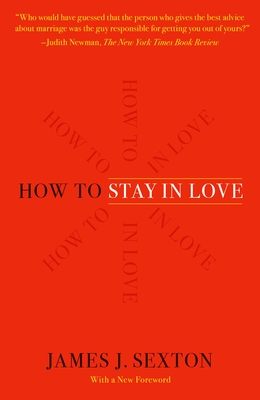
Resources
-
- Journal of Personality and Social Psychology: To Have and to Hold: Gratitude Promotes Relationship Maintenance in Intimate Bonds
- Emotion: Can I Tell You How I Feel? Perceived Partner Responsiveness Encourages Emotional Expression
- United States Census Bureau: Marriage and Divorce
- Journal of Marriage and The Family: The Timing of Divorce: Predicting When a Couple Will Divorce Over a 14-Year Period
- The University of Kansas: Conflict in relationships
- Journal of Marital and Family Therapy: How Does Being Phubbed Affect Commitment? Exploring the Roles of Emotional Loneliness and Relationship Satisfaction
- Evolutionary Psychological Science: Jealousy Levels in Response to Infidelity-Revealing Facebook Messages Depend on Sex, Type of Message and Message Composer: Support for the Evolutionary Psychological Perspective
- Internet Research: Jealousy due to social media? A systematic literature review and framework of social media-induced jealousy
- TIME: How to Make a Relationship Last: 5 Secrets Backed by Research
- American Psychological Association: Talking through practicalities of divorce later in life
- American Psychological Association: Healthy divorce: How to make your split as smooth as possible
- The Family Institute at Northwestern University: Co-Parenting after Divorce: Opportunities and challenges
- Psychology Today: Why Couples Struggle With Time-Outs From Conflict
- Current Issues in Personality Psychology: Mindfulness, relationship quality, and conflict resolution strategies used by partners in close relationships
2 Million Readers.
1 Life-Changing Newsletter
Simple and Straight-to-the-Point...
Just Like Mel.