Episode: 376
#1 Body Image Expert: How to Repair Your Relationship with Your Body & Food
with Dr. Rachel Goldman
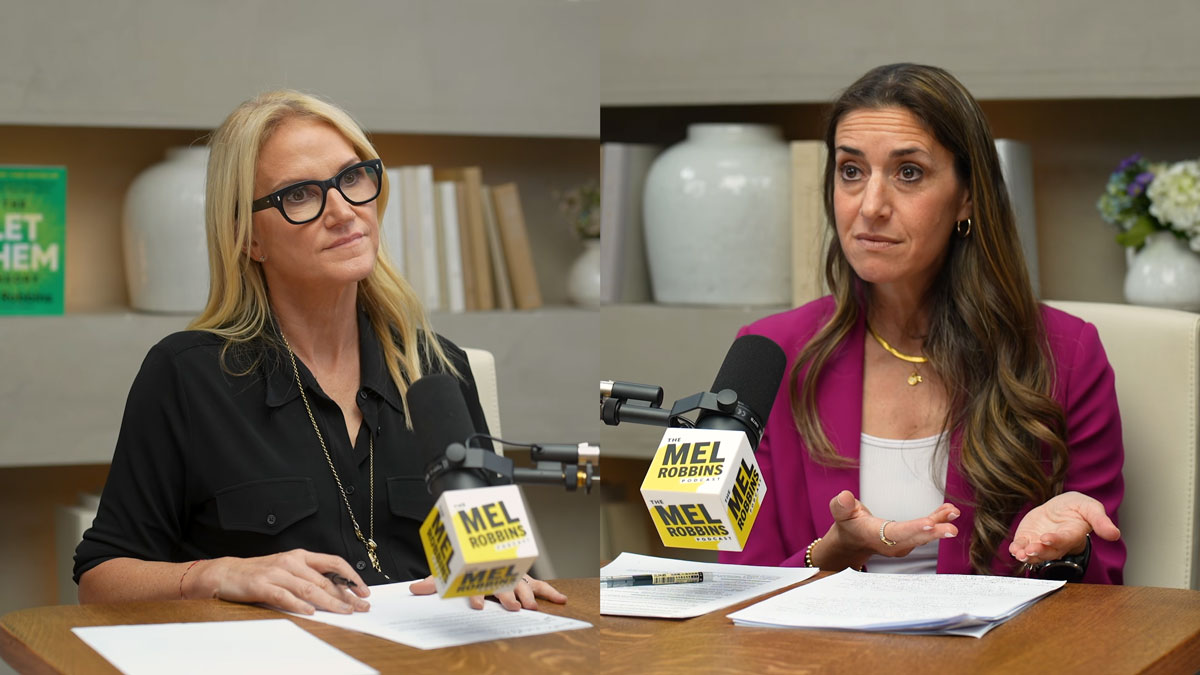
If you feel like you have a complicated relationship with your body, food, and eating (and who doesn’t?), this episode is your reset.
In this episode, Mel sits down with Dr. Rachel Goldman, a nationally recognized clinical psychologist and NYU professor who has spent more than a decade working with thousands of people struggling with emotional eating, obesity, disordered eating, and struggles with body image.
In this episode, you’ll learn how to:
- Stop emotional eating
- Break the binge–restrict cycle
- Interrupt stress-driven cravings
- Understand the biology behind urges and overeating
- Rebuild trust with your body
- Create sustainable, supportive habits without punishment or shame
This episode is for you or someone you love who needs to make peace with food, stop the self-criticism, and finally feel good again.
Listen on:




Physiological hunger builds slowly and gives your body time to signal what it needs. Emotional hunger is urgent and it’s usually a sign you’re trying to soothe an emotion, not satisfy true hunger.
Dr. Rachel Goldman
All Clips
Transcript
Dr. Rachel Goldman (00:00:00):
Thanks to diet culture and the society we live in, we have all been told messages telling us that we should be thin or we shouldn't be hungry or we shouldn't be eating this. And because of that, we have all internalized those messages and we have learned to tie our worth to our body, shape, size, food behaviors, eating behaviors, et cetera.
Mel Robbins (00:00:22):
Today, you and I are sitting down with Dr. Rachel Goldman, a renowned clinical psychologist and professor at NYU who's worked with thousands of patients dealing with emotional eating, stress, obesity, and body image. It feels like the core issue is that our emotions are really driving our eating patterns and our health habits.
Dr. Rachel Goldman (00:00:42):
Emotional eating, first of all, is so common. It is turning to food as a way to soothe yourself when you are having an emotion.
Mel Robbins (00:00:53):
Huh. I think a lot of us make the mistake of thinking it's about willpower.
Dr. Rachel Goldman (00:00:56):
It's not at all.
Mel Robbins (00:00:58):
What is this about?
Dr. Rachel Goldman (00:00:59):
It's about ...
Mel Robbins (00:01:01):
What is your take on how to be body positive and not shame yourself and use the tools like GLP-1 for weight loss?
Dr. Rachel Goldman (00:01:10):
This is a hot topic. So I think a lot of people think if you're body positive, you can't be doing something to quote change your body. It's scary when we feel like we lost control, but we can hit the reset button right here right now.
Mel Robbins (00:01:27):
Dr. Rachel Goldman, welcome to the Val Robbins Podcast.
Dr. Rachel Goldman (00:01:30):
Thank you so much. I'm so excited to be here with you today.
Mel Robbins (00:01:34):
I am so excited to unpack all that you are going to teach us today. And I want to start by asking you, how is my life going to change for the better? If I take everything to heart that you are about to share with us and teach us and all the very tactical things you're going to give us as resources and we use it in our life, how is my life going to change?
Dr. Rachel Goldman (00:01:57):
So actually, I want to give you kind of a glimpse of what that's going to feel like. Ooh. So let's just take a moment and take a breath right here, right now. Just pausing is what many of us need. We just have to pause and tune in. So I always like to start by just taking a breath to ground ourselves and reset.
Mel Robbins (00:02:17):
Okay.
Dr. Rachel Goldman (00:02:18):
So can we do that together?
Mel Robbins (00:02:19):
Absolutely. Because I have a feeling that this is going to come full circle by the end of this and it has a huge connection to our relationship to our bodies and eating and our health and resetting.
Dr. Rachel Goldman (00:02:30):
Absolutely correct.
Mel Robbins (00:02:31):
Okay. I'm in.
Dr. Rachel Goldman (00:02:32):
Okay. Let's do it.
Mel Robbins (00:02:33):
Okay. What do I do?
Dr. Rachel Goldman (00:02:34):
So let's take a breath in through our nose. Okay. And out through our mouth. Let's do another one. Breath in and out. Before I ask you how you feel, I want you now to repeat three things.
Mel Robbins (00:02:56):
Okay.
Dr. Rachel Goldman (00:02:57):
I am in control.
Mel Robbins (00:02:59):
I am in control.
Dr. Rachel Goldman (00:03:01):
I am confident.
Mel Robbins (00:03:02):
I am confident.
Dr. Rachel Goldman (00:03:03):
I can do this.
Mel Robbins (00:03:05):
I can do this.
Dr. Rachel Goldman (00:03:06):
And now how does that feel?
Mel Robbins (00:03:09):
I feel present in the moment. I felt my shoulders drop. I feel oddly calm.
Dr. Rachel Goldman (00:03:19):
Amazing.
Mel Robbins (00:03:21):
It feels really good and it feels so good, in fact. And I would imagine if you're driving your car or you're on a walk as you're with us right now and you did that. In fact, why don't you walk us through that one more time? Because if you just listened and you didn't do it, I want to make sure you do it. And don't just listen. This is a doing podcast. Okay. So walk us through it again.
Dr. Rachel Goldman (00:03:48):
So if you're driving, keep your feet where they are.
Mel Robbins (00:03:52):
Don't close your eyes.
Dr. Rachel Goldman (00:03:53):
Yes, exactly. And if you're walking, obviously also keep your feet where they are. But if you're seated, actually, let's put both feet flat on the floor.
Mel Robbins (00:03:59):
Okay.
Dr. Rachel Goldman (00:03:59):
Let's really get into this.
Mel Robbins (00:04:01):
Okay.
Dr. Rachel Goldman (00:04:02):
And now what we're going to do is we're going to take a breath in through our nose, but not yet. When we do it, I want you to imagine a balloon in your stomach expanding. This is called diaphragmatic breathing.
Mel Robbins (00:04:12):
Diaphragmatic breathing.
Dr. Rachel Goldman (00:04:13):
Okay, so cool. So it's belly breathing.
Mel Robbins (00:04:15):
Okay.
Dr. Rachel Goldman (00:04:15):
Yeah. So we're going to take a breath in through our nose.
Mel Robbins (00:04:17):
Okay.
Dr. Rachel Goldman (00:04:18):
As your belly expands and now breathe out through our mouth. As we're breathing out, like we're blowing out through a straw and your belly goes back in. We're going to do that again. Let's take a breath in and out. And now let's repeat again. I am confident.
Mel Robbins (00:04:43):
I am confident.
Dr. Rachel Goldman (00:04:44):
I am in control.
Mel Robbins (00:04:46):
I am in control.
Dr. Rachel Goldman (00:04:47):
I can do this.
Mel Robbins (00:04:48):
I can do this. Correct.
Dr. Rachel Goldman (00:04:50):
And the power of breathwork is that we can come back to it whenever we need to, whenever we want to. My hope is that you will come away from this episode with a toolbox full of tools that you are able to pull from whenever you need to, if that be related to your relationship with food, eating, your body, yourself, or others.
Mel Robbins (00:05:13):
Huh. I can't wait to hear how this is connected to the weird relationship so many of us have with eating and our bodies. Why, Dr. Goldman, do so many of us feel uncomfortable in our bodies?
Dr. Rachel Goldman (00:05:30):
Well, thanks to diet culture and the society we live in, we have all been told messages telling us that we should, should in quotes, should be thin or that we are striving for thinness or we shouldn't be hungry or we shouldn't be eating this or that. And because of that, we have all internalized those messages and we have learned to tie our worth to our body, shape, size, food, behaviors, eating behaviors, et cetera.
Mel Robbins (00:06:00):
Now, is this something that affects men and women like both?
Dr. Rachel Goldman (00:06:04):
Absolutely. It affects everybody, but men just don't talk about it as much. So I actually feel that a lot of men are struggling in silence when it comes to body image, eating behaviors, food related things.
Mel Robbins (00:06:18):
Does everybody have a weird relationship with their body and food and eating?
Dr. Rachel Goldman (00:06:23):
So I think it's complicated and I think everybody at some point in their life has a different relationship or a complicated relationship with their body eating and food. I think if we all think back to different times in our life, there was probably a time that we struggled with how we felt in our body or thinking about food in a different way.
Mel Robbins (00:06:45):
Well, let's talk about the mind-body connection. Why is it so important to understand the mind-body connection when it comes to weight gain, when it comes to eating habits, and when it comes to your overall health?
Dr. Rachel Goldman (00:06:56):
So it's all related.
Mel Robbins (00:06:57):
It is?
Dr. Rachel Goldman (00:06:58):
Absolutely.
Mel Robbins (00:06:58):
I thought it was just you're hungry or you stress eat or it's all related?
Dr. Rachel Goldman (00:07:03):
Everything is related. So if we think about it like our sleep, if you slept well last night, you are probably listening right now with a completely different mindset than if you didn't sleep well.
Mel Robbins (00:07:15):
That's true.
Dr. Rachel Goldman (00:07:15):
Yeah. And if you slept well, you may have chosen to eat something more nourishing in the morning as opposed to maybe grabbing the quick thing or even skipping breakfast. So sleeping, eating, mood, stress or stress management, movement, it is all related.
Mel Robbins (00:07:37):
Sleeping, eating, mood, stress, management, and movement. Those five things are all related.
Dr. Rachel Goldman (00:07:42):
All related.
Mel Robbins (00:07:43):
Well, it makes a lot of sense because I think about when you said if you get a bad night's sleep and-
Dr. Rachel Goldman (00:07:47):
Changes everything.
Mel Robbins (00:07:48):
... it changes everything.
Dr. Rachel Goldman (00:07:49):
And now imagine waking up with the thought, "Oh my God, I didn't sleep well. What am I going to do? How am I going to get through the day I can't do it?"
Mel Robbins (00:07:56):
Yes.
Dr. Rachel Goldman (00:07:56):
So now we're going to put the mindset into it. So now you woke up with a thought. That thought is going to impact how you feel. That emotion then impacts what you do. So you wake up, "Oh my God, what am I going to do? I can't do this. " I might be like, "Oh, I don't feel good. I'm going to lay back in bed and I'm not going to get up today." And it now becomes this cycle of our thoughts, emotions, and behaviors are all linked.
Mel Robbins (00:08:21):
Thoughts, emotion, and behaviors are all linked. All linked.
Mel Robbins (00:08:25):
And that brings me to this topic that I cannot wait to talk to you about, which is emotional eating.
Dr. Rachel Goldman (00:08:31):
Yeah.
Mel Robbins (00:08:31):
Because it seems like that's what a lot of us are struggling with. It feels like the core issue is that our emotions are really driving our eating patterns and our health habits.
Dr. Rachel Goldman (00:08:42):
Right. Our emotions drive a lot.
Mel Robbins (00:08:44):
So can you unpack that connection for us?
Dr. Rachel Goldman (00:08:46):
Yeah. So first I want to actually tie it back to the beginning for a moment about that breath because really with that breath was taking a pause. That pause is going to allow us to respond and not react out of emotion. Just pausing is allowing us to respond. So when people participate in emotional eating, which I also want to clarify, emotional eating, first of all, is so common.
Mel Robbins (00:09:11):
What is it?
Dr. Rachel Goldman (00:09:12):
So it is simply eating out of any emotion, not just sadness, not just feeling down. It could be anything. It could be boredom. It could be happy. It could be sad, stressed, any emotion, anger. It is turning to food as a way to soothe yourself when you are having an emotion. So there's a difference between physiological hunger and emotional eating.
Mel Robbins (00:09:39):
So as a psychologist, what is the difference between hunger versus emotional eating?
Dr. Rachel Goldman (00:09:47):
Yeah. So hunger is something we all have. We all need to eat to survive. The physiological hunger is it is time to eat. I need to nourish my body. I can't survive without food. Emotional eating is I'm feeling something. I become impulsive. I grab food and I eat it. It's serving a purpose. So food, like anything in life, serves a purpose. When we're hungry, it's serving the purpose of physiologically feeding us. Okay. When we're emotional, it's emotionally feeding us. It's filling something. In the moment, it feels good.
Mel Robbins (00:10:23):
Yes.
Dr. Rachel Goldman (00:10:23):
In a way, it's a distraction, but not a solution.
Mel Robbins (00:10:26):
Can you give me some examples and give some examples for the person who's with us right now of what that means in terms of what are the sorts of emotional needs you're filling with food?
Dr. Rachel Goldman (00:10:40):
Yeah.
Mel Robbins (00:10:40):
When I grab the potato chips while I'm watching television, when I'm mindlessly shoving the M&Ms in my mouth, what's happening here?
Dr. Rachel Goldman (00:10:49):
Yeah. So a few different things.
Mel Robbins (00:10:51):
Okay.
Dr. Rachel Goldman (00:10:51):
For one, it could be, and again, very common. It could be you're watching TV and you're eating potato chips mindlessly. It could be just an association that now became a habit. Lots of people sit on the couch, especially in the evenings watching TV, watching a movie, and they're used to. Their brain is now used to the automatic of, "I'm going to eat. I'm going to do something with my hands." Yes. But the first time that happened, it was not automatic. There was a reason that you turned to those potato chips.
Mel Robbins (00:11:21):
Oh, got it. So what you're basically saying is for me, it's popcorn. There's a particular popcorn I really like that's made locally by me. And when I am about to watch TV, I now have a habit of going to the snack drawer, pulling it open, grabbing the bag. They're in these small little bags, so I feel like I can just tunnel right through it.
Dr. Rachel Goldman (00:11:41):
You feel more in control.
Mel Robbins (00:11:42):
Yes. I then go to the couch and I sit down. And you're right, it's become a habit. I don't really feel anything, but I would imagine I probably did it the first time I was home alone.
Dr. Rachel Goldman (00:11:53):
Yes.
Mel Robbins (00:11:54):
Oh, you're nodding like, "Of course you did Mel."
Dr. Rachel Goldman (00:11:56):
Yeah, I've heard this. Yeah, it's so common. Yeah. You are probably either home alone, feeling lonely or you had a really tough day. And I hear this often from moms also like, the kids are asleep. I'm finally able to have a moment to myself and that moment becomes enjoying some kind of food, but we're not really enjoying it. We're mindlessly eating it. I joke sometimes I could give you cardboard. Halfway through eating it, I could swap it out and you probably wouldn't know. But the first time it started, it was for a reason, it served a purpose. And now what purpose is it serving? That's the question. Is it bringing joy? Great. If it's bringing joy and you feel good and you feel in control, we don't have to change it. But if it's causing distress, if you're feeling bad about it, if you feel guilt or shame, that's a problem. And again, that comes back to the thoughts. So what I often say is it's not the behavior itself that matters, it's the thought that follows the behavior.
Mel Robbins (00:12:57):
So give me an example.
Dr. Rachel Goldman (00:12:58):
Yeah. So you eat your popcorn.
Mel Robbins (00:13:00):
Yes.
Dr. Rachel Goldman (00:13:00):
Great. You're going to go into it like, "I got my popcorn. I'm going to sit down. I'm going to enjoy it. I'm going to feel good." The thought following eating, it's probably like, "Wow, that was really good." Or you don't even think about it. It happened, you're done.
Mel Robbins (00:13:12):
Well, if I'm being honest, because I'm now really clinging on every word, I love the taste of this. It's like super, super salty and amazing and local.
Dr. Rachel Goldman (00:13:22):
I might have to get some later.
Mel Robbins (00:13:23):
But I don't need to eat the whole bag. And I could easily treat myself to a handful and then be done. And the thought that always happens for me as there's about 11 kernels left in the bottom of the clear plastic bag is, why did I eat that whole thing? I wasn't even hungry. Why did I eat the whole thing?
Dr. Rachel Goldman (00:13:51):
Right. And then what do you do with that thought usually? What happens to that?
Mel Robbins (00:13:55):
The next thing is, well, I'm a problem solver. So the next thing is, well, I'm not going to do this tomorrow night. I'm going to be good tomorrow. I got to be good tomorrow.
Dr. Rachel Goldman (00:14:02):
Right.
Mel Robbins (00:14:03):
Yes.
Dr. Rachel Goldman (00:14:04):
So the thought that followed the behavior.
Mel Robbins (00:14:06):
Yes.
Dr. Rachel Goldman (00:14:06):
So it's not about the popcorn. The popcorn did nothing wrong. It's not about the popcorn. The thought that followed you eating the popcorn is where we can tell if this is problematic or not.
Mel Robbins (00:14:18):
So if you're beating yourself up or judging yourself-
Dr. Rachel Goldman (00:14:21):
That it's not worth it. Why eat the popcorn then? Or eat less of the popcorn.
Mel Robbins (00:14:25):
So what do you hear from people in your practice? What are some common things that people say to themselves so that the person who's with us can really start to realize how subtle but destructive this is?
Dr. Rachel Goldman (00:14:38):
Yeah. So very similar to what you said. It's kind of like, why did I eat the whole thing? What's wrong with me? I felt so out of control. I'm not going to do this again tomorrow. Beating themselves up, feeling guilty, feeling shame, or like, I'm never going to be able to do this. I failed. I'm never going to lose weight if that's their goal. What's wrong with me? So first of all, nothing's wrong with you. This is so common, nothing is wrong with you. And the first step is awareness. So identifying that like, wow, this doesn't feel good. I actually beat myself up over it and then it impacts what I eat the next day. And then it becomes that vicious cycle again. And then maybe you restrict, then maybe you overeat, then maybe you skip a meal, then maybe you binge. It keeps going until we can find, let's pause.
(00:15:28):
What's really happening right now?
Mel Robbins (00:15:30):
What do you think the biggest misconception people have about emotional eating? What is it?
Dr. Rachel Goldman (00:15:36):
I think one is that something's wrong with you if you participate in it, which again, so many people. I would be shocked if there was somebody listening that was like, "I don't know anything she's talking about. I've never done that. I've done it. We've all done it. " So I think that's probably the number one is that something is wrong with you if you do this. Nothing is wrong with you. It's about identifying that if this is a problem to you, if it doesn't feel good, what's going on? Why did I turn to this food at this time? So something I often tell people is if you find yourself in the kitchen, opening and closing cabinets or opening and closing the refrigerator.
Mel Robbins (00:16:18):
You mean like every night after dinner?
Dr. Rachel Goldman (00:16:20):
Yes. Well, it's telling us we're searching for something specific.
(00:16:25):
So what I would tell people to do is pause and say, "What's going on right now?" And then I would ask, "Did I just eat? When is the last time I ate? What did I eat?" Sometimes you may have just had dinner, but it wasn't satisfying enough because you were restricting. So maybe you didn't add enough substance to your food to feel not just physiologically full, but emotionally satisfied. And then you can also ask if you're like, "No, I just ate. It was satisfying this and that. Okay, what's going on? Oh, did I? Oh, I had a really tough day at work. Oh, I'm feeling stressed. Oh, I had this stressful phone call. I'm sad. I'm lonely." And then to kind of dig deeper and be curious about yourself and what you're feeling right now.
Mel Robbins (00:17:12):
I want to make sure that you heard those three questions. So let me just repeat them back to you. Yeah. So you're in the kitchen, you're opening up the drawers, you're looking for something, you hit the pause.
Dr. Rachel Goldman (00:17:25):
Which is hard.
Mel Robbins (00:17:26):
Which is hard.
Dr. Rachel Goldman (00:17:27):
Yes.
Mel Robbins (00:17:27):
But this is what you're teaching us. The first thing you ask yourself is, "When's the last time I ate?"
Dr. Rachel Goldman (00:17:33):
Right.
Mel Robbins (00:17:33):
And then you ask yourself, "Was it satisfying?" And then the third thing that you ask yourself is, "What's going on right now?"
Dr. Rachel Goldman (00:17:42):
Exactly.
Mel Robbins (00:17:42):
"And what am I actually looking for? "
Dr. Rachel Goldman (00:17:44):
Right.
Mel Robbins (00:17:45):
And that makes you go a little deeper because what is going on and what you're looking for is likely not in the fridge or the cabinets or the freezer.
Dr. Rachel Goldman (00:17:53):
Exactly. And if you're physiologically hungry, you wouldn't be opening and closing. You would open the refrigerator, see the bowl of fruit, you eat the fruit.
Mel Robbins (00:18:04):
I'm sorry to interrupt you, but I'm starting to get this.
Dr. Rachel Goldman (00:18:07):
Yeah.
Mel Robbins (00:18:07):
When you are truly hungry, meaning physiologically you need fuel.
Dr. Rachel Goldman (00:18:13):
You're going to eat whatever's there.
Mel Robbins (00:18:14):
You're right. I like open, grab in mouth.
Dr. Rachel Goldman (00:18:18):
Yeah. You're running out the door, but I know I need food. I'm just going to grab what I see and I'm going to go. You don't think too much about it. Yeah. So that's a big way to differentiate it. So also physiological hunger comes on more gradually like, "Oh, it's almost lunchtime. Oh, I can wait 10 more minutes to eat." Emotional hunger is like, "I am hungry and I need something right now to satisfy me. "
Mel Robbins (00:18:42):
But I may take it for actual hunger.
Dr. Rachel Goldman (00:18:44):
Exactly.
Mel Robbins (00:18:45):
Okay. So one of the big differences that you see as a psychologist between physical hunger and emotional hunger is that physical hunger comes on more gradually, whereas emotional is like, "I need it now."
Dr. Rachel Goldman (00:18:58):
Right now. I just had a really stressful call and oh my God, I'm craving something and it's usually high fat, sweets, comfort foods again, as opposed to, "Oh, lunch is soon. No big deal. I can wait 15 minutes."
Mel Robbins (00:19:13):
It's so
Dr. Rachel Goldman (00:19:13):
True. Big difference.
Mel Robbins (00:19:15):
It's so true.
Dr. Rachel Goldman (00:19:16):
Yeah.
Mel Robbins (00:19:18):
How does stress affect how, when, and what you eat?
Dr. Rachel Goldman (00:19:23):
Yeah. So back to the mind, body connection. Stress, if we think about stress, it's our body's natural way of responding to some kind of threat or something that seems threatening to us.
(00:19:36):
So now stress though, I'm sure people have heard of the fight or flight response. That is the way that our body, what our body does in response to stress. So we can all relate to it, maybe sweaty palms, maybe our mind racing, our heart beating really fast. Again, mind, body connection. I think something is stressful. I'm interpreting it as stressful. My body is going to automatically go into this auto drive and help me get through this really stressful time. Now, when that happens, the stress hormone cortisol, among other ones, is released. When we're really stressed in the moment, a lot of times our appetite is suppressed. For some people, it's the complete opposite. But right when it happens, the appetite's depressed and we're like, "Oh, I can get through the day. I don't need to eat. I'm forgetting to eat because I'm so busy. I'm stressed." But then when it kind of dies off and it starts like us returning to a homeostasis back to our baseline, it could be like, "Oh my God, I'm so hungry." So that's why when people go through really stressful times, you hear people either say like, "Oh my God, I ate so much.
(00:20:43):
I can't stop eating emotional eating." Or like, "Oh my God, I forgot to eat. I forgot to eat."
Mel Robbins (00:20:48):
That makes a lot of sense.
Dr. Rachel Goldman (00:20:50):
It can go either way.
Mel Robbins (00:20:51):
So what are three ways to address emotions and stress when your default mode is to start emotionally eating?
Dr. Rachel Goldman (00:20:59):
So back to the pause.
Mel Robbins (00:21:01):
Okay.
Dr. Rachel Goldman (00:21:02):
So because of this conversation, hopefully people are a little bit more aware and then we can say pause and let's check in with ourself. What is going on right now? Let's also not forget to be kind to ourselves. We all participate in this. We all get stress. Life happens. So let's just remind ourselves that this is okay. And then what can I do about it? And I always love talking about what I call your coping toolbox.
Mel Robbins (00:21:31):
Great.
Dr. Rachel Goldman (00:21:31):
Let's pull from that coping toolbox.
Mel Robbins (00:21:33):
Give me a tool.
Dr. Rachel Goldman (00:21:34):
Yes. One is something internal you don't need anybody else for, you don't need anything else for. That's like the breathing exercise. Could also be a different type of relaxation exercise like imagery or meditation, things like that, than at least two others. And the reason I want more than one is because if my go- to coping tool was to go on a run, for instance, I can't just leave right here and go running in the middle of a stressful moment. So we need to have a few options because not only is not all of the coping tools always readily available to us, but they may also not work for every stressful situation.
Mel Robbins (00:22:11):
Okay. So the first tool is we have the breathing exercise in through the nose, blow out through the straw, the belly breathing. We got that.
Dr. Rachel Goldman (00:22:19):
Yes.
Mel Robbins (00:22:19):
Do three of those.
Dr. Rachel Goldman (00:22:20):
Yes.
Mel Robbins (00:22:20):
Okay. What's the next one?
Dr. Rachel Goldman (00:22:22):
So I don't like to tell you what should be in your toolbox because if you're not a runner, that's not going to be helpful to you.
Mel Robbins (00:22:29):
Oh, I'm definitely not going for a run. There's no question. No, no, definitely not.
Dr. Rachel Goldman (00:22:33):
So it's not going to be helpful for me to tell you to put running in your toolbox.
Mel Robbins (00:22:36):
That's true.
Dr. Rachel Goldman (00:22:37):
So we have to take a moment and think, okay, when I am stressed, what do I see myself actually doing?
Mel Robbins (00:22:44):
Taking a walk. A 10-minute walk.
Dr. Rachel Goldman (00:22:46):
Yes.
Mel Robbins (00:22:46):
Great reset for me.
Dr. Rachel Goldman (00:22:47):
And I love that you said that because my running/my walking is that. It's getting outside, getting fresh air, moving my body. What's another one we could add in your toolbox?
Mel Robbins (00:22:57):
So I don't emotionally eat?
Dr. Rachel Goldman (00:22:59):
Yeah.
Mel Robbins (00:23:00):
I put a lock on the fridge. I don't know. What do I do?
Dr. Rachel Goldman (00:23:02):
Okay. So the key is escape. Get out of the kitchen.
Mel Robbins (00:23:07):
Got it.
Dr. Rachel Goldman (00:23:08):
So maybe get into a book. What is a good distraction that's not eating unless you're physiologically hungry that's going to get you out of the kitchen for a few minutes? Because usually it's about 10 minutes. Do something else for 10 minutes. And what I tell people is if you really are still thinking about the food, go for it. There's nothing wrong with eating the popcorn or the ice cream or the chocolate, but it's how you eat it. Taking the paws and mindfully eating your popcorn and enjoying it is very different than I'm stressed and I'm just going to eat and watch TV. It's so different. It's about how you eat it. And if you take the 10-minute walk, come back and you're like, I really want my popcorn, you're probably going to eat the popcorn slower.
Mel Robbins (00:23:54):
I might pour it into a cup.
Dr. Rachel Goldman (00:23:55):
Exactly. That's even better.
Mel Robbins (00:23:56):
Instead of just sticking my hands in the bag.
Dr. Rachel Goldman (00:23:59):
Right. You're going to enjoy it and you're probably not, I can't guarantee, but you're probably not going to beat yourself up over it afterwards because it wasn't an automatic impulsive act. You broke the automatic right there.
Mel Robbins (00:24:11):
So this is like a 10-minute rule for emotional eating. If you can give yourself a 10-minute buffer,
Dr. Rachel Goldman (00:24:15):
It could be less.
Mel Robbins (00:24:17):
Maybe less for people that are a little stronger than Mel Robbins. It could be less. But I can see how this would work though. Yeah. Because some of the things that you've already taught us is that emotional eating, you're reacting, you need it now. It's often mindless. And then there's the cycle where you beat yourself up. But if I can either take a couple deep breaths or go out for a walk or walk away and come back in 10 minutes, now I'm responding intentionally.
Dr. Rachel Goldman (00:24:43):
Right.
Mel Robbins (00:24:44):
Instead-
Dr. Rachel Goldman (00:24:44):
You're telling yourself, "I want this and that's okay."
Mel Robbins (00:24:48):
Yes.
Dr. Rachel Goldman (00:24:49):
I do it all the time. All my clients know, I have ice cream almost every night.
Mel Robbins (00:24:53):
You do?
Dr. Rachel Goldman (00:24:53):
I do.
Mel Robbins (00:24:53):
Wow.
Dr. Rachel Goldman (00:24:54):
Almost every night.
Mel Robbins (00:24:55):
Okay. What flavor?
Dr. Rachel Goldman (00:24:56):
I love it. Depends on what we have in the house that night, but I love it. And I know that I'm going to eat it and I'm going to enjoy it and it's amazing. And I don't care. The thought doesn't come up that I'm beating myself up over it.
Mel Robbins (00:25:09):
Because you're choosing to do it. Exactly.
Dr. Rachel Goldman (00:25:11):
Because you like it
Mel Robbins (00:25:12):
Versus mindlessly standing there because you had a terrible day at work.
Dr. Rachel Goldman (00:25:15):
Yes. I also wait to have it until the kids are asleep. I can enjoy it without chaos because again, it could be the TV, it could be something. We're like, oh my God, did I even eat that? I didn't enjoy it. Let me go get more. But if we can sit down and enjoy it and eat it slowly, it's like giving your body what it needs at that time and that's okay.
Mel Robbins (00:25:37):
So emotional eating when you struggle with it. I think a lot of us make the mistake of thinking it's about willpower.
Dr. Rachel Goldman (00:25:44):
It's not at all.
Mel Robbins (00:25:45):
What it is about?
Dr. Rachel Goldman (00:25:47):
It's about tuning inward and actually taking that pause. And emotional eating is, I like to actually relate it to children.
Mel Robbins (00:25:57):
How so?
Dr. Rachel Goldman (00:25:57):
When a child has a tantrum, that's their impulsive reaction. Yep. I mean, most of us might say we need a timeout for a kid. What's a timeout really do? It's the pause. That's all it is. So we need an adult timeout. Kids are reacting out of their emotion. We are also reacting out of our emotion, but just in different ways.
Mel Robbins (00:26:21):
Hey, it's Mel. I hope you've been enjoying this unbelievable episode with Dr. Rachel Goldman. I know I know I'm a different outfit. Well, it's because upon reviewing this episode, I was like, I want to record a message from me to you because I know what Dr. Goldman and I are about to get into next. We're about to dive into a part of the episode that covers disordered eating, body dysmorphia, and other sensitive topics. You know you. If now isn't the time to listen to this or to watch this, hit pause. Come back to it whenever you're ready, Dr. Goldman and I will be waiting for you because there's zero pressure. I'm sure you're already putting so much pressure on yourself, so I want to take the pressure off. But here's one more thing I want to tell you. If there's someone in your life that's struggling, you can still share this with them because sometimes it's hard to help the people that you deeply care about.
(00:27:15):
Maybe you've been trying to reach them and you haven't been able to. Dr. Goldman might just be the exact right person who can. And whenever you're ready to listen or watch, we'll be waiting for you. Okay. Thanks for listening. Now let's get back into it.
Mel Robbins (00:27:31):
I want to pivot a little bit and now go a layer deeper, and let's talk about disordered eating. As a psychologist, how would you describe what is disordered eating and how is it different than just emotional eating?
Dr. Rachel Goldman (00:27:46):
Yeah. So there's disordered eating, disordered eating behaviors, disordered eating thoughts, and then there's eating disorders.
Mel Robbins (00:27:53):
What's the difference?
Dr. Rachel Goldman (00:27:54):
Two different categories. Yeah. So eating disorders are things like anorexia, bulimia, binge-eating disorder, which are disorders in the DSM, which is the diagnostic statistical manual, which is, we joke, it's our Bible in psychology. So they have a specific set of criteria that you have to meet in order to be diagnosed with this disorder. Disordered eating I think is much more common. And I think most people struggle with some sort of disordered eating, disordered eating thoughts, disordered eating behaviors, or their relationship with food. That could be things like emotional eating. It's not in the DSM as a full diagnosed eating disorder. It could also be grazing. So grazing behaviors is just picking on food all day. It's different than three meals and two little snacks.That's very different. That's planned. Grazing is like, I'm going to get up and have a little bit of this. A few minutes later, I get up a little bit of that.
(00:28:53):
That's a little disordered. It's not the way that we quote should be eating regularly throughout the day. Also, restrictive eating, not necessarily meeting criteria for anorexia, let's say, could be disordered. If somebody skips meals often, then that can become problematic because it might lead to overeating or binge eating later.
Mel Robbins (00:29:18):
Gotcha. Okay.
Dr. Rachel Goldman (00:29:19):
There's a lot of disordered eating around food, thoughts, behaviors that, again, I think is much more common than we think.
Mel Robbins (00:29:28):
What are some examples of disordered thoughts about eating?
Dr. Rachel Goldman (00:29:33):
So one of them would be labeling foods good and bad. I actually really like to help people get away from that. Food is food. Yes, some have more nutrients than others. Some are going to satisfy us differently than others, but there is nothing wrong with this food versus this food. All or nothing thinking related to food, I tend to say is that's kind of a dieter's mentality. It's like, I eat a cookie, I might as we eat the whole box. I'm bad now because I eat the cookie. You're not bad because you eat the cookie. You want to the cookie, you eat the cookie. So we have to actually get away from that all or nothing thinking and introduce more of a flexible thinking or flexible mindset.
Mel Robbins (00:30:14):
I would love to take some of the big ones that you mentioned and go line by line. And i'm interested in this because I definitely see this as a pattern in myself in terms of the emotional eating. Both of our daughters have struggled with this and are very open about it. And I think this is incredibly common. So let's start with restricting. What are the three biggest warning signs that you're crossing a line that you think it's important that we're aware of?
Dr. Rachel Goldman (00:30:48):
So the first one I would say is preoccupation with eating food, body, shape or size.
Mel Robbins (00:30:55):
What do you mean?
Dr. Rachel Goldman (00:30:55):
Being consumed too much in terms of your thoughts and your feelings related to food, body, shape, or size. Preoccupation with that. It is consuming your dye. So you wake up and it's the first thing you think about. You're looking in the mirror a lot, things like that. Very much consuming your brain and your diet. It's taking over your dye is the first thing I would be like, wait a minute, what's going on here?
Mel Robbins (00:31:21):
And so if you're somebody who all day long, you pass the mirror and you're like, I hate how I look. I'm fat. This, you're noticing how your pants are tight. You're this. You see how everybody else is smaller than you and that's what you're talking about?
Dr. Rachel Goldman (00:31:34):
Yes, exactly.
Mel Robbins (00:31:34):
Okay. So that's warning sign number one.
Dr. Rachel Goldman (00:31:38):
Rigid rules around food. I can only eat at this time. I often hear this like, well, it's not 10 o'clock in the morning. I can't eat until 10 o'clock. Or I have to eat this way or I can only eat organic or gluten-free, things like that. Very rigid rules. Again, getting away from that other nothing thinking, we're now thinking more all or nothing. I have to eat this way. I can't go out to eat. Things like that. Which brings me to the third one is it starts impacting your daily functioning. It's causing you distress and maybe you're now isolating. Maybe you're late to work because of it. Maybe you're skipping meetings that have food involved, things like that. I would say those are the three things I would first be on the lookout for. And if anybody listening is struggling with any of that, I think just let this be a sign that there's nothing wrong with you, but maybe it's time to seek professional help or speak to somebody.
Mel Robbins (00:32:34):
Aren't a lot of people scared to seek help because you don't want to gain weight or you feel like you can't get control of this and there's a lot of shame in it.
Dr. Rachel Goldman (00:32:43):
And I'm saying this from hearing the thousands of clients that I've worked with, that people are afraid to seek help because they are afraid of gaining weight. And what does that mean? And what people often miss is that eating regularly throughout the day doesn't mean you're going to gain weight. You might gain energy, you might gain nourishment, you might gain clarity. And it comes down to trust though and trusting that your body knows what it needs and to give back that trust. Because I think the diet world, diets, have told us not to trust our bodies, have told us that you can't eat at this time or you can't eat this. And a lot of people have now lost trust in their own bodies. And we have to take that step back and be kind to ourselves and be like, "Okay, maybe this is what I need." Our bodies are always communicating to us.
(00:33:39):
Again, back to the mind, body connection. Our bodies are always sending us signals, but we live in a go, go, go world that we just ignore them or we miss them.
Mel Robbins (00:33:50):
So for somebody that's struggling to lose weight, I think the knee-jerk assumption is, "Okay, I got to get a trainer. I got to get a nutritionist." As a psychologist, what's the piece that's missing that you may not have considered in terms of resetting your health and feeling more in control?
Dr. Rachel Goldman (00:34:10):
So getting a trainer or a nutritionist are great. And I think a big part of it is people just assume they have to eat less, and that's not the answer. No. Oftentimes eating less restricting, for instance, then leads to overeating later.
Mel Robbins (00:34:28):
Oh.
Dr. Rachel Goldman (00:34:30):
And when you end up eating under what your body needs, it ends up holding onto its fat cells. It's like in survival mode back to now, it's all related back to the stress response. Your body is going to hold on to whatever it has because you're starving it. So it's not going to lose weight. It's actually in survival mode.
Mel Robbins (00:34:49):
So are you saying as a psychologist that you've had patients come in who are struggling with losing weight and they're overweight and they're very unhappy and that the stress and the restricting of calories is actually keeping them overweight?
Dr. Rachel Goldman (00:35:07):
It could be.
Mel Robbins (00:35:08):
Okay.
Dr. Rachel Goldman (00:35:08):
I mean there's the biology. It's part of the- Yes, part of the biology. Wow. Absolutely. Oftentimes people say, "I don't understand why I can't lose weight. I don't eat or I don't eat it. I barely eat." But that's actually the problem or part of the problem.
Mel Robbins (00:35:23):
And why is that part of the problem?
Dr. Rachel Goldman (00:35:25):
Because if you're not eating, it could be leading to later you're so hungry that you eat the first thing you see, kind of emotional eating impulsive reactive or you overeat and then the stress response and the cortisol is then keeping you in this survival mode because I have to survive.
Mel Robbins (00:35:46):
What do you do when you are concerned about somebody in your life because you are seeing the restrictive behavior or you are seeing the thoughts that are disordered and very judgmental? What do you do if this is somebody you deeply care about?
Dr. Rachel Goldman (00:36:02):
Yeah. So I think it depends on the relationship you have with them, but the first thing you could do is talk to them about it, but not about it.
Mel Robbins (00:36:13):
How do you do that?
Dr. Rachel Goldman (00:36:14):
Ask, how have you been lately? I've noticed maybe they have lower energy or maybe they're missing meetings or missing appointments or canceling on you. Find something like that and use I statements though. I'm concerned about you. I noticed. So taking that judgment away, taking the assumptions away. I noticed you've been missing meetings or you've been canceling on our dinner parties, whatever it is. I'm concerned. Is everything okay? Open-ended questions and I statements. Okay. But if you're going to ask a question, be prepared to listen. Most people listen, but don't really hear. So really genuinely listen to what they have to say and be open-minded.
Mel Robbins (00:37:00):
What if you get just like nothing?
Dr. Rachel Goldman (00:37:03):
So you could then let it go for now and you could try again at another time, but it also depends on the circumstance. So you don't want to bring up a sensitive topic like this when you're in a crowded place, when you are the other person or already emotional. You want a neutral place. Ideally, I would actually say it on a walk. As you're moving your bodies, it's easier to come up and share emotional things, but you could, again, just kind of check in on somebody. And if you needed to, you could be, I've noticed whenever we go out, you're just picking on your food. Is everything okay? You don't want to assume. There could be a medical situation going on also. We don't want to assume that what's going on is an eating disorder necessarily.
Mel Robbins (00:37:49):
As a psychologist, what do you believe the line is between being health conscious, whether it's like counting macros, exercising, avoiding processed food,ada, da, da, da, all that stuff versus slipping into disordered behavior. What's the line there?
Dr. Rachel Goldman (00:38:06):
So there's actually a term, orthorexia. O-R-T-H-O-R-E-X-I-A.
Mel Robbins (00:38:13):
Okay.
Dr. Rachel Goldman (00:38:13):
Orthorexia.
Mel Robbins (00:38:14):
Okay.
Dr. Rachel Goldman (00:38:15):
It was actually first introduced in 1996. We've only started hearing about it in media in the past 10-ish, 15 years, and I think it has almost skyrocketed because of the things we're talking about. So what orthorexia is when something healthy becomes an obsession, but related to food and eating in body shape size. So with all the gluten sensitivities and the allergies or somebody wanting to go organic sounds like, oh, that could be healthy for you. Sure.
Mel Robbins (00:38:50):
Yes.
Dr. Rachel Goldman (00:38:50):
You want to be a little more health conscious? Sure, go for it.
Mel Robbins (00:38:54):
Right.
Dr. Rachel Goldman (00:38:54):
But now it becomes an obsession and now it becomes this rigid thinking and rigid lifestyle. And I think the reason that we're seeing more of this is because of social media. I said that before. I will say it again. The comparison, the what I ate in a day, like, really, did you really just only eat that today? All of that. Or somebody decided to go gluten-free and now you're looking at their body and you're looking at their skin and they're like, "Well, it must work. It worked for them. It must work for me. I'll do it. " But nobody should be going gluten-free unless they have a legit gluten sensitivity and spoke to a doctor about it. Why? Well, we all need the same reason we shouldn't be cutting carbs completely. We all need all of these nutrients and all of these food categories in order to have a balanced diet.
(00:39:45):
Can you limit a little? Can you minimize a little? Sure. We all can. Should we have more protein than carbs? Of course we should. But in completely eliminating any one food group, I think is a sign that you have two rigid thinking related to your food.
Mel Robbins (00:40:02):
Unless you've had a doctor say that there's a sensitivity.
Dr. Rachel Goldman (00:40:05):
Exactly.
Mel Robbins (00:40:05):
So for you as a psychologist, when you talk about orthorexia and how this disordered eating has skyrocketed in the last decade, what is the line between very positive healthy changes, being conscientious, planning, really being careful about what you eat, but still allowing yourself to enjoy yourself versus it slipping into something like orthorexia?
Dr. Rachel Goldman (00:40:37):
Well, you just described it. Being able to enjoy yourself, it's about the mindset. Am I nourishing my body and finding joy and it feels good? Or am I rigid and restricting because I feel like I have to? I can't eat this is very different than, "I don't want to eat this because I'm choosing to not have a glass of wine with dinner because I really want the dessert later."That's a healthy balance, let's say. Versus I can't have this because I ate it yesterday or I can't have this because I'm going to feel like I'm gaining weight or I feel a certain way afterwards. Again, the thought that follows the behavior, but what's the purpose? Am I eating because we're at lunch and we're enjoying food or am I not eating because I'm restricting and have rigid thinking about food?
Mel Robbins (00:41:27):
Got it. Got it. So it does come back to the thing you've said at the very beginning, the thought, the emotion, the behavior.
Dr. Rachel Goldman (00:41:34):
Absolutely.
Mel Robbins (00:41:35):
Because one of the things that I care deeply about is that people do feel better in their lives, that they do prioritize their health. And there's a lot of incredible content out there. I particularly love the stuff that is now educating women around resistance draining and eating breakfast and getting protein. And for so long, the message was the opposite that you're going to get big if you go to the gym. You're going to get big if you eat three solid meals a day. And what I'm also recognizing as we're talking is all of those harmful messages around restricting create real hunger and it screws up your body in terms of your metabolism and your body's designed to be fueled consistently and in a certain way. That's how it works.
Dr. Rachel Goldman (00:42:25):
Exactly.
Mel Robbins (00:42:26):
And when you stop putting fuel in the tank, the car doesn't drive the way it's supposed to. And then when you overfill it, so it makes a lot of sense, but I think so many of us have been conditioned by the media, by examples around us, by culture that we're supposed to look a certain way. And when we don't, we torture ourselves.
Dr. Rachel Goldman (00:42:50):
Right. Something's wrong with you.
Mel Robbins (00:42:52):
Yes.
Dr. Rachel Goldman (00:42:52):
Or you don't have willpower.
Mel Robbins (00:42:54):
Yes.
Dr. Rachel Goldman (00:42:55):
Oh my gosh, I had breakfast. What's wrong with me? No, you need to eat. You need to have breakfast.
Mel Robbins (00:43:01):
What would be the warning sign for you that you've gone from somebody who's doing really good health conscious things to take care of yourself? What are the warning signs that this is now slipping into orthrorexia?
Dr. Rachel Goldman (00:43:14):
Yeah. So one of the key criteria of any diagnosable disorder, which orthorexy is not in the DSM.
Mel Robbins (00:43:22):
Do you think it should be?
Dr. Rachel Goldman (00:43:24):
Yes. So it falls under the category of other specified eating disorders, which it's like a catchall for anything that kind of doesn't meet full criteria yet. But because it's not there yet, I still believe this. Anything that is causing you distress, it's now crossed over. If it is impacting in your daily functioning or it is causing you distress, it is probably crossed over.
Mel Robbins (00:43:49):
And by distress, what do you mean?
Dr. Rachel Goldman (00:43:51):
So for instance, you know what? We'll use the example of somebody going to the gym every day and all of a sudden they have to miss a day because of a work event. And all day they're like, "Oh my God, I missed the gym. I miss the gym." It becomes an obsessive thought like, "Oh my gosh, what's wrong with me? " And you can't get out of that cycle. Or you isolate yourself. I'm not going to go to this meeting. I'm not going to go to this birthday dinner because I can't eat what's there or I'm nervous about what is going to be eating at-
Mel Robbins (00:44:22):
What about weighing your food?
Dr. Rachel Goldman (00:44:23):
Right. So yes, also weighing your food, weighing yourself too much. So I think there's a happy medium and I don't think there's an answer in terms of how often you should for any of this. I think weighing your food once, every once in a while to get an idea of, oh, what really is six ounces of this could be helpful, but now you know, you don't need to do it again. Same with your weight.You weighed yourself once today or even once this week, you don't need to weigh yourself five minutes later, 10 minutes later after you ate today, tomorrow, every day. So it's all about, it's so tricky because there's the gray area.
Mel Robbins (00:45:00):
Right. But I think it's important to talk about, and here's why. It happens quickly that somebody slides through the gray area into something that is now way more dangerous. And you want to, I think, catch it in yourself or catch it in the people that you love before you're now talking about an inpatient or outpatient program.
Dr. Rachel Goldman (00:45:26):
Absolutely. And one thing we can all do to help minimize this, not just within ourselves, but with others is not comment on body, shape, and size or what people are eating right there. You gave the example before like, "Oh, you look so good. You've lost weight." Well, we don't know what they're doing to lose weight. Did they restrict? Are they purging? We don't know what they're doing. But what we did was we just reinforced that behavior. Whatever you're doing, silently we're saying, keep doing it.
Mel Robbins (00:45:53):
So in other words, compliment people on something other than what their body looks like and what their appearance looks like.
Dr. Rachel Goldman (00:46:01):
Right. I love your glasses.
Mel Robbins (00:46:03):
Well, thank you.
Dr. Rachel Goldman (00:46:03):
Yes.
Mel Robbins (00:46:04):
I love your maroon suit.
Dr. Rachel Goldman (00:46:05):
Thank you so much.
Mel Robbins (00:46:05):
I almost said it looks fantastic on you, but now I'm like, I can't do that.
Dr. Rachel Goldman (00:46:09):
No, you can say that.
Mel Robbins (00:46:10):
It's about the suit. It's not you.
Dr. Rachel Goldman (00:46:11):
Right.
Mel Robbins (00:46:12):
What do you do at family dinner if you've got somebody in your family that has an issue?
Dr. Rachel Goldman (00:46:21):
So it depends where they are on this. Is it an open-
Mel Robbins (00:46:25):
Let's take it in if it start in the beginning.
Dr. Rachel Goldman (00:46:29):
But you haven't spoken about it yet.
Mel Robbins (00:46:30):
Talk to us through the three phases.
Dr. Rachel Goldman (00:46:32):
Right. So you haven't spoken about it yet. It's not like a known thing that's an issue, but you think it might be an issue.
Mel Robbins (00:46:38):
Yes.
Dr. Rachel Goldman (00:46:39):
You want to model good, healthy eating behaviors and things around food and eating.
Mel Robbins (00:46:44):
Okay.
Dr. Rachel Goldman (00:46:45):
So for instance, I would, if it was me, I'd be like, "Wow, this is so good." Whatever it is I'm eating. Wow, you want to try it? You want to have some of mine, you want to share? So just encourage and open the door for like, "Wow, this is good." Or, "Wow, I feel so good when I eat this. Oh, I really felt like I needed something to nourish my body." So make it a little bit about you, but they're listening. Also, depending on the age of the child, because it depends on that too, you could offer more options like, "Oh, you don't want to eat that. Can I make this for you? " So kind of offer more options. You can also include them in the kitchen. This is a fun way to get younger kids or any age a little bit more involved.
(00:47:29):
"Oh, you know what? You didn't what I made for dinner last night. Let's go to the supermarket together. Let's find something that's going to be really good for you or that's going to make you feel good. "I also think when kids are picky, because we hear this a lot now, picky eaters, if they're eating something, just go with it for now.
Mel Robbins (00:47:47):
Okay.What if the person at the table is overeating, emotional eating?
Dr. Rachel Goldman (00:47:52):
So it's funny because I tend to look at all of this through a different lens now that I'm a mom.
Mel Robbins (00:47:56):
Yes. Because the tendency to be like, " Are you sure you want a second helping? "
Dr. Rachel Goldman (00:48:00):
Right.
Mel Robbins (00:48:00):
You really need dessert. You say these things, you don't mean to say these things, you're trying to say-
Dr. Rachel Goldman (00:48:05):
Right. So we have to pause and think would I want someone to say that to me.
Mel Robbins (00:48:10):
No, I wouldn't.
Dr. Rachel Goldman (00:48:10):
Right? Yeah. So what I say to my son, for instance, is, let's just pause. Let's check in. So he'll also have his little ice cream every night. Before he finishes the first cup, he's ready for the second cup. He's like, " All right, mom, I'm ready for seconds. "And I'm like, " Let's just pause. Let's just take a few minutes. "So it actually takes time for our brain and our stomach. Again, mind, body connection. I know, right? It all comes back to it. Yes.
Mel Robbins (00:48:36):
Say that again. It takes time.
Dr. Rachel Goldman (00:48:37):
It takes time for our brain and our stomach to connect, to send the signal that we're full. So when we're mindlessly eating and we get up for seconds and we overeat, oftentimes, not everyone, but oftentimes it's like, " Oh, oh my God, I eat so much. "But you were so hungry in the moment, but it's because you didn't give time for your body to enjoy the food, react, and be like, " I think I'm full. I think I'm good."
Mel Robbins (00:49:04):
How much time does it take?
Dr. Rachel Goldman (00:49:06):
I would say about 20 minutes. People say, but 10 to 20 minutes, let's say.
Mel Robbins (00:49:11):
And do you have a recommendation for how much we should be chewing our food to slow ourselves down?
Dr. Rachel Goldman (00:49:15):
Yes. Oh, I love that question because I do. So I always recommend if this was your utensil, you take a bite. This is hard to do, I have to admit. You take a bite, you put it down, you don't touch it. Chew, chew, chew your food until there's nothing left in your mouth.
Mel Robbins (00:49:32):
Chew it.
Dr. Rachel Goldman (00:49:33):
There's nothing left. Chew it.
Mel Robbins (00:49:36):
I don't even know if I've ever done that.
Dr. Rachel Goldman (00:49:38):
I know.
Mel Robbins (00:49:38):
Wait, you chew it till it's gone?
Dr. Rachel Goldman (00:49:39):
Yes. I know.
Mel Robbins (00:49:41):
Does it just slide down the back because you're chewing? I've always chewed it to swallow it.
Dr. Rachel Goldman (00:49:44):
I know.
Mel Robbins (00:49:45):
Chew it until it becomes a liquid?
Dr. Rachel Goldman (00:49:46):
Kind of. I mean, but chew it, chew it, chew it. Imagine a raisin.
Mel Robbins (00:49:50):
Oh my God. How long does it take you to eat dinner?
Dr. Rachel Goldman (00:49:53):
I'm usually the slowest because I do this, but you can enjoy your food and then you're like, do I ... Oh, I kind of am a little hungry still. Or you know what? I think I'm good. One more bite or whatever it is. So you're allowing your body to digest the food and actually feel that.
Mel Robbins (00:50:12):
That would completely change.
Dr. Rachel Goldman (00:50:14):
Yeah.
Mel Robbins (00:50:15):
How I eat.
Dr. Rachel Goldman (00:50:15):
I can actually-
Mel Robbins (00:50:16):
I'm going to try that at lunch today.
Dr. Rachel Goldman (00:50:18):
I can predict what's going to happen.
Mel Robbins (00:50:19):
What is going to happen?
Dr. Rachel Goldman (00:50:20):
You're going to eat less and feel satisfied sooner and realize, wow, I could save the rest for later. Or I don't need to finish it all. I'm feeling okay right now. Or let me wait a few minutes and then I'll see if I want another bite. And you're going to enjoy the food. So there's actually, with mindful eating, there's an exercise called the reason exercise. It's quite amazing. You take one reason or one almond or one piece of chocolate and you go through this whole exercise, but you put in your mouth, you don't chew it yet. You just put in your mouth, you enjoy what it feels like, the texture, and then you chew it. And I joke that you just enjoyed a raisin as opposed to most of us just a box of raisins and you swallow. So you will enjoy food and the flavor in a whole different way if you actually mindfully eat and slow down.
Mel Robbins (00:51:14):
I love that as a tool. What did you call that thing? The raisin?
Dr. Rachel Goldman (00:51:17):
It's the raisin exercise.
Mel Robbins (00:51:19):
So the raisin exercise is a way to mindfully eat.
Dr. Rachel Goldman (00:51:23):
It's like an exercise to teach yourself how to participate in mindful eating.
Mel Robbins (00:51:28):
Well, I could see how simply doing the fork rule of putting down the fork and chewing your food until it's liquid. I don't even know how to do it. I'm going to try that at lunch day. Yeah. And doing the raisin exercise of just eating one raisin at a time would completely change your relationship to eating and to food.
Dr. Rachel Goldman (00:51:47):
Well, for you, it's with popcorn. Let's try that tonight.
Mel Robbins (00:51:51):
Wow. Okay. I will.
Mel Robbins (00:51:52):
Let's talk about the binge restricting cycle and how those things can be related because for a lot of our listeners, restriction can be the beginning, but it then escalates into what you've been talking about, which is binging and purging or just overeating and then getting mad at yourself and then restricting. So why don't you unpack that for us?
(00:52:17):
What causes the restrict then binge cycle and how can you break it?
Dr. Rachel Goldman (00:52:20):
Yeah. So it could have started for many different reasons, the restricting. It could be a comment that you heard. It could be you looking in the mirror that day and feel like you look a certain way and like, "Oh, now I can't eat." That misconception of let's just eat less, not the answer. So it could start that way and then you go hours without eating and then you realize, wow, I'm hungry, but now it's impulsive, it's reactive, it's emotional. You might overeat because you're so hungry, you can't get it in fast enough almost. And then like, "Oh my gosh, I just overate. Oh, I have to skip my meal or I'm going to purge." So it becomes this vicious cycle and we have to break the cycle somewhere and it's hard.
Mel Robbins (00:53:05):
How do you do it?
Dr. Rachel Goldman (00:53:05):
Yeah, it's hard. You actually have to eat.
Mel Robbins (00:53:10):
Wait.
Dr. Rachel Goldman (00:53:10):
Right. So-
Mel Robbins (00:53:12):
If you're binging, you have to eat?
Dr. Rachel Goldman (00:53:14):
Not then. But for instance, let's give an example of somebody binged in the evening. This is common. People will participate in night eating, which there's night eating syndrome or night eating disorder, which is you're consuming most of your calories, say in the later evening hours after dinner and/or you're waking up in the middle of the night and eating but aware of it because that's different from there's a sleep disorder that's also related to eating.
Mel Robbins (00:53:42):
Okay.
Dr. Rachel Goldman (00:53:43):
So a lot of people that overeat or binge eat, it happens in the later evening. Why? You're busy all day, you're working, you're skipping meals, you're not really realizing you're hungry. And now all of a sudden your body is relaxing. You have that space and you're listening to your body and you're like, "Oh my God, I'm hungry." And/or there's the shame that some people are have-
Mel Robbins (00:54:09):
Some people are doing it in secret.
Dr. Rachel Goldman (00:54:10):
Some people, yes, correct. So say you binge eat in the evening or overeat, and there is a difference, but say-
Mel Robbins (00:54:16):
What's the difference between binging and overeating?
Dr. Rachel Goldman (00:54:18):
Yeah. So overeating, I like to use the example of it's Thanksgiving. It's a holiday meal. We really enjoy the food that's there. You want seconds, you overeat a little. That's okay. We've all done it. At your favorite restaurant, you're like, "Oh, it's so good. I want to eat more." That's overeating. Happens every once in a while. You're not beating yourself up over it. Not a big deal. It happens occasionally. Binge eating has that shame and guilt tied to it. So you are overeating in a way that it also feels uncontrollable. So the binge eating piece is there's a loss of control.
Mel Robbins (00:54:55):
Got it. Okay.
Dr. Rachel Goldman (00:54:57):
So let's go back to now you're binging in the evening. Now you're going to wake up actually not hungry, most likely. You are still full. Your body did not have time to digest. I know I said before 20-ish minutes to make the connection, but you just ate, you're laying down. It doesn't feel good. You might have reflux, you might feel bloated, all those yucky feelings that you might have. But then you wake up feeling that way and you're like, "Oh, I can't eat. I'm not hungry." Or, "I can't eat because I just ate so much last night I need to restrict." The key is to actually eat something. It doesn't have to be a lot. It could be something small, but break that cycle right now, get rid of the restricting. So it could be a few bites of something. It could even be like if you really feel like you can't put something in, it could be like a few sips of a smoothie or a protein shake, but something.
Mel Robbins (00:55:46):
What does that do if you, instead of restricting, you have just a little something instead.
Dr. Rachel Goldman (00:55:52):
So you're breaking that cycle, you're nourishing your body, and it's actually a form of self-care. Eating is a form of self-care. We are taking time out of our day to nourish ourselves.
Mel Robbins (00:56:04):
And what I'm gathering is the more that you are in this cycle of, "I was bad yesterday, so I got to be good and good means restricting." The more you stay in that cycle because then you're going to be bad again because you are trying to be good by restricting.
Dr. Rachel Goldman (00:56:18):
Absolutely. Right.
Mel Robbins (00:56:19):
And so it's the restricting that is the direct cause of this cycle of then getting out of control. That's fascinating.
Dr. Rachel Goldman (00:56:28):
Right. And the restricting makes us think about food all the time, which is like that term food noise that we keep hearing about. So restricting is now going to make your brain think about food all the time because it's what it wants. So you're thinking, when can I eat? When can I eat? What can I eat? What did I eat? Did I eat too little? Did I eat too much? Yes. And now it's consuming your day. So you're restricting the behavior of eating, but now your brain is like all food. It is all you were thinking about.
Mel Robbins (00:56:59):
That's so true.
Dr. Rachel Goldman (00:57:01):
Yeah.
Mel Robbins (00:57:02):
That when you restrict, you actually expand the amount of thoughts that you have about food.
Dr. Rachel Goldman (00:57:08):
Right. All day until you can get home tonight privately and say binge or overeat.
Mel Robbins (00:57:16):
One way I see this play out, especially for women, is that we skip breakfast and then we're chugging a coffee and then we exercise in an empty stomach and then we try to be good and then we end up just the wheels come off at night. Can you, as a psychologist who specializes in this, talk about how skipping breakfast can lead to emotional eating and-
Dr. Rachel Goldman (00:57:42):
Yeah. Yeah. So first coffee isn't breakfast, but I hear it all the time. So breakfast- Even
Mel Robbins (00:57:48):
If you put whole milk in it.
Dr. Rachel Goldman (00:57:49):
It's not breakfast.
Mel Robbins (00:57:50):
Okay.
Dr. Rachel Goldman (00:57:51):
Right? I mean, yes, could it be filling? Of course. Sometimes is it okay? Of course. I always say it's what we do on most days. On most days are you skipping breakfast? That could be a problem.
Mel Robbins (00:58:03):
Okay.
Dr. Rachel Goldman (00:58:03):
Every once in a while, sure. No big deal.
Mel Robbins (00:58:06):
But how does skipping breakfast lead to emotional eating?
Dr. Rachel Goldman (00:58:08):
So like the restricting, the skipping breakfast could lead to overeating later. But before we even get there, say you had a really stressful phone call or something stressful happened or you're just emotional for whatever reason it is. And now you are craving searching for that food. So you are more likely to not be able to pause and do the things we said if you're also physiologically hungry on top of the emotional hunger.
Mel Robbins (00:58:37):
That's true.
Dr. Rachel Goldman (00:58:38):
Yes. So eating regularly throughout the day is going to kind of give you this baseline. So now when stress happens, it's like, all right, I can pause, but emotional hunger, physiological hunger, it's not impossible, but it is so hard because your body needs something and it's craving something on top of that. So the key is to eat regularly throughout the day, nourish your body.
Mel Robbins (00:59:04):
So as a psychologist who specializes in the mind-body connection, what do you recommend that women should eat in the morning in particular?
Dr. Rachel Goldman (00:59:14):
So you might not like my answer, but it's what are you likely to eat? Let's go back to the basics. Okay. I could tell you to eat eggs and avocado and whole eat toast. And I mean, that sounds delicious to me right now, but if you're not going to eat that, it's the same thing as putting running in your toolbox. It is not going to help you. So we can just start with the basics. If you're like, "The only thing I will eat is a muffin, eat your muffin, but know that an hour later you might still be hungry because there was no protein." I'm not a dietician, but that is a fact.
Mel Robbins (00:59:50):
Well, why do you say protein? What is it about having protein in the morning that helps you be in a healthier relationship with food?
Dr. Rachel Goldman (00:59:59):
So I think we should have protein with all of our meals, but some people say breakfast is the most important meal of the day.
Mel Robbins (01:00:06):
What do you think as a psychologist?
Dr. Rachel Goldman (01:00:08):
Right. So it's the most important meal of the day in a way that it's setting you up for success for the day. It's not about the breakfast. It's about starting your day, participating in this self-care behavior of, I'm going to sit down, take time out of my day to nourish my body. So you're setting up that positive cycle for yourself. They're all important. Food is important. So it doesn't matter if it's breakfast, lunch, dinner. I think they're all important.
Mel Robbins (01:00:36):
I get your point though about breakfast because it's a lot like having a good morning routine. It sets you how you wake up is how the day ends up.
Dr. Rachel Goldman (01:00:44):
Absolutely.
Mel Robbins (01:00:44):
And if you're running on an empty stomach and caffeine and you have a stressful day, your entire day's just going to get worse. But if you take the conscious moment and that act of self-care and you have a breakfast, and you're even saying, not a nutritionist, but as a psychologist, having something that is more satiating, that has protein in it, it just sets you up differently.
Dr. Rachel Goldman (01:01:09):
Exactly. Because of the mind, body connection.
Mel Robbins (01:01:11):
And how does having something with protein or that's more satiating impact the mind, body connection?
Dr. Rachel Goldman (01:01:18):
So when you feel satisfied and you're not hungry, you're not thinking about food all the time, you're able to focus, you're able to concentrate, you'll be able to feel energy. Now maybe you're going to have more energy in that workout class. You're going to be able to focus at work and you're not distracted by food, food, food, food here until it's probably about time to have lunch.
Mel Robbins (01:01:43):
It's so true. I'm just sitting here thinking that we have this huge thing that we're doing this week here at work. And so a bunch of us were here working on something until 10:30 at night last night. The old me a decade ago would have just gone to bed, probably been stressed and not gone to bed till after midnight. I would've then woken up late and raced over here with a cup of coffee and just dove right into it. And instead, I went to bed and I got up and exercised. I ate something before I exercise. That's a trick that I learned from another expert here.
Dr. Rachel Goldman (01:02:18):
Amazing.
Mel Robbins (01:02:19):
And then I had a full breakfast, eggs, avocado, bacon, the whole deal before I came here because I knew I have a huge day today at work and probably another late night.
Dr. Rachel Goldman (01:02:29):
And
Mel Robbins (01:02:29):
I feel different. I haven't thought about food since, and we've been talking for a long time, two hours.
Dr. Rachel Goldman (01:02:34):
Yeah. Because you ate this morning and nourished your body and brain with what it needed.
Mel Robbins (01:02:41):
Wow. Well, this is new, I think, for a lot of women because of just the social conditioning to skip breakfast, exercise on an empty stomach because the world is telling you you're supposed to be skinny. So I wish I had known this 40 years ago.
Dr. Rachel Goldman (01:02:57):
Yeah. And a lot of people are like, "Yay, I have willpower. I was able to get through the day without eating, but instead let's reverse that. " Yay, I took the time for myself and I had breakfast.
Mel Robbins (01:03:09):
Yes.
Dr. Rachel Goldman (01:03:10):
I feel great.
Mel Robbins (01:03:12):
Yes.
Dr. Rachel Goldman (01:03:12):
Right.
Mel Robbins (01:03:13):
So one of the things that you've also specialized in is the treatment of obesity. And I would love to have you talk a little bit about the GLP-1s that are available now. And what is your take on how to be body positive and not shame yourself and use the tools like GLP-1 for weight loss?
Dr. Rachel Goldman (01:03:34):
Yeah, this is a hot topic. So I think a lot of people think if you're body positive, you can't be doing something to "change your body." And I say quote because we're not really changing our body. Our bodies are what they are, but GLP-1s are medications that are indicated for two diseases, diabetes and/or obesity. Those are medical conditions that are diseases and they are available to treat them. So you can be body positive and love your body and accept your body and know that you need a treatment to become healthier. It's about health. We need to get away from this idea that it is a weight loss medication. I don't like that term for it. GLP-1s are not weight loss medications. They are anti-obesity, anti-diabetes medications or treatments available for these conditions. And if we stop calling them weight loss medications, I think we're also able to start breaking that stigma and shame that some people have for going on them.
(01:04:39):
But you can be on this journey. I like to think of it as a journey. We are all on a journey of body acceptance because of the world we live in. We are on a journey of body acceptance. We can accept our body and know that there's things I can do that's going to help me become healthier. One of them is like eating breakfast. One of them can be taking or being on a GLP-1 and there's nothing wrong with that.
Mel Robbins (01:05:05):
Are they a good tool for emotional eating or disordered eating? How can they help somebody or do they help somebody if you're not dealing with the disease of obesity, you're dealing with disordered eating, disordered thoughts, being in a cycle.
Dr. Rachel Goldman (01:05:24):
Yeah. So I think it depends on each individual and their history with their relationship with eating, if they had an eating disorder, things like that. But GLP-1s work by limiting the amount of food that people eat. So they get full faster, but it also allows people ... So this term food noise becomes quieter.
Mel Robbins (01:05:46):
What does the term food noise mean?
Dr. Rachel Goldman (01:05:47):
So food noise is the constant excessive, obsessive thoughts related to food and eating. So kind of like what we were talking about before, it's this constant chatter all day of, what am I eating? What am I eating? Did I eat enough? When's my next meal? Some people have that all the time.
Mel Robbins (01:06:05):
Wow, that would blow.
Dr. Rachel Goldman (01:06:07):
It's hard.
Mel Robbins (01:06:08):
Yeah.
Dr. Rachel Goldman (01:06:08):
Yeah. When people are on GLP-1s for the most part, most of my clients say the food noise not completely gone, but it has quieted.
Mel Robbins (01:06:17):
That's amazing.
Dr. Rachel Goldman (01:06:17):
It's like a volume being turned on. It's incredible. It absolutely is incredible. It allows space for other things. So when you ask the question about GLP-1s for emotional eating, I think ... So GLP-1s can quiet the food noise, which helps control the emotional eating. It helps take back some of that control, but GLP-1s are not working on the mindset. It's working on the brain in a way in terms of the reward center, because that's decreasing those cravings, but it's not changing the mindset. It's not changing your habits.
Mel Robbins (01:06:48):
Is that why when people go off them, they gain the weight back?
Dr. Rachel Goldman (01:06:52):
Well, for many reasons. Yeah. I mean, GLP-1s, if it's a treatment for obesity, obesity is a recurring, complex, chronic disease that has to be treated and managed for the rest of your life. So if you have obesity and you're on the medication, you need to be doing something to be managing that obesity regardless. So if you come off the medicine, which most people probably won't, it's like hypertension medicine.
Mel Robbins (01:07:15):
The disease of obesity.
Dr. Rachel Goldman (01:07:17):
Exactly.
Mel Robbins (01:07:17):
I've heard you say that GLP-1s are not a diet. What do you mean by that?
Dr. Rachel Goldman (01:07:22):
Right. So GLP-1s for people that have the disease of obesity are not a diet is a treatment option that is available for people with diabetes or obesity. Absolutely. It is a great tool. Absolutely great. My clients, I think people have found hope that have lost hope because it really puts them on an even playing field. So if you choose to make healthy choices with your food and you choose to go to the gym, the person who was struggling with obesity maybe was doing the same thing, but their weight wasn't moving. It wasn't doing anything.
Mel Robbins (01:07:56):
Wasn't responding.
Dr. Rachel Goldman (01:07:57):
Biologically, correct.
Mel Robbins (01:07:58):
Yes. Which is why the GLP-1 works because it's got a biological intervention for a disease that is affecting your biology.
Dr. Rachel Goldman (01:08:05):
Exactly.
Mel Robbins (01:08:05):
But when do you, as a psychologist that has specialized in working with people struggling with the disease of obesity, when are you going? You're using a GLP-1 as a diet.
Dr. Rachel Goldman (01:08:17):
Right. So the person that wants to lose five or 10 pounds is going on the medication pre-wedding. Before a wedding, you go on some crash diet, you lose weight. To me, that's a diet. It's not sustainable. So it's short-lived. Maybe it's a bandaid, maybe it's temporary for you, but it's not making lasting changes. And that's also why with GLP-1s, also the lifestyle changes are very important. The mindset work is very important. Working with a dietician and somebody like myself, a psychologist or a behavioral health expert is very important to learn about what is healthy, how to nourish your body, and to also work on the mindset and those habits and those automatic behaviors we were talking about.
Mel Robbins (01:09:01):
You're the first person I've ever heard say that there's a lot of people using GLP-1s as a crash diet.
Dr. Rachel Goldman (01:09:08):
Yeah.
Mel Robbins (01:09:09):
And it makes perfect sense because back in the day, people would starve themselves before a wedding to try to get into the dress. And then as soon as the wedding is over, your habits are back. And that's what you're seeing with people that are doing the mail order and microdosing this stuff. They lose some weight and then they get off it and then it comes right back. Because to your point as a psychologist specializing this, it's just another crash diet.
Dr. Rachel Goldman (01:09:32):
Exactly. Yeah.
Mel Robbins (01:09:34):
Whoa.
Dr. Rachel Goldman (01:09:35):
It's temporary for something. You're going to lose the weight, you're going to get off of it, but nothing really changed.
Mel Robbins (01:09:41):
Because you didn't change the habits related to the mind-body connection-
Dr. Rachel Goldman (01:09:46):
Exactly.
Mel Robbins (01:09:46):
... that are part of the eating cycle that's not working for your body.
Dr. Rachel Goldman (01:09:51):
Right. You didn't work on the thoughts. That relationship with food and your body is still the same. You still are beating yourself up over eating breakfast, for instance. That didn't change. You just took something that made you eat less, so you lost weight.
Mel Robbins (01:10:07):
Wow. That makes so much sense. What are the dos and don'ts?
Mel Robbins (01:10:12):
If there's somebody in your life and you're worried about them, whether it's because they're carrying too much weight or you're starting to see some of the signs of disordered eating.
Dr. Rachel Goldman (01:10:24):
Yeah. So similar to what we were talking about before with children, we want to be mindful and very sensitive to this. It is a sensitive topic. We can't judge. We can't assume. So like I said that I'm curious as a provider, we want to be curious. We want to ask open-ended questions. We want to say, "I'm concerned." And try to gain that trust to open the door is the first thing and validate their feelings. So many people gained weight during the pandemic, for instance. Let's normalize it. This is tough and people gain weight during stressful times. So it's about how we present it. So language is powerful, not just the words we use, but also the way we present at the tone. Are we being curious and mindful and compassionate or are we accusing somebody of something? But I also want to say, don't be afraid to have the conversation if you're really concerned.
(01:11:22):
Sometimes we have to have hard conversations and that's okay. But again, be prepared for it. Actually listen. Maybe be ready with some advice or with some solutions to help provide solutions together. Don't come with the answers though. For instance, what I would do, I would almost have some therapist's names and info in my pocket like, "Oh, actually I looked into this. Can I help you get a therapist? I heard about this doctor. Can I help connect you? " But they have to be ready.
Mel Robbins (01:11:54):
And I have a feeling that this conversation's going to be one that a lot of people send to people in their life who they're concerned about. And so could you speak directly to a person who's listening that has been struggling with either their weight or they've recognizing that their relationship to food or the disordered thoughts or the cycle of purging and binging and good and bad and just beating themselves up. Can you talk to that person about what's possible?
Dr. Rachel Goldman (01:12:22):
Yeah.
Dr. Rachel Goldman (01:12:23):
So I want to say it's not your fault and you're not alone. So many people struggle and it's okay. This awareness, this aha moment is going to make you pause and think, "What can I do differently?" And help is available. There are people out there, friends, supports, resources, doctors that want to help you, and it's not your fault.
Mel Robbins (01:12:51):
Is it really possible to rebuild trust in yourself and with your body after years or in a lot of cases, decades of shame and dieting and just feeling out of control?
Dr. Rachel Goldman (01:13:07):
It is. It is possible. But the key is not to think it's going to happen like a drastic change overnight. Nothing like that's a diet, right? The big drastic change is a diet. It's the small steps. So I actually talk about this a lot in my book, that it's tweaks. I like to use the word tweak instead of change.
Mel Robbins (01:13:26):
Okay. I love that.
Dr. Rachel Goldman (01:13:27):
Change is overwhelming. Nobody wants to change anything, but we can all make a tweak. So if we make small tweaks and actually start doing them, they add up. I love it when my clients say to me, "I feel like I didn't change anything, but wow, I'm sleeping better. I have more energy." That's when we do it. If it is too hard, we aren't going to do it. So if I told you, "I want you to start eating three meals a day today, two snacks, go to the gym, do this, do that. "
Mel Robbins (01:13:58):
I already forgot the first one.
Dr. Rachel Goldman (01:13:59):
I was just going to say, I already lost you. I know.
Mel Robbins (01:14:02):
So if the person makes one tweak today-
Dr. Rachel Goldman (01:14:05):
Today. ...
Mel Robbins (01:14:06):
Out of everything that you have shared, what is the most important tweak that you want someone to make?
Dr. Rachel Goldman (01:14:15):
I want you to pause and give yourself credit for where you are and remind yourself that you aren't broken and nothing's wrong with you. Because if you're able to do that, you're then going to be able to take the next step and be kind to yourself and know that you deserve help if you need help or you matter. So many people put themselves on the back burner. "I don't matter. It doesn't matter. It's fine. It's fine. I have kids, whatever. "But no, if you are not taking care of yourself, we can't show up to be the best us. So that pause and that reminder that you matter is everything.
Mel Robbins (01:14:52):
Well, what's also great about the pause being the one tweak you take is that it's where you have to start because your entire book, what you do with patients and have been doing for decades, the thing you began our conversation with is teaching yourself how to stop reacting emotionally to everything and to stop reacting to the destructive thoughts that you have and take a breath in through the nose, out through the mouth, and that little boundary between you and your emotions and you and the world and you and your stress is where you will find a different response.
Dr. Rachel Goldman (01:15:33):
Right. It all starts with that pause.
Mel Robbins (01:15:36):
Yeah. Dr. Rachel Goldman, what are your parting words?
Dr. Rachel Goldman (01:15:42):
It's scary when we feel like we lost control, but we can hit the reset button right here, right now. We don't have to wait till Monday. We don't have to wait for the new year. Right now, there's no reason to wait. We can all make a small tweak. We can all pause right now.
Mel Robbins (01:15:58):
Well, I just want to say thank you. Thank you, thank you, thank you for the work that you do. Thank you for being here with us in our Boston Studios. Thank you for filling the toolbox with a lot of tools that we can reach for, and I know it's going to make a huge difference, so thank you.
Dr. Rachel Goldman (01:16:13):
Thank you. Thank you so much for everything, doing what you're doing and for allowing me to be here with you to share all of this.
Mel Robbins (01:16:20):
Oh, well, of course. I'm glad you came and I'm glad you came too. Thank you for making the time to listen to or watch this. And I know that this is going to be an incredible resource for people that you care about, that you maybe haven't been able to talk to, you don't know how to bring it up. Let Dr. Goldman talk to them. That's what this conversation could be for you. So thank you for listening. Thank you for learning. Thank you for sharing this with people that you care about. And as your friend, I wanted to be sure to tell you that I love you and I believe in you, and I believe in your ability to create a better life. And if you just take that one tweak of the pause, that one small change and making that a habit is going to help you create a better life because you're going to feel more in control of how you respond to it.
(01:17:09):
Alrighty, I will see you in the very next episode. I'll be waiting to welcome you in the moment you hit play. I'll see you there. Alrighty. Thank you so much for being here with me and watching all the way to the end here on YouTube. If you're not already subscribed, it's the best way that you can support me because I'm always showing up here with my team supporting you. And I know you're looking for the next video that is going to help you get ahead. I think you're going to love this one. I'll welcome you in the moment you hit play.
Key takeaways
Your food habits shift when you pause before eating, notice emotion vs hunger, and choose a response instead of an impulsive bite.
When you’re opening cabinets, you’re not hunting snacks, you’re hunting comfort, so pause, ask when you last ate, if it was satisfying, and what’s happening now.
If you spiral into shame, guilt, and “be good tomorrow,” pause and make a kinder choice.
Stress flips eating: cortisol can mute appetite, then spike cravings, so pause, breathe, and nourish yourself before you react with food.
If you restrict, you don’t gain control; you grow loud food noise, trigger survival mode, and set up a later binge, then more restriction.
Guests Appearing in this Episode
Dr. Rachel Goldman
Dr. Rachel Goldman is a nationally recognized clinical psychologist and a clinical assistant professor of psychiatry at NYU. She maintains a private practice in New York City specializing in emotional eating, disordered eating, obesity, and behavior change.
- Check out Dr. Goldman’s website
- Visit Dr. Goldman’s NYU Langone Health Profile
- Follow Dr. Goldman on Instagram
- Follow Dr. Goldman on Facebook
-
Preorder Dr. Goldman’s upcoming book: When Life Happens
In When Life Happens: The Mindset Shift You Need to Manage Stress, Build Confidence, and Break Free, renowned clinical psychologist and speaker Dr. Rachel L. Goldman delivers an inspiring, approachable, and practical strategy guide to helping women reclaim their confidence, reshape how they see themselves―inside and out, and build resilience before stress knocks at their door. Dr. Rachel explains how to eliminate feeling “stuck” and how you can gain greater control over your life.
Perfect for women seeking personal growth and an effective path to self-improvement, When Life Happens is also an essential resource for people struggling with anxiety, depression, and low self-esteem looking for a useful tool to use as an adjunct to therapy.
Resources
-
- Mayo Clinic: Eating Disorders
- Eating Disorder Hotlines List
- The National Eating Disorder Association: Learn more about eating disorders, get help, and learn how to help others
- PLoS One: The relationship between body image and nutritional behaviors in adult individuals
- Brown University Health: The Mind-Body Connection
- National Eating Disorders Association: Body Image and Eating Disorders
- Mather Hospital: The difference between physical hunger and emotional hunger
- Queensland Health: The Dieting Cycle Worksheet
- Minerva Endocrinology: Stress and Eating Behaviors
- The University of Arizona Health Sciences: Use Mindful Eating to Change Your Relationship with Food
- Cureus: Social Media Effects Regarding Eating Disorders and Body Image in Young Adolescents
- Scientific American: Ozempic Quiets Food Noise in the Brain—But How?
- British Journal of General Practice: Making health habitual: the psychology of ‘habit-formation’ and general practice
- Applied Nursing Research: Does self-care improve coping or does coping improve self-care? A structural equation modeling study
- Social Cognitive and Affective Neuroscience: Self-affirmation activates brain systems associated with self-related processing and reward and is reinforced by future orientation
- Nutrients: The Effect of Decision Fatigue on Food Choices: A Narrative Review
- Psychology Research and Behavior Management: Self-Esteem and Self-Compassion: A Narrative Review and Meta-Analysis on Their Links to Psychological Problems and Well-Being
2 Million Readers.
1 Life-Changing Newsletter
Simple and Straight-to-the-Point...
Just Like Mel.