Episode: 379
This One Episode Will Change How You Think About the World & Your Life (From #1 Cancer Surgeon)
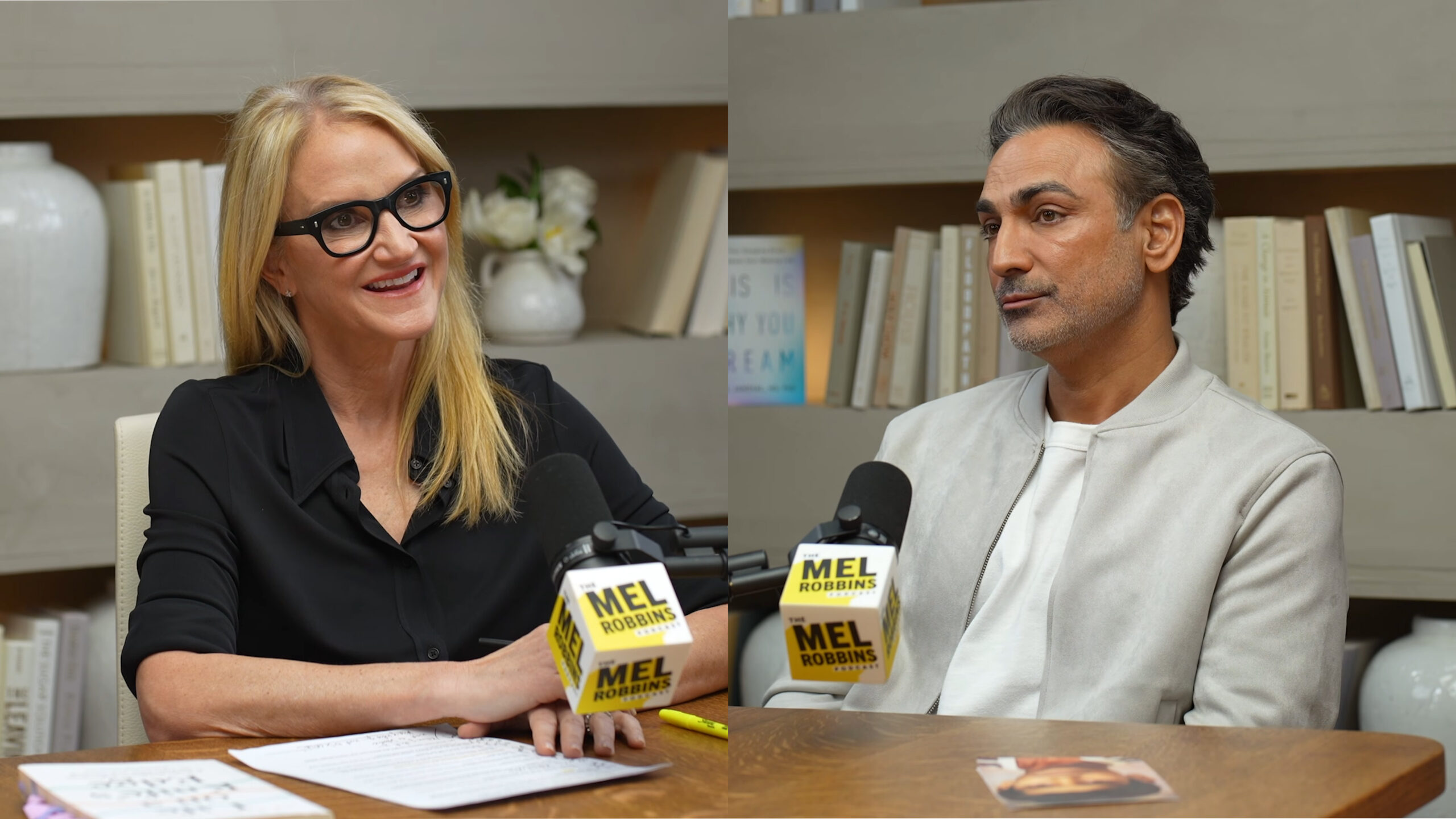
with Dr. Rahul Jandial, MD, Ph.D.
Today, you’re going to learn the life lessons most people learn too late.
In this powerful conversation, Dr. Rahul Jandial, MD, Ph.D. - a world-renowned cancer surgeon and neuroscientist - shares the #1 regret he’s heard from more than 15,000 patients at the end of their lives.
He is going to share why so many of us wait too long to start living the life we truly want, and how to shift that starting now.
This episode is both a wake-up call and a lifeline to hold if you’re going through something hard right now.
Dr. Jandial will share a practical playbook for getting through the hardest moments. How to navigate chaos, face brutal news, and find the mindset you need when life hits you with something you didn’t see coming.
After this episode, you're gonna know how to find your power when the path forward feels unclear.
Listen on:




I know you will do well. I hope you do good.
Dr. Rahul Jandial, M.D., Ph.D.
All Clips
Transcript
Mel Robbins (00:00:00):
This is one of the most impactful conversations that I've ever had. Dr. Rahul Jandial, a world-renowned cancer surgeon and neuroscientist who treats stage four cancer patients every day. I'm talking adults, children. He is here to give you the life lessons most people learn too late. What has your patients who are near the end of their life who come to you as a cancer surgeon taught you about living life now?
Dr. Rahul Jandial (00:00:30):
If they start talking and they say, "I wish I had," and they're not coping well. But some of my others, they say, "I'm glad I did. They're coping well." They never say, "Ooh, I'm glad I was practical and conservative." It's a perspective on your life. It's the story you write for yourself.
Mel Robbins (00:00:54):
So is there a mindset that the person who's listening right now could start to build or practice that could help them go after more or shift things in their lives?
Dr. Rahul Jandial (00:01:04):
You have to know, am I in a storm? Am I in a crisis right now? You got to know where you're at. There was a time where I just felt like I was drowning and it's a crisis, now I'm in crisis management mode.
Mel Robbins (00:01:20):
Could you speak directly to the person who's with us right now who's going through an extraordinarily difficult moment? So they're in the crisis mode. Dr. Jandial, what do you want them to know?
Dr. Rahul Jandial (00:01:33):
The best thing you can do is-
Mel Robbins (00:01:36):
Hey, it's Mel. And before we get into this episode, my team was showing me 57% of you who watched the Mel Robbins podcast here on YouTube are not subscribed yet. Could you do me a quick favor? Just hit subscribe so that you don't miss any of the episodes that we post here on YouTube. It lets me know you're enjoying the guests and the content that we're bringing you because I want to make sure you don't miss a thing, and I'm so glad you're here for this episode because this is a really good one. All right, let's dive in. Dr. Jandial, welcome to the Mel Robbins podcast.
Dr. Rahul Jandial (00:02:09):
Pleasure to be here.
Mel Robbins (00:02:10):
I am so excited you're here, and I know that some of the things that we are going to talk about today, you have never talked about in an interview.
Dr. Rahul Jandial (00:02:18):
Written about them, but not had a conversation about.
Mel Robbins (00:02:22):
Well, that makes me even more excited for what you're about to teach us today from your extraordinary life. If you think about some of the major life lessons that you've learned both through your work and your own personal experiences, what could change about my life? If I take to heart everything that you've witnessed, the wisdom you're about to share, and I apply it to my life, what could change?
Dr. Rahul Jandial (00:02:51):
Well, from me personally, what I want to share are rules for survival that have served me well throughout my life, as well as lessons from my cancer patients that have given me a greater sense of meaning and purpose because I've had the fortune and privilege to share in their lives during their difficult moments. So from there, I've sort of come up with a playbook, if you will, on how to deal with crisis, how to embrace change. It's imperfect, but it's been something I've been shaping and molding for 25 years.
Mel Robbins (00:03:26):
Now, you're about to unpack this playbook for an extraordinary life. And if you could go back and speak to the nine-year-old you. It's a little photo there that I'm passing.
Dr. Rahul Jandial (00:03:39):
Oof.
Mel Robbins (00:03:41):
Oh.
Dr. Rahul Jandial (00:03:45):
Yeah, that was an interesting time. Sometimes I mention my life started at LAX. I don't really remember the first eight years of my life. It was when I arrived and it was an intense kind of thing. One day you're at the foothills of the Himalayas and Kashmir. It's beautiful. It's violent. You get on a PanAm flight and 24 hours later you land at LAX with my father, with my mother, with my brother. And so for me, it's always people are like, "Where are you from?" I'm like, "I'm from LAX. It's sort of birth, rebirth." And I think the suddenness of that, and I could tell there was something intense going on, a lot of tears in the old country, and super fortunate to be here in all this wonderful country has given me the opportunities to sort of ... So many second chances this country has given me, really.
(00:04:45):
But if I could go back, I think I would say that you will be underestimated. There will be pain, there may even be violence, but suffering comes from regret and peace comes from meaning. I would give myself those words as a compass because other people gave me that as through mentorship and love.
Mel Robbins (00:05:13):
If you look at that photo of yourself as a nine-year-old and you think back to landing at LAX, what would you want to tell the nine-year-old version of you in that moment about what's about to happen and how your life's about to change and all of the extraordinary things that your life is going to hold for you?
Dr. Rahul Jandial (00:05:37):
I would tell them it's going to be wild and it's going to be beautiful and it can't be completely engineered and you're going to have to go with a lot of things that you don't expect and don't want. And the adversity will reveal your character, but it'll also fortify you and make you the person you're going to be.
Mel Robbins (00:05:58):
Is there any background that you want to share about why your parents left, what was happening coming to this country?
Dr. Rahul Jandial (00:06:06):
Northern India was violent at that time. My father's an aerospace engineer. He's passed away seven years ago and this great country gave us the opportunity to come here. We left crisis and came to a sanctuary where everybody in my family has since thrived and I've done my best to be appreciative of the people that live in this country. I personally love Los Angeles because it's not just where I landed. It's just the diversity, the creativity has just been ... And it's home and it's home.
Mel Robbins (00:06:46):
Now, today we look at you, cancer surgeon, neuroscientist, bestselling author. You have all of these unbelievable accolades and awards. And when you were in high school, did you want to be a doctor?
Dr. Rahul Jandial (00:07:01):
No, I was ... I mean, I did not like studying. I set the record in my high school for going to detention and that sort of thing.That's why everybody's like that guy. I mean, even my mom is like, "Oh boy, how did you get from that to that? " So no, it wasn't like that at all. I mean, I just wanted to get out of LA at that time because LA was real intense in the 80s. The crack epidemic and gangs, it was just a lot of intensity. And when I had an opportunity to go to the Bay Area, I just got into Berkeley, went there without seeing Berkeley. I needed a physical change. My pops used to have this joke. He was like, "I think you're sort of like the enemy of books." I read Cliff Notes.
Mel Robbins (00:07:53):
Yeah. Remember those? The yellow ones, like the black and the outside, the yellow and black things?
Dr. Rahul Jandial (00:07:58):
I got to Berkeley. I had to take remedial English because I was just only doing cliff notes. Somehow I got my grades on the SAT and I got in and I got out and I was in the Bay Area and frankly, I needed that change, started partying a little bit too much and a couple of other crises mounted at that time and I had to amputate something in my life. I mean, there was threat and then there was, my mom developed breast cancer at that time. She was doing great. I was 19 and I just realized the thing that I had to cut out of my life was school because-
Mel Robbins (00:08:33):
Now that sounds like a weird thing coming from the 53-year-old accomplished version of you that in your 19-year-old brain, your mom is going through breast cancer, you're partying a little too much, you've got a whole new chapter in front of you, you're at a really prestigious school, and in your mind pops, "I know what I need to do. I need to amputate school."
Dr. Rahul Jandial (00:08:57):
Right. Because the two things that we were dealing with at that time, we had a neighbor who slowly became a neo-Nazi. Later, he would end up in prison and in the Aryan Brotherhood and that sort of thing. So that was five feet from our front door.
Mel Robbins (00:09:13):
Oh my God.
Dr. Rahul Jandial (00:09:14):
And then my mom was dropping hair. She had chemotherapy. And then so out of those three, then you could see where every resource was for crisis management. I mean, I think that's the essence of what we're talking about is you don't know what's around the corner. So I'm trying to share with the world an approach no matter where you're at because we don't know what's around the corner. And at that point, I think now you could see out of those three things, if you're exhausted and you've got nothing left and you've got to marshal and deploy all your energy, that it's going to go to those two things, dealing with threat. And I think a lot of people deal with threat and they're all-
Mel Robbins (00:09:58):
I think everybody does on some level. And I love this. It's a very surgical procedure to take a step back and say, "My life isn't working and I need to amputate something because I've got to be able to pull all my resources to focus on what's important." And if you've got a neo-Nazi psychopath living next to you and your mom's going through breast cancer, I can see how that's a very intelligent and strategic decision to say, "School can wait. This needs my attention now."
Dr. Rahul Jandial (00:10:29):
Nobody understood and nobody understood, but I understood that rather than getting these three things kind of right, I need to get these two things 100% right. And that was the first time I noticed where I was like, okay, I'm driving my life because that was a bold move. And then for two years I was working in the cafeteria as a security guard. It was great because those other two priorities-
Mel Robbins (00:11:01):
Your mom and your family's safety.
Dr. Rahul Jandial (00:11:03):
Correct. They were flowing in the right direction. She was getting better. She was getting stronger. When you have breast cancer, they check your lymph nodes to see if it's partially escaped. Those lymph nodes came back negative, so that raised her chance of survival. And then the threat was dampening. He moved away later from prison. A decade later, he would write letters that he's getting out. So the threat never went away, but then energy returned, and then I said, "I got to deal with this remedial English." So I went to Compton Community College, and that move, I met my mentor there, and then so that energy blossomed. And as that energy blossomed and those other things got more in control, the ecology, the harmony of all the pieces of my life started to blossom. But at some point I just needed to hunker down and deal with some heavy stuff and school had to go. And only I knew that.
Mel Robbins (00:12:13):
I love this. And I want to stay right here because I sense that as you're listening, there's somebody in your life that you're already thinking they need to listen to this episode and I'm only a couple minutes into this thing because we all have somebody in our life or we are currently going through a chapter in our life where there's just too much. There's too much going on. And I really resonated with what you said about the fact that all three of these things I wasn't doing very well. And I realized I had to make a decision. I had to make a decision of what I was going to amputate. And when you put it in that context of it's my family's safety, it's my mom who needs support because she's going through breast cancer or at school.
Dr. Rahul Jandial (00:12:59):
And everybody just saw that, he's failing, he's dropping out. And I was just bracing through a storm. Only I knew that when I get through this, there's something on the other side for me, but I can't get through these two things just half-ass partially.
Mel Robbins (00:13:17):
What I also love that you said is that making the decision that other people judged, oh, he must be a dropout, he must be failing, he must be this, he must be that. Making that decision though, you said felt incredibly empowering because you felt like that difficult decision, getting out of Berkeley, going back home, working as a security guard, that was one of the first times you actually felt in charge of your life. What do you mean by that?
Dr. Rahul Jandial (00:13:44):
I felt proud that I took a bold step when the optics weren't right because so much when you're a teenager, you're doing it for pressures that aren't internal, they're placed upon you. And that's okay. We need to raise children. I've got three adult sons. I understand putting expectations on children and trying to raise them. But I mean, I was like, one week I'm in class with them and the next week I got an apron on and I didn't feel any shame because I knew that inside my skull, inside the mental workspace of my mind and my imagination, all these things that happen when we close our eyes and all the things that are inside us that we don't share, we don't fully understand, things felt right.
Mel Robbins (00:14:34):
I would love to have you talk to the person who's listening, who probably had this conversation texted to them by somebody who loves them, and they need to amputate something. They need to make a tough decision and get their life back on track, and it's going to go against what people think they should do, whether it's getting divorced, whether it's living your life a certain way, whether it's converting to a different religion, or just going back to school, something that people are going to judge you for. I would love to have you talk to that person who has received this conversation and is at that moment that you were at where you're weighing, "I'm half-assing all this stuff. Something does not feel right for me. I have got to take control." What do you want that person to know?
Dr. Rahul Jandial (00:15:26):
The reason it's a difficult choice is because it's an unclear path. It's not going to make sense to other people. That's why you're at this crossroad. But as long as it makes sense to you and you've given it thought, you know what's important to you in your life and how you're trying to steer this ship slowly, like turning a massive ship. It's not a sudden change. It's a redirection of the journey of your life that as long as you're peace with what you're doing and you're not hurting somebody else, don't let other people laughing at you change what you're about to do. Go for it.
Mel Robbins (00:16:04):
Well, isn't it funny that if you really think about it, anytime you've been at a crossroads in your life, it's probably because you've been making decisions for other people a lot of the time.
Dr. Rahul Jandial (00:16:16):
Yeah. For me, sometimes it's been that I've got my head in the wrong place, and that often is trying to please other people or doing it for other people. But sometimes we fall down a ravine of negative thinking that isn't necessarily placed upon you. So there is responsibility. They're the choices we make with the world outside of us that are constructive and destructive, but they're also choices we make, but with the world inside our minds that are constructive and destructive. And I just think both have to be paid attention to.
Mel Robbins (00:16:53):
So let's go back to you working as a security guard after you drop out of college, you end up enrolling at Compton Community College, and what happens next in your story?
Dr. Rahul Jandial (00:17:07):
Oh, I met my mentor there. He was the English professor.
Mel Robbins (00:17:12):
Okay. Oh yeah, that's right, because you're going to Compton Community College. Well, to address my remedial English- Brush up on the English. Oh, man. Yes. Okay.
Dr. Rahul Jandial (00:17:19):
And he wrote, "I still have it. I know you'll do well, but I hope you do good."
Mel Robbins (00:17:28):
Oh, whoa.
Dr. Rahul Jandial (00:17:29):
And so that hit me just like that and I caught fire, but that wouldn't have happened unless I went to Compton Community College. So you can't just wait for inspiration and mentorship and things to land on you. You have to put yourself out there. And by signing up for Compton Community College and taking that class ... And at that time, my mom had cancer and I remember saying, "I just worried about her feeling pain and all these things." And he's like, "What if the pain is a welcome reminder that I'm still alive?" He would say things like that to me.
(00:18:14):
But later on that would guide me. And so I found my mentor there and the doing good thing would serve me later as I had many other crossroads on what to do, plastic surgery, cancer surgery, get in the way of somebody that wasn't doing things that were fair or not. You're going to hit crossroads. And again, it's going to look like a terrible option. It's going to come with a lot of cost. And what my father taught me, as long as it doesn't come with moral injury, because you can succeed, but if you absorb, if you let yourself choose or accept moral injury, you'll never be at peace in the private moments of your life.
Mel Robbins (00:19:01):
So you are now one of the most awarded, renowned and impressive brain surgeons and neuroscientists alive today. How did you go from there to where you are now and what made you want to become a cancer surgeon?
Dr. Rahul Jandial (00:19:19):
I get that question from my students. And what I would say is knowing what you want to become is kind of like knowing what's out there. And there's no way to do that because it's a massive world and you're just a kid. And so I didn't want to be a cancer surgeon. I didn't want to be a neurosurgeon. I didn't even know I wanted to be a physician. But after Compton, when I came back, it felt like I had more firepower.
(00:19:47):
I had more potential and Mr. Jet helped with that. And so I just put my next foot ... I just looked at the opportunity in front of me and that was applying to medical school and there were these tests and such. And I got lucky on the test and it opened doors and I ended up at USC Medical School and I hated it because it was classrooms. And I was like, oh man, this is boring. And then the third and fourth year, you do rotations. And I went to LA County Hospital and then I found it because all of a sudden the classroom's gone, the nerds are gone, and it's just the biggest aquarium in which to study humanity. I loved interacting with people of all walks of life, and the hospital gave me that classroom. And then that was something I was like, then I caught fire.
(00:20:39):
And then I saw, and I had never seen a surgery. And when I saw my first operation, I was like, wait, this is physical. I can do physical. So smart and physical, I want to do. And it was such ownership when somebody trusts you to take them back into a room, make them unconscious and work inside them for hours.That's a bond that I respected. The surgery thing, it brought me, it woke me up. It wakes me up when I operate.
(00:21:13):
So that's how that evolved.
Mel Robbins (00:21:14):
Well, what's interesting about you is that you are talking about a playbook and what you're describing is not really knowing where it's leading, but paying very close attention to how things feel right now and those moments when something brings you alive, in your words, that kind of fire inside you lights up.
Dr. Rahul Jandial (00:21:41):
Well, specifically, it was avoid moral injury. And then the step I remember doing was a minus one plus one.
Mel Robbins (00:21:49):
What does a minus one plus one mean?
Dr. Rahul Jandial (00:21:51):
That I got rid of one bad habit and then I put myself out to do something. It was a combination of close this box and open up another box. Not the massive crossroads we're talking about, but on a daily level.
Mel Robbins (00:22:04):
So give me an example.
Dr. Rahul Jandial (00:22:06):
So at that time, we were parting too much and I closed that box. It didn't mean I stopped. I just pushed it to the week. I mean, I dampened the indulgences, and then I started volunteering at San Francisco General Hospital. I take the BART, met some different people on the BART. It was a small change this way, small change that way. And at a neuroscience level, your brain is generating this electricity. It's never calm. The measurement is always on. So either it's going to go this way or that way. It's got to be directed. It's not just going to rev down. I know a lot of people are going to say, no, I feel calm and clarity, but electrically it's on. So I was just shifting it from indulgences to still something captivating from one habit or practice to another. So that was some knobs I could turn that got me out of that pattern I was in that needed to change and which was a growth mindset really for me.
Mel Robbins (00:23:09):
So is there a mindset that the person who's listening right now could start to build or practice that could help them go after more or shift things in their lives?
Dr. Rahul Jandial (00:23:18):
So part of that playbook in my mind is first to be aware of what's going on in your life. So I think there's a lot of good advice out there, but there's like advice and real world scenario mismatch. So you have to know, am I in a storm? Am I in a crisis right now?
(00:23:40):
So there's advice and mother nature's like that. There's a winter and there's a springtime. You got to know where you're at. And so there was a time where I was just like, felt like I was drowning and it's a crisis, now I'm in crisis management mode. And my patients have that when they hear the C word, I had that. And so there are some rules around that. So that's a mindset. And then there's a, "Okay, I'm not in crisis. Now I've got bandwidth and now I want to take chances. I want to dare. I want to grow. I want to bring in these practices," whatever it is, meditation, taking walks, all those things that I hear about, those are practices. They're not going to help you in a crisis. So this crisis is maneuvers.
Mel Robbins (00:24:28):
Amputation you've discussed.
Dr. Rahul Jandial (00:24:29):
Amputation.
Mel Robbins (00:24:29):
What can I get rid of?
Dr. Rahul Jandial (00:24:30):
Survival.
Mel Robbins (00:24:31):
Survive.
Dr. Rahul Jandial (00:24:32):
Breathing techniques to not freak out. So the mindset is first asking yourself, am I in crisis or am I where I need maneuvers or is it springtime where there's some relative stability and I need to come up with some practices that make me better for when the next crisis hits or for the changes I want to make. There's too much. When the crisis at that time with the neighbor and my mom, that's not a time for me to start taking up a meditation practice or for patients. For my patients, it's not when they're diagnosed or the first few weeks of surgery. It's survivorship. I had cancer a few years ago, but I can't stop thinking about it. So there's a different mindset for survivorship and practices, and there's a different mindset for crisis and maneuvers during that time. I think that's the way to think about mindset is to first know where you're at. Otherwise, that flood of information, you don't know where to apply it.
Mel Robbins (00:25:36):
I actually love that because I think a lot of times we skip over that step and don't slow down long enough to just say, "Well, let me just even ask myself, what am I dealing with right now?" Because advice is going to be useless if you have no time to apply it or you are in crisis management mode, and you can come back to that.
Dr. Rahul Jandial (00:25:58):
Well, there's so many people who live and threat in their own home. When people get hurt, they come to hospital. I don't work in a clinic. I work in a hospital. And I think it would surprise people how many of us live and you can't tell it's rich, poor, you don't know. And so again, that person has to identify, it looks like I got it all, but I'm under serious threat right now and I need to have crisis management techniques, rules for survival rather than rules for self-improvement.
Mel Robbins (00:26:31):
Yes, that's very true. And you got to be very careful about what you decide you're going to amputate in those situations because it's easy for somebody who's not under threat to say, "Just get rid of the threat," but it's not so easy at times.
Dr. Rahul Jandial (00:26:46):
Yeah, because it won't grow back. I mean, I went back to college, but those amputations lead to changes that are permanent for most people, whether it's relationships or careers and that sort of thing.
Mel Robbins (00:26:57):
What would you say to somebody who feels very lost right now and they're kind of thinking about, "Well, am I under threat or am I just in this mode where I need to understand I got to make some intentional changes?"
Dr. Rahul Jandial (00:27:13):
I would say if you're feeling lost, I've been there and not in the distant past.That's a place you'll find yourself often in life, especially if you want to engage life fully. I'm 53. I've been working in hospitals since 25, 26. I have felt lost when I have searched for an outcome rather than an opportunity. If you hitch your mental health or your self-worth or the story of your life to outcome, it's going to be frustrating. Either you're not going to be aiming high enough or you're just going to be constantly looking at it the wrong way. And so I saw that in Nicaragua where another friend of mine, he's the head of children's brain surgery at San Diego. We were doing surgery down there and the mom had taken a bus for 20, man, I can't remember, brought a kid with no shoes on. And once she got her child just across almost like the threshold to the hospital, in a later conversation, she would tell the nurse that she did it.
(00:28:45):
That was the opportunity and didn't matter what the outcome. That kid did well, but a lot of kids with cancer don't do well, but she wasn't like, "And if my son lives forever and if my son is cured in her mind that she had brought her to her child to a hospital were brain surgeons from America, America is a light had come to ... And that she got her child in Monagua, Nicaragua, two brain surgeons from America plus the ... And then so what I learned from there is don't count the winds, count the shots. And so if you want to be unstuck, take some shots, but don't anchor yourself on the outcome if the shot goes in.
Mel Robbins (00:29:31):
Don't you think your home should be a reflection of who you are? Of course it should. That's why you need to know about our sponsor, Ashley. Ashley has styles that balance timeless appeal with modern trends that will help you bring your personal look home. In fact, I was looking at the Ashley website, because I know you're going to go, " Well, Mel, what do you like? "The Crystalland Collection. It's a modern farmhouse look that feels warm and inviting, but it's so clean and elevated. I love clean and elevated with beautiful lipra Young wood tones, black hardware accents, and the dining room table's super cool. It expands from 80 to 98 inches. It has this removable leaf. It seats up to 10 people. And if you look at the table, you can picture holiday dinners, family gatherings, friends, making all kinds of memories. And every Ashley piece is thoughtfully designed, built to last, so your home doesn't just look good. It works like it should. Plus, Ashley provides fast, reliable, white glove delivery right to your room of choice, making the entire process simple from start to finish. Visit your local Ashley store or head to ashley.com to find your style.
(00:30:38):
So one of the things that's interesting about your career is you have treated and operated on thousands and thousands of patients with a cancer diagnosis, with a life-ending diagnosis.
Mel Robbins (00:30:55):
What are some of the biggest takeaways about how to live a happy, fulfilling life that you've learned from your patients?
Dr. Rahul Jandial (00:31:06):
Yeah. So just for your ... I love what I do. I chose to do this when I had opportunities to take care of less sick people. When you're in medical school, you choose sick or not sick, and then you choose procedure or not procedure. I do big operation. They come to me for operations and they're extremely sick. And I take care of patients who have stage four cancer. And what we're trying to do is land this crashing airplane.
(00:31:42):
And so I don't have patients that I still know because they're gone. And so from what, 2004, I don't know, 25 years, I was younger than them, then I was the same age as them. Some of them are younger than me. I was growing up. I was raising three sons. They're in their 20s. And I chose cancer surgery when I had an option of different types of surgery to do. And I know I'm a neurosurgeon or brain surgeon, but in my heart, I'm a cancer surgeon and most cancer cures begin with surgery. And it's just so visceral. Well, I love for my sons to be father and cancer surgeon. And what you see during that process, in the beginning, you want to be the best at what you do. And you have to realize that you can never get the risk to zero. There will be turbulence on the way to the moon.
(00:32:44):
This is not a flight to San Francisco on Southwest where you expect to land it every time. You know what I'm saying? So I know you're like, he just went there. No, but that capsules are like, there will be turbulence. And so what I realized is that I hurt people the least, that this operation will have a 3% to 4% complication and I'm trying to get it to two. I can't get it to zero, which means you will have complications and that you're still doing a service. I had a hard time wrapping my head around that because when you meet somebody and then they wake up and they can't talk, they can't move. It's been difficult, especially with children. And it's not a oops moment. It's you can't get it to zero if you're going to fly to the moon. You will crash and burn sometimes. It's not a mistake. And so-
Mel Robbins (00:33:38):
Well, the tumor you're trying to remove has done the damage.
Dr. Rahul Jandial (00:33:41):
Right. And the art there is to get as much of the tumor out as you can, but not injure the person. See, that's the art of surgery is you're reverse sculpting. There are people who can take it all out, but the patient doesn't do well afterwards. And then there are some people who just go in there and don't take enough of it to give them the best lifespan. We call it peak and shriek. They look at it, they're afraid that they pull back and that's okay. So the patient's perfect, but the cancer surgery hasn't been done to the highest level. And some people get all the cancer out, but then the patient wakes up injured. So there's a lot going on there. But complications for me were difficult in children, particularly because it felt like a failure. I didn't have the scale to understand that I'm going to try to help thousands of patients. I've seen 15,000 operate on 5,000, and I'm trying to be the best I can for that whole group of patients.
(00:34:39):
I can't tell which one's going to have a complication or not. It's not an oops moment. That took me some time to wrap my head around that. And I only removed myself from that, whatever all of that caused me. First, I was overly competitive or I was emotional. It was just a lot there.
Mel Robbins (00:34:57):
I'm sure.
Dr. Rahul Jandial (00:34:58):
Until I started to see that maybe all of this was an opportunity for me to understand humanity, to understand patients, to understand life, to understand suffering and to write about it. So this thing that we're doing now, the last five, six years is what has helped me not get PTSD from all these sick people I've been taking care of, is that they're sharing their life with me as part of a fabric. I'm stitching to share a story with other people.
Mel Robbins (00:35:28):
What has your patients who are near the end of their life who come to you as a cancer surgeon taught you about living life now?
Dr. Rahul Jandial (00:35:40):
More time with family, pursuing things, reconciling, not reconciling. But what I'm seeing, what I've seen is that all of that is external. And in the end, if they start talking and they say, "I wish I had," then they're not coping well.
(00:36:09):
But some of my others, they say, "I'm glad I did their coping well." And I started to see this pattern that some of the ones doing the best, in my mind, I'm like, "Look, you're doing great compared to some of the other people I'm seeing." But their brain was stuck. Their life story was stuck with, "I wish I had. I wish I had gotten screening earlier. I wish I had gone to a different place. I wish I had not smoked. I wish I had." And then there were others who weren't doing as well. You would think the people doing well are going to be like, "I'm glad I did." But there's a mismatch there. It's a perspective on your life. It's the story you write for yourself.
Mel Robbins (00:36:53):
Well, Dr. Jandial, I want to really unpack the mindset you just taught us. And I want to make sure as you're listening or watching that you didn't miss it. And it's the difference between having a mindset where you say, "I wish I had," versus, "I'm glad I did." Can you just talk more about the power of that? "I'm glad I did," and what that means?
Dr. Rahul Jandial (00:37:22):
Well, what I'm learning and from my own life too, things haven't gone smoothly for me, but I'm glad I did drop out of college. I'm glad I did have a marriage. I'm glad I did go into cancer surgery, and it's not because all those decisions went well, man. Some of that stuff was painful. And it took effort because in those ... It's not like I'm born with this disposition. I don't like school. I didn't like reading, and I always took a negative angle on everything, and I was competitive, and I felt easily slighted. I didn't begin with this.
(00:38:13):
I'm no saint. This is not about that. It's that it's been just a dial. I'm turning quarter century and choosing experiences. I've built my identity. But what I want people to know is those cancer patients are not falling into like, "Oh, positive. Rosie disposition says, I'm glad I did." They're fighting for that. Their fight is not just with the cancer, but the fight is with the way we think about our world, our life, because you don't know what's around the corner. There is no moment of arrival. There's only being prepared, having some strategies, some coping skills. So we're maturing through life, and then having the ultimate, ultimate gift is to write your own story in your own mind and not by other people. And that's what they're doing. Everybody's like, "Oh, how are you doing? You have cancer." They hate it. They're like, "Oh, if another person asked me about my cancer, they wear wigs to hide all of that stuff." But in their mind when I see them, I can see the wheels turning that they're taking this imperfect life and they're like 40s and 50s with cancer. Of course, that feels like the worst luck, but they don't come in depressed. If you went into this, you would think, "Oh my God, it's got to be the saddest thing in the world." They're heroes. They come in, they come in dressed up. They're telling jokes. They've found a way with a cancer diagnosis through effort, through faith, through spirituality, through friendship. They're directing their life story this way because if you don't, you're just going to spiral. And that's the responsibility, I think, that we have in our position is to equip people with that, that there's no shortcut that it's possible. There's no secret steps. Cancer patients have taught me that it's a direction of your psychological energy to write the story of your life as you want it told, and more importantly, as you really embrace inside your own mind.
Mel Robbins (00:40:28):
Well, it's also, and I love that phrase, the direction of your psychological energy, both of the story that you want to be told, but also of the story you want to experience as it is unfolding. Because what you're also teaching us is that when it comes to things that are out of your control, and I think we can all agree, all of the decisions that we have made in the past are over, the cancer is here, the divorce has happened, the school has been dropped out of, the drinking for however many years, whatever it is, you cannot control what has happened, but you can control how you talk about it and how you look at it. And so even the framework that you use through your own life, you could have said, "I wish I had never dropped out of college. I wish I had not gotten a divorce.
(00:41:26):
I wish I had this. I wish I had that. " Or you can say, "I'm glad I did. I'm glad I did because in that reframing, I'm glad I did," you have to force yourself to see either the lesson that you learned from it or the experiences that you could have only gained in it.
Dr. Rahul Jandial (00:41:47):
And it's an active process. It is your prayer. It is your cognitive behavioral therapy. It is the argument you must make to yourself. And it's, I'm glad I did and then populate that with, because of this good thing happened, then I met Mr. Jett, then I met this, then I did this.
Mel Robbins (00:42:05):
Or because I learned this
Dr. Rahul Jandial (00:42:07):
Is my son. I learned that. So it's not just four or five words or whatever. It's an approach to thinking. And so when you talk about cognitive behavioral therapy and that cognitive restructuring to perceiving and looking at things ... So these are consistent things between Marcus Aurelius and meditations and stoicism where people are talking about you feel what you allow yourself to feel, or you have Buddha and Eastern philosophy or you have cognitive behavioral therapy where it's cognitive restructuring and monitoring. It's all the same thing. You are controlling the direction of your psychological energy. Either you are focusing on something and focus, like holding your breath is a skill that you can learn, or you are learning to be non-judgmental and let all these experiences pass you like little boats on a river and not biting on everything. For me, it was both. I was biting on too much when I was young, wilding out, reactive, impulsive. So I had to learn that there's a temporal nature. I know something's coming up that I can't deal with and I need to brace myself for it. So there are strategies directing your focus, I wish I did, and filling that bucket, and then also using that focus to actively monitor but not judge.
(00:43:32):
These are Buddhist and behavioral therapy techniques. So what I'm seeing is all of these different things that people are hearing in the wellness community on a practical level, my cancer patients are doing it and it all comes down to the direction of your psychological energy.
Mel Robbins (00:43:50):
And amputating something from your life is another tool because if you are filling your life with too many things-
Dr. Rahul Jandial (00:44:00):
Absolutely.
Mel Robbins (00:44:00):
I always say if everything's important, nothing is. Well, that's what we talked about. Yes. Amputating something pulls the direction of your psychological energy toward the things that matter.
Dr. Rahul Jandial (00:44:12):
Because your psychological energy is limited. It's not infinite and it has to be matched to your real world scenario. If everything's good, distribute all of that juice to all the good stuff, but sometimes you got to brace for the storm. When I operate, sometimes I'll come around a corner on a tumor and there'll be a blood vessel. And I know there's four more hours of work that just kicked up and there's a risk for the patient and I got to go into escape the free fall mode. So this is a very practical thing.
Dr. Rahul Jandial (00:44:44):
Whether you are a Navy SEAL or complex surgeon, or you get that email that says, "We have layoffs and I need to see you tomorrow." The one that hits you, the best thing you can do is control your breathing. And what you want is at that time just to pace your breathing.
(00:45:08):
So that's what I do in surgery. That's what Navy SEALs do. That's what deep divers do. And that's the built-in resource. The simplest way that I had somebody explain to me is where it's like, oh, so you don't hyperventilate and panic because hyperventilation leads to panic. So at that time when you want to panic, what you're doing is first, you're directing your psychological energy to controlling a reflex that's called breathing. And so you're practicing your focus, your ability to focus. It's a skill. Attentional power is what I call it. And then number two, what you're doing is you're relying on a physiological mechanism that prevents hyperventilating and those slow, deep breaths. The whole science that I can explain is going to keep you from having hyper excitability of your limbic system. The point is, do not let yourself breathe too fast. When you blow off the carbon dioxide, you will panic, then you will not be able to deliver your maneuvers.
(00:46:18):
So for me in surgery or whenever you're about to go into a difficult situation, maybe you got in a fight, you got to talk to a lover about breaking up or whatever, just come in with pace breathing. And it's a few seconds in, it's a few seconds old and it's a few seconds out. Now what I will tell you is if you think you're going to do that when you get rocked, it's not there for you because you haven't been rehearsing it. You haven't made that ritual. So when I park my car in my spot, and so that's the mindset, that's the playbook for when the crisis hits.
Mel Robbins (00:46:52):
Well, Dr. Jandial, what I like a lot about what you said, there's a lot to unpack, is this concept of controlling the direction of your psychological energy and attentional power.
Dr. Rahul Jandial (00:47:05):
Attentional power.
Mel Robbins (00:47:06):
And the power that you have even in the storm around you, whether that's a patient that comes to you and gets a terrifying diagnosis, or it's the email that you get that layoffs are coming and there's a meeting tomorrow, or the sound of somebody saying, "I don't love you anymore. This is over." So many moments. What I really appreciated about what you said was just simplifying it down to slow down your breathing, don't worry about technique or seconds or just in slowly, out slowly. And I also loved that you are suggesting that there are moments throughout your day that you can leverage attentional power and settle yourself and calm yourself or even create an intentional transition, whether it's before you get out of the car, you're just going to breathe in and breathe. And there's nothing going on.
Dr. Rahul Jandial (00:48:06):
Five minutes.
Mel Robbins (00:48:07):
Yeah, that's it. There's nothing going on before you walk into the house. Before you walk into the room, you're just going to breathe in and breathe out. And what you're saying is if you start to leverage this little tool in your life before it's going sideways-
Dr. Rahul Jandial (00:48:21):
It'll be there for you when shit goes sideways for real.
Mel Robbins (00:48:24):
Yes, because we all know the more emotional and reactive we get, the more screwed we are.
Dr. Rahul Jandial (00:48:29):
Yeah. You got to practice. Game time is not going to be the only time that you want to run those drills. So it's practical. And again, cancer patients are doing it, Navy SEALs, and it's there. It's free. It's universal. It's for all of us. And just briefly, there's an anatomical connection that sort of mediates all of that. It's not woo-woo. I mean, we-
Mel Robbins (00:48:52):
What's happening? At the highest level, what's happening when you breathe in and you intentionally control the direction of your psychological energy by suddenly?
Dr. Rahul Jandial (00:49:02):
You're releasing the pharmacy in your mind. You're releasing your own volume and it's an anxiolytic. So we always hear about, just to get a little science to you, we hear about a lot of neurotransmitters, but it's a big cocktail up there. And a lot of neurotransmitters will actually depress the electrical energy of your mind a bit. They're excitatory, but there are also some that depress it, and that's called GABA. It's used in Valium to actually break seizures out of control brain electricity. And so what is clearly demonstrated out there, whether you tickle the vagus nerve here or you control it naturally with pace breathing, you're increasing the release of GABA that's sitting there already in your brain and mind. That's the science behind it. It's not even exotic. It just hasn't been explained.
Mel Robbins (00:49:51):
That's super cool.
Mel Robbins (00:49:53):
I would love to have you share what you have heard your patients talk about in terms of what matters most about life when time is limited and what kind of comes into focus that people wish they had prioritized more.
Dr. Rahul Jandial (00:50:12):
They're on a mission. Many of them have children. They're not even thinking about a cure. They have said to me, and it's been my experience. I understand a lot of cancer surgeons out there, doctors, a lot of patients. I'm just telling you what I'm seeing, their prayer is just that they make it to where the kids finish high school and get out of the home because they don't want their children to see their mom pass away while they're in high school. It's a specific finish line that they're going for. You would think they want to cure. They're just like, "This is what I really need." The older ones, when the kids have moved on and they've got their own lives and they forget to call on Mother's Day or Father's Day and you have that fuss, whatever, their perspective is more that, again, when it didn't hurt anybody, that they wish they would've been more bold with their hunches and their instinct that, "Maybe I should change my direction.
(00:51:13):
Maybe this isn't working for me. " All those maybes that were almost like a fifty fifty or a 60 / 40, not that it's a choice because it's unclear. "Do you want to win the lottery? No choice. Thanks, I'll take it. "It's not choices are because it's a crossroads and it was unclear. So it's not so much the amputation that I talked about because that's more of crisis choices.
(00:51:39):
It's more of the subtle meandering through life. "Maybe I should have lived here rather than there. Maybe I should have done this rather than that. " They felt like they could have been more bold in pursuing their hunches and their instincts. They never say, "Ooh, I'm glad I was practical and conservative." I mean, maybe not never, but you know what I'm saying though.
Mel Robbins (00:52:02):
I know what you're saying.
Dr. Rahul Jandial (00:52:03):
Because then they look back and they say it's a short run. I should have taken a few more chances as long as they're not hurting other people or gambling it all away. But it's the subtle navigation in their life. At all the pivots, they wish they would've been a little bit more emphatic and bold.That's what I'm seeing.
Mel Robbins (00:52:23):
So I would love to have you speak directly to a family member who may be listening or a loved one who has somebody in their life who is dealing with an illness. What do you want the person who's the caretaker to know Dr. Jandial?
Dr. Rahul Jandial (00:52:47):
That if you find yourself in the most trying and difficult situation, you're not alone. The person next to you may not have been there, but they will in the future. And the person next to you might look like they're coping, but they could have endured that in the past and that our struggles and our triumph at the level of the brain are quite similar. So you're not alone and there are resources for you to get through this with support, with love, with direction, but ultimately is those private moments in your life that you only share with yourself that you need to prioritize.
Mel Robbins (00:53:32):
I would imagine that given how much surgery you do, how many patients you've treated with cancer, that you've just seen extraordinary resilience. What have you learned about resilience and that human beings are so many times just so much stronger than they think they are?
Dr. Rahul Jandial (00:53:55):
So it's a word that's been bugging me for a long time because it's now thrown off. It's just thrown around like, "I don't even know what it means anymore."
Mel Robbins (00:54:05):
What does resilience mean to you?
Dr. Rahul Jandial (00:54:06):
Well, there's an engineering definition, which is the ability to return from deformation or like a bridge shifts and it comes back. Then there's a psychological definition that's more appropriate and that's the resilience doesn't mean just coming back to what you were. It means coming back stronger, more fortified. And so in the psychological sense, there are two types of resilience and they're systemic and processive. Systemic means what you're bringing to the fight because of all those, the cyclical nature of crisis and springtime, crisis and growth, struggle and growth that you banked, that you've rehearsed your skills on. So now you're bringing something to the next fight, the next struggle. But then there is also a processive resilience, which is what the fight brings out in you.
(00:55:10):
They're not tough until they get hit. They're not tough and resilient until they face the cancer diagnosis. And I've seen that you think people are like, "Oh, they're going to fall apart inside your mind." And the crisis brings out something in them. I like to feel like that's what happened in my life at age 19. And that's a tricky thing to say because I don't want cancer. I don't want these things. None of my patients do, but it's what you bring the fight, but if you're not doing well, this fight is training you. So you're not lost no matter how you're dealing with your life. Either you're practicing and feeling good about coping or, "Hey, this is rocking your world and teaching you a lot that's going to prepare you for what's coming up."
Mel Robbins (00:55:57):
Dr. Jandial, what are the best recoveries that you've seen in terms of the things that they have in common, or even if it's not a recovery, the best meeting of the moment?
Dr. Rahul Jandial (00:56:10):
So sometimes cancers and injury will paralyze. Like Christopher Reid, they'll paralyze patients or sometimes their legs are paralyzed, but they have their arms because the injuries around their belly button and the brain can't talk to the legs and the legs can't send sensation up to the brain. And some of those injuries are either total and there's no chance or some are partial. They've got flicker of movement. And the lesson there for patients and people is it's in the first three months that they get the bulk of their function back. The ones that get it back the most are the ones that are sitting there trying to move their leg and the leg isn't moving. They are sending electrical signals through the damaged spinal cord, landing on the muscles ready to go. It's just not getting the spark. So they are directing their psychological energy towards moving a leg that won't listen and they do it and they do it and they do it and there's nobody there.
(00:57:15):
It's not when physical therapy comes in because I see them in gaps and all of a sudden they're coming back with movement and it's all of that work they did when they saw no result. Just imagine just trying to flicker your foot and it doesn't move. And you're still trying. You're still trying. You're still trying. So the recoveries that impress me are not biological. And I always tell them, "You're training for the Olympics. This is bootcamp. This is the window to go for it. Things won't look like they're moving, but the continued effort is the only way you will spring back to life in your legs." And so those are the kind of things I wish people would know is there's a lot out there. And the inspiring thing is if the injured brain can heal, and I don't mean heal like some magical thing, and it doesn't regrow.
(00:58:10):
It's not liver, you don't pop up a new part of your brain, but if the injured brain can recover, what about our healthy brain?
Mel Robbins (00:58:19):
So Dr. Jandial, after watching people recover, like you just described, from a devastating brain trauma, what do you wish everybody understood about how change truly happens in life, in the brain, in general?
Dr. Rahul Jandial (00:58:41):
Well, I think we can go backwards. We can talk about it in the brain and therefore life. Sometimes children will have seizures so ferocious from both sides that they have to be on a ventilator, otherwise they can't live. And the only option exhausted through everything else is to remove nearly half of their brain. It's called, people can look it up. It's a hemispherectomy. And usually it's on the right side because language is on the left. So you take the right side, the surgery is done, they're able to wake up, but because you took the right side, the left arm and left leg is out. It's paralyzed. And then it's a large part of the brain that you've removed, removing a hemisphere.
(00:59:27):
And this has been going on for a long time. So I'm bringing insights from all different facets of my life and things that I'm reading. Then a couple of years later, an extreme example to set the precedent, they'll come back walking. And it happens in children, more difficult in adults. And what's interesting there is when you take a brain scan, it's hollow. The part that you cut out, it just filled with brain fluid. It didn't grow back. The leftover neurons Repurposed. The dancer became the soldier. You didn't grow. So I always get thrown off when people are like, rewire plastic. I don't understand what that means because these kids, they don't regrow that part we took out. It stays hollow. What's left over does a new job, takes on new functions and such. And the way that happens is with this thing called myelination. So when we're going to get into that, how change happens is if you do something once, the way it works is why change for that?
(01:00:45):
Because it's unlikely to happen again. But the constant direction of psychological and energy will make the original effort will not have to be as strong once you deposit myelin. Just stay with me for a little bit. So the neurons are like molecular microscopic jellyfish. They're spraying electricity at each other. And the way, once you think a certain way, once you behave a certain way to reduce the energy usage, they'll start wrapping omega-3s as fatty sheets like insulation around the tentacles. Okay. So think of it as like if you keep going down the same groove from the top of a mountain and you tend to fall down that groove, well, there's a cellular basis for that. And the brain will do that as a response because it wants to now have this action occur without using up so much fuel, efficiency, neural efficiency. Otherwise, well, we're using up so much fuel just to tie our shoelaces.
(01:01:57):
At some point you want to tie your shoelaces.
Mel Robbins (01:01:59):
Not really think about it. Yes.
Dr. Rahul Jandial (01:02:00):
And when people get Alzheimer's, they can still tie their shoe laces. They can still ride a bike because it was efficiently deposited. So change takes constant, but moderate effort. It's not like one big effort. It's not 10 hours to throw on the baseball to learn it. It's better to do 15 minutes a day. And those are the molecular cues for the omega-3 fatty acids that we all want to eat from salmon and brain diet to take the positive habits that you've built and make them more likely to occur, to shift from the bad grooves down the mountain to the new grooves that you've made. That shift takes effort, but it's not lifelong effort. You put in a hard couple of months to make that change. Now that change gets easier to do. Then you take on another change, you do another minus one plus one, like we talked about incrementally.
Mel Robbins (01:02:55):
What's one big epiphany from all the brain surgeries that you've done that has changed the way you see human possibility?
Dr. Rahul Jandial (01:03:04):
I will tell you the recently, it's not from brain surgery. When your heart stops beating, there's still another couple of minutes where your brain is sparking electricity, spraying neurotransmitters. It's still going. That last surge gives it enough glucose and oxygen. And when your heart stops, after cardiac death, there is not electrical silence in the brain. And those one or two minutes, the brain isn't whimpering like ... The last thing the brain will do is launch all of its electricity and chemicals in a giant salvo fireworks and then stop. So it's not like other organs where they go down ... It's not like decremental. Slowly the heart stops beating. Slowly the liver changes color. The brain, when it gets its last pulse of blood, will just fire off. And a lot of that electricity looks like dreaming and expansive memories and that sort of things. And that might explain why if those people come back, they all share the same film strip of their life.
(01:04:19):
That's cool. And that's a measurement. That's not my opinion.
Mel Robbins (01:04:23):
That's super cool.
Dr. Rahul Jandial (01:04:24):
Yeah.
Mel Robbins (01:04:24):
That's super cool. I would love to talk more about some of the things that you personally do every single day. You are a cancer surgeon. You are a father of three adult boys. You've had so many just unbelievable twists and turns to your life. You're one of the most decorated cancer surgeons around. What are the most important daily rituals to you that really help you? Or what's the single most important daily ritual that you have?
Dr. Rahul Jandial (01:05:01):
The single most important daily ritual I have is that at several times in the day, I rehearse my attentional focus by pacing my breathing. It trains my mind to focus and it trains me to get ready for that what's around the corner. Because when it arrives, when crisis arrives, it's not when you really want to pull something out of your rusty toolkit. You want to have that sharpened. And why I think that's important is when I can cultivate my attentional power, then that attentional power is useful for other things. And I'm able to shift it. When I'm driving, I'm like, okay, I'm thinking about my next book. I'm going to listen to some music and a rock out a little bit. I'm going to deliver attention to this. So that five minutes of directing my attention, pacing my breathing keeps the reins on where my mind is headed, and that way I can deploy it in a strategic fashion.
Mel Robbins (01:06:00):
I want to have you walk me and the person that's listening or watching right now through how we could start this five-minute practice ourselves, because it makes a lot of sense to me that I think most of us go through life probably on autopilot, feeling super distracted, our attention pulled all over the place, putting fires out. How do we implement this today? What do we do?
Dr. Rahul Jandial (01:06:22):
Step one, try. Step two, it doesn't have to be some private place because a lot of your crises and a lot of your attention is stolen when things are wild. It's not going to be in a yoga studio or in a quiet room. So randomly, at times during the day where you think you're stressed out or about to be stressed out or walking into a stressful situation, just sort of set a timer in your mind. It could be a song. I like to go for ... There's a certain song I use, or it could be a timer on your phone. And just through your nose, it doesn't have to be one nostril. I mean, all of that, it's all going in the same place. And through your nose, just try to breathe in for three, four seconds, hold for a few seconds, and then slowly exhale, and then pause for a second, and then do that again.
(01:07:13):
And see if you can get 10 of those, see if you get 20 of those. And if you're in public and stuff and you don't want people to know you're doing that in surgery, because my mask will fog up if I use my mouth. I wrote about that. In the beginning when I was learning, I was like ... And we wear these glasses that were magnifying glass. It's like fogging up and the nurses would tease me. They're like, "Hey, you freaking out over there?" I was like, "No, I'm not. " So I only use my nose. And what I'm trying to tell you is this overlaps with Buddhist meditation, pace breathing, directing ... You have to try. You're directing your attention to do this. You're pulling your attention from something that's been spiraling and driving you crazy. So already you're redirecting your psychological energy to something positive.
(01:08:01):
And so the attentional power is really a skill you can cultivate. People can learn to hold their breath. You can learn to hold your attention.
Mel Robbins (01:08:10):
I want to make sure that you got that. And so I'm going to translate it. And if I miss something, you tell me. Okay? So basically it's as simple as it sounds. Practicing and building the skill of attentional power is simply at any moment, and you could do it right now. You could do it sitting in your car, you could do it lying in bed in the morning, you could do it sitting at your desk, you could do it before you walk into a room. Attentional power is bringing your attention to your breathing. And you just recommend in through the nose.
Dr. Rahul Jandial (01:08:44):
Out through hold, out through the nose.
Mel Robbins (01:08:46):
Out through the nose.
Dr. Rahul Jandial (01:08:47):
It's not as easy as you think. When I first started, four breaths later, I'm like, do something. So that is what-
Mel Robbins (01:08:54):
Try 10. Try 10, you're saying. Try to do it 10 times.You could do it standing in line at the grocery store.
Dr. Rahul Jandial (01:09:00):
Yeah. Especially standing in line in the grocery store or whatever it is.
Mel Robbins (01:09:03):
But here's what you're going to notice is that as you're standing in line at the grocery store and like, okay, I'm going to practice attentional power since I just heard this and I'm not going to look at my phone. I'm just going to practice attentional power. You can only pay attention to one thing at a time. And so by focusing on your breathing in, pause, out, pause, in pause, this is how you build the skill.
Dr. Rahul Jandial (01:09:27):
This is how you ... And controlling your attention is a part of meditative practices from Eastern philosophy. It's a part of when people say, "Get therapy." When you see your therapist and they talk about cognitive behavioral therapy, you have to divert your attention to argue against the life narrative you're writing. You have to divert your attention to do non-judgmental monitoring, they call it. Don't react, don't react. All of it takes attention. And so this skill, pushups will help you open a heavy door, focusing on your breathing like this and your private moments during the day will help you with all of the other things you're trying to do because it harnesses your attention.
Mel Robbins (01:10:06):
Could you speak directly to the person who's with us right now who's going through an extraordinarily difficult moment? So they're in the crisis mode. Dr. Jandial, what do you want them to know?
Dr. Rahul Jandial (01:10:22):
You're not alone. Crisis hits our brains and minds in a similar way, and there are approaches to dealing with crisis that we've talked about today in the moment, as well as when you go home, set your guardrails. Don't make a decision tonight in crisis that you can't take back. And then the next day is when you have to sort of turn to others to come up with a plan to get through this difficult moment.
Mel Robbins (01:10:56):
How has what you do for a living and the patients that you've treated changed you?
Dr. Rahul Jandial (01:11:06):
I'm a lot less judgmental. When you're younger, when you place your emotions on other people, you think you know what other people are thinking or you feel underestimated and all of that stuff. And it just feels foolish and immature to me now because after this many patients and all of their stories, what I've seen is that don't judge the rich, don't judge the poor. You don't know what they're going through. You don't know what's happening in their lives. They're in line with you next to you, you don't know. Cancer patients have taught me that. It's not what you think when you care for them because a lot of times they don't share. A lot of times they keep it inside. And I just think somebody on the freeway is probably short with them or something and they have no idea they're just driving home right now after hearing they got cancer.
Mel Robbins (01:12:05):
If you had to just distill everything that you've shared with us today from this playbook, the mindset frameworks, the attentional power, directing your psychological energy, some of the real truths about life into the most important takeaway for the person who's listening, what would it be?
Dr. Rahul Jandial (01:12:34):
That there is no final moment of arrival. This life is not linear. It's cyclical. And in the springtime of your day or your life, relish it, enjoy it. And during the difficult times, there are strategies and approaches that can help you cope and help you survive. It's not you alone in the dark trying to grab for a life vest. People have been here and they've left their mark by guiding us on how to deal with that as best as we can.
Mel Robbins (01:13:14):
Well, I really appreciate you leaving your mark. Thank you, Mel. And guiding us in an extraordinary way. Dr. Jandial, what are your parting words?
Dr. Rahul Jandial (01:13:28):
Life is beautiful because it's difficult. It's nothing guaranteed, nothing promised. Make the run you can. Relish the good times too. That's also a life skill.
Mel Robbins (01:13:42):
Yes. Well, the good times are the average Tuesday. If you can't enjoy an average Tuesday, then you miss the good times.
Dr. Rahul Jandial (01:13:49):
Yeah. Yeah.
Mel Robbins (01:13:50):
Well, this was extraordinary. And I'm going to borrow from one of your really powerful frameworks and say, "I am glad you did get on a plane and you did come here and you shared all this because I know that my life will be forever change and I know that I speak on behalf of the person that's with us and everybody they share it with. Their lives will be changed too."
Dr. Rahul Jandial (01:14:18):
Yeah, I'm glad I did too. Thank you, Mel.
Mel Robbins (01:14:20):
Thank you. And thank you for taking the time. You put your attentional power to something that is going to help you create a better life. There is no doubt if you take anything from this and apply it, and I hope you share it with people that you care about, you will be able to manage the very difficult seasons of your life and you will be glad that you did. Alrighty. In case nobody else tells you, I want to be sure to tell you as your friend that I love you and I believe in you and I believe in your ability to create a better life. And when you do, I know you'll be glad that you did. I'll welcome you into the very next episode, the moment you hit play. I'll see you there. And thank you for watching all the way to the end.
(01:15:03):
Wasn't Dr. Jandial extraordinary? Of course he was. And so are you for spending time watching something on YouTube that's helping you improve your life instead of escaping your life. Thank you also for sharing this with people in your life because I know they're going to see this as an incredible gift and resource that you're giving to them. And finally, if that subscribe button is lit up, would you please hit subscribe? It's one way that you can say to me and the team here at the Mel Robbins Podcast and to Dr. Jandial, thank you. Thank you for showing up here on YouTube with these extraordinary episodes and world-renowned experts for free. Thank you for doing such hard work to help me improve my life. I really appreciate it. Thank you for doing that. All right. I know you want to watch another video and you're going to love this one and I will welcome you in the moment you hit play.
Key takeaways
When life feels overwhelming, you must ask if you’re in a storm or in springtime, because crisis demands maneuvers, not self-improvement, and clarity about that changes everything.
In the first three minutes of devastating news, your only job is to control your breathing, steady your mind, and prevent panic so you can think clearly instead of spiraling.
After crisis hits, be unapologetically selfish for the next few weeks, clear your calendar, rally your team, and focus only on what truly keeps you standing.
If your story is filled with “I wish I had,” you’ll stay trapped in regret, but choosing “I’m glad I did” forces you to find meaning and reclaim your power.
When time runs short, you won’t regret being practical; you’ll regret not trusting your hunches, not taking bold chances, and ignoring the quiet pivots your instincts urged you toward.
Guests Appearing in this Episode
Dr. Rahul Jandial, MD, Ph.D.
Dr. Rahul Jandial is a world-renowned, award-winning cancer surgeon and neuroscientist.
He is the Medical Director of Neurosurgical Oncology and Skull Base Surgery at City of Hope National Medical Center in Los Angeles, where he operates on brain cancers and spinal tumors. He also directs a research lab focused on developing cutting-edge neuroscience and cancer treatments.
- Follow Dr. Jandial on Instagram
- Learn more about Dr. Jandial’s work at City of Hope
- Visit Dr. Jandial’s website
- Go inside Dr. Jandial’s lab and see what they’re studying
-
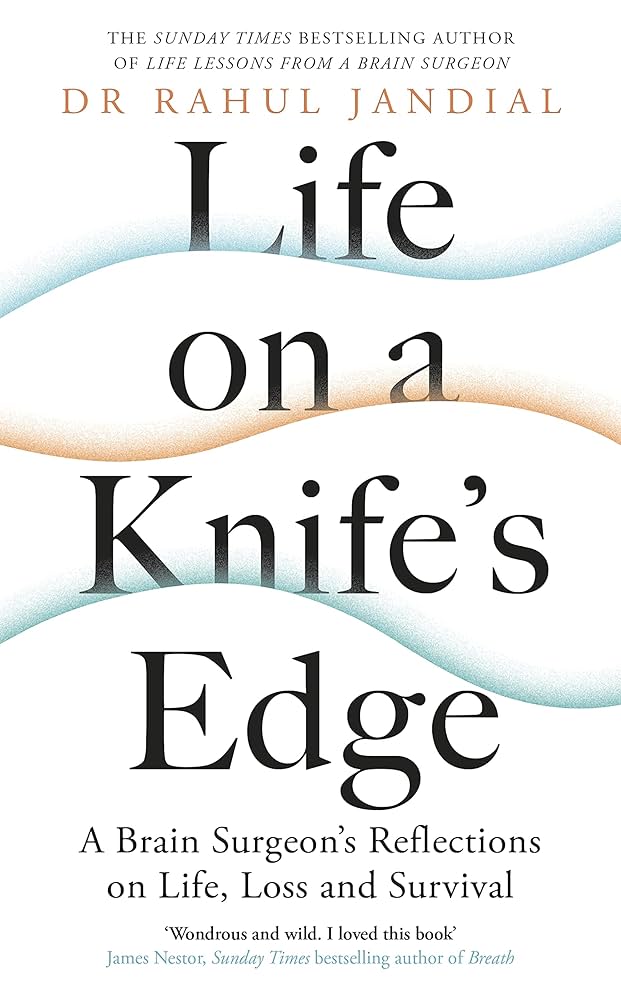
Life on a Knife’s Edge: A Brain Surgeon's Reflections on Life, Loss and Survival
As one of the world's leading brain surgeons, Dr Jandial is the last hope for many patients who have extreme forms of cancer - patients who can't be saved, but deserve more time.
Life on a Knife's Edge is his account of the resilience, courage and belief he has witnessed in his patients, and the lessons he has learned from them. Both an unflinching account of extreme surgeries and a profound, moving and introspective memoir, this book reveals the depths of a surgeon's psyche who is pushed to his limits, day in, day out.
From keeping a gun victim's heart pumping with his own hand, to saving a woman from paralysis and performing brain surgery while time is running out on a hemorrhaging patient, we see how making life and death decisions and facing unimaginable pressure has shaped one man's life.
-
This Is Why You Dream: What Your Sleeping Brain Reveals About Your Waking Life
Dreaming is one of the most underappreciated functions of the human brain, yet our very survival as a species depends on it. In This Is Why You Dream, dual-trained neuroscientist and neurosurgeon Dr. Rahul Jandial explores the landscape of our subconscious, tracing the latest cutting-edge dream research and brain science to show why humans have retained the ability to dream across millennia, and how we can now harness its wondrous powers to improve our sleeping and waking lives.
There's so much that dreaming does for us. It fortifies our ability to regulate emotions. It stores memories, amplifies creativity, and promotes learning. It helps us process trauma and prepare for future upheaval. Dreams can even forecast future mental and physical ailments, such as Parkinson's and Alzheimer's.
Dreams can also be put to use. Dr. Jandial walks you through how to use lucid dreaming to practice skills that translate into real-life improvements, how to rewrite nightmares, and what your dreams reveal about your deepest desires. Ultimately, This Is Why You Dream opens the door to one of our oldest and most vital functions, and unlocks its potential to radically transform our lives.

Resources
-
- Frontiers in Psychology: Meaning in life, meaning-making and posttraumatic growth in cancer patients: Systematic review and meta-analysis
- Frontiers in Psychology: The relationship between life regrets and well-being: a systematic review
- The Journals of Gerontology: Getting Over Past Mistakes: Prospective and Retrospective Regret in Older Adults
- Brain Sciences: Breathing Practices for Stress and Anxiety Reduction: Conceptual Framework of Implementation Guidelines Based on a Systematic Review of the Published Literature
- Breathe: The physiological effects of slow breathing in the healthy human
- International Journal of Mental Health and Addiction: Influence of a single slow-paced breathing session on cardiac vagal activity in athletes
- Experimental Gerontology: Immediate effects of structured and natural deep breathing on heart rate variability and blood pressure in community-dwelling older adults
- Patient Education and Counseling: When do cancer patients regret their treatment decision? A path analysis of the influence of clinicians’ communication styles and the match of decision-making styles on decision regret
- Journal of Pain and Symptom Management: Decisional-Regret Trajectories From End-of-Life Decision Making Through Bereavement
- International Journal of Psychology: Post‐Traumatic Growth in Adult Cancer Survivors: A Scoping Review of Psychological Factors, Predictors, and Interventions
- European Journal of Oncology Nursing: The perception of life and death in patients with end-of-life stage cancer: A systematic review of qualitative research
- The Journal of Neuroscience: Motor Skill Learning Induces Changes in White Matter Microstructure and Myelination
- Frontiers in Cellular Neuroscience: Myelin Dynamics Throughout Life: An Ever-Changing Landscape?
- University of Michigan: Evidence of conscious-like activity in the dying brain
- NYC Langone Health: Patients Recall Death Experiences After Cardiac Arrest
- Harvard Second Generation Study: Harvard Study of Adult Development
2 Million Readers.
1 Life-Changing Newsletter
Simple and Straight-to-the-Point...
Just Like Mel.