Episode: 385
#1 Neurologists: What You Can Do to Prevent Alzheimer's & Dementia
with Dr. Dean Sherzai, MD, PhD & Dr. Ayesha Sherzai, MD
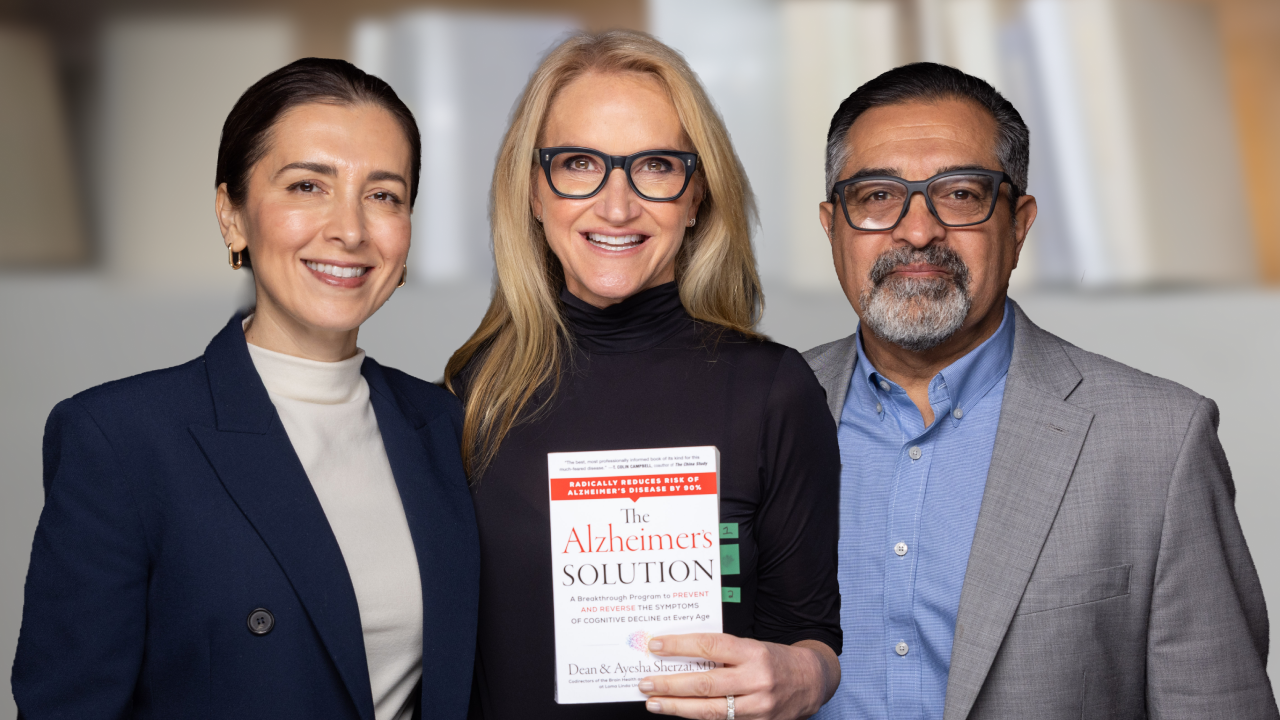
This is one of the most important conversations you will ever hear about Alzheimer’s prevention, dementia, memory loss, and brain health.
In this powerful episode, Mel sits down with world‑renowned neurologists Dr. Ayesha Sherzai and Dr. Dean Sherzai, two of the leading experts in Alzheimer’s disease, dementia, and cognitive decline.
They break down what dementia really is, how Alzheimer’s fits into it, and why brain decline often begins 20+ years before symptoms appear - long before most people realize anything is wrong.
Then, they share the exact science‑backed framework they use with patients, built around five simple pillars of brain health known as NEURO.
You’ll discover how simple, free habits you can start right now can reduce dementia risk by up to 53% and dramatically strengthen your brain over time.
If you’re worried about memory loss - yours or someone you love - this is the conversation you can’t afford to miss.
Listen on:




The brain is the most active and adaptive organ in your body. The change part is in your hands - whether you’re nine years old or 90 years old.
Dr. Dean Sherzai MD, PhD
All Clips
Transcript
Mel Robbins (00:00:00):
Today we are talking about memory, dementia, and the brain health framework you need. You're going to learn about things that you can do right now that can boost your chance of not getting dementia by 53%.
Dr. Dean Sherzai (00:00:14):
Every family now has somebody that has Alzheimer's or some other type of dementia.
Dr. Ayesha Sherzai (00:00:19):
When the word dementia comes about, we always think that that's a diagnosis that happens later on in life. But when you actually look at brain health, you kind of build your brain and if you don't take care of it, the wear and tear will accumulate over a period of time. Cortisol level is high. Don't get a good night's sleep. You don't have time to walk or to exercise. And a time will come when cut that damage is irreversible.
Mel Robbins (00:00:46):
Wait, hold on a second.
Dr. Dean Sherzai (00:00:48):
If you take care of your brain, you've more than taken care of the rest of the body because the brain demands are tremendous.
Mel Robbins (00:00:55):
Dr. Ayesha Sherzai and Dr. Dean Sherzai, our board certified neurologist trained in the treatment of Alzheimer's disease, dementia, and cognitive decline. These neurologists are going to discuss five specific and simple things that you and your loved ones should focus on that will either slow down, pause, and even reverse brain decline.
Dr. Ayesha Sherzai (00:01:17):
These five pillars, they make a huge difference. N stands for nutrition. E is for exercise. U is for unwind. R stands for restoratives. The O stands for ...
Mel Robbins (00:01:27):
That's all we need to do to take better care of our brains.
Dr. Dean Sherzai (00:01:30):
We're talking about millions and millions of people whose lives will be changed.
Mel Robbins (00:01:37):
Drs. Ayesha and Dean Sherzai, welcome to the Mel Robbins podcast.
Dr. Ayesha Sherzai (00:01:42):
It's so wonderful to be here, Mel. Thank you.
Dr. Dean Sherzai (00:01:44):
Thank you so much.
Mel Robbins (00:01:45):
Thank you for jumping on a plane. Thank you for taking time out of your busy schedule to fly across country and be here with us in Boston. We are so excited to have you here, and I want to start by having you speak to me and the person that's with us. What could be different about my life or the life of people that I love based on everything you're about to teach us today?
Dr. Dean Sherzai (00:02:06):
I'll tell you that this is the most important system that we're talking about, the brain. This little brain.
Mel Robbins (00:02:14):
Oh, and he's picking up a brain already. Dr. Dean's got a brain in his hands.
Dr. Dean Sherzai (00:02:17):
This brain that's supposed to be three pounds, 2% of your body's weight consumes 25% of your body's energy as much as 40% of your oxygen at times. This brain is constantly working. It has 86 billion neurons, over one trillion potential connections. It's the most active organ in your body and arguably the most active and adaptive organ in biology. What does that tell you? It's the change organ. And here's the most important part. The change part is in your hand, whether you're nine years old or 90 years old.
Dr. Ayesha Sherzai (00:02:55):
This is an important topic that we need to talk about. And when the listener leaves this conversation, we want them to feel empowered to take care of themselves. Nothing magical around it with things that are easily around them, things that they can start today.
Mel Robbins (00:03:11):
Beautiful. So Dr. Ayesha, I want to stay right there for a second because I think if you're my age, 57 or you're 60 or 70, you're thinking about dementia, you're thinking about memory loss. You may have somebody in your family that has been diagnosed with Alzheimer's. But if the person that's listening right now is in high school or their 20s or their 30s, what could change about their life and why is it critical that they listen to this episode and share it with people that they care about?
Dr. Ayesha Sherzai (00:03:40):
I think that's such an important question. When the word dementia comes about, we always think that that's a point that's a diagnosis that happens later on in life. But when you actually look at brain health, it's like a spectrum. You kind of build your brain and if you don't take care of it, the wear and tear will accumulate over a period of time and a time will come when cut that damage is irreversible. And i'm not trying to scare the listener here.
Mel Robbins (00:04:10):
Well, I don't mind if you scare us because I think we need to hear the truth because I think most of us start thinking about dementia when we get to midlife or if we have a family member that gets diagnosed or we start to feel concerned about it. But you're here to tell us the facts based on research and your medical expertise, which is that this starts way earlier.
Dr. Ayesha Sherzai (00:04:34):
It does. It does. And I'm glad that you put it that way. I'm glad that we're talking about it because as a neurologist, I sit in my clinic and I have a schedule day packed with people coming in with problems with their memory, and then my job is to diagnose them with dementia. And that is a stage where the damage is so profound and so conspicuous that there's not much one can do. There is a lot you can do at that stage as well, but how wonderful it would be for us to actually start taking care of our brain earlier on. So if we were in our 20s or 30s, things like going to sleep on time, waking up on time, making sure we exercise, making sure that we take care for our stress, which is really ravaging our brain, making sure we eat well and have a dietary pattern that we like continuing for a long time. Those things matter and they make a huge difference for our brain health.
Mel Robbins (00:05:29):
I would love to just ask you both. What is dementia?
Dr. Ayesha Sherzai (00:05:33):
Yeah. So dementia is an umbrella category. It's a definition of a condition where your cognition and your memory affects your daily activities. And there are many different types of dementia. 60 to 70% of dementias are Alzheimer's dementia, so it's the most prominent type of dementia. That's why the word Alzheimer's is used synonymously with dementia. It's actually a type of dementia. Another type of dementia is vascular dementia when the blood vessels in the brain are damaged. And then there are other smaller ones like frontotemporal lobe dementia, Huntington's disease, Parkinson's dementia, Lewy body dementia. And most of them essentially impact the way you think, your memory, your decision making, your processing speed. And it's something that doesn't start right away like we were saying it earlier. It's a cumulative damage in the brain that causes this condition. There are multiple different types of protein. One is called amyloid beta protein, another one is called tau.
(00:06:38):
And what happens is over time they start damaging the inside of brain cells on the outside of the brain cells. And there are different ways of actually looking at the brain to understand what kind of dementia people have.
Mel Robbins (00:06:50):
Dr. Dean, after reading your bestseller that you two wrote together, the Alzheimer's solution, I'll tell you what caught me was at the top, radically reduces risk of Alzheimer's disease by 90%. One of the things that I realized is that brain health is just one of those things that you don't even think about until it feels like it's too late. Is it ever too late to consider your brain health?
Dr. Dean Sherzai (00:07:16):
I want to approach this carefully because there are cases where it is too late, and that's where advanced Alzheimer's. There's a lot of people that are actually making money off of people's fears, and this is the biggest fear. When a person has the Alzheimer's or the family and the patient are desperate. And guess what? When there's desperation, people go after that desperation. And I want to make sure that people understand that there is no way to reverse advanced Alzheimer's at this point. You can slow it down. You can work on quality of life, which is as important. Helping families with their journey. Ayesha and I sit down with the families for hours, telling them what they're about to face, what to do, and most importantly, how to give this person that's going through its paddle quality of care. And don't fall for the gimmick of the day.
(00:08:05):
But for the great majority of those that have free Alzheimer's or early dementia or MCI, which is right before dementia, a significant portion of that population can be helped to prevent or delay significantly. And that's incredibly important. If we can do that even at 60%, which is the number that's been proven. When we say 90%, we are extrapolated. I'm always careful not to separate science from extrapolation, but even 60% we're talking about millions and millions of people whose lives will be changed. And that's very important. And I want the people there to know that every family now has somebody that has Alzheimer's or some other type of dementia, and all of those can be affected if we get it early enough.
Mel Robbins (00:08:53):
I love that you can pause or slow it down. You also use this phrase MCI that happens before dementia, and I felt myself lean in. What is MCI?
Dr. Dean Sherzai (00:09:01):
MCI stands for mild cognitive impairment. And this is where a person is having significant memory issues, significant focus issues, but everybody has that. So as soon as I say that people gets here, no. Significant to the point that it's really, to some extent, affecting their daily activities. They can still drive, they can still do their finances, but themselves and the family is noticing that this is a little different than the past.
Mel Robbins (00:09:27):
And give me a couple examples of what might be MCI because I think we've all ... I love that you said every one of us has somebody in our family that is diagnosed with dementia or careening right into it. And I think we've all been at that point, whether you're talking about your grandparents or your parents where you're like, well, they're just kind of losing it. They're not really themselves anymore. They're slowing. There are ways we talk about it, but could you give a couple examples of just what you might see in this MCI stage or super early stage?
Dr. Dean Sherzai (00:10:02):
So let me tell you what's normal.
Mel Robbins (00:10:04):
Okay.
Dr. Dean Sherzai (00:10:04):
You're going to the kitchen and halfway there, you forgot what you were trying to do, right?
Mel Robbins (00:10:09):
Yes.
Dr. Dean Sherzai (00:10:09):
That happens.
Mel Robbins (00:10:10):
Daily.
Dr. Dean Sherzai (00:10:10):
Especially because memory is focused. And I'll talk about that. Focus is the gatekeeper. Focus is the currency. So as you get older, you have lots of things affecting your focus. There's a little pain in your knee. The work, the podcast, the people calling, the problem with the in- laws or family members in good way. And I don't mean it badly, but all of these things are in the back of the mind.
Mel Robbins (00:10:35):
Yes.
Dr. Dean Sherzai (00:10:36):
Those are interferences. So of course, when you are trying to go to the kitchen, you're supposed to first encode that memory before you go. And when you're younger, it happens naturally. When you're older, there's all this piece of information interfering. So you never put it in the right file folder. You go there and you try to grab, it's not there. That's normal.
Mel Robbins (00:10:54):
Okay.
Dr. Dean Sherzai (00:10:54):
But if it happens every day, every minute, there's something going. If you're forgetting closer family members' needs, not just once or twice, but on a daily basis, there's something wrong. So then even then, it's not necessarily dementia. It's something to be addressed. Go to a neurologist, get it evaluated. They'll do imaging, they'll do blood tests, they will do to make sure that's not V12 deficiency or a thyroid disorder or something of that nature that's quickly reversible and they can figure out this is what the stage you are in and we can really influence it significantly.
Mel Robbins (00:11:27):
And the reason is because what you're about to teach us is there are evidence and research-backed things that you can start doing right now that slow or pause the onset of things getting worse.
Dr. Ayesha Sherzai (00:11:37):
Absolutely.
Mel Robbins (00:11:38):
That's really hopeful.
Dr. Dean Sherzai (00:11:39):
It's incredible. And for those that don't have this, start now because it's not just about pausing. How about growing your brain as you get older? We literally see brains grow on MRIs, people who do X, Y, and Z, the things that we are about to speak about. They grow their brains well into their 80s, 90s and beyond because the brain is that active, that has that much capacity to grow. And it's incredibly hopeful.
Mel Robbins (00:12:04):
Dr. Dean, do you believe that our overall brain health as a society is getting worse?
Dr. Dean Sherzai (00:12:10):
In many ways, yes. The reason it feels like it's getting worse, and it is, the numbers are there. It's not necessarily dementia increasing, but that risk is increasing as well. It's because we have so much more happening to us, to our brain, to our focus. Our focus, as I said, is the gatekeeper, it's the currency of our consciousness. So the way you spend that currency matters. I want everybody in the audience to recognize that you have to be aware of your focus and where it's being spent. And in a world where your focus is being stolen systematically through the social media systems and machinery that tries to pull your focus, we have to be careful because if your focus is three seconds at a time, you're never going to get to better memory because without a focus that goes deeper, memory doesn't happen. Without a focus that goes deeper, deep thinking and executive function doesn't happen.
(00:13:09):
Without a focus that can go deeper and sustain, your emotional stability actually is flipped to an urgency living, which is this fight or flight state, which is incredibly destructive. So it starts with that world we live in, which is constant attack on your focus.
Mel Robbins (00:13:28):
What do you think the most common habit that you both see is that's harming people's brain function and we may not even realize it.
Dr. Ayesha Sherzai (00:13:39):
I'm making a generalized statement, but something that I see quite often is stress. And we define stress in different ways in our lives, but stress is such a powerful contributor to cognitive decline.
Mel Robbins (00:13:53):
Why? Why is that contributing to cognitive decline, Dr. Ayesha?
Dr. Ayesha Sherzai (00:14:00):
Yeah, so it essentially changes your biology. You know what? People are under stress, and I have to say bad stress because there is such a thing as good stress, and we'll talk about that later. When people are experiencing brat stress, your body starts creating specific neurochemicals and hormones that don't allow information to be stored in your brain. So you basically are kind of closing all the gates for creativity, for memory, for processing information, and you're in this constant fight or flight situation where your heart rate is up and you're chronically going through biological shifts in your body, inflammation goes up, oxidative damage goes up. Even if you're quiet, even if it's not really showing on the surface, on the inside, stress literally eats up your brain. As a matter of fact, there've been some studies that showed that when people are under chronic stress, they actually have smaller brains. There's a part of the brain called the hippocampus, and the hippocampus is responsible for many things, but the primary function of hippocampus is encoding memory.
(00:15:05):
That shrinks when people are under chronic stress and cortisol is out. So it affects your brain, it affects your heart, it affects your arteries, and it's really important for people to take in account of what their bad stressors are and do something about it.
Mel Robbins (00:15:21):
Is this why if you just think personally, and as you're listening or watching right now, think to a moment in your life where you were under so much pressure. Is this why those periods of your life, you sometimes look back on them later and you're like, "I don't even remember what was going on because my life was so stressful."
Dr. Dean Sherzai (00:15:40):
Absolutely. Stress basically is fire or flight. So you have these two primal states, fight or flight and reproduce and build, which is the parasympathetic system and synthetic system. These two systems are the primary driving force of the brain. When you're in constant stress, you're in fight or flight. Fighter flight means your GI system shuts down, your growth as a hormone shut down, your cortisol goes up, your bones actually starts resorbing and not building. Every system you can think of, including immune system, sexual activity, everything closes. And then during that state, your frontal lobe closes because you are not worried about thinking your way out of the grip of a tiger. You're just running. It's fighting the tiger. And if you're fighting the tiger constantly, none of the growth states matter and the body knows that, shuts them down. So chronic stress is that bad. And then the second part, secondary part of that is when you're in constant stress, nobody is going to be able to stick to a very disciplined nutritional program because you're going to go to survival nutrition, which is in the bad food just to get the calories.
(00:16:52):
You're not going to be doing exercise. It's about doing what makes you just comfortable. You're not going to sleep well. What's the number one factor that affects sleep? Stress. Mental activity, your frontal lobe closes everywhere else closes except the limbic emotional brain. Stress is that destructive, both within the body in general, the brain, and with habits.
Mel Robbins (00:17:14):
One of the things that I love about your work is not only the fact that you're doing research and you're in these big clinical practices, but you're also in community outreach programs. You've built the largest brain outreach program in communities nationwide, which means you're seeing people of all different ages because I think probably if you looked at the data, you got more people going into hospitals for screenings that are older. But I'm curious, how young are you both starting to see the effects of cognitive decline in brain health in people?
Dr. Dean Sherzai (00:17:51):
I love that you said cognitive decline, because I have to be honest, we don't see dementia earlier because then that's later on, but cognitive decline, definitely. And we're seeing quite a few in the communities. Right now, we're in community churches, community states, and we thought that we were going to see people in their 60s, 70s or later. We're seeing people in their 40s come to us and saying they're having cognitive decline. And when we test them, we detect the cognitive decline.
Mel Robbins (00:18:22):
Wow.
Dr. Dean Sherzai (00:18:22):
Now, that doesn't mean that they have dementia That might make them at risk for dementia down the stream, but we know that they're having these cognitive issues early on. And at the same time, it's incredibly positive because we catch it early. In the hospital and clinic, because hospitals and clinics are fantastic, but they're fantastic for sick care, which means you see people at the point of disease once they have dementia, once they've had stroke, once they've had heart attack, you see people way earlier in the communities when they haven't had that yet, but they're seeing the beginnings of it. Or if we detect the beginnings, that's the powerful work in the community.
Mel Robbins (00:19:03):
I love that. One other thing that I read in your book, Dr. Ayesha, is that there are seven stages to dementia. You've already taught us that Alzheimer's is a slice of dementia, even though they seem to be used interchangeably, and that we can be in the first stage, so preclinical stage 20 years or longer. And I want to read to you from your best selling book, The Alzheimer's Solution. This is on page 61. A person in stage one has no impairment, no memory disorder, or cognitive deficits. Though, I'm going to say this word wrong, but amyloid.
Dr. Ayesha Sherzai (00:19:45):
Yes.
Mel Robbins (00:19:45):
Okay. I said that right? Okay.
Dr. Ayesha Sherzai (00:19:46):
You said it right.
Mel Robbins (00:19:47):
Amyloid plaques and tau tangles may be accumulating in the brain. Alzheimer's and other dementias begin to form years and often decades before they manifest. There may also be inflammation, vascular changes and atrophy in certain parts of the brain, but not enough to cause symptoms. And this first of the seven stages of dementia can last 20 years or longer.
Dr. Ayesha Sherzai (00:20:13):
Yeah. That sounds scary, doesn't it?
Mel Robbins (00:20:14):
Yes. I'm like, am I already in it? Probably, but ...
Dr. Ayesha Sherzai (00:20:19):
I think it kind of ties back to what I was saying earlier. I think if we think about brain health as a spectrum and not something as healthy versus non-healthy, it will make sense.
Mel Robbins (00:20:34):
Now, are we all going to get dementia?
Dr. Ayesha Sherzai (00:20:36):
No, that's the whole point of having this conversation, right?
Mel Robbins (00:20:40):
Okay.
Dr. Ayesha Sherzai (00:20:41):
What we do is throughout our life, you're either living a life that is taking care of that magnificent organ or you're contributing to its damage. If you're doing things that are damaging to that brain, if you kind of think about it, it's like a wear and tear. You have this beautiful machine, right? You have to oil it, you have to just keep it away from moisture. You have to make sure that it's not exposed directly to the sun. You have to make sure that you keep it clean. I just got myself a cuisine art that makes your stand and it requires a little bit of maintenance. I don't know why I'm bringing that analogy, but-
Mel Robbins (00:21:19):
Because it's a pain in the rear end to clean, that's why.
Dr. Ayesha Sherzai (00:21:22):
Yeah. If you just let it be, then it's going to not work properly. Seen goes for the brain. You really have to put in the work to take care of it. And so if we don't, even if we're in our 20s and 30s, like we were saying earlier, a bad night sleep, not eating well, choosing a sedentary life, having poor relationships that is constantly creating stress in our life, not really pushing ourselves to learn something new to experience something new and be creative. What happens is your brain starts accumulating these bad proteins that you just talked about, amyloid, beta protein, and tautangle. And after a while, that damage really shows itself. When we actually do MRI imaging of our patient's brain, you can actually see white spots. We call it white matter disease, and that could be related to bad blood pressure. It could be related to high cholesterol.
(00:22:16):
It could be related to loneliness and social withdrawal, not treating sleep apnea and not living a healthy lifestyle. So you can actually be in that stage for decades before the first symptom of forgetfulness comes about. That's what we meant in the book.
Mel Robbins (00:22:32):
Now, if you've had concussion damage, because I keep thinking about the fact that so many people listen to this podcast within families, does that put you at greater risk for developing dementia or any cognitive decline later in life?
Dr. Dean Sherzai (00:22:48):
It does. It does, but there are different degrees. If people had a significant head trauma, of course the risk goes higher.
Mel Robbins (00:22:56):
Yes.
Dr. Dean Sherzai (00:22:56):
Or if you had multiple smaller head traumas, again, same thing. So I want people to know that the head trauma is a major contributor, and we have to take life with that in mind. We took it for granted that the brain was going to be fine because it's inside that bony skull. That bony skull has ridges, and the fluid that covers the brain is not viscous. So it's not slow motion, doesn't slow the ... It's literally bouncing off the bone. So we have to be careful with the activities we're involved in. Sadly, even I played soccer and sure if stuck to tennis. Even soccer players that do multiple headers, they've seen that that actually affects the brain. And activities like boxing and traumatic brain injuries absolutely contribute to that. Now, the good news is, if it's a few head traumas, like the things that I should just said, a few things that happen during a youth, we can reverse that.
(00:23:55):
The good things that you do can significantly offset the bad things. I would rather that people don't do the bad things because we don't know when you'll be overwhelmed, but the two has to be taken into consideration.
Dr. Ayesha Sherzai (00:24:08):
I wanted to add something.
Mel Robbins (00:24:09):
Yes, please.
Dr. Ayesha Sherzai (00:24:09):
And I think this is really important and people might find it useful. When we expose our brain to something that could potentially harm it, we don't feel it when we're younger. We actually don't have any pain receptors in our brain.
Mel Robbins (00:24:25):
You don't?
Dr. Ayesha Sherzai (00:24:26):
We don't. So that's why I don't know if you've actually seen these neurosurgery videos where they have somebody's skull open up and they have their eyes open and they just kind of poke at the brain and the person is playing the vial and to see which part of the brain they're touching. The brain itself doesn't have any pain receptors. The cover rings do. But my point here is the brain has so much reserve and capacity to kind of make up for a deficit earlier in our life is you actually don't feel it. One of the reasons why people don't care about their brain health is like even if they drink too much, even if they miss many nights of sleep, they're fine. They don't feel it. Had it been your skin, if you keep on slapping your skin, you're going to get a bruise. You're going to be able to like, "Oh gosh, I see it. I see the damage." But we don't see or feel the damage to our brain because it has such resilience, a very, very quote unquote plastic organ. It makes up for those deficits, but the damage is happening unfortunately.
Mel Robbins (00:25:23):
Well, I love that you said that and here's why because common sense, I think we all know if you're smoking, you're damaging your lungs. If you're eating ultra processed food, you're damaging your GI tract and some of your other organs. If you are sedentary, you're not doing a lot for your overall health and your muscles. And what I'm gathering from this conversation and also from the lifestyle interventions you're about to talk about that are within all of our reach to be able to take better care of ourselves and our brains, that just like smoking damages your lungs, it's damaging your brain. Just like alcohol is damaging your liver and you may feel the hangover in your body, it's damaging your brain. And just thinking about it holistically that this organ that is literally what's keeping you alive is affected by everything you do, but we're not thinking about it. And that's why this is so important.
Dr. Dean Sherzai (00:26:28):
Incredibly well said. And I would go as far as say you probably affect the brain more because remember-
Mel Robbins (00:26:35):
Really?
Dr. Dean Sherzai (00:26:35):
Oh, it's a three pound organ, but it consumes 25% of your body's energy. It is the most vascular organ. You would think that the heart is the most vascular. The brain is the most vascular organ in the body. So we're talking about smoking. So smoking affects the lungs. The vasculature of the brain is affected significantly more because there's more of it. When blood pressure affects the peripheral organs, the brain is profoundly more affected because of the vasculature. When you're having alcohol, it directly kills neurons and more than killing neurons affects the connections between neurons and affects sleep and everything else. So we usually say, if you take care of your brain, you've more than taken care of the rest of the body because the brain's demands are ... It's resilient, but its demands are tremendous.
Mel Robbins (00:27:26):
Dr. Dean, how much control do people have over their cognitive future?
Dr. Dean Sherzai (00:27:32):
More than any other organ. Your brain is at your control. It's there to answer to you constantly. Your brain is growing constantly and it's growing in relation to what you do to it. And it's also shrinking in relation to what you do to it.
Mel Robbins (00:27:48):
Oh, I don't like that. When you said shrinking, it made me feel bad because you know what it made me think about? It's like, this may be too much information, but you think about hydration, we all need water. If I go to the bathroom and I see that the urine's a certain cobalt, oh, I'm not hydrated, but I'm not thinking that my brain needs water. And if I'm not hydrated, my brain's shrinking a little bit. And I think that's a really compelling thing to think about.
Dr. Dean Sherzai (00:28:14):
It is. It's beautifully stated. And it's compelling because it's visual, but it's even more real for the brain. So nutrition, sleep, and stress management creates the environment for the brain to grow or shrink. The two things that grow the brain, and by growing, I mean connections between neurons. Your neurons can have two connections.
Mel Robbins (00:28:36):
Oh, they're pulling out a visual. I'm excited to see this. Okay, let me describe this for the person who's listening. They're holding up just kind of a whiteboard and you've got two blue dots on either end, and then they're connected these two blue dots by just two red screen strings. Yes.
Dr. Dean Sherzai (00:28:53):
And the strings, the blue dots, the blue things are, imagine it's the neurons.
Mel Robbins (00:28:58):
Okay. So the blue dots are neurons.
Dr. Dean Sherzai (00:29:00):
And the connections are the axonal connections between the neurons. That are they called? The axonal connections.
Mel Robbins (00:29:06):
Axonal connections.
Dr. Dean Sherzai (00:29:07):
Yes.That's how they communicate with each other. That's how we actually think. It's the communication between neurons.
Mel Robbins (00:29:12):
Got it. Now, do I need the neurons to be connected in order for my brain to grow?
Dr. Dean Sherzai (00:29:17):
Oh, absolutely. In order for your brain to even survive.
Mel Robbins (00:29:20):
So brain health requires your neurons to be able to connect to each other.
Dr. Dean Sherzai (00:29:24):
Yes. And these connections can be made at any stage of our life. That's the cool thing about it. We may not be able to grow many brain cells, but we can make so many connections between the brain cells that we already have. Each cell can make as little as one or two connections or as many as 30,000 connections.
Mel Robbins (00:29:47):
Depending on how you take care of it.
Dr. Dean Sherzai (00:29:48):
Correct.
Mel Robbins (00:29:49):
Okay. Hold on. You're holding scissors, so I don't know what you're about to do.
Dr. Dean Sherzai (00:29:52):
Well, this is what happens. If you haven't eaten well, if you haven't challenged your brain, if you haven't exercised, your neuron These are connected, a couple of connections, a couple of axons. And one night you had too much alcohol and one of the strings is cut.
Mel Robbins (00:30:08):
Oh my gosh. It was so sad. So if you're listening, he just cut one of the strings and now these two neurons are hanging on by one thread.
Dr. Dean Sherzai (00:30:17):
Yeah. And then another day you were just walking or you were playing sport and you had a head injury. And the other-
Mel Robbins (00:30:25):
Oh my God. They're not connected anymore.
Dr. Dean Sherzai (00:30:27):
They're not connected. And not only are they not connected, and most of the time they never connect again. And that's it. It's gone. Now-
Mel Robbins (00:30:35):
That's so depressing.
Dr. Dean Sherzai (00:30:36):
It is. But here's the-
Mel Robbins (00:30:37):
Is that what you mean by you're shrinking your own brain? Correct. Because you're killing the connections between the neurons.
Dr. Dean Sherzai (00:30:43):
Absolutely.
Mel Robbins (00:30:44):
Okay. They've got another visual. Let me explain this to the person who's listening. So now they're holding up a second visual. It's again, two neurons, but this time instead of two strings, there's tons and tons and tons and tons and tons and tons of strings connecting them.
Dr. Dean Sherzai (00:30:57):
Correct. And this is not even a good representation. This is probably 50 connections. We're talking about 30,000.00. Now this is one neuron and then connected to another neuron. Now this is because this person has kept their brain active. They've challenged themselves. They've exercised. They've kept good nutrition and all of that.
Mel Robbins (00:31:15):
So you, by doing that, have created the conditions for the neurons in your brain to grow and connect and communicate with each other, which increases the health of your brain.
Dr. Dean Sherzai (00:31:27):
And thousands of studies have shown this too. Imaging studies to pathology studies that people that have challenged itself that have kept their brain healthy have way more connections. Now this brain, let's say the same thing as the previous one. One night they drank and one of the strings got cut.
Mel Robbins (00:31:43):
Okay. I don't like it when you cut it because I feel my brain going, "Don't do that."
Dr. Dean Sherzai (00:31:49):
And then another day they had head trauma. Another one wrote. Guess what? still, all the rest of the connections are there. And let's see a bunch of other things happen.
Mel Robbins (00:31:59):
Now he's cutting a lot. There's a lot of strings hanging down, but you still have the connection between the two.
Dr. Dean Sherzai (00:32:05):
And here's the beautiful part. Not only are those connections continuing the work, the fact that they're connected actually later on allows these two neurons to make further connections again. That's the incredible story. That's an incredible hopeful story. By the way, those connections can be made at 80, 90, even a hundred years of age.
Mel Robbins (00:32:26):
Now, if you have dementia, can you continue to make connections?
Dr. Dean Sherzai (00:32:30):
Yes.
Mel Robbins (00:32:31):
You can.
Dr. Dean Sherzai (00:32:31):
You can. But the thing is, if you have advanced dementia, by then the mechanism of destruction through tau and amyloid is so profound that it's difficult to reverse.
Mel Robbins (00:32:41):
But I think that-
Dr. Dean Sherzai (00:32:42):
You can slow it down.
Mel Robbins (00:32:43):
The really important thing about this visual, and it's so powerful, is that as long as you don't destroy it all and the neurons stay connected through the lifestyle and research back things that you're going to tell us to focus on, you can help your neurons in your brain make more connections even if you've done some damage earlier in your life.
Dr. Ayesha Sherzai (00:33:08):
That's a very empowering statement. And we see it clinically in our patients. Say, for example, if someone has had a mild stroke or if they've had traumatic brain injury. In stroke, what happens is some of your brain cells die and they never come back. But with physical therapy, with a healthy lifestyle, with cognitive therapy, you can actually strengthen the connections between the cells that are already there. And sometimes they can take over the function of the cells that are lost.
Dr. Ayesha Sherzai (00:33:38):
It's so wonderful to actually see people recover even after major injuries or major strokes when they start living a healthy life and implement these lifestyle facts.
Mel Robbins (00:33:49):
Can you bring that visual back real quick? Because I want to ask you a question related to stress and the visual that has a bunch of different connections. So let's say you've been taking very good care of yourself, but now you're in a caregiver role. And you talked about the fact that Dr. Ayesha, when you were talking about the things that create damage to your brain health, one of the biggest ones is stress and chronic stress. And we now know that caregiving is its own form of chronic stress. And I was startled reading your bestselling book, The Alzheimer's Solutions, page 46. Partners of those who develop dementia have a 600% greater risk of developing the disease themselves compared to the general matched population. And this isn't attributable solely to stress that shared lifestyle risks are also a major factor in the health outcomes of long-term couples.
(00:34:49):
I'd love to have you just grab the scissors and just show us how stress and caregiving really can break apart these connections and neurums because you're so focused on somebody else, you stop taking care of yourself.
Dr. Ayesha Sherzai (00:35:06):
So what caregivers are under tremendous stress, let's say their cortisol level is high, that kind of cuts off two or three different connections between cells. Let's say, for example, they don't get a good night's sleep. We know how common that is among caregivers. Your brain didn't get enough time to cleanse itself and to function properly. Let's say four or five other connections got cut off. Let's say you don't have time to walk or to exercise. Forget about it. You have some other connections cut off. Let's say you never really get time to do something creative because you're just stuck in this constant mundane lifestyle of doing something over and over again. Creativity doesn't allow for your brain to grow at all. And then on top of that, just the sadness and this pressure of taking care of another person, the guilt that comes with it, the shame that comes with it. All of that actually just severs the beautiful connection between great cells. And that's what puts people at a high risk.
(00:36:07):
The other thing is when you live with someone who has Alzheimer's disease or some sort of dementia, lifestyle matters too. So you kind of share the same environment too. You kind of eat the same foods that they do. Let's say, for example, if they were not eating healthy food,
(00:36:23):
There you go. More connection severed. They were not really into exercising. There you go. You kind of follow that pattern. And as you can see, there's accumulation of all of these risk factors on top of the stress that you're experiencing and caregivers does a lot.
Mel Robbins (00:36:38):
I am so grateful that you brought this visual example. And if you're listening, what just happened is every time Dr. Ayesha talked about those very real circumstances that caregivers are experiencing, she was cutting one of the strings that connected the neurons in your brain, and it was extremely compelling and dramatic to see the connections and the strings hanging down because this is the first visual example that I've ever experienced that really demonstrates to you as a caregiver why taking care of yourself, getting sleep, eating right, staying connected to friends, that you hear the adage, put your oxygen mask on. It does matter because while you're caregiving, if you don't take care of yourself, your brain is shrinking. And there are things that you can do to stop that from happening or to build more neurons back. If you've been in a period of caregiving and now you're coming out of it so that you can ... But this to me raises the stakes in why the interventions we're about to talk about matter so much.
Dr. Dean Sherzai (00:37:51):
One other point that I have to make here.
Mel Robbins (00:37:53):
Yes.
Dr. Dean Sherzai (00:37:53):
A large percentage of population, your population is women. Yes. Two third of all caregivers are women and two thirds of all Alzheimer's patients and dementia patients are women. And they're usually caregivers when they're midlife. They're going through menopause and everything else. That's not a sad thing. Here's the positive part of that. If they just are aware of that fact and they do one or two positive behaviors and activities in their life, that is a significant change in risk fact. So for women especially, they should know. Majority of the women that we deal with are, they're taking care of their children and their mothers.
Dr. Ayesha Sherzai (00:38:36):
And then they're going through their 40s and 50s, like you said.
Mel Robbins (00:38:38):
As estrogen drops, yes.
Dr. Ayesha Sherzai (00:38:40):
In your hormonal system and the expectations that are put on you from the society, all of that takes a toll.
Mel Robbins (00:38:47):
Well, I really appreciate your work because you have simplified the things that we need to focus on down to five things. Dr. Ayesha, it's a word, neuro, N-E-U-R-O. Can you walk us through the five things-
Dr. Ayesha Sherzai (00:39:03):
Absolutely.
Mel Robbins (00:39:04):
... that we should focus on. And if you're a caregiver, ladies, wake up like this is what we need to do to keep our brains healthy.
Dr. Ayesha Sherzai (00:39:14):
Thank you for bringing that up, Mel. We kind of kept it simple for our patients and our community members to remember these five pillars because they make a huge difference. So N stands for nutrition. It's not about super foods. It's about what kind of dietary pattern you choose, and I'd be happy to talk about it later. E is for exercise, moving. Movement is life. It's connected deeply to how we feel about ourselves and how our brain grows. U is for unlined, which is stress management. Reducing bad stress, increasing your good stress. R stands for restorative sleep, which basically means the deep kind of restoring sleep that cleanses your brain and makes it ready to memorize and be creative. And O stands for optimizing cognitive activity, doing specific kind of activities, living a meaningful and a purposeful life, and engaging with your environment and your social life so that you can grow the brain.
Mel Robbins (00:40:13):
So doctors, you're saying all we have to do is focus on better nutrition, moving our bodies, unwinding, meaning just address some of the big stressors in your life, mindfulness, deeper rest, prioritizing sleep, and then optimizing some of the cognitive functioning in terms of just learning something or engaging in things that expand the way that you think. That's all we need to do to take better care of our brains.
Dr. Ayesha Sherzai (00:40:42):
These are the core lifestyle measures that you can address, and yes, you can take care of your brain.
Mel Robbins (00:40:47):
This is how we can pause the onset of dementia.
Dr. Dean Sherzai (00:40:51):
Let's put it this way. Take nutrition alone. If you eat a nutrition that's healthy and it's simple, it's not any ... You have to buy anything from anybody. These are simple things from any grocery store. We work in Crenshaw. We work in Central LA. Things that you can find anywhere. The studies have shown, mind study, that just good nutrition reduces your chance of Alzheimer's by 53%.
Mel Robbins (00:41:16):
53%?
Dr. Dean Sherzai (00:41:17):
Your brain is incredibly forgiving and resilient. And I mean that in a physiological sense, because this brain doesn't hold guilt or memories of a blame or what did you do? It recognizes the thing that's in front of it. So if you put the right thing in front of it, it literally overnight changes.
Mel Robbins (00:41:35):
It's sort of like a plant. So you might have a sad plant in the corner, but if you give it a little sun and some water, it'll perk right up. Is that what you're saying?
Dr. Dean Sherzai (00:41:41):
It's the perfect analogy. It's the perfect analogy.
Mel Robbins (00:41:44):
Now, Dr. Dean, before we go deeper into each one of these habits, because once you said 53%, that was incredible just talking about nutrition. Can you share more about why each one of these five habits matter so much for your brain health?
Dr. Dean Sherzai (00:42:00):
Absolutely, because they're cumulative. At the same time, you could do one or two of them and you would still benefit. But if you do several of them, and there's a study that actually shows this, when people did one or two of these habits, they reduced their chance of Alzheimer's by 30% or so. When they did four of them, they actually reduced it by 60%.
Mel Robbins (00:42:20):
60% reduction?
Dr. Dean Sherzai (00:42:21):
Yes.
Mel Robbins (00:42:22):
By following these five simple habits?
Dr. Dean Sherzai (00:42:24):
Correct. And it's powerful because it's cumulative. So if you do just walking exercise, we're not talking about some kind of marathon running. Just daily walk, you've reduced your chance significantly. In fact, one Harvard study showed that if people walked brisk walk 25 minutes a day, just a brisk walk, 25 minutes a day, they reduced their chance of Alzheimer's by 40%.
Mel Robbins (00:42:51):
Wait, hold on a second.
Dr. Dean Sherzai (00:42:52):
Yes. Yes.
Mel Robbins (00:42:53):
I mean, that just sounds honestly insane that you could reduce your risk of Alzheimer's by 40% by taking a 25-minute brisk walk. How many days? Just every day?
Dr. Dean Sherzai (00:43:06):
Five days a week.
Mel Robbins (00:43:07):
Well, and if you're listening to this podcast and walking right now, you're doing a twofer. You're not only learning, but you're also doing something that improves your brain health. You know what else is cool about that? It's free.
Dr. Ayesha Sherzai (00:43:21):
It's free. You're right. Absolutely. And whenever we talk to our patients, we try to create this picture of you accumulating these coins or creating a Breen bank account. And we actually have a model here that if you want to pull out the marbles. So basically have two jars in front of us.
Mel Robbins (00:43:41):
Okay, great. So if you're listening, I want to tell you right now what's happening. There are two big Mason jars, and one of the jars is about half full of clear marbles. And the second jar only has a little bit of marbles. So I'm just going to take a guess that the person on the right that has just a few marbles in there partied a lot, didn't get a lot of sleep, has had a lot of concussions and is caring for people. And so it feels like a lot of the connections between the neurons have been destroyed. No judgment, no judgment.
Dr. Dean Sherzai (00:44:12):
No, no, never.
Mel Robbins (00:44:13):
Yes. The one on the left is about half full with marbles. This is somebody that's eating better and that kind of stuff.
Dr. Ayesha Sherzai (00:44:18):
So the jar that has less marbles is someone who really didn't invest in their brain health too.
Mel Robbins (00:44:24):
Okay.
Dr. Ayesha Sherzai (00:44:25):
So say for example, they didn't take that dietary pattern seriously or they didn't take sleep seriously. So they really don't have a lot to lose over here. And say, for example, if they have one night of bath sleep, I'm going to start pouring the marble out of the jars, now you have less. And then let's say, for example, another time they just decided to just let go and just eat a lot of unhealthy food, junk food, and not really get in all those blueberries and good fats in there. And then, whoop, we're going to lose some more marble care. And now you're luck with very little. Now, the person who has actually invested in their brain and they've accumulated all of this positive energy and protection for their brain, let's say something bad happens to them. Even if they actually start having, say for example, they've had a small little brain injury.
(00:45:22):
They're going to lose a little bit of marble here. But guess what? They still have a lot there.
Mel Robbins (00:45:28):
Yeah.
Dr. Ayesha Sherzai (00:45:28):
They're really not going to run out of that cumulative benefits for their brain health. So this is essentially a concept of cognitive reserve.
Mel Robbins (00:45:37):
Oh, I got it. So the more you focus on these five lifestyle changes that we're going to unpack for you, the more you're investing for the future so that if something happens, caregiving for a couple years, if something happens, you have a reserve of healthy deposits in your brain to get you through it. Now, does the opposite also work? You haven't been good. You're now listening to this or watching this and you're like, "Uh-oh." Because I know that this is an episode that so many of you are going to be sharing with your parents and your grandparents and your brothers and your sisters, and you may have received this in the family group text chain, and now you're listening thinking, "Oh my God, I'm screwed. What am I going to do? " Does it work the opposite meaning every night's sleep, you're now starting to deposit. Okay, Dr. Dean.
Dr. Dean Sherzai (00:46:31):
So that's a beautiful segue. The reality is, let's say you're 50 years old, 60 years old, and you have this little reserve, you get that. But now you start with nutrition and you're eating a very healthy nutrition. You remember 53% we are talking significantly first. Now you're walking every morning and doing some leg exercise as well. We'll get to that. Now you have all of this. Now as marvels are coming out of the vein-
Mel Robbins (00:47:01):
That's good because it's spilling over. Good health.
Dr. Dean Sherzai (00:47:04):
Now you have it. Now you're actually managing your stress and then you're sleeping better. And see, you did not have a really good sleepopener. And now also you're challenging your brain, you're creating relationships, you're socially active, you're doing creative stuff.That's a full bank account in your 60s.
Mel Robbins (00:47:29):
You know what else I loved about this is that we've all seen those videos online of grandmothers and grandfathers at the gym pumping weights to prove that if you start at any age, your muscles can respond. And what I love about this visual is that even if you're listening right now and you have not done a good job of taking care of yourself, you can start today and it will make a enormous difference in your brain health and how you feel. And more importantly, what you're saying is based on the research, we're going to go through each one of these five things that you want us to focus on. You can pause dementia. You can slow it down. You can protect yourself from getting it the earlier you start.
Dr. Ayesha Sherzai (00:48:16):
Absolutely. It kind of ties back to that question you asked about why should people worry about their brain health in their 20s and 30s? This is why.
Mel Robbins (00:48:25):
Well, and I also love this because there's so much noise out there about longevity and people injecting themselves in this thing and that thing and the other thing and all this crazy weird stuff. And you're just saying, "Hey, there are five things that based on all of the research, based on all of your expertise, this makes a significant difference."
Dr. Ayesha Sherzai (00:48:45):
That's very true.
Mel Robbins (00:48:46):
Dr. Ayesha, one of the things that I think is super cool about you is that during your neurology training at Columbia University, you became a professionally trained chef.
Dr. Ayesha Sherzai (00:48:57):
I did.
Mel Robbins (00:48:57):
Why?
Dr. Ayesha Sherzai (00:48:59):
Because I spent a lot of time in my clinic talking to my patients about nutrition, and I felt so disempowering to just pat them on the back and say, "Eat healthy. What does I even need? Eat healthy." It means different things for different people or I always took pride in being very evidence-based and I would bring up mind, diet or Mediterranean diet, but what does Pediternean diet mean for someone who lives in Crenshaw, Los Angeles, California? And so I thought, no, I think I need to know this better because at the end of the day, it's you in your kitchen, it's you in front of your fridge making decisions about what to put in your body. And if I'm not specific and if I'm not empowering, I'm not doing anything. So I'd be in the ICU in the mornings at Columbia Presbyterian and then right after work at 7:00 PM in my scrubs, I would run down to the cooking school in New York City and I got my degree in two years and I've been teaching my patients and my communities how to cook.
Mel Robbins (00:49:56):
So let's put us right at that spot that we all plan what we're eating, which is standing in front of the fridge with the doors open or standing in front of the cupboard with the door open. What do you want us to have in our fridge or our cupboards in terms of the options and what we should focus on for better brain health?
Dr. Ayesha Sherzai (00:50:18):
So when you look at the different studies that have been done that show what kind of foods matter for brain health, it's not one or two foods that stand out. It's not a super food of the day because we all hear that in infomercials and people stock up on specific fruits. It's the kind of dietary pattern that you have, the different types of food that you eat. And whether it's the mind diet or Mediterranean diet or all these dietary patterns that have been studied extensively, it's a variation of the same feed. They're mostly plants. So you have your green, sleefy green vegetables, you have your cruciferous vegetables like broccoli, cabbage, cauliflower. You have nuts like walnuts and almonds. You have seeds like flax season cheese seed. You have lagoon, which are phenomenal beans, lentils, tofu, tempeh. Then you have coffee and tea that are so potent in their anti-inflammatory compounds.
(00:51:13):
You have spices that give flavor and have anti-inflammatory. In fact, all of this, if it's in your bowl, if it's just soup or if it's a sanders there, great. And like we were saying, studies have shown that people who eat a healthy dietary pattern, mind diet, they reduce their risk of Alzheimer's did by 53%. But even if you actually take some foods that stand out, like for example, studies have shown that people who add one serving of leafy green vegetables like spinach or kale or colored greens to their diet, right? It could be raw, cooked, frozen, whatever. If they ate that on a regular basis, they had a brain that was 11 years younger.
Mel Robbins (00:51:51):
What?
Dr. Ayesha Sherzai (00:51:52):
Yeah.
Mel Robbins (00:51:54):
Just one lame spinach or kale or collard green salad.
Dr. Ayesha Sherzai (00:51:57):
Just open the bag, fistful spitch, put it in your soup or just toss some olive oil and some lemon on it and just eat it and your brain looks 11 years younger. It looks good on neuroimaging and it functions better as well. How wonderful is that? Just greens. Even if somebody's listening to this podcast and the only thing that they take out of this episode is just eating leafy green vegetables, I've done my job.
Mel Robbins (00:52:24):
I think that's extraordinary.
Dr. Ayesha Sherzai (00:52:25):
It really is extraordinary. And then you add other things on top of it. For example, if you eat beans on a regular basis, they have so much fiber, they have complex carbohydrates. Everybody's scared of carbs, but complex carbohydrates are important for you. Your brain runs on glucose and if you give it the right kind of carbohydrate, it functions beautifully. So when you eat lentils and beans, they provide protein, they provide complex carbohydrates. It's good for your brain, it's good for your gut. It actually manages your insulin levels, your glucose levels, because at the end of the day, there are four things that start impacting your brain health when it comes to nutrition. Inflammation, oxidation, glucose or sugar, dysregulation like prediabetes and diabetes, and then lipid dysregulation or fat dysregulation, which means bad cholesterol, too high LDL, all of this kind of starts damaging the brain.
(00:53:18):
And what you eat impacts all four of these things. So I would love for the person who's listening to make sure they're having some green, leafy vegetables, to make sure that they're having some nuts or seeds. Maybe they can put it in the jar on their counter, add some walnuts to your oats for them to eat whole grains like oats, brown rice, let's say quinoa, for them to actually have some anti-inflammatories in the form of blueberries and strawberries and raspberries, because these are goaten compounds that cross the blood brain barrier and they actually fix the inflammatory changes and the oxidatic damage in the brain for them to drink some coffee if they can handle it or some mean tea. And I know it sounds cliche, but when they say eat the rainbow, there's something to it. These colored compounds, the fruits and vegetables that you eat, they really provide the right kind of an environment for your brain to grow and thrive.
Mel Robbins (00:54:10):
I also love that kind of cliche thing, but it's really true to just shop the perimeter of the grocery store because that's where the vegetables and the meats and the fish and all the good stuff are.
Mel Robbins (00:54:20):
So Dr. Dean, let's move on to exercise because you have said, well, both of you have said that your legs protect your memory.
Dr. Dean Sherzai (00:54:31):
I don't want to compare exercise to any other of the neurofactors, but we're beginning to believe that exercise is central. You have to move. You have to create a life of movement because when you move, both aerobic and anaerobic, both exercises that make you tired and exercise that strengthen your muscles. Both are now found to be critically important. When you move, believe it or not, it's the number one factor that affects your emotions, whether it's anxiety, depression, it's incredibly potent. I'm not saying as a replacement for medications, but as a powerful adjunct, it's incredibly important. But on the brain itself, when you move, it creates chemicals such as BDNF, GDNF, and VGA. These are growth factors that grow the vasculature, that grow the connections between neurons. They're incredibly powerful. When you move, it's the biggest pump in your body. It's not your heart, it's your legs.
(00:55:29):
Legs push the blood to the brain. So they've done studies that people who moved regularly had better blood flow to the brain. When you move, it actually helps with the cleansing of the brain later on because your lymphatic system, which is the cleansing mechanism, works better. The list goes on and on and on. I don't care if you're going to be ... Nowadays, it's popular to say zone one and zone this or that. Forget about that. Do a brisk walk. The zone stuff is for people to sell their programs. Eat salad, greens, and walk a brisk walk 20 to 25 minutes a day. That's nothing extraordinary, but it's extraordinary as far as what it does for your brain. Now, the strength exercises are even more powerful, especially leg exercises. When I was younger, even when you and I worked out, I said, "Don't skip leg day. I hated leg day."
Mel Robbins (00:56:27):
I still do.
Dr. Dean Sherzai (00:56:29):
Most of us do it, but leg days are important. Let's start from the other end of the life spectrum. When you're older, the number one reason that people end up in emergency room is falls. In fact, we lost our healthy, incredibly healthy grandma, Ayesha's mom just recently within last month because of a fall. We lost my mom originally because of a fall and injury, and then COVID was a subsequent factor, but falls are incredibly common. Guess what stops falls? Leg sprain. Now, let's get a little closer at a younger age. Leg strength builds brain volume.
Mel Robbins (00:57:07):
What does that mean?
Dr. Dean Sherzai (00:57:08):
It grows your brain. So there's a study, there's a twin study, and there's no better studies than twins because genetically they're identical. So it's not genetics. Often, even environmentally, they're the same, right? Often. They did studies in MCI patients, mild cognitive impairment, pre-dementia. Seeing there's a control group, one sibling did leg strength, the other one did stretching. Not that stretching is bad, but compared to leg strength, they looked at the percentage of MCIs that went on to develop dementia. Those that did leg strengthening exercises reduced their chance of Alzheimer's by 47%. 47% leg strength.
Mel Robbins (00:57:50):
Hold on. I just want to make sure that as you're watching or listening, that you really got what Dr. Dean just said to you. So far, and this makes sense, that your legs are critically important because they're an even bigger pump of blood than your heart. And when you have good leg strength, when you go for a walk, 25-minute brisk walk five days a week, you reduce your risk for Alzheimer's by how much?
Dr. Ayesha Sherzai (00:58:17):
So the siblings who exercised and had stronger legs, 47% of them actually had normal memory testing after that period. And it wasn't even extensive. It was just a six-month study and they exercised for about 30 to 45 minutes. And they were doing things like the resistance training, leg press, lunges and squat.
Mel Robbins (00:58:42):
How many days a week do I have to do this?
Dr. Ayesha Sherzai (00:58:44):
Three or four times a week.
Mel Robbins (00:58:46):
That's it.
Dr. Ayesha Sherzai (00:58:46):
We is great. Yeah.
Mel Robbins (00:58:49):
Why wouldn't you do this if you knew that you decreased your risk for Alzheimer's significantly? And if you have any type of mild cognitive impairment, the study is showing that you might actually reverse it. Yeah. Well, then that's what- That's why I'm saying as a whisper, I'm like, "Really?"
Dr. Dean Sherzai (00:59:10):
Yes.
Dr. Ayesha Sherzai (00:59:13):
The speakers in our hands, just yelling at a top of our lungs to say, "This is such a wonderful way of taking care of your- "
Mel Robbins (00:59:20):
And even if you're 80, even if you're 90.
Dr. Dean Sherzai (00:59:23):
Yes. You don't have to do leg presses with weights on your shoulder. I tell people do mini squats. Watching your favorite show, make that your leg day. Stand up, your couch is behind you. Don't go all the way 90 degrees. Go 60 degrees and do a few of those. Write it down. And even if you're following me on your couch, but you've started. You've started in a place, not a gym where you have to get all dressed up. In your own home, in front of your favorite show, you just did 10 squats.
Dr. Ayesha Sherzai (00:59:51):
Or if you're waiting for your microwave, if you're warming something up, instead of just standing there, just hold onto something and do some mini squats for 60 20 seconds and you'll see the benefits. As simple as-
Mel Robbins (01:00:03):
This is incredible.
Mel Robbins (01:00:04):
Dr. Dean, let's move on to the third one. We've done nutrition, we've done exercise. The next one is unwind and it's about the intentional effort to de-stress.
Dr. Dean Sherzai (01:00:16):
Correct. There's a reason why U is in the middle of neuro. As I said earlier, stress management is central. But here's the thing, there's good stress and bad stress, and good stress is critical. There's a reason that you have 86 billion neurons and a quadrillion connections. If it was reproduction and getting food, you would stop as a bacteria. They do a great job. They get food and they reproduce. It's for more than that. That brain demands good stress. It needs to be challenged. In fact, studies have shown that people who are very mentally active and then they retire and then for the next two years they didn't do anything, guess what? The steepest decline then.
Mel Robbins (01:00:57):
But we've seen it. You've probably seen your parents retire or somebody in your family retire and they were active and alive and interested and engaged. And then two years later, it's like, who are you?
Dr. Dean Sherzai (01:01:07):
Yes. But the ones that maintain the level, the same level of activity, but maybe around things that they always wanted to maintain the cognitive capacity.
Mel Robbins (01:01:16):
So about though the unwind, why is it important to really take minimizing the bad stress, the constant pressure, the negative self-talk, the endless perfectionism and the to- do list, the things that we do that we may be able to dial down, why is unwinding that stress really important and how do we do it for brain health?
Dr. Dean Sherzai (01:01:42):
Because stress used to be a one-time thing or less frequent. Tiger was after you, you either died or stressed or both. And then now in the modern world, it's everywhere.
Mel Robbins (01:01:56):
Everywhere.
Dr. Dean Sherzai (01:01:57):
Every single system in your body is affected because when you're under stress, your body is telling you, "I don't have enough energy to spend on this, this and this. These are luxury states. My entire focus is going to be on survival."
Mel Robbins (01:02:11):
Yes.
Dr. Dean Sherzai (01:02:12):
And everything shuts down. That's why people in chronic stress have higher degrees of cancers. Immune system is lower. So that's why it's critical to address stress centrally.
Mel Robbins (01:02:22):
And how do you recommend when it comes to brain health, Dr. Dean? What is one important thing that somebody should really start to think about or to do in their life for better brain health when it comes to stress?
Dr. Dean Sherzai (01:02:35):
Very, very non-neurological way. Make lists.
Mel Robbins (01:02:39):
Okay.
Dr. Dean Sherzai (01:02:40):
Identify bad stressors in your life, meaning activities, behaviors, and thoughts that are not driven by your purpose, that are external to your purpose, that don't have good timelines, that are just taking over your life and you have no control over them. Literally write them down specifically. The other side of the paper, write the good stressors. The activities that you would want to do or you're doing that have meaning for you, that have purpose, that are well-defined, that have clear timelines of victory, write those down significantly specifically. And your life purpose should be reducing, eliminating, and delegating the negative stress, increasing, empowering, and tooling and strategizing towards good stress.
Mel Robbins (01:03:22):
But I love the fact that you're talking about lists because you're right. We do tend to manage it all in our minds. And we began this conversation by you saying that we are living in a moment in time when there's so much bombarding you, that your speed of retrieval for what matters is slowing down because you have to wade through all this junk that the world is throwing at your brain. And so making the list forces you to get on paper what's actually going on in your life. If you really get intentional around dialing down the stress, what are the implications for slowing down dementia or growing a better brain? What happens?
Dr. Dean Sherzai (01:04:03):
Purpose. Good stress is activities, behaviors, and thoughts that are driven by your purpose. Let's just take that one component.
Mel Robbins (01:04:09):
Yes.
Dr. Dean Sherzai (01:04:09):
Studies have showed that people that were purpose-driven have significant better brain health, significant. So I want to make sure that I demystify the word purpose. In my case, purpose is neurologic. Purpose has direction. Purpose is a well-defined thing that I'm going towards. When a life is got that kind of vector, that kind of direction, that kind of power pulling it, and you've organized it well, it is the ultimate in good stress.
Mel Robbins (01:04:39):
And it makes sense because if you think about when you get in a rut in your life where you're just in a period where everything is work, where everything is taking care of other people, and then you start slipping into these habits where you're wasting hours every day on social media and just doing dumb things that actually kind of stress you out and make you depressed. You start to tell yourself, "Well, I don't have time to volunteer at hospice. I don't have time to go to church or synagogue or mosque this weekend. I don't have time to work in the community garden." And the list and getting everything going on in your life and crossing off some stressors also opens up space for you to find a Thursday night to go back to book club. And I kind of think about this like, do you have something you're looking forward to every week?
(01:05:25):
And that direction is really important, you're saying, for your brain health. Yes.
Mel Robbins (01:05:30):
Dr. Ayesha, let's talk about our wrist. How can the person listening improve the quality of their sleep?
Dr. Ayesha Sherzai (01:05:38):
It's so important. And I feel like a hypocrite right now talking to you about restorative sleep because I flew in from Los Angeles last night and I haven't had a good night's sleep, but I'm caffeinated. Sleep is something we don't talk about enough. And it's always an afterthought, isn't it? It's like, oh, I'll sleep later. It's as if you're taking away time from such a precious thing and you're being selfish to go to sleep. But sleep is a time when your brain actually does its most important task. Two things happen when we sleep. The first thing that happens is you actually start cleansing your brain. There's a very elegant system that gets activated when we go to the deeper stages of sleep. It's called the glymphatic system. And it is made of a type of a fluid that literally washes your brain and gets rid of the debris.
(01:06:27):
And there are very specialized cells. There are these tiny cells called microglia. These are the janitor cells of your brain. They get activated. You know how when you're in a building and during the day there's business and people come and go, there's a pile of trash that accumulates in the trash cans. This janitorial system comes into the building and then it cleans up. So when you come back the next day, everything is spotless and clean and it smells great. That's exactly what happens when we go to sleep. Your brain gets rid of all of this debris, the amyloid beta protein that has been associated with Alzheimer's disease, the towel tangles, and so many other things, they get washed away. The second thing that happens is your memories get organized from short-term to long-term memory. You know how during the day when you come up with ideas, you write them, you scribble them, you were scribbling on some papers in the corners and you probably have some Post-it notes in your computer in your office.
(01:07:21):
When we go to our sleep, all of this information gets beautifully written into a nice Word document. It goes into the right file and then the folder and then the cabinet. I'm giving examples. So you know where it is the next day. You're not thinking about like, "Oh, what was that thought that I had? Where did I put it? Oh, it's neatly in the right file folder cabinet. I can retrieve that. " That's what happens in our brain. The defraging system of the brain actually gets activated during deeper stages. So when we don't sleep, when we don't get at least seven to eight hours of deep sleep, when we don't hit those deeper stages of sleep where this process gets activated, when we keep waking up over and over again because we have to go to the bathroom or if we have sleep apnea or if we have restless leg syndrome, or if we are worrying constantly and we keep waking up because all of this byproducts, these byproducts, they accumulate in the brain.
(01:08:18):
And over a long period of time, they've seen that people who have major sleep disorders, chronic disorders, they are at a higher risk of developing Alzheimer's disease and dementia.
Mel Robbins (01:08:29):
Well, it makes perfect sense. And it also ties back to what you were talking about earlier about the speed of recovery, that if you're not getting a deep, restful night's sleep and you can't go through that phase where the brain cleans out the garbage, you're having to sift through it all day long and you also aren't filing away anything that happened in the long-term memory. Is there any recommendation that you have for your patients in terms of just one thing that you could do starting tonight that might help you get a better night's sleep? There's so many
Dr. Ayesha Sherzai (01:09:01):
Things that you hear on the internet about sleep. Well, one thing that is extremely helpful and it has been validated by sleep specialists and scientists is just set a time to wake up the same time every single day. Why? Because say for example, if you decide to wake up at seven in the morning or six in the morning, even if you haven't had enough sleep the night before that, you're going to slowly and gradually fix that. Your body will need to sleep more. And so you don't have to assign a ton to go to bed, just wake up at the same time. There's so many other things as well, and it's dependent on the person as well. So for example, going for a walk first thing in the morning, it resets your circadian rhythm. It actually exposes you to sunlight. It gets you to exercise a little bit more so you kind of get tired during the day to go to sleep.
(01:09:52):
And then there's some environmental factors as well, making sure that your room is dark, making sure that your bedroom is only for sex and sleep, and it's not living room or a dining room or a social gathering place, that it's cool, that it's not noisy. All of these environmental factors make us. And then for stress management, that in itself is a huge topic, but cognitive behavioral therapy for insomnia works really well. This is something that people can get help from with a psychologist or a sleep specialist, and it kind of helps you shut down that noise that is associated with stress.
Mel Robbins (01:10:25):
What I love about the walk first thing in the morning in terms of resetting your circadian rhythm is it's a two-first. See, I like to bundle things, but if you do a 25-minute brisk walk first thing, we reset the circadian rhythm and we reduce our risk by 45% for Alzheimer's based on the research. See, I'm listening. I'm doing this. You got it.
Mel Robbins (01:10:42):
Let's talk about the final recommendation of the five things in neuro, and that is oh, optimize.
Dr. Dean Sherzai (01:10:50):
Optimize is good stress, and it is critical. Your brain wants to be creative. The ultimate byproduct, the ultimate purpose and direction of brain is creativity. Creativity is central, and creativity means pushing the brain to do new things. And study after study shows that people who kept their brain active late in life actually crewed their brain. There are some really cool studies, two studies. One is the nun study. The nun study is several hundred nuns dedicated their body, their brain, their tissue, their blood cells, and their diaries to science. And after they passed away, their brains were autopsied and analyzed. And they saw that some of the nuns, they all did pretty much the same thing. Some of the nuns, despite having significant pathology, lots of shrinkage, lots of little amyloid and tau, as well as a little microvasculature, they were normal during love. Another group that had very minimal pathology, pretty full brain, and they had Alzheimer's right before death.
(01:11:57):
And it wasn't genetics. So what's going on? Why is this group that has so much pathology yet normal? This group that has minimal pathology and already succumbed to Alzheimer's. After doing much of the work as far as genetics and study and blood tests and everything else, they looked at their diaries. The group that had significant pathology yet was protected. Their diaries demonstrated incredibly complex language. They had greater vocabulary.
Mel Robbins (01:12:26):
What does that tell you?
Dr. Dean Sherzai (01:12:27):
Idea density, that means they challenged their brain. They learned more. They pushed themselves to study more, to learn more, to have more vocabulary. Idea density is a lovely, lovely concept. I said if I'm a terrible guitarist, but if I ever have a band, I'm going to call it idea density, which is going to be even worse. But nonetheless, it's an incredible concept. The group that succumbed, in spite of normal, had much less sophisticated vocabulary, had challenged their brain much less.
Mel Robbins (01:12:52):
So what are the top recommendations of things that you can do to challenge your brain? Because I'm sitting here thinking about some of the people in my life who are always doing Suduko or the crossroad puzzle or passing Wordle. Are we doing word games? Are we reading? Are we learning new skills? Are we learning languages? What is the biggest bang for the buck in terms of keeping your mind active and optimizing the brain's natural desire to create, to grow, to learn?
Dr. Dean Sherzai (01:13:19):
E, all of the above. But reality is the more complex the better. We did a meta-analysis. We write papers, we did a meta-analysis a couple of years ago, looking at everybody else's papers who gave it to us and we've looked at the bigger data. And we saw that three things matter. Complexity, purpose, and challenge. And what does that mean? Activities that have a purpose for you and have complexity, meaning multi-domains and you're pushing yourself are by far the best. What does that-
Mel Robbins (01:13:49):
I have no idea what that means. Does that mean we could be doing a puzzle as a family?
Dr. Dean Sherzai (01:13:52):
Those are great, but learning a musical instrument. So when you're learning guitar, you're reading the notes, that's your language centers. You're processing it. It's your funtal lobe. You're visually processing it. Your occipital lobe. You're actually being creative. It's your pridetal lobe. You're emotionally involved. If they're listening to me, it's bad negative emotion, but for me it's good emotions. You're emotionally evolved. It's your limbic system. And you're dextrous, it's your motor protect. It's the entire brain being active at the same time. And that's complexity. It's purpose because I love the music. And what you do is if for a couple of weeks you learned a Beatles song that has four chords, next week do five chords. That's pushing yourself forward. If you're learning dancing, if it's a three-step dance, next we do five-step dance. So real life activities are much more meaningful because they serve your purpose.
Mel Robbins (01:14:46):
Wow. Anything else that counts? Reading books, book clubs, staying active, because I know people are going to be like, "Well, how do I engage my brain? I'm 70, I'm 80, I'm this, I'm the other thing."
Dr. Dean Sherzai (01:14:56):
All of those. All of those have complexity in them. But if you're reading, read, recite, and rewrite. That gives another level of complexity. So you just read a book, not a whole book, but a chapter. Now think about it. Process it. Rethink it and rewrite it. That brings the entire brain into our effect. If your book club's amazing because now you're social.
Mel Robbins (01:15:19):
Yes.
Dr. Dean Sherzai (01:15:19):
So it's the social interaction, the conversation, the thinking, the processing. There's an incredible thing about dual task. So example, if you're on a treadmill, people did exercise on a treadmill and then they listen to a Mel Robbins podcast, which everybody should do. They actually did significantly better than just exercise alone.
Mel Robbins (01:15:40):
So you get a twofer if you're walking on a treadmill and you're listening to a podcast because you're expanding your mind and it makes you think about new things and you're moving your legs, which we now know your legs pump all this blood to your brain, and it's one of the most important things you can be doing.
Dr. Dean Sherzai (01:15:55):
When you're exercising, not only is more blood going to the brain, BDNF, brain-derived neurotrophic refractory that grows the brain is also being pumped at a time that you're learning something. So it's more than two-four. This is more a three-four? Yeah. So it's critical that we do these kind of things. And basically anything you're doing it, doing it a little more complex. If you're going to do it in social setting even better, that's your brain growing activity.
Mel Robbins (01:16:19):
Well, the thing that I'm so excited about is that it's never too early. It's never too late. I love that your brain isn't judging you. Your brain is like a plant wilting in the corner. It needs some water. It needs some sunlight. It needs proper nutrition, exercise. It needs you to manage your stress a little better, get a good night's sleep, and to be engaging it in ways that you can learn and create. And those things alone significantly improve your brain health. It pauses dementia. It can slow it down if you're already there. These are things the people that you love and that you can start doing right now.
Mel Robbins (01:17:02):
I have learned so much from the two of you. It is so cool what you're doing. Dr. Dean, Dr. Ayesha, what are your parting words?
Dr. Ayesha Sherzai (01:17:11):
20 years from now, you're not going to remember this conversation, but your brain is going to remember the changes that you're going to make today and tomorrow. And that's what matters. It could be a walk. It could be joining a book club. It could be joining your children or your grandchildren to play games once or twice a week. Those things will determine how you are going to be you in this beautiful story of your life. And your 75, 85, 95, 105-year-old will thank you.
Dr. Dean Sherzai (01:17:45):
Beautiful. I don't know if I can top that, but I'll-
Mel Robbins (01:17:50):
You'll contribute to it.
Dr. Dean Sherzai (01:17:51):
Yes,
Mel Robbins (01:17:51):
Exactly.
Dr. Dean Sherzai (01:17:52):
A cathedral was not built right away. It was one brick at a time. People forget that because they think it's not enough. It is enough. When you're standing in front of TV during your favorite show and at the beginning, just standing and making small steps in place, that is profoundly powerful for multiple reasons. One is your reward system, which is built on dopamine is both reward and movement. There's a reason why dopamine affects both of those. Now you've created the foundation, the first break that everything else can be built on. That's as powerful as that entire building you've just started. Just do that every day. If you just add one serving of greens a day, that's not a brick, that's a wall. That is a wall. A wall of a fork. Now you see that the cathedral, these are cathedrals you're building with small, simple, incredible bricks of daily activity that will change your life.
(01:18:54):
Your family's life, when they talk about genetic, it's not genetics. It's shared the habits. You just changed your children's habits and your parents' habits. You've just built cathedrals in your communities. That's our purpose in life.
Mel Robbins (01:19:08):
Well, Dr. Dean, Dr. Ayesha, ladies and gentlemen, the sures eyes are here. It is a real privilege in life to be in the presence of someone's genius. And it's so moving to see your passion and the gift that you have for boiling all of this down in both a simple way and in an urgent way. I believe you when you say that there are small things we can start doing and our loved ones can start doing right now that will forever change your brain health. And you have taught me so much today. I'm sharing this not only with my family group chat with Chris and the three adult kids, but the larger ones with cousins and aunts and uncles, because everybody deserves this information and research and these simple recommendations and the reasons why they matter so much. It's literally your life and you've just put the power back in our hands to improve it.
(01:20:19):
So thank you, thank you, thank you for the work that you're doing, and thank you for flying all the way here and spending this time with us to help us improve our lives. And I want to thank you. Thank you for making the time to listen to something that 1000% is going to improve your life and the life of absolutely everybody that you love that you share this with. I am convinced that the way that you take care of your brain is going to determine how you feel in your life. I learned so much. I know you did too. I want to thank you for listening and watching all the way to the end. I also want to thank you for sharing this generously because we all deserve to have access to this information and the reasons why the things that these amazing doctors are recommending are going to work.
(01:21:01):
And in case no one else tells you today, I wanted to be sure to tell you that I love you and I believe in you and I believe in your ability to create a better life. And paying attention to and taking your brain health seriously, there is no doubt based on the research and everything you learned today, that that is the way you create a better life. Alrighty. I will see you in the very next episode. I'm going to welcome you in the moment you hit play. Thank you so much for watching all the way to the end. Didn't you just love this? And you know what I love? I love if you would be generous with this episode and share it with your family, share it with friends that are caring for aging parents, share it with that work colleague that is a caregiver.
(01:21:38):
Share it with the younger people in your life. I mean, can you imagine how different your life would be if you started doing these things sooner and now you know the research? Holy cow. I can't see what happens in your life and your family's life when you share this. So thanks for doing that. And one more thing before I tell you what videos you watch next, if that subscribe button is lit up, please hit subscribe. It's free. It's the best way for you to say, "Hey, Mel." And hey Mel's team, thanks for bringing these world-renowned experts. Thanks for these life-changing resources that I can share with my family and the people that I care about. That way when you hit subscribe, you're not going to miss a thing and it's the best way that you can support me and the team. So thank you so much for taking the time to do that.
(01:22:18):
I really appreciate it. All right, the next video that you should watch is this one and I'm going to welcome you in the moment you hit play.
Key takeaways
You need to understand your brain health is not genetic fate but shaped by your daily choices, and when you act now, you can slow, pause, or even prevent decline before it’s too late.
You’re not waiting for dementia to start, you’re either building or damaging your brain every day, and those small habits, repeated over time, determine whether your future is sharp or slipping.
When you stay in constant stress, your brain shifts into survival mode, flooding you with cortisol, shrinking your memory centers, and quietly blocking learning, creativity, and long-term thinking.
You must treat your focus like currency, because when it’s constantly fragmented, your brain can’t build deep memory, sustain attention, or create the kind of thinking your life actually requires.
You can start today because your brain is always adapting, and when you move, learn, and engage, you literally build more connections, creating resilience that protects you from future damage.
Guests Appearing in this Episode
Dr. Ayesha Sherzai, MD & Dr. Dean Sherzai, MD, PhD
Dr. Ayesha Sherzai and Dr. Dean Sherzai are board‑certified neurologists and leading experts in Alzheimer’s disease and dementia, trained at institutions including Columbia and the NIH, currently working at Charles R. Drew University, and are the bestselling authors of The Alzheimer’s Solution.
- Visit the Brain Doc’s Website
- Check out Dr. Ayesha Sherzai' Charles R. Drew University Profile
- Check out Dr. Dean Sherzai' Charles R. Drew University Profile
- Follow the Brain Doc’s on Instagram
- Watch the Brain Doc’s on YouTube
- Check out the Brain Doc’s on Facebook
- Follow the Brain Doc’s on TikTok
- Connect with Team Sherzai on LinkedIn
- Learn more about the Brain Doc’s resources
- Get the NEURO Plan Playbook here
-
The Alzheimer's Solution
This much-needed revolutionary book reveals how the brain is a living universe, directly influenced by nutrition, exercise, stress, sleep, and engagement. In other words: what you feed it, how you treat it, when you challenge it, and the ways in which you allow it to rest.
These factors are the pillars of the groundbreaking lifestyle medicine program you’ll find in these pages, which features a personalized assessment for evaluating risk, a five-part program for prevention and symptom-reversal, and day-by-day guides for optimizing cognitive function.
You can prevent Alzheimer’s disease from affecting you, your family, friends, and loved ones. Even with a diagnosis, you can reverse cognitive decline and add vibrant years to your life. The future of your brain is finally within your control.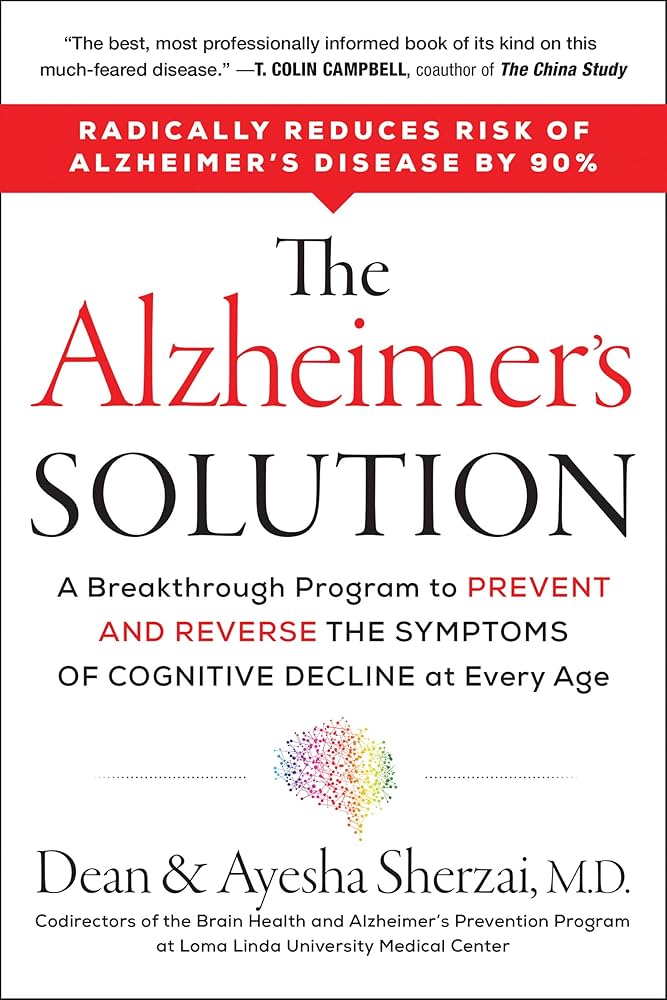
-
Podcast: Your Brain On…
A podcast about the neuroscience of everything. From neurologists, researchers, and public health advocates Drs. Ayesha and Dean Sherzai, explore every aspect of our world through a neuroscientific lens, with science-based stories, interviews, anecdotes, and brain health facts.
Equip yourself with neurologically sound answers to life's everyday health questions and learn the essentials of brain health and optimization, one topic at a time.
2 Million Readers.
1 Life-Changing Newsletter
Simple and Straight-to-the-Point...
Just Like Mel.