Episode: 387
The 5 Top Health Lies & The Truth You Need to Feel Better Today
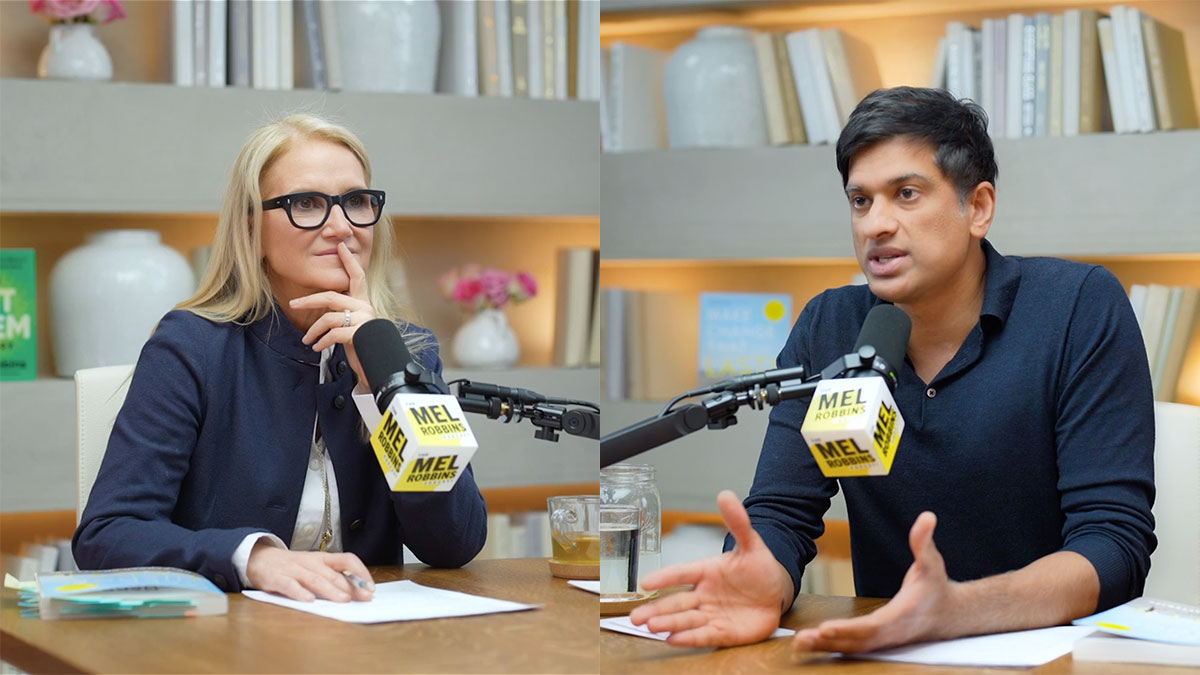
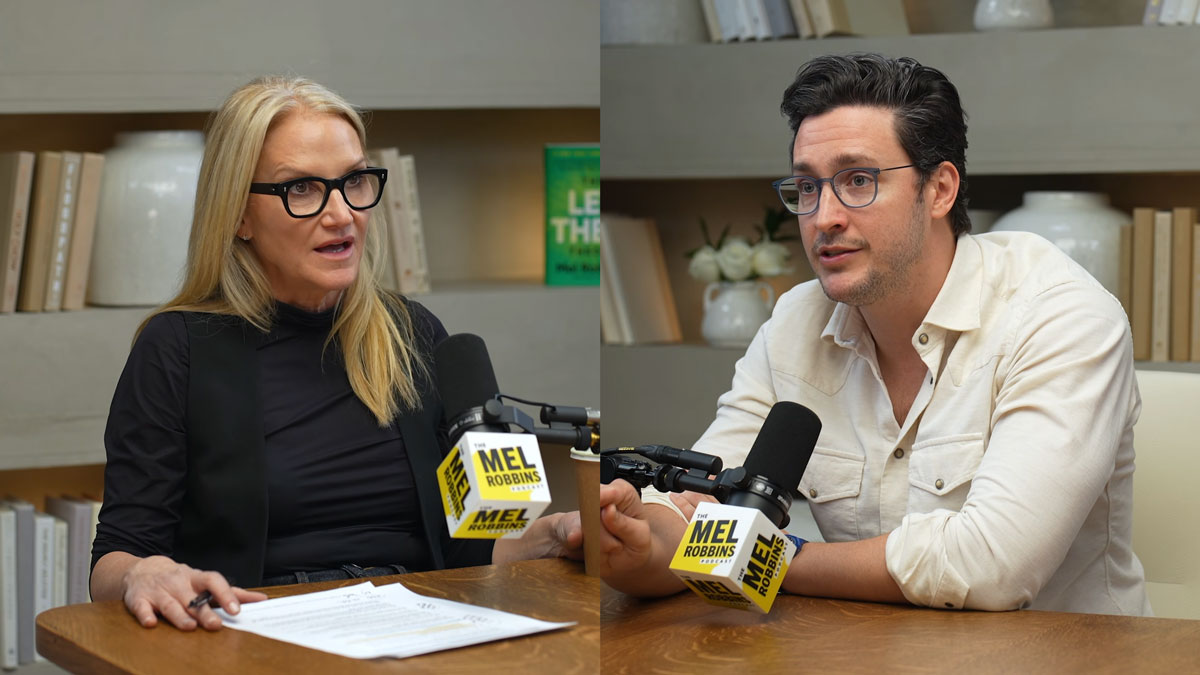
with Doctor Mike Varshavski
If you’re confused, anxious, or overwhelmed by health advice online, this episode is for you.
In this conversation, Mel sits down with Doctor Mike Varshavski, the most followed medical doctor in the world, to expose the health lies and medical misinformation that are making people sicker, more stressed, and afraid to trust their own bodies.
Doctor Mike has spent over a decade in clinical practice and continues to work in a community‑based family medical practice, where he sees patients of all ages and backgrounds. Every day, he witnesses the real‑world consequences of viral health myths, fear‑based medical advice, and misinformation spread online.
In this episode, Doctor. Mike teaches you how to identify medical red flags, spot misinformation, and understand what actually works versus what doesn’t.
This conversation will help you take back control of your health with clear, science‑based guidance without panic, guilt, or overwhelm.
Doctor Mike also shares deeply moving insights on grief, how to navigate life’s most painful moments, and his personal story of coping with the sudden loss of his mother.
Whether you’re trying to get healthier, caring for everyone else while neglecting yourself, or feeling frozen by conflicting medical advice, this episode will feel like a lifeline.
Listen on:




Life is about making choices based on what’s important to you. Misinformation takes that control away.
Doctor Mike Varshavski
All Clips
Transcript
Mel Robbins (00:00:00):
Today's extraordinary guest, he is here to tell you the top health lies and the truth you need to hear to feel better today.
Doctor Mike Varshavski (00:00:07):
This is how many almonds you have to eat. This is how many minutes of your life you'll lose if you eat one hot dog. Do you have headaches? You're not consuming enough pink Himalayan sea salt. Hemophobia where they're scared of all chemicals. Water is dihydrogen monoxide, but that sounds scary. People view aging as a disease.
Mel Robbins (00:00:25):
Is aging a disease? Dr. Mike is the most followed medical doctor online where every day he debunks medical misinformation, lies and raises awareness on health issues to more than 30 million followers.
Doctor Mike Varshavski (00:00:40):
Smoking, then you have vapes. Now we get to the ... And all of a sudden, you have a very accessible, very easy, frictionless experience to get nicotine for teens. It can be more problematic than vaping.
Mel Robbins (00:00:54):
That's disgusting. What would you say to somebody who is focused on caring for everyone, but not themselves?
Doctor Mike Varshavski (00:01:00):
This is effort. You've taken care of everyone and everything else except yourself. And if your cup isn't being refilled, you're going to fail at helping your loved ones.
Mel Robbins (00:01:10):
What is your take on vaccines?
Doctor Mike Varshavski (00:01:15):
I have no doubt children will die. It's a guarantee.
Mel Robbins (00:01:21):
Before we jump in, and the episode today is unbelievable, but I got to show you something. My team just showed me 57% of you who watched the Mel Robbins podcast here on YouTube are not subscribers. My goal is that we get that number to 50%. I know you're the kind of person that loves supporting people that support you. So if that subscribe button is lit up, it just means you're not a subscriber. Just hit subscribe. That is the number one way you can show your support to your friend Mel Robbins and to the team here at the podcast. It's free, and that way you don't miss a thing. It tells me, the team, that you love the guests we're bringing. You're going to love the guest today. You love the content that we're putting here on YouTube in an attempt to help you and the people that you love create a better life.
(00:02:00):
Thank you for hitting subscribe. I really appreciate it. All right. Are you ready for a mind-blowing episode? I am too. Let's jump in.
Mel Robbins (00:02:09):
Dr. Mike, welcome to the Mel Robbins Podcast.
Doctor Mike Varshavski (00:02:12):
Thank you so much for having me.
Mel Robbins (00:02:13):
Thank you for taking time out of your busy schedule to be here for me and for the person who's with us. And speaking of the person who is here with us, they are probably feeling a little overwhelmed and burnt out and tired, maybe confused about what the best approach to take with their health is. And what I'd love to have you speak directly to is how might my life change? If I take everything to heart that you're about to share with us, the lies you're about to dispel, the truth you're about to share, and I apply it to my life, what might change?
Doctor Mike Varshavski (00:02:46):
You'll get better control of your life. These days, our attention is pulled in so many different directions, people promising us miraculous results, healthcare communities confusing us, the healthcare system screwing us. So my goal in presenting all this information and data that I've lived, experienced, practiced, guided patients through is that you'll have better control to make the decisions based on what's important to you. As a doctor, my goal is to not make decisions for my patients. It's to present the data in the most transparent, relatable, honest way, so they can take that data and make the decision for themselves that fits their goals. And that could be a different decision than I would make, and that's okay. So the goal is to give you the power today.
Mel Robbins (00:03:32):
I love that you said that's okay. Why is it okay if somebody doesn't take the advice that you're giving them when you know that it could possibly make them healthier or feel better?
Doctor Mike Varshavski (00:03:45):
Because as a doctor, we actually screwed this up many times over the last decades and probably even more so before my time where doctors felt like they were telling you what to do. It's a very paternalistic relationship, very parent-like. You have to lower your cholesterol. You have to do this. A patient doesn't have to do anything. In fact, everyone has their own risk tolerance that they're comfortable with. Everyone wants to live life in a slightly different way, and that's totally okay. What I want to do is give my patients the choice with the best information that we have at hand, unadultered, honest, so that they can choose, "Do I want to participate in this activity? Do I want my child to do this activity? What are the risks of doing this activity?" And then they could make the best decision. That's truly the heart of good medicine, and that's called informed consent.
Mel Robbins (00:04:33):
You know what I love about you? And it just occurred to me that so many people first meet you because you have the largest health and medical channel online on YouTube. You are the most followed practicing medical doctor online, but you also are a doctor in clinical practice who sees firsthand patients that come in probably with printouts, probably that have gone down rabbit holes, misinformation, things from influencers that they've been convinced to think. And so as a practicing clinical physician, you're dealing with the misinformation in exam rooms every single day.
Doctor Mike Varshavski (00:05:17):
I would even venture to say that my patients are dealing with the misinformation. In fact, the reason why I started this whole social media platform was because I saw in my residency training, my patients falling victim to the same traps over and over again, the same fear-mongering, miracle-promising approaches. And I hated the fact that they wanted the best for themselves. They wanted to live a healthy lifestyle, but they were making bad choices because they were presented with inaccurate information or over-hyped information because the people who were best at selling these things were usually the ones with the biggest platforms. So the reason why I started out in making this content, trying to become the most followed doctor on social media was simply to compete with all these loud voices who are leading my patients astray.
Mel Robbins (00:06:05):
Why, Dr. Mike, is taking care of your health feel harder than ever?
Doctor Mike Varshavski (00:06:10):
I think because there's so much noise and it's not just healthcare noise, it's political noise, it's technological noise. I mean, you get a phone and two days later there's an update for your phone. A month later, there's a better version of your phone. There's so many things fighting for your attention in this attention-focused economy that it becomes very difficult to make decisions without feeling overwhelmed. So I understand what that feels like when you're trying to do the best for yourself, for your loved ones, for your kids, and you're just not knowing what the right approach is because you hear three different options or promises, and they're all directly opposed to one another. So I understand, I sympathize with my patients why it's so hard to make the right choice, especially with so much judgment out there as well.
Mel Robbins (00:06:59):
I think it's one of the other reasons why I think a lot of us feel like when we really find somebody with the medical expertise or the research-backed expertise on a topic related to health in particular, the recommendations tend to be like, "Oh yeah, that's right. I need to move my body. Oh yeah, that's right. I need to get healthy."
Doctor Mike Varshavski (00:07:17):
Grandma was right a lot more than we give her credit for.
Mel Robbins (00:07:20):
But I wonder if the reminders are more important than ever because there's so much noise that's clouding what you really know are the true pillars of what we should and shouldn't be doing.
Doctor Mike Varshavski (00:07:34):
Yeah. The reminders to do those basic activities, the tenants of health that we've practiced for generations of sleeping well, eating a plant-focused diet with fruits, vegetables, lean sources of protein, exercising, social connections, all sleep, all these things are so important. But then we also need to not get distracted off of these pillars because it's easy to sell shortcuts. It's hard to sleep seven to nine hours a night, especially when you're anxious. And then when you don't sleep well, you become more anxious. And when you're more anxious, you eat unhealthy and then your weight changes and you have a chronic health condition and it's this spiral that you go down where it's like, how do I see the light? And usually that light is given by people who want to weaponize that.
Mel Robbins (00:08:20):
Or sell you something.
Doctor Mike Varshavski (00:08:21):
Or sell you something. And honestly, I think this is where we fail in healthcare. We have pushed patients away so far from believing that there is a light that we've lost that connection to our patients and the bad actors have capitalized on it. The grifters are partying day in and day out because doctors have lost that alliance that we spent years building with our patients. And partially it's the healthcare system to blame, but also it's us.
Mel Robbins (00:08:53):
Well, I also, I'm going to step in though and say it's also the fact that fear sells and that when you start to cast doubt on medical expertise, it builds distrust.
Doctor Mike Varshavski (00:09:09):
Every time you go online.
Mel Robbins (00:09:10):
Yes.
Doctor Mike Varshavski (00:09:11):
And this is not just for patients. Doctors fall victims to this too, because the first thing you organically want to do when you feel a symptom or you get a diagnosis is open your phone. And opening your phone these days and searching for a diagnosis or a symptom is literally like shaking a magic eighball. And the internet is a lot like this magic eight ball where no matter what question you ask, depending on which echo chamber you find yourself in, depending on who's digitally targeting the audience and demographic you're in, you're going to get a different answer. So it's even more nefarious than the traditional magic eight ball. I think this is more honest because at least this is a little triangle shaped thing in here that has an equal chance at landing on both sides. But in real life, there's someone messing and pre-programming the magic eight ball in order to make themselves money. And that's where it gets really scary.
Mel Robbins (00:10:06):
It's such a great visual because you're right. It is almost like pulling a slot machine or shaking that magic eight ball depending upon who's targeting you, you're going to get a different response. And then based on what you searched, you're going to get served up more information likely from people that want to sell you something or have you sign up for something.
Doctor Mike Varshavski (00:10:25):
Correct. And what's funny is it sounds like I'm coming down on people making money or being financially successful. I am not. I am only doing that when people are doing it in lieu of giving people true informed consent. If they start hiding that informed consent or giving partial information in order to make a profit, I want revolutionaries to create new products, new surgeries, new medications to cure conditions, but I don't want it to be recommended without informed consent. I want people to be making the choice on good information.
Mel Robbins (00:10:58):
There are so many symptomatic issues in terms of the healthcare system, but what do you see as the biggest problems and who do they hurt the most?
Doctor Mike Varshavski (00:11:10):
People who are busy, people who have jobs, multiple jobs, multiple children under their care, multiple family members under their care. That is why people sometimes ask me, "What is the most proud moment of your career?" And it's my day-to-day job taking care of patients at my community health center. The people who need the highest level of care are oftentimes the ones who are left behind by our system. In fact, most people in my position when they're healthcare providers, when they get a level of notoriety, the first thing they do is they enter concierge care. They enter a high paying care system where they get paid huge sums of money to take care of patients. But what I'm most proud of is that we've created this very unique model where because of my success on social media, I'm able to deliver that high level of concierge care to people who are underinsured, are uninsured completely.
(00:12:09):
And they can ask me questions directly. They can text me, they can reach out on the electronic health record where normally it's very difficult for the average doctor to do because they're facing all these pressures from the healthcare system where they have to see a specific number of patients. They have to get the right number of RVUs. That's our relative value units that we sometimes get to.
Mel Robbins (00:12:29):
What's RVU?
Doctor Mike Varshavski (00:12:30):
It's basically how doctors are judged on their productivity within a healthcare system. And some doctors have to perform a specific number of procedures, see a specific number of patients before they get their full salary, where I don't have to do that. I can just focus on making sure my patients are getting the best level of care. I wish I could be there for more of patients, but the reality is if you want to be a good doctor, a good primary care doctor for your patients, you can't shortcut the time. Time is that most important variable that allows that alliance that we've lost focus on to be formed, trust, to be earned, information to be adequately processed by both parties because while the patient is learning about the condition, I'm learning about the patient and what choices they want to make. So when I'm giving advice, I'm not giving advice based on what I want.
(00:13:22):
I'm trying to give advice based on what I've learned and what's important to them. So that takes time.
Mel Robbins (00:13:27):
Well, and as you were just describing that person, which I think is basically a normal person that has a tremendous amount of pressure on them, if you go see somebody that only has 10 minutes and your symptoms get dismissed or it's sort of like, "Well, you're just going to brush it off," then yet again, you're getting the messaging that it doesn't matter anyway, and I got to just keep on pressing forward and living like this, and there's a way to actually reach people.
Doctor Mike Varshavski (00:13:57):
There is, and there is a notion in the scientific community where people feel their doctors are gaslighting them more. They're feeling that their complaints aren't being heard, they're being ignored. And I understand why they feel that way. It's reasonable to feel that way. First of all, we have to validate that right at the outset. But at the same time, I have to be honest, I don't think doctors in 2026 are suddenly gaslighting their patients more often because they don't care. I think our healthcare system is so broken and is set up in such a flawed way where doctors have no choice but to leave their patients sometimes feeling gaslit. And it's terrible. And that is what's also leading on the flip side of the equation, doctors to feel more burnt out, more upset about the field than ever before, retiring earlier than ever before because of this feeling where, oh my God, I want to do what's right by my patient, but the system doesn't allow me to do it at my best capacity.
Mel Robbins (00:14:56):
What are some of the things that you've heard people say just for the person listening who may have felt funny after seeing a doc who is doing the best that they can in a broken system that is gaslighting? Is it like denying symptoms? What does that even look like?
Doctor Mike Varshavski (00:15:17):
Yeah, sometimes
Mel Robbins (00:15:17):
It's- Because I will just say, I don't know that I've at least in recent years experienced it. Maybe it's because I'm bossy as hell, but I can see how somebody could be run over and feel like their symptoms are not being taken seriously.
Doctor Mike Varshavski (00:15:32):
If you happen to be a more passive personality type, you don't have a caregiver by your side to advocate
Mel Robbins (00:15:37):
On
Doctor Mike Varshavski (00:15:38):
Your behalf. It's very easy for the healthcare system to leave you behind.
Mel Robbins (00:15:42):
I'm also a white woman.
Doctor Mike Varshavski (00:15:43):
Yeah, also true.
Mel Robbins (00:15:44):
So I would imagine if you are a minority, if you don't have a lot of money for paying for bills, that that's also increasing how that might happen.
Doctor Mike Varshavski (00:15:55):
You also have to figure as a minority, you're living in a city where sometimes healthcare budgets are even more strained, hospitals are more busy because they're shutting down in a lot of these inner cities. And as a result, there's more pressure on the ER to see more patients. And how can you give accurate care, standard care even, to so many people where you don't have the resources to do it and you end up triaging in a way where people feel unseen, people feel hurt.
Mel Robbins (00:16:23):
That makes a lot of sense and it makes me really sad.
Mel Robbins (00:16:25):
Another thing that makes me very sad is the state of the cost of getting medical treatment and the reality of how many people face bankruptcy after a big diagnosis or just the fear that people have over their medical bills. I have a very close friend who has a scan that she needs to get done. It has been recommended by a doctor, is not getting cleared by insurance. She is not getting it because she hasn't reached that kind of minimum payment that you need to make for it to be covered. And it feels like this weird, just unnecessary waiting game. What do you say to somebody who just opened a medical bill and they're panicked because they can't pay it?
Doctor Mike Varshavski (00:17:14):
Whether or not they're panicked, whether or not it's a huge amount, argue everything. Argue every bill. You will get reductions on your bill. You will find resources to help pay your bill, financial aid to pay your bill. There are so many underutilized programs that just patients don't know because they get a bill and they assume they have to pay it. I'll give you a very specific example. There was a gentleman, I believe he was in Texas, he had a heart attack. Otherwise, healthy runner, teacher, good insurance gets taken to an out- of-network hospital. It's not his choice. He's having a heart attack, but he's doing everything right. You have insurance, you have a job, you're taking care of your health, and yet you still have this unfortunate incident. Hundreds of thousands of dollars a bill to survive this heart attack. And what happens? He goes to the media, he tells his story. He explains how this predatory billing practices of this hospital system was taking advantage of him. The bill's reduced to a hundred bucks. It's such a predatory system that you have to fight everything. And it's terrible that I have to put this on my already strained patient's backs that I have to say, "In addition to dealing with your depression, your anxiety, your cholesterol, your blood pressure, but hey, also call the billing department and fight with them." But if I don't say that, they may pay it and they may face bankruptcy.
(00:18:45):
That's happening in our nation today.
Mel Robbins (00:18:47):
Dr. Mike, how do you fight a medical bill?
Doctor Mike Varshavski (00:18:50):
Call the billing office.
Mel Robbins (00:18:51):
And what do you say?
Doctor Mike Varshavski (00:18:52):
I want explanation why I need to pay this, why my insurance isn't paying this. Reach out to the medical office that did the service. Sometimes, Mel, because I, as a doctor, am putting on medical reasons for why I'm ordering a certain test, they may not be the one that the insurance company likes to be placed for that condition. And sometimes it's as simple as getting the doctor to say, "Oh, well, I also ordered it for this and put another code in. Boom, it's covered." Even worse, this is more aggravating. I order a basic antibiotic for my patient when they have a sinus infection. And because I'm ordering an electronic health record, I very quickly click the antibiotic. It was clindamycin and I happen to order capsules. As a doctor, there's no difference between capsules and tablets in my mind. I get a denial. Patient's insurance doesn't pay for capsules, but they'll pay for tablets.
(00:19:47):
The patient went to the pharmacy, got denied, goes home. I have to call the insurer, find this out, call the pharmacy, change this to tablets, tell the patient, "Hey, you got to go back." What an ineffective, terrible system.
Mel Robbins (00:20:00):
And every one of us has been in that situation.
Doctor Mike Varshavski (00:20:03):
Correct. And here's the worst part. In any given moment of time, most people aren't sick. Most people aren't interacting with this broken healthcare system, but the reality is at one point we all will. We will all get sick. We will all have to deal with this crap system, doctor or not doctor. We will have to be a part of it. So if we don't advocate for this change, if we don't shine a light on these problems, it's only going to get worse.
Mel Robbins (00:20:33):
What's so sad about the whole thing is it could be fixed.
Doctor Mike Varshavski (00:20:37):
Which is why I look to people who want to make Americans healthy again and I say, "Please focus on the real problems that are driving our healthcare disaster. Let's not focus on some random ingredient in Skittles titanium dioxide. That's not where our problems are. Those are PR wins. Those aren't actual healthcare wins." So the people that support those in the administration that are wanting to make change, I feel bad for them the most because they're the ones that are being tricked right now because I want to be there for those patients. I want to help them get the best quality care for the doctor to have a discussion. Well, do you want to take an approach that's a little bit less aggressive, less medication focused, more lifestyle folk to give you back the time to make sure that pharmaceutical companies aren't playing games with pharmacy benefit managers to make sure your medications cost more?
(00:21:31):
Let's address those inequities where we'll get the best outcomes for our patients. Remains to be seen if that will happen.
Mel Robbins (00:21:37):
Well, if we were to put you in charge, what were the big things we would go after?
Doctor Mike Varshavski (00:21:40):
Right away, transparency. The number one thing is we need to attack transparency.
Mel Robbins (00:21:44):
What does that mean?
Doctor Mike Varshavski (00:21:45):
There are so many companies that are now functioning in all of these worlds, and I'll explain what I mean. There's companies that function in the pharmacy space, the pharmacy benefit manager space where they actually decide what medications are covered and which ones are not.
Mel Robbins (00:22:01):
Capsules versus tablets. Yes. Generics versus ...
Doctor Mike Varshavski (00:22:04):
And here's the wild part about all of that. The PBMs, these pharmacy benefit managers were created to save us money. And now they've become billion dollar entities on themselves because they say, "Oh, well, if we save a patient $2, we can take a dollar for ourselves."
Mel Robbins (00:22:19):
And they're owned by a lot of pharmacies pharmacies?
Doctor Mike Varshavski (00:22:21):
They're owned by the pharmacies. They're owned by the healthcare insurers and they're owning the entire system. So they're taking money out of one pocket, shifting it to another, and no one knows exactly how that's happening because it's not transparent, very poor regulation because of lobbyists, and no one's really talking about it in a way that's getting attention. And as a result, they're allowed to make a lot of profit at our expense.
Mel Robbins (00:22:45):
That's disgusting.
Doctor Mike Varshavski (00:22:46):
Yeah.
Mel Robbins (00:22:46):
Well, what the hell do we do?
Doctor Mike Varshavski (00:22:48):
Fight for transparency. Support those who are going to bat for patients in this way where it's patient first.
Mel Robbins (00:22:57):
It sounds like a racket, honestly. It sounds like- It is a racket. It should be illegal for a healthcare system to own a pharmacy and the pharmacy benefit management company at the same time. We should put
Doctor Mike Varshavski (00:23:07):
You in charge.
Mel Robbins (00:23:08):
I don't want to be in charge of that. I like doing what I do because I feel like I'm doing what you're doing in a different way that I really want to try to distill down the information that we all deserve and shine a light on the renowned and respected experts in their fields and give them a global platform to be able to teach and to empower and to call out misinformation, to give people options that really empower them to make better decisions in their lives. And so I'm not the expert. I feel like I'm the conduit for conversation and information to flow to somebody else.
Doctor Mike Varshavski (00:23:51):
I mean, it's a lot like family medicine.
Mel Robbins (00:23:53):
How so?
Doctor Mike Varshavski (00:23:53):
I am not necessarily the expert in all of these conditions. I'm the quarterback
(00:23:59):
That translates the information from these experts because of my doctorate being able to understand what they're saying and why they're making their certain recommendations. And over my years becoming more expert in certain aspects of healthcare in order to distill that and be a conduit for my patients, to allow them to function in this broken healthcare system. And that's why family medicine's so fun. As you said, top to bottom, head to toe. I mean, there are patients that I've had on my OB- GYN service that I've delivered their baby. Their baby is now my patient for 10 years. Their grandparents are my patient and you get to watch the impact when you guide them in a good direction where you allow them to make choices that they're proud of across the entire spectrum of their lives. It's truly beautiful. And it's sad because it's falling out of favor.
(00:24:49):
Med students aren't picking primary care. The incentives aren't there for them to be paid more, and it's one of the lowest paying specialties. And as a result, we're losing the brightest minds to more procedure-based specialties.
Mel Robbins (00:25:01):
It's interesting, if you're listening, you're not seeing this, but if you're watching us on YouTube right now, maybe you caught it. You love what you do so much that you are smiling even as you talked about the fact that being in family medical practice is declining because it's one of the lowest paid slices of the medical profession, but I can tell it brings you so much joy.
Doctor Mike Varshavski (00:25:27):
It really strikes at the heart of how twisted our incentives are in this country. Instead of focusing on what matters, which is mental health, lifestyle modifications, that's psychiatry, pediatrics, family medicine, that's not where our incentives are pointed at. Our incentives are pointed at who's putting the stent in, who's performing the surgery. And as a
Mel Robbins (00:25:51):
Result- And how much profit is the healthcare system making?
Doctor Mike Varshavski (00:25:53):
Exactly. Many patients don't have an established primary care doctor. They're relying on urgent cares, ERs to function as their primary care doctors. But to be fair to those people that are seeing them as providers, they don't know them. They don't know their history. I have patients that when they walk into my room, I can tell that something is going on with them, that they're not even vocalizing to me. I had a patient the other day, she came in for back pain, but in talking to her about how her life is going, just general conversation, she started telling me about some weird symptom that she had in the middle of the night just a few days ago. I throw the back pain conversation out the window and I say, "We're focusing on your heart." I ask her to go see her cardiologist the next day. She'd go see the cardiologist, Mel, she had a heart attack.
Mel Robbins (00:26:42):
It's a cardiologist?
Doctor Mike Varshavski (00:26:43):
During that moment when she was denying her chest pain, she was writing off her own heart attack. She had severe stenosis in her blood vessels in her heart. She needed stent placed, and now she's advocating for women to take their chest pain seriously. But you can't know that as an urgent care doctor when you're meeting someone for the first time. It's
Mel Robbins (00:27:03):
So true. So you need that primary
Doctor Mike Varshavski (00:27:06):
Care.
Mel Robbins (00:27:06):
And what I love about what you said about this is that we tend to blame the doctors. And yet if you take a step back, if you're only going to a minute clinic or you're only seeing your doctor once every five years when you need the Z-pack for your bronchitis that's come or you're only going or you don't even have a primary care, I'm sitting here going, "Oh my God, my daughter out in Los Angeles still does not have a primary care doctor and she's been out there for three years. And I realize she's young and healthy, but still- But
Doctor Mike Varshavski (00:27:32):
Some of the biggest lifestyle changes have the most important impact in that age.
Mel Robbins (00:27:37):
What do you mean?
Doctor Mike Varshavski (00:27:38):
So for example, with heart disease, the foundational layer of plaque that can form in the blood vessels in your heart start happening during your teenage years.
Mel Robbins (00:27:46):
They do?
Doctor Mike Varshavski (00:27:47):
Yep.
Mel Robbins (00:27:48):
You're kidding.
Doctor Mike Varshavski (00:27:49):
Yep.
Mel Robbins (00:27:49):
What are other-
Doctor Mike Varshavski (00:27:50):
Atherosclerosis starts decades before you have the heart attack.
Mel Robbins (00:27:55):
Wow.
Doctor Mike Varshavski (00:27:55):
So if we can have that conversation early on, if we can make some small tweaks or perhaps screen more often for certain conditions based on certain behaviors or lifestyles that you choose, whether it's infection screening, STI screening, we can make certain changes that can keep you healthier even if you want to live not the most optimal lifestyle, and that's okay. We live in this hyper-optimized world where, especially in the podcast space, I don't know if you feel this, Mel, I see this a lot, where doctors will come in and start going into this hyper-perfect, optimized world of this is how many almonds you have to eat, this is how many minutes of your life you'll lose if you eat one hotdog at a baseball. I don't practice in that world. I don't live in that world. I think when we chase hyperoptimization, we actually get worse health outcomes because we fuel health anxiety and no one wants to be anxious about their health.
(00:28:52):
They want just to be healthy and enjoy their life to how they want their life to turn out. And that's what a good primary care doctor does. They absorbed information about you. They explained to you what the risks of your current habits are. We try and mitigate those risks because we do have prevention strategies, but at the same time, we need to not overpromise because there are products out there that try and say," We can prevent X, Y, Z.
(00:29:18):
"And in reality, they're overselling you, they're potentially leading you to downstream more testing, more radiation, more medical errors. You want to stay away from healthcare at times just as much as you want to get healthcare at times. And that's a weird dichotomy to live in, but that's the reality.
Mel Robbins (00:29:37):
Well, to answer your question, I feel as though there is a lot of chasing for virality, a lot of chasing for clicks, a lot of content that seems only relevant for somebody that doesn't have to work a full-time job, isn't taking care of another human being and has limited resources available to them to try to optimize their Health, I've had the opposite thing almost happen to me on this podcast where the credentialed practicing medical experts that come on, yes, there's always amazing new research or new insights, but it always comes back to these foundational principles of the way that your lifestyle matches your health and the magnificent ability of the human body to adapt to change when you give it what it needs. I kind of feel like we're all almost like a wilting plant in the corner and that if you move us into the sun and water us, we perk up and we grow in response to the things that we truly need.
(00:30:43):
And to your original point, a lot of the super complicated, massively scientific, hyper optimized, do this, it's got to be perfect. Oh my God. It just makes you more overwhelmed so you do nothing. Yeah. The Mel Robbins podcast is proudly sponsored by Amica Insurance, our exclusive insurance partner. You know what they say? If you want to go fast, go alone. If you want to go far, go together. So go with Amica and get coverage from a mutual insurer that's built for their customers. One that looks after what's important to you together. Auto, home, life, and more. Amica can help you protect what matters most. Visit amica.com and get a quote today.
Mel Robbins (00:31:30):
Speaking of good doctors, one of them was your dad who inspired you. And I want to talk a little bit about your parents because they are very important to you. And I understand that your dad inspired you to want to become a doctor and I'd love to hear the story.
Doctor Mike Varshavski (00:31:49):
Yeah, it's paradoxical in nature because he actually was someone who was saying that the healthcare system is quite broken and perhaps you should seek a different career path. But what was interesting in coming from Russia at age six, watching my parents adjust to a new language, a new culture, new lifestyle, I got to watch them adapt. And I got to see how difficult life can be when you're facing limited resources to live on welfare, to live in welfare housing. That is something we all experienced in my family living the four of us in a one bedroom.
Mel Robbins (00:32:25):
Was your dad a doctor in Russia? So
Doctor Mike Varshavski (00:32:27):
He was a physician in Russia and living in that moment, coming to America, watching him very quickly learn the language and apply to medical school again,
(00:32:35):
Apply to residency after medical school. Again, in his 40s, in a new language, I saw how strong he was and how strong you needed to be to overcome challenges. And because I was nine, 10 years old when he was going through his medical training, I was awake for it. I got to watch it. I got to watch his education process happen. He would bring your child to workday. And I would see what it's like to be a resident, to sit in on call room. And I fell in love with family medicine. I fell in love with the relationships that he was making with his patients, the ability to learn all of healthcare and be that quarterback. I really fell in love with the field and I said, "There's so much value to this. " So to me, family medicine was something I hardheadedly chose and fell in love with because of my father.
(00:33:23):
And at the same time, in spite of my father, because he saw so many problems, he foresaw a lot of the problems that we're experiencing today.
Mel Robbins (00:33:31):
Now, your mom passed away during your first year of medical school.
Doctor Mike Varshavski (00:33:34):
Yeah.
Mel Robbins (00:33:35):
How did that experience shape who you are today and how you practice?
Doctor Mike Varshavski (00:33:40):
Watching my parents come to a new country in their 40s, as I said, learning a new language. My mom was a PhD in mathematics in Russia. Her mom was the provost of the department. So when she came here and she had to walk two miles to work, to save on bus fare, to sweep the floors, I knew how hard they were working in order to set a good life for me and my sister. And then just as my dad was getting on his feet, he finished residency, they struggled and now they were about to have a little bit of success where they can own their own home and travel a bit more and enjoy the fruits of their labor that they worked so hard for. To watch my mom get sick and progressively pass away from this cancer, it's a specific type of cancer called CLL.
(00:34:29):
It was just heartbreaking to go through that. And being in medical school, I'm just starting to learn what it means to stop chest compressions. I'm learning what it means that we sometimes deliver too much care to people in their final years of their life and how perhaps we're actually hurting them rather than helping them. And while I'm learning those things in school, I'm taking my mom to her appointments at Memorial Sloan Kettering and I'm seeing her get more sick, more sick. But then there's always an array of hope where just days before she died, I picked her up Memorial Sloan and the doctor shook my hand and he said, "We cured her cancer. We just have to have her recover now because she had a stem cell transplant and now we just need her immune system to build back up and she will be okay." And just a few days later, she got a mean infection.
(00:35:24):
Her body went into gram-negative sepsis. It's a type of bacteria that creates an overwhelming response from the body. Blood pressure drops. We are all in the hospital and she's getting chest compressions and we're the ones that are having to tell them to stop. And when you're doing that to a loved one so unexpectedly because you have so much optimism and hope, it really awakens you to how short life is, how difficult our healthcare system can be, how healthcare providers who were doing the best that they could save my mom also when they went back to their cubbies, they were laughing about their everyday lives because they're humans too and they have their own struggles and I needed to be accepting of that. So there was so much learning that happened in that moment. And I think it really highlights an important factor in that when you are a physician, we need to remind ourselves from this old adage, we're not robots, we're humans.
(00:36:24):
If we want to cry in an exam room, if we feel that with a patient, cry. No patient will judge you for that. In fact, it'll make you more human. Bring your experiences, your hobbies, your passions to the art of practicing medicine. So I think it's those moments, these moments with our families, our moments of loss that if we can bring them into the practice of healthcare in a meaningful way, we can be better. We can get better outcomes for everyone.
Mel Robbins (00:36:53):
You mentioned these moments of loss. If the person who's listening right now is in grief or experiencing deep sadness and things just feel very, very hard, what do you want to say to them about just the first step to take even today?
Doctor Mike Varshavski (00:37:13):
To take the first step requires some bit of action. We're all seeking motivation, but the unfortunate truth is that action precedes motivation. We need to take some sort of action. So I try and think about what's the easiest action one can take for some that might be making their bed. For another, it may be taking a shower. For me, it was putting on my shoes. Putting on my shoes took me to the dark park. Putting on my shoes got me to take a boxing class. Putting on my shoes and taking a boxing class 10 years later led me to fighting on Showtime pay per view as a professional fighter. So why? You will never know where putting on your shoes may take you, but unless you take that first step of putting on your shoes, making your bed, taking a shower, you just don't know where you'll go.
(00:38:05):
So that's the simplest step. And I know it sounds easy to someone who's not in the depths of grief, who's not going through something. They say, "Oh, putting on shoes, that's not going to get you anywhere." But when showering is hard, when combing your hair is hard, putting on your shoes is not the easiest task, but when you do, you never know where they'll take you.
Mel Robbins (00:38:30):
I want to stay right on this because I really deeply appreciate you validating how hard it is to take a shower some days, how hard it is to brush your teeth, how hard it is to not just put on your shoes, but maybe walk out the door. Why do you think those little things feel so hard at times in life? Because to me, it's really important that we break this apart because I think this is actually everything.
Doctor Mike Varshavski (00:39:09):
It probably strikes at the heart of the humanity of meaning. When you live every day with your family members surrounding you, you have one idea of what life is. But when tragedy strikes and that gets completely flipped 180, you panic. And in order to protect yourself, your brain shuts down and says minimal activity, much like when in boxing you get hit with a liver shot. To make a strange analogy, you go down because you're worried about circulation. Same thing here. Your body's protecting you, but at the same time, you need to be able to be the judge of what's safe, what's acceptable. And sometimes it helps to have a team member. That's where doctors come in, therapists come in. And the most unique part of what I've learned in practicing healthcare for the last decade is that for mental health success, support system is crucial.
(00:40:10):
So having family members, friends, so important. But then getting help from a medical specialist, a mental health specialist is the second most important. But what's not so important is, are they a social worker? Are they a psychologist? Are they a family medicine doctor? Are they someone from a religious background? As long as it's someone who's not taking advantage of you and wanting to tell you the truth to help you get through this moment and shows you that you two are valuable, validated, and wants to help you overcome this tragedy. That's what gives you a good outcome.
Mel Robbins (00:40:46):
Dr. Mike, what would you say to somebody who is focused on caring for everyone, but not themselves?
Doctor Mike Varshavski (00:40:52):
Well, Mel, in front of us, we have a really good example and a clear example of how this can devolve very quickly into everyone losing.
Mel Robbins (00:41:00):
Okay.
Doctor Mike Varshavski (00:41:00):
We have five glasses here and a picture of blue colored water Just to show as an example of what happens in someone's everyday life as a caregiver.
Mel Robbins (00:41:10):
So the caregiver is the picture of blue water.
Doctor Mike Varshavski (00:41:13):
No, this is effort.
Mel Robbins (00:41:14):
Oh, this is effort.
Doctor Mike Varshavski (00:41:15):
This is effort. This is energy. This is what's fueling the ability to do things.
Mel Robbins (00:41:19):
Okay.
Doctor Mike Varshavski (00:41:20):
And each one of these cups will represent a different scenario in one's life.
Mel Robbins (00:41:24):
Okay.
Doctor Mike Varshavski (00:41:25):
So for example, people have to show up to work. People work, right? That takes a lot of effort, a lot of energy. Boom. Some of the blue water goes in there, but they also need to take care of their kids. That's important. I've read about the prom situation that you experienced and how stressful
Mel Robbins (00:41:46):
That was. A lot of
Doctor Mike Varshavski (00:41:46):
Energy. Should I pour more into that one? But look.
Mel Robbins (00:41:49):
Feeling I need to save it for other things.
Doctor Mike Varshavski (00:41:51):
Do you see how quickly we're losing
Mel Robbins (00:41:54):
The
Doctor Mike Varshavski (00:41:54):
Energy?
Mel Robbins (00:41:54):
Yes.
Doctor Mike Varshavski (00:41:55):
But then you're caregiver to your aging parents. You continue losing. Uh-oh. Uh-oh.
Mel Robbins (00:42:05):
Uh-oh.
Doctor Mike Varshavski (00:42:05):
Oh, wait, you have a spouse. Oh wait, you want to maintain some sort of connection with your spouse? You want to love each other? You want to spend time, you want to travel, you want to do something interesting, a hobby?
Mel Robbins (00:42:16):
Dr. Mike, that's the idea.
Doctor Mike Varshavski (00:42:18):
Okay.
Mel Robbins (00:42:20):
Oh my God. There's no energy. And I have to cook dinner, go to the grocery store, clean the house. We didn't even do laundry yet.
Doctor Mike Varshavski (00:42:26):
How are you going to take care of yourself when that's what you have left to deal with the healthcare system? Joy, sleep, lowering your cholesterol. You've taken care of everyone and everything else except yourself.
Mel Robbins (00:42:47):
What the hell do I do? Because when you look at this and the visual is stunning as you're listening, the picture is empty, so we're out of energy. Four of the cups are full. We haven't even gotten to laundry, grocery shopping, cleaning, all the other stuff that you need energy for. And the one cup on the end has just a little tiny couple drops of blue in it that is what you give to yourself.
Doctor Mike Varshavski (00:43:14):
And I don't want to ruin your studio setup here, but if we were being honest,
Mel Robbins (00:43:18):
These
Doctor Mike Varshavski (00:43:18):
Four cups will also have cracks in them and be perpetually losing water and need refills because that's how life is. So even when you give everyone the adequate amount of attention and effort, there will always be problems that need refilling. And if your cup isn't being refilled, you're going to fail at helping your loved ones.
Mel Robbins (00:43:43):
So how do you recommend when this is the reality of your life? How do we get our energy back if the blue water represents energy and we don't have any?
Doctor Mike Varshavski (00:43:55):
There are steps that we can take to help refill our cup.
Mel Robbins (00:43:58):
What is it?
Doctor Mike Varshavski (00:43:59):
First of all, I know we're being pretty critical that four cups are full and one is empty, but it's nice to have happy family members and healthy family members. So we can look at positive things in our life and remind ourselves about those positive things. So one of the things I help my patients with is small things. Write three good things that happen at the end of a day. Remind yourself that there are positives here.
Mel Robbins (00:44:22):
Okay.
Doctor Mike Varshavski (00:44:22):
Goodnight's sleep, making sure you're taking care of your own mind and body. And one of those things is these little tasks that we can do, like the three positive things. And then most importantly, validating yourself that this situation does suck. We forget that we judge ourselves so much more harshly than we would judge someone else in the very same scenario. Allow yourself to feel shitty in this situation. One of the things that we try and work on with patients and family medicine is explaining that therapy, antidepressants, they're not meant to make you not feel sad or anxious. They're meant to give you a layer of control, to identify when you're feeling sad and in a rut and you could take some steps to snap out of it, but it's not to not make you feel. In fact, if a medication or a treatment that I'm giving to my patient makes them not feel, that's probably not a good treatment for them.
(00:45:17):
So reminding patients about validating themselves is a really important tool.
Mel Robbins (00:45:21):
It's so helpful to see the visual because you feel it in your body that, wow. And when you said it's energy, that I haven't heard anybody talk about it in that way and it's way more hopeful because I do believe that the energy can be regenerated. When I see it as pieces of me versus energy that I can recoup through better sleep and taking a little bit better care of myself versus carving out time that I don't have, that feels like something I could do that would make a difference. For sure.
Mel Robbins (00:45:59):
Dr. Mike, you are known for cutting through just health misinformation and bullshit online. What is it about your approach to spotting and calling out, especially the lies and misinformation that really makes you resonate with millions and millions of people every day?
Doctor Mike Varshavski (00:46:15):
What I strive to do, which I hope people admire or appreciate is to be as authentic and transparent as possible why I'm making certain recommendations. Being someone who had to study really hard to understand certain concepts, I had to simplify those concepts quite often. And in doing those simplifications, I realized I can use that same simplification to teach millions of people across the world these more complex subjects. And by being a family medicine doctor who's on the front lines and seeing what patients are experiencing, it really made me better to be on social media. And at the same time, when I'm researching certain topics for social media, it makes me a better provider for my patients. So it's this unique symbiotic relationship between healthcare and social media that I never knew existed and in fact was discouraged from going down this path by some colleagues, by the medical community at large.
(00:47:12):
And I think now they're waking up and realizing, oh my God, we've let this tool go underutilized. It was co-opted by bad actors and now we're playing catch up in some of the most difficult ways.
Mel Robbins (00:47:25):
I actually think people can cut through bullshit and that it's very clear if you spend any time listening to your story, that there is a genuine and authentic mission tied to what you're doing, and that's why you resonate with people.
Doctor Mike Varshavski (00:47:43):
I appreciate you saying
Mel Robbins (00:47:44):
That. No, I mean that. I think your heart truly comes through and that's why you resonate. I would love to know what are the health trends and misinformation that you're seeing that drive you absolutely bananas? And since there's probably so many, what are the ones that drive you craziest or you think are doing the most damage right now?
Doctor Mike Varshavski (00:48:08):
I think in social media, the trend surrounding longevity is one I've been fighting against for a really long time, which sounds strange. Why is a doctor arguing against longevity? But it feels like everyone is falling into this anti-aging bracket. And my main problems with it are twofold. One, people view aging as a disease, and I don't feel like that necessarily needs to be the case. There's a way to practice healthy aging that we can discuss and not view it as a true pathology, as a true illness. And second is that a lot of times it takes information, research that is so preliminary that it should maybe give us hope for something on the horizon and it gets blasted to the front pages, to the front headlines, to the Shopify stores where people are selling these things that don't hold up under scrutiny and therefore people are not getting good care or they're getting false information.
(00:49:12):
In fact, when a doctor says they're a longevity doctor, it kind of throws me because I think almost every doctor is a longevity doctor with one exception. I'm curious if you can guess what specialty is that exception.
Mel Robbins (00:49:24):
Palliative care?
Doctor Mike Varshavski (00:49:25):
Yeah, hospice because they're focused on comfort, right? Yeah. Not prolonging one's life, but every other doctor wants you to live longer. They want you to have a better quality of life. Why is this being stolen?
Mel Robbins (00:49:37):
I'm curious, Dr. Mike, is aging a disease?
Doctor Mike Varshavski (00:49:41):
I don't think so. I don't think it needs to be viewed that way. And in fact, the more we view it that way, the more negative outcomes we get from aging.
Mel Robbins (00:49:49):
Well, this is going to be one of those admissions that I kind of feel a little dumb saying. I'd never heard that aging. When you said aging is a disease, I'm like, no, it's not. It's just something we do. But is it a disease?
Doctor Mike Varshavski (00:50:01):
Well, people feel that they break down over time, they get more tired, they can't accomplish all of their goals that they were setting for themselves in their 20s. They can't pull 18-hour days. But the reality is you just told me, I think before we started this conversation that you're happier now than when you were earlier.
Mel Robbins (00:50:21):
Yes.
Doctor Mike Varshavski (00:50:21):
So-
Mel Robbins (00:50:22):
I'm way happier in my late 50s. I'm way healthier. I think I feel better, look better, I'm stronger, I can do more pushups. Again, it comes back to this thing you keep saying, which is we are designed to grow. We are designed to respond to the lifestyle and health things that our grandparents have always done, and your body loves it when you do it.
Doctor Mike Varshavski (00:50:43):
And our minds evolve. Our neurochemistry evolves. How much we sleep evolves. We don't need as much sleep once we're older than when we were babies. So things change, but if we view it with a negative lens all the time, it will make it worse.
Mel Robbins (00:51:01):
So how do you know if somebody is selling you something, is a grifter, is trying to market something to you? He's got a red flag.
Doctor Mike Varshavski (00:51:11):
You got to have one of these in your minds,
Mel Robbins (00:51:13):
In your
Doctor Mike Varshavski (00:51:13):
Mind's eye all the time.
Mel Robbins (00:51:15):
Dr. Mike has a red flag. Tell me how we know. Give us a few examples.
Doctor Mike Varshavski (00:51:19):
Okay. Overconfidence, you have to be waving this in your head. And I'll give you a very specific example. If a patient comes in with a symptom, the odds that I can definitively say that it's one condition is almost zero. I can be confident that based on the presentation, my physical exam, the blood tests, the scans, that it's pointing to a condition, a diagnosis. I still have a differential, which means I have other options of what it could be that are mimicking that same presentation because humans are not all exactly identical. So in healthcare, good doctors, good nurses will always hedge. And when you're hedging, you don't look super confident. When a doctor says, "I don't know, patients do this, " and that's when this should go down. Because when a doctor is not afraid to say, "I don't know, " that's when they're being honest.
(00:52:25):
That's when they're being vulnerable to tell you from a humble standpoint that this is tough. Further investigation is necessary. A clear answer is not here. Most importantly, they're not interested in slimming your wallet.
Mel Robbins (00:52:40):
That's a good one.
Doctor Mike Varshavski (00:52:41):
Yeah.
Mel Robbins (00:52:42):
Because it's true. When somebody says, "I don't know, " you tend to go, "Red flag, you're not listening to me. " And what they're basically saying is, "I'm thinking about all the things and I don't have something definitive." We got to dig in.
Doctor Mike Varshavski (00:52:54):
Because I could even think of bad actors that will make a short form piece of content on TikTok on Instagram and will say, "Do you have headaches?" And if you have headaches, you're like, "Oh my God, I have headaches." You're not consuming enough pink Himalayan sea salt. No, this is content that exists online.
Mel Robbins (00:53:15):
I got surprised because one of the big ones that I see online right now is somebody going, they're in a grocery store, and I'm sure you've seen this even if you're listening, they flip it over, blahbity, blah, blah, blah. And then they go to Home Depot or a hardware store and they're like, "And this is in, I don't know what else." And I'm like, "This is basic chemistry."
Doctor Mike Varshavski (00:53:34):
Yeah, the ketophobia is real. What is it called?
(00:53:37):
Chemophobia where they're scared of all chemicals and it's really strong and they're really good at it. They scare people a lot because what's a chemical? I even had, this is interesting, the director of the FDA was on my show and he said that he encourages people to eat organic produce. And I said, "Interesting. Why?" And he said, "Because traditional produce has pesticide residues on it and organic means they don't use pesticides." And I had to kindly remind that there is organic pesticides. And he said, "Well, no chemical pesticides." What is no chemical pesticides? This water is a chemical. The air we're breathing is a chemical and this chemical fear that we have needs to be validated because there's some companies who have destroyed our environments by throwing chemicals everywhere. We're dealing with these forever chemicals in our environment that we need to desperately investigate and put money into research to see how they're impacting our health.
(00:54:35):
Yes. But at the same time, we don't want to be to the point where we're afraid of all chemicals when they can in fact be beneficial to us.
Mel Robbins (00:54:43):
I want you to explain to the person listening what you meant when you said water is chemical, because you were talking about it based on the chemical property chart that we learned about in chemistry class, but because there's so much misinformation, just you're talking about a specific definition of the word chemical that now everybody's like, "Wait, it's a chemical."
Doctor Mike Varshavski (00:55:06):
Water is dihydrogen monoxide, but that sounds scary. Water sounds a lot more palatable, but in reality, just a chemical formula.
Mel Robbins (00:55:16):
H2O.
Doctor Mike Varshavski (00:55:16):
Yeah, H2O, right? It's really simple. And they've even, I remember Pet & Teller did the skit where they would go to some conference and they would get people to sign a petition banning diehydrogen monoxide because they were telling people that, oh, someone can overdose on it, they can drown out their electrolytes with it. And people signed it because they were being taken advantage of. And they were highlighting it, perhaps in a bit of a predatory way, to show how easy it is to trick someone into believing that chemicals are bad. When in reality, we can't live without water. You need water to sustain life.
Mel Robbins (00:55:50):
What do you do with somebody that you loves goes down the misinformation rabbit hole, Dr. Mike?
Doctor Mike Varshavski (00:55:57):
Validate, validate, validate.
Mel Robbins (00:55:59):
Why do we validate?
Doctor Mike Varshavski (00:56:01):
Because you have to seek to understand first. How did they get there? What are they experiencing? Perhaps you have a misread of the situation. Approaching it with that level of charitable thinking fosters healthy communication and healthy communication, the goal of any healthy communication should be truth seeking together. So perhaps you'd learn something about your loved one by having that conversation that might change your opinion. I think we all need to approach these conversations with open minds. I surrounded myself with those who are vaccine hesitant on a show called Surrounded. It's like a Jubilee series that they do, and it was me verse 20 people who were vaccine hesitant. One of the people said, "There's nothing I could say that would change their mind." I said, "Why?" She said, "Because I actually read and study." I was bewildered because to me, when you approach a truth-seeking conversation with that mindset, you are making yourself more immune to facts and new information than you are to a disease.
(00:57:09):
You're missing the opportunity to become immune to illness. So we have to be open-minded. We have to be skeptical for everyone. Be skeptical of me. Be skeptical of your doctor. Be skeptical of new treatments. Not cynical, but skeptical. We should foster that trait in people a little bit more than we have over the last few years.
Mel Robbins (00:57:28):
The skepticism?
Doctor Mike Varshavski (00:57:29):
The skepticism.
Mel Robbins (00:57:30):
Yeah. But I mean, the reason why I'm pushing back is I am shocked by the number of people that are trying to be healthy and end up going down some weird rabbit hole and all of a sudden they distrust doctors, they're anti-vaccine, they are suspicious of medical and scientific institutions. And I think the distrust is a real problem right now.
Doctor Mike Varshavski (00:57:59):
It's a huge problem
Mel Robbins (00:58:00):
Right now. Why do you think this is happening?
Doctor Mike Varshavski (00:58:03):
I think the pandemic hurt people's trust of the healthcare system and the government of how they overpromise certain things with presenting data with perhaps too much confidence. We lost in healthcare a bit of humility, perhaps in an understandable way during a moment that is unprecedented, a new novel condition that was impacting the globe and we were scared, but we made a mistake. We didn't communicate well. And then the second thing, we wrote off social media as a tool that's beneath us. We thought we needed to be in our Ivy League institutions and at medical conferences and research journals, but that's not where people are. And people want information faster than ever before. And when you pair the difficulty it is to see a doctor to get good quality access with the fact that we're not communicating well, with the fact that we're not present in the one place where people are searching for answers the most, that's ingredients that are bound to explode.
(00:59:08):
And that's what I think is happening with the distrust.
Mel Robbins (00:59:11):
I also believe some of the things that I've read from experts that I respect and trust that when you are anxious, when you are uncertain, you automatically look for ways to control and that the anxious and uncertain and upset brain is more likely to believe conspiracy theory than a brain that is calm and rational and strategic. That's just what I think, that people reached for a lot of things that were unfounded as a basis to put blame during a situation that was unprecedented that most people were doing the best that they could to try to navigate in real time, whether it was the school system ... System or is the healthcare system or your local hospital, all of it.
Doctor Mike Varshavski (01:00:05):
To me, that's understandable. We weren't there. We weren't saying our side of the conversation accurately or honestly. What do we expect? We created a vacuum that bad actors weaponized the system, the game against us. And as a result, people have this very scary or negative perception of what healthcare is, of what a doctor is, that when I go and do these jubilee conversations with people who disagree with me, the first thing the participants say is, "Well, you're different." I'm not any different. I practice in a healthcare system with hundreds of doctors and they're all doing the best that they can and they all want the best for their patients. But when on social media, the viral pieces of content only show the fearmongering of the evil doctor that doesn't care about you versus the flip side is what they care about you. They'll give you the natural remedy that will solve everything that ails you.
(01:01:00):
I mean, the list of things that they claim some products work for is just that's a miracle potion because at some point it's like, wait, this cures mental health disorders, energy, this makes me stronger, faster. How can it do everything with no side effects?
(01:01:16):
But when the healthcare system feels cynical, like they write off natural remedies, they write off lifestyle changes because they're so cynical that no one wants to make those changes, suddenly that person looks more reasonable than that evil doctor that you have painted in your head. So we need to be there. We need to use these tools and not just villainize them and saying they're what's responsible for misinformation. Well, yeah, if we're not going to be there, they will be.
Mel Robbins (01:01:45):
Dr. Mike, you're making a very compelling case for the first step, which is validate. And whether it is you being somebody that has gone down a rabbit hole and you think your family's crazy for still believing certain things, or you have loved ones that have gone down a rabbit hole, the first step is just validate. How did they get there? Was it fear? Was it control? Was it that they were getting dismissed by the traditional systems in medicine or whatever else? And once you validate, what's the next thing to do?
Doctor Mike Varshavski (01:02:23):
Speak from your emotional side and don't be a boss. No one likes bosses. They want people who empathize. In fact, the worst thing you can do when you're trying to seek some sort of community eye to eye with someone is put a stone in between you. So explaining why someone is so important to you, why you care about them, the reasons for why you're making these recommendations, a lot of times are more valuable than the recommendations themselves. And people want minds to be changed in the course of one conversation, in the course of just one statement, and that is so far from reality. There are stages to grief and there are stages to behavioral changes, especially when those ideological changes become part of one's identity. So do not expect one's mind to be changed after one conversation. At best, you can take them one step in the direction of perhaps they're now in the pre-contemplation stage of making a change.
(01:03:32):
So it requires a lot of patience.
Mel Robbins (01:03:34):
Dr. Mike, there's so much misinformation about vaccines. What is your take on vaccines?
Doctor Mike Varshavski (01:03:41):
Vaccines are one of these advancements in scientific progress that should be considered a miracle. We can protect ourselves from infectious diseases that cause death, disability, harm without ever needing to experience this disease. Because with many vaccines, yes, you can have immunity from experiencing the natural illness, but how great without having to experience any of the risks of having the natural illness becoming immune or perhaps mitigating the risks of having that condition. And when people try and throw shade or confuse people about vaccines, they're raising issues as if we haven't addressed those issues in healthcare research. They say statements like, "When it comes to vaccines, we should leave no stone unturned." There's no doctor, there's no scientists who would disagree with that statement. And we've overturned every stone. We've looked at population studies to hundreds of thousands to make sure at the highest level of scrutiny for vaccines.
(01:04:54):
And why? Because vaccines, unlike pharmaceuticals, are given to otherwise healthy people. So we need to make sure that we're approaching them with a much higher level of scrutiny and a much higher level of surveillance than we do with pharmaceuticals because those are given to people who need something. They're sick already. So if there's some benefit to be had, we might be okay with more side effects. When you're giving something to someone who's otherwise healthy, we're not okay with side effects. They need to be minimal to none for us to be accepting of that treatment and vaccines is that.
Mel Robbins (01:05:31):
What are some of the most common claims you're seeing, Dr. Mike, and how do you respond when it comes to misinformation related to vaccines and scientific research?
Doctor Mike Varshavski (01:05:41):
To be honest, there's not many clear claims that people make because a lot of times it's arbitrary. Oh, vaccines are a chemical that we introduce to children and people get scared of that because of that chemophobia that we discussed before. They try and create lies about vaccines that they're not as tested as pharmaceuticals. Lie, it's the exact opposite. The first vaccine, smallpox, 1700s. We've been doing this for centuries, protecting people in order to prevent them getting illness. In fact, some of the community that is anti-vaccine a lot of times criticizes our healthcare system for being too reactive and not proactive, not preventing illness. And I agree, we do need to do a better job there, but vaccines are an example of prevention. They talk about pharmaceutical companies making money off these medications. Well, when you get a vaccine, you don't need treatments because you won't get sick with those illnesses.
(01:06:50):
And the scariest and the most sad part is the victims of this are going to be kids. I have no doubt in my mind that this year, children will die unnecessarily from vaccine preventable illnesses like measles. It's a guarantee. And why those children need to die, I don't have an answer for it. These people who are proponents of anti-vaccine rhetoric, they used to say that it was thimerosal, a mercury component of vaccines that was driving the autism epidemic, why autism rates were going up. That was a claim they made. We've eliminated thimerosal in childhood vaccines. Autism's still going up. All their claims that they made are untrue, but now they move the goalposts to another thing, another thing.
Mel Robbins (01:07:41):
Where do you fall on this, Dr. Mike, when it comes to all of the claims all over the internet and autism and vaccines that prevent children from dying of preventable diseases?
Doctor Mike Varshavski (01:07:54):
Well, we need to be honest. Autism rates are going up. We don't have a clear answer. This is where we had a red flag and we need to not waive it when the medical community says we don't know.
(01:08:09):
We need to understand that we're seeking the answers. But Mel, the way we get answers in science is not by just saying, "Oh, the expert said this, so we will agree with them." It's by testing different theories, constantly being self-critical, constantly putting forth a hypothesis, and ruthlessly testing it over and over again, trying to disprove our own theories. But in this day and age of social media, people want to put out a theory and find evidence to support their theory, which is not how good science is done. Good science tries to put out theories and adequately challenge them over and over again. And the more you fail in challenging your own theory, that's when you usually have a good theory and we're losing sight of that.
Mel Robbins (01:08:53):
As a medical doctor in clinical practice and seeing the impact that it has on the day-to-day life of your patients, how does this misinformation show up in your daily clinical practice just seeing folks as a family medical doctor?
Doctor Mike Varshavski (01:09:09):
Patients are turning down vaccines for their children. They're turning down the hepatitis B vaccine. And what's so wild to me is it's not like the research isn't there.
Mel Robbins (01:09:20):
Yes. And we have the health outcomes to prove that the recommendation works universally. And yes, there are isolated risks.
Doctor Mike Varshavski (01:09:29):
Correct.
Mel Robbins (01:09:30):
But I haven't heard somebody delineate it that clearly, so thank you.
Mel Robbins (01:09:39):
I want to run through some of the things that I know I'm seeing, I'm sure as you're listening or you're watching on YouTube, you have seen or heard about. And I would love, Dr. Mike, to have you give us your medical take. I want to talk about vaping, okay? So many parents are concerned about vaping. One of our kids recently admitted that we had no idea that there was a year or two long period in their life where they would literally wake up, reach for the vape, suck it in, had it in their pocket old. I had no idea. Absolutely no idea. Now what I'm seeing, I see those disgusting pouches in everybody's mouth now and people pretending as if it has no real impact on anything, which I think is the bigger issue.
(01:10:24):
Let's talk about teens and vaping.
Doctor Mike Varshavski (01:10:27):
Let's get this out here. Boom. Pouches.
Mel Robbins (01:10:32):
Yep.
Doctor Mike Varshavski (01:10:33):
Vapes. Smoking.
Mel Robbins (01:10:38):
So Dr. Mike has three big mason jars. One is labeled smoke, the other is labeled vape, and the other is labeled pouch. So these are the delivery mechanisms for the nicotine.
Doctor Mike Varshavski (01:10:48):
Correct. And here we have some good old poker chips
(01:10:54):
That allows us to show the barriers. One faces from a societal perspective or a personal perspective into doing each one of these habits. Smoking, the most problematic behavior, the most cases of COPD, the most cases of cancer come from smoking. But society frowns upon smoking, so it makes it harder to smoke. Can't smoke indoors in most places. Got to put a chip in there. Smoking, stinks, makes your clothes stink. People don't like it. Societal cost. Children of smokers, even when they don't smoke around their children, have higher allergy rates. So people who smoke want to not hurt their children. Cost. Smoking, really expensive, taxed up to wazoo in most states. Costs a lot of money. Well, there's a lot of things to smoking. Let's move on to vapes.
Mel Robbins (01:11:53):
Well, also there's the inconvenience. You got to go outside.
Doctor Mike Varshavski (01:11:57):
Well, yeah.
Mel Robbins (01:11:57):
Your partner may hate it. You can't stay in the house. See all the barriers that you're talking about. So
Doctor Mike Varshavski (01:12:03):
It makes it a little bit also harder to hide.
Mel Robbins (01:12:07):
Very hard because you smell like it.
Doctor Mike Varshavski (01:12:09):
You smell like it. People know you're smoking. Very visible.
Mel Robbins (01:12:11):
In your car, on your clothes. Fire alarms are
Doctor Mike Varshavski (01:12:13):
Going off.
Mel Robbins (01:12:14):
Well, God, what are you smoking?
Doctor Mike Varshavski (01:12:16):
Well, but the smoke is there, so there is some carbon monoxide. So then you have vapes. They don't smell that bad. They're easy to hide. They are expensive. So let's throw one in there. Can kids hide them?
Mel Robbins (01:12:31):
Well, yeah. Easily. Each case in point.
Doctor Mike Varshavski (01:12:34):
Do they need to make a big thing in order to use them? Maybe not as bad as smoking, but they still need to maybe get out of the classroom and go to the bathroom, but they can do it in the bathroom.
Mel Robbins (01:12:44):
I see a lot of people thinking they're very sneaky. They do one of these.You've seen this. They pull the hand up like they're about to and then quickly down.
Doctor Mike Varshavski (01:12:52):
And there are some limitations to where you can vape, so let's give it another three. So we have five to three.
Mel Robbins (01:12:57):
Okay.
Doctor Mike Varshavski (01:12:58):
Now we get to the pouch. Does anyone know you really have the pouch hidden in your cheek? Not really. There's no scent. You're not bothering anyone. There's no stigma attached to it. And all of a sudden, you have a very accessible, very easy, frictionless experience to get nicotine for teens in a way where parents don't know. They could be doing it anytime, anywhere. And therefore, to me, even though the pouch is not as problematic for health as smoking, because there's not a lot of chips in here, it can be more problematic.
Mel Robbins (01:13:38):
What do you do if you're a parent? What do you say to somebody, Dr. Mike, who is addicted to vaping or pouches or nicotine, and you don't know what to do?
Doctor Mike Varshavski (01:13:51):
First, we have to do some education to explain why nicotine is harmful for the teenage brain.
Mel Robbins (01:13:56):
Why is nicotine harmful for the teenage brain?
Doctor Mike Varshavski (01:13:58):
The teenage brain is still very much in a neuroplastic state, which means it's still developing. It's still learning to form new connections. It's trimming old connections. It's very adaptable. What happens when you allow your brain to be exposed to nicotine as a teenager, your attention span changes, your reaction time changes. Your tolerance builds up much quicker to nicotine than if you're an adult. Your dependence, which means the likelihood that you'll experience withdrawal happens faster as a child, as a teenager. So all of these things that are important to the developing mind, decision making, impulse control, attention, those will be impacted if your child's addicted to nicotine. That is not to fear monger, that is simply to tell the truth. And the way that we counsel our patients about this is first, we need to screen. A lot of doctors, rightfully so, ask patients, even teenagers, if they smoke, but we forget to ask the question, do you vape or do you use other nicotine products?
(01:15:02):
So first, we have to identify the problem. Then we have to understand that there is in fact a problem and the child is addicted. The teenager is addicted. Then we have to create a strategy, a mitigation strategy. How do we get them off without feeling the terrible impacts of withdrawal? Because nicotine withdrawal is real. It comes in waves. It's very uncomfortable. And it's why so many get addicted long-term to nicotine and a lot of times end up moving up this pathway instead of as how we'd like it to be down this pathway. So the goal is if I have a smoker, it would be nice to get them to vape and then from vaping, get them to a pouch, then perhaps to a patch and then off nicotine product altogether. But if it's happening in the other direction, especially with teens, we can be creating new vape users because they started with the pouch.
(01:15:53):
And a lot of these vapes, a lot of these pouches have such a potent dose of nicotine that people on their first use get nauseous from them because it's that impactful.
Mel Robbins (01:16:05):
In the teens and young adults in my life, I have heard them express this sense of wanting to not be using it, but not feeling as though they can stop using it.
Doctor Mike Varshavski (01:16:20):
That is part of the addiction definition.
Mel Robbins (01:16:24):
And what do you think the first step is after you've done the screening? But as a parent, to open up the door to this conversation with your kid, if you keep throwing out the vape pens and you keep having the conversation and the car stinks now, even though it smells like cherry or whatever flavor.
Doctor Mike Varshavski (01:16:45):
I think you need to loop in someone from the healthcare community. This isn't like getting off of soda. It's difficult. There's withdrawal symptoms to manage, and there are approaches to manage these situations, whether it's wearing a patch and then using gum as a breakthrough for those cravings when they do happen. And education from a nicotine cessation program about how to handle those withdrawal symptoms, what to expect, because a lot of times, as I said, they come in waves. So sometimes you'll get the wave. People say, "Well, what if I don't get ... " You'll get the wave. But if you can withstand the wave, perhaps you can overcome that wave. And each time someone tries to quit nicotine products and they fail, that could be an opportunity for learning.
Mel Robbins (01:17:38):
What are those triggers that led you to fail that perhaps in the future you can address and be more successful?
Mel Robbins (01:17:45):
What really strikes me in having this in- depth conversation with you is how reasonable you are, that you are really trying to discern where people are coming from and then bring us back to the facts. The person who's listening really were to just try to tune out the noise and focus on the kind of core pillars that matter to your overall health. What are those things?
Doctor Mike Varshavski (01:18:16):
None of them are novel. Sleep, eat, moderation, healthy foods, colorful foods. That's going to be different for every person, depending on genetics, choices, culture, medical conditions, family history, exercise. Now, some people say, "Oh, this exercise is better than this exercise." If you're exercising, I'm happy. Given the state of the United States right now, how sedentary we all are, how much we're spending time in front of screens, any exercise to me is a win. Now, if someone's doing something that's potentially raising the risk of injury, which will stop them from being consistent, I'll raise that flag. Or if there's a piece of exercise they could be doing, I'm thinking about women and resistance training and how beneficial it is to bone health, I'll recommend it. But if they want to just walk with weights, I'm for it. They're getting their cardiovascular exercise in, they're getting their endorphins from that.
(01:19:11):
That's important. Human connection, utmost importance. In as digitally connected world we live in, the fact that we're more lonely than ever is confusing, but it's also extremely problematic to the quality of our lives, to our mental health. So finding ways to connect in person is more important now than ever and takes more effort now than ever.
Mel Robbins (01:19:36):
Dr. Mike, where are your parting words?
Doctor Mike Varshavski (01:19:41):
Some healthcare is better than none. More healthcare is not better than some, but find a primary care doctor who can guide you on what some is appropriate for you.
Mel Robbins (01:19:55):
If the person who's listening does just that, that you reengage with your primary care doctor, you reengage with the pediatrician, that you really get back into a dialogue and you think not about sick care, but truly about your healthcare and working together with that medical expert, you're going to be in much better shape because you're not going to be alone in the sea of misinformation that we currently live in.
Doctor Mike Varshavski (01:20:27):
I can't promise that they'll be in better shape, but what I can promise is they will be more in control of what shape they choose to be in. And ultimately, life is about making choices based on what's important to you. And what a lot of these voices that are popular on social media these days are doing is subliminally, they're taking away your control. They're hijacking your control over your health, your relationship with your doctor. And if you want that control back, invest in a good primary care doctor, get individualized care for what's right for you, learn about yourself, learn about science, and ultimately have not just a long life, but a life that's worth living for you, whatever that means for you.
Mel Robbins (01:21:10):
Dr. Mike, I cannot thank you enough for coming to Boston, for spending so much time with us, and more importantly, for doing the work that you're doing, not only in the community-based family medicine practice, but the way in which you're translating all of this information, you are just unapologetically going after the misinformation, the nonsense, and helping us make sense of a very confusing and overwhelming moment. And I just, on behalf of myself, this team, the person listening, and everybody that you inspire every day, thank you.
Doctor Mike Varshavski (01:21:50):
Thank you for the opportunity to be able to reach people with this message, because these days it's harder than ever in the attention economy where we live. So it's any opportunity to allow people to see that there's so much humility behind healthcare. And when we are fact-checking misinformation, what we're really highlighting is how much we don't know as opposed to what we do know, and that there's so much more to be discovered, which is why I'm hoping that we stop canceling clinical trials that the NIH is funding, and we start putting funds back into researching, back into making innovations so that our country can be the powerhouse that allows our loved one to live 10 years, 20 years longer in a more meaningful way.
Mel Robbins (01:22:32):
And isn't that what we all want, Dr. Mike? So thank you for helping us sort through the noise so we can make better decisions for ourselves and the people that we love. And thank you for making the decision to listen to this or to watch this on YouTube. There's no doubt in my mind that everything that Dr. Mike shared with you can change your life or the life of your loved ones for the better. So I just deeply appreciate you being here and I'm so excited for all the positive change that can come from this one episode and you sharing it with people that you care about. And in case no one else tells you today, as your friend, I wanted to be sure to tell you that I love you and I believe in you and I believe in your ability to create a better life.
(01:23:14):
And one of the things that will make your life better is when you start prioritizing your health, you start taking better care of yourself. And Dr. Mike today gave you so many ways that you can do that. I truly hope you will follow his expertise and put his advice into action. Alrighty. I will be waiting for you in the very next episode. I'll welcome you in the moment you hit play. And thank you. Thank you for watching on YouTube. Thanks for watching all the way to the end. And if you're wondering, Mel, oh my gosh, that was incredible. What should I watch next? Well, first, if the subscribe button is lit up, you should hit that because it's the best way to say, "I love this Mel and thanks Dr. Mike and thanks Mel's team." And I appreciate you doing that, so thank you. And you are going to love this episode.
(01:23:58):
I'll be there to welcome you in the moment you hit play. Check it out.
Key takeaways
You feel overwhelmed with your health because you're flooded with conflicting advice, extreme claims, and loud voices, leaving you unsure who to trust or what actually works.
You don’t need more hacks—you need to return to basic habits like sleep, movement, real food, and connection, because chasing shortcuts only fuels anxiety and pulls you off what works.
You think strength comes first, but in grief and caregiving the truth is small acts create momentum, and even putting on your shoes can steady you and carry you through all it
You’re pouring your energy into everyone else, and when your own cup is empty, you can’t show up fully, so you must refill yourself or everything you care about starts to break down.
You’re being misled when someone speaks with absolute certainty, because real experts admit uncertainty, say “I don’t know,” and stay open to multiple possibilities instead of selling you easy answers.
Guests Appearing in this Episode
Doctor Mike Varshavski
Doctor Mike Varshavski is a board‑certified family medicine physician, the most followed medical doctor in the world, and the host of The Checkup with Doctor Mike.
He has spent over a decade in clinical practice, continues to care for patients in a community‑based family medical clinic, and is widely recognized for debunking medical misinformation and raising awareness about critical health issues.
-
Podcast: The Checkup with Doctor Mike
In The Checkup, board-certified family medicine physician, Dr. Mike, interviews the biggest names in Hollywood, Washington, sports, music, digital, and everywhere else about their physical, mental, and emotional health, so we can all learn to live happy and healthy together.
Resources
-
- The American Journal of Medicine: Medical Gaslighting: A New Colloquialism
- Harvard Health Publishing: What to do about medical gaslighting
- Cleveland Clinic: Medical Gaslighting: 10 Signs To Watch For
- Patient Voice: Medical gaslighting: How to recognize the signs and take action
- The Commonwealth Fund: The Causes and Impacts of Burnout Among Primary Care Physicians in 10 Countries
- The National Academies Press: The State of Health Disparities in the United States
- KFF: Disparities in Health and Health Care: 5 Key Questions and Answers
- Consumer Financial Protection Bureau: Know your rights and protections when it comes to medical bills and collections
- Patient Rights Advocate: How to Fight Medical Bill Overcharges
- NBC News: Yes, you should challenge that medical bill
- American College of Surgeons: US Healthcare System Is in Crisis
- Harvard Health Publishing: Is our healthcare system broken?
- ACMP: Transparency Within Health Care
- Georgetown University: Advancing Health Care Transparency: A Menu of Options for State Policymakers
- Family Medicine: More Family Doctors: Good News on Career Choice—What’s Next?
- Mayo Clinic: The importance of a primary care provider
- UChicago Medicine: How having a good relationship with your doctor can benefit your long-term health
- Johns Hopkins Medicine: Don’t Be Shy: 4 Tips for Talking to Your Doctor
- Harvard Health Publishing: Always worried about your health? You may be dealing with health anxiety disorder
- HelpGuide: Coping with Grief and Loss
- In Bloom: When Small Tasks Feel Impossible: Understanding Mental Exhaustion
- Cleveland Clinic: Caregiver Burnout
- NIH MedlinePlus: Caring for yourself while caring for others
- Nature: Is aging a disease? The debate that could reshape medicine
- The Wall Street Journal: The Scientific Fight Over Whether Aging Is a Disease
- Federal Trade Commission: Common Health Scams
- British Journal of Haematology: Confronting medical grifting: Fraudulent and unproven products and interventions in apheresis, transfusion and biotherapies
- MedlinePlus: Evaluating Health Information
- National Institute on Aging: How To Find Reliable Health Information Online
- Mayo Clinic: Can you spot a fake health article?
- United States Nuclear Regulatory Commission: What is a Chemical?
- Michigan State University: Chemophobia – Fearing Chemicals
- Tetrahedron: Chemophobia: A systematic review
- The Conversation: Love in the age of conspiracy: 5 tips to deal with disinformation and political polarization in relationships
- World Health Organization: Infodemic
- What do you do if someone you love goes down the medical misinformation rabbit hole
- Penn and Teller Dihydrogen Monoxide Prank
- Jubilee: Doctor Mike vs 20 Anti-Vaxxers | Surrounded
- American Academy of Pediatrics: Fact Checked: Childhood Vaccines Are Carefully Studied—Including with Placebos—to Ensure They’re Safe and Effective
- Johns Hopkins: The Science of Vaccine Safety in the U.S
- Committee on Homeland Security & Governmental Affairs: The Evidence Base for Vaccine Safety and Efficacy
- Texas Department of State Health Services: Texas announces second death in measles outbreak
- CDC: Thimerosal and Vaccines
- FDA: Thimerosal and Vaccines
- Johns Hopkins: Is There an Autism Epidemic?
- American Museum of Natural History: The Scientific Process
- CDC: Cigarette Smoking
- CDC: E-Cigarettes (Vapes)
- CDC: Nicotine Pouches
- Truth Initiative: Nicotine and the young brain
- Pharmacology Biochemistry and Behavior: Unique, long-term effects of nicotine on adolescent brain
- Mayo Clinic: Quitting smoking: 10 ways to resist tobacco cravings
- Truth Initiative: 5 tips for handling nicotine withdrawal
- National Cancer Institute: Handling Nicotine Withdrawal and Triggers When You Decide To Quit Tobacco
- American Lung Association: Join Freedom From Smoking
- American Cancer Society: Empowered to Quit
- Smokefree.gov
- NIH: Impact of NIH Research
- Harvard Medical School: Why Federal Funding for Health Care Policy Research Matters
- AAMC: Research Means Hope
- Heart: A strong National Institutes of Health is critical for the future of biomedical research and innovation
- American Scientist: “Why Are We Funding This?”
2 Million Readers.
1 Life-Changing Newsletter
Simple and Straight-to-the-Point...
Just Like Mel.