Episode: 392
Harvard Business School Professor: This One Research Study Will Change Your Life and Career
with Professor Leslie K. John
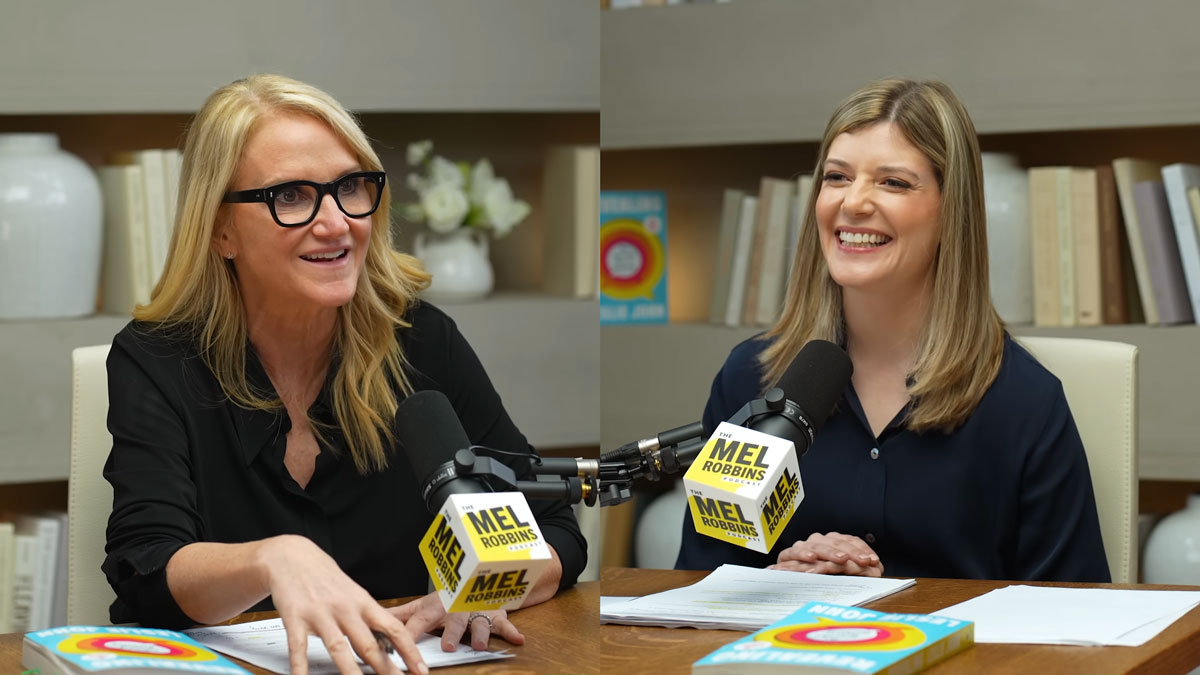
Today's episode with Harvard Business School Professor Leslie John is going to completely change the way you think about every conversation you've been too afraid to have.
In today’s episode, you will learn the surprising science of honesty, vulnerability, and human connection.
Harvard Business School’s Dr. Leslie K. John, a behavioral scientist who has spent decades studying honesty, trust, privacy, regret, and decision-making, has discovered why the things you don't say are quietly hurting your health, your relationships, and your career – and exactly what to do about it.
For years, the advice has been: don't overshare, at work or with friends. Keep things private. But decades of Harvard research say that advice is backwards.
Dr. John's findings are shocking, and reveal that the real problem, the one deepening loneliness and costing you the career and connections you want, is undersharing.
If you've ever held something back because you didn't want to make things awkward, said "I'm fine" when you weren't, or wished your relationships felt deeper and more honest, this episode will change the way you communicate forever.
Listen on:




A life of undersharing is a life of missed opportunities.
Professor Leslie K. John
All Clips
Transcript
Mel Robbins (00:00:00):
Today we're talking about research that will change your life and your career from the number one professor on decision making at Harvard Business School. I'm talking about Dr. Leslie K. John. She is a Harvard Business School professor, the James E. Burke Professor of Business Administration, and a behavioral scientist who has spent decades studying honesty, self-disclosure, trust, privacy, regret, and decision-making. And she is the author of the bestselling book, Revealing: The Underrated Power of Oversharing.
Professor Leslie K. John (00:00:33):
76% of the things that people regret in life are the things they did not do, the things they didn't say. So I teach a lot of executives and I start by showing them in business contexts how it helps them make money.
Mel Robbins (00:00:48):
Wait, so if you share more, you make more money.
Professor Leslie K. John (00:00:50):
When we share more, when we open up, when we reveal slightly sensitive things, it causes whoever we're revealing to trust us more.
Mel Robbins (00:00:57):
So what is the life of an undersharer look like?
Professor Leslie K. John (00:01:03):
The life of an undersharer is a life of missed opportunities. Friendships that never blossom. It's a life of colleagues that never quite trust you. It's a life of romances that don't spark or don't deepen.
Mel Robbins (00:01:17):
What is the most important thing to do?
Professor Leslie K. John (00:01:19):
It is to-
Mel Robbins (00:01:22):
Hey, it's Mel. And before we get into this episode, my team was showing me 57% of you who watched the Mel Robbins podcast here on YouTube are not subscribed yet. Could you do me a quick favor? Just hit subscribe so that you don't miss any of the episodes that we post here on YouTube. It lets me know you're enjoying the guests and the content that we're bringing you because I want to make sure you don't miss a thing. And I'm so glad you're here for this episode because this is a really good one. All right, let's dive in.
Mel Robbins (00:01:51):
Dr. Leslie John. Welcome to the Mel Robbins Podcast.
Professor Leslie K. John (00:01:55):
Oh, thanks so much for having me.
Mel Robbins (00:01:56):
I am so excited to dig into everything that you're about to teach us, your research. And where I want to start is how selfishly, how could my life be different? If I take to heart everything that you are teaching at Harvard Business School, the lessons, the takeaway, the research, and I really apply it to my life. How is my life going to change?
Professor Leslie K. John (00:02:22):
So number one is the realization that revealing wisely is a skill. It's not something we're born good or bad at. It is a skill. And you can do some really practical things, which we're going to talk about to do it really wisely. And if you do it wisely, it's going to transform your relationships. It's going to change how you show up at work. It's going to help you thrive at work. It's going to make you more influential. And it's even going to shape and improve your wellbeing, your day-to-day happiness.
Mel Robbins (00:02:52):
Just by being more open?
Professor Leslie K. John (00:02:53):
Yes. You're going to notice that your EQ, your emotional intelligence is going to increase. You're going to have much better self-awareness and understanding, and you'll have a much better understanding of others. As a result, you'll be much better able to identify and process your emotions. You will feel therefore less stress. You will ruminate less. You know that post-conversational replay, that gut wrenching, oh my God, what did I do? That's going to dial way down. Because part of opening up is saying hard things. You're going to learn to be more assertive, which will help you with boundaries beyond ... And you'll feel more, it's not just the absence of negative stuff or the mitigating of it. You're going to feel more joy. You're going to be happier. I sure am. And if this curmudgeonly academic feels that way, you'll also find benefits in your workplace, in your career.
(00:03:43):
So it's interesting because the tools there are kind of counterintuitive, the things that you do to say gain more influence. So I'm excited to talk about that. So let's go.
Mel Robbins (00:03:59):
Dr. John, I'm sitting here thinking, if you're standing before a class at Harvard Business School, you got to have a bunch of really type A people in there who want to go into iBanking or be the next billionaire or build something meaningful, hardworking, hard driving. They end up in front of you and you're like, "Hey, let's talk about the power of oversharing."
Professor Leslie K. John (00:04:21):
I know.
Mel Robbins (00:04:22):
How do you sell the benefit of being more open and what you call oversharing to somebody who is just in your class to get ahead? Yes. What is the real benefit of that?
Professor Leslie K. John (00:04:35):
Yes. Great questions. The way I start is by speaking their language. So I teach a lot of executives and some of them rightly so. Well, I'm a skeptical person. They're like, "What is this? " And especially sometimes when it comes to feelings and emotions, what is this? And so what I do is I start by showing them in business context how this, first of all, this is crass maybe. I am a business school professor, how it helps them make money. And then I show-
Mel Robbins (00:05:05):
Wait, so if you share more, you make more money.
Professor Leslie K. John (00:05:07):
So the example I give there, I know, what? As a company, so when we share more, when we open up, when we reveal slightly sensitive things, it causes whoever we're revealing to trust us more. And the same is true in companies. When companies reveal more, it causes their ... And I don't use the word cause lightly. These are randomized experiments. It causes their customers to trust them more and to buy more. So we've done studies with the largest bank in Australia, for example, where with my colleague, Ryan Buell, where somehow we convinced them to, on their credit card website, so when you're going and looking for a credit card on their bank, Commonwealth Bank of Australia, what we convinced them to do is half of the time to reveal reasons why you might not want the credit card. So pay attention, the fees are really high or the points aren't great or whatever, the high interest rate, like drawing attention, basically saying, "Don't buy this." But that's a form of sensitive disclosure. And what did that do? It actually, it did not scare people away. It didn't decrease customer acquisition and it increased retention. The experiment alone made the bank millions of dollars and then they rolled it out and then their competitors copied them. So that's kind of, I start in the money realm and then they're like, "Oh, okay." And then I go into leadership and there I go into how when you're a leader revealing a little bit more than you think you should, and I take them through. I first get them to craft a little self-introduction. I say, "Imagine you're about to introduce yourself to a group of new hires. What would you say about yourself?" And then I say, "Raise your hand if you had any negative traits in that. " Crickets. And then I said, "We did a study with actual managers where we randomized them to either do what you did and not share weaknesses, or some of them put a few weaknesses in, and then we asked the employees who they want to work for. They want to work for the person that has the weaknesses. They don't think the employer is incompetent. They just trust them more and they want to work for them."
Mel Robbins (00:07:20):
Well, I find this so fascinating because you hear the word oversharing and you think about those moments where something fell out of your mouth and then you regret it.
Professor Leslie K. John (00:07:30):
Completely.
Mel Robbins (00:07:31):
And the research that you've been doing is so groundbreaking. What actually led you to go, "Oh, wait a minute." Oversharing and revealing things that you may be hiding or maybe scared to say really matters. What was that moment you're like, "I'm looking at this wrong."
Professor Leslie K. John (00:07:55):
For me, the study that changed everything was a simple thought experiment I ran where we could actually ask listeners to think through this little thought experiment. So imagine you are deciding between two possible dates, two possible suitors, and you talk to one of them and you ask them, "Have you ever had any sexually transmitted diseases, STDs?" Now, I know that that's
Mel Robbins (00:08:21):
That's kind of forward. Okay.
Professor Leslie K. John (00:08:24):
Harvard Business School professor says, no. Yes, that's super forward. Obviously we're not going to open with that one. I'm boiling it down to you because you're busy people. So you ask the person this and they say, "Actually, yeah, I've had a lot of STDs." Okay. So then you ask the other person, same question, and they say, "I don't want to answer that question. I'm not answering it. " Refuse to answer. And so we asked, we put thousands of people in this quandary. Now, neither of these is exactly as my father would say a fine specimen. So you push come to shove. You want someone who's more responsible or who answers your questions. But if you had to choose, if you had to choose, who would you pick? And again and again, we found people prefer the revealer. The person who says the thing, even if it's a terrible thing relative to someone who hides, who saliently withholds, we've found this in dating context.
(00:09:18):
So here it's about 65% of people, so not 100% of people, but the majority, the significant majority prefer this devil they know. In other studies, we found in another study,
(00:09:30):
We asked people who they'd rather hire. Would you rather hire someone who on the job application answered the question, "What are your worst grades?" And admitted that they'd failed versus someone who opted out. Something like 89% of people choose the person who admits to the bad thing. And this just was astounding to us. So we did more studies and what we realized was that the reason that people really didn't want to go for the hider was because they distrusted them because at least the person who revealed, at least they revealed and they're trustworthy. And now then the question is, every question you answer in research, this is why I love my job, is another question, another layer. Well, why is that person trustworthy? And what we found was that when you think about it, revealing something sensitive to someone is showing that you trust the person because I'm saying the thing and I'm like relinquishing control to the universe and I'm implicitly saying, "I trust you to not make a fool out of me." So I'm showing. And when we feel that someone trusts us, it causes us to trust them in return. And why is that important? Because it is the foundation of human relationships, right? We are herd creatures. We cannot survive without strong relationships. And so when someone abstains saliently from this activity of revealing when they say, "I'm opting out of answering," we treat them with contempt so much so that we would rather hire someone, date someone who admits to pretty bad things relative to someone who simply abstains. And you could think about it, there's lots of reasons why the non-responder, it could be a principled non-response, right? They could be saying, "This is not the right question. I object." But nonetheless, yeah. So that was one study.
Mel Robbins (00:11:16):
Well, when you said imagine, just imagine you have two people you're trying to decide you're going to go out of date with. You ask them, "Do you have any history with STDs?"
Professor Leslie K. John (00:11:24):
Yes.
Mel Robbins (00:11:25):
The second that you told me that the second person was like, "I refuse to answer that. " I'm like, "Well, that's because you have an STD. I'm going with the person that is willing to reveal that because you're right. I feel like ... " I mean, it's so obvious now that you explain it, professor. But I think when you're in the situation, the instinct is to hide the information, to put up a perfect front and to not reveal things that you believe people will judge you for.
Professor Leslie K. John (00:11:55):
And in fact, we did other experiments where we put people in that position. We said, "Okay, we didn't make people imagine they had lots of STDs. We've got them to imagine that they had failed an exam or something and you're getting on a job application." And we incented them to incentive compatible and we really wanted them to be honest. And we said, "Would you reveal this or would you choose not to answer?" Almost everyone thinks the wise move there is to choose not to answer and it's wrong, right?
Mel Robbins (00:12:23):
Yes. Yeah. Well, I don't know if it's the lawyer in me, but now what you're saying is that based on the research, it's actually human nature that when somebody avoids answering something or you even pick up on a smidge of, I don't think I'm getting the full story here, you will not trust that person. And so by not revealing ... And you know what's crazy about this? If you really stop as you're listening to Dr. John and you're imagining these questions and somebody's like, "Well, I'm not comfortable answering that. " You immediately go liar. You immediately believe and assume that the person is not telling you the truth, but here's what's crazy. The person is saying that because they literally don't want you to judge them, but by saying it-
Professor Leslie K. John (00:13:11):
I know, isn't it Ironic?
Mel Robbins (00:13:12):
It's crazy.
Professor Leslie K. John (00:13:13):
It's so ironic. It's so ironic. And in the law, I always think that the law how you're not supposed to, you would know better than I'm butchering how to say it, but where you plead Fifth Amendment or whatever, you're not supposed to make any inference from that. It's impossible. It's an automatic inference that we make.
Mel Robbins (00:13:31):
Yes, it's so true. So you mentioned that you're doing all this research and all of a sudden the research reveals to you that, wow, not sharing the truth makes you less trustworthy.
Professor Leslie K. John (00:13:44):
Yes. There's two other ... I won't say them in such detail, but there's two other things that were like blow my mind moments. Yeah, sure. Okay. So the next was a study, hard scientific study. I'm making fun of myself because I love doing fun, but I think deeply revealing experiments with people where I put them in these awkward situations. This was by a neuroscientist, so like a hardcore scientist. And what they did was they put people in brain scanners to look at what areas of their brain were activated. And half of the people, they asked them personal questions, so they asked them to reveal. The other half were asked different questions that didn't give them the opportunity to reveal. And what they found was that the people who got to reveal the pleasure centers of their brain were activated.
Mel Robbins (00:14:30):
If they told the truth.
Professor Leslie K. John (00:14:32):
Well, they didn't even tell ... The questions were not necessarily places where you would lie. They were like, "What's your favorite ice cream flavor?" Just anything about yourself, not particularly sensitive, but talking about yourself, revealing about yourself, the pleasure centers of the brain activated relative to when you weren't talking about yourself. And that to me was like, wow, these are the really old brain structures. And if there's something really deeply intrinsically rewarding, there's something really important going on here that we need to pay attention to.
Mel Robbins (00:15:03):
And just to make sure that I kind of got the power of that insight and that as you're listening or watching, you really pulled out from our esteemed professor. What that tells you, if I'm hearing you correctly, is that you are hardwired to feel good about yourself when you reveal things about you that are true.
Professor Leslie K. John (00:15:27):
Completely.
Mel Robbins (00:15:28):
That it's part of the design. And I would imagine that if you suppress that, that it has a negative backfiring effect too, since you're wired for this.
Professor Leslie K. John (00:15:39):
Absolutely. Absolutely. Yep.
Mel Robbins (00:15:41):
Wow.
Professor Leslie K. John (00:15:42):
Yeah. Oh, here. There is a third study which I could talk about that rocked me.
Mel Robbins (00:15:46):
Yeah. What's the third study that rocked you?
Professor Leslie K. John (00:15:48):
So the third study that rocked me, I encountered this oldie but goody or baddy study, depending on how you view the conclusions, about what they did in this study was they videotaped preschoolers as they were watching a kind of scary movie. And so they were videotaping them to see how much they expressed on their faces, how much seeped out, how much did they show on their faces of their feelings. They also measured how sweaty their palms are. So this is the galvanic skin response, which measures sweat on your fingers. You know how when you get nervous, you get sweaty fingers. And so that's physiological stress, kind of like objective stress if you were to think about it that way. And what they found was that the children who let more out on their faces, they were physiologically calmer.
Mel Robbins (00:16:36):
Meaning their fingers weren't correct.
Professor Leslie K. John (00:16:38):
Correct. Correct.
Mel Robbins (00:16:39):
Correct. So through their facial expression and reacting and revealing, you were processing the stressful feelings you had.
Professor Leslie K. John (00:16:46):
Exactly, exactly. Now, that's the awesome, that's total revelation, right? Now, I am a mom of a three-year-old, my body said three-year-old and a five-year-old. And when I read this, they were similar ages and to what they are now, obviously. And the kicker though is that the study found that once the children reached kindergarten age, there was a gender difference such that the boys were now holding it in. So whereas when they were preschoolers, they were kind of all expressing it. But over time, the boys had learned, and I'm using air quotes if you're listening, they had been culturally conditioned to be stoic and boys don't show, right? Just these toxic norms we have. And so as a boy mom, a couple months ago, I saw my little three and a half year old being stoic, that face, you know the stoic face? Yes. And I just broke my heart and as Tyler like, "It's okay.
(00:17:49):
I may be overcompensating." But that really, really shook me.
Mel Robbins (00:17:53):
Yeah. Well, it's interesting because I'm thinking right now about somebody in my life who recently told me this story about how when he was really, really little, they had a death in the family. And at the funeral, he started to get very, very upset. And someone in the family put a hand on this little boy's shoulder and said, "You got to be strong for mom." And that became strong for mom, became the mantra in this person's mind that has really defined the way in which they've expressed emotion or not expressed emotion or believed that they needed to be stoic. And in the context of your research, I would imagine you would say that the being open and the sharing of emotion is really the opportunity to break the hold that strong for mom-
Professor Leslie K. John (00:18:59):
Completely.
Mel Robbins (00:19:00):
... has on you.
Professor Leslie K. John (00:19:01):
Completely.
Mel Robbins (00:19:02):
Yeah.
Professor Leslie K. John (00:19:02):
Completely.
Mel Robbins (00:19:03):
So what is the life of an undersharer look like?
Professor Leslie K. John (00:19:08):
Yes. I would say the life of an undersharer is a life of missed opportunities. It's a life of friendships that never blossom. It's a life of colleagues that never quite trust you. It's a life of romances that don't spark or don't deepen. I know.
Mel Robbins (00:19:29):
It's so sad.
Professor Leslie K. John (00:19:30):
It is.
Mel Robbins (00:19:32):
And how do you know if you're an undersheriff versus somebody who is just very much shy or introverted or just a little bit more of an observer? What's the difference? Or is there a difference?
Professor Leslie K. John (00:19:46):
I love that question because being talkative is not the same thing as being reveally or revealing wisely for that matter.
Mel Robbins (00:19:56):
Let me just pause you there.
Professor Leslie K. John (00:19:57):
Yeah.
Mel Robbins (00:19:58):
Because is that aimed at me? No, I'm just kidding. I'm just kidding. That was a joke. I love the joke. I think that's an important thing that those of us that may be a little bit more talkative doesn't necessarily mean you're actually practicing the skill and art of sharing.
Professor Leslie K. John (00:20:15):
Completely. Completely.
(00:20:17):
So I'm pretty introverted, but I'm pretty forthcoming. And one of my very best friends is extremely extroverted and she herself struggles to open up. In fact, she said that she really, really struggles with vulnerability. And at first, I've said this to her face. At first, I thought that that was just an elaborate humble bag. I can't be vulnerable, but I've seen firsthand that she struggles. And that really has solidified to me what I call the extroversion illusion, which is that we tend to think equate talkativeness with going deep and opening up. They're really not at all the same thing. So we love extroverts because they're gregarious, they're talkative, they have a really positive affect. They're often in a good mood. But when it comes to revealing the really deep stuff, think about the extroverts in your life. They're probably no different than the introverts in terms of how much they reveal or don't.
(00:21:14):
So revealing is really a different thing than talking.
Mel Robbins (00:21:18):
I love that distinction because when you bring in the word open, how open are you? How much do you actually share versus the blah, blah, blah, blah, blah?
Professor Leslie K. John (00:21:28):
Yeah. And I would say that the people that are the best revealers, the best sharers are the ones that are the most flexible. They have the most disclosure flexibility. So they have a wide range. They go from extreme openness with their most trusted confidants to extreme guardedness when the situation calls for. So they're really nimble at moving between these extremes.
Mel Robbins (00:21:51):
That's an important distinction because when you first dive into your work, you might think, oh, okay, I just got to be super vulnerable, a completely open book, I got to blah, blah, blah. And it's both extremes. It's knowing when to be open and when to be guarded. So how do you know the difference between being the kind of person that tends to just be shy or introverted versus being somebody who's closed and is under sharing and connecting with people?
Professor Leslie K. John (00:22:25):
That's a great question. I think that you need to look to yourself first and do a kind of audit of ... I think a place where this shows up very saliently is in one's relationships. Your spouse, your relationship with your spouse, how much do you share with them? Do you really feel like they know you? Do you feel like you know them? How much are you talking about your feelings versus logistics? You do kind of an audit like that.
Mel Robbins (00:22:53):
What are some of the things that you would notice if you start to think, and I'll just share this in case it's helpful as you're listening or watching us. So I would say, God, we've married 30 ... About four or five years ago, Chris and I started seeing a therapist and one of the most shocking things as somebody who's very talkative, and I'm married to somebody who is way more introverted and up in his head and a thinker. And it was extraordinarily fascinating to see that we, even though we were side by side, lots of logistics, doing life together, having fun in terms of our experiences of life and in terms of our connection and our marriage, our therapist uses this term, "You two are two people that stand next to each other, but you're sequestered in your own experiences."
Professor Leslie K. John (00:23:58):
Geez.
Mel Robbins (00:23:59):
And what was really unbelievable about it is that learning how to be more open with one another, which is different than just blah, blah, blah, blah, blah about your day, is a skill.
Professor Leslie K. John (00:24:14):
Completely.
Mel Robbins (00:24:15):
And I feel like in the last four years, learning how to be more open with Chris and having him also lean in to learning how to reveal and even talk about the things that he's thinking about or feeling or whatever has brought us so much closer because ... And then I think about the last 26 years, and we've had completely different experiences in our minds and bodies because we weren't really connecting over it. We were just doing life together, if that makes sense.
Professor Leslie K. John (00:24:42):
Well, I think we're living in a parallel universe because I have had the exact same experience with my own. We have a marriage therapist. He's amazing. I started realizing I'm making all these assumptions about ... And these tiffs we get into, it's because we're not actually communicating how we feel.
Mel Robbins (00:25:01):
And
Professor Leslie K. John (00:25:01):
So there's so many things that opening this box of what your spouse is thinking and feeling is just so, so helpful for marriage and staying together. And it prevents these stupid tips because it's never about the dishes and the dishwasher or whatever.
Mel Robbins (00:25:19):
You also, in your work, you talk about disclosure decisions. Can you explain to the person listening and to me, what is a disclosure decision?
Professor Leslie K. John (00:25:33):
I love that. So a disclosure decision is simply a decision of whether to reveal something or to not reveal something. So many of our disclosure decisions ride under the surface. We don't even realize we are making these decisions. So often we just kind of default the silence. We don't even consider the possibility of opening up. And so what I'd like to do is I'd like to do a little demo here to help us understand this a little bit. A day in the life of disclosure decisions.
Mel Robbins (00:26:02):
Okay. So you're going to walk us through the average day and you're going to point out all of these subconscious moments where something is happening in your interpersonal life and you just decide not to say anything.
Professor Leslie K. John (00:26:19):
Yes.
Mel Robbins (00:26:19):
Oh, I have a feeling it's going to be painful. Okay.
Professor Leslie K. John (00:26:22):
It's just going to be an average boring day, but that's the point, right?
Mel Robbins (00:26:25):
Okay. Average boring day. And Dr. John is reaching down and she is pulling up. There's a basket and there are yellow ping pong ball things like little whiffle ball things that she has in the basket. There's one right there. Okay, you hear it. And why don't you walk us through what's about to happen, and there's a big mason jar.
Professor Leslie K. John (00:26:44):
Okay. So I'm going to walk us through the day in a life of disclosure decisions. And what my purpose here is I want to make visible something that is typically invisible in our lives. And that is the sheer number of disclosure decisions we actually make unknowingly.
Mel Robbins (00:27:04):
And this is also helping us really consider, are you open and are you revealing what's happening or are you staying closed and you're under sharing what's happening in your
Professor Leslie K. John (00:27:18):
Life? Yes, yes.
Mel Robbins (00:27:18):
Okay.
Professor Leslie K. John (00:27:19):
Yes.
Mel Robbins (00:27:19):
Okay. And as you're listening, you will be able to hear the impact of this, but as you're watching on YouTube, you're going to see this.
Professor Leslie K. John (00:27:28):
Right. So I have this mason jar here. What this mason jar represents is it represents the things that you thought but did not say. In fact, you didn't even consider saying them, frankly. So, okay. And these are going to be your thoughts.
Mel Robbins (00:27:46):
Each one of these little balls are the thoughts.
Professor Leslie K. John (00:27:47):
Each one of these balls is your thoughts, the unsaid. Okay. So you wake up in the morning, you roll over in bed, you hug your spouse, you say, "I love you. " And then you think to yourself, "Oh, I feel so crappy. I had the worst sleep." So you can hear that's your first thought feeling that you have suppressed, really. You haven't thought of it as suppression, but we're trying to bring awareness to this. And then you think, "Geez, it's going to be hard to regulate my emotions today because when I'm sleep deprived, that's really hard." Next one in the ball, in the jar. Then you go over to the bathroom, you're standing beside your spouse, you're starting to brush your teeth. You look at yourself in the mirror and you think, "I look fine, but I don't love the way I look." You think, "I really thought I would feel younger at this age.
(00:28:41):
I feel older than I thought I would. " Then you both go down to the kitchen, your kids are frolicking and scampering about, and your husband or your spouse starts making their lunch for the day and the spouse says to you, "Hey, what do you think they want for snack?" And you say, "Just give them something. Stop. Just you pick." Spouse says, "Whoa." And you think, "Oh my gosh, I'm just so exhausted. I just need a little bit more leeway today because I'm so tired and I really just need a hug. And I've got this big presentation coming up and I'm so overwhelmed." You don't say any of these things. Instead, you're now in a fight with your husband because your husband's like, "What?" Or your spouse, "What? I'm doing something nice." You get in the car, you start driving to work, your father calls you, you think, "Oh geez, what's my father doing?" Because you realize that he's driving.
(00:29:32):
My father is driving. My father shouldn't be behind the wheel. You're like, "Should he be behind the wheel?" I don't think his eyesight is good enough. I don't think he should be behind the wheel, but instead you just say, "Hey, dad, let's talk later when you're not driving." You get to work, your assistant says, "How are you doing?" You say, "Great." What you don't say is, "I'm feeling overwhelmed. I've got a big presentation today." You get into your office. I could go on and on. You get into your office and your work bestie comes in, they say, "How you doing? What's on tap today? You say, "I got a big meeting, big presentation. I'm super excited." What you don't say is, "I'm feeling anxious. Maybe we could go through the beginning together. That might help me. " And on and on, and I'm already full here. I could go on.
Mel Robbins (00:30:11):
It's only 9:30 AM.
Professor Leslie K. John (00:30:13):
Exactly. You can think of then later in the day, your boss comes, says, "Congrats. Great job on the presentation." And you say, "Thanks." But what you could have said is, "You have no idea what that means to me. I was super anxious and I crushed it and I'm so proud of myself. And maybe you could give me more opportunities to speak because I love it so much." And then it's like career advancement. So the point here is not to ... I'm not saying we should say all of these things out loud. That would be chaos. There's lots of good reasons why we withhold. We're being kind. We don't have the time to get to it. We're being strategic. Our assistant asks us how we're doing. We don't want to bog them down. We want a quick, easy, breezy. But our work bestie, we can't tell them we're feeling a little anxious.
(00:30:58):
They could give you a hug. They could say, "Oh, I've been feeling the same way." They could say so many things. Almost anything they say will be helpful.
Mel Robbins (00:31:08):
What's really powerful about this example, whether you're just hearing the or you're watching all of these unsaid things pile up is you feel how weighed down you are.
Mel Robbins (00:31:25):
And what I would love to hear is what is the implication in terms of your energy or your mood or your own health, your happiness from constantly withholding and undersharing?
Professor Leslie K. John (00:31:46):
Right. So there is a lot that we know about undersharing, withholding. It's really bad for our mental and physical health. So for example, when we keep secrets, we tend to ruminate about them and that decreases mental focus. It literally lowers your IQ1 tests when you're holding secrets. It also is associated with decreased wellbeing. People who hold secrets, they have lower objective measures of physical health. So there's all kinds of health issues. And I'm just getting at the physical mental health. I'm not even getting at the missed opportunities of what your relationship could be and the problems you're causing by not opening up, right?
Mel Robbins (00:32:36):
Well, if we just take the example, the missed opportunities and what you just said is connection with the person first singer said, "I had a scary dream. Oh my God, I'm getting really later." So you're missing connection and reassurance.
Professor Leslie K. John (00:32:47):
Yes.
Mel Robbins (00:32:48):
When you look in the mirror and you were nice to yourself by just saying you're old, I'm normally like, "God, you look terrible."
Professor Leslie K. John (00:32:53):
I don't say I'm filtering a little bit.
Mel Robbins (00:32:55):
But if I say to Chris-
Professor Leslie K. John (00:32:57):
I still have acne. I'm in my 40s. What's up with that?
Mel Robbins (00:33:00):
Apparently your hormones are still working. That's what's up with that. But when I say to Chris, I just feel really ugly lately. I just feel unattractive. He always reassures me and it feels like it has less of a grip on me. In terms of work, you're missing out on getting the support that you made. And the other thing that kept really striking me, and I don't know if it really hit you as you were listening or watching to Dr. John, is how every time that ball dropped, I felt the weight of somebody feeling like everything was on their shoulders, that it was all up to them, that they had to figure it out on their own. And it was interesting to watch that because I think that's been one of my big stories that I've been working to change, which is, "Oh, it's all up to me" and a lot of that gets reinforced when you don't open up about what you're dealing with or you don't open up about the emotions that you're feeling, you just bury it and bury it and bury it and bury it.
Professor Leslie K. John (00:34:04):
In fact, it's something in my household I'm working on as well. And I said to Colin, "I'm really exhausted by the number of decisions I need to make every day." Not disclosure decisions, but snack, da, da, da. And so just telling him that he couldn't read my mind and now he's just making decisions. I said, "I would love for you to just make the decision. If I disagree, I'll tell you. " I have a dear friend of mine who for Mother's Day, she's so in tune with herself. For Mother's Day, she asked to make zero decisions. It was so awesome. Doesn't that sound so blissful?
Professor Leslie K. John (00:34:39):
But this is also part of the point, which is that in order to do this well, you have to have self-awareness. You have to really understand what's going on in your mental state. And so even things like sharing your feelings and all the things, the scientific research on how opening up, whether it's to a therapist or writing it down in a journal, that is extremely therapeutic for us.
(00:35:04):
It helps us process our feelings. It helps us feel better. In order to do that well, you have to have insight into your psychological state. And when I started doing this, and this is why, again, I'm telling you I was a guinea pig because I'm a recovering emotional illiterate because my therapist, I don't know, I was fetching about something and he's like, "Well, how do you feel?" And I was saying, "Cognitions. I feel trapped or whatever. I feel like this doesn't make sense." He's like, "Those are thoughts, a feeling." Then I literally asked him, "What is a feeling? PhD, what is a feeling?" And then he handed me this thing called an emotions wheel, which I printed a version of that in the book, which I have found so helpful, which helps you to really figure out what you're feeling. And if you start with a really core feeling, so for example, the way the wheel works is you start off with, you just ask yourself, the version I have in my book is super, for me, emotional illiterate.
(00:36:08):
So it starts off with a very simple question like thumbs up, thumbs down, positive, negative. Okay, I got that. Then the next layer out of this circle is getting a little bit more refined, which is simply, is this an emotion that's very arousing? Is there a lot of energy behind it or is it more of a non-arrousing energy, like a calm? And it turns out there's four combinations. So you can have a positive that's really active, like joy, excitement. You can also have a positive emotion that's low arousal, like calm. The same is true about negative things like anger, rage. Those are full force active, but boredom would be something that's more ... And then once you get those, you can get ... I won't go into deal now, but the next ring is like anger. Okay, is it disappointment? Is it rage? And you can literally like, "Oh, that one, that one, that one, that's me. " And once you start doing this, you expand your emotional vocabulary, which helps you understand yourself better, which helps you communicate better.
Mel Robbins (00:37:09):
Well, what's helpful about that very simple construct, am I feeling good or bad and am I feeling like I want to do something about it or am I energy or am I feeling low about it? That just even considering that, if you're laying in bed and you're like, "I love you, honey." And then you're like, "Wait, I feel bad right now." And it's like bringing me down. That's a way to access it. That something's up. I just feel really low energy today. Can you give me a hug? Now you just-
Professor Leslie K. John (00:37:41):
I see what you're saying. The energy can serve as a cue to help you understand, for sure, for sure. I love that. Yeah.
Mel Robbins (00:37:46):
Let's just give a really specific takeaway. So let's say you listen to this episode or you watch it, you go home at the end of the day, your partner's like, "How is your day fine?" Or, "What's wrong?" You're like, "Nothing. How do I talk about it? " Do you have any kind of easy, quick ways to make yourself a little bit more open even if you're exhausted and you don't want to talk?
Professor Leslie K. John (00:38:12):
Yes. Well, so if you're exhausted and you don't want to talk, you can defer it and say, "I'm exhausted and I don't want to talk, but thank you for asking. Let me have a drink or let me have a relaxation time." Okay, great. Love it. Number one, but if you are ready to engage, you're going to do two, complete the sentence. Okay? You're going to do two. The first one, which is the most important, you're going to say, "I feel." You're going to complete that sentence, and then you're going to say, "I need." And you're going to complete that sentence. The I feel is even more important. Sometimes you don't know what you need, and maybe you riff a bit on what you need, but I feel is really crucial. It's really crucial because it is more vulnerable than a thought. And because it's more, and we're talking about a personal close relationship, when we show some vulnerability, it invites care.
(00:39:08):
It's also not debatable the way a thought is. Thoughts are dictated by right and wrong and logic. And so if you say how you feel, feelings are feelings like they're valid. Now, it might not be as easy as it seems because sometimes you list adjectives instead of thoughts and we've kind of been there that you want to really get into feelings.
Mel Robbins (00:39:29):
I think this is very easy. I think this is so simple.
Professor Leslie K. John (00:39:31):
Yeah. Okay, Good, good. Maybe i'm overcomplicating it.
Mel Robbins (00:39:33):
If you think about how was your day and you're like, "I feel overwhelmed."
Professor Leslie K. John (00:39:37):
Yeah, totally.
Mel Robbins (00:39:38):
Or, "I feel proud of myself. I don't even know what I need because I'm so overwhelmed."That's a different conversation than fine. If somebody says, "What's wrong?" And you say, "I feel kind of confused about how I'm feeling right now. I don't even know what's wrong."
Professor Leslie K. John (00:39:56):
Perfect. So maybe we should banish the word fine. The third rule is don't say fine.
Mel Robbins (00:40:01):
Well, I like it because it's simple and we can all take those two sentences. I feel I need.
Professor Leslie K. John (00:40:07):
Exactly. Yeah.
Mel Robbins (00:40:09):
And you can do that with a work colleague too.
Professor Leslie K. John (00:40:13):
Yes. I feel and I need. And I like I need to because the reason I like I need, it helps you get you in touch with yourself of what you need and think about what you need. And it helps to, because your partner can't read your mind, say what you need. And so some examples may include, "I need a hug. I need you to just listen. I don't want to fix. I just need you to listen. I need you to be on my side. I need you to help me see if I'm thinking through this the right way. I need you to help me figure out what I'm missing." I need, you can finish that in so many different ways. I need multiple things. Yeah. Yeah.
Mel Robbins (00:40:55):
It's really simple and powerful.
Mel Robbins (00:40:58):
You hear a lot in the news right now about loneliness. And how does just having these surface level interactions with people and not really opening up about anything or not being curious about the people in your life such that you're wanting them to open up, how is that contributing to the disconnection that you're feeling?
Professor Leslie K. John (00:41:24):
Yeah. So I think that surface level connections, surface level interactions give this illusion of connection because they have all the trappings of real connection. They've got the smiling, even if it's little force, they've got the eye contact, the shared experience. So they've got a lot of that trapping. But without the social risk, which is opening up a little bit, these types of superficial interactions, they end up making you feel, especially this introvert, socially full, but emotionally malnourished, right?
Mel Robbins (00:42:03):
Ooh, that's an interesting distinction. Yeah. So your cup is full. I've had enough. I need to go home.
Professor Leslie K. John (00:42:08):
Yeah. Stimulation, too much for me.
Mel Robbins (00:42:10):
But you actually don't feel anything.
Professor Leslie K. John (00:42:12):
Right. Yeah. Oh,
Mel Robbins (00:42:14):
I love ... So the stimulation of it versus the actual richness of the connection.
Professor Leslie K. John (00:42:19):
Yeah. Yeah. And so then the question becomes, well, how do you do it?
Mel Robbins (00:42:23):
I don't know. What do we do?
Professor Leslie K. John (00:42:23):
If you're in ... Right. What do we do? Okay. So in general, I would say you want to go ... So you're not going to say ... So imagine you're watching your kids play soccer, you're not going to all of a sudden go deep randomly out of the blue.That's not what we're doing. What you're going to do is you're going to go, think of it go as going one layer deeper than what you ordinarily would.
Mel Robbins (00:42:45):
Okay. Give us the sentence. So what do you do?
Professor Leslie K. John (00:42:47):
Right. So now let's break it down even more.
Mel Robbins (00:42:49):
Yes.
Professor Leslie K. John (00:42:50):
So what you can do is instead of thinking as we're on the watching our kids, instead of commenting on what is happening or what happened, like, oh, they're having so much fun, try to think about ... A cue is to think about what does that mean to you?
(00:43:07):
So for example, you could say, oh, look at our kids are having so much fun. I don't even remember the last time I laughed that hard. When did you last laugh really hard, like a good belly laugh? And that does two things. So that's getting it interesting and deep right away. It's also staying pretty positive. We're not getting into, when's the last time you cried? We're not getting dark, but we're prompting some reflection. And this is like ninja level. I did another thing, I'm flattering myself. Really, I'm taking one of my best friend Alison Woodbrooks', who's been on your show, one of her fundamental findings, which is we don't ask enough questions. So you want to say this kind of, what it means to you, when's the last time I laughed that hard? And then the great thing here is you're passing the torch. Oftentimes people naturally reciprocate and they'll say, oh yeah, me too.
(00:43:57):
But if they don't, you can prompt it by saying, when's the last time you had a great laugh? And then you're off to the race. And you're not trying to get a deep friendship, but you're like, this'll be a fun, meaningful conversation. It's not just small talk.
Mel Robbins (00:44:10):
Well, it's true because I think most of us as I put myself in that kind of scene, it's like, oh, it's a beautiful day.
Professor Leslie K. John (00:44:17):
Right.
Mel Robbins (00:44:17):
Oh, how are your kids still in? Oh, what are you doing this weekend? It's just all this stuff right here. So look at what's happening and think about what it's triggering in you and then turn and reveal and then ask somewhen's the last time you felt like that.
Professor Leslie K. John (00:44:34):
Yeah, exactly.
Mel Robbins (00:44:35):
I immediately thought about the fact that, oh, watching your kids, it made me ... I ran track in high school. I really miss being on a team. Did you play team sports?
Professor Leslie K. John (00:44:43):
Totally.
Mel Robbins (00:44:43):
Yeah. I got it. Wow.
Mel Robbins (00:44:46):
I want to read to you from your book Revealing, this is page 85, research speaks to wide ranging tolls of concealment. For example, the more frequently people think about their secrets, the more likely they are to experience feelings of inauthenticity, lower relationship satisfaction, and even worse physical health outcomes. So let's talk about the cost of secrets.
Professor Leslie K. John (00:45:14):
Yes. Yeah. So I think the main issue with secrets is they are really preoccupying. We think they're inert, we think they're neutral, but they really, really sneak up on us in occupying our psyche. And one of the tricky things with secrets is that they represent kind of an unresolved loop in your mind because if you have a secret, you kind of haven't really resolved, you're constantly monitoring, should I say, should I not? And it's like you're kind of perpetually ruminating over this disclosure decision essentially. I'm not saying we should reveal all our secrets. Some secrets are important to be kept.
Mel Robbins (00:46:03):
I want to dig into this only because I feel like in the context of your research, there's a difference between saying this information is private. I'm not ashamed of it.
Professor Leslie K. John (00:46:15):
Completely.
Mel Robbins (00:46:16):
I am just, I have boundaries with who is going to know this information and who's not, but I'm not holding this information over my own head. Secrets feels like something that you use the word unresolved looped in my mind that you are holding over your own head and that you're wrestling with. So a secret, an example might be that you have fallen out of love with somebody and that you don't know how to tell them.
Professor Leslie K. John (00:46:42):
Oh my gosh.
Mel Robbins (00:46:42):
And you have this secret that you are planning on breaking up with this person, but you don't know how.
Professor Leslie K. John (00:46:49):
I had that. Yeah, I know. It's so hard and it's so hard. I think that you hit the nail on the head though. Being private, having boundaries is one thing. And the difference there is that you've made a decision that this is my boundary. With a secret, it's unresolved. In that case of you really need to tell this person somehow because it's not good for either of you, but how? And that's, I think, a lot of the case with secrets most all the time, it's not a question of whether to reveal, but it's a question of how, to whom and when. Because even if it's just you writing in a journal that secret, that is going to help you feel bad about it. It's going to remove this rumination. It'll resolve it in certain ways because there's actually really interesting processes that go on in the brain when you reveal to yourself on paper or out loud.
(00:47:49):
So somehow it's got to be revealed-
Mel Robbins (00:47:53):
And you said, when to whom. To whom and when. Yeah.
Mel Robbins (00:47:55):
You have this disclosure matrix that really helps us map out, okay, why, how, when, whom, and when not.
Professor Leslie K. John (00:48:05):
I'm going to teach it to you exactly how I teach it at Harvard Business School. So first thing is we're past step one. Step one is we're aware of the possibility of opening up. There's ding, ding, ding. There's a disclosure decision. We've done the ping pong ball exercise and we're aware of our decision. So that's like at least half the battle. So awesome. But now we're trying to figure out whether we should open up or not. And so what-
Mel Robbins (00:48:28):
Let's take the example that you said, which is you know the relationship's over and you do not know how to disclose.
Professor Leslie K. John (00:48:35):
Oh my gosh, yes. You cut to the personal. This isn't even in the book this thinking. Yeah, no, no, it's good. Personal's good. I've been there, right? Yes.
Mel Robbins (00:48:44):
Do I say something? Do I not? Yes. How do I bring this up? Yes. When do I bring this up? Do I bring this up?
Professor Leslie K. John (00:48:48):
Geez. Yeah. Okay. Okay. So you are in a long-term relationship, you've fallen out of love. Okay, should I break up or not? Should I tell them that this is not happening? So the first thing that's going to come to your mind most of the time will be, I'm going to hurt them. This is going to be horrible. We are all going to feel super, super bad. So the number one thing we think about when we think about disclosure decisions are the risks of revealing these things. So I'm going to write down risk and then I'm going to show you because we're going to build this matrix together.
Mel Robbins (00:49:34):
Okay.
Professor Leslie K. John (00:49:35):
So here we see we got the risks of revealing. We've got some things there. Okay.
Mel Robbins (00:49:42):
Yeah. So yeah, you think about, "Oh my God, this is going to be terrible. I'm going to hurt them. I'm a terrible person. It's going to feel bad for all of us." Got it.
Professor Leslie K. John (00:49:48):
Right.
Mel Robbins (00:49:49):
So that's what happens if I say something.
Professor Leslie K. John (00:49:51):
Right.
Mel Robbins (00:49:51):
So obviously I don't want to say anything. That's why we avoid-
Professor Leslie K. John (00:49:53):
Well, so then you think, okay, well, now you start thinking, because you're bolstering that, you start thinking of the benefits of not revealing, right? You're starting to think here and you're like, "Yeah, baby." So we will be amicable. My life will not be uprooted. We get to keep all our friends, right?
Mel Robbins (00:50:26):
I'm not a bad person.
Professor Leslie K. John (00:50:28):
I'm not a bad person. I'm not the bad guy. Not bad person.
Mel Robbins (00:50:34):
And so right now, if you're just listening, Dr. John is simply going, "Okay, here's the risk of revealing." And that's up on the left-hand corner. You're going to hurt them. You're going to be a horrible person. It's going to be bad for everybody. Then she writes down, "Okay, well, if I don't say anything, what's the benefit? Oh, we remain friends. My life isn't turned upside down. Our friends are intact. I'm not a bad person."
Professor Leslie K. John (00:51:00):
Totally. But as you can see, the way I've got this set up is that if you want to make a good decision, good Harvard Business School, rigorous decision making, you have to know, you have to consider four things, right? You have to consider both the risks and the benefits of doing the thing and not doing the thing, the risks and the benefits of doing the thing revealing and not doing the thing.
Mel Robbins (00:51:24):
So what Dr. John just did is she literally just drew a line across and a line down and showed us there are four things you have to consider in every decision.
Professor Leslie K. John (00:51:33):
And the problem is with disclosure decisions, hands down, I've done tons of studies on this to the extent we even think about them, the number one thing we think about are the risks of revealing. And then
Mel Robbins (00:51:47):
We stop there. What happens if I say this?
Professor Leslie K. John (00:51:48):
Then we stop there.
Mel Robbins (00:51:49):
Yes.
Professor Leslie K. John (00:51:50):
Now, as you can see, that's extremely imbalanced. The number one thing we don't think about, the last thing we think about, I have to prompt people to do it, is this.
Mel Robbins (00:52:00):
And that's the risk of not revealing. Revealing. So let's do that. And also to
Professor Leslie K. John (00:52:04):
An extent-
Mel Robbins (00:52:06):
The benefits of revealing.
Professor Leslie K. John (00:52:08):
Basically the support for the cause for revealing.
Mel Robbins (00:52:11):
It's true. We only think about the negative stuff that's going to happen if we say something and then we weigh the positive stuff if we don't do it. But let's play this out with the, okay, you know that the relationship has run its course, you know that it needs to end and you've considered, oh, how painful it's going to be if you say something. You've considered how much easier it is if you don't say anything right now, but you don't ever consider what actually is the risk if you say nothing. So what are some of the risks of not saying, "I'm not in love with you anymore. This is so painful, but I think we need to end this. "
Professor Leslie K. John (00:52:49):
Well, now it's very clear right now that we're bringing attention. You stay in a bad relationship where to me, a bad relationship is when the love isn't mutual. I mean, there's lots of other reasons for bad relationships, but also you may then get beyond yourself and think it is unkind to my partner. It's unkind to my partner to be in a relationship with them when I don't love them. I wish I love them. It would be easier, but not kind. So then you start thinking about it more broadly like this, the risk. The risk, maybe you'll miss out out.
Mel Robbins (00:53:25):
Oh my gosh, you're not meeting the person you're supposed to be.
Professor Leslie K. John (00:53:28):
Love of your life.
Mel Robbins (00:53:28):
And they're missing out.
Professor Leslie K. John (00:53:30):
And they're missing out
Mel Robbins (00:53:31):
On the true love of their life.
Professor Leslie K. John (00:53:32):
Yeah. And they're missing out. And then you start prompting us to think of the risks of not revealing. You stay in a bad relationship. Okay, well, that's duh. But then you think, that's really unkind. And then you think, wow, I might miss out on the love of my life and they might miss. I'm holding them back from their future. And then you're like, how can I not reveal? So then it's like,
Mel Robbins (00:53:59):
Then you look at the positives of saying the thing you're scared to say.
Professor Leslie K. John (00:54:03):
Right. So that's a thing right there, which is not usually the first one that comes to mind, but self-efficacy. I can do this, that I can do hard things. This is going to be a really hard conversation, but I can do hard things. And then benefits, of course, you're freeing each other, you're freeing each other to find better mates.
Mel Robbins (00:54:24):
You're being kind, you're being honest.
Professor Leslie K. John (00:54:26):
You're being kind. You're being true to yourself. You're respecting yourself, right?
Mel Robbins (00:54:31):
And the other person.
Professor Leslie K. John (00:54:32):
Yes. Yes. And so what you see here is you go from stuck here, risk of revealing hurt, horrible, bad, reinforced with, feels really comfortable to stay. And then when you force yourself to think of the other two-
Mel Robbins (00:54:51):
You never really think about the benefit of telling the truth.
Professor Leslie K. John (00:54:54):
Yeah. Now, what I love about this tool is it gives you your answer. It doesn't give you the answer for someone else. It doesn't give you the answer that you're always going to have because maybe you decide, look, I've got a really, really busy month at work right now. I just have to get through this and I can't deal with this fallout. I'm not going to do this right now. The goal isn't to make us reveal more, although that will be a consequence because we are suppressing a lot, but it's to make more informed decisions, to make considered decisions. And we don't need to do a full four quadrant reckoning for every single decision. But I found that once I started doing this, I did it for mundane decisions. That was sometimes easier too.
Mel Robbins (00:55:36):
Give us an example.
Professor Leslie K. John (00:55:37):
The more mundane one would be, I had a research paper that I'm really proud of and love and I would never have happened without my colleagues and a team of people. And in the end, we had to specify whose idea was this. And they said, oh, they filled out the form as a form. It was a group effort. And that really stung because I knew it was my idea because it came like so many of my ideas from childhood. And so then I thought my ordinarily, the thought of telling them would not ... I've had other situations like this where I've not said anything, but then I did the matrix and I-
Mel Robbins (00:56:12):
Walk us through the matrix.
Professor Leslie K. John (00:56:13):
The first thing that came to mind was they'll think I'm petty, I'm going to have to have an awkward conversation. I really love my co-authors. We're friends. I don't want to make them feel bad. And then I thought, oh, okay, well, if I don't do this, then I keep the peace, it's going to be comfortable. They'll still want to work with me because they won't be upset with me. And then-
Mel Robbins (00:56:35):
Well, those are the risk of saying and the benefit of keeping quiet.
Professor Leslie K. John (00:56:40):
Yeah. If I do, I'll just do a generalized one here. So this is where we often stay, right? So I'm in there and then I'm jumping to here because I'm like, "Oh, okay. Yeah, this is great. I avoid an altercation. Everything's copacetic. We'll keep working together."
Mel Robbins (00:56:54):
Keep the peace.
Professor Leslie K. John (00:56:55):
Awesome.
Mel Robbins (00:56:55):
Don't look petty, da, da, da.
Professor Leslie K. John (00:56:56):
But then I go here and I think, well, I know myself and I know that I really care about ideas because good ideas are kind of rare and I will ruminate about this and I will feel a little jaded. And because I'm learning about emotions, emotions have a way of leaking out, right? Passive aggression, avoidance. And so I thought, well, that's not good. And then I thought, well, I'll feel bad about myself too because it's like I'm disrespecting myself and I still wasn't like I should go do it. But then I went here and I- To the benefits of saying something. I went to the benefits of saying something, which I would never have thought that there could possibly be a benefit to this awkward conversation. I started thinking, okay, well, first I won't ruminate. So first it was the opposite of that, but then the bonafide legit benefits started to emerge. And I thought, oh, wow, they'll understand me more. They'll know me more. And as we know, and maybe we'll talk about more, feeling known for who you really are is deeply, deeply rewarding. And it's a marker of really strong relationships. And I love these people and I love ... I always want them to beat my life. And so they'll understand me better and I'll be modeling self-respect. I'll be modeling that I care about ideas.
(00:58:24):
Maybe they'll even respect me more. And then I thought, well, I have to tell. And then I did have a conversation with one of them and it would be great. Of course it went well, and then we became closer because of it, right?
Mel Robbins (00:58:39):
Well, that assumption, of course it went well is not what we feel.
Professor Leslie K. John (00:58:44):
No, it's not. And it doesn't always go well. It doesn't always go well.
Mel Robbins (00:58:47):
But what does the data say about what happens typically when you do think through a decision and you decide to be open and honest about how you feel or about what you need?
Professor Leslie K. John (00:59:05):
We imagine it as being worse the follow-up than it actually is. That's one of the most robust findings in all of social psychology. It's called the impact bias, where we think that future emotional events will be longer lasting than they are. So if we're going to get a raise, we're like, "Oh, I'm going to be happy for the next year," when really you kind of adapt, that's the bad side out of it. But you have a breakup. In prospects, you think, if I break up with this person, I'm going to be crushed for the rest of my life, they're going to be crushed. And yeah, it really stings, but it doesn't last as long as you think it does usually.
Mel Robbins (00:59:40):
Now, can you talk though about how the research shows that when you're open about feelings, it can be more persuasive than making a logical argument even at work. Yes. Why do people listen more or care more when your emotions are involved?
Professor Leslie K. John (00:59:58):
I know. We think emotions ... They're the filler, but emotions are information and they're really credible. They're really credible because they're hard to fake. So they also are riskier than sharing thoughts, which also makes them credible because you really mean it if you're willing to take the risk to share some emotion. Oftentimes the answer is reveal. So reveal why you're crying. Say, tie it to your passion for your job. I am crying because I care so much about the stakeholders of this company that we better get this right. So linking it to passion then can make it more compelling instead of being, especially with women, gender, we worry about that too. Oh, she's just over emotional. So if you're able to do that, then it can be quite powerful. But of course, you have to be careful because it is a very tricky thing. But I've had my own experiences ugly crying and I had a ... I don't know if you want me to tell the story, but when I was a baby academic, I gave a talk at a very fancy university, which has a reputation for being very tough on speakers, read aholes to speakers. And they were asking me difficult questions, which I expect, which is good science. But what was bothering me was that they were asking them in a belligerent, rude way and interrupting me. So they were being rude. And finally, I just couldn't hold back anymore. And I was smart to try to not cry. These are people. I'm a baby academic. They're in charge of my fate because they're going to write me letters to say if I'm any good when I'm up emotion.
(01:01:54):
So I was really trying, but I couldn't. So I'm just full on ugly crying, full on.
Mel Robbins (01:01:59):
On stage?
Professor Leslie K. John (01:02:00):
So yeah, in front of ... There's like 30 people senior academics at this university. I write about it in the book and I always, as in the book I say, "This sounds more composed than it was. You have to remember that the sound effects are ... " So I start bawling and then I think to myself, I'm like, they need to know why I'm crying because otherwise they're going to think that I'm just like, I can't take hard scientific questions. And so I stopped and I said, "I'm stopping, stop, because I need to tell you why I'm crying. I'm crying. I'm not crying because you're asking me hard questions. I'm crying because you're being belligerent. I'm crying because you're being rude." And I didn't stop there, which I maybe should have, but I was like, "Okay, I've lit this thing on fire, so why not?" And I might've even pointed a finger, "You may not know this because all you see is the way you are, but you know you have a reputation. It's not okay and it has to stop."
Mel Robbins (01:03:02):
What happened?
Professor Leslie K. John (01:03:03):
Well, so then they were quiet most of the time. They were scared of me. I did get a few apologies afterwards. And then, well, first of all, it was not career suicide that I thought it would be. In fact, one of the faculty who was there later revealed to me 10 years later that he wrote a really great supportive letter for my promotion. And the other thing though that I thought was really cool about it other than the mortal humiliation was that a couple of friends who went there a few weeks later, they were actually reasonable to them. And so I thought maybe I helped just a little bit. And this is related to something, I wouldn't call this exactly that, but something I call a catalyst confession. So the catalyst confession is when someone who is in a leadership
(01:04:00):
Position comes out and says something really bold like Magic Johnson in the '90s, he came out and said, "I'm HIV positive." And at the time this was the gay disease. This was highly stigmatizing. And he really, really shaped the conversation in a positive way. In fact, there have been studies that have looked at kind of pre-post his announcement, and it was concluded that he probably caused about 900 additional people to get tested. So I think the opportunity for revealing in leadership, yes, at the micro level, you can get feedback. We can also talk about how you can gain more influence. But I think the real magic of it, speaking of Magic Johnson, is in the ability to use your position to de- stigmatize and to really ... That's real leadership in my book.
Mel Robbins (01:04:55):
It's interesting that you call that story humiliating because it may have felt that way, but from the outside hearing it, it sounds courageous and liberating because you called them out.
Professor Leslie K. John (01:05:08):
Well, so it-
Mel Robbins (01:05:08):
The distinction is you saying, "This is why, and it's not because of me. "
Professor Leslie K. John (01:05:13):
It felt
Mel Robbins (01:05:13):
Clear. It's because of you. Yeah. And it's clear that change did happen. And I love that you brought in the fact that you have a reputation for doing this and it has to stop. So Dr. John, I want you to speak directly to the person that's here listening or watching right now. If they take one action based on everything that you have shared with us today, what is the most important thing to do?
Professor Leslie K. John (01:05:37):
It is to share your feelings. And now that you've listened to this podcast, you know I'm not being trite. You know that there's a lot of heft in that. Feelings are data. Feelings are really, really valuable information.
Mel Robbins (01:05:51):
Dr. Leslie John, what are your parting words?
Professor Leslie K. John (01:05:53):
There's a study by a Cornell psychologist, Tom Gilovich. He's looked at the things that people regret in life, and he's found that 76% of the things that people regret in life are the things they did not do, the things they didn't say. Then there's research by a palliative care nurse by the name of Bronny Ware. She has spent many, many hours with people on their deathbeds and she wrote a book, Chronicling What are the Things that they tend to regret? The number three regret, the number three most common regret of people that are dying is, "I wish I had shared my feelings more."
Mel Robbins (01:06:35):
Share your feelings.
Professor Leslie K. John (01:06:36):
Yeah.
Mel Robbins (01:06:37):
Be more open and honest. I am so excited that you are here in Boston. Professor and Dr. Leslie John, thank you, thank you, thank you from coming across the river and being here and sharing everything that you did today.
Professor Leslie K. John (01:06:54):
Than you so much. Thank you for listening.
Mel Robbins (01:06:57):
I am so excited to see what you do with this conversation, who you share with. Actually, sharing this episode with somebody that you want to be more connected to is a way that you can be more open. I listened to this. I learned a lot about myself. I want to connect deeply with you. Let's take a listen. Let's talk about it. I can't wait to hear what you thought and how you're going to apply this. And because Dr. John said that we should do one thing, which is start by sharing our feelings, I'm going to share my feelings with you. As your friend, I want to tell you that I love you and I believe in you, and I believe in your ability to create a better life. And if you ask yourself, what might I be missing out on by not revealing, by not sharing, by not being open?
(01:07:42):
When you really consider what you're missing out on, I know that you will create a better life by being more open and by being more curious with the people that you deeply care about, and now you have the research and the roadmap to go do it. Alrighty. I will see you in the very next episode. I'll be waiting to welcome you in the moment you hit play. And thank you for watching all the way to the end. I love being here with you on YouTube. Thank you, thank you, thank you. Thank you for sharing this with people that you care about, particularly if you're married like I am or you just want to be closer to people. This is a beautiful resource to share with people. I mean, who doesn't want to learn these lessons from Harvard Business School professor, Dr. John? So thank you for that.
(01:08:24):
I know you're thinking, "What should I watch next, Mel?" I love this. Well, first, if that subscribe light is lit up, it means you're not a subscriber. One way you can support your friend Mel Robbins and our team here is just hit subscribe. It's free. That's how you can show us that you love what we're doing here as we show up and bring you world-renowned guests like this for free. Thank you for doing that. Now, let's get on to the next video. You're going to absolutely love this one and I'll welcome you in the moment you hit play.
Key takeaways
You keep telling yourself silence is maturity, but what you’re really doing is hiding, and that fear of judgment is quietly eroding trust, connection, and your ability to be truly known by others.
You think the risk is oversharing, but the real danger is withholding, because when you avoid the truth, people instinctively distrust you, assume the worst, and feel less safe being open with you.
When you choose to reveal something real, even if it’s uncomfortable, you signal trust, and that act makes others trust you more, deepening relationships, increasing influence, and strengthening your sense of belonging.
Every time you don’t say what you feel, you carry another unsaid thought, and that growing weight creates stress, blocks support, fuels rumination, and makes life feel like it’s all on your shoulders.
You can talk all day and still be closed, because being talkative is not the same as being open, and real connection only happens when you share what actually matters, not just what fills the space.
Guests Appearing in this Episode
Professor Leslie K. John
Dr. Leslie John is a Harvard Business School professor and behavioral scientist who studies honesty, trust, and how revealing shapes relationships and decisions.
-
Revealing: The Underrated Power of Oversharing
We all know the feeling: that gut-wrenching post-conversation replay, cringing at how much we just revealed. We live in fear of saying too much, so we keep our mouths shut, guard our emotions, and lock away our most personal thoughts. But what if we’ve been worrying about the wrong thing?
Drawing on over a decade of research and real-life stories, behavioral scientist Leslie John explores why we hesitate to open up, when sharing really does backfire, and how to strike a balance between too much and too little.
Learning to be more vulnerable and open at work and at home can unlock some of life’s richest rewards: deeper friendships, stronger professional relationships, greater well-being, and, yes, even love. Revealing is a road map for making smarter, bolder, and ultimately more satisfying decisions about just how much you want to share and why.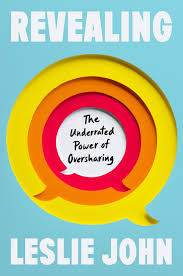
Resources
-
- Check out the Emotions Wheel
- The Harvard Gazette: Did I say too much?
- The Associated Press: Is TMI really such a bad thing? Here’s the case for oversharing
- Harvard Law School: In Business Negotiations, Are You Revealing Enough?
- Chicago Booth Review: Deep Conversations with Strangers Are More Fulfilling than Small Talk
- Scientific American: Skip the Small Talk
- Greater Good Magazine: When Do Your Secrets Hurt Your Well-Being?
- The Guardian: Feeling off? Your secrets could be making you stressed
- Harvard Medical School: Writing about emotions may ease stress and trauma
- Proceedings of the National Academy of Sciences: Hiding personal information reveals the worst
- Proceedings of the National Academy of Sciences: Disclosing information about the self is intrinsically rewarding
- Harvard Business School: Strangers on a Plane: Context-Dependent Willingness to Divulge Sensitive Information
- Journal of Experimental Psychology: Fostering Perceptions of Authenticity via Sensitive Self-disclosure.
- Harvard Business Review: The Surprising Power of Questions
- University of Pennsylvania Center for Health Incentives and Behavioral Economics: Why you should open up more to people, according to Dr. Leslie John
- American Psychological Association: Self-Disclosure and Liking: A Meta-Analytic Review
- Attitudes And Social Cognition: The Experience of Secrecy
2 Million Readers.
1 Life-Changing Newsletter
Simple and Straight-to-the-Point...
Just Like Mel.