Episode: 393
The Reality of Adult Friendship: Here’s Why You’re Lonely & How to Make Real Friends as an Adult
with Kasley Killam, MPH
If you’ve ever felt like making friends as an adult feels impossible, or you’ve looked around and thought, "Where did all my friends go?" – you are not alone.
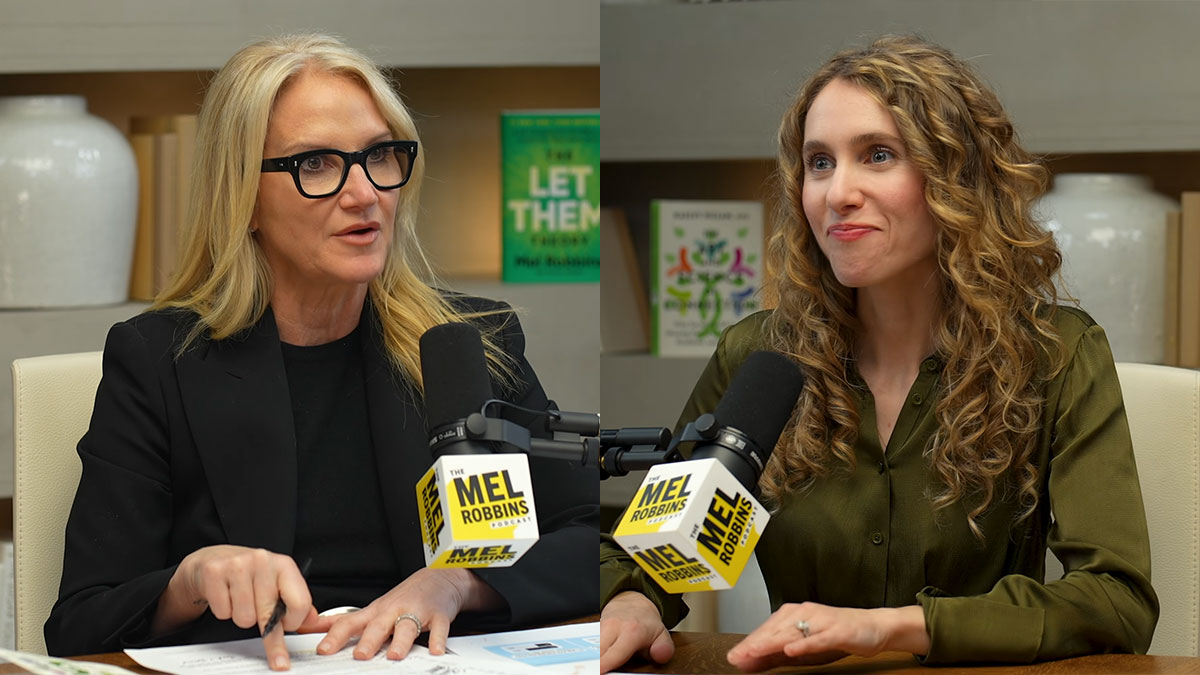
Friendship is hard right now. Which is why today, Mel is sitting down with Harvard-trained social scientist and bestselling author, Kasley Killam, who has spent the last 15 years researching friendship, connection, and loneliness.
Have you ever wondered why the friendships that once felt close now feel distant? Why you genuinely want to see people more, but somehow always end up canceling? Or why making new friends as an adult feels so forced and exhausting when it never used to?
There's a reason for all of that. And today, Kasley is giving you the answer.
No matter your age or stage of life, it’s not too late.
If you’ve felt lonely, disconnected, or like building real friendship is impossible, this conversation will show you exactly what to do next, with steps that are simple, specific, and realistic.
Listen on:




Taking care of your social health is a way to change your life and change the world.
Kasley Killam, MPH
All Clips
Transcript
Mel Robbins (00:00:00):
Friendship. It's really hard right now. And there are specific steps that you can take and simple habits that will make new connections appear and your existing relationships become deeper and more meaningful.
Kasley Killam, MPH (00:00:13):
If you are feeling lonely right now, the first thing I want to say is that it is nothing to be ashamed of. A recent study found that one in six Americans reports being isolated or lonely most or all of the time. I'm going to share with you the 531 formula for social health. You should aim to interact with five different people each week to keep at least three close relationships and to spend one hour a day connecting. Taking care of your social health is a way to change your life and change the world. Young people today spend nearly a thousand fewer hours per year with their friends.
Mel Robbins (00:00:56):
Hold on a second. A thousand less hours a year?
Kasley Killam, MPH (00:01:00):
Compared to 20 years ago.
Mel Robbins (00:01:04):
Kasley Killam earned her master's degree from Harvard T.H. Chang School of Public Health, and today she's going to share the research, the tools, and the practical advice you need in order to feel more connected, build friendships that last, and understand why connection is the key to a meaningful life. Let's talk about whether you're creating an excuse that is destroying your social health, or this is truly a need and it's important to hold the boundary.
Kasley Killam, MPH (00:01:32):
I have nothing to wear. Excuse. I need me time. I'm going to say no, it's an excuse.
Mel Robbins (00:01:38):
And what has the research said about the specific types of connections that you really need in your life?
Kasley Killam, MPH (00:01:45):
There are three things to keep in mind. The first is those micro moments of connection. When you think of someone, send them a text. The second is what I call putting it on autopilot. Schedule a monthly call with your friend who lives in another city. Then the last piece is ...
Mel Robbins (00:02:04):
Are you a subscriber? If that subscribe button is lit up, it means you're not. My goal is that 50% of you are subscribers and my team showed me that 57% of you who watch your on YouTube are not. So if it's lit up, do your friend Mel Robbins a favor and just hit subscribe. It helps me reach my goal. It's free. That way you don't miss a thing. Thanks for doing that. I really appreciate it. Kasley Killam. Welcome to the Mel Robbins podcast.
Kasley Killam, MPH (00:02:28):
Thank you so much, Mel.
Mel Robbins (00:02:29):
I am so excited that you're here because The Office. I'm talking like 50 people buzzing around like bees, so excited about what you're about to teach us about friendship. Why does this matter so much? What are we going to learn?
Kasley Killam, MPH (00:02:46):
Well, first of all, it matters because young people today spend nearly a thousand fewer hours per year with their friends.
Mel Robbins (00:02:54):
Hold on a second. A thousand less hours a year?
Kasley Killam, MPH (00:03:00):
Compared to 20 years ago.
Mel Robbins (00:03:01):
Okay. I just want ... Somebody better check my math on this. But a thousand hours, if you put it in a 40-hour work week, is 25 weeks. That's terrible.
Kasley Killam, MPH (00:03:16):
Yeah. And it gets worse, Mel. 67% of Americans never participate in any kind of club or organization or group. And 72% of Americans hang out with the people they care about two, one or zero times per month.
Mel Robbins (00:03:33):
Per month?
Kasley Killam, MPH (00:03:34):
Yes. Two, one or zero times per month.
Mel Robbins (00:03:38):
Puts into perspective why people feel lonely. Why people say, "I never see my friends. Why people say adult friendship is so hard." What are we going to do about this?
Kasley Killam, MPH (00:03:49):
Well, so there's a reason that I studied loneliness from the perspective of public health because there's a lot that we need to do as individuals to take agency, to go out and spend more time with our friends, to change these numbers. But the reality is we're also living in a society right now when it feels hard. We work all the time. We have long commutes. We're spending so much time on social media that it feels like we're eating junk food and we're full and we're satisfied, but we're not actually getting the nutrients that we need. There's so many different factors. People move around more than they used to. More people live alone than used to. So there's a lot of trends in modern society and forces that make it feel really hard. And so our goal here today is to empower you as the individual to take steps and to take action.
(00:04:43):
And also we need to slowly shift the culture that we're living in so that it's easier to be socially healthy day-to-day.
Mel Robbins (00:04:51):
But you can't wait for the culture to shift.
Kasley Killam, MPH (00:04:53):
You cannot.
Mel Robbins (00:04:54):
You have to be shifting it for yourself.
Kasley Killam, MPH (00:04:56):
Exactly.
Mel Robbins (00:04:57):
So is there good news here? What's going to change about my life? If I take everything to heart that you're about to teach us about loneliness, friendship, connection, making friends as an adult, what's going to change about my life if I take your research to heart?
Kasley Killam, MPH (00:05:14):
So first of all, I hope to completely redefine what it means to be healthy for you. Oh. So health is not just physical and mental like we typically talk about. Health is also social. And secondly, I hope to equip you with research-backed practical tools for how to take control of your social health, for how to build stronger relationships, for how to deepen your connections.
Mel Robbins (00:05:39):
You're right. We do talk a lot about mental health and mindset and happiness. We talk about physical health, talk about financial health. This is a pillar, social health that we need to pay equal attention to. Is that what you're saying?
Kasley Killam, MPH (00:05:53):
Social health is the dimension of your overall health and wellbeing that comes from connection. So if you think about physical health is about our bodies. Yep. Mental health is about our minds. Social health is about our relationships. So if you think about your health and wellbeing in general as a Greek temple with physical, mental, and social pillars, that social pillar has been overlooked and underappreciated for way too long, and that is changing right now. Just last year, my colleagues at the World Health Organization reported and announced that social health is equally important as physical and mental health. And together with my colleagues around the world, we are working to elevate this concept and to make it as mainstream and important as mental health is today.
Mel Robbins (00:06:41):
So the question that I have for you is you've spent almost 15 years studying social health and connection and friendship. Why is connection and friendship essential for a longer, healthier, more fulfilling life?
Kasley Killam, MPH (00:06:55):
So decades of research with thousands of studies, literally billions of participants have shown us time and time again that human connection, friendships, they are vital for so much more than just having a good mood and feeling happy. Yes, that's one piece of it, for sure. When we feel connected, when we have supportive relationships, it boosts our mental health. It brings meaning and purpose into our lives. It helps us be more resilient in hard times. It even lowers our risk for things like depression and suicide. Absolutely. But perhaps less intuitive is the impact of connection on our physical health. So we see that when you have those supportive relationships, you are less likely to get sick in the first place. So for example, one of my favorite studies, researchers followed a group of people for two weeks and every day they asked people, how supported do you feel and how many hugs have you had?
(00:07:51):
And then at the end of the two weeks, they expose people to a cold virus. What they found was that people who felt more supported and had more hugs were less likely to get sick. And if they did get sick, they had fewer symptoms. Why? That's a great question. Because of two things going on. The first is very physiological. So what we see is that connection influences the biological functioning of our bodies. So for a second, think about feeling disconnected. Think about feeling isolated or lonely. That's a really stressful experience. Our bodies register that as a stressor. And that releases cortisol in our bodies, that can increase inflammation in our bodies, which then makes us more susceptible to illness and disease in the long term. The contrast to that is that connection, feeling supported, having those hugs where we feel cared for and we're releasing dopamine and oxytocin and all those good things for us, that's protective.
(00:08:56):
That buffers against that stress pathway. So that's one key piece is this physiological response. The other is practical. So when you think about, if you have an illness and your doctor takes time to explain the medications to you and your friend picks you up from the hospital and then your family member helps you take those medications, you are going to have better health outcomes. And that's because you had all of those supportive ties helping you actually take the medication.
Mel Robbins (00:09:25):
What's really cool about this research is, and the way that you frame this as a pillar of your overall good life, social health, is you've just laid out that there's research that being around other people, getting hugs boosts your immune system, makes you more resilient physically. And it's starting to paint this picture of why being proactive about maintaining connections is critical for your overall wellbeing.
Mel Robbins (00:09:56):
And one of the things that I'm curious about is if connection and social health is so important, how do you create it?
Kasley Killam, MPH (00:10:05):
So think about connection like you think about exercise.
(00:10:08):
The first strategy is to stretch your social muscles. So just like you stretch your physical muscles to get more nimble and flexible, you stretch your social muscles by seeking opportunities to make new friends, to join new groups, and to interact more often. The second strategy is to rest your social muscles. So when everything feels draining, you can actually rest your social muscles. It's also important to take time to connect with yourself or to scale back the amount of interaction. Loneliness isn't the only problem. It's also feeling overconnected or connected in ways that aren't fulfilling. So just like we rest our physical muscles in between reps or in between workouts to let our body heal, we also need to rest our social muscles. The third strategy is to tone our social muscles. So this means getting deeper, deepening the connections that we already have, becoming closer to them.
(00:11:04):
Just like we tone our physical muscles by lifting heavier weights or working out harder, we can deepen our connections to tone. And then the final strategy is to flex our social muscles. So just like we flex our physical muscles when we are feeling really strong and looking good, we can flex our social muscles to enjoy the relationships that we have and actually sustain them in the long term.
Mel Robbins (00:11:29):
Well, you know what I'm hearing in every one of those is it's on us that we have to make an effort. And do you think that we've gotten to a point where we've forgotten how important it is and now we're in this epidemic of loneliness and disconnection? And a lot of what you're teaching right now is how social health, meaning your relationships, connection, community, family, friendship is a core pillar. And just like you're responsible for taking better care of your physical and mental health, you got to get serious about this.
Kasley Killam, MPH (00:12:08):
Yeah, absolutely.
Mel Robbins (00:12:09):
Could you speak, Kasley, to the person who's listening right now who just feels super lonely?
Kasley Killam, MPH (00:12:17):
So if you are feeling lonely right now, the first thing I want to say is that it is nothing to be ashamed of. It does not mean that you are not lovable or likable. In fact, it's a really common experience. You are not alone. A recent study found that one in six Americans reports being isolated or lonely most or all of the time. So this is a really common experience and relationships ebb and flow over the course of our lives. We move, we have kids, we go through these different life changes. It's actually a really natural symptom of our society. The second thing I want to say to you is that just like you can go from being out of shape to physically strong again, you can go from feeling isolated or disconnected to being socially healthy and strong again.
Mel Robbins (00:13:10):
Can you talk a little bit about what loneliness does to your brain and your body and why it is so important to take your social health seriously?
Kasley Killam, MPH (00:13:18):
Sure. So the neuroscience on this is really interesting. For one thing we see that when people are chronically lonely, that can trigger some really limiting self-beliefs. So for example, people who are feeling disconnected might go into a social interaction feeling more guarded, less likely to open up and share, interpreting negative cues more than they're interpreting positive cues. And all of that can actually inhibit them from having a positive interaction with the other person. Ironically, it's a bit of a self-fulfilling prophecy. However, there's also good news here. So in one study, researchers compared the brain activity of people who had been isolated all day with the brain activity of people who had not eaten all day. So they were either isolated and lonely or they were hungry. The same brain regions were activated. So what that tells us is that loneliness registers as a cue in our brain.
(00:14:18):
It's literally a signal telling you, "Hey, there's something you need that you are not getting." It's actually a really helpful thing from our bodies. So in a way, I want to reframe loneliness as something that's totally normal, first of all, that is actually helpful and that can be a motivator to go make the changes that you need to make in your life.
Mel Robbins (00:14:40):
I love that reframe. And I was just thinking about the fact that so much of this we've experienced. I know after a big production week where I'm here in Boston for five days and I'm around all my colleagues who I love and I go home and my poor husband, Chris, who is an entrepreneur and who works alone a lot, I come back from a ... I'm like, "Wow." And I'm all energized. And yeah, I'm tired, but I'm just buzzing from the connection. And you can kind of see somebody that's been home all day has lower energy and they may be a little bit more, I don't know, kind of shut down. And what you're basically saying is we have to start to take it more seriously.
Kasley Killam, MPH (00:15:27):
Exactly.
Mel Robbins (00:15:27):
And that if you're lonely, that there's nothing wrong with you. This is something everybody goes through. I mean, you're going to have periods of life where you feel lonely, but there's something we can do about it and you should.
Kasley Killam, MPH (00:15:40):
Absolutely.
Mel Robbins (00:15:42):
I think it's very fascinating to look at this area of your life, not like friendship and relationships and all this, but as a key pillar to your overall health. I mean, you want to live a good life.
(00:15:55):
You want to get to the end of this thing and look back, and if you've done it well, you're proud of yourself and you're surrounded by people that you care about and who love you and you feel like you didn't squander the time. And we know based on the research and all the things that everybody talks about in common sense, that it's the people. It's the people that are important in your life. And yet, as odd as it sounds, until a lot of researchers like you highlight this area of our lives, we don't really think much about it until we're lonely and disconnected. And so I want to dig deeper into just what the research is saying about the types of connections we need and the types of relationships we need in order to have great social health and to live a good life.
Mel Robbins (00:16:47):
And what has the research said about the specific types of connections that you really need in your life?
Kasley Killam, MPH (00:16:56):
Let me come back to that. I first want to elaborate on something you said there, which is that connection matters for a lot more than just our moods. It matters for our physical health. It also matters for our longevity, Mel. So people who have strong friendships have a lower risk for things like heart disease and diabetes and dementia and have a reduced likelihood of premature mortality. So in fact, some studies have estimated that the death toll of loneliness when it's chronic is up to 53%. It's comparable to things like smoking and obesity and so on. So I say this not to scare people, but to really drive home the fact that we need to take this seriously. The reason why I talk about social health as a distinct pillar from mental health and from physical health is because it affects so much more than just our moods.
(00:17:52):
It affects our bodies, it affects how long we live and how well we live.
Mel Robbins (00:17:55):
Well, based on what you just said, I think we know common sense-wise that if you do not take care of your physical health, it can kill you. If you do not take care of your mental health, it can kill you. And what you are saying is that if you do not take care of your social health, it can kill you based on the research that's come out about loneliness and how devastating it is to your overall wellbeing. And so it's clear, but this is the first time I've actually ever thought about relationships or friendships as a pillar of health versus a thing that you need to have a happy life. Does that make sense?
Kasley Killam, MPH (00:18:30):
Absolutely.
Mel Robbins (00:18:32):
Wow. So we went out to 30 million followers and conducted our own little kind of research project, and I was absolutely startled by some of the responses. And what we're going to talk about is what a lot of people are saying online. And as you're listening or watching, you maybe even answered some of these questions. 86% of the people that we asked want deeper, closer friendships. Now, when we asked, is it hard or is it not hard for you to make new friends as an adult? 79% of people said it was very hard to make friends as an adult. And I share that because if you're feeling lonely, or if you feel like it's hard for you to make friends as an adult, or you're wondering, where the hell did all my friends go? You're not alone. There's this shared desire to have better friends, and there's this shared frustration and loneliness about how hard it is to make new friends as an adult.
(00:19:44):
But here's what I want to ask you about. There is so much crap online right now about protecting my peace. I got to protect my peace, and that's why I don't have time for friendship. And here's what I want to ask you.
Mel Robbins (00:19:58):
What is the difference between protecting your peace and an excuse to disconnect that is leaving you feeling lonely?
Kasley Killam, MPH (00:20:13):
I love it. I'm so glad that you brought this up. The first thing I want to say is that there are certain circumstances where it's okay to protect your peace. Part of being socially healthy is having boundaries. And if there is a relationship that is really unhealthy or abusive, then absolutely you should protect your peace. But that is the exception. That is not the norm. And I really worry that people will protect their peace so much that they have no one. And so I think that we need to reframe this idea of protecting our peace around the fact that if you want healthy relationships, they are sometimes going to be difficult. Human connection is messy.
Mel Robbins (00:20:54):
Yeah. I think we need to call out ourselves. And here's what I'm going to say. I asked 30 million people, "Do you find yourself canceling plans because you'd rather stay home and be alone?" And 73% of you were honest and said, "Yep, I cancel plans with friends. I cancel plans to see colleagues because I would rather stay home and be alone." And then when I went further and said, "Okay, well, what are the reasons why you cancel plans and you don't go out? " And I'm going to tell on myself, okay, you ready? So this weekend we have a group of friends that are getting together and it's about 45 minutes from where my husband and I live and they're getting together all day. And this is like seven couples. Now to put this in perspective, four of these couples were at our wedding. So these are friends that we have had for 30 years.
(00:21:51):
These are some of my favorite people and I am coming off a big work week and then I am leaving for more work and I can already feel, even though I like every one of them, I love them and I know it's good for me, Kasley. I can already feel myself as I'm 48 hours away from Saturday morning going, "Oh, do I really want to get in the car and drive 45 minutes and then go to their house and talk to people that I love? Or would I rather sit in my pajamas in my sweatpants on my couch and spend five hours searching through short form videos? Because let's be honest, you're not going to do the thing that you think you're going to do. You're going to sit on your rear end and do nothing. And there are times where you're tired or you're sick or they're here, this and that, but I can feel it." And so why are we doing this?
Kasley Killam, MPH (00:22:56):
Well, it's an energy thing, right? It's okay to feel exhausted and burned out sometimes and to want to just be on the couch.
Mel Robbins (00:23:03):
Yes.
Kasley Killam, MPH (00:23:04):
I have a confession, Mel.
Mel Robbins (00:23:05):
Uh-oh.
Kasley Killam, MPH (00:23:08):
I am an introvert. So I also love-
Mel Robbins (00:23:10):
Now, I wouldn't have picked that up at all, by the way.
Kasley Killam, MPH (00:23:15):
I am. I love alone time. I love a canceled plan. I love a night in. Here's the thing though, it's a balance, right? You need to balance your solitude with your socializing. And the fact of the matter is that even introverts end up liking the time that they connect with each other more than we think. So there was a really cool study that followed people for a week, recorded their audio conversations all day, asked them four times throughout the day, how happy are you and how connected you feel? They found that the more interactions people had and the deeper those conversations were, the happier they felt at the end of the study. This was true for extroverts and for introverts. Even the introverts enjoyed more connection and deeper conversations. So this is an invitation to stretch your social muscles, to get off the couch now and then, to go out and take those opportunities more than you think you want.
(00:24:12):
It's okay to relax and have solitude sometimes, but go out and connect more often than you think.
Mel Robbins (00:24:18):
And I'm just telling that story because I want to normalize the fact that I think even when you're going to see people that you care about, it is so easy to use the excuse, "I don't feel like it. I'm tired." And we all know that you feel better. Nobody wants to go see somebody after a full day of work, and yet you feel more energized after having dinner with a friend. And so I went a step further because after 73% of you admitted, "Yeah, I find myself canceling plans, not because anything's happened, I'd just rather stay home and be alone." I thought, okay, well, what is the reason you're canceling plans? And you did not disappoint. Holy smokes, I'm holding in my hands. And this is just the first 60 pages of responses and reasons why people canceled their plans. We're going to go through an exercise, and as you're listening, I'm going to narrate this because in front of Kasley are two glass jars.
(00:25:13):
One says excuse, and the other says, "Need." And what we're going to go through is we're going to go through and read these excuses from listeners of this podcast admitting why they cancel plans on friends, even though they complain they're lonely and they want more friendship in their life. And let's talk about whether you're creating an excuse that is destroying your social health or this is truly a need and it's important to hold the boundary.
Kasley Killam, MPH (00:25:43):
Yeah, let's do it. Number one, I've carved out time to be with family. I think that's a valid need.
Mel Robbins (00:25:50):
Yes, absolutely.
Kasley Killam, MPH (00:25:51):
I love that
Mel Robbins (00:25:52):
One.
Kasley Killam, MPH (00:25:52):
Yeah. We need to connect with our family as well. Love it. I have nothing to wear. Excuse.
Mel Robbins (00:25:57):
Oh for God's sake. Oh my Gosh. Wow.
Kasley Killam, MPH (00:26:00):
I would rather stay in and watch a show Based on our conversation, that's an excuse. Sometimes it's okay, but you need to push yourself more often. I feel like I cannot be myself. So that tells me that the friends who you are thinking about going out to spend time with are not the right friends for you, right?
Mel Robbins (00:26:21):
But isn't that also an excuse? Because do you not feel like you can be yourself because you constantly withdraw? Are you not pushing your social muscles so you don't ... Because I think you can get to a point where your quote social anxiety becomes a learned behavior because you're not forcing yourself to go out and learn how to feel like yourself.
Kasley Killam, MPH (00:26:45):
I think what this answer reveals, I feel like I cannot be myself, is those limiting beliefs that can happen when we're too isolated.
Mel Robbins (00:26:52):
Yes.
Kasley Killam, MPH (00:26:53):
Right? Yes. We go into social situations feeling guarded because we're thinking things like this, rather than just freeing ourselves to actually be yourself. And if those people are your people, they will love you for who you are.
Mel Robbins (00:27:05):
Great. So where would you put that?
Kasley Killam, MPH (00:27:07):
So I'm going to say that this-
Mel Robbins (00:27:08):
You going to rip it in half and put them both?
Kasley Killam, MPH (00:27:11):
If I have to choose, I'll put it as a need with the nuances that we've talked about. I'd rather be with my pet.
Mel Robbins (00:27:17):
Oh, well, so would I, but that's ...
Kasley Killam, MPH (00:27:20):
Excuse. Big one. Excuse. I'm feeling lazy. Also, an excuse. Of course, you need to take care of your own needs, but generally excuse. I don't have the funds to go out with friends. This is a great one.
Mel Robbins (00:27:34):
Yes.
Kasley Killam, MPH (00:27:35):
This is an excuse because it does not have to be expensive to spend time with other people. Oh, wow. You can go to someone's house, you can go to a park. Think about ways that are free or inexpensive to spend time with each other. It does not have to cost a lot of money.
Mel Robbins (00:27:51):
I'm glad you said that because I thought you were going to say this is a need. It's one thing not to agree to go out to some fancy dinner that you can't afford, but don't let it become an excuse to not make different plans or to not say, "Hey, I just can't afford that, but I still want to see you. "
Kasley Killam, MPH (00:28:07):
For sure. Absolutely. I am completely run down and burnt out.
(00:28:15):
I hear this a lot. I think that people are so overwhelmed and burnt out that it is getting in the way of their social health. It is preventing them from developing friendships and having the energy to connect. And so I have a lot of compassion for it, but here's the thing, supportive friendships might be the very thing that stop you from feeling burned out and exhausted. We know that positive connection re-energizes us. It's a source of resilience. It brings us joy and purpose. So actually, that is the exact thing that you need when you are feeling burned out.
Mel Robbins (00:28:55):
Now, let me just make sure I am tracking because I think this is very important because when I went through the hundreds of pages of excuses and reasons why you are canceling plans and can't see friends, the biggest one was I'm tired and I get that too. I mean, I just admitted that I'm already feeling tired thinking about leaving the house on Saturday to see people I love. But what I want to make sure that we all took away from the research and what you just said is that unless you are in a state of medical burnout and you need to be sleeping and resting for your health, which is a need, you're saying that the thing that you're avoiding because you feel tired from work or burnt out from caregiving, that social connection is the exact anecdote, it's the exact medicine you need in order to lift yourself back up, it's so counterintuitive.
Kasley Killam, MPH (00:29:57):
It is counterintuitive, but Yes. It's beautiful. I love it. I love the idea that when you are going through a difficult time and life feels overwhelming and you are exhausted, the very purpose of our lives is to spend time with people we care about. What are we burned out and working so hard for? If not, to then be able to spend time with the people we love. And so that purpose is the reason to get through that hard time and it's the way to get through that hard time.
Mel Robbins (00:30:35):
Amazing. Thank you for unpacking that one because being tired and burnt out is the single most frequent thing I saw in everybody's responses.
Kasley Killam, MPH (00:30:42):
And it's one of the most common questions I get as well. Okay. So we are going to say that that's a need or an excuse.
Mel Robbins (00:30:49):
Excuse.
(00:30:52):
The Mel Robbins podcast is proudly sponsored by Amica Insurance, our exclusive auto, home and life insurance partner. Insurance is one of those things you hope you never need, but when you do, the experience matters. And that's where Amica really stands apart. When it comes to taking care of people, they go the extra mile from answering your questions to customizing your policy, to checking in after a claim. Amica leads with empathy. They listen, they follow up, and they make sure you feel supported at every turn. And here's something else that really stands out. Amica's a mutual insurer. That means they're built for their customers, not shareholders. You're the priority, your needs, your protection, your peace of mind. Empathetic, thoughtful, and focused on you. It's the way insurance should be. Protection that always puts you first. Visit amica.com and get a quote today.
Kasley Killam, MPH (00:31:57):
I am not drinking and feel like all we do is drink together. So that's fair. You don't have to drink though. So I'm going to put it under excuse because even if your friends are all drinking, you don't have to. Excuse. My social battery is drained. I love this because as an introvert myself, my own social battery gets drained, and so I very much sympathize. You do need a certain amount of alone time. That's healthy. But again, it's a balance. And so I would say, I'm going to put this in need, but also understanding that sometimes we can use it as an excuse when in fact we would benefit from connection. I'd rather be with family. What do you think?
Mel Robbins (00:32:42):
I think it depends on ... And what I'm starting to gather from excuse versus need is you have to be your own BS detector.
(00:32:52):
Because if you haven't seen your family ... For example, when my kids come home, my husband and I are empty nesters. I would rather be with family because I don't see my kids all that often. And I want to be there with them while they're home. That said, if you're saying I'd rather be with family because I just like them more than any of my friends, and I'd rather be with family because I feel more like myself. And I'd rather be with family because it's easier than putting myself out there and building friendships as an adult. That's an excuse.
Kasley Killam, MPH (00:33:23):
Completely agree. Yep. It's very valid to spend time with family, but it can be an excuse where we're not spending time with friends instead.
Mel Robbins (00:33:31):
As you're hearing the clink, clink, clink, clink, what's happening visually is there's two needs, two cards that are needs and the excuse thing is just starting to pile high here. What's next?
Kasley Killam, MPH (00:33:44):
Oh, this is a good one. I have to do laundry. Excuse.
Mel Robbins (00:33:48):
Major excuse. You can turn the underwear inside or out or go commando, right?
Kasley Killam, MPH (00:33:54):
I have social anxiety. This is a good one. I like this because a lot of people have social anxiety. To be honest-
Mel Robbins (00:34:01):
Do they?
Kasley Killam, MPH (00:34:01):
Yes.
Mel Robbins (00:34:01):
Or do they just say they have social ... Because isn't there a diagnosis of having clinical social anxiety versus I'm going to label the awkwardness, the cringe, and the nervousness that I feel having to shift from going from my house to a new setting as social anxiety.
Kasley Killam, MPH (00:34:23):
It's definitely a spectrum. You're absolutely right about that. But I have been shocked in all my travels, all the events I do, all the conversations I have with people around the world, by how often people carry around these vulnerabilities and these beliefs about themselves that make them feel socially anxious. This is incredibly common.
Mel Robbins (00:34:46):
So let's validate that having anxious feelings about putting yourself in social settings is an incredibly common and valid and can be a really challenging thing to deal with. And so if you are dealing with this in your life, I do not want you to hear judgment. I want you to hear validation.
Kasley Killam, MPH (00:35:11):
So let me share two studies that will totally dispel this for people. So in the first study, researchers paired up two strangers. They had a conversation for a few minutes, and then they separated the strangers and they asked them individually, "How much did you like that person and how much do you think that person liked you?" And then they compared the results.
Mel Robbins (00:35:32):
Okay.
Kasley Killam, MPH (00:35:33):
What they found is that people consistently underestimate how much the other person liked them. They also had an external person who watched the conversations and rated how much each other liked them and they got it right. So what this means is that when we are in an interaction, we are thinking the other person doesn't like us as much as they actually do when even to an outside person, it's obvious that we are hitting it off. So this is a case in point of our own beliefs, our own social anxiety, our own insecurities, getting in the way of actually having a meaningful connection. So that's the first study. The second is a study where they had people send notes of appreciation and kind notes, just friendly notes to people they know. It could have been a close loved one. It could have been a casual acquaintance.
(00:36:26):
Send a text saying, "I'm thinking about you. " Send an email saying, "I know you're going through a hard time. Just wanted to let you know I'm there for you. " Again, what they found is that people consistently underestimated how much that person would appreciate hearing from them. So here we have these studies showing us that people like us more than we think and appreciate hearing from us more than we think. That is reason enough to override that vulnerability, that insecurity, that social anxiety that you're feeling and go for it. Go for the connection because chances are people like you more than you think and they're going to appreciate connecting with you more than you think.
Mel Robbins (00:37:05):
So if somebody's reason for not going out is, "I feel anxious when I think about going to social situations," is that an excuse or a need?
Kasley Killam, MPH (00:37:16):
It's a valid excuse, right? It's an excuse.
Mel Robbins (00:37:19):
It's real.
Kasley Killam, MPH (00:37:20):
It shouldn't stop you from going, but that feeling is very valid and very normal.
Mel Robbins (00:37:25):
So the feeling of anxiety about putting yourself in a social situation is valid.
Kasley Killam, MPH (00:37:34):
Absolutely.
Mel Robbins (00:37:35):
But it's an excuse because based on what the medical experts say, you need to do the thing that you feel nervous about or else those anxious feelings get bigger and bigger and your life gets smaller and smaller. Is that what you're finding in the research?
Kasley Killam, MPH (00:37:53):
That's what we're finding. We're finding that when you put yourself out there, chances are it's going to go better than you think. Not every time, but some of the times, maybe even most of the times, and it's worth putting in that effort. It's worth exercising your social muscles and trying because you never know who you're going to meet, who you are going to not be able to imagine your life without one year from now who you haven't even met yet today. So it's worth the risk.
Mel Robbins (00:38:23):
I agree.
Kasley Killam, MPH (00:38:24):
Okay. How about this one? I need me time. So we all need some me time. I advocate for that for sure. But is that a reason to not go out with your friends who are all getting together this weekend? I'm going to say no, it's an excuse.
Mel Robbins (00:38:41):
What's profound as you keep hearing ting, ting, ting, is that the excuses are stacking up and reaching the top of the jar.
Kasley Killam, MPH (00:38:50):
I think this is good news actually. I think it's good news that there are so many excuses because now every single one of you listening knows that's not good enough. You're going to hear Mel and my voice in your head saying, "That's an excuse, go out and connect."
Mel Robbins (00:39:07):
So what are some of the other excuses?
Kasley Killam, MPH (00:39:08):
Okay. I never get asked questions back. It's annoying.
Mel Robbins (00:39:13):
That is annoying. I agree with you.
Kasley Killam, MPH (00:39:15):
I totally agree.
Mel Robbins (00:39:16):
It's an excuse, but you need new friends, right? That's an excuse and a need. It's an excuse that you're using not to go, but you need new friends.
Kasley Killam, MPH (00:39:23):
I'm going to put it under need because exactly. You need some friends where the exchange is mutual, right? Where they listen as much as they talk, where they give and take. It has to be that mutual exchange.
Mel Robbins (00:39:34):
So what I'm noticing, and I don't know if you're picking up on this as you're listening or watching, is that the excuses are a lot about how you feel. Every time you've said need, it's typically been because you're recognizing that the people that you're about to go see are not really supportive, and that is triggering something deeper, which is the need is to recognize that you've got to put time and energy into building supportive relationships. And maybe the people that you're about to go see are not truly a match for where you are right now, and that's okay. Interesting.
Kasley Killam, MPH (00:40:17):
Yeah. I think at the heart of all of this is that fundamentally as humans, we need to feel like we are seen and heard, like we are accepted for who we are, like we are loved for who we are. Every single one of us has that fundamental need. And so if you're having too many interactions and relationships where your authentic part can actually come through, of course that's going to feel more hollow. You can be around people in a crowded room, at a party, and feel incredibly lonely if you are not seen and felt in deeper ways.
Mel Robbins (00:40:53):
And here's what I want to say if that's happening to you. First of all, I'm proud of you for getting out there, and that's not a fun thing to feel. Our son has felt that the first year and a half at college. It's not fun to feel like you're putting yourself out there and you're putting yourself out there, but you're not finding people that you truly connect with. And what's important though is that the more you put yourself out there, the more likely you are going to meet people. And after a year and a half of just wanting to isolate and feeling very lonely and being in crowded rooms and being like, "I don't drink. And why are all these people ... Am I ever going to find my people in college?" After a year and a half of this, he just came home for the weekend with nine guys and found his people.
(00:41:44):
But if he had made excuse and isolated and made his life small, that never would've happened, but it takes time. And so I want to acknowledge you if you keep doing that because you're doing the work and you will find those people.
Kasley Killam, MPH (00:41:58):
Absolutely. It takes persistent effort, right?
Mel Robbins (00:42:01):
So what other excuses you got?
Kasley Killam, MPH (00:42:03):
I'm tired after work.
Mel Robbins (00:42:04):
I am tired after work, Kasley.
Kasley Killam, MPH (00:42:06):
Me too. Me too.
Mel Robbins (00:42:08):
Okay.
Kasley Killam, MPH (00:42:08):
And sometimes it's okay to rest.
Mel Robbins (00:42:10):
Yes.
Kasley Killam, MPH (00:42:11):
But sometimes you got to get out there.
Mel Robbins (00:42:13):
How many times have you ... Let's be honest with each other, you've been at work all day. You can leave at 5:30 or 6:00 and go meet your friend for dinner, and you cancel and lie because you say something came up at work.
Kasley Killam, MPH (00:42:30):
We've all done it. Every single one of us, myself included, for sure, for sure. And it's okay sometimes. I mean, maybe don't lie. I think you can be honest with your friends, but-
Mel Robbins (00:42:41):
See, I don't like you. I don't want to come out. No, I'm just kidding.
Kasley Killam, MPH (00:42:44):
Say I'm exhausted. I had a crazy day. I think it's okay sometimes. I do want to bring that nuance to this. It's not always push yourself and get out the door.
Mel Robbins (00:42:54):
Yes.
Kasley Killam, MPH (00:42:55):
But when we're falling back on that as an excuse all of the time, how are you going to make friends? Yes. How are you going to meet people? You have to put yourself out there to some extent.
Mel Robbins (00:43:05):
So is an excuse or a need?
Kasley Killam, MPH (00:43:07):
So many of these, I kind of want to put in both, but I'm going to put it in excuse.
Mel Robbins (00:43:11):
Here's one rule I want to share that I've made with myself because I do have the kind of job as the CEO of a company this size that lots of stuff piles up, that I have a rule with myself that if I have to push something off or cancel plans, I'm not allowed to do it unless I have an alternative date that I am suggesting to move it to.
Kasley Killam, MPH (00:43:34):
I love that.
Mel Robbins (00:43:35):
What's the next one in the stack?
Kasley Killam, MPH (00:43:37):
I am stressed.
Mel Robbins (00:43:37):
I am too.
Kasley Killam, MPH (00:43:41):
I'm going to say it's an excuse.
Mel Robbins (00:43:42):
Okay. Now why?
Kasley Killam, MPH (00:43:42):
With full compassion.
Mel Robbins (00:43:44):
Okay. Now Kasley, you're the researcher and I'm sorry to interrupt you, but I'm so excited about this topic and I have so many questions. And because you are pioneering this whole focus on social health, it's a pillar of a fulfilling life. Can you explain to us why in moments of stress that connection, friendship, seeing a friend and making the effort, even when you're stressed, is exactly what your body and your brain and your life needs. What does the research say about this?
Kasley Killam, MPH (00:44:18):
Sure. There's literally a theory called stress buffering hypothesis. This is the idea that when we are with other people, it buffers the effects of stress in our body. So rather than whatever the stress you're going through, releasing cortisol and keeping you in this heightened state, which increases inflammation and makes you more susceptible to diseases, it buffers against that. It quells that biological process entirely so that you are actually going to be less stressed out afterwards.
Mel Robbins (00:44:46):
Well, it's true.
Kasley Killam, MPH (00:44:47):
The social health pillar reinforces the mental health pillar and the physical health pillar. They are all connected. So when you invest in your social health, it also has benefits for your mental health, right? You are going to be less stressed. You're going to be able to be more resilient. You're going to feel like you can get through those hard times. I interviewed a caregiver for my book who talked about caregiving for her dad as he was going through cancer and actually unfortunately passed away. And she was a nurse, so she was really used to caregiving. That was part of her every day. And while that time was incredibly meaningful, getting to care for her dad to be with him, it was also really hard. It was isolating. She felt very alone. She felt exhausted and it affected her mental health in a big way. She shared that she was even suicidal at one point because she was so overwhelmed with the loneliness and the grief of that time period.
(00:45:45):
And then she connected to this program that matched her with other caregivers for conversations to just talk about what they were going through. And it completely saved her life. It made her realize, wow, first of all, I'm not alone. And the support that I'm getting from knowing there are other caregivers, being able to talk about this together, it feels incredible. And what she told me was that she wished she had opened up to more of her family and friends about it as well because she realized they could have been that source of support too, but she felt like she had to go through it alone.
Mel Robbins (00:46:16):
Kasley, thank you for telling us that story because I want to broaden it out a little bit because while we've been focusing on the excuses that we use to not see the friend, to not make the effort, to not show up at the book club, to not do that thing after work, which then makes our life feel small, which makes us feel lonelier, which makes us become more isolated, we also create excuses to not get grief counseling. We also create excuses to not go to that Zoom meeting for caregivers or other parents of young kids. And so there are opportunities everywhere and you can go through this, "Okay, well, am I making an excuse? What do I actually need?"
Kasley Killam, MPH (00:46:58):
And
Mel Robbins (00:46:58):
Over and over again, your research is saying what you need is you need social health, that this impacts mental health and physical health. This isn't a nice to have. This is a requirement. And one of the reasons why you may be struggling is because you've focused on other things, but you've let this go.
Kasley Killam, MPH (00:47:17):
Absolutely.
Mel Robbins (00:47:17):
Amazing example.
Kasley Killam, MPH (00:47:18):
One of the best ways to get out of that lonely state is to find groups of people who are going through what you are going through. It's a sense of support that's going to help you navigate that change and also provide that ongoing interaction that we all need.
Mel Robbins (00:47:34):
I see more excuses piled up there. We got 25 and what else we got?
Kasley Killam, MPH (00:47:37):
All right, let's go through them.
Kasley Killam, MPH (00:47:38):
I don't feel confident and have been feeling ugly.
(00:47:43):
Yeah. I mean, I have a lot of compassion for that. That is very real. Feeling insecure about anything, something that's visible to other people or not is really, really hard. So I have a lot of compassion for this and also I want you to still push yourself. And I know it's hard. It's like when you work out for the first time after a long time of not having worked out, and it's so hard that workout, you go to the gym, you just feel like you're dead. The first few times it might not go well. It might be really hard when you go out and see people, but it is still worth pushing through that and building up the confidence. The people who are your people aren't going to care how you look. They're going to love you even when you're not feeling your best. And that's what we should be looking for.
(00:48:35):
We should be looking for the friends who we can be honest and say, "I feel like crap. I feel ugly and I'm feeling really insecure lately, and that's what I'm going through." And let them support you through that.
Mel Robbins (00:48:46):
I have someone in my life who was having a lot of issues with hormonal acne and started to cancel plans because of this. And I said to this person, "Well, you go to work with it. How about you go see your friends and just talk about how much it's bothering you? " And one night out with friends being honest about how much they were struggling with this and how it was impacting them made such a huge difference because they learned that they weren't alone, they learned about some things that they could try. They got the validation and the connection and the support that they really needed and weren't getting hiding alone and covering everything up and pretending everything was okay. And just exactly, Kasley, as you've been talking to us about the research, it was exactly what they needed, even though the thought of doing it felt like there's no way I could handle this.
Kasley Killam, MPH (00:49:49):
Sharing what you're going through takes the power out of it. It completely takes the power out of it. Suddenly there's this relief that comes with that. So is that a need or an excuse?
Mel Robbins (00:50:03):
Why do you feel bad about the excuses? I think this is helping people.
Kasley Killam, MPH (00:50:07):
Because I care about people's emotional wellbeing too, but I'm going to say it's an excuse, but I have tremendous compassion for that.
Mel Robbins (00:50:13):
Could you reflect on the size of the excuses versus true needs to have boundaries and to really protect your energy?
Kasley Killam, MPH (00:50:23):
So there are a lot more excuses than there are needs in these jars. And what this reveals to us is that yes, sometimes we do need to take care of our needs and that's extremely valid, but most of the time chances are you're making an excuse and you need to get out there and invest in making new friends and deepening your connections because it is going to pay dividends for your life.
Mel Robbins (00:50:50):
Graduation is a big deal. In fact, my husband and I have seen all three of our kids graduate and it's one of the most emotional and proud moments that you're going to have as a parent. I remember sitting there watching all three of them. You get a lump in your throat because in one second, you're seeing the little kid version of them and then in the next second, you're watching them step into adulthood. It's emotional. And it's also that moment when you realize, wow, they're still going to need some real support. Apple gift card is such a great graduation gift because it gives the graduate in your life options when they need the most. They can use it for the tech that they need for school or for work. Apps are going to keep them organized, focused, and on top of life, fitness subscriptions. And then there's all the stuff that helps them recharge, music, movies, podcasts, entertainment. I've learned something or two after doing graduation three times. If you're guessing about what to give them, you're wasting money and time. Instead of an engraved pen or a coffee mug that says the future looks bright, give them something they can use their way when they need it. Visit applegiftcard.apple.com to find the perfect graduation gift today.
(00:52:01):
Kasley, in your research,
Mel Robbins (00:52:02):
Was there any connection between how much people are working and how hard adult friendship is?
Kasley Killam, MPH (00:52:11):
This is a great question. So Mel, 77% of Americans work more than 40 hours a week. And to be honest, everyone I know works more than 40 hours a week.
Mel Robbins (00:52:23):
Yeah. And then you throw in pets and kids and family and commuting and-
Kasley Killam, MPH (00:52:28):
And it's like, where is the time? How do I even make time for friendships? And so this brings me to this idea that I think is really important, which is that connection doesn't have to be time-consuming for it to be meaningful. So there are a lot of great studies showing that even a simple text message or a 10-minute phone call, a 10-minute phone call can literally reduce loneliness for someone taking five minutes to express gratitude someone. These are really small momentary things that actually make a difference. So one of my recommendations for people is to go for connection first. So throughout the day, maybe we are in a meeting that ends five minutes early. And what do we do to fill that five minutes? We scroll on our phones, right? We look at social media, we read the news headlines, right? Or maybe you are standing in line waiting for something.
(00:53:25):
Again, you pull out the phone, you're scrolling to just kill that time. Instead, I want you to go for connection first. So if you pull out your phone, text a friend. Don't go on social media. If you are in the car commuting or on the bus or the metro commuting to work, right? Instead of immediately putting in a podcast, unless it's this one, of course.
Mel Robbins (00:53:47):
No, it's okay. I want you to be connected. You can listen to this while you're walking alone.
Kasley Killam, MPH (00:53:52):
So instead of a podcast or music, call a family member, call a friend who you haven't talked to in a while.
Mel Robbins (00:53:57):
Actually, that's one thing that I do a lot. When I'm in the car, even if I only have 10 minutes, I call people.
Kasley Killam, MPH (00:54:04):
I love that. And you can say, "I only have 10 minutes," or, "I only have five minutes, but I was thinking about you and just wanted to say hi. How's your day?" Literally.
Mel Robbins (00:54:12):
It makes a big difference.
Kasley Killam, MPH (00:54:13):
It does make a difference because those are just small moments that help keep that relationship alive. It helps us to feel connected in the day-to-day.
Mel Robbins (00:54:22):
So go for the connection.
Kasley Killam, MPH (00:54:23):
Go for connection first.
Mel Robbins (00:54:25):
How are you supposed to meet people organically when no one looks up anymore?
Kasley Killam, MPH (00:54:29):
Isn't it frustrating?
Mel Robbins (00:54:31):
It's just kind of depressing.
Kasley Killam, MPH (00:54:33):
Yeah. And we're all guilty of it. I'm guilty of it sometimes too. I think what's interesting about that is that we've sort of optimized for convenience instead of connection. Yes. It's way more convenient to just be on your phones or to order delivery or to put on your headphones rather than engage with each other. And I think that's a missed opportunity. So my recommendation here would be to do what you love with others. So find a hobby or an interest of yours that you can do with other people. And so I'm not suggesting something like yoga where you're not actually going to actually talk to the other people, but something like volunteering in a soup kitchen that you care about or participating in a sport that allows you to talk together or arts and crafts, things like this. If you love hiking, go find a hiking group.
(00:55:28):
If you love painting, go take a painting class. If you care about some local cause, go support that.
(00:55:36):
Those are opportunities to meet new people who share your interests. You already have something in common, and it depressurizes the situation. It's not like sitting one-on-one trying to make a good impression, you're doing a shared activity. That's really important. The research is clear that we need shared experiences in order to develop friendships. We also need consistent touchpoints. So if you join a local group that you care about, that's going to allow you to see those people on a regular basis. That's the recipe for meeting new people, and then take action within that to actually develop friendships if there's someone there who you really like.
Mel Robbins (00:56:16):
What's one simple guideline that we can use to start to create the amount of connections that you need to have a fulfilling life, better friendships, and to just be happier overall?
Kasley Killam, MPH (00:56:28):
So Mel, I have three blocks here, and I'm going to share with you the five, three, one formula for social health. Okay? So you should aim to interact with five different people each week to keep at least three close relationships and to spend one hour a day connecting.
Mel Robbins (00:56:51):
One hour a day?
Kasley Killam, MPH (00:56:52):
Does that sound like a lot or a little to you?
Mel Robbins (00:56:54):
It sounds like a lot.
Kasley Killam, MPH (00:56:56):
Okay. So what I love about that is that that reveals something about your personal preferences. To some people, one hour seems like not a lot at all because they're actually getting a lot more than that.
Mel Robbins (00:57:08):
Is it one hour with one person?
Kasley Killam, MPH (00:57:10):
Not necessarily. It could be cumulative.
Mel Robbins (00:57:13):
So I can say hello to the barista for a minute. There's a minute. I can hang out with colleagues for five minutes. There's six minutes. Exactly. I can spend 20 minutes with my husband. Okay. Yes. An hour a day I'm in. I thought you meant deep thoughts.
Kasley Killam, MPH (00:57:30):
No, no, no.
Mel Robbins (00:57:30):
Eye contact, hour long every day.
Kasley Killam, MPH (00:57:34):
No, an hour total a day to have those different moments where you're connecting with people. Gotcha. Now work meeting doesn't count. If you spend some of that work meeting catching up personally, that counts, but we're talking about total time where you're connecting and socializing and hanging out.
Mel Robbins (00:57:50):
Okay. So that's one hour a day. Strangers that you're chit-chatting with and complimenting, it can be with people that you're close to. It can be lunch with colleagues. It could be chatting after or before a meeting. Something that's a little bit more ... It's a phone call with a friend.
Kasley Killam, MPH (00:58:06):
It could be a phone call. Absolutely.
Mel Robbins (00:58:07):
What about texting back and forth with somebody?
Kasley Killam, MPH (00:58:09):
I mean, that's-
Mel Robbins (00:58:09):
You said no. She kind of rolled her eyes at me, everybody.
Kasley Killam, MPH (00:58:15):
So cumulatively, you want to spend an hour with other people, even if it's over the phone or virtually.
Mel Robbins (00:58:21):
Okay. So voice is important. So either you need to be speaking or the other people need to be speaking for this to count.
Kasley Killam, MPH (00:58:28):
Right. And ideally it's in person, but that's not always realistic. We all have friends and family who are spread out. So one hour a day total with a variety of different people. Keep three relationships close. So there's a lot of research showing the minimum amount of close relationships that we need and the minimum amount of socializing that we need and that we thrive on. The five in particular, so interact with five different people each week, that's based on the fact that we are more socially healthy when we have diverse ties. So if the only person you socialize with is your husband, that's not healthy. It's good to also talk to your friends, to have family members, to have coworkers who you're connecting with, to have a variety, not just in the kinds of relationships, but also in the people themselves. So are you interacting with people who are different from you, who have different beliefs, who have different interests, who come from different backgrounds?
(00:59:24):
That is actually also really socially healthy. So aim for five different people each week who you're interacting with, three close relationships and one hour a day.
Mel Robbins (00:59:35):
We can do that. Thank you. That was so helpful. I love a framework.
Mel Robbins (00:59:40):
So based on 15 years of research as a social scientist, you say that there are four different friendship styles. What are they?
Kasley Killam, MPH (00:59:48):
All right. So the first style is a butterfly. We've all heard of social butterflies. Butterflies thrive on frequent casual connection. So if you think about a butterfly in nature, they flutter from flower to Flower, they're pollinating the flowers, they're drinking nectar. A butterfly in a social context is someone who's really comfortable socializing with people, has an easy time striking up conversation, makes people feel comfortable and really enjoys casual connection. They're a great party guest, great party host for that reason. That's a butterfly. The second is a wallflower. So a wallflower is someone who enjoys selective, infrequent connection. So this is someone who, just like a wallflower in the wild, it's kind of grows along the walls and it blooms in the springtime, but otherwise it kind of hides away. A wallflower in a social context is someone who prefers to be a listener, takes some time to warm up and get comfortable with people, but they're really paying attention and often is really good at empathizing.
(01:00:56):
So that's a wallflower. The third style is a firefly. So a firefly is someone who enjoys infrequent but deep connection. So someone who loves a lot of solitude, but when they're with their friends and family, skips straight past the small talk and loves having those deeper conversations. So think about fireflies in the wild. They glow in synchrony with other fireflies and then they disappear into the night sky. That's like a firefly in a social situation who loves coming alive for those deeper conversations and then fades away and likes to be alone. The last style is an evergreen. So just like an evergreen in the wild, it's green all year round always. An evergreen is someone who loves a lot of deep connection. So it's someone who is constantly in communication with their close friends and family and they're going deep all the time. They're really brought alive by those deeper conversations and they're constantly socializing.
Mel Robbins (01:01:59):
So why does it matter to know what your friendship style is, whether you're a wallflower, which I just realized one of my closest friends is, whether you're a butterfly, which I realize another one of my friends is, or whether you are the firefly or you are a deep connection person-
Kasley Killam, MPH (01:02:17):
Evergreen. ...
Mel Robbins (01:02:18):
Primarily, evergreen.
Kasley Killam, MPH (01:02:19):
So it matters because first of all, it's helpful self-insight. It's understanding ourselves better. What are your preferences? Yep. What is your comfort zone? What are the social situations in which you're going to feel totally relaxed and confident? And how can you create more of those and seek those out?
Mel Robbins (01:02:36):
Yes.
Kasley Killam, MPH (01:02:37):
It also is helpful in the context of a friendship to know what the other person's style is because it's very easy, for example, to be offended if we don't hear from someone all the time. Or the opposite, to feel drained when someone's reaching out more than you want. And in fact, it might not be personal at all. It might just be a reflection of what their style is. Some people want to hang out all the time, some people don't, and that's not something we necessarily need to take personally. So I think having these conversations helps people to just normalize, we're all different. There's not one that's better than the other. Each of these has qualities that are fantastic and each of them has their own challenges that they need to work through.
Mel Robbins (01:03:20):
How do you keep closeness with a friend when it's long distance?
Kasley Killam, MPH (01:03:23):
So I love this question. Most of my friends don't live near me, unfortunately. So I have to grapple with this a lot. I've lived in a lot of different cities and countries and made friends wherever I go. And so the reality is when you move even once, suddenly you're faced with this challenge of staying in touch. So I would say there are three things to keep in mind. The first is those micro moments of connection. It's the swap strategy. It's the go for connection first. When you think of someone, send them a text. So those little moments of connection, send an audio note, send a photo, things like that, just to stay in touch. The second is what I call putting it on autopilot. So what I mean by this is that you can schedule time to have those touchpoints. Schedule a monthly call with your friend who lives in another city.
(01:04:17):
This is what I do with my closest friend. We have a monthly calendar invitation to catch up over Zoom or on FaceTime. What that does is that allows us to release any responsibility for logistics. It puts it out of our heads. We know we're going to have that dedicated time to have wine or coffee on a video call together each month. So it's taking out the grunt work. Have you seen those memes where people are like adulting or adult friendship is just saying, "Hey, we should meet up. What's your schedule like in three months?"
Mel Robbins (01:04:52):
Yes, or three years.
Kasley Killam, MPH (01:04:53):
Or three years.
Mel Robbins (01:04:54):
Or just sharing memes back and forth, which are basically all of my long distance friendships. It's how we stay in touch every day.
Kasley Killam, MPH (01:05:00):
Yeah, exactly. And some of that's great, right? But the point is just put it on the calendar, put it on an autopilot so that you have those conversations already scheduled, you don't need to think about it. And then the last piece is trying to have quality time in person whenever you can. So if you're on a work trip that brings you to a different city, see what friend you can schedule time with then or rethink your vacations rather than it just being about traveling with your family. Why not travel with your friends?
Mel Robbins (01:05:29):
I love that. I absolutely love that. We moved to new locations to be near family. You can do it with friends. We schedule vacations to spend time with family and you can plan those things with friends. What do you do when a friend is entering a new phase of life? They fall in love, they get divorced, they have a baby, they change jobs, they move, and you start to feel like you're getting left behind.
Kasley Killam, MPH (01:05:57):
You can have an honest conversation and say, "Hey, I feel like your life is changing and I'm so happy for you. And also I miss you and I want to stay connected. What can that look like for us in this new phase?" And just have an open conversation.
Mel Robbins (01:06:11):
What do you do if you sense someone is distancing themselves and you've got this feeling like, "Did I do something wrong? What's happening?"
Kasley Killam, MPH (01:06:23):
So I would say to get curious and to empathize. I think it's really easy to immediately jump to conclusions and take it personally when it might not be at all. It could be that your friend is going through something and actually what they need is you to say, "Hey, I'm here if you need to talk." So I would say get curious, ask them. I think it's so underrated to just have real conversations with the people in our lives. Say, "Hey, I've noticed we're a little more distant recently. I just wanted to check in and see if everything's okay." Start there. Start from place of care and wanting to empathize and understand. And if it is something that's personal, then maybe that's something you can work through.
Mel Robbins (01:07:04):
And also, a lot of times you don't realize what somebody else is going through. I remember when my friendships started to feel a little bit more strained when I was in my early to mid- 40s, I was going through a major crisis in my financial life and a crisis of confidence. And it was a disaster and I didn't tell anybody about it. I just put my head down, got three different jobs and tried to hold my life together. And I'm sure a lot of people from the outside thought, well, either she thinks she's better than we are or where did she go or who knows what they thought? But I didn't tell anybody because I didn't want anyone to know the crisis that I was in. And so I love that invitation to lean in. The reason why you feel sad about it or concerned about it because you miss this person and you don't know what's going on. So just being a good friend means asking if everything's okay. What actually does make you a good friend?
Kasley Killam, MPH (01:08:12):
That's definitely part of it. I think also what you shared about that really resonates with me. When I was in high school, my parents were going through a difficult divorce. I didn't talk about it with any of my friends. Wow. I literally just stayed clammed up. I was the lead in the school play. I seemed happy. I was going to parties and really internally I was going through a really hard time. And I look back on that now and I think, what a missed opportunity Because I didn't even give my friends the chance to care for me, to show up for me. People who actually loved me didn't even know I was struggling. So it takes being willing to be vulnerable, to invite people into our inner worlds, and then to support them when they're going through something. It's that bidirectional exchange. What I look for in close friendships based on the research is that it's mutual and it's meaningful.
(01:09:09):
So the mutual part, in a given conversation, maybe one person is talking more than the other, but on the whole in a friendship, it needs to feel like there's that mutual exchange, that give and that take, that support and that receiving support. Maybe one year your friend is going through a divorce and they need you more at that time, but then the next year you're going through something. So it's that even exchange. And then the meaningful piece is really about, can you be your authentic self? Can you show up and bring the messy and bring the good and have fun together? Is it time together that you really enjoy? So those two pieces are really important.
Mel Robbins (01:09:51):
Now, based on the research, what are the fastest and most effective ways to deepen a friendship?
Kasley Killam, MPH (01:09:57):
Well, there's no quick way.
Mel Robbins (01:09:59):
Okay. But is there a way?
Kasley Killam, MPH (01:10:01):
There are many ways. Absolutely. And I think we've talked about some of them, right? We've talked about opening up more. I think one of the most underrated ways to deepen a friendship is to be curious, to ask questions and to really genuinely listen, not just wait for your turn to talk. So a while back, I hosted this event where we brought together 15 young people and 15 older people, and we paired them up for intergenerational conversation. And we had them answer questions with each other, things like, "Tell me your life story in four minutes," or, "What is a challenge that you're going through right now? Or what's something you're really proud of from your life?" The kinds of questions that you don't usually ask a stranger right up front. And first of all, it was a beautiful experience because some people laughed, some people cried, it instantly bonded them together.
(01:10:57):
But what stood out most to me was a comment at the end when we all gathered together to reflect by one of the younger men who said, "I can't believe I don't have conversations like this all the time with my friends, with the friends my own age, with the friends who are already in my life. If I had conversations like this, if I ask questions like this, I would feel so much more connected." So I think a lot of times we're together, but we're not necessarily actually getting at the heart of what's going on for each of us. So ask different questions and listen and care and connect around that.
Mel Robbins (01:11:33):
If you had to distill everything that you've taught us today and all this research around the importance of social health, connection, friendship, being proactive, confronting your excuses, why this matters so much. If you had to distill this down into the single most important takeaway for the person who's listening, what would that be?
Kasley Killam, MPH (01:12:00):
If you did nothing else after today's conversation, other than being more present in the interactions you're already having, so when you have dinner with your family or when you're in a meeting with your coworkers or when you're standing in line at the coffee shop, if you were just more present and looked up and actually asked questions and engaged with people, already you would start to feel better, right?
Mel Robbins (01:12:27):
Immediately?
Kasley Killam, MPH (01:12:28):
Immediately.
Mel Robbins (01:12:29):
Wow. One phone call can start to turn around the loneliness and the lack of friendship that you have?
Kasley Killam, MPH (01:12:36):
Absolutely.
Mel Robbins (01:12:37):
I have a quick story to tell you because I think this is really important. Cameron, one of our amazing producers produced this episode with a bunch of colleagues. And because of your work, she started reflecting on the fact that she lives in this building and there was a couple that lives a couple floors down and they'd always hung out, she said kind of more with the guys because she lives with her boyfriend and I guess this person lives with their significant other and there's a bunch of guys in the building. And it occurred to her because of your work. "I should reach out to this person and just go have dinner. "And so she pushed through the cringe and that awkward feeling and the anxiousness that people have about putting themselves in a new situation socially. And she went and had dinner with this woman.
(01:13:24):
And at the end of the dinner, the woman said to Cameron," I am so happy you did this. Thank you for doing this. "And then invited her to her book club. Now Cameron has joined this book club, has 10 new female friends all because of one text. That's how quickly this can turn around. And I truly believe some of your most favorite people you haven't even met yet. And yes, the world is overwhelming and yes, work is exhausting. And yes, you have lots of things to do, but your work has really elevated the significance of your social health, but it's not somebody else's responsibility, just like nobody else can make you get in shape. Nobody else can make you get through a really low moment. Nobody else can get you out of bed in the morning. You have to do that for yourself. And this is something that's really important that you need to do for yourself.
Kasley Killam, MPH (01:14:24):
I think the fact that you pulled everyone and most people said they want more friends. Is reason enough for everyone to go and put themselves out there and try to make new friends? Because we're all sitting here saying," I want more friends. "Go be friends, right?
Mel Robbins (01:14:44):
Yes.
Kasley Killam, MPH (01:14:45):
People are going to be receptive to it.
Mel Robbins (01:14:47):
Yes.
Kasley Killam, MPH (01:14:47):
Chances are more often than not. And so it's worth taking those steps, introducing yourself, striking up conversation. At any age, you can become more socially healthy. Just like at any age or any life stage, you can become more physically and mentally healthy. This is always fluid. It's always within our control to strengthen.
Mel Robbins (01:15:09):
Kasley Killam, what are your parting words?
Kasley Killam, MPH (01:15:11):
What I love most about social health is that it doesn't just benefit you. It benefits the people who you connect with. And that's not true of physical and mental health. When you go to the gym or when you go to therapy, that indirectly benefits other people because you show up better in their lives when you're physically and mentally stronger, but social health directly benefits the other person. When you have a conversation with a friend, when you smile at a neighbor across the street, when you get coffee with a coworker, those moments benefit both you and the other person, and that's what I love.
Mel Robbins (01:15:51):
Wow. That's so true. What a beautiful thing to end on. So if you don't do it for yourself, do it for everybody else.
Kasley Killam, MPH (01:16:00):
Absolutely. Taking care of your social health is a way to change your life and change the world.
Mel Robbins (01:16:06):
I love that. Thank you so much for everything you taught us today.
Kasley Killam, MPH (01:16:10):
Thank you, Mel.
Mel Robbins (01:16:11):
You're welcome. And I also want to thank you. Thank you for caring enough about yourself that you spent time listening to an episode about friendship and connection and your social health. I hope by the end of this conversation, like right now, you realize how much this matters and you realize that the power is in your hands to change it. And as your friend, I'm going to tell you something. In case nobody else tells you, I wanted to tell you that I love you and I believe in you, and I believe in your ability to create a better life. And one thing that our conversation today convinced me of is that social health is one of the requirements of creating a better life. And it's something that you can change right now with a phone call, a text, just a little bit of effort. And I really hope you make it because it will make your life a heck of a lot better.
(01:16:59):
Alrighty. I will be waiting for you in the very next episode. I'll welcome you in the moment you hit play. Alrighty. And thank you for watching all the way to the end on YouTube. I really appreciate you being here and I know you're wondering, what should I watch next? You should watch this one next because you're going to love it and I'll welcome you in the moment you hit play. Check it out.
Key takeaways
You keep telling yourself you're too busy, but the truth is your life feels like a blur because you’ve stopped prioritizing connection, and without it your relationships fade, leaving you feeling lonely and disconnected.
You say you’re tired and cancel plans, but what you don’t realize is that connection is the medicine, because being with people actually boosts your energy, builds resilience, and reduces the stress you’re trying to escape.
You think loneliness means something is wrong with you, but it’s actually a biological signal your brain sends, just like hunger, telling you that you need connection, and ignoring it only deepens isolation over time.
You underestimate how much people like you, but research shows your self-doubt distorts reality, making you hold back when in truth others feel more warmth and appreciation toward you than you believe or expect.
You don’t need more time, you need different choices, because even a quick text or call can create real connection, and when you choose scrolling instead, you’re trading meaningful relationships for empty distraction.
Guests Appearing in this Episode
Kasley Killam, MPH
Kasley Killam, MPH is a Harvard-trained social scientist who has spent 15 years studying how human connection impacts your health, longevity, and happiness. She is a leading expert in social health and the author of The Art and Science of Connection.
-
The Art and Science of Connection: Why Social Health Is the Missing Key to Living Longer, Healthier, and Happier
Exercise. Eat a balanced diet. Go to therapy. Most wellness advice is focused on achieving and maintaining good physical and mental health. But Harvard-trained social scientist and pioneering social health expert Kasley Killam reveals that this approach is missing a vital component: human connection.
Relationships not only make us happier, but also are critical to our overall health and longevity. Research shows that people with a strong sense of belonging are 2.6 times more likely to report good or excellent health. Perhaps even more astonishingly, people who lack social support are up to 53% more likely to die from any cause. Yet social health has been overlooked and underappreciated—until now.
Just as we exercise our physical muscles, we can strengthen our social muscles. Weaving together cutting-edge science, mindset shifts, and practical wisdom, Killam offers the first methodology for how to be socially healthy. An antidote to the loneliness epidemic and an inspiring manifesto for seeing wellbeing as not only physical and mental, but also social, The Art and Science of Connection is a handbook for thriving.
In this essential book, you will:
Learn a simple yet powerful framework to understand, evaluate, and bolster your social health.
Discover the exact strategy or habit you need, as well as research-backed tips, to cultivate and sustain meaningful connection now and throughout your life.
Glean actionable insights to develop a sense of community in your neighborhood, at work, and online from a spirited group of neighbors in Paris, the CEO of a major healthcare company, and an artificially intelligent chatbot.
Get an insider look at the innovative ways that doctors, teachers, entrepreneurs, architects, government leaders, and everyday people are catalyzing a movement toward a more socially healthy society.
The Art and Science of Connection will transform the way you think about each interaction with a friend, family member, coworker, or neighbor, and give you the tools you need to live a more connected and healthy life—whether you are an introvert or extrovert, if you feel stretched thin, and no matter your age or background. Along the way, Killam will reveal how a university student, a newlywed, a working professional, and a retired widow overcame challenges to thrive through connection—and how you
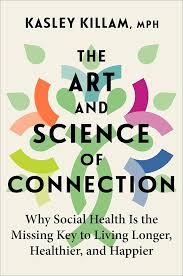
Resources
-
- Kasley’s Free 5-3-1 Connection Plan
- U.S. Surgeon General: Our Epidemic of Loneliness and Isolation
- Survey Center on American Life: Disconnected: The Growing Class Divide in American Civic Life
- World Health Organization: From loneliness to social connection: charting a path to healthier societies
- Psychological Science: Does hugging provide stress-buffering social support? A study of susceptibility to upper respiratory infection and illness
- Nature Neuroscience: Acute social isolation evokes midbrain craving responses similar to hunger
- Psychological Science: Eavesdropping on Happiness: Well-being is Related to Having Less Small Talk and More Substantive Conversations
- Psychological Science: The Liking Gap in Conversations: Do People Like Us More Than We Think?
- Psychological Science: Undervaluing Gratitude: Expressers Misunderstand the Consequences of Showing Appreciation
- Stanford Health: What is Social Health and How Does it Impact Longevity?
- National Institutes of Health: Social Wellness Checklist
- Center for Disease Control & Prevention: Social Connection
- Forbes: A Quick Guide To ‘Social Health,’ And Why You Should Care About It
- Greater Good Magazine: How to Make the Lasting Friendships You Want
2 Million Readers.
1 Life-Changing Newsletter
Simple and Straight-to-the-Point...
Just Like Mel.