Episode: 395
If You’re Feeling Stuck in Life, Listen to This
a Solo Episode
If you’ve been feeling lost, overwhelmed, exhausted, or like you’re meant for more but can’t seem to move forward, this episode is for you. It’s finally time you get unstuck.
In today’s solo episode, Mel breaks down the 3 traps that keep you stuck – the hidden patterns that leave you wishing, overthinking, and doubting yourself instead of taking action.
You’ve been beating yourself up instead of making the moves that could quickly get you out of a rut and onto changing your life for the better. That ends today.
If you’re sick of feeling stuck, this episode will help you see exactly what’s been standing in your way – and what it takes to finally move forward.
Listen on:




When you feel stuck, it doesn’t mean you’re broken. It means you’re built for something more.
Mel Robbins
All Clips
Transcript
Mel Robbins (00:00):
Today you and I are talking about the three traps that keep you stuck and how to finally get unstuck. Feeling stuck is one of the single most misunderstood experiences in life. When you feel stuck, it doesn't mean you're broken. It means you're built for something more. The first trap that keeps you stuck is you're not ready to change and the only way you get unstuck if you're in trap number one is you have to make a decision period because nothing changes until you change. Trap number two, which is overthinking. You've got to stop putting so much pressure on yourself to figure out the one perfect path because here's the headline. There isn't one path. There are so many possible versions of a good life and that brings us to the third trap that keeps you stuck and that's there is no perfect day. There is no one coming.
(00:57):
You're never going to feel ready. Motivation is garbage and you will be stuck for the rest of your life until ... Hey, it's Mel. And before we get into this episode, my team was showing me 57% of you who watched the Mel Robbins podcast here on YouTube are not subscribed yet. Could you do me a quick favor? Just hit subscribe so that you don't miss any of the episodes that we post here on YouTube. It lets me know you're enjoying the guests and the content that we're bringing you because I want to make sure you don't miss a thing and I'm so glad you're here for this episode because this is a really good one. All right, let's dive in.
Mel Robbins (01:34):
Hey, it's your friend Mel and welcome to the Mel Robbins podcast. I am so glad that you're here. It is always an honor to spend this time together and if you're new or if somebody shared this episode with you, I just want to take a moment and personally welcome you to the Mel Robbins podcast family.
(01:50):
Today, you and I are talking about the three traps that keep you stuck and how to finally get unstuck. I just want to normalize the fact that I think everybody right now has something that's keeping them feeling a little lost or stuck, whether it's your career path or it's finances or it's something going on in your relationship. I want you to stop and think about this right now for yourself because I want you to get something out of this. Where in your life do you feel a little stuck or a little lost or like you're spinning your wheels? Is it in your relationship? Is it at work? You're not quite sure where your career is going or maybe you got laid off or you don't like what you do anymore and you're not sure what to do next. Is it with school? You're not that interested in what your major is or what you're studying.
(02:38):
You're wondering if all the student debt is worth it. Is it some project at home that's been nagging you forever? Is it thinking about that next chapter of your life? So now that you've kind of thought a little bit about where is that area of your life where you feel a little friction? Is it your health, you feel a little stuck with that? Is it some other area of your life? Now let's talk about the three traps that can make you feel stuck because until we identify which trap you're in, you will never, ever, ever move forward. You're just going to keep on spinning your wheels.
Mel Robbins (03:13):
The first trap that keeps you stuck is you're not ready to change. It's that simple. It sounds so obvious it's almost dumb, right? But one of the reasons why it's so easy to get stuck is you're simply not ready to change and that can happen for a number of reasons.
(03:30):
You might not be ready to change because you're holding onto the past. You might not be ready to change because you regret a lot of things and you're punishing yourself over it. You may not be ready to change because you don't think it's going to work and so you feel a lot of discouragement right now. This is an easy one, by the way, to spot in the people that you care about. You can look at somebody who's struggling with their drinking or you can look at somebody who's been laid off and they're not really looking for a job. That is a person who's stuck in trap number one. They're not ready to change. And the only way you get unstuck if you're in trap number one is you have to make a decision to change, period. You have to decide that where you are is no longer okay with you.
(04:13):
You don't have to know what you're going to do next. You don't have to have some master plan. You don't have to get to work right away, but without making a decision that I am going to do something different here. Nothing's going to change and you're going to stay stuck because nothing changes until you change and you change the moment you decide it's time to change. You got to have that moment where you say, "All right, that's it. I've had enough. I am so sick of my own self. I am so sick of complaining about this. I'm so sick of being stuck in the past. I'm so sick of carrying around this extra weight. I'm so sick of being lonely and sad and not seeing my friends. Enough. I am making a decision to change. I want to make sure you really get this. And so here's what we're going to do in today's episode.
(05:06):
You are my co-host. You and I are going to answer questions from your fellow listeners together. And as you're listening to the questions from your fellow listeners, I want you to pretend as you're driving in your car or you're listening at work or you're taking me on a walk right now. I want you to pretend you're right here with me on the podcast and that you're listening to this question. The first one's going to be from Jenna as if you are going to coach her with me. And I want you to really listen closely and see if you can hear what it sounds like when someone's stuck in the trap of not being ready to change. See if you can hear and identify in your own mind what is the decision that Jenna needs to make that would break her free of feeling stuck.
Jenna (06:06):
Hi, Mel. Hoping you can help me out with this. Speaking, I'm feeling stuck. I've been feeling that really heavy this year. Just turned 40, have two kids, a two and a six-year-old. I'm feeling like I am meant to do more in this life. I love being a mom. I also work, but I feel like I need something that I can do that I'm passionate about, that I can look forward to for work. I feel like there's this creative side of me that has been untapped and is ready to unleash. And then I get home and I get pulled in several different directions and I'm tired and I'm like, I don't have the energy today. So I don't know where to start. Can I do something now? Can I start something new now? How do I start this new adventure at this point in time in my life? Where do I begin? I want to use my creative side. Help me.
Mel Robbins (07:07):
Now, as you were listening, did you notice the trap? The trap is she has not made a decision to change yet. And this one's kind of sneaky because she's talking about the fact, and you may feel this too. I feel like I'm meant to do something more. I feel this pull to do something creative. So she's thinking about it and you can hear some of the reasons why she's not ready. I'm tired. I don't have the energy. Can I start something new? She's questioning, right? But did you hear a decision? I didn't hear a decision. I heard somebody who wants to change, but I didn't hear a person who has made a decision to change and it's a very subtle distinction, but this is the difference between staying stuck and spinning your wheels in a mental loop and getting yourself unstuck and breaking free and making a decision to create a whole new chapter in your life.
(08:22):
And look, the decision doesn't have to be complicated. It's like a line in the sand. What could Jenna say as you're sitting here hosting this episode with me? What could Jenna say? What would a decision sound like? It could be something simple like, I'm making a decision to make the next chapter of my career creative no matter what. I'm making a decision that 12 months from now I am going to be working in a creative industry. I'm going to have a full-time job and I'm going to wake up every day and I'm going to love and look forward to what I'm doing. That's my decision. Here's another way you could make the decision. This is the year I learn how to make time for what matters to me.
(09:14):
Do you hear the difference between somebody questioning, I should, I could, what if, but this, but that's a person that's not ready. That's a person in contemplation. When you hear somebody make a decision, it's clear. Maybe a decision for you sounds like this. I'm losing a hundred pounds. I'm applying and getting into nursing school. I am moving out of this noisy, cramped apartment. I'm going to meet someone I love in the next year and I'm going to fall in love and it's going to be incredible. There are decisions just waiting for you to make them. See, when you make a decision, you are claiming what you want. You're declaring what you want. I love the word decision. The word decision comes from a Latin word, meaning to cut off. When you decide, when you make a decision, you're cutting yourself off from other possibilities. You're saying, "This matters to me."
(10:19):
And then you're locking in on it. And what I love is you're not casual when you make a decision, you have to be clear. And the best part about making a decision is you don't have to know how it's going to turn out. You don't have to know if it's even the right decision. The best way to make a decision is to make the decision and then work hard to make it the right decision. And when you make the decision, you are forcing your life to move in a different direction. Let's do one more question from a listener named Kristin because I want you to really make sure you understand this first trap that it's not being ready. And I also want you to understand how powerful on decision could be. So listen closely and when we're done listening to her, I'm going to ask you the same question.
(11:13):
Describe the trap she's in, describe why she's not ready. And then we're going to talk about what is one decision that Kristin needs to make that would get her unstuck and help her break free. Here she is.
Kristin (11:28):
Hey, Mel. My name's Kristin. I'm 42 years old. I am a divorced mom of two kids and I am 100% stuck in my head. I literally cannot move forward. I am in this constant loop in my head of regret. I feel like I shouldn't have left my ex. I was always a high achiever at work. I functioned at a very high level for a very long period of time and I can't seem to move forward. I can't get it back. I'm barely scraping by when it comes to that with work. I'm not understanding why the situation is what it is and how I can't seem to progress. So I appreciate your time and help.
Mel Robbins (12:25):
That is a painful, painful question to listen to, isn't it? Because you can feel the trap that she's in. And there's a couple things that I want to point out that I'm sure that you picked up on and maybe you've experienced this yourself, maybe somebody that you love is going through this. When she said that she can't get out of the loop in her head that she's constantly stuck in. When she said that, "I feel like I shouldn't have left my ex and that I am this constant loop of regret." That's what she's living it. That's the trap. She's not ready to change because her reality right now is regret. What is the decision that Kristin needs to make? Because there is so much power in a decision. If she's been living in regret in the constant loop over a breakup with her ex, in my mind, the decision is very obvious.
(13:30):
You have to make a decision to move forward. You have to say this next chapter of my life is going to be one of the best chapters of my life because I'm going to create that for myself. And in particular, when you're dealing with regret, the research is very clear on this. Daniel Pink is a multiple New York Times bestselling author and considered one of the most influential thinkers of our time. And recently he led one of the largest studies ever on the topic of regret. And he says, regret is not meant to bury you. It's not meant to punish you. It's meant to teach you something you need to learn, but you can only learn what regret has to teach you if you stop replaying things and start asking yourself, "What is the regret trying to show you? " As long as you keep looking backward, your life will never move forward.
(14:28):
That's why you have to decide enough is enough. Change begins with a decision. And in Kristin's case, she has to decide that she's going to stop giving more time to her ex. I mean, it's been years now that she's given to this relationship that's over. The life that she keeps reaching for no longer exists. She has to turn toward the future and make a decision that she is going to move forward and she is going to do whatever it takes to create a life where she's happy. And the reason why I'm hammering the power of making a decision as the singular solution to the problem of being trapped, feeling not ready, feeling regretful, focusing on the past, convincing yourself actively that even if you tried to move forward, you'd never be as happy as you used to be. It's complete BS. The decision is what sets you free. It will give you something to build toward and that is what will break you free from the trap of not being ready.
(15:36):
Graduation is a big deal. In fact, my husband and I have seen all three of our kids graduate and it's one of the most emotional and proud moments that you're going to have as a parent. I remember sitting there watching all three of them. You get a lump in your throat because in one second you're seeing the little kid version of them and then in the next second you're watching them step into adulthood. It's emotional. And it's also that moment when you realize, wow, they're still going to need some real support. Apple gift card is such a great graduation gift because it gives the graduate in your life options when they need the most. They can use it for the tech that they need for school or for work. Apps are going to keep them organized, focused, and on top of life, fitness subscriptions. And then there's all the stuff that helps them recharge, music, movies, podcasts, entertainment. I've learned something or two after doing graduation three times. If you're guessing about what to give them, you're wasting money in time. Instead of an engraved pen or a coffee mug that says the future looks bright, give them something they can use their way when they need it. Visit applegiftcard.apple.com to find the perfect graduation gift today.
Mel Robbins (16:47):
Let's dive into trap number two, which is overthinking. Oh my gosh, this one will keep you stuck for decades. You can waste a lot of your life overthinking and worrying about things and never actually get going or started on the changes you want to make. Yes, you've made a decision that you want things to be different, but now you're stuck because you've fallen into the trap of overcomplicating your next move.
(17:14):
There's a couple ways you're going to know that this is you. You're constantly thinking about it. You've got a million different ideas. You are busy in the research mode, but you never actually get into action. And one of the reasons why you're going to stay stuck in this place spinning your wheels, some people do this for years is because you have not simplified the thing that you want to be doing into a plan that you could do every single day. And by every single day, I mean, this has to be so simple that if you had 15 minutes a day that you could work on this change or work on this goal or work on this thing that you want to accomplish just 15 minutes a day, that's how simple this is going to be. Without that, your brain has nothing to aim at. See, you're just going to keep on saying, "Oh, I want a different job.
(18:03):
I'd really like to be healthier. I want to feel better. I think I want to go back to school. I want more purpose in my life. I really know I meant for more, but I don't know what. I want more for everything. I want to meet somebody." But if somebody were to stop and ask you, "Okay, that's pretty clear. I can see that you'd like a new job. I can see that you'd like to be in better shape. How are you going to get there? What are you doing about it today? If I were to watch you on an average Tuesday, what is something that you're doing 15 minutes every Tuesday that would prove to me that you're not just thinking about this thing, but that you've got a plan and that every day you wake up and you spend 15 minutes on it. If you don't have it reduced to something so simple that you could do it every day for 15 minutes, then you're going to stay stuck in the trap of overcomplication.
(18:51):
Because if you don't have what you're supposed to do simplified, it's going to be so easy to just sit up in your head. It's going to be easy to just freeze and do nothing. It's going to be easy to watch other people on social media doing the things that you're capable of. And this is a trap that ensnarls so many people. You're ready, but now you're over complicating everything. And so let's listen to another question. This one comes from Nate.
Nate (19:21):
Hi, Mel. I was just laid off two weeks ago from a consulting firm, a small firm specializing in software and data engineering. I learned to code now realizing that's not panning out as I expected it to. What advice do you have for someone like me looking to figure out what's next? What can we do for any sense of stability, predictability?
Mel Robbins (19:53):
You know what I love about Nate's question is he's feeling stuck because things didn't go according to plan and he's looking for stability and predictability. And one of the best things about focusing on creating a simple plan and reducing the thing that you need to do to something as simple as 15 minutes a day of action, that gives you stability. The plan gives you a direction to point yourself into. Reducing it to 15 minutes of action a day, I call this the hot 15. You got 15 minutes to make a lot of progres on something. You'll be surprised how much those actions stack up. So since so many of you are looking for jobs right now, I want to address how you can break free from this trap of overcomplicating everything. Because when you have a wide open future, it's easy to start to feel paralyzed.
(20:51):
And when the structure is gone and you no longer have the rhythm of your day to going to a job, you will start to overcomplicate everything and you're going to start to feel unmotivated and frozen. And the fact that there's so much that you can do is the problem. You have to reduce what you're going to do every day into a simple plan that gives you actions that you can basically start or complete in a 15-minute time block. Number one, you have to focus on money. Unless you're independently wealthy, you must take the time. In fact, take the next couple days, get a handle on your budget, get a handle on your savings, get a handle on how much money is going out on subscriptions. And this is a moment to tighten the belt. This is a moment to get very serious about what you have and what you don't have because it gives you a picture of your expenses and more importantly, the runway that you have to be able to look for a job and to network.
(21:57):
So that's simplify number one. Simplify number two, and this is going to sound weird, is I want you to come up with a simple plan for how you're going to make yourself a better version of yourself while you're unemployed. What do I mean by that? Well, this is the perfect time for you to make yourself a project. Is this when you get in the best shape of your life? Is this when you commit to running the half marathon? Is this when you cut out sugar or alcohol? Is this when you read a book every week? Is this when you go back to therapy? What is going to make you simplify this the best version of you? And you never had time to do this, by the way, because you were always working and stressed out and too tired because of work and you always had stuff with work and so you couldn't do that.
(22:44):
No. If we simplify the next three to six months into something that you're going to work on for yourself that makes you happier, that makes you feel more alive, that is the second thing we're going to simplify and do. And here's why. Because if you're happier, if you're working on something cool, if you feel stronger, if you're taking better care of yourself while you're networking and making this career pivot, you're going to be better at interviews. You're going to be more energized. You're going to have something to talk about. Something's going to light up inside of you that was not lit up in that job that was sucking your soul dry and that's going to impact the type of work you find. And that brings me to the third simple plan you need. You have to create a formula that is very simple that you're going to follow four to five hours a day that will make you feel like you're doing everything you can to find a job.
(23:43):
You will find jobs by networking with people. And if you were to spend every day and your goal every day is to reach out to five people every day, that's what you do every day we've simplified it. Within a week of reaching out to five new people every day, you will have a lot of meetings to do. You will start to feel momentum. You don't need to know what you're going to be doing for work yet. You just need to get moving. And this is so important because your job gave you structure and creating a simple plan for the five actions you're going to take every day and I recommend it's reaching out to five people every day because that starts to create forward momentum and meetings and that is the beginning. It creates structure. It replaces the structure that your job had. And if you don't put structure in by creating a simple plan, you're going to be up in your head, you're going to be scrolling on social media, you're going to be forever stuck in the trap of overcomplicating and overwhelm and you're not going to go anywhere and you don't have to have that happen.
(24:51):
Let's go to another question and go a layer deeper. This next question comes from Alex and I want you to really listen and let's see if you can spot how he's in a trap because he's over complicated things.
Alex (25:07):
Hi, Mel. My name is Alex Olson. I feel stuck in a pattern of starting over and trying multiple career paths that don't work out or you end up being rejected. How can I stop myself from going down the wrong path again and repeating the same mistake? I just want to find happiness and stability with something that I look forward to every day.
Mel Robbins (25:32):
I love this question. I also want to debunk this myth or belief that there's some singular stable path. I mean, even careers that people could trust they could do for the rest of their lives are being disrupted by technology and venture capital and all kinds of innovation right now. Everybody is going to be forced to reinvent themselves over and over and over again in their career. And so I would throw out the window this sense of stability and I would embrace reality, which is you have experience and skills. You can market yourself to pivot your career anytime you're not really happy with what you're doing anymore. And I want to bring in some research from Stanford because there's a very interesting principle that is taught at Stanford University when it comes to career change that I think is really going to make you feel less stuck.
(26:27):
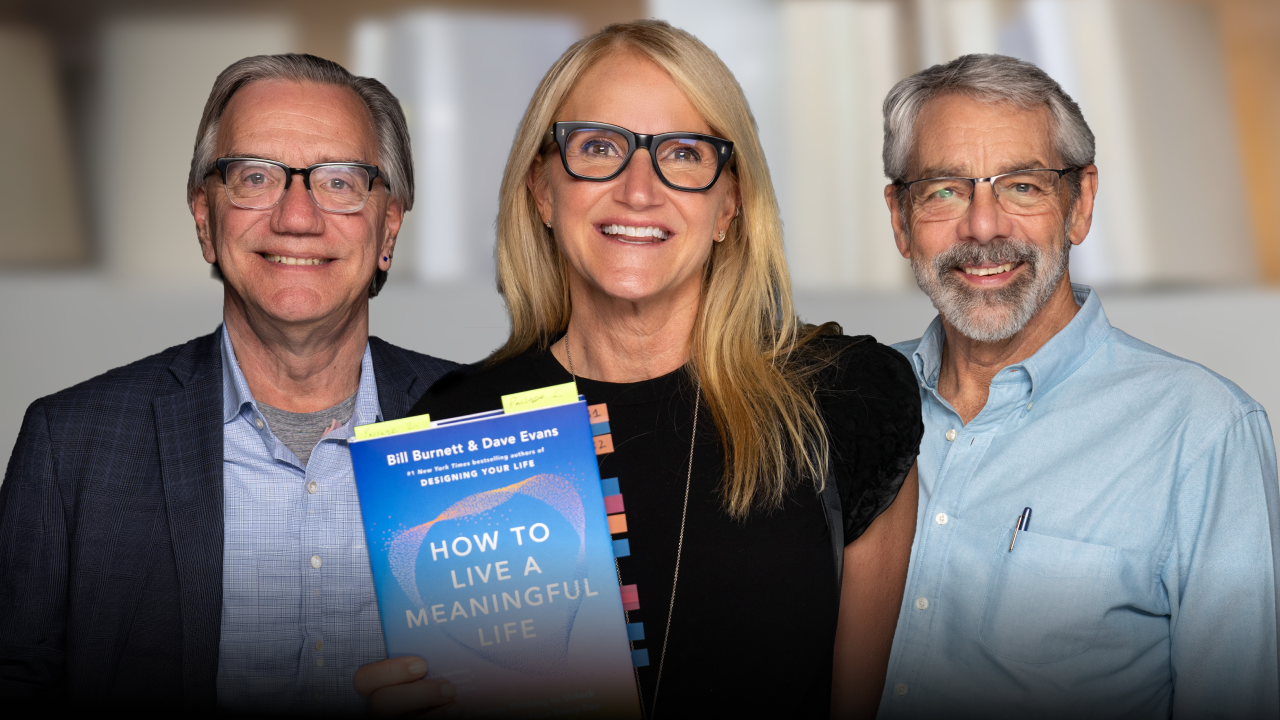
Two professors from Stanford, their names are Dave Evans and Bill Burnett. They have created this incredible course at Stanford called Designing Your Life. They have been teaching this course for over two decades. It is a rigorous method that helps you create the next chapter of your life and it's so effective that it is now taught this curriculum designing your life at 600 universities around the world. Now, professors Evans and Burnett, they came on the Mel Robbins podcast and they talked about this tool that they use in the life design curriculum called the Odyssey Plan. And the whole idea is this. You've got to stop putting so much pressure on yourself to figure out the one perfect path because here's the headline. There isn't one path. There are so many possible versions of a good life. In fact, this is what Professor Dave Evans said that's always going to stick with me.
(27:27):
There's no such thing as getting it right, just getting it going. That's it. There's no such thing as getting it right. Just getting it going and trusting yourself that once you get going that you will figure it out. You don't need to know if the direction that you're choosing is the perfect one. Now in their course at Stanford, Professors Evans and Burnett, they call this act of making a decision and just get going prototyping, which is basically a fancy way to say, stop treating every decision like it's permanent. Treat it like a series of small experiments. And it sounds like as you've listened to Alex's question, that's what his career's been. That's what most people's careers are these days. That's why you've got to experiment. Simplify it. Try the class, take the meeting, apply for the job, volunteer for the project, shadow somebody, go on the trip, test the idea, see how it feels.
(28:27):
You build clarity by trying things. You build confidence by moving. You get stuck by overcomplicating. You get stuck by questioning whether you should try something. You start doubting yourself by getting in that loop in your head. Remember, you don't have to get it right. You just have to get going and then simply trust your ability to figure it out because that's how you get out of trap number two, over complicating things. You've got to make a plan and get going.
(29:05):
I love Marshalls. I mean, come on. Don't you love Marshalls? Of course you do. I am so excited that Marshalls is now a sponsor of the Mel Robbins Podcast because at Marshalls you get the good stuff, brand names and styles that you love for way less. And isn't it so fun to walk into Marshalls and you're like, okay, I wonder what's in here and I bet there's some really good deals. It instantly puts you in a good mood. How do they do it? Well, the buyers at Marshalls, they are hustling behind the scenes twenty four seven to bring you really cool things and all the great deals. That means you only have to worry about having fun shopping everything from dresses to denim to shoes. Another reason why I love shopping at Marshalls, I can shop for the whole family and I'm so impressed by the design Dinners and all the styles they stock. Marshalls, they get the deals, you get the good stuff. Shop now at marshalls.com or find a store near you.
Mel Robbins (30:09):
And that brings us to the third trap that keeps you stuck and that's hesitation. Hesitation will keep you spinning for decades. And what it means is you're ready to change. You've made a decision to change. You've made the plan and you've simplified it down into simple things that you can do.
(30:32):
But now I'm hesitating, Mel. I mean, I have my plan. I know I should be reaching out to five people a day. I know I should be going to the gym. I know I should be showing up at the hospice training. I know I should submit the application. I know I should put my dating profile online. I know I should start cleaning up the back room, but I can't seem to do it. I need a job, but I can't look. I need to get control of my money, but I can't open my bills. The only solution when hesitation is the trap is you have to take action. You have to stop waiting to feel ready. I feel like I constantly talk about this because we all fall into this trap. Whether you are stuck overthinking or you're stuck because you're worried about what your friends are going to think or you feel cringey or you think there's a perfect time or you're not quite sure today's the right day because the sun's behind the clouds and the wind is picking up and maybe today's not the day I should do this.
(31:35):
There is no perfect day. There is no one coming. You're never going to feel ready. Motivation is garbage and you will be stuck for the rest of your life until you take action. It really is black or white like that. You have to stop waiting to feel ready. You have to stop waiting for motivation. You have to stop waiting for confidence and courage. This is the trap of hesitation and you will be in this trap until you get moving. The only way out of this trap is to shut your mouth, turn off your brain and move your feet, period. And that's exactly what it sounds like your fellow listener Louise is dealing with. So I want you to listen and I want you to listen and really hear she's ready. She knows what to do. So what's the problem? Let's take a listen.
Louise (32:37):
Hi, Mel. I just left a very successful dog walking business in Toronto, Canada. And I made the decision to come to a quieter place that I've always wanted for a long time. And now that I made this decision, I feel completely lost. I have goals. I've always wanted to write a book, but my brain can't seem to get the first step going. Any advice would be great.
Mel Robbins (33:09):
I love Louise. I don't mean to be harsh and sound judgy when I get into these solo conversations with you, but I just see and feel your ability to do amazing things. And I also know how frustrating it is when you know you're in your own way. And so let me call out a few things. Louise made a decision to leave a business. Huge. She made a decision to move to a quieter place and have a quieter life. Amazing. That's the power of a decision, right? You don't casually leave a business. You don't casually move somewhere. You have to make a decision. Yo make a plan and then you take the actions and that's what helps you achieve the things that you want. Now what's keeping her stuck though is the inability to take action. So she's now in her new chapter. She's in a quieter place.
(34:11):
She no longer has her business. So one of the things we talked about earlier is the structure's gone from the business and don't underestimate how destabilizing it can be when you change jobs or you change places and the structure of your old life is suddenly gone. The only thing that will help you start to feel the rhythm of your new chapter is stepping into a new structure with action. And so this is going to sound obvious, but if what Louise wants to do, I've always wanted to write a book, but my brain can't seem to get the first step going. Well, Louise is a smart cookie because she's already changed her life dramatically and Louise knows and so do you. What is the first step to writing a book? It's not trying to come up with the perfect title. It's not writing an entire chapter.
(35:13):
It's not getting a book deal. No, those are over complication traps, right? Let's simplify it. What is the first step if you want to be a writer? It's sitting down probably every morning and forcing yourself to write. Even if you never finished the book, imagine how different Louisa's life would be and how different she would feel. Imagine how different you would feel if every single morning starting today for a hundred days you woke up and you sat down at your favorite chair or favorite table in your apartment and you put on a timer for 15 minutes and you flipped to a blank page and you just wrote whatever came to your mind. Imagine how different your life would be in a hundred days if you saw yourself taking action every day. You sat down on the days where you had a sinus situation. You sat down on the days when your stomach was grumbling.
(36:25):
You sat down on the days where it was pouring rain, when it was sunny, you sat down on the days when people were at your house and days when you were alone, that every single morning, because this is what you do, you just wrote for 15 minutes. You know what that would make you? That would make you a writer. So how do you get yourself into action? Well, the fastest thing for me is to use the five second rule. When you feel hesitation, that's why I created this, to help me get out of bed and to stop hesitating and hitting the snow button and laying there, just count backwards. Five, four, three, two, one, then move. That's how you can start it. Another thing that can help you get into action is something that researchers call an implementation intention. And the best way to leverage this research is pick a time and have the time signal when you're going to do this thing every day.
(37:23):
So for example, 7:00 AM I go for the walk because I've made a decision I'm going to get in the best shape of my life. I'm going to put my health first. Here's another one. At 8:00 AM, I will sit down at my desk with my coffee and I'm going to spend 15 minutes writing. When I finish dinner after dinner, I will post the video to my new YouTube channel. Sunday at four o'clock I'm going to set an alarm in my phone and that's when I do my meal prep for the week. And what happens is when you pair it with a time and the intention of this action that you're going to do in terms of the new habit is that it can make the action easier to perform because the time of day becomes a cue. There are other ways that I want you to think about this.
(38:12):
How can you make this easier for yourself? And let's just stick with the writing, but you could insert anything. Louise's 15 minutes of writing could be your 15-minute walk or your 15-minute strength training or your 15-minute calling session to credit card companies to start getting a handle on your credit card debt. It could be 15 minutes that you're spending learning the AI tools that everybody at work is using. So the 15 minutes, you can choose what you're doing with it, but how can you make it easier? Well, you could set yourself up for success the nigh before. One of the things that I like to do is I set out, like you can get the coffee maker ready so that the coffee maker's ready to go for you. You can get the type of tea that you like out the night before so it's ready to go for you.
(39:00):
You can also make this space that you're working in, whether you're working on a resume or you're going to lay out your yoga mat and stream a class on your laptop or you're going to sit down like Louise and Wright. You can make this space devoted to what you're working on so it feels like, "Oh, I go to this place." And
Mel Robbins (39:19):
James Clear is one of the leading experts on habit formation. He wrote the number one New York Times bestselling smash hit, Atomic Habits. And he has this concept about creating lasting change and it happens when you stop obsessing over the outcome and start focusing on the identity. What does that mean? It means that anything that you want to change about your life, instead of focusing on what your body's going to look like when you lose the weight, focus on what it means about you as your identity when you're the kind of person who takes care of themselves.
(40:04):
So for Louise, this isn't about writing a book. It's about becoming someone who's a writer. It's about acting as if you're a writer now, even if you never publish a book because every day that you just sit down and write, even for 15 minutes, what are you? You're a writer. That action proves the identity of being a writer to yourself. That's why the action matters. Of course, it creates the results, but every time you show up and you're the kind of person who looks for a job, you're the kind of person who cuts out sugar. You're the kind of person who takes care of their body. You're the kind of person who prioritizes sleep, not social media scrolling. Your identity shifts and you break free from feeling stuck, stuck from the past, stuck from old versions of yourself. This is so powerful that I really want to make sure you get this third trap that it's hesitation.
(41:09):
So let's listen to a final listener and really listen. She knows what she wants. She's made the decision. What she needs to do is obvious. She's got simple things to do, but there's this resistance and hesitation. Let's see if you can hear it.
Angie (41:27):
Hello, Mel. Greetings from England. I'm such a big fan of yours.
Angie (41:31):
I love your whole Let Them Theory. So recently I have put on a little bit of weight. What I would love to do is I would love to have a go at starting exercise. I used to do bits and pieces. I would love to get back or get really into fitness to the point that my body is strong. I feel confident in the shape I am and I stop condemning myself for being a little bit big or for having the cake. I think we all do it as women. We are our own worst critic sometimes. I feel like I've had a go at crochet and I love it and I'm loving the learning and I'm loving the whole thing. I would love to feel sort of like I'm tackling the exercise the same way. At the moment, it feels like getting fit is such a big task. I may as well not start, but I would love to be able to do it.
Mel Robbins (42:27):
Angie, first of all, I love this question. As you were listening, don't you just love Angie? Can't you see her there crocheting with a big smile on her face? And what I also love, Angie, is that you've asked something that every single one of us can relate to. This sense that there's something I really want to be doing and I'm making a decision and I can break it down and make it simple. But oh man, when I think about it, it just feels like it's going to be such a big overwhelming thing. That's what's triggering the hesitation. The thing feels so big. I'll never find a job. I'll never lose the weight. I've got such a big mountain to climb. Why even take the first step? That's your brain talking you out of even starting. That's where the hesitation comes. But what I hear is you've made the decision.
(43:22):
You know that this is something you want to do. You are capable of breaking this down. And I know that because of the beautiful thing that you've already told me and that's how you learn to crochet. You love crocheting because it feels doable. You learned it in little bits and pieces. That's why you enjoy the process. You didn't have to master the whole thing in one day. We're going to make the same change here. I'm the kind of person who exercises and I love taking care of my body. I'm the kind of person who prioritizes my health because I love feeling stronger. So when you stand in that identity, now let's just simplify it. What's one small repeatable thing you can do in less than 15 minutes that will make you feel stronger. And the reason why I want you to just focus on making it smaller, simplifying it, make it easier is because the thing to master is consistency and getting going.
(44:35):
And the most simple thing that I can think of is go for a 15-minute walk every day. And here's what's cool. We can borrow some of the research around intention setting and if there's a particular time of day you like to crochet, how about you take your walk after you're done crocheting? So after I'm done crocheting, I take my walk or you could do the opposite. Before I'm picking up my crochet needles every day this week, I'm going to take a 15-minute walk. And that's how I'm going to start this. James Clear told this story when he was on the Mel Robbins podcast and we were talking all about the findings from Atomic Habits and some interesting research on changing your behavior. He said that he had this one guy that he was working with that for an entire month, the one action that he took was driving to the gym, getting out of the car, walking up to the front door, opening it.
(45:35):
He would walk inside, turn around, walk out. That's it. He didn't even exercise. He was mastering the habit of showing up. And when you're just getting started, that's what the action is. You're mastering the art of showing up and that's how you get unstuck. You could stay stuck in the trap of hesitation for a decade. Convincing yourself, "It's too big. It's not going to work. I don't have time. I've let myself go far too long, blah bitty, blah, blah, blah, bitty, blah." But if you just five, four, three, two, one, let's make it easy. Let's make it simple. Let's pair it with something that you're already doing and let's master the art of showing up 15 minutes a day. Just do that for a week and you'll be unstuck. You will have broken free. You will be on your way. And once you can get 15 minutes in, once you feel like that's a no-brainer and you're actually enjoying it the way you enjoy crochet, now you can start adding things in.
(46:40):
James Clear calls this a vote for the person you want to be. Every time you get out the door and you take a walk, every time you eat the salad instead of the fish and chips, you're making a vote for the future you. You're making a vote for the person you know you want to be. When you sit in hesitation and you don't get out of the chair and go for the walk, you don't make a healthy choice in terms of what you're going to eat, you're voting for the person who's stuck. And so the second you start with your actions voting for the kind of person you want to be, I'm willing to guarantee you're going to experience less self-criticism and I want that for you.
Mel Robbins (47:24):
And those are the three traps. Isn't it really illuminating to see the three ways that we get stuck? And they're so obvious now. If you're not ready, then make the decision. Make the decision to be ready. If you don't have a sense of direction, pick the direction you're heading in and simplify it into the daily action you can take. If you're hesitating, get going. Five, four, three, two, one, because that's how change begins. And I also want you to know that I'm going to be here every step of the way to encourage you and support you however I can because sometimes you just need somebody in your life to say, "Yep, it's tough and you know what you need to do? Put your head down and keep going. " And in case no one else tells you today, I wanted to be sure to tell you as your friend that I love you and I believe in you and I believe in your ability to create a better life.
(48:22):
And now that you know the three traps that are keeping you stuck, you also have the roadmap to getting yourself fun stuck and doing the work to make your life better. Alrighty, I'll be waiting for you in the very next episode. I'm going to be there to welcome you in the moment you hit play and thank you for watching all the way to the end on YouTube. I love that you are here with us and one thing, I know you want to know what video to watch next, but if the subscribe button is lit up, please do your friend Mel Robbins a favor and hit subscribe. It's free. It is the best way for you to say thank you to me and the team here at the Mel Robbins Podcast for bringing you such amazing podcast episodes and world renowned experts for free. I really appreciate it.
(49:06):
It helps me achieve my goal that 50% of the people that watch the Mel Robbins podcast here on YouTube are subscribers. Thank you, thank you, thank you. I deeply appreciate that and I know you are going to love this video next so I will welcome you in the moment you hit play.
Key takeaways
You are not broken when you feel stuck; you are standing in the tension between the life you have and the life you have yet to create for yourself.
Until you know which trap is keeping you stuck, you keep solving the wrong problem and pouring gas into a car when the real issue is a dead battery inside.
You change the moment you decide where you are is no longer okay, because nothing moves until you draw that line and claim what you truly want for your life.
If regret keeps you looking backward, your life cannot move forward; stop replaying the past and start asking what the past is trying to teach you right now.
Overthinking keeps you busy in your head, but a simple plan gives your brain something to aim at for 15 minutes every single day you show up and move.
Resources
-
- TIME: Why a 'No Regrets' Philosophy Won't Get You Anywhere, According to Business Guru Daniel Pink
- Harvard Business Review: How to Stop Overthinking Everything
- Harvard Business Review: How to Stay Stuck in the Wrong Career
- Harvard Extension School: 6 Strategies for Maintaining Momentum in Chaotic Times
- Designing Your Life: The Magic of Odyssey Planning: Prototyping Three Futures
- James Clear: Identity-Based Habits: How to Actually Stick to Your Goals This Year
- Verywell Mind: The 6 Stages of Change
- The Guardian: Why do I feel like I’m stuck in a ‘waiting room’, hoping for my life to get started?
- Forbes: How To Change Careers Without Regretting It
- The Science of Health Promotion: The Transtheoretical Model of Health Behavior Change
- American Psychologist: Implementation Intentions
- Social and Personality Psychology Compass: Procrastination and the Priority of Short-Term Mood Regulation: Consequences for Future Self
2 Million Readers.
1 Life-Changing Newsletter
Simple and Straight-to-the-Point...
Just Like Mel.