Episode: 396
Do THIS for 8 Weeks and Look & Feel 10 Years Younger: Dr. Vonda Wright's Proven Protocol
with Dr. Vonda Wright, MD
In this episode, renowned orthopedic surgeon and longevity expert Dr. Vonda Wright, MD returns to give you the wakeup call of a lifetime and share her brand new, complete, science-backed protocol to build muscle, strengthen your bones, restore your balance, and reverse the effects of aging, no matter where you're starting from.
Dr. Vonda Wright has treated over 100,000 patients and studied thousands more, and she is here to sum up what she has learned: No matter when you start or how small the steps, it’s not too late; your body can rebuild, and you have far more control over how you age than you think.
In just 4 weeks, you will start feeling better.
In today’s episode, you’ll learn:
- The biggest lies you’ve been told about aging (and why they’re holding you back)
- Why the time between age 44 and 60 is the most critical window of your life and the exact steps to take right now to protect your future
- How women silently lose up to 20% of their bone density in the years around perimenopause and what to do to stop it
- The longevity formula: The 4 simple steps you can start today to feel younger in just weeks
- How to go from 0 to strong: Dr. Wright's protocol is specifically designed for people who feel too tired, too busy, or too far behind to begin
If you’re ready to feel stronger, more energized, and more in control of your future, this episode is where you start.
Listen on:




You can sit there and let time happen to you, or you can take action and make the choices that help you live in the way you envision.
Dr. Vonda Wright, MD
All Clips
Transcript
Mel Robbins (00:00:00):
What's the biggest lie that you and I have been sold about aging?
Dr. Vonda Wright (00:00:03):
Oh, the biggest lie is that there's nothing you can do about it.
Mel Robbins (00:00:06):
Dr. Wright is a world renowned orthopedic surgeon and a specialist in women's health and today she's not playing around. You have four steps to getting fit, even if you're starting from zero.
Dr. Vonda Wright (00:00:18):
Let's say you're stepping away from the couch for the first time in years. All you have to do to start is go for a walk today. Then let's figure out how to lift some weight. Number three, we need to retrain our balance. We need to stand on one leg doing anything, working at our desk, brushing our teeth. And what is the fourth? I want you to get your heart rate up. You could swing a kettlebell and get your heart rate up to the max. You could do a rowing machine, treadmill. You could run between light posts on your street if you're so inclined. It's about your heart rate.
Mel Robbins (00:00:50):
Now I'm going to be honest. I don't like this.
Dr. Vonda Wright (00:00:52):
Oh no, no, no, no. You must. The number one killer of women is heart disease.
Mel Robbins (00:00:55):
Wait, what?
Dr. Vonda Wright (00:00:56):
Yes. Here's what we know from the science. Not only will your body respond by getting stronger, by becoming less painful, but it will prove to yourself that you are worth this investment that you are making.
Mel Robbins (00:01:14):
Dr. Vonda Wright, I am so excited to see you.
Dr. Vonda Wright (00:01:17):
I'm excited to be here with you.
Mel Robbins (00:01:19):
I am so excited to talk to you today because every time I read your work or I listen to you or I get a chance to sit down with you, it really opens my eyes to both the stupid things that I'm doing that I didn't realize were counteractive. And also the simple changes you can make. I feel stronger and I love how you break things down into what I can do. And how I want to start is I'd love to have you tell the person who's listening right now what they might experience about their life and how they feel that could be different. If they really take to heart everything that you're about to teach us today. I mean, you've seen over a hundred thousan patients, you've authored 44 research studies. You are a renowned orthopedic surgeon. You are a team doc for professional sports.
(00:02:13):
You are an expert in longevity. You have the number one book in the world ranked in longevity right now, The New York Times Bestseller, Unbreakable.
Mel Robbins (00:02:24):
What is it that's going to change about their life or my life if we take to heart everything you're about to share with us?
Dr. Vonda Wright (00:02:33):
Mel, the reality is that I find is sometimes we feel so bad. Sometimes the road has been so long since the last time we felt really good that we think that there's nothing we can do and that we've waited too long and that we have the regret of should have started before. But here's what we know from the science. Here's what I know from taking care of people that there is never an age or skill level when your body will not respond to the investment you make in it. So whether you take all the advice we give today and start down the road or whether you just do one thing, not only will your body respond by getting stronger, by becoming less painful, but it will prove to yourself that you are worth this investment that you are making.
Mel Robbins (00:03:30):
Amazing. One of the things that you say that you hear most from patients is, "I don't want to end up like my mother."
Dr. Vonda Wright (00:03:38):
Yeah.
Mel Robbins (00:03:39):
What does that mean?
Dr. Vonda Wright (00:03:40):
Every day I have people come in and whether they're in pain or they have an orthopedic injury, or maybe they're just coming to me to talk about their menopause and they look to the person that is closest to them to see how it's going to be. And sometimes they see their mothers suffering, not able to do what they've always done, which is take care of the whole family, not able to enjoy the years that they should be enjoying. We work our whole lives to get to a point where we have time to take care of ourselves or do what we want to do and sometimes we're in so much pain or so frail we can't and people come in and say, "I'm afraid that's going to be me. I don't want that to be me. What do I do now? I'm already starting to be in pain or I don't know the roadmap to not end up in the same place as this person that I love.
(00:04:35):
What am I going to do? " But the reality is if you're saying that phrase out loud, "I don't want to age like your mother," go a little deeper. What part of her aging do you want to be different? Is It the frailty? Is it the we need to be concerned about our brain health because 70% of all Alzheimer's occurs in women? What do we do about our brain health and when do we start that? I just need people to not wait so long to care about their futures, to not assume we're always going to be the way we were when we were in our 20s and 30s because the reality is we will age like our mothers if we don't step in front of it.
Mel Robbins (00:05:24):
I think so many people are going to resonate with that. And what I love about what you just said is that even if you're in your 20s, so many of our moms didn't take care of themselves.
Dr. Vonda Wright (00:05:36):
Yeah.
Mel Robbins (00:05:37):
Or aren't taking care of themselves.
Dr. Vonda Wright (00:05:38):
Midlife women with 20-year-old daughters.
Mel Robbins (00:05:40):
Yes.
Dr. Vonda Wright (00:05:41):
Absolutely.
Mel Robbins (00:05:42):
I almost sense those of you in your 20s and 30s sharing this with your mom right now saying, "Mom, please take care of yourself." It's time. It's time for you to put yourself first.
Dr. Vonda Wright (00:05:54):
I love you. It's time.
Mel Robbins (00:05:55):
I love you. It's time. For the person that received this from somebody that they love, what do you want to say to them? Because they've hit play because their daughter or their son or their husband or their sister sent this to them.
Dr. Vonda Wright (00:06:10):
Know that you are receiving this podcast out of love. This person cares for you and they want you to feel better and they know that you deserve the same care that you have always given them. You deserve to take care of yourself. Take it in that spirit and take action.
Mel Robbins (00:06:30):
And I also want to say I am so glad that you hit play and you saw the invitation to listen to something that will help you improve how you feel in your body. You deserve that. Dr. Wright, what's the biggest lie that you and I have been sold about aging?
Dr. Vonda Wright (00:06:50):
Oh, the biggest lie is that there's nothing you can do about it. Just come on, nature's that way. Aging is the enemy. Aging is the most natural part of living, Mel.You know what? I have three grandchildren. They've been aging since the minute that they were conceived. And we want them to. We celebrate their aging icing everywhere candles. Why aren't we celebrating aging? Well, we can celebrate aging if we pivot our mindset and invest the energy and the equipment that we've been given. It's just a very different mindset change of the inevitability of aging is decline and frailty. It is the reality for many people. I'm a practicing surgeon. Yo make a point of that all the time, thankfully. I do see a lot of frail people who for one reason or the other who have taken care of everybody but themselves and they have slid down the slope to frailty, but that is not inevitable.
(00:07:47):
And there are plenty of examples all over the internet right now of people in their 70s, 80s and beyond who are just continuing to be mobile and living at a capacity that maybe they never thought possible, but they just kept at it.
Mel Robbins (00:08:02):
So for somebody that's like frail right now, they had no access to you. They were told the lie that there's nothing they can do and they're feeling frail or they love somebody that's frail. What would you say to that person is available in what you're about to share?
Dr. Vonda Wright (00:08:20):
Some of the various earliest research that I ever read in preparing to be a longevity researcher was done on 90-year-old men in a nursing home who really were living in chairs. And those people in the very first studies were put through chair exercises with little bitty hand weights and they increased their function 150%. The research shows that there is never an age or skill level when you cannot get stronger no matter where you're starting, but I'm going to tell you a very personal story. Do you mind?
Mel Robbins (00:08:54):
Please.
Dr. Vonda Wright (00:08:55):
So my parents live with us. It's a tradition in our family. They're 86. My dad has been a lifelong endurance athlete so he continues to do what he's always done. My mother, who's 86, was born in a generation where women didn't sweat, right? No, I'm laughing because it's true. It's true.
(00:09:16):
Yeah. And so she was doing fine, but she had very little physiologic reserve, meaning what's in the health bank account for her? So during COVID, she got really, really sick and lost a lot of weight and became extremely frail. Well, the poor woman lives with me and she can't not hear me say all these things. So one day I look outside and she's shuffling along. We live in Florida around the pool and she's got these something in her hands and she's doing biceps things with it. And I look and my mother is curling Campbell's soup cans. And do you know that between that time when she was so frail that all she could do was shuffle around with Campbell's soup, she now is biceps curling 10 pounds and squatting in her chair with 10 pounds. This 86-year-old woman goes from almost dying in an ICU to curling 10 pounds.
(00:10:15):
It just shows, even within my own family, there is never an age or skill level when your body will not respond to the positive stress you put on it. We are made to adapt. It's the way we're made. And so that was a very long answer to answer the question with the simple truth, there is never an age or skill level when your body will not respond to the positive stress you put on it. So don't give up people.
Mel Robbins (00:10:42):
Well, what I love about you, Dr. Wright, is you are the positive stress because you don't take excuses. You're the expert in longevity, in my opinion, because you've treated over a hundred,000 patients, you're still in clinical practice, you're an orthopedic surgeon, you have authored 44 research publications on the topic, but you're also like, you can't out excuse me.
Dr. Vonda Wright (00:11:05):
Yeah.
Mel Robbins (00:11:06):
So what has the research studies taught you about aging and people's biggest excuses that they can't do anything?
Dr. Vonda Wright (00:11:15):
I think there's so much that the research taught me. We did a series of studies at University of Pittsburgh while I was there earlier in my career that basically showed that when you take the variable of sedentary living away, like I only studied active people, not pro- athletes, active people over 50.
Mel Robbins (00:11:35):
And what do you define as active?
Dr. Vonda Wright (00:11:38):
They worked out most days of the week. They entered some races. They weren't winning the races, but they were purposely active every day. And we quantified that in the studies. But what we showed is that when you take sedentary living out of the picture, you're not just sitting on your couch waiting on the inevitable or the not inevitable to happen. You can retain your muscle, you can retain your bone. We did a study, it took us five years. You retain executive function of your brain. You can stimulate your muscle stem cells. It just shows the regenerative capacity of our bodies when we're not sitting around, right? That's what the research shows. But the reason I know that people can't outexcuse me is because when you sit across the exam table from this many people over this many years, you've heard it all. I would love to do that, but I hear you but. And so I have an answer for time.
Mel Robbins (00:12:39):
Well, let's hear your answer. What do you say to the woman who swears she doesn't have time to exercise?
Dr. Vonda Wright (00:12:44):
The reality is we need to own our excuses. Why can't you find time? Well, maybe it's because you really are that busy, but how can we carve out an hour? You can't find the time because you can't trust anybody else to do it the way you do it. And maybe you need to step back if you value yourself more than how clean the dishes are. I mean, it sounds insane, but these are real things. You may have to let go of the control you exert over who does the dishes. Is it so important that you do every single thing and what do you get from that? Is there some gain you get from controlling every aspect when the reality is maybe someone that you live with could help you and give you an hour. I don't have time because I'm taking care of somebody else.
(00:13:33):
Well, that may be true, but how can you, if you're taking care of children, how can you swap time with another mother? So she has her hour and you have your hour. How can you stop saying, "My husband is going to babysit our children. They're the children of the family. It's not babysitting. It's sharing parent." I mean, all these things I could go on and on.
Mel Robbins (00:13:54):
Well, I love the nuance of what you're saying because it always struck me that if I think back to even a decade ago, somehow Chris always had time to play golf.
Dr. Vonda Wright (00:14:07):
Oh, don't get me started.
Mel Robbins (00:14:08):
Somehow he was finding the time and not to throw him under the bus. I'm owning this.
Dr. Vonda Wright (00:14:14):
Yes.
Mel Robbins (00:14:14):
And so in our relationship, it was like he had free time to take care of himself, but somehow I never had enough time because the laundry had to get done. Not because he was telling me to do it.
Dr. Vonda Wright (00:14:24):
But that's justn what your role was.
Mel Robbins (00:14:26):
Correct. And so what are the other nuances that you see in terms of the excuses that women use in particular to not prioritize themselves?
Dr. Vonda Wright (00:14:38):
Well, I'm going to give women some grace and just say part of you taking care of everybody else has to do with our biology and this hormone called oxytocin, which we make, men make it to, but we make it and estrogen increases the receptors for it. Oxytocin is the befriend hormone and the tend hormone, meaning it's why one of the biologic reasons why women take care of everybody else, we are biologically programmed through the hormone oxytocin to take care of people. I know. Isn't that interesting?
Mel Robbins (00:15:13):
It is really interesting. And I kind of felt like, okay, I'm not an idiot. No. I just am do this way. Give you some grace. Okay.
Dr. Vonda Wright (00:15:20):
You are wired this way, but now that you know that, but now that you know, the more you know, the more you can act. You know biologically there is a hormone that makes you this way. It doesn't mean that you still don't have agency to evaluate your schedule and find the time. Do not sit around waiting for the phone call from your friend or your kid to see if they need your help. Do your thing and be available when you're available. That was one example I had from a client of mine. Maybe you don't feel like you can invest in your health because your right knee hurts. If your right knee hurts, which happens in midlife a lot, or your left knee, I chose a knee. If your knee hurts, you have two strong arms, you have a core and you have another leg, that you can continue to get stronger.
(00:16:15):
Your right knee hurting has nothing to do with what you put in your mouth because a big part of pain and inflammation is the food we feed ourselves, including all the processed food, all the sugar. So you see how I break this down for people?
Mel Robbins (00:16:33):
I do. I feel like I'm sitting in one of those medical gowns on a piece of paper in an exam room and I've been trying to get around the advice that you're telling me and Dr. Wright's saying, "No, you can't out, excuse me. Mel, you've got a mouth, you got other arms. Stop."
Dr. Vonda Wright (00:16:51):
I would rather people just say, "You know what, Dr. V? I don't want to. " Because that's more honest and authentic. It's true. And then I maybe could show you data where you don't want to, but if you don't, this is what could happen.
Mel Robbins (00:17:03):
What is the data you would show?
Dr. Vonda Wright (00:17:04):
I would show things like when we are sedentary after we eat a meal, how blood sugars can spike versus if we go walk for 20 minutes after a meal, we're going to keep our blood sugar more level, which is going to keep us less inflamed. You're going to be in les pain. And then people are like, "Oh my God, is that all it takes not to be in pain?" Well, what's one of the things, so let's do that. But until we have that authenticity and that honesty about why we know it to do what we're not doing
Mel Robbins (00:17:37):
As an orthopedic surgeon, why can one fall be the moment that changes everything, especially for a woman?
Dr. Vonda Wright (00:17:44):
So one in two women will have an osteoporotic fracture, so a fracture related to poor bone health in their life.
Mel Robbins (00:17:52):
What, one in two?
Dr. Vonda Wright (00:17:52):
Yeah. So statistically, Mel, it's either you or me. And when you say it like that, it becomes really real. But if you fall and you break your hip, these are the statistics you're talking about. 70% of hip fractures are in women because of the complications of being frail and fragile and being sedentary and having a big stress like a big fracture, 30% of the time you may die in the first year.
Mel Robbins (00:18:21):
30% of the time.
Dr. Vonda Wright (00:18:23):
It's not a small number. If you survive 50% of the time, you will not return to pre-fall function, which means maybe you have to go live in a nursing home, which is nobody's destination of choice. Maybe you have to move in with your kids or you have to hire somebody full-time. So this becomes not only a personal burden, it becomes a family responsibility.
Mel Robbins (00:18:49):
And that we will break a bone or fracture a bone, not because of some catastrophic thing, but because our bone density span?
Dr. Vonda Wright (00:18:57):
Low energy falls. So there's a difference.
Mel Robbins (00:18:59):
A low energy fall? What is that?
Dr. Vonda Wright (00:19:01):
Well, there's a difference. I'm making the distinction between being in a terrible car
Mel Robbins (00:19:05):
Accident,
Dr. Vonda Wright (00:19:05):
Wrapping your ... That's another story. But all it takes is tripping over the curb or the little bitty dog that runs around the house or the rug that wasn't latched down and you land hard and that frail bone, which had not previously broken breaks.
(00:19:22):
And if it's your hip and you end up in the emergency room, it sets off a catastrophic series of events that can lead to death. So we want to be as strong as possible, which as much lean muscle mass as possible, not just thin but lean as possible. We want bones as strong as possible, but what we really need to do is not fall. And so that's why an unbreakable, I don't leave it as we got to do cardio, which I do say that. We have to lift weights, which I do say that, but we talk about rebuilding our balance and working on foot speed so that we don't have a fatal fall that ends you up in the emergency room dealing with that.
Mel Robbins (00:20:04):
So I'm thinking now because I've got daughters in their mid 20s.
Dr. Vonda Wright (00:20:09):
Yes. Mal, here's the deal. Falling and breaking a hip is not inevitable. Having poor bone health is not inevitable. Poor bone health manifests when we're older, but it begins when we're younger. And so we need to pivot from only arriving in midlife to say, "What am I going to do here to pivot in saying, Oh my God, I've got to tell my kids this. I've got to talk to them about their bone health when they're in their late 20s and their 30s. When you talk about bone and muscle, we reach those peaks around the age 30. What peak are we reaching from then we're going to draw for the next 40, 50, 60 years. So this is a lifetime conversation, not just, oh, I've hit midlife and I'm getting older conversation.
Mel Robbins (00:21:00):
How do you know if you have bad bone health or what should you be doing for good bone health?
Dr. Vonda Wright (00:21:04):
Yeah, really good question. Bone reaches a peak between about 15 post-puberty, 25, 30. And what
Mel Robbins (00:21:16):
Do you mean by peak?
Dr. Vonda Wright (00:21:17):
Yeah. We have the most bone density we're going to have at that point, the strongest bones. If we've been jumping around in our childhood, if we've been feeding ourselves, if we've actually had periods and enough estrogen, and there are some young girls who don't have periods. I mean, I didn't. I was a dancer. I thought it was fine. Little did I know. So we have to build bones so that we reach a peak, the best bone we're going to get around age 30 because when we hit perimenopause and lose our estrogen, we could lose 15 to 20% in the five to seven years. Wait,
Mel Robbins (00:21:59):
Well, I just want to make sure I understand this because what you just said is very important. Yes.
Dr. Vonda Wright (00:22:04):
15
Mel Robbins (00:22:05):
To 30, 25- We're reaching peer bone density. You're reaching your peak bone density. Yes. Okay. Then 30 to whatever, perimenopause, you're kind of in that zone, but then when you start experiencing perimenopause into menopause, when estrogen basically falls off a cliff, women are in the female version castrated almost because our estrogen- That is the language gone. You lose 15 to 20% of your bone density?
Dr. Vonda Wright (00:22:33):
Yes. The loss of bone is estimated in men and women to around 30 after peak bone density to decline at about 1% per year. Men continue that. But women, when estrogen walks out the door, increase their loss of bone to three to 4% a year. Over five to seven years of perimenopause, when most women are trying to figure out what's going on, that adds up.
Mel Robbins (00:22:57):
I am going to say I never knew that there was a connection between estrogen and the fact that women experience, is it called osteoporosis? What's it called?
Dr. Vonda Wright (00:23:11):
Osteoporosis.
Mel Robbins (00:23:12):
Yes. I had no idea. I always wondered why more women broke their hips. I always wondered why women had more frail bones. I had no idea it had to do with estrogen.
Dr. Vonda Wright (00:23:22):
I think there are many reasons estrogen is one of the big reasons because estrogen is a key controller of bone remodeling. It controls how much bone is resorbed or taken away for the body to use. But here are other reasons why women have low bone density besides estrogen. Number two, what if we're stuck in skinny culture? And what if, like so many of us were, we were raised when the supermodels were this big and now unfortunately we're getting
Mel Robbins (00:23:51):
Back- Oh my God, we're going back to that.
Dr. Vonda Wright (00:23:52):
I think we're going to see worse before we see better. It frightens me as a bone doctor, but that's another conversation. But if we never ate enough, we're not going to prioritize building bone. If we're in constant energy deficiency growing up, we're not going to build enough bone. What if we grew up in a time when we were smoking so much nicotine, nicotine is bone poison. And so we have weak bones. Or what if we were sick? What if we had asthma and we needed a lot of steroids? Or what if we succumb to autoimmune diseases? All of these factors can influence how much bone we build, but I don't want to leave people on a negative note.
Mel Robbins (00:24:33):
Well, no, but I think it's really important to understand because I'm just going to speak for me personally. When you're younger, there's a naivete to think that you're just going to live forever. Of course. And the decisions that you make don't matter. Of course. And understanding that these things have a really important implication long-term as you age I think is an important thing to understand. And it also explains the urgency for those of us in our 40s and 50s to take the recommendations you're going to talk about seriously because if we're already compromised in terms of the decline in bone density, which sets us up to have these low impact fractures or whatever you just called them, now all of a sudden resistance training, protein, the things that you're going to talk about really become important, not just because you're recommending it, but because I now actually understand why.
Dr. Vonda Wright (00:25:31):
Yes. You understand the biology, you understand that they can be lifesaving.
Mel Robbins (00:25:35):
Yes.
Dr. Vonda Wright (00:25:36):
They're not just things to do, right?
Mel Robbins (00:25:38):
Yes.
Dr. Vonda Wright (00:25:39):
So how do we build better bone? Well, number one, I always start with mindset. Do you believe that you can influence your future? Yes. Okay, then we're going to work hard.
Mel Robbins (00:25:49):
And I can build better bones. Oh
Dr. Vonda Wright (00:25:50):
Yes.
Mel Robbins (00:25:51):
You can rebuild bone. Blown it. Even if I'm old right up and I'm in menopause at 57, I can do this. Oh, we're
Dr. Vonda Wright (00:25:57):
Never dried up, Mel.
Mel Robbins (00:25:58):
Okay.
Dr. Vonda Wright (00:26:00):
We just have to be smarter and wiser. We need to harness the wisdom of our age. It's never over for this. But to your point, yes, we can build bone.
Mel Robbins (00:26:09):
Wow. I didn't know. We can build
Dr. Vonda Wright (00:26:10):
Bone. And we can stop the decline. Maybe you're going to stay steady instead of losing 3%. Well,
Mel Robbins (00:26:17):
That's
Dr. Vonda Wright (00:26:17):
Technically building bone
Mel Robbins (00:26:18):
Because
Dr. Vonda Wright (00:26:19):
We know we're going to lose 3%. Well, what if we stay steady? That is still a victory.
Mel Robbins (00:26:24):
Your home should reflect who you are, not who you used to be or what you think it's supposed to look like, just you now. And Ashley has pieces that fit whatever your style is. In fact, I was scrolling Ashley earlier and I was immediately drawn to the pieces in the Serene Bay Outdoor Collection. Now, my personal style is cozy and functional and the pieces in this collection feel elevated but still livable. And what I love most about Ashley is that every piece, it doesn't just look great. They're built for real life with features like stain resistant fabrics that are easy to clean and even machine washable cushion covers. Plus Ashley offers white glove delivery. So everything's brought right into your home and set up where you want it, making the entire process easy from start to finish. Visit your local Ashley store or head to ashley.com to find your style.
Mel Robbins (00:27:18):
Dr. V, you have four steps to getting fit, even if you're starting from zero.
Dr. Vonda Wright (00:27:23):
Yeah.
Mel Robbins (00:27:23):
Walk us through what we should be doing.
Dr. Vonda Wright (00:27:27):
So I think that it can be very complicated, but it doesn't have to be.
Mel Robbins (00:27:33):
Okay. Simplify it,
Dr. Vonda Wright (00:27:34):
Please. It doesn't. So let's say you're stepping away from the couch for the first time in years.
Mel Robbins (00:27:41):
Okay.
Dr. Vonda Wright (00:27:42):
Let's just say I call that adult onset exercises, meaning you've gotten the message. We're going to start. All you have to do to start is go for a walk today. In fact, put this on, put Mel and I in your ear
Mel Robbins (00:27:58):
And
Dr. Vonda Wright (00:27:58):
Let's walk together
Mel Robbins (00:27:59):
For
Dr. Vonda Wright (00:28:00):
As long as you can. And you're going to do that for seven days. I don't want you to lift tomorrow. I just want you to walk for seven days because you know what that is, Mel? That is a streak. In exercise world and running world, we call doing something daily a streak.
Mel Robbins (00:28:19):
Well,
Dr. Vonda Wright (00:28:19):
If you walk every day, preferably after your biggest meal, you're not going to want to not do it on the eighth day because you've accomplished something and you're going to feel good about that. So after you've started that,
(00:28:33):
Then let's figure out how to lift some weights. So maybe we start out with body weights. We're just going to get up and off a chair 10 times in a row. We're going to grab some books off the shelf and do it with some books. It doesn't have to be complicated or lifting heavy weights because you know what'll happen? When we start with our body weight and then progress to lifting lightweights, give yourself six months. You're going to be in a gym with a bar on your shoulders throwing weights around. I mean, you can progress over six to nine months to truly lifting weights in the way that you see people in the gym doing it. We're going to start by walking and creating a streak. We're going to start lifting then. Once you're lifting, you can maintain by lifting twice a week. That's it.
(00:29:19):
I mean, you can maintain twice a week, two total body workouts twice a week. And then when you get advanced enough to lift heavy, you'll get more specialized, but we don't start that on day one. Number three, we need to retrain our balance. We need to stand on one leg doing anything, working at our desk, brushing our teeth, doing kitchen work.
Mel Robbins (00:29:42):
So even if I just were to stand on one leg as I'm brushing my teeth, that counts?
Dr. Vonda Wright (00:29:50):
Yeah, because you brush your teeth for one to two minutes, and that's a lot of training. No, I'm just kidding. Well, some days, I don't know, dentistry, but I Any amount of time works. Just retrain your balance so that we don't have that fatal fall that we talked about. Retrain our balance and then we need to keep our joints flexible and yoga, Pilates are great for that. Just stretching in your living room is great for that. All in keeping our muscles out to length, our joints moving. And what is the fourth? After you have walked or done your cardio,
Mel Robbins (00:30:28):
I
Dr. Vonda Wright (00:30:28):
Want you to get your heart rate up. To build fitness, we have to challenge ourselves. So you can do that as simply as picking up your speed for 30 seconds and after 30 seconds totally recover. It's called sprint intervals.
Mel Robbins (00:30:43):
It's
Dr. Vonda Wright (00:30:43):
Really remarkable for building overall fitness.
Mel Robbins (00:30:46):
So only 30 seconds and do it four times. Oh, wait. Okay. I didn't know the four times is coming. So 30 seconds, four times.
Dr. Vonda Wright (00:30:54):
30 seconds, completely recover and repeat it four times.
Mel Robbins (00:30:59):
Okay.
Dr. Vonda Wright (00:31:00):
But only do it at the end of your cardio so that you're warmed up.
Mel Robbins (00:31:03):
Okay. So if I go on my walk, then I can either sprint on the treadmill.
Dr. Vonda Wright (00:31:10):
Sprint on the treadmill Any apparatus works.
Mel Robbins (00:31:12):
Okay.
Dr. Vonda Wright (00:31:13):
You could swing a kettlebell and get your heart rate up to the max. You could do a rowing machine, a treadmill. You could run between light posts on your street if you're so inclined. It's about your heart rate, not necessarily the apparatus.
Mel Robbins (00:31:26):
Now, I'm going to be honest, I don't like this. I was really excited when people started emphasizing, and by people I mean you.
Dr. Vonda Wright (00:31:33):
Yeah.
Mel Robbins (00:31:34):
Resistance training. So I'm like, great, I don't have to do cardio now because I don't like cardio. Oh,
Dr. Vonda Wright (00:31:37):
No, no, no, no You must. The number one killer of women is heart disease.
Mel Robbins (00:31:40):
Wait, what?
Dr. Vonda Wright (00:31:41):
Yes. Yes. We think that cancer is the number one killer of women, but almost globally the number one killer of women is heart disease.
Mel Robbins (00:31:50):
And how does sprints 30 seconds, four times at the end of my walk help me?
Dr. Vonda Wright (00:31:55):
By building cardiovascular fitness, which this does across a lifespan, it keeps our heart healthier. It increases something called the VO2 max, which is a measure of our fitness. Walking with a low heart rate is amazing for metabolism, but to really build cardiovascular health, we need to challenge it a litle bit. So unless your doctor has told you not to raise your heart rate, we need to get our heart rate up.
Mel Robbins (00:32:22):
And so let me see if I can just understand this. So you've got the balancing, which helps with you-
Dr. Vonda Wright (00:32:31):
Preventing falls.
Mel Robbins (00:32:31):
Okay. You've got the stretching, which helps with flexibility and joints. You have the walking, which helps with mobility and metabolism. Metabolism. You have resistance training, which is for your muscles, which is very important to keep your muscles strong because they- Strong,
Dr. Vonda Wright (00:32:50):
Healthy, which in turn helps almost every organ system.
Mel Robbins (00:32:53):
Got it. And then you've got these 30 second, four times- The
Dr. Vonda Wright (00:32:57):
Sprinting.
Mel Robbins (00:32:58):
Sprinting and that keeps your heart healthy.
Dr. Vonda Wright (00:33:00):
It does, but don't think of it as five things. Think of the sprinting as the end of your walking a couple times a day.
Mel Robbins (00:33:06):
Oh, you just added something to my model. I'm not adding. Okay. Dr. Vonda, right. Okay. But I can do that. I can do 30 seconds. Get your heart rig now. And total recovery for me is probably two to three minutes.
Dr. Vonda Wright (00:33:16):
Two to three minutes.
Mel Robbins (00:33:17):
Wow. Okay.
Dr. Vonda Wright (00:33:18):
Those four things as a way to start out progressed from taking a walk a month later you're doing all four things is huge. It's monumental. Then you can go and buy yourself some workout outfit. You don't even have to have the right clothes. Just put on your kid's big t-shirt and whatever. It doesn't have to be complicated.
Mel Robbins (00:33:39):
Well, and I also think if you have kids and they're teenagers or older, if you were to go to them and say, "Hey, I've listened to this podcast to this orthopedic surgeon. I need to start taking care of myself. Would you help me? " Oh, nice. Now you've got something where you can connect with them over it. They can show you a few simple things. You can rope them in on maybe helping you be motivated to walk.
Dr. Vonda Wright (00:34:09):
Look how multifactorial that is. You don't have to go to the weird gym alone. You're spending time with your kid.
Mel Robbins (00:34:15):
They
Dr. Vonda Wright (00:34:16):
Probably know what to do and they're going to be proud of you.
Mel Robbins (00:34:18):
Yep.
Dr. Vonda Wright (00:34:19):
I mean, it's so multifactorial to engage them.
Mel Robbins (00:34:22):
I'm actually going to take my own advice because one of the things I've been practicing recently is hanging. Oh, yes. Hanging from a pull-up bar because I can't do a pull-up, but my son can do ... He can do so many pull-ups. So strong. I'm going to ask him to help me learn how to do a pull-up. And
Dr. Vonda Wright (00:34:37):
Take the next step.
Mel Robbins (00:34:38):
And little does he know. I've set a trap. So he has to have with me.
Dr. Vonda Wright (00:34:42):
He does because it's going to take a minute.
Mel Robbins (00:34:43):
Correct. It's going to take a big minute for a number of months. A lot of people hear the word exercise and immediately think pain. It's too stiff. And a lot of people do feel a lot of pain, whether it's arthritis or it's back pain or they have a replaced joint or they're just tight.
Mel Robbins (00:35:03):
Exercise isn't for people like me. What do you want to say to a person that feels that way, Dr. V?
Dr. Vonda Wright (00:35:09):
I understand where they're coming from. Pain is a huge deterrent, but what they don't understand is that stiff joints are painful joints.
Mel Robbins (00:35:17):
The
Dr. Vonda Wright (00:35:17):
Stiffer you are, the more pain you're going to be in.
Mel Robbins (00:35:20):
Wait, so if you're stiff already and you don't move, you're going to be in more pain.
Dr. Vonda Wright (00:35:24):
And stiffer. So the joints thrive on motion. We build more joint fluid by moving our joints. So even if we're stiff, moving our joints will help us feel not stiff, not sitting down. Think about if you're sitting in a car for long periods of time, your six hour truck,
Mel Robbins (00:35:46):
You
Dr. Vonda Wright (00:35:46):
Get out of the car and you're stiff and everybody's getting out of the car a little stiff. Well, moving makes that go away even if you have arthritis. So continue moving. The second reason we feel more pain with stiff joints or arthritis is because we don't have the muscle support above and below. For instance, when someone comes to me with knee pain, the first thing I do as I'm writing their notes is tell them we're going to get strong. We're going to get strong like a bull. We're going to build our butt corn hip. Why? My joints hurt. So that every time you take a step, it's not like putting a sledgehammer of two bones together. Muscle is shock absorbers. So we have less hard impact. So move, build muscle to get strong so you may not feel like it. Let's say walking on the road hurts.
(00:36:40):
Well, let's find a YMCA that has a hot pool. They're like community resources with sliding scales for the fees. They all have warm pools. You just get into chest high water. Don't even get your hair wet. Pile it up. Listen, you cannot excuse me. I was just going to say
Mel Robbins (00:36:57):
There's
Dr. Vonda Wright (00:36:58):
Nowhere too high.
(00:37:00):
You don't have to get your hair wet. Get in the chest high water. You just walk back and forth because the buoyancy will help your pain. You really want to get out of pain in seven days, you stop eating sugar of all kinds. When people take my advice and stop adding sugar, read the label so you know how much added sugar is in all this processed food we eat. Stop drinking juice and eating the fruit instead, I'm not kidding you to a person. When they come back, they're like, "My joints felt better in about seven days." These are all really simple things. So even if you are in pain, it doesn't give you license to do nothing.
Mel Robbins (00:37:39):
One thing I would love to have you talk about is you spent a lot of time in your New York Times bestseller, Unbreakable teaching about the really magical impact that muscles have because I think there's so much out there now about resistance training and getting more high quality protein in. But a lot of us don't understand why exactly medically speaking, resistance training is important. And I think as a woman for a long time I resisted resistance training, no pun intended, and I resisted and didn't want to eat a lot of protein because I was so afraid to bulk up. But in reading Unbreakable, I learned so many new things about why muscles in particular are so important to healthy aging. Could you just break that down in a simple way?
Dr. Vonda Wright (00:38:34):
I think that it's an understandable position to not understand that what you see in the mirror is not the story.
Mel Robbins (00:38:42):
What does that mean?
Dr. Vonda Wright (00:38:43):
What you see in the mirror in terms of what do your muscles look like bulking up or I look fine in my clothes. I don't need muscle. That's not the story. The story of muscle is that it was designed as a metabolic engine. What
Mel Robbins (00:39:00):
Does that mean, metabolic engine?
Dr. Vonda Wright (00:39:02):
It is important for locomotion. Without muscle, you would just be a skeleton that didn't move. Just like without a skeleton, your muscle would just be a heap of tissue. So muscles are important for locomotion, but they're very important for glucose metabolism. When you eat carbs in particular and your body breaks it down into glucose, it is your muscles that work as a sink to that glucose so that it's not just all stored in fat. So it's really critical. Muscle itself contributes to your longevity. Muscle interacts, communicates with bone to help build better bon. So what you see in the mirror
Mel Robbins (00:39:45):
Is
Dr. Vonda Wright (00:39:45):
Not the story of muscle. The story of muscle is the other jobs that it does in your body. So if you want to walk around when you're 80, 90, 100, be less prone to falls, you need muscle to do that. If you want to help control your metabolism, decrease your chance of getting diabetes or metabolic disease, we need more muscle. We need healthy muscle. If we want to burn more calories because many people are worried about gaining weight, we need more muscle. Muscle burns more calories just to live than fat does as a tissue.
Mel Robbins (00:40:23):
You mean just sitting around muscles burn more
Dr. Vonda Wright (00:40:25):
Calories? Yeah. 120 pound person that's 50% fat will burn much less calories in a day just to live than 120 pound person that has a 25% body fat because of the different ratios of the tissue. So that's what I mean when we tell the story of muscle. It's critical, not for the way we look in the mirror, that's the bonus. It is critical for the metabolic way that it helps our body function today and for the longevity it infers through proteins.
Mel Robbins (00:41:00):
Thank you for explaining that because I feel like you hear the words resistance training, you hear the words protein without understanding the actual why of what muscles do for your overall health.
Dr. Vonda Wright (00:41:16):
Yeah. I personally love feeling strong, not weak. It kind of ticks me off when I can't do something I want to do. So building muscle is a way to get to do what you want to do when you want to do it.
Mel Robbins (00:41:29):
I recently, my husband, Chris, gave me a hug the other day and he said, "Gosh, you really feel a lot stronger."
Dr. Vonda Wright (00:41:35):
That's nice.
Mel Robbins (00:41:36):
It was the sexiest compliment I think he's ever given me. And I'll tell you, ever since I read Unbreakable and of course since our last interview on this podcast, I have prioritized because of you resistance training. That's great. Lifting heavier, incline walking. Do you
Dr. Vonda Wright (00:41:57):
Feel good?
Mel Robbins (00:41:58):
Not only do I feel good, I feel incredibly strong. I have also, because of you, I have prioritized high quality protein. It is so hard to get a lot of it in, but my entire body composition has changed.
Dr. Vonda Wright (00:42:12):
I love that.
Mel Robbins (00:42:13):
I have more energy. I cannot believe the difference that these little changes have made. And I've also recognized how stupid it was to think that I would ever bulk up because the amount of lifting you need to do to actually get big, it's like a full-time job.
Dr. Vonda Wright (00:42:33):
Completely. Over decades.
Mel Robbins (00:42:35):
Yes. Yes. What a joke that I thought that if I went to the gym and lifted heavy weights, that I would get big. I don't spend enough time there doing it and I don't lift enough weights to do it and I never will. But simply following this advice over, it's only been six months since I've seen you, a massive, massive change. And for my husband to hug me and say, "God, you feel a lot stronger." That's so
Dr. Vonda Wright (00:42:58):
Great.
Mel Robbins (00:42:59):
Wow.
Dr. Vonda Wright (00:42:59):
Yeah.
Mel Robbins (00:43:00):
I don't look ripped, but I am- Feel stronger. Oh, I feel like a different human being. I always thought about taking care of myself so that I look good and yes, I want to look good, but there's a very different level of satisfaction that comes when you feel good in your body and you feel strong and it pays dividends for me anyway. I feel more energized. I have better focus. I'm not as bitchy to my family, particularly with the protein, getting protein first thing in the morning, resistance training. It's changed my mood.
Dr. Vonda Wright (00:43:34):
Yes.
Mel Robbins (00:43:35):
Why are you saying yes? Is that a known thing?
Dr. Vonda Wright (00:43:38):
Well, no, because that happens to me. When I am well-fed and strong and can do what I want to do, it changes everything.
Mel Robbins (00:43:46):
I feel like I have reserves that I can draw on.
Dr. Vonda Wright (00:43:50):
Yes.
Mel Robbins (00:43:50):
You talked about that.
Dr. Vonda Wright (00:43:52):
Physiologic reserves.
Mel Robbins (00:43:53):
What does that mean?
Dr. Vonda Wright (00:43:54):
That means just like putting money in the bank, we have a little stockpile. Physiologic reserves is having enough physical health, enough muscle, enough bone, enough cardiovascular fitness that one cold isn't knocking us off the chair or on long travel stint is not just exhausting us for months. We continue to have enough reserve to draw on and that only comes by building it.
Mel Robbins (00:44:24):
Well, I will say I have always been an active person. I have never been a weightlifter. I'm only six months into this and the transformation and how I feel from the inside out, thanks to you, has been life-changing.
Dr. Vonda Wright (00:44:38):
Yeah, thank you.
Mel Robbins (00:44:40):
In your New York Times bestseller, Unbreakable, I am looking at this entire chapter and you even have recipes in this book, but you have an entire chapter in your New York Times bestseller, chapter 10, Unbreakable Nourishment and you write extensively about protein. As an orthopedic surgeon, will you just bottom line for us how much protein you recommend that we get, especially as women, because it's very, very confusing.
Dr. Vonda Wright (00:45:12):
To support our growth of muscle to support our normal metabolism, I recommend 0.8 to one gram of protein per pound a day. The protein should be high quality protein, which means it contains the essential amino acids, including the most important one, leucine, which is the most powerful stimulant for muscle growth. So we need an absolute amount and we need high quality protein.
Mel Robbins (00:45:41):
When you say either 0.8 grams to one gram per weight, is it what you weigh now, what you want to weigh? Because when I think about that, I'm like, "That's a lot of fertile." That's a
Dr. Vonda Wright (00:45:53):
Lot. So
Mel Robbins (00:45:54):
I normally- Am I going to get bulky for eating that much protein?
Dr. Vonda Wright (00:45:56):
Yeah, no. I normally say the very minimums that muscle scientists talk about are about a hundred grams a day.
Mel Robbins (00:46:05):
A hundred grams a day. On
Dr. Vonda Wright (00:46:06):
Minimum. But if we're really growing muscle, 0.8 to one gram per ideal pound, most of us know ideally what we would want to weigh or we do know because we've had a body composition and we know for the body percentage. So it's not what we currently weigh unless we're at our ideal weight. It's our ideal weight.
Mel Robbins (00:46:29):
Thank you for clarifying that. Dr. V, one of the things that you hear from patients is, "I don't want to be a burden as I get older." Can you speak directly to the person that's either watching or listening and feels that way or starting to get nervous about it?
Dr. Vonda Wright (00:46:44):
Yeah. So when someone is in my office and they say, "I don't want to be a burden to my children," and yet they're sitting in front of me with terrible knee pain or they've come in for whatever reason, I know what they mean. They mean that they have always been the independent person, the person who took care of everything, held the glue of the family together. Usually it's women who say this to me. They have always had it all together, but they see themselves in pain. They see themselves slowing down. They see themselves not the way that they were and they're getting afraid and I don't want to be a burden to the people that I love and I completely understand that because this person is used to being independent and they want to be viewed that way. If you do not want to be a burden to those you love, then that requires action now.
(00:47:37):
It requires not wistfully hoping that you will never become a burden. What can I do today, even if it's as simple as, can I stop eating sugar today so that my joints don't hurt as much so that I can get in the pool in chest high water and keep moving? Do I not want to be a burden in the future so that I do some chair squats? People misunderstand me sometimes when I say, "I need you to lift heavy." I do need you to lift heavy, but if you are at a place where you just have trouble get off the couch, well then let's just do that 10 times in a row because remember what I started this with, there is never an age or skill level when your body will not respond to the positive stress. So if you don't want to be a burden to your children, but you see yourself in fear of getting there, well, let's start where we are and let's take some action to get in front of it instead of just looking down the road in fear.
(00:48:36):
Does that make sense?
Mel Robbins (00:48:37):
Oh my gosh. So much sense But I can see how if you think that it's inevitable, you're not going to do anything and you're just going to sit with your fear and you're here with the research to say, no, your body is designed to respond and it will respond. And regardless of how frail you may think you are right now or whatever ended up happening to your mom or your grandmother, you can change this.
Dr. Vonda Wright (00:49:01):
Well, and I just want to make clear, we talk about longevity a lot. In this very point in the conversation, I'm not talking about living another 120 years. I am talking about living the best every day that you have, right? Sitting in pain in a chair because you cannot or refuse to take the next step. We need to choose what we can do and do it and not just sit and wait so that we feel better today so that that will spur us to feel better tomorrow. And by plugging in all the exercise and the things we talk about, you may live longer, but I want you to live better today.
Mel Robbins (00:49:41):
Oh, I love that.
Dr. Vonda Wright (00:49:42):
Yeah.
Mel Robbins (00:49:42):
I love that.
Mel Robbins (00:49:43):
You talk about something called the critical decades in your work. Can you explain what they are and why critical decades matter so much, Dr. V?
Dr. Vonda Wright (00:49:52):
Yes. So there was a paper that came out last year that looked at the inflection points of aging, meaning when biologically do we age rapidly? And I think we were all surprised to read, it happens according to this paper at 44 and 60.
Mel Robbins (00:50:11):
So there's two, 44 and 60? Well, two
Dr. Vonda Wright (00:50:13):
Big inflection points, 44 and 60. So for me, it divided our lives into critical decades. So if we start at the youngest critical decade, I call it 35 to
Mel Robbins (00:50:25):
45.
Dr. Vonda Wright (00:50:25):
It is the decade in life when you're not a child anymore, you have more access to choices, but you have all your hormones. It is the decade to get your health standards together. Let's figure out how to live, figure out how to eat, figure out how we're going to commit our lifestyle to the standards that will help us live in the future the way we're living today. That is a critical decade. And notice what happens at the end of that critical decade, the first inflection point of aging. For women, the next critical decade is this perimenopause decade, 45-ish to 50, early 50s when our estrogen is going out the door. Why does that happen? It's because our ovaries, which are not sex organs, they just happen to make estrogen, which is not a sex hormone. Ovary aging is an emergent science that really informs us why women age differently.
(00:51:24):
And it's because in men we have a slow, steady decline about 1% a year, right? So that's why when the bros talk about longevity, it's a very different thing. Then for women, longevity meaning because we have a catastrophic decline in change and our ovarian health, our release of estrogen, estrogen is such a critical hormone in every organ. It profoundly affects our aging process across the body. We know we lose muscle mass. We know we're going to lose bone density. We know we accumulate fat. We know our cartilage is highly responsive to estrogen as are our muscle stem cells. This is another critical decade that we cannot wait through to establish health standards. If we haven't started all the lifestyle behaviors before, let's start them now and let's make our hormone optimization decision so that if we choose to replenish our estrogen, progesterone and testosterone, that we make that decision now and not wait until the next decade when we've already hit the second inflection point of 60.
(00:52:37):
Now hear me people
Mel Robbins (00:52:38):
Yeah, everybody over 60 is having a heart attack right now. So if you're past the critical decade and say again what the critical decade means, these are moments when- These are
Dr. Vonda Wright (00:52:47):
Inflection points. 35 to 45, you still have all your hormones. Let's get our standards going. They're going to make a huge difference right now. 45 to early 50s. We're in perimenopause. We're more rapidly aging because of our ovarian aging that's happening and the role of estrogen. Once our ovaries have retired gone, it is never too late. You can still respond to lifestyle interventions. Sometimes it's just harder. It doesn't mean don't try. It doesn't mean don't start. There are plenty of examples commonly now all over the digital world of people picking up the mantle of, "I'm going to live better starting at 60." There's never a time, is it going to be harder than it was when you were 35? Sure.
Mel Robbins (00:53:36):
Okay. So what you're basically saying is if you're listening or you have people in your life that you love that are 35 to 44, send them this because they need to wake up because if they start making the changes, now it's going to have a bigger impact on longevity because they still have all their hormones. It's a season of life where- It's
Dr. Vonda Wright (00:53:56):
Truly adulting.
Mel Robbins (00:53:57):
Yes. If
Dr. Vonda Wright (00:53:57):
We're truly adulting and preparing for our adult life, we're out of grad school, we're out of college, we're hopefully have a job that's sustaining us. Well, let's do the next adult thing and figure out how to maintain our body for the rest of our lives, right?
Mel Robbins (00:54:11):
Yes. And it has a bigger impact long term.
Dr. Vonda Wright (00:54:15):
Prospound. There's like a compound and in banking, you put a little money away in the beginning and it compounds. Think of it like that. We're building physiologic reserve that we get to draw from. But if we in our 30s are frail already, what are we going to be doing for 50 more years? So that's the first critical decade.
Mel Robbins (00:54:35):
Got it.
Dr. Vonda Wright (00:54:36):
And then through the perimenopause time, it's another critical time to make these decisions, to get into these lifestyles, to start not treating our bodies like garbage disposals, to make our hormone optimization decision. And then if we've gotten all the way to our 60s and
Mel Robbins (00:54:53):
We
Dr. Vonda Wright (00:54:53):
Haven't started yet, it's okay. Our bodies will respond. Remember the research we talked about 90-year-old people in nursing homes were responding to physical activity because our bodies are equipped if we're going to use the equipment.
Mel Robbins (00:55:09):
Got it. Got it. So the critical decades is really something to pay attention to because you maximize the return faster during those windows and especially the second critical decade from the perimenopause 44 is your women are losing hormones, doubling down then is important. But you're saying- If you haven't
Dr. Vonda Wright (00:55:28):
Started before, double down then. I
Mel Robbins (00:55:31):
Was so taken by the connection between women fracturing their hip and women having these low impact fractures and menopause and bone density.
Mel Robbins (00:55:47):
And so Dr. V, what do you wish every woman knew about menopause?
Dr. Vonda Wright (00:55:55):
Menopause is not to be feared if we step in front of it. If we are lucky enough to live long enough, everybody born with XX chromosomes and therefore ovaries will go through it. I am going to be honest with you, it can be very hard if you are not prepared, but that's why I want us all to know what's going on. Menopause is a physiologic, a hormonal, a psychologic and a social transition. Nothing will be the same, but it can be great or better. That's the framework I want people to know. What is menopause biologically? Well, it is the exhaustion of our ovaries. We are born little girls or ex people, little girls are born with two ovaries that contain all the eggs they're ever going to have. Those eggs are used all through our cycling years until we have so few during perimenopause that we can't produce the estrogen that we once did and it starts getting a little chaotic hormonally until skip ahead to on average depending on who you are, 51, 52, your ovaries are just done.
(00:57:11):
They're no longer producing any eggs, therefore no estrogen from the egg follicle and your postmenopausal. That's what menopause is. Everything we feel from our brains to our hearts, to our bones, to everything, our mood, I don't feel like myself is due to the alteration and estrogen load. It's such a critical hormone in our body. It doesn't mean life's over. When it stops, it just means life's different. And what I encourage women to do is not just to take the attitude that I hear a lot, which is women tell me they have a really high pain tolerance and they're just going to suffer through it. And I ask, why do you have to suffer through it? Why do we enculturate women to bear suffering? Why is that our lot in life? When there are things we can do to feel better,
(00:58:09):
That is another common thing women say to me is that they're used to the suffering. So when it comes to menopause, some women say, "I'm just going to gut through this. " Some women say, "I didn't really feel that bad." But even if women say, "I don't feel that bad," they can't perceive the physiologic changes that are happening like loss of bone density, loss of muscle mass. I need people to understand that whole picture. It's a physical, psychological, social, and hormonal transition that is natural. We are all meant to do it. It's not that we did anything wrong. It's not that we're not trying hard enough. It's the way we are designed.
Mel Robbins (00:58:50):
I'm just struck by your observation as a physician of how often you hear women say that they're going to suffer through it
Dr. Vonda Wright (00:59:03):
Every day. I have clinics every Tuesday and Thursday, every day without fail. People say that to me and I wonder why. Listen, I'm a sports doctor. I get being in pain. I get it. I take care of athletes. We're in pain all the time, but it's different. What these women say to me is not pain of blowing out their ACL or being tackled on a football field. What these women are saying to me is that their body hurts and they're just going to live with it and for years and it goes on. So I just want to know why we accept that. I don't have an answer for that. Why do we incultate our girls to accept that?
Mel Robbins (00:59:50):
The only thing that popped into my head is I wonder if it has anything to do with the pain associated with childbirth and the expectation that you're just going to have to be Bear it and then- And
Dr. Vonda Wright (01:00:00):
Live through it.
Mel Robbins (01:00:01):
Yes.
Dr. Vonda Wright (01:00:02):
Well, I think you may be right. For some women, their periods hurt. We know predictably we're just going to bear it. And
Mel Robbins (01:00:09):
Then your child are not going to talk about it publicly.
Dr. Vonda Wright (01:00:12):
Every week. I mean, every month for the 30 years you have your period and then childbirth hurts. So maybe it's just another phenomenon we're going to live through. But when it becomes limiting, when it becomes a reason not to live with hope for the future, when it becomes a reason not to seek out the kind of lifestyle and hormonal and all the other interventions that could possibly help you live to the capacity you were created to live, I think it's not useful.
Mel Robbins (01:00:43):
What do you say to somebody that's sitting across from you as a patient that just says, "I'm just going to suffer through it?
Dr. Vonda Wright (01:00:51):
" Well, I respect their autonomy in doing that.
Mel Robbins (01:00:54):
I mean, if
Dr. Vonda Wright (01:00:54):
That's what they want to do, I'm not here to berate them for making that choice. But I think there's such a
Mel Robbins (01:00:59):
Different way to think
Dr. Vonda Wright (01:01:01):
About it. Yes, exactly. I educate them that it doesn't have to be this way. Here's all the resources. In my office, I hand write notes for everyone. I send them home. If you were my patient, I would've been writing our conversation notes here because that slows down the conversation. It gives them something to walk away with that's not a photocopy, but I will give them multitudes of solutions to how to not be in pain. And they can choose to follow these or not. They have agency. They can be their own gait if they want.
Mel Robbins (01:01:38):
But I think it's a life-changing mindset switch to consider the possibility as a woman in particular. And you may be thinking about your mother, you may be thinking about your grandmother, you may be thinking about your sister, someone in your life, your wife who has been suffering through it and thinks that's just the way that it is. I think it's a life-changing perspective shift to imagine a world where you don't have to suffer through it. There is help. There are things you can do that you deserve to not suffer through it.
Dr. Vonda Wright (01:02:15):
Well, listen, Mel, in my own story, I suffered through perimenopause. I'm a longevity researcher. You would've thought I would've known, but it was so long ago we weren't talking about it.
Mel Robbins (01:02:27):
How much time did they dedicate in either your training as a nurse oncologist or in medical school to menopause?
Dr. Vonda Wright (01:02:36):
I didn't. I don't remember ever talking about it. In fact, I know the data. That's not uncommon. So we're at a real crisis point in this country with finding people who even know how to talk about women's health across the lifespan because I don't believe it's just the OB's responsibility. I believe it's every doctor's responsibility to know enough to at least direct in the right direction and not just say, "Oh, you're just getting old," which I think is a complete cop out. That is not caring for people. Look how mad I get. That is not caring for
Mel Robbins (01:03:05):
People. I love it when you get mad.
Dr. Vonda Wright (01:03:06):
That's a cop out. But in my own perimenopause, I suffered, but if I would've left it there, I wouldn't be sitting here today. I would not be feeling like I'm on top of the world because I took the time to say, "I am suffering and I don't want to feel this way. So what do I need to know? Who do I need to find? I got to dig to the end of the earth to find the resources." And I did that by taking action. I guess the central theme of our discussion today is you can sit there and let time happen to you or you can take action and make the choices that are going to make you live in the way you envision.
Mel Robbins (01:03:45):
Well, I have somebody I love very deeply who has the mindset that I'm just going to suffer through it and I'm sending this to her as soon as we are done editing this episode because I hope you can open her mind to a different future. And I'm sure as you're listening or watching right now, you have someone in mind who suffers through it. And this episode is a gift you can give to them to consider a different possibility.
Mel Robbins (01:04:14):
Dr. V, how does menopause change how you want us to think about exercise, strength training, recovery?
Dr. Vonda Wright (01:04:24):
I think it adds a sense of urgency to it. We know how much muscle bone tendonly we're going to lose. We know. We know that the future that I see in the emergency room of women laying frail in a bed with a broken hip, we know that happens a lot. So for women in menopause, the messaging of now is the time, even if you've never paid attention to yourself before. If you were overrun with oxytocin and you took care of everybody but yourself, you don't have as much estrogen right now, so you're not going to have as much oxytocin. So now is the time. It's this sense of urgency. It's now or never people. And that's not true. It's not never, but it's now what is holding us back? Why can't we step across the threshold of caring about ourselves in the way that we've always cared about other people?
(01:05:20):
What is that? And maybe, Mel, that takes a little bit of work. Some stepping back of reflection of what is keeping me from taking care of myself, from doing the thing, because it's not motivation. Motivation lasts about 32 seconds or 21 days according to the resolution people. It's not that. It has to be a deep abiding belief that you are worth it,
(01:05:46):
That you are worth the investment, that the future can be hopeful. It's a mindset shift, right? The actions will follow.
Mel Robbins (01:05:56):
Well, what's interesting is you have a lot of daughters coming in saying, "I don't want to turn out like my mom." And there's an opportunity for you as the mom to go, "I don't want to model this for my daughters."
Dr. Vonda Wright (01:06:09):
Oh, such a good point, Mel. Exactly. Across their lifespan, how do our children learn how to be healthy? They watch us. And so if you're a midlife woman and you're in a position that you have 25 and 30, like both of us, we have daughters in this. I have two daughters and three daughters-in-law all in this age group. They are very self-motivated, but let's say they were watching me to see how could it be? Do I have to suffer? I can model for them vibrance and energy and doing really hard things and acting now as I have my whole life, or I could model for them getting weaker and sadder and not being able to do what I've always done that the family has enjoyed and therefore giving them hope for the future. That's the
Mel Robbins (01:07:01):
Real
Dr. Vonda Wright (01:07:01):
Gift,
Mel Robbins (01:07:02):
Mel. Truly. And your granddaughters and your grandson. I love that shift in perspective.
Mel Robbins (01:07:08):
As an orthopedic surgeon, what are your thoughts on HRT? Oh,
Dr. Vonda Wright (01:07:18):
My thoughts on HRT as an orthopedic surgeon are that number one, everyone gets to make their own choice. We're not going to put this on you, but you must make this choice from facts, not fear, and that includes knowing the data. And if you have to dig deep and read the studies that are now everywhere, or if you just want to be told what to do, the guidelines that the medical societies put out like the Menopause Society are very clear they're in layman's language, find the information, number one. Number two, if you don't want to end up frail in a hospital bed with a broken bone, low muscle mass, fat everywhere, unable to live the life you envision, well, then let's consider adding estrogen, progesterone, and testosterone to the toolbox of your lifestyle interventions. It is a critical part of lifestyle intervention. I just think you need to make the decision conscientiously, not out of fear.
Mel Robbins (01:08:19):
Do you have a concern because there's a tremendous amount of misinformation out there about it? I
Dr. Vonda Wright (01:08:25):
Have a concern. I just think that certainly in the era where any computer can generate an AI image of me saying whatever they want it to say, that you have to be responsible for the information you take in, right?
Mel Robbins (01:08:38):
Yeah.
Dr. Vonda Wright (01:08:39):
So exercise that responsibility, read the original book, just dig a litle deeper. You're worth that curiosity, right?
Mel Robbins (01:08:48):
Well, it changed my life and I had a lot of unfounded fear about it because of all the reports that had been reversed and come to find out that if it's a safe option, which it is for the vast, just
Dr. Vonda Wright (01:09:01):
Majority of people.
Mel Robbins (01:09:02):
And now that I understand the connection to bone density and the implications, I'm like, why wouldn't you if it's safe for you?
Dr. Vonda Wright (01:09:10):
If it's safe for you, why wouldn't you? It's still your choice, but if it's safe for you, which it is for most people, why wouldn't you? But even if we're talking about if we're clarifying what does safety really mean, well, we're really talking about systemic estrogen and take high enough doses that affect your whole body. But what if, even from an orthopedic perspective, even if it's not safe for you systemic because of a history of certain kinds of cancer, personal history of certain kinds of cancer, vaginal estrogen is safe for everybody. The studies have been done. It does not absorb, but it can save you from the genitourinary syndrome of menopause, which from an orthopedic perspective, many old ladies fall down in their kitchens and break a hip and potentially die because they have chronic UTIs, bladder infections that have never been treated. They've never had vaginal estrogen.
(01:10:07):
They have chronic infections, which makes their heads a little woozy. They lose their balance because they're feeling woozy and they break their hip. It is a known phenomenon that chronic bladder infections can affect your balance and your brain and you fall and break your hip and it just leads to this spiral. So if I'm trying to prevent falls, I want every tool. I want everybody to be on vaginal estrogen so that they don't have these chronic UTIs that can lead to falls.
Mel Robbins (01:10:40):
Dr. V, if the person listening to this takes just one action today from everything that you've shared and that you've taught us, what do you think the most important thing to do is?
Dr. Vonda Wright (01:10:52):
The most important thing to do, the one thing to do if you have never invested in your health ever is to start today. Don't wait till tomorrow because you're motivated right now. You're listening to this right now. Somebody sent you this podcast or you took our advice, you put on the headphones. Go do something right now. Do not put it off another day, whether you're doing the walking thing. If you have been going along, being active for a while, but have never pushed yourself to the next level like you just did this year, pushed yourself to the next level. Start that today. Get down and do this pushup thing that we did. Just do something harder because that's the way our body is made to adapt. I mean, I could tell you one thing, go lift weights, one thing, go walk. But the thing is that you do it today because then you will start your seven-day streak and you're on your road to feeling better longer.
Mel Robbins (01:11:54):
Seven-day streak, that's a challenge. Seven days- Seven-day streak. Walk. That's all we're asking.
Dr. Vonda Wright (01:11:59):
That's it.
Mel Robbins (01:12:00):
And I think they're worth it.
Dr. Vonda Wright (01:12:01):
Totally worth it.
Mel Robbins (01:12:03):
And then report back. I want to hear how the seven-day streak goes.
Dr. Vonda Wright (01:12:06):
People should post it and show us their streak and that they are worth the daily investment.
Mel Robbins (01:12:12):
Oh, I would love to see that.
Dr. Vonda Wright (01:12:13):
I would love to see
Mel Robbins (01:12:14):
That. All right. So you heard that. It is a prescription from Dr. Vonda Wright. She's telling you. Your assignment starting today is- Go
Dr. Vonda Wright (01:12:24):
On seven days streak.
Mel Robbins (01:12:26):
Okay.
Dr. Vonda Wright (01:12:26):
To start your journey, do not wait till tomorrow. You are worth the daily investment to get in front of your aging process. And it's just going to start with a walk. We can start with a walk. If we're starting from the couch, it can start with a walk.
Mel Robbins (01:12:41):
Dr. Vonda Wright, what are your parting words?
Dr. Vonda Wright (01:12:44):
Here's what I want all your fabulous people to remember. What we've talked about today is summarized by you are not the victim of time. You are not the victim of time. And in fact, aging is a very natural part of living, but what matters is not the time, but is how we build our life. What are we going to add in? What are we going to contribute to our own wellbeing so you are not a victim, you are an active participant and your aging and your health can be by design.
Mel Robbins (01:13:24):
Well, Dr. Vonda Wright, thank you for all of the work that you do. Thank you. Please keep shouting from the rooftops and doing the research and writing your books and sharing this wisdom. We need you. We really do. You've made a enormous difference in my life and I want to thank you for that and I want to thank you on behalf of the person that is with us right now and the difference that you've made in their life and the gift that you've given them in this episode as a free resource to share with people that they care about. And I will start the seven-day challenge. I walked this morning, so I am going to start the seven-day challenge myself, and I will do it with all of you online. And that's it. I love you. Thank you.
Dr. Vonda Wright (01:14:16):
I love being here with you.
Mel Robbins (01:14:17):
Well, I'm so glad you came and I'm so glad you came to. I know that you have so much going on, but the fact that you made a decision to listen to or watch something that is going to help you take control of your health, that is extraordinary. And in case no one else tells you today, I wanted to be sure to tell you that I love you and I believe in you and I believe in your ability to create a better life. And part of creating a better life is understanding that you are not a victim of time, that you have time to take control of your health, that you deserve to feel good in your body, to feel stronger. And Dr. VonderWright just gave you a very simple research backed way that is going to help you do it and I sincerely hope as your friend that you will.
(01:15:02):
And thank you for being here on YouTube. Thank you for watching all the way to the end and thank you for sharing this life-changing episode with people that you care about. And I know you're thinking, "All right, Mel, I would love to know what I should watch next." Well, first hit subscribe because that's one way that you can support us for being here supporting you and bringing you these incredible world-renowned experts. And this is going to be the next video that you're going to love watching and I'll be there to welcome you in the moment you hit play.
Key takeaways
You’ve been told aging means decline, but the truth is your body will respond, rebuild strength, reduce pain, and prove you’re worth the investment the moment you start.
If you keep saying you don’t have time, look closer—your choices, your need for control, and your habits reveal what you truly value, and your health isn’t at the top.
You think pain means stop, but stiffness grows when you don’t move, and your joints actually need motion, muscle, and consistent effort to feel better again.
What you see in the mirror isn’t the story—your muscle is a metabolic engine controlling energy, glucose, and your ability to stay strong and independent as you age.
One simple fall can change everything because weak bones, low muscle, and poor balance turn small moments into life-altering events that steal your independence.
Guests Appearing in this Episode
Dr. Vonda Wright, MD
Dr. Wright is a double board-certified orthopedic surgeon and one of the world’s leading experts on mobility, musculoskeletal aging, and longevity.
-
Unbreakable
Dr. Vonda Wright’s latest book, Unbreakable, equips women with the tools to optimize their musculoskeletal health and live with longevity, strength, and power – especially through menopause and beyond. This cutting-edge guide offers a new perspective on aging by focusing on the foundational pillars of nutrition, exercise, lifestyle, and supplements, empowering women to thrive at every stage of life.
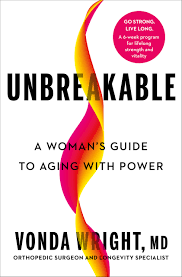
-
Fitness After 40
As an academic orthopedic surgeon and internationally recognized authority on active aging and mobility, Dr. Vonda Wright has created a unique medical program designed to target the fitness and performance needs of mature athletes.
In this invaluable resource, Wright reveals how anyone can use flexibility, aerobic exercise, and strength training to maximize the benefits of their fitness regime.
Resources
-
- American Journal of Sports Medicine: Age-Related Rates of Decline in Performance Among Elite Senior Athletes
- University of Pittsburgh: Benefits of Exercise and Sports
- University of Pittsburgh: Masters Athletes: A Model for Healthy Aging
- Sports Health: Participation in High-Impact Sports Predicts Bone Mineral Density in Senior Olympic Athletes
- Scientific American: Why aging comes in dramatic waves in our 40s and 60s
- National Institute on Aging: How can strength training build healthier bodies as we age?
- Harvard Medical School: Preserve your muscle mass
- National Health Service: Why we should sit less
- Heart Research Institute: Inactivity and a sedentary lifestyle
- American Heart Association: How to avoid frailty and stay strong as you age
- Aging Clinical and Experimental Research: Approaches to the diagnosis and prevention of frailty
- Mayo Clinic: Osteoporosis
- Stanford Medicine: Osteoporotic Fractures
2 Million Readers.
1 Life-Changing Newsletter
Simple and Straight-to-the-Point...
Just Like Mel.