Episode: 402
The Hidden Reason You Feel Exhausted & How to Feel Better Now
with Dr. Brennan Spiegel

Feeling bloated, tired, or in pain? This overlooked force may explain why.
If your body and mind have been feeling off - low energy, constant discomfort, or symptoms you can’t quite explain -this conversation will connect the dots.
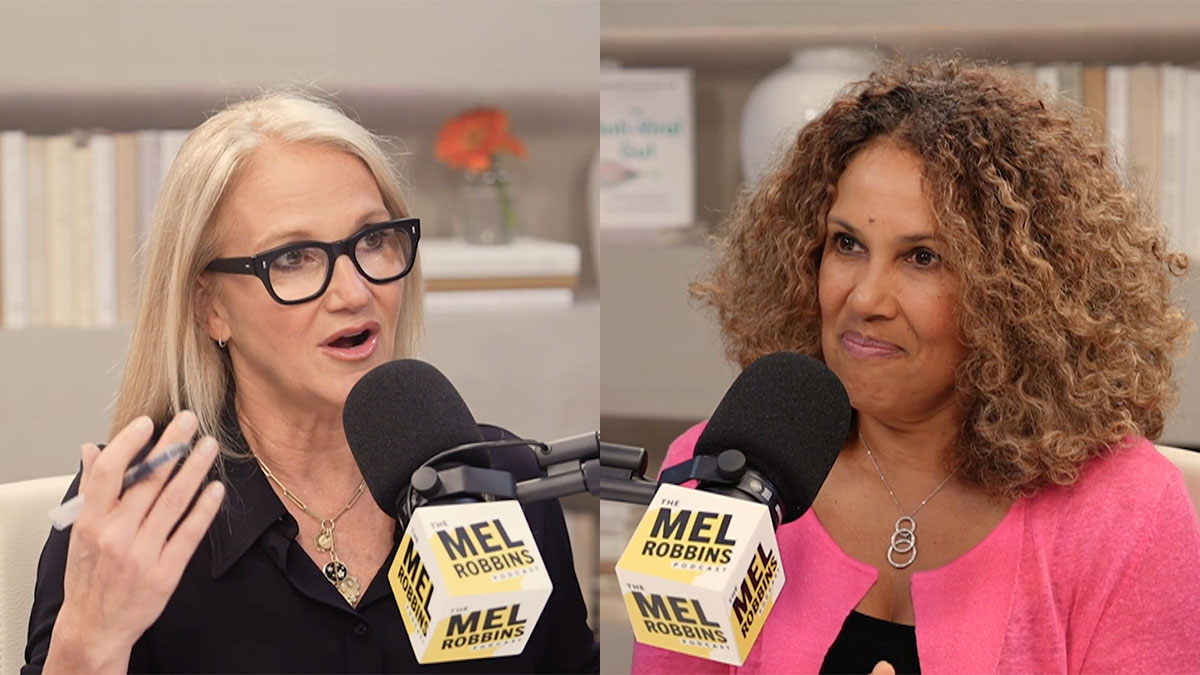
Mel sits down with world-renowned researcher Dr. Brennan Spiegel to dig into the invisible force shaping your energy, gut health, mood, and how your body ages.
You’ll learn why symptoms such as back pain, fatigue, and digestion issues may be connected, and what to do about it.
Plus, discover a simple 1-minute test you can do at home and other practical ways to feel stronger, healthier, and better starting now.
And help the people you love do the same.
Listen on:




You are equipped for this planet, mind and body.
Dr. Brennan Spiegel
All Clips
Transcript
Mel Robbins (00:00):
If you or anyone that you love has been experiencing health issues like exhaustion, GI issues, IBS, back pain, anxiety, swollen ankles, this brand new perspective could explain why you have these health issues in the first place.
Dr. Brennan Spiegel (00:15):
Take your pinky.
Mel Robbins (00:16):
Take your pinky.
Dr. Brennan Spiegel (00:16):
And see how far back you can pull it. So if you can do those things, you might then ask yourself, do I have stomach issues? Do I have irritable bowel syndrome?
Mel Robbins (00:24):
Why is there a connection between a bendy pinky or a thumb that touches the forearm and GI issues?
Dr. Brennan Spiegel (00:30):
Yeah, it's gravity and tolerance.
Mel Robbins (00:32):
Hold on. You're saying there's a connection between gravity and irritable bowel syndrome?
Dr. Brennan Spiegel (00:37):
Yeah. Gravity and name the disease.
Mel Robbins (00:40):
Dr. Spiegel is the director of health services research at Cedar Sinai Medical Center in Los Angeles.
Dr. Brennan Spiegel (00:47):
You want to be able to stand on one leg for at least 10 seconds.
Mel Robbins (00:50):
Stand on one leg.
Dr. Brennan Spiegel (00:51):
There's evidence that if you can't stand up on one leg, it will actually determine in part literally how long you're going to live.
Mel Robbins (00:57):
Wow.
Dr. Brennan Spiegel (00:58):
So many of the problems that we experience in life, they're forms of gravity intolerance.
Mel Robbins (01:03):
So tell me about your dead hang challenge, Dr. Spiegel.
Dr. Brennan Spiegel (01:06):
If you can hang from a bar for one minute, you are defying gravity, like refusing to give in despite searing pain on your body, you just hold on.
Mel Robbins (01:18):
That's incredible.
Dr. Brennan Spiegel (01:20):
Yeah. Define gravity.
Mel Robbins (01:24):
My goal is that 50% of people who watch the Mel Robbins podcast here on YouTube are subscribers and right now only 58% of people are. So do me a favor, hit subscribe. If that subscribe button is lit up, you're not a subscriber. It is free. It is the best way that you can say, "Hey, Mel. Hey, team at Mel Robbins podcast. I love this content. When you hit subscribe, you say you love what we're doing. It's a great way to support us. So thank you for doing that. You won't miss a thing. It's free. I really appreciate it. All right.
Mel Robbins (01:53):
Please help me welcome Dr. Brennan Spiegel to the Mel Robbins Podcast.
Dr. Brennan Spiegel (01:57):
Thank you so much for having me.
Mel Robbins (01:59):
I'm really excited. The team is buzzing. We have never even heard about somebody researching gravity and the impact on our bodies, so I cannot wait to dig into this. And so I'd like to have you start by just telling the person who's listening. What could change about their life or the way they think about some of the health issues that they're dealing with after they listen to all of the research that you're about to unpack and the tools you're going to teach us today.
Dr. Brennan Spiegel (02:27):
If you really take this to heart, the biggest thing that will change is how you see yourself in the world, how you see yourself as a person on this planet. And when we start to think about gravity as a force that we harmonize with to survive and thrive, all of a sudden there are these unexpected connections. We start to see things like what you eat might affect how you manage gravity, how conditions like IBS, which are so common, maybe a form of gravity intolerance, or if you can bend your pinky back really far, what does that say about your ability to manage the forces of this planet? That's what we're going to talk about today.
Mel Robbins (03:12):
You also talk a litle bit in this book, which shocked me about the connection between gravity and things like depression and anxiety and sleep issues, that it has implications for everything. And I think there's a lot of people that are going to listen and then you're going to send it to five family members. So I'd love to have you talk to the person who's listening that maybe had this episode sent to them as a resource from a family member to say, Hey mom, or hey brother, I really want you to listen to this doctor's angle as a way to look at this issue differently. Could you speak to that person?
Dr. Brennan Spiegel (03:51):
So many of the problems that we experience in life, pain, anxiety, depression, dizziness, exhaustion, swelling in your body, all of these have one thing in common. They're forms of gravity intolerance and that's just so out of left field. I never heard that when I was in medical school. And so I want people who are experiencing those things to think a little bit differently about their bodies and about their minds and unlock these very simple things that they can do to very quickly change their relationship to the planet itself.
Mel Robbins (04:31):
Hold on a sec. So as a professor and as a medical doctor and as a researcher and as a medical doctor that specializes in GI issues, you're saying there's a connection between gravity and irritable bowel syndrome and gravity and constipation and gravity and your serotonin levels.
Dr. Brennan Spiegel (04:50):
Yeah. Gravity and name the disease.
Mel Robbins (04:54):
To everything?
Dr. Brennan Spiegel (04:55):
Just about. Just about every disease. If you look deep enough, you're going to see that it's a consequence of mismanaging the forces of the planet. It's so fundamental. There's only a few things that we have to do in life. The main one is to stand up and stay up as long as we can and as well as we can until inevitably we can't. And it turns out most of diseases in some way, shape or form, and I can hear the doctors right now ready to challenge me and I'll talk to them. If you think creatively about the root causes of how we break down in mind and body is because we're giving into the planet. We're being pulled back from whence we came.
Mel Robbins (05:36):
Wow. Well, before we go further, for the purposes of this conversation, what is gravity in the simplest definition?
Dr. Brennan Spiegel (05:46):
Yeah. So we're on this planet. It has a force. It pulls us towards the center of it. That was there long before any signs of life, long before the first bacteria, the first fungi, nothing was here except that. And then life somehow emerged, but the first thing it had to do was to survive on this planet, the physics of this planet. So gravity was there long before we were, and it'll be here long after we're gone. So it stands to reason every part of your body has to manage that force.
Mel Robbins (06:18):
Now I think we all get gravity is the force that pulls us toward the center of the earth. It's the force that keeps our feet on the ground. But you've said this word a couple times now, gravity intolerance. What is that?
Dr. Brennan Spiegel (06:30):
Yeah. We evolved to tolerate gravity, to be comfortable and to harmonize with it and not be hurt by it.
Mel Robbins (06:37):
Okay. So meaning I can walk. I can stand up. I can go about my day.
Dr. Brennan Spiegel (06:41):
I'm not going to get dizzy when I stand up and pass out. I'm not falling over. I have the strength to exert myself into the world. The pumps and tubes in my body are sloshing all that fluid up and down against the force of gravity and I'm perfusing my brain with oxygen so that I can sit here and talk with you. This is what I mean by tolerating the force of gravity is we're built for it.
Dr. Brennan Spiegel (07:03):
Intolerance is a consequence of our modern lifestyle. It's a consequence of gaining too much weight on the body, getting too weak, living sedentary lifestyles, eating ultra high processed foods, experiencing stress and anxiety and mental depression, literally feeling down. All of these accumulate to undermine our natural ability to stand up to this planet and we fight with gravity then and that just makes life hard.
(07:36):
The easiest thing that we can do is to find ways to restore our natural abilities to be one with this planet. And it sounds like woo science, but it's basic physics.
Mel Robbins (07:45):
Well, what I'm excited about and I'm really glad that you're here listening to this is that it's just a different angle to examine the issues you may be dealing with with your health and with your life, which also opens the door to either different methods to resolve those health issues or different motivational factors that make it more important for you to do so.
Dr. Brennan Spiegel (08:14):
Exactly. So just understanding this unlocks a new way of approaching exercise, approaching diet, approaching adequate hydration, drinking enough water. Why are we doing all these things? Why? We're managing gravity with it. That's what we'll talk about.
Mel Robbins (08:30):
Why are you the only person talking about this?
Dr. Brennan Spiegel (08:32):
It's really interesting because I never expected that I would be talking about this stuff either.
Mel Robbins (08:36):
Why did you start researching this?
Dr. Brennan Spiegel (08:38):
Well, it actually started with a family member. So my mother-in-law had developed cognitive decline and she was in an assisted living facility and she was lying flat in bed all day. And about the time that she started lying down, she developed all these digestive issues, slow digestion, stomach pains. She became quite depressed and she hadn't changed her diet, hadn't changed her medicines and my family was asking like, "What's going on with her?" And I thought, "You know what? We're not supposed to lie down all day. She's giving into gravity. She's being pulled back down." I thought she has to stand up. If we could do anything for her, let's get her up and walking again. And so I thought about this and I was trying to figure out the gut part because I'm a stomach doctor. I'm a gastroenterologist. I'm a professor. I teach all this stuff and I started thinking about, well, what is it about the gut in particular?
(09:38):
And eventually I wrote a paper about this called Gravity in the Gut and I thought this was career suicide because it was such a strange, weird thing for me to write about. And people read it and said, "Oh, hey, that kind of makes sense. Yeah, it does make sense." And then next thing I knew, I thought every single part of your body, every cell, every single little cell you have has little tiny microtubules in it that are constantly shifting and moving and keeping the cell from collapsing upon itself, your entire body is managing this compacting force of gravity. And when you can't handle it anymore, we give into it.
Mel Robbins (10:11):
How did it change the way you as a medical doctor treat your patients for GI issues once you had this epiphany around the relationship between gravity versus just looking at what's going on in the gut and the intestines?
Dr. Brennan Spiegel (10:27):
This has been the most gratifying part of all this work is how it changes the way I talk with my patients. So for example, I see a lot of people who have irritable bowel syndrome or stomach issues and I'll ask them, I'll say, "How's your back? Do you have back pain?" And almost all of them will say, "Yeah, I do. " Why do you ask? Your stomach doctor, not a back doctor. I'll say, "Well, the back and the gut are right there, they're not two different systems. Everything's connected. It's about the seams of the body. It's about the connection point. Sometimes diseases are more about the points where things come together than the actual entities that attach, right? This is called tensegrity or tensile integrity. This is about bending without breaking like a tree that bends in the wind and doesn't snap. Our bodies are designed as tensegrity systems that are managing the forces of the earth.
(11:27):
And so if you're not going to be strong in your back, you can imagine how it's going to lead to your gut compressing a lot. And so let me show you a picture and I'll show them a picture, how they're connected and I'll talk about how exercise, it turns out, is the most effective therapy we have for IBS by far.
Mel Robbins (11:43):
Wait, hold on. Exercise is the most effective therapy for IBS.
Dr. Brennan Spiegel (11:48):
Tai Chi, yoga, osteopathic medical interventions, strength training, swimming, running, randomized control trial after trial shows that this is the most effective therapy we have. And I'm not saying that's the only cure all, to be clear, but you bet. And when I put it this way to people, they go, "Oh, well, no doubt. Oh my God, that makes sense. I can see how these things are tied together."
Mel Robbins (12:16):
So what's a quick way that the person listening right now can feel the effect of gravity on their body?
Dr. Brennan Spiegel (12:22):
So we're sitting here together right now, right at desk. Even as I'm talking to you-
Mel Robbins (12:26):
Wait sitting is not a natural position.
Dr. Brennan Spiegel (12:27):
Well, I mean, we do it, but we're not designed to sit all day.
Mel Robbins (12:30):
Yes.
Dr. Brennan Spiegel (12:31):
We're designed to be up and moving, running, hiking, whatever it is. Right now, even as I'm talking to you, I can feel myself slumped over a little bit.
Mel Robbins (12:40):
Yes. You can feel like as you're sitting, even if you kind of try to sit up right, you can feel pinchy in your midsection. You're crunching the midsection.
Dr. Brennan Spiegel (12:50):
So if anyone's listening now and maybe in their car, maybe sitting down in a chair, you just think about right now, feel the pressure of your body in the chair and think about how that force is translating through your body. And if you're kind of hunched over or looking at a phone or something, what happens is your upper back moves forward, your shoulders move forward and then your chest thorax moves down, diaphragm moves down and then the abdomen compresses just a little bit. You've got this sack of potatoes in your belly that we call the gut and it normally actually hangs when you're upright and that opens it up. And when you sit upright and you think about the muscles between-
Mel Robbins (13:35):
Just listening to you, I've noticed I'm going from my great-grandmother's hunchback look to, okay, shoulders, back, point
Dr. Brennan Spiegel (13:42):
Out- Literally think about the muscles between your shoulders. How often do you engage those actively? Really engage those muscles. Yeah, never.
Mel Robbins (13:50):
Unless I'm at a gym or unless I catch myself in the mirror, I'm like, oh my God, my posture.
Dr. Brennan Spiegel (13:56):
Okay, shoulder's back. But that's it. No. So you can see in the mirror and when you contract, what happens is the diaphragm and the chest moves up and the abdomen opens up and it's better for your digestion for movement in the belly and generally for your overall mechanism to be standing up straight, it's much better for your inner mechanisms too, the pumps and tubes inside.
Mel Robbins (14:15):
So as you're listening, if you just caught yourself slouching or if you've been walking and you even felt your shoulders forward and even as you're walking, you're a little hunched, just noticing that is a way to feel to notice the pull of gravity pulling you toward the ground.
Dr. Brennan Spiegel (14:32):
Yeah. And you don't need to be ramrod, military straight all the time, but just think a little bit about the back and the spine and keeping yourself upright.
Mel Robbins (14:40):
Well, what's already starting to go pow, pow, pow, my brain as I'm really taking in what you're saying is this is an entirely different way to think about posture and health because I've always just thought about the fact that I should just have good posture just because I should have good posture, but I've never thought about it as you need to build better posture because if you don't, gravity's always going to be there to make you slouch, to make you look down, to make you slump in your chair and then your poor organs are smooshed like the bread at the bottom of a grocery bag.
Dr. Brennan Spiegel (15:25):
That's a good analogy. Yeah.
Mel Robbins (15:27):
You know what I'm saying? And so thinking about it like it's not even about good posture, it's that developing that strength and that awareness is how you work against the gravity that's pulling you down. Is that right?
Dr. Brennan Spiegel (15:42):
Absolutely. And as we'll see, I mean, this is the basis of longevity. It's being stronger. It's being stronger of mind and body.
Mel Robbins (15:53):
What are everyday red flags that for you, Dr. Spiegel are like, you need to change your relationship with gravity?
Dr. Brennan Spiegel (16:03):
Yeah. I mean, these are everyday common things. We talked about low back pain already, for example, feeling dizzy when you stand up too quickly, feeling lightheaded, having chronic pain, feeling exhausted, feeling mentally down, feeling like you're falling literally or even metaphorically like you're getting gut feelings in your belly when you're anxious. All of these are signs of what I call gravity intolerance. And it's easy though for doctors to say, "Oh, well, that is disease A or that is disease B." And that's how we think about the human body, but I think about it as all of the systems working in unison to stand up to this planet and we can diagnose gravity and tolerance through all of these different types of symptoms. What's amazing is there's so much literature that literally how you hold your body helps how you feel on the inside. You feel more buoyant, you feel lighter when you stand up straight.
(17:02):
So think about when you are in a cathedral and the ceiling is high.
Mel Robbins (17:07):
Yes.
Dr. Brennan Spiegel (17:08):
You feel glorious, you feel heavenly that the spires point to the heavens. Yes. When you come into a Grand Central Station in New York, you look up and think this is beautiful. But when you come into Penn Station, it's been said that it's like you scuttle into the city like a rat. These like low ceilings, it's not glorious, it's not amazing. We have a neuropsychological love of expansive space, the heavens, even in our language we talk about how up is good, I'm feeling high, I'm feeling great and down in the dumps, down on my luck, these are not just figures of speech. These are not just metaphors.
Mel Robbins (17:46):
That's true because emotions can be like heavy.
Dr. Brennan Spiegel (17:49):
Heavy. People speak of the heaviness, the literal heaviness of something like depression on the body itself. It's an existential attribut of our neurophysiology that we love being in expansive, beautiful worlds and we do not love being in contracted small spaces.
Mel Robbins (18:13):
Now you say there is one thing that you can do right now with your hands to show your relationship to gravity.
Dr. Brennan Spiegel (18:24):
Well, it's worth testing because I'm going to guess that many of your listeners when they hear this will find something out about themselves.
Mel Robbins (18:36):
Okay.
Dr. Brennan Spiegel (18:37):
And so we can try it with you. Let's try it. I'll do it with me. So take your pinky.
Mel Robbins (18:40):
Take your pinky.
Dr. Brennan Spiegel (18:41):
And see how far back you can pull it.
Mel Robbins (18:43):
So we're going to bend our pinky back.
Dr. Brennan Spiegel (18:44):
Yeah, bend it back.
Mel Robbins (18:45):
Okay.
Dr. Brennan Spiegel (18:46):
And so you and I are at about 90 degrees.
Mel Robbins (18:49):
Meaning my pinky's going straight back. It's
Dr. Brennan Spiegel (18:51):
Not going to straight back, but it's not bending way back. And that's normal.
Mel Robbins (18:55):
Okay.
Dr. Brennan Spiegel (18:56):
And the other way to tell is if you can take your thumb-
Mel Robbins (18:58):
Take my thumb. ...
Dr. Brennan Spiegel (18:59):
And bend it all the way back to your forearm.
Mel Robbins (19:03):
People can Touch Their Thumbs to their forearms.
Dr. Brennan Spiegel (19:05):
Turns out a number of your staff can.
Mel Robbins (19:07):
That's right. We did this with our staff and over half the women that work here and we have 50 employees, over half can bend their thumb back to touch their arm.
Dr. Brennan Spiegel (19:21):
To touch their arm. And those same people can touch the ground without bending their knees really easily. They may have kind of a double jointed elbow. So if you can do those things, you might then ask yourself, do I have stomach issues? Do I have irritable bowel syndrome? Do I have stomach pains sometimes?
Mel Robbins (19:41):
Okay. So hold on a second. Why is there a connection between a bendy pinky or a thumb that touches the forearm and GI issues?
Dr. Brennan Spiegel (19:47):
Yeah, it's gravity and tolerance. If you're stretchy on the outside, you're probably stretchy on the inside too. And our gut we talked about, it's like a sack of potatoes that's sort of on these suspension systems. And when you stand up and you stand up straight, the system hangs down. It's almost like a marionette on strings. You can articulate the marionette with the strings. But if those strings were really, really stretchy like elastic, the marionette would kind of collapse down. It would be hard to animate it. Well, if you're stretchy in your joints, the suspension cables inside are also stretchy and the sack of potato gets pulled down by gravity and it compresses down and you can get some digestion issues like bacterial overgrowth and gas issues. You should see a doctor to be clear, but you can check it even with yourself and that is a form of gravity and tolerance.
Mel Robbins (20:42):
I can see how if it's super stretchy, especially if you then start schlumping over, everything's going in different places because it's flexible and can move around.
Dr. Brennan Spiegel (20:53):
Yeah. Which is why swimming is a really good activity if you do have this stretchiness because you're horizontal and you're swimming and you're not like pounding down everything's going if you're running, for example, it can kind of pound everything down a litle bit. I mean, that's still okay, but if you have the stretchiness, swimming is a particularly good exercise.
Mel Robbins (21:13):
You can change this?
Dr. Brennan Spiegel (21:15):
Yeah. So the way you change it, you can't really change the stretchiness, but if you get strong abs, strong back, core and upper back, which you then do, you start opening up the chest, opening up the abdomen and pulling that sac back up again so you get better digestion. And then there's a bunch of other important things with diet in terms of changing the microbiome, those trillions of organisms that get backed up. If your stomach's almost like a garden hose, if it gets kinked, the water backs up, so you want
Mel Robbins (21:47):
It to open. Oh, that's interesting. Okay. So if you're slouching and you're having gravity pull you down in your chair or you got terrible posture, you're causing a kink potentially in the garden hose of your digestive tract.
Dr. Brennan Spiegel (22:02):
That's right. That's right.
Mel Robbins (22:04):
This message is brought to you by Apple Pay. Checking out online, Apple Pay makes it simple. Apple Pay is accepted on millions of websites and apps and counting. Just look for the Apple Pay button almost anywhere you do your online shopping. When you tap the Apple Pay button to check out, you don't have to worry about filling out any forms with your shipping address or payment method. Instead, use your pre-saved information and check out in seconds. Need to make a change, you can easily review and change your card information and shipping details right in the payment sheet. Once you're ready, just double click the side button, authenticate your purchase with face ID and you're done. Whether you're shopping online for everyday needs or treating yourself, skip the hassle. Shop with Apple Pay, terms apply.
Mel Robbins (22:52):
What is the role that gravity plays in your digestion?
Dr. Brennan Spiegel (22:55):
Most people think of serotonin as a happy chemical. It's like the anti-depression chemical and it is that, but you might be surprised that about 95% of your body serotonin comes from your gut, not your brain, comes from the gut. And in fact, it depends upon the microbiome, which is all those organisms. So what happens is when you eat certain foods, particularly foods with tryptophan, so tryptophan turns into serotonin in your gut and then serotonin circulates all throughout your body. Without it, you and I would be collapsed on the ground right now like a little baby. A baby has very little serotonin in its body because it hasn't yet colonized its gut to be able to create enough serotonin to prime your muscles, to help those pumps and tubes contract. It requires serotonin. The lymphatic system that's bringing all the waste back up from your ankles requires serotonin.
(23:53):
If we look at what serotonin does, it literally elevates you. Mind and body.
Mel Robbins (23:59):
Wow.
Dr. Brennan Spiegel (24:00):
And it looks like the gut in part evolved with the microbiome to allow us to get out of the ocean. We brought our own hydrothermal vent with us to allow all those critters to come with us and they gave us serotonin, which gave us gravity management abilities.
Mel Robbins (24:18):
And what is a gravity management ability?
Dr. Brennan Spiegel (24:21):
That means a few things. That means your muscles and bones are strong so that you can stand up. It means the pumps and tubes on the inside are moving the fluid around the lymph, the blood, something called the baroreceptors, which are these tiny sensors you have in your arteries and they are constantly keeping track of your pressure and your fluid status, how much did you drink enough water? All of this stuff is gravity management. And then finally the brain itself, the mental gravity. All of these systems work together to allow you to stand up and thrive. That's what gravity management is.
Mel Robbins (24:59):
Got it. So your gut really operates in a way that it has to be ... Well, I guess if you think about it, I mean, everything's kind of moving down and out and then also moving up against gravity.
Dr. Brennan Spiegel (25:15):
That's right. So it's amazing to me, we'll take people who have stomach pain and we can't figure out what's causing it, let's say. We do a bunch of different tests and then we find out that on rollercoasters they get really bad butterflies and they don't even want to ride a rollercoaster. And you think, well, what is this thing about gut feelings anyway? Why do you get that feeling on a rollercoaster? Well, you know why? Because when you're riding a rollercoaster, you're practicing your death.
Mel Robbins (25:44):
What?
Dr. Brennan Spiegel (25:45):
Yeah, you're practicing your death. We're not supposed to fall 20 stories and survive. That's why we do it because it's exhilarating. We're like, woo. People with irritable bowel syndrome, often not all, do not want to ride a rollercoaster because they feel like they're always falling, like metaphorically falling. Whoa. They will white knuckle, hold on for dear life and go. Whereas other people are throwing their hands in the air, throwing ... It's like we have a G-force accelerometer in our gut that is keeping track of your movement and telling you if you're about to die. So literally when you get those gut feelings like something's the matter, something doesn't feel right here. That's your body saying, you think you're at risk. You feel like you might die even. Now, sometimes that's an inappropriate feeling. Your brain is playing a trick on you. Your brain is telling you that you're falling.
(26:36):
So that's literally how deep the gut feeling gets. And Hippocrates said all disease begins in the gut. 2000 years ago he said that. What did he mean? This is the core of who we are. It's the ultimate visceral center of our selfhood.
Mel Robbins (26:51):
I know you have a very memorable way of eating, Dr. Spiegel, that helps you and your body's relationship with gravity. What is it?
Dr. Brennan Spiegel (27:01):
Well, I call it STACK TEN.
Mel Robbins (27:04):
STACK TEN?
Dr. Brennan Spiegel (27:05):
S-T-A-C-K T-E-N.
Mel Robbins (27:08):
Okay.
Dr. Brennan Spiegel (27:08):
And you already got the T because you said turkey.
Mel Robbins (27:12):
Okay.
Dr. Brennan Spiegel (27:13):
So what is STACK TEN? These are 10 foods. That's why I say 10 that I stack in my diet to try and boost serotonin levels naturally.
(27:23):
And we talked already about how serotonin is this gravity management substance. That's how I think about it. And so what are the foods? The S is salmon. The T is turkey A is avocado. C is chicken and chickpeas. And then K is kidney beans. And then the T is like tempeh, tofu, eggs, E and nuts. So it turns out all those foods, what they have in common is they have a lot of tryptophan, which is the raw fuel that your body will convert into serotonin, which then allows you to stand up to the force of gravity.
Mel Robbins (28:03):
And so you just make sure you get a kind of variety of the STACK TEN in your
Dr. Brennan Spiegel (28:08):
Diet
Mel Robbins (28:09):
Every week?
Dr. Brennan Spiegel (28:10):
Yeah.
Mel Robbins (28:11):
And then you exercise.
Dr. Brennan Spiegel (28:13):
And sleep. And there are other ways to boost serotonin. Sunlight. We get back to being out so outside. Sunlight naturally boosts serotonin levels. Sleep. By the way, when you sleep at night, gravity is no longer working against you and your blood flushes up in your brain, flushes out amyloid. Sleep can, for example, reduce risk of cognitive decline Alzheimer's disease may in fact be a consequence of not having enough fluid in your body, having too high of sodium levels in your body, not sleeping enough, not getting enough exercise, all of those things. Every one of them is associated with cognitive decline.
Mel Robbins (28:49):
What do you mean when you're sleeping, gravity's not working against you?
Dr. Brennan Spiegel (28:52):
So all day long is rep right now, you're pumping up, pumping down. You've got five liters of blood, which is a lot moving all up and down, sloshing through your body, right? And you got to get it up, you got to get it down. When you lie down at night, you finally give everything a rest. It's like the shores of the ocean kind of coming up onto the sand and it's very sort of washing up into your brain. And there's some theories that in part, we fall asleep in quotes, right? We fall to sleep. We fall asleep. We fall down gravity is no longer working and the pumps and tubes get that brain reperfused overnight and that's part of what we're doing by recharging the body is giving ourselves a gravity break.
Mel Robbins (29:32):
So what's one quick way that the person listening can improve their body's relationship to gravitational pull?
Dr. Brennan Spiegel (29:42):
Yeah.
Mel Robbins (29:42):
Might take a few minutes, but that you would be really proud of if you try this.
Dr. Brennan Spiegel (29:47):
Yeah. There's a few things you can do. You can stand on one leg.
Mel Robbins (29:51):
Stand on one leg.
Dr. Brennan Spiegel (29:52):
See how long you can stand on one leg without balling over stand on the other leg.
Mel Robbins (30:00):
It tell you when you have somebody that is losing balance and why is balance so important?
Dr. Brennan Spiegel (30:08):
Yeah, this is important because your ability to balance is a measure of your entire mechanism within gravity. It's a measure of your inner ear and what we call the vestibular system, which is keeping track of your shifts and movements. It's a measure of your strength and your tendons and your bones and what we call proprioception, which is your ability to feel where you are in space without falling over. And so you want to be able to stand on one leg for at least 10 seconds. If you're struggling to do that, that's something to work on for sure because there's evidence that if you can't stand up on one leg, that's actually tied to your survival. It will actually determine in part literally how long you're going to live. So if you can't do it, don't freak out. Work on it. Do yoga, get stronger, work on balance, see a doctor if you need to, physical therapist.
Mel Robbins (31:02):
So 10 seconds is the minimum.
Dr. Brennan Spiegel (31:04):
That's the minimum for standing on one leg. Yeah.
Mel Robbins (31:06):
And based on the research, your ability to stand on each leg for 10 seconds tracks directly to your life expectancy?
Dr. Brennan Spiegel (31:14):
Yeah, particularly for older individuals.
Mel Robbins (31:16):
Wow. Why?
Dr. Brennan Spiegel (31:19):
I think it has to do with everything we're talking about because this is a holistic measure of your gravity tolerance. And if it's breaking down, that means you're breaking down. You're changing your relationship to gravity. Your organs will thank you. You're changing the movement of sloshing of all that stuff, the bread that's stuffed at the bottom of the ... Now it's at the top of the back. Exercise is about constantly dynamically changing your relationship to gravity, which is why I wear a weighted vest, for example. So that's a really simple thing to do. We wear weighted vest
Mel Robbins (31:50):
At all times.
Dr. Brennan Spiegel (31:51):
I wear a weighted vest. I have one here, by the
Mel Robbins (31:53):
Way. Okay. So if you're listening, he's pulling out a weighted vest.
Dr. Brennan Spiegel (31:56):
Yeah. So this is a weighted vest. And this one's about 12 pounds.
Mel Robbins (32:00):
Okay.
Dr. Brennan Spiegel (32:01):
And I wear this almost every day. I'm at work.
Mel Robbins (32:05):
All day long?
Dr. Brennan Spiegel (32:06):
Most of the day, except sometimes when I'm seeing patients, it's a little awkward to have this thing on, but the idea is you're practicing life on a bigger planet, a planet that has more pull. And if you spend the day standing up at a standing desk, which I do, having your shoulders back a little bit, just be a little bit aware. You don't need to be all ram rod. When you wear the weighted vest, it forces you to really contract between the shoulder blades. And that upper part of the back is really important for opening up the diaphragm. And so I love wearing the weighted vest. Sometimes I wear ankle weights and I have a balance board too. Now,
Mel Robbins (32:39):
Why do you wear ankle weights at work?
Dr. Brennan Spiegel (32:42):
Yeah. Well, I can, I mean passively exercise lifting my knees up, doing some donkey kicks if I'm on a Zoom call. I'm constantly moving my legs around.
Mel Robbins (32:50):
So how heavy are these ankle weights?
Dr. Brennan Spiegel (32:53):
Mine are 20 pounds each. Oh my God, that is a flat stop.
Mel Robbins (32:58):
20 pounds each on your ... Are you trying to anchor yourself to your desk?
Dr. Brennan Spiegel (33:02):
So I run marathons and to train for a marathon, you don't train for a marathon sitting at a desk all day.
Mel Robbins (33:08):
That's true.
Dr. Brennan Spiegel (33:09):
And then it's kind of like a baseball player that's about to go up to bat and they've got a weight on their bat.
Mel Robbins (33:15):
Oh yeah,
Dr. Brennan Spiegel (33:15):
Because
Mel Robbins (33:15):
They do that when they swing to practice.
Dr. Brennan Spiegel (33:17):
Yeah. And then they go onto home plate. And now they're stronger and faster and can get through the pitch faster. So if you train all day wearing a weighted vest, when you take it off, you almost feel like you're floating like this planet's no big deal. I can handle this planet.
Mel Robbins (33:31):
That's true. Because I wear a weighted vest when I walk incline and when I hike by our house. And when I take that sucker off, oh my gosh, you do feel like the weight of the world is off you. You
Dr. Brennan Spiegel (33:43):
Feel so- Literally the weight of the world, right?
Mel Robbins (33:45):
Yes.
Dr. Brennan Spiegel (33:45):
Think of that expression.
Mel Robbins (33:47):
So one easy way that the person listening could start to strengthen their relationship with gravity is to just practice standing on one foot or the other. What's another way?
Dr. Brennan Spiegel (33:57):
Inverted yoga, doing the downward dogs, that sort of thing. And then there's the dead hank, the dead hang.
Mel Robbins (34:03):
Yeah. I've been practicing this.
Dr. Brennan Spiegel (34:05):
You have.
Mel Robbins (34:05):
Well, only because one of my goals in life We always get a million emails about this every time I say it. I have never been able to do a pull-up on my own. And so one of my goals is because of the experts on this podcast, I not only host the show, I'm learning right alongside you as you're listening right now is to learn. I just want to do one. I don't need to do 10. I want to be able to do one pull up without injuring myself and that's it. And so I've been working on the dead hang. It is so hard.
Dr. Brennan Spiegel (34:41):
It is hard. Yeah, it is.
Mel Robbins (34:43):
So practicing a dead hang, which explain for the person listening what that is.
Dr. Brennan Spiegel (34:47):
So a dead hang is where you have a pull-up bar. You can get these on Amazon or wherever, hook at a safe one, right? Not the one that falls when you pull on it. It's got to be able to hold your weight safely, hooks into the door and then you put your hands at about shorter width. You can be forward facing or back facing and take your body weight off the ground. And immediately what happens is your spine pulls. You become about a half inch taller instantly. It does
Mel Robbins (35:14):
Feel like
Dr. Brennan Spiegel (35:14):
You do. Yeah, you do. You stretch out. Gravity pulls you down. It's really good for strength in the shoulders and grip strength because much of our evolutionary history was like hanging from trees. That was how we survived. We defied gravity in part. So it turns out your grip strength says a lot about your ability to manage gravity itself. It tells me about how strong not just your grip is, but your entire body. Even your cardiovascular fitness we can determine from your grip strength and your ability to hang from a hanging bar.
Mel Robbins (35:48):
So tell me about your dead hang challenge, Dr. Spiegel.
Dr. Brennan Spiegel (35:51):
Yeah. Dead hang challenge. So if you can hang from a bar for one minute, you're doing great. You are a gravity master. You are defying gravity. Now the world record is actually one hour, 20 minutes and 14 seconds. I think I have that right. Kenta Adachi from Japan set the world record, the Guinness World Record for the Dead Hang. Before that, it used to be 16 minutes. That's how much he destroyed that record.
Mel Robbins (36:20):
That's incredible.
Dr. Brennan Spiegel (36:21):
Yeah. Define gravity. Refusing to give in despite searing pain on your body, you just hold on. And that's kind of what life can be about sometimes. So it's a symbolic gesture to be able to hang from a bar. You don't need to be an Olympian. You need to be able to stand up and feel comfortable and harmonize with gravity. And we evolved for it. We're here for a reason. So you don't need to overcome it. You need to just live with it.
Mel Robbins (36:48):
I've never done a minute. I hold on for 30 seconds and when I do it, I feel like I'm on an episode of Survivor, like trying to in a time thing to win food or something. So a minute is what we're going for.
Dr. Brennan Spiegel (37:02):
Yeah, a minute.
Mel Robbins (37:03):
Why is grip strength such an important indication of your overall health?
Dr. Brennan Spiegel (37:11):
Yeah. It's been validated in a number of research studies now that your grip strength, and I have a grip monitor here. It's called a dynometer.
Mel Robbins (37:20):
A dynometer.
Dr. Brennan Spiegel (37:21):
Okay. So he's
Mel Robbins (37:21):
Holding up this thing
Dr. Brennan Spiegel (37:23):
That
Mel Robbins (37:23):
Looks like a big calculator.
Dr. Brennan Spiegel (37:25):
Only it's got a
Mel Robbins (37:25):
Big squeezy thing on
Dr. Brennan Spiegel (37:27):
It. That's right. And so what you do is you basically, I'm right-handed, so I'll use my right hand, use your dominant hand
Mel Robbins (37:35):
And
Dr. Brennan Spiegel (37:35):
You're going to just squeeze like crazy on this thing. Okay. So let me see what I can do. I want to use two hands, but you should only use one hand. So here I go. Okay. I
Mel Robbins (37:44):
Got it. He's like gritting and going.
Dr. Brennan Spiegel (37:46):
Okay,
Mel Robbins (37:46):
What do you got?
Dr. Brennan Spiegel (37:47):
Well, 125.
Mel Robbins (37:48):
Oh.
Dr. Brennan Spiegel (37:48):
- That is pretty decent actually. I'm like surprised. All right.
Mel Robbins (37:52):
I'm going to try it. I'm going to think of somebody I hate. Here, let me try it. I'm going to try it. My hand's ready 20.
Dr. Brennan Spiegel (37:58):
All right.
Mel Robbins (37:59):
Oh, 70.
Dr. Brennan Spiegel (38:00):
That's not bad. That's actually really good.
Mel Robbins (38:02):
It is?
Dr. Brennan Spiegel (38:02):
Yeah. Really? So there are standards that we've both easily exceeded here for men and for women and for your age too. So it depends. You can look on a table online and it'll tell you, but generally if you can get over 35 as a man and over 20 to 25 as a woman, that's good.
Mel Robbins (38:21):
I destroyed that.
Dr. Brennan Spiegel (38:22):
Yeah, you blew that out.
Mel Robbins (38:23):
Well, let
Dr. Brennan Spiegel (38:23):
Me
Mel Robbins (38:23):
Tell you why. I got to
Dr. Brennan Spiegel (38:24):
Get all those hanging bars.
Mel Robbins (38:25):
It's the hanging bar and it's the fact that there have been a number of medical experts that have come on this show either talking about longevity or women's health or just overall health. They really convinced me that I got to start working on the grip strength and I got to start working on heavier weights and the farmers carry and the hanging bar and all that stuff.
Mel Robbins (38:47):
I'd love to hear you talk about how this advice applies to the different ages and decades of your life. What's important in your 20s versus your 30s or 40s or 50s or 60s and beyond?
Dr. Brennan Spiegel (39:04):
Yeah, right. So gravity doesn't change, but our relationship to gravity changes. Our relationship does. We get weaker. Our spines might bend a little bit. We might gain some weight. We might have more stressors, emotional weight, and that's not just a metaphor. And so we start to give in. And what that means is as we get older, it's more important than ever to focus on strength training, on balanced training, on diet, on good hydration, maintaining like 10 to 13 glasses of water per day. That's a lot. It's a lot.
Mel Robbins (39:41):
Yeah. Wait, hold on a second.
Dr. Brennan Spiegel (39:42):
Dr.
Mel Robbins (39:43):
Spiegel, you recommend 10 to 13 glasses of water a day.
Dr. Brennan Spiegel (39:47):
Yeah, more or less. Yeah.
Mel Robbins (39:48):
Why?
Dr. Brennan Spiegel (39:48):
About half your body weight, 60% of your body weight is fluid and you've got these pumps and tubes moving it up and down against gravity. And so if we don't keep those tubes flush with fluid, our brains get tired, we get exhausted. It's all gravity intolerance. And so we do need to replenish and it takes a lot of water and most of us don't drink near enough water. I don't overdo it, but enough water to not feel lightheaded and to feel fresh. And even your mental health is tied in part to this.
Mel Robbins (40:18):
Well, as you were listening and he was talking about 10 to 12 glasses of water, I of course just subconsciously picked up my mason jar
Dr. Brennan Spiegel (40:24):
And started
Mel Robbins (40:25):
Chugging.
Dr. Brennan Spiegel (40:25):
I'll do the same. And
Mel Robbins (40:26):
This is fascinating to me.
Mel Robbins (40:28):
Dr. Spiegel, what do you want to say to the person who spent years blaming themselves for the way that they feel and like me has never even considered that the pull of gravity of all things may be playing a role in some of the challenges they're facing.
Dr. Brennan Spiegel (40:46):
So the first thing is to say it's not your fault. We have this blam culture that if I don't feel right physically, mentally, that it's something that I did. What this way of thinking opens up
(41:02):
Is the notion that it's not something that is your fault. It has to do with the way your body is navigating this planet. And now we can move to strategy, not to blame. We can start thinking about techniques to strengthen your relationship to this earth because you were born for it. You are a consequence of it. You are made for it. If you literally feel like you're not made for this planet, that means we have to work hard and fast on rebuilding your sense of self within the confines of this planet. And so that's really what it means is feeling not a sense of blame but a sense of empowerment. You are born for this place. You evolved for it.
Mel Robbins (41:44):
Well, if you really even just think about any baby, a baby, I think the research shows will, when they're trying to learn how to stand up and walk, will fall like an average of 17 times an hour. They don't land the ground and go, "Well, that's it. I'm just going to succumb to gravity. Walking's not for me. " There is this internal mechanism, this instinct to stand up,
Dr. Brennan Spiegel (42:11):
To pull yourself
Mel Robbins (42:12):
Up.
Dr. Brennan Spiegel (42:12):
We have to fall down a lot to stand up again. That said, it's interesting because there's research with babies going back to the 1960s where they were asked to crawl towards their parent across a glas plane where there was a drop off down beneath.
Mel Robbins (42:28):
Okay. So the baby is going to crawl across something that looks like a drop off.
Dr. Brennan Spiegel (42:34):
Yes.
Mel Robbins (42:35):
Okay.
Dr. Brennan Spiegel (42:35):
And they don't do it.
Mel Robbins (42:36):
They don't do it?
Dr. Brennan Spiegel (42:37):
They won't do it. Even before they've fallen, do have an internal graviceptive instinct that that's dangerous and they won't do it. Now, falling has to happen, but dangerous falls don't. And we know we're hardwired to know to stay away from these kinds of falls, which is why gut feelings are a sign that you are about to fall or are falling. And that's one of the ways that we protect ourselves. And anxiety in part may be a neurovisceral fear of falling. You don't want to fall down and that makes sense because that's how we're here. We had thousands and thousands of people come before us that somehow survived generation after generation by not falling down.
Mel Robbins (43:22):
What role does breathing play in helping the body feel more stable?
Dr. Brennan Spiegel (43:27):
Yeah. So we know from so many traditions that breathing is a grounding mechanism. What do we mean by a grounding? We're talking about the ground. We're talking about gravity today.
(43:39):
Yeah. You're becoming grounded. We use that term kind of metaphorically, but it's a literal one. When you breathe in slowly and you regulate your breath, you're regulating that vagus nerve we talked about before, which is the long winding nerve, the longest nerve in the body that connects your brain to all of your inner organs, the gut that we've talked a lot about, the heart and it releases serotonin in the brain and in the body. When you slow down and regulate, what you're doing is you're going from a more fight or flight mode to a rest and digest mode. And that is grounding physically and mentally. So breathing is a big part of that, doing these gravitational breathing exercises.
Mel Robbins (44:19):
Dr. Spiegel, will you walk me and the person listening through a simple breathing reset that you use with your patients?
Dr. Brennan Spiegel (44:26):
Yeah, sure. So which you can imagine first of all is kind of sit up and- Okay.
Mel Robbins (44:32):
Now I'm like, see I was
Dr. Brennan Spiegel (44:33):
Slouching again. Yeah.
Mel Robbins (44:34):
Okay.
Dr. Brennan Spiegel (44:35):
Thaer shoulder keep yourself, but you don't need to get all tense and you can start by just feeling your body sink into the chair. But rather than thinking about it as being pulled down, think about it like you're being pushed up.
Mel Robbins (44:50):
Can
Dr. Brennan Spiegel (44:50):
You imagine- Push
Mel Robbins (44:51):
Up against
Dr. Brennan Spiegel (44:52):
The chair. The chair is pushing you.
Mel Robbins (44:54):
Oh yeah. Okay.
Dr. Brennan Spiegel (44:56):
Because what physicists talk about is gravity is actually an upward acceleration. It's not a downward pull.
Mel Robbins (45:03):
That doesn't make sense to
Dr. Brennan Spiegel (45:04):
Me. I know. It's kind of counterintuitive, but that's what it is. We're actually being accelerated into. It's really wild. It's a total mind mess up. But if you think about it that way, your life becomes one of bounding into the world, like a trampoline effect off of the surface of the earth. When you're running, you're bounding off the earth. You're using the upward acceleration of gravity to bound into the world, not to sink down. So that's a mind shift.
Mel Robbins (45:35):
Well, if you unpack that for a second, if gravity's pulling you down, you do have to push against it to stand up.
Dr. Brennan Spiegel (45:47):
Do.
Mel Robbins (45:47):
And so I can see what you mean. I'm so used to just slouching down in my chair and not even thinking about it and slumping and all these S words. But you're right. If you push against the seat, you take a more active stance in the seat.
Dr. Brennan Spiegel (46:03):
So that's the first part of the breathing. We haven't even got to the breathing part yet. It's just the mindset that I'm sitting and I'm on this planet, I'm in this chair and it is accelerating into me upward into the earth. And so now what I do is a slow, deep breath and it starts in the abdomen. So it's going to start down and in and you open up the abdomen first and let it come up into the chest next. So it's rising up and out. You can even use your hands and then you come back down again. So you kind of go like this like ... Down and in, up and out.
Mel Robbins (46:45):
That's pretty cool. How long do you have to do that?
Dr. Brennan Spiegel (46:48):
Even doing it for two minutes, one minute, right longer, a little bit better, is enough to start resetting your vagus nerve when you need that grounding, when you're feeling stressed or anxious or kind of off balance, that sort of thing.
Mel Robbins (47:02):
What are some of the signs to look for that indicate that your body is handling gravity better, that your health is improving in this regard, Dr. Spiegel?
Dr. Brennan Spiegel (47:14):
As your gravity resilience grows, your confidence in being a person in the world grows physically and mentally. You have strength, you're standing up into the world, you're not slouching, you don't have as much pain. Pain itself is a sign of gravity and tolerance. That means that you are being pulled and bent and squeezed in ways that you're not supposed to. Now there's other forms of pain too, but generally musculoskeletal pain is a form of gravity intolerance. You have less pain, you stand up stronger, you feel lighter, feel lighter because your strength is there, your hydraulic systems, the pumps and tubes are moving, all the blood up into your brain better and mentally you feel buoyant, you feel lighter in the world. That means you're succeeding, you're a gravity master.
Mel Robbins (48:04):
I think this is one of those conversations that really blow your mind a litle bit because it makes you see something from a completely different angle. If you have somebody in mind that you really want to send this episode to and you think would really benefit from this different perspective on health and on the way to stand taller in life, so to speak, the way to feel bigger, more confident. And how would you introduce them to this? Because I can only imagine when a patient walks in to your office for GI issues, Dr. Spiegel, and then you hit them with gravity, you probably have figured out a way to kind of bring this up. How do you do that?
Dr. Brennan Spiegel (48:55):
Yeah. Well, again, I go back to the obvious things. I say, "What does it feel like right now to be in your body?" I have pain, my back hurts, swelling in my ankles, feel down, feel exhausted. And then I talk about, it sounds kind of like you're on another planet. It sounds kind of like you're on a planet that's pulling too hard.
(49:23):
I mean, when there's too much pull, it's hard to get up and things hurt and you feel down and you feel sad and it's hard to get out and be curious and to have energy. And it kind of sounds like that, right? And they say, "Yeah, exactly. Sounds like there's too much gravity on your body." "Yeah. "I said," Well, let's do something about that. I can deal with that. We've got lots of answers for that and now we're not talking about your gut or your microbiome or the exact diet that you ate. "That'll all come. We've been talking, unpacking all, but now it unlocks a new understanding of why those things matter.
Mel Robbins (50:03):
Yes.
Dr. Brennan Spiegel (50:04):
Why should you lose some weight?
Mel Robbins (50:06):
Yes.
Dr. Brennan Spiegel (50:06):
Okay. Why does your back pain relate to your stomach pain? They're not totally separate. They're all integrated. We're one integrated mechanism fighting this force of gravity and harmonizing with this force.
Mel Robbins (50:17):
Well, I'm never going to look at the act of picking up my phone and looking down at it the same way again because I now know that is a moment of my own intolerance to the pull of gravity and there's something I can do about it. I am never going to look at sitting in a chair the same way again or the way I stand. I literally was thinking about it as like, how do you look and that's bad posture versus, oh, there's a pull that pulls me that way and I can learn how to stand up against it.
Dr. Brennan Spiegel (50:54):
And it's so easy to forget everything we just talked about. Just like it's easy for the fish to forget that it's in water because the easiest thing to do is to just go after hearing this discussion is just to go right back and forget about it because it's so fundamental. It's so obvious that it's like, well, okay, I got that, but now I'm going to go back and slump all. Well, no, find some little ways every day to stand up to gravity. It doesn't cost you anything and it makes a huge difference to mind and body. Do a little bit of yoga, get upside down, stand on one leg, wear a weighted vest, do some sit-ups, right? Stand up a little straighter. You don't have to change your whole life. Little tiny things will make a huge difference.
Mel Robbins (51:43):
Take the dead hang challenge,
Dr. Brennan Spiegel (51:45):
Right? Dead hang challenge. See if you can get to a minute.
Mel Robbins (51:47):
See if you can get to a minute. Dr. Spiegel, this was fascinating. What are your parting words?
Dr. Brennan Spiegel (51:53):
We've talked about so much here and I just want to go back to this idea that we evolved for this moment. You and I are here because thousands and thousands and thousands of people before us just in our own lineage somehow found a way to stand up and stay up a little longer and a little better and a little stronger than everyone else did. And so we are equipped for this planet, mind and body. You are a consequence of it. I just want everyone to think about that for a second and think about what does that mean for the tremendous power that you have to live on this planet Because when you're equipped with that knowledge, you're empowered to stand stronger and live longer.
Mel Robbins (52:36):
Well, Dr. Spiegel, thank you, thank you, thank you for coming to Boston and spending time teaching us all about this invisible force that has an extraordinary impact on the quality of our lives.
Dr. Brennan Spiegel (52:50):
Well, what a pleasure. It's been great. Thank you for having me.
Mel Robbins (52:52):
Of course. And all right, you and I have to leave the studio because I hear the entire team is outside taking the dead hang
Dr. Brennan Spiegel (53:00):
Challenge. I can't wait to see.
Mel Robbins (53:01):
Well, apparently somebody ran out and got a pull-up bar and installed it here in the studio and I am very
Dr. Brennan Spiegel (53:07):
Nervous. Just like that. It's already up. Yes.
Mel Robbins (53:09):
That's how we roll around here. I'm nervous to see how long mine is.
Dr. Brennan Spiegel (53:13):
Hey, you know what? You only can compare yourself against yourself, so you start somewhere and work from there.
Mel Robbins (53:18):
I love those ground rules. And I also want to thank you for taking the time to listen to this, to share this with people. Wasn't this mind blowing? It gave me a whole new perspective about what it means to live on planet earth and to stand a little taller and to live a little longer. I cannot wait to hear what you do with this. I hope you go take the Dead Hang Challenge. We're about to bounce and go do that ourselves. But I also wanted to say, in case no one else tells you today, as your friend, I love you and I believe in you and I believe in your ability to create a better life. And what an incredible thing to consider, that changing your relationship to gravity, learning how to stand up, learning how to feel a little lighter, learning how to get stronger.
(54:04):
Holy cow, is that going to help your life be better? Alrighty. I will see you in the very next episode. I'll welcome you in the moment you hit play. Thank you for watching all the way to the end on YouTube and I know you're saying, "Oh Mel, that was insane." Now that video that you want to watch, you're going to love this episode and I'll welcome you in the moment you hit play.
Key takeaways
You are not broken; your pain, fatigue, and anxiety may be signs your body needs strength, support, and a new relationship with gravity.
When you slouch, your chest, diaphragm, and gut compress; standing taller is a health decision, not a posture lecture for your life.
If your joints are stretchy, your insides may be stretchy too, and building your core, back, and abs can support better digestion.
Your gut makes most of your serotonin, and foods like salmon, turkey, avocado, chickpeas, and eggs help fuel your body upward.
Balance is not a party trick; standing on one leg shows your strength, proprioception, vestibular system, and survival over a lifetime.
Guests Appearing in this Episode
Dr. Brennan Spiegel
Dr. Brennan Spiegel is a leading gastroenterologist, UCLA professor, and Cedars-Sinai researcher focused on gut health, chronic illness, and digital medicine.
-
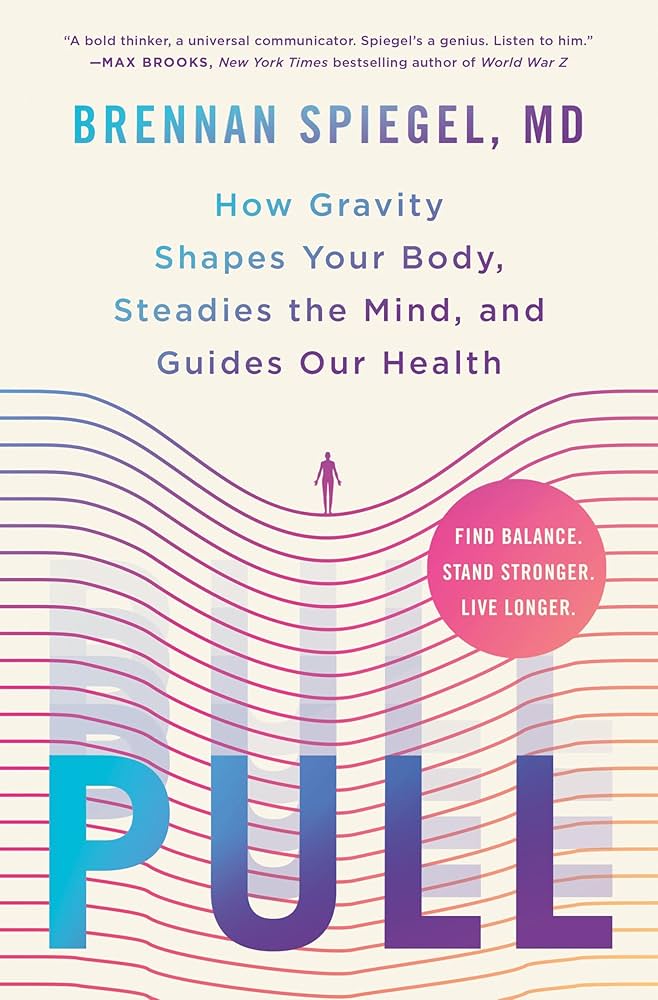
Pull: How Gravity Shapes Your Body, Steadies the Mind, and Guides Our Health
As long as life has existed on Earth―from the simplest organisms to Homo sapiens―gravity has inexorably shaped our world. Gravity dictated how we were built, the mechanisms that allow us to stand upright, to pump blood to our extremities, to support our capacious brains. But to what extent does gravity also shape our sensations, emotions, and overall well-being? And how can we take this force of nature into account for better health?
In PULL, Brennan Spiegel, M.D. presents a groundbreaking exploration of how gravity influences conditions of body and mind that have puzzled medical professionals for centuries. Starting with a simple observation at a family dinner and culminating in a new approach to gravity-based health and wellness, PULL is a captivating journey through the human body’s inner struggle to keep us upright and healthy.
-
Podcast: The Gravity Doctors
Dr Brennan Spiegel and Dr Lachlan Kent introduce you to the world of Biogravitational Medicine, how gravity shapes our bodies and minds for better or worse.
Explore the principles of gravity management, how you can improve your gravity resilience, and what to do when gravity fails you and your body.
Dr Spiegel is a trained M.D., professor of public health at Cedars-Sinai hospital in LA, and author of the book 'Pull - How gravity shapes your body, steadies the mind, and guides our health'.
Dr. Kent is a cognitive scientist with a PhD in the psychology of 'mental
Resources
-
- The American Journal of Gastroenterology: Gravity and the Gut: A Hypothesis of Irritable Bowel Syndrome
- Cedars Sinai: How Gravity May Cause Irritable Bowel Syndrome
- Gastroenterology and Hepatology: Advances in IBS
- Cedars Sinai: Gravity and the Gut: Is There a Connection?
- Space: Do you suffer from IBS? This doctor says 'gravity intolerance' may be to blame
- Business Insider: Bad posture could be the sneaky reason you feel bloated, a doctor says. Here's one easy stretch to fix it.
- Harvard Medical School: Can a 10-second balance test predict longevity?
- British Journal of Sports Medicine: Successful 10-second one-legged stance performance predicts survival in middle-aged and older individuals
- BMJ: Associations of grip strength with cardiovascular, respiratory, and cancer outcomes and all-cause mortality: prospective cohort study of half a million UK Biobank participants
- The Lancet: Grip strength and mortality: a biomarker of ageing?
- Neurogastroenterology & Motility: Exercise therapy of patients with irritable bowel syndrome: A systematic review of randomized controlled trials
- Cellular and Molecular Gastroenterology and Hepatology: Mechanisms of Activation and Serotonin Release From Human Enterochromaffin Cells
- Gastro Digest: Spatial and Functional Specialization of Gut Enterochromaffin Cells in Sensory Signaling
2 Million Readers.
1 Life-Changing Newsletter
Simple and Straight-to-the-Point...
Just Like Mel.