Episode: 403
How to Get Ahead When Everything Feels Uncertain: The New Rules of Work, Confidence, and Success
with Carla Harris
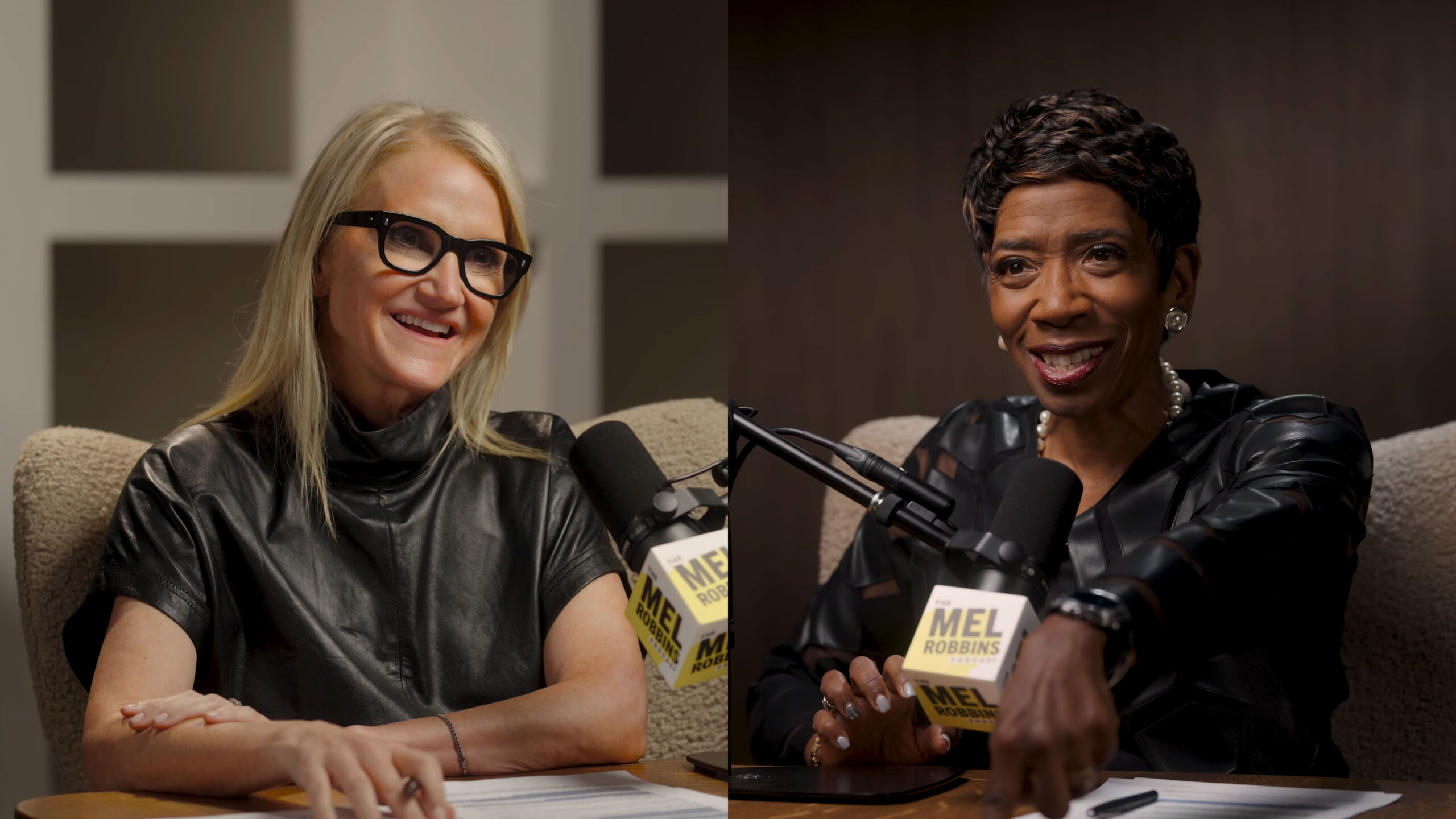
Learn the new career rules so you can get noticed, get promoted, and stay ahead at work.
In this episode, Wall Street leader and trailblazer Carla Harris gives you a no-BS career reset for uncertain times:
- How to get what you want at work (money, success, promotion)
- Get the confidence you need to uplevel your career or change jobs
- Build the relationships that get you promoted (hint: it’s not always your boss), -How to prepare for reviews and raises
Carla coaches real listeners, tells you how to plan for a midcareer change without blowing up your life and how to silence a toxic boss. She gives you real scripts to land a job, get a promotion, and move ahead in your career faster than ever.
Learn what you need to know to stay relevant in the age of tech changes and AI, and how to get the money you deserve even if your pay is way below what you should be earning.
Carla will tell you the mindset and the strategies that work today, so you can expect to win at work.
Listen on:




The rules of career success are being rewritten. This is not the time to be dictated to. It's the time to design — because who has the credentials in this moment to dictate to you? No one.
Carla Harris
All Clips
Transcript
Mel Robbins (00:00:00):
Carla Harris, she is here to reveal the mistakes you need to avoid and exactly what to do. To change your career, get paid what you deserve, stop playing small, build real confidence and start making decisions like someone who expects to win.
Carla Harris (00:00:15):
It is an unprecedented time. Nobody has the rule books. In fact, all the rules are being rewritten. This is not the time to be dictated to when you have the opportunity to design. So design.
Mel Robbins (00:00:30):
Carla, you showed up to play. Carla Harris, one of the most successful and respected women of all time on Wall Street. And she's going to tell you, you are not behind. It is never too late. You can design what you want out of your career right now.
Carla Harris (00:00:46):
Take a blank sheet of paper, look at all of your experiences and say, "What did I like about all of that? Was it working on a team? Was it creating something out of nothing? Was it just executing?" Second sheet of paper. Now you say, "What kind of people did I really enjoy working with? Did I enjoy working with people who were smarter? Oh man, maybe I wanted to be the smartest person in the room. Now I'm going to tell you on the third sheet of paper, design a job."
Mel Robbins (00:01:07):
That is brilliant.
Carla Harris (00:01:08):
There are two things that I say hold all women back. Fear and fatigue. Fear has no place in your success equation. Anytime I feel that fear creeping up the back of my neck, I remind myself of that old Southern saying, "Fear is just false aver dance of things appearing real." It's really not there. Failure always brings you a gift and the gift is called experience. Now you know how to do it better. Now you know how to do it differently. Now you know how to do it successfully.
Mel Robbins (00:01:37):
Of everything that we talked about, if the person listening does just one thing, what is that one thing? Hey, it's Mel. And before we jump into this extraordinary episode with Carla Harris, you're going to absolutely love this. My team was just showing me something. 57% of you who watch the Mel Robbins podcast here on YouTube are not subscribers. Here's the deal. My goal is to make that number 50%. So could you help us out if that subscribe button is lit up, please, please hit subscribe. Number one, you're the kind of person who loves supporting people who support you. So it's the best way for you to support me and the team and extraordinary experts that are taking time to come here to empower you and to teach you for free. And second, that way you're not going to miss a thing and it's free. All right.
(00:02:24):
Thank you for doing that. I really appreciate you and you're going to love this episode. Let's get into it. Please help me welcome the extraordinary Carla Harris to the Mel Robbins Podcast.
Carla Harris (00:02:35):
Thank you. Happy to be here, Mel. Thanks for having me.
Mel Robbins (00:02:38):
Well, I know how busy you are and so I really appreciate you showing up and spending some time in service of the person who is with us right now.
Mel Robbins (00:02:47):
I'd love to just start by having you speak directly to that person who's listening or watching right now and just share a little bit about what could possibly change about their life or their career if they lean in and take to heart everything that you're about to teach us.
Carla Harris (00:03:04):
Yes. Well, I'd like you to know that you have extraordinary power. That's why you're even here today. The other thing that I want to say is that I'm excited about the time that we're in because it is an unprecedented time and nobody has the rule books. In fact, all the rules are being rewritten. And whenever we are in this kind of environment, each of us have an opportunity to put our imprimatur on what's happening or what we'd like to see happen. And this is the moment where you have to remind yourself this is not the time to lay back and quote, see what's going to happen. This is not the time to be dictated to when you have the opportunity to design. So design.
Mel Robbins (00:03:50):
Carla, you showed up to play. I mean, you are ready to go and you know what's amazing about you is you're not only one of the most powerful and respected executives and advisors to some of the biggest brands in the world, but today you are going to put on your mentor and your coach hat. And I love the distinction you already just said. There is a difference between sitting back and letting ... I'm not even going to say it as poetic as you did. The design versus the-
Carla Harris (00:04:21):
Yes. It's not the time to be dictated to. It's the time to design because who has the credentials in this moment to dictate to you? Nobody knows what's going on. Innovation is going faster than it has ever happened. So nobody has the playbook. So you get an opportunity to play in a way that you've never had an opportunity to play before.
Mel Robbins (00:04:41):
Oh my gosh. You're right. You're absolutely right. When there is no playbook and there are no rules, anybody can play the game.
Carla Harris (00:04:55):
That's right.
Mel Robbins (00:04:56):
And you can also create how you want the game to be played.
Carla Harris (00:04:59):
That's right. You get to define the game.
Mel Robbins (00:05:02):
Whoa. I love how excited you are about this because right now there is so much fear. I want you to imagine that there's a woman that's listening thinking, "Okay, I get it. I get it. I know I need to design. I know. But Carla, I am behind. I am tired. I don't even know if I have what it takes to pivot and to grab the playbook and to change my career." What do you want her to understand about this exact moment and her power in this moment?
Carla Harris (00:05:37):
Yes. Let me answer them specifically. First of all, if you are feeling tired, then that is certainly your bell, your red flag that says, "Ah, I haven't been taking care of myself and giving myself enough rest." And trust me, I'm the girl who had no respect for sleep for the first 20, 30 years of my career. I could be the all night queen. I could do this. I could do that. But now I understand that that rest is when your body has a chance to rejuvenate, not just your organs, your heart, your liver, your kidney, but more importantly, your brain. And that's the thing that really drives you. So finding an opportunity to get some rest, at least seven hours. If you can't do eight, you can't do nine, but don't skimp on six. Try to go for the seven. So A, get some rest.
(00:06:27):
And I will tell you that I realize what a new, different woman I am after seven hours of sleep. Have a whole different perspective. It will change your lens. The second point, I'm behind. Let me help you reframe that. You are exactly where you're supposed to be to have the epiphany that you are having right now that you can put your foot on the gas and get more. It is simply a decision. It's just a decision. You can say, "I'm not cool with where I am right now. So guess what? I'm going to change it. " Understanding that you have the power to change it. Why do I say that? You already have the smarts. You have the training, you've read about it, you've gone to school, you already have the experience. And if it's not the intellect or the experience that can change where you are, it's your network.
(00:07:15):
It's somebody in your world that has been there, done that and is more than willing to share that experience with you so that you can learn from that and then put your foot on the gas. There have been many times in my life when I felt like I was quote behind. And at the time I had that epiphany, that was the time that I also realized that it was my decision to change it. I had made a decision either to let it happen to me so I had abdicated my power or I had made a decision to let one thing that knocked me down keep me down longer than it should have. And so if I could make those decisions, I could make a different decision that no mas, I'm not going to do this anymore. And once you make that decision, you start realizing that there are things that are already at your disposal that you can move to dig out of that hole.
(00:08:03):
And as I'm a big fan of saying, you take one step, the good Lord will take two. And if that doesn't happen to be your belief, you take one step and you can put the next foot in front of the other and the next foot in front of the other. And before you know it, you are on your way. So do not despair. This is your epiphany moment. Now go get them.
Mel Robbins (00:08:20):
I love that that despair you can flip into a wake up thinking about the fact that you just are like, okay, I'm feeling these things, but that's the epiphany that I need to change. If I change nothing, nothing changes.
Carla Harris (00:08:36):
That's right. And you ask yourself, Mel, you say, "How did I get here?" That's one of my favorite things. If I find I'm down in the hole, I go, "Wait, stop. How did you get here?" Let's think about the series of decisions and it's not to beat yourself up, which obviously as women, we're pretty good at doing that. It's not to beat yourself up. It's to peel the onion so you understand how you got there and then you can say, "Oh, this time if this happens, I'll make a different decision." Or, "You know what? That's what I learned from that situation." And then you realize you have what it takes from that experience to now get right back out of that hole and run.
Mel Robbins (00:09:11):
You said, Carla, all the rules are being rewritten. Innovation is going faster than it has ever happened so nobody has the playbook. You get an opportunity to play in a way that you've never had an opportunity to play before. So let's talk though about how you get an opportunity to play in a way that you've never been given before. And that's whether you're a stay-at-home mom, that's whether you've just been laid off. That's regardless of how old you are. If you're just graduating from college, that's for all of us.
Carla Harris (00:09:43):
Absolutely. Absolutely. And I have to tell you, I call this the meantime valley. The who? The meantime valley. What do you do in the meantime? In the meantime.
Carla Harris (00:09:52):
Because there's so much that's going on, but in these times, half the people are distracted, the other half are paralyzed. So you have clear vision. There's nobody in your way. And here's why I say this is so very different than the 80s and 90s and the 2000s. Back then, there was a certain way that you comported yourself if you were just starting in an organization. There was a certain routine that you had to go through in order to get trained. Many companies are not even training the way that they were training before. Many companies are now going to be asking employees to train themselves. So now you're saying to yourself, "Well, if you're making all of these resources available to me, what's going to be valued?" And many leaders don't know now what needs to be valued.
(00:10:32):
How do you think about compensation now when we all have equal access to resources and equal access to being trained? So what differentiates person A from person B? Now you have an opportunity to find that what you think is going to be valuable and sell it. Now you need to say, at the end of the day, while we have data and a lot of our customers make decisions based on data, people are making people decisions. Are you going to deliver for me? So my ability to instigate and retain and grow a relationship has to be valued in this organization and let me tell you how I do that. So now you get to say, "Here's what I think is important. Let me try this. I'm so confident about this. Give me a month, 30 days, three months on this. " And if I'm wrong, then you can take me back down to where we think, but this is why I think this is going to work because companies are going to value people who have clarity, people who are willing to take risk, people who can think out of the box now.
(00:11:31):
If we all have acces to the same information, then what's going to differentiate you is an idea that hasn't been tried before, but more importantly, the courage to go try it.
Mel Robbins (00:11:40):
Yes.
Carla Harris (00:11:41):
That person who's showing that they're willing to take a risk.
Mel Robbins (00:11:43):
You know what I see in what you're explaining and let's see if I'm hearing this correctly. One of the things that I think will be one of the most valuable and coveted skills beyond relationship building, beyond emotional intelligence is the ability to solve problems or to find a better way and bring it to the person you work for. And you talk about not being a taker and to me that is a habit of sitting back waiting to be told what to do. And the amount of change is so overwhelming that the opportunity that it creates when everybody has access to the same tools is instead of complaining with your colleagues or complaining to your family about how stupid work is or how frustrating it is or stressful it is, if you can find a better way and you can then present it and do it, not talk about it, do it, you are indispensable.
Carla Harris (00:12:35):
That's exactly right. And sometimes Smell, you just do it. You don't ask for permission. As one of my good friends told me many, many years ago, it's so much easier to beg for forgiveness than it is to ask for permission. And here's the piece that I add to that. Sometimes the person you're asking for permission, you just empowered them. They don't even have the power to tell you no, but they do now because you asked them.
Mel Robbins (00:12:56):
Yes.
Carla Harris (00:12:56):
Just go do the thing.
Mel Robbins (00:12:57):
Yes.
Carla Harris (00:12:58):
And if you are wrong, then Omeo, Coupa, I'm so sorry. Let somebody slap your wrist, but you've already had the experience now.
Mel Robbins (00:13:05):
What else do you see as the opportunity of this moment? Because it is easy to get paralyzed by, I don't know how to use AI or that. The economy's terrible and it is. People are getting laid off. This is the worst economy that graduates can graduate. And a lot of that is true. The cost of living is through the roof. How do you still spot the opportunity?
Carla Harris (00:13:24):
Yes. And look at the data that we've had for the last 20 years. There are companies now that people aspire to work for that didn't exist 20 years ago. So remind yourself how much evolution has happened. So ask yourself, is there a skill that I want to learn right now? Is there something that I'd want to try? Maybe I want to be an entrepreneur, maybe I'm not entrepreneurial material and actually I'm a good soldier, not necessarily a general at this point. I can't lead at this point, but I just want to learn under somebody that's really good. Start thinking about the things that, again, that would allow you to feel like you have filled your time and you filled your time productively. I'm going to take you back to the financial services crisis where people were getting laid off indiscriminately. And what made me write my second book, Strategize to Win, is I saw so many people trying to get in and they were not being successful because they were actually going off of the old playbook of trying to get into the thing that they thought they should do, not understanding the key success factors, not being able to connect the dots between what they really wanted to do, not being able to tell their story, something really basic.
(00:14:28):
And so now is another opportunity for you to think about that. And maybe again, you don't have the resources to start your own thing, but say, "Well, what are the five companies I'd like to work for? And why do I want to work for those companies? Don't just take any job. Take a job that you'll be able to tell a story about two years from now, because this is going to change. This is going to pass. Again, as a woman of a certain age, you do know that this too will pass. So the question is, what do you do in the meantime, which is why I call this the meantime valley. What do you do in the meantime? Because it's going to go. And will you have sat there completely paralyzed and afraid or will you have invested in yourself to learn a new skill, to try something new, to be able to say that I did this because of that?
(00:15:09):
And I'll tell you this quick story, Mel. When we went into the pandemic environment, March 13th, 2020, that was my last trip. I said, Ooh, I got two weeks. I can get back on my workout regimen because I'd already fallen off the horse at that point because I'm thinking we're going to go back to work. Had no idea that it was going to be a couple of years. Well, that was March 13th, 2020. By July one of 2021, let's see. I had lost 25 pounds. I had launched my international speaking career. I had written the outline of my third book and I had adopted a new baby all in a year because I couldn't control the environment. I could only control what I did with the time and that's the power of the moment that you're in now. If you've been laid off, you have the power of time.
(00:16:02):
It's a gift. It's a gift you wouldn't have had and it might be creating some tight economic circumstances, but what's the other thing that you might do right now? What's the thing you might learn so you're ready when the opportunity comes? You have two choices. You can sit there and worry, be upset in the meantime, or you can run.
Mel Robbins (00:16:22):
One of the things, Carla, that you say is that there's two things that tend to derail a woman's career in midlife. What are those two things and how do we overcome them?
Carla Harris (00:16:33):
Yeah. There are two things that I say hold all women back, fear and fatigue.
Mel Robbins (00:16:38):
Fear and fatigue.
Carla Harris (00:16:39):
Fear and fatigue. And in the early stages of your life, it is fear. You're not sure what's coming next. You're not sure whether or not you have all the skills. You're not sure whether or not you're ready. You're not sure that if you show up in all your power, is that going to be okay or is somebody not going to be comfortable with that? Fear, fear, fear. Now as you get more senior, you've gotten over all of those milestones. Now it's fatigue because in many cases, especially if you were building your career in the '80s, '90s, 2000s, 2010s, you were fighting every day. Every day you were fighting your way up the ladder. So now you are 20 years in, you're 30 years in and you're saying, "I'm just tired. I won't do this anymore. I'm tired. I just don't want to do it. " And you know what I find that's so ironic about that?
(00:17:28):
So many women talk about the glass ceiling and they're right there. They can see through the ceiling, but the reason they don't want to punch through is that they perceive that all of that effort that it took to get there, the 20, 25 or 30 years, that they're going to have to do that all over again to push through that ceiling. And here's the deal. What it takes to push through that ceiling is a fraction, a fraction, a small fraction of what you have already done. Just push the elbow, push the shoulder, even put your head up against it. It's going to crack and it doesn't take all of that effort. And if you're feeling fatigued, take the rest. And here's what I said to myself and what I've said to other women. You take two days off, the world's not coming to an end.
(00:18:12):
You decide you're not going to do the rest of that to- do list this afternoon. It's going to be all right because you get to pick it up tomorrow when you've had a little rest and you're feeling really powerful and very energetic.
Mel Robbins (00:18:24):
What do you say to the woman that's afraid? Because I think sometimes the glass ceiling is one that has been put in place by society or by the rungs in the ladder of the job. Yeah, yeah. You're pointing to your head. So let's talk about what the glass ceiling actually is.
Carla Harris (00:18:42):
Yes. Sometimes the glass ceiling is a ceiling that you put in your own mind. You've already convinced yourself that you won't be able to get to this role. You won't be able to get to this level because they won't let you or they will be in the way. And one of the things that I remind myself all of the time is that if you keep saying they, they, they, they, then Carla, you've put yourself on the outside of your own success circle. Who is they? At the end of the day, you're supposed to be in the center of that circle and you're the one that's supposed to be pushing it. And what I say to any person that is besieged with fear, it is one of my favorite sayings, Mel, and that is fear has no place in your success equation. Anytime you approach anything in your life personally or professionally from a position of fear, you will always under penetrate that opportunity.
(00:19:35):
And we all have those moments. So as I like to joke, anytime I feel that fear creeping up the back of my neck, I remind myself of that old Southern saying, "Fear is just false evidence of things appearing real." It's really not there because at the end of the day, you take a risk and you fail. So what? Failure always brings you a gift and the gift is called experience. Now you know how to do it better. Now you know how to do it differently. Now you know how to do it successfully. And there are very few things as a woman of a certain age, there are very few things in life that are irreparable. And if that thing is gone, that moment is gone, something else will be served up that will be even better because now you're ready for it.
Mel Robbins (00:20:22):
One thing I'd love to have you expand on just a little bit is that idea of they.
Carla Harris (00:20:28):
Yeah. They
Mel Robbins (00:20:29):
Won't like it. They won't hire me. They won't se my value. They, they, they, especially in this moment in time where everything is changing and there is opportunity to think about your career in a very different way. For somebody who's still thinking that another person, whether it's somebody hiring or it's a future boss or it's the person you currently work for, that they have the power. What do you want somebody who really is like, "No, no, no, no, but Carla, somebody else is hiring me. But Carla, somebody else promotes me. But Carla, somebody else is signing the signature on a paycheck."
Carla Harris (00:21:12):
Yes.
Mel Robbins (00:21:13):
How do you want us to think differently?
Carla Harris (00:21:14):
Okay. So let me take each one of those and unpack it.
Mel Robbins (00:21:17):
Oh, I love that.
Carla Harris (00:21:17):
Oh, Carla, they won't hire me. Well, remember that whenever you're going into an interview, you have the upper hand. Why? Because the person on the other side of the table is the one that has a job to do that day. They have to bring a very good candidate back to their organization. They're the one with the pressure and there should be no question that they ask you about who you are that you can answer. So remember, you have one job when you go into any interview and that's to make that person feel that they're going to be making a big mistake if they don't choose you. And how can you make them feel that way? When you sit in that chair, you need to understand the key success factors of that job. What are the things that it takes to be exceptional? And if you've done your homework, you got a pretty good idea of what the key success factors are for that role.
(00:22:08):
And when you're telling your story, you need to tell your story where that becomes pretty obvious that you can deliver on those things. And here's the thing, most people get deterred when they look at a job description that they want to apply for and they see that you need five years of experience or 10 years or you need a master's in this. Whenever you're reading a job description that says required, I want you to read preferred because there is always an exception to the rule. And when you sit in that interview chair and you can communicate that you know what an A looks like in that role, now you're going to number one, you've already crossed one hurdle. You already told the person you know what it takes to do a great job. And then two, you need to talk about why you're so confident that you can deliver on that and you will have greater than a 75% chance of getting that role.
(00:23:00):
Now, the they around whether or not they're going to promote me, one of the things you have to always remember is that it's not generally a singular decision with respect to whether or not you're going to get promoted. So one of the things that's important when you're in an environment is to make sure that you're building a lot of relationships so that you lower the probability that only one person can stand in your way. And if there happens to be one person that is confounding you and that's in your way, then the strategy that I've always found effective is make that person the outlier. If everybody else is saying, "Oh, Mel is fabulous. Mel is wonderful. Oh, Mel did a great job on this. " And that one person who quote doesn't like you, wants to say something negative, they will not because generally those kinds of people are insecure and they're not going to stand up against a crowd.
(00:23:51):
When everybody else saying, "You're the best thing since sliced bread," they're going to be quiet and then your promotion will therefore be crowdsourced in that environment when everybody else is saying you're a superstar. There's no way that person's going to stand up and say, "No, I don't think so."
Mel Robbins (00:24:07):
I love that. When you said yes, I will come to Boston and be on the Mel Robbins podcast. I will take off the executive hat. I will put on the mentor and the coach hat. We reached out to our 40 million followers and we got an avalanche of video questions. And so I'm going to play the first one now from Dominica and I would love to have you take a listen and then as you give her advice, you're going to be giving us all advice.
Dominika (00:24:39):
Hi Mel, I have a question. How do you rise again and again? Not the first time, not the second time, but like how do you rise the third time when genuinely feel like you have nothing too left.
Dominika (00:24:56):
I've rebuilt my life several times already. I'm very strong. I know it, but I'm just tired, so tired.
Carla Harris (00:25:05):
Dominika, what I would say to you is if you're feeling tired right now, give yourself some grace to get some rest. It's really just that simple. Take a day, get some sleep. If it takes two, get some more sleep. I guarantee you, you're going to wake up feeling much more optimistic. You're going to be reminded of your power. You're going to be reminded of the fact that you did it before, you therefore will be able to do it again. But here's something else that I want you to think about that's really important. What do you want? Make sure that you are living your life and prosecuting your life around the things that are going to matter to you. So early on in our lives, especially in our 20s and our 30s and our 40s, we're prosecuting an agenda, oh, I need to have a career or I need to be successful in my career, or I need to go work at these three or four companies, really being influenced by somebody else's report card.
(00:26:01):
Never really stopping to ask ourselves, what's going to bring me joy? What's going to make me want to get up early out of the bed in the morning and just go for it? What would I do for free, although they better pay me whatever the market rate happens to be, and then start to build how you move through the world, how you put one step in front of the other around that thing. And maybe that thing can't be your main thing right now, but if you're making space in your day to do some of that every day, you will get so much fuel as you prosecute the other stuff for now. And then over time, while it might be 5% of your day, it'll come 15% of your day. It'll become 25% of your day. And then one day you're going to say to yourself, "Well, if that is making me so happy, and oh, by the way, it's also fulfilling some other things financially or economically, then why don't I try to do some more of that and let me figure out how I do some more of that." And just the idea that you are planning towards that will give you the energy that you need. And that's how you keep getting up over and over again because you keep redefining what is important in your life because what's important at 20 is very different than what's important at 40 and it's definitely different than what's important at 60. Not that I'm there yet.
Mel Robbins (00:27:21):
One of the things that I noticed and picked up on is the fatigue that I heard in that question of I've had to start over, I've had to pick myself back up, I have done it once, I have done it twice, I have done it a third time. I do not know if I have it inside me again. And if I look at the poll from our audience, we asked, where are you right now in your life and in work? And 58% of the people who responded said they're either burnt out and regrouping or they're trying to reenter the workforce. And if I add in the folks that are working and want a career change, 84% of people who responded are looking at or wanting to reinvent myself again, pick myself up again. Can you just speak to, like that fatigue of, I thought I would be somewhere else by now.
(00:28:24):
I thought I wouldn't have to rebuild right now. How do you change your mindset from that like to, "Well, I've always figured it out. I guess I can do it again." Do you know what I'm saying?
Carla Harris (00:28:38):
I do understand what you're saying. And so I'm going to ask that we change some words because this concept of I'm there or I got there or I've arrived, which was a concept that we talked a lot about in the 80s and the 90s and the early 2000s. But what is so clear to me now is that there's not really this concept of arriving. We should be thinking about this concept of evolving. Every day that we wake up every morning and we can breathe and we're on this side, as they say, of the world, then you should be thinking about, "I'm evolving. I'm growing." So the fact that you're thinking, "Oh gosh, I got to do this again. I got to do this again." If you think about it in the sphere of I'm continuing to evolve, I'm continuing to grow, the good news here is that you have more data today than you had 30 years ago about your ability to continue to evolve.
(00:29:31):
Or if I use the old language, your ability to do it all over again. And you didn't have that data when you were 20. You didn't have it at 30, you didn't have it at 40. So that alone should give you some confidence that you can keep it rolling. The most important thing is to stop and say, "But what is it now?" And I will tell you, Mel, that that's the hardest question for people because again, in your 20s and 30s, I would argue that you're really prosecuting somebody else's agenda. Now all of a sudden you get to your 40s and you say, this is not really doing it for me or I don't really have a personal life or oh man, I sure would like to have some kids. Whatever, you start to think about these things, but for the first time now you got to figure out what you want to do.
(00:30:15):
And that is a scary question for a lot of people so they default and they keep going. Just keep going. Now you get to 50 and you know better, you're a lot wiser, but now it takes the courage to say I don't really know what I want to do. I don't even know where to start. So you keep going until you hit the wall and you go, I know life's got to be better than this. I can't do it anymore. So now it's time that you have the courage to say, yeah, yeah, it's all about me. And now let me deconstruct this. And what I tell people and when you're trying to figure out what you want to do, take a blank sheet of paper, look at all of your experiences and say, what did I like about all of that? Was there anything in any of these roles that I really liked?
(00:31:04):
Was it speaking directly with people? Was it working on a team? Was it actually working by myself? Was it creating something out of nothing? Was it just executing? I'm a great executor. Was it just executing? What did I like? And then once you figure out what you liked out of all of those experience, now experience the second sheet of paper. Now you say, what kind of people did I really enjoy working with? Did I enjoy working with people who were smarter than I was? Oh man, maybe I wanted to be the smartest person in the room. Is that really smart? Right. So now you look at the context where you flew before or that you really enjoyed it and maybe you never flew but you just liked to be in it because you like absorbing all of it. Now I'm going to tell you on the third sheet of paper, design a job.
(00:31:50):
Design a job. How do you do that? Assume. Well, now you know what you like to do. You know the context that you like to work in. You know the kind of people that you want to be around. You know a little bit about yourself, where you thrive, where you don't. So now I'm going to say, just give me some bullet points. Give me three, five bullet points or something that you'd really like to do and assume that money is no object. I will pay you whatever you want to get paid. Now let's see what that job description looks like. Now you can sit down with a friend, a mentor, a sponsor and you say, I don't really know what the job is, but here's the content. And that's what we should be focusing on is the content of the job, not the job title.
(00:32:31):
There's so many people who focus on the job title. I'm going to tell you to look at the content. Let me give you an example. I've used to have graduate school students say to me, "Well, I want to do M&A. Why do you want to do mergers and acquisitions? I want to do mergers and acquisitions because I want to know how to value companies. I want to know how to buy and sell companies, but really how to value companies." Well, you can learn how to value companies if you're in equity research. That's what they have to do. They have to value one company over the other and then they have to write about why this company ought to have a better stock price than that one. Oh, they value companies in credit because you got to figure out if somebody's going to be an A or Triple B, but you got to value it.
(00:33:08):
So now I've taken you from one job mergers and acquisition to three because we're focused on the content. So if you focus on the content of the job, you will find that there are lots of roles where that content is common and that you might really enjoy, but you get to design it. So often we get so focused, as you said, on a role that we fail to ask ourselves, why is it that role? So I'm going to give you an example of when I had the aha moment. I was a freshman. All my friends, all the cool kids were going to organic chemistry in the sophomore year, but it was freshman year, but we had to declare the majors. So I go see the freshman dean and I say, I want to take organic chemistry. I said, "Why?" I said, "Well, I want to preserve some optionality.
(00:33:56):
I might want to be a doctor." He said, "You sure you want to be a doctor?" I said, "Well, I can be. I can be a doctor." He said, "Yeah, but why would you want to be ... " I said, "Because I can be. " Because again, I'm negatively motivated. So you tell me I can't do something, I'm all over it. So he's now questioning whether or not I said, "No, no, I could be a doctor." He said, "Well, let me try this again. What do you read for fun?" Now I'm a freshman, I'm 18. I said, "I like reading Ebony and Jed and Essence and I'll read Fortune or Business Week was hot then." He said, "Hmm, well, do you know if you're going to be a doctor? You have to read science journals for fun. Do you read any science journals?" And I was like, "No, no." I was all enamored because this was obviously a profession that your parents and anybody else would be proud of, you're a doctor and my cool kid, smart friends were thinking about doing that so maybe I should.
(00:34:53):
And so even today, and that's been over 40 years ago, I listened to professionals say, "Well, I want to be so- and-so." I said, "Tell me why." And then we can't go any further. And I said, "Let me help you with something. You can do anything. So it's not about what you could do. Tell me what you want to do. " And that's how I know it's such a tough thing for people to get to because most of us haven't thought about that for a long time if ever.
Carla Harris (00:35:23):
And so you got to free yourself of this. "I can, I can. Yeah, you can. But what do you want to? What's the wanna now?
Mel Robbins (00:35:33):
I want to make sure that as you're listening, you do not let that life changing tool just slip past you. So if you're sitting there like a lot of us get to at various moments in our life, you're like, " Well, I'm not sure what I should do next, or I'm trying to reinvent myself, or I hate what I do, but I don't know what to do next. "You, Carla, just laid out that a lot of us make a major mistake and we ask ourselves," Well, what could I do? "There's another layer to the could, which is, " Well, what should I be doing? "And then the third one is though, because you're saying," I want you to ask yourself not what you could, what you should, but what I want to do. "And it's a hard question to answer because you have to suspend all excuses, all of the negative conditioning from your lifetime and you must give yourself permission to imagine something that you have withheld from yourself, which is the thing you desire, the thing you think you would like and those three buckets could, should want.
(00:36:46):
That's a tool that will allow you to analyze the mistakes that you might make and the thing that you could head towards. You react, you should.
Carla Harris (00:36:57):
When you said should, it hit me because that is a little bit of what I'm going to call the disease that I think millennials and Zears have right now. They are so preoccupied with what's my purpose? What should I be doing? And yesterday, just yesterday a young man heard me speak and he caught me as I was walking out of the building and he said," I'm really trying to work this out. Here's where I am in my life and what should I be doing now? "And I laughed and I had the same reaction that I just had with you and that is, I said," Uh-uh it's not what you should be doing. I don't want you to think about your purpose. I know you're thinking because he clearly was a zero. I said, "I know you're thinking about your purpose now, but let me tell you in my view, the way purpose is defined is by your collecting a lot of different experiences and through those experiences, something's going to hit you and you're going to say, but I like this.
(00:37:57):
Well, let me get a little more of that. Well, I like this and oh, by the way, I'm really good at it. And oh, by the way, it doesn't take a lot of effort for me. I don't have to do a lot of prep. I don't have to invest. I don't have to take five courses. I kind of just can do this thing. There it is. And especially if you can do that thing in service of others, because I believe purpose is tied inextricably to what you're giving to other people because that's how you get it.
(00:38:30):
I was so pleased, Mel, because you could see his eyes opened up and he was like, " Oh yeah, I can stop worrying about this thing. "And you are so right, which is why I laid out the blank sheets of paper. You are right, the could, the should, the want. And what I loved about the way you said that was that it underscored everybody has power and it is within your power. And I'm going to use your words to give yourself permission to do the thing, to spend an hour, a day, a week just thinking about what would bring you joy.
Mel Robbins (00:39:07):
What a radical thing. I mean, because if you really stop and think about it, you gave every year of your life to what you could do and should do. Imagine giving your future to the things you actually want to do and then figuring out how to go do that.
Carla Harris (00:39:23):
Yes.
Mel Robbins (00:39:24):
What do you wish women over 40 knew about themselves and their careers?
Carla Harris (00:39:30):
That your voice is powerful. You don't have to be a taker in your career.
Mel Robbins (00:39:33):
What does a taker mean?
Carla Harris (00:39:35):
A taker means somebody's telling you, okay, you should go to this role. You should go to that role or you can do this or you can't do that. There's one person that should drive your career and that's you. So you should be asking yourself, where do I want to go next? And let me make sure that I understand what the key success factors are in this new seat. Let me make sure that I already have those skills and those experiences. And if I don't have them, let me be intentional over the next six months about making sure that I close the gaps that I perceive that I have and make sure that you're talking to people about what it looks like to be successful so that you're not just defining that in your own mind, you're actually getting some data. And now you're going to have to tell somebody that you're interested in that role and you tell them why you think you'd be great at that role.
(00:40:21):
So when they tell you no, they have to tell you why.
Mel Robbins (00:40:23):
Carla, you have spent 35 plus years inside the rooms where decisions about people's compensation, promotion, equity, opportunities are decided. What do women not understand about how power truly works in the corporate world?
Carla Harris (00:40:44):
One of the most important things that I think women don't understand is that you do need a sponsor speaking for you in those rooms as you just articulated. Every single decision about your career will be made in a room behind closed doors where you are not present. Your compensation is going to be decided in a room where you're not present, your promotions are going to be decided in a room where you're not present and new opportunities are going to get doled out and you're not present. So somebody has to speak on your behalf in that room and I dubbed that person back in 1998 sponsor because that person is spending their currency. Sponsors do spend currency. They sponsor shows, they sponsor games. They spend their currency on your behalf to make sure that you're going to get the promotion, you're going to get the compensation, you're going to get the next great opportunity.
(00:41:38):
And women were told for so long that just keep your head down and work hard. And if you're doing that, we tend to overinvest as I call it in the performance currency. That's your deliverable. I call it that the performance currency. You're delivering that which is asked of you and a little bit extra, right? But you keep investing to the point of diminishing margin utility and what you should be doing is investing concurrently or very shortly thereafter in the relationships. There should not be a question in your mind as to who's going to spend some currency on your behalf in that also important meeting. So going back to your context about you're in the room where the things are getting said, somebody has to speak for you. Do you know who that is? So one of the things that I say to professionals is, especially when it's time for compensation decisions, especially when it's time for promotions, you need to ask yourself, who's going to spend some currency on me in that room?
(00:42:35):
And if you can't answer that question, then you know that you need to retreat from working so hard and invest in a sponsored relationship. And sometimes you have to exercise your power and you have to say, Mel, I know that you guys are going to be making those decisions about promotions and I need somebody to speak on my behalf. You know me, you know my work, you know the client feedback and I hope you feel comfortable spending a little currency on me behind closed doors. Now in a perfect world, you're having that conversation long before that afternoon where it's going to happen, but worst case scenario, you don't let the meeting happen in the room when you haven't said anything to anybody because then you're sitting there like this. And as the great Mike Tyson said, hope is not a strategy.
Mel Robbins (00:43:19):
I would love to dig just a little bit and unpack the sponsor topic and here's why whenever that advice is brought up and it is true because if you are not known, if your contributions are not known, if somebody cannot speak on your behalf about the value that you demonstrate, why on earth would you think that just like you're getting paid to show up and do the job, you get promoted for doing more or doing an exceptional job at it. And I think I made the mistake in my career early of just assuming that somebody else would notice that.
Mel Robbins (00:44:02):
How do you market your own visibility and contributions, especially in a world where you may be working from home, it may be hybrid, everybody's busy half the time, I don't even know what I'm working on. How do you do that?
Carla Harris (00:44:18):
Let me unpack that a bit. So first of all, once you recognize that somebody has to speak on your behalf, now you have to ask yourself, "Well, who is that somebody for me? " And what I normally say to people is when you're thinking about a sponsor, here's how you pick out a sponsor. Number one, the sponsor needs to have a seat at the decision making table. Number two, they need to have some visibility into your work because if I go into the decision making room and I am pounding the table, mail ought to have this, mail ought to have that and everybody in that room knows that I don't work with mail. I have no credibility in that room. And number three, your sponsor needs to have some juice. They need to have some power in that room. Now, so what do you do?
(00:44:59):
For two weeks, you study your environment and you say to yourself, who has a seat at the decision making table? And if you can't figure that out, then you just simply ask someone. Mel, I walked around for years not understanding how decisions were being made, right? Everybody would talk about the promotion committee, the promotion committee, but it wasn't really clear to me who was on the promotion committee until one day I asked somebody and it was another female managing director. I was not yet an MD. And I said, "Talk to me about this promotion committee because this is an important year for me. I don't understand how this thing works. I've been hearing about it for years." And she said, "Well, it's a group of people. There are four or five people that are always there because they're on the operating committee or they're on the management committee.
(00:45:41):
And then there are different department heads that may or may not be the same from year to year." And not only did she tell me who they were, she actually drew a picture of the table and she said, "This one sits next to this one, this one sits next to it. This is how that works." And I couldn't believe I'd walked around for so long and such ignorance just thinking, "Just make sure you do a good job, make sure you do it. " Not really understanding that dynamic. So that's the first thing you should do. Who has a seat at a decision making table and how are these decisions made? The second thing is now you say, "Of the people that I know who have a seat at the table, who has visibility into my work?" And it doesn't have to be your direct boss, but it needs to be somebody that has some visibility into your work.
(00:46:23):
So it could be somebody who's in an adjacent group or something like that. And then now ideally you pick two or three people from that second sheet and then now you start thinking about ways that you can build a relationship and this is the easiest part. Most people think, "Oh, it's so hard to build a relationship in my environment and oh, by the way, I'm an introvert." And the way you build any relationship personally or professionally is just frequency of touch. Think about the people and it could be virtual touch to your point or it could be physical touch. So if you think about the people that you are close to in college or from previous experiences, how did you get close to them? Maybe you went to the football games together, maybe you always worked out together, but it was that touch that created the relationship.
(00:47:07):
So now with those people you want to build a sponsored relationship with, you start thinking about ways that you can interact and in a professional environment, it takes light touches. You don't even have to work with them. You can just, "You know what? I'm going down for my Starbucks and run today and I know you like it. How can I get it for you? " Or, "I'll fly if you buy whatever it is. " Or Fridays you say, "Hey, what you got going on for the weekend?" Mondays you say, "How was that thing that you did over the weekend?" Or, "Let me tell you what I did for the weekend." Or, "It's a town hall. You make sure you sit next to Mel, every town hall and say, so what question do you think this is going to be about? " Or, "You know what?
(00:47:45):
I got two questions. They're always begging for questions. Let me try this one on you and see what you think. " So anytime you find ways to engage, those light touches are the things that relationships are made of. Nirvana is when somebody says, "Mel, I'm going to make it happen for you. " So they're already defining themselves as a sponsor. But for many of us, you have to exercise your power, which is what I did. I went to somebody once I realized how important this was, big year for promotion and I said, "Listen, you and I both know somebody has to speak on my behalf behind closed doors and you know me, you know my work, you know the client feedback and I hope you feel comfortable sponsoring me because I think you'll do a terrific job on my behalf." And the person was sort of like, "Oh nah, hubby." But then he said yes and why was it an important conversation for me to have if he had told me no, he was going to have to tell me why and that would have been important data for me from which to make a decision.
(00:48:41):
But if he said yes, I trusted he'd get it done.
Mel Robbins (00:48:44):
You talked earlier about how there is a whole, the playbook that we thought was what work was is out the window. All the rules have changed, which creates this extraordinary opportunity and you also have spoken about and write about the fact that reinvention is what you call me 3.0.
Carla Harris (00:49:05):
Yes.
Mel Robbins (00:49:06):
Could you talk about reinvention and also help us grab the opportunity of this exact moment that we're in.
Carla Harris (00:49:18):
Yes. And let me talk about the 3.0 and I have to give credit to my former chairman and CEO. We were having a conversation one day and I said, "Okay, it might be time for me to get to 2.0." And he said, "I will concede that you have done your thing. However, I don't call it 2.0, I call it 3.0." And I said, "Oh, do tell." He said, "1.0 is about your academic preparation to get to your career. 2.0 is hopefully about excelling in your career and then your family life. And 3.0 is all about you. " I said, "Okay, I will forever call it 3.0." And I've been calling it 3.0 since then and I am again going to change this word from reinvention to evolution because even the thing that you are becoming or that you aspire to be has been influenced by that which has already been and it has helped you to now crystallize this next thing that you're trying to get to and get to with excitement because you have the wisdom, the knowledge, the experience of the last 10, 15, 20, 25, or 35 years.
(00:50:25):
I think to get to that point in your life now where you can put it all together and again, don't be afraid of this moment because you have assets that you didn't have 35 years ago. You have relationships, you have learned skills, you have experience and the thing is to not get tethered or weighed down by the things that you thought were hard because those things just came to teach you something. I tell folks, when you have tough lessons, they're just coming to teach you something. So stop and make sure that you are being real clear about extracting the lesson because as you know, when life comes to teach you a lesson, you don't pass the test, you will repeat the class.
Mel Robbins (00:51:05):
And the class is harder next time.
Carla Harris (00:51:06):
That's right. It's coming again, right? So now you think about this next thing with a new kind of excitement and you go towards it as you are evolving to become something else.
Mel Robbins (00:51:17):
Well, on this topic of evolving, we have a question from a listener whose name is Melissa who is in the middle of, as you put it, evolving. And I would love to hear your thoughts and specific advice.
Melissa (00:51:34):
Hi, Mel. I'm 50 years old, going to be 51 next week. I have been at the same position for 22 years. I'm an executive director for a nonprofit. Unfortunately, we've lost our funding and so we'll be closing and I need to find a new job. For me, my question is, how do you get past feeling like you are not qualified for anything? I've been doing the same thing for so long. Will I really know how to do all of the new stuff? How do I work my way out of that to feel the confidence, to look for a new job, to feel like I'm worthy for whatever position I'm applying for and not question myself when I go for a job interview. Really even just press send on submit the application.
Carla Harris (00:52:29):
I love, love, love your question. Now let's look at your facts. You have 22 years of experience and you've been doing this for 22 years and you're an executive director. My guess is that you didn't start in as an executive director. You worked your way up to that position. And let's talk about your facts. One, you know how to ascend. Two, you know how to learn new things and master those things. Three, you know how to manage and more importantly, lead other people because if you've been in a leadership position for as long as you've been in a leadership position, that means people are inspired by you. They like working with you. You know how to work with new people and inspire and motivate those new people. Those are general skills that I'm arguing that you have because I have not met you, but those are things that would be applicable to any leadership position no matter whether it's going to be in a nonprofit or a for- profit.
(00:53:25):
Now your story becomes, I have 22 years experience in a nonprofit. As you know, working in a nonprofit is not a very easy thing to do and in many cases you have to be able to produce and also deliver for your constituents without a lot of resources. So I would argue that I'm very resourceful and I know how to deliver for my constituents on very little. I also can inspire and motivate people because as you know, it's not easy to recruit and more importantly to retain really good talent in a nonprofit. And many of my team have been with me for the last eight, 10 or 12 years. We have evolved as an organization. We have gone from A to B to now C. So I obviously also know how to lead throughout a transformation and I know how to take people into new territories and inspire them to do things that they didn't even think that they can do.
(00:54:15):
So now in the role in your organization where transformation is required, innovation is required, motivating and leading a team is required for this particular seat to be successful. I'm highly confident that I'll be able to deliver for you and I'm excited to be having this conversation with you. Melissa, that's your script. Go get them.
Mel Robbins (00:54:36):
One thing I wonder if you could give some coaching on is I suspect, especially since at the end I noticed she said, "How do I work my way out of this feeling that I'm worthy for whatever position I'm applying for and not question myself when I go on the interview or even question myself when I really just hit that send?" And here's what I want you to speak to. I think when you lose funding or you get laid off or you feel like something has ended and it wasn't your choosing or that you failed, that there's also that struggle of I'm not good enough. And so what would you say to the woman who has been laid off or whose career ended or company closed and is struggling with that sense of, "I'm not worthy because I didn't choose to pivot."
Carla Harris (00:55:40):
So here's what I'll say. If you find yourself in a situation where you've been laid off, I'm going to tell you not to put on the jersey of failure and here's why. Sometimes layoffs happen when they have nothing to do with the individuals, they have everything to do with the income statement and that the organization just cannot retain the resources frankly that it needs in order to compete. The second thing that I'm going to tell you is that you might be in a situation where the universe has been telling you for a long time that you were ready for your new challenge, but you didn't want to see it or worse, you were afraid of it. So now you've been put in a position where you have to go for it. And remember this, if a situation of any kind has been delivered to you, you are ready for it.
(00:56:28):
So maybe you didn't make the election to cut the umbilical cord yourself, but the universe knows that you are ready. So I'm going to ask you to trust it and act as if you are ready, even if in your heart you're not feeling like it, what would you do if you were going to act like a courageous person and go get it? What would that look like? So for now, I'm going to tell you to play at it and practice until you realize that in fact you are ready and then I'm going to tell you to go get it with some conviction and some confidence.
Mel Robbins (00:57:01):
That is brilliant. Act as if it was delivered to you right now because you are ready for it right now.
Carla Harris (00:57:12):
That's right.
Mel Robbins (00:57:13):
That is a massive reframe. I don't know who said this, but I constantly think about this thing that for somebody who always figures it out, you're worrying an awful lot, right?
Carla Harris (00:57:23):
Yeah.
Mel Robbins (00:57:24):
That the past has shown you that you've always figured it out. So if you have this delivered to you right now, the universe is telling you time to figure it out.
Carla Harris (00:57:34):
Yeah, it's your data.
Mel Robbins (00:57:36):
It's your data. It's your data. You also tell women to pick three adjectives that you want people to describe you by. Why do you recommend that we do this in our careers?
Carla Harris (00:57:52):
Yes. I wrote about this, Mel, in my first book, Perception is the Copilot to Reality. How people perceive you will directly impact how they deal with you. And I wrote this because so often as we say, first impressions are your last impressions, but what we don't say is that everybody comes to an encounter with some baggage. And so therefore if you have baggage about who I am, it will color your lens and it may also impact what you hear because of what you see. And so if you want to make sure that people see your strengths or they see you as you see yourself, you have to be thoughtful about what are the words you want them to use. And what I also suggest is that those words are consistent with what's valued in your seat and the way that you can train people to think about you the way you want them to think about you is to think of the three adjectives that are consistent with who you really are authentically, but think of the three adjectives that are valued in your seat.
(00:58:49):
Where they intersect is how you must behave consistently around those adjectives because now you will train them to talk about you in the way that you want them to talk about you when you're not in the room. And the other way that you do that is that you use this language in your environment when you're talking about yourself. So the story that I love to tell is that I had a senior manager director who was big guy, big voice, that kind of dude in the environment and he's like, " I think you're smart, you work hard, but I don't think you're tough enough for this business. "And as you might imagine, as a woman on Wall Street, the last thing you want to be thought of is not tough. And then I thought," Well, surely he's pulling my leg. What's this guy smoking? "And then I thought," Whoa, wait a minute, Carla, maybe he's not kidding and maybe the rest of the organization doesn't see you that way.
(00:59:34):
And like I said, that's the last thing you want to be though of, but here's the most important part of the story. I always thought about myself as being tough. So the fact that he was now questioning whether or not I was tough enough was a wake up call that the real Carla Harris wasn't showing up anymore. Somewhere I had lost my confidence, somewhere I'd lost my voice and now it was creating a competitive disadvantage for me. I decided for 90 days I walked tough, talked tough, Eat tough, drink tough, use tough in my language. And sure enough, in about 90 days it worked because I would say things like, oh, you want me to go in and listen to that CEO's presentation and it's not even my deal? Well, tell me a little bit about the CEOs. Is this guy sensitive? Does he have a thin skin?
(01:00:16):
Because I'm tough. I don't want to hurt about his feelings. And I kept saying it over and over and sure enough, in about 90 days people were like, "We're going to see Carla Harris. You know she's so tough. Oh boy, you interview with Carla Harris? Oh, she's so tough." But you have to help people think about you in the way you want them to think about you because they just may not see you that way and you can't take it personally. They don't see you. So you have to make sure that you're seen and that you're thought of in the way that you want to be thought of.
Mel Robbins (01:00:47):
Well, I also want to make sure that I highlight something that you said that I think is very important. If you're going to pick your three words, maybe they're confident, prepared, smart, or maybe it's you're tough, you're powerful, you're clear. Pick those three words. But what I love that you said that I want to make sure that as you're listening to Carly, you do not miss is do not do that just in meetings. If you want to be seen as confident and serious and powerful, make sure you're not joking around in the lunchroom, make sure you're not rolling in late because you don't take things seriously. You got to act like those three things from the moment you walk in the door and in every email you send.
Carla Harris (01:01:35):
Your behavior has to be consistent.
Mel Robbins (01:01:38):
Yes.
Carla Harris (01:01:38):
That is the key word, consistency. Because if you're inconsistent in that behavior, that perception will not be solidified.
Mel Robbins (01:01:47):
Correct. And so I appreciate that you pointed out that pick your three words but also look at the environment that you're in and is there an overlap and am I consistent in every interaction when I'm showing up? Because that's how I build a reputation by deciding what do I want my reputation to be and then acting consistently. I love that.
Carla Harris (01:02:08):
And make sure it's you. It's authentic. Don't make it up. Don't say, "I want to be this, this and this. " But that's not you because you won't be able to deliver that. And that's why it's important that you are authentic about the decisions and the jobs that you choose. Because if you don't like doing numbers, why are you thinking about going to a quantitative or a financial position? If you're not a creative person, why are you trying to do marketing? So pick the things that are consistent with who you are and the things that are valued in the seat, that's where you have a shot to maximize your success.
Mel Robbins (01:02:43):
I would love to have you hear from a listener, Lee, who's a stay-at-home mom, and she's dealing with a lot of self-doubt.
Leigh (01:02:52):
Good day, Mel. I've been a stay-at-home mom for the last 12 years and I really want to get back out there and start working, but I feel like I'm dealing with a lot of nervousness, a lot of lack of confidence. I feel like I've been at home while others have been studying, making connections, working their way up the ladder. I want to let me get out there and start chasing my dream, but I'm dealing with a lot of self-doubt. I want to crush that self-doubt. What advice would you give me?
Carla Harris (01:03:26):
So here's what I'd say to Lee. Lee, here's how you crush your self-doubt. I want you to take a look at your own data. You've been a stay at home mom for the last 12 years, what does that tell me? That tells me you know how to deal with the unpredictable. That tells me that you are extremely resourceful. That tells me that you work very well under pressure. That tells me you're solution oriented. You're a problem solver. These are all the things that are valued in any environment. So when you talk about yourself, even though your experience and your context might be at home and as a mother, you can talk about the fact that I'm a problem solver. Let me tell you the three things that happened in the same day and let me tell you how I resolved that situation. Let me tell you how I was really resourceful when A, B, and C happened and I didn't have any of the things that you would've needed like DE&F in order to deal with that.
(01:04:19):
But let me tell you how I shifted in order to make that happen. Let me tell you how I built relationships as I started to put my kids into school or as I had to build relationships with this counselor, with this play date team. All of these things taught me how to be a team player, how to be a leader, how to manage situations again, how to be results oriented, how to be problem solver. And so there's nothing that I can't learn and learn it quickly. Now Lee, that's your data. That's not mine. So I want you to listen to this over and over and look at yourself in the mirror and say those things about yourself because those are your facts. And the more that you can embrace that, the more you can connect the dots between that and what it is you'd like to do and draw the parallels.
(01:05:03):
Go get them, Lee.
Mel Robbins (01:05:06):
Carla, how do you coach women to prepare for a conversation about a raise or a promotion?
Carla Harris (01:05:14):
Yes. So if you're walking into your annual review for the first time, what you should have done ahead of time is your own report card. You are not a taker in that conversation. You are a participant and it doesn't matter who goes first. So your boss may go first with a lot of things good and bad about what your year has looked like. And then you should follow up and say, "Wow, that's some really interesting data and I really appreciate the feedback. When I walked in here, here's how I was thinking about my year. And here are the things that where we intersected and here are the things that are different. So I'd like to spend the last 15 or 20 minutes talking about those things that are different and what's reality and what might have been a perception and what I can do to close the gap between the two." Or they say to you, "Mel, what do you think about your year?" And then you start off, "Well, here's what I think about my year.
(01:06:05):
Here are the things that I knocked the cover off the ball. I exceeded expectations. Here are the things where I think I was right on the money, and here are the things that I did okay, but I want to work on those things as I think about the next year." But remember, one third of that conversation should be about what you have done. Two thirds should be about what you are prospectively going to do for the organization and oh, by the way, what resources you need in order to successfully prosecute that. So it's really about understanding that this is your evaluation and that you have the power in this discussion. And for so long and for so often, I would say many of us go in and we're takers. We're like, "Oh my gosh, what are they going to say?" And one of the other things that I say is that if you are looking for a promotion, then you might want to start asking for it a year before you think you're ready.
(01:06:54):
Because when you say Mel, I'm really looking forward to getting promoted at the end of 27. If Mel has no thoughts that that's going to happen, she's going to say, "Oh, why do you think that? " Now you give your data and she goes, "Well, I'm not sure you should be thinking A. You shouldn't be thinking B. And you have C on the list, but C doesn't matter." But at the end of that conversation, you're now going to have a really strong prescription of what you need to deliver in the next fiscal year so that you're having a different conversation at the end of the year about your promotion.
Carla Harris (01:07:24):
Now let's talk about money. Many of us, and I'm going to say of us because I was guilty too, go into job interviews so focused on getting the job that we haven't done our homework around the market value of the seat.
(01:07:41):
You ought to know what the market value of the seat is. So when you go into that interview and you crush it and you get that offer and let's say the market value of the seat is between 200 and 250 and they say, "Oh, well, Mel, we're delighted to give you this offer. Your conversation is going to be $150,000 a year." Now you say, "Wow, I'm so excited to have the offer and I agree with you. I think I'm going to come in and knock the cover off the ball." However, I'm not in a position to take this offer because I did do my homework coming in and the market value of the seat is between 200 and 250 and I'm sure you are expecting me to knock the cover off the ball and to give you excellence in my deliverable. And so surely you wouldn't want to pay below market for that, which I'm going to deliver.
(01:08:24):
And if the offer was between 200 and 250, I would hit that bid, right? I would hit that bid. Yeah, I'm prepared to do that. But the problem is if you take the 150, then you're sending some poor messages. The first is that you negotiate poorly. The second is that you'll take anything. The third is that they're going to be able to continuously pay you behind the market value of the seat and you're going to get frustrated pretty quickly when you realize that either people who are already there are making a lot more money than you or to replace your excellent work, they're going to have to pay somebody 50% above what they're paying you to come in. So you get yourself out of that situation by going into that situation knowing what the market value of the seat is. Now, let's say you didn't do well and you've been in the job.
(01:09:14):
Now it's time for you to ask for a raise. Now you go in and we'll just call him Steve. Now you say, Steve, I'm so pleased with this evaluation and I'm proud to say for the last three years I've knocked the cover off the ball and I'm pretty confident that I'll continue to be able to do that. But I've done some homework here and the market value of this seat is between X and Y and I'm making X minus B. So I'd like to understand what we can do in order to get me somewhere between X and Y and preferably not at X because if I'm giving you A quality work, I should be getting A quality pay. Steve says, "Well, you know it's tight budget, we're laying off people. " Then you say, "Steve, I'm not happy with that answer. I'm going to continue to deliver at the highest level, but you and I need to revisit this in the next quarter to figure out how I get there because that's not going to work for me.
(01:10:13):
" Now you're not threatening that you're going to leave. You have put Steve on notice and if you're that good, Steve is very clear that if you leave and have to put somebody else in your seat, they're going to have to pay them more. So why let a great resource leave that you know can continue to knock the cover off the ball by underpaying them? And if by the way, Steve continues to make that decision, then you got a different decision to make.
Mel Robbins (01:10:36):
In that instance, isn't that also a giant sign to start looking around?
Carla Harris (01:10:41):
Absolutely. Absolutely, Mel.
Carla Harris (01:10:44):
And that's the thing, if you're that good, even in an environment like we're in now where the economy is tough and many companies are laying off people, it's been my experience after almost 40 years on the street that even when companies are laying off people, they are selectively hiring because every company likes to feel like they're using a tough economy as a way to upgrade if possible. And I can't think of one industry where that has not been the case. So you can't allow the exogenous factors distract you from doing what you need to do in order to maximize your success.
Mel Robbins (01:11:20):
I need you to hear that as you're listening, that even though it's a tough economy, companies are always looking for talent. And what do you want us to know about looking for a job or making a pivot in an economy and in the reality that we're in right now?
Carla Harris (01:11:41):
Yes. In a tough economy like we're in right now where a lot of things are shifting, there are two real opportunities. One, you continue to network and have conversations with people because as I said, folks are always looking for great talent, but two, think about the roles within your own organization that might need to be created. Sometimes there are opportunities within your own organization where they need somebody to do X, but they haven't taken the time to figure out what that might look like. But if you have had an opportunity to say, "We really could use somebody to do this. And if that person was doing this, it might help us make more money. It might help us be more efficient. It might help us train people differently. It might help us be more competitive in the marketplace." Now you have an argument to somebody within your organization and you say, "What I'm doing is fine, but you and I both know we need somebody to do X and here's what I think that might look like and here's why it might be great for the organization to allow me to do that thing." And oh, by the way, here's where it should be compensated because when you're creating something new, many times people don't know how to think about that and if they don't know how to think about it, they don't know how to value it.
(01:12:51):
So you need to come to the table with the argument as to what the market value should be for that role and why it's good for the organization to allow you to do that new thing because everybody needs a why. Even an organization, which you can argue is an institution, everybody needs a why. So when you sell it, you have to sell the why. If it's new, you have to educate and sell. If it's just the next version of something, then you just attach yourself to that which has been and say, "This is now the 3.0 or the 4.0 of that thing."
Mel Robbins (01:13:24):
Carla, what do you want women to know about technology and in particular AI right now?
Carla Harris (01:13:30):
Yes. It's a new frontier and nobody understands it, has the playbook can be prescriptive. So you get an opportunity to learn alongside everybody else. Talk to your friends about how they're using artificial intelligence. You'd be surprised what you learned. I was just sharing with someone, I created a new workout program and a new diet program. I said, "I want to lose 10 pounds in four weeks. What does that look like? " And I shared that with somebody and somebody said, "Well, I'm talking to a new endocrinologist and I asked artificial intelligence, if you're onboarding a new doctor to your team, what are the 10 questions that you should ask?" Somebody else said, "Oh yeah, I was told I had this, this, and this, and I was completely paralyzed, didn't know what to do with that. " So I went to artificial intelligence and said, "What is that?
(01:14:15):
" So the more you share with respect to what you're doing with it and how you're using it, the more you learn from other people where they are, but don't think of yourself as behind and for Pete's sake, don't be afraid. The thing is here, nobody invited it in, but they're at the party, they're dancing. Now the question is, are you going to sit against the wall and you're going to boogie too?
Mel Robbins (01:14:37):
I would love to have you talk about how specifically women can use AI as a resource at work when they are tired and fatigued because one of the things I am excited about is the fact that so many of us are constantly overperforming. We don't have an assistant, don't have anybody we can give it to. Our coworkers are burdened. And so I see it as this incredible resource if you learn to use it to give you time back.
Carla Harris (01:15:10):
Absolutely.
Mel Robbins (01:15:11):
So can you talk though a little bit about how could you think about using this tool if you're burnt out, if you're tired and you still need to show up for work in your family?
Carla Harris (01:15:23):
Yes. So one of the things you can think about, especially if you are working in an environment where you do not have an assistant, there is something now called an agent. And if you don't know how to build an agent, as I asked the technology professional, I said, "How do I learn how to build an agent?" They said, "Ask artificial intelligence. How do you build an agent?" So stop me straight in my tracks, Mel. All right, now you can say, "Summarize these 20 emails for me. " So you don't have to read all 20 emails. I have a good friend who created an agent to go through all of her emails and to pick out the five most important ones. Now in the beginning, you might have to go behind it to make sure it's not making mistakes, but you do that once or twice and now the thing is working for you because it learns from you every time you do it.
(01:16:04):
Let's say you are burdened because you have to make travel arrangements all the time. Now you can have the agent pick out for you what are going to be the most competitive fairs for you and how to actually think about not only the flights, the time, but what hotels you ought to use for this new city that you're going to. Let's say you have to give a presentation on something you've never done before. When I was getting one of our technology professionals to show me how to use artificial intelligence, I said, "I don't know a lot about this particular thing." And I said, "Write me a presentation on this particular thing, 15 pages that was a primer." So there's so many things you can do. Now, let's talk about how it saves you time. Somebody asked me to do a fireside chat with an author.
(01:16:46):
I hadn't had any time and I was sent the book literally the day before I had to do the fireside chat and I said, just for kicks, because I was planning to get on the plane and go through it. And I said, "Give me the summary of the chapters of this book, boom, summaries. If you were doing a fireside chat with this person, give me three questions from every chapter." Boom. It was less than 10 minutes and I would've spent seven hours or the six hours that it took to get to the coast trying to cram down that book and create some questions. Now again, now that I had all this newfound time, I could say, "Oh, this chapter looks interesting. That chapter looks interesting." So then I could pick and choose which ones I was really going to go deep and invest in and be able to do it.
(01:17:33):
And oh, by the way, I was only doing the fireside chat for 30 minutes. I would've invested seven hours of learning for 30 minutes of delivery. I'll let your listeners do their own math on that.
Mel Robbins (01:17:47):
Another way that I think it's really beneficial to use it is a lot of times people, I'm going to use your word taker. You sit back and you're waiting for feedback on something and there's a bottleneck because the person who's supposed to give you feedback has so much else going on, you can use it to make your own work better. You can use it to give you feedback when you cannot get time with the person whose feedback you're waiting on.
Carla Harris (01:18:13):
Absolutely.
Mel Robbins (01:18:13):
I mean, it's just endless. What do you want to say to a woman who is just like, "I'm not using it. " And there are very real reasons to be afraid. There are regulations that need to put in place. There are very real concerns that we need to address about the environment and about the impact it's going to have long term That is all true and to the woman who's just like absolutely not.
Carla Harris (01:18:40):
No. I had a friend who was like that who was like, "Nope, AI up social media. Nope, I'm not doing any of that. " And then I said to her, I said, "Listen, you can't afford to not engage with artificial intelligence. It's here to stay and it's not going anywhere and you also don't want to be left behind. So this is something that is going to continue to grow and if you don't want to become a fossil, you have to at least start to play around with it. " So I convinced her to go to a couple of conferences where they actually had breakout sessions on artificial intelligence and boy did she come back a convert, playing with it every day, using it every day. I submit to you that maybe it does need regulation. I submit to you that it's not always right. I submit to you that there are some hallucinations, but you can't afford to wait until all of that is ironed out before you engage because otherwise you're going to find yourself just a year from now feeling like you can't engage in the economy that we're living in because everybody's using it for this or for that.
(01:19:46):
So you are not too young or too old to start playing around with it.
Mel Robbins (01:19:52):
I love that you said you're going to be a fossil because I agree you will be if you let this pass you by. And I appreciate that like me, you're acknowledging the problems that need to get sorted out, but in the meantime, using your phrase, "In the meantime, you better jump on the dance floor." What are the rules around how you deal with a work environment that is whether you call it toxic or just insanely stressful or you deal with a boss who tends to be a little narcissistic in their personality style or eruptive or emotionally immature, whatever label you want to put on it, how do you show up to that kind of job without losing both your confidence, your sanity or your job?
Carla Harris (01:20:40):
Yes. So first of all, you should be very clear that the reason that you are in that environment is that you are that good. So nobody should make you second guess your confidence because if you weren't good, you wouldn't still be in the environment. That's number one. Number two, now you need to go back and think about the reasons that you went into that work environment, right? Maybe the work environment has changed because nobody walks into a toxic work environment because they want to. So either it wasn't like that when you joined or you really didn't see it or you didn't do the due diligence. So now let's say you're in it and you say, "Oh my gosh, I didn't do the due diligence." Now you say, "Is this an environment where there's something for me to get? Are there skills here that I think I can get really quickly?
(01:21:24):
Are there experiences that I think I can get really quickly? And if so, let me focus myself on this so that I can get this and put yourself on a timeline. I'm a big fan of having a timeline because otherwise it's easy to get distracted, to get comfortable, and you look up in five years of gone and you still there. And oh, by the way, now your confidence has been eroded, or you have become somebody that you don't like. " So once you figure out whether or not there's something you can get in a short period of time, you get it and at the same time, you start building your relationships externally so that you have an off ramp in that environment. Now, let's say that it just changed. So no shame in that game. It changed because there were a lot of leadership changes or whatever.
(01:22:04):
Same thing. You start using your power to build relationships to get yourself an off ramp. But the risk that you run in staying in a toxic environment for too long is that unconsciously it will erode your power and it will erode your confidence because I don't care who you are, Mel, if I keep telling you you're nothing, you're nothing, you're nothing, you're nothing, even if you're strong and you're powerful and you go into that, you start to absorb that. And somewhere along the way, you will start to question whether you are all that and you'll start to think that perhaps you're not anything. So you got to get yourself out of that once you have extracted what you want out of that environment.
Mel Robbins (01:22:47):
I love the advice of creating a timeline and one of the reasons why I love that is because it's very easy when you have a mortgage or you have daycare or you got the bills that you're paying that you start to tell yourself that, "Well, I need this job to pay my bills." And then you start convincing yourself that this is the only job and there is no other job. And if it's kind of toxic, you're probably working 80 hours a week and feel like you don't have time to do anything else. So what I love about the timeline is the second you are honest with yourself and you say, "I don't want to work in a place like this. " Yes, there is something I'm going to get, but I'm giving it a timeline. You have now stepped out of it and said, "I'm going to use it instead of it using me.
(01:23:33):
"
Carla Harris (01:23:33):
I'm using my power.
Mel Robbins (01:23:34):
Yes.
Carla Harris (01:23:34):
That's right.
Mel Robbins (01:23:35):
Brilliant, brilliant. Carla, given that you have a huge public job, you sit on multiple boards, you have two young kids, you are an international speaker, a wife, an author. How do you think about the boundaries between work and life? What are some of the rules that you've set up for yourself or how do you get this all in harmony?
Carla Harris (01:24:02):
Sure. It's all life, Mel. It's all life. And so the question is, how do you divide your day and your time in a way that's going to give you the greatest return? There were many days that Morgan Stanley might've gotten 90% of it, but I got a big return out of that investment and maybe my social life or my playlife or my partying or my hanging out with friends only got 10%, but I got some of that because life has to be balanced and some days work is not going to bring you joy. Some days your family or your personal life is not going to bring you joy. But if you have something in that day that's bringing you joy, then that is what creates the balance. And there are other times where Carla the mom is front and center. Carla, the board director is front and center.
(01:24:47):
For me, it's all Carla. So it's a matter of how do I divide the pie on any given day. And I don't keep score that maybe three days out of seven it's all the professional piece or four days out of seven it's the director or whatever. I make sure that I'm fully present wherever I am. So when I'm with my girls, it's all mommy, it's all mommy. Now I may be using skills from Carla the banker. I may be using skills from Carla the director. I may be using skills from Carla the singer, but it's all mommy. So I pick the tools and the skills and the capabilities from all of the Carlas to be fully present and most impactful when it's Carla the speaker that's showing up or Carla the author.
Mel Robbins (01:25:36):
What do you say to the woman who's really struggling with guilt?
Carla Harris (01:25:41):
I say, first of all, ask yourself why you have guilt because many women, especially women who are mothers, have guilt that they're not being present for their kids. And I say, "Make sure that you are evaluating your life against your report card and not somebody else's." Because sometimes we think we are failing as a mother or a parent because we're not at every soccer game or we didn't make that phone call or, "Oh my gosh, we forgot that play date." And sometimes we're evaluating ourselves, as I said, against somebody else's report card and not what matters to our family. So I say when mother said, "Well, I didn't make one soccer game." I said, "Did you ask Johnny whether he cared about the soccer game, whether or not you showed up, maybe he rode the bench the whole season and he didn't want you to see him riding the bench." Or maybe you say, "Mommy's going to make five of your games.
(01:26:34):
I know you got 10, but I'm going to make five." You pick the five and then you move heaven and earth to try to get there to that five. And if you miss one, then you got to figure out what's going to make Johnny happy and forgive you on that one. But you can't keep carrying the baggage, right? Figure out what success looks like, just like I would figure out what success looks like for a board meeting, figure out what success looks like in this engagement with your kid right now. When I leave here, I know that I'm going home to do put to bed duty. And for my 10-year-old, that means one thing. For my six-year-old, it means another, but I know what's going to make her happy and I know what's going to make her happy and that's what I'm going to deliver when I get home.
(01:27:16):
So you have to define that for yourself. There's no such thing as feeling guilt about that unless you are measuring it against something that somebody else told you was important as opposed to what's important for your context.
Mel Robbins (01:27:33):
Carla, you have poured so much into us today. I cannot wait to have this episode release across the globe. And since there was so much that we covered, I would love to have you just think about of everything that we talked about, if the person listening does just one thing, like the most important thing to do out of everything that you've talked about today, what is that one thing?
Carla Harris (01:28:04):
We give up power so easily and unconsciously as women. And we give so much credit to other people that don't deserve it. We just assume they're smart. We just assume they're accomplished because they're sitting in a seat that we might aspire to sit in, but we know that there are lots of ways people get to a seat that had nothing to do with their capability or their intelligence. So what are you doing?
Mel Robbins (01:28:32):
Carla Harris, what are your parting words?
Carla Harris (01:28:35):
Own your power, give yourself the chance to win and don't count yourself out. And thank you, Mel, for this opportunity. I love, love, love being able to hopefully give prescriptive advice that will help other people. So thank you for the opportunity to do that.
Mel Robbins (01:28:50):
You are so welcome. Thank you for saying yes. Thank you for all that you do. And I know that this is going to help so many people. And I also want to thank you. Thank you for being here and thank you for spending time listening to something that will 1000% improve your life and your career. And I hope that you really take to heart what Carla told you. You have power. Use it. We are in a moment as scary as it may feel right now for you of tremendous opportunity and since the playbook is out the fricking window, why not you? Why not step onto the field? And I really hope after you listen to this, you will. In fact, listen to it on repeat because then I know you will. And in case no one else tells you this, as your friend, I wanted to be sure to say that I love you and I believe in you and I believe in your ability to create a better life and you just got a new playbook, the 3.0 playbook on how to do that.
(01:29:50):
So go do it. Alrighty. I will see you in the very next episode. I'm going to welcome you in the moment you hit play. And thank you for watching all the way to the end and you're going to love this next video and I'll be waiting to welcome you in the moment you hit play.
Key takeaways
When you feel behind, remember you are exactly where you need to be for the epiphany that changes everything; your power returns the moment you make a decision and take one step.
If fear is making you hesitate, remember; every failure leaves you with experience, and experience turns risk into confidence and growth.
You exhaust yourself when you keep chasing what you could do or should do; real energy returns when you create space for what you want, what brings joy, and what feels alive.
Stop waiting for someone else to notice your value; your career changes when you build relationships, find a sponsor, use your voice, and stop acting like a passive taker.
Before telling yourself you are unqualified, study your own data; your experience, resourcefulness, leadership, and ability to solve hard problems are evidence of real strength.
Guests Appearing in this Episode
Carla Harris
Carla Harris is a powerhouse on Wall Street. Carla is a Morgan Stanley Vice Chairman, Harvard/HBS grad, chair of National Women’s Business Council, and on the Board of Directors for major companies like Walmart and MetLife.
-
Lead to Win: How to Be a Powerful, Impactful, Influential Leader in Any Environment
Work has undergone a sea change, introducing a new matrix of concerns and questions for leaders and potential leaders. What does it take to lead effectively now? What does leadership even mean?
In this much-needed book, powerhouse Carla A. Harris examines the journey from individual contributor to leader. She targets the essential skills necessary to succeed, such as the importance of taking risks, creating a vision, and leveraging assets like relationships and partnerships. At the heart of this book are the eight things you must be intentional about every day—authenticity, building trust, creating other leaders, clarity, diversity, innovation, inclusivity, and voice—qualities that you need to hone and manifest to become a powerful, impactful leader no matter where you work. She also examines the key traits of being a transformational leader, focusing on the gaps she has seen in leadership that could impede or damage any leader’s effectiveness.
Timely, inspiring, and filled with Harris’s trademark practical advice, Lead to Win will become a touchstone for anyone looking to influence and lead others to make positive change.
-
Strategize to Win: The New Way to Start Out, Step Up, or Start Over in Your Career
Whether we’re starting out, striving toward a promotion, or looking for a new opportunity, the working world isn’t what it used to be. Wall Street veteran Carla Harris knows this, and in Strategize to Win she gives readers the tools they need to get started; get “unstuck” from bad situations; redirect momentum; and position themselves to manage their careers no matter the environment. With her trademark galvanizing advice, Harris identifies and clarifies issues that are often murky, offering lessons on: Identifying and making the most of your work profile (are you a Good Soldier? a Leader? an Arguer?); preparing for a career change without going back to school or taking a step down: honing three essential skills industry leaders possess (and how to get them); tuning into unspoken cues; and thriving through change. Introducing a new way of planning one’s career in five-year units, Strategize to Win distills battle-tested and step-by-step tools that Carla has used to launch and sustain her own successful career and help others move forward, recover from setbacks, and position themselves for success.

-
Expect to Win: 10 Proven Strategies for Thriving in the Workplace
How to survive and thrive in any economic climate with proven strategies from a powerhouse Carla Harris, one of the most powerful and respected women in business, shares advice, tips, and strategies for surviving in any workplace environment. While climbing the corporate ladder, Harris had her own personal missteps and celebrated numerous victories. She vowed that when she reached senior management, and people came to her for advice, she would provide them with the tools and strategies honed by her experience. "Carla's pearls" have become the centerpiece for her many speeches and television appearances. In Expect to Win, Carla shares these valuable lessons, including: * Authenticity: The Power is You * The 90-Day Rule * Perception is the Co-Pilot to Reality * The Mentor, The Sponsor, The Adviser: Having Them All * Leverage Your Voice * Balance is a Necessity: Use Your Passions to Achieve it * Expect to Win: Show Up With Your Best Self Every Day * Expect to Win is an inspirational must-read for anyone seeking battle-tested tools to fulfilling their true potential.
Resources
-
- The Wall Street Journal: How Carla Harris Became One of the Most Powerful Black Women on Wall Street
- Harvard Business Review: What’s the Difference Between a Mentor and a Sponsor?
- Indeed: Mentorship vs. Sponsorship in the Workplace: A Comprehensive Guide
- Johns Hopkins University: Why Networking is Important for Career Advancement
- UC Berkeley: Why You Need to Expand Your Professional Network
- Stanford Report: 50 years on, Mark Granovetter’s ‘The Strength of Weak Ties’ is stronger than ever
- Psychological Bulletin: A Meta-Analysis on Gender Differences in Negotiation Outcomes and Their Moderators
- Northwestern University: Nice Girls Don’t Ask
- Journal of Vocational Behavior: Mobilized social capital and career success: A model of retrieval, referral, and reinforcement
- Harvard Business Review: A Beginner’s Guide to Networking
- University of Washington: 4 Ways Women Can Conquer the Confidence Gap
2 Million Readers.
1 Life-Changing Newsletter
Simple and Straight-to-the-Point...
Just Like Mel.