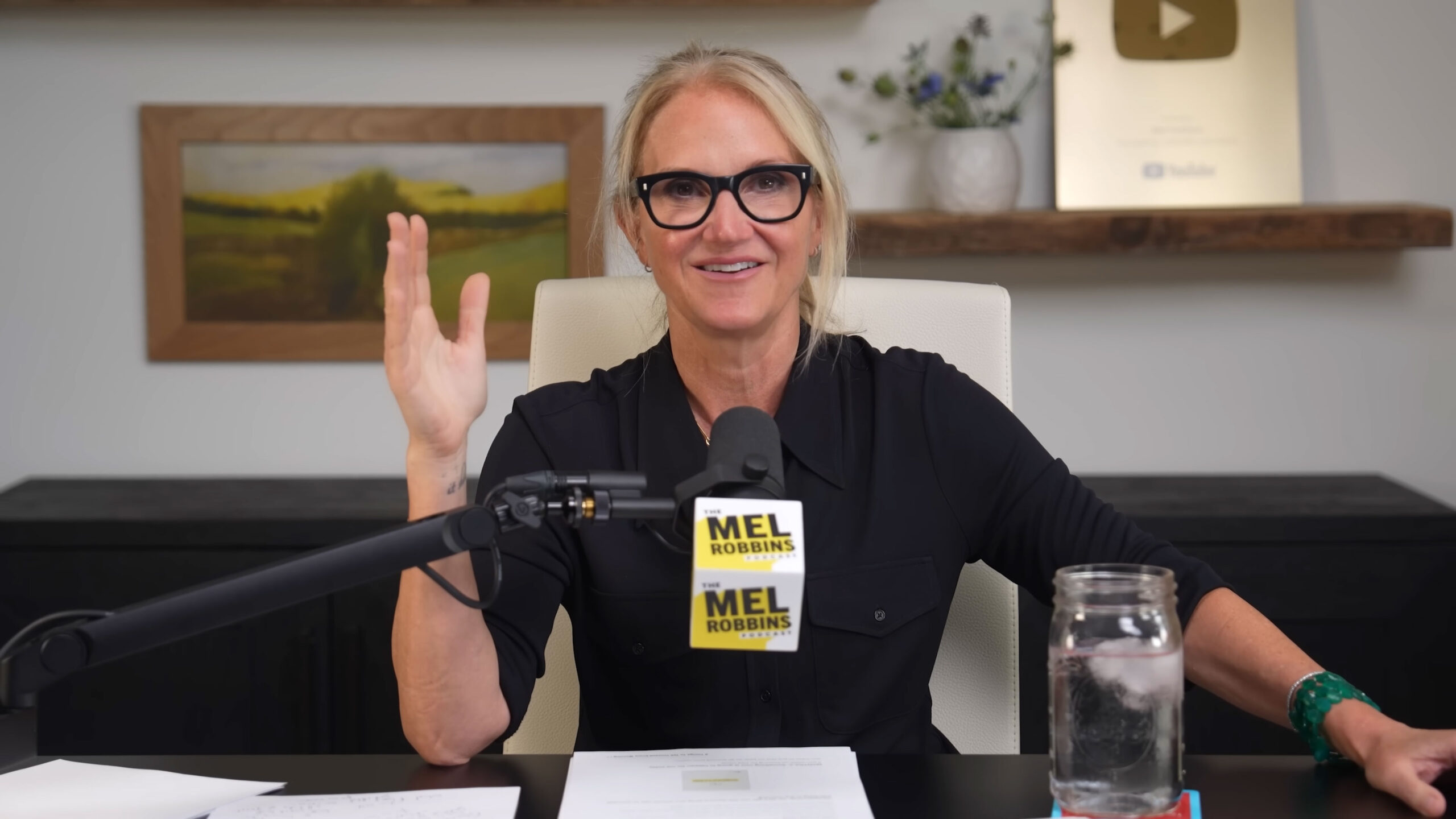
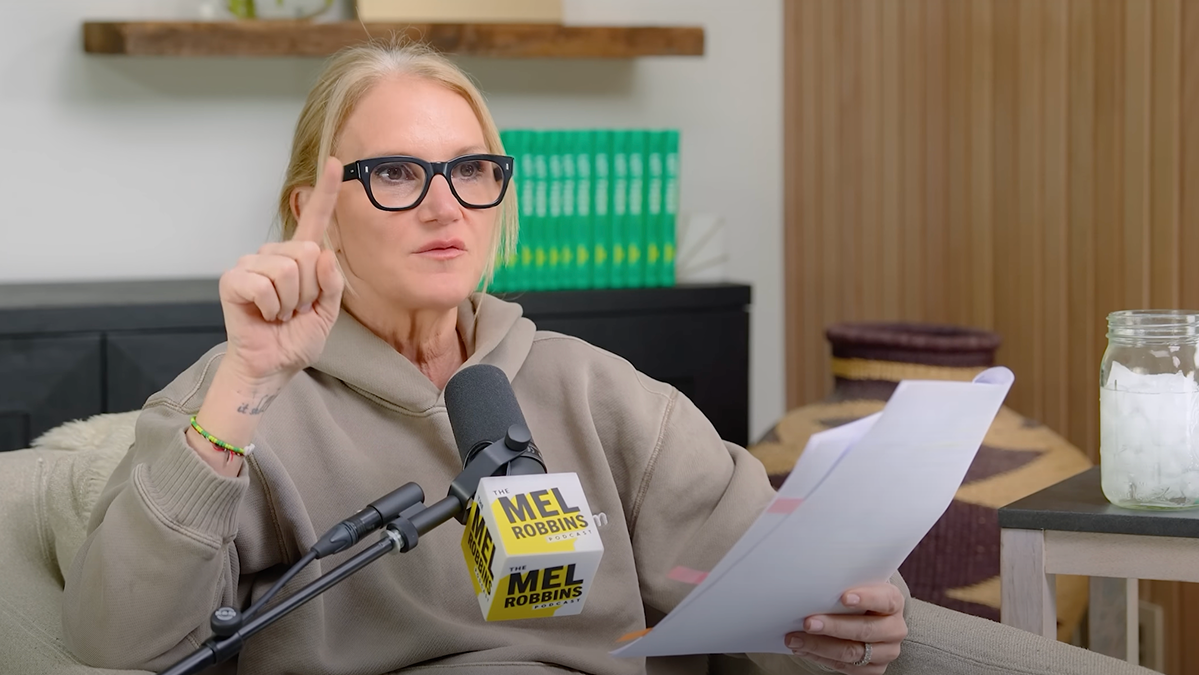
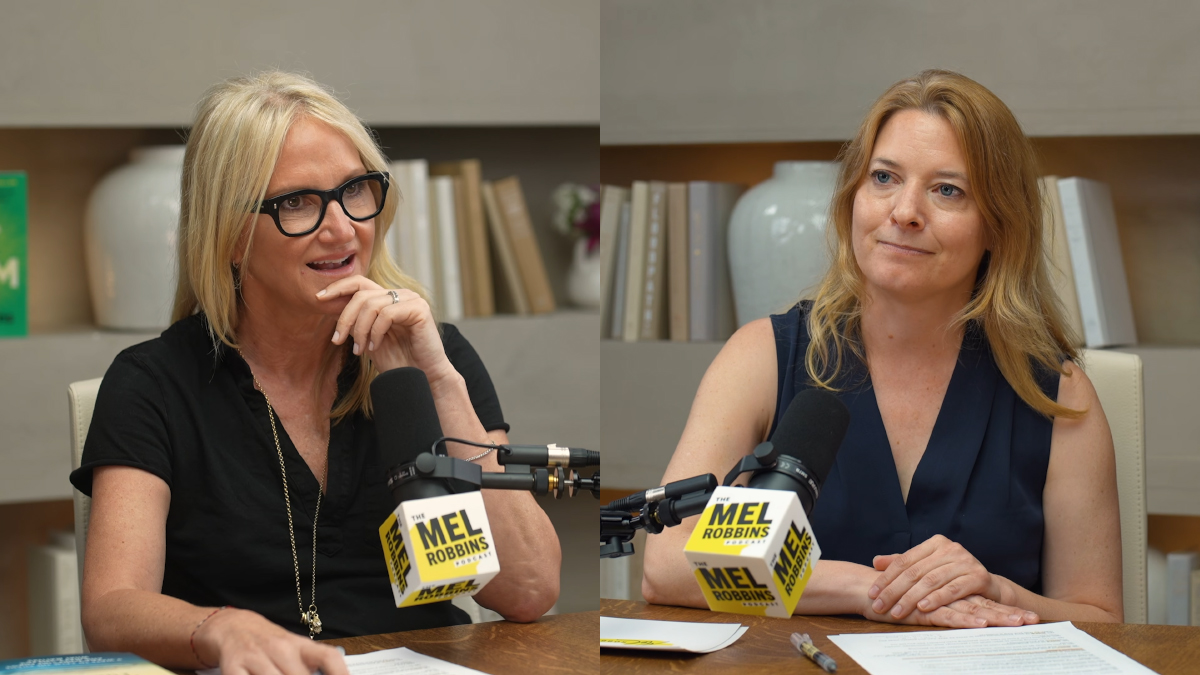
Episode: 404
7 Things to Tell Yourself Every Night for More Happiness and Positivity
a Solo Episode
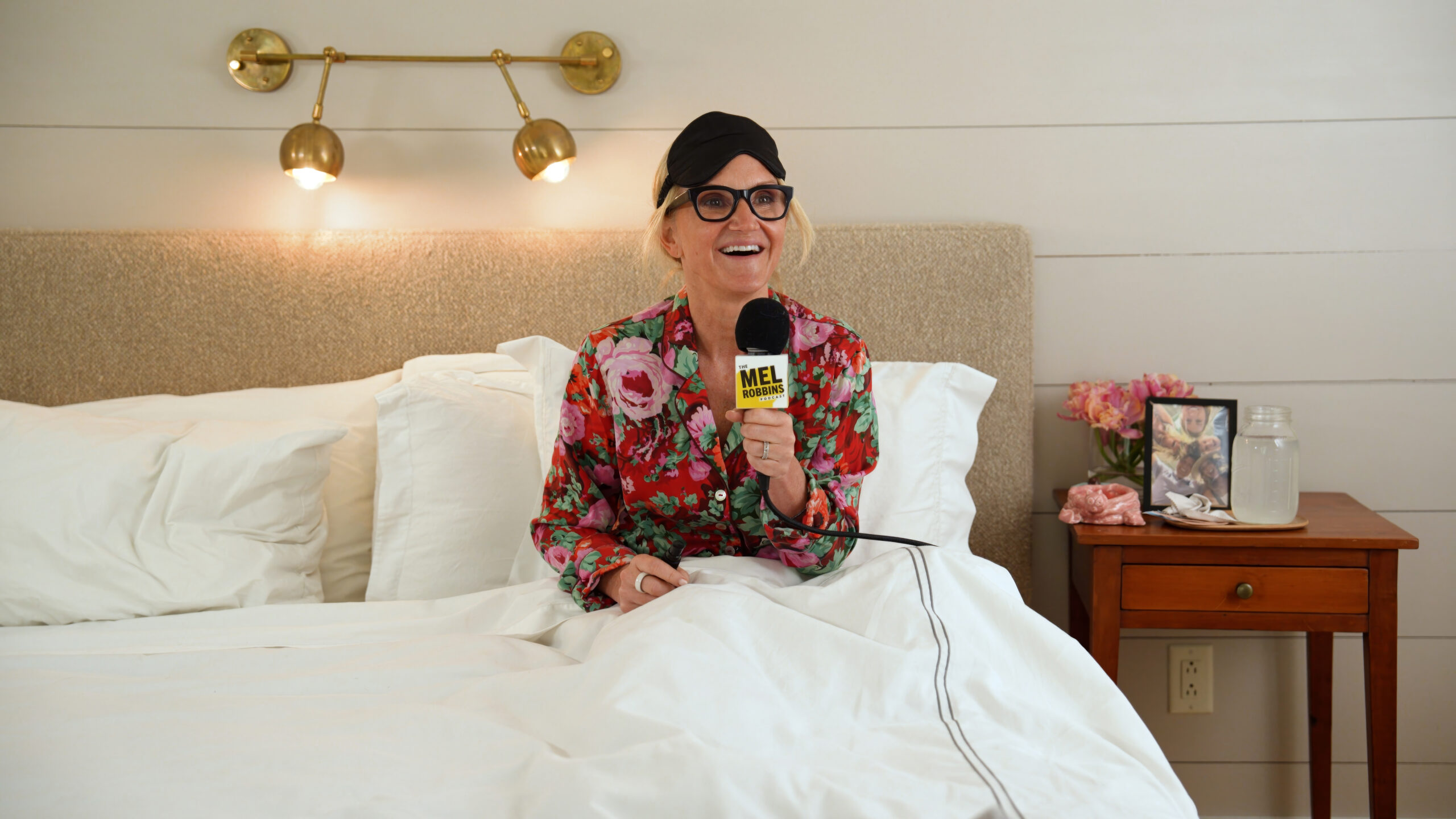
A better morning starts tonight.
If you fall asleep stressed, you wake up tired.
And this episode gives you a simple fix and reset you can use immediately.
Mel shares 7 powerful sentences to say before bed that shift your brain out of stress mode and into rest mode. These sentences will rewire your brain, using proven science, to make you a happier, more positive (and well-rested) person!
These 7 sentences are:
- It's ok for me to feel overwhelmed based on what’s going on.
- I can manage this.
- I don’t need to solve this right now.
- I did my best today.
- Now is my time to rest.
- Tomorrow is gonna be a good day.
- I give myself permission to drift off to sleep.
Listen on:




7 Things To Tell Yourself Every Evening for More Positivity and Happiness
1. It's ok for me to feel overwhelmed based on what’s going on.
2. I can manage this.
3. I don’t need to solve this right now.
4. I did my best today.
5. Now is my time to rest.
6. Tomorrow is gonna be a good day.
7. I give myself permission to drift off to sleep.
All Clips
Transcript
Mel Robbins (00:00):
Have you ever noticed that every night when you climb into bed and you get all comfortable, you're all excited to get in there and then all of a sudden, boom, all the things you didn't do, all the things you're worried about, all the things on your to- do list. What the hell is going on? My team and I tapped world renowned experts in the science of sleep and we custom designed seven things to tell yourself every night for more positivity and happiness. The first thing you're going to tell yourself, it's okay for me to feel overwhelmed based on everything that's going on. So let's jump into the second one. I can manage this. I don't need to solve this right now. I did my best today. Now is my time to rest. Tomorrow's going to be a good day. I give myself permission to drift off to sleep and now you get to say the final thing, which is, "Hey, it's your friend Mel.
(00:58):
Welcome to the Mel Robbins Podcast. Today I'm sharing seven things you should tell yourself every single night to get a better night's sleep, to be more positive, to be happier. You are going to love this. Here's the thing. I want you to feel happier. I want you to be more positive about your life and that starts with the thoughts that you have every single night. And I'm so inspired to share this with you because I'm seeing the impact that these seven things are having in my personal life. I'm also reading all the emails that you send into melrobbins.com into our inbox. I read the responses to the newsletter that more than two million of you are subscribed to. And by the way, you can subscribe to that at melrobbins.com/newsletter for free. And so I know there's a lot of really big things on your mind.
(01:53):
There are a lot of things that are worrying you that are keeping you up at night. And so if you're noticing that, God, I'm more critical of myself, boy, it's hard to turn off the rumination. Hey, I'm really worrying a lot for a person who always seems to figure it out. Or maybe you've got a lot of big stuff going on right now. I've got two very close friends who are dealing with medical diagnoses, Alzheimer's, stage four cancer in their parents and it's keeping them up at night. Of course it's keeping them up at night. You're not alone. And our conversation today is for you and it's for the people in your life who are also having trouble with negative thoughts at night. So first, here's what I want you to do. I want you to just imagine as you are listening to me, maybe you're on a walk right now, maybe you're driving in your car, maybe you're at a job and you got one earbud in and you're listening to this, or maybe you're watching on YouTube.
(02:51):
But I want you to fast forward and just imagine. Imagine that you are getting into bed. You've pulled into bed and oh my gosh, you're so excited. You're like, oh my God, I'm so grateful. So grateful I'm going to be in my bed. And maybe like me, you love these mists.
(03:14):
I always steal these from the hotels. They're in your room, but I take it anyway. As if this magical mist is going to somehow make you nod off to sleep. It's going to be amazing. You got your eye mask on. For me, I always have to take off my wedding ring. Oh, geez. Okay. See, I've dropped it on the ground. Here we go. Oh my God. Got to take off the wedding ring because my hands swell at night, then I can't get my ring off so that's something I do. And then you're like, oh gosh, this is going to be so amazing. Get into bed. Oh my God. I'm so grateful. Aren't you so grateful as you're getting into bed? Because this is the first time. Oh my God. Then you don't have to take care of anybody. You don't have to think about anything.
(04:01):
This is your time to rest. All day long it's been for everybody else. Oh my God, I love my bed. I love my bed. And then I get down.
(04:11):
Holy cow. The second your head hits the pillow. It's like the on switch goes on in your brain. And I don't know what your thoughts are like, but maybe your thoughts are crazy like my thoughts. Maybe they sound a little like this. And I've really had trouble. This is what my thoughts used to sound like. You ready? My head would hit the pillow and I'd be like laying there staring at the ceiling. Oh God. I hate my life. Hate my life. Oh my God. I hate my life. I hate my freaking husband. Oh, I hate my husband. He's not even that cute. Not that cute at all. Oh my God, I'm so hot. I got to get a leg out. I got to get a leg out. What is it? Oh my God. Who am I kidding? Now I'm fanning myself because
(05:08):
I'm not even that freaking cute anymore. Oh my God, I'm so fat and ugly and creepy and disgusting. And I'm always so hot all the time. I don't even want to sleep with myself. Oh my God. Why can't my life be like Nicole's life? Oh my gosh. Her life is so perfect. I mean, her kids like her. She has a great marriage. They have plenty of money and they're always going vacations. Why can't my life be like Nicole's life? Oh my gosh, I eat that bitch, Jesus. Oh my God. The only thing I like about my life is my dog because my dog doesn't want anything from me. Oh my God.
(05:47):
And look, I can joke about this because it's the middle of the day and I'm talking to you during a podcast right now. But the fact is when I'm having those thoughts, those thoughts are really heavy and they weigh you down. You know that term bedrot? It's almost like your thoughts are the things that are rotting you and pinning you there. It's this sensation like you're marching in place, but the drumbeat is constant negativity. And here's what you and I are going to talk about today. Allowing those negative thoughts, the worries about work, the apology you need to make, the stress in your life, the things that you're terrified of, scanning your day for all the things that you didn't do, beating yourself up, rewriting that text in your mind, thinking about the breakup, thinking about all the worst case scenarios. This is something you've gotten used to.
(06:54):
This has now become part of your bedtime routine, just like brushing your teeth, just like putting on your pajamas, just like crawling into bed or pulling the shades are part of your bedtime routine. You and I can get ourselves to a point where allowing those negative thoughts to just run on a loop, which happened to me for decades is part of the routine. Here's the good news. There is so much extraordinary research that once you wake up and realize, wait a minute, I don't want these kind of thoughts to be part of my bedtime routine. I'm good with brushing my teeth and putting on my pajamas and sticking in my retainer and putting on the mouth tape and pulling down the eye mask and taking off the ring. But why do I have to allow this spiral of negative thinking to be part of the routine?
(07:48):
You don't. You and I have a real practical proven opportunity in this moment. When you get horizontal to reprogram all of the negative crap that you've been saying to yourself all day long. See, it's almost like this. Think about this. You've been saying this negative stuff all day long to yourself in the background. "I'm too stressed. I don't have time. I can't handle this. I have to solve this right now. This is an emergency. Oh my God Oh my God, my God. "Everything like even doing the dishes, you're like gripping. It's never enough. I didn't do a good job. I don't have time to rest today's. Stressful, horrible. I'm going to get fired. What if this steals my job? I can't allow myself to do anything else until I solve this. This person needs me. That person needs me. I couldn't possibly do that. That's what you're thinking.
(08:40):
And all day long, you're on the move. You're on Zoom calls. You're driving, you're walking, you're listening to other things. So you're actually moving while all of these things are chasing you in your subconscious. And what I'm here to tell you is that the reason why you and I get plagued by these negative loops is because the second you and I lay down.
(09:08):
Oh my God, all those thoughts catch up with you. Oh my gosh. There are no distractions. There's no Zoom call. There's no music on. It's just you against you and your disgusting thoughts that you've been out running all day long and you got nowhere to go. You're trapped. You're trapped with yourself. That's why you hear it. That's why you cycle it. And so today we are going to break that cycle. Today we are going to break this loop. Today you and I are going to use some incredible science. In those moments where it's dark, there is nothing else to hear. Just your voice. There is nothing else to look at, which is why you all of a sudden look in and you go, " Oh my God, those are really negative thoughts. I'm worried about a lot. I'm projecting a lot of negativity. Ooh, I'm really beating myself up.
(09:58):
Whoa. Well, we're going to stop doing that because today we're going to use research from this incredible, incredible, incredible scientist and professor at Stanford neuroscientist to change the settings in your mind. And instead of laying there and becoming a victim to all of this programming that's been in there forever, you and I are going to reach out to one of my favorite human beings. Her name is Professor Aliyah Crum. She is a Stanford Associate Professor of Psychology and the director of the Stanford Mind and Body Lab. She is renowned, Dr. Crum is, for her groundbreaking research on the power of your mindset. And check this out. The fact that you can change the settings in your mind and when you do change the settings in your mind, it changes how your body responds physiologically, emotionally. This is fascinating stuff. I got to give Dr. Crum a huge shout out because when I was on tour, she came to the San Jose Show and she brought a bunch of her professor friends from Stanford who are also doing extraordinary research and have incredible books and now they may be coming on the podcast too and she gives the best hugs.
(11:14):
I'm so excited. I think she was at the show to remind me. It was almost like she was planting for planting Mel. You know what? I bet we're going to talk about this. And sure enough, Dr. Crum, we are. And so I don't want to explain the process of changing the settings in your mind to you. I want you to hear from Dr. Crum. I want you to hear exactly what she said when she was on this podcast. She gives you two steps that are proven based on the research she is doing that help you not only interrupt these negative thoughts and these negative settings, but replace them with more positive affirming settings in your mind that will help you stop A, hating your life. B, stop beating yourself up for everything and being so hard on yourself. C, calm this noise down so you can get the rest you deserve and need.
(12:19):
And so I want you to hear Dr. Aaliyah Crum explaining on this podcast the exact two clear things to do that allow you to change the settings in your mind. Here's what Dr. Alia Crum said.
Dr. Alia Crum (12:38):
I think what I would say to the person listening or watching is to start where you are, right? To start by acknowledging the problems that you're facing. Start by acknowledging the goals that you have and then take that next step and ask yourself, what mindset could I adopt that would help me address those problems or achieve those goals?
Mel Robbins (13:11):
I love this. Sounds very simple. And when Dr. Alia Crum says it, it sounds kind of obvious too, right? And let me just remind you, Dr. Alia Crum is the leading researcher on mindset and the director of the Stanford Mind and Body Lab at Stanford. Her work is published in all these peer review journals. She is the person who did that famous milkshake study. You don't even need to know what it is, but she has proven over and over again that simply using these two steps to change the settings in your mind change the way your body responds to absolutely everything. And so we can use this technique of acknowledging where you are. That's the first step. Start by acknowledging the problems that you're facing or the goals that you have. Okay? And then the second step is simply ask yourself, well, what is the mindset that I could adopt that would help me address those problems or achieve those goals?
(14:17):
And so you and I are going to use this research, Dr. Crum's research, with the intention of reminding you that first of all, you're capable of figuring things out in your life. You are capable of managing everything that's going on. And second, here's the goal, getting rest, turning off, changing your relationship to sleeping will help your body do what it's designed to do, which is rest, restore itself, reset so that you can wake up refreshed and able to face the day. Isn't that cool? And so every one of the things that I'm going to tell you to try saying to yourself, just see how it feels, see how these seven things start to change the settings in your mind and help you sleep at night and help you double down on what is true. What's true is you are capable. That's what's true.
Mel Robbins (15:25):
And so let's start with the first thing you're going to tell yourself.
(15:29):
Okay? Very, very simple. So let's just imagine you're already in bed, okay You've pulled into bed, you're like, "Oh, I'm so grateful to finally be you down. Oh my God, thank God I'm in my bed. I love my bed and you should love your bed. It should be cozy and comfy and warm." And then you climb in there and then you lay your head down and then all of a sudden the thought reading, "Oh my God, I did this and do that and you do this and I need to think about that. Okay, if I wake up at this time and you start doing the math, here's the first thing you're going to tell yourself, exhale.
(16:04):
It's okay for me to feel overwhelmed based on everything that's going on. That's it. That's it. It's okay for me to feel overwhelmed based on everything that's going on. And because Dr. Crum gave us the two steps for changing the settings in the mind and the first one being acknowledge where you are. And so if where you are is it's okay to be scared based on everything that's going on or it's okay to be exhausted by everything that's going on, or it's okay to feel checked out or angry or resentful or upset based on everything that's going on. You insert the word that acknowledges what you're feeling, right? Because those thoughts are kind of bubbling up because of all the things that you're feeling that you're not acknowledging. And the reason why I want you to start with this one is based on both Dr. Aliyah Crum's research, but we're combining it with research from another extraordinary, extraordinary expert that has appeared on this podcast.
(17:19):
Her name is Dr. Lisa Damour. Dr. Damour has a PhD in clinical psychology. She's a three-time New York Times bestselling author. She's also a senior advisor at Case Western Reserve University Schubert Center and collaborates with UNICEF on youth and family mental health. Now, when she was on the Mel Robbins podcast, Dr. Lisa Damour was talking about the fact that being mentally well and being mentally healthy, that does not mean that you have to be happy all the time. And I asked her, okay, well, what does it mean to be mentally well, Dr. Damour? And she said something that I will never forget. It changed how I navigate those chapters in life that are extremely challenging. And here's what she actually said. She said that if you're overwhelmed when life is overwhelming, all those big feelings keeping you up at night might just be a sign that you're mentally well.
(18:18):
If you're going through a breakup or a divorce and you're heartbroken, that doesn't mean something's wrong. Being heartbroken is a mentally well response to heartbreak. If you've lost somebody in your grieving, grieving is a mentally healthy response to losing somebody. Feeling overwhelmed because you have too many things coming at you as you care for everybody else. Feeling overwhelmed is a mentally healthy response to the state of your life. And so I asked Dr. Lisa Damour, because I want you to hear it from her on this podcast. Okay, what does it mean to be mentally well? And I want you to hear what Dr. Damour had to say.
Dr. Lisa Damour (19:06):
What it means is that the emotions you have are actually in concert with what's happening in your world. And I think that mental health is often defined by experiencing distress and that is 180 from where the culture is right now. So often mental health concerns and distress are treated as though they are one and the same. But I'll give you several examples. It's so easy of where the presence of distress is actually evidence of mental health. So if the kid gets dumped, we expect distress. The absence of it would be concerning. If a teenager has a huge test tomorrow and they have not started studying, we want to see some anxiety. The absence of anxiety is more concerning than the presence of anxiety. If someone's really mean to you, right? If you're a teenager or an adult and someone's really mean to you, we expect to see hurt and then probably a self-protective anger.
(19:58):
Those are all unpleasant emotions. Those are all unwanted emotions. Those are evidence that we work exactly as we should. And so to pathologize all of that means that people are spending their normal healthy days feeling like there's something wrong with them when in fact that distress is proof that they work perfectly.
Mel Robbins (20:21):
And don't you just love her voice? It's so soothing.You really believe her when she says it and you also know it's true. And that's why the first thing that you're going to say to yourself using Dr. Crum's research about changing the settings in your mind and also tapping into this counsel from Dr. Lisa Damour is you're going to say, "It's okay for me to feel overwhelmed based on everything that's going on. " So now you've acknowledged where you're at and you've affirmed that feeling that way makes you okay or mentally well. And I can tell you this works because I remember when I got a mammogram and they found something in the breast scan and they didn't know what it was. And so they told me I had to come back in for another more high definition ultrasound because they quote, found a few things that were concerning, which immediately sends you into panic mode, which by the way, now we know based on Dr. Lisa Damour being a bit panicked and anxious when you're told that there's something concerning on a scan, that is an appropriate response to a scary situation.
(21:42):
It's a sign that things in my body are working as they should because I'm now stressed out about it. And so I remember laying in bed and worrying about that. "What if it's this? What if it's that? What if it's the other thing? What if I die in a year? What if I don't get to see my children get married?" And it was keeping me up at night. And then I remembered Dr. Lisa, "Okay, well, this is a mentally healthy response to this, but it doesn't mean something bad's going to happen. It's okay to be scared based on what I just heard, but I don't have to slay awake all night doing all the what ifs." So here's the takeaway about what you're going to tell yourself first. After you get in bed, you're like, "Oh, I'm so grateful you lay down." And then your mind starts spinning, you're going to say, "Hey, it's okay to feel how I feel based on everything that's going on because that way you're A, acknowledging how you feel and B, you're reaffirming that you're having a normal response to the experiences in your life and you are mentally well because of it.
(22:49):
This message is brought to you by ApplePay. Pay with your card on iPhone using Apple Pa. It's accepted at millions of places anywhere you can tap a physical card. And with privacy and security features built in, it's more secure than using a physical card. Look, we all know somebody who is constantly losing their wallet, or maybe you're a litle bit like me. You're always forgetting to bring your wallet into the store with you. Well, that can't happen when you choose Apple Pay. I mean, just the other day I was in line at the plant store. I've got this huge cart full of geraniums and impatience and other perennials. I'm waiting in line forever. I get to the front of the line and I think, oh my God, I left the wallet in the car. So now I'm going to have to explain to everybody, oh, I'll be right back, please hold my space.
(23:34):
And then I always, wait a minute, Mel, you can just pull up Apple Pay on your phone. So that's what I did. Tap. There you go. Problem solved. I love how quick, safe, and easy it makes paying for things and now I use it all the time. I don't even need my wallet. Just add your debit or credit card to the wallet app and when you're ready to check out, double click the side button to authenticate with face ID and tap. It's that easy. Set up Apple Pay on your iPhone today. Terms apply.
Mel Robbins (24:01):
The next thing you're going to tell yourself is, I can manage this. I can manage this. And where does this second thing that you're going to tell yourself come from? This also is inspired by Dr. Alia Crum at Stanford. And I want to make sure that you hear what she shared when she was on this podcast and why saying to yourself,
(24:24):
I can manage this and the power of the word manageable. She has researched the exact thing that anyone going through a cancer treatment or if you're supporting somebody who just got a cancer diagnosis, they have researched exactly what you should say to yourself or to someone else in that situation. Again, this is how you change the settings in your mind related to what you're going through and there is very, very clear science about exactly what to say and the words do matter. This particular phrase that you're about to hear Dr. Alia Crum talk about had extraordinary results, including boosting people's ability to cope, reducing physical symptoms, reducing the stress that people feel and helping them double down on the truth, which is your body does know how to manage this. And I'm here to tell you that the reason why I want you to say every night yourself, I can manage this is because you've managed everything else that's ever happened in your life.
(25:37):
That's the truth and you need to be reminded of that truth. But I want you to hear about this extraordinary research from Dr. Aaliyah Crum related to the specific thing you should say to yourself or someone that you love who is going through a cancer treatment. And I want you to listen all the way to the end and pay attention to the very last sentence because you're going to hear a particular word and this is the word that inspired us to have this be the second thing. I can manage this. Here is Dr. Aaliyah Crum on the Mel Robbins podcast.
Dr. Alia Crum (26:12):
So this question about cancer is really important. It shouldn't be mind over matter, right? It should be mind and matter. So if you're diagnosed with cancer, you should get the best treatment for you. We have great drugs and therapies for cancer. Many of the cancers that were incurable 10, 20 years ago are curable now and that is a beautiful thing thanks to hardworking biologists and scientists. So we should take those, right? But what I would add is we should also think about our mindsets. So what are the mindsets we have about cancer, about what it means for our life? What are our mindsets about the treatment and the care we're getting? It turns out those mindsets matter too and they can radically shape the whole experience that someone is having when they are going through cancer. Now I'm working with Dr. Lydia Shapira, Dr. Jonathan Barrick, David Spiegel, Sean Zion and others.
(27:19):
And what we've found is that the best mindset to be in when you have cancer, first it's not just think positive. It's not just believe you don't have cancer, believe you'll be okay. Those are actually acts of denial. The best mindset to be in when you have cancer is the mindset that this is manageable. Contrast that to the mindset of this is a catastrophe, it's unmanageable. Another mindset that we found is very useful for people going through cancer is the mindset that their bodies are capable. Many people who are diagnosed with cancer feel like their bodies have let them down, that their bodies have turned on them or at best are just sort of not working right now. And what we've found in a number of studies, including trials where we work to inspire people into different mindsets is that moving to adopt the mindset that cancer is manageable, their bodies are capable is profoundly transformative in shaping their whole experience.
(28:27):
So it changes their quality of functioning in life and it also reduces physical symptoms like nausea and fatigue and upset stomach and other things when they're going through chemotherapy. So we don't know right now we're doing another trial looking at how to change these mindsets and we're measuring people's blood samples and we're looking at immune markers that are associated with cancer outcomes. So we don't know yet the results of those trials, but I would bet a lot of money that these mindsets don't just stay above the skin, they're getting down and they're influencing our body's response. I think what I would say to the person listening or watching is to start where you are, right? To start by acknowledging the problems that you're facing, start by acknowledging the goals that you have and then take that next step and ask yourself, "What mindset could I adopt that would help me address those problems or achieve those goals?" So if you're a person dealing with stress, can you remind yourself that the body's stress response was not designed to kill you and remind yourself that it's there to support you, that there's something there you care about and you can channel your efforts towards that thing.
(29:55):
To the person who might be struggling with their weight, I would remind Them to sure focus on eating nutritiously but focus more on adopting the mindset of indulgence, eating while enjoying the pleasure of doing so. And if you're somebody who's dealing with a health diagnosis like cancer or any health diagnosis for that matter, can you know that mindsets like this is manageable, your body is capable that those mindsets are well within your grasp.
Mel Robbins (30:34):
Isn't that fascinating? And look, you may not have something scary going on like that. Maybe you just have something really overwhelming. I mean, something that's happening for me right now is Chris and I are celebrating our 30th wedding anniversary. So we have some family members coming into town. We have a bunch of stuff that we're trying to do that weekend and we just learned that one of our kids needs to move out of their apartment in Los Angeles that same weekend. And so that's a lot. That's a lot of logistics, that's a lot of people, that's a lot of personalities, that's a lot of coming and going. And that's also how the heck are we going to pack somebody up halfway across the country on the same weekend that we're doing this? And so I know that you have been in those moments in your life where you're laying in bed and you've got a mental calendar and you're booking plane flights and you're trying to remember if the Tuesday is the 23rd or the 22nd and you're thinking about, did I do this and did I do that?
(31:31):
You don't have to do that. All you have to do is say, "Oh, okay. It's okay to feel stressed out based on everything that's going on right now.
(31:41):
I can manage this. I can manage this. Yes, you can. " This also reminds me of what Dr. Chatterjee said when he came on the Mel Robbins podcast. Now, Dr. Chatterjee, I love this man. He is a physician. He's a bestselling author. He's best known for BBC's Doctor in the House. He's also the host of the number one health and wellbeing podcast in all of Europe. He came on this podcast and described this period of his life where he was not only a medical doctor with a huge practice and two young kids, but his father was dying and he was a caretaker and it was exhausting. And he talked about how a good night's sleep can make all the physiological difference in your body. And I want you to hear this from him because while he was on this podcast, he shared how, yes, making changes to your diet, that's good.
(32:34):
Exercising, that's good. But changes in your sleep is way better because it helps you wake up medically as a different person. Here is Dr. Chatterjee on the Mel Robbins podcast explaining why you can manage this after a good night's sleep.
Dr. Rangan Chatterjee (32:54):
If your diet is 85% good, moving it from 85% to 90% whilst you're only sleeping five hours a night ain't going to move the needle. If you can bring up your sleep from five hours to even five and a half hours, again, it's not about perfection. It's not about either eight hours or nothing. If you can actually get 20 minutes more, 30 minutes more, there will be a physiological difference in your body mill the following day. And so it's important for your physical health, your mental wellbeing. Life feels different when you've had a good night's sleep.
Mel Robbins (33:31):
Don't you love knowing that? We're not going for perfection here. If you can support yourself in falling asleep and staying asleep and even getting 30 more minutes, you will wake up a physiologically different person and you know that you have a better day when you get a better night's sleep.
Mel Robbins (33:51):
Now the third thing I want you to say to yourself, I don't need to solve this right now. Nope. I don't need to solve this right now. This is inspired by Dr. Lisa Damour again, PhD in clinical psychology, three time New York Times bestselling author. And when Dr. Damour came on the Mel Robbins podcast, she was talking about how to help kids when they start to ruminate. And when you and I are laying down and just spinning negative thoughts, that's what you're doing, you're ruminating. And the advice sounds really good for adults too.
(34:26):
So here's Dr. Lisa Damour's simple advice on what to do with the spiral of negative thoughts and why it works for you to say, "I don't need to solve this right now. I need to sleep." Take a listen.
Dr. Lisa Damour (34:41):
Let's just go right down the rumination road. So what I encourage parents and also peers to do if they're caring for a teenager who is really spinning their wheel, spinning their wheels, is to say to them, "Listen, talking about feelings usually helps, but what I'm noticing is the more we're talking, the worse you feel. So let's do this. Let's put a pin in this.
(35:05):
Let's make a plan to talk about it tomorrow. What time do you have? What time do I have? We'll schedule it. We're coming back to it. But between now and then, let's just do something else. Let's go think about something else. Let's just take a mental vacation from this situation. And what is extraordinary is that so often when you do that, when I've met with that kid the next day or talked to the person the next day, they're like, yeah, I don't know what I was so upset about. Just this space alone, the time alone brings it down to us eyes.
Mel Robbins (35:38):
She said that just kind of spinning your wheels on a thought makes it worse. And laying in bed, spinning your thoughts makes it seem worse and it also makes your sleep worse. And the reason why this third thing you're going to tell yourself is, I don't need to solve this right now. I can deal with this tomorrow. Is that you're teaching your brain that every thought is not an emergency. Every thought does not need to be acted on. Thoughts are just things that pop up, but it doesn't mean you have to actually do anything about it. In fact, just yesterday, my husband, Chris, he was just not himself. He is normally at the most zen energy and there was just something so just sort of intense about him. And I even turned to Oakley and I was like, "Does daddy seem off?" He's like, "Yeah, man."He's like, "Not himsself.
(36:31):
He's really pissed off about something." And I asked him at one point, I said, "Have I done something? Are you okay?" And you know what he said to me? He said, "I can't talk to you about this right now." And that immediately made me go, "Uh-oh, I'm in trouble. I'm in trouble." And he then jumped into leading this online retreat that he leads called The Huddle and I cleaned the kitchen and did the dishes and kind of put the dogs away. And then I went into bed and I started to read because that's kind of one of my routines. And then I laid down and turned off the lights and then all of a sudden there's the hamster wheel and I'm like, "Oh my God, what is he mad about? What did I do? I don't know. Did I do something wrong today?" And I'm going through and then I was like, "You know what, Mel?
(37:23):
You don't need to solve this right now. You need rest. You can talk about it in the morning." And you want to know the craziest thing. I did go into Chris's office this morning because he gets up way earlier than me and he's writing first thing in the morning on this book he's working on. And I walk in, he's like, "Oh, hi, honey." And I come up behind him and I put my arms around him. I was like, "So you seemed a little off yesterday. Is everything okay? Like what did I do? You want to talk about it? " He's like, "What are you talking about? " I was like, "Well, what do you mean what am I talking? What did I do? Like you said, you can't talk about ... " He's like, "Well, it had nothing to do with you. It was an issue related to one of our kids that he was really upset about and yet I was going to allow that to interfere with being able to get rest because I was going to let all ... But nope, because I have these things to say to myself, I don't need to solve this right now." And then you can remind yourself, I can manage this, right?
(38:23):
I can manage this. You get to tell your brain what to focus on. You get to tell your brain not now. You also get to remind yourself that after a good night's sleep, you will be a different human being and you'll be better able to manage it, which brings me to the next thing I want you to tell you.
Mel Robbins (38:43):
Number four, I love this one. I did my best today. I did my best today. This is inspired from another expert that came on this podcast. His name is Jim Quick. He is the author of the bestselling book, Limitless. He is renowned for his practical and proven methods that increase memory, speed of reading. And there was this thing that he said on the podcast that I come back to all the time. I love it. He said, "On those days when you only have 40% to give and you still give 40%, you just gave 100% of what you had to give, right?
(39:27):
So when you say, I did my best today, the reason why this works is because you are telling yourself the truth. You did do your best today, given everything that was coming at you, giving everything that you are managing, only you know what's going on in your life and you know that you gave it what you had to give. So give yourself an A because you deserve an A. So remind yourself, Hey, I gave it my best today. I get an A and now I deserve to rest, right? Because you got to learn that part of your routine is not scanning the day for what went wrong. It's actually reminding yourself that you put in everything you had to give, you get an A, now it's time to rest.
Mel Robbins (40:14):
And that brings me to the fifth thing that you're going to tell yourself and that is now is my time to rest.
(40:22):
Now is my time to rest. I love this one because I love who this comes from. This comes from this extraordinary sleep researcher and medical doctor. Her name is Dr. Rebecca Robbins. She's an assistant professor at Harvard Medical School and she leads the Brigham and Women's Hospital's division of sleep and circadian disorders. She also has over a hundred plus peer reviewed publications on sleep, health and behavior change interventions. Now, I love her. You love Dr. Robbins when she came on the Mel Robbins podcast because she taught us all about sleep. Her voice is so calming, her advice simple, actionable. This is one of the single most replayed moments from our entire podcast. And it was this moment that I'm about to play for you where Dr. Robbins is describing how to wind down from a busy day so you can sleep. And she's about to tell you what you should do and more importantly, what you should say to yourself, this is what she says to herself.
(41:30):
When you are going to bed and it inspired this fifth thing you're going to tell yourself every night, so take a listen.
Dr. Rebecca Robbins (41:37):
I mosey into my bed and now while I'm doing that, thoughts are flying in because of course of what I forgot to do or I need to do. And I come back to this idea of no, not now. Now is my time. I've done things for my students, my partner, my kids all day and now is my time to restore and relax. And if anything, any thoughts are still fighting to the surface, I write those down at my nightstand. So I've done the 478 technique and then I mosey into my bed. I read a couple pages in a book. I do progressive muscle relaxation. I clench and release every muscle group starting from the toes and I inhale, clench and then exhale release.
Mel Robbins (42:19):
I love that. Don't you love her voice, by the way? I love her voice. And did you notice she also reiterated the thing that I taught you before, number four, which is, "I don't need to solve this right now." She said, "Not now. This is my time. I've already done everything for the students, my partner, the kids. This is my time. It's my time to restore and relax. And I want you to say that to yourself every night because it is you gave everything to everybody else today. You are at work or at school, you're online, you ran to the grocery store, you cooked dinner, you fed the dog, you did the email, you made the call to your parents, you did everything for everybody else. You gave social media all this attention. You gave Netflix attention. You gave me attention because you listened to the podcast.
(43:09):
Oh my God, not now. When you get in that bed and your head hits a pillow, the only person whose time it is is yours. This may be the only time you have to yourself all day. I want you to take it for yourself. This is your time, your time to rest, your time to restore your time for yourself. Be selfish about this because you deserve this time to yourself and your body deserves the rest. And one other thing that I wanted to point out that you may have heard Dr. Robin say is that she will write down the thing that's on her mind on a piece of paper next to her bed. This is actually an incredible piece of research and it comes from research at Baylor University that really works, which is this. They studied people that made lists at night of all the things they did right and then they studied people who made lists of all the things that they didn't get to.
(44:18):
So all the unfinished things that can tend to run in a circle in your mind. And here was the fascinating thing that they found. People who made lists of all the things they didn't get to on their to- do list today. So it's literally like next to you at your bed. It's all the lists of things that didn't get done, fell asleep faster and they fell asleep faster making a list of all the unfinished things that are on their mind than taking some sort of medication. Why? Because putting all that stuff on a piece of paper allows your mind to check the box and stop bringing it up to you. And so it's a super effective thing that I use all the time in those moments where I wake up or where I can't quite fall asleep. Wonderful piece of advice. Your home should reflect who you are, not who you used to be or what you think it's supposed to look like, just you now.
(45:16):
And Ashley has pieces that fit whatever your style is. In fact, I was scrolling Ashley earlier and I was immediately drawn to the pieces in the Serene Bay Outdoor Collection. Now my personal style is cozy and functional and the pieces in this collection feel elevated but still livable. And what I love most about Ashley is that every piece, it doesn't just look great. They're built for real life with features like stain resistant fabrics that are easy to clean and even machine washable cushion covers. Plus Ashley offers white glove delivery, so everything's brought right into your home and set up where you want it, making the entire process easy from start to finish. Visit your local Ashley store or head to ashley.com to find your style. Ooh, I'm ready to sleep. I'm getting tired just saying this stuff to you, but we're not done yet because we got two more things.
(46:09):
And the next thing you're going to say, I love this as I'm about to just start to kind of ooh, drop into sleep. Tomorrow's going to be a good day. That's what it is.
Mel Robbins (46:17):
Tomorrow's going to be a good day. Because here's the thing, we don't know how tomorrow's going to be, do we? So if we don't know, we might as well bet on the positive. Instead of worrying about it, because that's what worrying is, you're betting on the negative when you worry. How about you say instead, tomorrow's going to be a good day because I'm going to make it a good day. I'm going to wake up refreshed. It's going to be a good day. See, when you go to bed stressed out, anxious, worrying, bracing, you know what your brain's doing? It's not relaxing. Your brain is probably going to be scanning for reasons why.
(46:50):
It's almost like presetting how you're going to wake up. And so when you go to bed expecting something good, you're now telling your brain, "Hey, it's okay to rest. Tomorrow's going to be a good day." This is my time. Don't need to solve this time. Tomorrow's going to be a good day. And one of the other reasons why this is so important is because of what you said, this is manageable. I can manage this. When you say tomorrow's going to be a good day, you're also placing a bet on yourself. You're placing a bet on your ability to wake up tomorrow and to make it a good day, to have better thoughts, to be more refreshed, to make good decisions. And so you're priming yourself for waking up in a state where of course it's going to be a good day. And the person that inspired this one is Dr. Daniel Amen.
(47:46):
Now, Dr. Daniel Amen has way more credentials than I even have time to tell you, especially since we're getting very sleepy, but he is a world renowned expert on the brain. He has brain clinics all over the world. He's got over 10 probably bestselling books. Dr. Amen starts every day by saying, "Today is going to be a good day." And that's also something that I have adopted since he came on the podcast and explained that that's one of his morning rituals. But now I have taken that. I'm inspired by Dr. Daniel Amen and I also say it at night. Tomorrow's going to be a good day because now I am changing the settings in my mind and I am now changing the settings of my mind to anticipate that the day's going to be good. And when you do that, I promise you it will most likely be better than it was if you were going to be worrying about it.
(48:40):
That's why this works. And I know as you're listening, you're probably thinking, Mel, do you have a list of these things somewhere? I really need a screenshot of a list of these things so I can be reminded of them. The answer's yes. In fact, if you sign up for our newsletter, Melrobbins.com/newsletter, you get a free letter from me every Monday and Thursday that just keeps you up to date on everything that we're releasing so you don't miss a thing. And we put that graphic of all seven things in the newsletter that went out when we dropped this episode. That's number one so you don't miss something moving forward. Number two, we've put this on social media. And number three, if you go to melrobbins.com for this episode page, which is linked in all the show notes, right on the episode page is a graphic that you can screenshot or download so that you can have it on your phone.
(49:24):
You can print it out, you can put it on your phone and that way we're making it easy for you. And so will this next thing that you're going to tell yourself,
(49:31):
The seventh one. Ooh, this one's so good. This is so good. I give myself permission to drift off to sleep. Oh, isn't that nice?
(49:47):
I give myself permission to drift off to sleep. And I love this one because from a common sense standpoint, let's just look at the two options here. If your bedtime routine continues to be you holding yourself hostage and forcing yourself to stay awake because of worrying, you are preventing yourself from falling asleep. The act of worrying is you saying, "I don't have permission to sleep yet because this worry, this thing out in the future, this thing I can't even deal with right now is more important than sleep. I'm not allowed to sleep. I'm supposed to be thinking about this. " When you go through all of these things that you're telling yourself, it's sort of like you tipping a domino and they all wind you down and now you get to say the final thing, which is I give myself permission to drift off to sleep and this works because you are telling your body, "I trust you.
(51:07):
You have been designed to fall asleep since the beginning of time. My body knows how to do this. My body is designed to do this. My body needs for me to do this. And so I am giving my body permission to do exactly what it's designed to do. You let go of control and you hand it to your body trusting that your body knows exactly what to do. Of course it does because you've been sleeping your whole life. So we're taking the control out of the mind and we're giving our body permission to fall asleep. That's it. That's it. You can stop trying to fall asleep and just give your body permission to fall asleep. Just let it drift. That's it. And remember, I believe Dr. Robbins also said on the Mel Robbins podcast that it takes the average person between 20 and 30 minutes to fall asleep.
(52:20):
It takes time and you lay down and there you are letting go. You've given yourself permission, but then all of a sudden it's like, but what about the thing that I need to do?
(52:32):
And all of a sudden you've got the popcorn thoughts that are like. You can just go right back down through the list. Hey, it's okay for my brain to be popping off these things and to feel kind of overwhelmed because there's a lot going on. I can manage this. I don't need to solve this right now. I did my best today. I gave it my best. I get an A, and now's my time to rest. Tomorrow. Tomorrow's going to be a really good day, especially because I'm going to get a good night's sleep. So I give myself permission to drift off to sleep.
(53:20):
If this thing keeps ... I'm just going to roll over and write down on the pad of paper on that to- do list like Dr. Robbins talks about. And now guess what? Don't need to solve that right now because I already got an A for today, right? Now's my time to rest and I'm going to do better if I rest and that's going to make tomorrow a good day. I give myself permission to drift off to sleep. And in case no one else tells you today as your friend, I wanted to be sure to tell you that I love you and I believe in you and I believe in your ability to create a better life. And there is zero doubt in my mind that if you make these seven things part of your new bedtime routine and you have fun with them and you customize them and you really lean into changing the settings of your brain, you will have a better life because you'll be getting better sleep, you'll feel like a better version of you, you'll be happier and more positive and you'll know the truth that no matter what happens, you can manage it because you always have and you always will.
(54:45):
Alrighty. Good night. I'll see you in the very next episode when you wake up tomorrow feeling more positive and happy after a wonderful night's sleep. And thank you for watching all the way to the end on YouTube. I know you love this. And can you tell we're up-leveling the production around here and so I got a quick ask. If that subscribe button is lit up like a Christmas tree, that's your sign to hit it. It's free. It is the single best way to say, Hey Mel. Hey Mel's team, I love this podcast. I love all that you're doing to help me live a better life. I know you're the kind of person that likes supporting people who support you. The best way to support us, hit subscribe. It tells us you love what we're doing here and it really supports us. So thank you, thank you, thank you for doing that.
(55:32):
I appreciate you so much. And now you're thinking, okay, whoa, what should I watch next, Mel? Oh, you should definitely watch this one and I'm going to welcome you in the moment you hit play.
Key takeaways
When your mind starts spiraling at night, remind yourself it makes sense to feel overwhelmed when life keeps asking so much from you and your heart.
You keep lying awake trying to solve tomorrow before it arrives, but real rest begins when you stop treating every thought like an emergency or personal failure and panic.
A good night's sleep will not erase your problems, but it will change your body, steady your thinking, restore your energy, rebuild your focus, and help you handle what comes next.
Stop grading yourself on everything left unfinished and remember that giving your honest effort on a hard day still deserves real credit, compassion, grace, and respect from you.
When your thoughts start chasing every worst-case scenario, tell yourself your body already knows how to rest, recover, feel safe, stay calm, and fall asleep tonight.
Resources
-
- Harvard Sleep Medicine: Why Sleep Matters: Benefits of Sleep
- Health Psychology: Mind Over Milkshakes: Mindsets, Not Just Nutrients, Determine Ghrelin Response
- Psycho-Oncology: Changing cancer mindsets: A randomized controlled feasibility and efficacy trial
- Journal of Experimental Psychology: General: The Effects of Bedtime Writing on Difficulty Falling Asleep: A Polysomnographic Study Comparing To-Do Lists and Completed Activity Lists
- Behavior Therapy: Effects of Rumination and Worry on Sleep
- Behaviour Research and Therapy: Distinguishing Rumination from Worry in Clinical Insomnia
- Cleveland Clinic: What Does ‘Sleep Latency’ Mean?
- Cleveland Clinic: How To Do the 4-7-8 Breathing Exercise
- National Heart, Lung, and Blood Institute: Why Is Sleep Important?
- Frontiers in Neuroscience: Conceptual Framework for Insomnia: A Cognitive Model in Practice
- Sleep Medicine Reviews: Pre-sleep cognitive activity in adults: A systematic review
- Journal of Anxiety Disorders: Linking repetitive negative thinking and insomnia symptoms: A longitudinal trait-state model
- Sleep Medicine Reviews: Insomnia as a predictor of mental disorders: A systematic review and meta-analysis
2 Million Readers.
1 Life-Changing Newsletter
Simple and Straight-to-the-Point...
Just Like Mel.