Episode: 409
#1 Brain Surgeon: What Your Dreams Are Trying to Tell You About Yourself
with Dr. Rahul Jandial, MD, Ph.D.

Today’s episode will change how you think about your dreams and your entire life.
Today, for the very first time on the show, Mel is diving deep into the science of dreaming, nightmares, what your dreams mean, what they’re trying to tell you, and more importantly, how to harness your dreams to unlock the full power of your mind.
You’re meeting Dr. Rahul Jandial, MD, PhD - one of the most highly regarded, cited, and distinguished doctors in the world.
He will teach you how to tap into the power of your dreams to create deeper connections, solve problems, unlock more creativity, and better understand yourself.
In this episode, Dr. Jandial will show you that dreaming is not random. It is not meaningless. And it is not something to ignore.
This conversation will change how you think about your life - both the one you’re living while you’re awake and the one you’re living while you’re dreaming.
Listen on:




Dreams and dreaming are a gift from your mind to you. In the safety of sleep, we can dare in ways we wouldn’t while we’re awake
Dr. Rahul Jandial, M.D., Ph.D.
All Clips
Transcript
Mel Robbins (00:00):
Do you ever wonder about your dreams? What does that dream mean? What does that nightmare mean? Could I control what I'm dreaming about? Are they random? Like does this mean anything? Today you're going to learn how to tap into the power of your dream state to create deeper connection, solve problems, unlock more creativity and clarity, and even create deeper meaning in your life.
Dr. Rahul Jandial (00:21):
We spend a third of our lives dreaming.
Mel Robbins (00:24):
Wait, a third of our life is spent dreaming?
Dr. Rahul Jandial (00:26):
Dreaming is not an accidental byproduct. It's something essential for the human mind.
Mel Robbins (00:31):
Dr. Rahul John Dial is a world-renowned cancer surgeon, neuroscientist, and pioneering neurosurgeon who is here to teach you and me about all of the fascinating things that your brain is doing when you're dreaming.
Dr. Rahul Jandial (00:44):
That nightly dreaming process happens for all humans all the time. We do things we couldn't imagine. We fly, we fall, we run from monsters, we get into awkward social situations. You can influence what you're about to dream about.
Mel Robbins (01:00):
No way. What are the most common dreams that people have?
Dr. Rahul Jandial (01:05):
Everybody has had a nightmare. It's a universal dream. In a wellness way, a flare of a nightmare can remind you that something is not going well with your mental health.
Mel Robbins (01:16):
Now, how do you define a nightmare?
Dr. Rahul Jandial (01:18):
Nightmare's not a bad dream. By definition, it's terrifying and it's got to wake you up.
Mel Robbins (01:24):
What exactly is Lucid Dreaming?
Dr. Rahul Jandial (01:27):
Waking up while inside a dream. So the first step is to set an alarm at about five or six hours.
Mel Robbins (01:36):
So you're intentionally waking yourself up.
Dr. Rahul Jandial (01:38):
I touch earlier than you want to.
Mel Robbins (00:01:41):
Dr. Jandial, welcome to the Mel Robbins podcast.
Dr. Rahul Jandial (00:01:45):
I'm excited to be here. Thank you for inviting me.
Mel Robbins (00:01:47):
Oh, well, thank you for getting on a plane. Thank you for carving out the time. I have never talked about the topic of the Science of Dreams on this podcast. I have so many questions and I cannot wait to dig in. And here's where I want to start. How could my life be different based on everything you're about to teach us that we need to know about dreaming? If we apply all this to our lives, what's going to change?
Dr. Rahul Jandial (00:02:13):
Well, when you have the insight that we spend a third of our lives dreaming, you'll be excited to learn that there are simple steps where you can influence your dreams, remember your dreams, and cultivate the direction or dreams to live a life that is not possible simply with the waking brain.
Mel Robbins (00:02:31):
Wait, a third of our life is spent dreaming?
Dr. Rahul Jandial (00:02:34):
Dreams can happen at any part of sleep and even when you fall asleep and when you're waking up. So now we are thinking that a third of our life is spent dreaming.
Mel Robbins (00:02:46):
Wow.
Dr. Rahul Jandial (00:02:47):
That sleep and dream phase of our day and of our whole lifespan is something that we should cherish, that we can access, that we can influence. And it's our own personal therapist, if you will, in some way. So that's the biggest goal that I have for today. Dreaming is not an accidental bright product. It's something essential for the human mind. It's your nightly reset.
Mel Robbins (00:03:10):
Okay. You've already delivered because I had never thought about ... I thought about the fact that you spend a third of your life sleeping, but I've always thought about it as a reset or rest. The idea that we could crack open a third of our lives and really understand what our brain is doing and what it's trying to tell us, that's pretty cool.
Dr. Rahul Jandial (00:03:33):
Yeah. And it is rest, but it's not inactivity. Your brain is on fire when you sleep, your body's resting. And I'll explain to you how we have those measurements. But when I saw that, when I was thinking about dreaming and I thought about, wait a second, that's not a quiet time in our skulls. We go to bed, we think, oh, the computer screen went down, then we wake up and we hit the keyboard and now we're awake. No, no, no. It's engaged, blood is coarsing, electricity's firing. So that means we got to figure out what's going on. It's got to be essential.
Mel Robbins (00:04:07):
I would love to hear you talk about how does understanding what you're doing in a third of your life, your dream life, how does it help you take control of your awake life?
Dr. Rahul Jandial (00:04:18):
When you realize your dreaming brain is working with your imagination, your life experiences, your memories, that any glimpse you have of that is a portal to your life. It's a portal to what you're living, but from a different perspective, from the dreaming brain perspective, which is much more imaginative, much more sexual, much more emotional. And that's digesting, processing, and delivering the same readout on the experiences you had during the waking day where your brain is a little bit different. And so you have two windows to your own experiences. And when you catch a litle flare of a dream in the morning, not all dreams, but some dreams, I think they invite a process of reflection to where, hey, that's an interesting perspective on my life that a therapist can't have because it's in my head. So to me, it's sort of like the ultimate wellness hack.
(00:05:18):
It's free and it's something that I think as we have this conversation, there are simple ways that have been done by Salvador Dolly or other people for a long time, Aristotle that we can introduce into our life when we fall asleep and when we wake up.
Mel Robbins (00:05:34):
How has leaning in to the third of your life, which is your dreaming life, changed your life?
Dr. Rahul Jandial (00:05:43):
It's made me more creative. It's made me, I think, more emotionally balanced.
(00:05:50):
It's given me little windows in which when I wake up, I take a moment to pause. And those five, 10 minutes in the morning, if you stay in bed, if you don't grab the phone, that window is an interesting idea generator for me. I've done it for decades. Other people have written about it. Now we've got the measurement that shows when you're waking up and when you're falling asleep. Those 10 minutes, you've have the electrical fingerprints of being awake and asleep. The guys who have done creative things and art often talk about this. So I'm trying to pull in what Dolly was writing about and then what neuroscientists are studying in big cities.
Mel Robbins (00:06:27):
I cannot wait to dive into this. I can already tell that those first zero to 10 minutes of my day are going to be completely different after talking to you and learning from you.
Mel Robbins (00:06:27):
I cannot wait to dive into this. I can already tell that those first zero to 10 minutes of my day are going to be completely different after talking to you and learning from you.
Mel Robbins (00:06:39):
Now one thing I just want to address upfront because we asked our global audience about dreams and 26% of people said either, well, I don't dream or I don't remember my dreams. And if you're somebody who doesn't remember your dreams or doesn't think you dream, I'd love to have you speak directly to that person and tell them what is possible for them based on what you're about to teach us.
Dr. Rahul Jandial (00:07:05):
Yeah. I mean, if you don't remember your dreams, this episode is especially for you. That's how I feel because the practical and simple answer is when the London Publishing House was working on this book, a lot of them came in when they were editing saying, "I'm dreaming a lot more or remembering my dreams a lot more." So one, dreaming and remembering dreams can be cultivated. Two, you may not remember your dreams now, but you remember nightmares when you were a kid. And I can tell you after having taken care of 15,000 patients that at the end of life, dreams will return for you. So right now you may not have dream recall, but it can be cultivated and it's there for you. It's just not the window in your life journey to where it's a prominent feature, but I think it can be.
Mel Robbins (00:07:53):
I was talking to her friend this weekend and she adamantly said, "I don't dream." And I said, "I don't think that's true." Is it true that people don't dream?
Dr. Rahul Jandial (00:08:01):
Well, if you have people ... So again, I'm going to try to explain the science. People who remember the dreams and people who don't remember the dreams, if you put those electrical stickers and record the electricity, it's firing on both of them. So that suggests that the dreaming process is happening. It's just a matter of recall, but that nightly dreaming process happens for all humans all the time. It's so important. It makes us sleep, it exposes us to threat and then it safely when our bodies are paralyzed, we wild out. We do things we couldn't imagine. We do things we wouldn't dare.
Mel Robbins (00:08:41):
Like what?
Dr. Rahul Jandial (00:08:42):
Well, I mean all the things we fly, we fall, we run from monsters, we get into awkward social situations.That's not stuff we would choose to do during the day, but it seems to be liberated at night. And so that might suggest a little bit about why we dream.
Mel Robbins (00:08:56):
What is your opinion on why we actually dream? What do you think the purpose of it is?
Dr. Rahul Jandial (00:09:00):
Neurons that you don't use will wither because they're so metabolically demanding.
(00:09:07):
I believe and what some of the exotic scans are showing is that emotion, creativity, sexuality, imagination, these regions that we don't fully use during the day, it's like high intensity training. They're liberated, rehearsed, kept warm when we dream so they're accessible for us during the day when we face our challenges because those are the parts of the brain that are ramping up. There's no on or off. They're ramping up and during the day they ramp down and the executive network of these regions and the CEO of our brain has to put it all together to get on the tube, to get on the subway, to get the kids to school. But at night, those neurons that we don't use during the day, those concepts we don't use during the day, if we don't rehearse them, we don't keep them activated in some way, warmed up.
(00:10:03):
They may not be accessible for us later in our life as individuals or even as species.
Mel Robbins (00:10:09):
How do you know when a dream does mean something versus when your mind is just doing something?
Dr. Rahul Jandial (00:10:18):
There are five sort of categories of dreams. There's the obvious dream. You have anxiety about giving a talk, you show up, you're naked at the days or whatever. That's just your day anxiety rolling right into your dream anxiety. Then there are two types of what they call genre dreams, end of life. So you're at the end of life and they tend to be of reconciliation, not of doom. And then pregnancy dreams in these surveys and questionnaires, pregnant women report certain patterns or dreams about names about rolling over in bed and these sort of things. And then there's dreams that are just random thoughts. They don't need to be deciphered or even reflected upon because they're not attached to anything deeply emotional or deeply visual. Then the last one that I think is the dream to reflect upon.
Mel Robbins (00:11:20):
And what's that one?
Dr. Rahul Jandial (00:11:21):
And that's the one that has a strong emotional imprint and a strong central image. And so if you have the opportunity to wake up a little slower or you've had a dream with a strong emotional imprint, try to hold onto what that emotion is. And if it's got a strong visual image, that's the one that I think is the portal to how you're doing, how you're reflecting upon life, how you're processing things.
Mel Robbins (00:11:49):
Can you give me an example or a couple examples of what that might look like?
Dr. Rahul Jandial (00:11:53):
For example, there were reports of Vietnam veterans when they're going through a divorce, they would have their war dreams return.
(00:12:01):
And so it's metaphorical and they would be emotional and visual. I was in a difficult relationship and the interaction was always in this like an elevator falling. It's like a normal conversation, but they're just, the emotion is just that the butterflies, it seems like it's casual. And then as that relationship improved, there wasn't that dropping, that crashing elevator sort of feeling. And whether that gave me an answer, I don't think it was about getting an answer. It's about reflecting, looking backward and engaging the dream thoughts that you've had. That is a portal to your brain that only dreaming can provide because it's a lens that's emotional and visual and imaginative. So to me, it's an insight to myself and then I have to try to put it together with what's happening in real life and what's happening in my dream life.
Mel Robbins (00:13:04):
What are the phases of sleep that dreams happen in? Can you teach us about that?
Dr. Rahul Jandial (00:13:12):
I have some blocks
Mel Robbins (00:13:12):
Here that your team
Dr. Rahul Jandial (00:13:13):
Set up. So the first one when you fall asleep, sleep entries N1.
Mel Robbins (00:13:17):
So sleep entries N1. How long does that last?
Dr. Rahul Jandial (00:13:19):
Well, it's variable. The time that's most fixed is this thing we're going to get to called rapid eye movement, but it's longer in the beginning. Then it goes to N2, which is deeper into sleep. Then it goes to N3. And the thought was that dreams only happen occasionally in these deeper sleep phases and that most of the dreaming happens in REM sleep. And rapid eye movement is when your eyes are wigging out behind your eyelids. It's not that the eyes are doing anything, it's just that when you're in that brain mode, that's how your eyes behave. And this was thought to be where you have the wildest dreams.
Mel Robbins (00:14:04):
In REM.
Dr. Rahul Jandial (00:14:05):
In REM. And REM increases as you go deeper into the night. So the thought is that dreaming is most vivid closest to when you're waking up.
Mel Robbins (00:14:14):
But
Dr. Rahul Jandial (00:14:14):
That's not what we're seeing now. Oh,
Mel Robbins (00:14:16):
Wow. We're seeing
Dr. Rahul Jandial (00:14:16):
That dreams when you wake people up can happen when you're falling asleep through the entire night and when you're waking up. So I think the big answer here is dreams can happen at any time when you're asleep, even during sleep entry and during sleep exit. I
Mel Robbins (00:14:37):
Love the blocks. And what I love about the blocks is that it, yes, shows us the different phases of sleeping, but it also kind of visually shows us that dreams are happening from the very beginning all the way through.
Dr. Rahul Jandial (00:14:55):
That is the current understanding and I believe it.
Mel Robbins (00:14:57):
It's super helpful to visualize it. So will you describe for the person that's listening or watching, how do you study dreams? How do you know that people have this electrical activity and that these parts of the brains are awake and working in all the phases of sleep?
Dr. Rahul Jandial (00:15:20):
A lot of ways.
Mel Robbins (00:15:21):
So
Dr. Rahul Jandial (00:15:22):
One way to study dreams is to wake people up. So in sleep labs and some families have had their children participate over decades.
Mel Robbins (00:15:32):
No kidding.
Dr. Rahul Jandial (00:15:32):
Yeah. So you get these longitudinal studies where when their kids are woken up and then when they're teenagers and then when they're adults. And so you can see how dreams happen throughout their life. That's
Mel Robbins (00:15:47):
One
Dr. Rahul Jandial (00:15:47):
Way. The other is they're at random times while they're measuring electricity also woken up and they're asked to write down their dreams. And then now more recently, people are falling asleep in these exotic scanners that are ... There's no radiation so they can participate, they can offer to be in there and we're able to now measure a heat map in the different brain regions, different continents, if you will, that are not activated but dampened or accentuated. The brain never goes on or off. If it goes off, it's a stroke. You have brain injury. So it's always a modulation by slightly more, slightly less. And so between the heat maps and the electrical currents and the decades of waking people up, plus the several hundred years of reports of people talking about dreams that's in the literature all the way back to Aristotle talk about lucid dreaming.
(00:16:43):
So I went about all of those things to put this together.
Mel Robbins (00:16:47):
What is the difference between the brain that you're using when you're awake and your brain when you're sleeping and dreaming?
Dr. Rahul Jandial (00:16:57):
Okay. So if you took the brain and you flattened it and thought of the lobes as continents, when you're awake, the executive network, the CEO, think of it as one continent is making the whole globe work,
Mel Robbins (00:17:15):
Sort
Dr. Rahul Jandial (00:17:16):
Of a hub and spoke model, all the flight paths, all the airports, that sort of thing. When you're dreaming that executive network is slightly dampened and other continents are accentuated, a little warmer, a little bit more active. The things that are more active when you're dreaming on these heat maps, on these exotic scanners are the imagination network and the limbic system. Imagination network is a collection of structures that rise up when you're loosely connecting the dots, when you're not looking for the most obvious, it's called creative ideation. So creative ideation and more emotion than limbic structures, this is well studied that those are a little warmer. The heat map goes up when you're dreaming and asleep versus when you're awake. Now that makes sense because we just talked about the electrical activity being the same. So if the CEO is dampened in dreaming, then what else is lifted
Mel Robbins (00:18:18):
To make the electrical activity in your brain the same when you're awake versus dreaming. So it's the imagination network and the limbic system. Which
Dr. Rahul Jandial (00:18:25):
Is the emotional structures of the brain, the deeper structures, hypothalamus, amygdala, all those things you hear about. Working in concert, not one structure up, one structure down.
Mel Robbins (00:18:35):
I want to read to you from your bestselling book, this is why you dream. And this is from the introduction. Today, the word dream means many things, ambition, an ideal, a fantasy, and the vivid narratives generated during sleep. Neuroscience is showing that the boundaries between sleep and waking are not so clean after all. Dreams can help you solve a problem, learn a musical instrument, a language, or a dance move. Practice a sport, give you clues about your health and make predictions about the future. Dreams can be spiritually enriching. Forgotten dreams can still shape your mind and influence your day. You can learn to remember dreams, prime their content, and even control them during something called lucid dreaming. But most importantly, dreams can offer the greatest gift that of self-knowledge. By interpreting your dreams, you can make sense of your experience and explore your emotional life in new and profound ways.
(00:19:42):
Talk to me about the self-awareness. Why does it give you more self-awareness?
Dr. Rahul Jandial (00:19:48):
Well, as we discuss in the beginning, when I say self-awareness, I think it gives you a new lens on what's going on in your life. So for example, practical example, some people feel like they're living well, doing well, coping well, and then they have nightmares pop up
(00:20:05):
And the nightmares are perplexing to them, but they're sort of the first warning signal, sort of a headache, if you will, that maybe they aren't doing well. And it's a reminder to reflect that, are you sure that you're living your best life possible? So in a wellness way, a flare of a nightmare can remind you that something is not going well with your mental health beyond the link with suicide and other things. So that's a practical example where nightmare disorder in people who seem to have it all is a clue that things really aren't at peace inside them. So that's one practical example.
Mel Robbins (00:20:43):
And it happens before you're actually conscious of it. So this is bubbling up from the subconscious. Exactly.
Dr. Rahul Jandial (00:20:49):
The awareness or the way that your dreaming brain has processed what is going on in your life. It gives you a litle bit of an insight that with your executive network and your CEO getting everything done that maybe you haven't taken the time to really unpack or look at. So that's on practical example that nightmares in people that seem to be doing fine is a reminder that maybe you're not. And it could be sort of a vital sign just like pain is or headaches are on people who seem to be doing well.
Mel Robbins (00:21:22):
How can dreams help you solve problems?
Dr. Rahul Jandial (00:21:25):
So these are surveys. We talked about measurements.
(00:21:28):
So now there are a lot of people who participate. They have dark games athletes, they play different sports and they rehearse in their lucid dreams or they'll take naps and if they recall their dreams. So they have a whole series of people that are looking for performance that feel that not if you dream about throwing darts, but if you dream at all and recall those dreams that that helps them with the performance. So there's a whole series of, these are surveys. Now I can't prove that this actually happens. You have to take their word for it, but they will learn a sport or a language and try to dream, try to lose a dream and there's some correlation that they are better at it. At a bigger level, when you dream about throwing a dart or running, the neurons for running are firing.
Mel Robbins (00:22:27):
Seriously?
Dr. Rahul Jandial (00:22:27):
Yeah, but that's what generates the electricity. So if I'm running and there's a motor strip here and it's sending down currents to my legs, when you're dreaming about running or you're being chased, those same motor neural movement neurons are firing, letting us have that electrical EK, the brain EKG. It's just the signal's not getting past your spinal cord into your legs. And so maybe that is true visualization and rehearsal. So that's the bigger concept that fascinates me. On the practical level, there's a lot of people doing surveys of and questionnaires of dreaming and skill acquisition.
Mel Robbins (00:23:04):
Wow. Dr. Jandial, how can dreams help us predict the future, especially around your health?
Dr. Rahul Jandial (00:23:13):
There is an example we'll get into, it's a litle bit nuanced and that has to do with when men in their 50s develop Parkinson's disease and the brain withers 90 something percent, which in medical terms is almost a hundred, is 15 years before their dreaming pattern changes.
Mel Robbins (00:23:34):
Really? Yeah.
Dr. Rahul Jandial (00:23:35):
And so everybody can look this up. It's called REM behavior disorder. You can look it up on Scientific Americans. So in that one way, REM behavior disorder, when the brain withers, its earliest warning sign was a change in dreaming 15 years prior where they act out their dreams. So that's one example. The other is that in Alzheimer's and Parkinson's and when the brain decays and that sort of thing, people's dreams change. They start to talk more about animals and it's not their pets, it's beasts and things like that. These are reports and that almost mirrors when you ask children when they're four or five, six, they'll mention animals, but it's not really phyto or their puppy or their ... And so in some ways it almost feels like the brain is developing. And at the end of life, when it decays, it returns to its sort of immature, I mean biologically immature features.
(00:24:33):
So the dreaming pattern changes as we get these neurodegenerative changes. That's number two. And
(00:24:40):
Then number three is that some of my patients, you can't prove that maybe they're looking backwards, but they say if they have breast ... I take care of breast cancer patients when the cancer spreads to the brain. They mentioned that I've had a dream about my body. I had a dream about my breast. I had a dream about something physically wrong with me and I don't see too many having that dream and coming in and getting checked out. It's not forward, but when they come in and part of their journeys of having, how did you get diagnosed? How did it happen for you? In their story, they're called warning dreams. They will mention, "What's interesting is that I had this feeling in the past. I had this dream in the past, so I can't prove that the dream could have given them an early window and early detection." So those warning dreams, those are the three buckets I would say is to think about dreams and health.
Mel Robbins (00:25:41):
Wow. Dr. Jandial, how can dreams help you process trauma or traumatic experiences?
Dr. Rahul Jandial (00:25:49):
An idea is that a dream is your nocturnal therapist. It helps you digest difficult things, but we have nightmares, we have PTSD and flashbacks. I mean, I just want to say this, I'm not saying no, I would just say let your dreaming brain have as wide of a range of thoughts and experiences with our awaking brain. There's no perfect thought. There's no healthy thought or bad thought. I mean, we have a lot of things going on when we're awake. We have a lot of things going on when we're dreaming. So when you wake people up in the fifth, sixth, seventh hour, they tend to have a little bit more positive emotional skewing and regulation. So is that what dreams are doing? Maybe. At the same time, dreams with flashbacks and PTSD can keep your trauma alive. So there's no simple answer for that and PTSD can bring back nightmares and then it's just fascinating.
(00:26:48):
And one of the treatments of nightmares is to rescript the story with a journal before you go to bed. Think about how powerful that is. The power of suggestion is so powerful. I mean, I use knives and drills and chisels. I'm a physical practical person that the power of suggestion, the greatest example is that a nightmare, nightmare disorder, the treatment, people can look it up imagery rehearsal therapy, IRT.
Mel Robbins (00:27:15):
What does that mean?
Dr. Rahul Jandial (00:27:16):
It means before you go to bed, you write a happier, a better, a more kind ending to the nightmare that's torturing you. The recurrent nightmare that's torturing you is to journal the night before and then in your nightmares, the ending tends up not being so macabre and dangerous and difficult.
Mel Robbins (00:27:35):
Why do you think that it works?
Dr. Rahul Jandial (00:27:36):
Our greatest evolutionary adaptation is that we're storytellers. The tuft of neurons that are the newest, not the reptilian brain behind our throat or the limbic structures, the emotional brain, which are essential. You can't have thought without emotion. But I think the newest part of our brain is this area that if we injure it in surgery, not an oops moment, but like a risk of the surgery built in or a tumor's there or an injury's there, people have a hard time creating a narrative about their life and they have a hard time finding meaning because they can't sort of frame it the right way. So I think imagery rehearsal therapy works on nightmares because when people are going through a difficult time, they have to really tell themselves a different story about their own life. That's my opinion. And I think there's some pieces that are suggestive of that.
Mel Robbins (00:28:28):
I love Marshalls. I mean, come on, don't you love Marshalls? Of course you do. I am so excited that Marshalls is now a sponsor of the Mel Robbins podcast because at Marshalls you get the good stuff, brand names and styles that you love for way less. And isn't it so fun to walk into Marshalls and you're like, "Okay, I wonder what's in here and I bet there's some really good deals." It instantly puts you in a good mood. How do they do it? Well, the buyers at Marshalls, they are hustling behind the scenes twenty four seven to bring you really cool things and all the great deals. That means you only have to worry about having fun shopping everything from dresses to denim to shoes. Another reason why I love shopping at Marshalls, I can shop for the whole family and I'm so impressed by the designers and all the styles they stock. Marshalls, they get the deals, you get the good stuff. Shop now at marshalls.com or find a store near you.
Mel Robbins (00:29:32):
I'd love to have you talk about the piece that dreams are random or not. So are your dreams random or are they on purpose?
Dr. Rahul Jandial (00:29:42):
The dreams are not completely random because you can go to the bathroom and wake up and you can slip back in your dream. You can have recurrent nightmares, you can electrically stimulate the surface of a rain and have an old nightmare pop up in the operating room, but just When I was talking to my sons, I was like, almost everybody had nightmares a couple of thousand years ago. Almost everybody had erotic dreams a couple of thousand years ago. About two thirds of people are falling or flying. About one third have teeth falling out. Not right now, but before TVs, before the horse and buggy, before fire, our ancestors. So there's a similar pattern of dreaming that's built in despite how much our world has changed. That's the simplest way for me to say that that design is built in. And so dreams are happening to us, but we're also feeding the content of the dreams.
(00:30:44):
That's not unlike our waking brain. We're navigating life. We're outward and we have our imagination and we have what's happening outside of us. When you fall asleep, it's the memories you've stored and the imagination you have plus some ancestral patterns of dreaming that we're inheriting, much like you could inherit mental health issues where somebody's better at math we're inheriting because there's no other way that surveys from Europe would still be ... They're still talking about falling and dreaming about two-thirds of the people hundreds of years ago as we are now with electric cars. There are some rules and boundaries to dream, no matter how wild it feels for us individually.
Mel Robbins (00:31:27):
Dr. Jandial, what are the rules and boundaries?
Dr. Rahul Jandial (00:31:31):
Well, the on that I can tell you for sure is we rarely do math. If you go back four, five, six-
Mel Robbins (00:31:37):
Wait, do
Dr. Rahul Jandial (00:31:38):
Math? Math. Now somebody's going to write in, and I'm not saying 100%, but calculation is not really done. So all the scientists that had creative ideas, they're visual like the snake eating its tail or the chemistry chart. So now just stay with me. This is very important. Calculation and math is very rare in dreams. And the part of the brain that is dampened when we dream the executive network is the exact area that's done for raw processing power and calculation. And that was the thing that made me go, even if that's the only thing I can say that neuroscience can explain why most people, not everybody, why in the dream reports math is very, very, very rarely is very rarely done. And that fits the heat map where the executive network, it's a specific area called the dorsal lateral prefrontal cortex. But more importantly, if you have a nail gun injury in that area, people struggle with math and that gets cooler in sleeping and dreaming.
(00:32:43):
And that fits why very few people over thousands and thousands of dream reports don't really talk about math. So even if it's that one example, it's the beginning of connecting science and dreaming and leaving people more interested in it, not less.
Mel Robbins (00:32:58):
Well, it makes a lot of sense because you gave us a fairly simple framework that I can certainly grasp.
Dr. Rahul Jandial (00:41:26):
If you're in a bad relationship and you're cheating in your dreams, I think that one might be something to unpack. But if you're in a healthy relationship, infidelity is just a part of the design.
Mel Robbins (00:41:37):
Of dreaming.
Dr. Rahul Jandial (00:41:38):
Yeah. At least from the reports.
Mel Robbins (00:41:40):
Yes.
Dr. Rahul Jandial (00:41:42):
That's what's happening. I don't think it means anything at all.
Mel Robbins (00:41:45):
Do reoccurring dreams hold more significance?
Dr. Rahul Jandial (00:41:48):
Not sure, but they speak to dreams having their own memory system of sorts, that dreams are not random if you can have it again. Now, recurring dreams tend to be nightmares and that's different than flashbacks and PTSD.
Mel Robbins (00:42:03):
Now, how do you define a nightmare?
Dr. Rahul Jandial (00:42:05):
Oh, a good one. So nightmares not a bad dream. By definition, globally it's terrifying and it's got to wake you up. It's got to snap you out of it. So when people talk about dream and recall, nightmares have 100% dream recall.
Mel Robbins (00:42:21):
You mentioned earlier that nightmares begin in children around age five. What else can you tell us about nightmares? Why do we have them?
Dr. Rahul Jandial (00:42:33):
I think we have to look at nightmares in two ways. The pediatric nightmares, nightmares in children are universal. They don't lead to nightmare disorder and they arrive around four, five, six, no matter how gentle a childhood. That's a cognitive maturation that's built in, but they don't really get nightmare disorders. They don't wake up the next day and say, "Oh, I can't cope with what happened last night because of my nightmares." In adults, it's very different. The occasional nightmare, insignificant, but the return of nightmares or the what we call progressive, new onset and progressive out of the blue and worse every few weeks, that's linked to suicide, depression, all those things, but also it's linked to people who later on develop mental health issues. And so again, the return of nightmares, when you feel like you're coping well, it may be your signal, your warning signal.
(00:43:37):
Take a deeper look or a different look. It's not that you're not trying hard to get it right during the day, take a different look at what's going on in your life that aren't precipitated by trauma, nightmares return as a feature in your adult life.
Mel Robbins (00:43:52):
Your home should reflect who you are, not who you used to be or what you think it's supposed to look like, just you now. And Ashley has pieces that fit whatever your style is. In fact, I was scrolling Ashley earlier and I was immediately drawn to the pieces in the Serene Bay Outdoor Collection. Now my personal style is cozy and functional and the pieces in this collection feel elevated but still livable. And what I love most about Ashley is that every piece, it doesn't just look great. They're built for real life with features like stain resistant fabrics that are easy to clean and even machine washable cushion covers. Plus Ashley offers white glove delivery. So everything's brought right into your home and set up where you want it, making the entire process easy from start to finish. Visit your local Ashley store or head to ashley.com to find your style.
Mel Robbins (00:44:47):
I really want to talk about this term that you have been using called dream recall and being able to remember your dreams because if we can remember them that it seems like that's the portal, if you will, to deeper self-awareness, to really understanding more from your dream life that informs your awake life.
(00:45:12):
Can you train yourself to remember your dreams?
Dr. Rahul Jandial (00:45:15):
Dream recall can be improved by some basic steps. One is slowing down the sudden waking up. So that takes a lot of luxury. It takes some bed. It takes not setting the alarm, takes not having your dog or your kids jump on your bed. But what you're trying to do is not abruptly have the executive network come back online because it will. It'll fire up adrenaline. It'll pop up much like an alarm or if there's a fire, you will pop out of your sleep and dreams for an alarm and the smell of smoke. So if you have a slower five to 10 minute arousal, if you try to lay flat and think as you're waking up rather than physically move, some yoga techniques have been talking about that for centuries. So you want to cultivate your habits and techniques and rituals around sleep entry and sleep exit.
Mel Robbins (00:46:13):
So let's talk about sleep entry. What are the specific habits that you recommend we do for sleep entry to help build this skill of dream recall?
Dr. Rahul Jandial (00:46:27):
Okay. One is the power of suggestion
Mel Robbins (00:46:31):
Where
Dr. Rahul Jandial (00:46:31):
You say to yourself, "I will remember. I will dream and I will remember my dreams." It's almost like a mantra.
Mel Robbins (00:46:39):
Okay. I will dream and I will remember my dreams.
Dr. Rahul Jandial (00:46:42):
Number two is to sort of influence the content of your dream by what you're looking at the last five, 10 minutes. Don't get me wrong, I fall asleep with my laptop on with Netflix. I mean-
Mel Robbins (00:46:52):
Wait, don't be saying that right now. We don't want to hear that. We want to hear that- We want to hear how it was. The best possible ... Well, it's true. Ritual. I've watched a scary movie and then I have a nightmare. Wonder why. Now I know.
Dr. Rahul Jandial (00:47:04):
Well, and it's not always exact. I don't want people to think that it's linear, but that window is a time to influence the content of your dream as well as the recall.
Mel Robbins (00:47:13):
So that five to 10 minutes before you fall asleep, you can influence what you're about to dream about?
Dr. Rahul Jandial (00:47:19):
You can influence what you're about to dream about.
Mel Robbins (00:47:22):
No way.
Dr. Rahul Jandial (00:47:23):
So Salvador Dolly wrote a book on magical craftsmanship and he used those 15, 10, 15 minutes. It was later used in the inception when they fall backwards in the chair. All those concepts come from this sleep entry window.
Mel Robbins (00:47:37):
Well, that's a really interesting thing to stop and think about because you're right, all day long when you're using your awake brain and the executive network is the one that is predominantly active, you're attacking your life, your relationships, anything you're trying to create, whether it's songwriting or a book you're working on or a presentation at work or your resume or the hell am I going to do with my life? White knuckling a
Dr. Rahul Jandial (00:48:00):
Little bit.
Mel Robbins (00:48:00):
Yeah, white knuckling it. It's a very compelling invitation to take five minutes every night while you're sitting in bed and say, "I want to dream about this relationship. I want to dream about my next chapter."
Dr. Rahul Jandial (00:48:18):
I want my dreaming brain to weigh in on these things that I've been tackling during the day and maybe if there's a flare and I can remember it, it'll give me an insight to the problem. So it's that leveling up that's free and available to all of us. That's why I think it's beautiful.
Mel Robbins (00:48:35):
I've never thought about it that way.
Dr. Rahul Jandial (00:48:37):
Yeah. It's your world. It's your memory, it's your imagination and you're just giving a different look at it. It's a different lens. It's black and white and colored at the same problem.
Mel Robbins (00:48:48):
But I just really want to stay here for a second because I'm having a big insight that I always thought about trying to remember my dreams after they happen as a way to, I don't know, understand what's happening versus starting with the entry point of sleep and using a third of your life, your dreaming brain to help you think through things, to help you look at things differently, to use it proactively as you enter sleep versus trying to excavate and find something at the end of sleep. I mean, both are probably very interesting, but it never occurred to me that we could give it an assignment. I can't wait to try this. I'm really excited to try this.
Dr. Rahul Jandial (00:49:42):
And I would say be patient with it. And then on the other end, on sleep exit, all my notes on my phone, I'm the king of bad ideas and I have a few good ones, but they're all when I wake up.
Mel Robbins (00:49:57):
So let's talk about sleep exit because we've talked about how to set yourself up for the sleep entry and to take advantage of that state. And sleep exit, you said ideally is the five to 10, 15 minutes where you're in between awake and asleep and you're transitioning and exiting the imagination network and the executive network's about to come back on. What do we want to do so we don't set an alarm or you set an alarm but you lay there for 10 or 15 minutes like, "I'm going to do this on a weekend because I don't want to set an
Dr. Rahul Jandial (00:50:37):
Alarm."
Mel Robbins (00:50:38):
So what do I do as I'm waking up and what do we do in the sleep exit?
Dr. Rahul Jandial (00:50:42):
So the way you're trying to turn the dial from dreaming to awake rather than be startled. So you enter sleep, but for safety reasons, we can't snap out of sleep
Mel Robbins (00:50:59):
Because
Dr. Rahul Jandial (00:51:01):
There's a fire or there's an earthquake. You'll wake up. It's obviously protective and you want to make that. You enter sleep and you try to exit sleep similarly. You try to unwind, you're starting to wake up, but you don't reach for anything. You physically don't move. You try to hold onto your thoughts. You try to think about the emotions and the images. And then after having a few minutes, five, seven minutes of that, then you reach over. This is my ritual. Then I reach over and I grab for the phone and then I just jot down some thoughts. They might be about a relationship, they might be about surgery, they might be about a creative idea and then you get up. And those are the two habits or rituals that I do daily whenever I did it this morning when I flew up here.
Mel Robbins (00:51:54):
Now, did you remember what you dreamt about or you were just- No, good point. Because I can imagine a very kind of linear, just black and just tell me what to do. I'm not remembering my dreams. So if I don't remember that I was riding an elephant or my dead mother-in-law was there, am I failing at this or what are you doing if you don't have any visual recall?
Dr. Rahul Jandial (00:52:17):
Excellent point. I'm just writing down my thoughts and emotions in that window. It's not, I put in a problem and I'm waiting for the output. It's that my thinking is different in that hybrid state in the
Mel Robbins (00:52:32):
Morning
Dr. Rahul Jandial (00:52:33):
And that time when I'm both partially asleep and dreaming and partially awake, I'm using that window and to think differently about everything about anything, old problems, new problems, new ideas. So it's a window of creative ideation, both when you sleep entry and sleep exit, sometimes for directly for a problem, other times just for thinking through everything. And those are the times that I tend to have my freshest ideas.
Mel Robbins (00:53:05):
I need to have a notepad by my back because the one thing that I am going to disagree with Dr. Jandial on is- The phone. ... putting it in the phone, only because I do not have the discipline to not then get lost in it. But I have had the experience and as you're listening or watching, I bet you have had a similar experience where either on the sleep entry or on a sleep exit, you have a thought about something and you say to yourself, "I need to remember that. "
Dr. Rahul Jandial (00:53:36):
Exactly. Before the sand slips away between
Mel Robbins (00:53:39):
Your
Dr. Rahul Jandial (00:53:39):
Fingertips, right?
Mel Robbins (00:53:39):
That's exactly it. It's usually an amazing idea or something that I wanted to remember to say in an interview tomorrow or that I needed to ... And it always seems so important and to your point- 100%. ...
Mel Robbins (00:53:54):
it's like sand slipping through your fingers because I'm lucid enough to know I just had a thought but it's slipping away and I'm lucid enough to say to myself, I better write that down. But then I'm like, and I don't write it down and I typically don't remember it.
Dr. Rahul Jandial (00:54:10):
And on the other end, what was that thoge that up on my
Mel Robbins (00:54:13):
Social media? No, I'm up. Yes. And so I- So you're trying to
Dr. Rahul Jandial (00:54:15):
Extend those windows
Mel Robbins (00:54:16):
And
Dr. Rahul Jandial (00:54:17):
Capture those. I capture that thinking. It's the thinking that's happening around that time is a unique perspective on the same problems just through different lenses, different brain modes.
Mel Robbins (00:54:29):
And what I love about how you've unpacked this is before this conversation, I would've thought about remembering dreams or dream recall as being able to replay almost like a trailer in your mind about what happened. Because when you have a crazy dream or a nightmare that you wake up from, you're so startled by it that you're like, "Oh my God, I had this dream last night." And you give the play by play of some of the details. What you're actually are talking about is more subtle. Let's lower the bar when we first start doing this because dream recall is really more staying in that state as you're exiting sleep and the imagination network is going a little down and the executive functions and just see what emotions or even words might flow into the current.
Dr. Rahul Jandial (00:55:20):
Ideas.
Mel Robbins (00:55:21):
Exactly
Dr. Rahul Jandial (00:55:21):
Right.
Mel Robbins (00:55:21):
Got it.
Dr. Rahul Jandial (00:55:22):
It's not a-
Mel Robbins (00:55:22):
I wouldn't have done this right if I didn't ask this.
Dr. Rahul Jandial (00:55:24):
Yeah, it's an important clarification. It's not like a nightmare where you want a crisp replay of
Mel Robbins (00:55:31):
A recent dream. Yes, that's what I would've been looking for.
Dr. Rahul Jandial (00:55:33):
Yeah. It's more of a dream state that lingers and the recall is an emotion that you might've felt falling elevator, an image and certain thinking around that. And as you wake up, allow what you were going to work on during the day to enter and you might have a new
Mel Robbins (00:55:51):
Insight
Dr. Rahul Jandial (00:55:52):
Into what you need to do at work or a problem you're tackling during the day.
Mel Robbins (00:55:56):
What exactly is Lucid Dreaming, Dr. Jandial?
Dr. Rahul Jandial (00:56:00):
When I was building this book, I was like, no, what is this? There's going to be no science. And it ended up being the most rigorously understood dream type is lucid dreaming. I gave it two chapters in the book out of nine. Lucid simply stated lucid dreaming is waking up while inside a dream. Now that sounds, just stay with me for a second. Dreams are usually in the rear view. You wake up slowly or fast, you go, "Oh, that was only a dream."
Mel Robbins (00:56:34):
Yes.
Dr. Rahul Jandial (00:56:35):
Lucid dreaming, a third of people report it is you're dreaming and then you wake up and you have a bit of awareness that, hey, I'm actually still dreaming, flying, falling. Usually the memory is, "Oh, I had a dream about falling." Lucid dreaming is coming to within a dream state. And I know this sounds-
Mel Robbins (00:57:00):
Are you continuing to dream or?
Dr. Rahul Jandial (00:57:02):
Yes. And you're continuing to be asleep, proven sleep, not just pretend sleep. You are asleep based on electrical measurements. That brain EKG, there's a signal we can prove you're asleep and not faking it. So you're continuing to dream and sleep, but you're coming to within that state and they proved it by 30 years ago by communicating. The brain EKG says you're asleep and you can still control your eyes. The rapid eye movement comes back into your control and they've developed a Morse code where they communicate with eye movements to sleep researchers.
Mel Robbins (00:57:44):
You write about this on page 128 and this is why you dream. To lucid dream is to enter a paradox that seems more mystical than real, a dual consciousness that straddles the vivid ideological dreamscape and the insight that you, the dreamer are both the creator and an actor inside this imagined dream world. In some cases, lucid dreamers are able to take lucid dreaming a step further and control the action within the dream a type of real dream navigation. Dr. Jandial, let's discuss the exact steps for how you can lucid dream.
Dr. Rahul Jandial (00:58:27):
Okay. There are a lot of techniques that are reported out there. I like this one because it was verified with the brain electricity. People use this technique, then they went and proved that they got better at lucid dreaming. So the first step is to set an alarm. So this is different than sleep exit, to set an alarm at about five or six hours. And that goes back to a light touch in the phases of sleep. That's when you're sort of in your last REM phase when you have the best recall, when you have the most likely to have vivid dreams.
Mel Robbins (00:59:03):
Okay. Just so I'm tracking, you're saying you set an alarm for five to six hours after you fall asleep. So if you've gone to bed at 10:00 or setting the alarm for 3:00 or 4:00 AM? Okay. Just
Dr. Rahul Jandial (00:59:13):
Add plus five, five and a half.
Mel Robbins (00:59:14):
Okay, great. Got it.
Dr. Rahul Jandial (00:59:15):
Now when the-
Mel Robbins (00:59:17):
So you're intentionally waking yourself up.
Dr. Rahul Jandial (00:59:19):
I touch earlier than you want to.
Mel Robbins (00:59:20):
Yes.
Dr. Rahul Jandial (00:59:20):
So you're still a little groggy.
Mel Robbins (00:59:22):
Okay.You're
Dr. Rahul Jandial (00:59:22):
Still a little sleepy.
Mel Robbins (00:59:23):
You
Dr. Rahul Jandial (00:59:23):
Have the luxury of being alone and privacy again a weekend or something where it's intentional that you're trying to do this and then you wake up. Again, the way we were talking about it is you don't try to fully wake up, you let yourself lay there, you let yourself be groggy and at this point you can either reminisce about what you were dreaming about and look for these things called dream signs. Usually they're clocks and fingers and maybe that goes back to why Dolly was making those paintings, but you look for dream signs
Mel Robbins (01:00:00):
What do you mean clocks and fingers? What am I looking for?
Dr. Rahul Jandial (01:00:04):
When you're lucid dreaming, clocks and hands tend not to be precise. They tend not to be accurate. An extra finger, the numbers are off. And this is consistently, these are questionnaires and surveys that people say this across cultures and across decades.
(01:00:23):
So if you don't see the dream sign that's fine, you say to yourself, "I will fall back asleep and I will wake up while I'm dreaming." And again, the power of suggestion is used at that time. And then what you're trying to do is that's the report part. You report what you've written down potentially in your mind. You can open up a journal and write a little bit about dreaming. But again, you are trying to not wake up completely. You wake up a little earlier than you want to. You don't wake up completely. Then you introduce the power of suggestion where I want to fall asleep and I want to wake up while I'm sleeping. And that's the process that you do over and over again.
(01:01:05):
And when people did this, the amount of students, this was a study, they were able to go into sleep labs and demonstrate with these eye movements and brain signatures that they were able to lucid dreaming. So it wasn't elucid dream. It wasn't just they said they were. They had to go in and prove they could. And then the process repeats itself day after day, night after night if you have that luxury or on occasion. But that's the well established technique to learn to louse a dream. A third of people do it on their own, but if you want to cultivate the skill or the ability, those are the steps.
Mel Robbins (01:01:42):
So let me just repeat this back. So if you want to try to train yourself to lucid dream, you are going to set the alarm for five, five and a half hours after you fall asleep. So if you're going to bed at nine o'clock, you're setting it for two o'clock in morning, 10 o'clock tonight for three o'clock in the morning, that is going to interrupt your sleep when the alarm goes off where you will be in the later stages of REM sleep.
Dr. Rahul Jandial (01:02:12):
You're
Mel Robbins (01:02:12):
Groggy. You're groggy. You're awake once the alarm goes off. And Dr. Jandial wants you to just kind of stay in that groggy state, notice what you notice, but then we're going to use the power of suggestion to say, "I'm going to fall back asleep, but I'm going to be awake in my dream."
Dr. Rahul Jandial (01:02:30):
I'm going to be awake in my dream.
Mel Robbins (01:02:31):
And then as you're in it, you might notice the clock is weird or you have extra fingers or there's other signs that you are actually awake or you might remember or see things vividly and you're the kind of person that doesn't actually recall your dreams. Now what are the benefits to something like this? For people that teach themselves how to lucid dream or report lucid dreaming, is there anything that you get out of this other than just it's pretty cool and you feel more creative and-
Dr. Rahul Jandial (01:03:04):
That's a good question. So athletes will rehearse their visual spatial to begin with. They have higher percentage of lucid dreaming already and then they use this for rehearsal. Those surveys are coming out. I won't call them study, but those surveys are coming out. People report a feeling of wellbeing that it's a positive experience for them and that having some control of their life in that dream state has a general improvement in their wellbeing. Those are the reports that are out there.
Mel Robbins (01:03:32):
I love it. And it's free.
Dr. Rahul Jandial (01:03:34):
Yeah. And that's important to me.
Mel Robbins (01:03:36):
It's
Dr. Rahul Jandial (01:03:37):
Important to me that it's accessible and it's private and it's personal and it's universal.
Mel Robbins (01:03:43):
Beautiful. So Dr. Jandial, could you speak directly to the person who's listening or watching right now? And if you had to distill down everything that you've taught us today, I mean, this is absolutely fascinating. I'm so grateful that you came. What's the number one thing that you hope the person who's with us right now remembers about what you've just taught us?
Dr. Rahul Jandial (01:04:08):
That dreams and dreaming are a gift from your mind to you, a gift in which you can understand yourself, you can sharpen yourself and it's something that can be cultivated and I think you should consider embracing it.
Mel Robbins (01:04:28):
Well, I'm definitely doing this after sitting down and learning more. I'm so glad you broke it all down to specifically what to do. Dr. Jandial, what are your parting words?
Dr. Rahul Jandial (01:04:41):
In the safety of sleep, we can dare in ways we wouldn't while we're awake and we can explore in ways that are simply impossible with the waking brain. So it is the ultimate reset to let the corners and recesses of your mind have their time in the day, if you
Mel Robbins (01:05:03):
Will,
Dr. Rahul Jandial (01:05:03):
While we sleep and dream.
Mel Robbins (01:05:05):
Well, Dr. Jandial, you said that dreams are the ultimate gift, but I personally think this has been an enormous gift because it allows us to access all of this incredible research. I'm so excited about the fact that this is free, private, personal and universal. And so thank you, thank you, thank you for taking the time to be here and to teach us how to open the door to this whole other aspect of our life. It's incredible.
Dr. Rahul Jandial (01:05:38):
Thank you.
Mel Robbins (01:05:39):
Thank you. And thank you. Thank you for taking the time to listen and to learn about something that could a thousand percent make your life better. I mean, you now have an opportunity to use a third of your life to tap into your dreaming brain, to use the tools that Dr. Jandial shared with you today to understand yourself better, to be more creative, to connect with people more deeply. I just absolutely love this. Thank you for being here. Thank you for sharing this with people in your life. And in case no one else tells you today, I wanted to be sure to tell you as your friend that I love you and I believe in you and I believe in your ability to create a better life. The fact that you spend time investing in yourself with world renowned experts like Dr. Jandial, who is here with us today, that in my mind is proof that you in fact will make your life better.
(01:06:33):
Alrighty. I'll see you in the next episode. I'll welcome you in the moment you hit play. And thank you for watching all the way to the end. Wasn't Dr. Jandial extraordinary? Of course he was. And so are you for spending time watching something on YouTube that's helping you improve your life instead of escaping your life. Thank you also for sharing this with people in your life because I know they're going to see this as an incredible gift and resource that you're giving to them. And finally, if that subscribe button is lit up, would you please hit subscribe? It's one way that you can say to me and the team here at the Mel Robbins Podcast and to Dr. Jandial, thank you. Thank you for showing up here on YouTube with these extraordinary episodes and world-renowned experts for free. Thank you for doing such hard work to help me improve my life.
(01:07:20):
I really appreciate it. Thank you for doing that. All right, I know you want to watch another video and you're going to love this one and I will welcome you in the moment you hit play.
Key takeaways
You spend a third of your life dreaming, so if you stop treating sleep like shutdown time, your mind can unlock more clarity, creativity, and emotional truth.
Your dreaming brain keeps working through your memories, emotions, and relationships, so the dreams you ignore may reveal what your waking mind avoids.
If you wake up slowly instead of grabbing your phone, your dreams, emotions, and ideas can give you surprising insight into problems you're trying to solve.
Recurring nightmares are not always random; they can be your brain’s early warning sign that something in your mental or emotional life needs attention.
The last five minutes before sleep matter because your brain can absorb your final thoughts, shaping the dreams, ideas, and emotions you carry overnight.
Guests Appearing in this Episode
Dr. Rahul Jandial, MD, Ph.D.
Dr. Rahul Jandial is a world-renowned, award-winning cancer surgeon and neuroscientist.
He is the Medical Director of Neurosurgical Oncology and Skull Base Surgery at City of Hope National Medical Center in Los Angeles, where he operates on brain cancers and spinal tumors. He also directs a research lab focused on developing cutting-edge neuroscience and cancer treatments.
- Follow Dr. Jandial on Instagram
- Learn more about Dr. Jandial’s work at City of Hope
- Visit Dr. Jandial’s website
- Go inside Dr. Jandial’s lab and see what they’re studying
-
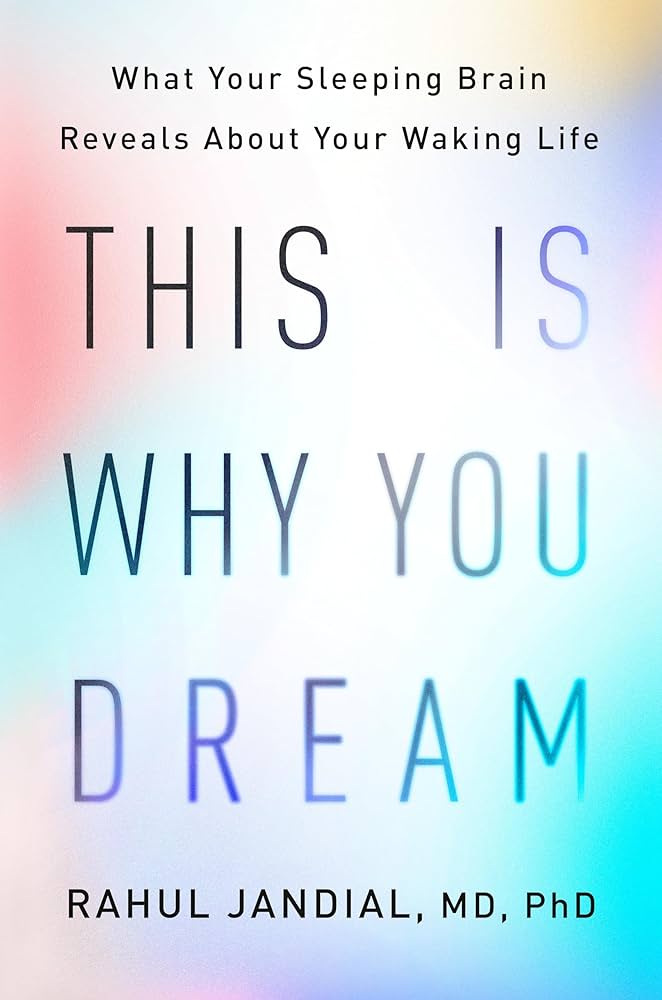
This Is Why You Dream: What Your Sleeping Brain Reveals About Your Waking Life
Dreaming is one of the most underappreciated functions of the human brain, yet our very survival as a species depends on it. In This Is Why You Dream, dual-trained neuroscientist and neurosurgeon Dr. Rahul Jandial explores the landscape of our subconscious, tracing the latest cutting-edge dream research and brain science to show why humans have retained the ability to dream across millennia, and how we can now harness its wondrous powers to improve our sleeping and waking lives.
There's so much that dreaming does for us. It fortifies our ability to regulate emotions. It stores memories, amplifies creativity, and promotes learning. It helps us process trauma and prepare for future upheaval. Dreams can even forecast future mental and physical ailments, such as Parkinson's and Alzheimer's.
Dreams can also be put to use. Dr. Jandial walks you through how to use lucid dreaming to practice skills that translate into real-life improvements, how to rewrite nightmares, and what your dreams reveal about your deepest desires. Ultimately, This Is Why You Dream opens the door to one of our oldest and most vital functions, and unlocks its potential to radically transform our lives.
Resources
-
- Neuroscience News: Why Your Brain “Dreams” Even When You’re Awake
- Journal of Traumatic Stress: Imagery rehearsal for posttraumatic nightmares: A randomized controlled trial
- Cleveland Clinic: Why Do We Dream?
- MIT McGovern Institute: Dreaming is influenced by the consolidation of memories during sleep
- Trends in Cognitive Sciences: Dreaming and the brain: from phenomenology to neurophysiology
- Journal of Clinical Sleep Medicine: Prodromal features and risk of neurodegenerative disorders diagnosis in outpatients with REM sleep behavior disorder
- Journal of Clinical Sleep Medicine: Randomized Controlled Trial of Imagery Rehearsal for Posttraumatic Nightmares in Combat Veterans
- Journal of Cognitive Psychology: Sleep and incubation: Using problem reactivation during sleep to study forgetting fixation and unconscious processing during sleep incubation
- Harvard Medical School: Nightmares and the Brain
- New York Times: The Mind-Altering Power of Lucid Dreaming
2 Million Readers.
1 Life-Changing Newsletter
Simple and Straight-to-the-Point...
Just Like Mel.