Episode: 411
How to Master Any Conversation, Communicate With Confidence, and Deal With Difficult People
with Oz Pearlman
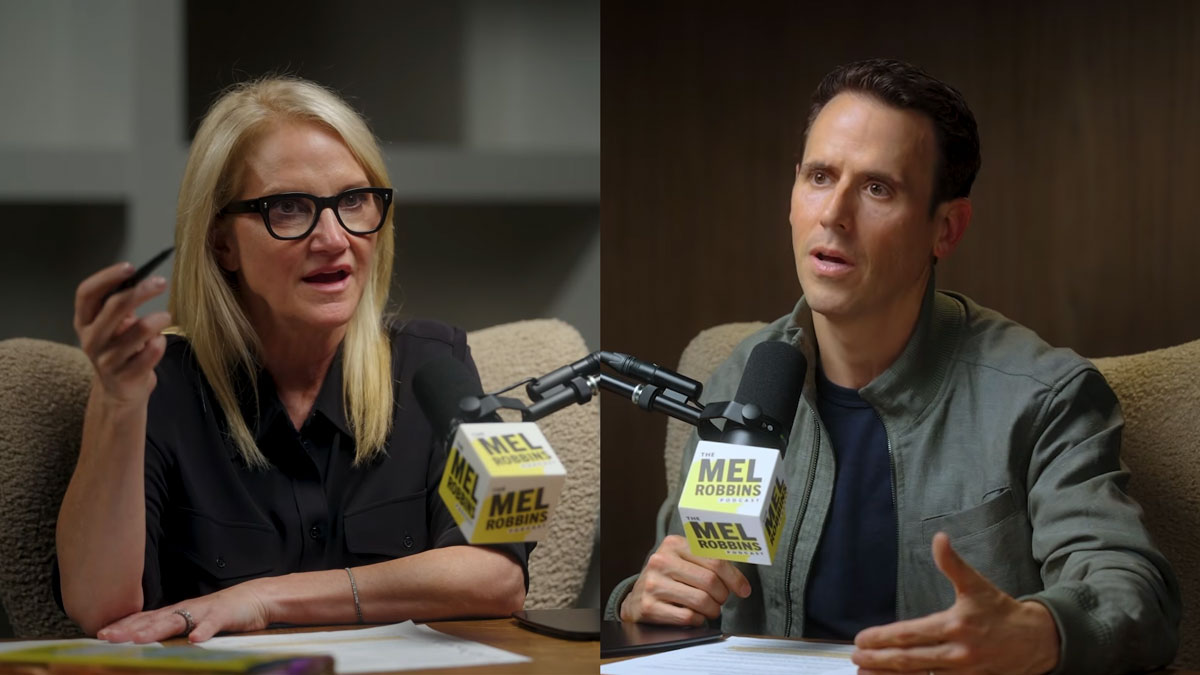
This episode is your guide to becoming more confident, reading people, building instant connections, and becoming more likeable.
Today, Mel sits down with Oz Pearlman, a world-renowned mentalist who has spent decades mastering the skills that make people more trustworthy, respected, and likeable.
On stage, Oz creates the illusion of reading minds. But in this energizing conversation, he reveals some of the tools behind his success that you can use in your own life to read people, talk to anyone, and communicate with confidence.
You’ll learn how to pay attention to what 99% of people miss, build instant trust, and become unforgettable in the process.
Whether you want to speak up at work, make a stronger first impression on a date, or go after what you want in life, this conversation will show you how to become bold, magnetic, and memorable.
Listen on:




You become the most interesting person in the room by being the most interested person in the room.
Oz Pearlman
All Clips
Transcript
Oz Pearlman (00:00:00):
Open your eyes. I've written down one word. I can't change it. What was the word out of your entire book, The Let Them Theory? You go to any page, circle any word. What was that word?
Mel Robbins (00:00:09):
Want.
Oz Pearlman (00:00:10):
Want is what I wrote down.
Mel Robbins (00:00:12):
That's incredible. That's the word.
Oz Pearlman (00:00:14):
That's the word.
Mel Robbins (00:00:15):
That's what a mentalist does. Today, you and I are sitting down with the top mentalist in the world owes Pearlman. What exactly do you do for a living? Because you hear the word mentalist, I'm thinking, oh, Os reads minds. Is that what a mentalist does?
Oz Pearlman (00:00:31):
I'm creating the illusion of reading your mind and I've spent 30 years learning how to do that, but I will tell you the skills that you will want to use, which is how do you walk into a room and immediately command attention. I want this to be something that 10 minutes after this episode you will start using and 10 years from now you will still be doing on a daily basis. A few years ago performed a show where the President Barack Obama was speaking.
Mel Robbins (00:00:55):
And were you going to do a trick on Barack Obama?
Oz Pearlman (00:00:58):
I hope so, but I don't know if that's going to happen. So what I'm told is that I'm performing later in the night. He's going to be doing an opening session and so he's going on before me and he's not staying. I never believe that when somebody says, when somebody says it's not happening or no, I think not yet. I didn't know if I'd have any time with him so if I am, I want to make it count. What do I do? Here's what I did. I believed in myself that 100% is the perfect line. He turns to me right when we shake hands. I lock eyes with the president and I say, right away I see in his eyes, I see in his eyes. You don't have to be a mentalist. Confusion. And I said to pick a page with some sort of meaning to you, not random.
Mel Robbins (00:01:37):
Yes.
Oz Pearlman (00:01:37):
The page has three digits, doesn't it?
Mel Robbins (00:01:40):
Yes.
Oz Pearlman (00:01:40):
You went to page 217, Jody. Is it Jody?
Mel Robbins (00:01:43):
It is Jodi. It's Jody. That's absolutely incredible. Hey, it's Mel. And before we get into this episode, my team was showing me 57% of you who watched the Mel Robbins podcast here on YouTube are not subscribed yet. Could you do me a quick favor? Just hit subscribe so that you don't miss any of the episodes that we post here on YouTube. It lets me know you're enjoying the guests and the content that we're bringing you because I want to make sure you don't miss a thing and I'm so glad you're here for this episode because this is a really good one. All right, let's dive in. Os. Pearlman. Welcome to the Mel Robbins podcast.
Oz Pearlman (00:02:23):
Thank you for having me on. What an honor.
Mel Robbins (00:02:25):
What an honor. The last time I saw you, we were both dressed in black tie on the red carpet at the Golden Globes and we had just booked you to do this interview.
Oz Pearlman (00:02:36):
Timing is everything in life and my ride was serendipitous. We are much more comfortably dressed this time around. And yeah, I'm excited to be here.
Mel Robbins (00:02:43):
Oh, one of the many reasons why I was so excited to be able to sit down and learn from you today is I believe that you have so many amazing and surprising things to share about success, living a meaningful life, handling difficult situations, and creating opportunity and success for yourself. And so I would love to hear you just speak directly to the person who's with us right now listening or watching and share a little bit about what might change about their life or their mindset or what's possible if they truly lean in and take to heart everything that you're about to share with us from your remarkable career and life.
Oz Pearlman (00:03:29):
I think all of us are going after the same things, right? Happiness, health, living a successful and fulfilling life. And none of that occurs in a vacuum. It all has to do with your interactions with the people around you, your family, your friends, within your work and professional life, your clients, your colleagues. I spent 30 years learning the way people think and how to interact with them. As an entertainer, my job is to get inside your head and create memorable moments of wow and awe. What I want to do is give you that ability in your life. How do you become the most memorable person in every room you walk into? How do you gain that confidence quickly? How do you overcome the fear of rejection that I think holds us back both in our personal and professional lives? I've experienced it. What can you do to fast track that?
(00:04:17):
And lastly, how do we have more stimulating conversations and connections with the people around us?
Mel Robbins (00:04:22):
So Oz, how would you even describe what you do?
Oz Pearlman (00:04:25):
So a mentalist is a form of a magician. I want to tell you what I'm not. I am not psychic. I do not have supernatural powers. I cannot talk to the dead. When people ask me, what is it that you're performing? They are tricks. That is the truth. It appears to be mind reading, but that's the illusion I'm trying to create in my audience. All of it with the goal of creating these memorable moments that you leave amazed and telling everyone else around you what you experienced. I have figured out the way people think. I've studied it for decades and I know how to influence them and guide them in certain directions and I know how to get information from you that you simply don't know how I'm getting. And here's the really important part for you listening to this is that magic is such a focused discipline of, look how great I am.
(00:05:12):
Shine this spotlight on me. Look at me. Somebody told me this once and they said to me, everybody is living a movie and you're the star of your movie. Everyone else is supporting characters. Some people are extras. The more that you can find a way to make other people you interact with feel like they're also the star of your movie, the more that they will help you in your life. It sounds selfless, but it's a selfish approach that ends up being so selfless because when I meet people, I want to create a memorable moment for them that they will talk about to others. And it took me so many years to understand that that's what I do for a living. I create memorable moments. You
Mel Robbins (00:05:51):
Know what this reminds me of is it reminds me of this quote about purpose that has stayed with me forever. And it's this, that purpose is not the thing you do. Your purpose is the thing that happens in other people when you do the thing that you do. And that's exactly what you're talking about.
Oz Pearlman (00:06:16):
Right. People don't remember what you did. People remember how you made them feel. And that's such an important thing to comprehend and understand the difference between it because so many of us think about when we leave a room, did I say the right thing? Did I embarrass myself? Did I talk too fast? Did I talk too slow? What did they think of me? Most of the time people aren't thinking what they thought of you. It's how they felt around you
Mel Robbins (00:06:39):
That
Oz Pearlman (00:06:39):
Matters.
Mel Robbins (00:06:40):
That's that famous Maya Angelou quote. I have a question for you. So if the person listening or watching has never had the experience of either seeing or being in the presence of a mentalist, before we go any further, could you just give a simple example? Let's say the person who's listening or watching right now is actually in front of you or at one of your shows. Can you just give a simple example so they can grasp what you do?
Oz Pearlman (00:07:11):
I have one better. That's like explaining a song instead of singing a song.
Mel Robbins (00:07:14):
Okay.
Oz Pearlman (00:07:15):
Let them, right? Tens of millions of people can't stop talking about it. Yo book is piled up out there. I'm going to turn my back. You're going to be flipping through this book. You're going to be stopping. Boom, on one page. And when you go there, this is a conscious choice. There's a reason for this page. And when you go there, I want you to stop on that page. I want you to bring it close to your body and I'm going to turn and make sure there's no way, no mirrors, uncover my eyes. Go to that page right now.
Mel Robbins (00:07:42):
Okay. And the page I'm going to is one where the number of the page -
Oz Pearlman (00:07:47):
Has a meaning to you of some sort. Something hard, something I couldn't have looked up, something there is just no feasible way, but to you it has a meaning. To you, you're going there for a reason.
Mel Robbins (00:07:56):
Okay. Okay. Now you've got to tell - On this page.
Oz Pearlman (00:08:03):
Your listener, your viewer, they know you. You're their friend, Mel. You have not told me what
Mel Robbins (00:08:08):
Page you
Oz Pearlman (00:08:08):
Are going to. No.
Mel Robbins (00:08:09):
There is no
Oz Pearlman (00:08:09):
Conceivable way that I could know what page or what meaning this has or any of it. I want you to take your finger, drag it up and down on the page. You're going
Mel Robbins (00:08:18):
Past
Oz Pearlman (00:08:18):
All the words you wrote and it's as if you stop on one word, you're drawn to it.
Mel Robbins (00:08:22):
I'm doing it.
Oz Pearlman (00:08:23):
It's like magnetized and you circle it with your finger. Your finger starts making swirls around it and you feel compelled and you just keep circling that word and then you stop and you close the book tightly and you put it back down. Boom. Count in your mind how many letters are in that word, but just to yourself, not out loud. Now I'm going to tell you right away, just by saying case so quickly, it was fast. It was an easy word to count. If you had taken longer, if you had struggled, if the word was especially, oh, I got to count that word now. And then the two Ls, double letters always throw people off. You said okay, not because you were trying to give it away because you were done counting, which means to me that the same way I have a five-year-old who's in first grade or in kindergarten going into first grade sight words, you don't count them.
(00:09:15):
You just know them. The word you picked was either three, four, or five letters, four letters. It was four letter word, wasn't it?
Mel Robbins (00:09:22):
Yes. It
Oz Pearlman (00:09:23):
Was four letters. Think of all the letters. Now, while the page had a meaning -
Mel Robbins (00:09:29):
I'm trying to manage my face, so I'm not sure. Are you any signals?
Oz Pearlman (00:09:33):
Think of all the different letters as if they're Scrabble tiles, as if we're playing Wheel of Fortune. And suddenly any one of those four letters, maybe it's interesting to you. You just decide that letter, it blinks and lights up and you see one of the letters.
Mel Robbins (00:09:46):
Can
Oz Pearlman (00:09:46):
You see it right now as if it's in front of you?
Mel Robbins (00:09:48):
Yep.
Oz Pearlman (00:09:49):
So I know that we read from left to right. So I know that your brain would've processed looking from left and going to the right and then you would've stopped and most people go back to the start of the word. You didn't, which is interesting. How do you know
Mel Robbins (00:10:02):
That? Well, I watched - And I just gave that away because I didn't... Okay, go ahead.
Oz Pearlman (00:10:06):
You weren't thinking of the last letter of the word, were you?
Mel Robbins (00:10:09):
No.
Oz Pearlman (00:10:09):
I don't think so because you jumped back. It starts with a W. You're thinking of the letter W, aren't you?
Mel Robbins (00:10:16):
How the hell do you know this? And
Oz Pearlman (00:10:17):
I think I'm done. I just want everyone that's listening and can't see to know that I've written a word. I've written down one word. I can't change it. What was the word out of your entire book, The Let Them Theory? Did you go to any page, circle any word? What was that word?
Mel Robbins (00:10:33):
Want.
Oz Pearlman (00:10:33):
Want is what I wrote down.
Mel Robbins (00:10:36):
That's incredible. That's the word.
Oz Pearlman (00:10:38):
That's the word.
Mel Robbins (00:10:40):
That's the word. That's what a mentalist does.
Oz Pearlman (00:10:44):
That's what I do.
Mel Robbins (00:10:47):
Wow. Well, I want to know how to do that.
Oz Pearlman (00:10:49):
So I will tell you the truth is that this will not be useful to you in your life. You think it will.
Mel Robbins (00:10:54):
Then why am I listening to this or watching this episode? So
Oz Pearlman (00:10:56):
This trick is a trick. At the end of the day, you guessing a word, you guessing a number, you guessing somebody's ATM pin code, unless you have nefarious purposes will be excellent for entertaining.
(00:11:08):
But I will tell you the skills that you will want to use, which is how do you walk into a room and immediately command attention?
Oz Pearlman (00:11:14):
How do you walk into that room and become the most memorable person in it so that when you leave, everyone is talking about you. What's at the core is how you make people feel. There's other people that can do these tricks, I assure you, but it's how do people leave my show? How do people leave an interaction with you and feel? And think about how many times you've been to a party and you've left and you've said, did you meet that one person? You go, Chris, did you meet them? I love them. Why did you love them? Why did you connect with them in such a meaningful way when you maybe met 20 or 30 other people? How do you analyze what made them so interesting?
Mel Robbins (00:11:46):
Well, it's typically because I'm laughing and they're a great storyteller or we have a lot of connections or they, I don't know, you can go deeper in the conversation because you're talking about something that's a shared interest.
Oz Pearlman (00:12:05):
Right. They went beyond the surface and they made you feel like you were the most interesting person. Almost every time you realize it, it's not just somebody who's constantly talking about themselves. It's them finding a way to bring things out of you that you haven't before. So one of the big ones, as I mentioned autopilot, I think so many of us when we meet new people were right away scared. "What am I going to ask them? What am I going to talk about? "And you start second guessing yourself. I think the most important thing is the first three questions you want to ask that person don't because that's what everyone else asks.
Mel Robbins (00:12:39):
What are the first three
Oz Pearlman (00:12:40):
Questions? So the dreadful ones. Where are you from? What do you do for a living? All of the questions they've been asked a thousand times before, their brain goes into autopilot. There's a heuristic in their brain that says," I'm going to answer these questions. "I would do a little more sleuthing below the surface, which is something where you notice something about them. People love a compliment. Those glasses are so unique. I'm so curious, where did you get them and what made you get those instead of another one? And so now we get to tell you something about a choice we made
Mel Robbins (00:13:08):
That
Oz Pearlman (00:13:09):
Most people haven't thought to ask us. Also, you've complimented us, which is a nice feeling right from the jump. So it should be genuine, but have a question that branches out and that hopefully somebody else hasn't asked before.
Mel Robbins (00:13:22):
Well, you know what I love about that just one technique, which I want to make sure as you're listening or watching, you grab it and you employ it is that you turned a compliment into a question because a lot of us are practicing the art of learning how to speak to each other again. So we might be standing in line with somebody and go, " Oh, I love those socks, but I didn't ask you a question. Those socks are crazy amazing. What made you want to put those on this morning?
Oz Pearlman (00:13:51):
"That's a great question because now we branch and I go, " You wouldn't believe it. My son got me these last year for Father's Day and now what's happening? Percolating, dopamine. I'm feeling good. Wow, what an interesting person. They asked me this question. And now where do you go from there? You've opened up new branches of a conversation that instantly would've been shut down otherwise. If you have to go to one of those dreadful first three of what does somebody do for a living, put a different spin on it. Again, my tricks have different packaging. I could do this trick and I could have just asked you to pick a playing card. You put it back, I find it, eight of diamonds. Would've had the same appeal as a word from your book and a page that has meaning, which I'm going to get to later.
(00:14:31):
It wouldn't because the story differs.
Mel Robbins (00:14:33):
So for the interaction where you're at a networking meeting and you say, don't just do the, "Hey, so what do you do for a living?" What is the twist that you recommend that allows you to be more interesting?
Oz Pearlman (00:14:49):
I think that I would say I would open with how you feel because you'd be shocked at how often other people feel the same way, which is, "I get so nervous at these. I don't know what to say, but you seem so friendly. Can you tell me one funny thing you did at one of these before?" Just again, open up a story, never ask a yes or no question or a question that ends with a period because what you're doing then is you're allowing people to close doors. I want to open a door that leads to room with more doors.
Mel Robbins (00:15:17):
We are getting so many people writing in asking for specific advice about how do I actually talk to people that I don't know and especially in a professional setting. So is there something you can give as a recommendation to just try and experiment with? Because I think for a lot of people that it doesn't come naturally.
Oz Pearlman (00:15:42):
Sure. So let's break this down into two channels, two little options.
Mel Robbins (00:15:47):
Option
Oz Pearlman (00:15:47):
One, you can prepare. You know someone you might be meeting, you get to do homework. It's not cheating, it's called being prepared. So if you can do that, and I want to give you an example from my life that was pivotal,
Mel Robbins (00:15:59):
Which
Oz Pearlman (00:15:59):
Is I a few years ago performed a show where the president Barack Obama was speaking.
Mel Robbins (00:16:04):
Okay. How nervous were you?
Oz Pearlman (00:16:06):
I don't think I was that nervous because I like to convert nervousness into preparation. So in this situation, it's not that I'm flaunting or trying to be showy. I take what you would describe as nerves and say, "I'm going to prepare."
Mel Robbins (00:16:16):
Okay.
Oz Pearlman (00:16:17):
I'm nervous if I didn't prepare. And
Mel Robbins (00:16:18):
Were you going to do a trick on president?
Oz Pearlman (00:16:20):
I hope so,
Mel Robbins (00:16:21):
But I don't know
Oz Pearlman (00:16:21):
If that's going to happen. So
Mel Robbins (00:16:23):
What
Oz Pearlman (00:16:23):
I'm told is that I'm performing later in the night. He's going to be doing an opening session and so he's going on before me and he's not staying, is what I was told.
Mel Robbins (00:16:30):
Got it.
Oz Pearlman (00:16:31):
I never believe that when somebody says. When somebody says it's not happening or no, I think not yet. So the same way you have let them, I have no not yet.
Mel Robbins (00:16:38):
Love it.
Oz Pearlman (00:16:39):
And I have another theory which I want to tell you, which I call it make them. So this is where instead of let them, I think that make them is what I'm all about. It's what my last 20 years of my life have been because I'm not waiting for gatekeepers to tell me that you're going to be big as a mentalist. This is a category that didn't really exist. And how do you make them remember you? How do you make them talk about you? So with the president, I didn't know if I'd have any time with them. So if I am, I want to make it count because it might be a handshake, it might be five seconds, 10 seconds, two minutes, who knows, but I've got to make it count. So what can I do in that moment? Everyone is going to walk up to him with one version of, "It's an honor to meet you, president.
(00:17:17):
Here's a story I have about you. Here's something that you won't remember, but I will." I realized that
Mel Robbins (00:17:24):
I- I'm sorry to laugh, but- But we've all done it too. Somebody that we admire like, "Oh my God, I was an idiot."
Oz Pearlman (00:17:30):
There's nothing wrong with that though, but that's what 99% of people do. I want you to be the 1% who doesn't who breaks the mold.
Mel Robbins (00:17:39):
What do I do?
Oz Pearlman (00:17:40):
Here's what I did. I thought about this line for months. So at the moment where there was a meet and greet, it was impromptu. The president was talking to different people. I wish I was taller. I'm five seven and three quarters. I need that three quarters, Mel, but all the taller guys are getting looked at. All of the women finally, he turns to me right when we shake hands. I lock eyes with the president and I say, "Thank you so much for the gift, sir." Right away, I see in his eyes, I see in his eyes, you don't have to be a mentalist, confusion, which is what I wanted to elicit. And in that moment he said the same thing that I believe 99 out of a hundred people would say if a stranger walked up to you and said, "Thank you so much for the gift." What gift?
(00:18:18):
He goes, "What gift?" Which set me up perfectly for me to say, "I'm going to be performing in 15 minutes, which means that technically I'm going on after you so I forever get to tell people that President Barack Obama opened for me.
Mel Robbins (00:18:31):
" Oh my God, that's brilliant. So
Oz Pearlman (00:18:33):
He laughs and now I'm playing chess, not checkers, where I want him to say, "What are you performing?" It goes exponentially better, Mel, because he goes, "Oh," and he looks at me and he goes, "I know you. Oh my God, the thing you did with Aaron Rogers was incredible." I'm looking at my wife who's at the show being like, "He knows who I am right now. He knows who I am." So right at that moment, he's still locked in and I knew that my moment was fleeting and I said, "Are you ready for the most amazing thing you've seen? Not today, not this week but this month. Do you have 30 seconds, sir?" So right away, notice that I've set up a lottery system of who's going to say no to this. Not can I show you a trick? I'm not showing you a trick.
(00:19:14):
Can I show you the most amazing thing you've seen? I've set up a tone of how good it's going to be. Do you have 30 seconds? 30 seconds for most people. The minute he said back to me, 30 seconds, I've got him. So it doesn't matter what he said. He either says no or 30 seconds. Once he said 30 seconds, I'm already 10 seconds in and we're going to go much longer than 30
Mel Robbins (00:19:32):
Seconds. So what'd
Oz Pearlman (00:19:33):
You do? I handed him a business card in his hand and said, "Think of anyone you're going to talk to in the next week." And he goes, "I got someone." I go, "Change your mind right now. So when you tell this story later, you will always say, how could he have known? I changed my mind in the middle. How could he have known?" And then he said, "I got it. " And I say, "Turn it over." And when he turned it over, it says, say hello to Marty for me. And he just flipped out. You can see the clip. So that was my moment with him. And that was something that I would say years I've been thinking, what's my elevator pitch if I had this moment with the president?
Mel Robbins (00:20:03):
Think about who you're going to meet. Think about the situation. Think about what you would do with that 30 seconds if you have the chance, which is not guaranteed to actually meet this person. And so I take it you had prepared, you knew exactly what you were going to do and you weren't waiting for the gatekeeper.
Oz Pearlman (00:20:21):
No.
Mel Robbins (00:20:21):
You just did it.
Oz Pearlman (00:20:23):
There's no agent, there's no manager, there's nobody in life that will ever be as vested in your success as yourself. So you don't wait for people to say and invite you, "Here's how you're going to be a star or here's how you're going to be the number one salesperson in your organization or here's how you're going to be the best mom or the best dad." Sorry, that doesn't exist. Everybody's trying to figure out this game of life at the same time. I've met people that are literally one or two of the three wealthiest people in the world. I've met presidents, I've met royalty and I came to the conclusion at a certain point I had this pedestal. Everyone's figuring it out just like I am. And so I'm trying to say to myself, when the moment happens and if you can create that moment, because so much of what people will say is lucky is putting yourself in a situation where luck can happen, which is years and years of moving towards that moment.
(00:21:10):
For me to have gotten to that, I could tell you five steps that even got me into the room with the president that all of which occurred not because somebody opened the door for me, but that I kept putting a toe in and then another toe and then another toe and squeezing it and then opening it up and finding an opportunity. And when that opportunity came exceeding the expectations of the person I was with and having a give and take relationship where I keep giving, giving, giving, giving so that at the moment when I want to take, it's not even a take they want to give back to me. I think that's so important is that you're constantly doing that with the people around you.
Mel Robbins (00:21:44):
I love that you're saying this because I always talk about these like at bat moments. There are these moments in life that really matter and there's a lot of people and you may be one of them as you're listening and watching that are sitting around hoping to be found, sitting around hoping your boss notices you or you're working hard with your head down hoping somebody finds you or quote discovers you. And in today's world, that does not work. You have to do what you're talking about, which is to understand that the things that you want are your responsibility and you got to learn how to ask for what you want. You got to be willing to be seen. And a lot of this comes down to what you're talking about, about seeing the opportunity that you have more ability if you prepare, if you know what you want.
(00:22:31):
So if it's around understanding first of all that there are no gatekeepers except for the way we gatekeep ourselves and you got to prepare and the secret that you keep saying is not doing the same old, same old, so that you put the spotlight on someone else.
(00:22:51):
What's the next step?
Oz Pearlman (00:22:53):
I implore you to find a way where if you're at the start of your career or if you're at the start, even if you want help in anything, look to see that person who would be a mentor or help and guide you and see what do they need instead of you leading with what can I take from you? It might be information or time. What is it that they want back? And I'm going to give you just a great example of this where I've mentored a lot of other people that perform and do what I do and many of them will lead with, how did you do this trick? And I'm not going to answer that because it just doesn't show that you've put in the work.
(00:23:21):
But I had one young guy who came to me and looked at my website, studied it and said, "I just wanted to let you know that you had typos on this page, this page and this page, that your press, this link was broken, this link was broken and that your Wikipedia had a bunch of errors. If you'd like, I'm happy to compile all this, fix your Wikipedia for you and send an email with every page and where it is to your web designer to help you out. " He didn't ask a single thing. I go, "Wow, thank you so much. Yeah, that'd be great." And then after that, found another thing you could do and another thing. And so what happened after about three iterations of this? I said, "What can I do to help you? " I wanted to help that person the same way that sending somebody a thank you card or a gift will almost always elicit at the very least a thank you back.
(00:24:07):
And maybe that's not the door opening, but it's a toe in the door.
Mel Robbins (00:24:11):
I love that. I also loved what you said, don't wait for a gatekeeper. Can you unpack that more for the person listening or watching?
Oz Pearlman (00:24:20):
So I think a lot of us have this dream and I did because I didn't grow up thinking I'd be in showbiz. I am first generation immigrant.
Mel Robbins (00:24:27):
What did you think you would do?
Oz Pearlman (00:24:29):
So I was on the path of, again, I don't call it first generation, but my parents said, "You go to school, you get a degree, you get good grades, and then you get a job and then you work for someone else." That was the way I was conditioned and brought up. That was what I was defined as success. I started doing magic when I was 13 years old. I won't give you the whole life story. When I was 14, my folks had gotten divorced. We didn't really have a lot of money. It was very messy and I wanted to keep performing and getting new magic tricks and they're very expensive. And so for me to do that, I had to start working. My mom's like, "You got to go work." So I walked over to a restaurant half a mile from my house. I somehow sweet talked myself into getting a job, being a closeup strolling magician, printed my own business cards, handcut them and started getting gigs doing children's birthday parties and corporate events.
(00:25:13):
And so when you asked me what did I view, I never viewed it as I could do this full-time professionally. I did this in order to get my degree to go work in a corporate job and I worked on Wall Street for a few years and at a certain moment there were all these light bulb moments, as you call them of, wow,
(00:25:30):
Could I actually do this for my living? Could I do this? Make it from something that's a dream into a reality. And I think so many of us have that of, is this what I'm currently doing what I was born to do? Is this what my calling is? And at a certain point I couldn't keep going for it if I was always on the wall. I had to jump in the pool. I couldn't just dip my toes in the water. So in 2005, I quit my job. I went for it full time and it was not something everyone around me thought was a smart fiscal decision. It seemed pretty crazy to go from working on Wall Street with a very well paying job to you are suddenly a magician/mentalist. And day one of me doing that, I realized no one is going to call me in the 1920s Vaudeville and say, "I'm going to make you a star, kid." That's not going to happen.
(00:26:15):
I had that moment sitting on the couch watching daytime TV and saying, "I don't have to do anything right now, Mel. I could just eat cereal and sit in my boxers watching TV." And I thought for about five minutes, this is the most glorious morning of my life. And then this feeling settled in and I go, "Oh my God, I don't have a boss. I could just keep doing this, but no one is going to make this happen if I don't." And I turned off the TV and I said, "I got to start making moves." And there is no playbook for being a movie star or a mentalist or a rockstar or so many of these careers. So I think you've got to start defining your goals and what success is and taking small, incremental, quantifiable steps towards achieving it.
Mel Robbins (00:26:56):
For somebody who is listening or watching, because I have a feeling it's going to be one of those episodes that a lot of people send to their adult kids or maybe they send to their spouse or they send to somebody who is really resistant to putting themselves out there. What would you say to somebody who is uncomfortable with even just putting that little toe in the water who sits back and watches everybody else do it, but could do it? What do you want to say to that person?
Oz Pearlman (00:27:27):
Whenever people see you at a certain level, they don't see all the years that came to being here. So they don't see me at 14 years old walking up to a table being rejected because they didn't want some 14-year-old shrimp coming over while they had a babysitter and who are you? And you start doing card tricks, "Get out of here, kid, and you don't care about my feelings. I'm not their kid." And that hurt. I can't lie to you and say that being rejected in that way doesn't hurt. And if it happens at one table and then another table and then another table, it crushes you.
Oz Pearlman (00:27:57):
And so what I learned at that age, and I think that it's helped me throughout my whole life, it's a form of resilience is I learned how to overcome not just rejection, the pain of rejection, but what happens over time is you have a fear of rejection.
(00:28:12):
I would argue that most of those people that you're mentioning aren't even feeling rejection. They fear the rejection so much that it stops them dead in their tracks before trying. And so here's the cheat code.
Mel Robbins (00:28:24):
This episode is brought to you by Peacock and the new original series, The Five Star Weekend. Jennifer Gardner stars as Hollis Shaw, a famed cook known for her delicious recipes and impeccable taste after braving a devastating loss. She decides to invite her best friends to a getaway on Nantucket. As boundaries are pushed, friendships are tested and secrets are exposed, cracks begin to emerge in her picture perfect life, he strained marriage, her complicated relationship with her daughter, and her growing pursuit of validation from her fans. Based on the bestselling novel by Ellen Hilderbrand, this A - list ensemble also stars Darcy Carden, Gemma Chan, Regina Hall and Chloe Seveny. This show is everything, laughs, drama, suspense, and incredible performances all around. All eight episodes drop at once and take it from me, you're going to want to watch it all in one sitting. The five-star weekend is streaming July 9th only on Peacock.
Oz Pearlman (00:29:26):
I want to give you how to fast forward and cheat so you don't have that fear of rejection because this is what I knew when I was 14 years old and I did it as a way and it was selfish because I couldn't fail. I couldn't leave that restaurant and just be like, "I'm not doing this because I wanted to keep getting magic tricks." I'm like, "I got to buy more tricks now, so I can't let these other people be in charge of my future because they're hurting my feelings." So I can't explain to you how I fell upon this, but I realize that I need to separate myself this part of your psyche that takes the hurt and feels it and Then separate from this other person. I had this paradigm shift where I go, "They don't know me. That person does not know me.
(00:30:06):
I'm Ows Pearlman. They don't know me. They know the guy who just came up to them and did tricks. I called them owes the magician in my mind. I created this split personality where all of the anger, chaos, frustration, hurt got put on this other person where I could deflect that responsibility and go, "They don't know me. I'm not hurt when I leave that table." I said, "Thank you very much, guys. I'll see if I can come back later. Appreciate you. " And I had none of that pain because I separated myself and it's almost like having an agent where your agent gets to have the calls where they go, "I don't want to do this negotiation or I don't want to talk to that person about this thing. You have an agent that handles it. I became my own agent and somehow I created a set in my mind where I said, I no longer feel the pain of you rejecting me because you're not rejecting me.
(00:30:51):
You're rejecting this part of me and you don't know the real me. I realized that if I give away 60 business cards in a night in the next year, I quantified it. One or two of those people will call me for their kids' birthday party or for some other party. One or two of them will call me. So rather than focus on 58 nos, every no gets me closer to a yes. So I want you to start seeing it that way in your mind. Right now, you're so scared to do it. You're so scared to do something. You're dreading it. Five second rule. I remember where I got that one. I get out of bed. I want to go for a run at 5:30 AM. I'm so groggy. I go, Houston, we have Lyft off five, four, three, two, one. I get up. So that works for me, but I'm going to give you a tag to your five second rule.
Mel Robbins (00:31:34):
Please.
Oz Pearlman (00:31:34):
What's my language of dread? Confrontation. I hate confrontation, Mel. If I have to talk to the guy who did our landscaping and argue about the fact that the trees weren't pruned and I got to argue about money, I hate that. I will defer it and move in my calendar for three days. If I have an argument with my sister, I don't want to talk. I don't want to... So how do I deal with this? Here's what we do. Are you ready?
Mel Robbins (00:31:55):
Yes. You've
Oz Pearlman (00:31:55):
Got a phone. I've got a phone. Right before you do it, we're about to employ the five second rule. In my mind, I ask myself, how much am I dreading this on a scale of one to 10? It's a nine. I don't want to do this at all. I put an alarm for 24 hours from today and I write dread talking to landscaper as my thing. Took me three seconds to do that. Right then, five. Second rule, I make the call. I rip the bandaid. I do it no matter what. I rip the bandit. I do it. I get it over with. Force yourself to do it. Here's what's going to happen. The next day the alarm's going to go off. If you even remember what this was a day later, ask yourself at that moment, what do I register the dread that it was talking to landscaper?
(00:32:38):
It's a two. It's a one if I even remember it. What happened? Learn from my job. My job is to deceive you in order to entertain you. I have studied the way people think for upwards of 29 years. The human mind is wired where right now all you did, nothing happened.
Oz Pearlman (00:32:57):
You feel better. Why? Time elapsed. Nothing else. Time went by. What if you could fast forward those 24 hours and feel the one or two now? I call it fast forward your feelings. I literally, I say to myself, I want to feel the way I do now 24 hours ago before I do it. And if you do this two or three times, you will realize all it is is perception. All that happened is perception. You are in charge of your mind. So right before I make that call, I go, I'm going to feel a two now because in a day I'm not even going to remember this.
(00:33:25):
So you know what? Before I count five, four, three, I'm going to feel the same way I do in 24 hours now because I so know that that's how it's going to be. I feel better now. Let's make this call and get it over with. I've just tricked my mind and traveled into the future knowing this is how I will feel. I
Mel Robbins (00:33:40):
Love this and I want to make sure that as you're listening or watching, you actually got the step-by-step process because I do think it's genius. You have a phone call to make. You've paid somebody to do something. They didn't do the job right.
Oz Pearlman (00:33:53):
Or a family conversation.
Mel Robbins (00:33:55):
Or a family. But even just like the neutral one that you gave of, "Oh my God, I paid and it didn't get done right. Now I got to call the person and they're going to be a this and a that. " And so we've all felt that. And what you're saying is you set an alarm in your phone that says - 24
Oz Pearlman (00:34:10):
Hours from now.
Mel Robbins (00:34:11):
24 hours from this moment, dread calling the landscaper.
Oz Pearlman (00:34:15):
Exactly.
Mel Robbins (00:34:16):
And then five, four, three, two, one, you call the landscaper.
Oz Pearlman (00:34:19):
Must. You rip the bandaid.
Mel Robbins (00:34:20):
You do it now. You must do it now. You get it over with. It goes however it goes. 24 hours later, you've even forgotten about the call and the alarm goes off. And now the fact that you are being reminded that you dreaded this so much and it's already in the past, you're now training yourself in that moment to reflect on the fact that it wasn't that bad.
Oz Pearlman (00:34:42):
Right. Which your mind is programmed to do.
Mel Robbins (00:34:44):
Here's what I think is genius about this and I'm going to try this. And the reason why I think this is genius is because for the last 16 years I have been counting five, four, three, two, one to get out of bed. I still hate getting out of bed. But I think if I were to set the alarm, which I'm going to do tomorrow morning and I then reflect the next morning on the fact that it wasn't so bad, I might actually train myself not to feel the dread in the morning versus just having to constantly push myself through it. This is fascinating.
Oz Pearlman (00:35:19):
Dread is associated with starting that the first step is far harder than the 10th. And so you just set things aside. Who's guilty of this? I move it to my calendar tomorrow. I moved to my calendar the next day. Let's just move it to next week. Let's keep moving things that have no end timelines. Creativity requires a deadline. Certain things that are open-ended never end because I never want to do them. How many of us have those things that we'll do one day? When's that day going to come? And so for me with a lot of these things, unless they're forced upon me, which could be that I disappoint others eventually and they get mad at me and say, "Well, when are you going to do that thing? The time is now. I will keep pushing the end line and when it takes place. And so I had to do this as a survival mechanism because that dread feels worse than doing the thing.
Mel Robbins (00:36:05):
I want to go deeper because one of the other things that you say is that the first 10 seconds that you spend with someone are critical. What is happening in those first 10 seconds and what should you be taking note of?
Oz Pearlman (00:36:16):
So can I throw it back to the restaurant days? Because that
Mel Robbins (00:36:18):
Changed
Oz Pearlman (00:36:19):
My life.
Mel Robbins (00:36:20):
Truly,
Oz Pearlman (00:36:20):
When you look at me now, when I approached a table, I started noticing patterns and that's what we do throughout life. We notice patterns when we behave with other people. How do we interact and what do those patterns yield? This does well. Let's do it again. I noticed that if I approached people right away, right when people see you within the first second, there's so many judgements that occur. Now, in the situation I had specifically of walking up to you at a table, right away they asked themselves all of these questions. Who is this guy? What's he doing here? Does he work here? Oh my God, he's got a deck card. Is he a magician? Is he any good? Is he going to leave? Is he going to embarrass me?
(00:36:56):
Is he going to embarrass me? Does he need money? Oh my God, do I have money? All of those questions occurred in a split second. My job wasn't just to entertain you. My job was to diffuse tension and to answer every one of those questions, put a check mark next to them as quickly as possible in as few words and actions as possible and then flip the power dynamic. You now want me to not leave. Now I'm in charge of your attention. I'm holding it in the palm of my head in a very different way. So right away, I noticed a few patterns. When you approach somebody head on, this is so silly and you want to know about body language reading, try this today five minutes after this. If you approach someone head on, we are hardwired to feel danger when someone comes directly at you.
(00:37:41):
I would approach tables at an angle. So when I walk up to you, notice I walk up and approach at an angle with one eye showing, not two. It feels like just from a Pavlovian response of fight or flight, what is you feel less danger. I immediately put a time constraint in place because the lingering person who walks up to you, you don't know when they're going to go. So true. They're close talking. Oh my God, how long is this conversation going to be? If I walk up to you and say, "I only have 30 seconds." Right away, I've taken away so many of the parts of tension that you had. Who is this? Are they going to stay? What are they doing? Is this going to be long? And then right away, I know that you don't know if I work there. You don't know who I am.
(00:38:20):
Am I asking you for money? Right away, I knew that money and getting a tip makes you awkward. I see people searching, "Honey, do you have money to go? " So I would say to you, "Have you heard what's going on tonight?" This is your lucky night. So right away, I've asked a question that has no yes or no because no one says, "No, I don't like lucky nights."
(00:38:38):
I go, "The owner has me here as a special treat for all of you and I'm going to show you the most amazing thing you've seen this week. So I haven't ever given you a question you can say no to because when I used to walk up to you, the deck cars, who wants to be a trick? No thanks, kid. I've allowed you to stop me. " So I kept cutting down the amount of words, same way a great comedian makes the premise short and the punchline fast to check every box so that by the time I walked up to you, you're intrigued, you're interested, you know I work there, you know the owner social currency has blessed you with being here. I'm here as a treat from the owner. I'm not asking you for money. I don't want money. And so now you're loose, you're relaxed.
(00:39:18):
And now keep in mind, I've opened the door but you better deliver. So what I've done is I've taken away all the tension, but I better have a great trick as an opener. Yes, you better. All I've done is just started. I'm not giving you the secret to how you're going to be a success at what you do. That's on you, but I've given you the way to open the door so that the person is now interested and they've bought in and now you get your shot at bat.
Mel Robbins (00:39:40):
How do we apply all the knowledge that you have to those 10 seconds of first interacting with somebody? So
Oz Pearlman (00:39:49):
This is going to be situation specific.
Mel Robbins (00:39:51):
In
Oz Pearlman (00:39:52):
Your personal life, let's say you're meeting somebody that you're interested in. That's going to differ very greatly than if you are a pharmaceutical rep and you're meeting a new doctor
Mel Robbins (00:39:59):
Or
Oz Pearlman (00:39:59):
A new administrative assistant who's going to open the door to that doctor. Every one of these situations is different, but in every situation the common denominator is you need to start thinking like the person in front of you
Mel Robbins (00:40:11):
Because
Oz Pearlman (00:40:11):
Most of us when we walk up are thinking about ourselves and what are we going to say about us and what's going to matter about me? And I want you to take and stop that. That's where I said make them. Make them care about you, make them talk about you, make them remember you. And you do that by making it about them, make it about them. When you walk up to that person, try to be aware of what makes them tick. I had a Delta flight recently canceled. Shout out. I love Delta. I fly them all the time, but I had another one. And then another one. And I'm stuck at the airport and I'm walking up to the airport attendant and everyone else is being rude to this person. And that agent, do you think that's going to help when you are the 10th person to come up and be rude and flex your status and all that?
Mel Robbins (00:40:53):
And by the way, do they have any control over the weather or the equipment or the timing out? Did they cancel it on purpose to screw you? No.
Oz Pearlman (00:41:01):
But you're mad. And I think that if you walk up to that person
Mel Robbins (00:41:05):
And
Oz Pearlman (00:41:05):
You just say, "What a rough day, huh? All these people coming up to you. I know this isn't your fault. I know you wish things were going smooth. If you could help me out, is there any chance that there's another flight you could get me on before this? " Just right there, the way you've empathized, lead with empathy. So if you want to walk up to somebody right away leading with empathy and having an awareness of who they are, what makes them tick and putting in one statement where you, you're not a mentalist, but use my playbook, get inside their head, think what's it like for them. If you're that pharmaceutical rep and you go in there, you said, "I bet you've had so many people pitch you today, all different products. I want this to be the best one you've had all day to have even 30 seconds.
(00:41:45):
I've got to tell you something exciting." Something where you just allude to what their day is and what they're going through and what's happening with them. I think that goes such a long way. If you're meeting somebody and you like flirting, I'm not telling you what your pickup line is, but I can tell you that right away, leading with either a compliment, a smile, a time constraint, or just saying something very friendly that you see through their eyes, the world is going to make such a bigger impact than immediately saying something about you. I
Mel Robbins (00:42:15):
Love that. And it immediately gave me an example in a work setting because I think a lot of time it's easy to be tentative about approaching somebody. When's a good time? When's this? When's that? And months can go by before you get time on someone's calendar. And if you take what you're teaching us, which is stop thinking about yourself, I need time with this person. Why is this... I'm not getting the time, blah, blah, blah, blah. And you think about the person you're trying to reach. Geez, they have a lot going on. Holy cow, there's a lot coming at them. Boy, this is a really busy person. So if I step in their shoes and I see them going down a hallway, you don't walk up and say, "Hey, I need time with you. " You start walking with them and you say, "Hey, I know you're really busy.
(00:42:57):
I'm going to walk with you for the next 30 seconds because there's something really important that I need to share with you. I want to make sure it's on your radar." Yep. Boom. Now all of a sudden you've got my interest and you're walking with me and I'm going to give you more than 30 seconds.
Oz Pearlman (00:43:11):
Absolutely. And if you can put any type of benefits oriented language where it's not even I have something important to share with you, it's, I want to make your life easier and I have an excellent way so that you're making more money, having more time to yourself. Again, invert the value proposition so that when you're approaching somebody, you're always saying the thing that you're doing to make their life better, easier anything.
Mel Robbins (00:43:31):
You could literally say, "I want to save you a gigantic headache because I see an issue brewing and I want to bring it to your attention. Now I'm stopped."
Oz Pearlman (00:43:39):
Boom.
Mel Robbins (00:43:40):
Now I'm not even walking. And I think a lot of people make the mistake of thinking you got to have a 30-minute Zoom call scheduled at some point to be able to lay out what this is. And there's a way to use these strategies to think about the other person, flip it so it's not about you, frame it in a way that it would be interesting to them, diffuse any of the objections and now you're in and it takes just a few seconds.
Oz Pearlman (00:44:01):
Right. It's changing your mindset in a way.
Mel Robbins (00:44:04):
One of the things, Oz, that you're exceptional at is remembering people's names. And I would love to have you speak a little bit about why is this an important skill to develop in yourself and what happens in the other person's brain when they hear their name?
Oz Pearlman (00:44:23):
So our name from the time we're young is something special to us. And if somebody forgets your name, make no mistake about it, it hurts a litle bit. There's a sting to the fact that you weren't as important. Now, maybe your memory was faulty, maybe it was all, but if you forget someone's name, no matter what you think, it's not a good thing. And we've all felt it. We've all done it. We've been on the receiving side and the giving side. So most of us make a huge mistake in thinking. They'll say to me, "I'm so bad at remembering names. Oh, how can you show me you're so good at it? " I'm going to tell you that the main culprit in forgetting people's names has nothing to do with your memory. It's that you never even knew the name to begin with. So most people, when they think they've forgotten a name, they never imprinted it on their mind.
(00:45:07):
And the reason is when the person told you their name, you didn't listen. That's literally, it's the simplest step. It's so silly. You're not going to believe me. I have a set of three directions that I have stolen from shampoo bottles, but I call it the lather, rinse, repeat of shampoo bottles, which what do you do with shampoo? Everybody knows. Put it in lather. Smells good. Rinse, clean hair, repeat. We got to sell more product. I repurposed it. I call it listen, repeat, reply.
Mel Robbins (00:45:34):
Okay.
Oz Pearlman (00:45:34):
Please say it again. Listen, repeat, reply.
Mel Robbins (00:45:36):
Listen, repeat, reply.
Oz Pearlman (00:45:38):
I want this to be something that 10 minutes after this episode you will start using and 10 years from now you will still be doing on a daily basis. Listen, repeat, reply. You will not forget a name again if you follow these directions. I don't care what your memory's like. The listen is the simplest by far, but for a lot of us, it's the hardest. When you meet someone, listen to their name. I know it sounds so simple, but what does that mean? It means quiet your mind. Because at that moment, most of us are thinking a bunch of things. The big ones are, do I know this person already? What am I going to say next? Oh my God, did I feed my dog this morning? Did I X, Y, Z? A million thoughts are going through your head and our brains are not good at reading and writing at the same time.
(00:46:22):
They do one of them really well at best. So right when I meet someone, I clear my mind and I say, "What's your name? Tracy." And I immediately repeat. Listen, repeat. I'm going to repeat their name a minimum of twice immediately after hearing it. I met the person doing sound downstairs. There was no name tag. I go, "Caroline?" And I go, "Did I say it right? Is it Caroline?" So right away, I'm going to repeat the name twice. You right then have about a 90% less chance of forgetting that name in the next 15 seconds. We're going to go beyond the 15, but in those 15 seconds, it will not go away. Listen, repeat. The last one really ensures that it is solidified in your mind. Reply. Say something back that hooks it in your memory. Here are the three that I like to use.
(00:47:10):
First, a compliment. A compliment right away. I go, "Mel, I love your glasses, Mel. Where did you get those?" So it does two things. One, people like to hear compliments.
(00:47:20):
Two, it's a visual. So now you're Mel with the glasses in my mind. I've connected to something visual that I see. I've said your name more than once. Next one, how do you spell the name? Now for a lot of names, you'd be shocked. If it's John, I go, "Are you John with an H or you're John with no H?" And I go, "John with the H." That's the right way to spell it. I've now said the name four times. You're going to remember John with the H. You can do that with Tracy. You can do that with Michelle, one L or two Ls. I go, Michelle with two Ls. I know so many of you, the Michelle with one L. You make a joke. Yo make something. Third, if you can connect it to somebody you already know. So if I meet somebody and the guy's name is Evan, I go, "It's so funny.
(00:48:00):
Evan." I go, "We've got a great music teacher named Evan. He's a great guy." So anything you can do to connect it with an existing memory, now that's Evan and you see it next to this other person, Evan. This is not a memory palace. This is not a mnemonic. I'm telling you 10 minutes from you hearing these words. Try this. Try it three times today and you will be doing this for the rest of your life. Listen, repeat, reply.
Mel Robbins (00:48:24):
Why is it so important to develop this as a skill?
Oz Pearlman (00:48:28):
I have noticed time and again that people who are genuine, people that are authentic, people that look you in the eyes care about you in that moment, make you feel seen, heard and understood. They are going to go so much further in life than everyone else that are going to say please, that are going to say thank you, that are going to do these things. I don't think the nice guy ends last. I think that those little wins accumulate over time. And you ask me, how did you achieve success? By doing these things day in, day out, small little bits, those people will become your champions. Those people who you thought nothing of and you knew their name and you took the time to write down notes afterwards about their children or what was important to them and you know that information a month or a year or a decade later, they remember you.
(00:49:10):
They talk about you memorable moments and they will champion you and elevate you in your happiness and your success in your life.
Mel Robbins (00:49:18):
You just mentioned taking notes and you and I share something in common, which is this habit of keeping notes once you meet someone. So share a little bit about this habit.
Oz Pearlman (00:49:30):
So I find that taking notes, I did it as a matter of necessity because I have a lot of clients that book me for events and they'll book me again and again. And so what happens is it's very awkward for me because we have an asymmetrical interaction, which means that sometimes I do things that people will remember and talk about for the rest of their life. I'm not trying to brag, but that's my job. That's what I try to do, create those moments and that for lack of a better term, I will have done that to several thousand other people in between the time we last met. So it's not that they don't mean a lot to me, it's that that will blend in with other ones because contrary to popular opinion, I am not a memory expert. I use my memory effectively in certain ways.
(00:50:10):
And the beautiful part is I can cheat when it comes to my memory. I can write notes down. So what I realized is I didn't want to do a show again, see someone there and have forgotten this amazing experience I gave them.
Mel Robbins (00:50:21):
Yes.
Oz Pearlman (00:50:22):
Because to them, I look in their eyes and I see that they're disappointed. And so I did this, it was born of necessity, started taking notes over a decade ago on what was happening. And then I took more notes and more notes. And I do this. It's a great way to train your memory because as soon as my show ends or as soon as the dinner party ends or as soon as anything, some people think, I don't know why, that it's like a weird sociopathic tendency like you're cheating. I disagree vehemently. I think that you're being given information. Why would you let it flow through your fingers like sand? It becomes more valuable the longer you hold onto it. It shows that you care. It doesn't mean that you didn't remember. If I look at those notes before I go to a show, that shows I cared and people will give me credit for knowing something or remembering something that I truly didn't remember, but I took the time to review it.
(00:51:09):
So I tell you, find an easy way. Maybe it's notes. I will write notes down in my calendar and in an app after every event after meeting people and you don't even have to introduce it. For me, I'm not doing it as a trick. I'm not pretending I didn't know this information about you.
Mel Robbins (00:51:25):
I've shared this before on the podcast and also in speeches, but you can use this same strategy at your favorite restaurant. Yep. You can use it at your local coffee shop. And if you find you're the kind of person that goes in and you can't remember the barista's name or you can't remember the woman that is working on Tuesday nights at the restaurant, just make a contact file for the restaurant and in the notes app, just describe people and constantly be adding to it. It's an incredible thing to do.
Oz Pearlman (00:51:56):
Incredible.
Mel Robbins (00:51:57):
Incredible. Because when you call people by their name, particularly in these more casual relationships, people are floored.
Mel Robbins (00:52:06):
You also say that every one of us has a built-in BS detector. How can you use it to tell when somebody's lying to you?
Oz Pearlman (00:52:14):
I have seen so many instances where my first instinct was correct. Now not every time, but enough statistically that it's a statistical advantage. I would tell most people that if you can really be honest with yourself with what you believed at the first moment, kids are lying to me right now. Well, maybe this... Nope, I bet you they were lying. I bet you more often than not they were. That person you went on a first date with, something doesn't feel right, it's probably not going to be right four or five or six dates from now. There's so much in your instincts that you will talk yourself out of and I've learned to have that voice that says not to. I don't listen to it.
Mel Robbins (00:52:51):
Well, it's interesting. I love this because I feel the same about myself that intuition, another way to think about it is pattern recognition.
Oz Pearlman (00:52:59):
That's all it
Mel Robbins (00:52:59):
Is. It's iterating on pattern recognition. Yes. And if you
(00:53:04):
Have this intuition or this sixth sense, it means your mind, body, and spirit is recognizing a pattern. And to me, even if you catch it wrong and you make a decision and you realize the pattern recognition was wrong, making the decision and then gathering the data adjusts the patterns that you spot. And so to me, there is no other way than to act on your intuition and the pattern recognition and the sixth sense that you have because that's the only thing that hones it because you need both the right calls and the wrong calls to adjust the settings to recognize the right patterns. I totally agree with you.
Oz Pearlman (00:53:47):
Some of the sixth sense is stuff that's subconscious that you don't realize.
Mel Robbins (00:53:50):
Yes.
Oz Pearlman (00:53:51):
So I can give you great examples of BS detection with people you know, which is when they vary from their benchmarks. So again, this isn't a foolproof and it's not infallible, so I don't want to tell people something that you're going to then say, "Oh, it didn't work." But it works more often than it doesn't, which again is my barometer for success in many ways. I have no way to tell you 100% here's where someone's eyes look if they're lying. There's different things that vary how people behave, but here's the key. People will change the amount of details, the speed with which they speak, the cadence with which they speak when they lie. You can normally detect when people that you know are lying because they change from what they normally do. So let me explain to you, I can't tell you one or the other.
(00:54:32):
Most of us will add unnecessary details when we lie. We'll add more details that we don't need to embellish. You know the person who calls in and goes, "I got a fever of 104 and oh my God and this. " And you didn't need all that. If you were really sick, do you know what you would've said? You said, "I'm really not feeling well. I can't make it today." All of the embellishment is almost always a lie unless you're a person who embellishes all the time. And now if you just say to me, "I'm not feeling well, I know you're lying." So what I would describe is notice people's patterns when they tell the truth. If you know them well, you've literally taken in thousands and thousands of data points of them doing this. You just haven't consciously studied what they do. I do. And then see what it feels like when you're not sure if they're lying and you'll be able to tell almost always it's different.
Mel Robbins (00:55:22):
I would love to switch gears and talk about difficult people. So let's say that the person who is listening or watching right now is dealing with somebody who is really challenging, whether it's a difficult coworker or maybe it is a rude customer or somebody that is defensive, maybe it's even your partner. What do you do in those moments where things get tense or there's a lot of friction? What's the best way to handle these situations?
Oz Pearlman (00:55:54):
So for me in my professional environment, hecklers are an issue, right? Somebody
(00:55:58):
Who wants to figure you out and this can go down a few different paths or channels. One is analyzing what is at the core their motivation for doing this. So for a lot of people, the motivation is attention. They want attention. You have it and there is an insecurity playing out where they feel lesser than. Also, I have a profession that relies on deception at its core. At the end of it, I don't tell you how I did it. So it can be presented as an intellectual challenge for some people where they say, "You know something I don't, therefore I feel insecure. I feel threatened by you. So I want to figure out how you did it. " So in that moment, if I know what they want is attention, I want to give them that attention. And if that means that I can give them a peek behind the curtain, for some people they want to feel intelligent.
(00:56:44):
They want to feel they've caught me. So what can I do? Why don't I let them feel like they caught me, but I'll let them feel like they caught me on something simple. I'll let them behind the curtain. I'll go, "Oh, you know how this works. Let me show you something." And I bring them in and I include them and they feel like, "Wow, I've now gotten what I wanted. That spotlight, that shine, he is noticing me. " But now we've already built that rapport. So again, this is how I do it in my life, but who are the hecklers in your life? Who are the people that don't believe in you, that are talking down to you, that are telling you, "Hey, stay in your lane, don't bite off more than you can chew." Certain people that are bringing you down with their energy, right?
Mel Robbins (00:57:23):
Yeah.
Oz Pearlman (00:57:24):
I think that in many instances you have to look at what's motivating them. And I think so much of the time it's a mirror for their insecurities. It's the compare and despair mentality, which is what they're saying to you is what they actually feel about themselves. And so know that where they're coming from is from a position of they're insecure about that. Now, you're not going to change who people are. Let them obviously. So if somebody is bringing you down, I think that me knowing where their motivation is coming from and knowing that they don't really want to bring me down, they feel down. That's where it's coming from. If I'm diffusing a heckler whose energy is going above mine, never try to overcome them. Anger is not going to best in that situation. You're in a fight with a family member and you're getting elevated and you're about to say something you can't take back, pause, breathe, write it in an email, draft it and don't send it.
(00:58:19):
Put an alarm for 48 hours, see if you still feel that strongly and if you want to send it again, I've deleted pretty much every one of those emails I've ever drafted because some things you can't take back.
Mel Robbins (00:58:28):
I really loved what you said about how this kind of flipping it around to understand that somebody's not trying to bring you down, they feel down and that they're projecting at you the things that they feel they're lacking in themselves.
Oz Pearlman (00:58:46):
Almost always.
Mel Robbins (00:58:47):
Almost always. How do you know when it's time to stop trying to win someone over and simply just walk away?
Oz Pearlman (00:58:57):
I get to pick my audience. That's a beautiful part about me. I get to pick the people in my show who I'm using mine is sometimes on TV. You have to decide what is right for you and decide if at the end of the day, is this person helping to uplift me or bring me down? And I think that's something you have to trust yourself on. And even if their example is one where it is frustrating or scorn or negativity, you can't control how they behave. All I can control is my reaction to that and trying to understand and assess where are they really coming from and what's the root cause of it? Because in so many instances, the root cause is not actually that they want to bring you down or make you feel bad. It's that they feel bad inside and they don't know how to deal with that.
Mel Robbins (00:59:42):
Oh, as you talk about the power of leaving people wanting more, how can the person listening or watching use that right now in their everyday life, whether it's in a meeting or it's on a date or it is in even Then your friendships.
Oz Pearlman (01:00:01):
That's the number one rule of showbiz is leave people wanting more is where is that curve where you get right to the top before it starts to go down? That's something you learn over time and that's built on confidence is leaving people wanting more. In a meeting, answer the questions and then move along. So many of us will keep talking when we've had our fill, we've said everything we wanted and then right then we know I got to fill in more dead space. Silence is sometimes golden. In negotiations and in life, took me a decade to learn that when I'm done performing in effect and I do something amazing, I let them react. I used to try to fill the time, fill the space, start talking over people and it's kind of like what a comedian calls stepping on laughs. If people are still laughing, don't start your next joke.
(01:00:51):
Let all the laughs finish before you move on. Otherwise, you're eating your own dessert. When it comes to dating, I think be just out of grasp. Be just out of grasp. I'm not saying to play games, but you don't want to overshare. You don't want to give too much too early. So many people have that pattern and I think it's the same in business is you overwhelm somebody earlier. Try to match someone's energy. When I would do job interviews, so many people would either go in too much or too little. If you walk in and you're too down, you're not remembered. If you're too up, oh, take it easy, buddy. It's just a litle too much. How many coffees you have? If you can match the level, a snort laugh out of Mel. I nailed it. I nailed
Mel Robbins (01:01:36):
This
Oz Pearlman (01:01:36):
Episode.
Mel Robbins (01:01:37):
Now trying to leave us with... Now we're running more.
Oz Pearlman (01:01:39):
But if you can match the energy of the person across from you, just try to calibrate where you're the same as them. And every now and again, you leave them wanting more. I had, this is a cheat sheet in life. On my resume, I had professional magician. On my resume when I finished college and somebody saw that every single person, Mel, not one, you could put me in a lie detector. At what point looked at my resume while interviewing me, went professional magician? Nobody looks at that and doesn't make a comment. It's impossible. And now how do you leave somebody wanting more? At that moment, I said, "If we have time at the end of the interview, maybe I'll show you one thing. Notice all of the words I used in there. Maybe at the end, I didn't let them say to me, do something now because now they're in charge." I also said, "Maybe at the end, if we have time, I've created that time constraint.
(01:02:27):
I've
Mel Robbins (01:02:27):
Created
Oz Pearlman (01:02:28):
Scarcity and demand by my words alone." So how do you leave people wanting more? Do that in your life. Don't overstay your welcome. When you've finished speaking and you have everything, stop. That's the hardest thing for most of us to do. Stop just like a negotiation. Here's my offer and then let them continue talking because most of the time the person who speaks last in a negotiation loses.
Mel Robbins (01:02:56):
You've certainly left us wanting more.
Oz Pearlman (01:02:59):
Thank you.
Mel Robbins (01:02:59):
And I also know you have a flight to catch.
Oz Pearlman (01:03:01):
I have a flight, but we have to do one last thing.
Mel Robbins (01:03:02):
Okay. What is it? Are you
Oz Pearlman (01:03:03):
Ready?
Mel Robbins (01:03:03):
Yes. I
Oz Pearlman (01:03:03):
Love to leave you on a moment that's memorable. You picked the word want.
Mel Robbins (01:03:08):
Yes, I did.
Oz Pearlman (01:03:08):
Out of every page in your book.
Mel Robbins (01:03:10):
Yes.
Oz Pearlman (01:03:10):
And you went through there and I said to pick a page with some sort of meaning to you, not
Mel Robbins (01:03:15):
Random. Yes. Yes.
Oz Pearlman (01:03:16):
Why would it have meaning? I think that page was connected to what's most important to you, the people that you care about, somebody in your life and that page, whatever that page was, has something to do with another person. Is that right? Yes,
Mel Robbins (01:03:28):
Correct.
Oz Pearlman (01:03:30):
Think of any letter in their name.
Mel Robbins (01:03:32):
Okay.
Oz Pearlman (01:03:33):
The page. Imagine you flipping to it again and stopping and you stop. I think you stopped closer to the second half. The page has three digits, doesn't it?
Mel Robbins (01:03:43):
Yes.
Oz Pearlman (01:03:44):
And I didn't think it was a lucky number. I thought it was a date. It's a date, isn't it?
Mel Robbins (01:03:50):
It is.
Oz Pearlman (01:03:54):
January, February, March, April, May, June, July, August, September, October, November, December, but your book has only 300 pages, so you might have given this away in a way. It's February, isn't it?
Mel Robbins (01:04:03):
It is.
Oz Pearlman (01:04:05):
February makes it to think odd, think even. It's an odd page, isn't it?
Mel Robbins (01:04:12):
Yep.
Oz Pearlman (01:04:12):
You're thinking of February 17th, aren't you? You went to page 217. Yes. And I want you to imagine that person walking through this door right now, you look right at him or her, him, her, her. Is it a female?
Mel Robbins (01:04:24):
It's a female.
Oz Pearlman (01:04:25):
You look her in the eyes, you say, "How have you been? Is she alive?"
Mel Robbins (01:04:29):
Yes.
Oz Pearlman (01:04:29):
And you look right in the eyes and you go, "How have you been?" And you click Jody. Is it Jody?
Mel Robbins (01:04:33):
It is Jody. Oh my God. It's Jody. Yeah, it's Jodi. That's incredible. And her birthday is February 17th.
Oz Pearlman (01:04:47):
Give the people what they want. It all worked out.
Mel Robbins (01:04:51):
That's absolutely incredible. You just gave me a memorable experience. I will never forget. And I am sitting here spinning in my chair because I can't believe you just did that. And it's a sign to me that I need to go call my friend Jody and check in because she has a lot going on right now in her life and I'm worried about her a lot. I so appreciate you taking the time to come here and the way in which you explain all of this wisdom and insights and the tools. It's like magic.
Oz Pearlman (01:05:27):
Thank you.
Mel Robbins (01:05:27):
So thank you for sharing your gift with us.
Oz Pearlman (01:05:29):
Thank you so much.
Mel Robbins (01:05:30):
And I also want to thank you. Thank you for taking the time to listen to something that could truly change your life. And there is no doubt in my mind if you lean into this and you recognize that opportunities, the life you want to create, the things you want to experience, the connections that you want to make, they're all right there for you to create for yourself. And the tools that Os Pearlman gave you today are going to help you do that. And in case no one else tells you this today, as your friend, I wanted to be sure to tell you that I love you and I believe in you and I believe in your ability to create a better life. And part of what makes your life better is taking responsibility for the things that you want, getting out of your own way and doing what you need to do to create it for yourself.
(01:06:18):
And I am certain after what you listened to today that you have the tools to now go do that. So go do it. Alrighty. I'll see you in the very next episode. I'm going to welcome you in the moment you hit play. And thank you for watching all the way to the end and you're going to love this next video and I'll be waiting to welcome you in the moment you hit play.
Key takeaways
When you stop trying to impress people and instead create memorable moments for them, you build deeper connection, stronger trust, and lasting impact.
If you want better conversations, skip the autopilot questions everyone asks and show genuine curiosity that lets someone feel truly seen.
Stop making every rejection mean something about you. Most people are rejecting the moment, the ask, or the interruption — not you.
When you’re dreading something, "fast-forward" to how relieved you’ll feel after it’s done, then do it now — so you can stop letting fear make the task bigger than it is.
There are no real gatekeepers to the life you want; opportunity grows when you prepare, create your own openings, and keep taking action before anyone gives permission.
Guests Appearing in this Episode
Oz Pearlman
Oz Pearlman is a world-renowned mentalist and bestselling author who helps people become more memorable, confident, and connected.
-
Read Your Mind: Proven Habits for Success from the World's Greatest Mentalist
Drawing on over thirty years of experience captivating audiences and gathering psychological insights, Oz Pearlman reveals the techniques and habits that have propelled his extraordinary career and shares the secrets behind his craft to teach you how to unlock your full potential.
You’ll build confidence, sharpen your memory, connect more authentically with others, and eliminate your fears—all through simple, easy-to-master strategies that can be learned in minutes and applied for a lifetime.
Read Your Mind helps you turn your focus inward, teaching you how to identify and overcome the mental blocks that hold you back, building habits that stick.
Through compelling stories and practical tips, you’ll learn how to:
- Master the art of influence to read people, win trust, and shape outcomes
- Sharpen your cognitive and emotional intelligence
- Overcome rejection, procrastination, and self-doubt
- Tap into the psychology of connection and persuasion
You don’t need to be a mentalist to create real, lasting change. You just need to think like one.
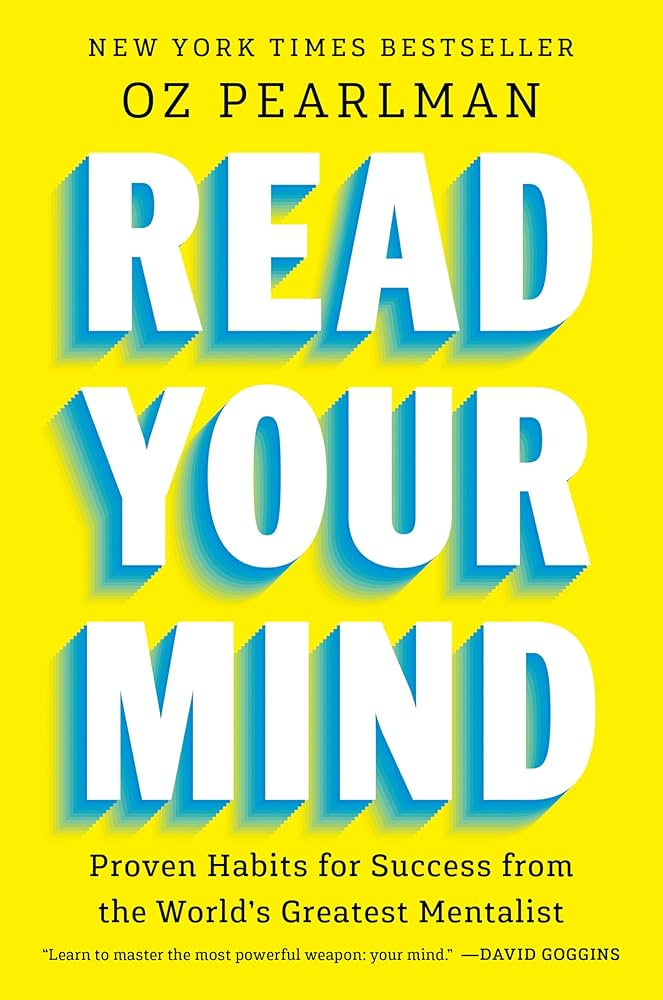
Resources
-
- Journal of Personality and Social Psychology: It Doesn’t Hurt to Ask: Question-Asking Increases Liking
- Psychological Science: The Liking Gap in Conversations: Do People Like Us More Than We Think?
- Science: Does Rejection Hurt? An fMRI Study of Social Exclusion
- Greater Good Science Center: 36 Questions for Increasing Closeness
- Current Opinion in Psychology: Connecting cues: The role of nonverbal cues in perceived responsiveness
- Boston University: Seven Tricks to Remembering Names
- Vice: The One Personality Trait That Makes People Remember You, According to Psychologists
- Stanford Business School: How Being Present Improves Communication
2 Million Readers.
1 Life-Changing Newsletter
Simple and Straight-to-the-Point...
Just Like Mel.