Episode: 420
If You Only Listen to One Podcast This Week, Make It This One
with Shelly-Ann Fraser-Pryce
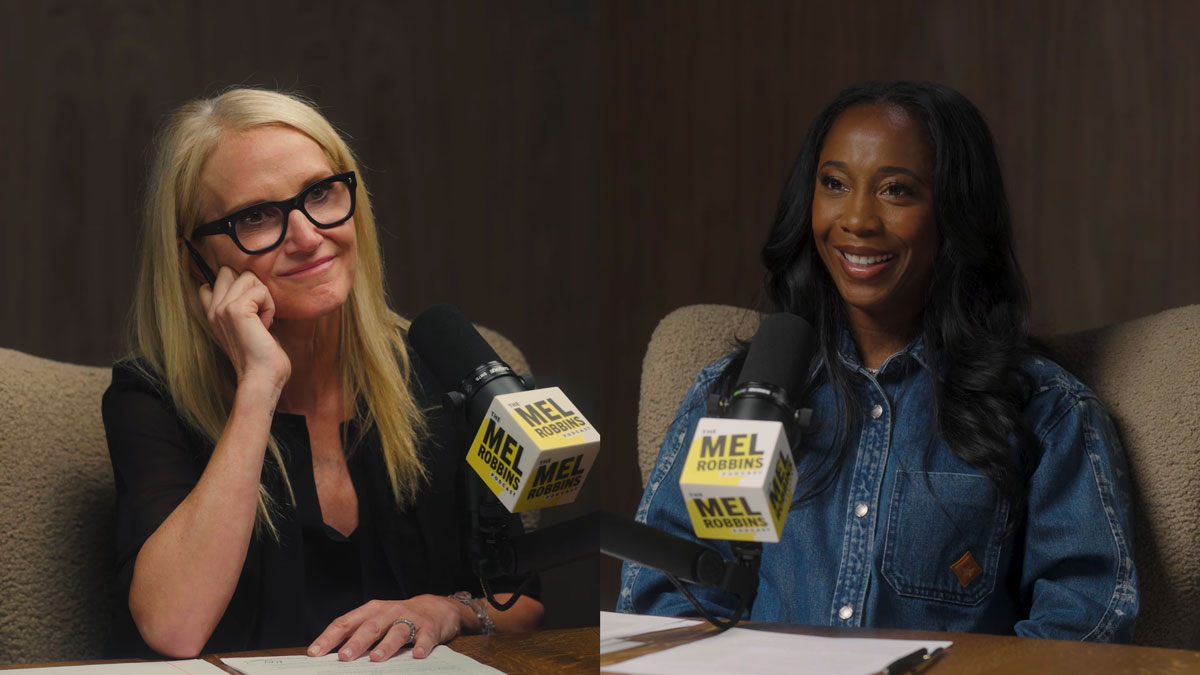
Today, you’re getting an absolute masterclass in motivation from one of the greatest athletes walking this earth: Shelly-Ann Fraser-Pryce.
If you’ve ever felt self-doubt, pressure, or like your best days are behind you, you’re in the right place. In this conversation, Shelly-Ann does not hold back.
Shelly-Ann is the most decorated 100-meter sprinter of all time, male or female. She has won Olympic gold 3 times. She has won 10 gold medals at the World Championships, with 2 of them coming after she gave birth to her son Zyon.
She is going to tell you: you are not supposed to be average. You are built for excellence and extraordinary things.
But this isn't a conversation about being an athlete. This conversation is about building an unstoppable mindset and being the best version of yourself, no matter where you are in life.
Listen on:




The only dream you haven’t met is the one you haven’t started.
Shelly-Ann Fraser-Pryce
All Clips
Transcript
Shelly-Ann Fraser-Pryce (00:00:00):
One year of being intentional got me an Olympic gold medal. Just one year.
Mel Robbins (00:00:06):
Just one year.
Shelly-Ann Fraser-Pryce (00:00:07):
Just one year. So a lot can happen in a year. What
Mel Robbins (00:00:10):
You're about to learn is going to help you turn your dreams into reality.
Shelly-Ann Fraser-Pryce (00:00:14):
I became a mom and I won a world championship two years after having my son. Time will honor your greatness.
Mel Robbins (00:00:23):
Visualization is something that you use in your training. How do you use it?
Shelly-Ann Fraser-Pryce (00:00:28):
On a Friday?
Mel Robbins (00:00:29):
Yes.
Shelly-Ann Fraser-Pryce (00:00:29):
When we train, we actually train our minds on a Friday. We call it mental training because before you can achieve anything, you have to. See it in your mind first. Visualization is you putting yourself in a winning position before you have won. Visualization is something that you don't have to pay for. You don't need money for it. You just need to sit with yourself and see it. That presentation, that hard conversation, that relationship that you probably need to end, that friendship that you need to walk away from and you don't know how to do it. Do it in your mind first. It becomes easier after.
Mel Robbins (00:01:11):
What has losing and failure taught you that winning never could?
Shelly-Ann Fraser-Pryce (00:01:17):
Failure tells you how.
Mel Robbins (00:01:19):
Failure tells you how. How.
Shelly-Ann Fraser-Pryce (00:01:21):
Yeah, because when you fail, you realize, okay, then the next thing is.
Mel Robbins (00:01:27):
I am so glad you're here. This episode with Shelly and is extraordinary. But before we jump into it and how you build an unstoppable mindset, my team was showing me this. 53% of you who watch the Mel Robbins podcast here on YouTube are not subscribers. Here's the deal. If that subscribe button is lit up, it means you're not a subscriber. My goal is to get that number to 50%. If you love what we're doing here, it would be amazing for you to just hit subscribe. It's the best way to show us that you love the show. You love these extraordinary experts that we're bringing on like Shellyann today to be your personal coach. And that way you're not going to miss a thing. So thank you, thank you, thank you for hitting subscribe. Thank you for being here on YouTube. Now, let's jump in to how you build an unstoppable mindset with Shellyann Frazier-Price.
(00:02:16):
You're going to love this.
Shelly-Ann Fraser-Pryce (00:02:18):
Thank you. Thank you so much for having me.
Mel Robbins (00:02:21):
Thank you for saying yes. Thank you for traveling all this way. I am so excited to learn from you. You have this energy that is infectious. I feel like I'm in a stadium of fans that are celebrating. You have an effervescence to you that is contagious. Thank you.
Shelly-Ann Fraser-Pryce (00:02:45):
Thank you.
Mel Robbins (00:02:46):
Is that what makes you run so fast? I
Shelly-Ann Fraser-Pryce (00:02:50):
Wish. I wish it was so easy.
Mel Robbins (00:02:53):
Well, I'm glad you're here because we're going to be talking a lot about mindset. And I have a feeling that you're also about to teach us a lot of wisdom about something deeper than mindset.
Shelly-Ann Fraser-Pryce (00:03:04):
Yeah, correct.
Mel Robbins (00:03:05):
And I'd love to start by having you speak directly to the person who's with us right now. And they may be feeling overwhelmed or full of self-doubt or feeling like they're too old or too young or worried about everybody else's opinion.
Mel Robbins (00:03:22):
If they take everything to heart that you're about to teach us from your remarkable life so far, what could there be that could change about their life?
Shelly-Ann Fraser-Pryce (00:03:36):
Well, Mel, here's what I would say for me personally. Growing up in Kingston in Waterhouse, I had to decide. And I think that's the most important thing I would say to anyone that's listening is to decide, is to say to yourself, I want to move from a place of average to a place of excellence. I've always been taught that I have to be and become extraordinary. And in order to be and become extraordinary, you have to decide in your mind what is it that you're going to hold onto? What is it that you're going to tell yourself? And you have to really commit to the positive and encouraging things that you tell yourself because that's the only way you're going to move from average to great. So that's what I would say. Decide who you want to be. Decide on just where you want to end up in next five, 10 years.
(00:04:28):
And every morning that you get up, you decide to put one foot in front of the other and say, I'm going to be great. I'm going to be extraordinary. I'm going to be excellent. Because that's the only way. The minute you change your mindset is the minute you start to tap into that unfiltered raw truth, strength, boldness that we all carry.
Mel Robbins (00:04:50):
Okay. My hair is already standing on end. And as you're listening to Shelly Ann and you're speaking with such a level of intention. You believe this. Yeah,
Shelly-Ann Fraser-Pryce (00:05:04):
I do. You
Mel Robbins (00:05:06):
Have
Shelly-Ann Fraser-Pryce (00:05:06):
To.
Mel Robbins (00:05:06):
You have to. But I can tell that shit's about to go down in this conversation. The energy is crackly. And I want to start by asking this question about the outside versus the inside, because people see all the medals, all the records. We not only see the confidence, you can feel it in your body in the way that you speak. But what's the part of your story that we do not see?
Shelly-Ann Fraser-Pryce (00:05:31):
The part of the story no one sees is the BTS, the behind the scenes, the challenges. Sometimes it's the fear, the doubts. It's the things that we tell ourself in the moments that will eventually stifle us. And I think for me, I've had to overcome those moments. I've had to really sit in those moments and say to myself, "Well, this is not the end. This is not it. I have more to give." And I had to talk to myself. I had to sacrifice. Because I think growing up in Waterhouse, dreaming is a luxury because we don't get to dream often when we're in an environment that seems stifling. It seems just there's no way out. So dreaming becomes a luxury. So now you're in this moment where you're saying, okay, then you're chasing medals, you're chasing records, you're chasing growth, you're chasing excellence. But the behind the scenes that people are not seeing is the struggle that sometimes you'll have with your mind because we all have that.
(00:06:29):
People think that the champion mindset is just winning. It's not just winning. It's sticking to your purpose. It's really trusted the promise that you have already made to yourself and go for it. So it's the moments I have to wake up at 5:00 AM to get to practice. It's the moment I have to sacrifice not going out because I'm chasing something big. I'm chasing impact. I'm chasing that young girl who is in Waterhouse who felt like there was no way out. I'm teaching the young girls in my community to understand that excellence does not just belong to me, it belongs to them. And it's important for them to understand those things. So when I sit with myself behind the scene, it's the motivation for my husband. It's my son. It's the moment when I feel okay, then the doubts are coming in. And I have to really say to myself, come on, you can do it.
(00:07:20):
Get out of it. Get out of it. One foot in front of the other, keep going. It's the injuries that we have to overcome as athletes and as individuals, because I think a lot of persons don't know that injuries don't just happen to athletes. It happens to everyday individuals. And you have to channel that intention in your mind to say, I can overcome. I've been there. It's the limitation that we tell ourselves when people say to ourselves, say to us, oh, you're too old, or you're too young, or you've had enough, no more. It's those things that you're battling with behind the scenes. So when someone see you step into the line, you have already conquered so many things behind the scenes. So when we step to the line to compete for a presentation, when we step to the line for a big job or a presentation or whatever it is, understand that the persons who are standing there would've had to overcome so many things to get there.
Mel Robbins (00:08:18):
Okay. You just said so many things that are wise and tactical. So I want to stop and hover here for a second. Dreaming is a luxury. Yeah. What would you say to the person right now who's listening who says, "I feel like I can't even dream right now, that I can't imagine something that's possible." You talked about how you really want to be an example to the young girls that have big dreams, that have a sense of purpose, but maybe the world is telling them, "Oh, well, that's impossible. That's unrealistic. Somebody like you doesn't do something like that." What would you say to the person that's so just head down that they haven't even thought about the dream that's a luxury? It's also a necessity, I think.
Shelly-Ann Fraser-Pryce (00:09:08):
It is. I think what I will say is stop asking, can I? Stop asking for permission to be great. Stop asking people who have no idea what's going on or what dreams you're trying to chase or where you're coming from or where you're heading. You have to start paying attention and listening to your own voice. That's the only voice that's important, your voice.
Shelly-Ann Fraser-Pryce (00:09:34):
Because your voice is the most important voice in the room. That's the relationship you want to focus on, the relationship with your voice. The minute you change that relationship, you start to understand that, okay, this is what Shelly wants. This is what Mel wants, and this is what you're going to chase. Stop focusing on the voices that are external. Those are just white noise. They're not important, right? Because they don't understand what it is to be in the moment chasing something that's great, chasing something that you want, that you have committed to, that you have decided to.
(00:10:14):
A champion mindset doesn't mean that you're not going to fail. Failure is a part of success. So you have to count on yourself, channel the energy in the voice that is your own and focus on that voice whenever you step into a room. It's your voice that is important.
Mel Robbins (00:10:34):
I've heard you say that, especially in reflecting about your career. Can you unpack the power of that statement? A lot can change in a year.
Shelly-Ann Fraser-Pryce (00:10:45):
One year of being intentional got me an Olympic gold medal. Just one year. Just
Mel Robbins (00:10:52):
One year.
Shelly-Ann Fraser-Pryce (00:10:52):
Just one year.
Shelly-Ann Fraser-Pryce (00:10:53):
Because what you did in that year is you changed your outlook. You changed your approach. So a lot can happen in a year. I've seen athletes like myself go from being nobody to an extraordinary athlete. In 2007, I was at the world championship in Osaka as a reserve.
Mel Robbins (00:11:15):
What does that mean? A
Shelly-Ann Fraser-Pryce (00:11:16):
Reserve mean I came six. I would be called upon if somebody got hurt or somebody didn't want to run. That's the only time they would call on me. I wasn't the number one, the number two, the number three or the number four. I was number six. It means there are four persons that run on a relay. I was six. So the chances of me running in that relay were slim. A year after being in Osaka, the next year I was Olympic champion. So it's not just for me where one year I went from being sixth to being first. It belongs to you as well. So if you change your mindset, your outlook, and you say to yourself, okay, you have to recognize the power of consistency, because I think that's what changed the approach for me. I became consistent at the small things. I said, okay, I'm going back to training.
(00:12:20):
I'm going to make sure that I show up at 5:00 AM because practice is at 5:00 AM. I wasn't there at 5:30. I was there in the cold because I refuse. I refuse to lose. And that's the mindset. You have to refuse to lose. Somebody will need to drag you off the field. And I'm not just talking about the track. I'm talking in life. Somebody has to pull you out. They have to call the anointers and say, oh, take her out. But until then you're staying in. So I've seen athletes take one year and that year they were humbled in a year because they didn't put the work in. They changed their approach. So when I say a lot can happen in a year, it's the mindset that you become consistent at what you do and you work towards it because you now have a one whole year to decide what you're doing, decide how you show up each morning, put one foot in front of each other, and then you go and you keep going and you going.
(00:13:21):
Because for me, there is time. A lot of persons say, oh, you have all the time in the world. And you think one year, for the person who is chasing mediocrity, one year is small. For the person who is chasing greatness, one year is a lot. You have a lot of time. And if you have that time, you'll make it count.
Mel Robbins (00:13:44):
So I want to put you in that moment in 2007, because even though most of us will never be a reserve on a team like that, right? We're going to be in the stands watching you. There is an experience that I think we all have in life where you find yourself in a situation where you are really close to the thing that you want, but you're kind of on the outside of it. And I'll share a quick story. My daughter is a singer-songwriter and she was invited to a record release kind of performance by an artist she really loves. And she walked into the room and it was incredible. But when she left, she had this feeling of saying, "I want to be doing that. I want to be known in a room like that." And those moments where you get close to the thing that you want, you're number six, you want to be number one.
(00:14:44):
I think those moments really define you because you either collapse and say, "It's never going to be me." Or
Shelly-Ann Fraser-Pryce (00:14:52):
You rise.
Mel Robbins (00:14:53):
Yes. Or you rise and say, "It is painful to want something and not work for it. And it's painful to work for it and not get it, but I'm going to go for it." And so what changed for you as you were number six? And I take it nobody got injured. And so you stayed number six. I
Shelly-Ann Fraser-Pryce (00:15:15):
Actually ran. You did? I did. So let me tell you this story this time. I have to tell you this story. So in 2007, when I went to Osaka and I made the relay squad for Team Jamaica, my real intention of going to Osaka was just to be there, small-minded. At that time, my thinking was very small. My dreams were small. My confidence, small. So I get there and they're having all this fit about who runs or who doesn't run.
(00:15:46):
And I'm like, and I hope they don't call on me. Because for me, the weight of the moment was so big. And mentally, I think I wasn't prepared for a moment like this. So I was just there for just being there. And I remember the coach calling and said, "Oh, you're running." And I'm like, "I'm running?" And he goes, "Yes, you're running." I cried because I didn't want to be responsible for any mishap in a relay. A relay depends on three other persons to take the baton home. I didn't want to be responsible for that. So I cried. And I remember I ran the relay. I carried the baton home first in the heats, but I didn't run the finals. But you know what changed for me? What?
(00:16:34):
I wanted to be responsible for my own win. That change. I was responsible for three other people. And I was in awe of the moment. I was crippled in that moment. And I said to myself, "I want to stand on the line and anything that I lose, it's mine to lose. Anything that I win, it's mine to win. And I want to own it with my entire being." And I went home from a soccer and I changed the way I ate. I started going gym. I became disciplined because I wanted to feel like I had the power and nobody else had that to choose. Because here I was in that moment running a four by one, and they were debating if I should run or if I shouldn't, or if I was going to drop the button, if I was going to be good, whatever.
(00:17:25):
But in that moment, I wanted to make that decision for me. I wanted to make that decision when I stand at the line and I'm competing. If I win, it's for me. If I lose, it's for me. And those things are very important because nobody gets to take them away from you. Nobody.
Mel Robbins (00:17:44):
Oh, let's just let that sit for a minute, because a lot can change in a year. A
Shelly-Ann Fraser-Pryce (00:17:51):
Lot can change in a year.
Mel Robbins (00:17:52):
What changed?
Shelly-Ann Fraser-Pryce (00:17:53):
The mindset changed.
Mel Robbins (00:17:55):
And then what happened?
Shelly-Ann Fraser-Pryce (00:17:57):
I won. Yeah. So real, I left going to a world championship thinking I wasn't worthy of being in that moment, to go into the Olympic games a year later and being happy and content and knowing that I had the power to win. Even though when I got there, my dream was so small because I just wanted to make the finals. That was your
Mel Robbins (00:18:27):
Dream for the Olympics. You're like, okay,
Shelly-Ann Fraser-Pryce (00:18:29):
I'm going to make the finals. I'm going to make the finals. And that was my dream going into the Olympics. I was going to make the finals. And I remember, and this is why it's important that the things that you say to yourself are good things. Be kind to yourself. When you talk to yourself, your energy should exude positive. It should be strength. It should be powerful. And I remember sitting in the room and I said to one of my teammates, "If I win, I am going to do this. I'm going to jump. I'm going to scream." That was me already setting the stage for what's to come. So when I got there and I went to the line, I was happy to be there. That's an outlook that changed in a year because this was a woman who didn't want to run the year before to a woman who was happy to be in that moment because I prepared for that moment.
(00:19:29):
So when I say a lot can change in a year, I didn't go into that moment unprepared. I was prepared for everything and anyone. And I got to the line and I was happy. I was smiling. I was content because I was about to run the race of my life. And I knew it. My body knew it. My mind knew it. I heard nobody else in that moment. And I got to that line. It was me against nobody. Because if you want it, you'll have to beat me for it. And I remember going to the line and the exact same thing I told myself couple days before I ran that finals is the exact same thing I did after the finals. What
Mel Robbins (00:20:09):
Did you say?
Shelly-Ann Fraser-Pryce (00:20:10):
I jumped. I screamed. I jumped. I did so many things. I was on the floor. I couldn't contain myself.
Mel Robbins (00:20:19):
Well, I can't contain myself because I've never seen one of these in person. Yes. You brought, because we asked you to, your medal. Yeah,
Shelly-Ann Fraser-Pryce (00:20:30):
That's my medal in 2008. I became the first Caribbean woman to win an Olympic gold medal in a hundred meters. Holy
Mel Robbins (00:20:39):
Smokes. This thing's heavy. It is. Is this solid gold?
Shelly-Ann Fraser-Pryce (00:20:43):
I hope so.
Mel Robbins (00:20:44):
Wow. It's
Shelly-Ann Fraser-Pryce (00:20:45):
My retirement plan.
Mel Robbins (00:20:48):
This is incredible. What is that moment like?
Shelly-Ann Fraser-Pryce (00:20:52):
Does
Mel Robbins (00:20:52):
Time slow down? Is it this out of. This thing is really heavy. It
Shelly-Ann Fraser-Pryce (00:20:57):
Is. I think that moment for me, Mel, was a moment that it told me that it didn't matter where you come from or how you start. It matters how you finish. It matters how you show up. Because here's a young girl who is from an inner city, a single parent, one room with two brothers and my mom. And it was hard to dream. It was hard to see beyond your current circumstances. The environment that you're in was hard to see beyond that. And when I crossed that line, it was not just a win for me. It was a win for a community. A community of girls who never thought they would see an Olympic champion coming from their community. It was a win for my mom who had me when she was 17. It was a win for my grandma who prayed for me the day I left to go to college because I wasn't supposed to go to that college.
(00:21:59):
I was supposed to go overseas for school. And my grandmother, when I said to her, I remember saying to her, "Hey, I'm going to stay in Jamaica and I'm going to go to school at UTEC." And she said, "Go." That was her only words, "Go." And I went. So for me, crossing that moment, it was a win, a huge win. For me, understanding that confidence, dreaming, and believing what you dream is very important. It's understanding that there's nothing wrong with fear. Nothing is wrong with it, but we show up in spite of. So that's what that moment was for me. Wow.
Mel Robbins (00:22:41):
What do you want the person listening to know if they're telling themselves that it's too late or the dream is too big or it's too impossible for them now?
Shelly-Ann Fraser-Pryce (00:22:57):
I think what I'll say to you guys listening is time will honor your greatness.
Shelly-Ann Fraser-Pryce (00:23:03):
Time, that's all you need, time. For a lot of persons, they look at the clock and they think, "I don't have enough time." But for the persons who's chasing excellence and chasing growth, it's never too late when you look at the clock. It's never too late. I became the oldest world champion at 35 years old. When person said, "Oh, she's too old. She needs to wrap it up." I became a mom and I won a world championship two years after having my son. Time will honor your greatness. I won my first gold medal in 2008 when person thought I was too young. I was too inexperienced and I needed to give my spot to somebody else. So when I say all of that, I say time. You have time. You have to show up.
(00:23:54):
Disregard the negative things that you have said in your darkest moments to yourself. You need to get that out. Stop listening to the people who have never been in your shoe. You have to start listening to your voice and decide which voice is more important. Theirs are yours, and it has to be yours. Your voice is the most important voice in any room. So you have to understand that whatever it is that you're chasing, time will honor your greatness. It's never too late. In fact, you still have so much more that is inside, untapped, that's ready to go out, but you are listening to the persons who are at the ceiling of their imagination, not yours.
Mel Robbins (00:24:41):
I'm dead. I'm literally like, "Okay, we're done here. I can't even say." Amazing. You're channeling something. No, it's true. You are. There is a transmission coming through you. Yeah.
Shelly-Ann Fraser-Pryce (00:24:57):
It's the truth. I've
Mel Robbins (00:24:58):
Lived it. It's true. I can tell. Yeah. I can tell in the way that you are speaking. Yeah. Straight from the heart and with almost like that if you're not going to listen to yourself, you better listen to me.
Shelly-Ann Fraser-Pryce (00:25:15):
Yeah.
Mel Robbins (00:25:16):
Like borrow Shelly's belief in you until you believe in you.
Shelly-Ann Fraser-Pryce (00:25:21):
That's true. What's important also is the only dream that hasn't been met is the one that you haven't started.
Mel Robbins (00:25:35):
Say that again.
Shelly-Ann Fraser-Pryce (00:25:37):
The only dream that hasn't been met is the one you haven't started. So once you have a dream, start it. You have all the time in the world, start it. Don't go to bed thinking, "All right, I'm tired. It's not going to happen." Go to bed thinking, "It's going to happen. No one can stop me. I'm going to wake up in the morning. I'm going to..." All those thoughts, because we've all been there. In our darkest moments, we have told ourselves things that are not true. In our darkest moments, we have listened to people who have said things about us who have no idea who you are. How do you allow people who don't know who you are, who don't know your gifts, your talents, who don't know what you're chasing and what untapped abilities you have? How can you allow them to determine your future?
(00:26:36):
You can't. Right? The only finish line that you have never crossed is the one you never walked up to. So whatever finish line it is or anything that you're chasing, walk up to it.
Mel Robbins (00:26:52):
It's interesting, the finish line metaphor, because that's how you know the race you're running isn't over. You know,
Shelly-Ann Fraser-Pryce (00:26:58):
Yeah. You haven't
Mel Robbins (00:26:59):
Crossed the finish line yet.
Shelly-Ann Fraser-Pryce (00:27:00):
You haven't crossed the finish line, so it's not over. And my coach always said, I remember my coach said, "You cross the finish line, you get another chance." What
Mel Robbins (00:27:11):
Does that mean?
Shelly-Ann Fraser-Pryce (00:27:12):
I've always gone to meets and I crossed the finish line and I didn't win. And I thought, "Man, this is the end of the world." And my coach was like, "No, it's another day. You get another opportunity." So nothing is wrong with showing up and losing. You showed up and your approach the next time will be different. That's the power of getting to the line and finishing. Because now you have something tangible to look at and evaluate and say, "Okay, let me change my approach." It's just like traffic we take. Go to school in the morning and we drive around one route and we realize, okay, I spent 20 minutes in traffic. The next day, you have knowledge now. So you change your approach. Just
Mel Robbins (00:28:03):
Like you did in 2007 when you said, "I'm going to change my approach." Change my approach. "I got to be consistent. I got to train harder. I got to change the way I'm approaching this." Visualization is something that you use in your training. How do you use it and how can the person listening apply that same strategy to their life?
Shelly-Ann Fraser-Pryce (00:28:25):
So Mel, I give you on a Friday. Yes.
Mel Robbins (00:28:28):
When
Shelly-Ann Fraser-Pryce (00:28:29):
We train, we actually train our minds on a Friday. We call it mental training.
Shelly-Ann Fraser-Pryce (00:28:36):
Because before you can achieve anything, you have to see it in your mind first. You have to feel it. And visualization is you putting yourself in a winning position before you have won. That's what visualization is. Visualization is you seeing yourself doing it, not perfectly, but powerfully. That's what visualization is. So when I use visualization,
Mel Robbins (00:29:07):
It's
Shelly-Ann Fraser-Pryce (00:29:07):
Important for me to even smell the atmosphere,
Mel Robbins (00:29:12):
To
Shelly-Ann Fraser-Pryce (00:29:13):
Feel it. Because sometimes our mind can't distinguish between what reality is and what's real. We can't. We can't figure out what's real or what's fake when it comes to our mind because our mind is that powerful. So it is up to you to train your mind to see the things that you want to achieve. So when I get to the line, I have run that race many times before I get to that line. And I'm not talking about the day before the race. I'm talking months before the race. Every time I have an alone time, I'm visualizing. I get to the line. I hear the starter. I listen to the cues. You hear
Mel Robbins (00:29:54):
Of all the people putting
Shelly-Ann Fraser-Pryce (00:29:55):
Their feet in the blocks and that - I'm going to tell you this. When I'm at the line, I hear no Nobody.
(00:30:01):
Nobody. Because I'm not listening to them. The only person I'm listening for is the instruction of the starter. When the starter says on your mark, on your mark is something that I've already visualized. So my body knows when the starter says, on your mark, it's go time. My body knows when I get to the line, I've already seen myself in the block. I see myself crossing the line. I see myself with each step that I take, I feel because I've already seen it. So you have to use visualization as a map. It's one of those maps that you have in your mind. Okay, I'm going to point B. So in order to get to point B, I have to make sure that I'm successful
(00:30:52):
At A, right? So you're seeing it. You're going to that presentation, you want to feel it, you want to see it. Visualization exists long before the vision board, long before it. It's a small step. Visualization is something that you don't have to pay for. You don't need money for it. You don't need no paper, you don't need no pen, you need nothing. You just need to sit with yourself and see it, that presentation, that hard conversation, that relationship that you probably need to end, that friendship that you need to walk away from and you don't know how to do it. Do it in your mind first. It becomes easier after.
Mel Robbins (00:31:31):
I want to make sure you really heard what she said, that Fridays is not running day. It's
Shelly-Ann Fraser-Pryce (00:31:37):
Not running day.
Mel Robbins (00:31:38):
Friday, we are training a different muscle. Train a world champion. You're training your mind. And what I also love that you pointed out is this is free.
Shelly-Ann Fraser-Pryce (00:31:47):
It's free. Yeah. It is.
Mel Robbins (00:31:49):
And you're built to
Shelly-Ann Fraser-Pryce (00:31:49):
Do it. You're built to do it. We all have the power to visualize. So use it. Because one thing I know about visualization is visualization is preparation. It's me preparing for the moment. If I get to the line and I have not even thought about running the race, then what purpose does that serve? If you're going for the presentation and you're trying to get the promotion, if you haven't seen yourself in that position, what sense does it make? You have to see yourself that big job. You have to see yourself in it. You have to see yourself walking away in your head, you're going like, all right. Yeah, girl, you have this. You got this. So when you have prepared, because that's what visualization is, it's a preparedness. You have prepared. So I've seen the race over and over and over and I run it over and over and over in my mind.
(00:32:49):
So when I get to the line, it's just go time. It's work time. It's eat time. It's time to eat. That's what happens in that moment because your body's already prepared. Your body knows what we're up against. I remember there's once I went to a mental training on a Friday and it was hard at first. And visualization is practice because it doesn't come easy the first time. Because I'm sitting there in the mental training and my coach is like, "Close your eyes. See yourself in the stadium." And I'm at KFC. And sometimes I'm drifting to the beach somewhere and I have to find a cue to pull you back. You always should have a cue.
Mel Robbins (00:33:35):
What's your cue?
Shelly-Ann Fraser-Pryce (00:33:36):
My cue is always saying to myself that greater Z that is in me than he that is in the world.
Mel Robbins (00:33:43):
Say that again.
Shelly-Ann Fraser-Pryce (00:33:44):
Greater is he that is in me than he that is in the world. There's no fear in love because perfect love cast out fear. Because with what you love, you cannot fear. And I love to run. I love to win, so I don't fear it. Instead, I get to the line, I'm confident and I'm ready because I've seen it. This is my moment. This is my passion. Sometimes your promises that you have, that's your purpose. Your purpose is the promises that you have already set for yourself. So when I get there, I've already prepared to be in that moment. So when I stand at the line and I feel like, okay, I'm drifting because now I'm focusing on who's beside me. I'm focusing on the crowd. What's the crowd going to do? They can't help me. What's the next person? They also want to win.
Shelly-Ann Fraser-Pryce (00:34:33):
So I'm not helping you win. I'm helping me win.
Mel Robbins (00:34:36):
Oh, I love that. When you focus on them, you're helping them win. You're helping
Shelly-Ann Fraser-Pryce (00:34:39):
Them win. I don't want them to win.
Mel Robbins (00:34:40):
Hold on a second. Can we unpack that for a minute? Because so many of us are focused on what everybody else is doing. And when you do that, you're helping them win.
Shelly-Ann Fraser-Pryce (00:34:48):
You are helping them win. You're not helping yourself win? Because I'm telling you, they are probably focused on you and you're giving your power to them. I'm giving you no power. When I get to the line, I'm an assassin. I'm there to win. And it means mentally I'm there to win as well. So when I get to the line, I'm not concerned who is in lane five or six or seven or eight or one or two. The reality is I, which is the I, in that moment, the I becomes selfish. It's about you and how you show up to win. If I'm there carrying somebody else's baggage, how am I getting to the plane? The plane is going to leave you. So yeah, don't focus on who is to the left or to the right because you're not going to the left and you're not going to the right.
(00:35:43):
You're going forward, forward, because that's the only way you win. I've never seen anybody win going backwards. I've never seen it. If it happens, let me know, but I've never seen it.
Mel Robbins (00:35:55):
How do you use somebody that is ahead of you to help you become a better competitor or a better mom or a better this? Because I do think that there are those times, and this kind of goes back to when you were number six, and then you got asked to be part of the team. And then you have the realization that, wait, I want to win or lose for me. I want to stand on my own here. If I'm not paying attention to this person, I'm not paying attention to that person, but I keep seeing somebody else out in the world doing something in a way that kind of makes me jealous, kind of pisses me off, and also kind of inspires me. How do you use somebody else's example in the right way to activate your own ability to perform potentially pass them? You know what I'm saying?
Shelly-Ann Fraser-Pryce (00:36:47):
I understand exactly what you're saying. And that's good because guess what? Every single person there is in this lifetime have learned something from somebody, whether they're a winner or they're not. The champion uses every experience to gain an advantage. That's just a reality. In Jamaica, there's a saying that when somebody feeds you meat or chicken, you eat the meat, you leave the bone. The bone is not going to help you. The meat is where the substance is. So if that person that's in front of you that you think, I want to emulate that person, there's something that she has that I want. Take the meat, leave the bone. Whatever it is that she has that benefits you and you think you can use it, use it. For a lot of us, we are in a shell where there's somebody that we're either jealous of or somebody that some people will say, well, I hate this person.
(00:37:47):
But guess what? That person that you're jealous of are probably the person that you hate, there's something that they have that you want. So instead of hating for no reason, take the things that they have that are going to help you to get to your destiny sooner than later.
Mel Robbins (00:38:09):
So your friend, Usain Bolt, said that when he looks at your career and the fact that you have been so great for so long, that you make him feel like an underachiever.
(00:38:23):
What can the person listening learn from you about
Mel Robbins (00:38:29):
Holding yourself to such a high standard, especially on those days when you don't feel like it?
Shelly-Ann Fraser-Pryce (00:38:38):
Here's what I say. Motivation can change. Standards don't.
Mel Robbins (00:38:44):
Oh, motivation can change.
Shelly-Ann Fraser-Pryce (00:38:46):
But standards don't. Because standard is what is who you are. It's what you have. Because sometimes your motivation will change. You know what motivates you today may not be the thing that motivates you tomorrow, but your standards are who you are. It's everything. Who I am is not determined by how I feel on any given day. Right? So for me, that's your standard. You have to make sure that you hold your standards on days when it's hard because you know you're building something unbreakable. That's what your standard. And you're saying if Yusain says that, you're saying it's great in its own way. But for me personally, it's my standards that gives me longevity. It's the things that I hold dear to me, the things that I'm chasing and I want to achieve. And I know I have it. So I understand that on a daily basis, your motivation can change because some of us are motivated by probably somebody who wronged us.
(00:39:59):
And what if you move that person out of the way? What motivates you then? You can't have your motivation be tied to a person because that person for whatever work can leave, they can't change. They go somewhere else. So you have to have your standards. Some days I go to training. I don't want to train. There's no motivation, but you know what? I have standards, high standards. So every time I get training, I remember the standards that I have. My standards are excellent.
(00:40:36):
I want excellence. How does one achieve excellence? Consistency. Show up in spite of. How does one have standards? They move from a place of fear to boldness. Discipline is a resident. Right? No, it's not. It's there. It resides there. That's what discipline is. That's a standard. Motivation comes and goes.
Mel Robbins (00:41:08):
It sure does.
Shelly-Ann Fraser-Pryce (00:41:09):
Comes and goes.
Mel Robbins (00:41:10):
I'm wondering, because it's so inspiring to listen to you and there's such a rhythm and truth to everything that you're sharing. And it's easy, especially. And even if you're in a place where you're just feeling a little beaten down and stuck. And as I'm listening, I'm like, yes, standards. Yes. Excellence. Yes, I'm with you. And then I go -
Shelly-Ann Fraser-Pryce (00:41:32):
It's true.
Mel Robbins (00:41:33):
Wait a minute. What are my standards? What does excellence mean in my life? And I'd be curious if somebody is feeling really knocked down. And I have a lot of friends that I've heard them say over the years, "I don't even know who I am anymore."
Mel Robbins (00:41:49):
Do you have any recommendation for how you could set a standard for yourself today that will pull you toward excellence? Is there something that if you had to recommend, okay, if you don't know what your standards are, if you feel like life has kicked you down, one way to develop standards for yourself? Because if you don't stand for something, you stand for nothing.
Shelly-Ann Fraser-Pryce (00:42:13):
Nothing at all.
Mel Robbins (00:42:14):
But is there something that you could give the person that's listening like this is where I would start if I were starting over and thinking about my own standards?
Shelly-Ann Fraser-Pryce (00:42:22):
Yeah. I would say small steps. Small steps. It doesn't have to be big. Everybody has to start with small intentional steps. The smaller steps you make, the more you can go to the bigger steps eventually because you're not rushing into it. Because for a lot of us, finding our standards take time because we have, I can tell you this, we have history where because we have done things a particular way for years, trying to erode those things takes time. It takes time to get rid of the bad habits. So I would say start with the small things. If it is getting up early in the morning and making your bed, then that's the standard. I'm going to get up in the morning, I'm going to make my bed. I'm going to have some coffee. I'm going to visualize for 20 minutes. And that's how you start with your standards.
(00:43:22):
You write that down. And then who knows? A week from that, you add something else to it. And that becomes a routine. And when you have your routine, your routine becomes consistent. So you're consistent with your routines and you're consistent with your standard. So small steps. Doesn't have to be big. It has to be yours. Can't be anybody else's. It has to be yours. So I don't want my standards for you. Sure, you can use. You can use me.
Mel Robbins (00:43:56):
I'm going to eat the meat, but not the bone. See, I'm listening.
Shelly-Ann Fraser-Pryce (00:43:59):
You're eating the meat, but you're leaving the bone. And you apply that to your life and you say, okay, these are my. And I can say this. Your standards are yours. You can't let or allow anyone else to make you think that something is wrong. We're yours. There's nothing wrong because guess what? Yours work for you. Mine works for me. But it's intentional steps that you take daily and you start smiling. It doesn't have to be that big grand, okay, I'm going to get up. It's almost like the new year resolution. I'm not a big fan of the new year resolution, right? I've been on it. Because I think sometimes I make those because everybody else is making them. And it doesn't work for me because by the time the 2nd of January come, I remember nothing. So you have to make or tailor your standards to you, to your day-to-day, to what you can start with, and then you move from there.
Mel Robbins (00:44:58):
One of the things that I think we've all seen and some of us have experienced is how easy it is to let your failures block you, whether it's a failed relationship or a failed dream that you tried, or maybe you failed at the career or job that you really went for. What has losing and failure taught you that winning never could?
Shelly-Ann Fraser-Pryce (00:45:26):
Mel, in my years of competing, I like to consider myself an expert at track. And I'm expert at losing because I lost a lot.
Shelly-Ann Fraser-Pryce (00:45:38):
But failure introduces us to a part of ourselves that we didn't know was there. The part that we need to grow, the part that we need to approach different. Failure introduces us to things that winning couldn't show us. Because when you win, you think you have it all figured out. You think, "All right, I won. I don't need to change anything. I'm good." But failure can introduce it to a part that you realize that, okay, then my success didn't show me that. But my failure taught me that, "Hey girl, we need to work at this a little bit more. There's another approach. We can try another way. We can go through this gate and we'll end up at the same place." That's what failure does.
(00:46:25):
For me, some of my greatest wins came after a loss. Really? Yes. Some of my greatest win came after a loss. Remember, I came sixth at the World Championship, National Championship in Jamaica. And I went back home and I worked hard and I came back. In 2016, 2016, I had a sesamoiditis.
(00:46:58):
What is that? So there are two small bones.
Mel Robbins (00:47:01):
I'm not a doctor. That sounds terrible. A sesamoditis? What is that?
Shelly-Ann Fraser-Pryce (00:47:06):
There's two small bones under your great toe that's responsible for -
Mel Robbins (00:47:10):
Under your toe?
Shelly-Ann Fraser-Pryce (00:47:11):
Under your big toe or your grade toe. That's responsible for balance.
Mel Robbins (00:47:15):
Oh, no. What happened?
Shelly-Ann Fraser-Pryce (00:47:17):
So that's where when you're in the blocks or you're running, that becomes the planting that's responsible for the power that you generate.
Mel Robbins (00:47:25):
That's a very important little bone.
Shelly-Ann Fraser-Pryce (00:47:27):
Very important little bone. And I fractured it. And I couldn't put my foot in my spike. What? I was in tears. This is 2016 Olympic Games. I was chasing, becoming the first woman to win three Olympic games back to back. No. I did not know who I was in that moment because it was so hard because at that point I won 2008, 2009, 2012, 2013, 2015. And here my face with 2016. And I'm saying to myself, how do I navigate this space? I didn't know how. I couldn't put my foot in my shoe. I couldn't do anything in practice. I was out of practice for a while. But you know what I did? I found another way. I said, "Okay then. It's not going to work the normal way that I did it, but I'll find another way." And I had know how to train my mind more in that moment.
(00:48:39):
And I got to that 2016 World Olympic Games in Rio. I came third. I came third. So I didn't become the first woman to win an Olympic, three Olympic medals back to back.
Mel Robbins (00:48:52):
Well, you want one? Are you talking gold? Yeah, but
Shelly-Ann Fraser-Pryce (00:48:55):
Gold.
Mel Robbins (00:48:55):
I got the bronze
Shelly-Ann Fraser-Pryce (00:48:56):
Medal.
Mel Robbins (00:48:57):
Okay. Well, I'd be happy with a bronze, I think. What was the other way? What did you do? Did you learn how to press on the four other toes and lift up the
Shelly-Ann Fraser-Pryce (00:49:06):
Big toe? What'd you do? I had to make shift putting my toe in my spike. I had to put cushion in there. And then I realized it wasn't going to work. So it means I had to train today, not train the next day, miss a week.
Mel Robbins (00:49:21):
And
Shelly-Ann Fraser-Pryce (00:49:22):
I had to focus on the things that I could, like going into the gym. I could lift heavier, go to the pool, did work in the pool, go to my rehab, did my rehab. Because here's what, failure tells you how.
Mel Robbins (00:49:38):
Failure tells you how.
Shelly-Ann Fraser-Pryce (00:49:39):
How. Yeah. Because when you fail, you realize, okay, then the next thing is you know how you're going to do the next thing. It tells you how. So you have to don't look at failure as separate. It's not the opposite of success. It's not. It's actually a part of it. Failure is a part of success. You can't look at it as separate because in reality, a lot of persons, I never quit. I didn't quit. I lost, but I didn't quit. I failed, but I didn't quit. The persons who lost are the ones who quit after a failure. I didn't quit. I went back to the join board and I came back. In 2017, I had my son. In 2019, I won the world championship in Doha. And in 2022, I won the world championship in Oregon. In 2022, I became the third fastest woman in the world.
(00:50:51):
At 2022, I ran 10 sixes six or seven time in a season. In 2022, I won the Laureus Award. In 2022, I won. So look at failure as a part of success. Has to be a part of it because guess what? I didn't quit.
Mel Robbins (00:51:10):
Here's what I love about what you're just explaining to us. It now seems so obvious now that you've explained your relationship to failure and the fact that because you didn't quit and you recognize failure shows you how, how you need to change - How I need to. In order to continue forward. Change the approach. Failure is actually a sign for how not to quit. Thank you. It's a pivot, right? It's
Shelly-Ann Fraser-Pryce (00:51:39):
A pivot. You change the approach, you adjust, you come back again,
Mel Robbins (00:51:44):
But you don't
Shelly-Ann Fraser-Pryce (00:51:45):
Quit.
Mel Robbins (00:51:45):
Well, it's interesting because I often say to myself, the things that made me successful in 2024 will not make me successful in 2025. And there's the consistency in the standards, but then you have to understand that often the way to win the race that you're playing or the way to stay in the race that you're playing is to recognize when the old way you were doing things, whether it's how you trained or your attitude or whatever it may be, isn't going to work moving forward. Not going to
Shelly-Ann Fraser-Pryce (00:52:16):
Work going forward because that's what failure really. That's what it does. It says, okay, that approach that you tried, it didn't work. Can we try something else? Can we try a new approach? Because that's what you do when you lose and you go back to the drawing board. If you listen to all the speeches or after interviews when a champion loses and they say, "Oh, I need to go back to the joining board." I've never heard them say, "I quit." They never say that. They say, "You know what? We have to just go back to the drawing board. I have to talk to my coach. I have to go look back at the videos to kind of see where I went wrong."
Mel Robbins (00:53:00):
Yes. Because the failure and the wrong is the how you're going to move forward.
Shelly-Ann Fraser-Pryce (00:53:05):
It's how you're going to move forward.
Mel Robbins (00:53:06):
And you not only move forward. I've got another heavy fricking medal. Talk to me about this one. This is a big gold medal for the hundred meters. And this one's really important to you.
Shelly-Ann Fraser-Pryce (00:53:20):
Yeah,
Mel Robbins (00:53:20):
It is. This was from 2019. Why is this the medal that you care about the most?
Shelly-Ann Fraser-Pryce (00:53:24):
2019 in Doha, after I had my son, I remember when I got pregnant in 2017, I was scared. I was nervous.
Shelly-Ann Fraser-Pryce (00:53:33):
And here's why I was scared and I was nervous because here comes those little critics that think they know everything that comes and they tell you, "Oh, having a baby will just ruin your career. Oh, having a baby's not good for a woman in this sport right now. Oh, having a baby and you're just going to be turning 30. I think you should pack it up." But having my son deepened my purpose. My son changed my outlook because I understood in that moment that my son didn't need me to sacrifice my career. He didn't need me to do that. Instead, he needs to see me chasing my dreams so he knows he has the permission to chase his. So when I got to the World Championship in 2019, I was a mom of a beautiful two-year-old boy.
Mel Robbins (00:54:36):
Can you put into context for the person who's listening who may not really know the world of elite track and field? Just like how many other global champions have dominated globally after having a baby? How many women?
Shelly-Ann Fraser-Pryce (00:54:55):
Probably two.
Mel Robbins (00:54:57):
And you're one of them.
Shelly-Ann Fraser-Pryce (00:54:57):
And I'm one of them. Probably two or three. Not a lot.
Mel Robbins (00:55:00):
So it is typically the norm that once you become a mom, your track and field career, at least sprinting at this world renowned level, it's basically hang the shoes up. It
Shelly-Ann Fraser-Pryce (00:55:13):
Becomes difficult. And so it was important for me to continue because I knew that the impact that this would have and just what it would mean for the sport in general was incredible. Well, not just for the sport, but for me. Because this is me now understanding that as women, we have to learn to evolve. And there's always a conversation about our age. There's always a conversation about us having kids. There's always a conversation. She's too old. She's a mom. Oh, she needs. There's always a conversation, but your conversation is not my reality. So when I went to the 2019 World Championship, I was ready because I knew the world was dependent on me showing them that motherhood didn't diminish me as an athlete or as a woman, but instead it elevated me because no, I stood at the line and I knew I was championing a cause for that woman who is probably beside me who wants to have a child, but is afraid because of what it means for her career.
(00:56:29):
And we've all been there where we've been told, "Hey, you can't have a kid because of your career. You're going to sacrifice." And I got to that line and I remember running. I ran 10.7, I think it was 10.75, and I screamed. I was out of it.
(00:56:49):
I did a face. I was strong. I remember going for my son who was in the stands and I brought him on the track and we were celebrating that moment together because I want my son to look back at those videos and understand that in that moment, I chose him.
(00:57:12):
I'm walking alongside him. He didn't stop me from chasing my dreams. He helped me to achieve that dream and to get in that moment and to understand our greatest comebacks are usually born from what people consider failures. Because many persons though I would just quit and go be a mom, but why can't I be both? Why can't I be a mom and be a sprinter and an excellent sprinter? I think as women, we have to learn to be selfish. There's nothing wrong with wanting two things. There's nothing wrong with wanting to be a mom and wanting to have the success of being an athlete. And that's why that medal is so important to me because I chose myself and I chose my son. And we're going to figure it out because balance is harmony and we exist in the same space.
Mel Robbins (00:58:17):
Well, I love that you said that the outside world has a lot to say about especially women and what your place is and when you're relevant, when you're not, what you can do, what you can't do. And also this messaging that if you choose to be two things or three things at the same time, that somehow it means you're going to be lousy at all of them.
Shelly-Ann Fraser-Pryce (00:58:45):
I know. And why is that?
Mel Robbins (00:58:48):
I honestly don't know. Because as you're really eloquently reminding us, you get to decide.
Shelly-Ann Fraser-Pryce (00:58:57):
I get to decide.
Mel Robbins (00:58:58):
You get to decide what it means to choose being a mom and being a sprinter at a world renowned level. You get to decide that it is the most powerful example that you can provide to your son of what it looks like to go after something. And that by deciding for yourself, not listening to the outside world, not looking around the person here or the person over there, but right in here.
Shelly-Ann Fraser-Pryce (00:59:24):
Right here.
Mel Robbins (00:59:25):
What is it that I want? What are my standards? You change the game you're playing.
Shelly-Ann Fraser-Pryce (00:59:30):
You change the game.
Mel Robbins (00:59:31):
Yes. And
Shelly-Ann Fraser-Pryce (00:59:31):
That's the important thing because guess what? No, you leave an example for the next woman who is coming, who decides, "All right, I'm going to have my baby. I can get back to sprinting or I can go run here. I can do that because Shellian did it, so I can do it."
Mel Robbins (00:59:48):
Yes. So the 2019 medal really proved, okay, you can be a mom and you can compete at a global level and win. Talk to me about the win in 2022. So this is a super cool looking medal.
Shelly-Ann Fraser-Pryce (01:00:04):
Yes, that's 2022. I was 35 years old. Now
Mel Robbins (01:00:09):
That seems young to me because I'm 57. I think that's
Shelly-Ann Fraser-Pryce (01:00:11):
Young
Mel Robbins (01:00:11):
Too. Like you say that, do most sprinters -
Shelly-Ann Fraser-Pryce (01:00:16):
In the truck world as a woman, people think 28 is old.
Mel Robbins (01:00:21):
Really? Yes. So you're like a grandma out there basically, right? I am a grandma at a
Shelly-Ann Fraser-Pryce (01:00:24):
Sport.
Mel Robbins (01:00:25):
Okay.
(01:00:26):
So 35 is like, you should be retired kind of situation.
Shelly-Ann Fraser-Pryce (01:00:31):
And usually a lot of female athletes at that age did retire.
Mel Robbins (01:00:35):
Okay.
Shelly-Ann Fraser-Pryce (01:00:36):
A lot of them did because for them, they feel like they had to ask for some, not all. For some, they felt like they needed to ask people permission to chase their dreams. They felt like they needed somebody else's opinion on when it is that they should tap out. I needed nobody's permission but my own. As I said before, I said greater Z that is in me than he that is in the world. There is absolutely no fear in love because perfect love cast out fear. I love what I do. I don't fear it. I love it. There's a sense of boldness when I step to the line and when I'm chasing something because here's what's going to happen. It's mine. I'm not taking anybody's spot. And if you want it, you have to come for it.
Mel Robbins (01:01:30):
This is important to hear. If you want it, you have to come for it.
Shelly-Ann Fraser-Pryce (01:01:34):
Yeah.
Mel Robbins (01:01:35):
I would love to have you put us at the line. You're 35.
Shelly-Ann Fraser-Pryce (01:01:40):
Yeah. 35. There are a lot of 20 year olds in the line.
Mel Robbins (01:01:42):
Well, you're not looking left or right is what I understand.
Shelly-Ann Fraser-Pryce (01:01:45):
Listen, I'm not looking left or right. And I get my age is irrelevant at the line.
Mel Robbins (01:01:51):
Your age is irrelevant.
Shelly-Ann Fraser-Pryce (01:01:51):
Your age is irrelevant at the line. Your age is irrelevant in success. Irrelevant. Nobody, when you get to the line to win, is thinking about your age. Nobody's thinking about your age.
Mel Robbins (01:02:12):
Except for the commentators are like, okay, so they're showing him. She's 35 year old no man. No woman has ever won a title at this age. Thank God you're not hearing it. Thank you. Her nails look amazing and she's in the blocks and I know she's saying the prayer right now, but no man or woman has ever won at the age of 35 or watching Shelly Ann, what's the over under on this better? Is that
Shelly-Ann Fraser-Pryce (01:02:35):
Right?
Mel Robbins (01:02:36):
Yeah, but you're
Shelly-Ann Fraser-Pryce (01:02:37):
Not hearing that. I'm
Mel Robbins (01:02:39):
Not hearing. See, maybe the problem for a lot of people is they're listening to the announcers calling the play versus actually - Your voice
Shelly-Ann Fraser-Pryce (01:02:45):
Should be the loudest voice in the room, as I said earlier.
Mel Robbins (01:02:49):
So other than the prayer, what do you say to yourself though? Because you do know, Jesus, I'm 15 years older than these people.
Shelly-Ann Fraser-Pryce (01:02:56):
I'm saying to myself, my confidence come from my work.
(01:03:02):
When I stand at the line to compete, I worked. I trained hard. I sacrificed. When I get there, I'm ready. If you're going to beat me, you'll just have to beat me on the day. I'm not afraid of anybody. Right? Because what's the most that's going to happen? You're going to win or you're going to lose? What's going to happen? Will the world end? No. You'll get another chance. And so what? And 35 is a fact. You can't change a fact. Why am I debating or arguing with people that stating fact? They said I'm 35. I am 35.
Mel Robbins (01:03:38):
And?
Shelly-Ann Fraser-Pryce (01:03:39):
And what do you want me to do about it? I can't do anything about it. So when I get to the line, I'm not thinking about my age. I'm thinking about the work. I'm thinking about the cues I'm telling myself. I'm thinking about the visualization. I'm thinking about my past wins because you have to rely because your past wins tell you in that moment what you can do. Those are the experiences and things I'm telling myself. When I get to the line, I'm telling myself lower the block. I'm telling myself to drive powerful, stay low, get to 30, relax, upright, hit the ground hard, stay focused, breathe, swing, get to the line. Don't panic. You think the hundred meter is an hour. It's not. It's just 10 seconds. But the amount of things that you can tell yourself in that moment, I have no time to be thinking about the commentator or what anybody else is thinking.
Mel Robbins (01:04:41):
Tell us about that win. Because that is.
Shelly-Ann Fraser-Pryce (01:04:45):
It was probably the happiest moment of my entire career. I was just on a high because I came in running a lot of 106s. So I was confident. I was there. I was ready. The atmosphere was good. It was in Eugene. And everybody knows that Tracton in Eugene is just crazy. They know what's happening. It's hot and you know us Jamaicans, we love the heat and it's hot and we're there and I'm ready. And I'm like, listen, my moment, you have to seize the moment. You can't let the moment be bigger than you.
Mel Robbins (01:05:18):
Okay. Let's talk about that. What does that mean?
Shelly-Ann Fraser-Pryce (01:05:21):
For a lot of persons, they get to their moment and they start thinking, oh my God, the moment. And it overwhelms them till it stifles them. It stifles their performance. The moment is the moment. You're there, but you are the moment. And you have to understand that you are the moment. The moment is the moment. It is what it is. It's not going to change. Everybody know it's the world championship. Everybody know you're trying to chase a gold medal, but you can't let that moment be your moment. You are the moment. What you bring to the table is your moment. The work that you did a couple months before you got there, it's your moment. That's what is important. So I wasn't going to be stifled by the lights because a lot of persons, they're crippled by the lights. The light is the light. I can't move it.
(01:06:15):
I can't move the stands. I can't move the crowd. But what I can do is tune them out. They're not going to help me. I hear you. When they call my name and they say in lane five, Shelly and Fris from Jamaica, Shelly and Frister Prize, I go, yay. And I'm locked in. You have to learn to be locked in to ignore the lights because lights won't change unless it suddenly goes dark. It won't change. So I get to the line, I'm happy, I'm ready. I am just focused on all the races that I've executed before. That's why important that you remember at any moment, go back to the moments you win. When days are hard, go back to the moments that you have won. Rely on those moments because those moments are going to help you. Those moments are going to help you be confident.
Mel Robbins (01:07:10):
So did you have to put a little padding under your big toe?
Shelly-Ann Fraser-Pryce (01:07:12):
I'm going to say this. In 2022, in 2017, when I had my son, my toe got 80% better. I was scheduled to do a surgery the January of 2018 on my toe until I found out I was pregnant. And I'm glad that that happened because here's why. If I had done the surgery, there would be no power in my toe. It would be almost like potty or glue. Glue. Because those two bones are responsible for power. If you remove them, there's nothing there. So you get no power from driving out the blocks. So maybe, so when I say my son saved my career, I mean it with my entire being because I took the time off. I got the rest. I was able to recoup. And I'm going to also say this is important. Rest and recovery is just as important as the training. Nobody shows up and win on an empty tank.
(01:08:25):
You have to be refueled. And that's why rest and recovery is also very important.
Mel Robbins (01:08:33):
What would you say to the person who is looking at a goal? Maybe they've leaned in a little as they're listening and they're, okay, I'm going to decide. I'm going to decide. I'm going to launch that business. I'm going to find love after divorce. I'm going to go back to school in my fifties. I'm going to go to college, but nobody in my family has gone to college.
Mel Robbins (01:08:57):
And then that doubt starts to creep in. And you start saying to yourself, I can't do that. No one's ever accomplished that. Almost like you become the commentator doubting yourself.
Shelly-Ann Fraser-Pryce (01:09:17):
Stop entertaining the voices in your head that tell you to play small. You have to stop entertaining those voices. The voices that say, oh girl, it's too big for you. Girl, no, it's not worth it. Leave that one alone. We can go for the next one. And they tell you the next one. So you have to stop entertaining the voices in your head that tell you to play small. And also stop negotiating your mornings. What
Mel Robbins (01:09:47):
Do you mean?
Shelly-Ann Fraser-Pryce (01:09:48):
So when you get up in the morning, you decide, all right, I'm going to attack the goal. You start to go, oh, maybe I'll do it next year. Or maybe I'll do it next week. Oh, can I just put it off today and do it tomorrow? No. Stop negotiating. Just do it. Literally. Get up, decide and commit. You have to commit. So that voice in your head that's telling you, oh girl, this is too big. I can't do it. Everything changes downstream when things upstream are done right. Say it again. Everything changes downstream when upstream is done right. So up here, your mind, when you start thinking and stop negotiating and stop listening to that small voice that tells you, okay, you can't do it. It's too big. It's impossible. It converts.
Mel Robbins (01:10:45):
Yes.
Shelly-Ann Fraser-Pryce (01:10:46):
But when you start telling yourself, this is mine. I'm ready. I'm gifted. I have purpose. It's going to work out. I'm strong. I'm powerful. It trickles down. And everywhere in your body starts to respond to what you're telling yourself in your mind. So you have to start saying to yourself, I can. I will. I must. This is mine. I'm ready. I'm fit. I'm focused. This will all work out. This is just a small hiccup. I have this. You got this. That's how you need to start negotiating in the mornings.
Mel Robbins (01:11:33):
One of the things about you that you've really had to deal with in your career is pressure and managing pressure and showing up under pressure and not allowing the pressure to break you. And right now, I know that the person listening probably feels a lot of pressure. When we ask listeners in 194 countries basically how they're feeling right now, what they're struggling with, what their goals are, the number one word that we heard is actually exhausted. And exhaustion comes because you feel a lot of pressure. You know what I'm saying? And so if the person's dealing with pressure at work or pressure in their relationship or pressure financially, how do you handle pressure in your life?
Shelly-Ann Fraser-Pryce (01:12:27):
Pressure is a privilege. It means you're made for more. It means that someone believes in you. Somebody thinks that you have more to give that including yourself. So pressure is a privilege. I'll leave a Jamaican scene where it says, nobody stones green mangoes.
Mel Robbins (01:12:46):
Nobody stole green mangoes. Nobody
Shelly-Ann Fraser-Pryce (01:12:48):
Stones
Mel Robbins (01:12:49):
Greens green mangoes. They're
Shelly-Ann Fraser-Pryce (01:12:51):
Ripe. They're not ripe. Yes. Exactly. So look at it that way. Because you feel that pressure, it means that you have a gift. You have something that's waiting to come out. So you're feeling that pressure. And the only reason why sometimes you feel that pressure or that pressure expands is because you are living in the past and the future at the same time.
(01:13:15):
You can't go back to tomorrow. There's nothing there. You have to compete where your feet are. Wherever you stand is where you compete. You cannot allow yourself to be in a moment where you're thinking about the past. Then you're thinking about the future. Your brain doesn't know what's happening. You're stifling your brain. The past, the things or the mistakes or whatever it is that have happened before, that pressure expands when you feel like you're trying to control what already happened. It's gone. So you need to know, look at the future. And how you do things like that is be intentional. You have to learn to breathe. Center yourself. Find your center. Go back to your why. Go back to the reason you started because those are the things you can control. You can't control what anybody else is saying or what happened a year ago or seven months ago.
(01:14:22):
You can't control that. So why are you there? Why are you living there? It's gone. You know what's coming? The future. And you have to prepare for that. So you can't add any pressure to yourself by living in the past and the future at the same time. That's when you're going to be feeling pressure. But look at pressure as a privilege. It means that you have something, you have a gift, you have more. Because nobody who is chasing nothing, I've never heard anybody say that's doing anything that says or absolutely nothing says I feel pressured. Have you ever heard it? If somebody sits in this room doing nothing every day, just doing nothing, they can't feel pressured. Are you doing anything to feel pressured? No. But for the person who's chasing something and wants to start something and that person who sits in their room or in their car who knows that, listen, I have this gift.
(01:15:25):
I have this purpose and I want it to be realized, but you are the one that's holding yourself back. That's the pressure. You have to get rid of it.
Mel Robbins (01:15:34):
I needed you in 2008. I know you were busy winning gold medals. But in 2008, I was under such devastating financial pressure. And what you just laid out explains why I was stuck for so long. Because when you cannot put food on the table or gas in the tank of the car and you have three kids and liens on the house and you're pissed off at your husband and you've lost your job, you spend a lot of time thinking about all the mistakes in the past, which makes the financial pressure in the moment bigger. Bigger. And you said you have to stop looking backwards. You've got to compete where your feet are and you've got to look to the future. And what's interesting is I suffered and I just, oh my God. I was about to say I verbally abused my husband for a year because I was so scared and angry that all I did was scream at that poor man.
(01:16:41):
And it wasn't until I did the first thing you told us to in this conversation today. I decided. I decided that I needed to make a change. I decided that I needed to stop looking around at everybody else and I needed to stop looking at my husband to fix this. And I decided my purpose was to make money. My purpose was to save the house. My purpose was to figure out how the heck we were going to pay off this debt. And once I decided and I locked into a future where I felt like I could be proud of myself and I could pay my bills, now I have a race to run.
Shelly-Ann Fraser-Pryce (01:17:25):
Now you have a race to run.
Mel Robbins (01:17:26):
And the second you do that, yeah, the pressure's still there, but it feels different. It feels like it almost is behind you pushing you. Pushing you versus pressure around you. Yes. Consuming you.
Shelly-Ann Fraser-Pryce (01:17:42):
Consuming, just pressing in
Mel Robbins (01:17:45):
And you feel
Shelly-Ann Fraser-Pryce (01:17:45):
Like you're being stifled.
Mel Robbins (01:17:46):
Yes. But
Shelly-Ann Fraser-Pryce (01:17:47):
That pressure behind you is a fuel.
Mel Robbins (01:17:50):
Yes.
Shelly-Ann Fraser-Pryce (01:17:50):
That pressure behind you becomes a push.
Mel Robbins (01:17:53):
Yes.
Shelly-Ann Fraser-Pryce (01:17:53):
Because that pressure tells you that, okay, I'm on the right path. And somebody somewhere, whether it's the kids, believes in me and is depending on me to get there. They see more in me. They see a future with me.
Mel Robbins (01:18:08):
Yes.
Shelly-Ann Fraser-Pryce (01:18:09):
And then you start to understand that, okay, I'm on the right path. Pressure is good.
Mel Robbins (01:18:15):
When it's behind you. I did like behind you. When it's in my face because it was in my face for a hundred.
Shelly-Ann Fraser-Pryce (01:18:18):
When it's behind you. But that pressure can expand if you're fighting two wars. One in the past and one in the future. I don't want to fight the one in the past because you can't go back. It's gone. You can learn from it, but it's gone. And there are a lot of persons who are stuck where they are because they are still feeling that pressure from whether past mistakes, past failures, past relationships. They're still there. But you're not there. You're already here in the future. So you have to compete here. You can't go back there. Right here. When we get to the line, the starting line, that's where we compete there.
Mel Robbins (01:19:07):
Oh my God. Do you know how many people, and I would put myself in this bucket, spend so much of their lives rerunning races they lost in the past?
Shelly-Ann Fraser-Pryce (01:19:18):
Running, running, running, running, running, running. And you can't get it back.
Mel Robbins (01:19:22):
Versus understanding there's a new race to run. There's a new line to step up to. Every
Shelly-Ann Fraser-Pryce (01:19:27):
Day there's a new race. Every day you just have to show up for it. Every day there is a new race, you have to show up for it.
Mel Robbins (01:19:39):
Shellann, if the person listening takes just one action out of all of the wisdom that you've poured into us, as soon as you're done listening to this, what do you think the most important thing to do is?
Shelly-Ann Fraser-Pryce (01:19:55):
I think the most important thing to do, Mel, is what you said earlier, decide. You have to decide because we can. And in that decision, the reason why we are here and you are here is because you're still seeking. You're still listening because you're still seeking. You still want something. So you have to decide and commit to your greatest life yet. You have to decide. You can listen to everything.
Shelly-Ann Fraser-Pryce (01:20:24):
You can write on everything and you can have the vision board and you can have the book that you're writing your goals. But until you make that decision to start or to do something different, you're wasting time. You're wasting time. You have to decide. There's just no two way about it. There are a lot of persons who are sitting at home and they have written down that business plan and I'm going to start this business.
(01:20:55):
I'm going to do this. I'm going to end this friendship or this relationship that's not going anywhere. It's eating meal. And they have yet to make the decision or fully. A lot of them make half decision. I'm going to do it tomorrow. I'm going to do it next year. Decide no, commit now.
Mel Robbins (01:21:16):
Shellyann, what are your parting words?
Shelly-Ann Fraser-Pryce (01:21:19):
My parting words would have to be, you and I, we're not built for average. We're built for extraordinary, extraordinary things. I've said earlier, you have to be and become extraordinary. Extraordinary, no and extraordinary to come. So all those things that you have told yourself, the unhealthy things that you have told yourself before get rid of it. We're not made to play small. You have to expand your mind, expand your territory. You have to see yourself being big, not average, not small, but big. Somebody who have more, a lot more untapped potential that's waiting to expand. And I, and not only me, but you have to give yourself permission. You have to give yourself permission to chase the dream. You have to give yourself permission to understand that you carry excellence. You carry. We all carry because we are created with it. We have purpose. We have plans.
(01:22:35):
We have all of it. And you have to mold those things together and create a life that is extraordinary.
Mel Robbins (01:22:44):
Shellyann, you are extraordinary.
Shelly-Ann Fraser-Pryce (01:22:48):
Thank
Mel Robbins (01:22:48):
You. You literally blew me away. And there's something about being in your presence that I just want to sprint out of here. I don't even really know where I'm going right now, but I just feel like, okay, let's run a race. Let's win. Let's win.
Shelly-Ann Fraser-Pryce (01:23:02):
Let's win.
Mel Robbins (01:23:03):
No, thank you. No, thank you. Thank you for being you, for taking the time to come here and to pour into me and to the person that is listening. I know this conversation is going to ripple around the world and is going to be shared in family group chats and among friends and coaches are going to send it to teams. You are such a gift.
Shelly-Ann Fraser-Pryce (01:23:28):
Thank you. I appreciate that, Mel. This was great.
Mel Robbins (01:23:31):
Thank you. Well, you're great.
Shelly-Ann Fraser-Pryce (01:23:32):
Thank you.
Mel Robbins (01:23:33):
And I also want to thank you. As you heard Shelly Ann say to you, you are not average. You are extraordinary. And everything that she poured into you, you can feel it in your bones. Even those two little bones in your big toe, you could feel it, that she believes in you. She believes you're extraordinary, but you got to decide. You got the tools and the encouragement and the roadmap today. For crying out loud, decide to do something with it. Step up to the line and run that race. And in case no one else tells you today, as your friend, I am going to tell you that I love you and I believe in you, and I believe in your ability to create a better life. And just follow everything you just heard and you will build an extraordinary one. All right, I'll see you in the very next episode.
(01:24:23):
I'll welcome you in the moment you hit play. And thank you for watching all the way to the end. I love being here with you on YouTube. And I know you're thinking, okay, what should I watch next? You are going to love this video and I will welcome you in the moment you hit play.
Key takeaways
Decide to leave average behind, commit to excellence, protect your mindset, repeat encouraging words daily, and trust your strength to grow into who you choose to become.
When doubt appears, stop chasing other people's approval, make your voice the loudest one, ignore the noise, honor your purpose, and keep moving with confidence.
One year of consistency, daily discipline, and intentional choices can completely change your life, because greatness grows through the small actions you repeat with purpose.
Use visualization to rehearse your next challenge, see every step, feel every moment, prepare with intention, and let your mind strengthen your performance before it happens.
Treat failure as part of success, change your approach, refuse to quit, learn what each setback teaches, and return stronger because every loss shows you how.
Guests Appearing in this Episode
Shelly-Ann Fraser-Pryce
Shelly-Ann Fraser-Pryce is a three-time Olympic gold medalist, 10-time world champion, and one of the greatest sprinters in history. She became the oldest woman ever to win a 100-meter world title and now inspires people to push past limitations, pursue excellence at every stage of life, and build an unstoppable mindset.
- Follow Shelly-Ann on Instagram & Facebook
- Visit Shelly-Ann’s website
- Check out Shelly-Ann’s Pocket Rocket Foundation
- Explore Shelly-Ann’s Olympic achievements
-
I Am a Promise
I Am a Promise takes readers on Shelly Ann’s journey from her childhood in the tough inner-city community of Waterhouse in Kingston, Jamaica, through her development as a young athlete, to her first Olympic gold medal in the 100-meter sprint in 2008.
The story charts how Shelly Ann’s commitment to hard work as well as the encouragement of loved ones helped her achieve her dreams against great odds and challenging life experiences. Most importantly, I Am a Promise encourages young readers to believe in themselves and to maximize their own promise to the world.
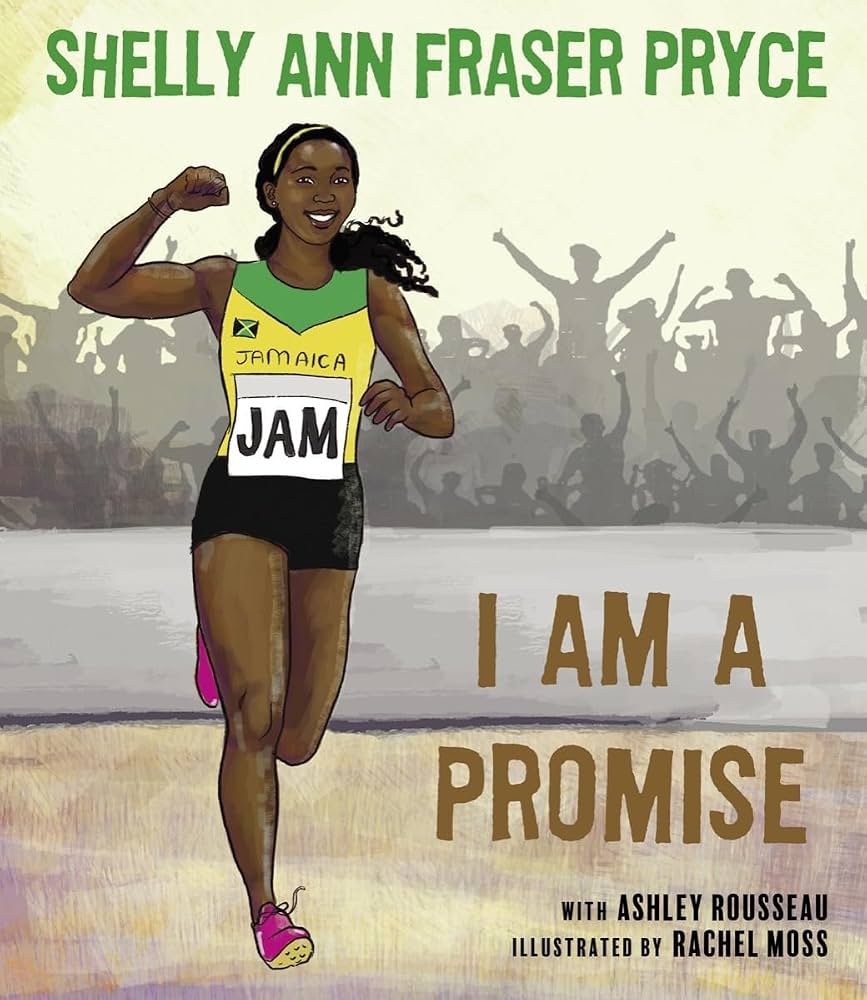
Resources
-
- Behavioral Sciences: The Effects of Imagery Practice on Athletes’ Performance: A Multilevel Meta-Analysis with Systematic Review
- Sports Medicine: Effects of Psychological Interventions to Enhance Athletic Performance: A Systematic Review and Meta-Analysis
- Frontiers in Psychology: Optimal dosage and effectiveness of imagery practice on athletes' mental health: a Bayesian multilevel meta-analysis
- The Physician and Sportsmedicine: Recommendations for postpartum athletes returning to sport: the past, present, and future
- Journal of Sports Sciences: Psychological resilience in sport performers: a review of stressors and protective factors
- Frontiers in Psychology: The sporting resilience model: A systematic review of resilience in sport performers
- Psychological Review: The Role of Deliberate Practice in the Acquisition of Expert Performance
- American Psychologist: Self-Determination Theory and the facilitation of Intrinsic Motivation, Social Development, and Well-Being
- Current Directions in Psychological Science: Self-Control and Grit: Related but Separable Determinants of Success
- Psychological and Cognitive Sciences: Cognitive and noncognitive predictors of success
- Association for Psychological Science: Beyond willpower: Strategies for reducing failures of self-control.
- Harvard Business School: Growth Mindset vs. Fixed Mindset: What's the Difference?
- Journal of Personality and Social Psychology: Boring but Important: A Self-Transcendent Purpose for Learning Fosters Academic Self-Regulation
2 Million Readers.
1 Life-Changing Newsletter
Simple and Straight-to-the-Point...
Just Like Mel.