Episode: 421
Organize Your Life & Home: The Simple System That Gives You More Time, Energy, & Control
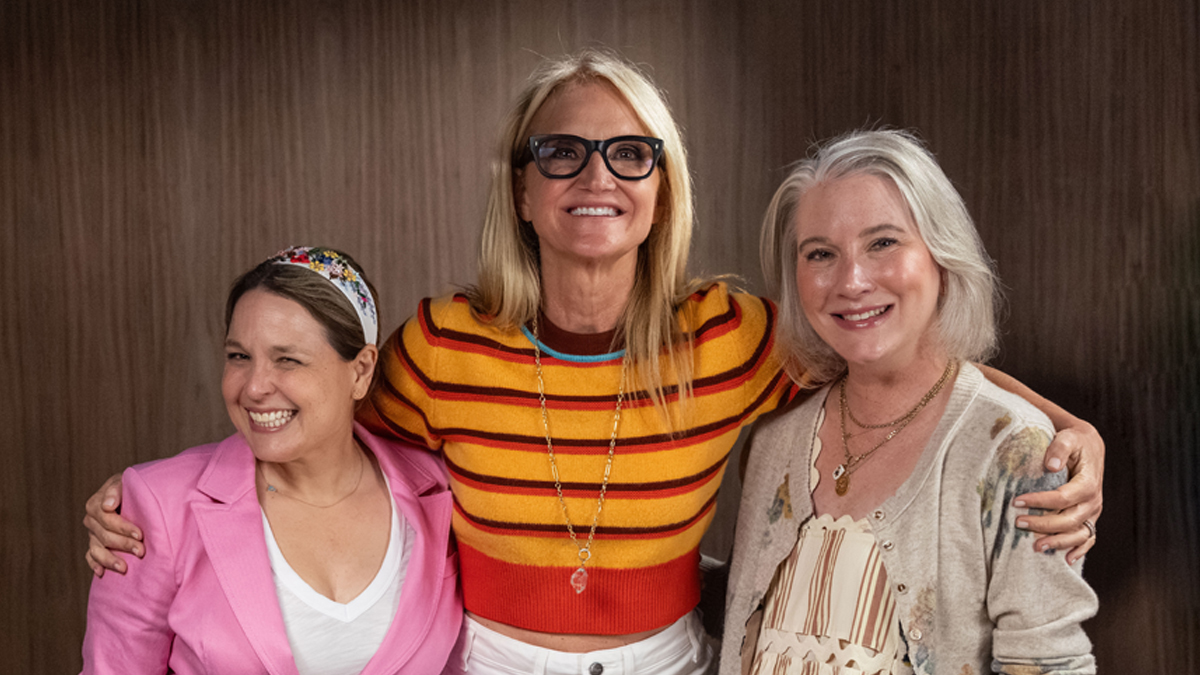
with Clea Shearer and Joanna Teplin of The Home Edit
This conversation will make your home and your life feel lighter and easier in the first 10 minutes.
Clutter steals time, drains energy, and makes daily life harder. Clea Shearer and Joanna Teplin of The Home Edit reveal a simple system for taking back your space.
You’ll learn:
- The 4-step method
- The 80/20 rule
- The 3 questions that make deciding what stays easier
- Where to start when your whole home feels overwhelming.
- One drawer. Ten minutes. Zero dollars. Immediate relief.
Listen on:




Clutter is not a character flaw.
Joanna Teplin
All Clips
Transcript
Mel Robbins (00:00:00):
Today on the Mel Robbins Podcast, you and I are getting organized. The home edit is here to help you go from chaos and clutter to feeling calm and confident in your life and home. Clea and Joanna, the home edit is here in Boston. Welcome to the Mel Robbins podcast.
Joanna Teplin (00:00:25):
Thank you.
Clea Shearer (00:00:25):
It's the best.
Joanna Teplin (00:00:26):
We are so honored to be here. It's thrilling.
Mel Robbins (00:00:28):
Well, I invited you to the studios in Boston instead of my home in Vermont because I was too embarrassed.
Joanna Teplin (00:00:36):
No, you're not the first person to tell us that.
Mel Robbins (00:00:39):
I have followed you online for years and I will tell you upfront, I am so excited to talk to you because I have had a very mixed relationship with you two because I've seen how beautiful your work is and it has stirred both inspiration and a bit of, shall I say, shaming of myself when I see your beautiful pantries and color coded stuff. I'm like, I dont think I'm ever going to.
Clea Shearer (00:01:07):
We're going to erase that. Okay. We're going to erase your shame.
Mel Robbins (00:01:10):
You are?
Clea Shearer (00:01:11):
Yes. We're going to erase your shame.
Joanna Teplin (00:01:12):
Absolutely. It's for inspiration, but it doesn't have to be what you absolutely need to strive to become.
Clea Shearer (00:01:18):
Yes. Our Instagram. It's our portfolio. Of course, it's going to show all the beautiful things. We like to say that the things that we put on Instagram, it's like having a wedding album. It's not the marriage, it's the wedding album. Oh my
Joanna Teplin (00:01:30):
God. Yes. And we need to lower everyone's standards for what organization has to become. Yes, Clee is exactly right. It's our portfolio. Of course we're going to make it pretty, but this doesn't have to be exactly how you live. Correct.
Mel Robbins (00:01:42):
I love you. I love you.
Clea Shearer (00:01:43):
We want people to live in a way that makes them feel good.
Joanna Teplin (00:01:46):
Yes.
Clea Shearer (00:01:46):
That's what organizing's about.
Joanna Teplin (00:01:48):
It's self-care. And that's what we need to make sure that everyone knows.
Mel Robbins (00:01:51):
Okay. So hold on. You just said so much stuff. I need to tap the brakes a little bit and just make sure I'm taking my own color-coded highlighter out and just waving it through the air to say there were so many things I want to make sure that as the person's listening or watching, they got it. You said organization is self-care.
Joanna Teplin (00:02:10):
Yes.
Clea Shearer (00:02:11):
Yes.
Mel Robbins (00:02:11):
You also said your beautiful photos are your portfolio. And so think about the things that you're inspired by online when you think about whether it's interior design or organization, the work that you do at the home edit and with people's houses that are hiring you to come in, that's your portfolio much like you look at the wedding album, but it's not the marriage.
Clea Shearer (00:02:33):
Exactly. It's the beautiful imagery. It's the inspiration. It's what makes you excited, but it doesn't have to be your life. No. Your life has nuance. And a wedding album versus a marriage is the way we think about what organizing should be. And of course the photos and the imagery is going to be beautiful.
Joanna Teplin (00:02:52):
Yeah. And it's a snapshot. But it's a snapshot. I mean, it's a still snapshot. This isn't movement in life. Right.
Mel Robbins (00:02:58):
And so let's start this way, Clea and Joanna. If the person listening takes everything to heart that you're about to teach us about organization, even if your life feels chaotic, your home feels chaotic, what might change in my life if I follow what you're about to share?
Clea Shearer (00:03:19):
Mental clarity. Having physical clutter is a burden. And without it, it brings you mental clarity and a clutter-free brain. It's not just about the tabletop. It's not just about what's in your cabinet. It is a mental burden to take in things around you that are not organized and don't have systems. It is a drain on your energy. And so when people say, "Well, I don't have time to organize this kind," you don't have time to not be organized.
Joanna Teplin (00:03:52):
That's right.
Clea Shearer (00:03:52):
You need to be able to take a breath. You need to not be searching for things before school drop off.
Joanna Teplin (00:03:58):
It takes so much more time not to be organized than to be organized. And organizing is not a one and done, and it doesn't have to happen all in one sitting. I think that's the other misconception about it too, is that people think, okay, I have an hour. I'm going to organize my whole house or I'm going to organize whatever whole spaces is. No, let's do it in pieces so that it's not so overwhelming. And each piece is powerful in itself.
Clea Shearer (00:04:17):
Organizing should be manageable. It should be maintainable, sustainable. It should not give you stress. It should take stress away. And again, we're here to remove the shame that everyone has.
Joanna Teplin (00:04:31):
No shame.
Clea Shearer (00:04:32):
I don't care if you organize one cabinet of mugs, it's something. And it brings you immense freedom to know that the things that you have in your home, that you made a calculation, you chose these items to be here, and you removed the things that don't belong, that don't bring you any happiness.
Joanna Teplin (00:04:55):
It's choosing to be active instead of passive with your belongings. And it changes everything when you have that shift.
Mel Robbins (00:05:01):
I'm sitting here thinking about the fact that you start to feel like you have an avalanche of things that you don't know what to do with.
Joanna Teplin (00:05:09):
You don't. And you just feel paralyzed by itself.
Clea Shearer (00:05:12):
People get paralyzed by it.
Joanna Teplin (00:05:13):
And it's just the worst feeling, which is how we both got into this, is because it's the most freeing feeling to free yourself of all of this clutter that's in your mental space, but also in your physical space.
Mel Robbins (00:05:24):
And I'm thinking about the fact that this has been true for me when I lived in a studio apartment in law school. It's true now that I have a nice home.
Joanna Teplin (00:05:33):
Absolutely. Absolutely. You can fill whatever space you have. So if it's a tiny studio or if it's a humongous mansion, it doesn't matter. Both things can be cluttered or not.
Clea Shearer (00:05:42):
We have a very important golden rule of organizing, and it's the 80 / 20 rule. Much like eating, you don't want to be more than 80% full because it doesn't feel good. So if you organize the way we're told to kind of treat our bodies, it's the same thing. 80% full, give yourself that 20% breathing room. And honestly, I don't care if you're not color coded and make it Instagram worthy. If you keep your home to that level, that 20% gives you so much mental freedom and it gives you so much peace.
Joanna Teplin (00:06:18):
We get so excited.
Clea Shearer (00:06:19):
I know. We're such nerds. We get so excited about it.
Joanna Teplin (00:06:21):
We get so excited talking about it because it's freedom. And the best thing, one of the things that we so love about organizing is it doesn't even have to be expensive. It can cause this massive shift in your entire life and cost $0. Literally, it's the edit. The edit is the magic. It's where the exhale happens and it's 80% of the job of organizing.
Mel Robbins (00:06:40):
That was another thing you just said that I want to make sure you get. So I've always used the word organizing, and from here on out, I'm going to use the word edit.
Clea Shearer (00:06:48):
Yes. We put it in our name for a reason. The home edit. The edit is the single most important thing you can do for your home and yourself, and it costs $0.
Mel Robbins (00:06:59):
I love this because you're right. Organizing, I'm just moving stuff around.
Joanna Teplin (00:07:02):
Yeah. And it feels overwhelming and it feels like you're cleaning and all this. No editing. You're curating the things that you need used in love.
Mel Robbins (00:07:08):
This is going to be one of these conversations where I forget I'm supposed to interview you because I'm going to be so up in my own head dealing with myself and picturing places in my home.
Clea Shearer (00:07:21):
We should have done this in Vermont.
Mel Robbins (00:07:22):
Oh my God. Well, that'll be act two.
Clea Shearer (00:07:24):
Yeah, let's get on a Train.
Joanna Teplin (00:07:25):
It's a magic trick though. Changing the way that you think about it is half the battle also.
Mel Robbins (00:07:29):
Okay. Well, let's talk about something that we need to change the way we think about because so many of us think we don't have time, that the clutter's not really the problem. The problem is I don't have time to deal with the clutter. What do you say to the person like me who says, "Well, I just don't have time to do this."
Clea Shearer (00:07:45):
There's an old adage. Maybe we made it up. I don't know.
Joanna Teplin (00:07:48):
We're old actually.
Clea Shearer (00:07:49):
That organized people are just too lazy to look for things because we just want something in one spot.
Joanna Teplin (00:07:57):
We don't want to look for it.
Clea Shearer (00:07:58):
I don't want to search around.
Joanna Teplin (00:07:59):
I don't either.
Clea Shearer (00:07:59):
I don't want to have to look for my child's favorite water bottle before school.
Joanna Teplin (00:08:03):
Or the keys in the morning. What a way to start your day to look for your keys for 15 minutes. No, let's have a spot for them that they always, your keys are always here.
Clea Shearer (00:08:10):
Every physical item in your house should have some home. It doesn't have to be in a bin.
Joanna Teplin (00:08:16):
No.
Clea Shearer (00:08:16):
It just needs to live somewhere.
Joanna Teplin (00:08:17):
In the same spot. So every morning, your keys you're there.
Clea Shearer (00:08:20):
You always know where to go. You always know where to put it away. And it's that easy. It can be drilled down to being something that simple.
Joanna Teplin (00:08:26):
And it's a system. And that's the other piece too, which we'll get into later, which is not to over complicate the system. You have to have simple, sustainable systems.
Clea Shearer (00:08:35):
Trust us. It is time well spent to take that small amount of energy and just focus drawer at a time, cabinet at a time. Doesn't have to be overwhelming.
Joanna Teplin (00:08:48):
And do not do the house. We would never advise you to even do a room to start with. Ever, ever, ever. That's not where you want to go.
Mel Robbins (00:08:53):
You don't even start with a room?
Joanna Teplin (00:08:55):
Absolutely no. Absolutely not. You'll be paralyzed in the corner. It's so overwhelming to start with a room. Absolutely not.
Clea Shearer (00:09:01):
You need to start so small. And who doesn't have time to just go through one bathroom drawer?
Joanna Teplin (00:09:06):
Let's just do a drawer. Let's start with a drawer.
Clea Shearer (00:09:08):
Everyone has time for that.
Joanna Teplin (00:09:09):
15 minutes in the morning. Even just the edit. We don't even have to organize it. Just 15 minutes of an edit.
Clea Shearer (00:09:14):
And then every morning when you get ready, we like to set up something called a daily drawer. It's that one drawer that has your dental, if you wear contacts, if you cue tips.
Joanna Teplin (00:09:23):
Your daily drawer, things that you know you need every single morning.
Mel Robbins (00:09:26):
Okay. I'm already wrong in my bathroom because I'm like, okay, wait, where is this stuff?
Clea Shearer (00:09:29):
Organized people are just too lazy to look for things.
Joanna Teplin (00:09:32):
And it's self-care. This is so important that people realize this. It is for your mental and physical wellbeing that you do stay organized.
Mel Robbins (00:09:39):
It's also for my marriage. I mean, I am going to be celebrating 30 years of marriage this year, but my poor husband has watched me for decades race around, particularly in the morning looking for things. And I have to stop and say to myself, and I'll say this on behalf of you as you're listening and watching too,
Mel Robbins (00:09:55):
We don't have to spend the rest of our lives as this version of ourselves wasting time looking for things that we need.
Joanna Teplin (00:10:01):
No, and it's a muscle. Organizing is also a muscle. You don't have to be born good at it. You can learn to have a system that works for you and you are organized. You can call yourself organized. All right.
Mel Robbins (00:10:11):
Well, let me ask you another question because as you're listening or watching, maybe you feel the way that I feel, which is how can I be successful at work? How can I raise kids and have them fed? How can I be in a relationship and my dogs get fed? And yet I can't manage my own house or my own closet without having a panic attack.
Clea Shearer (00:10:36):
Well, okay, let's break that up a little bit. Yeah. Okay. First of all, what you just described, you're a really busy person, right?
Joanna Teplin (00:10:43):
And most of us are. I'm sure all of your listeners are very busy people. Very busy.
Clea Shearer (00:10:48):
You are highly functioning. And you simply just need to take something off of your list, which is, again, not racing around the house, trying to search for a million things. You actually deserve a break. You deserve to have some peace in your home so that you can deal with all the million things you have going on. If you are a super busy person, again, whether it's kids and work and feeding dogs and signing homework slips and all - It's a lot. All the millions of things. And organizing actually takes something off of your plate. It is a small amount of energy to put into something that has such a long-lasting effect, and it actually removes a burden. It doesn't add to it. People have to rethink and shift their idea of what organizing is. It's not another chore. No. It actually removes so many chores from your plate because you just don't have to think about it. It's plug and play.
Mel Robbins (00:11:46):
And I'm loving this idea of systems and the edit. Yeah. Because I have spent a lifetime shoving things behind doors, putting things in baskets. And that's overwhelming. Just trying to contain it all and make it go away.
Joanna Teplin (00:12:00):
And what's more overwhelming than opening a cabinet and having things tumble on you? I mean, what a way to start your morning. It's terrible.
Mel Robbins (00:12:06):
Yes. But I had this question because I wonder, there are so many of us that feel like if we were just smarter or more disciplined, somehow our house would be more organized. Why do you think we tie clutter to our self-worth?
Clea Shearer (00:12:24):
Well, first of all, we need to. Let's break that apart completely. Clutter is not a character flaw. It is not. Why does it feel like one? Because I think we shame ourselves. And we are here to literally remove the shame from everyone's mind and body. This is not something we have to hold onto. All it takes is a little bit of time and effort at the beginning for the longest reward. We are not the clutter that we see. We can fix that. We can do something about that. And again, all it is an edit. We don't even need to get into the tenets of organizing. Clutter is a very solvable problem, which is so exhilarating. What an amazing thing. It's like we struggle through so many things in life. Clutter just doesn't have to be one of them. Clutter's just, that's easy. Let's just remove it.
Mel Robbins (00:13:17):
And we can solve it with the edit that you're about to do.
Clea Shearer (00:13:19):
Solve it with the edit.
Joanna Teplin (00:13:20):
I will add one thing too. I think the spaces that you decide to start first, we want to start with the simplest, least what we call a landmine space. Because what happens, a closet is the perfect landmine space. And one of the reasons that people, I think, don't even realize that they resist organizing is because they're afraid of what they might find in their brain of landmine issues. Let me give you some examples of what those landmine issues could be. Will these jeans ever fit again? I don't know. I wish I could have lose more weight. I always though I would be a different size. I always though I would go back to this old size. Oh my God, I don't know if I should keep these jeans. Am I going to ever. Now I feel bad about myself. Okay. Am I going to have another baby?
Joanna Teplin (00:14:01):
Well, if I have another baby, I spent so much money on these maternity clothes and I only wore them once. It would be a shame to have to have another baby and now I have to buy the maternity clothes. God, do you think I should talk to my husband? Are we going to have another child?
Clea Shearer (00:14:14):
Or just even the thought of, you know what? I spent money on that.
Joanna Teplin (00:14:19):
I spent money on that. And I never wore it. Or my grandmother gave it to me and I never liked it. So there's guilt associated with all these decisions too. And so that I think comes into play a lot of times with people having this aversion to organizing because they're afraid to confront these bigger existential issues going on in their minds.
Clea Shearer (00:14:35):
And I think that Joanna's exactly right. I think that those are the real issues why people resist it, but they use the fact that they don't have time. And I think that we all have a little bit of time. You spend a lot more time looking for things. You could spend very little time just being like, I actually don't like that.
Joanna Teplin (00:14:51):
I don't like that mug. It has a chip and I'm never going to get it fixed.
Clea Shearer (00:14:54):
It doesn't match the others. Whatever it is, it's so much easier actually to just make decisions about things. We have to go through life making good decisions all day, every day. So why not let this be one of them? And again, start extremely small. Start in a space, like Joanna said, without landmines.
Joanna Teplin (00:15:11):
Yes, no landmines. A junk drawer has very few. That's why we love a junk drawer. You're not that attached to a paperclip. Let's be honest. And if it's bent out of shape and it's not going to work, it can go. So we want to start with the small wins and then you kind of get your muscle memory and you kind of build your confidence. And then you're like, "Oh wait, you know what? I can actually do a cabinet too." Because maybe that mug is sentimental from college or maybe it's not, but you start getting the muscle and you feel the reward and the endorphins start kicking in and you're like, "I can actually do this"
Clea Shearer (00:15:37):
And then you're off to the races.
Joanna Teplin (00:15:38):
Boom.
Mel Robbins (00:15:39):
Thank you. To today's partner Expedia. If you haven't booked your next trip yet, now's the time. Let me, your friend, remind you, you deserve to go do something exciting because travel can make you feel alive in so many different ways. In fact, research tells you and me that travel's one of the most important things that you can do for yourself, your happiness, your health. In fact, most people make a big life decision after traveling, and you don't have to go that far. Yeah, you could fly halfway around the world, but it could just be a quick weekend getaway or even exploring the neighboring town. It all counts as travel because you're getting out of your day-to-day and experiencing something new. And Expedia makes it easy. Flights, hotels, vacation rentals, cars, activities, all in one place. And when you bundle, you can save up to 30% with everything you need in one app.
(00:16:26):
Life is short. So stop waiting and book the trip. And the beauty of having everything in one app with Expedia is that you can go from an idea to booked in minutes. No jumping between sites, no hassle. Sign in to save. Savings vary. Expedia, the one place you go to go places.
Mel Robbins (00:16:44):
So let's say I look around at my house from the garage, if you're lucky enough to have an entry or a mudroom to the kitchen, and all you see is like, oh my God, what's the first step?
Clea Shearer (00:16:57):
Okay. Okay. The very first step, let's just talk about a mudroom. Let's just say a mudroom or an entry, whatever you have, especially if you have kids, it is one of the places that we call Grand Central. It is where everyone comes in and out of, and it's where things get dropped and things get left. And it's like, "Well, this is my project pile and this is where the kids' backpacks are." So the first thing you need to do is assess, does everything belong here? Yes. Are there things here like that -
Joanna Teplin (00:17:27):
Dirty socks? No, why are those there?
Mel Robbins (00:17:29):
It's because I have a 21-year-old son who walks in the door and drops them on the floor.
Joanna Teplin (00:17:33):
And we'll get into what to do with family members too.
Mel Robbins (00:17:35):
We'll get into that. And we're going to come back. We're going to stay on task. Yes,
Joanna Teplin (00:17:38):
We're going to stay tasked.
Clea Shearer (00:17:39):
The very first thing you do is say, "Does all this belong in this space?" And many, many times they don't. They should be in the garage. They should be up in someone's bedroom. If there's a project pile, let's make a spot for that. So first, just assess quite simply what belongs here, what doesn't. That would be considered the other.
Mel Robbins (00:18:01):
I'm already picturing it. I bet as you're listening, you're doing the same thing. I'm in my Grand Central at my house. And I am mentally inside my grandmother's cabinet that sits next to the door. And I am mentally inside there going, why do we have the dog food in a igloo cooler? Why is there a kind of vice thing that belongs in the garage? You are literally walking me mentally through the fact that half the stuff in that entry - Just doesn't belong. Doesn't belong.
Joanna Teplin (00:18:30):
It doesn't belong. And you know what? And a lot of times people don't do the organizing. It's because there's too many steps to put something away. And that's something we get into later too, which is removing the barriers to entry and having simple systems so that things make sense.
Clea Shearer (00:18:43):
That is exactly what I was going to touch on next.
Mel Robbins (00:18:46):
So as we're in though your version of Grand Central, whether you have a studio apartment or you have a big mansion - Exactly.
Clea Shearer (00:18:51):
Right.
Mel Robbins (00:18:52):
And you're visualizing this, you're asking, does all of this belong in this space? That's right. What am I doing with it?
Clea Shearer (00:18:58):
Okay. So let's say now we're removing the things that don't belong, but there are still plenty of things that do belong. And why are they all on the floor? Okay. Now we believe very simply just you can't fight the tide. If people come in through this door, if your kids come through this space, they are going to put their shoes here. Their backpack is going to go here. You're never going to get them to carry it to the room, right? We know that. So don't fight the tide. Create a home where it's going to end up. For instance, if shoes are going to come off, all you need to do, put a shoe in there. At least it's contained. It's not all over the floor to trip all over. If shackets
Joanna Teplin (00:19:36):
Need to stay there, then put a hooks on the walls. Put hooks.
Clea Shearer (00:19:39):
Let's
Joanna Teplin (00:19:39):
Work vertical. Let's use the storage space vertically, especially in a small space. We are always hunting for spaces and looking up is usually one of the best spaces.
Clea Shearer (00:19:47):
Exactly. Always look up. Add hooks. Add a floating shelf. There are external- External
Joanna Teplin (00:19:52):
Storage opportunities. Carts and credenzas and all kinds of things that you can bring in that add storage opportunities. And
Clea Shearer (00:19:59):
Very simply, again, very inexpensively, adding hooks and a bin for shoes can take up. It can be such a solve for an entry, for a mudroom, for anything like that. The goal, I don't ever want to see things just laying on the ground. No,
Joanna Teplin (00:20:13):
Nothing goes on the ground in fact. Unless it's a rug, it should not be on the ground. Right.
Clea Shearer (00:20:17):
Or a shoe bin basket. But again, the shoes are in the basket. That's right. It can be a very, very inexpensive thing. I don't care if you live in a studio apartment. In fact, if you do - You probably find something for
Mel Robbins (00:20:28):
Free on Facebook Marketplace.
Joanna Teplin (00:20:30):
That's right. There's tons of options there. And I'll back up one second. If you're walking in and there's 12 backpacks and you have two children, let's talk about that. Why do we need 12 backpacks here? Have we just been keeping them as the child getting a new backpack every single year? Okay, that's fine. Again, we're not going to focus on, now don't get into your head with the landmine. Why did I buy a backpack every single year when they could be. Let's not go there. Because they
Mel Robbins (00:20:51):
Pressured me and everybody else got one. T's right? And cleaning and saples. You
Joanna Teplin (00:20:55):
Did your best. Yes. You did your absolute best at the time, but why are we doubling down now on them having two backpacks or 12 backpacks? Okay, let's remove that. Let's decide which backpacks do they actually use. Is there ones with holes? Let's get rid of those. Is there ones to donate? Let's have - I
Clea Shearer (00:21:09):
Was going to say donation is a huge part of taking away the guilt. Taking away the guilt in what you bought your kids and what you bought yourself. I mean, even in a junk drawer, if you're like, "Oh God, but all these markers, I don't know. You know what? We
Joanna Teplin (00:21:22):
Love them. Teachers would love
Clea Shearer (00:21:23):
Them.
Joanna Teplin (00:21:24):
Schools.
Clea Shearer (00:21:25):
Kids need bath. It is one of the essentials that they need to be able to go to school. There are so many things we can do with the items that we feel guilty about getting rid of."
Joanna Teplin (00:21:35):
Let's not have the guilt on top of everything else. You don't need to do it. We all have too much guilt.
Mel Robbins (00:21:41):
I want to make sure I'm tracking because where we're starting is you pick a place that's not a mental landmine. That's right. Which really narrows the focus for me in my house, because I think there's a lot of mental landmine. Okay, that's fair. That's right. But I love that we're just going to start with Grand Central. We're just going to start there.
Joanna Teplin (00:21:57):
And
Mel Robbins (00:21:58):
I love that you're basically saying a couple rules I want to make sure I'm following. Does all this belong here? And if it doesn't, then remove it or donate it. You also said nothing belongs on the floor except for the rug or your dog.
(00:22:14):
And so if you're looking for places, bins where it goes, look up vertical storage is always an option. Behind door, over the door. Behind the door, over door. Hooks are super cheap. And don't fight the tide. That's
Joanna Teplin (00:22:28):
Right. You got it, Mel.
Mel Robbins (00:22:29):
Stop turning Grand Central into an architectural digest photo shoot.
Joanna Teplin (00:22:35):
Exactly.
Mel Robbins (00:22:36):
And just embrace Grand Central.
Clea Shearer (00:22:38):
Embrace it.
Mel Robbins (00:22:38):
Got it.
Clea Shearer (00:22:39):
If you know that every day, whether it's you or a partner, whatever, everyone gets the mail and the mail always goes right down on the counter.
Mel Robbins (00:22:46):
Can we talk about this?
Clea Shearer (00:22:48):
All we need is a simple bathroom. Tray.ou need a
Mel Robbins (00:22:50):
Tray.
Clea Shearer (00:22:51):
A tray, a
Mel Robbins (00:22:51):
Basket.
Clea Shearer (00:22:52):
That's
Mel Robbins (00:22:52):
It. Let's talk about paper clutter. Why do the entryways, the kitchen, why do the counters -
Joanna Teplin (00:23:00):
Flat surfaces. Because it's just asking. You're just like, "Oh, this is a space I can put things on top of." So we also try when it's possible to not have additional flat spaces for things to get cluttered. Like
Clea Shearer (00:23:10):
Open flat spaces.
Joanna Teplin (00:23:11):
Yes, just asking. A flat
Clea Shearer (00:23:12):
Space is fine, but just an open, empty spot is asking for clutter.
Joanna Teplin (00:23:16):
No, that's where you put a tray and you have the tray designated for mail, for keys, for wallets, whatever it's for. It's a home for something. It's not just an open endless sea of whatever wants to go there. What do we
Mel Robbins (00:23:27):
Do about the kitchen island? Because what drives me crazy, and maybe it drives you crazy as you're listening, is, okay, we've gone through Grand Central. You enter into the kitchen, and I swear to God, I spend an hour every day picking up my husband's glasses, my son's keys, the mail that somebody just put there, the other...see
Clea Shearer (00:23:49):
Their
Mel Robbins (00:23:49):
Pockets.
Clea Shearer (00:23:50):
It's the second Grand Central. It is. The kitchen
Mel Robbins (00:23:52):
Island is? Yes, it is.
Clea Shearer (00:23:53):
The kitchen in general. That's exactly right. So am I supposed to embrace that it is? So the same overply
Joanna Teplin (00:23:57):
Here.That's the good thing is the rules are the same. Okay. So now we're going to see what doesn't belong here. Keys don't belong on the kitchen island. They sure do not. But
Clea Shearer (00:24:03):
They could belong in a tray or something.
Joanna Teplin (00:24:04):
That's exactly right. They don't just belong on the kitchen island.
Clea Shearer (00:24:07):
Basically, here's one rule that we just really embrace. We do not like a free floating item. It should have a home. If this pen is just right there, well - It's on my kitchen island right now. It doesn't belong there. It doesn't belong there. Have a pen cup. Yeah.
Mel Robbins (00:24:26):
Have
Clea Shearer (00:24:26):
A drawer. Have a drawer.
Mel Robbins (00:24:28):
You know what I just realized? Is I just realized that I have an opinion about where my husband's reading glasses belong. Okay, great. You just said it doesn't have a home. Yeah. And
Clea Shearer (00:24:40):
I'm
Mel Robbins (00:24:40):
Like, "Well, it's because I think the home is on his face. They do not belong at home on the kitchen counter. Same with Oakley's keys. I think they belong in his car or up in his room, but they end up on the kitchen counter. You can't fight
Joanna Teplin (00:24:58):
The tide. You're fighting the tide. So this is the tide. This is exactly what we're talking about. We're not going to fight it because that's just going to make everybody - It's going
Mel Robbins (00:25:05):
To make you crazy. It will.
Joanna Teplin (00:25:06):
It
Mel Robbins (00:25:06):
Has made me
Joanna Teplin (00:25:08):
Tell you that crazy. Well, this is what we also talk about. A me problem and a them problem. So this is something we really talk about, and it's easy in. We'll give the example of both of our children's bedrooms. Okay. We ask our children separately. We don't live together. We are married with kids. We are married
Clea Shearer (00:25:24):
To other people with children.
Joanna Teplin (00:25:25):
Yes. But separately, we both ask that our children make their beds. Well, okay, they most of the time do. It turns out both of us hate the way our kids make the beds. So now I go back and remake the bed the way that I want it. That's a me problem. They did their best. They made the bed, but I don't like how they made the bed because it's not up to my standard. That's a me problem. For
Clea Shearer (00:25:44):
Instance, you put a basket down for shoes in the mudroom or entryway. Well, they might just toss them in and it looks a mess and whatever. I want them lined up nicely. That's a me problem. That's
Joanna Teplin (00:25:55):
Right.
Clea Shearer (00:25:55):
It's a them problem if the shoes are on the floor, not in the bin. That's right. So you have to set up systems that your family, your household, whoever you live with, that it's really simple and that everyone can follow and understand because if they leave the keys or the glasses not in the home that you helped create -
Mel Robbins (00:26:13):
Yes.That's
Clea Shearer (00:26:14):
A them verbal. That's a them problem.
Mel Robbins (00:26:16):
And
Joanna Teplin (00:26:16):
That's
Mel Robbins (00:26:16):
Something that needs to be
Joanna Teplin (00:26:17):
Worked on.
Mel Robbins (00:26:17):
So I don't have a home for those things, which is why they keep ending. And that's a me problem, so I got to create a home. Then you
Joanna Teplin (00:26:23):
Create the home and then it's a them problem if they don't follow it. Oh
Mel Robbins (00:26:25):
My God, I love this. Yeah.
Clea Shearer (00:26:27):
It's a me and a them problem. Got
Mel Robbins (00:26:28):
It. Yeah. This is actually kind of simple. It is. It
Joanna Teplin (00:26:31):
Is.
Mel Robbins (00:26:32):
Organizing is simple.
Mel Robbins (00:26:33):
Okay. Let's talk about editing. Okay. Because when you said, okay, we're not even going to talk about organizing. Let's just talk about first this editing because editing will free you. It will. It's magic. And I also assume editing is how I implement the 80 / 20 rule. Yes, absolutely. The any space, only 80% full, that the 20% allows me to breathe, and editing is the thing that will set me free. You're right.
Clea Shearer (00:26:57):
It will.
Mel Robbins (00:26:57):
So I'm assuming editing means decide what to keep and decide what to trash. So how do you edit?
Clea Shearer (00:27:04):
So the rules for editing, an item has to fall into one of these buckets in order to keep it. All right. You either need it, a toilet punger. You use it, a toaster, spatula, whatever it is, you use it, and you love it. You actually just, you're attached to it. You just love it. It
Joanna Teplin (00:27:26):
Brings you joy for whatever reason that that might be. If somebody gave it to you that you love, it represents something to you that you love. Whatever reason you don't have to justify it, you just know you love it. It makes you happy.
Clea Shearer (00:27:36):
You need it, you use it, or you love it. Aside from need, use, and love, there's one other bucket, and that is sentimental. And sentimental, you might say, "Well, I love the things that are sentimental," but that's not always true. Sometimes it's a special item that you just feel - You can't get rid
Joanna Teplin (00:27:52):
Of. Like you
Clea Shearer (00:27:52):
Can't get rid of. Now, there are two rules within sentimental. You either need to use it or store it appropriately. When people tell us that this whatever sweater from their grandma is really important or whatever it is that it's sentimental and it's just shoved on a back shelf, I question how special it actually is to them because you are not honoring the item. If it actually is special and sentimental, you need to either be like, "I'm going to put this in a keepsake box at the top of the closet, or I'm going to have it framed." You have to honor whatever it is. But if it's something that you're like, "I just can't get rid of it." It's like then you need to honor it and display it or honor it and store it. Now
Joanna Teplin (00:28:37):
There's a rule with the storing it because some people, everything could fall into sentimental. Of course. It can become a very slippery slope. So what you have to do is put up a little bit of a guardrail and decide, I, in my house, my studio apartment or my huge house, it doesn't matter, this is how much space I want to allot to my sentimental value of stuff. So whether it's the size, maybe you have six bins and they're the size of this table. Maybe it's a whole garage full, but you have to assign a value of how much all this stuff means to you and then decide what's worth keeping and going through that stuff and making sure that it really has value to you because there's also a dollar amount tied to the sentimentality. Think about how much you pay in a mortgage or how much you pay in a rent.
(00:29:17):
How much stuff are you just holding on for the sake of holding on that's taking up so much valuable real estate in your house that you could be otherwise have other things or just breathing free air there? So these are all decisions to kind of think through in other ways to make the value seem more rational. Yeah. So when
Mel Robbins (00:29:33):
I go through this edit list, need, I need it, I use it, I love it. That's right. And then we've got this little subcategory with a giant red flag called sentimental. That's right. Because this is where we fall into starting to hoard and keep things right? That's right. It's a slippery slope. Because you can justify, well,
Joanna Teplin (00:29:48):
Absolutely.
Mel Robbins (00:29:49):
And so we can correct ourselves by going, "Okay, well, am I actually honoring it? Or is it on display? Because if
Clea Shearer (00:29:56):
Not -
Mel Robbins (00:29:56):
Is it just shoved in
Clea Shearer (00:29:57):
The back corner? It doesn't seem
Mel Robbins (00:29:58):
Special to me.
Clea Shearer (00:29:59):
That's
Mel Robbins (00:29:59):
Really not That's sentimental, but here's what I didn't hear. Should.
Clea Shearer (00:30:04):
Right.
Mel Robbins (00:30:05):
I should hold onto it.
Clea Shearer (00:30:07):
Well, the thing is we don't believe in that. We just don't. If it should, that to me does not equal a desire, a want, a need. It's like putting this imaginary, well, I should. Shoulds are not powerful.
Joanna Teplin (00:30:25):
And they feel powerful, that's the thing. I should feel so powerful, but what are they? It's not that you want to or that you need to. It's just that you should. You should. I
Clea Shearer (00:30:35):
Would always question, well, why? Tell me why you should. Is it because you think that someone's really going to come over and look for that tea towel? Because they're not. No one is.
Mel Robbins (00:30:46):
I can't believe you just said tea towel. No. I just was sitting here thinking, because you can't help but listen to you two and start to mentally go through your thing. Sure, of course. And so as I'm going to edit, I'm like, okay, I need use. And I was standing in my kitchen and I thought sentimental. And I have my grandmother's china.
Joanna Teplin (00:31:08):
Great.
Clea Shearer (00:31:08):
Absolutely.
Mel Robbins (00:31:09):
Beautiful harvest pattern and it's on display. Great. And grab it. I never use it, but I love seeing it.
Joanna Teplin (00:31:16):
That's
Mel Robbins (00:31:16):
Perfect.
Joanna Teplin (00:31:17):
That's exactly right. Do
Mel Robbins (00:31:18):
You know how many doilies and broken pieces of costume jewelry I have jammed into a door in my closet? A drawer in my closet because I should hold onto it. And then I'm like a bad granddaughter. No, let's talk about that. I don't want this stuff. I didn't even know my great-grandmother. The plates mean a lot
Clea Shearer (00:31:35):
To me. Yes, that's right. And that's the difference. And that's the difference. When we question, we have to push back on people, right?
Mel Robbins (00:31:41):
Well, I feel like a bad person if I'm ditching broken costume jewelry from the 1920s. Absolutely
Clea Shearer (00:31:47):
Not. Absolutely not. And we always push back when someone says it's special and I want to know why. And I want to know if, again, you're china on displays.
Joanna Teplin (00:31:57):
Look how you lit up when you were talking about the china on
Mel Robbins (00:31:59):
Displays. I have some vases there that are incredible.
Joanna Teplin (00:32:03):
Look how you lit up. And now this doily brings you down.
Mel Robbins (00:32:05):
Oh my God. There's a doily next to the broken jewelry.
Joanna Teplin (00:32:07):
Yes. And let's talk about this too. It doesn't mean anything. This is another way to know what means something and what doesn't mean something. Okay. So in part of our process, we like to categorize things. So what this does is allow you to see the totality of a category. So say it's all your great-grandmother's or your grandmother's stuff. What if you brought all of the things that your great-grandmother has ever given to you and put it all in one space and you're able to see, okay, all of that stuff takes up this table. Well, actually, I love these dishes and the rest of it means nothing to me. Well, you're representing your great-grandmother through the stuff that you love. Why are we holding onto - She
Clea Shearer (00:32:41):
Wouldn't want you to have a bunch of broken costume jewelry.
Joanna Teplin (00:32:44):
Junk in a drawer. Look how much you are honoring her and this makes you so happy and this brings you down. And what are we doing here? I know she's dead anyway. Exactly.
Clea Shearer (00:32:54):
And she wouldn't want this. I know. I
Joanna Teplin (00:32:55):
Know her.
Clea Shearer (00:32:56):
Well, she might. I know her.
Joanna Teplin (00:32:58):
Maybe somebody else wants it, then you donate it. Okay. That gets into another conversation. But I mean, thinking about it, seeing it all together, which is part of our process, even with not just sentimental stuff, but anything, you have 40 pens. Do we need all 40? Can you have 10? Let's see the totality of something to really make those decisions easier.
Mel Robbins (00:33:15):
Now let's talk about the crap that does not fall into that category. And I have wrestled myself to the ground and I've got some things. Let's use the example of pens. I've got 20 extra pens that I do not need. I have clothes that don't fit. I have other things over here. Now I've created piles.
Joanna Teplin (00:33:38):
Yes.
Mel Robbins (00:33:39):
And I have piles that are like, okay, get rid of this, donate this. Am I reselling that? But now I'm
Joanna Teplin (00:33:45):
Super complicated. Talk
Mel Robbins (00:33:46):
About this as you
Joanna Teplin (00:33:47):
Can imagine. So start, if the piles are categorized and they're all jeans, you're starting the organizational process. Right.
Clea Shearer (00:33:52):
You're really two-thirds of the way through. Then we talk about containment. And containment doesn't have to be a bin. It doesn't have to be drawer inserts. I mean, obviously we like to operate that way, but again, you can do this for free without. You need to have guardrails for any item that you're keeping, any. So if it's denim, whether you hang it or fold it or whatever it is, you only have X amount of space. I don't care if you live in a humongous mansion or a studio apartment, you only have X amount of space. That's right. So your items that you keep cannot exceed your space. It's the 80 / 20 rule. So if you have 20 pens, 20 extra pens in your drawer, you're taking up now too much space.
Joanna Teplin (00:34:32):
And now you can't fit a pair of scissors because you have too many pens.
Mel Robbins (00:34:34):
Well, I can't open the drawer because the sissors are jammed in there because there's too many pens and then keep back off. That right. It's always
Joanna Teplin (00:34:39):
Scissors and the rolling pens. It's always those two things.
Clea Shearer (00:34:42):
And the potato masher. Potato masher always gets in the way. But it's about, you have to think about containment. If you're not using drawer inserts or things like that, then you have to just assign a containment kind of in your brain for this is where pens go. I can only fit X amount, which means I have to actually get rid of some. And it's the 80 / 20 rule.
Joanna Teplin (00:35:03):
And the containment goes back to the categorization because if you can see that you have 20 pens, when things are all scattered all over, you have no idea what you even own. And then you end up wasting money because you're buying it over and over again.
Mel Robbins (00:35:13):
So true. And then I have 40 pens, not 20 pens.
Joanna Teplin (00:35:16):
But if you see them all together, again, this comes back to you don't have time to not be organized. Once you're organized, you save so much time and so much money. Right.
Mel Robbins (00:35:23):
All right. Well, we'll come into the details of the organization and containment in a little bit.
Mel Robbins (00:35:30):
First, I want to make sure we understand editing. And we talked a little bit about pens and scissors. Let's talk about the junk drawer that we all have that gets out of control. And I would love for you to walk us through a zero cost way to take the disaster in a drawer and edit and organize it.
Joanna Teplin (00:35:49):
Well, someone brought us your drawer, Mel.
Mel Robbins (00:35:51):
Yep.
Clea Shearer (00:35:51):
Actually, I'm so sorry to tell you.
Joanna Teplin (00:35:53):
Yeah, at this late stage. Chris,
Clea Shearer (00:35:56):
I am so sorry to put you on blast like
Joanna Teplin (00:35:58):
This. We have your junk drawer.
Clea Shearer (00:35:59):
I know this is your show and this - Oh my gosh. This is your junk drawer.
Mel Robbins (00:36:04):
It
Joanna Teplin (00:36:04):
Is. Okay. Show it to the audience so everyone see. No, they
Clea Shearer (00:36:06):
Don't need to see it. Oh my God.
Joanna Teplin (00:36:08):
So this is perfect because we can go through all the steps right now with you. This is going to be the edit.
Clea Shearer (00:36:14):
The first step with an edit is you have to take it all out.
Joanna Teplin (00:36:17):
And there's no way around it.
Clea Shearer (00:36:19):
Let me explain why.
Joanna Teplin (00:36:20):
And I'm going to start just going.
Clea Shearer (00:36:22):
There's no way around it because if you just looked in here, whether it's a closet, a drawer, whatever, it's very easy to say this all belongs. This all stays. But when you pull it out, you actually have to make a conscious decision about putting it back.
Joanna Teplin (00:36:35):
It's active versus passage.
Mel Robbins (00:36:36):
Oh my gosh. You know what I've done with our junk drawer? I'm glad you're doing this, so now I don't have to do it. But what I love, at least I have a rubber band ball and I have rubber bands everywhere. That's
Joanna Teplin (00:36:45):
Right.
Mel Robbins (00:36:46):
You do. I will arrange one little bit of it.
Joanna Teplin (00:36:51):
Yes.
Mel Robbins (00:36:51):
Like one little side tray thing of it, and I might pick out the fuzz or somehow the dog hair or the old bandaid is in there. Yes. And then I'm like, okay, God, okay, just shut this thing.
Joanna Teplin (00:37:01):
Right, because you have to do the unit.
Mel Robbins (00:37:02):
And look at how much stuff is in there. If you're listening - It's always
Clea Shearer (00:37:06):
Amazing how much comes out.
Mel Robbins (00:37:07):
I know. Oh my gosh. Duct tape, glue stick. Oh my God, the card that was missing from the cribbage game last night. There you go. The joker.
Clea Shearer (00:37:15):
Why is this in here? I don't know. You know what
Joanna Teplin (00:37:17):
I mean? One card is not going
Mel Robbins (00:37:18):
To be. Oh, I know because we didn't need it for the game. Okay. So somebody put it on the fricking kitchen island and then I got frustrated when I was cleaning. So I then put the card in the junk drawer because I didn't want to see it. Oh my God, look at the receipts in there. Oh my God. All those cords and the floors. There are a few things that
Clea Shearer (00:37:36):
We can
Mel Robbins (00:37:37):
Just like
Clea Shearer (00:37:37):
This.
Mel Robbins (00:37:37):
What is that? I don't even know. I don't even know what it is. It's like a part to something that I don't know, but we're holding onto it in case I need to find the other part. I don't know. And
Clea Shearer (00:37:46):
This coffee cup lid, this doesn't belong in here. No. No.
Joanna Teplin (00:37:50):
Oh my God, the bracelets.
Clea Shearer (00:37:51):
I don't even know who those are.
Joanna Teplin (00:37:52):
Okay. So already you're seeing, but see what we're doing right now is we're categorizing this stuff so you can see even in the little drawer, the totality of each thing. These are like your little
Clea Shearer (00:38:01):
Erasers.
Joanna Teplin (00:38:01):
These are your highlighters.
Mel Robbins (00:38:03):
I hate half of those style of pens. I would not use that pen. I've got one chopstick.
Joanna Teplin (00:38:09):
Okay. Yeah,
Mel Robbins (00:38:09):
One
Joanna Teplin (00:38:09):
Chopstick. One
Mel Robbins (00:38:10):
Chopstick.
Clea Shearer (00:38:10):
All
Joanna Teplin (00:38:11):
Right, we've got some sunscreen. Okay. So there's some office supplies in here.
Clea Shearer (00:38:15):
Yep.
Joanna Teplin (00:38:15):
Here's
Clea Shearer (00:38:16):
A little office supply section
Joanna Teplin (00:38:17):
That I'm
Clea Shearer (00:38:17):
Putting together.
Joanna Teplin (00:38:17):
All right. And then we've got some laundry. Okay. I would make a case for this. A tie
Clea Shearer (00:38:23):
Pen. Even before we get into like, do you want these pens or this pen? I think it's just a very even cursory look at being like,
Joanna Teplin (00:38:30):
Okay - Bracelets don't belong here.
Clea Shearer (00:38:32):
Nail polish does not need to be in a junkdrawer. Teabags
Mel Robbins (00:38:36):
Do
Clea Shearer (00:38:36):
Not need to be
Mel Robbins (00:38:37):
In a junk drawer. But I feel so conflicted because I'm like, where else am I going to put it?
Clea Shearer (00:38:41):
No, but that's where - Wait,
Mel Robbins (00:38:42):
Hold
Clea Shearer (00:38:42):
On. Let's actually ask a question. Do you paint your nails in a place that's next to this junk drawer?
Mel Robbins (00:38:49):
No.
Clea Shearer (00:38:49):
No. Okay. Where would you paint your nails?
Mel Robbins (00:38:52):
My bathroom. Okay. Then it belongs in your bathroom. On the floor of my bathroom.That's where goes. This goes in the
Joanna Teplin (00:38:57):
Bathroom.
Mel Robbins (00:38:57):
I can only do a good job on my toenails if I'm sitting. That's where it goes. There you go.That's where it goes
Joanna Teplin (00:39:00):
In the bathroom. On
Mel Robbins (00:39:01):
The floor. But here's the truth.
Joanna Teplin (00:39:03):
Okay.
Mel Robbins (00:39:04):
I.
Joanna Teplin (00:39:07):
Say it. Say it. Say it. Say
Mel Robbins (00:39:09):
It. I don't even know why I have nail polish because I'm - You don't get your
Clea Shearer (00:39:15):
Nails. I
Mel Robbins (00:39:16):
Don't often get a manicure. I only get a manicure or pedicure when we're taping episodes in Boston. Otherwise, I live in Vermont. I bet I have eight bottles of nail polish flying around in different drawers.
Joanna Teplin (00:39:27):
Would you want to have nail polish in your house or would you never
Mel Robbins (00:39:31):
Choose?
Joanna Teplin (00:39:31):
No. Okay. We don't even need
Mel Robbins (00:39:32):
This. I need nail polish remover. Okay,
Joanna Teplin (00:39:34):
Great. Perfect.
Mel Robbins (00:39:35):
Great.
Joanna Teplin (00:39:35):
So never buy nail polish
Mel Robbins (00:39:36):
Again. So what do I do? Cause those are full.
Joanna Teplin (00:39:38):
Then you can donate it to someone?
Mel Robbins (00:39:39):
Yeah. Okay. A
Joanna Teplin (00:39:40):
Daughter or
Mel Robbins (00:39:41):
Anybody? We're going to talk about how we do that because I have a hard time moving from the pile. We'll talk about that. Put a pin in that. But
Clea Shearer (00:39:47):
Okay, for instance, this was a list at some point that has been spilled on and you can't even read it because
Mel Robbins (00:39:54):
The water stains. It was probably something that Chris asked me to do and then I spilled on it and I put it then in the drawer because I would come back to it later.
Clea Shearer (00:40:01):
Yeah. I'm guessing you either did throw it out or you didn't do it. No, that's dated in February. All right. Okay. So we're going to take that out. Teabags can move to the kitchen. I
Mel Robbins (00:40:09):
Don't even like Irish breakfast.
Clea Shearer (00:40:10):
I do. I'll take them.
Mel Robbins (00:40:12):
Okay.
Joanna Teplin (00:40:13):
See,
Clea Shearer (00:40:13):
You're
Joanna Teplin (00:40:13):
Donating.
Mel Robbins (00:40:14):
Duct tape belongs in the garage.
Joanna Teplin (00:40:16):
Okay. So this is a key, but it doesn't belong in the junk drawer. Yes.
Mel Robbins (00:40:20):
And look how
Joanna Teplin (00:40:20):
Much space this takes
Mel Robbins (00:40:21):
Up. But what belongs in a junk drawer? I'll tell you.
Joanna Teplin (00:40:23):
Let's ask you. Okay. So is this drawer from your office or is this from the kitchen?
Mel Robbins (00:40:27):
This one is for the kitchen.
Joanna Teplin (00:40:28):
Okay. So in a kitchen, let's talk about the things that you would need. You don't need this in the kitchen? Okay. If you spill, would you use a tide pen in the kitchen?
Mel Robbins (00:40:37):
Probably not. I'd probably run upstairs.
Joanna Teplin (00:40:39):
Okay. So this
Mel Robbins (00:40:40):
Is not live here. Or I take a little bit of the dawn dish over.
Joanna Teplin (00:40:43):
Totally.
Mel Robbins (00:40:44):
That in the laundy room.
Joanna Teplin (00:40:44):
This is trash.
Mel Robbins (00:40:45):
Yeah, that's trash. I have a trash
Joanna Teplin (00:40:47):
Pile over here. Does a key chain belong in the kitchen?
Mel Robbins (00:40:50):
It doesn't even have keys in it. I don't
Joanna Teplin (00:40:51):
Know where the
Mel Robbins (00:40:51):
Hell that
Joanna Teplin (00:40:52):
Came from. Does this matter to you at all?
Mel Robbins (00:40:53):
No. No,
Joanna Teplin (00:40:54):
It goes. I don't know what
Clea Shearer (00:40:54):
That is. No, it goes. It goes in a donate pile. Now, twine could belong in a kitchen, but do you use it as such?
Mel Robbins (00:41:00):
No, because I have a drawer that has twine wrapping paper and my scissors for cutting flowers that are separate and it's beautifully organized, which I love.
Clea Shearer (00:41:10):
This goes into that bin. What about these headphones?
Mel Robbins (00:41:13):
Yeah, they're broken.
Clea Shearer (00:41:14):
Okay. There
Mel Robbins (00:41:15):
They go. They blame Oakley.
Clea Shearer (00:41:16):
This goes with those things. We don't have to donate everything. If it's broken, it's trash.
Mel Robbins (00:41:19):
Okay.
Joanna Teplin (00:41:20):
Now bracelets and hair ties.
Mel Robbins (00:41:22):
Hair ties, I would need in a junctrawer.
Joanna Teplin (00:41:24):
Okay,
Mel Robbins (00:41:24):
Great. Perfect. And the
Joanna Teplin (00:41:25):
Bracelets.
Mel Robbins (00:41:26):
I don't know who those belong to.
Joanna Teplin (00:41:27):
They can go.
Mel Robbins (00:41:28):
They can go.
Joanna Teplin (00:41:29):
All right. Now, what is this? I
Mel Robbins (00:41:31):
Don't know what that is. White out? Okay. I'm not looking for that in the junctdraw.
Joanna Teplin (00:41:33):
This is
Clea Shearer (00:41:34):
Cuticle
Joanna Teplin (00:41:34):
Cream.
Mel Robbins (00:41:35):
No, I do not need cuticle cream. Okay.
Joanna Teplin (00:41:38):
Do you sharpen pencils?
Mel Robbins (00:41:40):
Not in the kitchen.
Joanna Teplin (00:41:40):
Okay. So it can go in somewhere else.
Mel Robbins (00:41:43):
Okay.
Joanna Teplin (00:41:43):
All right.
Mel Robbins (00:41:43):
Yes.
Joanna Teplin (00:41:44):
I agree. I need a tape measure in the kitchen. And that
Clea Shearer (00:41:46):
Is an appropriate thing. A pair of scissors you
Joanna Teplin (00:41:48):
Need in the kitchen. Do you sunscreen in the kitchen?
Mel Robbins (00:41:51):
No.
Joanna Teplin (00:41:51):
Sometimes. Okay. No. So this can go somewhere else? The nail polish is -
Mel Robbins (00:41:55):
If I weren't donating the nail polish, I would go put it with the sunscreen because it would probably go in my bathroom. Okay.
Joanna Teplin (00:42:00):
Let's put that this is donate, but she'll keep the sunscreen.
Mel Robbins (00:42:02):
Okay.
Joanna Teplin (00:42:02):
Okay.
Clea Shearer (00:42:03):
And now we have
Mel Robbins (00:42:04):
Four
Clea Shearer (00:42:05):
Birthday candles.
Mel Robbins (00:42:06):
Oh God. Birthday candles are tough because you kind of feel like you might need them at some point. Okay. Do
Joanna Teplin (00:42:12):
You have an entertaining area?
Mel Robbins (00:42:13):
A who? An entertaining
Joanna Teplin (00:42:14):
Little
Mel Robbins (00:42:15):
Door? I'm going to take
Clea Shearer (00:42:15):
That as a no. But you know what you do have right here is an empty box.
Mel Robbins (00:42:19):
Yes.
Clea Shearer (00:42:19):
So let's at least put so that they're not free floating. Candles are kind of something that I feel like would just be rolling around your drawer. So let's actually use the
Joanna Teplin (00:42:27):
Lid. But does she want them in the kitchen? I guess so. Okay, fine.That
Clea Shearer (00:42:31):
Makes sense.
Mel Robbins (00:42:31):
Okay.
Joanna Teplin (00:42:31):
All right. All right. Okay.
Mel Robbins (00:42:33):
I would put the matches, matches on the tail, put the matches in with the box of them. Great. There we go.
Clea Shearer (00:42:36):
See, now you have a little birthday celebration bin. You have some erasers. You have another thing of matchsticks. Let's
Joanna Teplin (00:42:43):
Put
Clea Shearer (00:42:43):
All the matchsticks
Joanna Teplin (00:42:44):
Together. A random spoon. Does this belong to anything?
Mel Robbins (00:42:47):
No. I mean, it'd be cute in a sugar bowl.
Joanna Teplin (00:42:48):
Would you use it?
Mel Robbins (00:42:49):
I don't know.
Joanna Teplin (00:42:50):
Would you be happy to see this? You can move it to where your
Mel Robbins (00:42:54):
Utensils are. I feel like I should keep it.
Joanna Teplin (00:42:57):
Okay, fine.
Mel Robbins (00:42:57):
But I didn't do the edit. I don't do it. I haven't used it. I don't love it.
Joanna Teplin (00:43:03):
Okay. Then you can go.
Clea Shearer (00:43:04):
Donate. See how perfect? Take the word should out of your vocabulary.
Joanna Teplin (00:43:09):
Okay. This charger, we don't know.
Mel Robbins (00:43:11):
That one I could use because it's a C.
Joanna Teplin (00:43:13):
Okay. Okay, great. Rubber bands you
Mel Robbins (00:43:15):
Use? Yeah, we can go into done. I don't know the last time I looked for a rubber band, honestly. I don't
Clea Shearer (00:43:20):
Know. You took the time to make a ball out of it. No, that's
Joanna Teplin (00:43:22):
How they come. Oh, that's
Clea Shearer (00:43:23):
How they come. Clearly I don't use rubber bands. Okay, so we'll take that away. That can go
Mel Robbins (00:43:27):
In the garage with the duct
Clea Shearer (00:43:28):
Tape. That's
Joanna Teplin (00:43:29):
Fair.
Clea Shearer (00:43:30):
It's like a useful item again. Yeah,
Joanna Teplin (00:43:31):
But none of us use it. There's three of us sitting here that
Clea Shearer (00:43:34):
None of us
Joanna Teplin (00:43:34):
Use the rubber bands.
Clea Shearer (00:43:35):
Okay. So you seem to be a list maker, so let's keep
Mel Robbins (00:43:38):
A pad. Oh God, just rip the thing off the top. I don't even know where the last - Let's start over
Clea Shearer (00:43:42):
With the list.
Mel Robbins (00:43:42):
Now with all your flowers stuff - Can I just say something about that list right there? Yeah. That pad is too small. I don't like that pad. You don't like that? Let's get rid of that pad. I' starting to feel freed up. You see?
Joanna Teplin (00:43:51):
Isn't
Mel Robbins (00:43:51):
This addicting?
Joanna Teplin (00:43:52):
Okay. This sounds like it goes with your flowers and the stuff
Mel Robbins (00:43:55):
That makes you happy. Oh, I actually, yes. I need a place for thank you cards.
Joanna Teplin (00:43:58):
Now, do you want that in your desk drawer or your kitchen drawer, or do you want it with your flower and
Mel Robbins (00:44:02):
Wine
Joanna Teplin (00:44:02):
And all that stuff?
Mel Robbins (00:44:03):
I don't think I have room there because I got to contain it.
Joanna Teplin (00:44:06):
Okay. But where would you go to look for it in your head? If you had the room, where would it make more
Mel Robbins (00:44:11):
Sense? I'd probably put it in the junk drawer because I've got pens in there. Great. Okay. That's fine. And
Clea Shearer (00:44:15):
You know what? That's
Joanna Teplin (00:44:16):
Fair.
Mel Robbins (00:44:16):
If it makes sense to you, it's okay.That's
Joanna Teplin (00:44:18):
Right. Absolutely. And it doesn't have to make sense to us. It has to make sense to you. You live there.
Mel Robbins (00:44:22):
Yes. The
Clea Shearer (00:44:22):
Smartest system, bar none, is what works for you. Period, the end. Not what works for us, what works for you. And this one chopstick I'm going to put on the chopping
Mel Robbins (00:44:31):
Block by the row. You know what the most valuable thing of this whole thing is that you actually pulled everything out.
Clea Shearer (00:44:35):
Yes. You have to. Because otherwise it's too passive. It's so easy to be like,
Joanna Teplin (00:44:40):
I use all
Clea Shearer (00:44:40):
That.
Joanna Teplin (00:44:40):
Especially with clothes too. Oh yeah, yeah, yeah. I'll wear that. No, no, no, no. It all has to come out. And that's why we don't do it with - We're going
Mel Robbins (00:44:46):
To do that as a separate
Joanna Teplin (00:44:47):
Conversation. That's a separate
Mel Robbins (00:44:47):
Conversation.That's already overwhelming.
Joanna Teplin (00:44:49):
Will you put this back? Do you know which card? Deck of cards? Yes, that it goes to? No.
Mel Robbins (00:44:55):
I feel like I should put that back.
Joanna Teplin (00:44:58):
Okay. Will you? Or is it going to be should? It's going to
Mel Robbins (00:45:00):
Be a chore.
Joanna Teplin (00:45:01):
And if the barrier to entry is too high, sitting in here and
Mel Robbins (00:45:04):
Taking it - I don't play a single card game that requires a joke. Then
Joanna Teplin (00:45:09):
We
Mel Robbins (00:45:09):
Do not
Joanna Teplin (00:45:09):
Need it.
Mel Robbins (00:45:10):
Okay, great.
Joanna Teplin (00:45:10):
If you took the card out and there's not a single game that requires it, let's lose it.
Mel Robbins (00:45:14):
Okay, great.
Joanna Teplin (00:45:15):
Okay, you have a couple coupons.
Mel Robbins (00:45:17):
I don't even know what they're for. Cat food. Cat food, he doesn't eat it, so throw it out. Noodle needs it. No, can we
Joanna Teplin (00:45:23):
Just celebrate what you've already done in five minutes? Look
Clea Shearer (00:45:25):
At what you're down to.
Joanna Teplin (00:45:26):
You're down to things that actually just work
Clea Shearer (00:45:29):
In this drawer.
Joanna Teplin (00:45:30):
Need user love.
Clea Shearer (00:45:31):
That's it. It's so simple.
Mel Robbins (00:45:33):
Wow.
Joanna Teplin (00:45:33):
And now watch. We're not going to spend any money.
Mel Robbins (00:45:35):
Okay. And you know what? I could do more.
Joanna Teplin (00:45:37):
Okay.
Mel Robbins (00:45:37):
I only like the black pen, the blue pen, and the green pen. Get rid of the rest of the
Joanna Teplin (00:45:41):
Pen. Okay,
Mel Robbins (00:45:41):
Here we
Joanna Teplin (00:45:41):
Go. They go to a teacher. Geez,
Mel Robbins (00:45:43):
That was a little
Joanna Teplin (00:45:43):
Aggressive. Okay.
Mel Robbins (00:45:44):
Yeah.
Joanna Teplin (00:45:45):
All right. And do you use these? The little post-it tabs. Oh yeah. She doesn't use those.
Clea Shearer (00:45:50):
Okay.
Joanna Teplin (00:45:50):
All
Clea Shearer (00:45:51):
Right. And do you use little panda erasers? Are these
Joanna Teplin (00:45:54):
Just envelope?
Mel Robbins (00:45:55):
I do not use erasers.
Clea Shearer (00:45:57):
You do not use
Joanna Teplin (00:45:58):
Erasers.
Mel Robbins (00:45:59):
I don't need an eraser. Okay. Somebody else put
Joanna Teplin (00:46:01):
Them. This is
Mel Robbins (00:46:01):
Empty. Oh my God. Okay.
Joanna Teplin (00:46:02):
And where does the mail typically go?
Mel Robbins (00:46:07):
It typically ends up on the kitchen island and then I passive-aggressively drop it on Chris's dress.
Joanna Teplin (00:46:11):
Okay, that's fine. So it goes there, passive aggressively or not, doesn't matter. We'll
Mel Robbins (00:46:14):
Find you a new
Joanna Teplin (00:46:15):
Trend. We don't have judgment about passive-aggressive behavior. Th's not our
Mel Robbins (00:46:18):
Segment. Yeah, that's not our brand. Mail belongs on Chris's desk because he sits at it five days a week. There you go, Chris. And then it'll actually get opened and the bills will get paid.
Clea Shearer (00:46:28):
Amazing. Fantastic. And
Mel Robbins (00:46:29):
You have a
Clea Shearer (00:46:30):
Pack of batteries that are contained, and I'm sure you need
Mel Robbins (00:46:33):
Batteries. I have a different drawer that has batteries on it. There you go. So it does not - But I don't know. Now that I'm realizing this, I need to do this with every drawer in my kitchen because I've got a bunch of drawers where there's stuff that's
Joanna Teplin (00:46:42):
Mismatched. That's where the crawling and categorizing comes into play. But
Mel Robbins (00:46:46):
You know what? I don't need you to spend a whole weekend doing this. I could just do one drawer at a time.
Joanna Teplin (00:46:50):
One day at a
Mel Robbins (00:46:50):
Time. And that's why
Joanna Teplin (00:46:51):
The barrier to entry is so low and that's why it's so freeing. How free do you feel now? Look, wait until we can just put this all back.
Mel Robbins (00:46:57):
I feel even better knowing you did it. No, I know I can do this.
Clea Shearer (00:47:04):
You can. You just did.
Mel Robbins (00:47:06):
Okay. And then you've got these old box lids that you're using. And that way we don't have to buy drawer dividers. You just use box lids.ou
Joanna Teplin (00:47:12):
Absolutely can.
Mel Robbins (00:47:12):
Now you have extra - That's genius. You
Joanna Teplin (00:47:13):
Have extra envelopes. Are you ever -
Mel Robbins (00:47:15):
Not get rid of the envelope.
Joanna Teplin (00:47:15):
Okay. We just need one.
Mel Robbins (00:47:17):
I'm starting to feel like you got to get on a roll here.
Joanna Teplin (00:47:19):
That's the
Mel Robbins (00:47:19):
Endorphins
Joanna Teplin (00:47:20):
Kicking in. It's so freeing. It's like shopping, but the opposite. It's so exhilarating.
Mel Robbins (00:47:25):
Shopping, but the. You know what we're shopping for? Space.
Clea Shearer (00:47:29):
Space. Space. You're shopping for space. I
Mel Robbins (00:47:31):
Can see what you mean now about you can't afford not to do this. Exactly.
Clea Shearer (00:47:36):
And another thing that I just recommend, this is what I would do, especially if things need to now move to other places, just have a little basket with you so that all of these things just go in the basket. And then you just walk around your house, you put it in the garage, you put it in your bathroom.
Mel Robbins (00:47:50):
I literally want to run out of here and be like, throw away that mug. Get rid of this. It's powerful. Put this where it needs to be.
Joanna Teplin (00:47:56):
This so manageable. And this is why we always say start with a drawer because see how excited you are.
Mel Robbins (00:48:02):
I really do feel excited. What I also like about this is I've always made the mistake of thinking that, okay, I got to take the whole weekend.
Joanna Teplin (00:48:15):
No.
Mel Robbins (00:48:16):
I got to take the whole weekend.
Joanna Teplin (00:48:17):
No.
Mel Robbins (00:48:18):
I'm going to tear apart the kitchen. I'm going to redo all that stuff. 30 minutes.
Clea Shearer (00:48:22):
Take 30 minutes.
Mel Robbins (00:48:23):
Holy cow. Yeah.
Clea Shearer (00:48:24):
And it's as simple as that. One other important rule for someone wanting to start this process.
Mel Robbins (00:48:30):
Yes.
Clea Shearer (00:48:31):
Just like we did here, do not start and edit. Do not take out more than you can put away in the same day. Meaning don't just take everything out of your closet. And then what? The reason why we also love a drawer, you can go from A to Z within 30 minutes. And the great thing is going from A to Z in a small space is the same thing as going to A to Z in a big space. The rules are the same. That's right. It just takes more time.
Mel Robbins (00:48:56):
That was so helpful. And the edit's easy. Do I use it? Do I need it? Do I love it? Awesome. All right, I have more questions. I'm going to take the raw away. All right. Let all this stuff
Joanna Teplin (00:49:06):
Away. I'm going to take draw
Mel Robbins (00:49:07):
Away. Because I want to go from drawers to other parts of the house. Okay, let's do
Joanna Teplin (00:49:10):
That.
Mel Robbins (00:49:11):
So let's talk about the big mistakes and drafts.
Joanna Teplin (00:49:13):
Okay.
Mel Robbins (00:49:14):
It's a Saturday morning. Yes. Kids are out, partner's gone. Okay. Sounds amazing. I got a burst of motivation and now I decide I'm going to declutter and organize and edit. So what's the big mistakes that I'm about to make?
Joanna Teplin (00:49:30):
Well, you started saying them all together. Organize, declutter, and edit all at the same time. Let's just start with an edit. Let's start there and let's pick a reasonable space to start with, which are the drawers. So they could be bathroom drawers, they could be kitchen drawers. Let's start with drawers. If this is your first big go at it, let's get you really comfortable and feeling good about yourself. And once you finish that drawer doing the edit, go to the next one if you still have energy. But one by one, we're not going to take apart the entire kitchen all in one Saturday morning when you think you have a burst of energy that's going to last all day. It won't. We'll just spare you the good news. It will not last all day. It will last an hour until you're in the fetal position in the corner because it's too overwhelming.
(00:50:09):
It's
Clea Shearer (00:50:09):
Too overwhelming. Again, this whole experience should make you feel good, not bad. You should not have any shame. You should not have any guilt.
Joanna Teplin (00:50:18):
No.
Clea Shearer (00:50:19):
You should not be
Joanna Teplin (00:50:21):
Overwhelmed and exhausted. It's so easy and just get excited about this because it's an opportunity. It's not a chore.
Clea Shearer (00:50:26):
Bathroom drawer is also a
Joanna Teplin (00:50:27):
Great
Clea Shearer (00:50:27):
Place to
Joanna Teplin (00:50:27):
Start. Love a bathroom drawer.
Clea Shearer (00:50:29):
Great place
Joanna Teplin (00:50:29):
To start. So satisfying. Also, it's like the last thing you see and the first thing you see in the morning and the last thing before bed. And so to start your day and end your day that way feels so satisfying.
Clea Shearer (00:50:38):
I am guilty of holding on to makeup products or samples. It's still like, well, what if I run out? Or I might want that color. Maybe I'll learn how to use eyeshadow oneday. I don't know. You won't. I won't. I think that ship has sailed. But makeup products, they're just so small that you're like, "Well, I can fit it." Doesn't mean that you should fit it.
Joanna Teplin (00:51:00):
How much more would you rather have the clear space than a peptide lotion you don't know how to use? It's
Mel Robbins (00:51:04):
Just true. It is true.
Joanna Teplin (00:51:06):
And that's the thing to think about. Do I want the item or do I want the space? That's both. And you get stuck. That binary decision is the best way to get out of being stuck, especially in a closet like, oh, I can't decide. Well, do you want the space? Do you want the breathing space? Do you want the extra hanger or do you want that pair of jeans?
Mel Robbins (00:51:22):
Oh, I am going to be repeating that as my mantra for the rest of my life.
Joanna Teplin (00:51:29):
It really
Clea Shearer (00:51:29):
Stirs you. Because
Mel Robbins (00:51:30):
It's
Joanna Teplin (00:51:30):
Binary and there's no gray area.
Clea Shearer (00:51:32):
Right. It's just you have to follow those rules. You only have so much space.
Mel Robbins (00:51:38):
That's
Clea Shearer (00:51:38):
Right. And I myself, again, I am ruthless with everything in my house. But I love to shop. I just do. I love shoes. I love handbags. I love clothes. Technology. But I will get rid of other items. She is
Mel Robbins (00:51:53):
Ruthless. So do you have a one in, one out rule?
Clea Shearer (00:51:55):
I kind of do.
Mel Robbins (00:51:57):
She kind of doesn't. I can tell.
Clea Shearer (00:51:58):
No, no, no, no.
Joanna Teplin (00:52:00):
She
Clea Shearer (00:52:00):
Has to
Joanna Teplin (00:52:00):
Get rid of. It's usually three in, three out. It comes in -
Clea Shearer (00:52:04):
Right. I'm not going to add a one in one out because I do believe in having space in the closet. Here's a rule I have for myself. I will not buy new hangers. I don't need anymore.
Mel Robbins (00:52:14):
Ooh.
Clea Shearer (00:52:14):
The hangers, they completely match the space I have. If I need to add hangers, then I'm shoving things into my closet.
Mel Robbins (00:52:22):
Oh.
Clea Shearer (00:52:23):
So if I get into a one in one out, that means I'm not adding a hanger to accommodate my new clothes. I will purge.
Joanna Teplin (00:52:30):
And she's an excellent. She is ruthless.
Clea Shearer (00:52:32):
I'm hardcore.
Mel Robbins (00:52:33):
Yeah. Wow.
Mel Robbins (00:52:35):
Why does mess always come back?
Clea Shearer (00:52:37):
It really comes down to putting systems in a situation that is so sustainable and easy and simple. So when a mess comes back, I generally think it's like, okay, Joanne and I obviously organize. We spend the time organizing our homes. If we create a system that's too complicated or don't put in a system at all, the mess will come back. If you're only tidying up a space and not truly organizing it, the mess comes back. All organizing is, if you really want to keep it as organized as the day you did it, you just have to create simple, realistic systems and set realistic expectations. A lot of it comes down to a me versus them. Is it a me problem or a them problem? I don't even care if it's a kid's playroom. You just put big floor bins for blocks
Joanna Teplin (00:53:28):
For
Clea Shearer (00:53:28):
Dolls.
Joanna Teplin (00:53:28):
Don't have Disney doll air princess dolls here. Oh my God. I get that. But people do go down the path because it's easy to do because you do it one day and you get excited. And they get excited. And then the thing is it's too hard to maintain and then all the wheels fall off the bus.
Clea Shearer (00:53:41):
Okay. For instance, for a pantry, we love pantries.
Joanna Teplin (00:53:44):
We
Clea Shearer (00:53:44):
Could do a whole episode on
Joanna Teplin (00:53:45):
Pantry. Oh my God. Nothing's more fun.
Clea Shearer (00:53:47):
Every pantry could be organized and look great by just having six categories, just bins, a simple bin.
Mel Robbins (00:53:57):
What are the six categories?
Clea Shearer (00:53:58):
It's breakfast, dinner, snacks, baking, cooking, dessert.
Joanna Teplin (00:54:03):
That's it. Thank you.
Clea Shearer (00:54:05):
That's it. And
Joanna Teplin (00:54:06):
Again, if you have the space and this is fun for you to have micro categories, have at it. It can look beautiful. It's so fun. But if you are a busy professional or a busy person just in general, just the six categories and you are off to the racing organization. Just
Clea Shearer (00:54:20):
Simple systems. And one of the keys to maintenance is a label.
Joanna Teplin (00:54:25):
Yes.
Clea Shearer (00:54:25):
And again, that feels like it's just an aesthetic situation and it is not. Labels are a set of instructions for the household.
Mel Robbins (00:54:34):
I love this. Oh my gosh. I am going to have so much fun this weekend.
Mel Robbins (00:54:38):
What is the hardest thing that people seem to have trouble getting rid of?
Clea Shearer (00:54:45):
Denim.
Mel Robbins (00:54:45):
Denim?
Clea Shearer (00:54:46):
We have had to make many, many aspirational denim categories in a closet because people feel like they're always going to be able to fit into their old jeans.
Joanna Teplin (00:54:55):
And I would say just generally clothes. Clothes are so -
Clea Shearer (00:54:58):
Clothes are really hard.
Joanna Teplin (00:54:59):
Because it's the emotional piece that goes with clothes. There's so many triggers in a closet that it's so hard. So once you are ready for the closet, just give yourself grace and know that you may come across things that are hard for you to face and be patient with yourself because it is hard.
Mel Robbins (00:55:16):
Okay. You were masterful in walking us through the drawer. If somebody starts with the drawers.
Clea Shearer (00:55:25):
Okay.
Mel Robbins (00:55:25):
Okay. We're doing one drawer at a time. We're getting good. We got the pens. Yep. We are really starting to feel motivated. We got the six different items in the pantry. You got it. We have handled Grand Central. Yes, you're working through
Joanna Teplin (00:55:40):
The
Mel Robbins (00:55:41):
House. Yes, I'm working through the house. I'm realizing my systems are simple. I'm able to get things where they're supposed to be. I'm not buying more stuff. I'm starting to feel like, oh my God, I've got more space. I'm feeling good about this. Yes. Now I'm ready for the closet. Okay.
Mel Robbins (00:55:56):
How do you want us to think?
Clea Shearer (00:55:59):
You still need to start super small. Do I have to empty the whole thing out? Not at once. Do not
Mel Robbins (00:56:04):
At once.
Clea Shearer (00:56:04):
So do
Mel Robbins (00:56:04):
One drawer?
Joanna Teplin (00:56:05):
Or one category.
Clea Shearer (00:56:06):
Or one bank of clothes or whatever.
Mel Robbins (00:56:09):
And are there categories? I know it's a weird question. In the pantry, is there - Pajamas,
Joanna Teplin (00:56:14):
Workout.
Mel Robbins (00:56:15):
Okay. Give me the categories in the closet. Generally
Joanna Teplin (00:56:18):
Speaking. The categories
Mel Robbins (00:56:19):
Represent themselves.
Joanna Teplin (00:56:20):
Yeah. So it's like pajamas, exercise, work, leisure, all of those swim, whatever those are. Summer, winter, we have seasonal categories.
Clea Shearer (00:56:30):
But you don't need to get so granular
Joanna Teplin (00:56:32):
With the categories. If it was me, I would just take all pajamas and throw them on the bed and start matching them and seeing what I like and what I don't like anymore.
Clea Shearer (00:56:39):
Right. Just start with really small, simple steps. A closet, take one day a week and
Joanna Teplin (00:56:46):
Just
Clea Shearer (00:56:46):
Do little small bits.
Joanna Teplin (00:56:48):
Do not do the whole thing at once. And
Clea Shearer (00:56:49):
It adds up to really, I mean, editing out your closet I think is actually the most freeing thing.
Joanna Teplin (00:56:55):
It is. Imaginable. Because that's the hardest one. And once you do that, again, but acknowledging on the front end, this may be challenging because I'm going to confront certain emotions.
Mel Robbins (00:57:03):
Let's just say I'm going to tackle shirts that are hanging.
Joanna Teplin (00:57:05):
Great. Hanging shirts, its own category. That's great. Hanging
Mel Robbins (00:57:08):
Shirts.
Joanna Teplin (00:57:08):
Great.
Mel Robbins (00:57:09):
I pull them all out
Joanna Teplin (00:57:10):
Of the closet. All of them.
Clea Shearer (00:57:11):
Throw them all on the bed.
Joanna Teplin (00:57:12):
That's right.
Clea Shearer (00:57:13):
Pull it out. Just look at it. Do I want to take the 0.5 seconds it's going to take to actually put this back on the rod? Do I actually love this? Or am I never going to wear this kind of tank top ever again?
Joanna Teplin (00:57:27):
And if something creeps up, oh gosh, it costs so much and I've never worn it. And now - Sell it, donate.
Mel Robbins (00:57:34):
Okay, let's talk about the selling donate. Selling is a whole
Joanna Teplin (00:57:38):
Other thing. And that's a barrier to entry. And so we don't want you to get stuck with the selling.
Clea Shearer (00:57:43):
There are a few things that if you want to sell your items that you spent money on, that you feel like I spent some money on this, there are resellers that do the work for you. There are people who do the posh marks that do the real reel. Really? Oh yeah. Yeah. There are people who do these things. It's their job. And they just
Mel Robbins (00:58:03):
Take a commission and they market it and you drop their stuff up with
Clea Shearer (00:58:07):
Them? Yes. They do. They pick it up. They do the whole thing. And I would guarantee there's always an exception to a rule here, but I can't think of anyone we've worked with, a single client that has missed what they have purged from their closet. They make the decision and once it's gone, it's gone.
Mel Robbins (00:58:29):
You also have these rules in here in your - Oh, we
Joanna Teplin (00:58:31):
Have lot of rules.
Mel Robbins (00:58:32):
Lateral. No, but I love these rules because they never though about it. You say invest in matching hangers.
Joanna Teplin (00:58:37):
Yes.
Mel Robbins (00:58:37):
And you also say, when you remove an article of clothing from a hanging rod, put the empty hanger back at the end of the rod. Yes. I never do that. I stick it in the middle.
Clea Shearer (00:58:49):
No, you can't find it. And sometimes if I do a real big, like a major purge from all the different sections, I won't take all of the hangers and put them on one rod at the end. I'd put it in their section. So that way it doesn't take up so much space on one rod.
Mel Robbins (00:59:07):
So what if you live in a really small place? Okay. Okay.
Mel Robbins (00:59:10):
And do you have suggestions for where do you put things like clean laundry before it's folded? Will you put your work laptop when it's the weekend?
Clea Shearer (00:59:21):
So this goes back to external storage. Like we talked about with hooks over the wall unit, things like that. A cart is a miracle. It's amazing. What do you mean by a three-tier cart? They sell them all over the place. We made one at one point at the container store. The container store has tons. Target has tons. And it is simple. Like a three-tier
Mel Robbins (00:59:43):
Cart on wheels. A three-tier cart on wheels. Oh my gosh, I bought one of those for my son's dorm room.
Clea Shearer (00:59:47):
Three-tier cart on
Mel Robbins (00:59:47):
Wheels.
Joanna Teplin (00:59:47):
They are the best investment. They can go anywhere. Sometimes they can go to a bathroom, they can go in a kitchen. They can have towels, they can
Clea Shearer (00:59:52):
Have bath supplies. You can get the wooden lid that goes on top for your laptop.
Joanna Teplin (00:59:59):
They are a They're your best friend.
Clea Shearer (01:00:01):
Best friend.
Joanna Teplin (01:00:01):
And
Clea Shearer (01:00:02):
You can put clean clothes in them while you're waiting and you can literally push the cart from
Joanna Teplin (01:00:06):
The
Clea Shearer (01:00:06):
Laundry
Joanna Teplin (01:00:06):
Room to your closet. And then the back of the doors, there are some amazing, there's alpha at the container store, which goes over the back of the door. It's clean looking. You can put shoes on the back, you can put -
Mel Robbins (01:00:16):
Oh, that's true. This is your lookup thing. So use the vertical surfaces. Always looking for vertical space.
Clea Shearer (01:00:20):
Vertical space and external storage. A cart is -
Mel Robbins (01:00:24):
But see when you said external storage, I thought you meant outside. Sorry,
Clea Shearer (01:00:28):
Sorry, sorry. Additional storage that doesn't exist already in pre-built. It's not built into the house.
Mel Robbins (01:00:33):
Got it. Okay. That makes sense. Yeah.
Mel Robbins (01:00:36):
So how do you know when you've edited and organized and contained enough?
Clea Shearer (01:00:41):
Okay. Whenever it works. That's how you know. If it works, you've done it. If it's falling apart, you need to rethink your system.
Joanna Teplin (01:00:50):
And let me say this though, it's not just falling apart. There is a level of maintenance that's required. Yes. Organizing is not a one and done. It's akin to exercise. You can't go to the gym one time.That is not how it works. You don't do anything one time. You invest in your relationships. You have to constantly maintain things that matter to you, and organizing is unfortunately no different.
Clea Shearer (01:01:09):
The thing I think people make, I mean, people make mistakes in a lot of different ways, but I think that one thing that is a mistake is thinking about your organizing as a snapshot in time. It is a living space. It lives and breathes in your home. You add to it. If you organize your pantry, that's why we think we always want to think about what is the easy solution? What is the system that's simple to maintain? Because that's when things go off the rails. If you put in a system that's kind of too complicated, it's not going to work.
Joanna Teplin (01:01:41):
It's like exercise. If something falls off, somebody puts in the snake knives into the junk drawer in your kitchen, it's not like, oh my God, it's over. No, no, no. It's exercise. Okay, so you missed two days of working out, just get right back up there and do it again.
Mel Robbins (01:01:56):
We talked a little bit about the low bar method for closet, but is there any other examples of low bar editing? Our
Joanna Teplin (01:02:03):
Whole life
Clea Shearer (01:02:04):
Is low bar. So we have something called a low bar lifestyle, which means if you set the bar low enough, you'll be able to get over it. Yeah. So if the bar's on the floor, you're going to be able to walk over it. Except
Mel Robbins (01:02:15):
For nothing's supposed to be on the floor.
Clea Shearer (01:02:18):
The rug in the bar. The rug in the bar. But if you set the bar low enough, basically what we just want people to understand is that any amount of effort that they put in is enough. Any amount of energy, of effort, of financing, of whatever is enough. And you don't need to beat yourself up. The low bar lifestyle is about giving yourself a gold star for literally. We always say, if all you do in the day is make your bed, you've achieved
Joanna Teplin (01:02:48):
Something. Yeah. You started off and you did something today.
Clea Shearer (01:02:51):
You did something.
Mel Robbins (01:02:52):
So for the person who's listening, who is sitting here just thinking about the state of their home, because as you talk, you can't help but do a little flyby and imagine drawers and particular places that you want to start, but you still feel a little ashamed and overwhelmed, and maybe you're judging yourself a bit. What do you want them to remember most?
Clea Shearer (01:03:20):
I want them to remember that we three sat here and went through one drawer within 10 minutes, and we didn't do the work you did. And you probably had the same feeling that they're having right now that you though, "Oh my gosh, this drawer looks awful. I can't believe the way it looks. It's a horrible. I can't do this." You did it, not us. We just talked you through it and they can do it too. And this is not meant to be overwhelming. It is meant to be freeing. It is meant to relieve yourself of the mental clutter as much as - It's not
Joanna Teplin (01:03:57):
One more thing to do. It's the way to save yourself and to give yourself what you deserve, and it's self-care.
Clea Shearer (01:04:05):
It is self-care. It is wellness. It's mental wellness.
Joanna Teplin (01:04:07):
It is. And physical wellness. It's so valuable. And there's the payback, the payoff is so much greater than the energy that's required to do it. And don't tie being disorganized with your self-worth. Don't do that. You are busy. There are so many competing things for your time, energy. And your attention. And this is only an opportunity to help yourself. That's it. It's not another chore. It's truly an opportunity.
Clea Shearer (01:04:35):
Yeah, that's absolutely.
Mel Robbins (01:04:38):
Joanna and Cleo, what are your parting words?
Clea Shearer (01:04:40):
My parting words would be to just start. You can't finish anything if you don't start it. And even if you start super small, I think that it's just doing something and all of a sudden you're like, "Oh my God, I feel like I can tackle this. I can do it." But you won't get that feeling if you don't start at all. So just start.
Joanna Teplin (01:05:02):
I would just say the edit is free and you get out whatever you put in. And so if you have five minutes, you will edit for five minutes. And if you have an hour, edit for an hour. But that is so powerful and it gives you such a lift and it will carry you through all the other parts of your house. If you can start with something that's for you, that way you can see how you maintain it yourself. I sometimes think that gives you more confidence to go for the next thing. Whereas if you do it in a big space that's a very shared space, it can be very frustrating when people aren't following your systems right away. So if you did your own bathroom drawer first, that is really powerful because you're like, "This is mine and I'm taking care of it myself." And you have the ownership over it.
(01:05:42):
And so you can see it through and you can see the maintenance through and then start implementing it through other drawers where it's shared spaces.
Mel Robbins (01:05:48):
Well, I haven't even started and I already feel better. You did. I agree. And I cannot thank you enough.
Joanna Teplin (01:05:55):
Thank
Clea Shearer (01:05:56):
You.
Mel Robbins (01:05:56):
Oh gosh, thank you. I mean, I cannot thank you enough. I love that 99.9% of everything that you said I can do, it's not going to take a lot of time. In fact, it's going to take less time, the amount of time that I am wasting and the person who's listening is wasting racing around feeling overwhelmed and trying to find the things you can't find and wasting money. And you did something really important. You not only gave us the simple steps, but you infused it with such belief and enthusiasm that I know that this will work if I actually do it.
Clea Shearer (01:06:32):
It will. That's why you just have to start.
Mel Robbins (01:06:35):
Well, here's what I want to tell you. You're fantastic.
Joanna Teplin (01:06:38):
Well, thank you.
Mel Robbins (01:06:39):
And what I appreciate most about this conversation is it wasn't about editing or organizing or decluttering at all. You gave us a roadmap to have the single most powerful resources that we have in our life, which is energy and time back. Yeah. And I really understand what you mean now that we've had this conversation, that this is not one more thing that you need to add to your to-do list. This is your way to get time back and to get peace back. And I cannot thank you enough for hopping on a plane and for being here and for doing this work and teaching us how to do this for free.
Clea Shearer (01:07:23):
Well, we are so honored, so happy to
Joanna Teplin (01:07:26):
Be here. Really? What an honor. And we are
Clea Shearer (01:07:27):
Coming to Vermont.
Joanna Teplin (01:07:28):
Yeah, we sure are. We sure already are not. Here we come. I'm going
Mel Robbins (01:07:33):
To go declutter now thinking about that. No, seriously. Thank you. Thank
Joanna Teplin (01:07:37):
You. Thank you. Thank you so much. Thank you so much. This is such a pleasure and such an honor.
Mel Robbins (01:07:40):
I learned so much and I'm so excited to go home and edit. That's what I'm going to do. I'm so excited for your daily drawer.
Joanna Teplin (01:07:45):
I know. Please
Mel Robbins (01:07:45):
Send a photo. I'm going to take a photo of it. In fact, when you do a daily drawer, I want you to post a photo of it and tag the home edit and
Joanna Teplin (01:07:53):
That's podcast. We get so much satisfaction about seeing other people's work and seeing what
Mel Robbins (01:07:58):
They want. Let us celebrate you. Yes. Yes. I love that. So thank you.
Clea Shearer (01:08:02):
Thank you.
Mel Robbins (01:08:02):
And I also want to thank you. Thank you for taking the time to listen to this episode. And I think you probably started it thinking you were going to get one thing. And now that the conversation's over, I know that you got what I got, which is this deep sense of confidence that yes, you can do this. And I also feel the lift of pressure and shame that I've been putting on myself, like something's wrong with me. This isn't one more thing that you have to do. It's one thing that you get to do and that you can do to get back what you really deserve, which is time and space and to feel good about yourself. So I can't wait to see your photos. And in case no one else tells you, I wanted to be sure to tell you as your friend, that I love you and I believe in you, and I believe in your ability to create a better life.
(01:08:50):
And holy cow, when we edit, we will create a better life and we'll feel better in that life too. All right, I'll see you in the next episode. I'll welcome you in the moment you hit play. And thank you for watching all the way to the end on YouTube. Didn't you freaking love this? Thank you also for being generous and sharing the gift of these two with people in your life. Heck, if you can't get the people that you're living with to help out, send them this episode and let Clea and Joanna motivate them. Okay, I know you want to watch another episode. This is the episode you're going to love, and I will welcome you in the moment you hit play.
Key takeaways
Stop waiting for a whole weekend, because one drawer edited in 10 minutes gives you proof you can change your home, your mind, and your daily life.
Your clutter is not a character flaw or your self-worth; when you remove the shame, you create more peace, energy, and mental clarity.
Before you keep anything, ask whether you need it, use it, love it, or it's truly sentimental; if not, let it go without guilt.
Give every item a home, because you waste more time searching than organizing, and a simple system makes your mornings calmer and easier.
When you feel stuck, ask yourself, "Do I want the item or the space?" Choosing space gives you more freedom, breathing room, and calm.
Guests Appearing in this Episode
Clea Shearer and Joanna Teplin of The Home Edit
Clea Shearer and Joanna Teplin are founders of The Home Edit, bestselling authors, and stars of Netflix’s Get Organized with The Home Edit.
-
Show: Get Organized with The Home Edit
Expert home organizers Clea and Joanna help celebrities and everyday clients edit, categorize and contain their clutter to create stunning spaces
-
Book: The Home Edit: Stay Organized: The Ultimate Guide to Making Systems Stick
It's one thing to get organized, but how do you make those systems stick? The Home Edit Stay Organized takes the intimidation and hesitation out of the maintenance involved to prevent you from abandoning your once-tidied systems or maybe help you to get organized in the first place!
When you have a system that works, maintenance is a breeze. Think of a silverware drawer: It's obvious where each utensil goes, and so everyone in your house should know how to move the forks from the dishwasher to their spot. Often, when you’re struggling to keep your home tidy, it’s because your system is too complex and needs some tweaking—and this book will dig deeper to show you how. Throughout the book, Clea and Joanna reveal the important habits, debunk the myths, address the setbacks of being organized, and new and exclusive images show you how to tackle the hardest and trickiest spaces in each room in order to create a home that's organized for the long term.
With inventory checklists, tips for getting the whole family on board to help, fans' frequently asked questions, and more, The Home Edit Stay Organized will help you move forward feeling calm, collected, and confidently organized—with humor, relatability, and beautiful imagery to enjoy along the way.
-
Book: The Home Edit Life: The No-Guilt Guide to Owning What You Want and Organizing Everything
At home or on the go, you don't have to live like a minimalist to feel happy and calm. The Home Edit mentality is all about embracing your life—whether you’re a busy mom, a roommate living with three, or someone who’s always traveling for work. You just need to know how to set up a system that works for you.
Clea and Joanna are here to remind you that “it’s okay to own things” in the quest for pretty and smart spaces. With The Home Edit Life, you’ll soon be corralling phone cords, archiving old photos, arranging your phone apps by color, and packing your suitcase like a pro.
-
Book: The Home Edit: A Guide to Organizing and Realizing Your House Goals
Believe this: every single space in your house has the potential to function efficiently and look great. The mishmash of summer and winter clothes in the closet? Yep. Even the dreaded junk drawer? Consider it done. And the best news: it’s not hard to do—in fact, it’s a lot of fun.
From the home organizers who made their orderly eye candy the method that everyone swears by comes Joanna and Clea’s signature approach to decluttering. The Home Edit walks you through paring down your belongings in every room, arranging them in a stunning and easy-to-find way (hello, labels!), and maintaining the system so you don’t need another do-over in six months. When you’re done, you’ll not only know exactly where to find things, but you’ll also love the way it looks.
A masterclass and look book in one, The Home Edit is filled with bright photographs and detailed tips, from placing plastic dishware in a drawer where little hands can reach to categorizing pantry items by color (there’s nothing like a little ROYGBIV to soothe the soul). Above all, it’s like having your best friends at your side to help you turn the chaos into calm.
Resources
-
- House Beautiful: The Home Edit Swears by These Smart Rules for Organizing Your Space
- Cleveland Clinic: Declutter Your Home, Destress Your Mind
- UCLA Magazine: The Clutter Culture
- Mayo Clinic: Hoarding disorder
- Royal Australian College of General Practitioners: What does clutter do to your brain and body?
- National Eye Institute: ‘Visual clutter’ alters information flow in the brain
- Time: Clutter Can Overwhelm Your Brain. Here's the Easy Way to Tackle It
- Healthline: The Mindful Home: Creating Your Personal Space for Mental Health
- NPR: Stuck doing all the household chores? This practical guide can help
- CNBC: Sell it, donate it or trash it? How to declutter, according to professional organizers
- Personality and Social Psychology Bulletin: No Place Like Home: Home Tours Correlate With Daily Patterns of Mood and Cortisol
- Journal of Environmental Psychology: The dark side of home: Assessing possession ‘clutter’ on subjective well-being
- Journal of Environmental Psychology: Home and the extended-self: Exploring associations between clutter and wellbeing
- Environment and Behavior: Does Work Stress Lead to Office Clutter, and How? Mediating Influences of Emotional Exhaustion and Indecision
- Current Directions in Psychological Science: Habits—A Repeat Performance
2 Million Readers.
1 Life-Changing Newsletter
Simple and Straight-to-the-Point...
Just Like Mel.