Episode: 424
If You Feel Overwhelmed, Stressed, or Stuck, Listen to This
with Kier Gaines

Today's episode is a conversation you are going to want to revisit over and over and over. You are about to learn the skills nobody ever taught you, but you need now more than ever.
It's hard not to feel exhausted and just overwhelmed in today's world. You are constantly being bombarded with bad news, followed up by worse news.
All of that while you still try to deal with the hurdles of just living a regular life.
That is where today's guest, therapist Kier Gaines, comes in. Mel and millions of people seek out his advice as a source of calm, ease, and understanding.
This is a conversation about how to handle life in today's chaotic world.
In today's episode, you will learn:
- What to do when everything feels like too much
- How to stop trying to control other people and finally find more peace
- What to do when you're spiraling, overthinking, or about to lose your cool
- Why you keep having the same arguments, and how to break the cycle
- How to build confidence that doesn't depend on other people's approval
- The simple mindset shifts that will help you feel more grounded, more present, and more in control of your life
By the end of this episode, you will have control of your emotions and be ready to stop letting them control you. You’ll walk away with tools you can start using today to show up in your life with more clarity, calm, and confidence.
Listen on:




You can't overcome what you refuse to acknowledge.
Kier Gaines
All Clips
Transcript
Mel Robbins (00:00:00):
Today on the Mel Robbins Podcast, how to feel less overwhelmed and less stressed, and tools for navigating this crazy and exhausting world with extraordinary therapist and bestselling author, Kier Gaines. Hey, it's Mel. And before we jump into this extraordinary episode with the one and only Kier Gaines, my team was showing me this. 51% of you who watch the Mel Robbins podcast here on YouTube are not subscribers. If that subscribe button is lit up, it means you're not subscribed. Would you please do me a favor and hit the subscribe button? My goal is to get that number to 40%. I know you love supporting people who support you, and that's the best way to support me and the team here and extraordinary experts like Kier Gaines, who by the way, is going to blow you away. Thank you in advance for hitting subscribe. I truly appreciate it.
(00:00:52):x
And trust me, you're going to be so happy you're here because this conversation is extraordinary. Kier Gaines, it is an absolute pleasure to welcome you to the Mel Robbins Podcast.
Kier Gaines (00:01:05):
Absolutely crazy. Thank you for having me. Thank you for having me and your beautiful staff welcome me in. And it feels like a very warm place. It's warm and inviting.
Mel Robbins (00:01:14):
It is.
Kier Gaines (00:01:14):
Yeah, I like that.
Mel Robbins (00:01:15):
Yeah, it is. That's how I roll through life. I think that there's a lot of people, or at least I used to be this way, I would wake up in a bad mood. And at times in my life, there was a particular reason why, but I think it became a habit to wake up and be in a bad mood for no particular reason. And so I decided that I would just become the kind of person that went through life with an optimistic, warm, and positive outlook. And it really started to shift everything.
Kier Gaines (00:01:48):
Yeah. I feel like when you project that out into the world, you also invite it into your life. I'm not quite where you are yet.
(00:01:57):
I'm still a little, I'm getting into my old curmudgeon guy where I wake up some mornings, I'm like, "Eh, I don't want to talk to anyone. Don't look at me." But just taking a moment and being grateful and understanding that I can hold two complex things at one time. I can be grateful for the life that I have and all the amazing things that are going on. And I can also be frustrated by some of the BS that comes along with it. It just gives me a little bit more harmony. I don't know if I believe in balance, but it gives me a little bit more harmony in my life. It's a more authentic way for me to live.
Mel Robbins (00:02:28):
I think that's the best way for all of us to live.
Kier Gaines (00:02:31):
Oh, I agree.
Mel Robbins (00:02:32):
And it's a really hard skill to hold space for those two things. It
Kier Gaines (00:02:35):
Is.
Mel Robbins (00:02:36):
You're already starting to drop life-changing, small little things. I
Kier Gaines (00:02:41):
Speak from the heart Mel Robbins.
Mel Robbins (00:02:43):
Yes, you do. And here's how I want you to start. I want to start by having you just prepare the person who's listening. Buckle up. What is it that could change about their life or their relationships if they truly lean in and take to heart everything that you are about to drop in this episode today?
Kier Gaines (00:03:04):
If you lean in and take to heart everything we're going to share, what I believe will change for you is the way you manage your stress, the way you manage your relationships, the way you manage the things that are happening in your life, because it'll go from just you reacting to things, just bouncing off of every single thing that's happening in your life like a pinball, just bing, bing, bing, bing, bing, bing, bing. It'll go from that to you moving with more intentionality, clarity, and way more awareness. The world will have you believe that everything falls into the category of this insatiable desire for hurry. You have to hurry up and do it. You're always in a rush. There's always another thing. There's always a to-do list to check off. No. Sometimes the best thing you can do is to pause. And that's counterintuitive because we don't pause.
(00:03:57):
I don't have time to pause. I don't have time to break. I don't have time to think about it. I just have to do, do, do. But when you pause, you're able to gain more control over what's going on with you. You're able to sit and just be. You're able to look at things from a thousand mile view. When you're on the dance floor, Mill, it's hard to tell what's going on around you. You just see motion in bodies, but from the balcony you get a different perspective. But you can't get that view and you can't get that perspective. If you're constantly reactive, if you're not responding to things, if you're not accumulating any intel and information, if you don't have any wherewithal, if you're just on go. I get why you think you need to be on go all the time, but give me a chance to prove you wrong because I don't think that's the case and I do not think that's beneficial for you.
Mel Robbins (00:04:48):
Why is it so hard to just exist and live in the world today?
Kier Gaines (00:04:54):
Oh my goodness. For a million reasons. What a crazy world we live in. The world isn't really designed to support your peace and happiness. That's not how the world is designed. The world is designed for your productivity and for your attention. And that's it. It's meant to absorb your attention and churn productivity out of you. And works for the world. That's how we get buildings and how we have infrastructure and how we have all these beautiful creature comforts around us. Sucks for the individual though. It zaps you of almost everything that you hold dear, everything that's warm and fuzzy about you. But if you just take a look at where we spend the majority of our time, social media, watching the news, being subject to marketing. Well, how do these things make you feel? What are they designed to do? Social media is designed to make you feel like you're behind.
(00:06:00):
Marketing is designed to make you feel like you're being left out. The news is designed. I don't know what the news was originally designed for, but now it's designed to scare the hell out of you. This is billions and billions and billions of dollars engineered against your own wellness. And a lot of us don't even have a counter strategy. We have nothing to combat that whatsoever. So in my work, what I do in what I call an emotional readiness architecture, ERA, which is just a really sexy, fancy therapist way of saying your emotional fitness, how prepared you are to deal with the slings and arrows of life, how well you can traverse and navigate the things that are happening to you every single day.
(00:06:48):
It's never too late to gain those tools. It's just a matter of how you go about doing it. What's your guidance and what's your instruction? That's why I'm such a fan of therapy. I don't know where you are person who's listening to this with therapy. You may think therapy's amazing. You may think therapy is okay, but you haven't found the right therapist. Trust me, I get it. Or you may think that therapy is complete BS, which I understand if you've had a bad experience. But that guidance piece is so important because it's hard to protect ourselves from messages that we don't have any control over. Again, when you open up your social media feed, you are being subjected to tens and millions of bad takes and have chewed ideas unsolicited and without your consent. And it's like you're drinking from a fire hose. If you drink from a water fountain, it quenches your thirst.
(00:07:40):
If you drink from a fire hose, it breaks your teeth. And every single day we're getting our teeth broken by opinions and views that we don't necessarily care for or jive with. How do you protect yourself? What do you have to secure your ability to move through guilt and shame and blame and to build self-awareness and to secure self-honesty? And I realize that there's a gap where people don't have that. And Mel, that's been my life's work.
Mel Robbins (00:08:12):
Well, I loved what you said about emotional fitness. And the reason why is some of the words that have been. First of all, I don't like the word mental health because I feel - Oh, give it to
Kier Gaines (00:08:26):
Me. Why do you
Mel Robbins (00:08:26):
Don't like it? I don't like it because it feels like there's something wrong with you.
Kier Gaines (00:08:31):
That's the way a lot of people feel actually.
Mel Robbins (00:08:33):
You know what I mean? If we're talking about mental health, there's something wrong with my brain and the way I think and depressed and anxiety and all this stuff that I'm. And I love the idea of emotional fitness because what I immediately think is strength, because I'm constantly saying to my kids, it's not about mental health. Mental health means happiness. Don't you want that? Mental health means you can bounce back. Mental health means you're self-aware enough to know that something on the outside is getting on the inside. It's time to step.This is about power. This isn't about weakness. And so I love what you said about emotional fitness because I want that. I want that kind of strength. I want the ability to dodge the arrows that are being shot at me. I want the ability to be strategic and to be stronger, especially in the world today and not so reactive.
(00:09:26):
I'm not talking numb. I'm just talking able to catch myself and strategically respond to what's happening versus constantly breaking my teeth from the fire hose.
Mel Robbins (00:09:38):
And you mentioned tools. And I know we're going to get into them, but can you preview a little bit about what you actually mean when you say there are tools that you can learn and skills that you can build that strengthen your emotional toughness, especially for a world that we're living in today?
Kier Gaines (00:09:56):
What you're hinting towards is what a lot of people think about mental health, but I think we're moving towards more resilience. And resilience is one of the tools that you use within emotional fitness.
Mel Robbins (00:10:08):
Now resilience sounds kind of cushy. So how do you define? What does it mean if you are somebody that has built the skill of resilience?
Kier Gaines (00:10:18):
It means that you're able to bounce back. It means that bad things happen to you, but bad things happen to you and. The bad thing that happened to you is not the punctuation on the sentence. You still have work to do. Things are hard. Things are hard and. I'm sad. I'm sad. And you're able to still move through. I'm a big football fan. I'm a huge football fan. And I don't know person who's listening. I don't know if you're a football fan, but just indulge me for a second, please. In football, there's a position called a running back, and I'm pretty sure this ain't going to be my last football reference for today. So forgive me if you hate the sport. But when you're running back, you're the person in the backfield who takes the ball
(00:10:57):
And you're supposed to run up the field and get a touchdown. That's your job. The problem is there are 300 pound dudes trying to kill you in between you and the touchdown. And sometimes one of these guys stops you and you don't always immediately get tackled. You don't always immediately get tackled, but any good running back coach is going to tell you, even when you get stood up, even when you have five people piling on your back, you never stop chopping your feet. You never stop your feet from moving. You're always supposed to keep those feet going. That's resilience. Even when you hit the 300 pound obstacle, even when you can't see what the end zone is like, even when you feel hopeless, even when you feel down, even when you feel unsupported, you keep chopping your feet and progressively moving forward. But that takes self-honesty.
(00:11:43):
You got to be honest about the circumstances that you're surrounded in. You got to be honest, not just about your strengths, but about your deficits too. And not allow that to sink you, sink you into a hole of self-deprecation where you only say negative things about yourself. No. Everybody has strengths and weaknesses. What makes you immune to that? I'm not afraid of my weaknesses. I hold them tight. And then that allows me to say, Mel, I'm not very good at this thing. You think you can come in and help me with this? You think you could tell me what you did as opposed to me trying to just do a solo? That's how I keep my feet chopping. That's how I build resilience. That's one of thousands and thousands of tools that we use in order to make sure that our wellness is intact.
Mel Robbins (00:12:23):
And we're going to talk about a bunch of them today. And I had the honor of getting an advanced copy of your book. It all starts when you do. This is going to be a blockbuster. I read a lot of books. This one is fantastic.
Kier Gaines (00:12:39):
Thank you, Mel Robbins.
Mel Robbins (00:12:40):
It is so relatable. It is so entertaining to read, and it has so many takeaways. And I want to read to you from what will be this blockbuster of a bestseller that's changing lives. This is page 24. Okay. And the chapter is entitled Do You Accept the Uncomfortable Truths in Life? The problem here is obvious. If you keep listening to that deep down voice, you'll never get what you want out of life. You'll keep thinking that happiness, financial freedom, love, peace, and success are for other people, not you. In those moments, what's happening is that you're a person experiencing insecurity, and you have to follow the trail of breadcrumb to figure out what you're insecure about. You need to know the source of your insecurity so that you can treat it. That diagnosis is the first critical step in starting to feel more secure and having more faith in yourself.
(00:13:44):
Can you talk a little bit about that and this sense of, I just don't believe in myself. I feel insecure.
Kier Gaines (00:13:53):
Yeah. I don't believe in myself as one of the uncomfortable truths that I talk about in the very beginning of the book. And what an uncomfortable truth is, it's a part of our lived reality that we are afraid to accept. We either think it's some type of indictment on our strength and capabilities. We think that it's a statement that we lost, that we're waving the white flag. We try to avoid it at all costs. And we're very good at avoiding things. We have a lot of fancy psycho language now for avoidance, but the uncomfortable truth isn't something that you run from. It's something that you walk towards
Mel Robbins (00:14:26):
Because
Kier Gaines (00:14:27):
You can't overcome something that you refuse to acknowledge is true. So with insecurities in my practice, I find that they come from a lot of different places, two consistent places that I find. Either one is some type of striving for perfection that you fall short of. By the way, perfection is not a thing. And even if you hit your idea of perfection now, it won't be your idea of perfection in five years. It's a frivolous journey. Or two, it comes from a recent failure or some type of loss that you've taken that was significant to you. It was meaningful. But yeah, insecurities, the way that we walk out of them, one of the tools that I like to use are I'm statements. I'm sure you've heard a lot of times about I statements when you're having a disagreement with your partner instead of saying, "You never washed the dishes." You say, "I would like to have a house where the dishes are washed and I don't feel like I have enough support in that." Because you take the blame off of the person, you make the problem the problem.
(00:15:27):
You don't make the person the problem. But these are I'm statements. And I'm statements, I am, really help you identify where the soil is the most fertile for your insecurities to grow.
(00:15:40):
So I'm blank or I'm always blank. Whatever's in that blank is going to be a good indication of where your roof is leaking. So if you say, "I'm always finding a way." Or are you saying, "I'm always messing this up." Are you saying I'm such a smart person or I'm such a dummy? That's going to tell you where your internal dialogue is and where some of those leaks are coming from because you don't always find your insecurities. Sometimes your insecurities find you.
Mel Robbins (00:16:18):
Give me an example.
Kier Gaines (00:16:19):
Oh my goodness. Okay. I'll use myself as an example. I don't get to do this in my sessions a lot because it's not about me, it's about the person. All right. So I have insecurities around parenthood.
Mel Robbins (00:16:34):
You do?
Kier Gaines (00:16:35):
See, look.
Mel Robbins (00:16:38):
Well, you want to know why I react like that?
Kier Gaines (00:16:40):
Why?
Mel Robbins (00:16:40):
Because I first bumped into your content and it was so jaw droppingly profound. And I can't remember if you were brushing your daughter's hair or you're doing something about a bike and you were in a garage and you were calmly talking about something that went down because you have two young daughters and kids tend to act up.
Kier Gaines (00:17:05):
All the time.
Mel Robbins (00:17:06):
And then you were very calmly explaining. And I can't even quite remember what it was, but as I watched you and you were explaining something about how your daughter reacting was appropriate for her age, you reacting to your daughter being upset, even though you had a busy day at work, even though you had a lot going on. I can see you in the garage and you were like, "Yeah, I don't want to be clean in the garage." But you choosing not to react to her and modeling something different. I watched this. I sent it to my husband, Chris. I said, "This explains everything I did wrong as a parent. I now know why I pay for my adult kids to have therapy because of all the things that I was completely reactive about that would've showed that I was emotionally immature." And it was so powerful what you were modeling that you have become somebody that I believe is leading the way in modeling the way to parent extremely effectively because you're managing yourself while also building up strength and independence in your children.
Kier Gaines (00:18:22):
Yeah. But let's
Mel Robbins (00:18:23):
Go - Can you receive that?
Kier Gaines (00:18:24):
I receive that.
Mel Robbins (00:18:25):
Okay.
Kier Gaines (00:18:25):
And that's the absurdity of insecurity sometimes. Going back to what I originally said, the insecurities come from two things. One, a recent failure, and this is me catastrophizing catastrophe. I suck at that word. Me too. Making the catastrophe out of a failure. And the other thing is some strike of perfection that I'm trying to reach. I have this idea of what parenthood looks like in my mind that is not realistic. And I think a lot of us have that. It doesn't take into account your own lived experience, the fact that you're tired, the fact that you have complex adult stuff going on. Me, and thank you for the compliment. I really do receive that and I hear you, but it doesn't take away my insecurities about parenthood. And sometimes I really have to check myself. This is where the resilience comes in. I really have to check myself and realize that I'm allowed to be human.
(00:19:22):
If I'm feeling insecure because my daughter isn't doing the best in math, I automatically take her failures and make them my personal failures. But that's not happening to me. It's not happening to me. And it's not something that's necessarily formed against me.
Mel Robbins (00:19:37):
What do you mean it's not happening to you?
Kier Gaines (00:19:39):
Well, it's her not being the best that she can be in math is just a circumstance of something that needs to change. It's not necessarily something that's happening to me. It's more of an indicator that perhaps we need to adjust something.
Mel Robbins (00:19:52):
Okay. I want to stop right there.
Kier Gaines (00:19:54):
Yeah.
Mel Robbins (00:19:55):
Because as you're listening to Kier, I want you to stop and think about a situation in your life because we all have it where we - Break it down to a
Kier Gaines (00:20:04):
Male.
Mel Robbins (00:20:04):
Yeah. Where we literally, because of what your either kid is doing or what's happening with your parents or what's happening with your partner, that you think that the fact that your partner is out of shape or put on weight, or you think because your adult kid is struggling in their 20s, that it is a reflection on you.
Kier Gaines (00:20:29):
No, not always.
Mel Robbins (00:20:30):
But you just said something I think is really important as a tool. And I'd love to have you unpack it, which is how do you catch yourself when you recognize that your nitpicking on your spouse isn't actually about them losing weight. It's you managing what you think other people think about. You see what I' saying? Oh no, I see what you're saying. And because you were just exposing that if your daughter's not doing well in math, you immediate collapse of like, "I'm not doing a good job as a parent." And you said very quickly, which is why I want to expand this a little bit. No, no, no, no. There's a different way to look at this. We have a circumstance. We have a situation that needs attention, but this is not a reflection on me. What I do about this is.
Kier Gaines (00:21:15):
Yeah. Yeah. I think that goes back to resilience and greater awareness. It's easy. You're the easiest person to blame in your life. If you blame someone else, you run the risk of rupturing and losing that relationship of them being mad at you. Man, what you want to leave yourself? No. Where are you going to go? It's very easy for you to make yourself the little whipping boy of all of the negative experiences that are happening in your life. So what I ask myself is, okay, what else can this be attributed to? My first car was this car called a 1992 Buick Roadmaster. I was in love with it, but it's basically a refrigerator on wheels. I paid $1,400 from it from an auto auction and it broke down every other week. And sometimes I would try to cut the car on and it wouldn't work or there'd just be steam popping up out of the hood.
(00:22:11):
And my first thing, it was such a catastrophic way of thinking. The engine's dead. The engine's messed up. But when something breaks on your car, the cheapest and most effective way to try to problem solve is to deal with the easiest to fix option first. Is there a tube that may be leaking? Because that's a $10 fix. Replacing the engine is a $2,500 fix. Okay, maybe a tool's not leaking. Is there a seal that's leaking? Is my water pump okay? Is my radiator okay? I walk back to easier, more simpler fixes. What else can this problem be attributed to that isn't necessarily something that I did? And also you have to understand that blame, it grabs all of our awareness. It is a brilliant awareness grabber, but it's not helpful. It's not a helpful tool in your relationship. It's not a helpful tool in your self-messaging.
(00:23:02):
Blame is not helpful. Accountability is helpful because accountability says, these things are my responsibility and I'm going to be empowered to actually do something about it. Blame is just looking for somebody to pin it all on. And it makes you feel better a little bit in the short term, but in the long term, what does it accomplish? What does it change? What does it transform?
Mel Robbins (00:23:23):
Kier, I have so many just specific things to ask you, but before we go any further, I know that this is going to be a episode that so many people send to the men in their life. Their partners, their brothers, their sons, their dads. I would love to have you speak directly to the guy who got this in a text. And because it was you, they hit play or because it was their wife who said, "You really need to listen to this dude. I think this is really going to help you at work."
Kier Gaines (00:23:57):
If you're listening to audio, her head is shaking while
Mel Robbins (00:23:59):
She's doing it. It's like bobblehead right now. Because that's kind of how I feel. That's the intention. When I'm sending that link to my brother or to my husband or my son, you need to listen to this. And it's typically an episode with a guy. Okay. I would love to have you speak to the guy who actually hit planned this because somebody loves them and thinks you can make a difference. What is available to a guy that is so powerful if you build mental fitness and you have more peace in your life?
Kier Gaines (00:24:34):
One thing that I need you to understand is that in a boy's maturation, and I said this before in an interview -
Mel Robbins (00:24:44):
That's a big word.
Kier Gaines (00:24:45):
Maturation. So maturation is just the state of your maturity. As you were growing up, in your upbringing, in your development, as you were becoming a full person, every single stop along the way is designed to separate you from your emotions. And I already said it. You're really, really good at the things that you practice. So when you are a little teeny boy and you cry and you just want your mom to pick you up and hug you, somebody's probably going to say, "Hey, stop holding that boy like that. You're going to make him soft." Separating you from your emotions. When you become a little kid and you fall off of your bike and you cry because your knee hurts, it's bleeding. Somebody's going to tell you, "Hey, get up, get back on that bike. Stop crying." When you become a young man, when you're a teenager and the person you love broke up with you, they say, "Hey, hey, it's other fishing to see what you crying over another person for.
(00:25:36):
Why are you crying?" And then you get married or you have a long-term partner and you begin to express your displeasure or you begin to express your frustration or they say something that's hurtful or inflammatory or just makes you not feel very good. And they say, "This is a new word that you sassy. Oh, now you being a sassy man. What are you in your feelings?" And all of these are designed to separate you from your emotions. And what happens is your internal sense of being gets thrown off and off whack where now you can't access those emotions when you need to. And then you don't have the ability to know the complexity of what you feel. So there'll be an emotion that happens, you'll be angry. There'll be something that happens, the evoking angry emotion. And most people say anger is a secondary emotion.
(00:26:28):
I think it's a primary emotion.
Mel Robbins (00:26:29):
What does that even mean, secondary
Kier Gaines (00:26:31):
Primary? Secondary emotion. When they say anger is a secondary emotion, what they're saying is there's something under the anger that's causing the anger, which is true, but I have a different interpretation.
Mel Robbins (00:26:42):
Tell me.
Kier Gaines (00:26:42):
I think it's primary, which means it comes first. The anger is the first feeling that you feel. But when you sit with that anger for a little bit and you realize what else may be attached to it, you realize that you're angry because you're disappointed. Oh, so you're not just angry, bro, you're also disappointed. And that disappointment is what we call a secondary emotion, which is the second emotion. Why are you disappointed? And then when you sit with that disappointment and you process it enough, you feel disappointed because you feel hopeless. Oh, so you feel hopeless. And you're trying to solve for anger, but what you really feel is also hopelessness. If you have a migraine, I don't think allergy medicine is going to fix that. So now you have a prescription for a feeling that's not working and you remain angry. And when you're angry out in the world, anger does multiple things.
(00:27:40):
It gets attention. Because I know men have all the power in the world. Absolutely. I get it. All the power in society and infrastructure. Patriarchy is a real thing. But in men's individual lives, men don't feel powerful. They don't feel powerful. So what happens is when you get angry, you get attention. You can regain some of your power and control, but it's at the expense of your relationships. So if you don't hear anything else I say, just know that men have been designed to rebrand their emotions into something that's way more palatable socially, way more acceptable socially. It's a man being sad. Who cares? Cry Man River Builder Bridge and get over it. You have all the power. Who cares? But that sadness permeates not only into your family, but into the deepest parts of your life and your being. And if you don't have enough practice accepting that sadness without making yourself feel bad about it, you won't know how to fix and solve it.
(00:28:40):
You won't know what medicine to take in order to remedy the wound. The manliest thing you can do isn't to ignore your emotions. That's been the motif for the past 30, 40 years. I get it. Maybe when we were out West and the Marlboro Man was a thing and you lose your kid to some type of illness at the age of five when life was hard on the frontier. Maybe that was true. We live in a different society. I have a phone and I can get a sandwich right now if I want it. I can listen to whatever song I want. I don't even eat fish with a head on anymore because I don't have to. Okay? We're not those people anymore. That time is done. And we need to adapt with the time. And I think just masculinity is having a really tough time adapting, but you don't have to.
(00:29:27):
And instead of rebranding and avoiding your feelings, actually understanding them and having words to them and controlling them is how you become, as my mentor, Jason Wilson says, a comprehensive man.
Mel Robbins (00:29:39):
You said that while men may express anger, that's actually not what they're feeling. So as a therapist and with the global reach that you have, what do you want us to know about what the typical man is actually feeling underneath the pressure of life Yeah. Given that you've had a lifetime of being separated from your emotion. Just so we can start with a little bit of compassion, because this is an area that I think is really important for women to understand too.
Kier Gaines (00:30:14):
Yeah. Yeah, it is. And it's also important that women understand that men are not women's problems to solve. We'll
Mel Robbins (00:30:21):
Come back to that.
Kier Gaines (00:30:22):
Yeah, that's a whole nother thing. I believe that underneath everything is a sense of fear. And it's a sense of fear that doesn't have the faculties or the momentum, the understanding, the touch points, the fingers on it. That fear doesn't have a place to go and doesn't have a place to be processed. It doesn't have a safe place to be expressed. And I typically say there's two types of men. There are men who are afraid and there are men who are terrified of being afraid.
Mel Robbins (00:30:58):
What's the difference?
Kier Gaines (00:31:00):
The men who are terrified of being afraid put up a bigger front. That's where we get the machise mode, that's where we get a lot of red pill content. That's where we get a lot of men not indulging in masculinity or not executing masculinity, but performing it. And when you perform something, it's not authentic. It's not authentic to who you are. It's not going to be helpful to the people around you in the same capacity. It's a performance. And I would love if we just take a step back from performing and focus on actually being. Be the thing, don't perform it. Be the thing. But to be the thing is a lot harder than to perform it because you could put up a facade. I can lie to you. I can act tough like I'm a million feet tall in this interview and then I go cry in a car.
(00:31:47):
What is the point of having all of these social wins and being some big giant socially, but being a personal failure? What matters most to you? Is it how you appear in the world to everyone else or how you appear to yourself in the quiet moments? Because that's who you really are.
Mel Robbins (00:32:04):
Can you give the person listening an assignment for exactly what they should do when they're done listening to this episode with a male friend of theirs?
Kier Gaines (00:32:15):
Let's do it. How about this? Let's do a heavy lift and a light lift.
Mel Robbins (00:32:18):
Great.
Kier Gaines (00:32:18):
Because everybody ain't in the same place with
Mel Robbins (00:32:20):
This. No kidding.
Kier Gaines (00:32:20):
Different readiness. All right. So let's do light lift first. I want you to pick up the phone and I want you to call a friend that you have not talked to in more than two weeks. You don't have to have something to talk about. There might be some weirdness because you feel like you have to have a meeting agenda. I want you to call them. I don't want you to talk about business. I don't want you to talk about work. I want you to just talk about yourselves. It could be a three-minute phone call, but I want you to pick up the phone and just tap in. And if you need a template for something to say - Yes,
Mel Robbins (00:32:49):
I do. Tell me what to say here.
Kier Gaines (00:32:52):
I got you. I got
Mel Robbins (00:32:52):
You. Because I've not called somebody in two years. I keep texting people.
Kier Gaines (00:32:55):
Hey, no problem. And that's one of the points. That's why I feel so empty because we need those real life touch points. "Hey bro, I haven't heard your voice in a while or I haven't heard from you in a minute, man. I was just thinking about you, bro. Just calling to check up. How you been? "And they may hit you with something. "Oh man, men love to hit you with the, hey, I can't complain." Push it a little bit.
Mel Robbins (00:33:14):
What do I say?
Kier Gaines (00:33:16):
When they say you can't complain, what's been going on good in your life? What's good in your life right now? What are you excited about? What's coming up next for you? And then that's how you start the conversation. You share a little bit about yourself. Bro, you can get the hell off the phone if you're not comfortable. That's the light lift. Call somebody and check in on them. Heavier lift. Schedule breakfast with one of your bros. Go out to breakfast or
Mel Robbins (00:33:37):
Go out and lunch here. Breakfast. Why
Kier Gaines (00:33:38):
Breakfast? Because one of the problems with therapy is it's not really oriented the way that men externalize and talk about their problems. Men don't even have face-to-face conversations. We prefer shoulder to shoulder. And a lot of my therapy sessions, we toss the football back and forth because it's easy to do something. It's easier to talk about something that's hard when you're doing something that's easy and physical. We toss football back and forth, but we toss the ball back and forth. We may play connect four. With my female clients, oh, we can just go sit down and boom, we're off to the races. We're having a great session. With men, it's a lot harder to kind of get that pump prime. So breakfast is talking over food takes away a lot of the angst and awkwardness of having a face-to-face conversation. It also allows you to share space without words.
(00:34:27):
Some people feel awkward when there pauses in the conversation, but when you stuff in your face full of cheese fries, it takes away the awkwardness. It's giving yourself a lower barrier to entry. It's bringing that branch down to pick the fruit off. It's making it easy, low hanging fruit. Go out to breakfast.
Mel Robbins (00:34:43):
I wanted to ask you about something you said just a couple minutes ago. Men are not women's problem to solve. Let's unpack that. All right. Because when you talk about holding you clothes, holding you accountable, I think we tend to fall to the accountable side and solving lots of problems for you, whether it's your weight or it's your motivation or it's your drinking or it's your tone of voice or it's your anger. So as a therapist here, what do you want us to know about what we're doing wrong in our relationships with men and what we can start doing right?
Kier Gaines (00:35:21):
You cannot want something for someone more than they want it for themselves. If you do, when the novelty or the newness or the excitement of this change wears off, you will be stuck holding all the baggage. And in our society, and this is something I didn't know about women until I became a therapist and started having a lot of female clients. In our society, women are praised and rewarded for over-functioning.
Mel Robbins (00:35:48):
What does that mean?
Kier Gaines (00:35:49):
Over-functioning is when you do way more than what's necessary in order to meet the goal. And we will clap women out of the building for over-functioning to their own detriment. And a lot of times we don't have a mechanism that says, "Hey, I'm going to take some of this off of you because it's too much." And you get good at the things you practice. When you are a woman in, especially in Western civilization, if you are a woman who's practicing taking on too much, taking on too much, taking on too much, your button that tells you, "Hey, your bucket is not only full, but it's overflowing and flooding your apartment," that button gets broken. So now you are a person holding everybody else's stuff. And a romantic relationship doesn't work when you are taking an inordinate or an unfair amount of the stuff, putting it on your back.
(00:36:40):
It's supposed to be equity there. You all are supposed to take and give from each other. But when you make it your responsibility to take, take, take, take, take, take, take, and then you don't have that mechanism that says, "Hey, I'm going to give you a little bit of this because it's too much," or you don't have a partner that you trust to accept the thing that you're going to give them that's too much, it bogs you down.
Mel Robbins (00:37:00):
It makes me think about the fact that a lot of people don't feel good about themselves unless somebody else is approving of everything that they're doing, right? How do you get out of that trap?
Kier Gaines (00:37:13):
Oh my goodness. You have to really value what you think about yourself. You have to really value what you think about yourself more than what other people think about you, which is tough because society isn't really built that way. Society, there's nothing wrong with caring what other people think. There's nothing wrong with that. That in and of itself is not a problem. But when you care what other people think to the elimination of being cognizant, aware of, and deeply caring of what you think and how you present and what you want, then it becomes an issue because other people's opinions begin to override yours. And one of the ways that you do that is, ooh, a lot of people aren't going to like this. You have to spend time with yourself by yourself.
Mel Robbins (00:37:54):
You're right. I don't like that.
Kier Gaines (00:37:56):
I told you you weren't going to like it. I told you. You have to spend time with yourself by yourself.
Mel Robbins (00:38:00):
So give us an assignment. If somebody recognizes they're always looking outside themselves for approval, they're always looking to other people's opinions. They're always thinking about what other people might be thinking. You're checking outside instead of checking inside. And you recognize, I don't really approve myself. I'm not proud of myself. How do you begin this? What are you doing when you're spending time alone?
Kier Gaines (00:38:24):
You have to practice being the person that you say you are.
Mel Robbins (00:38:27):
Break that down for me.
Kier Gaines (00:38:28):
You have to practice being the person you say you are. If you believe yourself to be a kind and caring person, what are you doing on the weekends? Go to a soup kitchen and donate your time. Go to a clothing drive and donate your time. Give yourself to community more to reaffirm and reinforce that you are the person that you say you are. If you say you're a helpful person, go be helpful to someone. Who in your family needs assistance? I just helped my cousin who's 70 something years old clean out her garage because I realized I wasn't spending enough time engaging with family. And it reinforced the idea that I am a person who's centered on family. If you are a person who says, I want to read more books, sit your ass down and read a book. You have to do the things.
(00:39:10):
We think that proving it is only for other people. No, you got to prove it to yourself too. How can you prove to yourself that you are the person that you A, want to be and B, the person that you say you are? But you got to take those small steps. Be undistracted. That's another one. When's the last time that you weren't on your cell phone? When's the last time that you took a flight and you didn't use your cell phone or headphones or distracted yourself or some type of media and you just allowed your thoughts to exist? What do you do in the morning? Do you wake up and just sit in silence? When's the last time you didn't feel the need to fill space with words? How are you giving yourself an opportunity to even hear yourself think undistracted? That's how we get to know ourselves better.
(00:39:54):
That's how we make sure that we are in tune with a version of ourselves that's updated software, not the shadow of who we were 10 or 15 years ago.
Mel Robbins (00:40:03):
I love that simple sentence that you said. You think you're proving who you are to everyone else and we forget that you got to prove it to yourself. All the time. It's like when nobody's there. You're there. Yeah, you're there. And the things that you're doing first thing in the morning when no one's watching, that's actually who you are.
Kier Gaines (00:40:20):
Absolutely. And you got to believe yourself. If you don't give yourself enough evidence to believe the things that are going on in your mind, it's well-dressed, wishful thinking.
Mel Robbins (00:40:32):
I think one thing that's really revolutionary, at least it was to me, is when I was in my 40s, I was miserable. For a lot of my life, I was miserable.
Kier Gaines (00:40:41):
Talk about it.
Mel Robbins (00:40:42):
Oh my God. I talk about it a lot. But for my 40s in particular, we were struggling financially. I was such a jealous bitch. I was not the kind of person that you wanted to be friends with because I was the kind of friend that I was happy for you if I was doing better than you. The second that you were doing good, I now feel bad. And you don't want to be friends with somebody who does not like themselves because they end up hating on you.
Kier Gaines (00:41:11):
Oh, for sure.
Mel Robbins (00:41:12):
Right? And so I just remember constantly being burned up inside when I saw somebody winning, getting to build the new kitchen while I've got liens on my house. Being able to take their kids on vacation or joining the fancy club. And I'm struggling to just pay the fricking bills and put gas in the tank. And it just was like, ugh. And I remember thinking at one point, I don't want to spend the rest of my life as this version of myself. I want to be somebody that is confident. I want to be somebody that can celebrate somebody else's success authentically. For sure. Without it making it mean something horrible about me. I want to stop stewing in place and start doing the things that I know I'm capable of doing. I would love to hear you speak to that concept that there is a version of you right now that is taking you in a certain direction and you don't have to spend the rest of your life as this version of yourself.
Kier Gaines (00:42:24):
Yeah. Well, first thing is first, I think that's a brave thing to admit, that you could sit and be present with who you were in the moment and not like that version of yourself. Self-love and self-honesty are two things that I talk about a lot. And I think you need that in order to make the change. There's two versions of us. There's this ideal self, which is who we ultimately want to be. And then there's this actual self, which is like, it's who we are. If you can get closer to accepting who you actually are and learning that the person who you ideally would like to be is just a fictitious character in your mind that you don't have to aspire to, I think that's a great way to start to pull some self-honesty.
Mel Robbins (00:43:12):
If
Kier Gaines (00:43:12):
You can see yourself reacting to something that's not the way that you would like to ideally, I think stopping and saying it out loud, you know what? I don't like the way I reacted to that and choosing to move in a different direction. I think that's doing some of the pre-work. I like to ask people that I know, love and trust, "What do you see when you see me? What do you see? How do I usually react to this thing?" And I listen to them and it does not feel good because sometimes they keep it a little too real. Sometimes it burns. But it's valuable information because I wouldn't be able to see that by myself.
Mel Robbins (00:43:46):
You've been very open about your diagnosis of depression.
Kier Gaines (00:43:50):
Yeah.
Mel Robbins (00:43:51):
What does progress look like when you're depressed or when you're feeling anxious?
Kier Gaines (00:43:59):
It doesn't look the way you expect it to. I'll tell you that. You have to shrink your expectations in the moment. Anxiety is a beast because anxious feelings, with anxiety and depression, usually where there's smoke, there's fire. Where there's one, there's usually the other. That's just how it goes. Or there's typically the other. So with anxiety, you have to understand that it attaches a narrative to your thoughts. It's your brain trying to predict what's happening next without enough information. So it makes you feel terrible. And it's a constant. It compromises the way that you feel. And depression is a mood disorder. It's going to distort the way that you're oriented to your own feelings, oriented to the world around you. So you're a little compromised in a moment. You're not bad. You're not broken. You're just a little compromised. And when you're not working at 100% efficiency, it's hard to have the goal to complete the 100% efficient task.
(00:44:52):
So you got to shrink your expectations to meet the moment.
(00:44:54):
We live in a society where thriving is typically the goal. The goal is to thrive. You're supposed to get out here and be the best that you can be. But with anxiety and depression, sometimes the goal isn't to thrive. It's to survive the moment. A lot of times in session, people think of doing well as getting on a scale of one to 10, from a two to a five, from a five to an eight, from an eight to a 10. That's amazing. With depression and anxiety, sometimes we're trying to get back to zero. And a win when you have depression, sometimes it's getting from a negative five to a negative four. That's a win because we're trying to get back to zero. We're trying to get back to baseline. Sometimes with depression and anxiety, a win is when you go from negative five and you slide to negative six.
(00:45:38):
A win is being able to not slide down to negative eight. You understand what I'm
Mel Robbins (00:45:43):
Saying? I understand what you're saying. It's
Kier Gaines (00:45:45):
Stopping the slide. It's a very difficult way to live your life when you have a very idealistic viewpoint of what it is that you're supposed to do and what it is that you're supposed to accomplish. You just have to survive the moment. Let's survive the moment. Once we get past this, is this the best we can do? What's possible for us today? Can we get some sunlight today? Can we get some food in our system? Do we feel like being a part of community, calling a friend and having somebody sit with us? Do we need a little bit of solitude right now? Because solitude is not isolation. And sometimes solitude is medicine. Are we ashamed of the way that we appear? We don't want people to see us. Do we need to feel love? Do we need to feel understood? That's step one. Step two is how do we go about getting that?
(00:46:32):
Do we have the energy to get it? Not tomorrow. Let's not worry about tomorrow. Right now, can we survive the moment right now? Can we get that for ourselves? That's a win. Shrink the expectations in order to meet the moment.
Mel Robbins (00:46:44):
For somebody that is either in the slide or they have somebody that they love who is sliding, do you have specific recommendations for what you could do first or just small things? Because you mentioned getting outside, taking a shower. What are a couple things that someone can hang onto specifically that as a therapist, these tend to just even in the moment, stop somebody from sliding further?
Kier Gaines (00:47:17):
A number one, get yourself connected with a licensed mental health professional. A number one. A number one. Just so you can have another person in the room who sees what you're going through. They have a history of dealing with these things. They can see your symptoms and they can give you a realistic treatment plan on what to do to start to climb out of this thing. They can also give you a realistic idea of where you are in the process and more importantly, where you can go. And also tell you what you need. For some people, I know a lot of people don't approve or they feel a certain way about medicine or getting medicated. Meds exist for a reason. And for some people, you got to take your meds, big dog.That's why you feel that way. You got to take your meds, big dog.
(00:48:00):
For some people it's different. For some folks, it's a mix of doing. I can tell you what I do. In addition to my therapist. Oh yeah, man. I've been deploying so many strategies. Yo, I go fishing with my friends. I spend time with my wife who is somebody that I just so happen to like tremendously. I spend one-on-one time with her. I try to clear my calendar. I try to do nothing. I think that we're always so busy doing stuff. We're not human beings anymore. We're not being anything. We're human beings. We're doing everything. I try to clear my calendar. I try to read books that I actually enjoy. I like to eat by myself. I love to eat by myself and just let my thoughts wander. I get some sunlight first thing in the morning. I've been going to bed on purpose, Mel Robbins, instead of falling asleep
Mel Robbins (00:48:47):
On
Kier Gaines (00:48:47):
The couch.
Mel Robbins (00:48:48):
Okay, hold on. That's a big distinction.
Kier Gaines (00:48:51):
Yeah. And that same
Mel Robbins (00:48:51):
Thing. I'm going to bed on
Kier Gaines (00:48:53):
Purpose.
Mel Robbins (00:48:54):
I'm
Kier Gaines (00:48:54):
Preparing for bed, winding my body down, and I'm trying to keep the same window of a bedtime every night. I try to go to bed like 9:30, 10:00 sometimes. Have you done that before?
Mel Robbins (00:49:04):
All I'm going to say is the happier and more successful I have become. It's directly tied to how early I go to bed.
Kier Gaines (00:49:12):
Going to bed early, it's the key to successful adulthood. Go to bed early and try to just improve your sleep hygiene by trying to make it the same time every night.
Mel Robbins (00:49:24):
When you get into those periods, because my husband struggles with depression too, and you're in that moment where the depression and the mood disorder, it's like the heaviness and the grayness and the doom and gloom. Is there something that you say to yourself, Kier, to help you either lift your head up a little and know that this too shall pass? To know that it's just a stop, it's not the destination? Is there something that you say to yourself to give yourself hope?
Kier Gaines (00:50:00):
Yeah. Yeah. I localize it.
Mel Robbins (00:50:02):
What do you say?
Kier Gaines (00:50:03):
I say I have to call it by name. The depression is kicking in. I'm feeling depressed right now.
(00:50:10):
I won't always. I haven't always, but in this moment, this is what it is. And when I call it by name and I tell depression, you can't hide from me, bro. I know it's you. I see you right there. You're looking at me. I'm looking at you. You're looking at me. I'm looking at you. I know you're there. I've dealt with you before and I know you won't always be here. So I'm going to do what I need to do to survive the moment. Because when you pass, I still have to be a husband. I still have to be a father. I still have to run my business. I still have to be all the things in the world to everyone, including myself. Those are my responsibilities and I wear them proudly. But right now, I need to make sure that the venom doesn't spread.
(00:50:48):
Depression sometimes is the rattlesnake bite that hits you in the arm. And what I do is I just try to tie it off at the elbow because the arm is as infected as it's going to get. It's not going to spread from my arm to my chest to my heart and throughout my body. And I stop the spread of the negative feelings or the negative forecasting by just being keenly aware that my mood is compromised and some of it is out of my control. All right, cool. Then what can I control?
Mel Robbins (00:51:14):
For somebody who's listening right now who has never even considered that maybe what they're experiencing in life is depression, as a therapist here, are there just kind of a list of symptoms or experiences that you want the person listening to know? Well, these could be signs that this is more than the challenges of life. This is more than just you're in a bad mood or going through a bad period. This is more than, and that you deserve to get some support.
Kier Gaines (00:51:47):
Yeah. Yeah. There are. They're about. Ooh, don't make me laugh. I think they're 10 to 12 symptoms that we look for, and I think you got to hit about five or six of them and they can't be attributed to anything else. So I know off the top of my head, one of them is when you lose interest in things that typically bought you joy
Mel Robbins (00:52:05):
Or
Kier Gaines (00:52:06):
Brought you some sense of satisfaction. When you just genuinely lose interest in them just for a reason that you can't quite put your finger on. One of it is when your mood affects either your relationships, your ability to take care of yourself, whether you go into work every day, how you feel about the work that you do, whether you're starting to withdraw from other people, which is tricky because sometimes you withdraw, sometimes you feel bad about your job, but it's not necessarily depression.
Mel Robbins (00:52:36):
This
Kier Gaines (00:52:37):
Is why you have to get diagnosed by a licensed clinical professional because they'll be able to ask the questions and we give people an inventory sometimes before you walk in that measures your likelihood of having depression. We look at sleep, how you're getting sleep, whether you have insomnia or hypersomnia, which is you can't stay awake or you can't stay asleep. Sometimes we look at weight gain, weight gain that can't be attributed to anything else. And it hits everybody a different way. I can say you lose interest in the things that you once found really exciting. Or I could say you experienced some type of weight gain or sleeplessness. You can have depression and none of that stuff happens to you. You can have high functioning depression where the way you present out in the world, you can come in every day, you can do your stuff, you can be everything you need to be.
(00:53:25):
You can laugh. Yeah, see you tomorrow, Tina. You could just be your normal, you could perform your daily routines. And in your private moments, you start to deconstruct slowly. So you can listen to the symptoms that I'm giving you,
(00:53:39):
But if there's something in your life that feels like it needs to change and your mood has been compromised and it's been going on for a period of time, let's say it's been two weeks consistently, let's say it's been two months consistently or it's reoccurring.
Kier Gaines (00:53:53):
When these things keep happening and despite what you try to do, you can't get out of that rut. I want you to understand if you could, you would have already. And that's not an indictment on your capabilities. That's a snapshot of where you may be in the moment. And that is a signal that you may need some more help.
Mel Robbins (00:54:08):
I love that. I love that. If someone's listening right now and they're just overwhelmed by life, what is the first - You mean
Kier Gaines (00:54:15):
All of us?
Mel Robbins (00:54:16):
All of us. Yes. Well, if you're in that moment though, what is one thing you could do in 60 seconds to support yourself?
Kier Gaines (00:54:27):
I think the first thing that you need to do is you need to pause. Just pause. I know. Overwhelm creates this profound sense of urgency. But when everything is urgent, nothing is urgent. So let's pause just for a moment. Let's just pause. First pause. Second, I want you to call it out by name because that's an uncomfortable truth that I talk about. I'm overwhelmed. We are afraid to admit it because we think it speaks to our incapability. Not necessarily true, just speaks to your circumstances. So you pause, you name it, call it out. Call it what it is. Let it exist outside of just your mind. I'm overwhelmed right now localizing. I'm overwhelmed in this moment. Then I need you to understand the third thing. I need you to understand that you don't have to fix it right now. You don't have to fix it all.
(00:55:22):
Overwhelm is really profound because oftentimes when we're overwhelmed, it's not just because we did something wrong or because we missed a step. Sometimes overwhelm is a failure of systems that are supposed to be designed to hold you up. And you can't fix systems in a moment's notice. So you don't have to fix it all. You don't have to have all the answers. You just need to slow it down. I told y'all I was going to say another football reference, but
Mel Robbins (00:55:53):
It makes - Let's do
Kier Gaines (00:55:53):
It. It makes me think about this running back. His name was Brandon Jacobs. He used to run for the New York Giants back in the day. Mel, this dude was like, he was six foot four. He had a neck the size of a torso and he was 264 pounds. Most running backs are like 210. This man was 264 pounds. That's not a person, that's a wrecking ball with arms and legs and a consciousness. And his job is to run through your face and astroproject your soul into oblivion. That man was terrifying. And he was a running back. And I remember a coach was asked one time, "How do you stop Brandon Jacobs? How do you stop him?" And the coach laughs. You don't stop Brandon Jacobs. You slow him down enough for the defense to catch his breath. You don't always stop overwhelmed when you're already in it.
(00:56:45):
You slow it down enough for you to catch your breath. And once you catch your breath, you can gain that consciousness and awareness that we talked about at the very top of this episode. And then you can try to figure out what it is that you can do about it, how you can offload some of the things you're dealing with, what systems you can probably set in place in the future to make sure this doesn't happen. Who do you need help from? What skills do you need to build? What part of this thing is overwhelming you? Because it could clump it all into one ball. Parenthood is crazy overwhelming for me, but it's not always parenthood. Sometimes it's just the constant emails from the school. So it's being able to dissect it and figure out what part of this is affecting me most, but just slow it down.
(00:57:25):
You don't have to fix it.
Mel Robbins (00:57:27):
You know what I love? And I want to highlight this because I want to make sure you take it away as you're listening, because overwhelm is one of those words like stressed that we throw around a lot. And when you just said, hold on, overwhelm in those moments, hit the pause. And now let's separate the circumstances that you're in that are flooding you from your capacity and your capability of handling it. And I also appreciated you saying, and you typically don't need to handle it right now.
Kier Gaines (00:58:01):
It feels urgent. It feels like you do.
Mel Robbins (00:58:03):
Yes.
Kier Gaines (00:58:04):
And you can try, but overwhelm comes from more profound circumstances than just a misstep or you overlooking something. It's you juggling more than your bandwidth will allow. So you have to develop a methodology, some type of system, some type of game plan that you can't do that in this very moment. You got to handle business. You don't have the time. You don't have the time in the moment. And though your brain may want you to do that, it doesn't mean that's within the realm of your capabilities.
Mel Robbins (00:58:31):
I would love to have you speak directly to the person who's listening and really think about all of the wisdom and tools and stories and perspective that you have poured into us today. If there's one action, let's simplify this, that the person takes after this episode is over, what do you think the most important thing to do right after this is?
Kier Gaines (00:59:01):
I think the most important thing that you can do after listening to this conversation. First off, thank you for listening. Thanks for your awareness. That means a lot. A lot of us don't have time. We're still in time, so I appreciate you. I think the most important thing that you can do is ask yourself the uncomfortable question. I think it's easy to soft lob a question that you can knock out of the park or put yourself in a place where you don't have to feel discomfort, which I completely understand. But I don't think that serves you very well. And I think you know that that doesn't serve you very well. I used to conduct interviews and we used to ask people all the time, "What's your biggest weakness?" And they would lollipop it and they say, "Oh, my biggest weakness is that I care too much or that I work too hard." That's bold.
(00:59:45):
Stop that. Stop that. That's the comfortable thing to say. But exploration isn't comfortable and transformation isn't comfortable. And while comfort feels good, it comes at a price. And my question to you is, would The price that comes with the comfort that you get from not asking yourself the hard question, from not facing the hard, uncomfortable truth, are you willing to pay that price? Not just today, but are you willing to pay that price for the rest of your life? You are not some type of passenger to your life. You are not in the back seat. You are in the driver's seat and you can take your hands and put them at 10 and two and you can control this vehicle and drive it to where you want to go. But you have to have the awareness, you have to have the emotional fitness, and you have to have the tools.
(01:00:36):
You can do it, but under those circumstances.
Mel Robbins (01:00:40):
Care gains, what are your parting words?
Kier Gaines (01:00:43):
Oh, what do we have here? I have learned over time, Mel Robbins, that the internet is full of. We get a lot of our advice from the internet, and the internet is full of people who want to tell you the thing that makes you feel good. And oftentimes they'll tell you things like, "Oh, goodness is just going to happen to you. Success is going to happen to you if you believe enough. All your goals, you can accomplish them. It's going to just happen. It's going to fall in your lap." I wish that was true. It's not. It's not going to happen for you if you don't consciously walk toward it. And the life that you want to live, the person that you want to be, that journey doesn't start when it's convenient. That journey don't even start when you're ready. That journey starts when you do, and you have to get it started.
(01:01:45):
There'll never be a perfect moment. There's only the moment that we have in front of us right now. So take advantage of that moment and just start.
Mel Robbins (01:01:54):
Well, I've learned cure gains.
Kier Gaines (01:01:56):
What you learn?
Mel Robbins (01:01:57):
I learned what it looks like when somebody's walking in their purpose.
Kier Gaines (01:02:01):
Is that me? That
Mel Robbins (01:02:01):
Is you. You
Kier Gaines (01:02:02):
Talking about
Mel Robbins (01:02:02):
Me? That is you?
Kier Gaines (01:02:04):
Yeah. It was hard for me to accept it about two or three years ago. I'm starting to feel it now. I feel it now. I accept that.
Mel Robbins (01:02:11):
Well, you know what? My favorite definition of purpose is it's not what you do. Purpose is what happens in others when you do what you do.
Kier Gaines (01:02:23):
I definitely feel that. I definitely feel that every day. That's really meaningful. So thank you for that. That's an offering that isn't light. I take that very seriously and I really appreciate it sincerely.
Mel Robbins (01:02:33):
Well, thank you. Thank you. I want to see you soar. I do. I can feel the positive ripple just coming from the vibration of this conversation out into the world. And the thing is that this will be around forever as a resource to people. And it'll just keep circling around and around and around. And I'm so excited for that. So thank you for hopping on a plane. Thank you for being here. Thank you. For you
Kier Gaines (01:03:03):
Anytime.
Mel Robbins (01:03:04):
No problem whatsoever. All right. Well, this is just the beginning. I have a feeling. Thank you.
Kier Gaines (01:03:10):
Thank you.
Mel Robbins (01:03:11):
And I also want to thank you. Thank you for taking the time to listen to something that will truly change your life. I feel like there are those conversations that you have. You never know when it's going to hit, but when it does, it's like the page of a book where you flip one page and the chapter ended, and now you're staring at a brand new one. And one of the things that Kir said to you is that you don't know how much time you have and that there is no perfect time that now is the perfect moment to get started. And what I'm really excited about is absolutely everything he shared with you. He poured into you. He made you laugh today. He made you think. I hope what he actually did was make you realize that you are the driver of your life, that you can create a completely different future.
(01:04:10):
You can feel different, that you are capable of building emotional fitness and of becoming the kind of person that you're proud of. And I know you also got the tools that you need to start doing that. And in case no one else tells you today, I wanted to be sure to tell you that I love you and I believe in you. And I believe in your ability to create a better life. And I can say that because you now have this episode to listen to on repeat, and that is a resource that will help you get started. So go do it. And I want to thank you for watching all the way to the end. And the next video you're going to want to watch is this. You're going to love it and I will welcome you in the moment you hit play.
Key takeaways
You build emotional fitness when you pause, stop reacting, and choose a clear response, because awareness gives you more control than living on constant autopilot.
When life feels overwhelming, pause, name what you're feeling, and stop trying to fix everything at once because slowing things down helps you regain clarity and control.
Your insecurities lose power when you honestly identify where they come from, because you cannot heal what you refuse to acknowledge, accept, and understand.
Resilience means you keep moving even when life gets hard, because setbacks are not the end of your story if you stay honest, adapt, and keep taking small steps.
If you constantly seek approval from others, start proving to yourself that you are the person you want to become by consistently taking actions that reflect your values.
Guests Appearing in this Episode
Kier Gaines
Licensed therapist and bestselling author Kier Gaines helps millions handle stress, strengthen relationships, and navigate life with clarity.
-
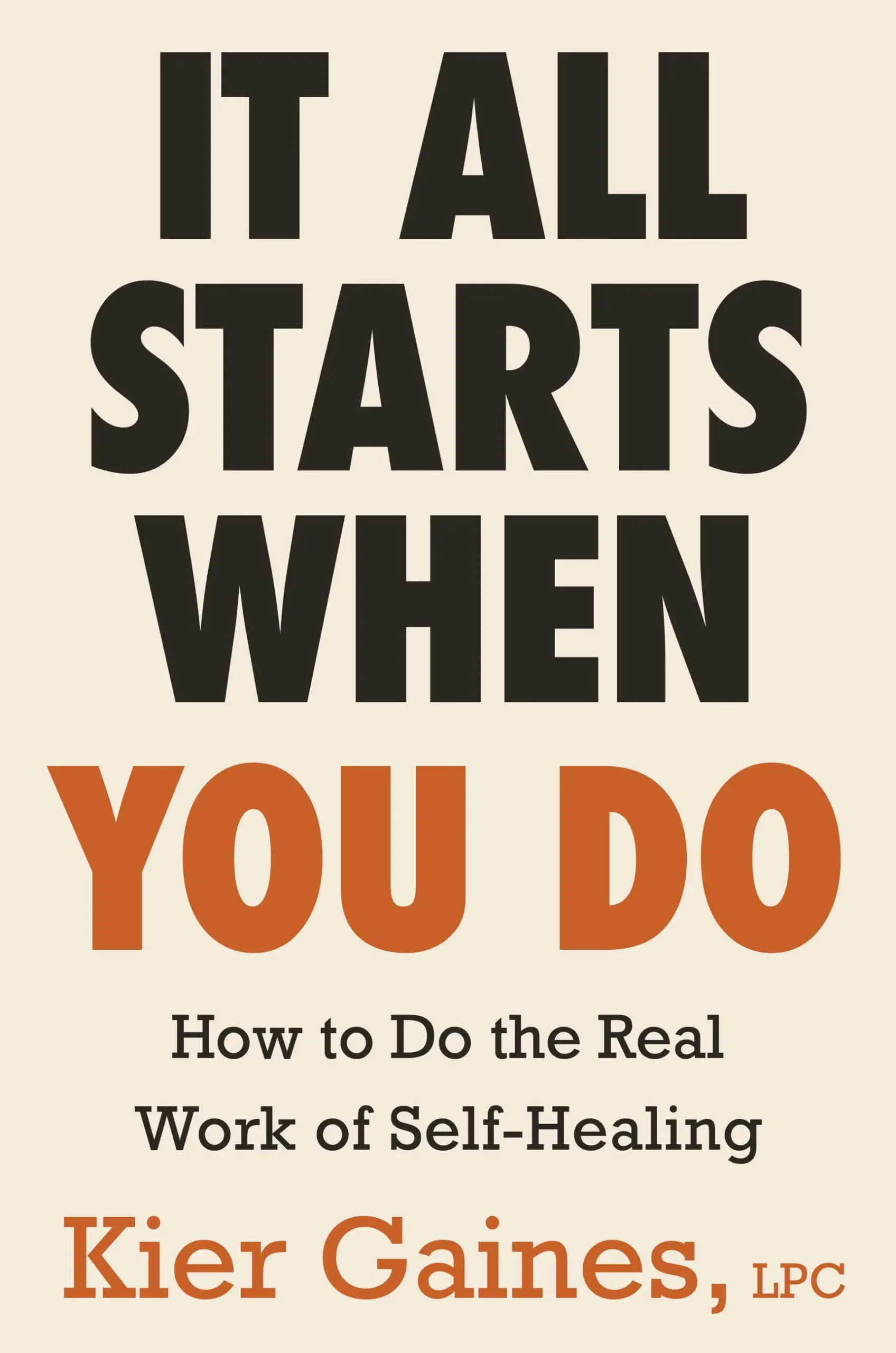
It All Starts When You Do: How to Do the Real Work of Self-Healing
In It All Starts When You Do, Kier Gaines walks you through the hard but rewarding work you need to do when you simply can’t figure out what feels off in your life. Whether your career is stuck in neutral, your family is driving you crazy, or you’re struggling to find love, you'll learn how to:
- Begin healing from the inner wounds you might not even be aware you have
- Conquer unconscious emotional hijacking
- Align your actions with your true desires
- Build self-esteem based on solid evidence and effort, not empty affirmations
- Stop consuming the empty calories of negative self-talk which can destroy progress
- Overcome the illusion of comfort that keeps you stuck
- And much more
Resources
-
- Ebony: Mental Health Advocate Kier Gaines's Top Tips for Finding a Great Therapist
- Essence: How Kier Gaines Is Changing The Mental Health Conversation For Black Men
- Men’s Health: Why Everyone Keeps Telling You to Talk About Your Feelings
- Parents: Kier Gaines Doesn’t Mess With Bedtime
- American Psychological Association: Building your resilience
- Harvard Health Publishing: Fostering healthy relationships
- The Harvard Gazette: Next spat with your partner, try silence
- The Gottman Institute: How to Make Repair Attempts So Your Partner Feels Loved
- American Psychological Association: A Closer Look at the APA Guidelines for Psychological Practice with Boys and Men
- Mindscape: Finding Community Support
- Journal of Personality and Social Psychology: Individual differences in two emotion regulation processes: implications for affect, relationships, and well-being
- PLOS Medicine: Social Relationships and Mortality Risk: A Meta-analytic Review
- Clinical Psychology Review: Interpersonal emotion regulation as a mechanism of social support in depression
2 Million Readers.
1 Life-Changing Newsletter
Simple and Straight-to-the-Point...
Just Like Mel.