Episode: 440
How One “Golden Moment” Can Transform Your Entire Life
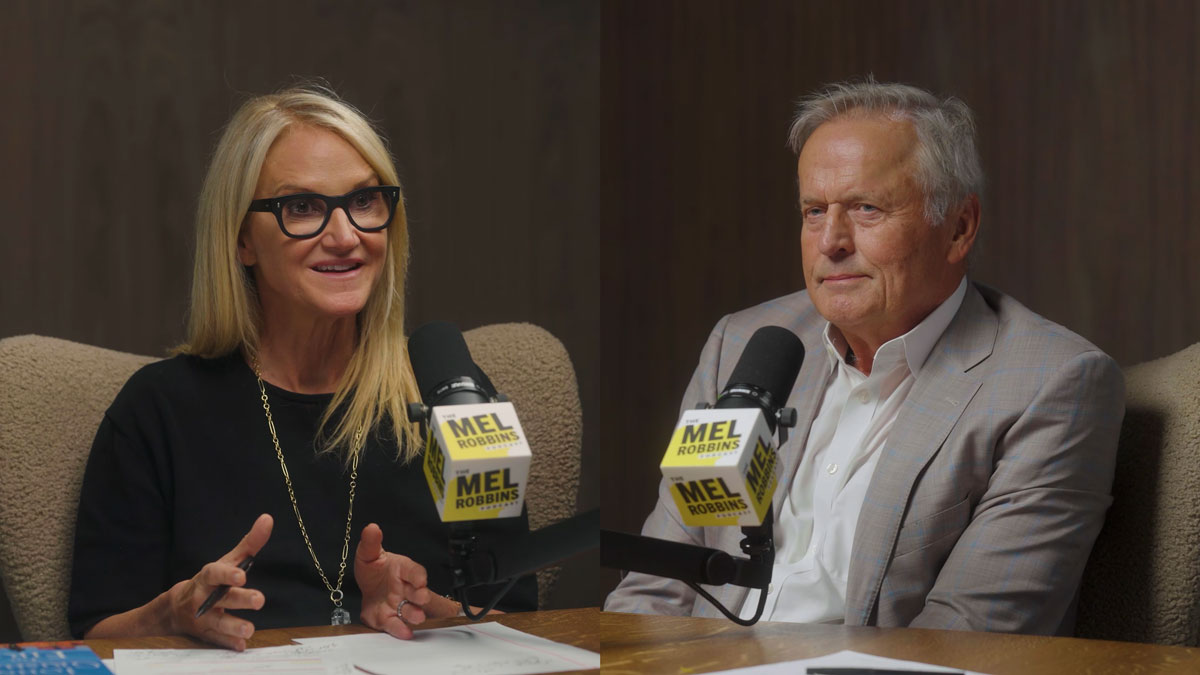
with John Grisham
This is the conversation you need to help you start writing your next chapter.
If you’ve been feeling stuck, rejected, unsure of your purpose, or just drifting through life, this episode is for you.
Joining Mel is legendary author John Grisham, whose books have sold near half a billion copies worldwide. But this isnt a conversation about fame and success. Its about reinvention.
John shares the twists and turns behind his extraordinary life: drifting through college, being accused of plagiarism, practicign law, getting rejected, and writing one page at a time until everything changed.
You’ll learn how to keep going after rejection, create space for your dreams, and take one small step toward a different life.
By the end you will never be more excited to start writing your next chapter.
Listen on:




Your current path is not your final path.
John Grisham
All Clips
Transcript
Mel Robbins (00:00:00):
Today on the Mel Robbins Podcast, legendary author John Grisham. 500 million books sold, nine feature films, decades of global success. But John Grisham's story began with rejection.
John Grisham (00:00:15):
20 submissions go to New York. They came right back. Rejection, rejection, rejection.
Mel Robbins (00:00:20):
He's sharing stories from his remarkable career.
John Grisham (00:00:24):
You got to show up every day. Every job you ever have is material for the rest of your life. You learn lessons from all of them.
Mel Robbins (00:00:30):
And how one golden moment can transform your entire life.
John Grisham (00:00:35):
Stop talking about it. Don't tell folks what you're going to do. Sit down and write a page every day.
Mel Robbins (00:00:47):
Please help me welcome the one, the only, the legendary John Grisham to the Mel Robbins Podcast.
John Grisham (00:00:54):
Happy to be here, Mel. Good seeing you.
Mel Robbins (00:00:56):
I am thrilled to meet you in person.
John Grisham (00:00:58):
I'm thrilled to meet you in person.
Mel Robbins (00:00:59):
And the reason why I'm so thrilled is because 35 years ago, it was 1991, and I was here in Boston. I was in my first year of law school at Boston College Law School. I was absolutely miserable. I had gone to law school because a bunch of my friends were starting to go off to different schools and I had a part-time job as a paralegal, which I hated. But for some reason I applied to law school because I didn't know what else to do. I get there and I realize I have made a huge mistake. I hated every aspect of it. I cried all the time. I drank a lot. And somebody told me that there was this book that had come out and I picked up a copy because I hated doing the academic work. It was the firm. It was your book. I bet I stayed up two nights in a row reading this thing.
(00:01:54):
And the reason why it changed my life is because when I found out that you were a lawyer, I couldn't believe that you were both a lawyer and that you could write such an extraordinary fiction story. And it gave me this epiphany. I though, oh, wait a minute. I don't have to practice law. I could do something else. And that was the beginning of me making a huge pivot. I stayed in law school. I actually did become a public defender in New York City for a couple of years, and then I ultimately left the law a couple years later. But I've always thought about that moment that you don't have to stay who you are and what you are for the rest of your life, that at any moment you can decide that you want to do something different. And I will tell you right now, I would not be doing what I do today if it weren't for you.
(00:02:57):
So thank you.
John Grisham (00:03:00):
That's very touching. And I've heard similar stories over the years and still found them hard to believe because when I started writing the firm almost 40 years ago, I had no idea what I was doing. I had the story. I knew I could write. I had no idea what was coming. I had no idea. We were so young and still a lawyer and still having fun and having babies and life was good. And it was a little serious part-time hobby, writing was. I'd finished the first book in 87, trying to get it published, and my wife had always loved the story of the firm. I talked about it for years, not as a writer. It's based on something that really happened in law school.
Mel Robbins (00:03:54):
For the person who's listening, John, who hasn't read The Firm, and I'm just going to warn you, don't buy this book if you want to sleep tonight because if you pick this book up, there is no way you are going to go to bed because you will just keep turning the page and turning the page and turning the page. But put them at the scene of what the book is about and what inspired it.
John Grisham (00:04:16):
It goes back to law school. When I was in law school at Ole Miss in the early 80s, I was not heavily recruited by law firms. I knew I was going back to my hometown. I was going to marry my sweetheart from my hometown. I did 45 years ago. And I knew I was going to open up my own little shop and practice law. I didn't like any of the law firms in town. I didn't really want to go to work for them. And so I didn't interview. I didn't really care. I also was not a top student, so there was no great demand for my interviews. A close friend was a top student and he would go off on the weekends during our senior year in law school and he would go to visit a regional law firm in Houston or Kansas City or Memphis or New Orleans, all in the south, Memphis.
(00:05:04):
And he would come back and we sort of vicariously lived through him. What was the firm like? What are they offering? How much money? What are the perks? What's the practice? And he would tell us about these law firms. And he came back one weekend. We were all sitting around probably drinking beer in our favorite bar, and he said, "I visited a weird law firm last weekend." H said, "I got the impression that once you join that firm, you never really left like it was owned by the mafia or something, a tax firm." And I just stuck. That was 1980. I wasn't thinking about being a writer. I was trying to finish law school, but the story was always there and I didn't like a lot of stories. They hang around. Most of them are based on something that really happened still today after all these books.
(00:05:50):
And so I had the story and as I was writing A Time to Kill, my first novel, which is a tough book to write, tough book to read, tough book to get through, I wanted something that would be more fun to write and read. And I'd always pitch the story to Renee and she's a sounding board and she's always said, "I love that story. I love that story. I love that story." And so that's how the firm got started. And as soon as I finished A Time to Kill, writing A Time to Kill in early 1987, I went straight to the firm and we used to laugh. We thought the firm was just sort of a simple title that would never stick, but funny to say that now, but I started writing the firm right after I wrote the first book and it took two years to write it.
(00:06:42):
And then when it came out in 35 years ago, well, it changed the world. I mean, our world was upside down and has been ever since.
Mel Robbins (00:06:52):
I want to hover in one detail of that story because I think it's really an interesting thing to explore and I'd love to hear your perspective on it. So it's 1980 and you have a friend in law school who comes back and just says one sentence after being at that firm is kind of weird, kind of feels like it might be the kind of law firm that you never leave.
John Grisham (00:07:14):
You never leave. Yeah.
Mel Robbins (00:07:17):
Do you think about that moment and what's your opinion about ideas and about the things in life that are sort of planted in front of you and whether or not you're even aware of them or if you think there's some sort of divine ordering to it? You know what I mean? Because it feels like one of these things that could have been a blip that turned into nothing, and I tend to be the kind of person that thinks that there are these signs all around you if you're awake enough to see them or little threads that you weave together throughout your life that make sense later.
John Grisham (00:07:56):
I'm not sure. I'm not sure I buy that, that there are things that are out there waiting for you to see. I have a real knack for a story and I grew up with storytellers. My father, my grandfather, uncles were big storytellers. These are farm people in rural Arkansas when I was a kid and would sit on the front porch at night in the heat and listen to the Cardinals game on the radio and listen to stories, all these stories that probably were all fiction, but they sure were good. They've been polished for years and worked on for years. I just always enjoyed the wild stories or funny stories. And as a kid, I was an avid reader. My mother did not really like television even in 1960. And so we went to the library all the time and got books and we read, she read to us and I just grew up reading a lot and loving the idea of a good story.
(00:09:01):
And I guess that's where the I comes from, the talent to be able to spot something almost immediately and say, and I do this almost weekly, you hear a story and say, "That's got potential." And when I hear these great stories, I'll make a note and the notebook is always full. Most of them don't work for various reasons. Most of them kind of go away with time. They're all brilliant initially, but the brilliance kind of rubs off, but the good ones stick. The good ones stick.
Mel Robbins (00:09:38):
Well, what's super cool about stories, when you think about the intersection of your work and the intersection of mine, and my work is really about empowering people to see bigger possibilities and giving them a sense of hope and encouragement that they could do little things that could make their life or their relationships feel better and that they could do better over time. The power of stories is that it allows you to escape your current life and actually imagine something else, which is what you did for me in 1991, that I could escape the misery of, "I hate this law school. I've made a huge mistake. I've now got these loans and I'm trapped here and I hate these people and what the hell am I going to do?" And that story just opened up a different possibility, even though I wasn't thinking about being an associate that would go to a firm where people never leave and then discover that the mafia actually is involved and then have the FBI on my case as I'm running from them with my wife.
John Grisham (00:10:44):
You got to love fiction. Oh
Mel Robbins (00:10:44):
My God. Well, I've never written fiction, but I love fiction because you step outside yourself.
Mel Robbins (00:10:53):
And so if someone who is listening right now feels just like I did, and I know you've probably felt a little bit this way in certain twists and turns of your life, where you are in a chapter of your life and you feel trapped and you don't know what to do next, what do you think they're going to learn from the various stories you're going to tell us and the wisdom that we're going to talk about that you've learned through your life and your work?
John Grisham (00:11:23):
You got to keep working. You can't be smothered with doubt or depression or fear or whatever. You got to keep working. I learned a very valuable lesson when I was writing A Time to Kill, and this is back in the dark ages where I knew nothing about writing. It was all written in hand on legal pads. And I showed the first chapter to my wife one night and she had no idea what I was doing. She knew I could write because she saved all of our love letters. She still has them, but she knew I could write. She knew I could tell stories, but I had never thought about being a writer. I was 30 years old and she saw the first chapter and said, "This is pretty good. I'd like to read some more." I said, "Okay, I'll go write some more. I don't have another chapter.
(00:12:14):
Let me go write chapter two." And that went on for a while, but back in those days, I did not know what I was doing. But one of the first lessons I learned was that you have to do a little bit every day or it's not going to get done. I'd take a week off and I was losing sleep writing the book because I was up at five in the morning.
Mel Robbins (00:12:38):
Well, I lost sleep reading it, so we're even.
John Grisham (00:12:43):
Yeah. Well, I'm not losing sleep now, but I did back then. But I realized, and I probably read this somewhere, write a page a day. I said it a thousand times. Write one page. If you're serious about writing anything, stop talking about it. Don't talk your book to death. Don't tell folks what you're going to do. Sit down and write a page every day, at least a page. And it may take you 15 minutes a day and an hour tomorrow, but find that time of the day, whether it's during lunch or whether it's late at night or whenever, preferably the same time, same spot, same coffee, like I still do after 50 something books. I don't care what your task is or what you're thinking about doing, you got to show up every day. You can't just talk about it, dream about it, think about it.
(00:13:39):
You got to show up. Again, I don't care what you're doing. I don't care what your dream is or what your goal is, but you've got to do it every day. I learned that lesson the hard way. And once I started practicing that years ago, 40 years ago as a rookie lawyer trying to write a novel, I made myself get up at five o'clock every morning and have time to write. And it took three years for the first one, took two years for the firm. Over a five-year period, I wrote them back to back at five o'clock in the morning.
Mel Robbins (00:14:12):
I also was curious because you said, "I learned it the hard way." I think it would be very helpful for the person listening to hear how it wasn't working, because I think you were about to tell us that I was trying to find a week off. I was trying to do it in these big sweeps of time, and then I realized I just have to do it a little a day. So how did you find the hard way? What was the way you tried that was like, "Well, this definitely does not work?"
John Grisham (00:14:34):
The first time it happened, I had gone a couple of weeks and written nothing. And my wife, I can remember more than once said, "Where's the latest chapter?" And I said, "I haven't written it yet." She said, "Why not?" And I said, "Okay, I'll get busy," because she always loved the story. And I'd learned, okay, to do this, you got to start somewhere. You've got to blast off at some point. And so I would get started again and I would make myself do it at least one page a day, every day, every day. It got easier, it got easier, it got easier. The thing about it, I wrote too much. The Time to Kill, once it was typed, was almost a thousand pages. Oh my
Mel Robbins (00:15:19):
Gosh.
John Grisham (00:15:19):
Yeah. And another lesson. I didn't know what I was doing. I was not a writer. A thousand pages. I sold the book eventually after a long struggle. My first editor, who was a great editor, cut a third of it, and he was right. There was just too much junk in it. And I though, that was a year of my life. The book took three years to write. We just cut a third. That's a year of my life. I am never going to do this again. I'm not going to waste time like this again. When I start writing from now on, I'm going to know where I'm going. I'm going to have it organized. I'm going to have it outlined. And I learned this lesson from something John Irving said one time. He said he does not write the first sentence until he writes the last one.
(00:16:04):
I'm not that smart, but I don't write the first scene until I know the last scene. I know where I'm going. And if you always know where you're going, it's hard to get lost. And writers are notorious for having these brilliant ideas and they can't wait to start writing. They'll write, write, write like crazy, write 50,000 words and suddenly stop and they back themselves into a corner and they can't get out of it. They toss it. They're famous for doing that, okay? I know writers and they talk about doing it all the time now. And every writer says, "Oh, I don't believe in outlining. I just wait for inspiration to take over and blah, blah, blah." Well, okay, that's one way to do it. I can't do it that way. I've got to have it organized and outlined. And you've got to be able to pitch your idea.
(00:16:49):
We're talking fiction here, okay? We're talking stories. You have to refine the pitch to about 30 seconds max. If you can't do it in 30 seconds, you're probably in trouble. I pitch ideas to my wife all the time and I have to hog tie her now and handcuff her, make her sit down and listen to me because she's tired of it after all these years. But I say, "I have a great idea." She said, "I've heard that before. You listen to me, okay? Here's the idea for a novel." And I get 30 seconds and she's brutally honest. She usually shoots them down and says, "No, it's not going to work." Or occasionally she'll like one. She'll like one.
Mel Robbins (00:17:27):
Well, you say you're talking about stories, but as I hear you tell us about some of the things that you've learned the hard way, the way that you approach the work that you do, I hear life. And let me tell you what I hear. One page a day is a four word philosophy for how to create anything in your life. And I think a lot of us, whether you're trying to write the whole book in one day or one week and then you get discouraged, we do that in every aspect of our lives where we try to make the change so big and happen so fast that you miss the obvious where one page a day is the way to create momentum. It is the way to make something a habit. It is the way to slowly start to write your way into a new chapter of your life.
(00:18:18):
And so that goes way beyond writing. But the other thing that I thought was really interesting, because you were talking about pitching, you said you have to get the thing down to 30 seconds. What you're talking about is clarity and alignment. You have to pick a direction. That's true about life too. I think so many people do not have what they want because they are not clear about what they want.
John Grisham (00:18:42):
And
Mel Robbins (00:18:42):
If you can't explain what you want in the next chapter of your life in less than 30 seconds, you're going to spin. You're
John Grisham (00:18:49):
Not going to get there.
Mel Robbins (00:18:50):
No, you're not going to get there. But then you said one other thing that I thought was so subtle, but I kind of chuckled because it really does metaphorically open up, I think, what everybody struggles with at some point. You had written chapter one of the firm, you gave it to Renee to read. She loved it and she said, "Where's chapter two?" And you said, "I haven't written it yet." She's like, "Well, I guess you better go write it." And to me, that is a beautiful story about the fact that if you ever feel stuck because you are just in this chapter, even if it's ended, all you got to do is go write the next one. It doesn't mean it's not coming. It doesn't mean it's never going to get written. You just have to make the, oh, okay. I haven't done that yet.
(00:19:41):
I guess I better go do that. And it's kind of obvious stuff, but when you put it in the metaphor of a book, because I do believe that you can think a lot about the lifespan of your life like a book. And if you're still here, the story hasn't ended. There's more to write.
Mel Robbins (00:19:59):
I see in your story, there's so much overlap with some of the things that we've experienced. A lot of people don't know. A lot of people know that you've sold, what, 500 million books? That's freaking cool, first of all. Congratulations.
John Grisham (00:20:13):
Thank you.
Mel Robbins (00:20:14):
You're welcome.
John Grisham (00:20:14):
Thank you.
Mel Robbins (00:20:16):
But that we both have had a million jobs, and I don't think a lot of people know, especially when they see you now and they hear pelican breath. Oh, I saw that movie. Time to kill. Matthew McConaughey was in that. Wait, the firm? What? What? I've read all of his books. A ton of the people that work here that are basically the ages of our kids were like, "My mom has read everybody. Dad loves him. Oh my gosh. We had to push people away from bringing their parents in and their siblings in because you have so many fans here. But most people don't know that you have laid asphalt, you've sold underwear, you've transferred colleges, on and on and on. So what are some of the odd jobs that you've had that in a weird way still inform you?
John Grisham (00:21:03):
All of them. Every job. Every job you ever have is material for the rest of your life. You learn lessons from all of them.
Mel Robbins (00:21:12):
What'd you learn from selling underwear?
John Grisham (00:21:16):
Well, I almost got fired for that. The customer, it's a Sears Roebucks store in a mall in Memphis, and I was a very reluctant employee. I was trying to go to college and commuting and not going anywhere, 18 years old, drifting. And this customer, with Sears, the customer's always right. This guy brought back a three pack of white boxer briefs, white briefs, not boxers, and wanted to return them. And the package looked suspicious. And I just said, I'm not going to take those back." And he said, "Well, you have to." And I said, "Well, they look used." He said, "Well, maybe." I said, "Look, sir, I'm not going to touch the underwear, okay?" And we got kind of loud. I said, "I will leave now. Fire me now. I'm not going to take his underwear back." And so he got loud and my boss came over and worked out a compromise, and I thought I was going to be leaving.
(00:22:21):
I was kind of hoping he'd fire me because I'd had enough of the underwear. It didn't last long. That wasn't much of a job, but even the tough construction jobs, summertime work that I had, laying asphalt or driving a bulldozer or digging ditches or working for a plumbing company, that's all just what you need as a kid. I was 16, 17, 18 years old because it makes you appreciate college. It makes you realize what you don't want in life. And I've got high school friends from way back who didn't see the opportunity and didn't go very far, but I just knew I wasn't going to do that kind of work for the rest of my life. I was determined. And my parents were not college graduates. They did not have the opportunity, but their dream was for us to go, but I was determined to get there.
(00:23:07):
It took a while to find the right one. But yeah, I think those jobs are crucial to develop. I tell people writers have got to, you got to try different jobs. You got to live different places, travel. You've got to have success and failure and love and hate and all the different things we go through in life, broken hearts and whatever, to have something to write about. You got to experience life and the more varied you can make it, the better.
(00:23:37):
I didn't enjoy practicing law for 10 years. I hung in there, but I'm so glad I did because I would not be a writer if I hadn't been a lawyer.
Mel Robbins (00:23:46):
Talk to me about writing. Is it true that you failed a English class in community college?
John Grisham (00:23:54):
No, I didn't fail. I got a D minus. I didn't fail.
Mel Robbins (00:23:57):
Hanging
John Grisham (00:23:58):
On.
(00:23:58):
Well, listen, I had an A plus average all year. It was my freshman year of college, freshman comp and freshman literature. And I had a really strong high school English teacher, and I was prepared for college as far as English is concerned. And so the course was fairly easy and I had straight A's and I was never a top student, but I enjoyed literature. And the final exam came down to, it was one third of our grade. Our term paper, which was a big deal back then, with sources and all that, was one third of the grade, and then the other tests in class participation. And so we're taking the final exam and we just started. And the teacher said, "John, would you step out in the hallway?" And I said, "Well, sure." And we stepped out in the hallway. She had a copy of my term paper and she said, "You have a very efficient way of words for a 19-year-old student." I didn't know what she was talking about.
(00:25:17):
And I said, "Well, okay, thank you." She said, "No, I haven't had many students who could write like this." And I said, "Okay." And she said, "I think you plagiarized this." And I said, "Oh, no." I said, "No, no, no. I don't have to plagiarize. No, that's not true. I didn't." And she very dramatically turned the paper around on the back of it. She had a big F and she gave it to me. And I though, "This is not fair." She went back in the classroom. I went down to the men's restroom down the hall, and I walked in, it was empty, and I got very emotional. And I was crying, and I was really upset by it because it wasn't true. And once I pulled myself together, I looked in the mirror, my face was red, my eyes were red. I said, "I can't go back in the classroom like this." And so I waited and waited and waited, and finally when the class was over, I went back into the class and picked up my test paper and gave it to her.
(00:26:36):
And so I made an F on the final exam, F on the term paper, F on the final exam, and I got a D minus for the course. And I left that school. I left it behind. I went somewhere else. I was transferring a lot anyway, by the way, but I didn't want to stay there any longer. But it was also being falsely accused. I didn't think about this at the time, but years went by before I started writing about people who are falsely accused and wrongfully convicted of serious crimes. It's very traumatic to be accused of something when you know you're innocent. And I still think about that episode. I'm lucky it's the only time it's happened in life and it wasn't that serious, I guess, in the scheme of things, but it was pretty traumatic.
Mel Robbins (00:27:35):
Well, it also reveals one of your core values clearly, which is justice and fairness. And I think that there was probably a lot about that searing experience of standing in that hallway
(00:27:51):
And feeling completely powerless and having no way to prove your innocence, no way to convince this woman in believing in you, and just how utterly unfair that is. And there's that kind of moral grappling in almost all of your stories and these characters needing to dig deep, which we all need to do in moments where you have to believe in yourself in a moment when somebody else doesn't, or you have to know the truth when somebody else is saying lies about you.
Mel Robbins (00:28:25):
One of the other things that you said that I really related to was this sense of you were 18 and drifting. And I have a feeling this is going to be a conversation a lot of parents send to their adult kids, especially ones that might be drifting right now. So if somebody's in that phase where I think a lot of people 18 to 26 are feeling that acutely right now.
John Grisham (00:28:52):
It was a different era. Yes. It was just after. There were two major factors I think that sent me drifting. One was the fact I was raised in a very strict Southern Baptist environment, very conservative, and I couldn't wait to leave home to get away, to drink beer and chase girls and have some fun in college. And that was a huge factor. Also, it was 1973. We grew up in a suburb of Memphis and it was a middle class suburb, a working class suburb, and Vietnam hung over us all through high school. We knew boys who had gone and come back, not in one piece. We knew there was always an effort to join the National Guard, to flunk a medical exam, all these schemes to avoid Vietnam. By 1970, I was 15 years old, but I was aware of what was going on, and it was a really a dark time in American history, especially for kids who were facing the draft, and we were all staring at the draft.
(00:29:57):
And so Sort of a depressing... I knew I wanted to go to college, but I didn't know when, and I didn't know how to get there. And my parents wanted us to go, but there was no plan to get us there because they didn't know any better.
(00:30:14):
After I finished high school, I just sort of wasn't sure what to do. I went to two different colleges. Then when I was a sophomore, I transferred to Mississippi State because my buddies had transferred to Mississippi State. There was this one golden moment when the light goes off in your life and something happens that you don't know really what it is. It has happened at least twice in my life. I was in a classroom one day in 1975 at Mississippi State, and it was a finance course, big class, and the war was over. Saigon was falling and the communists were rampaging about to take over Saigon. We were trying to evacuate all of our personnel from the embassy there, and it was a chaotic time. More of the Vietnam War was still troubling our nation. We had this conservative professor, a bomb thrower who though war is great as long as somebody else is fighting it.
(00:31:19):
He was complaining about the fact that we should still be there fighting and we weren't spending enough money to... We could have won the war, blah, blah.
(00:31:29):
And he made the mistake. There was a guy in our class who had been to Vietnam, and he was about three years older than we were, and he had been wounded in Vietnam. Nothing really severe, but he'd seen combat and he challenged the professor in a big way. And you didn't do that back then in 1975 at a conservative place like Mississippi State, you didn't challenge a professor. This guy was fearless and he went after him. They locked up and the student just absolutely ripped the guy to shreds. We thought it was wonderful. It scared us. I thought it was wonderful. I later talked to the guy and he was a great guy and he said, "What are you studying?" I said, "General business." They said, "That's crap, man. You don't want to study that." He said, "Study accounting. It's the toughest business major. It'll prepare you for law school.
(00:32:28):
I'm going to law school and I'm going to do this and I'm going to do that." They said, "That's the route to go." I said, "Okay." Just like that. I thought that makes perfect sense. Law school is something I should think about. And that's when the light came on. At the age of 20, suddenly I stopped drifting. I found my place on campus. I found my place in the major, started thinking about law school, and I was a different person that one moment.
Mel Robbins (00:32:56):
What's interesting about that one moment is that it has the same core value, justice. You were rooting for the Vietnam vet because of your deep sense of justice. The same thing was true when you got the backhanded weird compliment about what a gifted writer you were in a way that was very unjust. The dots are there. I think when I was talking earlier about that kind of idea in 1980 that came to you through the friend for the firm about the firm that nobody leaves, that's kind of what I meant, that there are these little things when you look in reverse, oh, even though the path was really screwed up, I kind of see how all this connects.
(00:33:45):
I often think about that because in moments in my life, even today where I feel just overwhelmed or challenged or I'm not quite sure what move to make next, I typically remind myself, well, I don't need to know. I just need to look backwards and say, they've always led somewhere so I can trust that where I'm standing right now is going to connect to something in the future and I don't need to know what that is to know that it will happen. And then your advice, you write one page, you take one step, you start chapter two.
Mel Robbins (00:34:21):
What was the second golden moment?
John Grisham (00:34:25):
Far more important. I was a 30-year-old lawyer dreaming of being a big time courtroom lawyer. That was my goal, to be a big trial lawyer. And because of that, I was always hanging around the courtroom. In our local courthouse, we had beautiful courthouse and beautiful courtroom and good lawyers and good judges, and that was my turf. I was always there. I volunteered for a lot of court appointed criminal cases and trials. By the age of 30, I had been through a lot of trials and I was sort of on the path. It's hard to make a lot of money in a small town practice. That was the frustrating part, but I also had the dream of being a big trial lawyer and getting bigger cases. That was where I was headed.
Mel Robbins (00:35:15):
Like that guy in Jackson Hole, what's his name, that legendary -
John Grisham (00:35:17):
Jerry Spence. Yeah, Jerry Spence. I think he passed away last year. Yeah. He was a hero 40 years ago. He was a big hero, a famous lawyer. I was hanging around the courtroom one day when I saw something that changed everything. It was a trial that I knew about. We all knew about it because it was a horrible case. Young little girl had been raped and they caught the guy and he wanted to go to trial. He was a bad actor, terrible guy. They brought the little girl in to testify. She was, I don't know, 10 or 12. The judge, my judge, great judge, he knew that it was going to be very, very difficult. He did something I had never seen before. He cleared the courtroom, everybody out. Security was tight. Security was very tight. So everybody left the courtroom and he put a deputy at the back door, the front door, said no one can be admitted for the next hour or so.
(00:36:19):
There were deputies all over the place. Being a lawyer, I was an officer of the court so I could hang around and I did. Little girl testified and at times she was very brave. At times she was very frail. She told what happened. It was horrible. It was horrible. For an hour or so, she took us through every emotion known to the human soul, from love to hate to retribution to what you name it. We went through a roller coaster and I kept asking, I said, "What am I doing here? I don't have to be here." I knew three people on the jury, small county, and I was across the courtroom looking at them and it's really bizarre to see all 12 jurors wiping their eyes. The judge was hiding his face. The lawyers were... It was just horrible. And the only person who didn't show any emotion was a defendant who was a hardened criminal.
(00:37:31):
And finally, she could not continue. And the judge said, "Let's take a recess." Thank God. I raced out of the courtroom, side door, went down the back steps and raced to my car. When I got to my car, I realized I'd forgotten my briefcase. I had to go back in the courtroom, up the back stairs to the side door, and the defendant was sitting in the same chair. He hadn't moved. There was nobody else in the courtroom but a deputy who was kind of guarding him, but he wasn't going anywhere. I walked by the defendant and I just had this thought. I said, "Had that been my daughter and I could get this close and I had a gun, I would happily blow your brains out and I would look at the same jury and say, Now, what are you going to do to me for doing something that you all want to do?
(00:38:28):
That was raw, intense and filled with hatred. It was awful, but it was real. It was such an emotional moment.
(00:38:42):
I got through it. I got my briefcase and took off and I had this idea of this story in a courtroom, my courtroom, a fictional story is seen through the eyes of this idealistic young attorney who gets appointed to represent this guy and here we go. That was the origin of A Time to Kill. I though about it for days and weeks and finally I said, "I'm going to start with chapter one and tell this story." I had never written before, fiction, and that's how it got started. But if I had not been in that courtroom, I'm not sure I would've been inspired or motivated enough or ambitious enough to try something like that, and that's how it got started.
Mel Robbins (00:39:33):
And you ultimately wrote it, but when you went to go get a publisher, what happened?
John Grisham (00:39:41):
Oh, boy. Talk about rejection. Well, about halfway through, after a year or so, there was a lot of stuff written, still untyped, handwritten, and I began thinking about getting published. I had the big dream, the dream of writing for a living. That was the big dream. I could not shake it. Didn't want to shake it. And that's what motivated me to keep writing and reading. Reading was crucial because I read so many great mystery writers, suspense writers, all the guys who were big in the 80s, 70s, 80s, and 90s. So when I finally finished the book, I sent the book off to New York the way you're supposed to do it. Three sample chapters, a cover letter, a pitch, and you sent it off to... I had a list of 10 agents and 10 publishers. Back then, you could send it to an editor. You can't do that now.
(00:40:41):
It has to come to an agent today. I had 10 and 10, two lists. And my secretary, because I was offered the state legislature, she would send off 10 and 10, 20 submissions, go to New York. They came right back, rejection, rejection, rejection. I would come in on Friday afternoon from the state capital, run by the office and check the mail, check my rejection letters, and that's how it went. There were a lot of them, but that's kind of the way you did it back then. Rejection was so much a part of it.
Mel Robbins (00:41:19):
Well, I think that's kind of the way you do it now too.
John Grisham (00:41:21):
Yeah. Yeah. Oh yeah.
Mel Robbins (00:41:22):
Anything has a lot of rejection.
Mel Robbins (00:41:25):
I want to compliment you about something. I want to make sure the person listening or watching really gets the profound importance of something that you allowed yourself to do. You started writing just because you wanted to and you enjoyed it. So much of your story, which I find to be so inspiring, is that the dream didn't happen first. You were just interested. You had something you enjoyed doing just for the sake of doing it. And we've all had those moments where you get lost in something. And I think it's so important that we all have something for ourselves. And as I was listening to your story, you said very early on, I've always loved stories and I grew up with storytellers and I grew up with grandparents and parents telling stories on the porch and allowing yourself and giving yourself permission and creating space in your life to have something that is just for you simply because you enjoy it, that to me is the fundamental lesson because even if you never published, even if you never wrote the 70 books or however many you've written, all of which become number one, even if none of that never happened, having that space for yourself to do something that really is for you that you enjoy doing, it brings so much meaning to your life.
(00:42:57):
And so I think it's really important. I want to make sure as you're listening, you heard the brilliance in that because the dream came after you created space for something that you actually just enjoyed doing.
John Grisham (00:43:08):
Yeah. Still enjoy it. Still therapy.
Mel Robbins (00:43:11):
One of the things that I'm really picking up on your story, because so many people get either derailed before they even start or they get derailed because of the rejections that start coming in. And what's interesting about your story is that if you're really paying attention, listening as John's talking, that the getting started for you in terms of writing as a habit and just kind of leaning in felt like more of something that just brought a lot of meaning and joy to your life and that was the why. But I'm curious, how did you deal with the rejections and how did you deal with the fact that the Time to Kill, you get published, it's now out there and nothing's happening and yet you're still writing. So what is the lesson that the person listening can take about processing rejection or putting yourself out there and it's not successful because it wasn't?
John Grisham (00:44:18):
Well, the submission rejection routine that I went through was fairly typical for writers. The first novel that was a flop is not unusual in this profession, but there are a lot of stories, a lot of great stories about famous writers who were turned down repeatedly time and time again. Nobody wanted to publish their stories and they kept on, they kept on, they kept... And finally they got a break somewhere and those are the great stories in publishing. Some of the great books we've read and enjoyed over the years were totally rejected. And I tell aspiring writers that some of these stories, they're fun stories to talk about, my story's fun, but almost every successful writer got rejected.
Mel Robbins (00:45:08):
I think every successful person.
John Grisham (00:45:10):
Yeah, sure. Yeah.
Mel Robbins (00:45:11):
What's in your story is that you didn't stop,
John Grisham (00:45:14):
And
Mel Robbins (00:45:15):
It goes back to one page a day. Whether the rejections come in, whether the book does well, you just didn't stop. And to me, time and time again, that always seems to be the unifying thing that happens in successful people's story. And again, if I use a writing metaphor, if you're still here, the story hasn't ended. And the person that has control over where the story goes next, whether you keep writing or you keep showing up, is you. And because you loved what you did and you were doing it for you, it didn't matter if you got rejected, you were going to keep writing.
John Grisham (00:45:52):
I don't know how long I would've done it had I not had the success with the firm.
Mel Robbins (00:45:58):
Really?
John Grisham (00:45:58):
I didn't have a story for the third book at the time, and I don't know... I'd spent five years, three years for Time to Kill, two years for the firm back to back, and I was getting kind of tired of the 5:30 routine. I was spending a lot of time there and I kept thinking, "Well, you could be spending more time with your cases as a lawyer." I was letting some things slide, and the practice was not going anywhere because I was distracted. At some point, I had to make a decision because I wasn't making any money as a writer. I think at some point fairly soon after that, I would've had to have said, "Okay, I've tried twice. I can't keep doing this, but I've got a great fallback position. I've got the bread and butter right here. It's my law office and I can make that more successful and I can forget about writing and I can pursue my original dream of being a really successful trial lawyer." I had some heroes, some lawyers I knew in Mississippi who were very fine trial lawyers who I tried to pattern myself after as a very young lawyer.
(00:47:19):
I think that's probably what would've happened. Thank God it didn't come to that. Thank God it didn't happen.
(00:47:27):
Again, I feel I got a huge lucky break. I know you make your own luck, okay? But I got a huge lucky break with the firm. The book went to New York in the fall of 89, and my agent who had read the summary and loved the idea, he wasn't too thrilled with it. He wanted some changes made, and I said, "No, I'm not going to make those changes." We were sort of at a stalemate for several months. He showed the book to some editors. There was no rush to publish the firm, and he called me around Christmas of 89 and said, "Look, nothing's happening. It's the holidays. I'll sell the book in January." I said, "Okay, great. I've heard that before." And this is where the fun starts. Unknown to him and unknown to me, a scout. Back then, the major studios had scouts in New York who would hang around the publishing companies and pick up the gossip for a big book or a good book, a good manuscript.
(00:48:40):
But a bootleg copy of the firm popped up in Hollywood over the Christmas break, and a guy got it out there. I'm not sure what he did, but he pretended though he was my agent, and he ran 25 copies of it and sent it off to all the studios and production companies. They started getting offers and it got - And you
Mel Robbins (00:49:11):
Didn't know any of this was
John Grisham (00:49:12):
Going on? Not a word, not a word. My agent didn't know about it. Nobody knew about it except for the guys in Hollywood. And so the offers got more and more intense. The bidding started, and at some point, somebody said, "What about Grisham? Have we talked to him?" Well, nobody had. Somebody called my agent. They had a huge fight. They threatened lawsuits and all this kind of stuff, and I didn't know about that. It was obvious a big deal was about to go down, so they kissed and made up and had a deal, and they were ready for the final round of bidding when he finally called me on a Sunday morning and he said, "Hey, I need your authority to take the highest offer from Paramount, Universal, or Disney Touchstone for the film rights to the firm." I said, "Film rights? What about the book?" And he said, "We'll talk about it later." I said, "Whoa, wait a minute." He said, no, this is urgent.
(00:50:16):
He said, "They're sitting by their phones for the final round of bidding." The word bidding had a nice ring to it. I thought, "Okay. Yeah, sure. Go ahead and sell the film rights." He called back about an hour later and said, "We have just sold the film rights." No, I said, "Okay, just for fun, how much money are we talking about?" He said, "I'm asking for 500,000. I hope to get 400,000," or something like that. I said, "You want my authority to go do that?" And he said, "Yeah, so you have my authority." He called back and he said, "We just sold the film rights to the firm to Paramount Pictures for $600,000," which was more money than I'd made in 10 years of practicing law. I said, "Okay, look, let me call you back." Renee and I sat down at the kitchen table. We were late for lunch at my mom's house, and we said, "You got to be kidding." One phone call just dropped in like that out of nowhere, totally unexpected, and that's when everything changed.
Mel Robbins (00:51:26):
One thing I want to just tease out, especially as you've been listening to John's story, because you said you got lucky and then you, "Well, you make your own luck." The fact is, you had been working toward that moment since you were 18 years old, and we recently had this extraordinary professor who researches the science of luck, and luck is this largely misunderstood thing because it's really about the actions that you take that put you in the current to have those kinds of things happen. The five years of writing, the walking past the 28 rejections, the shrugging off the flop of the time to kill book, the continuing to write, the sending it all off, all of that are examples of your philosophy of one page a day, move it down the field, write another page, keep moving it forward, that put you in the current to have all of that happen.
(00:52:36):
It's important for the person to hear that because it'd be easy to say, "Oh gosh, timing, all this stuff," but none of that happens without everything that came before.
John Grisham (00:52:47):
Right. I don't downplay it. I tend to downplay it for -
Mel Robbins (00:52:51):
Yeah, I've noticed.
John Grisham (00:52:53):
To get a laugh. I love humor. I love to poke fun at myself. I don't downplay what happened, but you're right, it was a five-year journey to get to that point. I didn't realize it,
(00:53:05):
But everything I had done, and also sort of honing the craft, learning how to write, learning the mistakes from a time to kill, learning how to keep the story lean and fast. That was all stuff I just picked up. I learned over time, and so the timing was very fortunate when it happened.
John Grisham (00:53:24):
The book came out when you saw it, May of 91, March of 91, and there was a lot of buzz behind the book when it came out, and it hit the New York Times list. Back in those days, a new writer on the list got a lot of attention. Doubleday said, "Can you come to New York for the victory lap?" I said, "Sure." Went to New York and had a bunch of interviews. I did Brian Gumbel Today Show, which was a big deal back then. He was very good to me, and we got a lot of...
(00:54:01):
We were having lunch, a bunch of publishers in the room and booksellers, and I sat next to a very young executive from the old Walden Bookchains. Oh, I remember Walden. Yeah. Every model had a B. Dalton on one end, but Walton on the other, and those are the bookstores I grew up with.
(00:54:19):
And this guy, very young guy, probably my age, and he said, we just make an idle conversation. He said something that just stuck. I'll never forget it. He said, we're talking about writers and he said, "Oh, the big guys come out every year." I had never thought about that. He said, "Yeah, look, Stephen King, Michael Crighton, Robert Lovelam, Ken Fowler, they come out every year. The big guys come out every year, Elmore Leonard." And I thought, "Okay, I want to be a big guy." So I hustled back to Oxford, Mississippi, where we lived at the time, and wrote around the clock to finish the Peloton Brief, to have it out in time to publish in 92, a year later. And that's how it all kept going. That's where the book a year came from. That's been a book of years for 35 years now.
Mel Robbins (00:55:20):
Page a day, a book a year.
John Grisham (00:55:22):
Again, keep your butt in the seat.
Mel Robbins (00:55:24):
Keep your butt in the seat. Talk to me about that.
John Grisham (00:55:27):
Yeah, you got to do it. You got to show up. You got to show up.
Mel Robbins (00:55:33):
There was some real gold in something that you've said, and I want to combine the two and then pull it out for the person listening. You used this term where you patterned other trial lawyers, and that was kind of your backup plan, you're following the actions of people that inspired you, and then you said the big guys come out every year, which is another pattern. Can you talk just a little bit about how some of the secrets to success are literally right in front of you based on the patterns of people that you admire?
John Grisham (00:56:11):
Yeah. When I was in law school, my third year... Third year law school is pretty easy compared to the first two. I didn't like law school either. I didn't like law school at all. I'm not sure any law school. We have so
Mel Robbins (00:56:20):
Much
John Grisham (00:56:21):
In common. Oh God, couldn't stand law school. I couldn't wait to get out of it. But my senior year, there was a federal courthouse across town, and I would watch the dockets, and I knew when the good lawyers were in court trying cases, I would cut classes, which is no big deal when you're a third year student, to go watch the lawyers, the good lawyers. I was in court one day watching a civil trial and two heavyweights were going at it in front of a jury, and it was magic. I was sitting there, and civil trials don't draw big crowds. I was sitting, I looked around, I said, there are no other law students here, which was no big deal. Who wants to watch trials? But I did. I wanted to watch the lawyers.
(00:57:14):
I tried to pattern my practice after those guys, and a lot of it is being able to discover cases, not chase them, but get them, which is probably the most difficult part. Then when I was writing, when I started writing Time to Kill and the firm, that five-year period, I read a lot of popular fiction, and it was really kind of odd because I would read a book and I would say, "This is crap, okay? This guy, this is terrible. I can beat this." I knew I could. I mean, I knew I could tell a better story. I could certainly write better than a lot of popular fiction, a lot of really popular fiction, and that was inspirational. I was also very honest, and I would read a book and say, "I'll never be that good." Still do that.
(00:58:12):
But it's always something better. You got something to aspire for. I want every book to be my best book, and you're getting better and get better. I'm an honest judge in my own work, but I knew there was room for me on the bestseller list, and it was often the bad books that inspired me to keep going. Or I'd walk in a Walden bookstore or B. Dalton, and they have the big wall of all the New York Times bestsellers and big, beautiful books, and I knew a lot of them, and I would get so sad thinking, "Who wants to hear from me? Look at all those books up there. Look at all those books." I'd worry about that for a while, but I wouldn't slow down. I tell writers all the time, "Look, publishing needs new talent every year. If you want to get inspired to write, read debut novels.
(00:59:05):
These are first-time writers, and they're celebrated, and we celebrate them. We need new writers.
John Grisham (00:59:12):
Somebody's going to get published every year.
Mel Robbins (00:59:14):
I love that moment where you're saying," Who's going to read what I write? Who's going to read me? "For the person who knows what they want but is in that swirl, because I did that with this podcast for many, many years. There's so many of them. Who wants to hear from me? Lots of people have already done it. For the person that's saying that to themselves, like you used to in the bookstore, what would you tell them?
John Grisham (00:59:42):
You can't control all that. You can't control what somebody else writes. You can't control what the publishers publish. You can't control what the stores sell. Work with what you can control, which is your own fiction, and you can make it better. If you have a great story, something new, write Write it and don't quit. I tell writers, when are you going to stop writing when I run out of stories? Or writers say, I've written five novels and I've had them all rejected. What would you advise me to do? And I will say, well, keep writing if you have a story. Now, a lot of the great writing is God-given talent. There's some writers in any field, you have people who just have so much talent that comes through DNA or write education or whatever experiences they have. But you can also improve your own writing by watching those people, by trying to be like them, trying to be great like they are.
(01:00:44):
And also technical skills that you can master yourself. Vocabulary and grammar and reading. Reading, reading, reading is the most important. I don't know a single writer, successful writer who is not an avid reader.
Mel Robbins (01:01:01):
You gave some really, I think, cool advice, and I don't even know if you realize this. So as you're standing in the bookstore and you're looking at all the greats and you're thinking, there's no room for me, I'm never going to be that good. We don't look at the books that are crap and use it as motivation to go, if this garbage can get published, why not me? You know what I mean? If this person could do it, why not me? And so I think there's patterns of both ends to not just look up. Look up for the actual skills of success and the technique and talent. Look down to remind yourself that there are people who are far less talented than you
(01:01:48):
That are putting themselves out there, that are writing one page at a time. The reason, John, that I release two episodes a week is because the big guys have two a week. And so the patterning that you're talking about is all around you. And when you were sitting in that courtroom as a third year law student watching the two big dogs go at it in a civil case and you look around going, why is nobody else here? Who wants to watch a civil trial? A person who wants to be amazing at it studies the greats. You're a student before you're a great, and that's everywhere in your story that you're looking around, you're looking for great stories, you're looking for inspiration, you're looking for patterns, you're looking for what the great writers do. And I even think that one of the reasons why I was so excited to have you on and talk to you about your story is because I know every single person, the person who's listening right now, they listen because they want the patterns from your life.
(01:02:54):
They want to know what they can learn from you. And even though a lot of what you're sharing is about the way you think about writing, it is 1000% the exact same way that you do anything in life, anything.
Mel Robbins (01:03:09):
I would love to hear more about the Innocence Project and what you learned from this work.
John Grisham (01:03:15):
When I was a young lawyer, I saw this obituary one day in the New York Times about this guy who had obviously just died and he was very much like me, same age, same neck of the woods, same region, and he came within five days of being executed in Oklahoma. And I though, how could this guy go to death row and be innocent? And I was just stunned by the story. I took off to Oklahoma. I took off and I met with his family and I said, I'm going to write this book. And they said, great. They were still mourning his death. Writing that book took me into the world of wrongful convictions. And once I realized there are thousands of innocent people in prison, it was a big wake-up call for me. And that was 20 years ago. And so I'm still writing about them, still published a book two years ago about wrongful convictions, still angry at how they happened, still advocate for criminal justice reform, still frustrated by the lack of reform.
(01:04:25):
So it's something I'm caught up in.
Mel Robbins (01:04:30):
I admire that in you, especially having been a public defender and having Brian Stevenson as one of my most inspiring mentors for sure. We've had him here on the show. His work's
John Grisham (01:04:45):
Incredible. He's one of a kind. What he has accomplished is truly amazing and his book was very inspirational. We visited his museums in Montgomery and were just really overcome.
Mel Robbins (01:05:02):
How do you stay hopeful when the world is overwhelming and when you're in these cases and grappling with issues of justice in your work? How do you stay hopeful?
John Grisham (01:05:15):
I tell myself, okay, go back to the basics. Worry about the things you can control. You can wake up each morning and see the news and just fret and worry yourself into a deep funk and stay there all day. Or you can say, okay, the world's a mess. Okay. What can I do today to make it a little bit better? How can I help someone today to make it a little bit better? And that's what I do. That's almost every day. Obviously, I can escape in my own world and go write some fiction, which is what I do, still do. And I can also work with a lot of nonprofits and things like that to try to make the world better and get a lot of gratification from that. My wife and I are active with childhood hunger issues, homelessness and wrongful convictions. We stay pretty busy working with nonprofits and that's extremely gratifying.
(01:06:25):
So that gives us hope. We hope we're providing hope for someone else. Baby steps, small steps, little something every day.
Mel Robbins (01:06:37):
One page a day.
John Grisham (01:06:38):
Yeah, one page a day.
Mel Robbins (01:06:40):
I often think about this too because it is very overwhelming and there's a lot to feel despair about. And on one hand, I think the fact that you feel heartbroken about some of the things that you see is a good thing because it means that you still have a heart to break and you still care about goodness and justice and kindness and the dignity of how people are treated. And I agree with you, I feel hopeless when I look out there, but I feel very empowered when I just look in my community and I look around me and I say, "What is one thing I can do today that really is part of a positive shift, whether it's in my home, in my marriage, in my friendships, in my community, in the world at large?" And I truly think if enough of us just start doing that, everything is going to start to change for the better.
John Grisham (01:07:39):
And there are so many people doing that.
Mel Robbins (01:07:40):
Yes.
John Grisham (01:07:41):
The good outnumber the bad.
Mel Robbins (01:07:43):
That's true. I agree with you. John Grisham, you are just an absolute amazing, amazing, generous, and very talented person. Thank you for -
John Grisham (01:07:56):
You're being very generous. Thank you.
Mel Robbins (01:07:57):
You're
John Grisham (01:07:58):
Welcome. You're very welcome.
Mel Robbins (01:07:59):
You're welcome.
John Grisham (01:08:00):
Thanks for having me on your show.
Mel Robbins (01:08:01):
Oh, of course. And give Renee my best. I can't wait to meet her one of these days.
John Grisham (01:08:05):
She would love that.
Mel Robbins (01:08:06):
I would love that too. And I also want to thank you. Thank you for making the time to spend it here with me and John Grisham. And I hope that you feel so inspired and you are just going to go put your butt in the chair, turn the page and start writing that new chapter. And in case no one else tells you, as your friend, I wanted to be sure to say, I love you and I believe in you and your ability to create a better life. And you got so many amazing pieces of wisdom and tools from John Grisham today, so freaking use them. Alrighty, I'll see you in the next episode. I'll welcome you in the moment you hit play. And thank you for watching all the way to the end. Didn't you love hearing all of this from John Grisham? I know I did.
(01:08:49):
And thank you also for sharing this with people in your life who need a little inspiration to start writing their next chapter. Alrighty, I know you want to watch another episode of the Mel Robbins podcast. You're going to love this one, and I will welcome you in the moment you hit play.
Key takeaways
When you have a dream, stop talking about it and show up every day; doing one page at a time creates the momentum that eventually gets the real work done.
If you feel stuck in one chapter, remember your story has not ended; you can turn the page, take one step, and start writing what comes next, one day at a time.
Before you begin, get clear about where you're going; when you know the last scene, you can organize the work, stay on course, and avoid getting lost.
When rejection keeps coming, keep writing and keep improving your craft; you cannot control what others choose, but you can control making your work better.
If you wonder whether there is room for you, study the people you admire, notice their patterns, keep reading, and use what you learn to improve your own work.
Guests Appearing in this Episode
John Grisham
John Grisham is a former lawyer, state legislator, and bestselling author whose legal thrillers have sold nearly 500 million copies worldwide.
-
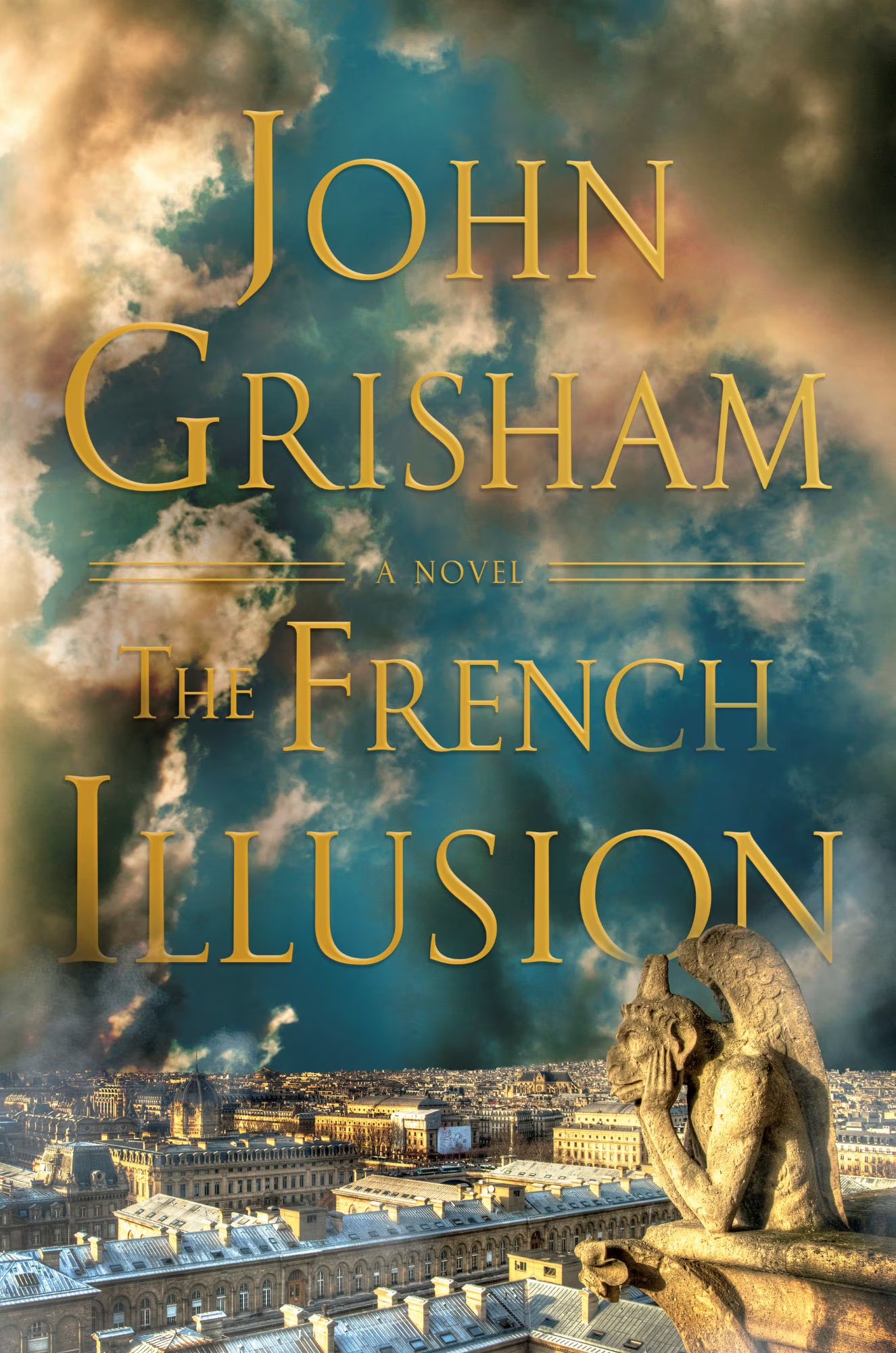
The French Illusion: A Novel
After Paul and Chelsea Tanner’s fairytale wedding, their future is full of promise. But their honeymoon to Paris takes a dark, shocking turn when they are kidnapped while on a day trip to the French countryside. Who would target them, and why? It turns out this is not the first crime of its kind. The search for clues soon stretches across borders, with the FBI, CIA, and French Intelligence trying to work together to put the pieces of the puzzle together. Struggling to find answers, a young lawyer is recruited to be the bait in an elaborate CIA operation.
Propulsive and surprising, The French Illusion is an unmistakable Grisham thrill ride—gripping and impossible to put down.
Resources
-
- TIME: The Enduring Charm of John Grisham
- John Grisham: An inside look at John Grisham's writing process
- Harvard Graduate School of Arts and Sciences: Be Well: Finding Purpose Beyond Productivity
- Harvard Business Review: The 3 Phases of Making a Major Life Change
- Library of Congress: Open a Book, Open a World of Empathy and Compassion
- American Psychological Association: Making Lifestyle Changes That Last
- Innocence Project: The Issues
- National Institute of Justice: Wrongful Convictions
- Harvard Graduate School of Arts and Sciences: Overcoming Writing Obstacles
- The Harvard Gazette: Is there a right way to write?
- Harvard Business Review: What’s Stopping You from Reinventing Your Career?
- Knowledge at Wharton: The Small Steps That Have a Big Impact on Achieving Goals
- Cornell Chronicle: Leaving your comfort zone inspires motivation, growth
- Journal of Vocational Behavior: The experience of career change driven by a sense of calling: An Interpretative Phenomenological Analysis approach
- American Psychological Association: Frequently Monitoring Progress Toward Goals Increases Chance of Success
- Science: Reading literary fiction improves theory of mind
- Journal of Experimental Psychology: General: Cognitive effects and correlates of reading fiction: Two preregistered multilevel meta-analyses
- American Psychological Association: Beyond Goal Setting to Goal Flourishing
2 Million Readers.
1 Life-Changing Newsletter
Simple and Straight-to-the-Point...
Just Like Mel.