Episode: 444
#1 Neuroscientist: After Listening to This, Your Brain Will Not Be the Same
with Dr. Lara Boyd

Today, you are getting a step-by-step guide on how to change your brain.
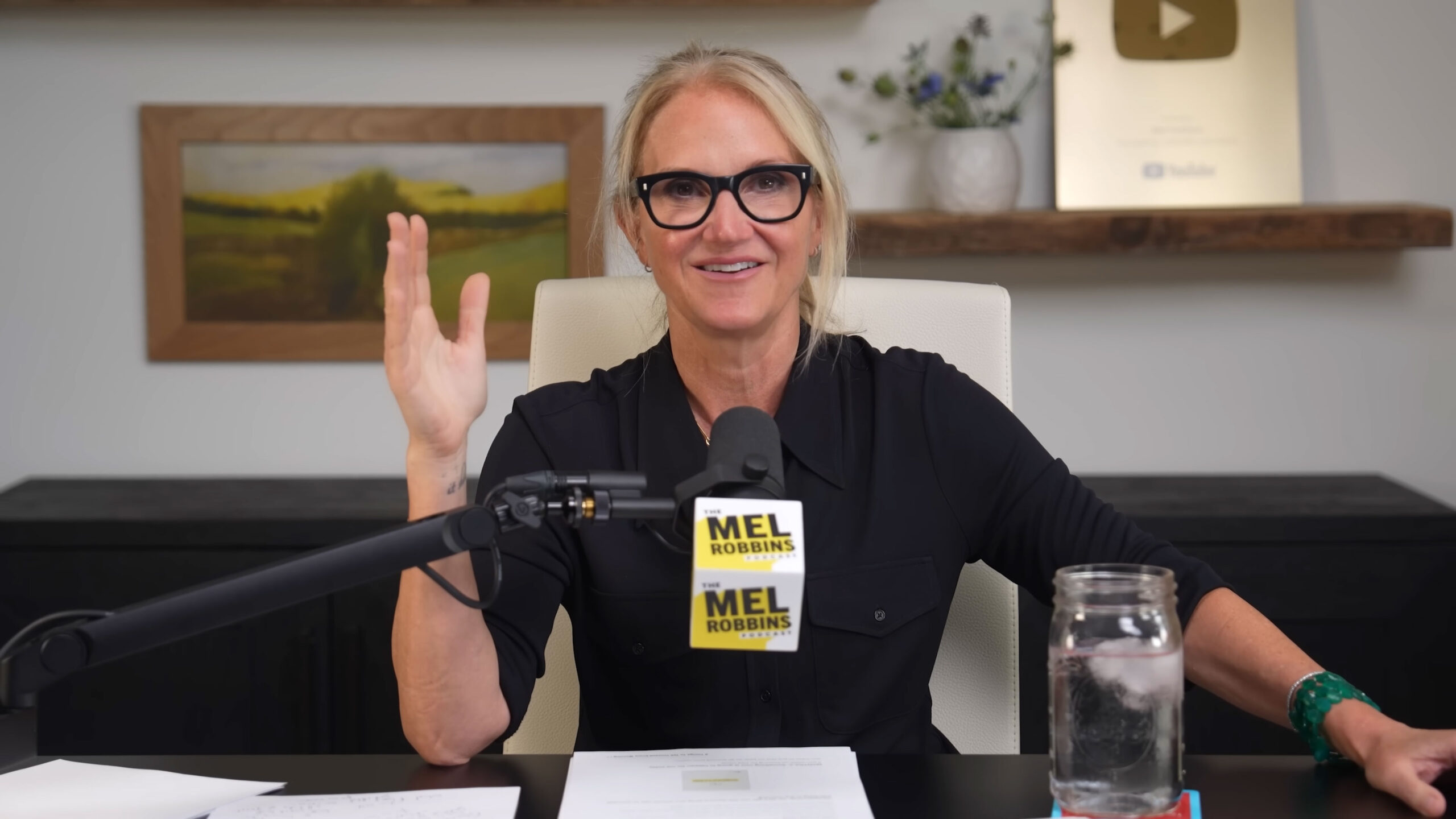
Joining Mel is neuroscientist Dr. Lara Boyd, a professor at the University of British Columbia who directs the Brain Behaviour Lab there.
This #1 neuroscientist will teach you how to rewire your brain at any age.
Her message is incredibly hopeful:
You are never too old, too late, or too set in your ways to change who you are and what you’re capable of.
But becoming who you want to be doesn’t happen by accident.
Dr. Boyd reveals what really reshapes your brain, what happens when you challenge yourself to do hard things, and how to make what you practice stick.
Listen on:




You can build the brain you want to have.
Dr. Lara Boyd
All Clips
Transcript
Share With a Friend
Key takeaways
Your brain keeps changing throughout your life, and the single largest driver of that change is the experience you choose to engage in and pay attention to.
If something is too easy, your brain has no reason to change; you want to work where you are sometimes failing, often succeeding, and struggling with the activity.
When you stop engaging in life, you can lose function and neuroplastic capacity, but small steps toward different experiences can push your brain back in a positive direction.
You need sleep to turn short-term memories into lasting learning, because sleep helps transform chemical changes from practice into structural changes in your brain.
Exercise makes your brain more neuroplastic, and pairing intense exercise with practice can help you improve overnight as your brain consolidates what you learned.
Guests Appearing in this Episode
Dr. Lara Boyd
Dr. Lara Boyd is a world-renowned neuroscientist, professor, and director of the Brain Behaviour Lab at the University of British Columbia, specializing in neuroplasticity and learning.
- Visit Dr. Boyd’s University of British Columbia profile
- Learn more about the UBC Brain Behaviour Lab
- Connect with Dr. Boyd on LinkedIn
- Watch Dr. Boyd’s viral TED Talk
- Explore Dr. Boyd’s research
Resources
-
- Brain Behaviour Laboratory: Research Goals & Methods
- Stanford Report: Changing students’ mindsets about learning improves their grades, Stanford researchers find
- NIH: Critical time window for rehabilitation after a stroke
- Vancouver Coastal Health Research Institute: Gamified stroke recovery improves arm function
- NIH: Healthy Sleep
- National Institute on Aging: Cognitive Health and Older Adults
- National Institute on Aging: Lifelong exercise promotes brain health in older adults
- American Psychological Association: Learning Styles
- Journal of Applied Physiology: A single bout of high-intensity aerobic exercise facilitates response to paired associative stimulation and promotes sequence-specific implicit motor learning
- Medicine & Science in Sports & Exercise: High-Intensity Aerobic Exercise Enhances Motor Memory Retrieval
- Neural Plasticity: Motor Skill Acquisition Promotes Human Brain Myelin Plasticity
- Association for Psychological Science: Affirmation of Personal Values Buffers Neuroendocrine and Psychological Stress Responses
- Child Development: Implicit Theories of Intelligence Predict Achievement Across an Adolescent Transition: A Longitudinal Study and an Intervention
- Nature: A national experiment reveals where a growth mindset improves achievement
- Psychological Bulletin: Do growth mindset interventions impact students’ academic achievement? A systematic review and meta-analysis with recommendations for best practices.
- Proceedings of the National Academy of Sciences: Critical Period After Stroke Study (CPASS): A phase II clinical trial testing an optimal time for motor recovery after stroke in humans
- Journal of Neurophysiology: A critical time window for recovery extends beyond one-year post-stroke
- Archives of Internal Medicine: Resistance training and executive functions: a 12-month randomized controlled trial
- Psychological Bulletin: Sleep deprivation and memory: Meta-analytic reviews of studies on sleep deprivation before and after learning
- Brain Research: Acute cardiovascular exercise and circulating neurotrophic factors in humans: A systematic review and meta-analysis of mechanisms and methodological moderators
- Psychological Science in the Public Interest: Learning Styles: Concepts and Evidence