Episode: 349
How to Reinvent Your Life Starting Today
with Hoda Kotb
This episode is a guide to how you can transform your life at any moment.
If you’ve been feeling the itch for something more in life: a new chapter, a new dream, a new version of yourself - this episode is your green light.
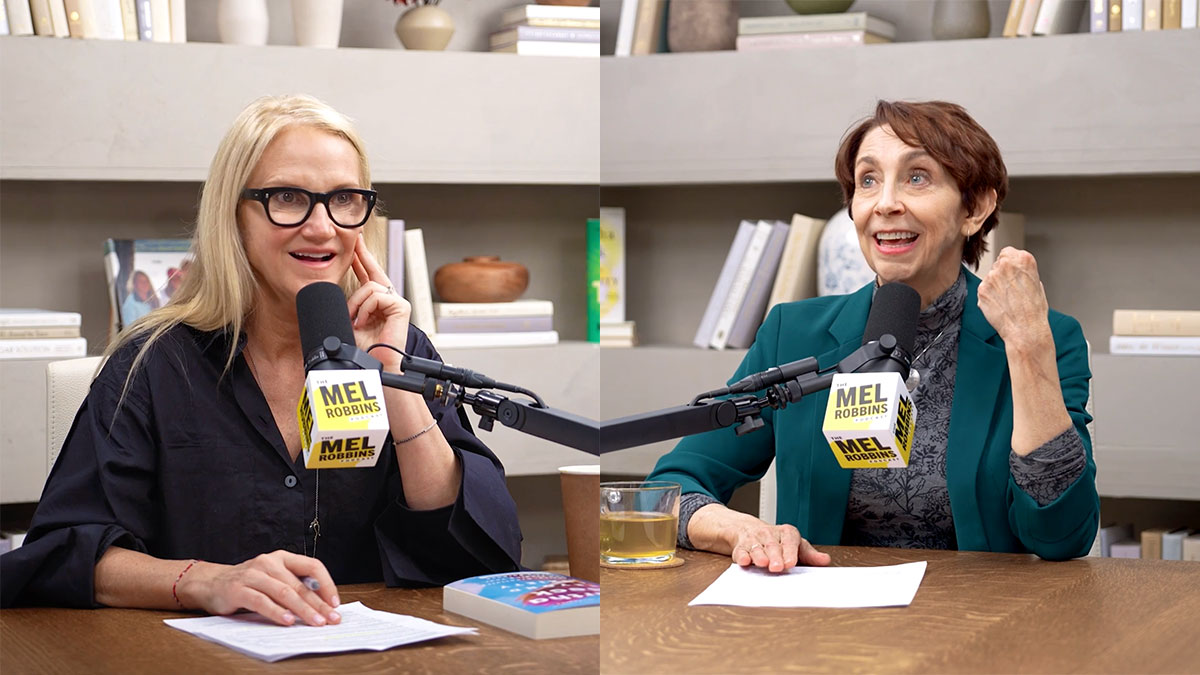
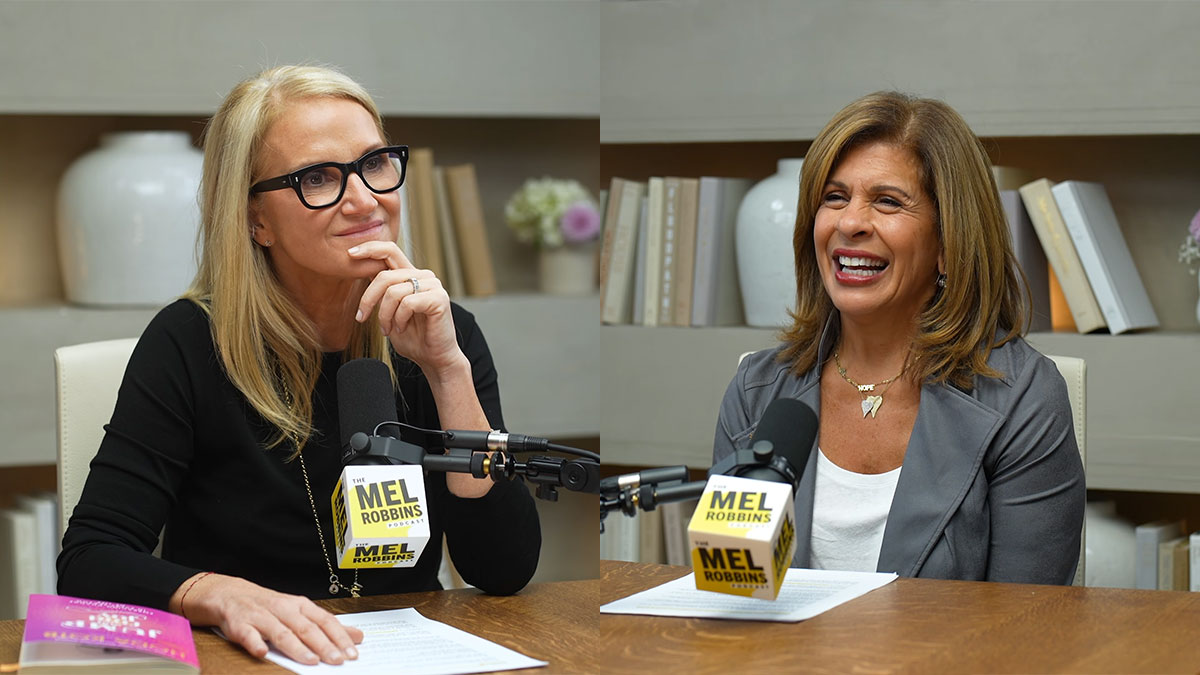
Today, Mel sits down with her friend Hoda Kotb. Hoda, more than anyone else, will prove to you that reinvention is something you CAN do.
Every single time life whispered, “It’s too late for you,” Hoda said, “No, it’s not. Watch me.”
The wisdom she is sharing, directly with you, will prove that it's not too late – you can reinvent your life.
She is going to walk you step by step through how she did it, over and over again.
If you feel stuck in your job, your relationship, your routine, or just in a version of yourself you’ve outgrown, this episode is your permission slip and your playbook.
This is your sign. This is your moment.
Let Hoda show you what’s possible.
Listen on:




'Good enough’ is not enough.
Hoda Kotb
All Clips
Transcript
Hoda Kotb (00:00:00):
Take your life and try to 360 it. The two greatest things in my life happened because of a whisper of not being afraid. Fear is what is holding us all back. Fear is paralyzing.
Mel Robbins (00:00:16):
The number one thing that stands in everybody's way is discouragement. If you're discouraged, that means you've said, it's not possible for me,
Hoda Kotb (00:00:24):
For anybody who's dreaming about, doesn't matter what it is, opening a business, going back to college. Should I try that? Oh, no. I don't know. I dunno. Just frigging say it and try something and see, because you know what's going to happen if you're sitting at home. Nothing. Nothing. Nothing's happening. And so swing for it.
Mel Robbins (00:00:48):
Watch what happens in your life when you open the door to the possibility that you could have this thing.
Hoda Kotb (00:00:55):
I think the truth about successful people is I don't think they're necessarily the most talented. What links everybody is, they're not quitting. They're never quitting, they're never, ever quitting. And if you're listening to this, you are seeking so you're not lost and your life is not crappy because it can't be. You are seeking, you're looking for something better. You're never really stuck. If you are searching Hoda, yes. Welcome to the Mel Roberts podcast. I've been waiting for this, Mel, I've been waiting for you.
Mel Robbins (00:01:27):
Well, I am so excited to pay it forward because you have shouted from the rooftops and celebrated me every single time I have been on the Today Show. We have become friends. I am so excited to sit with you, to have the person that's with us right now, get to have that infectious, Hoda energy zapped right into your veins. And everybody knows you as the host of the Today Show. But what they don't know is you are one of the wisest, most honest, infectious, inspiring person that I've ever met.
Hoda Kotb (00:02:11):
Wow. Wow. Can I just say one thing? First of all, I received that and thank you and I love you. But when I'm looking at you in this moment, I am having a total flashback to the first time you came on The Today Show, and we wondered, who is this tornado? Who is this person who walked in? And I remember your energy preceded you. And what I remembered, hearing your story and thinking to myself, my God, so many things in life are possible. I stroll through your studios today and I feel so proud of you. And so it just shows what possibilities are there because you're walking it, you're talking it, you're living it, and I get to sit in it and it feels really good. So a big, big thank you to you.
Mel Robbins (00:03:03):
Well, thank you.
Hoda Kotb (00:03:04):
Awesome.
Mel Robbins (00:03:04):
Thank you.
Hoda Kotb (00:03:05):
It's awesome.
Mel Robbins (00:03:06):
That's actually what we're going to talk about today because I feel like more than anyone that I know, you have this incredible story where you are constantly reinventing yourself. You're constantly thinking about what's possible. You're constantly challenging yourself and the norm. And where I want to start is if I take everything to heart that you're about to share today, what could change about my life,
Hoda Kotb (00:03:33):
I'll tell you what could change.
Hoda Kotb (00:03:35):
First of all, where you are in this very moment today, right now, with all your problems and all the crap that you're carrying and the job you may or may not like, and the relationship you may or may not be into, all of that is not your destiny. This is not where you are going. And the key to me is something that I feel like I've learned is sometimes you feel like I'm on a train and I'm going to go to my grave. I'm on the way. Just pull on in. And I think what I realized is you can stop, hit the brakes on your life at any time. I don't care if you're 20 or 40 or 60 or 80 breaks, pause and look at your life. Just look at it from 35,000 feet and then decide, do I want to change it? And I'm here to tell you, I feel like I'm living, breathing proof that you can change it at any time. Things you thought were impossible are not impossible. They are actually probable You can do these things, but you have to know that the possibility is out there.
Mel Robbins (00:04:52):
You are on fire.
Hoda Kotb (00:04:53):
I'm on fire because I feel it in my bones. I feel it in my bones because I was the person who thought, this is my life. This is as good as it's going to get, and I am grateful and thank you. And that's enough. And I went from, that's good enough to that's not enough. And there's more for me out there. And Mel, it's out there for the taking. I think we sit there and go, oh, that's enough. Don't be greedy. Don't be selfish. It's too much abundance, man. Abundance is available. I mean, look at you. Look at me. It's out there and available.
Mel Robbins (00:05:39):
I loved what you just said. So I'm going to take a giant highlighter and highlight it to make sure as you're listening, whether you're, you're taking us on a walk or we're in your car, or you're watching us on the big screen on YouTube at home that you went from, okay, this is enough to, that's not enough.
Hoda Kotb (00:05:57):
No, I mean, good enough is not enough. Good enough is not enough. And I'm not saying be constantly dissatisfied.
Mel Robbins (00:06:05):
Okay, so unpack that because I think especially, and we're going to get into it. We're going to get into your story because you have done this. Stop the train. Look around. Do I like where I am? Do I want to get off? Do I want to go in a different, you have done this so many times, we're going to run through these kind of major points where you're like, stop the train.
Hoda Kotb (00:06:21):
Yeah, stop it,
Mel Robbins (00:06:22):
Stop it. Or fricking accelerate the train. But talk for me for just a second about the difference between, okay, good enough is not enough being an abundant point of view and anything is possible. Or what if possibility, expansion point of view versus good enough is not enough being something that you bash yourself. Do you see what I'm saying?
Hoda Kotb (00:06:52):
Yes. So I think sometimes you can feel like you're always having fomo, like what's over there? I don't know what hive's good enough. Look at their relationship or look at that job that looks better than my job. I'm not talking about that. I'm talking about that. When you quiet yourself and sit and you think to yourself is this relationship, is this job, is this whatever giving me what I deserve? Because I think when you feel like you're not worthy,
(00:07:24):
Then you take the guy, okay, I'm not okay. He's going to, I'll take that. Or the job where they grind you down and nobody ever gives you any compliments and you're not really getting a raise and you've asked for it 20 times and they're not responding. I think there are moments to look at your life, reevaluate and change it. I'm not saying I want that beach house and I like what they have, and I'm never going to be satisfied. No, I've been satisfied in my day-to-day every day with what I have. I can also do that and look ahead and go, okay, I feel like I'm worth more than what I have right here. So I'm going, I believe I deserve more. And it takes a lot to say that. It takes a lot. I mean, there were times where I thought, do I deserve any of this? Do I deserve this job? Am I worthy of it? Do I even deserve, I mean, at one point, Mel, I thought, do I even deserve my kids? Am I worthy of them? I thought those things before and now I've kind of turned a page and realized that, yeah, yeah, I do deserve my kids, and I did deserve that.
Mel Robbins (00:08:34):
So in really listening to what you're saying, let me see if I'm tracking. I think that is really important when you're talking about as just a starting ground. Is this good enough? The mistake that we make is we look outside and go, oh, at the things, the job, the this, the the other thing, you're actually challenging us to go deeper and to ask ourselves honestly is how I feel about myself, how I feel in this relationship, how I feel in this job. Is that good enough? Do I feel respected here? Am I being treated in a way that's attractive and that makes me feel like I'm loved? Or can I be honest with myself and say, I don't like how I feel in this relationship. I don't like how I feel in this job. And that you are actually inviting us to say that is where the shift has to happen, that there is something better that you are worthy of that will make you feel differently.
Hoda Kotb (00:09:47):
Is that Yeah, that you put your finger on it squarely. It is like knowing and realizing that you kind of have to stop it down and see and evaluate your relationship, really look at it and really look at your job and really look at your life. My friend r Shriver had me do this exercise and it had me look at my life this way. So she said, okay, I want you to get a piece of paper and I want you to cut it up in a bunch of pieces. I was like, okay. So I did that. She goes on each piece, I want you to write down a part of your life that requires your time, your attention, your love, all the things. And each piece should correspond to how much time, effort, energy you put in.
Mel Robbins (00:10:29):
Oh, so the pieces of the paper are different sizes. So you're okay, the big one. The big one, there's job or there's taking care of my parents or there's taking care of my kids or, okay, got it.
Hoda Kotb (00:10:38):
So I started writing down kids and that was a big piece. The biggest piece work was medium size. And then it was visiting my mom, exercising, taking care of my dog, taking trips, blah, blah, blah, blah. So I looked at my whole thing and she goes, there's your life, you, is that she, are your kids really bigger than your job? And I go, no, actually they're not. She goes, well, let's change those. So we flipped those and are you really spending that much time visiting your mom? No. Okay, why don't you switch that? Why don't you switch that? So make work even bigger. By the time it was done, I looked at my papers and she goes, that's your life. Do you like it? That's how you're going to spend your life. You've just shown me, here it is. And I looked at it and I thought, pause, stop, reevaluate, and look. So the job piece, the family piece, all of these pieces. And all of a sudden I looked at my life in a totally different way. So I think what I'm saying here is take your life and try to 360 it,
(00:11:51):
Whether it is your relationship, your job, and how it all fits together. And then do a reevaluation and take a look at it. Because otherwise, girl, you'll be marching off. You'll be going to the end. You'll be like, and now I'm 90. And you're like, why didn't I, what was I thinking? I could have changed. I'm back there. But it moves too quickly. So it's like a stop down.
Mel Robbins (00:12:16):
That exercise is an example of one way that you can stop the train and force yourself to look. Yes, I want to read to you from your New York Times blockbuster bestselling book, jump and find joy. I am reading from the introduction and you say, I truly believe that it's never too late to let go of what isn't working and to go for what you want.
(00:12:45):
What does that mean?
Hoda Kotb (00:12:50):
Well, in that particular case, and again, I love this person, so I don't want it to be any kind of a slight against him, but one of the things I was referring to is I was in a long relationship with a wonderful guy named Joel who was a lovely human, great dad to our kids, all those things. But sometimes in a relationship, it just stops working. Or you realize that as you grow and as things get better, something's not sinking in.
(00:13:26):
And we tried all the things. Like there was a guy who said, every couple of years, reintroduce yourself to your spouse. Hi, I'm Mel. Hi. Just so you know, I don't like Applebee's anymore. I loved it. I like outback. Now I know you always want to take me to over it. Okay, I know that was our thing, but now I've grown and I'm here now. And all these ways that you can reevaluate your relationship. And I think after a lot of those kinds of things, I think there comes a point where sometimes values don't align and sometimes things don't align. And so it's okay to take different paths. We took different paths, but they're parallel paths. Like Joel just came over, he hung out with the kids on Halloween, he dressed up. So he's a big part of their lives, and we are happier in this way. But I think it's important sometimes, and I don't encourage, it's not like, look at your spouse, and I don't encourage that. But I think there does come a point where you say to yourself, there's nothing innately wrong here. Sometimes it's the quiet parts that aren't there
(00:14:42):
And not in everything was fine.
Mel Robbins (00:14:48):
Well, I love that we're starting here, and I'll tell you why.
Hoda Kotb (00:14:51):
Okay.
Mel Robbins (00:14:51):
Because the act of reinvention is either something that will be forced on you because somebody does something terrible and the relationship's over or somebody that you love is no longer here or something. It's either forced on you, it's forced on you. When your kids grow up and move out, it's forced on you. When industries change, it's forced on you. When a recession hits, it's forced on you when somebody dies or it's something that you give yourself. And when you said, really, you can at any moment stop the train that is barreling down the tracks, you can at any moment break your life into these pieces and honestly ask yourself, is this actually how I spend my time? And how do I feel in each one of these areas? And so what you're pointing to is the permission to feel worthy and joy and to feel fulfilled in new ways. And any woman that's ever had children who was a mom who quietly starts to feel like I want to do more, that is the exact same moment of reinvention because it's not that there's anything wrong. It's a beautiful thing. It's an amazing thing if you can afford to stay home with your kids,
(00:16:24):
But there's something that's very quiet that is gnawing at you, that just, and what I believe that is, and I think the dots that we're going to connect is that that is this abundance that is available to you. That is the fact that there is something you're worthy of and you can claim what you're worthy of without making the thing, whether it's parenting or the relationship or the job that you're leaving, unworthy. You see what I mean?
Hoda Kotb (00:16:57):
A hundred, a hundred. And I think too, it's like
Hoda Kotb (00:17:01):
The first piece of the whole thing is speaking it out loud, even if it's a whisper, even if it's to yourself in the bathroom mirror, even if it's to your dog waffles, it doesn't matter. Speaking the thing out loud, what is the thing that whatever your thing is, for me, one of the things that was missing in my life that I did not believe I could ever have because of life's challenges was motherhood for me. I had gone through some challenges early in my life. I had breast cancer and a divorce and went through those things, and I had missed that train, and it was crushing me, crushing me, but I buried it so deep down, because it was not available to me,
(00:17:56):
I was not going to speak about it because if I spoke it and why would I say something that would never come to be? So one day I was in my fifties, I was 51 I think, and I was walking down the beach with a good friend of mine, and her name is Jen Miller, and I love her so much, and she's kind of a mother to everybody. And she said casually as we were talking about life, and we were just at a baby shower, and she goes, oh, we never wanted kids. I stopped and I looked at her and I said, actually, Jen, I kind of always did. And she said, but you've never said that. And I said, but I want to say it because it's like, I want to be an astronaut or whatever. It's not happening. And she goes, is that why you always said you wanted to be a teacher of elementary school kids?
(00:18:43):
I said, yeah. She goes, is that why you said you wanted to run a summer camp? I said, yeah. She goes, oh my God. So I kept saying to myself, I can't believe I said it. And I go home, speak it out loud. I go home and I turned on access or something like that, and Sandra Bullock had just adopted a baby named Louis from New Orleans. I was like, how old is Sandra Bullock? I'm like, oh my God, she's my exact age. I was like, oh shit. It's possible. And so this secret, this, you can't have it. Don't say it because you can't have it. I said it. So I was like, that was weird. So I was like, is that a sign? So I ended up watching something else on tv, and there was this little boy, and I remember the image so clearly and vividly. He was in Syria and he was covered with soot, and he was crying and it was terrible, and his parents had died. And I looked at that kid and I was like, that kid, that kid needs me.
(00:19:43):
I'm not like, what am I doing here? There are kids who need me too, just as much as I need them. And one by one, after speaking those words out loud, things were happening. And so here I go, I start the adoption process. I'm 51, I'm filling out papers. What is happening here, Mel? I am sitting at my desk because it's never happening, and the phone rings and the lady on the other end of the phone says, my two favorite words in the English language. She says, she's here. Haley came. This was solely because I spoke it out loud. I promise you, if I would've buried it, I've buried other things in my life because it's out of my reach. Something about saying it in the universe changes things, and it changed it for me. So I mean, I guess I'm saying to your lovely, incredible listener who's here is, it's not too late. It's not too late. Whatever you have in your brain or in your soul that you're carrying, like No, no, can't do it. Just say it. Say it anyway, and see what happens. I think we bury things and I think it's good to unearth them and give them a go.
Mel Robbins (00:21:10):
The visual that came to mind as you were saying, say it because something happens when you say it is I had this image immediately of a door that you open, and when you bury something deep in you and you don't say it because you are convinced you missed the window, you're convinced it's too late, you're convinced it won't work out for somebody like you are the one that keeps the door closed. But when you say it out loud, you have just opened up the door, which allows the energy to shift
Hoda Kotb (00:21:52):
And the possibilities. I mean, I've got at home now an 8-year-old and a 6-year-old. Think about that for a second because of that conversation that one day on the beach, I have an 8-year-old who is in third grade who dressed up like a saint's cheerleader for Halloween, and who is God knows what she's going to be. And I've got a 6-year-old, and the two greatest things in my life happened because of a whisper of not being afraid. And I think when you talk about fear is what is holding us all back.
(00:22:32):
And I am just convinced that for anybody who's dreaming about opening a business, it doesn't matter what it is. I don't get going back to college. Should I try that?
Hoda Kotb (00:22:45):
Should I open the flower shop? Oh, no. I don't know. I just frigging say it and try something and see, because you know what's going to happen if you're sitting at home. Nothing. Nothing. Nothing's happening. And so swing for it and then see at least you've tried and I think that's one of them. But the open door, is it because right, you are the one who's locking it closed. You are the one who's saying, no, it's not going to happen to you.
Mel Robbins (00:23:14):
Yes,
Hoda Kotb (00:23:14):
You are the one
Mel Robbins (00:23:15):
Because you are the one that blocked all the possibilities that it could. As you're listening and watching, here's what I want you to do. There is somebody in your life, because I'm so struck by the fact that you can identify the exact moment, the exact conversation, the train is going down the beach. Normally you don't say anything and you're like, whoa, wait a minute. I actually want kids. And you stop. I can see it as clear as day. You stop. We've all had that walk where you turn to a friend and go, are you really happy in that marriage? When are you going to leave that job? Just like something, something. But I want you, because I know there's something you're saying to yourself, just listening to Hoda right now, I've told myself I can't start a business. I've told myself I'll never find love again. I've told myself I can't have children. I can't be a parent. I've told myself that there is something that it is not possible for me. And here's what I want you to do. I want you to share this episode right now with somebody that is in your life that you trust and say, I just listened to this incredible conversation with Hoda, and it made me realize that I've been blocking the possibility of ever finding love again. I've been blocking the possibility of starting over. I've been blocking the possibility of getting out of debt, and I needed to tell somebody I trusted. And so I'm telling you, and watch what happens in your life when you open the door to the possibility that you could have this thing. And I think we want things so much that are meant for us that one of the reasons why I know I've closed the door in the past is because the thought that I would allow myself to want it and it wouldn't happen feels too painful.
Hoda Kotb (00:25:09):
That's it. That's the whole thing.
Mel Robbins (00:25:12):
But if I open the door Mel and Hoda, and it doesn't happen, then what?
Hoda Kotb (00:25:18):
Yeah.
Mel Robbins (00:25:19):
Then you have the life you have now.
Hoda Kotb (00:25:20):
Yes. Right? Nothing's changed.
Mel Robbins (00:25:22):
Yes.
Hoda Kotb (00:25:23):
You just spoke it out loud. I think the whole idea about, like you said, the job that's not working, it's like there's this phrase I love, which is just repotting. It's like you're pulling yourself up by the roots, and when you're in the air, you're scared to death. You're like, oh God, there's no water. I'm going to die. I'm going to die. I'm up here. My roots are flailing and then gently placed into a bigger pot, nutrient rich. The soil's good. It's soaking up. You're like, wait a minute. Oh, look what it's like over here. I thought if I left this little pot, I was going to be dead. And what you found is you just needed room to grow. I mean, your heart's ability to expand is beyond measure. I thought I had all the love I could handle before my girls. I was like, I have a great family. I have a great boyfriend. I have a great puppy. I have a great, great, great, great, great.
Mel Robbins (00:26:16):
And it's all true.
Hoda Kotb (00:26:17):
It's all true. But when you crack it open, the amount of love that will come toward you that you had no idea was even possible. It was so out of the realm of even my wildest, I couldn't dream that big. My brain wouldn't take me there, but yet I'm actually living that life. And I often think, what would've happened if I didn't have that conversation?
(00:26:49):
What would've happened if I didn't? There were many leaps and things I took in life. What would've happened if I was too? Where would I be? I mean, I could picture my life. I would be probably married to someone who I shouldn't have been. I probably would've been working in a job that was okay, and my life would've had this kind of a parameter.
Mel Robbins (00:27:09):
Right. Well, I want to just go back and keep circling back to the fact that as you're listening and watching, you don't miss that. This begins with you stopping the train for a second, and you asking yourself, how do I feel in my life? And is how I feel good enough? Because Hoda is here to tell you it's not good enough, and there is something that is so much richer and deeper and more profound and possible for you, but it begins with that quiet admission that, yeah, okay, this is okay. This is a good life. And
Hoda Kotb (00:27:53):
I think it's also, Mel, you're trying to, because sometimes you can think about taking a leap or should I go? And sometimes your leap is up where you are and back down you actually are in a place that is perfect for you. Sometimes the leap doesn't have to be out. It can be up a wait landing. This is it. Sometimes I just needed a different point of view. I'm actually exactly where I should be. And I think that's very, very important to think about. I mean, look, I was at the Today Show and I was leaping up and down saying, what's better than right here?
Mel Robbins (00:28:33):
Nothing. I mean, to the rest of us, I think this is another thing that's really amazing about your story. You are at the height of your career. You have one of the most coveted jobs on the planet. When I was growing up, I always thought the job that you had was the best. I mean, the anchor of the morning shows, what? It's the Olympics.
Hoda Kotb (00:28:57):
It's a good gig
Mel Robbins (00:28:58):
Meeting everybody. You guys are always having fun, the people you get to work with, oh my God. And it's like, wait, Hoda's leaving. Wait, what? And so I am saying that because what happened that had you go even in the height of everything and to go, well, you know what? I think there's something else. I'm not even quite sure what it is.
Hoda Kotb (00:29:30):
Yeah, it's kind of weird, right?
Mel Robbins (00:29:31):
Well, it's not only that. It's weird to me because I'm watching you and being in your presence and in that space, it is custom made for you. What you experience through the television with Hoda is a hundred x. What you experience being on television with Hoda. And so when that happened, it must have, were you afraid? How did you walk away from what looked like was perfect on paper to become the CEO of a company that you are building in an entirely new space?
Hoda Kotb (00:30:16):
What's funny about, well, something hit me. It's about decades for me. My thirties and twenties, I worked my tail off and I worked through most of the decades. My forties was kind of my tricky one. I had gotten sick with cancer. I got divorced. My fifties was like, wow, kids Savannah, first female anchor team. It was like, so then I was approaching my sixties and I thought, well, what is this one going to be like. Now it could be an extension. I thought, yeah, why not? Fifties, sixties, keep going. And every now and then I got this kind of thing, but this is sixties. How is this decade going to feel for me? I actually paused down on that and I thought about it and I was thinking about what I wanted it to look like, and I took some time and I was wondering, have I done everything? And is there more to do with the Today Show? I feel like I've interviewed all the coolest people. I've done the Olympics, I've done all these fun things. Is there more for me to do or is the same? Great. Could be great too. And then something weird happened. It was my 60th birthday party. It was the Party, and it was on the Today Show, and it was one of those big ones where people had signs. They made, they drove. I drove for Minnesota. Happy birthday, girl, my birthday too. I was like, I loved it. My whole family flew in. It was of a lifetime. Jenna's dad, president Bush gave me a painting. I was sobbing. I was crying the whole time, but something weird was happening. My sister, my best friend, everybody was there. And while I was there, I was almost having an out of body. I was literally hovering above. I was the top of the wave. I kept thinking the top of the wave. This is the top of the wave. I could feel it. I was like, I chill. I've chills now. I was like, this is the best it's ever going to be. And I knew it. I knew warm hand on my heart. I knew it for sure.
(00:32:17):
And something just came over me. And as I was looking out, I was thinking to myself, okay, did I just decide something on this birthday on the plaza? Is that true? I let the day settle, went home, went thought about it some more. We'd moved out to the suburbs, me and my kids, and I was watching my kids play out, climb trees and do fun things. And I was like, huh, is there a different life awaiting me? And my little girl, hope who was six, was climbing a tree in the front yard and up and down she went. I was watching her. I was just thinking about what am I going to do? What am I going to do? I was to go up and down a little tree up and down, hi, mom, look. I'm like, oh, here you're again up and down. Okay, good for you.
(00:33:01):
And then she's at the top and I go, hopey, you're at the top. I go, what are you going to do? She looked at me and I kid you not, she goes, I guess it's time to find a different tree. I go, what? She goes A different tree, right Mom? I go A different tree. Yeah. So I left and I was like, my heart was full. I was like, oh my gosh, I think I've decided. And then there was some actor on the show and he was talking about waves and everything was, you know how it is when you say something. He's talking about waves, and I'm listening. And he goes, oh, let me tell you about this. I rode the Oscar wave. It's high. And he was telling me, he goes, and it's so high, but what's going to crash, right? Because every wave does, and you ride it and you're like, yes. And the wave goes down.
(00:33:47):
He goes, and then I made the decision to paddle back out. So I paddled back out and I rode the next wave in, and that one was my indie. And it was a fun one. It was little, but it was fun. And the next one, he goes, you paddle out as many times as you want, but there'll be different waves. So I was thinking about it. And so with all of that, and I also started thinking about my time pie. I was like, we all get a time pie. Here's how we carve it up. And I have one life and that's it. So what am I going to do with it? Is this time pie the way I want it? And I realized it wasn't how I wanted it. And in that moment I thought about my kids walking into school, the suburbs, starting a new company. I was thinking about that. I had that brewing in the back of my head, a little office. I'd walk my kids to school and walk to my office in town. I could see it. And so with that, I made the decision became clearer and clearer.
(00:34:49):
And I thought to myself, if I can put my head on the pillow when I sleep, I know it's the right choice. If I'm tossing and turning and I don't know, an angsty and Mel, I could sleep. I could sleep. I mean, the hardest part was telling my mom, because she loves to watch me. I love your outfit. It's so amazing. That was my worry. You know how you worry about how other people will react to your big decision? Yes. So that's how I decided in that moment. It came with some angst. Of course, plenty, but also some clarity. So I feel like if I had unfinished business, if I hadn't have interviewed everyone, I could have dreamt of and done all the great things. I probably would've been like, oh, but I'd done seven or eight Halloweens. I'd done plenty of Olympics since Torino, I've done all that kind of stuff. So I knew inside.
Mel Robbins (00:35:43):
Wow, I love that warm hand on heart.
Hoda Kotb (00:35:46):
Yes.
Mel Robbins (00:35:47):
Talk to me about that because when you open the door to possibility,
Hoda Kotb (00:35:51):
Yes,
Mel Robbins (00:35:52):
Even because now you've given us two examples. Well, actually I always did want kids. So that's one door that's opening another door that opened is this is as good as it's going to get and is, if this is as good as it's going to get, is this enough? And so you open the door to, is there a different chapter in my life. Even though this one is really amazing. And then the waves start coming. And then by opening the door to that possibility, what happened of course is the I got to find another tree. Message comes in, the waves come in. You start to notice that you're not even in the biggest moment. You're just observing that you are.
Hoda Kotb (00:36:45):
Yes.
Mel Robbins (00:36:46):
And that's how this starts to unfold
Hoda Kotb (00:36:49):
And to have the feeling of knowing, which is very unusual. I didn't think I would ever have that feeling. But you're right. The doors opened one by one, and there was some kind of clarity, that feeling when we've all had a knowing, you know what, deep down, if we sit quiet enough, you know that you're supposed to be here. I know exactly what I'm supposed to be doing. But we were too busy sprinting to stop to think about what we're doing. The chapter of my fifties could have gone on until either the Today Show or I said, thank you very much. It's been a great run. It is coming. It's always coming.
Mel Robbins (00:37:40):
That's true.
Hoda Kotb (00:37:41):
There's a time in every career where you go, you start off and you are like, wow, wow, wow, wow. It's amazing. It then you start going, it's still fun. It's kind of fun. Okay. Oh god. And I think we try to hang on to the end. It's like white knuckle hanging on. It's like, hang on, dude. Maybe catch it before it drops off the cliff because this is gravity and life. Everything's that. Everything is nothing. Is this everything? It's just recognizing I'm here now. Oh, I'm here. Okay. This is a nice place to say thank you.
(00:38:17):
I think it's knowing like that, knowing I was a B minus student at Virginia Tech, my SATs, I skimmed the trees, barely making it. Okay. I was a tried out. I had fun, yada. So it wasn't my finest hour college. I mean, it was fun. So when I graduated from Virginia Tech that did not have a big communications department at the time, I went looking for a job and I borrowed my mom's car for a one hour trip from my house in Alexandria to Richmond to get hired. I roll up there and I'm dressed up and I'm feeling good. I shake the news director's hand. I'm like, I'm Hoda. I'm like, I love it here. I'm going to sit there. I'm going to date that guy. I had it. I was like, done. The guy takes my tape, he puts in the machine, he plays it, and he stops it.
(00:39:06):
He goes, oh God, you're not even ready for Richmond. Why did you come here? I go, I had the interview. This is my only interview. I only had one. He was like, well, you're not ready. You're green. Who sent you here? How did this even happen? And I had a friend of a friend at sent up for, and he goes, but wait, I got a buddy of mine. He's hiring in Roanoke. I go, Roanoke, Virginia. Okay. He goes, if you leave now, he's going on some trip, some news director's trip. Do you want me to call him and tell 'em you're coming? I said, yes. So it's four hours away from Richmond. So I called my mom, I go, mom, I'm going to borrow the car. She goes, how was Richmond? I don't want Richmond. Okay, nobody wants Richmond. I want Roanoke. So I drove to Roanoke.
(00:39:45):
I roll up there. I'm like, okay, I'll sit there. I'll date that guy. I don't care what's good. Guy takes my tape, plays it, stops it after, I dunno, 30 seconds a minute. He goes, you are so not ready for Roanoke. He's like, you're green, you're not good. See you later. And I'm like walking out and he goes, whoa, whoa, Hoda, before you go out, I got a buddy of mine, he's hiring in Memphis, Tennessee. I go, okay. He goes, he's going on the same news director's conference I'm going to, he's leaving tomorrow. Do you want me to call him and tell him you're coming? I go, yeah, yeah, yeah. Call him. Tell him I'm coming. So I go, mom. She goes, do you like growing up? I go, no, I need the car for two more days. I'm driving to Memphis. So hung up.
(00:40:27):
Tennessee is the long skinny state. Memphis was over here. I drove across the great state of Tennessee all the way to the end. The guy meets me. I look like a crazy because I'm exhausted. And I handed my tape and he goes, he plays it. He stops it. He goes, Hoda, why would anyone send you here? Memphis is a big market who sent you Roanoke? No, no, no, no. You're not ready. And so this went on, Mel. So he sent me to somebody else. I kept driving. I drove and drove and drove. I was 10 days driving around. I got rejected in Birmingham. A B, C-N-B-C-C-B-S. No, no, no. That was three. I drove to Dothan, Alabama. Okay. That guy asked me, do you know how to put the tape in the machine? Like I was a child. I got rejected. I got rejected everywhere. It was over 27 nos. So I felt terrible. I'm a loser. James Taylor on the radio, take me home and end this nightmare.
(00:41:29):
And I got lost. This is what happens when you're driving. And there was a big sign that said, Greenville, our I is on UCBS. I said, let me roll in. Let me get rejected in Greenville and lemme get a map. I'm going home and starting my job in PR or whatever. And this guy, Stan San, was my life changer. I roll in there hot. I look like a big old mess. I hand him my tape. He goes, my name's Stan. I go, Hey, Stan. I was sports director yesterday, and they promoted me. I was like, okay. He goes, what's your name? I go, Hoda, come on in, Hilda, let's look at that tape. So he took my tape, Mel, he sticks at the machine. Stan plays my tape, the worst tape in obviously history. I've played it for everybody around the southeastern United States and got nothing.
(00:42:19):
And that man stopped the tape. And he looked at me and he goes, Hilda. And I said, yes. He goes, I like what I see. I like exploded in tears. So what it taught me, if you're a kid, getting through college and trying to figure out is not everybody needs to. You just need your one if you have one. And just to show you, Stan love me, they told us to bring someone to Studio one A, who changed our life. And I brought Stan Sandroni who was like, I knew it from the beginning. I'm like, well, you were the only one because nobody else thought I was worth anything. But I think that's the thing. If you're graduating college in your twenties or whatever it is, and somebody tells you you're not good, you're not good enough. Because that's what they all told me to my face, you are not good enough. And that will bust your confidence in half. But when you find one person, one who says, I'll take a chance, then you're like, he changed the whole course of my life. I would've gone into PR and been in DC right now, probably doing something. But because of Stan, I got to be here because of Stan. I got to anchor with Savannah because of Stan. I got to go to the Olympics. Just one. So I think it's possible. It's a possibility if you don't quit. If you don't quit,
Mel Robbins (00:43:44):
Well, I would say it's because of Stan, but it's also because of you. Because most people would not have gone through 27 notes. And the important thing to extract from that story, whether you're 20 or you're 50, rebuilding your life after divorce is the 27 and the one, because all you need is one stand. And if all you've got in her nose, then you haven't met your one stand yet. And as long as you don't quit, you can't lose.
Hoda Kotb (00:44:18):
Yes, that's right.
Mel Robbins (00:44:19):
Because quitting is the moment you lose.
(00:44:21):
Yes, yes. I have to say, Mel, I was questioning is this God saying wrong door, stop knocking. How many nos do you have to get before you say, okay, I get the message now. And I'm not sure if it was just stubborn. I was thinking about it. I've thought about it before. Was it just being stubborn and being, I'm not going to give up. I played sports in high school, so I never quit to the end. I believed we could win if we're down five points and there's three seconds. I played basketball. I was like, we can do it. I had that mentality. It's possible.
Hoda Kotb (00:44:59):
Well, just for the day. Just for the day, try that mindset. It's possible. It's possible.
Mel Robbins (00:45:06):
It's possible for me to still get a job. It's possible for me to still find love. It's possible for me to start a whole new career at 60. It's possible for me to have children. It's possible for me to get out of debt. It's possible. And that is important because that opens the door to you continuing to work and walk toward it. The second you say to yourself, I've become convinced, tota convinced that the number one thing that stands in everybody's way is discouragement. This deep sense that even though you know that you want something more, even though there are things in your life that you would love to experience, that you are capable of doing the work you're capable of going through the 27 nos, you're capable of finding your one person that says yes. But if you're discouraged, that means you've said it's not possible for me.
Hoda Kotb (00:46:03):
That's huge. That is huge. The other day we had, I had a crummy weekend.
Hoda Kotb (00:46:09):
I don't know what it was. It was just like the kids were out of control and everything was not good. And it's just like one of those weekends. And I was listening to something and someone said to say the phrase, good things keep happening to me. And I was like, oh, please do not even start with that dribble. I was like, this is not right. Okay, no one's listening. My kids are barfing. It's not working. So in the morning I decided, you know what? I'm going to say the phrase, let's see a phrase is really work. So I woke up that morning, I texted my trainer and I said, can you meet me at five 15? And he said, yes. And I said to myself, good things keep happening to me.
(00:46:51):
Ryan's available. So I get in the car, I start it, it's about 10 after five. He's really close. I go, good things keep happening to me. My kids slept through the night. Good things keep happening to me. There's a parking place. I'm early, I never get this spot. Good things keep happening to me. I'm going to do a workout going to, and I have to say, it sounded cheesy when I started it. By the time I got home, I was like, kids, good morning. I felt different. I agree a hundred that what you tell yourself. Because I had to search for things that were good in that morning. I wasn't feeling it. I was feeling I wasn't feeling, but they're there. You just have to find them. So I just was seeking. I became like someone who was seeking.
Mel Robbins (00:47:41):
Well, what you did in those six words is you manually and intentionally change the settings in your mind, and you turned on the attention network in your brain to cast it out. And there is so much extraordinary research. We just interviewed Dr. Alia Crum who's this incredible neuroscientist, just studies the settings in the mind and the impact it has on your body. That is a beautiful example of her research and how you can intentionally activate your brain and change the settings and those words. Good things keep happening to you. Six words change the settings signals to your body, and now you have a completely different experience of the day. And I actually think the best advice is always cheesy.
Hoda Kotb (00:48:35):
Do you?
Mel Robbins (00:48:36):
Yes. Because everybody goes through their day in a bad mood for no reason.
Hoda Kotb (00:48:42):
Yes.
Mel Robbins (00:48:43):
Everybody is a little resigned and suspicious and kind of beaten down because we've closed the door to possibility because we've spent years telling ourselves we're not worthy and we're not good enough. We're not this and we're not that. And so when somebody comes along who's as bright as the sun like you are, and is like, Hey, why don't you just say good things keep happening to me? And you're like, shut up. I don't want to say that. That's the stupidest thing I've ever, this is the cheesiest thing. Don't you dare tell me in my crappy life that good things can happen to me. Do you know how bad my life? So then people start arguing and yeah, maybe your life is terrible right now, but that's why we attack the possibility.
Hoda Kotb (00:49:29):
That's so interesting. I just had a flash moment while you were saying this. I was at a retreat with Maria Shriver and this woman raised her hand in the back and she said, thank you for that talk. It was at the end and she said, I just want to say something. I am lost. She said, my kids have left home. My job is thankless and terrible and my relationship is dead. And now it's even more in the spotlight because the kids are gone and everything's terrible. Can you help me? And I remember Maria looked at her and she said, well, I would love to help you if I knew you better. I don't know everything about you. She goes, but I will say something. She said, language matters. She said, you're not lost. You're here. You packed a bag, you put on that outfit and you came to this session. You're not lost. You're seeking. You're not lost. You are searching.
(00:50:28):
And we talked about how language, what we say to ourselves matters. And I feel like that feeling and that language and realizing that there are other words you can use to describe yourself. My life's crummy. My life's terrible, my life. You don't know my life. And if you're listening to this, you are seeking yes. So you're not lost and your life is not crappy because it can't be. You are seeking, you're looking for something better. And that's like, I think that shift is what I know has helped people I love, and it's helped me through life. It's like realize that you are never really stuck If you are searching, you're never really That's true.
Mel Robbins (00:51:11):
That's true. Actually. When you say I'm stuck, I think it's an example of one of the things that you told us at the very beginning. You can stop the train at any time because when you say, I'm stuck, the train has stopped, and now you're no longer in the rat race. You're no longer running through your day. You're actually present to the fact that the train's going nowhere. And so I would've clapped my hands and said, thank you for being honest. Thank you for recognizing that your life doesn't feel like you want it to feel.
Hoda Kotb (00:51:47):
Right
Mel Robbins (00:51:48):
Now what?
Hoda Kotb (00:51:48):
Now what?
Mel Robbins (00:51:51):
Are you going to spend the next decade arguing about how bad it is with yourself and trying to prove to all your friends why it's bad and that they should feel sorry for you? Or how about you go over to Microsoft copilot and type into ai, this is what I hate about my life. What do I need to do to make it feel a little better?
Hoda Kotb (00:52:16):
That feels so good and easy and doable. It's not
Mel Robbins (00:52:20):
Easy. It's simple. It's simple, but it's not easy. And it's not easy because of that discouragement and that fear. And so Hoda, I would love to have you talk to the person that is like, I can't believe my sister sent me this episode. This is exactly what I needed to hear. Dammit. It's so much easier to complain about all this stuff and not look in the mirror. I remember once I had a friend say to me, why would I go to therapy? Find out I hate my husband and my life, then what am I going to do?
Hoda Kotb (00:52:52):
Yeah, right. They'd rather bury it. Well, I've spent lots of decades of my life bearing stuff. Me too. Me too.
Mel Robbins (00:53:00):
And so for the person who's sitting there having this wake up call,
Mel Robbins (00:53:04):
You're starting to go, I'm opening the door to possibility. I don't like how my job feels or my relationship feels. I don't like how I feel in my body. I need to start taking care of myself. I don't like the fact that I'm becoming reclusive and I never see my friends. I don't like the fact that I've grown distant from my family. Whatever that feeling is, and you're quietly starting to draw together the courage, especially to change something huge. Walking away from the Today Show, saying out loud and filling out the paperwork at 51 to adopt a child for the first time, saying out loud to somebody that you love, I am not really happy anymore in our relationship. These are really big things. So what would you say to somebody who is cracking the door open and they're not ready for their friends Hoda and meld the kick it wide open, but you are at least feeling that tingling sensation of they might even be reaching to hit pause because I don't know if I can handle calling off the wedding. I don't know if I can handle my parents' disappointment when I change my major, or I tell them I'm going to follow my dream and go move across the country or the planet.
Hoda Kotb (00:54:32):
Yeah. Well, it definitely takes a ton of courage to make a change. If you're thinking about it and it's eating inside of you, I think you have to take baby steps because don't fling yourself off a cliff. That is not smart. Don't quit your job. You need the insurance. Don't jump out of your relationship without really examining. And I think it's important to take a deep look at what the dissatisfaction is. One thing I do every morning that's helpful to me is in my journal, I have four prompts and every day I use the same four. They are body, intellect, emotion, and spirit. And under each one, I write what they need. What does my body need today? It needs a walk, it needs a bath, needs manicure, needs sleep. Write it down. What does my intellect need about that book that's been sitting on my bedside table forever that I haven't cracked open one chapter. I need one chapter of something intellectual. What do my emotions need?
(00:55:43):
I didn't get time to put my kids to bed. Well, last night I'm going to take time and I'm going to read, and what does my spirit need? Oh, I need a better connection with God. So I'm going to read this or do that. Once you start looking at your life on the daily, you understand what you need and what's lacking. And I feel like that's like a mini roadmap for the day. Now you're thinking to yourself, I want to change. I'm scared. I don't know how to do it. Okay, here's what you do. I read this somewhere, but you do 30 minutes for 30 days. So you want to start a new business. Here's what you're going to do today. You're going to spend 30 minutes today whenever it is, 30 minutes checking out, oh, go on ai. I want to open a coffee shop. What is the competition in my neighborhood? Blah, blah, blah, blah, blah, 30 minutes, done tomorrow, 30 more minutes. Okay, give me a business plan and blah, blah, blah, blah, blah. Boom. Number three, you do it for 30 days. When you're done, you have 900 minutes clocked 900. So whether you want to open a coffee shop, you have enough data, you're going to understand whether that's a good idea or not for you. So my advice is baby steps toward the jump. You need to dissect it and figure out if it's really what you want,
(00:56:58):
Because I think sometimes we think we want it and you're like, I'm going to run and jump off the cliff. Oh my God, what's down there? Don't do that. We're not idiots. We need our paychecks. We need our insurance. We need these things, but we can explore possibilities at the same time.
(00:57:15):
And the biggest thing is it doesn't matter. Don't worry about the odds. What are the odds of me starting a business? Oh God, it's not going to work. Because the odds are, if someone really said to me, what are the odds of me becoming an anchor in the Today Show? I swear if someone crunched the numbers, which AI could, it would've been a million to one stop sign glasses, funny name. I was way overweight. I looked. No one could say it was like a million reasons why it didn't make sense, but it does. So don't play the odds. Do your thing, do your dance, and I think examine it. And I think go for it. Because the option is being right where you are, and that may be where you want to be.
Mel Robbins (00:57:57):
Well, and the time's going to pass.
Hoda Kotb (00:57:58):
Yeah. Anyway, yeah,
Mel Robbins (00:58:00):
It's going to pass anyway, but you get to choose what you're going to do at the time. And so I want to just extract to make sure you got that incredible tool because Hoda is now building from the deep down depths of really stopping the train, asking yourself, how do I feel? And is how I feel in my life? Is this good enough? Explore a mindset. What if is something else possible? Think about saying the phrase out loud, and that opens the door to possibility. Doesn't mean you have to become a parent. Doesn't mean you have to end the marriage. Doesn't mean you have to quit the job. Doesn't mean you have to do anything.
(00:58:42):
You're just considering the possibilities and you're opening the door, and now you've taken it a step further into something very tactical with these journal Prompts
(00:58:55):
Where you're now asking yourself, what does my body need? And the things that you said, I'm like, I do need a bath. I definitely need a manicure and pedicure. Don't even get me started on the pedicure piece. Thank God it's closed toes, seasons right now. I need a wax. I need a lot for the body. All of those prompts, your spirit emotions. How this all plays together is, I guarantee you, if you've said out loud to yourself, I need a job where I feel engaged and energized. I need a job where I feel respected and considered. I bet. Then when you go to the tactical and you're like, what does my body need? What's going to come to the surface is, oh my gosh, I'm so stressed. Now you've opened the door, and when you say, my intellect, I need to be engaged in my work. I need something interesting to do. Oh, my spirit. And when you start to prompt the daily, and then you use the 30 for 30 days, that's how it takes it into action. There's your roadmap to go deep, deep, deep into action.
Hoda Kotb (01:00:13):
And I think the thing that stops people and stopped me is when you don't know what your purpose is and you're like, what is it? What is it? I don't know where to go. This is all I got. I don't know which thing I should do. I think that that piece of it is also so huge that it makes you think to yourself, I can't do it. I actually heard a story that moved me and I was like, this is what purpose is about. And they called it stuff, more stuff, even more stuff and purpose. And this guy named Ken Baring was a real estate dude and he made lots of money and he was kind of cranky and wasn't a happy dude. But anyway, he made all this money. He's like, now I'm going to be happy. Bought his wife the big house, got the jewels, got the car.
(01:00:59):
He's like, this is good. Six months later, he was cranky old Ken again, and he was like, oh God, this is not good. He goes, you know what? I need more stuff. Yeah. So he got that house on the hill, he got the Lamborghini, get the better. We'll get the private plane. Yeah, more stuff. Six months later, cranky Ken again wasn't feeling good. He was like, oh God. He goes, you know what I need? I need to buy something big. So this man bought the Seattle Seahawks. He actually bought the team. He bought the team. He was fist bumping on the field. He was like, this is amazing. Six months later, he like crap again. He was like, geez, buddy says, Hey, come with me to Bosnia. I'm going to drop off some wheelchairs. Do you want to join? He was like, I'll go. So they take 75 wheelchairs and when they land, there are 75 disabled people on the tarmac.
(01:01:44):
He's opening up the chairs and one by one they're hoisting these people up, putting 'em in the chairs, gets to the third guy's, lifting him up, and the guy kind of grabs his hand and he looks at Ken. Ken goes, you okay? He goes, yeah, yeah. I just want to memorize your face so that when I see you in heaven, I'll say thank you. And Ken said it was the first time in his life he felt sheer and utter joy and purpose first time, and it changed the course of his life. He ended up taking wheelchairs to people who needed them, but finding what can found or finding the thing that gives you tingles, finding the peace that we're all searching for. Because I think change is easy when you have the peace, you're like, oh, now I know where I'm going because it's hard when you don't know which way to turn.
(01:02:42):
But I think finding that concrete piece, and I was thinking like, how do you do that? And I did ask a friend of mine who's a professor, and she said, this is what I tell my students to do. She said, I tell them to list five people who they admire and they want to switch places with just even for a day. Who would they be? So they list them. It could be anybody. It could be the lady who runs the coffee shop. It could be Beyonce, it could be your mother, it could be whatever. Boom, boom, boom, boom, five, and write down the traits. Why? Well, this, that, and the other. I like this. I like that. Then write in another column, things you don't love about their life. She said, what you'll see is a pattern emerging. She goes, one of them was like everyone was an entrepreneur and she never even thought that one of them was in the spotlight in different ways. So you like something in the spotlight. One was everybody has kids, but a way to distill what you want. I think not knowing what you want makes you feel helpless. You're like, I don't know where I'm going. I don't know what I want.
Mel Robbins (01:03:46):
Well, I think that's why most people are stuck. They're not even clear about what they want.
Hoda Kotb (01:03:50):
So how do you think find that thing?
Mel Robbins (01:03:52):
Well, there's getting clear about what you want and then there's opening the door to possibility to say, I can actually,
Hoda Kotb (01:04:00):
I can
Mel Robbins (01:04:01):
Have some version of that. And a lot of people in my opinion get very stuck because you won't even be honest with yourself and say out loud what you want because you have convinced yourself that things like that don't happen to a person like me. And so the clarity is buried by the discouragement and by what society has told you. And so I don't believe people don't know what they want. I believe deeply what you want, but you have convinced yourself it's not possible for you, so you do not even bother saying it. That's so good. Oh, that's so good. It's good because it's true. It's true. And if you really sit with that,
Hoda Kotb (01:04:55):
Wow, that's big.
Mel Robbins (01:04:56):
You could have easily told yourself, nobody's going to hire me because my tapes that bad. But you knew what you wanted.
Hoda Kotb (01:05:03):
Yeah.
Mel Robbins (01:05:04):
And the desperation,
Hoda Kotb (01:05:07):
Yes, that's what it was. There was no inspiration. It was desperation.
Mel Robbins (01:05:12):
But I'm a negatively motivated person. There's not a lot. I'm more to the positive and the go, go, go.
Mel Robbins (01:05:21):
I want to go to that moment when your life turned upside down in your forties and you got the breast cancer diagnosis, and I read that you felt like something cracked open in you. Can you talk about how that experience changed you? And I also love the line you would say to yourself, again, back to the language, back to the words, back to the settings of the mind. You can't scare me.
Hoda Kotb (01:05:45):
Well, when I was diagnosed with breast cancer, and I would guarantee that most people who are listening probably either know someone who had it, had it themselves, and it's scary and terrifying, and I'm the kind of person who wandered it over. I did not want to discuss it wasn't going to be part of me. It was going to be one of those things that happened that I was going to forget about. Goodbye. I didn't like how I told a couple of people and the way they looked at me was horrifying to me. Sad eyes, poor thing. She won't make it. That was the feeling I got. And so I was refusing to speak about it. I was going to have a mastectomy. It was going to take a lot of time and it was going to be over with no more, no discussion about it. And a funny thing happened while I was in the healing process. I was asked to go on this today show shoot. They wanted to get me back on the saddle and come on, you can go. And I was like, yes. I wanted to go. I didn't want to be defined by anything that was happening. And so I got on the plane, I did the shoot, it was overseas in Ireland, and I felt horrible.
(01:06:56):
My body was failing me. I looked scary, I felt horrible. And I was like, what the is happening here? I was like, my body's broken. It's over. I felt terrible. And I got on the plane to go home and a stranger sitting next to me, who at the time I was just trying to put my earbuds in and get away from the guy, he was like, how you doing? I was like, good, go away, Jesus. He's like, no, you got you on one of those shows. And I was like, oh, I wanted to sleep so badly. And the guy started talking and I liked him. He was friendly. And he goes, so he was asking me questions. I was asking him questions and he said, what's that on your arm? And I go, oh, it's a compression sleeve. He goes, what's it for? I go, oh, I had a procedure.
(01:07:43):
He goes, what procedure? I go, I had an operation. I was like, what the, and he goes, what was it? I go, God. I go, okay, I have breast cancer. I said, but I hope when you get off this plane, you don't say, oh, I sat next to this girl with breast cancer. He goes, what is wrong with you? He goes, breast cancer's part of you. It's like going to college, you're getting married. He goes, let me give you some advice and you can go to sleep. I was like, alright. I go, and I'll never forget what he said. He said to me, don't hog your journey. It's not just for you. He said, think of how many people you could help on the plane ride home. He said, you can put your stuff deep in your pockets and you can take it to your grave or you can help somebody. Chills Ken. Dwayne was his name and I never forgot it. And I was like, I was hiding it. I wanted to bury it. And this man just cracked it open, opened the door, this guy Ken, a stranger, he changed everything for me. I was no longer hiding or ashamed or worried about what people would think of me. It was part of me
(01:08:52):
Just like going to college or getting married. And what happened as a result was you talked about the four words. You can't scare me because language matters. I sort of had this epiphany when I was sleeping and healing and I popped up out of bed and I was like, oh my God, you can't scare me. It's like, wait a minute. The scariest thing just happened. Maybe I wasn't going to make it. I made it. Here I am. So now with this kind of courage and propelling me, they were starting a new hour of the Today Show. A brand new fourth hour, never been ever happened before. And no one saw me in that job because I wasn't that girl. And with that epiphany, if you can't scare me, you should have seen me, man. I ran up to the 52nd floor where all the big wigs were. I met Jeff Zucker. I'm like, Jeff, I had this epiphany. I had cancer, but now, and I went on this big speech. I ended up getting hired for the Today Show as a result of that conversation and some producers who are rooting for me. And I thought to myself, it took me getting sick, being afraid of dying before I had courage to ask for something like a promotion. It seemed so small and stupid and little.
(01:10:18):
And I was thinking to myself, if I hadn't gotten sick, I wouldn't have asked. I would've sat quietly at my desk and worked hard and not been noticed probably. But it reminded me, you don't need to wait till you're sick. You don't need to wait till you have no fear. Ask for the stinking raise, ask for the promotion. So what if they say no? So what you asked, you did something. You took an action. I mean, sitting quietly at your desk is going to get you nowhere, but at your desk, no one's giving you a raise because they see you in the corner still working at eight o'clock at night. Look at me. It's like nobody sees that you have to take ownership. And cancer weirdly made me believe that I was afraid of nothing, which I was. And it changed the game.
Mel Robbins (01:11:11):
I had this visual of somebody sitting in a cubicle typing and how this huge fear of Susan in HR or this huge fear of Robert, the partner in the corner keeps you small. But at any moment you could just be like, why am I scared of Susan or Robert? There's a million other places to work. Why am I staying in a job like this or a relationship like this? Because you have given so much power to both the fear and the other person. Yes. Can you speak directly to someone who's in the middle of facing something really hard and the fear is
Hoda Kotb (01:12:03):
Paralyzing? Paralyzing? Yeah. I mean, look, if you are sitting in a place where you are scared because number one, you can't leave your job because of all of the responsibilities you have, you feel like you can't leave your relationship because of what's out there. What else is out there? You don't know. All I know is I've heard countless stories from people who are on the other side and they will blow your mind. Someone who I interviewed a long time ago named Y Lavan Zant, who's a woman who is one of these gurus in the advice space. Good friend of Oprah's told me the story about how she was in a horribly abusive relationship and one day it was just the end. It was enough. And she packed her kids up. She had enough money for a subway token at the time, and she went to a shelter.
(01:13:02):
And fast forward to her life that was intended for her, she went to law school. She sleeps in a four poster bed in a beautiful house in Maryland and has a wildly successful career. On the other side of fear is the thing that you want, it's getting there. On the other side, fear is paralyzing and you can sit on your hands and picture yourself in five years from right now, picture it. What would it be like in five years from right now, it's 2030, still sitting at the desk, still in that relationship that maybe isn't suited for you. I think the moment will come and courage comes when you speak it, when you have a good circle around you, where you can bounce it off of and that there's good stuff on the other side. Being on this side is scary. All you see are clouds. It's like once you climb the mountain on the other side, you're like, oh my God, there's so there. What was I doing?
Mel Robbins (01:14:00):
Yes. Yes. So one of the things that you have done that I am so proud of you for doing, because I remember when I came on your podcast, you put your arms around and you're like, I'm leaving the Today Show, but I haven't told anybody yet and I really want to talk to you about something. And I was like, oh my God, I'm so excited. I'll talk to you about it. Whatever you want. And our friendship exploded at the age of 60. You are stepping into the space of tech, CEO. You are launching a new wellness app, joy 1 0 1. This is a whole new chapter. You have never run or built a technology app. And what I love about this Hoda is that you're like, maybe it's possible. Maybe I could figure this out. Maybe I could. And what I would love to have you speak to the person who's been telling themselves, I'm too old. It's too late. I've never done that. I wasn't an engineer in college. I can't do this. I can't do that. What has just jumping and saying, I know I don't know to, but I'm going to figure out how has that changed your life and what do you want the person listening to know about? Just saying, screw it. I'm going to figure it out.
Hoda Kotb (01:15:12):
Here's the deal. I'm going to tell you what to do. Be a beginner again. Be a beginner. Again, I'm 61 years old and I'm a beginner. Again, it's like I'm on the JV basketball team and I'm learning how to do it all over again, and I see all these varsity players and I'm like, I can't believe I'm actually in this group. Being a beginner again is one of the finest feelings in the world. I love it so much. I don't know. I'm learning every day. I called you, Mel, you came on in a group meeting with my team. Mel came on with my entire team when we were just like toddlers, infants trying to figure out, you're like, here's going on. This is what is what we are learning as a group. Joy 1 0 1 is, it's a wellness platform. It has all of the things I love so much and I'm learning how to run it.
(01:16:06):
We're doing retreats, I'm learning. How do you run that? Who do you hire for that? We have an app that has a place where you can put your information in and it gives you a kind of curated special program just for you. It's mind blowing. So as I'm going through this, I'm learning to build something brick by brick. First I called my sister. I'm like, Hey, Halla, do you want to do this with me? Yeah. My best friend Karen, who's genius, I go, do you want to do this? Yeah. She's like, I have a friend named Mike. Mike was one of the founders of OpenTable. He came and joined us. Mike said, I got someone named Veronica. She's an awesome, she came, I got someone named Kate and literally we're like this band of friends that came together to build this wellness platform. And I was always seeking those kinds of things, like a breath work I learned to do late in life and all these things.
(01:16:57):
And I was thinking to myself, once you get bitten by that bug, once you do a breathwork class and you're sobbing and you go, what the hell just happened to me? I go, so I was hooked on these wellness practices that change and because had a lot of your guests on, they change the chemistry in your body. So I was seeking a place where can I find all that stuff? So I looked at Calm, which was great, and I looked at Headspace, which was awesome, but nothing was speaking to me. And I'm like, let's build that. Okay,
Mel Robbins (01:17:29):
So here's what I want to extract for the person listening, did you notice how Hoda just came alive and she doesn't even know what the hell she's doing? No idea. And so the thing I want to say to you is if you've been holding out on starting the book club,
Hoda Kotb (01:17:45):
Yes.
Mel Robbins (01:17:45):
If you've been thinking it'd be kind of cool to grab my best friend and build a business, I don't know, doing pop-up things with art, what's available to you is the energy and the vitality and learning and what it brings into your life. Pursuing something interesting is what makes you interesting because you now have something and a reason to get out of bed and to start learning again. And that's what I see in you. And so I want you to really take away from what Hoda is now doing at 61, and she's learning, it's hard to do this stuff, but it's worth it because you're opening the door to bigger possibilities. And so be a beginner. You will not know how to do it.
Hoda Kotb (01:18:38):
No idea.
Mel Robbins (01:18:39):
But just imagine the possibility and flopping over and over is a
Hoda Kotb (01:18:46):
OK.
Mel Robbins (01:18:48):
If the person listening right now takes just one action from this conversation, what is the most important thing to do
Hoda Kotb (01:19:02):
First? I think the most important thing to do is to tell yourself that it's possible and believe it because you're not going anywhere. If you're not believing in the possibility, if you're trudging around saying, well, I guess I'll try, it's not working, dude, it's not going to work. You don't even want it to work. You have to go in with the belief that there is a probability of success for me doing this. And that's changing a mindset because you've got to feel the things inside. And I know it sounds blue sky, but it is not. The only reason I have been successful in all the places where I have tried is because deep down inside, I knew it was going to work. They wondered with me and Savannah together, is it going to work? Two women we're not sure. We're not sure. I knew it was going to work. I knew it was going to work. I know this business is going to work. They're like, oh my God, is it going to work? Is it going to work? Yeah. I go, you make it feel if you try them, I'd tell some of my employees, we're working. Get on the train. We're going and it's going to work because you're
Mel Robbins (01:20:15):
Not quitting.
Hoda Kotb (01:20:15):
Oh,
Mel Robbins (01:20:16):
Never. Well, that's why something works. That's the biggest one, because I'm going to keep working until it does. Yes, yes, yes. I love that. Hoda, what are your parting
Hoda Kotb (01:20:23):
Words? My parting words are it's never too late. You're not too old and everything, everything, everything happens right on time.
Mel Robbins (01:20:39):
That's it. Hoda, I am so proud of you. I love you. I love you. I love seeing you win. I love seeing you going for it. I am constantly shouting from the rooftops for your success, for your joy. I am proud to be your friend, and I am grateful that you came to Boston and you shared everything that you did. And every time I spend time with you, I feel like the luckiest person in the world. I love you. I love you too, Mel. Thank you.
Hoda Kotb (01:21:21):
Oh my God. I know I was going to be crying at the end, but that's how it goes. I love you too. I love you too. Thanks,
Mel Robbins (01:21:27):
Mel. I'm really proud of you. And I also want to tell you in case no one else tells you as your friend, that I love you and I believe in you, and I believe in your ability to create a better life. And please take everything that Hoda poured into you and just consider it exactly what you needed to hear because it was exactly what you needed to hear. Alrighty, I'll see you in the next episode. I'll welcome you in the moment you hit play. And thank you for watching all the way to the end, and you're going to love this next video, and I'll be waiting to welcome you in the moment you hit play.
Key takeaways
You can stop the train of your life anytime, look honestly at how you feel in your job or relationships, and decide that “good enough” isn’t actually enough for you.
When you whisper the thing you deeply want, you open a hidden door, invite unexpected signs, and discover that your dreams are still possible for you.
The best way to rebuild your confidence? Refuse to quit after rejection.
You’re never too old or too late; you can be a beginner at any age and find the path that’s meant for you.
On the days life feels crummy, reset your brain by repeating “good things keep happening to me” until your body believes it for you.
Guests Appearing in this Episode
Hoda Kotb
Hoda Kotb is an award-winning journalist, bestselling author, and founder of the wellness app, Joy 101.
-
Podcast: Making Space with Hoda Kotb
Join TODAY’s Hoda Kotb as she continues on a journey of self-discovery and exploration of the resilience of the human spirit. Hoda hears from some of the people she admires most, and whose testimonies of compassion provide lessons for how to make space for whatever it is you may be seeking in life right now. Like Hoda, you’ll leave these talks stronger than when you started and inspired to make space for growth and change in your own life.

-
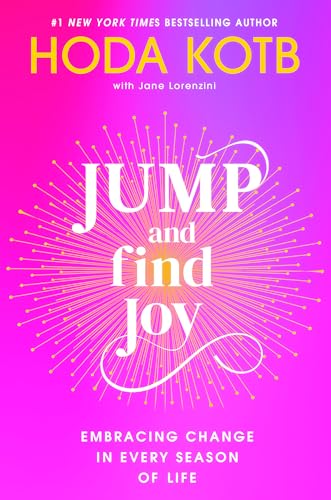
Book: Jump and Find Joy: Embracing Change in Every Season of Life
Hoda Kotb didn’t expect to join the Today show at age forty-four. Or to become a mother at fifty-two. Or to leave Today and embark on a new adventure at sixty! Change doesn’t always arrive when we expect it, and its effects are anything but predictable. But Hoda believes that the benefits of change can be extraordinary...if we’re willing to listen to and learn from them.
In the tradition of books like Savannah Guthrie’s Mostly What God Does and Maria Shriver’s I’ve Been Thinking comes Hoda Kotb’s Jump and Find Joy—an intimate book that reveals for the first time what Hoda discovered as she started embracing change in every aspect of her life. In her quest to better understand change and how to work with (not against) it, Hoda relies on her reporting instincts to investigate HOW change works, WHO is approaching it with grace, and WHAT she can apply to her own life and share with others. Jump and Find Joy combines the wisdom of change experts, insights from the latest work on resilience, and deeply personal stories from celebrities and inspirational people in our own communities. From small shifts in daily routines to major leaps of faith, Hoda shows why change isn’t to be feared but celebrated...and how each of us can thrive in the midst of changes we’ll inevitably face ourselves.
-
Joy101
The Joy 101 app is a daily wellness app curated by Hoda Kotb, offering personalized content to help users find joy through expert-led courses, live conversations, and guided practices like breathwork and meditation. The app includes features such as a daily check-in from Hoda, exclusive content on topics like sleep and mindset, and community events and retreats.
Resources
-
-
- Harvard Business Review: Research: The Average Age of a Successful Startup Founder Is 45
- Scientific American: To Stay Sharp As You Age, Learn New Skills
- Senior Voice America: Debunking 12 Common Myths About Aging
- Contemporary Educational Psychology: Intrinsic and extrinsic motivation from a self-determination theory perspective: Definitions, theory, practices, and future directions
- Forbes: How To Make A Successful Career Change At 40
- Career Key: How to Manage Transitions
- The University of Texas at Austin: Expressive Writing: Connections to Physical and Mental Health
- University of Rochester Medical Center: Journaling for Emotional Wellness
- Purdue University: First we invented stories, then they changed us”: The Evolution of Narrative Identity
- American Psychological Association: Transformation after trauma, with Richard Tedeschi, PhD
- Greater Good Magazine: Seven Ways to Find Your Purpose in Life
- Forbes: Reinvent Yourself Every 7 Years: A Career Change Strategy
- Harvard Business Review: Reinventing Your Career — When It’s Not Just About You
- Calm: Reinventing yourself begins with these 7 mindful steps
- New York Times: Reinventing Yourself: Stories From Our Readers
- Forbes: Angela Duckworth: 'A Passion Is Developed More Than It Is Discovered'
- Journal of Research in Personality: Do mindful people set better goals? Investigating the relation between trait mindfulness, self-concordance, and goal progress
- Mental Health America: How helping others helps you
2 Million Readers.
1 Life-Changing Newsletter
Simple and Straight-to-the-Point...
Just Like Mel.