Episode: 354
You’ll Never See Your Family the Same After This Episode
with Dr. Mariel Buqué
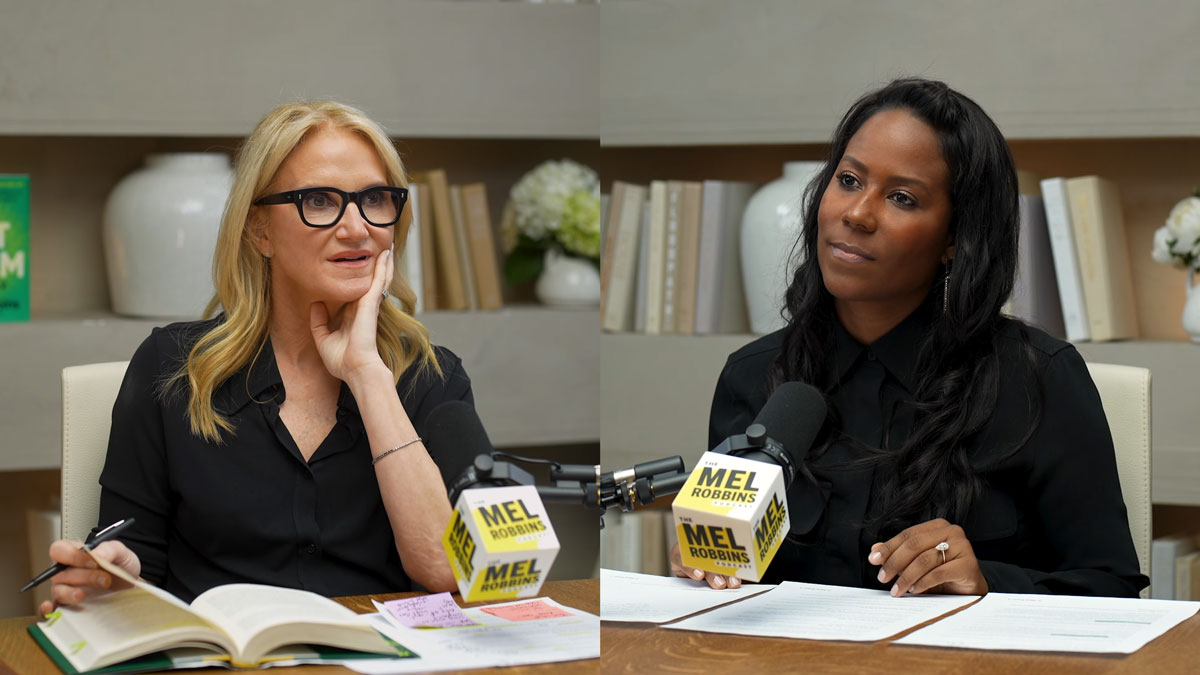
If spending time with your family leaves you feeling exhausted, resentful, or stressed out, you’re not alone.
That’s why Mel invited Dr. Mariel Buqué, a Columbia-trained psychologist and leading expert on family dynamics and generational patterns, to share the real reason why your family stresses you out.
Dr. Buqué will help you see how the home you grew up in and the role that you played in your family shaped you as a person.
She will also explain why the same tension, guilt, and arguments keep repeating year after year and how you can shift this dynamic.
This conversation will give language to what you’ve been feeling for years and tools you can use immediately: at the holiday table, on the phone, or in everyday life.
It’s an invitation to stop absorbing everyone else’s stress, see your family with clearer eyes, and protect your peace.
Listen on:




You're still living in the cycle of what your parents didn't heal. And unless someone does something about it, it continues.
Dr. Mariel Buqué
All Clips
Transcript
Dr. Mariel Buqué (00:00:00):
You are not broken. You are simply carrying around generations of pain and it can make your emotions feel at times unbearable and like healing is impossible. But I can tell you with certainty, you have an opportunity to create a different legacy than what you were handed. You can take that opportunity and transform your life starting today.
Mel Robbins (00:00:26):
What's the first courageous step to take in order to start to break the generational cycle and to take responsibility for healing yourself? The hardest step is the first step. It is so easy to look back at our parents and our grandparents and focus on what we were not given.
Dr. Mariel Buqué (00:00:48):
No one has a perfect parent. No one can be a perfect parent. It's actually a myth. No two siblings ever have the same parents or exist really in the same household. The idea that a lot of people have is that a parent knew better and they chose not to do better. Many of these wounds were not recognized. People didn't know that they were there. They were just living life in the best ways that they could. And unfortunately, that meant that hurt was passed down through the generations. Every day presents an opportunity for us to break the cycle and shift the emotional legacy of our family line. And I hope that for anyone who's listening, that you would be willing to carry that beautiful legacy of being the cycle breaker in your family.
Mel Robbins (00:01:41):
Dr. Mariel Buqué, welcome to the Bell Robbins podcast. Thank
Dr. Mariel Buqué (00:01:46):
You. I'm so excited to be here with you, Mel.
Mel Robbins (00:01:48):
I cannot wait for our conversation. I've been so looking forward to this, and I would love to have you start by telling me, how could my life be different? If I take everything to heart that you're about to teach me today and share with me today, how could that change my life?
Dr. Mariel Buqué (00:02:08):
My hope is that people can see the possibility of existing within their families in a way that feels nourishing, even if their families do not have the capacity to do the work that they need to do, that they can still take whatever they can out of that family life and leave the rest behind.
Mel Robbins (00:02:36):
Wow. And that's why you're here because we're going to cover all of that today. And what I love about your work is that you put the power squarely within each and every one of us individually to create that connection, to create that nurturing experience, to shift things in a positive way through our own work in healing what we need to heal.
Dr. Mariel Buqué (00:03:05):
Absolutely. I mean, you probably have been living in decades of pain, right? And taking the time to actually heal those decades and even the preceding generations that are accumulated onto those decades that you've been suffering, you can actually shift the trajectory of your own life. So decrease your own suffering while also modeling that for the next generation and the next generation and the next generation.
Mel Robbins (00:03:31):
Wow. I have a feeling that this is going to be an episode that people listen to and share within their family and that they share intergenerationally.
Dr. Mariel Buqué (00:03:47):
Yes.
Mel Robbins (00:03:48):
And I'd love to have you, Dr. Buqué, to talk directly to a parent who has been sent this episode by one of their children or one of their siblings. And speak a little bit about the invitation and the opportunity that is there for them.
Dr. Mariel Buqué (00:04:11):
You have an opportunity to create a different legacy than what you were handed, to heal the parts of you that have been hurting for so long. You can take that opportunity and transform your life starting today. This is an invitation for you to be able to do
Mel Robbins (00:04:33):
That. Is it ever too late to start this? Because if you're older, you tend to get more stuck in your ways. And it's easy to go, "Well, I've always been like this. And what if I don't want to deal with those things? It's too late to deal with those things anyway." Is it too late to start this, to heal, to feel better?
Dr. Mariel Buqué (00:04:58):
It's never too late. And those statements are fear-based. It's fear talking. It is possible for anyone to change at any age. My eldest patient was 84 years old when they first started working with me. And I love bringing this person up because it gave me a lot of hope as to how much can be done even later on in life to actually transform and influence the upcoming generations. We can never believe that it's too late because as long as we're living and breathing, we have an opportunity to initiate change in our lives and to change the trajectory of our emotional legacy.
Mel Robbins (00:05:43):
Dr. Buqué, can you unpack that a little bit more?
Dr. Mariel Buqué (00:05:46):
Yeah, absolutely. No one has a perfect parent. No one can be a perfect parent. It's actually a myth. So we look at the parent that we do have and we acknowledge what they are able to give and we grieve what they cannot. And that usually is the way that I like to work with folks that are really having a tough time with the fact that people before them didn't do the healing work and handed down pain that they now have to sort through in their lifetime. And in my work, I actually help a person to attend the funeral of the parents they wish they had. I call those sets of parents their false family. It's the family that they wish could have been the family that they envisioned when they were little. These are my actual parents, which never were. They were actually flawed human beings that went about life, maybe hurting you, maybe not, but it's important that we step out of that false illusion of the parents that we manufactured in our heads and we step into what I call our true family, which is a family that we see in front of us.
(00:07:03):
The family that potentially can invalidate us, the family that maybe won't be ready to listen to the wounds that they've caused, the family that is real, not the family that we manufactured.
Mel Robbins (00:07:18):
One question that I had is it was when you were talking about no one has the perfect parent.
Mel Robbins (00:07:23):
Dr. Buqué, can you talk a little bit about the work of healing intergenerational trauma, especially among siblings?
Dr. Mariel Buqué (00:07:34):
Yes. Siblings can actually engage in generational healing work together and it can be incredibly powerful because siblings, although no two siblings ever have the same parents or exist really in the same household.
Mel Robbins (00:07:53):
What do you mean by that?
Dr. Mariel Buqué (00:07:55):
Well, siblings, people can have different birth order. Sometimes eldest daughters tend to take on a lot of responsibility, and so they may be probably holding on to a lot more emotional weight in the family than maybe a younger sibling. And so it's important to just really understand gender dynamics, birth order dynamics. There's a lot at play, but even with those variables, siblings that follow the path together can actually feel like the path is less lonely.
Mel Robbins (00:08:30):
But what if you have a sibling, because I would imagine this is the kind of episode that if this is resonating, you're going to want to send it to your sister or to your brother and really invite them to learn from Dr. Buqué. But what if you're in a situation where you have a sibling that had a very different childhood? Mom wasn't like that. The sibling and the sibling's denial of your experience in the same household is part of the pain that you're dealing with.
Dr. Mariel Buqué (00:09:04):
No individual in your family and in that household can validate your experience because that's an internal job. And so that person, any sibling that you have will not be able to mirror the experience that you've had because you've had completely different lives even within the same household. So it's going to be really essential for you to simply learn how to engage in that auto validation and not expect it from anyone else, including your siblings.
Mel Robbins (00:09:33):
Dr. Buqué, can you speak to the eldest daughter and the type of trauma or wound that she may be experiencing and has the opportunity to heal?
Dr. Mariel Buqué (00:09:46):
Yeah. The eldest daughter is the prototypical parentified child. It's the daughter that typically takes on a lot of the family burdens. It's the daughter that is typically the fixer of the family household, and it's the daughter that tends to have to act as a parent to younger siblings well before a time when she's ready to parent. All of these things actually create really deep wounds in a person who's robbed of their childhood and who needed to feel a sense of security and dependence upon others. And so eldest daughters have an opportunity to heal that parentification, have an opportunity to really offer themselves a reparenting process and give themselves what they did not receive, and they have an opportunity to rectify the relationships that they have had with siblings or with parents that may have been fractured as a result of the role that they were forced into.
Mel Robbins (00:10:57):
What are the types of things that the eldest daughter has experienced just to validate that? You know what I mean? How does that manifest in terms of how the eldest daughter, and I'm assuming you mean not just necessarily birth order, but that there's even experiences that people have of being put in the role of eldest daughter, even though they might've been the youngest, that they still had to be the parent in the household. They still were the fixer. They were still the person that had to make everything okay. But what are the types of things that the eldest daughter struggles with as an adult to really validate her experience?
Dr. Mariel Buqué (00:11:37):
Oh, wow. I'm going to take a circumstance that happens very often and that it doesn't have malice embedded in it. For example, let's take into consideration a parent that has to work two, three jobs. They're away for a long period of time. And so the eldest daughter, in essence, has to step in and after school, feed her younger siblings, make sure they're tucked into bed, do all the things that a parent would. But who's tucking her in? Who's feeding her? Who's nurturing her? Who's taking care of her? Over time, she learns that she must be only of service to others and deny her own needs. And that's what typically happens in adult life, that she'll enter into intimate relationships that way and never really know how to express her own needs because her needs were never really acknowledged as a child and she never learned the language of her own needs. And so she goes about life in that way. She may even transition into the workplace, not expressing what she needs from a boss, from a colleague.
(00:12:54):
And so it really starts to generalize in friendships everywhere. She may even become a parent, and as a parent, she'll have needs and won't be able to express them. So eldest daughters really take on the role of being of service to others for life and sometimes even take on that role with a sense of pride, not realizing how harmful it can be for them.
Mel Robbins (00:13:19):
What's possible for the eldest daughter if she starts to heal this wound? Because it sounds like what she needs is to be able to trust others to take care of her needs, and she needs to learn how to express them and trust that other people will help fulfill them. Is that really the wound you're healing?
Dr. Mariel Buqué (00:13:40):
It is. And she's able to experience reciprocity in relationships. Yeah. She's able to receive without guilt.
Mel Robbins (00:13:52):
That's possible.
Dr. Mariel Buqué (00:13:53):
That's possible. We have to heal the wound, of course, but that's possible.
(00:13:58):
Why is it important, even if you don't want to believe it, to hold space for the belief that your parent inadvertently did this damage that they didn't mean to? Why is that an important thing to create space for as you have this type of conversation?
(00:14:22):
Well, it's important because it allows us to see their humanity. We cannot paint a picture of perfect parenting. It is a really, really hard ... It's an unfair idea to hold against any parent. It's an unfair standard is what I mean. And so it's going to be really critical that we allow them to be fully human, fully flawed, and to allow ourselves to experience the flawed parent that we did indeed have. I just said, allow us to experience, allow us to feel ... A lot of this is about feeling into the things that we tend to avoid. Many times what we want to do is not acknowledge, not touch the topic, not think about it. But when we dive into it in a safe way, when we dive into it little by little, we're able to really sit with the reality that's in front of us, that we've had parents that could have aired here and there and that they did the best they could.
(00:15:41):
And for some people that they had parents that really did have malicious intent
Mel Robbins (00:15:46):
Or were just mentally ill or addicted and there's no amount of love that you can give them that will make them well. Even holding that space for, they inadvertently did it because if they had been in their full capacity and if they had been mentally well, things would've been different. Doesn't excuse anything, but I think it creates this space to do the work for yourself, to see with very clear eyes who you're dealing with. And from there, decide, am I looping this person in or am I grieving and setting boundaries to protect myself and giving up any expectation that this person can change and just seeing with very clear eyes what I'm dealing with. Do you see what I mean?
Dr. Mariel Buqué (00:16:34):
Absolutely. Yeah. And it's critical because the idea that a lot of people have is that a parent knew better and they chose not to do better. And so if we can think about the possibility that what was handed down was not intentional, it gives us a different way to look at everything, to look at ourselves even. So it is a very different approach that we take when we can see that many of these wounds were not recognized, people didn't know that they were there, they were just living life in the best ways that they could. And unfortunately, that meant that hurt was passed down through the g
Mel Robbins (00:17:20):
enerations. Dr. Buqué, what do you want to say to the person who's listening or watching right now, who all of this is just really resonating at a very deep level?
Dr. Mariel Buqué (00:17:30):
That you are not broken. You are simply carrying around generations of pain and it can make your emotions feel at times unbearable and like healing is impossible. But I can tell you with certainty that you can heal, the healing is accessible to you and that it all starts with you just saying four simple words, "I am not broken."
Mel Robbins (00:17:57):
I could hear in the person listening who's here with us right now, almost like this ding ding, that's me. Could you just stay in this moment for just a little bit more? Because I want to talk about the experience of feeling like you're the fixer in your family, or you grew up in a family where mom and dad were working or one of them was never around because of addiction or other issues. And so you were constantly reading moods, you were constantly smoothing over conflict, trying to keep the peace. You were the kid who had to be the parent to your siblings or be the adult because your parent was emotionally immature. Dr. Buqué, from a trauma perspective, how does that kind of, "I have to always beyond, I can never rest as a child," how does that form inside you and impact you now as adult from a traumatic experience?
Dr. Mariel Buqué (00:19:03):
Well, I mean, it creates a person that is overachieving all the time, is always fixing everything and every person around them and just can never really rest. And think about rest, it's so essential for us to be well. And so if a person isn't able to rest, they're going to be chronically exhausted, they're going to have mental fog, they're not going to be able to be present. A lot of the things that are essential for us to work well, to parent well, right? We need to be present. We need to be on top of things, and this compromises a lot of that. And so it shows up in different ways for different people, but typically what it shows up as is a lot of exhaustion, emotional exhaustion and physical exhaustion.
Mel Robbins (00:20:01):
Do you tend to see a difference? I don't mean to overgeneralize between men and women, but do you tend to see a difference in terms of the way that women bury traumatic experiences versus guys?
Dr. Mariel Buqué (00:20:15):
Well, we are unfortunately socialized in a very gendered way.
(00:20:21):
So there are ways in which women tend to have a lot of emotional suppression, which as we know also has a lot of connections to the conditions that we tend to see mostly in women, especially autoimmune conditions. For example, women are overly represented when it comes to conditions like lupus, rheumatoid arthritis, even some metabolic conditions, diabetes. There are so many of the conditions that tie back to that allostatic load that connect to how the body is then able to protect itself against disease, against chronic illness that then tends to impact women a lot more than men.
Mel Robbins (00:21:10):
And how does traumatic experiences and suppressing your emotion create an autoimmune condition?
Dr. Mariel Buqué (00:21:18):
Well, there is a suppression of the immune system. The immune system is suppressed and that is what triggers the process of autoimmunity. With men, we tend to see a little bit more of an externalized version of their pain, and so it's more outward, more anger, but underneath there's pain and pain. There's hurt and hurt. There's sadness and sadness, grief and grief. But the thing is that unfortunately for society, we've also conditioned everyone, I guess, to just ... Let me backtrack.
Mel Robbins (00:22:00):
You're doing great, by the way.
Dr. Mariel Buqué (00:22:01):
Thank you. What I also see in my practice is that the predominance of people that actually come in for help happen to be women. So whenever I get an opportunity and it is a deep honor to work with a man, someone who's male identified, who wishes to do some of that work, it is a rarity, I have to say. I've had at one point in time, like 75, 80 patients. And of those, I had three that were men.
Mel Robbins (00:22:32):
What does that tell you about the state of things and the importance that you not just listen for yourself or watch as you're watching on YouTube, but you share this with the men in your life because my experience has been with my husband, who we've been married almost 30 years, that it's only in recent years that he is understanding that his shutdownness and the fact that he self-isolates and goes quiet, there's a lot of anger under there that he doesn't ... He's not a yeller. That's me. I'm not proud of that, but that is from his childhood that is tied to a lot of pain. And so what does that tell you in terms of the fact that women are coming to you versus men about the need to talk about this more and understand it for yourself and for everybody in your life?
Dr. Mariel Buqué (00:23:25):
Well, it's telling me that we're forgetting men. We're forgetting them and we need to share resources. We need to share anything that we have, this episode, books, anything that can actually be helpful and also allow them to have some sort of space where they can express their emotions. We have socialized men to basically abandon their emotions and not cry. We don't let boys cry, which then turn into men that don't feel like they can actually emote. And so that can actually be such a tragic circumstance for so many men because they're human and they do have emotions and they need to talk about their emotions just like women. And so I think that if we give them a bit more of the attention and the resources, I think that we'll be better off as a society, just really kind of helping everyone, men, women, kids, and anyone in between.
Mel Robbins (00:24:23):
So for the person who's here with us, who's listening or watching on YouTube right now, what's the first courageous step to take in order to start to break the generational cycle and to take responsibility for healing yourself?
Dr. Mariel Buqué (00:24:39):
The hardest step is the first step. It's acknowledgement. It's naming the truth. It's taking the family secrets out of the closet, sweeping them out of underneath the rug and exposing them at least to yourself.
Mel Robbins (00:24:57):
Okay. So what does this look like? Because when you say it's telling the truth, I'm like, okay, what am I doing?
Dr. Mariel Buqué (00:25:03):
Well, you're naming the truth for yourself.
(00:25:05):
And I like to explain that further because when cycle breakers want to break cycles, they want to bring everyone along with them. We want family therapy, everyone's in on it, and everybody's going to heal, and it doesn't quite work that way. We first have to work with the person that wants to break the cycle and naming the truths within their story. What does that mean? That if you feel like a parent has hurt you, they were physically abusive when you were growing up, that was deeply hurtful. It's a part of your journey. It's a part of your truth. Let's name that. Yes, they're a parent that took care of you, they provided, right? You always had food on the table, but there was also that element of violence that was really hurtful. And we can name that for what it is. It's the truth of what you experienced. When we can acknowledge that and we can actually get into the weeds of how that hurt you, that is the process where we can actually start the journey of cycle breaking.
Mel Robbins (00:26:07):
What would you say to the person whose pain is being minimized by their family? When you start to talk about this stuff, "Well, that's not what happened. You're exaggerating. Stop using therapy, speak on me. " Well, we have the same parents and I turned out just fine, or my mother did that to me and I'm fine, or it happened so long ago. Why can't you just get the sort of things that people say when someone starts to do this type of work, how do you trust your own experience without getting really stuck in your anger that you're not getting validated or that your family or your partner is not supporting you?
Dr. Mariel Buqué (00:26:58):
Well, you have to understand that you don't need their validation in order to heal. That's an internal job.
(00:27:06):
And so it's going to be really critical that you pivot that external validation and start to auto validate and start really focusing on the ways in which you can enhance your own healing experience. And one thing that's really important about the people that we start talking to about what's hurting us is that we have to understand that they're only going to be able to meet us at their level of healing. So if someone is in their deep pain, we can't anticipate that they're going to hold us and say, "You know what? You're right. I hurt you. I'm sorry." They're not going to be able to do that if they haven't themselves had the skills and the tools to actually work through the shame and the anguish of having hurt you enough to meet you in that place, in that conversation where you need them to meet you in order to feel validated.
Mel Robbins (00:28:03):
Do they have to work through the shame and the anger and the anguish they feel about the fact that they didn't actually get what they needed from their grandparents? You see what I'm saying or from their parents?
Dr. Mariel Buqué (00:28:19):
Yeah.
Mel Robbins (00:28:19):
Because as I'm sitting here listening to you, I just sat here for a second and thought, wow, it's kind of interesting that we go to the people that we think hurt us looking for them to be the ones that will restore us. When David Kessler, the famous grief counselor said on this show, that's like going to a hardware store and looking for milk. You're not going to find it there.
Dr. Mariel Buqué (00:28:46):
Yeah. Yeah. It's that we continue to seek the validation where it never existed because there's a wound there, there's a void there, but that is especially why we need to learn how to fill that void ourselves. It's really critical that we don't rely upon external parties, whether it's our family members or other people in the world, if it's an intimate partner, anyone, to fill a void for us because that also is a little bit of the breeding ground for codependency. So what we want is to adopt self-soothing techniques, have a greater understanding of what is happening inside of that void and what we need in order to continue to feel it and continue to feel whole.
Mel Robbins (00:29:34):
Could you walk us through what healthy, realistic healing looks like, let's say on an average Tuesday?
Dr. Mariel Buqué (00:29:41):
Yes, I love that. Yes, absolutely. So let's say that you're waking up and the very first thing that you have to do is brush your teeth. As you brush your teeth, you can just visualize a place that feels serene that really It brings you a lot of peace. That's something that doesn't have to be baked into your day. You don't have to book a yoga studio or go across town and spend three hours trying to get something done. You can actually do it right in the moment when you wake up. As you're making the pancakes for the kids, you can just start reciting different affirmations for yourself. I'm going to be very gentle with myself today. I'm going to do the very best that I can in parenting my kids from a place that feels warm and caring. You can just affirm yourself along the way.
(00:30:43):
As you're driving to work, you can do some deep breathing. When you're at work and you're placing your meal in the microwave, you can breathe some more. You can do some light stretches in your office chair. On your way back from work, you can talk to someone that actually helps you to feel calmer, someone who feels safe, someone who loves you. All of these things can be just added into what's already happening in your day, and I like them to be because when we ask people to completely step outside of their schedule, they're less likely to do the thing. And what we want is for you to have success in this healing journey, for you to feel like you are accomplishing the very first task of generational healing, which is that nervous system regulation. And all of those different practices throughout the day can be really helpful towards that goal.
Mel Robbins (00:31:40):
So what you're saying, Dr. Buqué, is all those little micro moments, those are acts of healing? 100%. How come?
Dr. Mariel Buqué (00:31:50):
Well, because a lot of those moments are engaging a ventral vagal response in your nervous system, or they're helping by way of almost narrative reclaiming or narrative therapy, also helping your stress response to be regulated. So any way you cut it, it's coming right back to the nervous system.
Mel Robbins (00:32:17):
Wow. What daily micro movement or nervous system tools do you prescribe to your patients that I could try that the person who's listening or watching could try?
Dr. Mariel Buqué (00:32:31):
I love this. My favorite favorite movement is rocking. Rocking? Rocking. Rocking actually initiates that calming response, that parasympathetic response within our nervous system that engages our ventral vagal nerve, which is the nerve within our cranial nerve, within our nervous system that actually helps us to experience rest and restoration and calm and ease. So when we rock, we actually engage that ventral vagal nerve, which is just a beautiful thing. I mean, if you think about it, for example, when you're in hammock rocking or in a rocking chair, what's the effect that it gives you?
Mel Robbins (00:33:14):
It's true. Or a swing or anything like that.
Dr. Mariel Buqué (00:33:17):
It grounds you. Or even when you think about as a child, when you were in a caregiver's arms and they were rocking you to sleep, the reason why you were able to get sleep is because you actually felt a sense of safety because your ventral vagal response was being initiated.
Mel Robbins (00:33:32):
Wow.
Dr. Mariel Buqué (00:33:33):
So rocking.
Mel Robbins (00:33:34):
What's another one?
Dr. Mariel Buqué (00:33:35):
Another one is humming.
(00:33:37):
Humming is also a way to elicit that ventral vagal response. So it actually helps a lot to be able to even pair the two. I like to hum and rock. And it's almost like you can even pick your favorite song if you're doing it with a kid, with a child. It's very child friendly as a practice. And so this can be a way in which a child can also help themselves to soothe. If they're in the middle of the school day and something happens, they have the opportunity of just rocking a little bit and even humming and allowing themselves to feel calmer. When neurodivergent folks, especially, especially folks who are living with autism, they have stimming behaviors. Actual rocking is a part of what they naturally may do in order to self-soothe. And so we're in essence, borrowing from that also and knowing that it's quite effective and calming down the nervous system and we're utilizing it in order to initiate that calming response within us.
Mel Robbins (00:34:42):
If you later today are driving through traffic or you're sitting at your desk and you get an email or you get that text, we need to talk, or you send a text to somebody last night and they still haven't responded and you feel that kind of emotional wave hit. What's something you can do in that exact moment to put your nervous system back into a calm state?
Dr. Mariel Buqué (00:35:10):
The easiest thing that we can do is take deep breaths and not three, not just a few. We need to take at least five minutes of deep breathing. It's really essential because that allows our nervous system to catch up to the fact that we're giving it the opportunity to recover. And oftentimes I get people telling me, who has five minutes? We live in a busy world and if you're a parent, you're incredibly busy. But I always like to remind folks you have 1,440 minutes in a day. If you just take five of those minutes and recalibrate and just give yourself an opportunity to engage in deep breathing, you're going to feel so much better.
Mel Robbins (00:35:57):
Why does healing so often trigger backlash and anger and tension from your own family?
Dr. Mariel Buqué (00:36:06):
Well, because you're exposing the wounds and the places where they're still needing to work. You're exposing the shame that's there and shame loves closed doors. It loves to hide. And so if you expose someone to something before they're ready to acknowledge it, they're just going to clam up. So that clamming up typically looks like, I don't know what you're talking about and I don't remember that. And so all of that tends to be a part of the conversation when in reality, what's underneath all of that is the shame that this person now has to contend with in order to acknowledge the fact that they have been a cycle keeper and keeping cycles that are unhealthy, flowing through the family and imposing them upon you. And we can't expect your 70-year-old mother to heal at the same pace and in the same ways and heal to the extent that you have.
(00:37:16):
It's unrealistic. We can look at micro moments when maybe she shows insight, maybe there's a bit of acknowledgement, even if it's a tiny one, and we celebrate those wins and then we grieve the rest. Whatever could not be offered, we grieve and we let it go.
Mel Robbins (00:37:40):
I'm sorry. I'm so taken with that. I don't even know what to ask you next because I do feel like there's a lot of guilt or expectations that we put on ourselves about how it should all go. And then you feel guilty that you're starting to separate and see things. Is that normal?
Dr. Mariel Buqué (00:37:57):
Yeah, and I've seen it both ways. I've seen parents, adult parents of adult children that feel a sense of guilt that they're not able to heal at the same pace as their adult children. They're not able to really find it in themselves to meet them where they are at. And that's also really unfair.
Mel Robbins (00:38:17):
How do you deal with parents and siblings or relatives or your partner who dismisses or even mocks you for wanting to talk about your feelings or for this attempt to try to heal yourself?
Dr. Mariel Buqué (00:38:35):
Yeah, that's painful. You really let them.
Mel Robbins (00:38:44):
You do?
Dr. Mariel Buqué (00:38:46):
I mean, you cannot change a person's reaction. You can change your response. They're going to react and mock because they're going to reflect their unhealed parts and you cannot force them into validating you. It doesn't work that way. You just have to let them be who they are.
Mel Robbins (00:39:12):
And then the let me part is standing inside yourself. And instead of allowing the trigger and the emotional wave to drive your reaction, hold on to that one second moment where you notice and then choose what you're going to do when you see the wounded part of your parent or your sister or your brother or your boss show up.
Dr. Mariel Buqué (00:39:40):
That's beautifully said and allow yourself to let that reaction that you have be a reflection of your healed self or your more healed self. And then what surfaces, which is so beautiful, is pride. You have pride that overrides the shame that once existed because you're able to see yourself like, wow, I didn't respond to that in the ways that I used to.
Mel Robbins (00:40:09):
How do you deal with a parent who just never had the tools, never had the resources or the support that you now have and they're difficult to deal with, they're doing what you say, they're kind of complaining and nagging. And what you start to realize is that underneath that, nagging and complaining and the stuff that you don't like is probably a desperate need for empathy or support. You know what I'm saying? How do you deal with that dynamic? Because I can't imagine if you're the one who's the cycle breaker and you're the one that's doing the healing of this wound that has been passed from one generation to another and your healing just exposes the wound and your parent or your sister or somebody who hasn't dealt with it, how do you recommend to your patients that they deal with a parent that's never gotten the support?
Dr. Mariel Buqué (00:41:11):
Well, I work with my patients. I'm not working with their parents, and I'll tell you what I mean by that. So I work with my patients to ensure that they're going into that family gathering with the same people that are having the same conversations and that are engaging in the same unhealthy family dynamics. Everything is the same except you, my client. You are different. You now have that one second of reaction time. You now have an opportunity to not feed the cycle, and so you're disrupting the equilibrium of that dysfunction. So more often than not, I'm working with the person in front of me to be able to exist in a healthy way within the environments that they're a part of, because that's most of what we have. Now, if there are other individuals in their family that are willing to come on board and work through those wounds, they're welcome, but only after we've worked on buying back that second.
Mel Robbins (00:42:25):
How do you teach your clients to go into a family or relationship dynamic or a work dynamic that's exactly the same, but you're different? What are some of the tools walking into that family dynamic, knowing that you're the one doing the healing, that people can only meet you as deeply as they've worked on themselves and looked at this for themselves? What are some of the tools that you provide your clients?
Dr. Mariel Buqué (00:42:58):
The first thing that you would have to do is actually practice them when they're not around. The tools are made to be practiced, to build mastery around for you to feel comfortable around the tools and then to bring them around your family. So that's first and foremost. However, you can take a deep breath at the dinner table. When people are saying things that are potentially triggering to you, you can very subtly just take a breath and allow your nervous system to just restore itself rather than get into a trigger response. So these tools you can bring anywhere. However, it's critically important that you first do them in your own time, at your own pace, within your solitude and in the moments when you can really be gentle and honest with yourself about what you're feeling, and then bring them around the people that tend to trigger you most.
Mel Robbins (00:43:59):
Well, that makes a lot of sense because you basically have told us the truth. You're walking into a dynamic with people that has been the same and is going to be the same, but you are now changed.
Dr. Mariel Buqué (00:44:09):
Exactly.
Mel Robbins (00:44:09):
And so before you are going to step into that and leading up to it, just when you notice you're starting to feel emotionally flooded, when you notice you just do whatever you need to do, take a deep breath to settle yourself and calm your nervous system. That's the work you can practice, right?
Dr. Mariel Buqué (00:44:28):
Yes. And look around the table, visualize everyone else's nervous systems. People are operating at their level of healing and you will see different levels at one table.
(00:44:41):
All of this is information. It's data that you now have that can actually help you to buy back that second. So it's building blocks, right? We're building up to that. That's not the first step. That's what people want to do in the first session. Let's bring my mother so that we can talk about all the ways that she hurt me. Yeah. And there's so many layers to this. There's so many things that we need to consider, and there's so many ways that we need to restructure your nervous system to really take in the experience of speaking to your mother, and we need to consider her nervous system too, because that matters too.
Mel Robbins (00:45:19):
How much is compassion both for self and for the previous generations, particularly your parents? How does compassion for their experiences and their lack of tools and resources and healing, how is that a part of it?
Dr. Mariel Buqué (00:45:42):
It's so critical. It's so essential. My sister says something to me very often these days. She'll look at my mother. We're both in our forties and she'll look at my mother and she'll say, "I understand mom now. I get it. " There were so many ways in which we would appraise what my mother would say or do as toxic and just cut her off or not want to really engage her in conversation. And now we see in almost like 4K what her experiences have been, what it feels like inside to be a person living that reality. And now we have greater compassion for the person that she was and the person that she is now. And that's the type of humanity that I want to embed into this work. It's for us to have mutual understanding of each other. And when I look at people like my parents, for example, I look at them with tender eyes, with an understanding that they failed in many ways and they did the best they can, the best they could, the best they can because they're still alive.
(00:46:57):
And I really do think that there is space to be able to hold both truths.
(00:47:02):
Someone could have not healed because they didn't have the tools or the motivation and there is a space to really allow that to be true and for us to still be in community and in connection with the people in our lives.
Mel Robbins (00:47:19):
I love the story that you write about in chapter two, and it's the moment
Mel Robbins (00:47:26):
Where you were in your first semester of your doctoral studies and you were facing, as you put it, the worst imposter syndrome of your life being a Black Latina immigrant from a working class background and an Ivy League institution and how you were constantly faced with reminders of how much you didn't belong. Can you share a little bit about that story and use it as a way to illustrate that first step?
Dr. Mariel Buqué (00:47:58):
Yeah. That was a moment in my life when I was really confronted with how different I was, right? Coming from a background where my life looks so different. I come from Dominican Republic, and then I lived in Newark, New Jersey, a very economically impoverished part of the US. And so all of that was a part of my initial formation. And I come into this very elite Ivy League institution working with so many people that just were so different than me. And a lot of those people were also, I think, not super aware of their impact
(00:48:42):
And of the ways in which their statements around my background were harmful and hurtful and alienating. And so it was a moment in my life when I was really able to see, wow, I'm seen as someone that's different and potentially even not up to par for some folks. So it was really, really hurtful to experience that. And I remember wanting to quit. I remember not wanting to continue because I felt like, how could I exist in this space for six years and survive? Emotionally, I don't think I can do it. This feels traumatic for me.
(00:49:23):
In that moment, I spoke to my mother and like I mentioned, my mother comes with many flaws and quite frankly, I wasn't really expecting my mother to offer this beautiful wisdom that she offered me, but she mentioned that I come from a long line of strong people, of people that persevered and that I should get back in there and just give it my best, that I had it in me. I had all of this wisdom and strength that was passed down our lineage and that that would get me through. And that just, it snapped me out of that imposter syndrome. I was like, "I do belong."
Mel Robbins (00:50:02):
I love this because you talk about this thing and we're going to pair this with intergenerational trauma.
(00:50:08):
And so I'm reading from page 28 of your bestselling book, Break the Cycle. This is in a section called Your Intergenerational Higher Self. I now know that imposter syndrome is not my truth, but an inheritance from generations of being marginalized. It's a way in which I and many others in my communities have been isolated, shut out, and made to feel like we don't belong, but we do belong. And I stepped wholeheartedly into that truth. My intergenerational higher self grew out of this moment. And you went on to write that your ancestor's cumulative intentions, wishes, and wisdom are also layered on top of your own to contribute to your intergenerational higher self. When you're attuned to your intergenerational higher self, you're in a place that is loving, nurturing, ancestrally wise and intuitive. It is sacred in that way. When you tap into this generational elevation, you are able to experience greater calm, trust in yourself, curiosity and self-awareness.
(00:51:26):
I want to reflect something back to you because I think this is so beautiful. It is so easy to look back at our parents and our grandparents and focus on what we were not given, to focus on the things that we wish would've happened, to focus on the things that were wrong, that you would do differently, that you didn't deserve. I often think we don't look enough at the things that you inherited that are really powerful. And as I was reading that, I was reflecting on the fact that I come from a long line of very hardworking women.
(00:52:06):
They were the breadwinners, they were the money counters. I can picture my grandmother sitting in her housecoat at the end of running the farm stand in this big cattle farm and folding out the dollar bills and tapping on the calendar and balancing the daily thing. I think about my mom who had her own store and she would sit at her desk just like my grandmother did and balance her checkbook and look at the bank deposits from this little retail store that she ... And so I think about the inheritance of that strength and fortitude. And it's a beautiful thing that you're pulling in for us that as we look at the traumatic experiences and the wounds, let's also pull in this intergenerational higher self.
Dr. Mariel Buqué (00:52:55):
Yes, 100%. I mean, we can't lose sight of the fact that we are inheriting more than just pain. We're also inheriting strength, resilience. We're inheriting words of affirmation that were spoken to us. Dreams. Dreams.
Dr. Mariel Buqué (00:53:11):
A lot of these things are also a part of what is placed on our plate. And when we lose sight of that, we can veer in the direction of resentment and pointing fingers rather than really looking at all the things and looking at the nuance of it all. Granted, some parents are really, they do things that are truly unforgivable. Some parents do things that require no contact for the rest of life, but not every parent. Sometimes we just need to do the deep and hard work to bridge the connection in a way that feels healthy enough, and that can actually last for the rest of the lifetime of the person doing the healing and the parent.
Mel Robbins (00:53:57):
Can you just talk a little bit more about that? And obviously it's person by person, but it seems that we're in this moment where there is estrangement, and you just said, Dr. Buqué, that there's valid reasons to not have a relationship, and they're usually in very, very extreme, dangerous reasons that
Dr. Mariel Buqué (00:54:20):
Yeah, abuse. Abuse is a big one. Yeah. Child abuse is a really big one for parents who abuse their children for years at times, sometimes feels really unforgivable for their adult children.
Mel Robbins (00:54:32):
Yeah. But it feels like we're in this moment in time where people are sliding into estrangement because as you become more aware of the things that you need to work on for yourself, it feels as though there's less compassion and understanding for the context in which some of the things that impacted you in your childhood, not in the category of abuse, there's an inability to step into somebody else's shoes and really consider what you're talking about. That if you're dealing with somebody who appears toxic or annoying or nagging or won't look in the mirror or always plays the victim, that's a difficult person to be around. And if I really hear what you're teaching us, if you're the true generational chainbreaker and you're the one that's healing the wounds, you're dealing with somebody who still has a lot of wounds and that there's an importance in truly seeing the reality of the person that you're dealing with.
Dr. Mariel Buqué (00:55:48):
100%. The thing about family estrangement, as I see it right now, that the era that we're in is that we kind of have taken off with boundaries in a way that feels potentially a bit on the excessive end because if someone is not really on our level of healing or if we can't connect with them or if they can't validate us, we may erect walls and just protect ourselves. It's important that we protect ourselves, but that protection at times just needs to be there temporarily while we sort ourselves out in order to have deeper conversations. Right now, we're undergoing a loneliness epidemic and we're distancing ourselves more and more from people rather than equipping ourselves with the tools to bridge connections. And I think that that's happening also between generations. It's really essential that we figure out ways to have conversations about the things that pain us.
(00:56:56):
And if our parents or if anybody who has heard us does not have the capacity to meet us in that conversation, that we allow ourselves to just grieve that and transition and move forward. But it doesn't always mean that we need to cut someone off. Sometimes what it means is that we need to do the work within ourselves to grieve, to allow the sorrow to just be there until eventually it's no longer there.
Mel Robbins (00:57:28):
How does someone know, Dr. Buqué, that they're actually breaking a generational cycle versus just talking about it?
Dr. Mariel Buqué (00:57:38):
When they're able to buy back one second of reaction time, just one second. What does that mean? What that means is that you're able to engage in a one-second pause before you respond to anyone and anything. Now, interestingly, of course, one second is a thousand milliseconds. And so within 250 of those milliseconds, our brain actually has the capacity to take in information what someone is saying to us, which could be triggering, to acknowledge it and to bring it into conscious mind.
(00:58:19):
Just in a quarter of a second. And so that actually allows us an opportunity to figure out what choices we have in responding to that person. Are we going to lean on the familiar, fight, flee, dissociate, collapse, or are we going to choose different? Something that aligns with the healing journey that we're on, something that aligns with the values that you've adopted now that you're a cycle breaker. And so that one second is pure gold for anybody who's breaking cycles because it allows them agency and choice when they were stripped of that for most of their lives.
Mel Robbins (00:59:01):
That's how you know.
Mel Robbins (00:59:02):
Dr. Buqué, you say that emotional literacy is the greatest gift that a parent can give to their children. Can you give us some examples of the skills that are emotional literacy?
Dr. Mariel Buqué (00:59:16):
Yes. Naming your emotions. That's the first one, right?That's so big. How many of us are adults that are in search of our emotions trying to figure out how we feel, not knowing how to name our emotions? What we want, I think what any parent would want for their kid is for them to not be the adult that has to also be in search of their emotions.
(00:59:38):
So if we help them to name the emotion, "I'm feeling sad because my friend moved away." Speak to the emotion and for also for them to see you model it, I'm feeling sad that my team lost. Anything that actually models emotional language is really essential So for kids to be able to see their parents engage in. Also, the language of repair. I'm sorry. Apologizing to kids. That's so essential. We weren't necessarily taught that kids even have a voice in our generations. And so to be able to give voice to a child's needs, to their thoughts about a situation and to offer them an opportunity to see us mess up and repair is transformative. And that also is emotional literacy because there are going to be the kinds of adults that will say, "You know what? I messed up. I like to apologize." And they will have healthier interactions with others as a result.
Mel Robbins (01:00:47):
Dr. Buqué, what are the most common ways that parents accidentally invalidate their kids' emotions without even realizing it?
Dr. Mariel Buqué (01:00:57):
Don't cry. Everything's going to be okay. That's big. And it's so well-intentioned most times. Sometimes parents, what they mean is, "I'm here. I care for you. I don't want to see you cry because it hurts me. " But it can actually send an invalidating message. So words are really powerful. So I really urge parents to just be mindful of the words that you speak and how they can land because don't cry. Everything happens for a reason. You're okay when they're really not okay. All of those things can really disregard how a child is feeling and actually train them to emotionally suppress. Instead, what we want is to open up the dialogue and say, "How are you feeling about this moment right now? How can I be helpful to you? Help me understand." These are very open-ended.
Mel Robbins (01:01:57):
Oh, I love that. Three things you could say. How are you feeling right now? How can I help you? Help me understand. Oh, I love that.
Dr. Mariel Buqué (01:02:06):
Yeah.
Mel Robbins (01:02:07):
Dr. Buqué, speak directly to the person who's with us. If they take just one action out of everything that you taught us today, what do you think the most important thing to do is?
Dr. Mariel Buqué (01:02:22):
The most critical thing will be to choose the journey. You have to choose that every day. Every day you have to make a choice. I'm going to stick this out until I feel different. And that means that you're going to bring yourself back. Even if you backtrack, you're going to bring yourself back. You're going to help yourself recalibrate. So it's the choosing, really. It's a daily choice to break the cycle.
Mel Robbins (01:02:54):
Dr. Buqué, what are your parting words?
Dr. Mariel Buqué (01:03:00):
Every day presents an opportunity for us to break the cycle and shift the emotional legacy of our family line. And all we have to do is take that opportunity. I hope that for anyone who's listening, that you would be willing to carry that beautiful legacy of being the cycle breaker in your family.
Mel Robbins (01:03:22):
Here's one of the things that I've learned just from this conversation because the last three years I have been doing so much work to try to put my nervous system into a calmer, more present and grounded state. And it has changed the way that I feel in my day-to-day life. It has changed me as a parent. It's changed profoundly my relationships with my two adult daughters. I feel like I am in a second marriage with my husband of 30 years because I am different. And by settling my nervous system, I can see how even dynamics and relationships, whether it's at work or it's in my family or friends or as a mom to two adult daughters, that just settling myself and learning how to do that has had a profound impact positively
(01:04:26):
In the dynamics that used to feel very dysfunctional or full of tension. But one of the biggest things that I got out of this was how powerful it is to really look at the process of healing through an intergenerational lens and working hard to bring in a level of compassion for yourself, for your parents and grandparents and great-grandparents who you are bringing along as you heal. And as you said, as you pass it forward, compassion for your kids as they're meeting the new you too, and there are parts of them that are wounded because you only start the healing now. I have to constantly look at the behavior of my daughters that then trigger me and go, "Oh, I did that. Okay. Let me apologize. Oh, I'm seeing the wounded part of you. " And the thing that I have had to confront that I don't feel we talk about enough is that in the process of healing your own nervous system, Dr. Buqué, I have had to look in the mirror and recognize how judgmental I have been of my parents, how judgmental I have been of my husband, how judgmental I have been of other people because I've made it their fault for triggering me.
Dr. Mariel Buqué (01:05:57):
Wow.
Mel Robbins (01:05:57):
You see what I'm saying? And that if I want to be calmer, they need to change versus recognizing that the power is and always has been in changing your nervous system and changing your response to situations in life and your response to other people, that the healing truly starts here. And I think I delayed my own healing because I was a person who blamed other people for making me feel a certain way. Does that make sense?
Dr. Mariel Buqué (01:06:32):
Absolutely. And what a gift it is for your family to be able to experience a version of you that is willing to take accountability, that is willing to look deep within into the scary parts of yourself and willing to do the work and show up differently, that's a gift. It's a real gift. And it's a gift that, as you mentioned, has multiple layers and it impacts multiple generations.
Mel Robbins (01:06:59):
And look, I want to be very clear about something. And the Let Them Theory has been just the most shockingly powerful thing I've ever discovered and implemented into my life because it's changed me, I feel like at a cellular and genetic level from the inside out because every time I'm in a situation where I feel myself getting triggered by somebody else's opinions or behaviors or expectations, and let's face it, in today's world, it could just be the freaking headlines. It could be what a stranger rate's online and you notice, there you go. Every time I say let them, I'm not allowing anything to happen. I'm recognizing it. And what I'm recognizing is that an outside force triggered an internal wound. And now that I've recognized it, I get to choose, and this is the let me part, I get to choose what I'm going to do now that that emotional wave is coming.
(01:07:55):
And I realize in listening to you that it's helped me build up that laser focused one second boundary where when you can separate yourself and the one second automatic response that you have, you are the most powerful person in the room because you've built the emotional fortitude and boundary so that even though people are always going to trigger you, they're going to piss you off and annoy you and hurt your feelings, do all kinds of ... You are building within you this power to choose how you respond in most cases.
Dr. Mariel Buqué (01:08:40):
Yeah, absolutely. And you're also, for the people that are in your life, you're modeling how to engage differently. So there's so many benefits to being able to engage in that one second of reaction time. You're teaching and you're learning at the same time.
Mel Robbins (01:09:01):
And the other thing that I learned, because I used to be the volcano or the grizzly bear or the porcupine, I was one of those barfers of emotions. In pain. Yeah. And in pain, in pain, and I'm not proud of that, but one of the things that I've learned is being strategic and stoic and in control is way more powerful. And turns out, in some cases, way scarier because you're actually in control. People don't really listen to people that are screaming or have terrible tones of voices. We tune you out, but people who stay in control, they shift the energy in a room.
Dr. Mariel Buqué (01:09:47):
Yeah. And that makes sense from a trauma perspective because what trauma leaves us with is a sense of loss of control. So when you're able to gain back that autonomy, it really shifts everything around you.
Mel Robbins (01:10:05):
I've experienced that. It's possible. It really is. And given that I lived a certain way for 50 years in the course of my lifetime, the fact that I'm talking about doing this work in the last couple years, that's a very short period of time to shift your entire experience of life.
Dr. Mariel Buqué (01:10:21):
Yeah. And I think it gives anybody who's listening an opportunity to see it's okay to start at 40, 50. Our ages don't determine the healing that we're capable of. We've existed in multiple decades in pain and decided in the recent years to transition that pain and look at where we are now and how liberated we feel, how free, how nurturing our relationships can be as a result. There's so many beautiful benefits of taking that journey, albeit a hard journey and difficult journey and grief-stricken journey, what lies on the other side is something really beautiful.
Mel Robbins (01:11:04):
Well, Dr. Buqué, all I can say is thank you for the extraordinary work that you do. Thank you for the invitation
(01:11:12):
And the door that you opened up for all of us to step through. I love what you stand for. I've learned so much from you today. I'm so excited to see how this spreads around the world and helps people heal and helps them feel more connected to their family. Thank you. Thank you. Thank you for being here. It's been my pleasure. Thank you. And I also want to thank you. Thank you for choosing to listen to or watch this episode. That's what Dr. Buqué said, that it begins with making a choice to do this work every day. And you chose to make time to listen to something that could truly help you heal, to feel more at peace in your body. It could help you be more connected to the people that you care about and to stop the trauma that's getting passed through your ancestors.
(01:12:07):
It stops with you and to pass forward a different legacy. I mean, what an extraordinary invitation. So thank you, thank you, thank you for spending the time for yourself and for future generations.
(01:12:21):
And in case no one else tells you, I wanted to be sure to tell you that I love you and I believe in you, and I believe in your ability to create a better life. And there's no question that everything that you learned today from Dr. Buqué is going to help you do that. Alrighty. I will see you in the very next episode. I'll welcome you in the moment you hit play. And thank you for watching all the way to the end here on YouTube. I hope you got as much out of this conversation with Dr. Buqué as I did. I hope you will share this generously with your family and your friends because we all deserve her wisdom and her research and these tools to help us heal and to help us create better relationships with our family. And one other thing, if that subscribe button is lit up, that's an indication that you're not a subscriber here on our YouTube channel.
(01:13:09):
And one of my goals is to make sure that 50% of you who watch the Mel Robbins podcast here on YouTube are subscribers. And so hit subscribe. It's a way that you can show me and the team a little support and say, "I love the kind of content and experts you're bringing to me here on YouTube." And I know you're thinking, Mel, okay, I just hit subscribe. I got you, my friend, but now could you recommend another video? You got it. You're going to love this one next after learning all that from Dr. Buqué, and I will be there to welcome you in the moment you hit play. I'll see you there.
Key takeaways
You can exist in your family in a way that feels nourishing, even when they lack capacity or tools to heal, by taking what supports you and leaving the rest without guilt.
Healing is never about your age; as long as you are living, breathing, and willing to face fear-based stories, you can change your emotional trajectory and influence future generations.
No one has perfect parents, and healing begins when you grieve what they couldn’t give, release the illusion of a false family, and face the real one with clarity and truth.
As an eldest daughter or parentified child, you learned to serve, suppress needs, and stay strong, but healing lets you practice re-parenting, receive care, and restore reciprocity.
You do not need your family to validate your pain to heal; learning auto-validation frees you from waiting, reduces resentment, and anchors your recovery in agency and self-trust.
Guests Appearing in this Episode
Dr. Mariel Buqué
Dr. Mariel Buqué is a psychologist, author, and expert in generational trauma, helping people heal inherited patterns through her BTC therapy method.
-
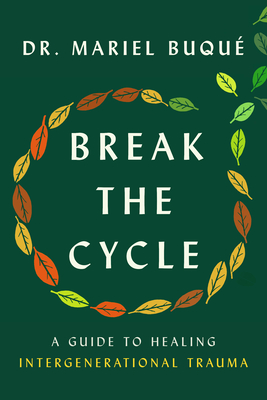
Break the Cycle: A Guide to Healing Intergenerational Trauma
From Dr. Mariel Buqué, a leading trauma psychologist, comes this groundbreaking guide to transforming intergenerational pain into intergenerational abundance. With Break the Cycle, she delivers the definitive guide to healing inherited trauma. Weaving together scientific research with practical exercises and stories from the therapy room, Dr. Buqué teaches readers how trauma is transmitted from one generation to the next and how they can break the cycle through tangible therapeutic practices, learning to pass down strength instead of pain to future generations.
When a physical wound is left unhealed, it continues to cause pain and can infect the whole body. When emotions are left unhealed, they similarly cause harm that spreads to other parts of our lives, hurting our family, friends, community members, and others. Eventually, this hurt can injure an entire lineage, metastasizing across years and generations. This is intergenerational trauma.
This trauma is why some of us become estranged from our families, why some of us are people pleasers, why some of us find ourselves in codependent relationships. This trauma can be rooted in the experiences of ancestors, who may have suffered due to unhealthy family dynamics, and it can be collective, the result of a shared experience like systemic oppression, or harmful ingrained behaviors in a culture like the acceptance of physical discipline of children, or even a natural disaster like a pandemic. These wounds are complex, impacting our minds, bodies, and spirits. Healing requires a holistic approach that has so far been absent from the field of psychology. Until now.
Resources
-
- Cleveland Clinic: Vagus Nerve
- Massachusetts General Hospital: The Vagus Nerve: A Key Player in Your Health and Well-Being
- Psychological Inquiry: Emotion Regulation: Current Status and Future Prospect
- Cedars Sinai: Bolster Your Brain by Stimulating the Vagus Nerve
- Cell Reports Medicine: Brief structured respiration practices enhance mood
- and reduce physiological arousal
- Nature: Effect of breathwork on stress and mental health: A meta-analysis of randomised-controlled trials
- Psychiatry Research: Neuroimaging: Intergenerational transmission of psychological trauma: A structural neuroimaging study
- Children and Youth Services Review: The positive and negative aspects of parentification: An integrated review
- International Journal of Molecular Sciences: Epigenetic Echoes: Bridging Nature, Nurture, and Healing Across Generations
- Child Abuse & Neglect: Childhood emotional invalidation and adult psychological distress: the mediating role of emotional inhibition
- Journal of Cardiovascular Disease Research: Immediate effect of short duration of slow deep breathing on heart rate and blood pressure in healthy young adults
- The Gottman Institute: An Introduction to Emotion Coaching
- Affective Science: Maternal Emotion Coaching and Child Emotion Regulation: Within-Interaction Sequences in Early Childhood
- U.S. Department of Health and Human Services: Our Epidemic of Loneliness and Isolation
- Psych Central: How to Set Boundaries with Difficult People
2 Million Readers.
1 Life-Changing Newsletter
Simple and Straight-to-the-Point...
Just Like Mel.