Episode: 360
Married, Dating, or Single: The Best Relationship Advice You Will Ever Receive
with Terry Real

This episode will change the way you show up in your love life - whether you’re in a relationship, healing from one, or hoping to find the right one.
Today, Mel is joined by one of the most powerful voices in modern therapy: Terry Real.
Terry is a bestselling author, renowned couples therapist, and the founder of Relational Life Therapy. His private clients are some of the most famous people in the world - and in this episode, you're getting his most transformational insights for free.
This conversation is raw, practical, and packed with tools that will open your eyes and your heart. Mel shares vulnerable moments from her own 29-year marriage to her husband Chris, and Terry brings the kind of clarity that instantly changes how you think about yourself, your partner, and what love really requires.
This is a total reset on how you think about love, conflict, and connection.
Listen on:




Strength is about standing up for yourself and staying connected to the person you love. Most of us were only taught one of those.
Terry Real
All Clips
Transcript
Terry Real (00:00:00):
I'm not an empathic therapist. You want empathy? Oh, I'm sorry. You cracked. Patriarchy cracked. It doesn't mean there was something wrong with you. It means there was something wrong with what you were both trying to live up to.
Mel Robbins (00:00:16):
Terry Reel is one of the most sought after couples therapists in the world. His private clients pay $5,000 for a single session, is going to explain exactly why none of your relationships in the past have worked.
Terry Real (00:00:29):
Listen, we've never wanted more from relationships than we do right now. We want to be lifelong lovers, but we're trying to do that in the context of a culture that is not a relationship cherishing culture. There is a relationship technology. There's a set of skills that work better. It works better to ask your partner for what you want than to criticize them for what they're doing wrong. All relationships are an endless stance of harmony, disharmony, and repair.
Mel Robbins (00:01:02):
Most couples are in harmony and disharmony. Harmony and disharmony, but no repair.
Terry Real (00:01:07):
No repair because that's where the skills come in. Getting the love you want literally means being a pioneer. We are interconnected. We are interdependent. Healthy self-esteem comes from the inside out. You have worth, you have dignity because you're here on this planet, you're a human being no better or worse than anybody else. Remember that and have that give you courage.
Mel Robbins (00:01:37):
Please help me welcome Terry Reel to the Mel Robbins podcast.
Terry Real (00:01:41):
Oh my gosh, it's a thrill to be here and bless you and thank you for the good work you're doing for the world.
Mel Robbins (00:01:47):
Terry, right back at you. Bless you and thank you for the good work you're doing in the world and for the good work you're about to help us do in our conversation today.
Mel Robbins (00:01:58):
And here's where I want to start. How could my life be different if I take everything that you are about to teach me today after 40 years of wisdom and work and the things that you have learned and the truths that you know, how could my life be different if I take it all to heart and I apply it to relationships and to my day-to-day life?
Terry Real (00:02:24):
I'm going to tell you and listeners, viewers, the same thing I say to every single couple. I am inviting you on a rarefied path. It's demanding, it's sophisticated, it's skilled, and it leaves the norms of this culture in the dust. Listen, we've never wanted more from relationships than we do right now.
(00:02:51):
Gone. Our grandparents, even our parents, companion side by side, pay the bills, raise the kids, no passion, no communication. Fine. Stable, good enough. That's gone. We want to walk hand in hand on the beach. We want great sex in 70s and 80s. We want to be lifelong lovers, but we're trying to do that in the context of a culture that is not a relationship cherishing culture. We live in a patriarchal, and I'll go into that, individualistic culture that does not cherish relationships. I would like basic relationship skills taught in elementary school, junior high, high. We need to know how to pull off this new ambition of being lifelong lovers. Getting the love you want literally means being a pioneer. If you're a heteroman, it means moving into vulnerability, which means deconstructing masculinity itself. Masculinity means being invulnerable. You open your heart, you are redoing what it means to be a man.
(00:04:09):
As we were speaking, standing up for yourself, not with shrillness, but with love and power. It's brand new work for women in this culture. As a people, we all need in our lives to be pioneers. We don't live relationally in this culture. We are individualistic and we are patriarchal, meaning the basic model is dominance.
(00:04:41):
We control. We need to trade the dominance model in for the reality of our biospheres. We are interconnected. We are interdependent. If we stay on the dominance model, we will fry this planet. What you're doing in your living room is exactly the same work we need to do across this globe in order to render it a place our grandchildren will want to live in. It's a great ambition. I like to say we have file ambition and hamburger skills we need to catch up to ourself.
Mel Robbins (00:05:26):
I love that you said skills. So there are skills that we can build to have better relationships. And you did those say they were demanding.
Terry Real (00:05:38):
They are demanding. One of the great lies is that a long-term relationship is supposed to be spontaneous. There's lip service about having to work on it. But let me ask you a question.
Mel Robbins (00:05:50):
Yeah.
Terry Real (00:05:51):
How many times have you heard that relationships take work?
Mel Robbins (00:05:54):
My whole life.
Terry Real (00:05:55):
Yeah. Anybody ever tell you what it was?
Mel Robbins (00:06:01):
Actually, no.
Terry Real (00:06:02):
Of course not. And that's where I come in. There is a relationship technology. There's a set of skills that work better. For example, and we'll go over it. But just one example. It works better to ask your partner for what you want than to criticize them for what they're doing wrong. Listen, in our culture, the way we try and get more of what we want in our relationships is we share our feelings about how miserable we are, that you just blew it. That's how we try and get ... That's the worst behavioral ... You don't treat a dog like ... How about just punishing a dog every time they get it wrong? No. I talk about three steps of getting what you want. One, this is the important one. Dare to rock the boat. We're going to talk about that.
(00:06:54):
Dare to tell the truth, but have to do it skillfully. Two, once your partner's listening, help them out. Teach them what you want. I would rather you do it this way than that way, honey. Honey, with love. And then three, when they start to give it to you, reward them. Don't criticize them. Well, you did a half-ass job. Hey, you did a half-ass job. Isn't that great? Let's get the other cheek on board while we're at it.
Mel Robbins (00:07:28):
It seems so simple. Tell the truth. Teach your partner what you want and reward them when they do it, even if it's a half-assed job.
Terry Real (00:07:37):
Yeah. That's the best way of getting them to do more. Criticizing them for what they're doing wrong is about the worst way of trying to get them motivated to give you more. But we don't know these basics in this culture. I'm a family therapist for 40 years. The father of family therapy was Gregory Basin, the husband of Margaret Mead. And Basin's whole work, the birth of family therapy, is what he called correcting humankind's philosophical mistake, which is that we stand apart from nature and we can control it.
(00:08:14):
Both wrong. And by the way, apropos of the let them theory, control can be one up. That tends to be more traditionally male. Sit down, shut up and do what I tell you. Control can also be upregulating from the one down. That's codependent. That's enabling. That's trying getting your partner to ... That's traditionally more feminine under patriarchy. Intimacy, here's one of the first things I want to say. To really move into the intimacy we won means nothing less than moving beyond traditional gender roles for all of us. Women have to move out of resentful accommodation, control, enabling. That's what your book is all about. And my generation's early feminists shifted from the one down traditionally feminine role to the one up traditionally masculine. I call that individual empowerment. I was weak. Now I'm strong. Go screw yourself.
Mel Robbins (00:09:21):
Yes.
Terry Real (00:09:22):
No, I was weak. Now I'm strong. Let's work together. We're a team. I love you. I call that relational empowerment. And in our culture, man, that is new news. And therapy, 12-step sponsors, women's groups, men's groups, all individual empowerment. I wouldn't put up with that if I was you. Well, that's easy to say. How about roll up your sleeves, you love each other. How are you going to make this
Mel Robbins (00:09:51):
Work together? So there were so many things you just said that I want to dig into. I love this idea of relationship technology and skills that we can build. I also love that you're starting from a place of this larger container that we're all in, which is culture. I also appreciate the fact that the traditional gender roles, that a quote, man is supposed to act this way, a woman's supposed to act that way, that those are leading to a lot of dissatisfaction in relationships on both sides. And there was something that you said that I want to make sure we unpack. And that was the term resentful
Terry Real (00:10:37):
Accommodation.
Mel Robbins (00:10:38):
What does that mean?
Terry Real (00:10:40):
Ask any woman on the street.
Mel Robbins (00:10:41):
Well, I know what it means, but I ...
Terry Real (00:10:44):
Well, what did it mean in your life?
Mel Robbins (00:10:46):
So resentful accommodation was ... The biggest example that I can think of is that when we were in a massive financial crisis, Chris cratered and his confidence in himself, his ability to believe in himself, the sense that he had failed as a husband, as a father to provide, that he had lost people money. As he was collapsing, I became more and more resentful because I felt like it was my job to then step up and save us and do what I thought should have been his job. Again, traditional gender roles, that he's supposed to be the one that's the breadwinner. I'm supposed to make some money that's our fun money. And when that didn't work-
Terry Real (00:11:46):
You both cratered.
Mel Robbins (00:11:47):
We both cratered.
Terry Real (00:11:48):
The whole marriage cratered.
Mel Robbins (00:11:49):
Yes. And so the resentfulness comes from that thing of, I thought it was going to be this way and I think you owe me something and now I'm pissed. So now I'm going to go do this thing and go make the money and get three jobs and do what I need to do. And now I'm mad because when I come home, the laundry's still there and all this stuff is still there. It probably is a lot of the tone that you hear when you're sitting with couples.
Terry Real (00:12:19):
Yeah.
Mel Robbins (00:12:19):
And the interesting thing is that if I look at your three things, tell the truth about what you need, listen and teach somebody what you want and then reward them. And it seems so simple, but when you're caught in that cycle of the emotion of all of it and you start to pull away from each other, and that distance comes in, I think this is the heart of what you help people do.
Terry Real (00:12:48):
Well, I mean, I don't mean to be heartless, but I would look at the two of you and I go, "What a great opportunity." Which is not ... I'm not an empathic therapist. You want empathy. Oh, I'm sorry. No, look at how you both grew and you cracked. Patriarchy cracked. One of the first things I have to teach people, and I'd love people to listen to this, is healthy self-esteem, which is rare in our culture. Healthy self-esteem comes from the inside out. You have worth, you have dignity because you're here on this planet, you're a human being, no better or worse than anybody else. An unhealthy self-esteem comes from the outside in. And for many men, it's performance-based. I have worth because of what I can do. I have worth because of how much I earn. And for many women, it's other based. I have worth because you think I do.
(00:13:47):
And that cracked for both of you. You were going to be taken care of by Prince Charming, but Prince Charming was drinking himself down the toilet and depressed as hell because his performance base esteem had cracked. So you know what? It doesn't mean there was something wrong with you.
(00:14:07):
It means there was something wrong with what you were both trying to live up to and it didn't work.
Mel Robbins (00:14:12):
Yeah.
Terry Real (00:14:13):
The problem is ... Okay, so what was going on? This is one of the great things nobody gets. All relationships are an endless dance of harmony, disharmony, and repair. That's what you and Chris lived through, big time.
Mel Robbins (00:14:32):
All relationships are an endless dance of harmony, disharmony, and repair.
Terry Real (00:14:38):
That's correct.
Mel Robbins (00:14:39):
And here's what I'm going to guess, because as you're listening right now to Terry, as you're watching this on YouTube, first of all, I want you wherever you are, whether you're single, whether you're heartbroken, whether you're in a marriage that feels like roommates, whether you're recognizing the resentment that is coming up in your relationship, Terry is asking us all to look at where you're at as one giant opportunity. And when you say all relationships are an endless stance of harmony, disharmony, and repair, I'm willing to guess based on my own experience, Terry, being married 29 years, that most couples are in harmony and disharmony, harmony and disharmony, but no repair.
Terry Real (00:15:32):
No repair because that's where the skills come in and we don't know them. But also two things. First of all, our culture doesn't even acknowledge the disharmony to begin with. A good relationship is all harmony. That's what you thought when you were young.
Mel Robbins (00:15:48):
That's true.
Terry Real (00:15:49):
And you were bitterly disappointed.
Mel Robbins (00:15:51):
Yes, and aimed it right at him.
Terry Real (00:15:52):
Well, of course he failed you, but you picked him. I'd like to say we all marry our unfinished business.
Mel Robbins (00:16:03):
Whoa. Hold on. We all marry our unfinished business.
Terry Real (00:16:09):
You got it. You know what? Young Mel could have had a guy that would have done everything she wanted him to do. I guarantee you, there are guys you dated who you would not have gone through this crisis with. They did not blip on your screen. I call this the mysticism of marriage.
Mel Robbins (00:16:30):
The mysticism of marriage?
Terry Real (00:16:31):
Yes. We have the opportunity to heal our deepest wounds. Not. Falling in love means, oh yeah, this person's going to give it to me. I'm going to be healed. They're going to give me everything I didn't get. Good luck. A real relationship comes. I like to say when you realize your partner is, here's my quote, "Exquisitely designed to stick the burning spear right into your eyeball." That's the crisis. That's not a bad relationship. That's a real relationship. The question is, now what? Are you just going to repeat the same old, same old? That's hell. Or are you going to wake up and do something different? The crisis can wake you up if you allow it, but you have to do it. And so there's a lot that goes into why we don't wake up, how to wake up. And if we do stay awake, what the hell do we do then?
Mel Robbins (00:17:32):
What does unfinished business mean?Because it's true. The person that you're in a relationship with has an uncanny way to get under your skin, piss you off, frustrate the hell out of you. You love him, but you want to kill him at times, right?
Terry Real (00:17:50):
Yeah.
Mel Robbins (00:17:50):
Definitely want to change him.
Terry Real (00:17:51):
Yeah.
Mel Robbins (00:17:52):
But what does unfinished business mean exactly for us?
Terry Real (00:17:57):
It means that you are now exactly in the childhood wound that that son of a gun that you picked was supposed to never put you in. You have been fundamentally betrayed. You are back, you're four, you're with your crazy family and your partner is just as chaotic, it turns out as your dad was. Your partner is just as betraying as your mom was. Whatever the wound is, all of a sudden it's in your face and that's not what you signed up for and you hate that son of a gun. You are talking to the guy. My favorite quote is normal marital hatred.
Mel Robbins (00:18:45):
Normal, marital hatred.
Terry Real (00:18:46):
Normal, marital hatred. Fight. God. And I got to tell you, I've been around the world talking about normal marital hatred for four ... Not once has anyone come backstage and said, "What do you mean by that?"
Mel Robbins (00:19:03):
You just don't say it next to the spouse you're sitting next to, right?
Terry Real (00:19:06):
But we do.
Mel Robbins (00:19:06):
But you feel it.
Terry Real (00:19:07):
We do. There is a part of me, nice to say a part of me. There's a part of me that hates you right now. Yes. Okay. Here's why. But more important, here's what we can do to get the hell out of this thing together. Let's hold on.
Mel Robbins (00:19:25):
So if we just take these ... I'm just going to keep building here. So wherever it is that you are in that never-ending dance in the relationship, that the partner that you're with or the relationship that just ended offers you the opportunity to deal with unfinished business. And the opportunity and the unfinished business is that in every single relationship that you're in, your childhood crap-
Terry Real (00:19:58):
Comes up. ...
Mel Robbins (00:19:58):
And their childhood crap comes up.
Terry Real (00:20:00):
Comes up.
Mel Robbins (00:20:01):
And so is it safe to say that when you look at the person that you're in a relationship with as an adult, that you really are looking at not the adult version, but really I should be thinking about Chris as here's the little eight-year-old version of Chris, and now he's my husband.
Terry Real (00:20:19):
It depends on who's there.
Mel Robbins (00:20:20):
Who's who?
Terry Real (00:20:22):
Who's there? As a therapist, my most critical question is not what are the stressors. It's not even what's the pattern. The most critical question, which part of you am I speaking to? We're talking right now. My wise adult brain is talking to your wise adult brain.
Mel Robbins (00:20:46):
Yes.
Terry Real (00:20:46):
Prefrontal cortex doesn't develop until 26 years old. When you get trauma triggered, when Chris betrays you, when Belinda betrays me in exactly the way I hired them to never do, God damn it, I get flooded. I get trauma flooded. And then what comes up is what we call the wounded child part of you. Very young. Just cry, cry, cry. Rage, rage, rate. Between this very immature part of the brain, and it's subcartical, it's a different part of your brain. And this very mature part of the brain is what I call the adaptive child part of you. And that's what I work with. The adaptive child part of you is the you that you learned to be growing up in that crazy family. Fight, you know that knee-jerk survival.
Mel Robbins (00:21:39):
Yes.
Terry Real (00:21:39):
Fight, flight, or fawn, which as an adult means fix. Fight. Screw me, screw you. Flight. I'm shutting this down. And fix. Oh my God. Oh my God, you're upset. Let me ... It's not working on things from mature place. It's an anxious, over-functioning is what you write about.
Mel Robbins (00:22:00):
Yeah.
Terry Real (00:22:01):
So fight, flight, or fix. It's in knee-jerk. It's automatic. We think as an adult. It does okay out in the world often, but it makes a mess of your relationships. So what makes life difficult is you're in harmony, you're in a wise adult. You get into disharmony, that prefrontal cortex out the window. And now it's automatic knee-jerk survival and you do what you did as a kid and it doesn't work. And the more you do it, the more it doesn't work, the more frustrated you get, not with you, but with your partner. You have to take a breath. Take a breath. The first skill we teach people now is what I call relational mindfulness. When you're flooded, when you're triggered, take a break, walk around the block, take 10 breaths. Because what happens is when you move from harmony into disharmony, you get wounded.
(00:23:06):
And then most of us have about 10 seconds worth of tolerance for that. We don't stay in that wound and we move into our automatic habitual response and it doesn't work. Remember I said you're Mary, that's healing? The healing comes when you can pull yourself out of that automatic subcortical part of the brain and wake up. I call it relational mindfulness. Okay. I also call it remembering love. Okay. He's not the enemy. He's my guy. I don't hate him. I love him. We're struggling. What the hell do we do? I don't know, but let's talk about it. When you're there, then you can use the skills. But the first skill is getting into the part of you. I like to say other therapies teach you skills. What I've created, I call it relational life therapy, deals with the part of you that won't use them.
Mel Robbins (00:24:07):
Oh my God. Well, I once heard somebody say that one of the reasons why oftentimes therapy can help you really be aware of things and help you understand what's happening. But when you're talking to a therapist or a doctor or even a friend or you and I having a conversation right now, you are using your prefrontal cortex. That's right. I'm present. I'm not stressed out right now. I'm not in fight or flight. You're not pissing me off. So I'm in the wise adult part of my brain. And so you and I may talk. Okay. Next time I come home from traveling for 10 days and I walk in the house and there are dead flowers in dirty water sitting in the middle of the island in the kitchen.
Terry Real (00:24:48):
There you go again.
Mel Robbins (00:24:50):
Which floods me. That's right. And I think, how many times did I? And nobody knows that I'm coming back? Does nobody know that I care? I go right into that, which I'm sure if Chris is in the next room and he hears the volcano erupting that is the wounded Mel Robbins, he probably shuts down.
Terry Real (00:25:12):
It's not the wounded Mel Robbins because you don't go to Chris and go, "My feelings are hurt that I come home and those flowers are dead. I don't feel cared about. " No.
Mel Robbins (00:25:26):
Why would I do that? When I can take a photo and send a passive aggressive text message. Why would I do that, Terry? When I can dump the flowers out in the sink loudly and then throw the things in the trash as if I'm sending anger signal waves. This was an old dynamic between us.
Terry Real (00:25:48):
Well, and a lot of other people, my marriage too.
Mel Robbins (00:25:51):
So pull apart that-
Terry Real (00:25:53):
Well, when you're in the hurt, I feel abandoned. I feel uncared about, and we could go into your childhood, but I'm sure that that has resonance. But like all of us, you have about two seconds worth of tolerance for that helplessness and vulnerability. And you go from the one down to the one up. You go from shame, helplessness, not cared about to anger, indignation. What kind of person does that? And what's devilish about that is you feel better. It works.
Mel Robbins (00:26:32):
Because I think why does it work?
Terry Real (00:26:34):
Because grandiosity feels good. Shame feels bad. The wound feels bad. The adaptation feels good. It works. We're not so ... Look, we move into these defensive moves, self-medication, rape, affairs. They make a mess of our lives, but we're not so stupid that we move into stuff that feels bad. It feels good. Grandiosity feels good. That's one of my great contributions of my work. Grandiosity feels good. It just makes a hash of things. So you have to take a breath. You're a fighter. I'm a fighter. Go into the fighter.
Mel Robbins (00:27:18):
Chris is a shutter downer.
Terry Real (00:27:19):
Okay. Well, there you go.
Mel Robbins (00:27:20):
Oh, he goes right into, "Don't talk."
Terry Real (00:27:22):
Bye.
Mel Robbins (00:27:23):
Goodbye.
Terry Real (00:27:23):
Yeah. The more you rage, the more I shut down.
Mel Robbins (00:27:26):
And then that makes you so frustrated.
Terry Real (00:27:28):
Well, then you raise more and then you shut-
Mel Robbins (00:27:30):
Yes. And then they shut down more. Or same thing. If you're a fixer, now I'm trying to fix this and now you're getting more angry at me, or now I'm just trying to solve this and now you won't even talk to me. And so-
(00:27:40):
I can see how you get stuck in a loop with somebody.
Terry Real (00:27:42):
Yeah. Everybody comes to me in a loop. The more, the more.
Mel Robbins (00:27:45):
Wait, hold on. Everybody that comes to you, Terry.
Terry Real (00:27:49):
Is in a loop.
Mel Robbins (00:27:51):
And it's this loop of your adaptation of what you did as a
Terry Real (00:27:56):
Kid. That's right. Mused his adaptation.
Mel Robbins (00:27:58):
Means his adaptation as a kid. I want to read to you from your New York Times bestseller, us. This is page nine. And it's the chapter that is entitled Which Version of You Shows Up to Your Relationship. There's no redeeming value in harshness.
Terry Real (00:28:18):
Ah, yeah.
Mel Robbins (00:28:19):
I'm the harsh one. I'll own it. I have my tone. I'm a fighter. Yes. Let's take a look at just one of the immature qualities that are prevalent in our adaptive child.
Terry Real (00:28:33):
Yes.
Mel Robbins (00:28:34):
Harshness. I tell my clients that if they walk away from their sessions with me with just this one concept, they will have spent their therapy money well. Here it is. There is no redeeming value whatsoever in harshness. Harshness does nothing that loving firmness doesn't do better.
Terry Real (00:28:59):
That's a revolution. That's life-changing. And by the way, harshness between you being harsh to somebody, no value. Allowing them to be harsh to you, no value. And watch this. You being harsh to you. No value.
(00:29:21):
How many of us think, well, I have to be firm with myself in order to whip myself and ... Think about the way we deal with kids on a good day. You don't have to be harsh to be firm. Be firm. I'm 75. I like to tell my clients, at 75, I have a deal with the universe. If it's not kind, I'm not interested. And that's whether it's me talking to you or me listening to you or me talking to me. That adaptive child part of me is very harsh. I grew up a violent father And I was very violent between my ears for decades. Nowadays, that harsh critic, I know it's just my little teenage fighter kept me alive. Okay, little 17 year old shit kicker. Don't let nobody take advantage. Okay, got it, pal. You may have something to say to me and I'll listen, but you got to say it like you're on my side.
(00:30:29):
Take that in. Say it like you're on my side. Then I'll listen.
Mel Robbins (00:30:35):
When you start to have this awakening that, oh, I do that, I'm doing this, or they do that, or do the other thing, what's the next step?
Terry Real (00:30:43):
Take a break.
Mel Robbins (00:30:45):
Take a break.
Terry Real (00:30:47):
Stop it. Take a break. Duck in. I deal with all these tough-ass guys. I mean, NFL players, they're ducking into the bathroom, putting their little five-year-old boys on their laps and talking to them five, six times, literally five, six times a day. Take a break. Relational mindfulness. Come out of that reactivity. Remember the person is not 14 feet tall with five arms. They're your friend. They're your lover. They're an idiot just like you are. No better or worse. Calm down. Okay. Now, go back in the fray and use a skill, but don't try it until you're centered. First step is getting centered.
Mel Robbins (00:31:30):
And how do you bring up difficult topics?
Terry Real (00:31:35):
With love. Who does that?
Mel Robbins (00:31:41):
And how do I do that? Let's say that somebody's let their health go or that they're not motivated or they are not getting help for their depression or they seem to have started isolating and they're not seeing their friends anymore. How do you bring that up? And it's a difficult topic and it's something that has kind of led to standoffs or arguments and you just don't know how to even bring it up without the other person feeling attacked or shutting down.
Terry Real (00:32:20):
Well, you do your best. And you could be taking a page from Mother Teresa and they still feel attacked because they're in their adaptive child and they feel attacked if you say goddamn anything to them. And that's not your responsibility, it's theirs, but you do your best. So tenderness works better than harshness. Honey, sit down. Let me take your hand. These are the things I'm noticing. I'm worried about you.
(00:32:51):
This, this, and this, give them the data, this, this, and this. I make up, not you are, I make up, that you're depressed these days. And I think it would be good for all of us if you did something about it. Look, I wrote the book on male depression back in the '90s. It was the first book ever written. And what I said, and NIH did a public service campaign about male depression, and I said, "If you want to help depressed men, aim your data at the women. This is not a moment. And this is our individualistic culture.
(00:33:30):
Oh, he needs to call the doctor." Yeah, well, good luck with that. How about I'll try calling the doctor, I'll get him in my car and we'll drive together. And if that doesn't work, how about this? We're going to go to a couple's therapist because I'm concerned about your drinking or your anger or whatever it is I'm concerned about. We've tried to talk about it. I haven't found a way to talk to you about it. We need help. So even if you think it's their problem, go to a couple's therapist and put it in front of them.
Mel Robbins (00:34:04):
Well, as I'm really listening to you, there are no problems that are their problems because every problem is our problem.
Terry Real (00:34:15):
Your relationship is your biosphere. We're not above it. We're not below it. We're in it, baby. And it's in our interest to keep that biosphere healthy.
Mel Robbins (00:34:29):
How do you shift from me versus you to us versus the problem, especially in situations where the problem is you're drinking, or the problem is you're not motivated, or the problem is you've let yourself go, or at least that's what you think you think the problem is with them.
Terry Real (00:34:53):
Well, first have some humility is what I think or even more to the point. This is what I'm not happy about. This is what's not comfortable for me. Look, I'm working, you're not. I come home, you're on the couch drinking a beer. The place is a mess. I got to tell you, Bill, I don't mind being the woman going out and being the breadwinner, but could you at least be a good wife when I get home? I mean, this sucks. Keep it personal.
Mel Robbins (00:35:25):
That sounds a little judgemental.
Terry Real (00:35:26):
Well, but keep it personal.
Mel Robbins (00:35:29):
Okay.
Terry Real (00:35:29):
Keep it humble. Keep it real. This is hard for me. You may not be uncomfortable with dot, dot, dot, but I'm uncomfortable with it. We live together. Can we talk about what needs to happen here?
Mel Robbins (00:35:45):
Is there a way to fight constructively?
Terry Real (00:35:48):
Sure.
Mel Robbins (00:35:50):
How do you do it?
Terry Real (00:35:53):
This is what happened. This is what I told myself. This is how I felt and this is what I want. But listen to this.
Mel Robbins (00:36:01):
Okay.
Terry Real (00:36:03):
That third step, this is what I felt.
Mel Robbins (00:36:05):
Yeah.
Terry Real (00:36:06):
Here's a tip.
Mel Robbins (00:36:07):
Tell me.
Terry Real (00:36:08):
Take the feeling that comes to you first and put it last.
Mel Robbins (00:36:14):
Okay. Anger. So if anger is the thing that comes up for me first.
Terry Real (00:36:20):
Yeah. Last. If you lead with big, strong, check into your vulnerability. What's underneath that? Lead with that. I come home to dead flowers, you son of a bitch. What kind of person? No. I come home to the dead flowers. I don't feel cared about. It's kind of lonely. I felt lonely. I felt helpless. I felt uncared about and I felt angry. Last, not first. And Chris will have a lot easier time hearing you. And conversely, if you're codependent.
Mel Robbins (00:37:08):
And how do you know if you're codependent? Because I think that's one of those words that I feel like it's out there and I don't even know that I really understand what codependence.
Terry Real (00:37:17):
You call it overfunctioning.
Mel Robbins (00:37:19):
Overfunctioning?
Terry Real (00:37:20):
Yeah. It's that anxious. It's the fixer. Anxious.
Mel Robbins (00:37:24):
So codependent means that you only feel okay when everybody around you is okay?
Terry Real (00:37:31):
That's right.
Mel Robbins (00:37:32):
Oh.
Terry Real (00:37:33):
And you're afraid to rock the boat.
Mel Robbins (00:37:34):
Oh. Oh.
Terry Real (00:37:37):
Yeah, that's what that means.
Mel Robbins (00:37:39):
Okay.
Terry Real (00:37:40):
And so look, your relationship is your biosphere. If you're a one-up fighter like you and me and Belinda, your biosphere needs you to come down off your high horse. My feelings were hurt. Oh, your biospur is happy with that. If you're a one down fixer, don't set daddy off. Your bias fear needs you to stand up and find some spine.
Mel Robbins (00:38:06):
How do you do that? What is your advice to the person that's listening and goes, "Well, that is me. I need to make sure that everybody's okay. I'm always walking on eggshells. Everybody else comes first, but then of course I'm exhausted and resentful because nobody's taking care of me. " How do I stand up? How do I start to change that adaptive fixing little kid in me?
Terry Real (00:38:30):
Yeah. Well, turn to that kid because you learn to run around and fix everything as a little girl or a little boy. What would've happened if you hadn't done that in that family you grew up with? The odds are all hell would've break him. We always respect the intelligence of the adaptive child. You did what you had to do. Good for you. It's time to retire. You're not that little girl. Chris is not the family you grew up with. You can do something. Can I tell you a story?
Mel Robbins (00:39:08):
Yeah, please.
Terry Real (00:39:09):
This is my classic adaptive child story. It's absolutely true story.
Mel Robbins (00:39:13):
Okay.
Terry Real (00:39:13):
A couple comes to me on the brink of divorce. He's a liar. Lies about everything. She says to him, "If you ask him what color shoes he has on, he'll lie and say he has neakers." I mean, he'll lie. And therapists will ... I walk in the office and I go, "Hi, Bill. The sky's blue." He goes, "Well, he's not going to tell me it's blue. He won't give it to me. " So I get right away what his deal is, the adaptive child. He's an invader. Nobody's going to get him. All right. Then I think, okay, the adaptive child is adapting to someone. There's someone on the other end of that seesaw. So I go, "Who tried to control you growing up?"
(00:39:56):
His father, true story. Military man, how he said, how he ate, his friend. What did you do with this controlling father? He looks at me and he smiles. That's resistance, that smile. He says, "I lied." Dad said, "Don't play with Henry. I played with Henry. I told him I played with John. Smart boy. Good for you. Always respect the strategy that you learned as a kid, but retire them. You're in the backseat. Wise adult is here today. I can take care of this better than you can. " Literally, when Belinda and I are having a fight, honest to God, and she's coming at me with anger because that's what we do. It could be me. I have little Terry. I've worked with an eight-year-old. I put him behind me. Between her anger and you, little Terry, is me. My big adult body. We have a deal.
(00:41:00):
You're protected back there. Her rage stops with me. Doesn't hit you. Here's your part of the deal. I deal with my wife, not you. You'll make a mess of it. Okay, so here's my liar. So smart boy. By the way, you're not five anymore and your wife isn't your dad. See you. True story. Two weeks later, they come back, hand in hand were cured. And they were, Mel. I said, "Okay, there's a story here. Tell me. " Over the weekend, she sends him to the grocery store to get 12 things. True to form, he comes back with 11. She says, "Where's the pumper nickel?" And he's going to lie. Of course he's going to lie. He doesn't want to get chewed out by his father. And he said, "Every muscle and nerve in my body was screaming to say they were out of the pumper nickel, which was not true.
(00:42:00):
This moment, I took a breath. I thought of you, Terry. I was lending him my prefrontal cortex. We can do that for each other. I thought of you. I looked my wife in the eye and I said, I forgot the goddamn pumper nickel. That's absolutely true, Mel. She burst into tears. And she said, I've been waiting for this moment for 25 years. That's recovery.
(00:42:27):
Come out of that adaptive child into the prefrontal cortex, tell the truth, use a skill.
Mel Robbins (00:42:36):
Wow. I can see how this relates to that something you said in the very beginning where when you fall in love with somebody, you think you're going to be rescued from the behavior in yourself that you feel stuck with, the rage or the shutting down or the lying or the walking on eggshells.
Terry Real (00:43:06):
Yeah. Whatever you learned to do as a kid.
Mel Robbins (00:43:08):
Whatever you learned to do as a kid.
Terry Real (00:43:08):
Whatever you needed to do as a kid.
Mel Robbins (00:43:11):
Yep. And so I can see how in the absolute bliss of a new relationship and you're just falling, falling, falling, you believe that it's always going to be like this. And sure enough- Sure enough. What comes up is the opportunity to do the work, to become the wise adult and not have the adaptive child and all of the default behaviors that happen when you get flooded emotionally or when you get triggered. And when you really think about the person as it's their adaptive child in the room with your adaptive child when you guys are emotionally flooded. You got it. And any single thing, whether it's, I forgot the fucking pumper nickel bread, or it's the, and now she's going to be a bitch, so I'm going to lie, which is what I did as a kid. Or it's the tiptoe walking or the raging or the venting or the being right or whatever.
(00:44:17):
Every single one of those things, whether it's triggered by Amazon boxes or it's triggered by pumper nickel, or it's triggered by their drinking, or it's triggered by absolutely anything.
Terry Real (00:44:30):
Anything.
Mel Robbins (00:44:31):
It's the same cycle. It's the same wound. It's the same emotions and you're going to be trapped there forever.
Terry Real (00:44:38):
And here's where your work is genius. What we do when we're back in the old wound is we redouble our efforts to get that son of a gun to give us what they were supposed to give us. That's why we married them. Or we react out of that adaptation when they don't give it to us. We fight, we flight, we do whatever we do. Here's the new news. Take a breath. They ain't going to give it to you. Watch this. How about if you give it to you? You were abandoned as a kid. You come home, dead flowers, abandonment comes up. Not 50-year-old Mel, four-year-old. Mel. You turn to that four-year-old girl. Chris may be abandoning you right now, but I'm not. I'm here. I got you, kid. I like to say maturity comes when we deal with our inner children and don't force them off on our partners to deal with.
Mel Robbins (00:45:41):
Oh, I love that. Maturity comes when we deal with that inner child, that adaptive self that needed to do whatever it does, whether it's the anger, whether it's the righteousness, whether it's the shutting down, whether it's whatever it is, when we deal with that person.
Terry Real (00:45:58):
Love you kid. When the inner child, which means when you're reactive.
Mel Robbins (00:46:04):
Yeah. So talk about emotional flooding and emotional overfunctioning. Is that the same thing as the adaptive child?
Terry Real (00:46:11):
Well, yeah, first you get flooded, that's the wounded child. And then you get yourself out of that flooding by moving into your adaptive child.
Mel Robbins (00:46:20):
Gotcha. So let's just take it as fact.
Terry Real (00:46:24):
Well, you walk in and the flowers are dead.
Mel Robbins (00:46:27):
Yes.
Terry Real (00:46:28):
There's a little mel that was not taken care of, and that's what gets triggered.
Mel Robbins (00:46:35):
Yeah.
Terry Real (00:46:36):
And you're not your adult self feeling let down in a moderate way. You're that four or five-year-old little girl who's never dealt with the way she should have been. And you're flooded, but you don't like that feeling of helpless. So you move from helplessness to attack from one down to one up. These are the roots of violence for all of us. And the one-up feels better. It gets you out of that helplessness, but it makes a mess of your marriage. So you have to think your way down from the one-up.
Mel Robbins (00:47:12):
Well, recognizing that you're just emotionally flooded is important. Recognizing that you're now in react, react, react mode, which is why taking that breath and consciously pulling yourself back into the wise adult.
Terry Real (00:47:26):
Yes. Which may mean did you take a 20-minute walk around the block? You have a contract with your partner. Look, hey, I'm flooded. See you in 20 minutes. And man, your partner says it. Let damn go. Don't corner an animal. Okay. Yeah.
Mel Robbins (00:47:44):
Don't corner an animal.
Terry Real (00:47:46):
No, you don't want to do that.
Mel Robbins (00:47:48):
It's incredible. Why does emotional over-functioning and shutting down ... Why do these patterns tend to attract people into a partnership?
Terry Real (00:48:02):
Because it's your unfinished business. So may I?
Mel Robbins (00:48:06):
Yes, please.
Terry Real (00:48:07):
All right. Here we go, Mel. Ready?
Mel Robbins (00:48:08):
Yeah.
Terry Real (00:48:09):
All right. So fighter Mel, your adapter child is what I would call one-up and boundaryless. You're one-up, you're grandiose.
Mel Robbins (00:48:17):
Yep.
Terry Real (00:48:17):
You're attacking, you're righteous. He's a dick.
Mel Robbins (00:48:19):
Yes, 100%.
Terry Real (00:48:21):
But underneath that are the feelings of abandonment, aloneness, which is your childhood wound.
Mel Robbins (00:48:29):
Yeah.
Terry Real (00:48:30):
My friend and colleague Gabomarmate says, in relationships, you don't see the wound to see the scar. You don't see the wounded child, you see the adaptive child. So you come home, dead flowers. Little girl, Mel, not cared about the way she should have been. And if you were to sit with her, she'd be crying. She'd be lonely, but you don't because that's painful. So you go one up into grandiosity, self-righteousness, attack. Now you're powerful, but you're making a goddamn mess of things. Take a break.
Mel Robbins (00:49:07):
And then you feel bad about it because you don't want to make a mess of things and you don't want ... Well, at least I do.
Terry Real (00:49:12):
You feel bad about it five minutes later.
Mel Robbins (00:49:14):
Yes.
Terry Real (00:49:15):
You have a hangover. Yes. But in the moment he deserves it. You're right. Let's go. And that's what this is all about. Then you take a break. Hold it. I'm about to lose my shit. See you or hold it. I'm going to shut down. Let me get myself adjusted and I'm going to come back and talk to you. Whatever the adaptation is. You got to sit with that little part of you. It's okay. He loves you. He's an idiot about the dead flowers, but he does love you. Come back. Don't ream him a new one. That's not going to work. Come back and talk to him about what's going on. But you have to be in your right mind. And that's the opportunity. The healing doesn't come when you get the son of a gun to give it to you. That's the dream. The healing comes when they don't and you deal with it.
(00:50:12):
Not the way you learned as a kid, but in a new way. That heals.
Mel Robbins (00:50:17):
Okay. That is the most important thing, in my opinion, that you have said, because you are now pointing at the source of power and healing. And one of the mistakes is that we are trying to get that from our partner and through our partner changing.
Terry Real (00:50:42):
Right.
Mel Robbins (00:50:43):
And what you just said is that the healing comes not from them changing. The healing that you need comes from you stopping yourself in that moment, taking a breath, not allowing all of the patterns of the past and the adaptive child to come in and fix or freeze or rage.
Terry Real (00:51:08):
And make a mess.
Mel Robbins (00:51:09):
And make a mess, but to just see it happening and then bring the wise adult to the room and respond in a new way. That is the healing.
Terry Real (00:51:21):
That's the healing. That's the opportunity.
Mel Robbins (00:51:24):
For somebody who tends to hold everything in, the baller, you see the thing that hurts your feelings. You feel the emotion that is worry or hurt or abandonment or the thing that you said, always take the first feeling, anger, resentment. Put it in the back. What's the feeling underneath it? For somebody that's bottling it up, bottling it up, bottling it up.
Terry Real (00:51:52):
They're feeling fear.
Mel Robbins (00:51:54):
What are they afraid
Terry Real (00:51:56):
Of? They're afraid that if they tell the truth and rock the boat, it ain't going to go well. And odds are they grew up in a family where it wouldn't have gone well. The adaptive child is not stupid. You learn to do what you goddamn needed to do back then, but you're not back there anymore. That's the beauty.
Mel Robbins (00:52:18):
How do you learn to communicate your feelings in these little moments instead of just putting it aside and putting it aside until you reach a breaking point?
Terry Real (00:52:31):
Well, you have to dare to rock the boat.
Mel Robbins (00:52:34):
This goes back to the three steps. Dare to rock the boat and tell the truth, listen, and then teach somebody what you want and reward them in a kind way when they do.
Terry Real (00:52:44):
And for those of you listening, it may be that your childhood trauma, we said you can have little injuries and having it after a child that's throwing things up, that's true. But you can also have big injuries, big. You can have grown up in a family where you learn not to tell the truth because if you did tell the truth, it would not be a good idea. Okay. That was then. This is now. It really helps to separate the wise adult from the adapter child.
Mel Robbins (00:53:16):
What does a healthy, connected relationship really look like in practice?
Terry Real (00:53:22):
Telling the truth to each other with love and being human. There are times Belinda and I are at each other, and I really wouldn't want a video camera recording what would sound like. I like to say to my clients, "Look, the skills I'm teaching..." Here's what I say. Every skill I ... I've been married for 40 years. Every skill I teach has been clinically tested. She's the clinic. Oh, God. And on those days, when either Belinda or God help us, if we both at the same time, lose our wise adults and just go with the adaptive child, we look just as ugly as you two. I say that to my patient. They love hearing graphics. I'm just like you. Use your skills as best you can. Expect the wheels to come off sometimes. Nobody's going to die. When they do, get back in your wise adult, make amends, apologize, own your shit, get back on track.
(00:54:28):
We're a biosphere. We love each other. Let's work this out.
Mel Robbins (00:54:32):
I can say every single fight, issue, breakdown that I have had in my 29 years of marriage, I can now 1000% see that it's this feeling of being alone and that it's all on me. And it is like freaking clockwork.
Terry Real (00:54:56):
Yeah.
Mel Robbins (00:54:58):
Once you see it, you will see it everywhere.
Terry Real (00:55:00):
Everywhere. And you know what? What a blessing. Maybe after this conversation, I want you to email me and tell me what a blessing it would be for you to come home. The goddamn flowers are dead. And instead of ripping his head off, which he then shuts you down, you say to him, "You know what, honey? Shoot me. I know you didn't mean it. I saw those dead flowers. I'm back in my little girl not being cared about. And it made me sad." See what he does then.
Mel Robbins (00:55:35):
Yeah. Well, I can also not get mad at him and I can also assume good intent. And I can also know that a lot of times he does remember. And this is something we fought about 10 years ago, so it sounds kind of funny to even be thinking about it now because it's not ... It's one of the ones that ... But the point is the little things become the big things because the little things are the source of bringing up-
Terry Real (00:56:01):
The little things resonate with what happened to us.
Mel Robbins (00:56:04):
So
Terry Real (00:56:05):
They take on bigger meaning.
(00:56:08):
But what you say is, I love talking to older couples and I ask them about their line. It had to be late, married 15. I said, "You guys seem happy. We are. " Tell me. Oh, the first 15 years were hell. Really? Yeah, horrible. I kept trying to change Harry. And then one day, this is absolutely true. And then one day I looked at him and I went, "Oh, that's Harry." Okay. Ever since then, we've been fine. There is a place for, I call it scanning for the positive instead of scanning for the negative. Be appreciative. Tell your partner what they're doing right instead of always harping on what they're doing wrong.
Mel Robbins (00:56:52):
So there are so many listener questions that we have, and I'd love to read one from a listener in Chicago. We've been together for 12 years. We love each other. There's no doubt about that, but if I'm being honest, it feels like the spark is gone. Same routines, same conversations, same habits, same ... There's no fighting, there's no big drama, but there's no real excitement or passion either. I don't even know what desire would look like for us anymore. It feels flat. And here's the part I'm struggling with. I want to bring that spark back, but I don't want it to be forced or fake. How do we actually reconnect with desire and intimacy after years together without pretending or going through the emotions?
Terry Real (00:57:40):
What makes you think they would be fake? Why don't you start off by saying to your partner what you just wrote to me? Why don't you tell the truth? Look, I did a whole book, audiobook, I called it fierce intimacy. Lean in and deal with each other. Most people don't. We stop. Because when we do, we're so unskilled, it doesn't go very well.
(00:58:01):
So we back off, we say we're compromising, but we're not ... We resent it. Distance grows. Sexuality dies. If you want to keep your relationship juicy, tell the truth to each other. Take each other on. Start with this. We're flat. Maybe you're okay watching TV every night, but I'm not. Let's go do ballroom. And then like, okay, you're flat. What are you going to do about it? You show up with a mariachi band. You go to the sex store and get some velvet chains. I don't know. What are you going to do to mix it up? Why are you waiting for your partner to do it? But tell the truth to each other. We stop doing that because we're very unskilled and when we do, it doesn't go well. We have to learn how to do it.
Mel Robbins (00:58:58):
Here's another question. I've been married for 11 years and I'm realizing I've become the critic in the relationship. I notice everything my husband does wrong. The socks on the floor, the way he loads the dishwasher, the tone when he talks to the kids. It's like I'm constantly scanning for what's off or annoying. And here's the thing. I don't want to be that way. He's a good man. I love him, but I rarely notice the good stuff until he points it out. Why is it that you only mention what I'm doing wrong? And he's right. I don't want to keep showing up this way. I just don't know how to switch out of this mindset. How do I stop scanning for what's wrong and start seeing what's good again? What's going on in this dynamic? Because I think that's really relatable when you got somebody picking on somebody all the time.
Terry Real (00:59:39):
Yeah, it's a form of control. I would say, "Who was the complainer in your family growing up on? Where'd you learn this from?" And there's an adaptive child in there that thinks that picking at him is going to be a good thing. And then the other issue is... Man, intimacy, this is scary. Vulnerability is scary.
(01:00:09):
Does it feel safer to be constantly nagging what's wrong than to open up and receive what's right? And that's so true for all of us. And the more damage you had as a kid, the more frightening it is. We fuss with each other because being close to each other in itself can be trauma triggering for us. It's scary to be vulnerable and close. You have to allow it. That's the piece I work with next. First, we deal with what you do wrong. We deal with where it came from. We give you the skills to do it different. Now, you have to receive it. And that's brand new for a lot of us. And it's frightening. I talk about miserable, comfortable, happy, uncomfortable.
Mel Robbins (01:01:07):
Let's talk about miserable, comfortable. What does that look like?
Terry Real (01:01:09):
It looks like the same old, same old. You could do it in your sleep, but you could do it in your sleep. You're perfectly comfortable there. Ooh. Chris, honey, when I came home and those flowers were dead, I was back in my family and I didn't feel very cared about. How's that feel? Fricking scary. That's how that feels. It's a lot more comfortable to go after them. Adaptive children, you're safe, you're comfortable. You could do it in your sleep. Wise adult? New. Courageous. Scary. Good. Go there. With help, with support.
(01:01:55):
12-step group, woman's group, but support that will support your relationship, not your individual power.
Mel Robbins (01:02:02):
What's so interesting is everybody wants love and wants to feel loved. And I'd never thought about it as a skill to allow yourself to be loved.
Terry Real (01:02:18):
Yeah. And it's hard. So when I'm working with a couple, partner A starts giving partner B what they want. Now we move into what I call transmission reception. Partner A is transmitting. How is partner B doing receiving? When your partner starts giving you what you want, do we fall in their arms and goes, "No, we don't. It's too little too late. You did it, but I had to ask you. " All these yes, buts. That's to protect ourselves from the vulnerability of being loved. Allowing our hearts to open, allowing the love in. That's scary. And the less love you had as a kid, the scarier it is to let yourself love and be loved as an adult. I have to tell you a story.
Mel Robbins (01:03:13):
Oh, tell me.
Terry Real (01:03:14):
About the nitpicker gal?
Mel Robbins (01:03:15):
Yeah, the nitpickers, please.
Terry Real (01:03:17):
I was doing a men's group and one guy floored everybody. This is a true story. He said, "My wife walked in today, told my admin, hold the phone." She had a picnic basket, laid out a picnic on the ground, champagne, a little smooching, packed up everything and left. All the other guys are like, "Oh my God, that's fantastic ." He looks at us all, true story. He goes, "It almost makes up for the way she chews her potato chips." You want to fuss with your partner's imperfection. They will give you ... It's like vision, endless opportunity to ... No, be brave. Open your heart. Be vulnerable. If you're a one down fixer, the vulnerability is standing up for yourself. That's what's scary. If you're a one-up fighter, the vulnerability is moving into the hurt. Be a human. But either way, open your heart, take some risks.
(01:04:28):
Intimacy is what we're born for and respect it. It's frightening.
Mel Robbins (01:04:35):
So is that story in the joke, an example of how somebody blocks out the love and intimacy?
Terry Real (01:04:42):
Yeah. Yeah. I did work with the great feminist psychologist, Carol Gilligan here. We would work together. And I called it Carol's invariant description. I'd be doing all this fancy cool. Sorry, Carol. She said the same damn thing every time. She'd look at a couple and she would go, "You know Bill and Julie, intimacy's really scary, isn't it? You guys were just close to each other. And then Bill, you brought up a fight from a week ago and Jill, you took the ... Now you're back in your corners, safe and miserable. Isn't it hard to just be in the naked vulnerability of loving each other and being close?" And every time, of course, it would be beautifully timed. Every time she would say it, they'd burst into tears and she was always right. It's scary to be intimate. It takes courage.
Mel Robbins (01:05:40):
I'm 34 and I'm realizing I have no idea how to be in a healthy relationship. I either give way too much, I overfunction, people please twist myself into the knots trying to keep everyone happy, or I do the opposite. I shut down, shut people out, convince myself I don't need anybody. I swing between the two. It's exhausting. It wasn't modeled healthy love growing up. And now that I'm older, I don't even know what healthy is supposed to feel like. How do I start figuring that out? What does a healthy relationship look like? And how do I learn to trust myself enough to build one?
Terry Real (01:06:14):
Well, I brought up Carol Gilligan. Here's one of my great quotes from her. I love this. You cannot love from the one down. That's running around, cleaning everybody's mess. You cannot love from the one up. Shut down. I don't care about anybody. Love demands democracy. So this person has to learn how to be in the biosphere. There's no relationship without voice. There's no voice without relationship. That's also Carol.
Mel Robbins (01:06:42):
Can you do this with yourself all day long? If work is pissing you off, if work makes you shut down, if a friendship makes you get angry?
Terry Real (01:06:55):
Yeah. Although what's interesting is we tend to be more in our wise adults with everyone but our mates and sometimes our kids, they just don't get at us in the same way. But yeah, your adaptive child's all over the place. We do consulting to teams that aren't working or-
Mel Robbins (01:07:13):
No, but I meant if she's single and so she's not in a relationship.
Terry Real (01:07:17):
She is in a relationship. She has a relationship. She's got parents, she's got friends, she's got siblings, she's got a dog. We're all in relationships and it's the same skills and the same work.
Mel Robbins (01:07:29):
Got it. So if the question is, I look at my track record and I do not trust myself and I don't know how to do this and it wasn't modeled. And you've already said, Terry, it hasn't been modeled for anybody and nobody teaches these skills. You can start applying absolutely everything.
Terry Real (01:07:48):
Now.
Mel Robbins (01:07:49):
Right now.
Terry Real (01:07:50):
Right now.
Mel Robbins (01:07:50):
Even if you're not in a romantic relationship right now.
Terry Real (01:07:54):
You're still in a relationship.
Mel Robbins (01:07:55):
Yeah, you're still in relationships. And so these are the tools that you can use for any relationship.
Terry Real (01:08:01):
This way of thinking relationally, not individualistically, and these tools that are telling the truth with love and non-harshness, but telling the truth, they're so different from the culture at large and they're so potent that doing them badly will transform your life. And here's the great news now. You can start doing them badly right now.
Mel Robbins (01:08:27):
Go ahead. Because it's such a disruption to the way we run around and pretend and lie and please and shove our feelings down and rage that simply trying to do these things badly, telling the truth, using I statements, not venting, not trying to be right.
Terry Real (01:08:47):
Your partner will be blown away.
Mel Robbins (01:08:49):
Well, you'll also be blown away.
Terry Real (01:08:50):
You should be.
Mel Robbins (01:08:51):
By yourself.
Terry Real (01:08:52):
It's a happier way to live.
Mel Robbins (01:08:54):
Well, I often joke, Terry, that people say that second marriages are really amazing. And I say that's especially true if it's with the same person. Wow. And I feel like the tremendous amount of work that I've done on myself and that Chris and I have done together, it feels like a completely different relationship because I feel way more peaceful.
Terry Real (01:09:16):
Yeah.
Mel Robbins (01:09:17):
And I was, I know you will say this is probably not true because we're all out of control when we don't understand that adaptive child and the behaviors that come out on automatic when you're emotionally flooded. But I felt so out of control with my anger, with my frustration, with my feelings of being alone, even though I'm married, that I thought it would always feel that way. And it's shocking how quickly you can start to apply these skills and feel more peaceful and in control and in harmony with yourself first.
Terry Real (01:09:59):
That's the joy.
Mel Robbins (01:10:00):
Yes.
Terry Real (01:10:02):
And you also get a better relationship. It's both.
Mel Robbins (01:10:06):
What happens? Can you speak a little bit about that feeling of your inner relationship and yet you're really lonely?
Terry Real (01:10:11):
I call that alone together.
Mel Robbins (01:10:14):
Alone together?
Terry Real (01:10:15):
Yeah, being alone together. And it's because you're not telling the truth and you're not getting through. That cliche of the couple at the restaurant that's sitting there with nothing to say.
Mel Robbins (01:10:27):
Oh my God, you see so many.
Terry Real (01:10:29):
Yeah. Well, here's what I say. It isn't that they have nothing to say because they have too much to say and no way of saying it. That's why they're sitting there inside them.
Mel Robbins (01:10:39):
If the person listening is feeling like, okay, I'm together alone, what am I going to do? I'm going to start telling the truth and then blow this whole thing up? Well- Isn't it better to just be together alone instead of blowing up my life?
Terry Real (01:10:58):
I mean, first of all, learn.
Mel Robbins (01:11:01):
Because I think that's the fear.
Terry Real (01:11:03):
Well, of course it's the fear. And if you go off like a seven-year-old adaptive child, what I call individual empowerment, I was weak, now I'm strong, go screw yourself.
(01:11:17):
The person me blow up. So getting through to somebody as an art, you have to learn how to do it. But even that is just maximizing your possibility. At the end of the day, it goes like this. First, learn some skills, do it well. But beating the person over the head probably has something to do with why they're not listening to you. Two, once you learn the skills and you do your best, if you're still not getting through, get help, get a couple's therapy and get a couple therapists who really helps, which many don't. Three, ready. If you're still not fully there, I have a tool. Should I stay or should I go? And I call this tool a relational wickening and it's a question. You ready?
Mel Robbins (01:12:15):
Yes.
Terry Real (01:12:16):
Am I getting enough here to make grieving when I'm not getting worth my while? Am I getting enough to make grieving what I'm not getting okay with me? You know what? Bill was a real playboy, a real lover, and he had partner after partner who swung from chandeliers. He's now married to a woman, one out of four, who has a sexual abuse history. She ain't swinging from chandeliers. She needs it slow and gentle. Does Bill miss the wild old days? Yes. That's okay. Is he going to trade her in for one of those crazy sex dolls? No, he loves her. I'm getting so much that letting go of what I'm not getting is okay with me. And if that's your answer, stop bitching and embrace what's good. If your answer is it's not okay with me, first stop is therapy and second stop is you're done. But don't keep living like a resentful victim. It's bad for everybody.
Mel Robbins (01:13:40):
I'm just letting that sit. Because it's easy to get yourself in a situation where you stay with the wrong person and you're right about how resentful you are and what a victim you are.
Terry Real (01:13:55):
Yeah. Why are you saying what the wrong person? First of all, your first shot is turning them into the right person, which I know goes against a little of what you've been saying, but you turn them into the right person by using your skills.
Mel Robbins (01:14:08):
Well, they don't even have an opportunity to be the right person if you haven't done the work.
Terry Real (01:14:13):
Of asking for the-
Mel Robbins (01:14:14):
Well, and also bringing the wise adult yourself to the relationship and then seeing who shows up when you're safe and when you're wise and when you are in the moment and calm and kind and asking for what you need.
Terry Real (01:14:31):
You totally got it. What does that mean they're the wrong person? And maybe if you change your behavior, guess what happens on the other side of the seesaw? Maybe. But why don't you give that a shot? Everybody who sees me as what I call an essentialist. What's wrong with my marriage? Them. What's wrong with them? Them, that's who they are. It's a true story. Well, Harry, whatever his name was, Combs. No sex in my marriage. Oh, I'm sorry to hear that. How long? Decades. Why? She's frigid. She's just a cold person. Whole family cold. Good. I bring in Mrs. Harry. No sex. No, of course not. Of course not. Yeah, you wouldn't want to have sex with him. He's a premature ejaculator, has been for decades. If I try and talk to him about it, he just flies into a rage. He has no interest in my needs.
(01:15:25):
And anytime I try and address it, it just gets ... Forget it. I bring in Harry. It's a true story. Harry, I've got great news for you. That sexless marriage you're in, you have something to do with it. Once you stop blaming the other person and start to see that it's a system, if it is, you change your behavior and then see what happens, but first change your behavior.
Mel Robbins (01:15:54):
So did they stay together?
Terry Real (01:15:55):
Yeah. They started having sex. She taught him how to be a better lover. I mean, this is where I come in. Harry, it's in your interests. Come down off your high horse. Let her teach you. You want her in bed with you? Make it worth her awhile. That goes back to make it worth her a while. Really? Okay. I will. Good. Do it. That's what most therapists don't do.
Mel Robbins (01:16:25):
Do you think any relationship can be repaired?
Terry Real (01:16:31):
No. And I'm not in the business of preparing every relationship.
Mel Robbins (01:16:35):
So what are some of the circumstances or lines in the sand for you that are important to say?
Terry Real (01:16:42):
In terms of non-starters, it goes without saying, but if you're physically in danger, if you're talking ... I don't ask people to tell truth to power when they're going to get hurt if they do it.
(01:16:58):
And they're unfortunately some reality to that. So we don't do couples therapy if there's a threat of domestic violence. If you're the victim of honest to God, physical threat, get some help, get some safety. That's not couples work. That's your work to get safe and your kids safe. And that is absolutely intolerable, period, end of story. Some are obvious. Somebody's got an addiction, they don't want to deal with alcoholism, sex addiction. Someone is chronically irresponsible and they don't want to deal with it. Somebody has a major mental health disorder, depression, anxiety, they don't want to deal with it. All bets are all. Then some are more subtle. If there's a relationship where there's a clear asymmetry in the maturity levels of the two people, eventually the immaturity of the immature one will be too painful for the other one to live with, and they should go.
(01:18:04):
Go find a better partner. But before you go find a better partner, see if you can get this one to be a better partner by changing your moves on your side of the net. First, try that.
Mel Robbins (01:18:19):
How honest should you be with your friends and family about the challenges in your relationship? Where do you see the line from just sort of healthy sharing and trying to get support because you feel like you can't talk or whatever reason versus sharing way too much that might hurt the partnership?
Terry Real (01:18:40):
Not family. Friends.
Mel Robbins (01:18:44):
What do you mean not family friends?
Terry Real (01:18:45):
Well, you don't want your mother-in-law listening to Chris bitch about what a rager you are, but you don't want that.
Mel Robbins (01:18:54):
No. One of the biggest fights that Chris and I have ever had in our 29-year marriage was the fact that he shared things with his mom that we were struggling with. He went to her for help. I was so angry about it. I felt so betrayed because it felt like I was no longer married to Chris. It felt like I was now married to her son. And she was now in the middle of this issue we were trying to work out privately. And it caused a major rift, not only between me and Chris, but I felt all of this distance with my mother-in-law who I'm really close with, but for at least a year, it was really awful. And I know he didn't mean it and I know he was just looking for the support that he needed, but wow, I have to say, do not go outside your marriage and bring in your family.
(01:20:01):
It's not fair to your spouse because you're not in a relationship with your mother-in-law. Your partner's not in a relationship with your dad. They're in a relationship with you. So give them the respect to work on it internally. Oh, I'm so glad you said that. I'm so glad you said that because while the intention I think was beautiful, the actual impact and result was very difficult and damaging. And we've of course cleaned it up and learned from it, but wow. Now, what about friends though? Because you said friends are okay and what are the parameters?
Terry Real (01:20:38):
I teach people this. Train your friends to support relational empowerment, not individual empowerment.
Mel Robbins (01:20:46):
Okay. What does that look like?
Terry Real (01:20:47):
Train your friends to support the relationship, not you as an individual. If they're going to support your marriage, then you can bitch about your partner. But if they're going to take your fetching about your partner as licensed to empower you at the expense of the relationship, that's not a friend you want. So what happens when you talk about your relationship? And even that, you can train your friends to support the relationship so that it's safe to complain. I complain about Belinda. She complains about me. Our friends listen and they go, "Okay, have you ever thought that maybe you might ... Oh, come on, man. Think about it. " That's a friend.
Mel Robbins (01:21:34):
So you just say to them, "I want to come talk to you about something going on, but I want this to work. You know I love him." Is that how you say it? How do you say it?
Terry Real (01:21:45):
Yeah. You're empowering me to even be more of a fighter, even more righteously indignant. Dead is no help to me. So if you're going to be my friend, I'm going to talk about my marriage. This is what my adaptive child looks like. You know that. I don't need more support to be a fighter. Or Chris would say, "I don't need more support to shut her down." Take a look at what I'm saying and then give me some advice and support about what I can do different.
Mel Robbins (01:22:21):
Terry, could you speak directly to the person who's listening or watching right now? And if they take just one action based on everything that you have taught us today, what do you think the most important thing to do is?
Terry Real (01:22:39):
Listen, first figure out if you tend to be one up or one down. If you're one down, have some courage. With love, not harshness, lean In and deal. If that doesn't work, get some help. If you're one up, get off your goddamn high horse. Show some vulnerability. I don't care if you're right. Right is not going to save your marriage. Ask your partner, what do you need? Come off of your selfishness and lead in a new way. If you're small, get big. If you're big, get small. Try something new on your side and see if that changes things.
Mel Robbins (01:23:31):
I love that if you're small, get big. If you're big, get small. I mean, if you're small, get big. And if you're big, get small.
Terry Real (01:23:41):
If you're one up, come down. If you're one down, come up. Democracy, democracy, democracy.
Mel Robbins (01:23:48):
Meaning it's we.
Terry Real (01:23:50):
We.
Mel Robbins (01:23:51):
It's not me above you.
Terry Real (01:23:53):
And it's not me.
Mel Robbins (01:23:53):
Or it's not me below you.
Terry Real (01:23:55):
No.
Mel Robbins (01:23:56):
It's me. So when you say one up, you mean you're the one who's acting big in the relationship and you feel above the person.
Terry Real (01:24:04):
Right.
Mel Robbins (01:24:05):
And when you say one down, you're saying you're now small and scared and you feel below the person.
Terry Real (01:24:13):
Right.
Mel Robbins (01:24:14):
Oh, so the one up is you're big and that's loud and angry or righteous or venting or any of that stuff. And one down is you feel small and you might be fixing or you might be shutting down or you might be pulling ... It's the-
Terry Real (01:24:30):
Find some courage.
Mel Robbins (01:24:31):
Find some courage.
Terry Real (01:24:32):
If you're one up, yield, open your heart, surrender, be vulnerable. If you're one down, lean in, have courage. Stand up for health in the relationship. It's not even standing up for yourself. Stand up for the biosphere. A lot of women in particular think it's selfish of me to stand up for my niece. No, it's good for your biosphere. Stand up for the biosphere.
Mel Robbins (01:25:01):
Terry, I know this conversation is going to spread around the globe and that so many people are going to listen and feel their hearts and a new possibility open.
Terry Real (01:25:17):
I hope so.
Mel Robbins (01:25:18):
And then they're going to hit share and send this to their partner and say, "Could you listen to this please?"
Terry Real (01:25:28):
Good.
Mel Robbins (01:25:29):
I would love to have you speak directly to the person who is here because their partner sent this to them.
Terry Real (01:25:38):
Great. Love that.
Mel Robbins (01:25:39):
And what do you want them to know?
Terry Real (01:25:43):
This is what I want you to know, my friend. It is in your interest to learn how to do this. It's in your interest. We are born to be relational. If your partner is giving you this episode, it's because they want you to open your heart. They want you to be a more relational human being. This is what we're born for as a species. This is what makes us healthy, not just mentally, but physically. We are born to do this work. It's been lost and we need to retrieve it for ourselves, for our families, for our children. If you don't want to do this for yourself and you don't want to do it for your partner, do it for your kids. They need you to open your heart and be in a functional relationship and do it for the planet. We are treating mother nature out of this dominance model. It's obsolete and is suicidal. Learn to do this differently.
(01:26:53):
You'll live 10 years older. Your partner will be happier with you. Your sex life will improve and your kids will talk to you and you might actually do something to save the world. What the hell? Give it a shot.
Mel Robbins (01:27:09):
Thank you for saying that because I don't want somebody who receives this to experience it like, "Oh, they're trying to fix me. They're trying to change me. " It's really an invitation.
Terry Real (01:27:19):
It's an invitation. And I want to say I admire your her wisdom to even entertain the possibility. This is hard. I started off by saying this. This is not easy, but the rewards it will give you, your family, your children are almost inexpressible. It's hard work. Look, break the chain.
Mel Robbins (01:27:47):
Terry Real? You're real good. Thank you. Thank you. Thank you for the work that you're doing. And thank you for being here and sharing all of this wisdom with us and giving us tools so we can practice these skills so that we might just heal ourselves and in the process make our relationships better.
Terry Real (01:28:12):
You're wonderful to speak with. You're a wise woman and it was hard one. Takes one to know one now. So bless you for the work you're doing too.
Mel Robbins (01:28:23):
And I also want to thank you. Thank you for taking the time to listen to this. Thank you for really letting what Terry was teaching us sink in. Thank you for sharing this with your partner, with the people that you care about. There's no doubt in my mind that if you take everything to heart and you use the tools, especially those four questions, I can't wait to share this with my kids, with Chris. Oh my gosh. There's no doubt in my mind that your relationships are going to get so much better. And in case no one else tells you today, I wanted to be sure to tell you as your friend, that I love you and I believe in you, and I believe in your ability to create a better life. And if you apply all of the advice that you just heard, there is no doubt in my mind that your life will get better and so will your relationships.
(01:29:11):
Alrighty. I will see you in the very next episode. I'll be there to welcome you in the moment you hit play. Alrighty. And I also want to say thank you to you here on YouTube with me. Thanks for watching all the way to the end. Thank you for sharing this episode and the wisdom of Terry Reel with your partner, with the people that you care about that deserve more love and better relationships in their life. And I know you're thinking, "All right, Mel, what should I watch next?" Well, if you loved this, you are absolutely going to love this one next, and I will welcome you in the moment you hit play.
Key takeaways
When you’re triggered, pause and take a break so your wise adult can return; otherwise your adaptive child will react and wreck connection.
Harshness has zero value, not toward your partner, not toward yourself; firm kindness gets results, while rage only creates distance.
Your relationship won’t heal because they change; it heals when you breathe, stay present, and respond with new skills instead of old survival.
When anger hits first, put it last; lead with lonely, hurt, or uncared for, so your partner can hear you without shutting down.
You’re not stuck because you’re broken; you’re stuck because you’re using hamburger skills for filet-mignon love, and you can learn better moves.
Guests Appearing in this Episode
Terry Real
Terry Real is a bestselling author, renowned couples therapist, and founder of Relational Life Therapy, known for transforming relationships with radical truth and compassion.
-
Us: Reconnect with Your Partner and Build a Loving and Lasting Relationship
Not much is harder than figuring out how to love your partner in all their messy humanness-and there's also not much that's more important.
In Us, Real shares his new science-backed skillset to transform your relationship into one that's based on compassion, collaboration and closeness. If you and your partner are backed into separate corners of 'you' and 'me', or feel like you are living 'alone together', this book will show you the way back to 'us'.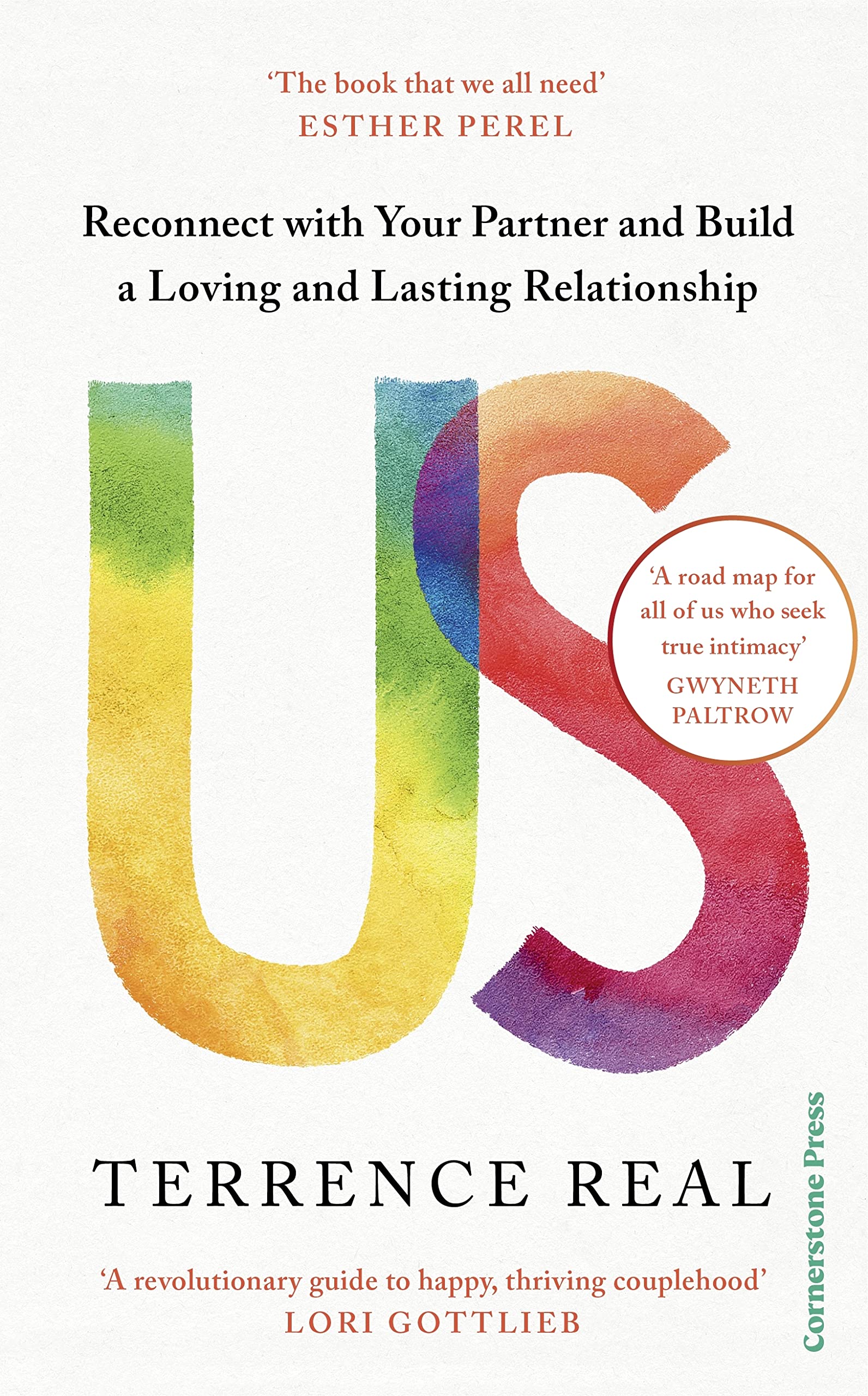
Resources
-
- Forbes: 3 Crucial Emotional Skills for Relationships
- The Atlantic: Fake Forgiveness Is Toxic for Relationships
- John Hopkins University: 12 Elements of Healthy Relationships
- TIME: How to Make a Relationship Last: 5 Secrets Backed by Research
- The Guardian: The secret to saving your relationship: eight lessons from a couples therapist
- The New York Times: 8 Phrases That Will Help Your Relationship Thrive
- National Domestic Violence Hotline: Healthy Relationships
- Family Process: Differentiation of Self and Dyadic Adjustment in Couple Relationships: A Dyadic Analysis Using the Actor-Partner Interdependence Model
- Personality and Individual Differences: Differentiation of self and its implications for forgiveness and repair in romantic relationships
- Behaviour Research and Therapy: Behaviorally-based couple therapies reduce emotional arousal during couple conflict
- PsyPost: Insecurely attached individuals are less likely to go for a compromise in relationship conflicts
- Journal of Homosexuality: Exploring the Basis for Gender Differences in the Demand-Withdraw Pattern
- Journal of Experimental Social Psychology: Perceived authenticity in romantic partners
- University of California: Research affirms the power of 'we'
- Brigham Young University: Getting Back on Track After Challenges: A Qualitative Analysis of Repair Efforts in Intimate Relationships
- Family Process: Differentiation of Self and Dyadic Adjustment in Couple Relationships: A Dyadic Analysis Using the Actor-Partner Interdependence Model
2 Million Readers.
1 Life-Changing Newsletter
Simple and Straight-to-the-Point...
Just Like Mel.