Episode: 351
How to Make 2026 the Best Year: 6 Questions to Ask Yourself
a Solo Episode
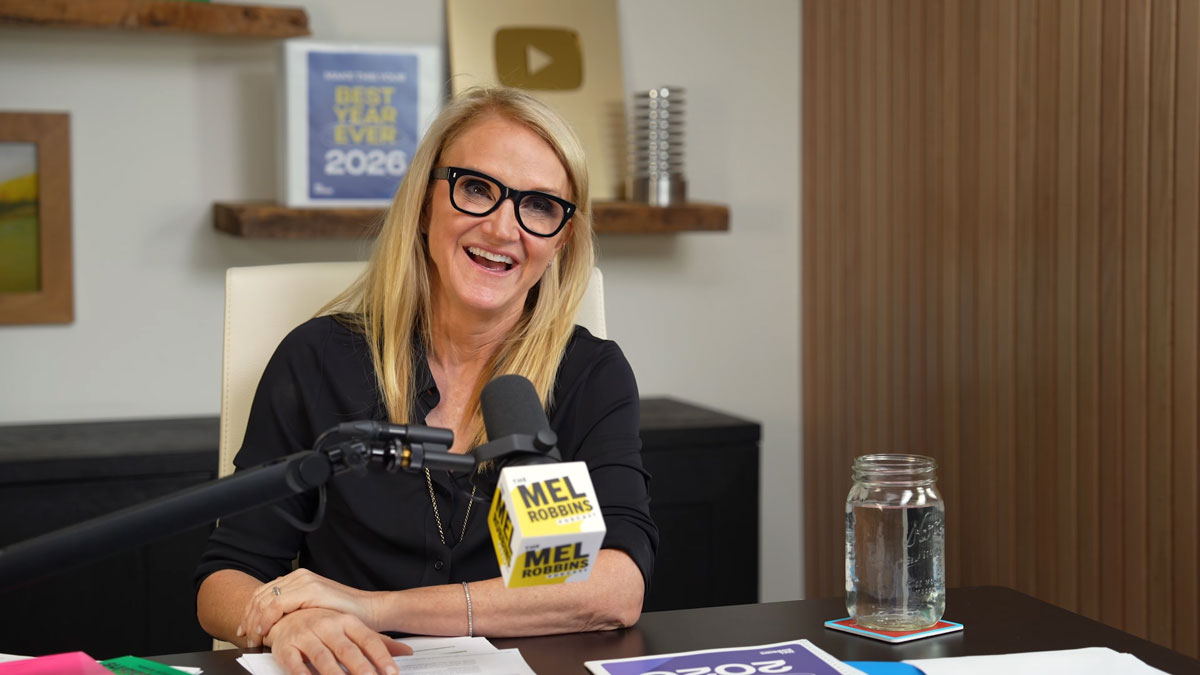
Do you want to make 2026 your best year yet?
There are only 6 questions to ask yourself for instant clarity and insight. Your answers will show you what the very next steps are in your life.
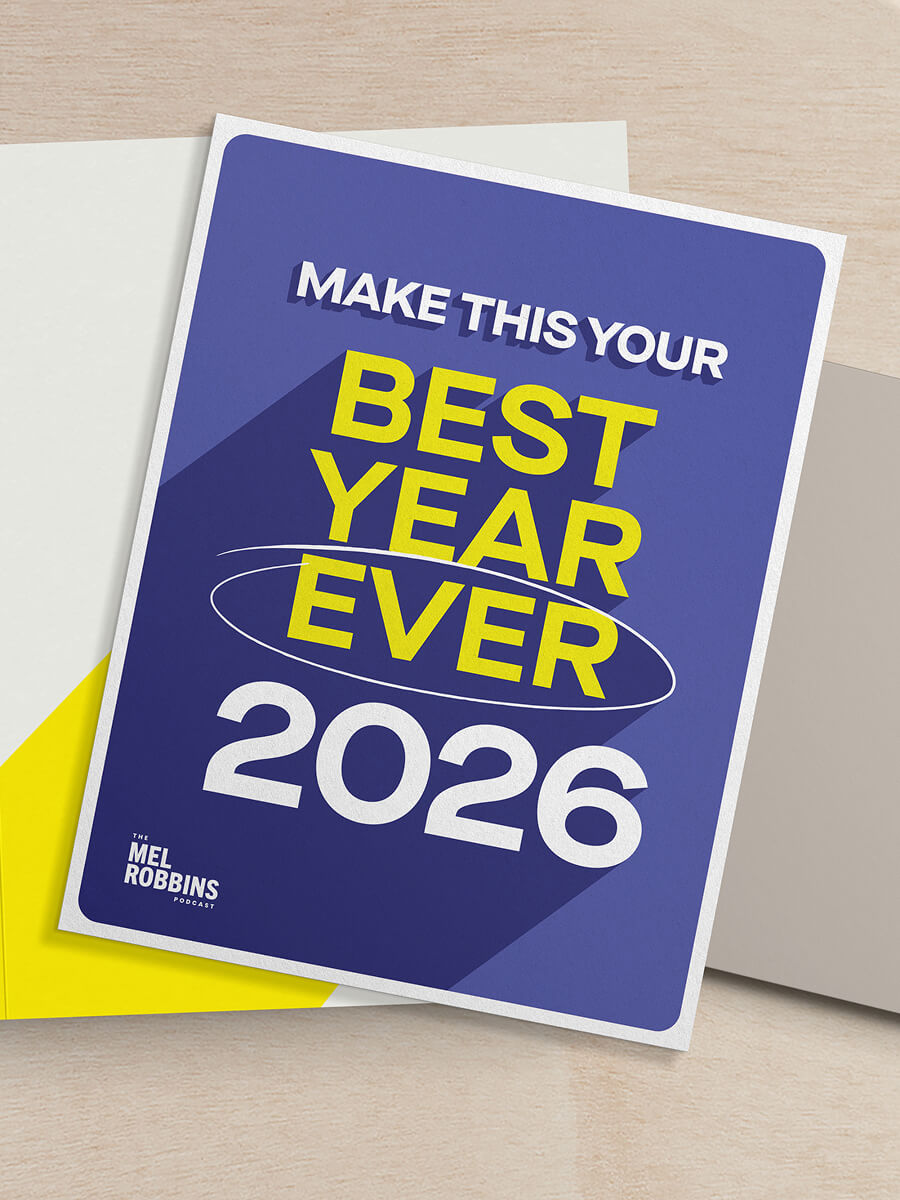
The brand new companion workbook to this episode can be found at melrobbins.com/bestyear.
In this episode, Mel walks you through her empowering, research-backed, year-end ritual designed to set you up for success. By the end, you’ll know exactly where to steer your energy to make next year your best yet.
This episode comes with a 20-page companion workbook. This brand new workbook is designed to help you get clear about what you want and empower you to take the next step forward in your life.
And the cool part? It takes less than a minute for you to get your hands on it.
Just sign up at melrobbins.com/bestyear.
Listen on:




These six questions give you instant clarity about what you truly want.
Mel Robbins
All Clips
Transcript
Mel Robbins (00:00:00):
There are six questions that I will walk you through that you need to answer right now. If you want to make next year your best year, ever see an amazing year, an amazing life? It doesn't happen by chance. It happens by choice because if you had a lot of low points this year, you're not alone. That doesn't mean anything is wrong with you because when you tell the truth about what knocked you down, what drained you, what broke your heart, you're not being dramatic, you're being self-aware and that awareness is the starting point for change. You can't create directions for where you want to go unless you know where you're starting from. This is a year end ritual that my husband Christopher and I have been doing together for the last 22 years because it's simple and it works. And if you've had a challenging year, you deserve to make the next year your best year ever.
Mel Robbins (00:00:58):
Hey, it's your friend Mel, and welcome to the Mel Robbins Podcast. I am ecstatic that you're here today. It is such an honor to be together and to spend this time with you, but today in particular, I am fired up that you're here. And if you're a new listener or you're here because somebody shared this with you, I just want to take a moment and personally welcome you to the Mel Robbins podcast family. I cannot tell you how excited I am about today's conversation and the year end planning exercise that you and I are going to be doing together because I'm about to teach you how to make next year the best year of your life using six powerful questions that you need to ask yourself right now. Now, this is a year end ritual that my husband Christopher and I have been doing together for the last 22 years.
(00:01:45):
Our three adult children now do this with us. It's based on research. It is so simple, it is shockingly powerful. I cannot wait for you to extract the wisdom and clarity that you need in order to make this coming year one of your best years ever. And here's one of the things I want to encourage you to do. Share it with your friends, share it with your family, share it with colleagues at work. In fact, you can hit the share button on this episode right now and when you all get together, you can print out your free workbook. Just go to mel robbins.com/best year and let me tell you about the workbook. Okay, I got the workbook right here. It is 20 pages long. It is beautifully designed. It is free. And we designed this because it acts as a companion to the episode that you're listening to or watching here on YouTube.
(00:02:33):
And here's what I love about the workbook. The workbook is going to guide you in digging even deeper into the six questions that you're about to hear me ask you and that I'm going to be answering for myself alongside you as we go through this ritual together. And so you might be asking yourself, why do you need to do this? Simple. If you never stop and force yourself to take a look at your life, you miss the chance to take control of your life and make it better. See an amazing year, an amazing life. It doesn't happen by chance. It happens by choice. And one of the biggest mistakes that I see people make when they sit down to plan the year is that they miss the critical first step of the planning process. And I've done this too because you're so excited to end the year right?
(00:03:26):
And to get that fresh slate and the clean start, and particularly a year like this where it could feel like a dumpster fire. You're like, let's just put this sucker out and move on to the next year. I'm done with 2025 for crying out loud. I just need a clean slate. I need a fresh start. I need to look ahead. I do not want to look back. But if you only look ahead and you don't take a moment to look back at the last 12 months, you missed the single most important part of planning. And that is taking a very close look at what just happened this year. You've experienced so many things, good and bad. You've had highs, you've had lows, you've had lessons, you've had wins, you've had losses. And if you're like me, you've probably forgotten 99% of 'em really. I mean, you might think you remember what happened in the last 12 months, but you don't trust your brain.
(00:04:21):
And that's reason number one that we're going to in a very specific way, we're going to look backward before we start to look forward. So I don't want you to answer the questions based on memory. One thing that I find very helpful is that not only are you going to have your workbook next to you, and if you don't have the workbook, no problem, you can just use a piece of paper. But the second thing I want you to have when you sit down and truly take the time to go through this planning ritual and to ask yourself these six questions and to really dig deep and answer them, I want you to have your phone next to you. And what you're going to notice is as you go through your camera roll and you go through each of these first three questions, what were the lowest points of your year?
(00:05:10):
What were the highest points of the year, and what are the lessons that you learned and the wisdom that you gained from these last 12 months of your life? What you're going to notice is you had a lot of life these last 12 months. There was so much wisdom. The second reason why we're going to look back, it just has to do with the mechanics of navigating and getting a set of directions. Because you may be in this moment, very clear about some of the things that you would love to have happen next year, kind of the goals that you have, the things that you're wishing for. Maybe you're really clear. I want to make more money. I want to take better care of myself. I'd like to see my friends more. I really want to meet the love of my life. I'd like to lose some weight.
(00:05:55):
I'd like to be in better shape. I'd like to travel a little bit more. I'd like to change my job. I'd like to learn new skills. That's fantastic, but it only tells me where you want to go. Consider this. You can't create directions for where you want to go unless you know where you're starting from. In fact, it's mathematically impossible to create directions unless you know the starting point and then where you want to go from there. And you also cannot create a plan for where you want to go next year that's going to work until you fully understand exactly where you're starting from right now. In fact, this is my favorite part about planning for next year. My favorite part is looking back at the past 12 months and extracting everything I can from it because I don't want you to repeat the same mistakes.
(00:06:48):
I want you to double down on what went well. I want you to pull out the lessons and carry them forward because you're going to use them to make this next year of your life one of the best years of your life ever. And it is one of the secrets to my success because it really helps me get intentional about what I want. And so before I came up here to talk to you and share this exercise with you, I went into Chris's office and I went through his files and I found this folder and it's labeled 2006 goals, and you can see this is a very old folder. I opened it up and I found the original planning that Chris and I did in 2004. Oh my gosh, this is so cute. I wanted to get pregnant and I wanted to get pregnant and have a little boy.
(00:07:44):
Oh my gosh, that's so awesome. This is before Oakley was born. How cool. Oh gosh, I'm still working at getting out of bed. I wanted to consistently get out of bed at 6:00 AM This is so cute. Chris has got stuff on here, a lot about health. But anyway, it's just amazing to look back on this and we started doing this with our kids about 10 years ago, and so I have been doing this for 22 years. When people ask me, what is one of the secrets of your success other than hard work and doing the things you don't feel like doing and obsessing over the details, what makes you exceptional instead of just good at something? This planning exercise is an example of a secret that I have been using for 22 years so that no matter what's going on in the world around me, I take the time to get very clear about what I want, very clear about what's working, what's not working, and I use this exercise if I really think about it in the broadest sense as a way to change the settings in my mind.
(00:09:00):
This is what a lot of the neuroscientists have talked about on this podcast to intentionally program my mind and let it know what's important to me. There's one piece of research I want to call your attention to. It's from California State University and UCLA, and they looked just at the act of writing a short letter to your future self. Now, this research appeared in the Journal of Experimental Psychology applied, and here's what the research found. When you spend even a few minutes connecting the dots between who you've been, who you are right now and who you want to become in the future, research shows that you feel even more closely bonded to the future version of you. Isn't that kind of cool that just taking the time right now with me, or if you're going to do this whole process after you listen and watch once through, and then you're going to go and do it with people that you care about, simply taking the time to look at the last 12 months to think about the future, to write all this stuff down, you're going to feel more strongly connected to the version of you that you see in the future.
(00:10:16):
In the study, the people who took the time to connect the dots between who I have been and who I really want to become, they exercise more. They were more intentional about how they went through their day-to-day life. Just a tiny writing exercise changed real world behavior. And that's exactly what answering these six questions is going to do for you because you're taking the time to do this, and that means you're intentionally creating this bridge between where you are right now and the version of yourself in the future that you want to grow into. Makes sense, right? Of course it does. So let's go through the first three questions and we're going to do this together.
Mel Robbins (00:11:00):
And question number one is what were the low points of your year? And here's why I want to start here. I want to start with what were the lowest points of your year?
(00:11:10):
Because if you had a lot of low points this year, you're not alone. You might be waking up most days with this low grade sense of dread right now. Maybe you've been in a constant state of worry, it's been in the back of your mind. You're constantly worried about money or politics or war, the climate or your kids or parents or your health, all of it. So if life has felt hard a lot of the time these last 12 months, here's the first thing I want you to know. That doesn't mean it was a bad year. That doesn't mean anything is wrong with you. First of all, it means you're alive and you're paying attention. And I don't want you to beat yourself up because here's the funny thing about low moments and hard years. If I think about my life, not that anybody deserves a hard year, but if I think about my life, I learned the most and made the biggest positive changes in my life after the hardest years of my life.
(00:12:12):
And that's not to say that you deserve to be struggling. I'm not saying that at all, but there is a connection between those years where there's a lot of heavy stuff going on and this internal resolve and just like, ah, that you need to say, I have to not have that happen again. I have to make a change. And there's also a big science-backed benefit by the way, to starting here and to looking at the low moments and to looking square in the face at what was hard spending time with this question. What were the low moments? As difficult as it may be, this is actually good for you and me. There's this study that was published in 2018 and it was done by researchers at uc, Irvine and Penn State, and here's what they did. They tracked what happened when people had hard things happen and then just shoved down the emotions, tried to move on and never sat down to intentionally process what happened or what they're feeling about it.
(00:13:23):
And the research is very clear on this that you do need to sit down. It is important to just take a moment and face the lowest parts of the year, acknowledge it, and here's why. It gives your brain a chance to process what happened. Listen to this. The researchers found that when people don't do this, when you just try to move on, let's just make next year a great year, even though this year was a dumpster fire and I hated every second. No researchers found that if you just try to move on when you let the negative emotions just sort of stick down deep down there and ignore it, those feelings stay in your body. You're going to feel more stressed, you're going to have more issues with your physical health every day. Life starts to feel harder, but when you really take a moment to acknowledge what was hard and you write it down, you know what you're doing, you're freeing yourself of the weight of it.
(00:14:20):
There's also really cool insights from Ethan Cross who's a psychology professor at the University of Michigan who appeared on this podcast and Professor Cross says that taking the time to do an exercise like this, you know what it does, it also puts distance between you and your negative thoughts about it. Isn't that kind of cool? We kind of think it's the opposite. If we just ignore it and we try to move on and set new goals that somehow we're distancing ourself, it's the opposite. You subconsciously drag it with you acknowledging it. It's a way to the loops that are running in your subconscious that are pulling you down and create distance from those things that happen so that we can get into an intentional mindset that's going to give you clarity and that's going to help you make better decisions, and that's going to help you focus on what's ahead instead of trying to outrun what was behind.
(00:15:10):
Don't you think this is so cool? I love this stuff. I absolutely love this stuff. And so I'm going to start scrolling through my camera right now, and I know it can be hard to look back, but I'm telling you it's going to be the key to move forward. And so get out your camera roll. I want you to get out your calendar and I want you to go all the way back to January, 2025, and I want you to think about question number one. What were the low moments? And I also want you to think about question number two. What were the high moments, the highlights, the things that were amazing or maybe the little things that happened that are, you even forgot it happened, but it brought you so much joy. And the reason why I'm asking you to hold both of those questions in your mind is because you're going to start scrolling through your camera.
(00:15:59):
It's going to happen to me too. And you're going to see both. You're going to see both, and you're going to see things like, oh my gosh, I totally forgot that my aunt was sick and was in the hospital. I forgot how many days I showed up and was there to support her. Oh my gosh, I forgot about that snowstorm when the boiler went out. Or, oh, wow, I had to miss out on my family vacation because work got so crazy and work made me miss out on it. Maybe you're going to see that money was tighter than normal. Maybe you lost a job, maybe business slowed way down. Maybe somebody that you love is no longer here. Maybe you had a plan to lose 25 pounds at the beginning of last year, but it all fell apart because you've been stressed out, you've been caring for everybody else, and so you never carved out the time for yourself because your aging parents needed you.
(00:16:54):
And here's one other thing I'm going to invite you to do. If at the end of last year you did set some goals for yourself this year, bring them to this exercise because maybe you said you were going to get a promotion or you were going to find the one, or you were going to buy a house or you were going to get into the program or that you were going to see your friends and maybe none of that happened. What I'm going to tell you is it probably didn't happen because you never looked back to understand where you were starting from because when you look back and realize, whoa, I spent my entire year taking care of young kids and taking care of my aging parents, and I was in school at night and I was also working full-time, you're going to have some compassion for yourself.
(00:17:42):
You're going to realize that part of being successful in achieving your goals is in being realistic about what your life looks right now and being realistic about what you can fit in and succeed at. And when you start from there, we can create a set of directions to get you where you want to go. We can create something that's most realistic and attainable and also inspiring to dream about. And when you set goals and a vision for how this is going to be the best year of your life that are in direct response to what you experienced in the last 12 months and where you are right now, these goals, they become personal. They're no longer I should do this because the internet says so they're, you know what? I need to do this. I want to do this. I get to do this because I want to feel better.
(00:18:35):
And this is what psychologists call intrinsic motivation. It's the internal fuel that comes from you having a deeply personal meaning tied to the types of things you want to change this year. Because if it really matters to you to not be lonely again this year, because as you scrolled through the photos, you're like, I didn't spend any time with my friends. I wonder, I'm really lonely. It really matters to me. This is something I deserve. This is something I need. This is something I get to do, is to prioritize this. If I saw my friends more, it would be one of the best years ever. Well, when you can connect what you want to do to that deep intrinsic meaning for you, you will do something about it because you know why it matters to you if you keep seeing yourself standing in the back of every photo because you don't like how you look.
(00:19:30):
If you see yourself taking photos of your family, but you're sitting on the bench while they're off on the hike, if it really matters to you to not be out of breath when you're walking up the stairs because you're starting to say, Hey, some of the low moments is I didn't opt in. I didn't feel good about myself. I didn't participate with my kids or my friends the way that I wanted to. When you connect it to something you deserve, when you connect it to something that will make your year better when you do it for you because you get to and because you deserve to, that's that intrinsic motivation. That's how we create the best year ever. And that's why you can't skip this question. Okay, here's a major low point for me. I don't even want to show you this photo. This is me on January 26th. I am so sick I missed a friend's wedding. I had worked myself into the ground. I was in bed for four days.
(00:20:38):
Oh, Mel, you really need to take a break, woman. I mean, wow, wow. Okay, let's keep going back. There's lots of photos of hotels, of airports of me on the go, go, go and look. I can't really complain about work because I did it to myself, and this year has been just unbelievable. I think it's the highlight of my career that said, I did not take care of myself at all. I was inconsistent with exercise. I could get my morning walk in, but you know how all the experts are constantly, you got to get a lot of protein, you got to do your resistance training, got to stay hydrated. I did not do a good job of that. I mean, how could I if I was just go, go, go, go, go. It's so hard. It's hard to implement the advice when you're constantly stressed and you're constantly worried.
(00:21:37):
And it's not even that it was like negative stress. It was just constantly on the go. And you might see that too, that in and among all the photos, what you're not seeing is you taking care of yourself. You're just seeing yourself on the move and doing things. And that's very, very evident that despite the fact that I really wanted to take better care of myself, I'm embarrassed to tell you it was even a goal last year of mine to do more strength training to eat more protein because that's what so many experts come on this show and tell us over and over and over again, whether they're a neurologist or a cardiologist or a psychologist or it's women's hormones or it's muscular health or any of it, everybody's saying this, I did not do a great job of that. Not at all. And look, you may not even be jumping on a plane.
(00:22:29):
A lot of people have jobs that require them to travel, whether that means jumping on a plane because you work for a consulting company or jumping behind the wheel because you're a long haul truck driver or working, oh my gosh, for those of you that work shifts in a hospital and you're on that 12 hour rotation, and isn't it true that hospitals don't exactly have the healthiest options for the people that are working there as you're on the go and you can't take a break or if you're a teacher, holy cow, when are you going to take a break and take care? You're not. And so whether you're just crazy busy because work has been crazy busy or your life is just busy, you are running from an email to a zoom call to a phone call with your mom to trying to wrestle down a doctor's bill, like busy, busy this year was, I think unprecedentedly busy for all of us.
(00:23:16):
And so I think one of the big themes for me when I look at the low points, if I have to summarize it, is I didn't spend enough time with friends. B, I did, I would say a c plus job of truly taking care of myself, and that means getting resistance. Training in it means getting the proper nutrition, getting the amount of protein that I need every day and not taking care of myself. It just spills over into the next day. There's a lot of photos in here that I'm not going to show you of me taking a selfie in bed and I just am clearly exhausted, and that's because I ran myself into the ground and I was sending the selfie to my husband, and I have more photos of my two dogs and my cats than I do my family or my friends.
(00:24:11):
That's a problem. Another low point, Oakley left for sophomore year, and I don't know about what anyone else feels, but in terms of the empty nest thing, the first year, there's such a buildup that, I don't know, I felt really sad and the house was incredibly quiet, but I also saw it as this amazing opportunity. And then they come back, they come back for a break, they come back, they come back for the summer. There was something about him leaving this fall for the second year that it's like, oh, oh, this is actually the new reality. Oh, oh, he's going to come back less and less and oh, I better wake up and not just expect to see the kids because they're coming home. I got to get very intentional about going to them, and that's a really important insight that comes from seeing the low point that the house was really quiet.
(00:25:18):
I worked too much. I didn't see my friends enough. I took kind of lousy care of myself, and that's the truth. That's the truth. I got to do better this year. I just have to do better, have to do better. And here's what I want you to understand. You see how I'm not shaming myself? I'm just being like, matter of fact, matter of fact, this is what happened. Matter of fact, okay? Because when you tell the truth about what knocked you down, what drained you, what broke your heart, you're not being dramatic. You're being self-aware and that awareness is the starting point for change.
Mel Robbins (00:26:00):
And that brings me to the second question. If we're going to look at the lows, we're also going to look at the highs. So as you're going through here, I want you to look at the things that were highs for you, and it doesn't necessarily mean the big flashy stuff.
(00:26:16):
I mean, one of the huge highs for me is even though we didn't get a great family photo of the five of us, I'm talking like one that everybody in the family be like, Ooh, I love that. One of my huge highlights of these last 12 months is I spent a ton of time with family. I made an effort to see my parents. They made an effort to come see me. My husband and I made an effort to go to where our kids were and to spend time with them. We did some really amazing family things in terms of camping and experiences that we did together. I made a point to do a trip solo with my daughter, Kendall, something we had never done, just the two of us. And think about that. She's 25 years old, but because she's my middle daughter, every time I would go on a mother-daughter trip when they were little, I'd always take Sawyer too.
(00:27:10):
And if Sawyer wasn't with us, we always went with another mother-daughter. I'd never done anything with just Kendall. It was incredible. I'm sitting here looking at these photos of us at Round Top. It was one of the highlights of my year, spending that time with her and making the time to do it. And so that's a highlight and that's also a lesson. You got to plan this stuff now. This stuff is not going to happen by accident. I want you to go through your calendar and look at some of the highs because there are so many. Oh, I'm just seeing, oh, I'm seeing a photo of me walking in the park before work one morning with Christine and my daughter Sawyer. I'm looking at, there's just so many good things here, great people that I got to meet this year. Lots of smiles as I'm at work with all the great people we work with.
(00:27:59):
Wow, there's lots of good stuff here. Oh, Chris and I went to Montana and we went fly fishing, which is exactly what we did for our honeymoon 28 years ago. I went down and saw my parents for a couple days in Florida and they did their first sound bowl healing with me. Oh, gosh. Here's another one. Oh, my parents came to visit me in April. Oh gosh. Here we all are together again in May in Chicago. What is interesting about this is it I have this narrative that I don't see my parents a lot, and yet here right on my photo roll before the middle of May, I had seen my folks four times this year, which is huge when you consider that we live a 16 hour drive apart from one another. Isn't that interesting? You're going to actually see a lot of things in this that might also challenge the way you beat yourself up.
(00:29:04):
Oh, Jesse's baby. Jesse had a baby. It was our first baby here at 1 4 3 Studios. The highs show you what you want, more of the highs show you what you're willing to work for. What I also love about the highs is that you're going to notice there are these small moments that really are the big moments. Here's a photo that I'm looking at right now of Chris and Oakley and I, we went and surprised him. He was playing at this big ultimate and he's got tears in his eyes. He's just hugged Chris and he couldn't believe we were there. That was a huge high for me, that moment. I mean, it's the little stuff honestly that you're going to notice are the things that really mean a lot to you. Maybe you're in a job where you sit all day, but this year you started walking in the morning and you see photos in your camera roll of the little hearts, whether it's the rocks or the leaves or things on your walks that you noticed.
(00:30:13):
There were tons of flowers on my camera roll maybe it was a really good book that you read. I read one of my favorite books of all time. This was the High the Emperor of Gladness this year, or it was a photo or a painting that you hung in your living room that makes you smile every time you walk past it. All of that counts. Anything that puts a smile or oh, on your heart, oh, one of the most amazing highs was we went to the Coldplay concert, and if you've ever been to a Coldplay concert, they do all these explosions of confetti. In fact, it's the thing that inspired me to shower the audience with huge ticker tape confetti at the Let Them Tour. Wait till you experience this. If you're coming on tour with us in 2026, and there are all these photos from this summer when we were at the Coldplay concert and the competitive flying through the air and our kids in it, that is something I'm going to remember, the Oh, the Smile and the oh, because the more you look for good things, the more you see them, and I've already said that I kind of feel like I am in the single biggest moment of my career that what has happened this year in my life, in my career with this podcast, with the Let Them Theory book, it is nothing short of jaw dropping.
(00:31:37):
Like never in my wildest dreams could I have imagined what has happened. And so I do want to take a moment and just thank you because you're a huge highlight of my year, the way that you showed up for yourself and started listening to a podcast that makes you feel good and that empowers you to make changes in your life that make you feel better. We are the number one most followed show on all of Apple podcasts. Are you kidding me?
(00:32:12):
My jaws on the floor. The number one most shared episode on all of Apple podcasts is a Mel Robbins podcast episode, the one that we did with Dr. Stacy Sims from Stanford who came on and taught us how to do the body reset. In fact, I was joking with her this morning. I'm like, I blame you, Dr. Sims. I blame you because you're the one that told me I had to start doing resistance training. You're the one that told me the importance and the critical nature of getting complete protein in my life. You are the one that put me on this journey of understanding that I needed to do this. It's very hard to get the amount of protein that you need. It's very hard to do the resistance training when you're constantly as busy as you and I are, but we're doing it. Another thing I have to thank you for is the Let Them Theory book, the Let Them Theory book is the number one book in the world.
(00:33:04):
And look, you can write a great book and it can do really well, and that's an incredible thing. That is very, very rare, but the Let Them Theory is almost beyond description because it has become an actual phenomenon. You don't just have a book come along that 8 million people read or listen to in 11 months. What that tells me is that the Let Them Theory and the book and the experience of reading and listening to it that it not only empowered you, but it was something that you felt was so empowering that you were giving it to other people and you were recommending it. And so it's a real highlight of my life and my career, and I think it's important for you when you have a win that you claim it too, that you celebrate it too. And so thank you. Thank you for being a huge part of this success.
(00:34:19):
Thank you for being interested in making your life better. Thank you for recommending the episodes that have made a difference for you with the people that you care about. I am deeply humbled by what's happening. Then that brings me to the Let Them Tour. That was one of the most fun and rewarding experiences of my life. I've met so many of you in person. When I sit here above my garage or I'm in the studios in downtown Boston, I don't see you and I don't see what you're doing with this as you're doing this. I can imagine it. I read the comments and I read the emails you send in the inbox and we circulate those to the team. But it was so extraordinary to be in the same room with you and to feel the collective energy that happens when you're with a group of people who want the best for themselves and they want it for everybody around them too.
(00:35:15):
I mean, that's just extraordinary. But the single best part was actually doing the tour experience with my daughter Sawyer and my daughter Kendall. I don't know why I thought that doing skits in front of a live audience about our mother-daughter issues would be fun because it wasn't fun until we kind of got into the rhythm of it. But here's the thing that I will claim is the highlight. The highlight is that at the age of 56, I forced myself to do something I had never done before. I had never acted, I had never done comedy. I had never put on a show like that, and it was so hard and so incredible at the same time, and I just grew and I grew and I grew because of it. So don't overthink it. Just scroll through the photos, scroll through your calendars and ask yourself, was it fun?
(00:36:06):
Did this experience lighten you up? Did it make you feel like yourself? Is there something about this that makes you want to do more of it in the coming year? If the answer is yes, it goes on the list. This was a highlight, and I even kind of shudder to tell you the good stuff about me. So once in a lifetime stuff, but if you've got something that's once in a lifetime, your first baby was born, your grandchild was born, you got married to the love of your life. If you put on an art exhibit at your local town and people showed up, that's a high. If you got into nursing school, if you got through nursing school, if you decided that you were going to change your major because you didn't like accounting or medicine, that's a high claim. These things because they say something about you.
(00:36:52):
What did you learn about yourself this past year? This is where I want you to dig because you've already done a lot of the legwork for this part. Your answers to the first two questions, and again, when you do this in your workbook, mel robbins.com/best year, the answers in the workbook and the way that we structured the workbook to guide you to go a little deeper.
Mel Robbins (00:37:14):
Holy cow, the answers in there, they're going to help you answer this question number three, what did you learn this year? If a low point was that you were constantly worried about somebody that you love, who's sick that you're taking care of, and you were so worried about them, that that's all that you did and you had no life outside of that, maybe you learned that this year you can't let yourself get that overwhelmed. You do need to ask for help.
(00:37:42):
You do need to reach back out to those friends who said, is there anything I can do for you? And he's like, no, no, no, I got it. I got it. You might've found that you're more resilient than you thought. If you see that something was really bad about a friendship or about a work relationship or about your marriage, maybe you're done tolerating a certain type of behavior. Maybe you learned that you're capable of changing your careers or that you need help with your mental health and there's no shame in that. See, the highlights and the hard parts, the highs and the lows, they're not just memories. They're data. Those experience are telling you something about what you like, about what you don't like, about what you need more of, what you never want to go through again. And so just sit with this for a bit and for me, when I look at question number three, given everything that happened this year, what did I learn about myself? What I learned about myself is number one, I love spending time with you. I love spending time with you in real life, not just on this podcast, but I love meeting you in person, and I'm not just saying that I really do feel that it brings me so much energy and so I want to find ways to connect with you more in real life. So that's number one. That was just such a huge highlight and it was a big takeaway for me that in-person experiences just give you life. I love that. Second thing.
(00:39:22):
Now, this is something my husband Chris would be able to tell you because he is a very organized person. He is a systems person, and he knows that this is a challenge for me, but it is so clear that I am at my best when I have structure, when I have routines, and when I have systems. I'm going to give you an example. There were a bunch of photos in my camera roll of a particular week where I just looked so energized at work and I went back to my calendar and I was like, what was going on that week at work? And I realized, oh my gosh, I had meal prepped. I know this sounds so dumb, but there's this particular soup, I've talked about it before. It's swamp soup. The recipe comes from Wishbone Kitchen. It's this green mess of a soup with chicken and rice and I love to make it, but I started making it in September and I would then bring it down to our studios in Boston and I would eat this chicken soup all week.
(00:40:28):
So I was getting enough protein, I was getting proper nutrition, and I felt phenomenal. I was in control. I was less impulsive. I was focused. I was energized. I was waking up early enough to go to Pilates or use the hotel gym. I mean, it was a complete contrast to the weeks where we would be taping the podcast episode and I'm like, I don't even know what to eat. I'm tired. I'm sluggish. I'm moody, I'm unfocused. So the bottom line is I want to feel healthier in my life and I cannot and do not plan to overhaul it. I need simple, repeatable structures and systems that I can add into my day that give me the proper nutrition because it's like a domino effect. When I eat healthy, when I'm getting Whole Foods, when I've prepped my meals, when I'm getting enough protein, I feel great.
(00:41:22):
I sleep better. I wake up earlier, I exercise. For me, it's like that domino that falls and the rest of it's easier. The third lesson for me, it's a huge one, and I know this, but this is why this is so important. The things that you know are important, you need to be reminded of them. I realize that it's obvious advice to say if you want to see your family more freaking get out your calendar and schedule more time with your family, but life is so busy and a year goes by in a blur that this slowing down and looking back really Sears into your cellular structure, what's important to you and my relationships are the single most important thing in my life, and they're the most in important thing in your life too. And the reason why I started the year on a trip celebrating my dad's 80th birthday is because two years prior, we had put it in the calendar.
(00:42:20):
The reason why I saw my folks a lot this year is because we made the plan to do it. The reason why I spent a lot of time with my kids one-on-one is because I made the effort and I made the plan. The reason why I saw my friends in Montana is because we scheduled it in and it's a reminder of how fast a year goes, how fast. It's just all over. It puts into focus that love. It's really the only thing that matters. I mean, isn't that the truth? And I need to keep that front and center because the things that were the highs about my life this year were all about other people. And this is backed by research Professor Carl Piller at Cornell University. He runs Cornell's legacy project where he studies people in their eighties, nineties and their one hundreds, and they look at what are the top regrets of people who are nearing the end of their life and their top regret is leaving things unsaid.
(00:43:26):
It's not spending time with the people that you cared about when they were here and when you had the ability to do it. Another piece of research, the Harvard Study of adult development relationships are the number one predictor of whether or not you live a good life. And this year, every single high that I had was because I was spending it with people that I love and I am proud of myself of building good habits. That's another lesson I'm proud of myself, and I want you to look at what are you proud of? There's a bunch of habits from the experts that were on the Mel Robbins Podcast this year that I really was good about despite how busy things were. Number one, I was fantastic about getting out for a daily walk no matter where I was on the planet, I was out for a daily walk and I see myself all over the place walking a lot of times alone because I'm traveling for work, but I'm still doing it.
(00:44:21):
I got rid of the plastic cutting boards in our kitchen and all the plastic containers that you store things in, I feel good about that. My husband and I go to therapy and it's really improved our relationship and I certainly feel like a better version of myself. And the other thing is I use the Let Them Theory. I am a different person because of the Let Them Theory. I had no clue how controlling I was and how judgy I was, and the Let Them Theory has made me a better person from the inside out because it's taught me how to just truly let people be who they are. Let them think what they're going to think and resist the urge to control them or change them or be upset with them when they don't meet my expectations. I'm a more compassionate person. I feel more peaceful.
(00:45:16):
I hope as you've used the Let Them Theory, part of what you can reflect on is how good it feels to stop controlling everyone and everything and just focus on the Let Me part. That's a huge thing I'm going to carry forward because I love how I feel using this theory. And the best part about this is that if there's aspects of your life that you don't like or that didn't feel very good this year, you have it within you. The ability and the capacity to change it for the better.
Mel Robbins (00:45:54):
And that brings us to the next three questions. It's called Stop, start, continue these three questions. What are you going to stop doing? What are you going to start doing? What are you going to continue doing? They come from a strategy framework that global companies and leadership teams use all the time because it's simple and it works and it's strategic.
(00:46:17):
And now that we've extracted all the lessons and the highs and the lows, it is so easy and obvious to answer the question, stop, start and continue. I love this. The insights that you just uncovered, create the clear plan for next year. Here's your next question. Isn't this exciting? Can you tell, I'm now getting really excited. What will you stop doing in the next year? And here's what I want you to keep in mind. One of the fastest ways to change your life and level Up is to identify what you're going to quit. Winners quit all the time because there's a big difference between quitting something out of fear and quitting something because it no longer aligns with your values. It's no longer important. It's no longer working. Winners quit the habits. They quit patterns. They quit expectations. They quit jobs. They quit relationships. They quit projects.
(00:47:18):
They quit obligations. They quit customers. They quit career paths that drain them. They quit all the time because they quit the things that keep them frustrated, exhausted, distracted, so they can actually move forward. One of the biggest things that I can see about the Let Them Theory is it helped me stop controlling other people. It helped me stop trying to change other people. That was liberating. And honestly, it kind of goes against the way the world teaches you to live. I mean, you and I are surrounded by this pressure to do more, add more, push more, as if the only path to a better life is piling more on your plate. But that's not true. One of our guests this year on the Mel Robbins podcast, Georgetown University, professor Cal Newport, who's an expert on time and productivity, said something that really struck me. Real productivity isn't about doing more.
(00:48:11):
It's about focusing on what really matters. Subtraction before addition. Subtraction, because it creates room for what matters. That's why this question is so important. It forces you to stop everything and start being deliberate. So when you ask yourself, what do I need to stop doing? You're not giving up. You're getting strategic. And here's a couple examples of what you need to stop doing. I need to stop going into a job every day that makes me miserable. I need to stop telling myself that it's a very hard economy and I'm never going to find a job. I need to stop telling myself that I'm never going to meet the one. I need to stop beating myself up over the shape that I am in because that's not helping, that's not motivating. I need to stop trying to change my partner because it's creating a lot of resistance in my life.
(00:49:17):
I need to stop telling myself I'm too old, I'm too young, I'm too this. I'm too that. That's what I need to stop doing. I need to stop sitting alone in my house and feeling sorry for myself because it's contributing to the loneliness. I feel I need to stop sitting around and waiting for other people to call me. And I need to take responsibility for the kind of social life, for the connection to my family that I want. When you decide to stop, because it no longer serves you, it's a waste of your time. It's frustrating, it's stupid, it's annoying. Your values have changed. Your priorities have changed. You're going to make a decision to stop stopping becomes the lever that moves you forward rather than this weight that's holding you back. And so as your friend, I'm going to ask you, what are you going to stop doing next year?
(00:50:07):
You going to stop doom scrolling every night before bed and then getting a crappy night's sleep? Will you stop being available 24 7 for work texts and emails? Will you stop comparing yourself to strangers online or to your sister or your best friend? Will you stop blaming yourself for things that were never yours to carry in the first place? How about you stop giving your time to relationships that never give anything back? I know one thing that I'm going to stop. I'm going to stop making excuses around resistance training. I just need to stop making excuses. I'm a person who is very intimidated by walking into a hotel gym. I get overwhelmed very easily. I've used it as a big excuse because I don't know if you're this kind of person, but if I walk into a gym and I dunno what to do, I just get overwhelmed and I then walk on a treadmill or I leave.
(00:50:59):
And one of the reasons why I'm able to be successful at getting a walk-in every day is because I know how to do it. It's not that intimidating. And you don't need equipment and you don't need what to do, and you don't need to manage anything. You can do it anywhere you are. So I've been able to fit that in, but I need to stop making excuses about this and I know what I need. Everybody's talking about resistance training and protein and proper nutrition, and I just have to stop making excuses about this, and I need to write this down. This has got to be my number one thing because it's a domino effect. The weeks I get this right, I am a different human being and I'm so sick of my excuses. And there's probably something in your life that you're just sick of yourself about it. You're sick of the excuses. You're sick of how it feels. I'm going to stop nagging my husband. I'm going to stop micromanaging my kids. I'm going to stop checking my ex's location all the time. I'm going to stop whatever it is for you. It's like I invite you to think about the thing, and it's important to have one. You can write down a bunch more, but I really want you to have a big one because then you're going to be successful at it. And I already know what I need to do.
Mel Robbins (00:52:19):
And that brings me to the second question that you're going to answer, which is, what are you going to continue doing? What are you going to continue doing? And my continue doing kind of ties to what I'm going to stop doing. So I'm going to stop making excuses around exercise, and I'm going to come up with a seven day plan.
(00:52:39):
Four of it involves resistance training, two upper body, two leg days. Boom, we're done. I can do the same boring exercises 30 minutes or less. The other three days, I get to do what I want. I can walk, I can do Pilates, I can do whatever I want. I'm going to continue to lean into ai. Here's why I want to do that. I use AI at work. We have incredible tools that we have built that are really amazing for how we run business, but I realized I'm not leaning into it in my personal life. And I had this epiphany when we did an episode this year about AI with an expert on ai, and I just kept thinking about how little I know about it when it comes to how you use it as a tool to help you be more of yourself, to help you find time to do the things that are super meaningful for you.
(00:53:36):
I mean, right now, if I'm being honest with you, I kind of use AI personally, almost like Google. You type in something and you're searching for something. And to me, this is really important to just share about because I really do think women in particular, and those of you that are a little bit older like me as a 57-year-old woman, I do not want you to be left behind. And women they estimate are falling behind at a rate of like 25%. And just consider that this moment is sort of like saying, oh, I just don't want to learn email. I don't want to use a cell phone. Okay, well, that's your choice, but how are you going to connect with people? How are you going to be successful in a job? How are you going to be able to stay in touch with your kids or your grandkids?
(00:54:30):
And on that topic, I want to know what my kids are using. And I do have concerns like you do about how fast AI is evolving and how unregulated it seems. I'm concerned about the impact on the environment. I'm concerned about privacy and about data, but how could I possibly be an effective advocate for regulation or change if I don't even use it or understand it? It's easy to sit on the sidelines and cross your arms and complain about all the things that are scary, but you're going to be much more effective at being part of a positive change if you actually understand how to use it. And so here's how I'm using it. I figured out the other day because we wanted to meet our son halfway between where we live and where he lives on a Sunday night in the middle of nowhere in Vermont.
(00:55:21):
And I asked it to help me find all the options for places midway that we could meet restaurants that were actually open and that had a place to walk the dogs within a mile of the restaurant. Honest to God, this is what I, and it spit it out in like 10 seconds. I was like, what? And then I asked it a few more. So it helped me be able to make decisions and connect with oak. So I'm going to continue leaning into it because now that I've kind of gotten a taste of how it can help me, this is going to sound weird, but almost feel a little bit more human. I don't want to spend time stressing about that stuff. And so I'm going to continue leaning in and finding ways to save time and solve problems so that I can focus on the stuff that's meaningful and that's it.
(00:56:09):
And so do you see how stopping something doesn't mean a dead end continuing something doesn't have to feel like an obligation. You're kind of just rolling things forward. Here's another thing I'm going to continue. I am going to continue scheduling time with friends in advance. In fact, yesterday as I was getting ready for this episode and I was starting to scroll through my photos, I saw that one of the highlights was going to see friends in Montana. So what do we do? I said to Chris, we got to see those guys again. Please call the golf course and please find if there's some kind of tournament that we could all do. And sure enough, Chris found a tournament for next year in September, and we sent a text to our friend saying, Hey, are you guys available this weekend in September next year? So I'm going to continue being super proactive about finding time for friends, scheduling time with family, finding events to go to because it makes a difference.
(00:57:06):
I'm also going to continue going to concerts because two highlights of my life, we're seeing Coldplay and Noah Khan. I can't stop talking about it, and I got to continue doing that. Okay, you see how this works? And so what are you going to continue doing? Are you going to continue to make time for your family and your friends? Are you going to continue to learn about AI or do skill building things that you've been wanting to make time for. Are you going to continue to show up for your family? Are you going to continue going to school or continue improving your skills at work? What do you want to continue doing? Continue seeing your friends? Do you want to continue the Pickleball league? Do you want to continue drinking more water and hydrating and taking great care of yourself? Do you want to continue that evening routine?
(00:57:53):
Do you want to continue the morning walk and listening to this podcast and audio books and other things that really help you improve your life and learn? Do want to continue to surround yourself with the people that lift you up? Do you want to continue to garden and pursue the hobbies that really make your full? Do you want to continue to sing in the church choir or continue learning the guitar? And one of the things that I hope you'll put on the list is that you're going to continue using the Let Them Theory that we'll continue protecting your peace. You'll continue really protecting your time and energy. You'll continue to feel empowered. You'll continue to work on accepting people for who they are, who they're not, and continue to draw better boundaries around the people that, gosh, they just are who they are. And that's never going to change.
Mel Robbins (58:59):
Final question. What are you going to start doing this year? This is the question where you get clear on what you're going to begin and remember, a start doesn't have to be dramatic. Maybe you're going to start walking with a neighbor three mornings a week, or you're going to start a walking group. I did that when I first moved to Vermont. Guess what? It's something that still continues. Maybe you're going to start therapy. Maybe you'll start going to bed 30 minutes earlier and for real, not sleeping next to your phone for real, like putting it in the other room. Maybe you'll start showing up differently at work and you'll start speaking up for yourself and sharing your ideas in meetings.
(00:59:36):
Maybe it's traveling, even if it's just taking a day trip or speaking another language, or you're going to start dating again because this last year was the year that you had your heart broken. Maybe you'll start writing that book that you keep putting on the back burner. Maybe you're going to play the piano again. You stopped when you had kids, but now that you're an empty nester, now you're going to start again. I want you to rediscover all the fun and the challenge of starting something new. And when it comes to what I'm going to start, this is a big one. There's a lot of little things that I'm going to start, but I want to tell you about this big one, and I can't even believe that I'm saying this. This is the first time I have said this out loud. I feel a little weird.
(01:00:24):
I have butterflies, but you're the first person that should know I am starting a new company and I can finally tell you about it. It's a new company called Pure Genius, and I am so excited about this. I have not been this excited about starting something new since I started the Mel Robbins podcast, and this is a personal thing that has happened for me. And so I kind of want to tell you the story because you've heard me complaining about how this entire year, a lot of the lows was that I was traveling and I let myself go, and I found it incredibly hard to eat healthy and to get the amount of protein in that I needed and to build muscle. And I know you find it hard to do those things too. This goes back to the beginning of the podcast. I looked back at all the experts that have been on the Mel Robbins podcast.
(01:01:19):
I have a list here. This all began back in June of 2023, episode number 77, we had Dr. Amy Shaw on, and she is a triple board certified Ivy League educated medical doctor who talks all about nutrition and health. And she started talking all about the importance of protein. And then 10 episodes later, she came back to talk about menopause and hormones and the absolute critical nature of building muscle, of resistance training and of protein. And from that conversation on, because I'm in menopause, I have been focused on how can I build more muscle? How can I eat more protein? How can I leverage all this science to manage all the changes? And here's what I found. It is so hard to stay on top of this. It is so hard to get the amount of protein that you need. First it was Dr. Amy Shaw. Then came Dr.
(01:02:20):
Gabrielle Lyons talking all about muscle centric health and protein, protein, protein. And then we had Dr. Vonda Wright, Dr. Stacy Sims, which by the way, Dr. Stacy Sims came on the podcast and she talked all about how essential protein and resistance training is. This is the same Dr. Stacy Sims and the same episode that Apple just named the number one most shared episode of all podcasts in the world of the entire year. And so when Dr. Stacy Sims came on the podcast and with weights and weightlifting and was like, you got to get more protein, and I know you've heard this too, and here's what I found. It is so hard to get enough protein. I mean between the egg bites and the chicken and the steak and the vegan protein and the bars, and you need to refrigerate this stuff and forget about it when you're traveling.
(01:03:17):
Forget about it. I don't know if you're finding the same thing, but like, oh my gosh, it is so hard. It is hard to get the amount that the medical experts are recommending. And I'm trying making the shapes. I'm doing the smoothies, I'm getting the bowls. I'm eating the chicken, I'm eating the eggs, I'm eating the fish, I'm eating the beef. I'm putting all the powders in it. I'm buying the bars. And I'm telling you, it is still hard to do. I mean, there's only so many egg bites a person can eat. I knew I had a problem. I was having trouble solving it. I didn't know how to get more protein in, so I just started asking around. I asked all my friends that are in the podcast space, I asked my friends that were medical doctors. I started calling some of the doctors that appeared on this podcast.
(01:04:03):
And one of the interesting thing is even some of the doctors said, there's a real gap in terms of what's available to people. And I'm looking for something that's a high quality clinical grade protein source that somebody could take in like a shot. And as I started talking about the problem that I had, which is it's really hard to get quality protein in that you can trust to bridge the gap. I bumped into a couple people who had been working on this problem and they had developed a first of its kind protein shot. And I am so thrilled to tell you that I have joined a company called Pure Genius as a co-founder, and I'm holding in my hand this innovative revolutionary new form factor of protein. It's so cool and you want to know what's genius about it. Inside these three ounces that fit in the palm of your hand is 23 grams of a complete protein.
(01:05:08):
It has all the amino acids that all of the medical experts recommend that you and I get for muscle building. And so this was a solution to a problem that I was facing that everybody in my life was facing. So as soon as I decided I was going to get involved, the first phone call I made, can you guess, Dr. Amy Shaw, the medical expert that had appeared on this podcast in 2023 and first taught me and you the importance of protein and building muscle, particularly when it comes to hormone health, when it comes to longevity. And so I called her and I said, Dr. Shaw, I am going to jump into this project. I'm really excited about it. Would you ever go to California with me and go to the lab and kick the tires with me because I'm not the expert in this, but you're the expert in this.
(01:06:01):
You're triple board certified VY educated medical doctor who's recommending protein. Will you come and check this out? And she's like, of course I will. So we hopped on a plane, we went out to the labs in California, we met the scientists, we were involved in the tasting, we looked at the ingredients, we changed things to make it better. We have been behind every single decision related to the rollout of this product, and here's the reason why. The name Pure genius is perfect because any tool that's simple, that is trustworthy, that solves a problem and that's backed by research and a normal busy person like you and me can fit it into a busy life without really thinking, that's genius. Now, it's not available to buy just yet, but I want you to get on the wait list if you're interested in learning more. And so I'm not selling you anything.
(01:06:53):
I'm just excited to tell you about this because it's everything that I try to be. It's a simple solution. It's smart and it's easy to fit into a busy life and it's backed by science and research. Isn't that genius? I sure think it is. So if you want to learn more, just go to pure genius protein.com. There's a wait list there. We don't have any to sell you at the moment. It is coming, but that's what I'm starting this year. I'm starting a whole new company. I have incredible co-founders. I am so excited to share with you all the research and everything that I've learned about protein. I'm excited to introduce you to our world-class founding scientific board, but I am honored to be able to share that with you. And as you think about what you want to start, you can either go big, you can go big, you got 12 months.
(01:07:49):
You don't have to start a new company in January. I mean, I'm telling you this, and it's December, so I've been working on it in the dark, but I'm not technically starting it until the end of this year. If you want to start a business, write it down. If you want to start getting more protein, write it down. If you want to start a community vegetable garden, write it down. If you want to start prioritizing your health, you want to lose some weight, you want to get in better shape, write it down. If you want to start talking to your kids more, creating better relationship with them, like maybe there's something that happened that strained your relationship and this is here, you're going to start to reconcile. Maybe you want to start to bring music back into your life, and that might just mean having playlists that you love that are playing in the background at your house.
(01:08:36):
Maybe this is the year you start to take your house back. You're going to clean out the attic, you're going to clean out the garage, you're going to clean out the back bedroom, and you're going to turn it into the home office or the guest bedroom or the crafting room that you've always wanted. Speaking of crafting, maybe this is the year you're going to start that hobby that brings you so much joy that you've been thinking about, but you didn't find time for. Maybe this is the year you start saying no. Maybe it's the year you start saying, yes, maybe this is the year you start getting up earlier and you create a beautiful morning routine for yourself. You've been thinking about it, you've been learning about it, but this is the year you start doing it. What matters is that whatever it is that you want to start, that it pulls you toward a version of your life and yourself that feels good, and if that idea scares you a little bit, well, that's a sign that you're really reaching for something that matters.
(01:09:36):
I'll tell you, when I look backwards at why I am starting pure genius, I can see how the dots connect. I can see organically that all of these medical experts that showed up on the podcast and started dropping these kernels of important wisdom that was opening up in something inside me. But I can also see that as I've had friends, much like how I got inspired to launch the podcast, I noticed friends were starting podcasts, and I felt myself like, oh, I think I might want to do something like that. As I've noticed friends of mine starting small businesses, I have a friend that started a granola business, just a local one selling it locally. I have another friend that started their own beverage that was kind of cool to watch. I felt myself being pulled towards it, and these are important things to pay attention to because what you may write down that you want to start, it may have actually been set in motion years ago.
(01:10:39):
You may have been felt pulled towards it years ago, but you've just been saying, I'm too old. I don't know how to do that. Things like that don't happen. For a person like me, I'm not smart enough. It's too late to start, but when you write down, this is the year I'm going to start writing that novel, this is the year I'm going to start writing that business plan for the restaurant I've always wanted to open. This is the year I'm going to start learning how to create a YouTube channel and monetize it. I'm going to start making money online. I'm going to start a real estate business. As you write that down, you are pulling those things that are in your heart and in your mind, outside of you, and you're making them real by writing them on the paper because as I leaned into the thing I'm starting, I realized I'd been kind of nudged in that direction for quite some time.
(01:11:41):
I guess I just wasn't ready to start just yet. But when you take the time and you write down, this is what I'm going to start doing, you take it from an idea and you turn it into a reality, that's the first step. You have no idea what you're capable of. You have no idea what's possible in your life, but one thing is for sure, you will never figure that out. If you don't find the courage to write down what you're going to start doing this year, you now have laid the groundwork for the best year ever because you are clear about who you are. You are clear about what matters to you. You are courageous about the things that you hold in your heart that are possible for you, and you have written them down, and that right there is how you create the best you're ever.
(01:12:47):
And I promise you, there is something about this exercise. You're going to want to do it again and again and again. It's that cool. It's that powerful. I'm so excited that you're here. I'm so excited that you have your workbook again, you can get that at mel robbins.com/best year. I want to thank you for sharing this with people in your life because when they're energized, I'm so energized about this new thing I'm doing, and that's why I want you to swing for the fences when you do start, because if you take on something that you don't know how to do, you take on something that's new, you take on something that you're interested in, it infuses you with so much excitement. It makes you interesting, it makes your life interesting simply to take something on where you're going to learn and you're going to grow.
(01:13:34):
And boy do I want that for you. And in case no one else tells you, I wanted to be sure to tell you that I love you and I believe in you, and I believe in your ability to create a better life. And what you and I just did today is the step-by-step roadmap for how you do it. Alrighty, I will be waiting for you in the very next episode. I'll welcome you in the moment you hit play. Thank you, thank you. Thank you for watching all the way to the end here on YouTube. Do not forget to get your workbook. Thank you for sharing this with people that you care about. Thank you also for hitting subscribe. I mean, of all episodes, this is one to hit subscribe. It's free and it's how you say, Hey, Mel, thanks for showing up and supporting me. Hey, Mel's team, thanks for showing up and supporting me with all this free stuff. Yeah, I'm going to hit subscribe because I like supporting people who support me, and that's all that we're trying to do here. So thanks for watching all the way to the end, and I, you're like, okay, well what should I watch next? I think you're going to love this one, and I'll welcome you in the moment you hit play.
Key takeaways
You create real change when you face the lows, name what drained you, and stop dragging unprocessed stress into a new year so you can finally feel lighter moving forward.
You get clarity the moment you look back and see the high moments, because they reveal what actually matters, what energizes you, and what you genuinely want more of in your life.
You learn the truth about yourself when you notice how much better you feel with structure, consistent nutrition, repeatable systems, and the simple habits that keep you steady each day.
You strengthen your future when you acknowledge that your most meaningful moments came from connection, and you intentionally plan time with the people who keep your life grounded and good.
You free yourself the second you decide to stop the patterns that no longer serve you, whether that’s avoiding self-care, making endless excuses, or staying stuck in draining behaviors.
-
Best Year Ever Workbook:
This episode comes with a 20-page companion workbook. This brand new workbook is designed to help you get clear about what you want and empower you to take the next step forward in your life.
Pure Genius waitlist:
To learn more about Pure Genius, which Mel mentioned in today’s episode, get on the waitlist here.
Resources
-
- Journal of Experimental Psychology: Applied: Future Self-Continuity Is Associated With Improved Health and Increases Exercise Behavior
- University of California, Irvine: Emotion and Cognition Across Age: Insights from Studies on Affect, Repetitive Thinking, Stress and Inflammation
- Association for Psychological Science: Making Meaning out of Negative Experiences by Self-Distancing
- Cornell University: The Legacy Project
- Yale School of Management: The Power of Intrinsic Motivation: Turning New Year’s Resolutions into Results
- The Atlantic: What the Longest Study on Human Happiness Found Is the Key to a Good Life
- American Heart Association: The changing nutritional needs of older adults and how to meet them
- Scientific American: How Long Does It Really Take to Form a Habit
- World Economic Forum: Scientists have found the key to a healthy, happy life: our relationships
- Scientific American: Curiosity Prepares the Brain for Better Learning
- PLOS Medicine: Social Relationships and Mortality Risk: A Meta-analytic Review
2 Million Readers.
1 Life-Changing Newsletter
Simple and Straight-to-the-Point...
Just Like Mel.