Episode: 356
Change Your Life This Year: How to Get From Where You Are to Where You Want to Be
Dr. Katy Milkman, PhD
In today’s episode, you’re going to learn why change feels so hard and why it’s not a personal failure.
Whether you’re trying to lose weight, change your habits, get control of your money, start a new chapter, or finally follow through on something you’ve wanted for years, this conversation will give you clarity, relief, and a science-backed way to create lasting change in your life.
In today’s episode you’re going to learn how to create lasting change in your life.
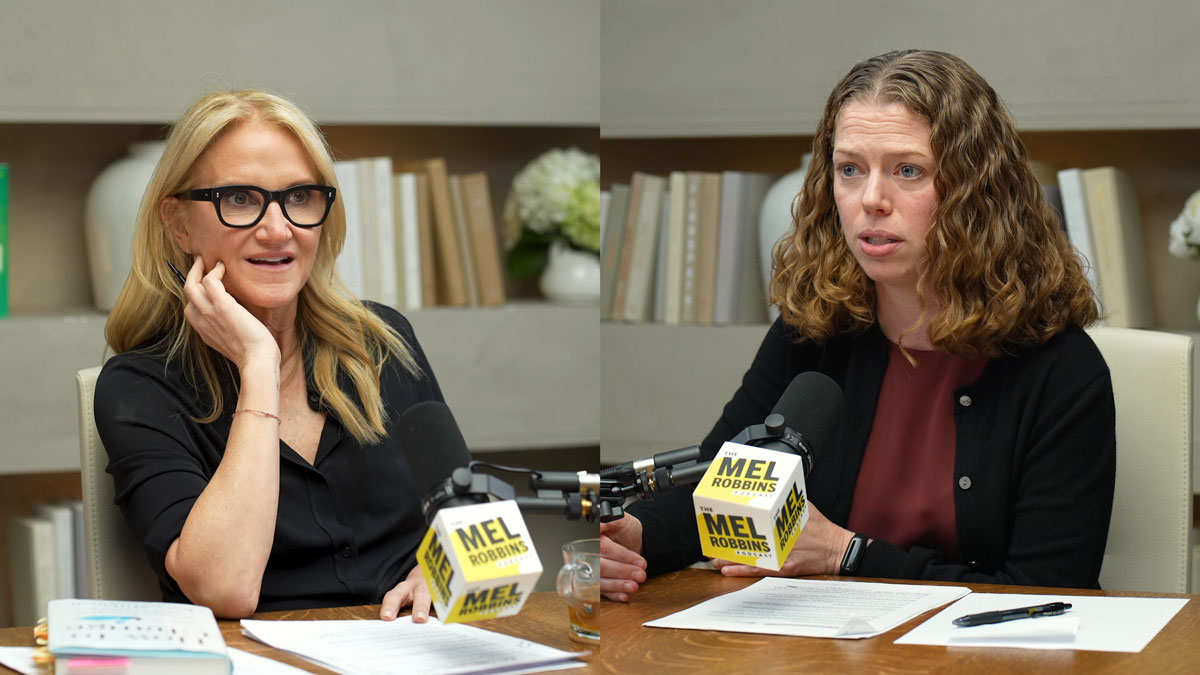
Joining Mel today is Professor Katy Milkman, PhD, one of the world’s leading behavioral scientists, an endowed professor at the Wharton School of Business at the University of Pennsylvania, and co-founder of the Behavior Change for Good Initiative.
If you’ve struggled to create change that sticks…
If you know exactly what you want to change, but can’t follow through…
If you’re tired of blaming yourself for a lack of willpower or discipline…
This conversation will give you clarity, relief, and a proven way forward. Based on research conducted with more than 192 scientists, Professor Milkman identifies seven hidden barriers that stop people from changing and explains the specific, evidence-backed strategy needed to overcome each one.
Listen on:




Most people approach change with a one-size-fits-all mentality - and that just doesn’t work.
Katy Milkman, PhD
All Clips
Transcript
Dr. Katy Milkman (00:00:00):
Most people that are trying to create change, they approach it with a one size fits all mentality. A lot of people aren't thinking intentionally about engineering when they have a goal. That is the number one most important thing that all of us get wrong. Learning how to change is a skill. Just like using an Excel spreadsheet is a skill. It doesn't just take willpower or grit or fortitude. It takes strategy.
Mel Robbins (00:00:27):
Professor Milkman is an award-winning behavioral scientist and an endowed professor at the Wharton School of Business at the University of Pennsylvania. And today she's here to help you remove the seven hidden barriers that are currently keeping you from getting what you want.
Dr. Katy Milkman (00:00:43):
We all have the same barriers.
Mel Robbins (00:00:45):
What are they?
Dr. Katy Milkman (00:00:45):
Well, the first is it almost seems crazy that all of us have the wrong mental model, but almost all of us have the wrong mental model of thinking, "No, no, no, no. There's something wrong with me if I can't do hard things. I just have to push through." I think the biggest lie is that you should just work harder or use your willpower and that there's something wrong with you if you can't push through the pain and achieve this challenging goal. And the truth is-
Mel Robbins (00:01:13):
Professor Katie Milkman, welcome to the Mel Robbins Podcast. Thanks for having me. I really appreciate you making the time. I've been a fan of your work for over a decade. And I love that we're going to get this chance to dig into research that helps you change your life. It's informed some of the biggest books on habits on the planet, and now we have the OG with us in person. I want to start, Professor Milkman, by talking about how could my life be different? If I take everything you're about to teach us, the research you're about to explain and I apply it to my life, what's going to change?
Dr. Katy Milkman (00:01:52):
Every single person has a goal. You have a goal that you want to achieve right now. Even if you haven't articulated it, there's some aspect of your life that you want to improve, you want to get better. And there's also probably people you care about who you want to help improve. And there's a lot of science that you can use to get there faster and with higher probability. But most of us, when we have that goal, when we have someone we care about, we want to help achieve a goal, we're just shooting from our hip. We are not basing our strategies on evidence. And what I hope to share today is a set of tools you can use immediately to make it easier, to achieve whatever it is you want to achieve and to help other people do the same. Whether that's getting in shape, whether that's getting your finances in order, whether it's getting a promotion at work, whatever that goal is you're trying to tackle, we actually have evidence-based tools to help.
(00:02:47):
So hopefully by the end of this episode, you'll have learned and grown a lot in ways that will allow you to be a stronger version as you approach a new goal.
Mel Robbins (00:02:58):
You know what I'm excited about? I feel very optimistic all of a sudden because you're here. No, I mean that. I mean that sincerely because I think a lot of us have that experience of really wanting to change. And I appreciate you validating that inside each and every one of us is a desire to feel better and do better. And we not only want it for ourselves, we want it for the people that we care about. And so before I ask you my next question, I just want to speak to you as you're listening or as you're watching us on YouTube, because everything that you're about to learn, the research that Professor Milkman's going to unpack, the evidence-based strategies, they're universal to all of us, but I want to make this personal as you listen or watch. And so I do want you to think, what is the goal?
(00:03:45):
What is the change? Is it saving money? Is it eating healthier? Is it exercising more? Is it losing weight? Is it spending more time with family and friends? Is it quitting smoking or vaping or drinking, spending less money, getting a better job? Think about what you want to change for the better. Because if you have that in mind, you can apply all this evidence and all this research to every single goal you might have in life. So I just invite you to do that because it's going to make this way more impactful for you.
Mel Robbins (00:04:17):
You know Professor Milkman, you have spent your entire career not only studying, researching, writing, and teaching about why change is so hard. What is the biggest lie that we've been told about change?
Dr. Katy Milkman (00:04:29):
I think the biggest lie is that you should just work harder or use your willpower and that there's something wrong with you if you can't push through the pain and achieve this challenging goal. And the truth is that's not the key to change. It's not that you lack something inside you and that's the reason that you can't do it. It's actually normally that you haven't set up the right strategies, you don't have the right support systems. There's not something broken in you. And if you blame the way you're designed and you say, "I don't have the willpower to make this change. There's something wrong with me and I can't do it."
(00:05:11):
You're setting yourself up to fail. It doesn't just take willpower or grit or fortitude. It takes strategy and it takes understanding how do you set yourself up for success despite the fact that doing hard things is hard. You have to change it so that doing hard things becomes easy because no one's good at doing hard things. So we have to make it enjoyable. We have to make it memorable. We have to make it social. We have to bring to bear all the best evidence to strategically overcome these challenges and we can use the tools that are going to lead us to success instead of to failure.
Mel Robbins (00:05:48):
Well, what I love about where you're starting is I think most of us when we have a big goal and we really want to change, but we can't seem to figure out how to make the change stick or how to change at all. What I'm starting to get, which I think is a brand new idea for me, is that based on the evidence and based on the research that you're about to share with us and based on the strategies you're going to teach us, that learning how to change is a skill.
Dr. Katy Milkman (00:06:21):
Absolutely. Learning how to change is a skill. Just like using an Excel spreadsheet is a skill and you can master that skill and you can learn what it takes. And importantly, once you learn it, it has dual functions. Not only does it actually help you achieve more, you can use those insights to help all the people you care about.
Mel Robbins (00:06:41):
Oh, I love that.
Dr. Katy Milkman (00:06:42):
It's sort of a magic skill in my opinion. And that's why I like to study it and share the science because it has so many benefits.
Mel Robbins (00:06:48):
So the same things that you're going to teach us that we need to do so we can save money and stop drinking and spend more time with friends and lose weight, do all the things that we want to do in life, we can give these same tools to everybody in our lives.
Dr. Katy Milkman (00:07:00):
Whoever you coach-
Mel Robbins (00:07:01):
Oh my gosh, I love this.
Dr. Katy Milkman (00:07:02):
Who you parent, who you teach, who you mentor, everyone needs the same things. I'm constantly getting questions like, "Oh, but does this strategy work for women in their 80s? And does this work in India?" Yes, it really does. The things we're going to talk about, the barriers, they're human. We're all human. We're human no matter our age, our gender, our race. We all have the same barriers and we can all therefore benefit from the same tools.
Mel Robbins (00:07:30):
Professor Milkman, through your extensive research, you have identified that there are these seven barriers to change. How did you discover them and what are they?
Dr. Katy Milkman (00:07:40):
So I've been studying behavior change for roughly 20 years. I run a research center at the University of Pennsylvania called the Behavior Change for Good Initiative. And in doing my work, one of the things I noticed is that most people and organizations that are trying to create change, they approach it with a one size fits all mentality. Sort of let's set big audacious goals, let's visualize success, let's coach people towards the change they need. And often that wasn't clicking. And one of the things I started to notice was that it seemed really critical before taking that step, just like a doctor would try to diagnose when a patient comes in with a headache, what's causing the headache before coming up with a cure? We need to do the same for behavior change. We need to understand it to treat it properly. And so that led to sort of starting to dig and say, what are the kinds of barriers that are consistently arising that seem to be holding people back as they're trying to make change?
(00:08:45):
And I have 180 scientists associated with this research center that I co-direct with Angela Duckworth at the University of Pennsylvania. These are not my seven barriers. These are really the barriers that the field has unearthed, that all of these scientists with all different backgrounds studying change had been building over a long time period and that I'd been contributing to as well, synthesizing that and recognizing we need, in order to be able to offer solutions, we need to diagnose what's the specific barrier. And we see much better results when we're tackling the barrier that is actually underlying the problem than when we try these sort of universal solutions.
Mel Robbins (00:09:24):
I love this because if you start with the premise that the person listening or me or anybody has a desire to change, like you earnestly want to feel healthier, you want to make more money, you want to lose weight, you want to save money, you want to spend more time with your family and friends. So you have this authentic desire, but then all of a sudden everything just falls apart. And so I love that through all this research, you've identified that there are seven barriers that we probably don't even realize are there that are preventing us from doing the things that would make the change that we so desperately want possible. So what are the seven barriers based on research to our ability to change?
Dr. Katy Milkman (00:10:14):
Well, the first is the challenge of just getting started. You have to begin. After that, impulsivity, which is our tendency to want things to feel instantly gratifying, then we have procrastination, putting it off. Why do today what I could put off until tomorrow? Forgetfulness. If it's not top of mind, I'm not going to follow through. So we need to make sure that we remember forgetting laziness, which sounds like an insult, but really is a compliment because it's good to take the path of least resistance. It's great that we're lazy, but it can be a barrier when you want to change that you're wired to prefer shortcuts and easy solutions. And then confidence. If you don't believe that you can make a change, then it's going to be really hard to convince yourself to follow through. And then finally, conformity is another barrier to change. The people around me, I look at what they do and I believe that's all that's possible for me.
(00:11:07):
And so I conform to those norms and that can be a barrier if conformity is not shaping me to make the changes I want to make.
Mel Robbins (00:11:16):
What I love about this is you're providing us a framework so that we can understand the way that we operate and then figure out workarounds. And so you talked about not getting started, impulsivity, procrastination, forgetfulness, laziness, which is basically having to deal with the habits you already have and your automatic behaviors and the shortcuts you already take, lack of confidence and that discouragement that it's not going to work, and then conformity. What was interesting for me as you were going through it, and I'm sure as you were listening or watching on YouTube, you probably were like, "Oh, that's my problem. Oh, that's right. Oh, I don't have a problem with that, but I got a problem with that one." And for me, it was like impulsivity, ding, ding, ding, ding, ding, forgetfulness. That is the bane of my existence. It's important to me, but oh my God.
(00:12:06):
And so I want to go though step by step and talk about what the research says around each one of these seven because whatever goal you have, whether it's saving money or it's finding a new job or it's meeting somebody and falling in love or losing weight, all of these things, you're going to come up against one of these seven internal barriers.
Dr. Katy Milkman (00:12:29):
Or more than one.
Mel Robbins (00:12:30):
Or more than one.
Mel Robbins (00:12:31):
Well, let's dig into the first one, which I think is something we all struggle with sometimes, which is just this barrier of just getting started.
Dr. Katy Milkman (00:12:39):
That's a big barrier for a lot of us is, "I know I should do it. I know I should do it, but when will I do it? " I think the Fresh Start Effect is the best tool we have for motivating a new beginning, for motivating us to start. There are other tools we're going to talk about that you can also leverage that'll give you a little extra kick to motivate you to begin. But when I think about what's the best matched scientific tool that can help us get going when we have been struggling to start, fresh starts are the one.
Mel Robbins (00:13:14):
Can you break down your research and explain what the Fresh Start effect is?
Dr. Katy Milkman (00:13:19):
I would love to. This is one of my favorite things I've ever studied. And I should say the lead author is my former student, Hang Chen Dye. She's brilliant UCLA professor. And I should actually back up because I think the story of how this came about is kind of fun. I visited Google's headquarters in Mountain View, California, I don't know, 15 years ago, roughly at this point. And I was at a big workshop with lots of people talking about their HR operations. They were looking for ways to help their employees take advantage of programs like new educational trainings that they were offering, their gyms that were available, these kinds of things, right? All the employee benefits that they know improve performance, but that a lot of people are not using. And I got this amazing question. The question was, "Okay, Katie, we are completely convinced that we should be using behavioral science tools to encourage adoption in all the ways that you've laid out, but is there some ideal moment when our employees are going to be most open to making a change and adopting these tools that we have waiting at the ready?" Understanding when it is that all of us are most open to making a change can be really valuable.
(00:14:26):
So that's what started the work. We got really interested in the idea that there are moments when people are more motivated to make a change than others, that this is something that waxes and wanes, but we wanted to understand if there was something systematic about when it is that people are most motivated. And the first thought bubble I had, which I suspect some of you who are listening are also thinking about is, well, New Year's is kind of a special moment, right? We know actually that 40% of Americans, and this is a global phenomenon, but in America it's 40% of us make New Year's resolutions. We say, at the beginning of the new year, we're going to do something different in our lives. We're going to make some positive change. And okay, fine, that's one moment. But what I got interested in started talking to Hang Chen about when I came back to my office after that trip was, what is that a microcosm of?
(00:15:19):
There must be other moments too. What is it about New Year's and where else can we find that magic fairy dust and sprinkle it on people that gives you this sense of a fresh start? And so we started reading and learning. And what we learned is there's this whole literature on something called autobiographical memory. And what it teaches us is that the way we think about our lives is not linear. We actually look back on our lives like we are characters in a novel and that there are chapter breaks in our lives that separate the way we think about who we were, who we will be. And those chapter breaks arise at predictable moments. So you can think about big chapter breaks. Big chapter breaks would be something like, you started this podcast or you started a new job or you moved to a new city.
(00:16:07):
Maybe you started a new relationship, by the way, positive and negative chapter breaks in our lives. And when we bookend those chapters, what we do is we feel like we're making a major transition and a new chapter that we open is a new beginning. To us, we feel more separated from who we were before I moved to Boston, before I took this job at company X, Y, Z, before I got that promotion. That was the old me. And I feel this is the new me now at that chapter break. That's what's happening on New Year's. We feel, okay, last year is over, I'm chapter breaking that. That was the old me who didn't get in shape, who didn't make the promotion at work, but this year's going to be different. And we can set the old me aside and move on and say, "I'm going to be optimistic and different this time because of that chapter break." And what we learned in our research is those chapter breaks arise actually a lot more frequently than maybe we would perceive.
(00:17:02):
There's the big ones that I just talked about, those big life transitions that are really relatable, but actually we see little mini chapter breaks every Monday. Every Monday? Every Monday is a fresh start. Every new month, the celebration of every birthday, dates like the start of spring, Labor Day, Memorial Day. And it depends on what your culture and customs are, but there are these moments that demarcate time and give us a sense of a new beginning and they're incredibly frequent. People are naturally gravitating towards these moments that feel like fresh starts in order to make change.
Mel Robbins (00:17:39):
From a common sense standpoint, I can kind of try to make sense of it because I'm like, "Well, I remember my birthday and it feels like a big thing. Three months from now feels kind of generic." But in terms of what's actually going on in your brain, why does a Monday or a birthday or the first day of school or an anniversary, why do these things create this psychological thing called a fresh start effect?
Dr. Katy Milkman (00:18:07):
Yeah. Well, there's two things that are happening. One is at those moments, we tend to step back and think more big picture about our lives because they're break points. So the start of school, just think what's happening before the start of school for every kid and adult, you're like lying in bed the night before thinking about this new beginning that's coming. What's it going to be like? There's all this change that's already in the air, there's a shift point. And that primes you to think about what else you want to change. You're thinking big picture, you're not just head down doing it the way you are in the third week of school, just trying to get through, you're really having those big picture thoughts about your goals. So that's part of it. But the other part is this true psychological distinction that arises at these moments. We literally feel like our identity is a little different because we've turned the page on a new chapter and we feel like either we're going to be, if we're looking forward, a new person, you're like, "Yeah, after my 35th birthday, I will be ready to start saving." That is a good moment because that's going to be a break point for me. I'm going to be a different me in my 35th year. I know I've got this. So you can pin your hopes to that transition point that feels like it's coming or to the transition point you're feeling.
(00:19:20):
The first day of the new year, you can say, "That was the old me, this is the new me. " We don't think about time as one linear experience. We bucket it. We have these buckets that we put time into and we say it's before New Year's and after New Year's. It's just a calendar. It's all made up every day is one day before or one day after another day, but that's not how we experience the world. It's a really different day when it's a new year. It's a different day when it's a Monday. It's a different day when the month changes. It's a different day when you get that promotion. That day feels different and unique from other days and it makes you feel different and unique and like you have a new beginning and a fresh start and some distance from what didn't go well before that makes you optimistic about what you can achieve now.
Mel Robbins (00:20:01):
Is there any research or any strategies that you have that give you an extra boost for the Fresh Start specifically around New Year's?
Dr. Katy Milkman (00:20:12):
I think the most important thing about thinking about New Year's and thinking about Fresh Starts is that all it does is get you started. A fresh start is just a little extra motivation to say, "Yes, I want to do this. Yes, I'm ready." But it doesn't get you to the finish line. And I think this is why New Year's resolutions get such a bad rap. I do a lot of interviews around New Year's with reporters and they always ask, "Well, why should we make New Year's resolution? Should we just jettison this year? Because I read that 80% of them fail." And I think they're 100% right to ask that question, but it sort of misses the point because all a fresh start is, is motivation to begin, but that doesn't get you anywhere if you don't have a bunch of tools at your disposal that are going to help you succeed. Beginning is not enough. So that's the thing that I think everyone should know about Fresh Starts. If you want to make the most of that fresh start, you're going to need a plan and we're going to talk about some of the tools that will help you make more of that fresh start. But you're not just going to need motivation on the first day of January or on Monday in order to get most things done. You're going to need a lot more than a fresh start. You're going to need the fresh start to get you ready to go. And then now you're at the starting blocks and what are you going to do to get to the finish line?
Mel Robbins (00:21:28):
How can the person listening or watching on YouTube create a fresh start right now? Right now I'm listening. I want a fresh start. Professor Milkman, how do I do this? Give it to me.
Dr. Katy Milkman (00:21:39):
So the truth is we hoped there was some magic formula like spin around three times and shred a piece of paper and you can make a fresh start. Out of thin air, I will tell you, it does not seem possible. We've tried things like telling people it's the hundredth day of the year. It's the perfect time for you to have a fresh start. And guess what? They look at us with eyes glazed and they're like, "What are you talking about? " It has to actually feel meaningful for this particular effect to be useful. What we really need to do is actually identify moments that are meaningful fresh starts to us and make plans to tackle change at that time. That seems to me to be the most useful thing. Or if we're trying to help someone else, we can point out fresh start opportunities for them to peg their hopes to.
(00:22:24):
If they keep saying, "No, I'm not ready to do that. No, I'm not going to make that change." You can point out, okay, let's make a commitment and here's a suggestion. I see this moment coming up. You have a birthday coming up next month. You have this big promotion. I know you're about to move into a new apartment. That's a really good time to make this change.
(00:22:45):
You're going to be at a new beginning. It's a perfect moment to do it. What are going to be the fresh starts that stand out on your calendar and then give you that sense of a new beginning? Personalize it and find the right ones so that you can lean into them and accept that motivation.
Mel Robbins (00:23:01):
Impulsivity.
Dr. Katy Milkman (00:23:03):
This is one of my favorites. I think this is the one I struggle with the most. You've heard if it doesn't kill you, it makes you stronger. There's a lot in the popular culture suggesting it's your problem and just work through it. What research shows is helpful for dealing with impulsivity is just changing the nature of whatever it is you need to do so that it is instantly gratifying.
Mel Robbins (00:23:28):
Can you give me an example?
Dr. Katy Milkman (00:23:29):
Yes. Yeah. So imagine you want to get in shape and there are two paths that you could take. One path would be go to the gym and look for the most efficient exercise you can do in 30 minutes to burn calories and make your body fitter. Maybe it's like the maximally punishing stair master. That's the one. Okay. There's another strategy you could think about though. Instead of going for efficiency when you go to the gym, you could think, "What am I going to enjoy most while I'm here that's going to move my body?" And maybe you sign up for a Zumba class with a friend. And I want to note, okay, it's a little less efficient if you go to the Zumba class probably per calorie, per goal you're trying to accomplish, but you like it. And what research shows is that most of us think the right thing to do is that effective, efficient path.
(00:24:19):
I'm going to get on the StairMaster, but we're wrong. There's really wonderful work by Cornell's, Caitlin Woolley and University of Chicago's Islet Fishbox showing that that is a mistake. When we instead nudge people to pursue their goals in a way they enjoy, like going to the Zoombook class, instead of getting on the maximally punishing StairMaster, suddenly they actually start enjoying what they're doing and they persist longer, which is what almost all of our goals are about. You're not going to get in shape in one workout. You need to keep coming back to the gym. You need to keep doing it. And so find a way to make it fun to do the thing that you want to do in the long term to achieve your goals. I like to call it the Mary Poppins effect. Mary Poppins says, "A spoonful of sugar makes the medicine go down.
(00:25:05):
Greatest nanny of all time." And she's right about that, not just for kids, but for adults. We need to be looking for ways to make things that are good for us in the long run, rewarding in the short run. Because we're present bias doesn't mean we can't achieve our long-term goals. We just have to change the way we're pursuing them so they're rewarding in the short run.
Mel Robbins (00:25:24):
The research shows that if you can make it fun and easy, your own impulsive nature will actually stay focused on the thing that's fun and easy versus avoiding it because you made it too hard. Is that a way to unpack that?
Dr. Katy Milkman (00:25:38):
It's beautiful. It sounds so obvious that it almost seems crazy that all of us have the wrong mental model, but almost all of us have the wrong mental model of thinking, "No, no, no, no. There's something wrong with me if I can't do hard things. I just have to push through." But actually, no, you just have to find a way to transform the hard thing, which PS, it's not always possible, but it's often possible and it's not our instinct to try to change the way we pursue these goals so that they are more instantly gratifying. And once you teach people that this is actually the way to be more successful and achieve more, a lot of really good things happen.
Mel Robbins (00:26:14):
Are there other ones you want to talk about right now that are related to impulsivity? Because if you can't figure out how to make filling out the application for financial aid fun and you keep avoid, you know what I'm saying? Yes, absolutely. Because you're distracted by your phone or you're distracted by this or you're impulsive because you have this present bias and you want to move toward a thing that's fun now.
Dr. Katy Milkman (00:26:34):
Yeah. One of my favorites is a strategy I used in my own life and continued to use that I then turned into a science experiment. We're here in Boston. I was a graduate student here and as a first year graduate student, I knew I needed to move my body. I was a college athlete and exercise is very important to my mental health. It's important to all of our mental health, let's be honest. But for me, it was particularly critical as a stressed out first year graduate student. But at the end of a long day of classes with problem sets waiting ahead of me, I found it really hard to motivate myself to go out into the Boston winter to the gym.
Mel Robbins (00:27:09):
Oh, when it's dark at four o'clock in the afternoon.
Dr. Katy Milkman (00:27:11):
Exactly. And get to the gym and work out. So what I really wanted to do was just curl up on my cozy couch and I love reading. For a lot of people, they'll think binge watch TV. I love that too. I was really into the Harry Potter novels at that time. They were fairly new. I just wanted to sink into fiction and go to another place.
(00:27:37):
And what I realized was that if I could actually combine those two things, there was a magical solution awaiting me. So specifically, I set a rule for myself. I don't get to enjoy Harry Potter unless I'm at the gym exercising. In fact, I started listening to audiobooks and what happened was sort of life altering for me as a graduate student who really needed to move and have that motivation. Instead of coming home at the end of a long day and wasting time, all I wanted to do was get my workout clothes on and go find out what happened next to Harry Potter and Baltimore. So I hustled over to the gym and then I'm listening while I'm exercising. The other magical thing is these are complementarities. So this is the word economists use to describe two things that are better together than a part, like peanut butter and jelly.
(00:28:29):
They're compliments. And that's how exercise and entertainment are because you need to be distracted from the pain of that workout. And so suddenly I didn't even notice that I was sweating and that it was hard because I was so engaged and engrossed in what I was listening to. So time flies while I'm at the gym. I have no guilt associated with indulging in my entertainment that day. I go back to my house and I'm totally ready to focus on my work and it was like magic. And so I actually decided, "Hey, this could be useful to other people because this is amazing for me. This is really changing everything." I started getting better grades. I was feeling great. Everything felt so different. So I did research on this tool, which I call temptation bundling, which is find some chore that is important to your long run goals, but it feels like a chore when you're doing it and find something tempting that you love and only let yourself enjoy that temptation while you're doing the chore.
(00:29:26):
So we did our first research experiment on it with exercise and audiobooks actually. We randomly assigned some people to only have access to tempting audiobooks while they were working out at the gym and other people got an equally valued gift certificate. So they could have gone and bought audiobooks or other entertainment, but we didn't give them that hint. And we found it help people exercise 56% more to have to come back and go to the gym after they'd started listening to an audiobook if they wanted to find out what happened next. In fact, we did one study where just suggesting this to people led to durable increases in exercise. We sugges Yes, they do this. We give them a free audiobook and we see durable benefits for months later. So that's one set of research.
Mel Robbins (00:30:08):
When we have a family dinner, I put on music.
Dr. Katy Milkman (00:30:11):
I love that.
Mel Robbins (00:30:12):
When it's time to clean up.
Dr. Katy Milkman (00:30:13):
Yeah, Because now it's fun.
Mel Robbins (00:30:14):
And everybody kind of starts dancing.
Dr. Katy Milkman (00:30:15):
By the way, that's very Mary Poppins. Mary Poppins, right? Do you remember there's ... Maybe I'm too into Mary Poppins
Mel Robbins (00:30:20):
Of course I love Mary Poppins, yes.
Dr. Katy Milkman (00:30:21):
But they sing and they dance while they're doing all the chores.That's a Mary Poppins scene. So without an element of fun.
Mel Robbins (00:30:29):
Can you give us other examples that you've seen in readers of your work or students or their research that really sparks something for the person listening or?
Dr. Katy Milkman (00:30:39):
I like saving your favorite podcast, probably The Mel Robbins podcast for when you're doing household chores. So now instead of feeling like it's kind of miserable to clean the bathroom or to fold the laundry, there's something you're looking forward to that's going to make that time fly. So there's a lot of different ways you can do this. And it's another one just like fresh starts where there is a personal taste element to figuring out what's the right one for you, what's your temptation something you crave. You want to maybe limit a little bit your access to that you could combine with something that's important to you, but might feel like a chore if you didn't have this temptation in the equation.
Mel Robbins (00:31:16):
I love that. One of the barriers that you've identified that we have internally to changing is procrastination. What can we do to overcome that?
Dr. Katy Milkman (00:31:28):
That's a really hard one, but it's really related to what we've been talking about with impulsivity. So procrastination is a problem for all of us because we want things to feel good right now. And so we'd rather delay until later the thing that is hard. One solution is think about this as having two sides, this equation. I can either make it more enjoyable to do the hard thing or I can make the penalty of not doing the hard thing greater. Think of it carrots and sticks.
Mel Robbins (00:32:01):
Okay.
Dr. Katy Milkman (00:32:01):
So we've been focused on carrots. Let's change-
Mel Robbins (00:32:03):
Yeah, make it easy. Let's bundle it with stuff that we like to do.
Dr. Katy Milkman (00:32:06):
That's the carrot solution.
Mel Robbins (00:32:07):
Yes. Okay.
Dr. Katy Milkman (00:32:09):
Procrastination often works pretty well with the stick solution. We're used to other people helping us with sticks. Let me give you some examples. Your boss who gives you a deadline helps you get that work done as opposed to letting the report take months and months. That is good management. Someone has said, "Nope, it has to be due. I need it by this date. You've got to finish it. And if not, you know there's consequences for your performance review." Another example of someone else helping us and constraining us with a stick would be something like maybe you're tempted to speed on your way to work. That would be instantly gratifying, but you know that there is a police officer out there somewhere with a speed camera and if you get caught, you're going to get a ticket. So there's a consequence. There's a stick if you speed. So those are consequences that other entities like your boss-
Mel Robbins (00:33:04):
Or your partner or your family. Or somebody. Mom's going to be mad. My partner's going to be upset if I don't do this. And so got it. Okay.
Dr. Katy Milkman (00:33:11):
So we're used to those other consequences. Yes. We can do the same thing to ourselves, which sounds weird, but we can impose sticks on ourselves. And there's a whole lot of research showing this is helpful. So let me give you a very concrete example.
Mel Robbins (00:33:22):
Okay.
Dr. Katy Milkman (00:33:23):
You can, this is a weird one to start with, but I think the most powerful one. You can literally put money on the line that you agree you will forfeit if you fail to achieve a goal by a certain date. And you can choose a referee who will hold you accountable and you are finding yourself for failure on that goal. Say you really want to meditate three times a week. It's important to you, but you're worried there's so many other things you're going to procrastinate on actually doing. But you have a partner who would know if you meditated because your goal is to do it in the morning. So you say, "Okay, I'm going to do this and I'm going to find myself $10 if I don't meditate three times this week and I want you to hold me accountable. You ask your partner to be your referee." There are websites, and of course you can just do this informally too, like Beeminder and Stick, which I have no affiliation with, that will let you put money on the line, choose a referee, and then find yourself if you fail to achieve that goal.
(00:34:16):
And it turns out this is an extremely effective way-
Mel Robbins (00:34:20):
Really? ...
Dr. Katy Milkman (00:34:20):
To compel change. One of my favorite studies on this is with one of the toughest things to change, which is smoking. There's this amazing study. Dean Karlin of Northwestern University was one of the leads on this project where they got a bunch of smokers to sign up for a smoking cessation program. They randomly assigned them to different groups. Some of them get standard smoking cessation tools. We're going to coach you and explain why this is so important and give you all the usual. The other group gets that too. And access to a bank account they can put money in for the next six months that they know will be taken away from them if they fail a urine test for nicotine or cotinine, which are signals that you're still smoking. So six months down the line, you lose all the money in that bank account, and you don't have to put any money in that bank account, by the way.
(00:35:07):
You're choosing to build up a fine for yourself. It reduced the rate at which people were smoking by 30% if they were randomly assigned to have access to that account. I'm not talking about using it. Plenty of people didn't use it. Just having a way to find yourself reduced smoking dramatically. You can find yourself for failure to accomplish your goals, and that's a really powerful way to achieve more. Now, the same principle can be applied with less extreme measures. So it doesn't literally have to be a monetary fine. You can think of other ways to create some consequence that's undesirable if you don't succeed at your goal. It can be you just tell somebody who means a lot to you that you're trying to do this thing and to ask you if you've accomplished it and make you prove it to them. And then you'll have a little shame and disappointment in the face of someone who you respect.
(00:36:03):
If you haven't achieved it, that's a soft commitment device. It's the same idea. It's still creating some sting. Another form of commitment device is simply to make it harder to do the thing that you don't want to do. So it's sort of like a penalty to make it hard to, for instance, eat junk food by taking it all out of your house. Now it "costs more to get junk food." It doesn't literally, but instead of being able to go to my pantry, which is very, very easy,
(00:36:30):
I now have find myself by forcing myself to walk all the way to the grocery store or get in the car and drive somewhere to get the junk food. So that is a form of commitment device as well. When you create a friction, you make it harder to do the thing. And that's another way you can tackle procrastination and also impulsivity. Really, they blend together because they come from the same underlying psychology.
Mel Robbins (00:36:54):
Let's talk about forgetfulness. This is the bane of my existence. I will own that I probably have used this as an excuse or a crutch, but there are so many things in my life that I want to and I mean to make a priority or I say I'm going to, and then I just forget.
Dr. Katy Milkman (00:37:18):
We have a lot of confidence that we will remember things because they feel important to us in the moment when we're thinking about them. You're lying in bed at night and you're like, "Oh, I definitely need to do that tomorrow." And it's so important. Of course, I'll remember. But economists call this an empathy gap. We don't understand who we'll be tomorrow. We don't know what it'll be like. We think, yeah, this will always be top of mind because it's top of mind and burning right now. But then you wake up, you have your coffee, you get into the swing of your day. And even though it was really important, it's gone. And there's this really interesting research from the 1800s on memory decay. Within hours, 70% of something you try to memorize is gone. We just lose information at a shockingly high rate.
Mel Robbins (00:38:02):
And that was the 1800s. I mean, I can only imagine now.
Dr. Katy Milkman (00:38:04):
That's right. There was not even social media distracting us at that point.
Mel Robbins (00:38:07):
Well, Professor Milkman, I love what you say that you don't fail because you don't care. You fail because you forget.
Dr. Katy Milkman (00:38:15):
So we have to understand that forgetting is a barrier and then there are structural changes we can make.
Mel Robbins (00:38:20):
What are they?
Dr. Katy Milkman (00:38:21):
So one that's actually gotten a fair amount of attention, though it's maybe a little bit bygone is simple checklist. Let's just think about what surgeons do that makes them more effective. They have checklists in operating rooms, so they don't forget to extract the tool that otherwise would end up in your chest cavity. They're really, really important jobs where people create checklists and structures. Pilots have checklists. You can have checklists in your life as well, and you shouldn't feel bad about it. They're incredibly effective at improving our performance. But even a step less intense than a checklist is making really concrete and detailed plans. One thing that research has shown, and this is mostly work by Peter Goldwitzer of NYU, is that people are much more successful at achieving a goal when they make a concrete plan about when they'll do it, where they'll do it, how they'll get there. And I like to call them queue based plans. There needs to be-
Mel Robbins (00:39:16):
Queue based plans?
Dr. Katy Milkman (00:39:17):
Yes.
Mel Robbins (00:39:18):
Like the letter Q?
Dr. Katy Milkman (00:39:19):
No, like your stage Q, right? Oh. You've got to remember the queue to say your lines.
Mel Robbins (00:39:24):
Okay, gotcha. What are the three things we're writing on our queue based plan? So ideally,
Dr. Katy Milkman (00:39:30):
First of all, you need a queue in your queue based plan. So the queue could be at point in time. When are you going to do this thing? But the queue could be something else. Maybe you're not exactly sure when you're next going to pass by the pharmacy and be able to pick up the medication you need to grab or when you're going to have the next opportunity to talk to your daughter who only calls every so often. And so the queue can be if my daughter calls or if I walk by the pharmacy, it doesn't have to be at 3:00 PM on Tuesday. So the queue is some trigger that you're going to need to remind you, this is when I enact the behavior. So the plan needs a queue-
Mel Robbins (00:40:04):
So when am I going to do it? It's either if this happens then or here's the time and the date I'm doing it.
Dr. Katy Milkman (00:40:09):
Exactly. So when are you going to do it? Where are you going to do it? How are you going to get there? Really simple. Get those plans in order because if it's not planned out, if you don't actually have a queue that will trigger, "Oh, it's noon. I said I would do this then." You're far less likely to follow through. And the way that we store memory is through these cues. That's what triggers our memory. So cues are really critical. The other thing that it does is it creates a commitment that's no longer a vague intention. "Oh yeah, I planned to go to the gym at some point this week. I plan to meditate at some point. "Now there's a specific point in time and you are letting yourself down. If you don't follow through at that point in time, you can no longer convince yourself," Oh, later, yes, later I'll get to it.
(00:40:53):
"So it's creating that accountability for yourself if you push it off further. That's also important. So there's forgetting, there's an accountability component and also it can help you think through obstacles when you make these plans. So I'm a parent and if I haven't figured out who's going to be taking care of my nine-year-old, I can't be at this other place. If I haven't figured out who's going to take this meeting for me, I can't be at this other place. So whatever it is that might be an obstacle, this planning process helps you ensure that it doesn't trip you up at the last minute before you can get it out of the way. And it's a really simple tool you can use in your own life anytime there's something you're worried you might forget that's important to follow through on. Obviously, reminders are incredibly important too.
(00:41:35):
Put it on your calendar, send yourself your future self an email that's triggering that time. But sometimes we literally can't have those elements there to remind us to at the right moment. And so in those cases, the cue, like when my daughter next calls, that's when I will do X, Y, Z can be important as well.
Mel Robbins (00:41:53):
I just kept sitting here thinking about how not only is it helpful to understand that there are these simple evidence-based things you can do. When am I going to do it? Where am I going to do it? How am I going to do it? It made me realize how often I am hoping something is going to happen and I'm leaving it to accident
(00:42:21):
Versus making a plan and being serious about it actually happening. You know what I mean? I think that there's a lot for me where I have a lot of things that I would like to change, but it sort of lives in the, maybe someday it'll be one of my fault when I get around to it and then everything else about life takes over. And the simple truth is if I look in the mirror and I'm being honest with myself, I never made a plan. I never even sat down to say, okay, I want to see friends more this year. When am I going to do it? Where am I going to do it? How am I going to do it? Versus just sort of throwing the wish into the air and hoping that somehow it magically ends up happening. I'm just sitting here going, Mal, you just literally left, you've left some of the most important things that you want in life to chance.
Dr. Katy Milkman (00:43:14):
It can also help to have other people involved in this process. So we have this study where everybody signs up for a program to help them exercise more regularly with a friend, but we randomly assign them to either be paid if they go to the gym, whether or not their friend shows up, or only if they and their friend both show up.
Mel Robbins (00:43:32):
Oh.
Dr. Katy Milkman (00:43:32):
So you and I, they were friends, we're gym buddies. We sign up for this program. Either we could be in the condition where we're each paid a dollar, regardless of whether we show up together, whenever we go to the show. Or we're in the condition where Mel, you and I can only earn a dollar if we show up together.
Mel Robbins (00:43:49):
Oh.
Dr. Katy Milkman (00:43:50):
So that's much harder. We have to coordinate and plan our workout, by the way. And it turns out we're going to go 35% more if we're in that second group where we have to coordinate and we have to show up together.
Mel Robbins (00:44:01):
Well, because I'm not going to let you down.
Dr. Katy Milkman (00:44:02):
That's right.
Mel Robbins (00:44:02):
I'll let myself down all day long.
Dr. Katy Milkman (00:44:04):
When you make a plan, sometimes you can make it stronger when it's with someone else and there's an accountability element and that can be part of what makes the plan better. By the way, it also makes it more fun when you pursue your goals in tandem with a friend. So I would just layer on a little bit of extra magic sauce from behavioral science if you can. When you're making a plan about something you want to do regularly, is there also a way you can work something social into your plan? So you have accountability and you have commitment and also a little bit of fun because in that particular study, the tandem goal pursuit ended up being more effective, both because it was more fun and because of the accountability and of course because of the forced planning.
Mel Robbins (00:44:45):
Let's talk about laziness. This is one of the seven internal barriers to you being able to change. What does the research show and what are some evidence-based strategies we can use to overcome bad habits that keep us from changing?
Dr. Katy Milkman (00:45:00):
Great. Okay. So we want the easiest solution. We want the path of least resistance. So the first piece of advice, we don't even have to get to habits. The first piece of advice we're going to get to habits in a moment is just make the easiest thing in your life, make the automatic thing that happens, the thing that is good for you whenever you can. So when you open your computer screen, you open your browser. Does it take you to a social media website that you may not want to get sucked into? Or does it take you to learn about something interesting? Does it take you to the latest Mel Robbins podcast? Where do you want it to take? You think proactively about what you want the defaults in your life to be. When you get a paycheck, does a portion of it automatically get transferred over to a savings account so that you have to take no steps whatsoever and saving is happening?
(00:45:45):
What are the defaults that you can set so that the lazy thing to do is something you like that's keeping healthy snacks in the pantry, that's having a workout machine that's nearby. The further, by the way, you are from a resource, whether it's a gym where you want to go exercise or a health clinic where you want to get health services, the less likely it is you're going to show up and do that thing because there's friction. Now you have distance holding you up. So think about how do you create minimal friction between you and the good things you want to do and maximize the friction, make it far away to do all the things that are bad. That's one way of taking advantage of laziness. The second part of laziness though is habit.
Mel Robbins (00:46:28):
Okay.
Dr. Katy Milkman (00:46:28):
So habits are these automatic behaviors that we fall back on because we've built a habit loop. And if people may be familiar with The Power of Habit by Charles Duhigg or Atomic Habits by James Clear, these are great books that I think have done a nice job popularizing this idea of a habit loop. Generally, habits form because there's some consistent context we find ourselves in, like the kitchen in the morning or our bathroom at night, and we're used to going on autopilot and taking an action like brushing my teeth in the bathroom at night or making a pot of coffee in the kitchen in the morning. And it gives a consistent reward. The coffee wakes me up and that feels good or the toothpaste makes me feel a little tingly and minty and that feels good. So you need to have a consistent context, which is your cue.
(00:47:16):
You engage in the behavior, you get a reward and you repeat. And you repeat that cycle often enough, it turns into a habit. And in fact, we did some research with machine learning where we looked like, how long does it take for things to be habitual? And we found it's different for every person. It depends on how complex the activity is, but it's like order of magnitude weeks for something simple like washing your hands. If you're a hospital caregiver, order of magnitude months for something more complicated like exercising at a gym. So be patient with yourself if you're trying to build a good habit, but we want to put things on autopilot as much as possible by intentionally following that habit loop so that we actually stop thinking about it and just start doing it.
(00:48:00):
That's the magic of making the coffee in the morning and brushing your teeth because it's so automatic and you've done it so many times, you're not thinking about it. You're literally doing it mindlessly and that's actually very good if you're trying to build a good habit to have it happen mindlessly. Now, we can talk about, but don't you want to be mindful and enjoy all the good things you're doing, but sometimes you just want the good things to happen so your mind can wander to other topics. You don't really need to be present necessarily for all of the nitty-gritty stuff in life that you want to have happen to be successful. So first of all, recognize the habit loop and try to be intentional about, can you find a context that's going to trigger you and then where you're going to do this behavior, you're going to repeat it and find a way to make it rewarding.
(00:48:44):
And the more you repeat, the more likely it is that this is going to start to feel automatic and no longer effortful. And in fact, there's this really neat research Angela Duckworth did with Brian Gala who two academics, a lot of us think that self-control is what makes people repeatedly engage in good behaviors. And actually what they found is a lot of the people we thought were self-controlled, they just built habits and that's what they were following. You thought that person was so self-controlled because they eat so well. Nope, they just have a habit. They actually aren't making a conscious decision to eat that healthy lunch or to exercise in the afternoon or to meditate or to come to a meeting prepared with a plan. That's their habit. And so habits are a big part of what makes successful people look self-controlled. It's that they've deliberately or accidentally, but mostly deliberately figured out a way to make this routine automatic.
Mel Robbins (00:49:37):
Let's talk about the other internal barrier to changing, which is a lack of confidence, this sort of internal mindset that it's not going to work for you or feeling discouraged.
Dr. Katy Milkman (00:49:47):
Yeah. This is a really important barrier. And by the way, I want to emphasize that it can be particularly challenging for people who are trying to do something where society has been telling them, "This isn't for you. " And there's whatever group you belong to, there's probably something that society has said, "People like you shouldn't do this thing." And that can make confidence a particularly large barrier. But even if the whole world has been shouting, "You can do it, " there's probably still something where you're lacking the confidence that you really can. And so there are a number of things we can do about this. One of them is trying to adopt a growth mindset, which is to recognize that when you have a setback that doesn't mean you have a fixed ability, it's actually something you can learn and grow from and you can get better and stronger.
(00:50:41):
That when you look at yourself and you look at where you are and you look at the things that you are trying to achieve, you recognize you're a work in progress. And if some setback arises and it doesn't go well for you, you have some misstep. You think, "What can I learn from that? " That's a growth mindset. You recognize you can always get better. A fixed mindset is thinking about yourself as a final product.
(00:51:11):
This is as good as it gets. And if you have a misstep or a failure, something goes wrong, instead of thinking, "What can I learn from that? How can I grow?" You think, "Well, that's just another bit of evidence that I am limited in my capacity." Can you look at those as learning opportunities? What was it that went wrong and how can we learn and grow from that so that this time it'll go better? So growth mindset can be really powerful. There's also some really fascinating research on how placebo effects can be used in this way. So most listeners may be familiar with the idea of a placebo effect for giving people positive results in a medical domain. It's changing your belief and expectancy in a way that then you behave differently. So we can think about what does that mean for those of us who lack confidence in a domain.
(00:52:03):
We don't believe we can do it. Well, what that says is we basically need a placebo to build up our mindset that we can. So what's the equivalent? What would be a placebo effect in the context of confidence? Sometimes that is finding a coach or a support structure who's telling you, "You've got this because you need that placebo effect just to believe something different is going to be the outcome." There's research on this in a context that I particularly love, and I think this was actually something you covered on the show recently. I think I listened to an episode where you had Dr. Ellen Langer from Harvard on, and she talked about this study that I absolutely love where she and Allie Crum, a Stanford professor brought-
Mel Robbins (00:52:47):
We Just interviewed Allie too. Professor Crum, she's a genius.
Dr. Katy Milkman (00:52:51):
They're both wonderful people and brilliant. They have this amazing paper showing that when they told room attendants who were cleaning rooms in hotels, that their work was exercise as opposed to, "This is just your job, do your job." They told them, "Hey, yeah, doing your job, you are getting the CDC recommended amount of exercise." The women who had been told that actually lost additional weight, their blood pressure improved. They saw all of these physiological improvements just because they believed their work was something different, that it was helping them achieve a goal. And so what that sort of mind, body research and placebo effect work tells us is that if confidence is your barrier, you need to find a way to change what you believe is possible about yourself because that constraint is holding you back. And so it may be that you need to look for a different group of friends who's going to support you and give you that confidence.
(00:53:49):
There's also some really interesting research that was done by a PhD student at the University of Pennsylvania named Lauren Eskris Winkler. She's now a professor at Northwestern University. And she was really interested in whether or not people who are struggling, who are not top performers could be helped to build their confidence and motivation and achieve more through any kind of tool. And so she started interviewing low performers and just searching for answers, asking, "What do you think? " You're a struggling salesperson, you're not making your numbers, what do you think might help you level up your game? You're a struggling student, you're getting C's. What do you think might help level you up? She's thinking she's going to come up with some nugget. But in the process of collecting that data, one really interesting thing emerged, which was that everybody she talked to actually had really great insights and lit up with delight at being asked.
(00:54:42):
They basically all said, "No one ever asks what I think could improve outcomes. They're constantly giving me advice because I'm not doing very well, but no one's ever asked my opinion. And this feels great. And when can we talk next?" Because I love this. And she started to wonder if actually there might be sort of a cure for low confidence in giving people a chance to coach and mentor others. Most of the time somebody's having a tough time, we give them advice, whether they want it or not. But what if we give them a chance to coach and advise someone who's even a little bit behind them? In the process of doing that, a few magical things seem to happen, and she has research now to prove it. One is we build confidence. We feel like maybe I have something to offer. Somebody thought to ask me for advice.
(00:55:30):
The second thing is, now I'm accountable. I better come up with a good insight because there's someone counting on me, someone depending on me. And so people introspect deeply about what might work for someone to achieve more, and they come up with good insights. And then finally, they give that advice and there's something called the saying is believing effect. They're going to believe it more and they're going to feel hypocritical if they don't enact the advice themselves. So what Lauren has shown is that when we actually coach others and when we step into mentoring rules, it boosts our competence and our confidence. And so one thing that a lot of us can do if we're trying to achieve a goal is find someone else who's also on this journey, but who might want and benefit from some coaching who's a little further behind us. Or if we're a leader, if there's someone in our life who's struggling, can we find someone who's even a little further behind them and give them an opportunity to coach.
(00:56:24):
This is a great parenting trick. My collaborator, Angela Duckworth, who was a part of the research on this, used it a lot with her girls when she was raising them like, Hey-
Mel Robbins (00:56:34):
Tell us, how do we do this as parents? Because the way that I was thinking as you were talking to this, I think this is fascinating and I want to dig into this research. So could you come up with a fictitious person? So hear me out here. Let's say your boyfriend is struggling to get motivated to the gym or they're struggling to reach their quota and you turn to them and you say, "I've got a friend of mine who's got a brother who has been really struggling with motivation around exercise and you used to be a college athlete." Do you have any advice- What could help him? What could help him? Is that enough to make up ... How did you and Angela use this with Angela's daughters?
Dr. Katy Milkman (00:57:11):
That's a great question. So Angela uses it with their daughters genuinely. If one of them is struggling, she'll often say to that daughter, "Hey, your younger sister is also going to encounter this. " As you're working through it, what do you think you've learned that might be helpful to her as she deals with the same thing? So that would be a way you could use it with kids, but one of the experiments we did was very similar to that hypothetical you just gave around a partner who you want to motivate to go to the gym and you make up a hypothetical person. So this was an experiment we did with high school students in Florida who were, it was a fresh start at the beginning of a new year and we brought them into computer labs and randomly assigned them to two experimental conditions. One group took some survey questions, told us what the class was they most wanted to improve in, and then they left. The other group took the same survey questions, told us the class they wanted to improve in, and then they spent eight minutes answering questions, giving advice to younger students about how to study more effectively. So some were multiple choice questions, some were free response like, "How do you avoid distraction? What do you find the best places to study? Do you listen to music or is it better not to?
(00:58:23):
" And this advice is going to be, we tell them, truthfully, we're going to share it with younger students, but it's still this sort of abstract. They're not actually talking to someone. And we did share it with younger students, but not in that direct one-on-one way. And that intervention, just getting those kids to spend eight minutes on some advice giving that was specific about how to study more effectively significantly improved students' grades over the control group that didn't do it. Now, I also want to be very clear, these are very small effects. So we are not turning C students into valedictorians with an eight minute exercise, but it did have a meaningful and statistically significant effect. So moved them one point on a grade point from, or they're going from a scale from 50 to 100 could be my grade. So I'm going from like a 76 to a 77.
(00:59:07):
It moved them in the class they most wanted to improve in and in math, which were the two things we set out to measure because we wanted to help them in their goal and math was the toughest subject in this particular school, so we targeted that. And Lauren Estraswinkler, who's the lead on this project, has done other work with other people in lots of other settings. This is not just about academic performance, it's about achieving goals around health, it's about achieving goals related to your job. When you are given an opportunity to coach, even if it's in this, I'm filling out a form and sending my advice off through to some distant stranger, that forced introspection, the opportunity to feel like somebody is listening to me changes your confidence and it changes your motivation in a way that shows real results.
Mel Robbins (00:59:55):
One thing I just wanted to reflect back is as I'm really listening to this fascinating piece of re research about how when you go from beating yourself up and telling yourself you can't handle it or you're failing at it, to being asked to coach somebody else, one of the things that I keep thinking about is it is an example of a tool that you could use to get yourself out of a fixed mindset where you believe you can't change and you're stuck where you are. And by looking at giving advice, you have to extract the lessons that you've learned even if you're not good at it. And I bet you could come up with six pieces of advice of what to do or not do and right there is evidence that you have the ability to change.
Dr. Katy Milkman (01:00:44):
I love that. That's a really nice way of coming up with a simple prescription that everyone could use right now that could help them improve. It's really a great idea.
Mel Robbins (01:00:54):
The last internal barrier to change is conformity. Let's talk about this.
Dr. Katy Milkman (01:01:02):
This actually bridges the internal and the external. So this one, I snuck into my list of seven with a little bit of trepidation because it's just so darn important, but it does bleed a little bit outside of the internal, but it shapes our internal dialogue, who we surround ourselves with, what we see them accomplishing, what they're modeling for us. One of my favorite studies that shows how important this is, is a study that was done by an economist named Scott Correll at UT Austin. He got data on students at the Air Force Academy and the squadrons they were assigned to as freshmen. And this is essentially just a random group of people you're going to have to spend all your time with. And he found that if you end up with folks who you're living with in your freshman year who were more studious, it improves your grades.
(01:01:51):
You get some random assignment to a roommate who had higher verbal SAT scores. You're going to be a better student. You're going to get higher grades than if it's the opposite if you got randomly assigned to someone who wasn't as studious. So really interesting example of how just exposure to whoever's in your social group randomly changes your outcomes.
(01:02:15):
What that means though is that actually we are constantly being shaped by whoever it is that we work with, whoever it is we're married to, our social group, the behaviors that they model, whether that's in the case of the college roommate situation, they stay in and work late on Fridays, so I think that's normal and I should too, or they're really into exercise or they are a party animal. We start to think, "Oh, this is normal behavior. This is how I should behave too. This is what I'm capable of, " because that's what other people are signaling to us, what's normal, what's desirable, and what is possible. And so often that's a barrier. If you are surrounded by other people who are not pursuing the kinds of goals that you really aspire to achieve, they can hold you back by giving you a false belief that this isn't possible for someone like you.
(01:03:10):
But if you seek out friendships, relationships, work companions, mentors, et cetera, who are achieving at a high level, that can show you what's possible. And also, of course, you can literally copy and paste the strategies that are effective for them. And this is another one that feels, I think, obvious once you start talking about it, but that a lot of people aren't thinking intentionally about engineering when they have a goal, looking for friendships, looking to make connections with people who are achieving the specific things you want to achieve and trying to deliberately emulate what it is that they're doing that's working. We did one experiment, this is with Katie Mayer, who's a professor at the University of Alberta and Angela Duckworth again, where we randomly assign people to go out and copy and paste someone else's life strategy for achieving a specific goal. Go find somebody who's doing it and copy what's working for them.
(01:04:10):
And another group, we encouraged them to try to achieve the same goal, but we just gave them ideas that had been acquired actually by the copy and paste group. So actually this information out there is the same. It's exactly the same. It's the same. But some went out and had to obtain it and try to copy someone they knew. And the people who went out and had to obtain it and copy someone they knew did better. They were getting that social interaction, that social information, they're getting information that may be more personally relevant and they're seeing how it's implemented. And so they're better able to internalize and execute. So think about how can you use the people around you as a tool to help you change. We also talked earlier about tandem goal pursuit, this idea of, if I do it with a friend, that can motivate me because I'm going to feel accountable, I'm going to enjoy it more.
(01:04:57):
And so that's another way that conformity can be flipped from being a barrier to being a solution. The people around us have huge power over what we achieve and whether or not we get to our goals. And so first best is you actually engage with the people and that's what the research shows. But if you can't find them, then trying to learn about them in other ways, whether it's listening to their podcast or reading their memoir, you can seek that information about how people you aspire to be like are achieving and find out what's possible. There are other information sources. But first best is having those relationships that allow you to see exactly how are they implementing and ask the questions. And that's what our research has shown.
Mel Robbins (01:05:41):
For the person who's listening, who's like, "All right, I'm ready. I'm going to grab the fresh start, baby. I want to make a big change and I really want to make it stick in the next six months." What is the smartest evidence backed way to begin? Can you just walk us through it like what you want us to do if we've got the wind at our back?
Dr. Katy Milkman (01:06:05):
Yeah. First set a goal and make it concrete, right? Not vaguely, "Oh, I want to get in shape or I want to improve my career outcomes." Be really concrete about that goal like, "I want to start exercising three times a week until I can bench press this number of weights." So make it measurable, concrete, and make the plan. When are you going to do it? Where are you going to do it? How are you going to get there? And in that planning, consider, is there a way to make it fun?
(01:06:36):
Can you say when I'm going to do it, where I'm going to do it, how I'm going to get there? And PS, it's going to be Zumba Class with Mel, or it's going to be, I'm going to be temptation bundling my favorite TV show while I simultaneously fold the laundry. What is your strategy for making it fun? So set a goal, concrete goal, make a plan. When will you do it? Where will you do it? And how can you make it fun? Those would be the first set of things I do. But we've talked about other strategies you could layer on depending on which of the barriers you see in yourself. You might need to sprinkle in some extra reminders. Maybe you need some social support. If confidence is a barrier, you may need to find someone who you could mentor who's also trying to do this, or maybe you need to find yourself a mentor who's going to coach you on some strategies that might make it effective and make you believe in yourself.
(01:07:30):
So feel free to layer on and sprinkle on top some of the additional tools, but beginning with the concrete, measurable, achievable stretch goal, stretch yourself a little, not a lot, make it measurable, make it concrete, daily bite size, make it fun. What's your plan?
Mel Robbins (01:07:47):
Now, if you had to bottom line, absolutely all the amazing research, the incredible number of tools and strategies, the insights you gave us about the seven internal barriers.
Mel Robbins (01:08:00):
What do you think is the most important thing that you want the person listening or watching to take away from our conversation today?
Dr. Katy Milkman (01:08:11):
If it is painful to pursue your goal, you will quit. That is simply how we are wired. If you dread it, you're not going to keep doing it. And almost everything we need to accomplish in life requires persistence. So find a way to make it enjoyable. There's so many different recipes you can use to make it fun. You can make it fun by allowing yourself to enjoy a special treat while you're engaging in the behavior. You can make it fun by making it social. You do it with someone you really love. You can make it fun in selecting a different kind of activity, right? Instead of getting on the maximally punishing StairMaster, now you're going to dance class. Find a way to make it fun to do the thing that will help you achieve your goal. That is the number one most important thing that all of us get wrong and that will lead to success.
(01:09:03):
And in my career, I will say the way I make it fun to do my work every morning is I work with people I love. So one of the ways that you can make it fun is by making it social, finding the people, finding the tribe that makes it enjoyable to pursue this goal together. There are lots of formulas, but do not allow yourself to find misery in your goal or you will find that you can't succeed.
Mel Robbins (01:09:27):
Professor Milkman, what are your parting words?
Dr. Katy Milkman (01:09:30):
One thing we haven't talked about that I think is really important is just being kind to yourself when there's missteps because change is really hard. There is no silver bullet. There is no guarantee. If you start temptation bundling, if you start coaching someone else, it doesn't mean with 100% certainty you will achieve your goal this week. We're going to have missteps. We are human. We're fallible. It's part of the way we are designed. And so give yourself grace. Recognize that setbacks are just part of the journey and have a growth mindset. Give yourself flexibility as you are pursuing these goals. It's really important to allow yourself a day where things go wrong. I have a colleague named Marissa Sharif, who's done wonderful work showing that if you set a really tough stretch goal for yourself, I'm going to meditate seven days this week. That's my goal.
(01:10:23):
But then you give yourself two emergency reserves that says, "If I can't, I'm still going to count that I'm in. I get two days where I can cheat and it still counts." Those people who do that instead of saying, "My goal is five days this week," which is by the way, identical, they're twice as successful. So stretch yourself, but give yourself grace. Allow yourself to acknowledge there are emergencies. If you're practicing a habit, it's better actually to practice it in a way that has some variety. So you're flexible in case something comes up and you can't always get to the gym at 7:00 AM. You're actually better off having, when you are trying to build that habit sometimes, go at a different time so you're good at coming up with a backup plan. So I would say it's really important to give yourself grace in all these ways because change is hard.
(01:11:10):
There's a lot of tools that can make it more likely you'll succeed, but none of them makes it 100% likely you will always face setbacks and just recognize that that's part of the journey. It doesn't mean there's anything wrong with you. In fact, it means there's something right with you. You are human, you are normal. And so give yourself that grace. Find ways to get back on the wagon after you've had a setback to motivate yourself to begin again, whether it's a fresh start or finding someone who will jump back in with you, but give yourself that grace. That's the most important thing I want to leave with.
Mel Robbins (01:11:43):
Professor Milkman, thank you, thank you, thank you for the work that you do. Thank you for coming here to our Boston Studios and taking time to teach us this. I feel so excited. I'm ready for a fresh start just based on sitting with you. So thank you. With that, I just want to say thank you. Thank you for making the time to listen to something that will help you change your life. Professor Milkman started by talking about the fact that you have some aspect of your life that you want to make better, that people in your life have things that they want to make better, that you have goals and dreams. And I'm excited that you spent time and invested time learning about the things that you can do that are based in research and science to help you achieve those goals to feel better and do better.
(01:12:33):
And there's no doubt in my mind that if you really take to heart everything that you learned today and you share this with people that you love, you will make those changes. And in case no one else tells you today, I wanted to be sure to tell you as your friend that I love you and I believe in you and I believe in your ability to create a better life. And is it a beautiful thing to know that you have this operating system and there's research that you can use to help you tweak it a little bit and make small changes that make your life better, and I really hope you do. Alrighty, I'll see you in the very next episode. I'm going to welcome you in the moment you hit play. And thank you for watching all the way to the end and you're going to love this next video and I'll be waiting to welcome you in the moment you hit play.
Key takeaways
You’re not broken; seven hidden barriers are blocking you, including getting started, impulsivity, procrastination, forgetfulness, laziness, low confidence, and conformity, and naming the real one is how change finally begins.
Change sticks when you match the right tool to the right barrier, because evidence-backed strategies work only when they target what’s actually stopping you instead of relying on generic motivation or brute willpower.
You start change by using temporal landmarks like New Years, Mondays, birthdays, or new chapters that separate the old you from the new, because these moments create optimism and make beginning feel psychologically possible.
Willpower keeps failing you because pain kills persistence, so what works instead is strategy, not grit, by redesigning goals so hard things feel easier, more enjoyable, and less dependent on constant self-control.
Hard habits become doable when you make them instantly rewarding, using tools like temptation bundling or choosing enjoyable versions of the task, because persistence grows when the process feels good right now.
Guests Appearing in this Episode
Dr. Katy Milkman, PhD
Dr. Katy Milkman, PhD, is a world-leading behavioral scientist, an endowed professor at the Wharton School of Business at the University of Pennsylvania, and the co-founder of the Behavior Change for Good Initiative, where she studies what actually helps people change their behavior.
- Visit Dr. Milkman’s Website
- Check out Dr. Milkman’s University of Pennsylvania Wharton Profile
- Follow Dr. Milkman on Instagram
- Connect with Dr. Milkman on LinkedIn
- Learn more about the Behavior Change for Good Initiative at Wharton
-
How to Change: The Science of Getting from Where You Are to Where You Want to Be
Drawing on Milkman's original research and the work of her world-renowned scientific collaborators, How to Change shares strategic methods for identifying and overcoming common barriers to change, such as impulsivity, procrastination, and forgetfulness.
Whether you're a manager, coach, or teacher aiming to help others change for the better or are struggling to kick-start change yourself, How to Change offers an invaluable, science-based blueprint for achieving your goals, once and for all.
-
Podcast: Choiceology
Wharton professor Katy Milkman shares true stories involving high-stakes moments, and explores the latest research to help you make better judgments and avoid costly mistakes.
Resources
-
- TIME: Improving Willpower: How to Keep Self-Control from Flagging
- Harvard Business Review: We Have Better Ways to Break Habits Than Willpower. Why Don't We Use Them?
- British Journal of General Practice: Making health habitual: the psychology of ‘habit-formation’ and general practice
- Perspectives on Psychological Science: The Science and Practice of Self-Control
- Management Science: Holding the Hunger Games Hostage at the Gym: An Evaluation of Temptation Bundling
- Pew Research Center: New Year’s resolutions: Who makes them and why
- Forbes: New Year’s Resolutions Statistics 2024
- Organizational Behavior and Human Decision Processes: Teaching temptation bundling to boost exercise: A field experiment
- University of Chicago: When Intrinsic Motivation and Immediate Rewards Overlap
- Yale University: Put Your Money Where Your Butt Is: A Commitment Contract for Smoking Cessation
- PLoS One: Replication and Analysis of Ebbinghaus’ Forgetting Curve
- New York University: Implementation Intentions
- Journal of Applied Psychology: A field experiment on subgoal framing to boost volunteering: The trade-off between goal granularity and flexibility.
- University of Pennsylvania, Wharton: Friends with Health Benefits: A Field Experiment
- University of Pennsylvania, Wharton: What Machine Learning Reveals About Forming a Healthy Habit
- Journal of Personality and Social Psychology: More than resisting temptation: Beneficial habits mediate the relationship between self-control and positive life outcomes.
- Psychological Science: Mind-set matters: exercise and the placebo effect
- PNAS: A large-scale field experiment shows giving advice improves academic outcomes for the advisor
- National Bureau Of Economic Research: Does Your Cohort Matter? Measuring Peer Effects In College Achievement
- Journal of the Association for Consumer Research: Copy-Paste Prompts: A New Nudge to Promote Goal Achievement
2 Million Readers.
1 Life-Changing Newsletter
Simple and Straight-to-the-Point...
Just Like Mel.