Episode: 359
The Science of Making & Breaking Habits: How to Change Your Life in 1 Month
with James Clear
In today’s episode, you’re going to learn an easy and proven way to build good habits and break bad ones.
In today’s episode, you’re going to learn an easy and proven way to build good habits and break bad ones.
Here to offer you a guide to improving your life, no matter what your goals are, is James Clear – the #1 New York Times bestselling author of Atomic Habits, which is one of Mel’s favorite books.
James Clear is one of the world’s leading experts on habit formation and behavior change. His work has helped millions of people lose weight, quit smoking and vaping, stop drinking, build businesses, start new chapters, achieve lifelong goals, and become the person they want to be.
James breaks down the proven frameworks behind lasting change and explains how tiny, consistent improvements compound into extraordinary results over time.
And even if you have read the book Atomic Habits, which Mel has several times, there are things in the interview today that James says that he has never shared before.
By the end of this episode, you’ll understand why change has felt so hard in the past - and you’ll walk away with a proven system you can use for the rest of your life.
Listen on:




Bad habits don’t repeat because you don’t want to change. They repeat because you have the wrong system for change.
James Clear
All Clips
Transcript
James Clear (00:00:00):
Procrastinating is choosing to delay a better future. It's choosing to ignore the results that you could be having, the potential that you could be fulfilling. Fix the inputs and the outputs will fix themselves. Fix the daily habits and you'll be led to a different destination. Time is precious.
Mel Robbins (00:00:16):
Today, you and I are getting to learn from the incredible James Clear. He's widely regarded as one of the top experts in the world on habit formation and behavior change, whose book on habits has sold 25 million copies. I'm talking about none other than Atomic Habits.
James Clear (00:00:36):
I feel like if I sit there and I ruminate about something, it just gets worse. It gets bigger in my head. But if I take one small action on it, if I just get started on it, now I'm influencing the outcome. Now I'm shaping what's going to happen. Action relieves anxiety.
Mel Robbins (00:00:49):
You said at the very beginning is that the secret to winning is knowing how to lose. How do you start the engine up again and what's the mistake you see people making?
James Clear (00:00:58):
There's just a period where you just got to get through them. Life might be bad now, but that doesn't mean it's always going to be that way. Life might be hard now, but it's not always going to be hard. And you're going to be okay. You're going to make it out the other side. I think we should all give ourselves permission for our habits to shift based on the season that we're facing.
Mel Robbins (00:01:16):
Explain the four laws of behavior change.
James Clear (00:01:18):
The first law is to make it obvious. The second law is to make it attractive. The third law is to make it easy. The easier, more convenient, frictionless, simple a habit is, the more likely it is to be performed. And the fourth and final laws-
Mel Robbins (00:01:33):
That's amazing. Hey, it's your buddy, Mel. And before we jump into this unbelievable conversation with James Clear, you're about to learn that you're not the problem. The fact that you don't have systems is the problem. You're going to learn these systems. We're going to get right into it. You're going to love this. It's going to help you achieve your goals, but I have a goal too. My goal is that 50% of you who watch here on YouTube are subscribers. And right before we were about to start this episode, my team showed me this. 57% of you who watch the Mel Robbins podcast here on YouTube are not subscribers. You're the kind of person who likes supporting people who support you. My goal is that we get to 50%. So please, if that subscribe button is lit up, it means you're not a subscriber. Please hit subscribe.
(00:02:18):
It's free. That's how you can show your support to your friend Mel Robbins, and that way you don't miss a thing. It also tells me and the team, oh my gosh, you love the guests that we're bringing you, the content that we're putting here, and an attempt to support you in creating a better life. All right. Thanks for doing that. You ready to break bad habits and lock in new ones using James Clear's research? I bet you are. So let's jump in. James Clear, welcome to the Mel Robbins podcast.
James Clear (00:02:42):
Hello, Mel. How are you?
Mel Robbins (00:02:44):
I am fantastic. I am so excited to be able to have this conversation with you because your work has made such a big difference in my life. I have bought atomic habits and pressed it into people's hands more times than I can count. And to be able to unpack the simple but powerful insights today, I've just been looking forward to this since I started the podcast.
James Clear (00:03:09):
No, thank you so much. That's very nice of you to say.
Mel Robbins (00:03:11):
Well, it's true. And here's where I want to start.
Mel Robbins (00:03:15):
What will I experience in my life that could be different, James? If I take everything that you're about to share with us and teach us today to heart and I apply it to my life.
James Clear (00:03:24):
Well, I'll give you three things right off the bat. So first is action relieves anxiety. Action relieves anxiety. So you're feeling stressed about something, you fear something, there's a problem that's kind of bothering you. Taking action on it reduces the fear that you feel about the problem because now you're influencing the outcome. Second thing is it builds resilience. So in a lot of ways, I feel like the secret to winning is knowing how to lose. And what I mean is it's knowing how to bounce back from a loss. And so many of the things that we'll talk about today are about getting started and about making it easier for yourself to get started, particularly after you fail, after you've suffered something. And so the secret to winning is knowing how to lose and these strategies will teach you how to be more resilient, bounce back from those losses.
(00:04:13):
And then the third thing is better results. In a way, procrastinating is choosing to delay a better future. It's choosing to ignore the results that you could be having, the potential that you could be fulfilling. And most of our outcomes in life are a lagging measure of the habits that precede them. So your bank account is a lagging measure of your financial habits. Your physical fitness is a lagging measure of your training habits. Your knowledge is a lagging measure of your reading habits. It's the thing that is the result of the action.
Mel Robbins (00:04:50):
You're basically saying the bank account I see today is a result of the habits that I had like a year ago.
James Clear (00:04:56):
Almost all things that we have now are a result of the daily life, the daily system that we've been following for the last, say, six months or year or two years. It's the things that you do each day that lead you to the outcomes that you have right now. Now, look, I'm not saying that habits are the only thing that matter in life. You have luck and randomness, you've got misfortune. There are all sorts of things that can influence the final outcome, but by definition, luck and randomness are not under your control and your habits are. And the only reasonable, rational approach in life is focus on the pieces of the situation that are within your control. And so we also badly ... This is an interesting thing in life. We also badly want better results. We also badly want to make more money or double productivity or be fit or reduce stress.
(00:05:41):
But the irony is the results are not actually the thing that needs to change. It's like fix the inputs and the outputs will fix themselves. Fix the daily habits and you'll be led to a different destination. In some ways, I feel like the two timeframes that matter most in life are like 10 years and one hour. So 10 years is shorthand for what are the big meaningful things that you really care about in life? I mean, sit there and think about most of us. What do we really want to do? We want to have a marriage that we're proud of or raise kids that are successful or to build a business that thrives or to get in the best shape of your life. Whatever it is, whatever that big thing is, it's almost always a multi-year, sometimes a multi-decade process. So 10 years is shorthand for what's that big vision?
Mel Robbins (00:06:24):
Yeah.
James Clear (00:06:25):
And then one hour is shorthand for what can I do in the next hour that contributes to where I want to be in 10 years? Never let a day pass without doing something that is going to benefit you in a decade. And if you can live in those two mindframes, if you can have both this long-term vision and this bias for short-term action, you don't let a day pass without doing something that's going to benefit you 10 years from now, you don't even need to wait 10 years usually. Usually it's like a year or two and you're shocked by how much progress you've made.
Mel Robbins (00:06:53):
Well, already you are dropping very clear, very simple and very powerful truths, I'm going to call them, that action relieves anxiety, which we're going to dig into, that the secret to winning is knowing how to lose. And tell me the third one again about procrastination.
James Clear (00:07:12):
Procrastinating on something important is choosing to delay a better future. So you know this is important to you. You know this is important to your life, but not taking action on it. Now you're just kicking the can down road, pushing the results further and further out. And so the question you asked me was, if I take this seriously and I follow through on these things, how will life change?
Mel Robbins (00:07:30):
Yes.
James Clear (00:07:31):
And the answer is you'll no longer be delaying a better future. You'll be working toward it. You'll be contributing to it.
Mel Robbins (00:07:37):
Interview's over. I mean, that right there was absolutely ... I cannot wait to dig into this. What I would love to talk about first though, in case the person who is listening right now or who's watching on YouTube doesn't know what a habit is. What is the simplest definition for how to think about a habit and why are they so important?
James Clear (00:07:58):
Sure. Okay. So good question. I'm going to define a habit in a couple different ways. So first way, if you were to talk to an academic or researcher, they're going to tell you habits are these automatic, mindless routines, things you do without even really thinking about it.
Mel Robbins (00:08:09):
Okay. So like how you pull your pants up.
James Clear (00:08:11):
Brush your teeth, tie your shoes, put your pants on the same leg each time. It's just these automatic mindless behaviors. And it is true that there are many habits that are like that throughout the day. But there's, I think, a different type of way that we use the word habit to describe most things. If I were to ask you, "Mel, what are some habits you're going to work on? " You're not going to say stuff like that. You're going to say, "I'm trying to get in the habit of meditating every morning," or "I want to get in the habit of writing every day" or "going to the gym three days a week," or whatever.
Mel Robbins (00:08:37):
Yes.
James Clear (00:08:37):
And that is more-
Mel Robbins (00:08:38):
All of them, James.
James Clear (00:08:39):
All of those. That's more like a routine. In a technical academic sense, it's not automatic the way that brushing your teeth might be, but what you mean is I want to do it consistently and regularly. And so most of atomic habits is about that stuff. It's about how do we pick these big, important things in our lives and do them with greater consistency and frequency?
Mel Robbins (00:09:00):
There are these simple systems and things and rules that you're going to teach us today that I love because I think when you're somebody that's struggling to make changes stick in your life or to even get started, you see it as a deficit in your personality. You beat yourself up and say, "I have no willpower. I'm the only loser on the planet who doesn't have a morning routine." And what I love so much about your work is you're about to show us, no, no, no, no, no. It's not a failure in you. It's a failure in the things that you're going to teach us.
James Clear (00:09:31):
Well, a lot of the conversation about habits kind of frames things that way. If you hear people say, "Oh, I wish I just had the discipline to follow through on this. " Or, "Hey, maybe if you really wanted to do it, then you would follow through. Maybe if you really wanted to do it, you would have more willpower, discipline, or grit." And I don't want to totally dismiss discipline and willpower and grit. They're all very important qualities in life, but I don't know that that answer is quite right. I think many people, I bet most people genuinely do want to improve, genuinely do want to perform at a higher level, genuinely would like to have better results. So what I would say is, look, if you're struggling to improve, the problem isn't you, the problem is your system. We don't change not because we don't want to change, but because we have the wrong system for change.
(00:10:16):
And if you can have the right system, the right elements in place, then improving becomes much easier.
Mel Robbins (00:10:22):
Well, I flag that exact quote. I'm going to read to you from Atomic Habits, page 27. If you're having trouble changing your habits, the problem isn't you, the problem is your system. Bad habits repeat themselves again and again, not because you don't want to change, but because you have the wrong system for change, you do not rise to the level of your goals, you fall to the level of your systems. And one of the core themes that you're going to teach us today is how to stop focusing on the goal or the change we want to make and really focus on the system that helps us create that goal. Would you define what exactly is a system?
James Clear (00:11:07):
A system is just a collection of habits. So that's it? It can be really small habits, but it's a collection of habits that are all oriented toward the same outcome.
Mel Robbins (00:11:15):
Oh, I'm thinking about how to make the habits stick. So you're first talking about, okay, you've got this result that you want, you have this goal, but what is the system, the daily things that you're going to be doing in order to make this result happen in the future?
Mel Robbins (00:11:29):
Now, before we get into goals versus system, for somebody who hasn't read the book, could you talk about that concept in Atomic Habits getting 1% better every day?
James Clear (00:11:41):
This is one of the key ideas in the book, and it's just this idea that tiny changes add up to a surprising or remarkable degree. So the math of this, if you get 1% better each day for a year, so 1.01 to the 365th power, you get 37.78 times better by the end of the year. If you get 1% worse, so 0.99 to the 365th power, you drive yourself almost all the way down to zero. I think it's 0.03. And so you have these results that are shockingly large or shockingly small based on little tiny actions that you do each day. And I think it's interesting because what is the difference between a choice that's 1% better, 1% worse? I mean, on any given day, not a whole lot. I mean, what is the difference between somebody who reads for 10 minutes today and somebody who doesn't read at all?
(00:12:29):
Basically nothing. Reading for 10 minutes does not make you a genius, but if you're the type of person who always goes to bed a little bit smarter than they were when they woke up, the person who always finds a little bit of time to learn something new, yeah, that can be a pretty meaningful difference in wisdom and insight, especially over a 10, 20, 30-year period. So we all have these habits that we're doing each day and it's easy to overlook them, but time will magnify whatever you feed it. So if you have good habits, time becomes your ally and every day that goes by, you put yourself in a stronger position. If you have bad habits, time becomes your enemy and every day that goes by, you dig the hole a little bit deeper. And that's really what getting 1% better is about. It's this emphasis on trajectory rather than position.
(00:13:12):
Now, if you had a 747 that was sitting on the runway in Los Angeles and it takes off and it's going to go to New York, if you nudge the nose of the plane six feet at the start when it takes off, you want to land in Washington DC rather than New York City. And it's just about this difference that a tiny change can make, the difference that a small improvement or being on a slightly different trajectory can result in. Small changes when they're compounded over a great distance or a long time can lead you to a very different result.
Mel Robbins (00:13:42):
It's hard to wrap your mind around the fact that if I just focus on getting 1% better every day for a year that I end up 37.7 times better, can you give me like what? If I do a pushup every day, then maybe at the end of the ... I'm serious. I want to visualize what this is because that's amazing.
James Clear (00:14:03):
I think first of all, it's not really about getting caught up in the exact number. It's more about the philosophy. It's like an attitude and approach of, can I try to find some small way to get better each day?
Mel Robbins (00:14:13):
Yeah.
James Clear (00:14:13):
The math of it is just compound interest. It's just a compounding curve and compound interest is almost always surprising what it turns into in the long run. And the effects of your habits can almost always be surprising what they can turn into. Now, your habits are not exactly like a mathematical formula. Your life is not exactly like some equation that you're going to calculate, but the principle of trying to find some small way to improve and trusting how that can accumulate and compound over time, that is very true. And it also, I think is very much how it feels on a given day, which is the actions feel kind of insignificant on a daily basis. They're very easy to overlook on a daily basis and very surprising what they turn into, good and bad, a year or two or three from now. And so it's really about mastering those small daily actions and what that can lead us to in the long run.
Mel Robbins (00:15:03):
What are the top two or three surprising ones that if you did 1% better every day, you'd be shocked at where you ended up in a year?
James Clear (00:15:09):
You'd be surprised if you work on almost anything consistently for say two years, you're almost guaranteed to be in the top one to 5% of the population on it. I mean, nobody else is spending that amount of time on it. So that doesn't mean that you're going to play in the NBA if you practice basketball for two years, but it does mean you will be a much better basketball player.
Mel Robbins (00:15:30):
You know James, let's talk more about this. There's a deeply personal story, something that happened to you that explains the 1% rule.
James Clear (00:15:38):
Yeah. So I grew up in a family played lots of different sports and I played baseball for a long time. And when I was in high school, I suffered this really serious baseball injury where I was hit in the face with a baseball bat. And it was an accident. A classmate of mine took a swing and kind of bat came out of his hands and rotated through the air and struck me right between the eyes, broke my nose, shattered both eye sockets, broke the bone behind my nose, kind of deeper inside your skull. I was air cared to the hospital and I was in a medically induced coma overnight. And then the next day, my vitals had kind of stabilized to the point where they could release me from the coma and it was a really long road back. I couldn't drive a car for the next nine months.
(00:16:18):
When I went to my first physical therapy session, I was practicing basic motor patterns like walking in a straight line, had double vision for weeks. So it took a while. And all I wanted, I was a teenager, I was 16, 17 years old. All I wanted was to get back to being this normal, young, healthy kid before, be able to drive a car and go to baseball and play and whatever. But it was a time in my life when I was forced to start small.
(00:16:45):
I had to just focus on what can I do at this physical therapy session? Am I making any progress from the last session to this one? If I can't do anything physically, couldn't play baseball for about a year, then can I study and do well on this test or try to find some small win, some small improvement that I can make? And all the things that we're about to talk about today, I would never have said it that way then. I wouldn't have said, "Oh, I'm just trying to get 1% better." I didn't have a language for it, but it was an experience that forced me to realize how small actions can be and still be meaningful and that progress can take a long arc. I barely played baseball in high school. After the injury, I basically missed the whole next year. I went to college, first year I came off the bench.
(00:17:33):
Second season, I was a starter. Third season, I was team captain, then fourth year I was an academic all- American. And that's like a five or six-year arc from that stuff. And I never played professionally, but I look back on that and I feel like I was able to maximize my potential.
(00:17:48):
And we all have things in life that we don't ask for. And this was one for me. It was one of the first things I said when I woke up the next day was, "I never asked for this. " But you have to get out of that self-pity loop. It just does not serve you. A bad attitude and self-pity makes every problem harder. And so you're just at layering on another challenge to the already challenging situation. And so instead, I tried to be as positive as I could about it and try to find things to improve each day. And again, it took five or six years, but I think that process taught me a lot about building small habits and bouncing back from challenges. And so eventually, 10 years later when it came time to write the book, I think the book is better because I struggled.
(00:18:29):
It was better because I had to go through that process. And now I know, just like everybody else, how hard it is to build habits, how long it takes to make progress and how challenging it can be to see the improvement that you've been wishing for. And so I think those struggles ended up resulting in better material.
Mel Robbins (00:18:45):
Wow. That story really struck me when I read the book, and I'm so glad you shared it because it does illustrate the power of the 1% rule.
James Clear (00:18:54):
The human mind is a learning machine. Almost every skill that you have today was previously unknown to you. When you were born, you didn't know how to tie your shoes or cut a tomato or make spaghetti or whatever, but you know all that stuff now because you practiced it and you can get better at anything that you practice. And I think it's interesting if you look at people, what are people spending their time practicing each day? A lot of people are practicing the art of getting mad on social media. People are practicing the fine craft of being fearful and reading about all the ways that the world is falling apart. They're practicing scrolling their phone. What are you trying to get good at? I think it's worth to ask, what am I practicing each day? What am I training for? And every moment is a repetition and your brain will automatically get better at the things that you repeat, whatever you repeat, you reinforce.
(00:19:46):
And so you want to make sure you're reinforcing the right things.
Mel Robbins (00:19:49):
What I love about what you just said is that oftentimes when you're thinking about habits, you're thinking about the new ones, and we don't often have that moment of honest reflection with ourselves where we say, wait a minute, I already have a lot of habits. And if I don't like how my life looks and feels right now, whether that's the balance of my bank account or the way that I feel in my body or the kind of relationship I'm in or my drinking habits or what I'm doing with my free time, then changing my habits is the way I change the circumstances of my life.
James Clear (00:20:26):
So here's an interesting one for you. Something like scrolling your phone or whatever, most people would be like, "Yeah, that's probably one I don't want to do as much."
(00:20:33):
But what I find interesting are the habits that used to serve me well, but don't serve me as well now. Those have been much harder for me to give up. The way that I think about it is I like to ask myself this question of what season am I in right now?
(00:20:48):
And life has a lot of different seasons. Sometimes there can be all kinds of reasons that seasons shift. Maybe it's you get married or you have a kid or maybe you move to a city or start a new job. I was just talking to a mom who she just became an empty nester and she's like, "For 25 years, I've been taking care of these kids. Now all of a sudden nobody's here. What season am I in? " And what I've slowly learned, I can be a slow learner in a lot of ways, is when your seasons change, your habits often need to change. And I found for me, a lot of the time I'll have a season shift and then I keep trying to force fit my old habits into this new season. It takes me 18 months to realize, "Hey, something needs to change." And I think this is an important conversation to have about habits because people don't say this explicitly, but a lot of the time when people are focused on their habits and they start something new, they don't say it to themselves, but they're kind of thinking in the back of their mind, "What would it look like to be successful with this?
(00:21:42):
Oh, well, I would just do this habit forever.
(00:21:45):
And if I stopped doing it at some point, that must mean that I failed or I quit," or something like that. I don't think it has to be like that at all. Take my writing habit, for example. For the first three years, I wrote two articles a week. Those were about 2,000 words each. Then I signed the book deal for atomic habits, season changes, can't write those anymore. So that shifted. Then I worked on the book for three years. Now for the last five years, I've been writing a newsletter once a week that's much shorter, but at no point in there do I feel like my writing habit failed. Just because I'm not writing two articles a week anymore doesn't mean that, I don't know, I screwed up or something. The habit just needed to change shape based on the season that I was in.
(00:22:25):
And I think we should all give ourselves permission for our habits to shift based on the season that we're facing.
Mel Robbins (00:22:30):
That's so relatable and helpful because as you were talking about writing, I was thinking, well, that's just happened for me around exercise and around nutrition. The more that I learn about the difference between men and women physiologically, the more I learn about hormone changes in women, the more I'm like, "Oh, wait a minute. Running yoga, that's not going to help me the way that it used to. I got to focus on protein and I got to focus on resistance training. Different season, different habits." Makes a lot of sense.
James Clear (00:23:00):
Yeah. I think knowing which season you're in right now is a really helpful thing. There are some questions I like to ask just for self-awareness. They help bubble up some insights about yourself that then lead to some discoveries about maybe how I should shift my habits or whatever. So some of the questions I like, one is, what am I optimizing for? Different people optimize for different things. You will probably optimize for different things at different points in your life. Sometimes you optimize for making money, sometimes you optimize for free time or creative freedom. Sometimes you optimize for family, but whatever it is, the answer's probably very personal to you and the season that you're in.
(00:23:36):
So what am I optimizing for? Second question is, what season am I in right now? So we already talked about that. The third one can be a little bit cutting, but it's kind of like the alien test or something. Imagine that an alien comes down from outer space and it's going to follow you around throughout your day. Can't speak your language, can't communicate to you. If it could only see your actions and not hear your words, what would it say your priorities are? The interesting thing, I think especially about smart people is you can come up with a good excuse for most things. You have very good reason for why things aren't happening. And so it's very easy for you to talk your way out of why things didn't occur. But the alien can't hear you. It doesn't care. It's only looking at what you're spending your time on.
(00:24:20):
And it's just a nice way to kind of level set and see, okay, I say things are a priority, but how am I actually spending my time?
Mel Robbins (00:24:27):
Tell me why these tiny changes create such massive transformation and why it's frankly the only way.
James Clear (00:24:33):
First of all, it matters because it's doable. You really only have a certain amount of time each day that you can work with. Everybody says, "Oh, you have the same 24 hours in a day," but it's even less than that. I think a more useful way to frame it is how many hours per day are under your control?
Mel Robbins (00:24:47):
Ooh, I love that.
James Clear (00:24:48):
There's Very few. There's very few.
Mel Robbins (00:24:51):
Thank you for telling the truth.
James Clear (00:24:52):
And so really it's about what do you do with those one or two hours? Maybe three, I don't know, but how many are really under your control? And so that amount of time is what you have to work with. And so for that reason, starting small makes sense. But the bigger thing, and I think that this is something I've learned over time, and especially through that injury, is how fun it can be to make a small amount of progress. Even if you aren't where you wanted to be yet, you feel good. You have something to look back on and be like, "I got a little bit better today. So much of life has lived in this gray zone. Am I a better spouse today than I was yesterday? Am I a better friend? Did I improve in my career?" I don't know. It's hard to know on any given day.
(00:25:31):
And so anytime that you can make a little bit of progress and be able to look back on that and be like, "You know what? That was better than yesterday. That feels really nice."
Mel Robbins (00:25:38):
Yes.
James Clear (00:25:39):
And so I think that's another reason. And then the third thing, and this is really what getting 1% better is actually about.
Mel Robbins (00:25:46):
Okay.
James Clear (00:25:47):
It's about an emphasis on trajectory rather than position.
Mel Robbins (00:25:51):
And tell me what that means.
James Clear (00:25:52):
Well, there's a lot of discussion about position in life. What's the number on the scale? How much money's in the bank account? What's the current stock price? What are the quarterly earnings? We have all these measurements, all these metrics for determining our current position. And then if the position isn't what we wanted it to be, if the number isn't what we like, then we get frustrated or we feel guilty or we start to judge ourselves.
Mel Robbins (00:26:11):
I'm not there yet. Why isn't this working? I haven't made it. I don't have the money. I'm never going to get out of debt.
James Clear (00:26:16):
And you hear people say things like this all the time, "I've been running for a month. Why can't I see a change in my body? Our team has been meeting every Friday for the last six months. We still haven't shipped this feature." And that's when the frustration starts to build. And so it is not actually about your current position. What instead it is about is your current trajectory. Am I getting 1% better or 1% worse?
Mel Robbins (00:26:36):
How do you know? One of the things, and I love that your last name's clear. You have the best on brand name, the way that your brain thinks. But one of the biggest things that I see from the folks that listen around the world is not being clear about what you want and not knowing what you want. And so is there any way that you think about how to even understand this concept of trajectory, right?
James Clear (00:27:08):
So I don't think there's one answer. I think there are many to this. But first thing is, yes, you're right. Many people think what they lack is motivation, but what they really lack is clarity.
(00:27:19):
You feel like, oh, I just need to get more motivated. But what you really need to know is what is the most important thing? What am I working on? The motivation is actually quite easy if you're very clear about what the most important thing is. But usually people have seven things that they say are important to them, and then it's not easy because you're being pulled in all these different directions. The second thing is some of the best advice that I got early on in my business career was try things until something comes easily. And I think you can apply that advice to almost anything. Try things until something comes easily. And the point is, there's this common refrain of try, try, try again. If things don't work, try, try, try again. I think instead it would be better if it was phrased, if things that don't work, try, try, try differently.
(00:28:03):
You need to keep trying. You need to keep showing up, but you need to try different lines of attack. Different things work better than others. And so by trying a range of options, especially early in a process, you put yourself in a much better position to succeed. So here, I'm going to try to tie all this together. So if I could add one thing to Atomic Habits that wasn't in the book, it would be this question of what would this look like if it was fun?
(00:28:25):
What would this look like if it was fun? What would it look like if meditating was fun? What would it look like if going to the gym was fun? What would it look like if making a sales call each morning was fun? And that doesn't mean that your habits are going to feel like the most fun thing in your life. It's not like, oh, this will feel like going to a concert or something, but let's take just a common one like exercise. A lot of people go to the gym in January and I feel like they kind of are going because they feel like they should go or society wants them to go or something. But if we just take 10 minutes and write out what are ways that we could live a healthy, active lifestyle, there's dozens. Go to the gym, kayak, rock climb, do yoga.
(00:29:05):
You can come up with a lot of things. And I think you should just write that list out for whatever the habit is that you're working on and then look at the 10 or 20 or 50 things that you have and then say, which one of these sounds like the most fun to me? Which one of these sounds most engaging? And you're much more likely to follow through on that than you are on something else.
Mel Robbins (00:29:23):
Okay. Can I give you an example? Because this is such an important nuance that could truly change your ability to make something meaningful stick. Because when you started talking about the fact that as you're trying exercise, let's say, I have the hardest time motivating myself. I'm very clear that I want to exercise four or five days a week because I want to live a healthy, vibrant life. I want to be hiking into my 90s and a hundreds. I want to be able to dance at all my kids and grandkids' weddings. That's the why. And I know that that means today I got to do this annoying thing called exercise. It's always befuddled me that my husband with zero resistance, zero friction, can just walk right into a gym, motivate himself. My daughter's like that too, not me. I wander around like an idiot. I get bored.
(00:30:15):
I can't stay motivated. I don't know. What I've discovered is that if I go to a class, it's fun. And so that question, how could I make this fun? What if this were fun? What would that look like? That changes everything.
James Clear (00:30:30):
The first key, the first hurdle to clear is to find things that are genuinely interesting to you, that are genuinely fun to you. The person who felt like it was a hassle at the start or it kind of feels like it's a chore and they're sort of making themselves do it, as soon as it gets hard, they're going to stop. They didn't want to do it to begin with. But the person who is having fun, the person who's engaged and interested, the person who's curious and excited about it, they're way more likely to stick with it when it gets hard.
Mel Robbins (00:30:57):
One of the things that I'd love to have you unpack for us is when someone's sitting around waiting for motivation and they're struggling to either get started or they're struggling as they're waking up today to do the thing they say that they want to do. And could you unpack for the person listening why you have to take the action first and how motivation shows up after the action, not before?
James Clear (00:31:24):
So a habit is a behavior that you want to do consistently.
Mel Robbins (00:31:28):
That you want to do consistently.
James Clear (00:31:30):
That you want to do consistently.
Mel Robbins (00:31:32):
Okay.
James Clear (00:31:32):
Motivation, we all know sometimes you're motivated, sometimes you're not. And motivation rises and falls throughout the day. So why would you want a behavior that you want to do consistently to rely on something that fluctuates? It doesn't make sense. And so this is a good reason why you want to scale habits down to a level where they're so easy to do. Getting into it is so simple that you'll do it even when motivation is low. And so this is another reason for the phrase atomic habits. It's about making it tiny and small so that you stick to it even when motivation isn't there.
Mel Robbins (00:32:04):
Well, what does that mean to scale down if I'm trying to meditate or I'm trying to exercise or I'm trying to make that sales call?
James Clear (00:32:10):
I'll give you two examples. So there's this concept in chemistry called activation energy. It's how much energy is required to activate a reaction. So you can think about like striking a match. There's a certain amount of effort that you have to put in to strike the match and for the flame to start. Your habits are kind of like that. Some habits have really big activation energy. If you want to do a hundred pushups a day, that requires a certain amount of motivation. You got to keep doing sets of five and 10 throughout the day or whatever. And if it gets to nine o'clock one day and it's time to go to bed and you haven't done your hundred pushups yet, I got to kind of motivate yourself quite a bit to get that in before you go to sleep.
Mel Robbins (00:32:44):
I need gasoline for the bonfire in that case. Yes.
James Clear (00:32:46):
So if your objective instead is to do 10 pushups a day, well then it's nine o'clock and you still haven't got them in yet, but you're like, "I can probably do 10 before I go to sleep."That's probably doable. And so you can see these two habits have very different activation energies. They have very different amount of effort that they're requiring from you. So scaling it down is choosing the thing that's easy to do that has small activation energy.
Mel Robbins (00:33:07):
So that'd be 10 pushups a day.
James Clear (00:33:09):
Do 10 instead of 100. Instead of reading 30 books a year, it's read one page. It's like stuff like that. Scale it down.
Mel Robbins (00:33:15):
Okay.
James Clear (00:33:15):
There is something that can be tied to this or is related to this, which is a phrase that I feel like I remind myself of a lot, which is reduce the scope but stick to the schedule. So there's so many times where the day kind of gets away from you. Things get busy. Let's say you wanted to work out today and then you look up the clock and you were planning on doing an hour workout or 45 minutes and you only have 15 or 20 minutes. In that moment, the conversation I used to have with myself was, "Well, I guess I don't have time to work out today." And then you move on. But instead what I'm trying is to say, reduce the scope but stick to the schedule. And so I'll change in my workout clothes and go down to my basement and go down to this little home gym area that I have and maybe I only have 15 minutes and I can only do one set of squats, but that's what I do.
(00:34:02):
And in some ways, I feel like the bad days matter more than the good days. It's showing up on the days when it's not ideal. It's showing up on the days when you don't have energy or time or capacity that keeps the habit alive. And if you keep the habit alive, all you need is time. But if you throw up a zero, now the streak is broken and sometimes one day can turn into five days and can turn into three months and then you find yourself wanting to get back on track. And I think rather than asking yourself, "What can I do on my best day?" You should start by asking, "What can I stick to even on the bad days?"
Mel Robbins (00:34:36):
Oh, I love that.
James Clear (00:34:37):
And that becomes your baseline.
Mel Robbins (00:34:38):
Okay. So you've already given us two incredible things, which is what if this were fun? What would it look like if it were fun? And as you're thinking about the beginning of a habit, defining it by what could I actually stick to even on my worst day, how is it that motivation shows up after the action?
James Clear (00:34:59):
Because you have this feeling of progress. Now you have something that you, "Oh, look, I've made some movement forward. You know you have something to look at." It's the difference between hope and evidence. Now you have some evidence and so you have a reason to believe it. Say, "Oh, look at myself moving forward." And that starts to feel really good once you stack a couple days together. I think this is one of the lessons of my work, which is it doesn't take much to feel good again. You'd be surprised what you can do with five good minutes. Five good minutes of conversation can restore a relationship. Five good minutes of exercise will leave you winded and reset your energy and mood for the day. Five good minutes of writing will make you feel like the manuscript is moving forward again. It doesn't take much to feel good.
(00:35:42):
And so you just need a little bit to get yourself back on the path.
Mel Robbins (00:35:47):
That's the entire premise of this podcast, that it takes so little to make you feel good again. And once you do, the progress and the momentum kicks in. If you're the kind of person who's listening and you're like, "God, I've just failed too many times." And so you feel discouraged about starting in, whether it's putting yourself back out there on the dating scene or it's dusting off your resume after getting laid off and feeling like, "What value do I have to offer?" Or you tried yet again to lose the weight or to stick to the meditation and you failed again.
Mel Robbins (00:36:26):
So what is the failure premortem?
James Clear (00:36:29):
Okay. So first, you want optimism. My little shorthand is I don't want to be my own bottleneck. So I try to work backwards from magic at the start. What would the magical outcome be? What would the thing that I really want to achieve look like? What's the optimal outcome look like? Then the next phase, this is where the failure premortem comes in. So you switch from optimism to pessimism. All right, I know where I want to go. So now let's be my own critic for a minute. The failure premortems, it's just this simple question of if we look back six months from now, and this has failed, where does it fail? So it's just you're pre-analyzing where the potential points of failure.
Mel Robbins (00:37:08):
Oh, so before you even-
James Clear (00:37:09):
You haven't done anything yet. But you're trying to be the one to figure out what are the flaws and what I'm about to do. And so the failure of premortem just says, "If this fails, where does it fail?" And you can come up with all kinds of things like that. Let me give you an example for habits. So let's say that you want to start going to the gym and you're like, "Well, if this plan fails, where does it fail?" And it might fail because you don't know which gym you're going to use. So you're like, "All right, I'll pick one that's on the route of my commute each day."
(00:37:34):
So then you say, "Okay, it might fail because I don't have my gym clothes ready." So you're like, "All right, I need to set my clothes out the nigh before, have my gym bag ready early." I had one person who they were like, "I am going to the gym and I wish I could stick to it more, but this gym doesn't have a water fountain." And so when I go there, I'm like, "Ugh, I always forget to bring my water bottle." And that's enough to make me be like, "I'm not going to go because they don't have a water fountain there." And little points of friction like that sound kind of silly when you say it, but you're like, "Yeah, that's a potential point of failure and you need to have a plan for getting a water bottle full and make sure that you bring that each day."
(00:38:08):
And so you start to check off these boxes of what are the things that could hold you back from this plan working. And then you switch back to optimism because what you don't want is to go into this process feeling like you're doubting yourself to begin with.
Mel Robbins (00:38:20):
Right I'm screwed. Why am I even doing this?
James Clear (00:38:23):
That attitude's just going to make it harder. Yes. So you start with optimism, you switch to pessimism, try to poke the holes in your argument, and then we're back to optimism again. We want everybody on board and feel like we've got the right attitude going into it.
Mel Robbins (00:38:33):
Okay. I love this because one of the things that I immediately thought as you were using the gym example is I immediately could pop into the pessimism mindset. And I think I'm a good problem solver, but I was like, "Okay, well, I don't know what to do at a gym." And so I walk around and then feel overwhelmed and intimidated because I'm not quite sure what the routine should be and then I leave. The other one is I would immediately see that I would've shot the goal too high and would've started with an hour every day for the next six months. And so now I'm like, "Oh, wait a minute. I got to reduce the time and stick to the schedule and what could I get done on my worst day? So what could the goal be? " So now I'm using your tools and then I finally am now saying, "Well, I would about a weekend go, this isn't fun anymore." And so I can see how you can anticipate ways in which you would break your own ability to make it happen.
James Clear (00:39:29):
So two things here. The first is some of this depends on how you're measuring things. It can really be helpful to pick a different form of measurement. So if you take going to the gym, what's the common measurement? Everybody's like, "What's the scale say? And how do you look in the mirror?" That's what everybody's measuring, but let's forget about that. Measure it in a totally different way. So this reader, his name's Mitch, and I mentioned him in atomic habits. When he first started going to the gym, so he lost over 100 pounds. He's kept off for more than a decade now. And when he first started going, he had this strange little rule for himself where he wasn't allowed to stay for longer than five minutes. So he'd get in the car, drive to the gym, get out, do half an exercise, get back in the car, drive home.
(00:40:09):
And it sounds silly, you're like, "This is not going to get him the results that you want. " But if you take a step back, what you realize is he was mastering the art of showing up. He was becoming the type of person that went to the gym four days a week, even if it was only for five minutes. And that's the different form of measurement there. He's not measuring the results. He's measuring, did I show up or not? And that gives him something else to win on in the early days. I think this is a pretty deep truth about habits, something that people often overlook, which is a habit must be established before it can be improved.
Mel Robbins (00:40:44):
It has to become- Hold on a second. A habit must be established before it can be improved.
James Clear (00:40:49):
Habit must be established before it can be improved. You have to standardize before you optimize. I mean, how often in our lives do we try to optimize things before we get started? You're so busy finding the perfect sales strategy, the best workout plan, the ideal diet to follow.
Mel Robbins (00:41:03):
Best journal.
James Clear (00:41:04):
Right? You want to optimize everything from the start.
Mel Robbins (00:41:07):
Yes. Because it makes me think I'm doing it, James.
James Clear (00:41:10):
Right. That's exactly it.
Mel Robbins (00:41:11):
It's a form of procrastination for me.
James Clear (00:41:13):
I call it the difference between motion and action. So motion are things that make you feel like you're making progress. So I'm going to look up a trainer that maybe could help me at the gym. It doesn't matter how many times you look up trainers in your area, it's not going to do anything to get you fit. It doesn't mean you don't need a trainer. It doesn't mean you shouldn't use one. I'm not saying that. I'm just saying that action is never going to result in the outcome that you want. Doing a set of squats or doing five pushups, now that's something that could get the result that you want. And so researching business names, I want to launch a business, or designing a logo. It doesn't matter how many times you design your business logo, it's never going to result in a paying customer.
(00:41:53):
Doesn't mean a business doesn't need a logo, but it's just one is motion, one is action. So action is a behavior that can get the result that you want. Motion is a behavior that makes you feel like you're making progress.
Mel Robbins (00:42:06):
One of the things that I love about the way that you think about habits and behavior change is you talk about the connection between identity and behavior. And you write, who do I want to become is a way better question to ask yourself than what do I want to achieve? Why?
James Clear (00:42:26):
I think it's very natural to start with results and outcomes, but the results are not the thing that you really need to change. What you need is to be consistent to stick with it. You need to show up consistently. You need to fall through on the actions that are going to lead to that outcome. So I kind of think of it almost like the layers of an onion.
(00:42:44):
So the outermost layer of the onion are the results that you want the outcome. So let's say lose 40 pounds. The next layer in is the action, the plan that you have, the actions that you take. Most of the time when people want to make a change, they're like, "Yeah, I want this result, so I need to follow through on this plan. I need to go to the gym four days a week and eat on this diet or whatever." And the implicit assumption is if I do those things and get that result, then I'll be who I want to be. I'll be happy with who I am. I'll be more like the person that I hope to be. But the innermost layer of the onion, the core is who you are, your identity, who you become. And so it's like, what, how and who? And instead of starting with what you want and figuring out how to do it and assuming that I will then be the person I want to be, I think it is better to invert that process and start by saying, who do I wish to become?
(00:43:38):
Or in this example, who is the type of person that could lose 40 pounds? Well, maybe it's the type of person who doesn't miss workouts, and then you're focused on that, not on the weight. And so what it does is by focusing on the identity, it kind of inverts how you think about the habit.
(00:43:54):
Rather than it being about hitting a certain number on the scale, it becomes about becoming a certain type of person, being the type of person who doesn't miss workouts in this example. Your habits are how you embody a particular identity. So every day that you make your bed, you embody the identity of someone who's clean and organized.
(00:44:13):
If you study biology for 20 minutes on Tuesday night, you embody the identity of someone who is studious. Your habits provide evidence of who you are. This is the real reason, the deeper reason that habits matter. We often talk about habits as mattering because of the external results that they get you. Hey, habits will help you be more productive or make more money or reduce stress. And look, habits can do all that stuff and that's great. But the real reason, the true reason that habits matter is that every action you take is like a vote for the type of person you wish to become. So no, doing one pushup does not transform your body, but it does cast a vote for I'm the type of person that doesn't miss workouts. And no, giving one bit of positive feedback to somebody on your team does not make you the world's best leader, but it does cast a vote for, I'm the type of team member who cares about the people around them.
(00:45:02):
And I think this is a little bit different than what you often hear. You often hear something like fake it till you make it.
(00:45:07):
And I don't necessarily have anything wrong with fake it till you make it. It's asking you to believe something positive about yourself. However, it's asking you to believe something positive without having evidence for it. And we have a word for beliefs that don't have evidence, call that delusion. We have this mismatch between what you say you are and what you're actually doing. And so my encouragement is to let the behavior lead the way, to let sending one email or writing one sentence or meditating for five minutes, to let that small action be evidence that in that moment you were that kind of person. And then as you start to cast votes for that identity, you have every reason in the world to believe it. And so I think this is what really gets habits to stick. It is the reinforcement of your story. It's the reinforcement of how you see yourself and the identity that you're trying to build.
(00:45:57):
And that's why I say, I think we should often start by asking not what do I wish to achieve, but who do I wish to become and how are my actions reinforcing that? And if you can get those two things aligned, now you have a really deep through line from your daily actions to this bigger, larger identity that you want to build. And if you can connect to the things that you do each day, those small choices with the person that you want to be in the long run, you can see how important they are even when they're little.
Mel Robbins (00:46:23):
I want to make sure that as you're listening or watching, you really got that question, who do I want to become? If you start there and you start with a vision for the kind of person you want to become, and then we invert that onion that you were talking about so you know who you want to become, then you ask yourself, well, how do I become that kind of person and what do I need to do? Now we have a roadmap that leads you to the small daily habits that cast the vote to get you there.
James Clear (00:46:53):
I think what we're ultimately trying to get to is a place where you take pride in being that kind of person.
Mel Robbins (00:46:57):
Well, this brings us to one of my absolute favorite parts of Atomic Habits in your research. This changed my entire mindset and honestly changed the type of person that I am. And it's the difference between setting goals versus focusing on systems. And so I want to read to you from this section titled Forget About Goals, Focus on Systems Instead. And you write, "For many years, this was how I approached my habits. Each one was a goal to be reached. I set goals for the grades I wanted to get in school, for the weights I wanted to lift in the gym, for the profits I wanted to earn in business. I succeeded at a few, but I failed at a lot of them. The results had very little to do with the goals I set in nearly everything to do with the systems I followed. What's the difference between systems and goals?
(00:47:53):
It's a distinction I first learned from Scott Adams, a cartoonist behind the Dilbert comic.
Mel Robbins (00:47:58):
Goals are about the results you want to achieve. Systems are about the processes that lead to those results. And you write about this just one example that made so much sense. If you're a coach, your goal might be to win a championship, but your system is the way you recruit players, manage your assistant coaches and conduct practice. And you pose this interesting question. What if you completely ignored your goals and you focused on your system? And I'd love to unpack this because I do think that this is where I got things wrong for so long. I was very focused on defining goals and I spent little to no time really looking at the systems that create progress toward those goals. Can you unpack this for us?
James Clear (00:48:50):
I was like that too. I think of my nature is I'm naturally very goal-oriented and outcome-oriented, and we all want better results. So I don't think goals are ever going to be a zero in your life and you're never going to think about them. It's just so natural to focus on them. What I'm trying to encourage here is to focus on the other side of the equation, which is the daily habits that you are following. If I was going to put a little finer point on the language there, what do I mean by goal and system?
Mel Robbins (00:49:16):
Yes.
James Clear (00:49:16):
Your goal is your desired outcome, the target, the thing you're shooting for. What is your system? It's the collection of daily habits that you follow. And if there's ever a gap between your goal and your system, if there's ever a gap between your desired outcome and your daily habits, your daily habits will always win. I mean, almost by definition, your current habits are perfectly designed to deliver your current results. Whatever habits you've been following for the last six months or year or two years, it's carried you almost inevitably to the outcomes that you have right now. So where I've kind of come down on this after thinking about it for a little while is goals are good for clarity. You're good for setting a sense of direction, get everybody rowing the boat in the same direction. They can be good for filtering. So if somebody comes to you with an opportunity and they say, "Hey, do you want to do this?
(00:50:03):
" You can run it through your list of goals and say, "Well, does this get me closer to what I want or not? " Maybe it makes it easier to say yes or no to that, but the vast majority of your time should be spent focused on building a better system. Goals are good for people who care about winning once. Systems are best for people who care about winning repeatedly.
(00:50:23):
Now, if you really want to make progress and make it again and again, if you want to get high performance and keep the performance high, you need some set of systems, some collection of daily habits to keep you up there. The other interesting thing that I realized is that the winners and the losers often have the same goals. If you have a job opening and a hundred people apply, presumably every candidate has the goal of getting the job. The goal is not the thing that determines the outcome. It's presentation skills in the interview, who they know at the company, education, experience, all sorts of things, or at the Olympics. Presumably, every athlete who's competing has the goal of winning the gold medal. The goal is not the thing that determines the outcome. Again, it's genetic ability, talent, coaching, strategy, how much sleep they got the night before, all sorts of factors.
(00:51:11):
And so if the winners and the losers have the same goals, the goal cannot be the thing that makes the difference in their performance. It has to be something else, and that something else is the system. It's their daily habits.
Mel Robbins (00:51:23):
So you've talked a lot about this word systems. I would love to have you just break down some for some of the habits that people tend to take on a lot. What about for saving money? What might be a system just to jog the person who's listening?
James Clear (00:51:40):
So here's an interesting one that one of my readers uses. Saving money is an interesting ... And there's an interesting category of habits, which are things that you basically don't do and then you need to feel good about it. Saving money is basically when I don't spend is when I'm achieving this goal. And it's like not playing video games or don't drink wine. Things like that are tricky to feel good about because you're just resisting doing something. So I thought this was a clever solution. I have this one reader, he and his wife wanted to eat out less, spend less money eating out at restaurants and cook at home more. But again, if you just, "Well, we're not going to go out to eat tonight," that doesn't really feel great. So what they came up with was they opened a separate savings account and they labeled it trip to Europe.
(00:52:24):
And then anytime that they stayed home, they would move 20 or 50 bucks or whatever over that they were going to spend that night. They moved that over to the account. And what they get in the moment is the feeling of, "Oh, we're building toward this vacation that we want to go on. " And then at the end of the year, they took the money and put it toward the trip. And so they found a way to take something that usually doesn't have much of a benefit and give it a positive association, a positive feeling. And so that was part of their system for saving money or for not eating out was, well, first we're going to move the money over and then we're going to choose what recipe are we making tonight? And then we go into the kitchen and prep it and whatever.
(00:53:03):
And so it's just a simple couple steps, but it makes it a lot more enjoyable.
Mel Robbins (00:53:07):
What about a system for eating healthier?
James Clear (00:53:11):
Eating healthier is interesting and it's a tricky one. I think it provides a good example of people will say something that they think is simple, but it's actually not that simple. They think they're making it easy and simple, but they need to scale it down even more.
(00:53:26):
So let's say somebody says, "All right, I'm just going to focus on one habit. I'm just going to try to eat healthy." Well, what is involved in that? If you're currently eating a lot of meals out or ordering a lot of meals, well, first you need to decide what you're going to make. You need a grocery shopping habit, so you got to get this stuff. You need some meal prep habits. Maybe you even need new skills. Do you need knife skills or learn how to do some stuff that maybe didn't know how to do before? After you make the meal, you have a bunch of dishes that need to be cleaned. So now you need to develop a cleaning habit of washing those. So there's actually six or seven things that are all separate habits. So I would say you can try to scale this down and start easy on yourself.
(00:54:05):
And maybe for, let's take doing the dishes, for example, maybe for the first week you just eat off of paper plates. And no, it's not super sustainable and it's not the thing that you want to do forever, but you're trying to take one element out of the equation so that you make it easier for yourself to do it. Another example that I thought was interesting, I talked to one woman who she took this idea of, we talked about earlier of what would this look like if it was fun.
(00:54:27):
So she wanted to start eating healthier and bring her lunch into work each day, but she realized that making a salad didn't sound that fun to her.
(00:54:35):
And so she came up with this phrase that she called a party in a bowl. And so she would make a salad, but she would do all kinds of wild things at the start. She would chop up Snickers bars and throw them in or she would crumble potato chips on top or whatever. She just wanted it to feel like a party in a bowl. And she did that for the first two weeks or month. And then after a month of bringing her lunch in, she was like, "Okay, now I'm actually making it every morning." Then she was like, "How can I make this healthier? How can I improve the quality of this? " And so-
Mel Robbins (00:55:04):
I love, by the way, the potato chips on the salad. That sounds great. I think that sounds fantastic. Yeah. What a great idea. Little crunch.
James Clear (00:55:11):
Right.
Mel Robbins (00:55:11):
Little salt.
James Clear (00:55:11):
Texture?
Mel Robbins (00:55:12):
Yes.
James Clear (00:55:12):
Seems good. But how do you make it fun? How do you increase the odds that you mastered the art of showing up?That's the first hurdle to clear.
Mel Robbins (00:55:22):
Yeah. And what I also loved is that you're identifying for us the fact that we trip over ourselves because we make the results that we want either too big or too vague,
James Clear (00:55:34):
That
Mel Robbins (00:55:34):
We underestimate the complexity of the amount of change we're asking ourselves to make.
James Clear (00:55:38):
If you start with perfection as the bar, it becomes really hard to get started.
Mel Robbins (00:55:42):
How do you think, or what have some of your readers said about the systems and habits related to cutting back on something like drinking or vaping or one of those things?
James Clear (00:55:50):
Yes. Let's talk a little bit about breaking bad habits. If you want to break a bad habit, there are three different things you could do. So first thing is you could eliminate it entirely. So cut it out cold turkey. Second way to break a bad habit is you could reduce it. So you don't necessarily stop it, you just reduce it to your desired degree. I would say a lot of people probably feel this way about their phones. It's not that I never want to use my phone. I just want to use it a little bit less or scroll a little bit less or whatever.
Mel Robbins (00:56:14):
Yes.
James Clear (00:56:15):
And then the third category is you could replace it. So you can eliminate, you can reduce or you can replace. Those are really your three options if you want to break a bad habit. And if you replace it, then you're substituting a new habit in its place. Hopefully one that's more healthy or more productive. Let me kind of answer these in reverse order. So replace it. Habits, we talked a little bit early on about some ways to define a habit. Here's another way to define it. A habit is a solution to a recurring problem in your environment. So is there a solution to a recurring problem that you face? Let's say, for example, you come home from work and it's 5:30 and you're feeling exhausted and tired from a long day. That is a recurring problem that is going to happen throughout the weeks and months that your brain has to figure out how to solve.
(00:57:00):
And for one person, maybe they solve it by scrolling on Instagram for 30 minutes.
(00:57:05):
For another person, the way that they solve it is maybe they smoke a cigarette. For a third person, maybe the way they solve it is they go for a run. And you can see that some of these solutions are healthier than others, but they're all solving the same root problem, which is I feel stressed and exhausted and tired after a long day, and I want to find a way to reset and kind of change my energy. And early in your life, I think particularly in your 20s, you may have this realization where the solutions that you have to the problems that you face are kind of things that you inherited or you picked up from your parents. What are the odds that the first way that you learn to solve this problem is the best way. Mathematically speaking, it's very unlikely that the way that your current solutions to the problems that you face are the best solutions.
Mel Robbins (00:57:50):
So let me just give you an example. So if you grew up in a household where you saw mom or dad come home from a long day at work and they poured themselves a glass of wine as a way to unwind, turn off their brain, step into the evening, if you inherited that habit as the way you solve the problem of, I've had a long day at work, I'm totally stressed, I want a quick way to de- stress. And the habit is pour a glass of wine or poor a drink. That's an example of the type of thing you're talking about.
James Clear (00:58:20):
Yeah. And I think the first step is not to judge yourself for it or to feel guilty about it. You don't need to feel bad about it. It's just, it's almost like sometimes I try to look at my habits, almost like I'm going to the zoo. You know how you go and look at an animal, you're like, "Oh, how interesting that they would do that. " Oh, isn't that silly that they behave in that way? You look at yourself with that lens and you're like, "Oh, okay, interesting that I'm doing this. " And you just want to see things clearly. And then once you see how you're actually behaving, well, then there are adjustments that you can make. And I think at that point you realize, all right, it's not my fault necessarily that I'm doing these things or that I learned this way to do it, but now it is my responsibility
(00:58:57):
To make the change. The next level is you say, "All right, I'm going to try to reduce the amount of time that I do this. " One way that I try to practice this, so I have a home office and I have this little rule where I try to keep my phone in another room until lunch each day. Usually it ends up being like 9:00 to 11:00, 9:00 to noon, something like that. And I can't do it all the time, but I can do it maybe 70% of the time. And whenever I do it, I think it's interesting because it's like the phone is just down the hallway, it's only 30 seconds away, but I never go get it. And so I'm like, "Did I want it or not? " On the one hand, I wanted it so bad that when it was next to me, I would check it every three minutes.
(00:59:35):
And on the other hand, I never wanted it badly enough that I would be willing to work 30 seconds and go down the hall and get it. And a lot of your habits are like that. They will curtail themselves to the desired degree if you just introduce a little bit of distance or a little bit of friction. The more that you increase friction between you and the behavior, the more likely it is to reduce itself.
James Clear (00:59:56):
So there are a lot of environmental changes that could potentially work there.
Mel Robbins (01:00:00):
Talk to us about the environment and the role that environment plays in terms of sticking to habits.
James Clear (01:00:08):
There's a chapter in atomic habits that's called The Secret to Self-Control. And there's a story that many of us tell ourselves, which is, oh, if I was just more disciplined, if I just had more self-control, then I would be able to do these things. But the big takeaway from the research in that chapter, the surprising insight is that when you look at people who exhibit high levels of self-control, the common pattern across them is not that they have higher discipline than the average person. The common pattern is that they are in situations where they're attempted less frequently.
Mel Robbins (01:00:40):
Tempted.
James Clear (01:00:40):
Tempted less frequently. Fewer temptations is the single biggest driver of exhibiting high self-control. And so the lesson is you don't need to try to be more disciplined. You don't need to wish that you were a person with more willpower. You need to take a little bit of time to design an environment where you're not tempted as frequently. So that could mean simple things like not having chips in the house or not having cigarettes in the house or things like that. It could mean more complicated things like looking at your relationships and saying, "Who are the people that have the behaviors that I want to have? What are the common habits of my friend group or my peer group?" And that's not necessarily saying I never see these people again, but maybe I only see them in pockets or in certain situations and then other people I'm trying to expose myself to more and hang out with more.
(01:01:25):
And so those are all ways that you can start to think about where are the temptations in my life or where am I having to ... Where do I need to go against the grain of the situation to have the habits that I want to have? And where am I working with the gradient of the situation?
Mel Robbins (01:01:42):
And working with, because it's actually taking me in the direction of the kind of person I want to become and working against is you recognize you're in an environment that is taking you away from the kind of person you want to become. Let's stay for a second on people. What are the systems or changes or ways that you think about being surrounded by people that aren't supporting who you want to become?
James Clear (01:02:12):
It's a huge driver of our habits. There's a chapter in atomic habits about the influence of friends and family on our behaviors. And I think if I could write it again, I would even expand it because it's even bigger than I think I realized. So humans are very social creatures. We all have a deep desire to bond and connect, to be part of something. And if people have to choose between, I have habits that I don't really love, but I fit in, I belong, I'm part of something, I'm supported, or I have the habits that I want to have, but I'm cast out, I'm ostracized, I'm criticized. A lot of the time, the desire to belong will overpower the desire to improve. And so as best as possible, you need to get those two things aligned. And I think the way to do it is you want to join groups where your desired behavior is the normal behavior.
(01:03:06):
Because if your desired behavior is normal, as you make friendships and build relationships in that group, you're going to soak up so many big and little habits from the people that are part of that group. We all belong to multiple groups or multiple tribes. Some of them are large, like what it means to be American or what it means to be French. Some of them are small, like what it means to be a neighbor on your street or a member of the local CrossFit gym or a volunteer at the elementary school. But all of those groups, large and small, have a set of expectations for how you act. Take the neighbor on the street example. If I walk outside and look at my neighbor's house and they're mowing the lawn, I might think, "Oh, I need to cut the grass too." And you might stick to that habit for five years or 10 years, however long you live in the house.
(01:03:49):
We wish we had that level of consistency with our other habits. And why do you do it? Partially you do it because it feels good to have a clean lawn, but mostly you do it because you don't want to be the sloppy one who's ruining how the neighborhood looks.
(01:04:02):
So you want to join groups where your desired habits align with the expectations of the group so that you don't have to run against that friction. One of the best things that I ever did in my entrepreneurial career, so I have no authors in my family, no entrepreneurs in my family, but I looked around and I said, "Who are some other people that are doing the thing that I want to do? " They're like two or three years ahead of me. This was maybe 10 years ago. And I started hosting these retreats where I would get other authors together, six or eight people. And I say, "Let's just split the cost of an Airbnb, get together for two days and we'll talk about how to build an audience and how to write a book and how to launch a book." So anyway, the point being that requires a little bit of courage.
(01:04:44):
I reached out to people, I was always worried that I was going to look like a dummy and be like, "You want to go hang out for two days?" And everybody would be like, "No." But everybody says yes because they're waiting for the same thing, which is people want like- minded people to get together. They're waiting for somebody to gather people together.
(01:04:59):
So sometimes the spaces are ready for you. Sometimes it requires a little bit of courage to create it, but the outcome is the same, which is you're trying to put yourself in a room with people who have your desired behaviors.
Mel Robbins (01:05:10):
James, what are the four stages of building habits?
James Clear (01:05:13):
Well, all habits go through this kind of four-step loop here. I can draw it out.
Mel Robbins (01:05:17):
Great. So he's grabbing a quick whiteboard if you're listening.
James Clear (01:05:20):
So you have these four stages, almost like a quadrant, but you start and the beginning of it is there's some kind of cue. Okay? So I'll just put a C there for cue. So you have the cue and that leads to a craving, which then drives a response and then ultimately you get a reward. And so you kind of go around the loop like this.
Mel Robbins (01:05:39):
Cue?
James Clear (01:05:40):
Cue craving response reward.
Mel Robbins (01:05:41):
Cue craving response reward.
James Clear (01:05:42):
Cue craving response reward. Okay. And it's true for little things like let's say that you walk into a room, the room is dark and the cue is, oh, the room's dark. I want to be able to see. The craving is I want to be able to see the responses. I flip the light switch and then the reward is, oh, now the lights are on, I can see. But it's true for other stuff too. The queue might be you're driving down the road and you hear an ambulance come up from behind you. The siren is an auditory queue or your phone buzzes in your pocket. That's a physical cue that starts the habit of checking your phone or you see a plate of cookies on the counter in the kitchen. That's a visual cue that starts happening being a cookie. So you have the queue that leads to the craving.
(01:06:24):
You hear the siren from the ambulance, "Oh, now I need to pull to the side of the road."
Mel Robbins (01:06:28):
Oh, and the craving is just the impulse to do something.
James Clear (01:06:31):
The desire, the desire to do something. So cue craving, response, reward.
Mel Robbins (01:06:37):
And what's interesting is now I'm understanding as you're explaining a habit is that you're not even really thinking about those things. They're just all kind of sandwiched together in that loop you just drew.
James Clear (01:06:47):
It can happen almost instantaneously, all inside of a whole second, but it's very rapid and once a habit is established, it's almost entirely non-conscious.
Mel Robbins (01:06:57):
How does that connect to the four laws that you created around behavior change?
James Clear (01:07:02):
So we have this scientific backbone, these four stages, Q, craving response, reward, and we know that our behaviors are going through that cycle each day. And what I care about is how do I operationalize that? How do I translate this into something actionable for daily life and work? And so that's why I came up with what I call the four laws of behavior change.
Mel Robbins (01:07:20):
All right. Well, let's go into the four laws.
James Clear (01:07:22):
So the first law is to make it obvious. You want the cues of your habits to be obvious, available, visible, easy to see. The easier it is for a habit to be noticed and for it to get your attention, the more likely you are to act on it. The second law is to make it attractive. So this comes back to that question we asked earlier about what would this look like if it was fun?
Mel Robbins (01:07:42):
Yeah.
James Clear (01:07:43):
The more fun, the more engaging, the more motivating or enticing a habit is, the more likely we are to follow through on it. So make it attractive. The third law is to make it easy. The easier, more convenient, frictionless, simple a habit is, the more likely it is to be performed. And the fourth and final law is to make it satisfying. So the more satisfying or enjoyable a habit is, the more rewarding or pleasurable it is, the more likely they are to feel compelled to do it. The first three laws, make it obvious, make it attractive, make it easy. Those three are about priming you to get started. They're about making it easy to get into the habit this time. The fourth law, make it satisfying. That closes the feedback loop. The behavior's already happened at that point, but the reward is important because it helps you feel good.
(01:08:32):
And that gets you to show up again the next time. Make it obvious, make it attractive, make it easy, make it satisfying. If you're trying to build a new habit, if you're sitting there and you're thinking, "I have this habit that I want to do, but I keep procrastinating on it."
Mel Robbins (01:08:46):
Let's take exercising since that's the number one thing people want to do.
James Clear (01:08:51):
I wish I could get to the gym, but I just haven't been doing that. You can just go through these four laws and ask yourself, how can I make the habit more obvious? How can I make it more attractive? How can I make it easier? How can I make it more satisfying? And the answers to those four questions will reveal different steps that you can take. They're naturally going to generate answers for things that you could do. They're kind of like levers. And when the levers are in the right positions, building habits is easier. And when they're in the wrong positions, building habits is harder.
Mel Robbins (01:09:20):
I want to see if this example maps to those four steps and it's related to making exercise stick. So making it obvious, one of the things that I did that made a difference is laying my clothes out the night before so that when I wake up in the morning, I see the clothes and that's the cue?
James Clear (01:09:41):
Yep.
Mel Robbins (01:09:42):
Uh-oh, I said I would exercise today. I make it attractive by saying I'm going to go somewhere outside my house to a yoga studio or something.
James Clear (01:09:52):
I think that's what you did earlier. Didn't you say you didn't like working out on your own, but you do like a class?
Mel Robbins (01:09:57):
Yes.
James Clear (01:09:58):
So it's choosing a version of that habit that is fun attractive to you. Class is more attractive.
Mel Robbins (01:10:03):
And the third one is I picked it the night before, so now it's easy to know. I don't have to stop and think. I don't have to look at a schedule. I don't have to fit it in because I made it easy because I picked it the night before. And satisfying, there's a coffee shop next door that makes a great ice latte and I have it when I'm done.
James Clear (01:10:23):
That's your reward for when you get done.
Mel Robbins (01:10:25):
Yes.
James Clear (01:10:25):
So yeah, I think it definitely maps. And you can imagine lots of versions of this. I do think the obvious piece is often about knowing exactly when you're going to go or setting your clothes out the night before, there's some kind of obvious element in your environment there. The attractive piece is usually choosing a version of exercise that you're really excited about. The easy piece I think can often be about scaling it down rather than-
Mel Robbins (01:10:47):
So make a 10 minute or make it 10 pushups is instead of the other one.
James Clear (01:10:50):
Exactly. Rather than an hour, it can be for 10 minutes or whatever. It's scaling down the scope of it. And if you can do more, great, go ahead and do more. But what you consider a success is the smaller version. And then the reward in the beginning, a lot of the time I think it looks like what you just described, which is it's the latte or it's whatever the thing is that you want.
Mel Robbins (01:11:10):
I actually crave it as I'm driving to the yoga studio. I'm not thinking about getting on the mat. I'm like, ooh, I get a latte after
James Clear (01:11:15):
That. Sure, which is great. In the long run, sometimes it takes a decade or more. It can become the reinforcement of the identity that you want to have. So for me, I work out now because yeah, I like the results everybody else wants, right? You want to look good and stay fit and be able to move when you're 70 and all that stuff. But I also do it because I like who I am when I'm doing it.
(01:11:41):
Steven Pressfield has this concept where he says, he's talking about writing, but he says in the beginning you start creating and you feel kind of like an imposter. You sit down to write. It's kind of hard. It's difficult. You don't really feel like you fit, but a wolf has its territory. And the way that it becomes its territory is by walking it, by showing up every day, by being there. And it's not its territory the first day, but eventually after it's been there for a while, it starts to feel like home. And all of your habits are kind of like that too. The first day you go to the gym, you feel kind of stupid and foolish. You're like, are people looking at me? Am I doing this the wrong way? You feel out of place. You go for six months or a year, you start to get a little bit more comfortable.
(01:12:22):
Maybe it still doesn't feel like home yet. Turn around two or three or five years later and you're like, "This is just part of what I do. This is my territory now." And the only way you develop that level of comfort is by being willing to go through a little bit of discomfort early on. Sometimes I try to remind myself, am I willing to look foolish for five minutes or am I willing to be uncomfortable for five minutes? That's really all you're talking about. So I've been working with a trainer recently. He told me this story. He was teaching a class in the morning and it was a bad weather day. It was just rainy and really gross. It was kind of cold and just gray. It was just kind of nasty. And he was supposed to have eight people in his class and he showed up and only two were there.
(01:13:05):
And we were talking about, I think that's kind of interesting because the workout's indoors. The workout, once you get to the gym, the workout's the same as it always is. It's so different as when it's sunny and the sky is blue. It's so true. But what you really notice there is just how little bit of an edge you need to gain an advantage or to have a different outcome than most people. Six of those eight people didn't show up not because of the workout. The workout's the same as always. It's because they didn't want to be uncomfortable for like five or 10 minutes getting ready, getting through the rain, getting into the car. It was just kind of gross enough that it let them ignore it. And so in a lot of ways, what this all boils down to is getting started. Are you willing to get started?
(01:13:53):
Are you willing to be uncomfortable for three minutes? And if you can get over that hump, then the rest of it kind of cascades naturally.
Mel Robbins (01:14:01):
You write about the two-minute rule. What is that?
James Clear (01:14:03):
It's a really easy way to force yourself to get started. I hope that you find all the ideas interesting and useful that we talk about today, but if you can only remember one thing, the two-minute rule is a good thing to remember. And I say that because it can be applied to pretty much any habit. So you take whatever habit you're trying to build and you scale it down to something that takes two minutes or less to do.
Mel Robbins (01:14:27):
Meditation.
James Clear (01:14:28):
Yeah. Meditate for 20 minutes because it becomes meditate for one minute. Read 30 books a year becomes read one page. Do yoga four days a week becomes take out my yoga mat. And sometimes when I tell people this, they resist it a little bit. They're like, okay, buddy. I know the real goal isn't just to take my yoga mat out. I know I'm actually trying to do the workout. So you're like, okay, if I know it's a trick and why would I fall for it basically. But there's this great quote from Ed Latimore where he says, "The heaviest way to the gym is the front door." And man, there are a lot of things in life that are like that. The hardest action is the first movement. The most difficult step is the first one. And when you're in the work, once you've already started, it's often easier to keep going.
(01:15:12):
It's starting the work that is the hard part. All the frictions at the beginning. There's this concept in physics, coefficient of friction. The friction is highest when you're not moving. It's once you're moving, that things start to go a little bit easier. Momentum works in both ways. If you sit on the couch and you ruminate on how things aren't going well in your life, you feel kind of lethargic, that's easy to be low energy and for things to not go well right then. But you start moving a little bit. Even if it's just stretch on the floor for five minutes, now you start to move forward and things go a little bit faster.
Mel Robbins (01:15:42):
Speaking of friction, there's a concept that is floating around called habit stacking. What is that?
James Clear (01:15:51):
Habit stacking, I think habit stacking is a great approach for building habits. It's a concept that comes from BJ Fogg. He's a professor at Stanford and he had a great insight, which is habits tend to be easier to build or stick to if they're tied to a behavior that you're already doing. So we all have habits that we already do. Maybe you already make a cup of coffee every morning
(01:16:18):
And your new habit that you want to build is you want to start meditating. So you can stack that new habit on top of the old one. So your habit stack could be something like, "After I make my morning cup of coffee, I will meditate for 60 seconds." And then you can start to chain this together. You could create multiple. So you could say, "After I make my cup of coffee, I will meditate for 60 seconds. After I meditate for 60 seconds, I will write my to- do list for the day. After I write my to- do list for the day, I will prioritize them and start working on the first one or whatever." And now you've got a little stack, a little package of behaviors that happens the same way every time, and you do it each morning. And from talking with a lot of readers, people like to use these at certain moments throughout their day.
(01:16:58):
People like habit stacks in the morning. I have a lot of readers who they'll come up with one for what they do when they get into the office. They'll be like, I go into the office, I hang up my jacket, I set my purse on the desk, I take my water bottle and I fill it up, and then I sit down and I answer the first email. And I always do it in the same order and that helps me get into the day and I just know exactly what I'm going to do when I get there. Sometimes you'll see people have one like a power down routine at the end of the day to kind of help them wrap the day up and get ready for bed and whatever. So you can use it anywhere. I have some readers who have come up with very creative ones. I had one guy who was, he was such a bro and really liked going to the gym and he was not managing his finance as well. And so his new habit stack was, whenever I drink a protein shake, I will check my finances.
(01:17:44):
And it happened frequently enough that it would force him to check in on his budget and stay more on top of it. So you can do strange ones like that. You have to be willing to experiment.
(01:17:57):
Atomic habits, I've tried to lay everything out that I can. I wanted it, I don't know whether I reached or not, but my objective when I was writing was I want to write the single best book that's ever been written about habits. But even so, even if in some magical world I achieved that outcome, you as an individual still have to be willing to experiment because what matters is, does it work for your life? And so you got to, maybe you need to rearrange the habit stack, maybe you need to change when you're inserting things. For one person, putting the meditating right after a cup of coffee makes a lot of sense. If you have three toddlers and you're trying to get pants on your four-year-old, that's not a good time to meditate. So you need to find the right time of day to insert your habits and behaviors, and that requires a little bit of experimentation.
Mel Robbins (01:18:41):
So for somebody who has a goal that's really big, whether it's, I want to write a novel, I want to start a business, I want to take on a big project and they're clear about that, what would you recommend is the one habit to build first since that's such a big goal out there?
James Clear (01:19:04):
Interestingly, so I'd say there's probably two things to focus on first. The first is you probably need a habit of reflection and review.
Mel Robbins (01:19:12):
What does that mean?
James Clear (01:19:12):
Well, what are the odds that if you keep your head down and you work really hard, that you're going to be working on the highest and best thing. It's just so unlikely that out of all the things that you could be doing, that you're working on the best thing right now. And so it's this interesting tension because on the one hand, having a great work ethic and working hard is really valuable in life. And it does pay off in some sense. You can't get results without working on things, but it can also become a crutch where if you, like for myself, a lot of the time, I know for many years, if I had a problem, my solution was, I'll just work my way out of it. And that worked for a little while, but at some point it breaks. You break yourself down and then also you can only work so much.
(01:19:58):
Maybe if you really grinded, you could work 10% harder than you are right now, but you can't work 100% harder or like 100x harder. It's not possible,
(01:20:07):
But you could work on something else that gets you 100 X the result if you're working on the right thing. And so for any project, this hypothetical question that you asked is, "What if I have this big goal? I have a business I want to launch. I have an initiative I want to start. I have whatever." There's going to be many ways to do it and you need to have at least some time to sit and think each week and come back to saying, "Are we doing this the right way?" I think if you have two things in life, if you have a bias toward action and you really move fast and you continually revisit this question of, what are we really trying to do here and is this the best way to do it? If you can do those two things and you just keep doing them on repeat, you can really get a lot done in life, but you need both.
(01:20:53):
And so that's the second thing that I was going to mention is this bias toward actions getting started. It's finding some small way to move now. My little saying that I try to remind myself of is, don't rush, but don't wait.
(01:21:06):
I find that if I am in the mix, if I'm taking action, if I'm working on things, then that's great. I'd need to be patient. I need to let the results accumulate. But if I'm not actually taking action, I'm not being patient. I'm just waiting and nothing's going to happen in that case. So both thinking big picture, what are we really trying to do here and is this the best way to accomplish it? And then having a bias toward action and moving fast, those two things work really well together.
Mel Robbins (01:21:34):
Amazing advice. One of the things you said at the very beginning is that the secret to winning is knowing how to lose. What do you do and how do you pick yourself back up if you've had a little bit of a good streak and then you don't go to the gym or you don't write or you start to drink again. How do you start the engine up again and what's the mistake you see people making?
James Clear (01:21:58):
So I try to keep this little mantra in mind, which is never missed twice. And so maybe I show up and I do the right thing. I've been writing for six days in a row and then the seventh day I miss. Well, I wish I hadn't missed, but that's okay. Let me pour all my energy into getting back on track the next day. And what you realize is that at the end of the year, those mistakes are just like a little blip on the radar, but that's only true if you never miss twice. It's only true if you get back on track quickly. And I think you see this in many domains, which is the top performers have this interesting quality. They're all human. They all make mistakes like everybody else, but the thing that they share is they tend to get back on track quickly.
(01:22:41):
And if the reclaiming of a habit is fast, the breaking of it doesn't matter that much, but it's all about getting back on track that matters. So again, it's this concept of bouncing back from a loss that is really critical.
Mel Robbins (01:22:53):
James, clear. What are your parting words?
James Clear (01:22:55):
No matter what the habit is that you're trying to build, it's easy to talk yourself out of it because you know that the results aren't going to be good right away, but your favorite athlete's first workout was just as bad as yours. Your favorite chef's first meal was just as bad as yours. Your favorite writer's first sentence was just as bad as yours. You need to keep going. You need to do the early low stakes stuff to prepare for the high stakes stuff, to build the capacity and the ability to do the other things. And so don't overlook the small moments that you have each day. Every day has an opportunity built into it. Whatever age you are right now, your future self would love to be it. When you're 70, you would give anything to go back and be 60 again and have the opportunity of those next 10 years.
(01:23:45):
And you should use that as best as you can. And whether that's a small moment like a little dance recital or some stupid little speech that you're going to give to your friends or whatever it is, try to do it well. Whatever thing that you have in front of you, try to do it well. If you do it well, if you take advantage of the moment that you have, you earn the right to do more things. You prove to yourself that you have high standards and that you take advantage of the opportunities that are in front of you, and you put yourself in a better position to gain more opportunities. We all have varying degrees of luck or circumstances or misfortune or whatever that come to us in life. A lot of things that we ask for and a lot of things that we don't ask for, but all you can do is try to use the moments that you have to the best of your ability.
(01:24:29):
And the better you do that, the better positioned you are to not only build good habits, but have a good life.
Mel Robbins (01:24:34):
James, Clear, I don't even have words. I am so proud of you. I'm so grateful for the work that you do.
James Clear (01:24:44):
Thank you so much, Phil. I appreciate it. It's great to have you as a fan and as a supporter of the work. And yeah, I hope the audience loves it too.
Mel Robbins (01:24:50):
I'm sure they will. And I also want to thank you for finding time and making time to listen to this episode in particular and to share it with people that you care about. The amount of takeaways, the amount of just advice and tools that James just gave you, I want you to ask that question, who do I want to become? And then I want you to follow every single thing he told you because it will work. I'm going to keep listening to this. I'm going to share this with all three of my adult kids and our entire team. This is one of the best episodes we ever done. So I'm absolutely thrilled that you were here. And in case no one else tells you, I wanted to be sure to tell you as your friend that I love you and I believe in you. And I believe in your ability to create a better life because James Clear just gave you the roadmap for how you do it.
(01:25:38):
So go do it. And I'll be waiting to welcome you into the very next episode the moment you hit play. I'll see you there. And thank you for watching all the way to the end here on YouTube. I love that. I love that. And thank you, by the way, for hitting subscribe. If it's lit up, it means you're not subscribed. Just take a second, hit that. It's free. It's a way that you can say, "Hey, thanks, Mel. Thanks for showing up here and doing your best to support me and creating a better life." And that way, by the way, if you're a subscriber, you're not going to miss a thing. Okay, we just dug into habits, so you're probably thinking, Mel, what should I watch next? Oh, you're going to love this one and I'll welcome you in the moment you hit play.
Key takeaways
When you’re stuck in anxiety, take one small action; it gives you control, builds evidence, and turns fear into momentum you can actually use.
You’re not failing because you lack willpower; you’re failing because your system is wrong. Change the inputs, and the results will change themselves.
Stop obsessing over your position today; focus on your trajectory. Are you getting 1% better or 1% worse? Because time will magnify it.
If you keep waiting for motivation, you’ll stay stuck; make the habit so easy you’ll do it on your worst day, and let action create the drive.
A habit must be established before it can be improved. Stop trying to optimize and instead master the art of showing up, even for five minutes.
Guests Appearing in this Episode
James Clear
James Clear is a #1 New York Times bestselling author, speaker, and researcher, widely regarded as one of the world’s leading experts on habit formation and behavior change. His book Atomic Habits has become a global phenomenon, selling more than 25 million copies worldwide and appearing on The New York Times bestseller list for a record-breaking 164 consecutive weeks.
-
Atomic Habits: An Easy & Proven Way to Build Good Habits & Break Bad Ones
No matter your goals, Atomic Habits offers a proven framework for improving--every day. James Clear, one of the world's leading experts on habit formation, reveals practical strategies that will teach you exactly how to form good habits, break bad ones, and master the tiny behaviors that lead to remarkable results.
Atomic Habits will reshape the way you think about progress and success, and give you the tools and strategies you need to transform your habits--whether you are a team looking to win a championship, an organization hoping to redefine an industry, or simply an individual who wishes to quit smoking, lose weight, reduce stress, or achieve any other goal.
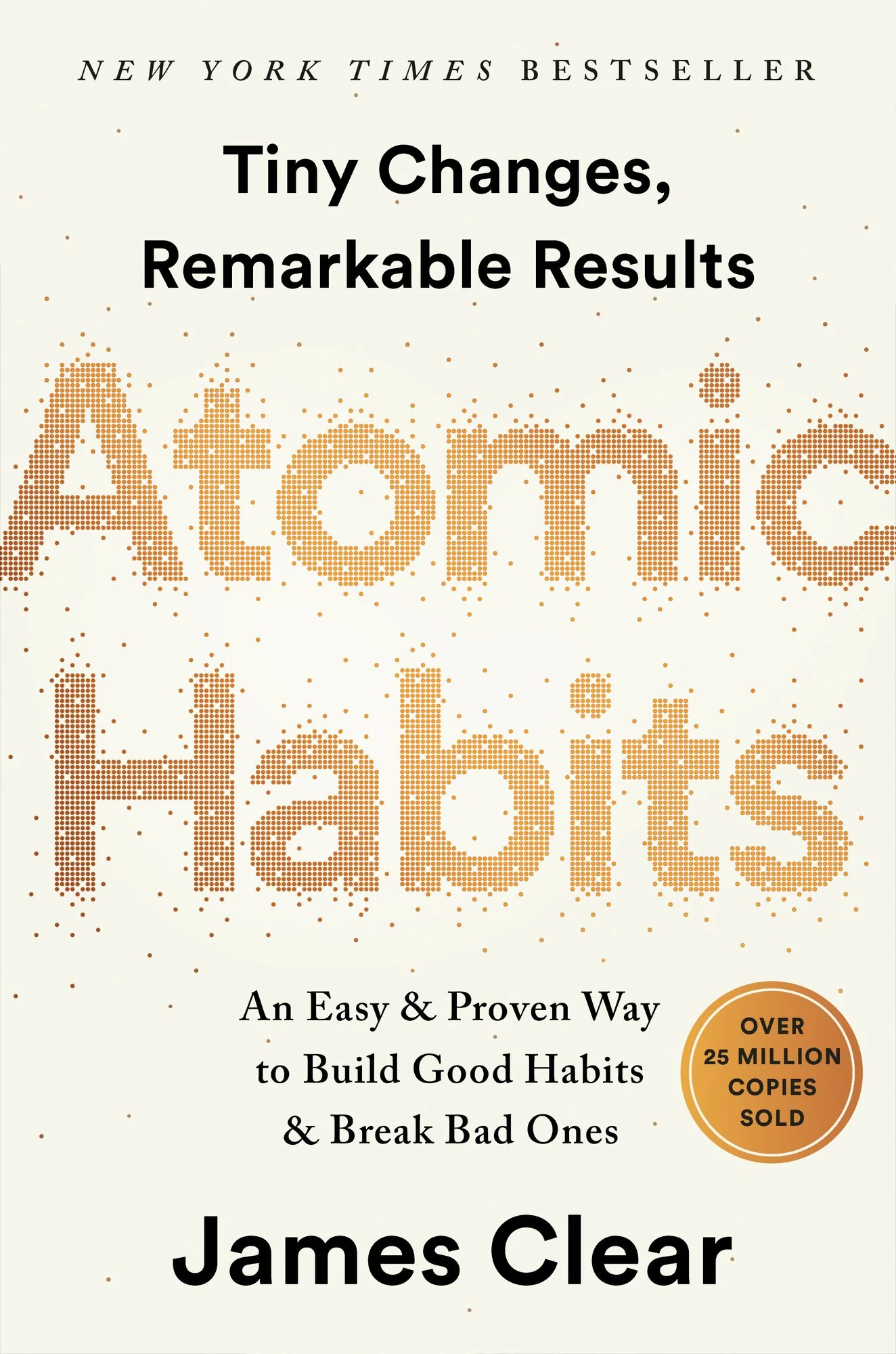
Resources
-
- TIME Magazine: What You Should Focus on Instead of Setting Goals
- James Clear: How to Build New Habits by Taking Advantage of Old Ones
- James Clear: Motivation is Overvalued. Environment Often Matters More.
- The New York Times: How to Build Healthy Habits
- Forbes: 3 Simple Ways To Make ‘Good Habits’ Effortless, By A Psychologist
- HelpGuide: How to Break Bad Habits
- The Atlantic: The Power of Habits and How to Reprogram and Optimize Ours
- Harvard Business Review: To Achieve Big Goals, Start with Small Habits
- University of Pennsylvania: 6 healthy habits to help keep you motivated and productive
- University of North Carolina at Chapel Hill: Changing Habits
- Brown University Health: Why Habits Can Be a Good Thing
- Harvard Health Publishing: 10 habits for good health
- Wired: How to (Finally) Break That Bad Habits
- European Journal of Social Psychology: How are habits formed: Modelling habit formation in the real world
- Frontiers in Psychology: Habit and Identity: Behavioral, Cognitive, Affective, and Motivational Facets of an Integrated Self
- Applied Psychology: Health and Well-Being: The relationship between habit and identity in health behaviors: A systematic review and three-level meta-analysis
- Personality and Social Psychology Bulletin: The pull of the past: when do habits persist despite conflict with motives?
- BMC Psychology: Exploratory study of the impact of perceived reward on habit formation
- Current Opinion in Psychology: Beyond deliberate self-control: Habits automatically achieve long-term goals
- Proceedings of the National Academy of Sciences: Childhood self-control forecasts the pace of midlife aging and preparedness for old age
2 Million Readers.
1 Life-Changing Newsletter
Simple and Straight-to-the-Point...
Just Like Mel.