Episode: 370
What it Takes to Find & Keep True Love: The Best Advice No One Ever Told You
with Logan Ury
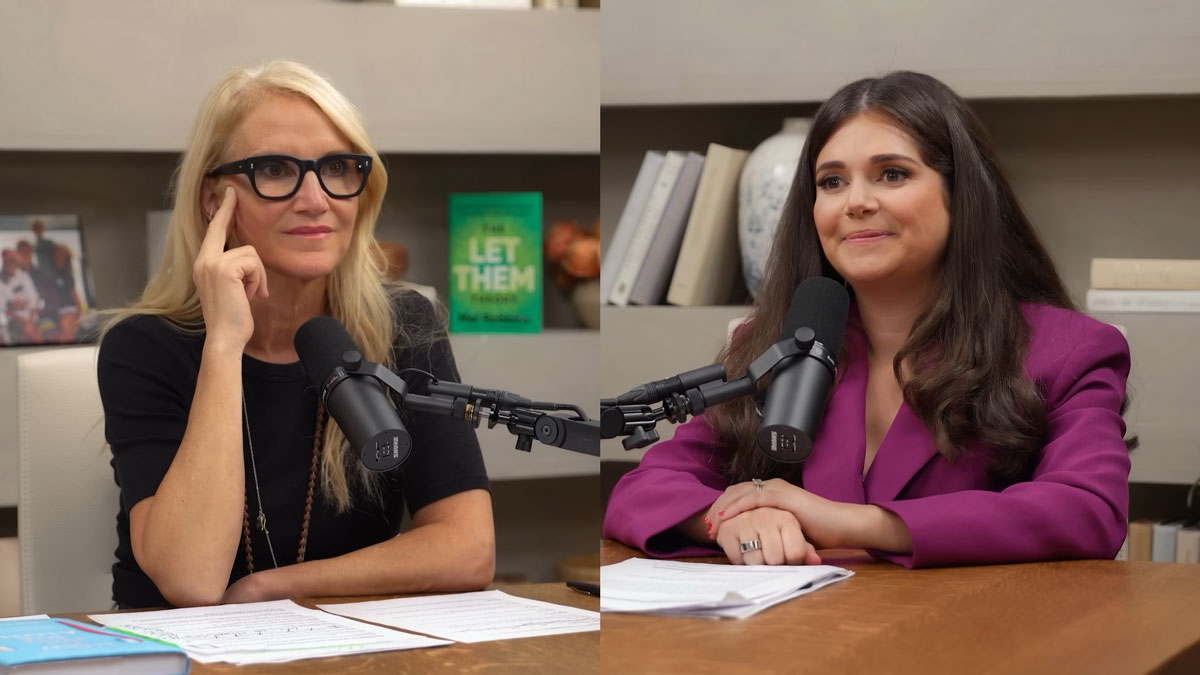
In this episode, you’re getting the best dating advice no one ever told you.
Whether you’re single, dating, in a relationship, or listening because you’re looking for advice for someone you love - this episode will change how you think about dating and love.
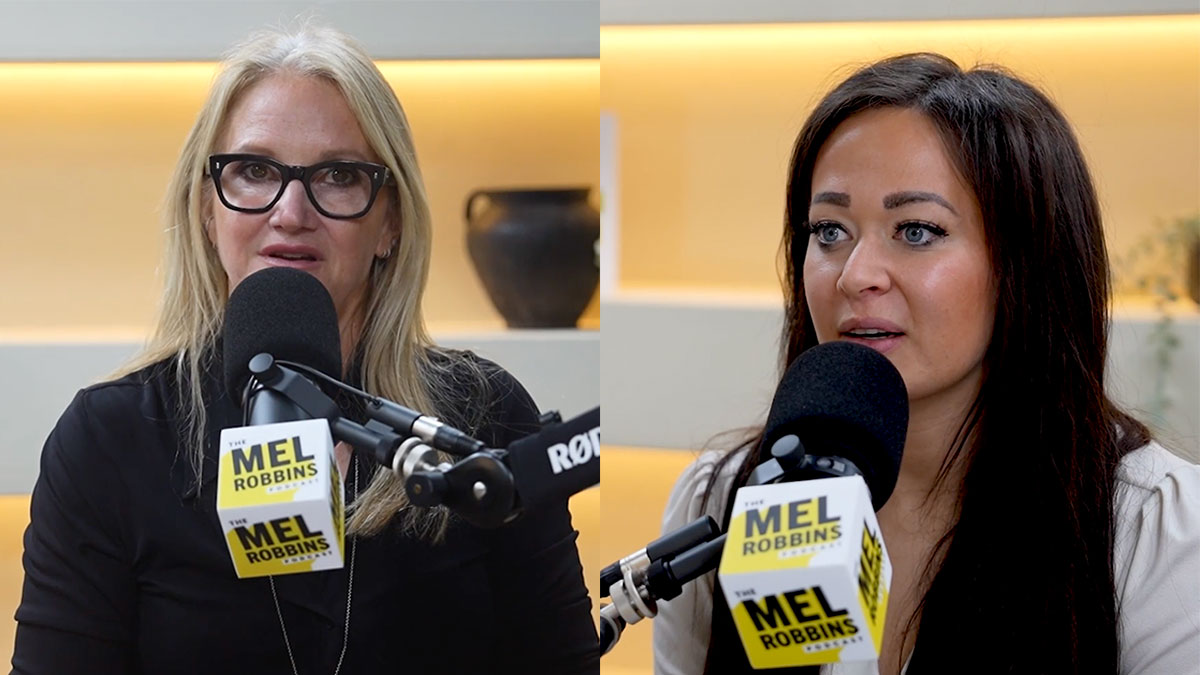
Today, Mel sits down with Logan Ury who is a Harvard-trained behavioral scientist, dating expert, and bestselling author.
Logan breaks down why dating feels so hard in today’s world - and how to stop repeating patterns that keep you stuck. She will also cover topics like rejection, attachment, and commitment.
After this episode, you’ll know how to build deeper connections, find and keep true love, and show up as a better partner.
Listen on:




Take that checklist out of what you think you should be looking for in a romantic partner…and tear it up
Logan Ury
All Clips
Transcript
Mel Robbins (00:00):
Could you speak to the person listening? They're super discouraged about how toxic dating is, about how they can't find anybody. What do you wish you knew when you were in that place?
Logan Ury (00:08):
Dating is relatively new in the span of human history. And if it feels hard for you, it really feels hard for everyone.
Mel Robbins (00:16):
We've got an incredible guest in the studio today, Logan Ury. She's a Harvard trained behavioral scientist who knows the ins and outs of modern dating. She ran Google's behavioral science team. She is the director of Relationship Science at Hinge. Logan has the data, the science, and the research-backed advice that you've probably never heard before.
Logan Ury (00:34):
Take that checklist of what you think you should be looking for. Tear it up. And instead, these are eight things to ask yourself after every date to look for the things that matter.
Mel Robbins (00:45):
What's the research on the spark and love at first sight versus slow burn? It builds over time.
Logan Ury (00:51):
A lot of people think that they need to have the spark, but the research shows us that only 11% of couples experience love at first sight. And the idea of a slow burn is somebody who may not be initially as charming as that other sparky person, but they would make a great long-term partner.
Mel Robbins (01:06):
I think one of the huge mistakes that so many people make in relationships is they chase the potential of it. And you excuse away behavior that isn't acceptable. Ghosting has become so common.
Logan Ury (01:19):
One of the biggest causes of dating burnout is not hearing back from someone. And so my advice for people write a very simple rejection text that you can copy and paste every time.
Mel Robbins (01:29):
Give it to us.
Logan Ury (01:29):
Hey, so and so,
Mel Robbins (01:32):
Before we jump in, my team was showing me something. 57% of you who watch the Mel Robbins podcast here on YouTube are not subscribers. So it's my goal that we get that number to 50%. And I know you're the kind of person that loves supporting people who support you. So if that subscribe button is lit up, it means you're not a subscriber. Do me a favor, just hit subscribe. That's how you can show your friend Mel Robbins and my team here that you are supporting us and you love that we support you. By the way, it's free to hit subscribe and that way you don't miss a thing. And it tells me and the team, oh my gosh, I love these experts, Mel, and we will keep bringing them to you here. Thank you. Thank you. Thank you. Alrighty, you ready? Let's jump in.
(02:15):
Logan Ury, welcome to the Mel Robbins podcast. So happy to be here. Okay. I have been so fired up for you to be here in this studio to have this conversation about dating in your twenties and your thirties. And one of the reasons why is because I have two daughters in their twenties, half of the team here at 1 4 3 studios is early thirties and under. And I am hearing nothing but people complaining in that age group about how toxic dating is, about how they can't find anybody, how they're getting off the apps, how they're super discouraged. And I'm so grateful that you hopped on a plane and flew all the way across country to share your amazing wisdom and this mix of data science and the wisdom that you have from working with people who are single and coaching them. And so I just wanna start by saying thank you and then asking you, could you speak to the person listening? What can the person listening expect to be different about their life? If they take everything that you are about to teach us about the online dating platforms and how to use them to your advantage and also what you need to know about dating in real life, how is their life gonna change?
Logan Ury (03:33):
I can't wait to dig into all of this with you. And for that person listening who is single and they don't wanna be, I really want to help them understand their patterns of behavior that are holding them back from finding love and then what to do about it. And they've been doing things their way, their whole life. I want them to come into this conversation with an open mind and really be ready to think about dating like a scientist, dating in a new way, testing their theories. Because it might be that who they think they should be with is not who's gonna make them happy as long-term. And I want them to be open-minded about my advice and open-minded about who they date.
Mel Robbins (04:10):
What does dating like a scientist mean? Because that sounds like boring, and I think of rubber gloves and beakers.
Logan Ury (04:16):
Dating like a scientist is taking the best of the scientific method. If you can think back to a biology class in high school. So what happens? You come up with a hypothesis. Yep. Then you test it, you run experiments and you see, was my hypothesis right? Or was my hypothesis wrong? So for example, to the listener out there who says, I have an advanced degree. I need to be with someone who also has an advanced degree. Great, that's your hypothesis. Let's test it. Maybe what's going on is you actually just really want someone who's intellectually curious that can come with someone who went to college in grad school or someone who didn't, but is a voracious reader. Why don't you go out with some people who don't have advanced degrees, talk about interesting topics, see if they can hold your conversation and keep you interested. And maybe what you find out is that you did need that advanced degree, but more likely you find out that it was about some underlying trait that you wanted and not about the advanced degree. So be open to testing your assumptions.
Mel Robbins (05:16):
So the conversation today is really about 20 year olds and 30 year olds. And I'm hyperfocused on the 20 somethings 'cause that's where my kids are and that's where I hear the most amount of complaining. And I was very excited to have you here because you've been at Google, you have a psychology degree from Harvard. You've spent five years as, what is the title that you have at Hinge?
Logan Ury (05:39):
Director of Relationship Science.
Mel Robbins (05:41):
And just for you listening right now, who is like, okay, she's from Hinge, so she's just gonna tell me to use the FS Hinge is not paying for this episode. Logan Ury is here and she is bringing all this wisdom to help you use it to your advantage. And there are things that you're doing wrong on any online app and there's also things that you're doing wrong in real life that are part of the problem. And we're gonna separate the app from the real life piece of this. And so first of all, what are you seeing when it comes to this age group so we can normalize people's experience?
Logan Ury (06:17):
I'm hearing the same things that you are, where a lot of people are talking about being burned out or a lot of people are yearning for this previous age before the dating apps where they kind of romanticize it and think, I just wanna meet organically. I just wanna meet through friends and family. And I feel like it's really important to separate what is dating in general. What is the psychological experience of putting yourself out there, taking risks and getting rejected?
(06:44):
And what is specifically the technology? And what I see happening is that a lot of people are conflating the two and they are blaming apps or technology for something that has been happening in dating long before there were dating apps. And so one thing I want people to keep in mind is that dating is relatively new in the span of human history.
Mel Robbins (07:08):
It is?
Logan Ury (07:09):
Yes. So it really started dating culture as we know it kind of pre-app in around 1890. That was one of the first times where people were actually going out and women were working in shops and they were meeting themselves before that it might be the matchmaker set you up or your father wanted you to marry the guy next door so that you could combine the two parcels of land. So actually the idea of humans on their own, choosing a partner is new. And if it feels hard for you, it really feels hard for everyone because this is something new that in the span of human history, we just haven't been doing for very long.
Mel Robbins (07:44):
So we're talking like two people ago. This started basically,
Logan Ury (07:48):
Uh, yeah, a few people ago yeah.
Mel Robbins (07:49):
And so we're still learning. And the thing that you said that I really wanna highlight, because one of the things that I'm curious about, particularly as a mother is the fact that there's a lot of blaming of the apps. And I'm not saying that the apps don't deserve a lot of blame, but the purpose of the app, as far as I'm concerned, is to actually connect with people. And then your job is what you do in real life. And I really wanna highlight this part that there are two things here. Mm-hmm <affirmative>. One is how you're using the app, but the other is, and I'm suspicious about this, that it's become too easy to just look on your phone. And people I believe have become less courageous and brave with putting themselves out there in real life. I met my husband at a bar, that's how we met. And I met him by turning around and talking to him. And he was a stranger. The person that you will marry is likely a stranger right now. And there are strangers everywhere around you. And so are you seeing anything in the data or anything in your experience? Coaching people? Who are about how there is a decrease in a willingness to put yourself out there, which has always been hard since the beginning of time.
Logan Ury (09:03):
We're absolutely seeing fewer people willing to put themselves out there. There's a huge fear of rejection and we're especially seeing this in Gen Z. They are particularly sensitive to the idea that they could be rejected and it's causing them to take fewer risks. And this really scares me, not just in dating but in all aspects of life. Because most things worth having are things that you have to put yourself out there for and a risk being told no. The other thing I wanna point out is focus on quality over quantity. Of course there can be a tendency to want to use hinge as a popularity contest. How many people can like me, can I use this as an ego boost? But instead of using it for attention, I want you to use it for connection. And so I often tell people, talk to fewer people at the same time.
(09:52):
It's really hard to juggle a lot of conversations and you might miss a great connection because you matched with them and then got distracted by someone else. So recently Hinge launched something called your turn limits, where if you're on the app and there's eight people who you always response to where you have to respond to the message, you either need to respond to them or close out the match before you can get any more matches. Oh, so you're, we're really trying to tackle this problem of paradox of choice too many people at the same time, one of the biggest causes of dating burnout is not hearing back from someone I matched with you. I'm so excited about you, I ask you out and then you never reply. That sucks. That makes me feel really bad. And then I'm wondering, what did I do wrong? And you probably didn't do anything wrong. I'm probably just talking to too many people. So this is really using the behavioral science technology of defaults and saying, if we're just gonna default you to where you can only talk to a few people at the same time and you need to reply to them, it's gonna help you focus and get to more dates and into better relationships.
Mel Robbins (10:56):
What are the top things that the person is doing wrong right now on their profile and what do they need to fix in order to increase based on the data, their chance to connect with somebody?
Logan Ury (11:11):
So one of the top issues that people have on their profiles is that they're not really painting a picture of who they are. So for example, I met this woman a few years ago who told me that she saw her now husband on an app and all of his pictures were from Burning Man. And she was like, well,
Mel Robbins (11:28):
Red flag, red flag, red flag.
Logan Ury (11:29):
She's like, I don't go to Burning Man, so I'm not interested in him. Then she happened to meet him at a party through a friend and he's like, oh yeah, I went to Burning Man once. I just put those up there because those were the only photos that I had. And so he didn't understand that your profile is basically your billboard telling people who you are. And so when your friends look at your profile, does it represent who you are? And I found it often doesn't, I say the person in front of me is a beautiful, vibrant three-dimensional person with a lot of different characteristics. The profile you're showing me just talks about anime. Cool, you like anime, we'll find you somebody who likes anime, but can you tell me other things on your profile? And so really using that limited space to tell your story, show people who you are, talk about what you're like, what you're looking for, and what dating you might be like, and really help us understand who you are.
Mel Robbins (12:23):
Uh, before I jump into my next question for you, I wanna, I have a, a question that was submitted by a listener named Juna who is sharing about her biggest dating revelation as a 29-year-old.
Juna (12:36):
Okay. So I'm 29 years old and a female looking to date men. And my biggest question about dating is basically like, how do you know what to look for? Like I feel like when I was younger I had this like list of things that I thought I wanted my partner to have. And they were kind of superficial, like I really want them to be into the gym and stuff. And as time has gone on, I've just realized like none of the things I thought were important are, and the people that I've liked have not been the people that I thought I'd like. So I guess like how do you know what to look for? Like what are the most important things and how can you figure those things out early on in dating instead of like spending a lot of time getting to know someone and not really finding the people that you want I guess?
Logan Ury (13:18):
First I wanna commend Juna for asking this question, especially in her twenties. I think a lot of people ask this question either way too late or not at all. So I call this moving from the prom date mentality to the life partner mentality. So what makes a good prom date? They look cute in pictures. You wanna dance the night away with them. Maybe you wanna kiss or do a little bit more than that after prom, but you're not thinking about will this person pick up my kids from the dentist? Does this person have a lot of debt? Are they financially responsible?
Logan Ury (13:48):
But at a certain point in life, probably a certain number of years before you wanna get married, you should start shifting your mindset towards looking for different qualities. And so many of my clients in their thirties and forties who are single are still looking for the prom date and they don't understand why they haven't found love or haven't found a great partner.
(14:07):
So first I would tell Juna to make that shift. Now I'll talk about the research on what matters more and less than people think they do for long-term relationship success. So the first one is looks, we love an attractive person. I want you to feel into the person that you're with. But what the research shows is that over time we adapt to whatever we have and we appreciate somebody's looks less. So I like to joke that behind every hot person is somebody who's sick of having sex with them. So looks are great, but you don't wanna spend all of your metaphorical coins just on the looks department. So the next thing that people think matters more than it does for long-term relationship success is money. Look, money is great. It can make life a lot easier, but it's not the only thing. And I feel like it's such a shame when people get into relationships with people who they're not a good fit with, who they're not interested in because of just money.
(15:02):
And so I think we can all acknowledge the power and the freedom that money gives you, but it matters less than people think it does for long-term relationship success. The next two are shared hobbies and similar personalities. You do not need to have identical hobbies to your partner as long as you both give each other space to explore your separate hobbies. And for similar personalities. I often feel like people make this mistake, especially someone like me or some of my friends. If you had two of you in a relationship, that's way too much. You actually want someone who balances you out.
Mel Robbins (15:36):
So if you are somebody who's frustrated 'cause you keep thinking you have this ideal and then you are not getting the right matches, what are the steps you need to take? Once you kind of shift your mindset? Are there specific things to do on the app? Are there behaviors that you need to engage in that will actually open up your dating pool to more people?
Logan Ury (15:59):
Yeah. So I just gave you a list of what matters less than people think they do for long-term relationships. But for Unna and for all the listeners, I really want them to know what matters more than people think they do. Great. And when I've asked people to come up with this list themselves, the first one is emotional stability. How does somebody respond in different situations? Are they able to take that pause between stimulus and response and can they be emotionally stable? The next one is kindness. This is so underrated. How does that person treat someone who they don't need anything from?
(16:32):
Then loyalty. Does this person help their friends move? Does this person have friends from a long period of their life? If they're loyal to their friends, they're much more likely to be loyal to you. The next one is a growth mindset. Do you feel like you're just born with the skills you have? Or do you feel like life is something where you can continuously get better? And why? A growth mindset matters is when your relationship hits those inevitable rough spots. Don't you want your co-pilot to be a person who's ready to tackle them head on? Then the ability to fight well together. It's not looking for someone with whom you don't fight with at all. It's understanding. Can we fight in a way where we're positive, we're on the same team, we're working on the same outcome. And then the last one is really my favorite, which is, what side of you do they bring out?
Mel Robbins (17:23):
Oh, I love that.
Logan Ury (17:26):
This is something that people in their twenties, really people of all ages get wrong. So I'll have so many clients who say, Logan, I went out with this guy. He's everything I wanted on paper. My parents would be obsessed with him. He's Persian, he's a doctor, he went to the right school. And I'm like, okay, I'm waiting for the but. And they're like, yeah, but when I spend time with him, he kind of makes me feel bad about myself and he's really into all of this superficial stuff that I'm not into. But he's so good on paper. And so I would say take that checklist of what you think you should be looking for, tear it up and instead make a new checklist of things to look for. And so the tool that I have for that is called the post date eight.
Mel Robbins (18:08):
The who?
Logan Ury (18:08):
The post date eight.
Mel Robbins (18:10):
The post date eight. Okay. What are the eight things?
Logan Ury (18:13):
These are eight things to ask yourself after every date. And what they do is they train your brain during the date to look for the things that matter. So you move from the evaluative mindset, are they good enough for me? Do they make enough money to the experiential mindset? How do I feel when I'm around them? So these are the questions. What side of me did they bring out? We just talked about that. How did my body feel during the date? Stiff, relaxed or something in between. Do I feel energized or de-energized? Is there something about them that I'm curious about? Did they make me laugh? Did I feel heard? Did I feel attractive in their presence? And did I feel captivated, bored, or something in between?
Mel Robbins (18:56):
Now here's what's interesting is that I love the question about did I feel attractive? Because I think we're often so focused on the chemistry and the spark and am I attracted to you?
Logan Ury (19:10):
Yeah.
Mel Robbins (19:11):
That you forget that it's really about whether or not you feel like more of you. And whether or not you feel attractive in this. Because I, I think we've all had the situation of of dating somebody where we think they're really hot, but the whole time, even though we're attracted to them and we might be a little tingly, we're actually very tense because we're worried about how we look. Yeah. And we're worried about what they think and we're worried about. And to me that feels like if you go through those eight questions, that's easily gonna weed a lot of people out. 'cause you can't actually be yourself around a person like that.
Logan Ury (19:47):
Yes. There's a lot of ways in which this list can really help you shift who you go after because it helps identify those people who are good on paper, but who don't make you feel good about yourself. If you do it after every date, it also helps you realize, oh, this is a slow burn person. This is someone who I'm liking more and more each date, even though they didn't initially spark, I'm gonna invest more time in getting to know them. And I feel like in dating, in your career, in your friend group, in where you live so much is understanding what side of me does this situation bring out. So if you get a job offer with a lot of money, but when you went to the interview, you felt insecure. Nobody held the door open for you. The man, you dreaded it. Yeah. The manager keeps talking about how cutthroat and testosterone driven the place is. Well, who cares how much money they offered you? If you didn't feel comfortable in the interview, you're unlikely to feel comfortable in the job. And so I think people do really need to work on this concept of paying attention to what side of you different situations bring out instead of just the things that are easy to measure, like how hot someone is or how much a job is offering you.
Mel Robbins (20:51):
What's the research on couples that go the distance that it's like the spark and love at first sight versus, you just mentioned this word slow burn, it builds over time.
Logan Ury (21:02):
So a lot of people think that they need to have the spark and they write a lot of people off if they don't feel it. But the research shows us that only 11% of couples experience love at first sight. And for many people it was this concept called the mere exposure effect. The more you're around somebody, the more you start to like them. That's why people end up marrying someone in their friend group or somebody that they work with. So you can definitely build the spark over time. And the idea of a slow burn is somebody who may not be initially as charming as that other sparky person, but they would make a great long-term partner. And you can really win in the dating game by looking for a slow burn person, somebody who other people overlook.
Mel Robbins (21:42):
I'd love to play this question from a listener named sophia.
Sophia (21:46):
Hi Mel. My name is Sophia. I recently just turned 21. I'm a college student in Boston and I am calling in for relationship and dating advice because I am just so down atrocious. I've spent the past four years of college just being in situationships, which worked okay for me because I wasn't looking for anything serious. But now I'm actually deciding that I feel like I need to settle down. Um, it's been kind of toxic for me and I realize that like with men, I'm obsessed with the chase, but then when they actually come forward with something serious, I'm suddenly disinterested. Um, so yeah, I just need kind of help with how to show up as my most authentic self because I feel like I'm playing this game of like cat and mouse with these guys in Boston. And I don't wanna do that anymore.
Logan Ury (22:36):
Sophia, I have absolutely been there before where the chase is really exciting. And then once somebody shows interest, it can be harder to maintain that interest. And if you're not familiar with attachment theory, I wanna talk to you about what might be going on. So CliffsNotes version of attachment theory, there's three main attachment styles. So the first one is secure. You're comfortable with intimacy, but you're also comfortable with time alone, anxious attachment. You worry that people are gonna abandon you. You constantly wanna be in touch. If somebody doesn't respond to the meme you sent them that morning, you start spiraling and you want to be more connected and avoidant.
Logan Ury (23:15):
You worry that somebody's gonna smother you and eventually disappoint you. So you pull away before they can even get close. So what we know is that around 50% of the pool is secure, 25 is anxious, and 25% is avoidant.
(23:30):
Sounds pretty good. There's a lot of secure daters out there, but that's not the whole story. A lot of the secure daters are already in relationships. So the dating pool has so many anxious and avoidant people dating each other. Oh god. And this creates something called the anxious avoidant loop. So here's how it works. I was an anxiously attached dater. My story of love is that I chase you and I get really interested in you. And then you pull back and I try to convince you to be with me and prove my value. For the avoidant person, their story is, you're gonna smother me, you're gonna overwhelm me, I'm gonna lose all my independence. So they pull away. So anxious and avoidant people keep dating each other reinforcing these really unhealthy patterns. But if you're like me, you just think, oh, that's what love is.
(24:15):
That's what dating is. It's I chase someone. But then when you date a secure partner like I did, it can really burst that bubble and show you that there's another way. So I remember when I was dating my husband, we've been dating for a few months, and I got mad at him about something. And I did what I always would've done in past relationships, which is take out my phone and punch away a bunch of angry text to him about how he's disappointing me and this and that, really looking for a fight. And I expected him to fight back. But then he, child of a therapist wrote back to me and said, wow, it sounds like you're really upset. We should discuss this in person. And that was such a powerful moment because he took a pattern that I had and he really stopped it in his tracks.
(24:59):
And it made me understand that there was a different way to be in relationships. So for me, 10 years ago, meeting my now husband, I realized I didn't have to be in an anxious avoidant loop. And that really was such a pivotal change in my life. And so for you Sophia, I feel like understanding your attachment style, understanding how the chase feels really exciting because you're confusing anxiety for chemistry. You're addicted to the drama. Instead, I want you to become more secure yourself and also to go for a secure partner. They may seem initially boring because you're so addicted to the chase and the fact that you don't know what will happen, but these are the people who make great long-term partners.
Mel Robbins (25:39):
So when I knew that you were gonna be here in our Boston studios, I said something in a team meeting and it was, if there was an absolute explosion of inbound questions from them, from their friends, we put it out online. Like, I cannot believe the number of questions that we got for you. And I wanna read you this one from mm-hmm <affirmative>. A woman named Virginia who is 25. There are all these studies about how online dating has lowered men's confidence and made them lazier. So they just scroll online rather than approach someone at a bar. Is this true?
Logan Ury (26:14):
That's interesting. I don't think about it from a gendered perspective.
Logan Ury (26:17):
I do feel like people are not in the habit of talking to anyone in person because they feel like that happens online. So we can see this in so many different places, right? You don't wanna call a restaurant, you just wanna do it on your phone. You are constantly engaging with things through technology. And so I think right now people want to go on hinge, see who's available, see who's single, see who might be interested in them. And that feels so much less risky than going up to someone in person. And dating apps are great. You can meet a lot of people you wouldn't have met otherwise, but people should also be working on the skills of taking a risk, having a conversation in person and putting themselves out there.
Mel Robbins (26:58):
I think this is a really important part because I do think that there's too much blaming of the apps. And not enough really thinking about, okay, well there's people all around me if I'm standing in a line, am I talking to people? I mean, as I mentioned, my husband met me by talking to me at a bar.
Logan Ury (27:16):
Yeah.
Mel Robbins (27:17):
And if you're not actually looking outside the apps, I don't actually think you're dating.
Logan Ury (27:22):
So one of my favorite people who I really admire is my friend, Sarah's husband, Sam Par. Whenever I talk to Sam about dating, he talks about what he did to make himself a more desirable partner. And he really had a strategy for it. So for example, he said, I think it's really attractive when people have passions. So I'm gonna work on developing a hobby that will be interesting to talk about. And he got really into denim. And when he was meeting up with girls, he would say, I'm going to this denim swap this weekend. Let me tell you about Japanese denim. And they,
Mel Robbins (27:51):
That's kind of cool.
Logan Ury (27:52):
Yeah, they would find it interesting. He, he really stood out. He was memorable, he was passionate. Then he said, I wanna become a better storyteller. So he did what standup comedians did. He would practice telling the stories, see what parts people found interesting, see what they found boring. And then on dates he would be able to be more compelling and tell better stories. And so I think we so often look out and say, who's out there for me? Nobody's good enough. I live in the worst city for dating. Well, what are you doing to make yourself a more attractive partner? What are you doing to show that you have a growth mindset? What places are you putting yourself in that would help you meet more people? And so of course it's a two-sided equation where both people have to show up. But what are the things within your control that can make you more attractive as a partner?
Mel Robbins (28:38):
Here's another question that I have. Yeah. Have situation ships always existed or is this a concept our generation has invented to avoid commitment?
Logan Ury (28:48):
I think about this a lot. How we constantly are reinventing terms for the same thing. Can we talk about this for a minute?
Mel Robbins (28:53):
I cannot track with the terminology. We're together, but we're not dating, we're dating, but we're not like this. We're exclusive, but we're not dating. Dating is this thing we're, we're like, I can't understand the terminology. And so what is a situationship and what do you think about all this?
Logan Ury (29:15):
A situationship is an undefined romantic relationship. So we're spending time together, we're hooking up, but we don't have labels.
Mel Robbins (29:22):
How is that not defined by your actions? This is the thing that I don't understand. Like don't your actions define the fact that you're in a relationship if you're having sex with somebody and you're hanging out with them.
Logan Ury (29:33):
I think this is part of a larger conversation about how when you apply language to something, it sort of solidifies and becomes more concrete. But people have been doing situation trips for a very long time. You know, I feel like I had plenty of situation chip in college, but we didn't call it that. Now it has a term and then now it's more stigmatized. But I think that if two people both agree that we are not exclusive or we do not have a future together, but we're having fun together, I don't think his situationship is necessarily bad. When it becomes harmful is when one person isn't expressing their needs or desires. I really do want something exclusive. It hurts me that you're going on dates with other people. I want to find a long-term partner. If that is the case for you, then have a conversation with the person and say, what are we, I'd be interested in deleting hinge. Would you? Then you have the data you need. If they're on the same page, congratulations. You delete your apps, you move forward. If they're not, at least you know, and I'm really all about know the data that empowers you so that you can make the right decision for yourself as opposed to what so many people do, which is I'm afraid of the answer. So I don't ask the question.
Mel Robbins (30:43):
Boom. Right there. You're not even asking, you're bitching about the fact that there's no commitment and you're not actually asking for it. You're hoping for it. And I think one of the huge mistakes that so many people make in relationships is they chase the potential of it. And you excuse away behavior that isn't acceptable, hoping that at some point, if I just hang out with you a little bit longer, if I insert myself into your life, at some point you're gonna notice and this is gonna become something bigger than it actually is.
Mel Robbins (31:12):
And there is this refusal to see people's behavior as the truth. And then take responsibility for whether or not you are willing to accept these table scraps.
Logan Ury (31:24):
I completely agree with everything you said, and I feel like a lot of people do need to embrace this because so many people date someone for their potential or they feel like I can coach them to the better job. I can help them overcome their social anxiety. I think if you would not want to be with someone for how they are now, then don't be with them because you cannot bet on their potential. And if you do, you might be disappointed or frustrated if it doesn't work out. And so people will show you who they are if you let them. But too often we wanna control everything. We want to play the mentor mentee relationship. We wanna say, oh, I think this person could change if this just happens. But instead be in the driver's seat of your life, but understand that you are not the driver of every other car on the road.
Mel Robbins (32:14):
Well, I don't think you're dating potentially. I think you're dating a project. And I also, it's not only that it won't work out, it's that it's not fair. Like imagine being in the other seat, imagine somebody choosing you and going, well, if I can get her to lose a little weight.
Logan Ury (32:32):
Yeah.
Mel Robbins (32:32):
Well, if I can get her to change her tone of voice, well if I can get her to just like the sports, then this is gonna out. I mean, would you wanna be in a relationship with someone?
Logan Ury (32:41):
No, not at all. And that would hurt me if I found that out in many aspects of life. If you set a goal and you do certain steps to to achieve it, that will happen. If you have a financial goal and you work on making more money and saving more money, if you wanna run a marathon and you follow a training plan, you can get there because those things are within your control. But dating is about you and another person choosing each other, and you cannot control somebody else's behavior.
Mel Robbins (33:10):
And the hardest thing about that is that sometimes they won't choose you all the time. And what do you see as kind of the top big behavior mistakes that people make when they date for the potential or when they are excusing away red flags based on your experience as a coach in this realm?
Logan Ury (33:31):
I think people don't take that step back and zoom out and really look at who they're dating. So when I work with dating coaching clients, we do a relationship audit and we really go through all the major relationships in their lives. We even start in middle school and we start with the stories. Were you popular and people were interested in you? Were you the only South Asian kid in a white school and nobody was attracted to you until you went to college? Were you a late bloomer? And really looking at your life as a series of experiences and how they impacted who you are now. And then you start to see the patterns. Wow, I'm not ready to date. So I always dated emotionally unavailable people, and then I blame them. But it was really me. Or I'm such an optimist that I choose people because I think that they could reach their potential. But what ends up happening is I'm frustrated because I'm dating them for their potential for the project and not for reality. And so taking that step back, do it alone, do it with the therapist, do it with the friend, and really say, what are the patterns? What's holding me back? And how can I make a different choice in the future?
Mel Robbins (34:34):
I think it's this deep fear of being the single friend. Like one of the things I wanna acknowledge that's not talked about a lot is the fact that the twenties is one of the hardest decades of your life because you've spent the first two decades moving through life with all your friends. And then what I call the great scattering happens, and everybody moves in different directions when you graduate from college and they're in different cities and different friend groups and have different jobs. And then people's trajectories and timelines start to change. And then you start to notice that people are either pulling ahead or so you think, or they're pairing off. And I am seeing this right now with my daughters, where friends who are living together are now moving in with significant others. And so you start to see relationship status and milestones against your own. And I think it creates this sense of panic. What do you wanna say? Or have someone who's listening that's feeling that like, I'm the single friend, I am the one that can't find someone. What is the good news? Or what do you wish you knew when you were in that place?
Logan Ury (35:41):
So I actually wanna take your question in a slightly different path. Great. Which is that this sounds so cheesy, but the thing that I would wanna say is hold onto your friendships because your friends are your life board of directors.
Logan Ury (35:55):
These are the people who are gonna influence all of your decisions. They're gonna help you figure out if you should go to law school. They're gonna help you get out of that toxic relationship. They're gonna advise you when your child is having a problem. And I think people take friendship for granted because they are in situations like high school and college where they're meeting a lot of different people and they don't understand what's waiting for them. On the other side of 30, which is so many of my clients that I work with say, you know what? I need help with dating, but I also don't have as many friends as I want. Or I haven't seen my college friends in years. And so really fostering those relationships, investing in them, flying across the country and seeing people, texting them about things in their lives. I feel like we really overestimate how easy it will be to find a friend. And we underestimate how important those long-term friendships are. And so for your daughter, for her peers, for all those people, your friends are gonna have a huge impact on the decisions you make. So choose wisely and hold onto them.
Mel Robbins (36:54):
Ghosting has become so common. How can someone navigate the emotional toll of ghosting and rejection in modern life and dating?
Logan Ury (37:05):
The interesting thing about ghosting that we found in our research at Hinge is that when you ask people, the majority of people, 40% say that the reason why they ghost is because they don't know how to explain to somebody why they're not interested in seeing them. Again. On the other hand, when you say to people, would you rather be ghosted or have somebody reject you? 85% of people say, reject me. It hurts in the moment, but I'd rather know. So one side of the population is saying, it's too hard to tell you why. And the other side is saying, no, please tell me why.
Logan Ury (37:40):
And so my advice for people is to open up the notes app on your phone and write a very simple rejection text that you can copy and paste every time.
Mel Robbins (37:49):
Give it to us.
Logan Ury (37:50):
Hey, so and so. It was great meeting you, but I don't think we're a romantic match.
(37:57):
That's it. It's short and sweet. Do you need a, I wish you well. I hope you're the best. Like all that kind of thing. You can say that. You can say, I wish you the best of luck with your triathlon. I hope you get that job you interviewed for. You can add whatever you want. But what I wouldn't add is any feedback because you are not an expert on this person. You just met them and you don't owe them an explanation. What you do owe them is the kindness and the decision of, I'm not interested in seeing you again. And so often we let people just sit there in ambiguity wondering, well, I don't know if I should move on. 'cause maybe he's just away and maybe he'll text later if he can just let you know he's not interested. It actually gives you the clarity to move on and find someone else.
Mel Robbins (38:42):
For people in their twenties, many of them feel like, okay, I'm in this situation, chip, this is like casual, but I really wanna move this to something serious. But they don't know how to have the conversation. What is your advice?
Logan Ury (38:56):
Yeah, so a lot of people do avoid the what are we conversation? Because they either don't know how to do it or they're afraid of the answer that they're gonna get. So let's start at the beginning. I think first, check in with yourself about why you wanna have this conversation. For some people who are anxiously attached, they actually rush to this conversation because they just wanna lock somebody down. And so if you are somebody like that gut check with a friend, we've been dating for this long, this is what we've done together, just gut check that it's a good time to bring it up. Then you can bring it up more directly. Like, Hey, I'm really interested in you. I'd love to be exclusive. How are you feeling? Or if you need a little help, you know, you can say, we're gonna be meeting my coworkers later.
(39:35):
What should I call you? You can ease into it. Then. This is a really important part that people often miss. This is a conversation. This is not a negotiation. If the person gives you an answer that you don't like, it's not your job to convince them otherwise. Let them, you now have the information that you need to decide, okay, they wanna revisit this in six months. Do I wanna revisit this in six months? That's fine with me. I'll stay. Or they just got outta relationship. They're not looking for anything serious. Well, I am, so I'm going to end this situation, situationship or whatever. And so really understanding that this is an opportunity for two people to check in. Where are you? Where am I? What do we want? Are we heading in the same direction?
Logan Ury (40:18):
And the more information you have, the more empowered you are to make the right decisions for yourself.
Mel Robbins (40:24):
I have a another question from a listener named Emily. Let's play that one next.
Emily (40:30):
Hi Mel and Logam, thanks so much for taking my question. My name's Emily and I'm 32. I'm having trouble trusting my instincts and getting comfortable with dating again. What are some ways or signs I guess that I could know that I'm ready? Will I ever be ready?
Mel Robbins (40:49):
Sounds like she's ready. Sounds like she's just scared.
Logan Ury (40:53):
She might be hesitator, which is part of my three dating tendencies. So there's a lot of people that have unrealistic expectations. The romanticize has unrealistic expectations about relationships. The maximizer has unrealistic expectations of their partner. And Theor has unrealistic expectations of themselves. So she might be waiting until she's a hundred percent ready to start dating, whereas she should start before she's ready so that she can get better at dating. What I would say to her is that I think she should take the post date eight after every date because that's an opportunity for her to check in with herself. Am I going on dates that make me feel comfortable? What side of myself are people bringing out? It sounds like she's a little disconnected maybe from her body or what she wants or what makes her happy. And the closer that she can get to understanding herself and what she wants, the sooner she'll find a relationship because people who don't know themselves can go on a hundred dates and then say, there's no good girls out there, there's no good guys out there. Well, statistically, you probably met someone who would've been great, but you didn't know what to look for because you don't even know yourself.
Mel Robbins (41:59):
Hmm. Talk to the person that is burnt out. They've been off the apps, they are complaining with their friends about how toxic everything is, but there is that yearning deep inside. Like I, I should probably put myself back out there. How do you do this?
Logan Ury (42:18):
When I work with clients who are burned out and not putting themselves out there, I do tell them, you can take a break from dating. Sometimes people date in a way that's not sustainable. And I did this myself. I remember when I was on the apps and I was dating, I went once, went on eight and a half dates in one week. And it was so crazy. I was going on the date saying, did I already tell you this? Did did I tell you the story already? I couldn't keep track of who I was talking to. It wasn't fun and I got burned out. It wasn't sustainable. It's so much better for people to date. Slowly date one person at a time. If you're an introvert, give yourself time to recover. And then you don't have to go through this cycle of downloading hinge, getting burned out on hinge, deleting hinge, taking a break, then re downloading it.
(43:04):
That download, delete, repeat cycle doesn't feel good for people. I'd some, what should you instead? I think you should slow down and really look at yourself and say, I'm an introvert. I can't go on more than one day a week without feeling burned out, or I'm really passionate about my hobbies. I need to keep time for that. And so I think people should be going on a minimum number of dates to get themselves out there, but do it in a way where it feels like something you can sustain over time. Instead of going 60 miles an hour burning out and then needing to take a break. Other things that people can do to avoid burnout are also being more proactive. I know that sounds counterintuitive, but the research we found at Hinge shows that some of the women that feel the most burned out are the women that get the most attention, feel overwhelmed by choice, and they're actually being more passive. They're only looking at the people who come to them instead, if they take a different approach and go after what they want, that feeling of being in the driver's seat is negatively correlated with feeling burned out. In other words, the more that you go after what you want, the less burned out you feel.
Mel Robbins (44:06):
This question from Shay, I live in New York City and it feels impossible to date here for a laundry list of reasons. 90% of my friends and the people I know are all single no matter what age they are. Is this just a New York problem or is this across the globe?
Logan Ury (44:19):
Different states, different cities have different ages at which people marry. I'm sure we all know people from the south who got married earlier. I think it does differ based on region. But overall, many people tell me, I live in the worst city for dating. And I think that when people have that attitude, it can be very self-fulfilling.
Mel Robbins (44:40):
Julia, 25, statistically speaking, are people in their twenties living in a city more likely to meet someone online or in person? I do think that there's this kind of angst about where I live and am I in the right place? Am I meeting them online, in person? What are you seeing in the data?
Logan Ury (44:55):
Yeah, I mean, even if we just take a step back and look at the questions that you're getting. A lot of them are, am I living in the wrong city and can I only meet someone on a dating app? So what I would tell her is that since 2017, the number one way that couples meet is online. And that's research from Michael j Rosenfeld. So going back to the 1950s, people mostly met through friends and families. Starting in the nineties when more women were in the workplace, people were meeting through friends and family. And also at work, starting in 2010, 20% of people met online and it's now close to 60%. So statistically you are more likely to meet someone online. However, I wanna push people away from this binary of online versus offline. Why can't you just have an identity? I'm a dater. I'm open to connection. Do you know a great event? I'll come with you. Do you have a cute brother? I'd like to meet him. Oh, I also have a dating app where I meet people who I wouldn't have met otherwise. And I think this holistic portfolio of dating is so much healthier than feeling like I can only choose one.
Mel Robbins (45:58):
Thomas 26. I would love to hear your thoughts on the ick. What does the ick really mean?
Logan Ury (46:05):
Thomas, I'm so glad you asked this because I love talking about the ick For people who don't know what the ick is. My friend Jared, free, who's a comedian, really nails this. He talks about it in his Netflix special 37 and single. So he tells a story of a girl who's on a date with a guy, she's really into him. They hit it off. She wants to go home and sleep with him. And then he goes to pay the bill and you hear, and it's the sound of a Velcro wallet being pulled open. And suddenly she gets the ick and she says, I can't see this person anymore. And when Jared does comedy, he asks people in the audience for ick. So one is, I was on a date with a guy and I imagined him running to catch a bus that he was late for, not even didn't even happen in real life.
(46:49):
And she got the ick. And I hear this all the time from people, you know, he wore socks with sandals. He thinks that Nickelback is a good band. And I have such a big problem with the ick because I think that people use it as a way to push away connection. And I think it has to do with something on the inside where you don't feel ready for a relationship. You're scared, you wanna reject someone before they reject you. But we all know that somebody can get a new wallet that, somebody liking. Nickelback has no impact on your long-term relationship success. But when you focus on the iic, you really make it impossible to connect with anyone. And it's a way to stay single, but blame someone else.
Mel Robbins (47:29):
You know, there's a lot of questions that we got about the average of how many people are men and women talking to at the same time.
Logan Ury (47:36):
I don't have exact data on that, but what Hinge is doing right now with your turn limits is really trying to lower that. So we have research that people think that when you talk to five or fewer people at the same time, you're more likely to get to a date with them and you're more likely to get into a relationship.
Logan Ury (47:52):
So a lot of people like to have their eggs in all the baskets. They like to keep their options open. But an interesting piece of research from behavioral science is that we prefer options, but often things are better when we have fewer choices because then we feel more confident in our decisions. So if you are somebody who wants to focus on one person at a time, that's great. If you want more options, talk to 5, 6, 7, 8 people at a time. But when you're trying to keep all these balls in the air, you're going to drop some. And so I was at a party a few weeks ago, and this girl's like, you work at Hinge. Where's my husband? Look at my phone. Where's my husband? And I was like, okay, cool, let's open Hinge. And I was like,
Mel Robbins (48:30):
And tell me the mistake she was making.
Logan Ury (48:31):
She had so many matches that she wasn't responding to. And I was like, you went through the effort of indicating interest in this person and matching with them. You didn't even get to the third back and forth in your conversation. And then you're saying, where's my husband? He very well could be in your matches, but you're just getting more and more people instead of actually looking at each one and saying, do I wanna go on a date with you? Great, let's set that up. Do I not wanna ever see you? Great. I'll close out the conversation. And so I think that people don't understand the necessary steps of looking at one person at a time and saying, do I move forward or not?
Mel Robbins (49:06):
And making the decision to close. Yeah, because what you close also informs the algorithm of who's you're, who you're shown next. I love this question. Are we overthinking initial communication with a new person by playing games?
Logan Ury (49:19):
I'm really glad that this person asked this question because I've actually done a lot of research on this with Gen Z. So Gen Z are digital natives. They have something called digital body language. We all have this, but this is the unspoken messages that we send through our communication online. So for example, body language, when I sit back in my seat and I cross my arms, that gives you a different impression than when I'm leaning forward. Very interested in what you're saying.
Mel Robbins (49:44):
Yes.
Logan Ury (49:45):
We do the same thing online. So if you use periods or not, if you ask questions or you don't ask questions, how long it takes you to respond to a message. And what I saw is that a lot of different generations tune into digital body language, but Gen Z is very focused on it. And so they play these games of, I saw exactly how many hours it took for her to respond. So I'm gonna wait that plus an hour to respond. Nobody wins When you play games, the way to win is to find someone that you like, invest in the relationship, get off the app, get into relationship, and you never have to date again. But when you're sitting there playing games and over analyzing response times, I feel like you're missing the forest for the trees.
Mel Robbins (50:26):
So is the advice, just be yourself and if you wanna communicate? Communicate.
Logan Ury (50:30):
I think just be yourself can be hard for people to follow. 'cause I, I do hear from a lot of people where they're like, just be myself. But the most positive version of myself just be myself. But the self that everyone likes, that's fair.
Mel Robbins (50:41):
But I don't know what the hell to say to my kids because when I look at them obsessing over this kind of thing, yeah, I'm just se send the damn text. Like what the hell's wrong with you? But you just made me realize, oh wait, like I don't even think about digital body language.
Logan Ury (50:55):
So what I would say is that if you opt into the game, then you're both gonna play the game of waiting for a long time. But when people really like each other, they stop thinking about response times and they just get excited about the conversation. So my best friend Lana, I text with her all day every day. I'm not thinking about the response time 'cause I'm engaged in the conversation. Have a more engaging conversation, get excited about the person that you're meeting and get off the app and get off text and get onto a date. People spend way too long texting people spend.
Mel Robbins (51:25):
Well that's the thing. The thing about texting is it's easy.
Logan Ury (51:27):
Yes.
Mel Robbins (51:27):
If they wanted to see you, they'd be making plans. A lot of people in this age group mistake texting for somebody being interested. And I think you should look at texting as somebody being bored. And if they're not actually moving it into real life, they're not interested in you. Full stop.
Logan Ury (51:42):
I think that this is another place where people get confused by the technology. Texting is a tool that helps you connect with somebody, but it shouldn't be the whole relationship. So at Hinge we found that the sweet spot is after three days of texting, get to a date. Might be a phone call, might be a video date, might be meeting at a bar. But when you're like, oh, I need to get to know them more and ask 'em about their dreams, it's like, what do you think a first date is for? So I think people spend way too much time talking in advance, then they create a fantasy of somebody in their head. They show up to the date the person doesn't meet their fantasy because they made it up and then they're disappointed. The way to avoid that is to meet them phone date, video date in person, sooner than you think.
Mel Robbins (52:23):
I also love the emphasis on the whole point is to connect somewhere, whether it's in real life or it's on the app, it's all dating. And then get off the app as fast as you can to actually be with the person. I love the three day rule. I think it's a huge mistake to just text, text, text. I love the fact that you're calling people out that the longer you are just going back and forth. Mm-hmm <affirmative>. 'cause it's easy and convenient and it's fun to have somebody pay attention to you. The bigger the fantasy is in your head and the faster you're gonna get to reality is by getting in front of the person. And I also love that you're telling everybody close out the conversations you're not interested in.
Logan Ury (53:01):
Yeah. Move on.
Mel Robbins (53:02):
Like treat people how you'd wanna be treated. And I love that you're also telling everybody, don't play the game because you're only inviting other people that wanna play a game.
Logan Ury (53:11):
A hundred percent. And guess what happens when you play a game? You're six months into the relationship, you take off the metaphorical mask, you show who you really are and maybe they don't like you because you are pretending to be a cool girl who doesn't care. Well guess what? You don't like football? You like watching men play poker. Be yourself. Find someone who's interested in who you are. And that is gonna save both of you so much time.
Mel Robbins (53:32):
So another question, Lexi, can you give us three proven tools to be more confident approaching people we wanna talk to out in public or at bars?
Logan Ury (53:41):
Okay, so a lot of people ask me, how can I meet more people out and about? And I recommend that they go to events. But what do you actually do at an event to make it easier to meet someone? And so here are a few tools that can help. So one is get into a line. It's very easy when you're in a line to talk about how long have you been waiting in this line? Um, oh, can I cut in front of you? Oh, what are you here at this event? It just suddenly you're part of the same team. You're on team line and you're stuck next to each other. You're stuck next to each other. Captive audience. Another thing you can do is just get into the flow of traffic. So let's say you're at a museum and people have to check in. If you're in a place with the flow of traffic, it's easier to just talk to someone.
(54:17):
'cause you don't have to physically approach them. Another thing is to ask for a recommendation. So at a bar, at a restaurant say, Hey, have you been here before? What do you recommend? You don't need a fancy opening line. You just need that bridge to connection. And the last one is peacock. Wear a loud sweater, wear an interesting hat. Make it easy for somebody to approach you. We so often want to connect with people, but we don't know what to say. People never approached me more than when I had a boot on my foot 'cause I broke it and when I was pregnant because they want to talk to you. But now they have an automatic in because they know what to talk to about, make it easy for people to connect with you by wearing something that's a conversation starter.
Mel Robbins (55:00):
How do you coach your clients? If you're at a bar and people are usually with groups and you see somebody and they're with a group and you're very drawn to them and maybe you make eye contact with them. Is there a particular strategy for approaching when somebody is actually with a group of other people?
Logan Ury (55:18):
This is cheesy and it might be stolen from the pickup artist community, which I don't necessarily condone. But you can walk up to them and say, Hey, can you guys settle a bet for me? Oh, engage with the group. You don't have to just go after the one person who you're interested in because they're probably having fun with their friends. But can you now become part of the conversation? Can you get to know the different people in the group? And by approaching the group confidently and just having an opening line, you can see if they're open to connecting, maybe their high school friends meeting up and they actually don't wanna be approached, that's fine. But approach the group. Try to create a conversation everyone can participate in and then read social cues.
Mel Robbins (55:55):
And if they're not interested, let them. Oh my gosh, Logan, Ury, I can already hear people going, share, share, share, share, share. My son, my daughter, the person I care about. They need to hear this. Thank you, thank you, thank you. What are your parting words?
Logan Ury (56:11):
My parting words are for that person listening who is feeling frustrated about dating. They're giving up on the dating pool. They're giving up on themselves. There is someone out there for you. There are probably multiple people out there for you, but you need to do everything that you can to make that possibility a reality. Get into the driver's seat of your life. Figure out who you are, figure out what you want. Figure out how to get there. It's not about controlling other people. You cannot be in everyone's driver's seat. It's about focusing on the things you can control. And for things you can't. Let's say it together. Let them.
Mel Robbins (56:50):
Logan, thank you, thank you, thank you for flying across country for sharing so many specific takeaways that anyone listening can use, that they can share with people that they care about. I am so excited by everything that you just shared. Thank you, Logan.
Logan Ury (57:07):
Yeah, it was a pleasure.
Mel Robbins (57:09):
And for you. Now you have simple things that you can do to shift how you're showing up. And they only work if you do 'em. And I want you to remind yourself that you get to choose who deserves to be in your life. You get to choose the kind of love that you want. And I promise you, you follow everything that you just heard today. You stay positive. You keep putting yourself out there and you will absolutely find somebody that is worthy of you. Alrighty. In case nobody else tells you, I wanted to tell you that I love you and I believe in you, and I believe in your ability to create a better life and being willing to put yourself out there and to stay strong and stand for the love that you deserve. That's gonna be a huge part of it. I'm gonna see you in the very next episode, and thank you for watching all the way to the end here on YouTube.
(57:58):
I love that. I love that. And thank you, by the way, for hitting subscribe. If it's lit up, it means you're not subscribed. Just take a second, hit that it's free. It's a way that you can say, Hey, thanks Mel. Thanks for showing up here and doing your best to support me and creating a better life. And that way, by the way, if you're a subscriber, you're not gonna miss a thing. So you're probably thinking, Mel, what should I watch next? Oh, you're gonna love this one and I'll welcome you in the moment you hit play.
Key takeaways
You’re not doomed to be single; if you stop blaming the apps and start dating like a scientist, you’ll test your patterns, build clarity, and find real connection.
Your profile is your billboard; if it only shows one thing, you’re hiding your real life, so add photos and prompts that reveal who you are and what dating you is like.
If you’re talking to too many people, you’ll miss the right one; choose connection over attention, keep it to fewer matches, and respond so you stop feeding burnout.
Stop chasing the “spark” like it’s proof; the data says most love is a slow burn, and the more you see someone, the more attraction grows through mere exposure.
After every date, ask the Post-Date Eight so you stop judging on paper and start noticing if you feel heard, energized, attractive, and more like yourself.
Guests Appearing in this Episode
Logan Ury
Logan Ury is a Harvard-trained behavioral scientist, world-renowned researcher, dating expert, bestselling author, and one of the most trusted voices on modern dating and relationships.
- Follow Logan on Instagram, TikTok & LinkedIn
- Check out Logan’s website
- Take Logan’s dating blind spots quiz
-
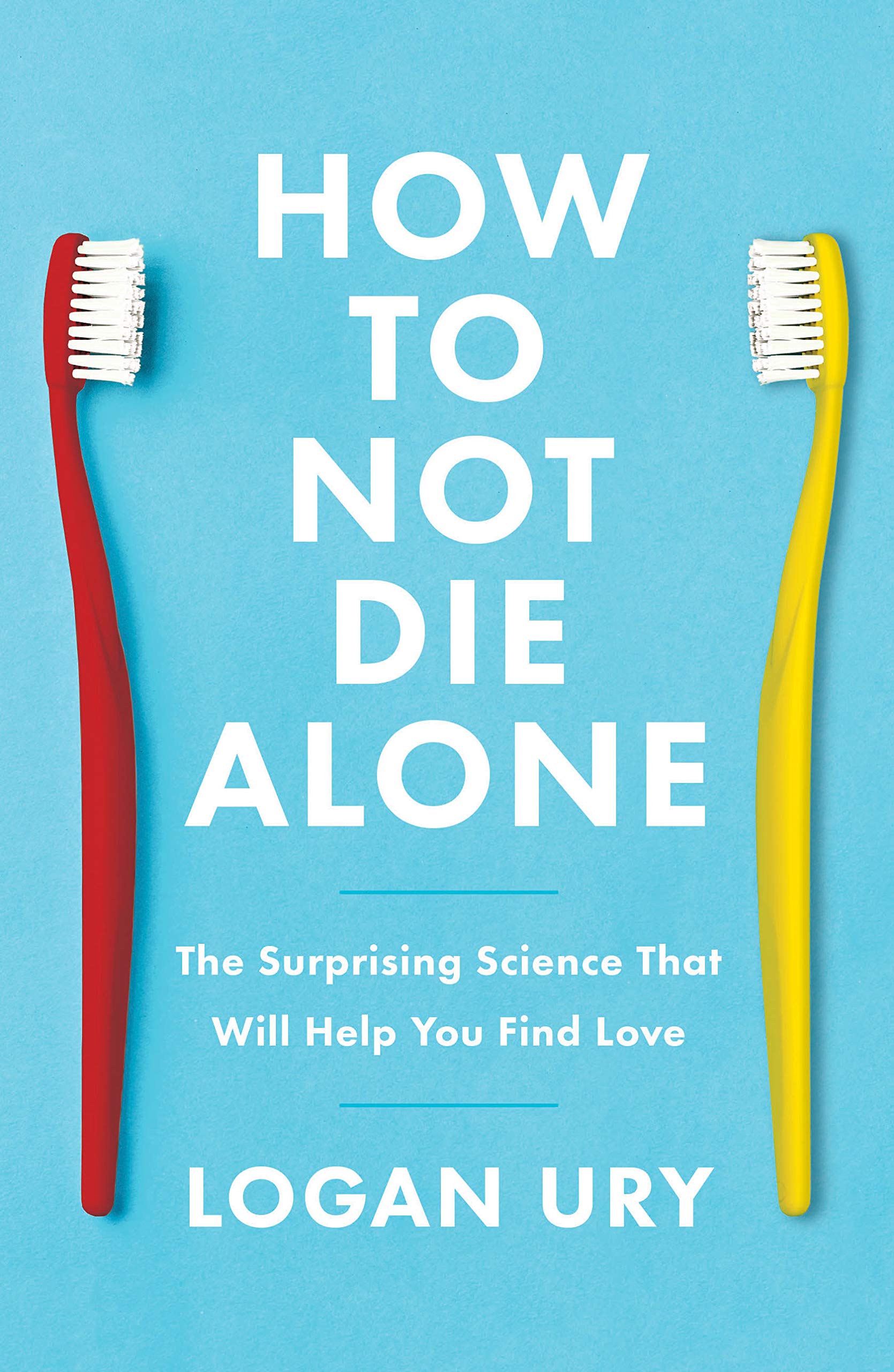
How to Not Die Alone: The Surprising Science That Will Help You Find Love
Have you ever looked around and wondered, “Why has everyone found love except me?” You’re not the only one. Great relationships don’t just appear in our lives—they’re the culmination of a series of decisions, including whom to date, how to end it with the wrong person, and when to commit to the right one. But our brains often get in the way. We make poor decisions, which thwart us on our quest to find lasting love.
Drawing from years of research, behavioral scientist turned dating coach Logan Ury reveals the hidden forces that cause those mistakes. But awareness on its own doesn’t lead to results. You have to actually change your behavior. Ury shows you how.
This “simple-to-use guide” (Lori Gottlieb, New York Times bestselling author of Maybe You Should Talk to Someone) focuses on a different decision in each chapter, incorporating insights from behavioral science, original research, and real-life stories. You’ll learn:
- What’s holding you back in dating (and how to break the pattern)
- What really matters in a long-term partner (and what really doesn’t)
- How to overcome the perils of online dating (and make the apps work for you)
- How to meet more people in real life (while doing activities you love)
- How to make dates fun again (so they stop feeling like job interviews)
- Why “the spark” is a myth (but you’ll find love anyway)
This “data-driven” (Time), step-by-step guide to relationships, complete with hands-on exercises, is designed to transform your life. How to Not Die Alone will help you find, build, and keep the relationship of your dreams.
Resources
-
- PNAS: Disintermediating your friends: How online dating in the United States displaces other ways of meeting
- The Decision Lab: Why do we prefer things that we are familiar with?
- Business Insider: You might still be single because of something called the 'paradox of choice' — here's what it means
- Personality and Individual Differences: The ick: Disgust sensitivity, narcissism, and perfectionism in mate choice thresholds
- Self: Everyone Has Relationship Deal-Breakers. Here’s How to Identify Yours
- Institute of Family Studies: No Hookups, No 'Talking,' and No Breakups: A Better Way to Date
- Journal of Personality and Social Psychology: Maximizing versus satisficing: Happiness is a matter of choice.
- Journal of Personality and Social Psychology: Implicit theories of relationships: Assessment and prediction of romantic relationship initiation, coping, and longevity
- The Gottman Institute: Dating Anxiety: How to Move Forward
- National Council on Aging: Dating After 50: What You Need to Know
- Couple and Family Psychology: Reasons for Divorce and Recollections of Premarital Intervention: Implications for Improving Relationship Education
- Pew Research Center: Key findings about online dating in the U.S.
- PNAS: Machine learning uncovers the most robust self-report predictors of relationship quality across 43 longitudinal couples studies
- Psychology Today: Why You Should Stop Looking for a Soulmate
2 Million Readers.
1 Life-Changing Newsletter
Simple and Straight-to-the-Point...
Just Like Mel.