Episode: 377
Simple Steps for Getting Unstuck: Do THIS and Change Your Life
with Seth Godin
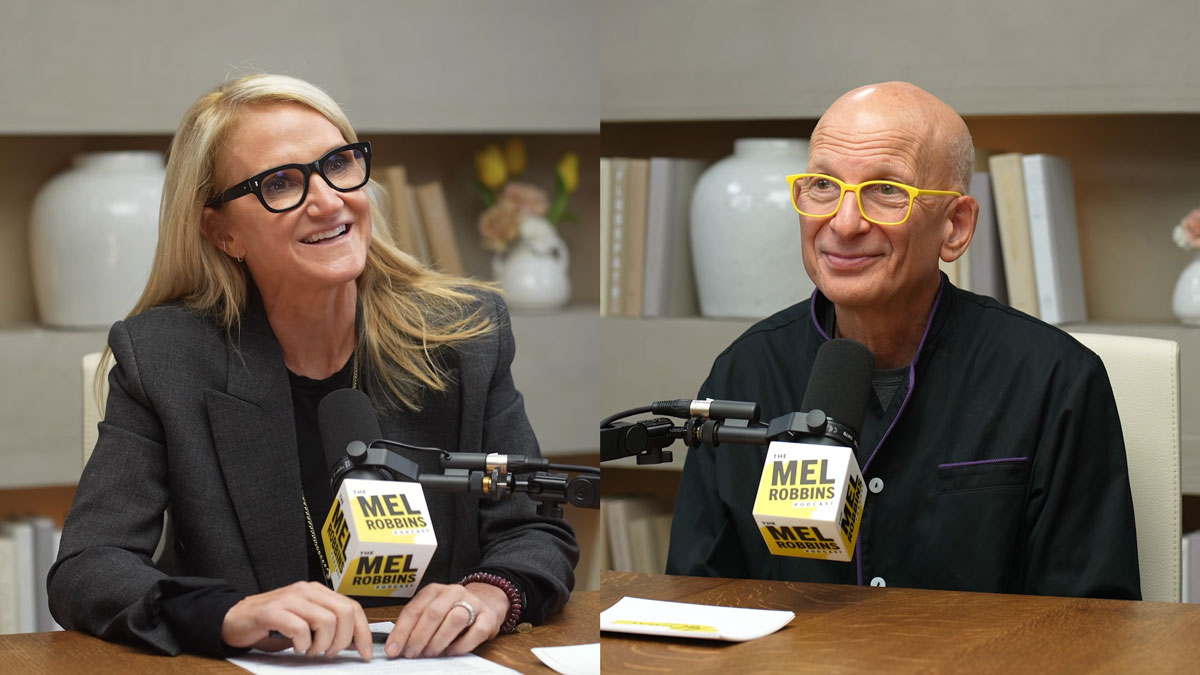
Today’s episode is going to change the way you think about your life.
If you keep telling yourself you want to:
- go after something bigger
- speak up
- take a chance
- or finally do the thing you know you’re meant to do in life…
but you “just can’t seem to find the time,” you need to hear this right now.
Seth Godin is going to call you out in the kindest, clearest, most liberating way.
Seth is one of Mel’s most beloved business mentors. He’s written more than 20 bestselling books, his ideas have influenced millions of people around the world, and he’s widely considered the godfather of modern marketing.
But this episode is not about marketing. It’s about the life you want to live, and why you keep putting it off with busyness, scrolling, excuses like, “I’ll do it when…”
Seth is going to teach you how to stop procrastinating and start moving forward, even if you’re scared, even if you’re tired, even if you don’t feel ready.
By the end of this conversation, you’re going to feel capable, and you’re going to want to take action immediately.
Listen on:




The only place to begin is where you are. If you're waiting to get somewhere else before you begin, you're never gonna get there.
Seth Godin
All Clips
Transcript
Mel Robbins (00:00:00):
There's a project or a goal or there's something important to you that you just can't seem to find the time to get to. There's always an excuse why you can't get it done. Well, that's going to change right now. You're about to meet one of my mentors, the one and only Seth Godin. He's written more than 20 bestselling books. He's considered the godfather of modern marketing, but to me, his work has been pivotal in teaching me how to stop hiding and how to start leading, creating, and living a bigger, bolder life.
Seth Godin (00:00:35):
The only place to begin is where you are. If you're waiting to get to somewhere else before you begin, you're never going to get there. If we're going to do something important, there's going to be resistance. If you don't feel resistance, it might not be important enough. Okay, two words. You ready? Yes. Pick yourself. The dominant system wants you to wait to be invited to go on a reality show, to be invited to apply for a job. They want you to go to the placement office and wait for the company to come interview you. The idea that someone else will pick you and authorize you, they will call you up and they say, "Mel, we know you have a novel in you. Would you please write the novel and we will publish it? " The end. It's really awkward to say, "Yeah, I picked myself. I wrote this. Here. I made this. " No one's forcing you to not wait. You're choosing to wait. What a safe, lovely place to hang out. Congratulations. You've built a perfect place to hide. Go Make A Ruckus is simple. It's work that matters for people who care.
Mel Robbins (00:01:38):
Hey, it's Mel, and I am so excited to learn from Seth Godin to be inspired. You are not going to be the same person after watching this today. But here's the thing. My team just told me that 57% of you that watch the Mel Robbins podcast here on YouTube are not subscribers. So here's how you know you're not a subscriber. The button is lighting up right now. It is free to hit subscribe. I know you're the kind of person that loves supporting people who support you. So I want to thank you in advance. Thank you for hitting subscribe. It's the best way to show our team that you love what we're doing. It also supports us in helping you bring world-class, world-renowned experts like Seth Godin, 20 bestselling consecutive books in a row. He's about to pour into you like you've never felt before. I don't want you to miss his thing.
(00:02:26):
That's why hitting subscribe matters. Thanks for doing that. All right. Let's get into the show. Seth Godin, welcome to the Mel Robbins podcast.
Seth Godin (00:02:35):
Dream come true. Thank you for having me, Mel.
Mel Robbins (00:02:37):
It's a dream come true because more than anyone else ... I'm going to start crying and we're talking about more than anyone else you have really taught me how to overcome fear and resistance and put art out into the world. You have taught me everything I know about how I think about making an impact with people and communicating and marketing and having courage. And I'm really proud that you're here because our company, 143 Studios in this podcast, is run by people who are students of yours. I can't wait to see the impact that this conversation has on absolutely anyone and everyone that listens to it, that watches it. It is my mission that together we ignite a bonfire inside someone's soul. And they not just listen, but they do something with it.
Seth Godin (00:03:51):
Thank you. One of the measures of my work is not what happens if I teach somebody, it's what they teach other people. And you have taught so many millions of people, and it's just a thrill to be in the same room with you.
Mel Robbins (00:04:07):
All right. I think let's do this.
Seth Godin (00:04:09):
Here we go.
Mel Robbins (00:04:10):
As you say, let's make a ruckus. What could be different about my life? If I take everything to heart that you're about to teach and share with me today and the person who's listening and watching right now, what could change?
Seth Godin (00:04:28):
If you think about whatever situation you're in, whether it's at work or at home, is there anything you could do to make it worse? Is there anything you could tell yourself a story you could tell yourself or an act you could accomplish that would make it worse? And I think we can all agree the answer is, of course. Well, by that measure, then there are things you can do to make it better, and you can make it better by choosing intentionally a strategy. And maybe we can rewire the story we're telling ourselves and not be a victim or a cog in an existing system, but build something that's generative and makes things better for people who care. And that might sound like a tall order, but if we can make things worse much without hardly any effort, we can probably make things better as well.
Mel Robbins (00:05:17):
I've never really thought about it that way. That it's true. If you just really ponder that question, how could I make my life worse? I could come up with a hundred things that would make it way worse today. And yet we do not really stop and think about the endless ways that you could make your life, your work, your relationships better. Given how many people you have taught, given how many people who have been impacted by your work, just to open up the aperture of possibility for somebody, what are some of the wide ranging things that people have made better by embracing so many of the concepts that we're about to dig into today?
Seth Godin (00:06:03):
It's tempting to just point to numbers and what did you grow? How big was your organization? But I think it all starts at home. It all starts with the first noise we hear in our head when we wake up and the last thing we say to someone we care about when we go to bed. And all of that is fueled by the story we tell ourselves, the story of being a victim or the story of being an architect, the story of saying, "That person, that one right across the table from me, under the circumstances, they are doing their very best. I can't change them, but I can change the circumstances." And so we begin by realizing that people who have had much worse things happen to them than you or to me or to you have somehow figured out a way to thrive, to thrive given where they are right now because the only place to begin is where you are.
(00:07:01):
If you're waiting to get to somewhere else before you begin, you're never going to get there. We have to start where we are, acknowledge what's happening right around us, and then make a choice. Make a choice about whether we want to change things or whether we want them to stay the same, but you're only a victim if you want to be.
Mel Robbins (00:07:22):
I don't think anyone likes to hear you're only a victim if you want to be.
Seth Godin (00:07:26):
Well, let me be really clear. I won the birthday lottery. I won the parent lottery. I was born with so many advantages compared to people around me or people through the ages. There are people right now who are in relationships that are abusive. They're in debt up to their eyeballs. They're dealing with physical or mental disabilities. All of those things are true. And then what are you going to do? And then what are you going to do? So I'm using the word victim very carefully here. I'm not saying that bad things don't happen. They do. They often happen to people who don't deserve it. What I'm saying is, how should we process what just happened? Should we add a but or an? I'm on vacation, but it's raining means my vacation is ruined. But if it's, I'm on vacation and it's raining, it means I've opened up the door to, now what am I going to do with that?
Mel Robbins (00:08:24):
Can you give me a couple other examples of the power of but versus and?
Seth Godin (00:08:30):
Those words do a lot of heavy lifting in many sentences, in many stories we tell ourselves. I want this person to have exactly the wedding they want, but I also want it to fit into my budget and be the wedding I want. Well, that word but is doing a lot of heavy lifting. And this is one of the key things that's unlocked with the let them theory, which is you can let people do things, but you can't have your butt at the same time. You can't have your and at the same time. There are things that are in front of us that are problems, and there are things that are in front of us that are situations. Problems have solutions. Situations do not. So if it's a situation, we have no choice but to accept it because it has no solution. But if it's a problem, it can be solved.
(00:09:20):
You might not like the solution, but it can be solved. And so my takeaway from your brilliant book is if that person's going to do what they're going to do, I can treat it like a situation. I can have a big fight about it or I can realize they're going to do what they're going to do and my solution to the problem is to let them.
Mel Robbins (00:09:44):
What is the difference between a solution and a situation? Because I was sitting here going, "Huh, a situation is something that you can't change or control." Is that what you're saying?
Seth Godin (00:09:55):
Correct. So I trained as a mechanical engineer years and years ago in college. You can't rewrite the laws of physics. You can't be in two cities at the same time. You can't persuade a company to buy something from you if they don't want to buy it from you. Those are situations. Problems have solutions, you just might not like them in the short run, but there is a way forward if you're willing to accept an outcome that isn't the one you've been dreaming of. And so what I'm trying to do is let you off the hook if it's a situation. Okay, I can't change this, but it means I have to accept it or put you on the hook if it's a problem and say, "Yeah, if this is a problem, I might not like the solution and probably I have a solution in mind that I don't want to do, but I know what I could do. I just don't like it. " It's still a solution.
Mel Robbins (00:10:45):
Breakups, taking better care of yourself, sticking to a budget, putting yourself out there and risking the judgment of other people. These are all problems, but they have a solution. We just don't want to do it.
Seth Godin (00:11:03):
Yeah. So a simple technical one. If you're willing to have an uncomfortable conversation with your boss for 15 minutes a year, you'll make more money because in those 15 minutes, you can share your honest truth about where you are and where you want to go. But if it's too much trouble and too scary to do that, then you should settle for what you have. So the solution to the salary negotiation is there's probably going to be an awkward conversation. The same thing's true if your spouse loads the dishwasher in a way that you find really annoying, but you want them to just know that. You don't want to go through the 10 minutes of hassle to talk about it. Well, we know what the solution is. Tell the truth. Have a respectful conversation offering the other person empathy, but letting them hear what you need to say.
(00:11:53):
You've solved the problem. It just wasn't fun to solve the problem.
Mel Robbins (00:11:56):
Well, most problems aren't all that fun to solve until you solve them.
Seth Godin (00:11:59):
The easy ones are already gone. Yeah.
Mel Robbins (00:12:01):
That's true. So you talked about noise, and one of the things that your work has taught me is just how much resistance I was manufacturing and putting in my own way. And when you first bump into your work, Seth, it can feel very confronting and you start to read Seth's stuff and you're like, "Who the hell does it ... Solutions, problems, noise." He has no idea. And then you start to really consider all of the resistance that you have to that list of things that you can generate that would make a situation better. I would love to just start to pull that apart because that's had the single biggest impact on me is really being truthful with myself about how much I am in my own way and how much I blame my stuff on other people and other things when it's really none of those things at all.
Seth Godin (00:13:06):
The word resistance means anything that we do to get in our own way to keep us from doing something that's going to scare us. And so let's talk about writer's block. Writer's Block was only invented a hundred years ago. We know who named it, the woman who wrote Frankenstein's near-dowell poet husband. And writer's block is based on the idea that you just don't have the muse telling you what to write today. This is nonsense. There's no such thing as writer's block. What happens is if it feels important, if writing a memo feels important, if painting something feels important, if going on a date with someone you've always wanted to go on a date with and it's tomorrow night feels important, we do something internally to insulate ourselves, to protect ourselves, to keep us from being on the hook because we got indoctrinated by school to do that because factory workers don't have to be on the hook.
(00:14:04):
They just have to do what they're told. But it's also, I think, part of human nature. And resistance then is something that we cannot make go away. If we're going to do something important, there's going to be resistance. If you don't feel resistance, it might not be important enough. So the question then is, what do you do when it shows up? And the answer is you say thank you. Thanks for letting me know I'm on the verge of doing something important. Thanks for reminding me that this needs to be on the top of my priority list. The things I'm procrastinating, I'm procrastinating because of resistance. And so I now have a compass and the compass points me to the hard work to be done. And hard work I think is worth talking about for a minute. Hard work in the old days was how many pounds of gravel can you carry on your back because we don't have any machines.
(00:14:59):
But now hard work is, did I come up with a solution that's not on the list of solutions? Did I tell the truth in a way that the other person could hear? Did I make a good decision? Did I write something that's never been written before, sing something that's never been sung before, paint something that's never been painted before? That's our job. And so when we think about how do we engage with our family? Well, if we're just going to put the stuff in the microwave oven, check all the boxes and then sit down and watch three hours of streaming every night, you're fitting in. You're making all the companies happy, but you're not facing the resistance, which is, what is the work that needs to be done that I'm afraid of?
Mel Robbins (00:15:43):
Why is doing the work that you're afraid of doing the secret to a more fulfilling life? Because you could mistake the word work for something related to your career or something that is on your to- do list. But I know that you're talking about something at a way more fundamental level that is about your experience of being alive and your experience of yourself as you're going through this life. So can we go deeper into what that means, what the work is?
Seth Godin (00:16:27):
I don't know anybody who wants to spend the rest of their life sitting on a beach, having a way to bring the Mai Tais. Every day, you're not allowed to do anything else. I think that would drive almost everyone crazy. When we have a chance to be productive in whatever form that is, whether or not we are getting paid for it, we have a chance to be fully alive. It could be the pottery you make in your spare time or the way you are raising your kids. It could be the fact that you volunteer at the local animal shelter. That's work. You're doing it because the work needs to be done and doing it well is gratifying. There's a magical side effect and the side effect is this gratifying life translates into a whole bunch of side effects, like more respect, like more independence, like more resilience in the bank because the universe can't wait for people to show up who do good work.
(00:17:28):
They will line up outside your door and offer you friendship or respect or even money if you are the person who's willing to do the things other people are afraid to do.
Mel Robbins (00:17:40):
One of the things that is interesting is that if you think about something that you know is important to you, whether it's cleaning out the attic now that the kids are gone, nobody else seems to care about, but this just nags at you or it's really writing down all your grandmother's recipes and self-publishing a cookbook or it's starting that store on Etsy or it's volunteering at the community gardens. There is this nagging thing that is inside each and every one of us that we just shove away and shut down. And what you're talking about is that the resistance that you feel, because the things that are important don't go away. There is no amount of busyness that takes that kind of, it's an ache in there away. And so you're talking about and giving us this permission to really look at it differently. It's not a to- do.
(00:18:45):
It is some of the most important things that you could force yourself to spend time on.
Mel Robbins (00:18:52):
Why is the personal nature of that nagging book you want to write, that YouTube channel you want to start, the side business that you keep dreaming about? What is that thing actually about, Seth?
Seth Godin (00:19:06):
Okay, two words. You ready?
Mel Robbins (00:19:07):
Yes.
Seth Godin (00:19:08):
Pick yourself. The dominant system does not want you to pick yourself. The dominant system wants you to wait to be invited to go on a reality show, to be invited to apply for a job. They want you to go to the placement office and wait for the company to come interview you. The idea that someone else will pick you and authorize you, they will call you up and they say, "Mel, we know you have a novel in you. Would you please write the novel and we will publish it? " And I'm speaking from experience here, I've talked to thousands of people in this very situation who have a book inside of them and my advice to them is it's simple. Make it into a PDF, email it to 20 people, ask them to share it with others for free. If it spreads, your phone will ring and now you can get hired to write another one.
(00:19:54):
If it doesn't spread, write something better at the end and almost no one does this because it's really awkward to say, "Yeah, I picked myself. I wrote this here. I made this. " And those four words, here I made this are so challenging that it's easier to buy a cookbook and follow the recipe than to invent something you're going to serve to people you care about. And so if we can find a life where we can identify the things that are important to us, truly important to us, and then pick ourselves not to do the work to win a prize or get a medal, but because we have agency, because we could, the word for that is freedom. It is the responsibility of showing up to make a thing and offering it to the world. It might just be your family that notices the attic is clean, but you, you realize that you hired yourself to clean the attic.
(00:20:57):
Don't wait till you're going to sell the house and the realtor hires you to clean the attic. You hired yourself to clean the attic and that sort of freedom and responsibility, that's where dignity lies. And everyone I've ever met wants more dignity in their life.
Mel Robbins (00:21:11):
Don't you think your home should be a reflection of who you are? Of course it should. That's why you need to know about our sponsor, Ashley. Ashley has styles that balance timeless appeal with modern trends that will help you bring your personal look home. In fact, I was looking at the Ashley website because I know you're going to go, "Well, Mel, what do you like? " The Crystal Land Collection. It's a modern farmhouse look that feels warm and inviting, but it's still clean and elevated. I love clean and elevated with beautiful light brown wood tones, black hardware accents, and the dining room table's super cool. It expands from 80 to 98 inches. It has this removable leaf. It seats up to 10 people. And if you look at the table, you can picture holiday dinners, family gatherings, friends, making all kinds of memories. And every Ashley piece is thoughtfully designed, built to last.
(00:22:02):
So your home doesn't just look good. It works like it should. Plus, Ashley provides fast, reliable, white glove delivery right to your room of choice, making the entire process simple from start to finish. Visit your local Ashley store or head to ashley.com to find your style.
Mel Robbins (00:22:19):
Why is there so much resistance to picking yourself? Why are we waiting for someone else to come along, Seth, and be like, "Hey, you should write that book. Hey, you should quit your job. Hey, I think you should start that business. Hey, have you ever thought about getting out of that relationship? Hey, you should ask your family to help you out a little bit more."
Seth Godin (00:22:36):
Life is high school, isn't it?
Mel Robbins (00:22:38):
It is.
Seth Godin (00:22:38):
And high school taught us a whole bunch at a very important moment of our life. And the people who got by who seemed the safest weren't the ones who were picking themselves. They were the ones who were sort of hiding out, hiding out in a uniform, hiding out in an attitude, hiding out in a clique, hiding out in a group, hiding out in a mob. And so the system wants us to hide out. It's much easier to sell you lunchables and to sell you the next thing on television if you are part of the crowd. And so we have to do some work to unteach this to ourselves. And that's one of the magical things about sharing this podcast because when you say to a friend, "I'm going to start acting this way. Listen to this, hold me accountable." You picked yourself, but you now picked someone to hold you accountable as well, and the cycle can continue.
(00:23:35):
That one of the things we notice is that when you are a part of a scene, whether that scene is jazz musicians in Chicago in 1964 or Silicon Valley Entrepreneurs 10 years ago, you want to fit in with the group, the scene you are a part of. So if the scene you're a part of isn't getting you where you want to go, build a different one, build a different circle of people who ask each other hard questions about their relationships, about the books they're reading, about the books they're writing, about whatever it is you want to make, because we become who we hang out with and what they expect of us.
Mel Robbins (00:24:11):
I believe it's a fact that there's something about the hardwiring of a human being that is a fundamental need tied to growth, tied to learning, tied to connection and expressing yourself. And no matter how busy you get, no matter how much you drink, no matter how much money you make, no matter how broke you may get, you will still never outrun the things that are uniquely meant for you to do during this lifetime. They just have this kind of magical way of haunting you. And so that presents you with this choice. Do I sit knowing deep down there's some change I want to make? There's some way I want myself or my world or my family to be better. There's something I want to do. There's people I want to find, but instead of doing it, I am going to sit with the resistance that slowly is killing me as I think about it and actively deny or talk myself out of it.
(00:25:10):
One of the things that I see a lot, Seth, when people write in is somebody will write in and say, "I've changed my life. I've lost some weight. I'm exercising. I feel incredible. I've started journaling every day. I'm also now selling this new skincare line or I got my realtor's license." My partner hates what I'm doing.
(00:25:37):
They're not supportive at all. So can you talk a bit about the noise and the resistance that comes from the people around you and what to do with it if one of the reasons why you're not making the change you want to make is because of that outside pressure.
Seth Godin (00:25:57):
So when in doubt, look for the fear. There are three things that motivate people. Fear, affiliation, and status. So let's do them in reverse order. Status is who eats lunch first. Who's up and who's down? What kind of car are you driving? Is your desk closer to the bosses? Are you mom's favorite kid? Status. Affiliation is, who's to my left? Who's to my right? Am I wearing the right outfit? Is my hair the right style? Am I wearing the right glasses? Do I fit in? And between those two, underlying both is fear. It starts, of course, with the fear of death because we're all going to die, but it extends to a million things. We've figured out how to hook almost everything up to fear. So the people who are around you, who care about you are afraid, so are you. And that fear might involve not knowing the person you're about to become.
(00:26:55):
That fear might involve catastrophizing what might happen if the world changed. But here's the thing, Mel. The world is really crazy right now, and this is as normal as it is ever going to be again. If you're waiting for things to get back to normal, you're going to be waiting a very long time. And so given that change is happening whether you like it or not, the question is, should we take agency and control and influence of that, or should we sit back and just wait? And so the people who you are listening to, who you are modeling your behavior around, they mean really well. Under the circumstances, they love you and they care about you, but the circumstances determine everything and the circumstances involve everything we've been taught, everything we've been led to expect and the systems we're all part of. And if it's working for you, don't change anything.
(00:27:50):
But if it's not working for you, then we get back to the and but thing. If it's not working for you, you have to decide if it's not working bad enough that you're willing to deal with the short-term resistance and challenges to change it. And you're not guaranteed it's going to work out the way you hope, but you are guaranteed that you can influence it.
Mel Robbins (00:28:12):
So in the instance of somebody who has changed their lifestyle, they're now healthier, maybe they've cut back on the drinking, they're getting up earlier, their spouse is sleeping in. It feels like they're growing a little bit apart. If we use the but and you could say, "I'm getting healthier and I'm feeling great and I'm making positive changes, but my spouse doesn't like it. " Versus, "I'm getting healthier, I'm making positive changes, I'm feeling much better, and my spouse doesn't like it."
Seth Godin (00:28:48):
And if it's the second one, now you owe your relationship something because your spouse can't fix this problem by themselves because if they could, they already would've. So you can just announce a situation and live with it. Or you could say, "What would it mean for me to really see my spouse, to really see their fear, to really understand how they might feel rejected or denigrated by the fact that I'm doing this thing that they secretly would like to do to, but can't. How can I put effort into helping them feel the firm foundation that our relationship has when it's at its best?" And there are lots of ways to do that, but none of them are guaranteed. But if you don't work at it, it's probably not going to work very well.
Mel Robbins (00:29:35):
Well, I love just the simplicity of but and, because when you say but, now all of a sudden it means the spouse is the reason you got to stop doing it or they're the biggest reason why it's hard for you. When you say and you basically separate yourself and them and you hold space for both things to be true and therefore they don't become the excuse, they just become one of the problems Problems or the facts of what you're dealing with, and now you can decide how you're going to make this better.
Seth Godin (00:30:06):
Correct. That's exactly right.
Mel Robbins (00:30:08):
It's super easy.
Seth Godin (00:30:09):
So if you think about the marathon, we're in Boston.
Mel Robbins (00:30:12):
Okay.
Seth Godin (00:30:14):
Some people run the Boston Marathon and make it 24 miles and then they stop. And some people finish it. And the only difference between the people who finish the marathon and the people who almost finish the marathon is the people who finish the marathon figure out where to put the tired. They're both tired. But if you quit at 24, you can't handle all the tired. You got to stop. But the difference is the people who make it to 26, they're tired too. They just figure out where to put it. So if you go to a running coach and say, "I want to run the marathon," you don't get to say, "And I want to finish without getting tired." Not allowed. You have to say, "I'm going to run the marathon and I'm going to get tired and I need to be able to do both." So this idea that forward motion, changing your appearance or your life, it comes with a form of tired that goes with it.
(00:31:05):
Where are you going to put it? How are you going to put in the effort to get good at dealing with the effects?
Mel Robbins (00:31:13):
You just said a sentence that's very liberating. And even though I've read absolutely all your books, I'm not sure this one has ever hit me the way that it hit me right now. I need to be able to do both. There is this presumption, almost like a psychosis, that when something's important to you, you believe it's going to be kind of easy to do. And if you were to start with the presumption that this thing's important and I'm going to get tired and it's going to be hard and there's going to be a lot of resistance, so I need to be able to do both. Do the thing that's important and also know that this is part of the package.
Seth Godin (00:31:58):
Right.
Mel Robbins (00:31:59):
For someone who's been really sitting with an idea or feels that pull toward a positive change, but they've been sitting there waiting for the right time, waiting to feel ready, waiting, waiting, waiting, waiting. What do you say or do?
Seth Godin (00:32:24):
Well, congratulations. You got exactly what you wanted.
Mel Robbins (00:32:27):
What do you mean?
Seth Godin (00:32:27):
No one's forcing you to not wait. You're choosing to wait. What a safe, lovely place to hang out. To be able to say, "I've submitted my novel to 20 great publishers and they all turned me down. Okay, you're off the hook. How safe could that be? " That I have a great talk I want to give, but they won't let me get the main stage of Ted. As soon as they call, I'm ready to go give the talk. Congratulations. You built a perfect place to hide. And we all do this. No matter where we are, no matter what we do for a living, this is what we do. We find a perfect place to hide. And if it's working for you, don't stop. But if it's not working for you, then we get to this and thing. I have a talk I want to give and I recorded it yesterday and it's on YouTube tomorrow.
Mel Robbins (00:33:15):
Oh, that right there is like, "Oh, I don't want to do that though."
Seth Godin (00:33:18):
Right. Do it under another name. I've suggested to people for years, you should start a blog and if you want to do it under an assumed name, I don't care. But after a hundred days, you'll want to put your name on it. So tomorrow-
Mel Robbins (00:33:30):
Why would I want to put my name on it after 100 days? What happens?
Seth Godin (00:33:33):
Because you're going to be so happy with what you are doing. You're going to be so proud that this work is there, that you did it, that you want to take credit for it. It's just the act of saying, "Here, I made this. I put this into the world for people who might benefit from it. " And the generosity feeling, because remember, it doesn't cost us anything to do this idea sharing and it has leverage. It might be multiplied to a whole bunch of people. This is not the same as going on Instagram and hustling everybody you know to give you a like or whatever it is. They are structuring their algorithm so that you will feel bad until you do more of what they want you to do. That's how they make a living. That when we are constantly creating content without charging them and telling all of our friends to absorb that content, we're doing their work.
(00:34:27):
It's a trap because you can say, "Well, I've done all the things. I've got the wide brand hat. I've got the lighting. I'm doing all the things like everybody else is doing. I'm going to be an influencer. I just don't have my 300,000 followers yet." And now you found another safe place to be stuck. And so you end up burning your relationships by selfishly asking people to do things for you online and you're pandering to a crowd you don't know and don't care about. And once again, you're trapped.
Mel Robbins (00:34:55):
What you're saying is if you're sitting in your head waiting for the right time or obsessing over the right way to do it, probably because you're managing, I want people to like it. So instead of picking yourself and saying, "Wait a minute, I want to put this out there, whether it's my real estate business or it's my art or it's just me starting to write something, I want to do it because it's killing me to sit here and watch everybody else do stuff and to know I'm quietly quitting on myself."
Seth Godin (00:35:30):
There's something I call intentional design and it's two simple questions. Who's it for and what's it for? So this thing you're putting on social media, who exactly is it for? Tell me exactly by name, if you could, who is it for? If it's not one of those people, you don't want them to see it, you don't care if they don't like it. What's it for? Why are you putting in this effort? What do you get out of it? What do they get out of it? If you can't answer those two questions, who's it for? What's it for? Then you're floundering, then you're hiding.
Mel Robbins (00:36:05):
For the person who never actually starts,
Mel Robbins (00:36:10):
How do you pick yourself? You're sitting in your house, you're listening to this, you're frustrated because you've been thinking about going back to nursing school forever, and you've thought of all the bazillion reasons why you can't, and the money, and the this, and the people, and the timing, and I'm old, and all that other stuff. In that instance, how do you pick yourself? Because you've been in that, right?
Seth Godin (00:36:36):
Yeah, for sure. It's such a grooved habit.
(00:36:39):
Two related ideas, the smallest viable audience and the smallest viable piece of art. So the smallest viable audience is what's the smallest group of people? And if you made an impact on them, it would be enough. So if it's a household, one kid, that would be enough. I don't care what the neighbors think, it's for them. And the smallest piece of art is, what's the shift I could make that would be worth it? So if you've been paralyzed for 20 years about going back to nursing school, why don't you go to the local senior home or hospital and volunteer for one afternoon a week? They're not going to turn you away. What would happen if for two hours a week you could change somebody's life? Do you want to do that more? Well, there's lots of ways you can do that more, but you're not sitting at home wishing you're actually spending two hours a day or a week changing someone's life.
(00:37:33):
The smallest viable unit of art is very, very small. I say to people who say, "My boss won't let me, " which is a very common expression. "I want to make a difference at work, but my boss won't let me. "What they're really saying is, " I want to revamp everything at work from the top down and they won't give me authority to do so. "Well, of course they won't, but you know what you could do? You could start a book group over lunch on Fridays and you could just invite five people and say," We're all going to read Mel's book. Come next week prepared to discuss it on Friday over lunch. "And if it works, you get to do it more. And if it doesn't work, we can stop.
Mel Robbins (00:38:14):
Those are great examples of you picking you. Is the smallest viable audience, could it also just be you? You know what I'm saying? Or is it important that you to really hack this well-groove thing to say, how could I shrink this big thing and turn it into a little thing that impacts somebody else? Is it really important to think about, " Well, I'm scared to put up a Substack thing about my musings about whatever, but I could send an email to my sister. "Is that kind of what you're thinking?
Seth Godin (00:38:46):
Yeah. So let's begin with hobbies. I love hobbies. I have so many hobbies. Hobbies are for you. Do not stop your hobby because your neighbor doesn't like the canoe paddle you just carved. It's not for them. It's for you. So if you're doing something just for you, please do something for you. Call it a hobby. Don't add any butts or ads to it. It's for you. But the smallest unit after that is your sister is one human. And we have to talk for a second about attachment.
Mel Robbins (00:39:16):
Okay.
Seth Godin (00:39:16):
Attachment is a Buddhist term, but it's pretty easy to understand. Attachment means that you're trying to control the outcome. You're attached to what the weather's going to be like at your daughter's wedding. You're attached to whether people like the episode you're making. You're attached. You're trying to control something from the outside. Here's the problem with attachment. Let's say you and I want to swim across a small lake and we want to be safe. Well, the safe way to do it is eight feet apart, we swim. And if one of us gets into trouble, the other one can help. The stupid thing is for me to attach my right arm to your right arm by a rope and four ropes, arm to arm, leg to leg. We're both going to drown because you can't survive that way. So when we are going to do this work and bring it to the world, here I made this, but it's not followed by, and I need you to like it.
(00:40:14):
It's just here. It's a gift. That is what makes something a gift here. Not," And you owe me a thank you note, and you owe me a big smile, and you better clean your plate, and you better appreciate it, because now I'm attached and I'm trying to control it. "That's not a gift anymore. That's just getting somebody else wrapped up in your story, and that's a recipe for disappointment.
Mel Robbins (00:40:37):
What we keep coming back to is the you, the picking you, the hiring yourself. And I know that underneath this is that ultimately you're not necessarily going to nursing school for anybody. You're going to nursing school for you.
Seth Godin (00:40:56):
And a big part of why you're going to like doing that is the way you make other people's lives better. This is not some selfish ain't randian thing of always do what's for you because most normal people, what's for you is the reaction someone who gets the joke has. So it takes a long time of being in a Broadway show before you're tired of the applause at the end of the show. The applause isn't for you to know you did a good job. You knew you did a good job. It's for someone to engage, to connect, to make something happen there.
Mel Robbins (00:41:34):
Oh, I think I just got something. So one of the reasons why you feel so tortured as you're sitting there with this thing you want to do or this change you want to make or the ways in which you wish your life were better is because in doing it, somehow your mind, body, spirit, and soul knows that on the other end of you getting through the resistance and out of your own way and really expressing your aliveness, whether it's through a community garden you start or it's going back to school or it's changing the way you take care of yourself or stepping back into the dating world after divorce or losing somebody that you love that I think deep down we know that there is some profound connection that is missing in your life right now that can only be felt by doing this thing that feels important to you.
Seth Godin (00:42:38):
And it rhymes with another word that's keeping us stuck, which is rejection, that if I put myself out there, maybe I'll get rejected. If I put myself out there, maybe I will be seen as the fraud that I am. If I put myself out there, maybe something bad will happen. So it might be easier to just stay here and whine about it than to do this generous act. So I want to talk about my mom. I miss her every day. She died way too young. My mom was a volunteer and then an employee at the most important art museum in Buffalo called the Albright Knox. And it's considered one of the great art museums in America. And when she got there, the museum store wasn't really an idea. Most museums didn't have stores and they sold some postcards and she took it over and with her partner Lita grew it to 10 times the size.
(00:43:31):
She co-founded the Museum Store Association and museum stores around the country looked to that thing. So one of the things that she did was it bothered her that in Buffalo, a lot of people never came to the museum because it was a status thing and it wasn't the way they were raised. And my mom came up with this idea before the Antiques Roadshow was on television. She got two people from Sotheby's to come to the museum. It was like 1973. And if you had antiques in your attic, you were going to get these people from Southern who would be able to tell you if they were worthwhile. So she comes home from work on Friday and the things the next day, and she had done a little press for it, but not much. And she was notably insecure, which was unusual for her. And she said, Seth, I'm a little nervous because we're doing this thing tomorrow and what if no one comes?
(00:44:27):
And then she turned to me and she said, "Well, if no one comes, no one will know that no one came." The next day there were 5,000 people waiting in line.
Mel Robbins (00:44:40):
That's incredible.
Seth Godin (00:44:42):
But the lesson for me was if she had just done what was on the paper in her job, it would still be a little phone booth that sold postcards. And all the generous cycles that came out of her work happened because she was willing to do an event and maybe no one's going to come because she realized if no one comes, no one will know that no one came.
Mel Robbins (00:45:08):
It's almost like these little pulls and ideas and just that thing that's inside you that you're waiting to do, that you feel this resistance, that your excuses, you're safe. It's almost like I love flowers so much because it just amazes me that from a tiny seed, the most extraordinary, intricate, big thing can bloom over time. That's how I visualize these little impulses and seeds and stuff inside of us that you have no idea when it could bloom, what it would bloom into, but we don't allow them to be planted. We keep them deep inside in the dark. Most seeds don't bloom in a bag, in the cold, in a shed somewhere. They need to be planted out into the open.
Mel Robbins (00:46:00):
One thing that you ask people to do is to be remarkable. What does that mean?
Seth Godin (00:46:07):
If you want to make an impact, if you want to grow, if you want people to show up, don't yell at them, make something worth making a remark about. That what it means to be remarkable is someone will benefit if they talk about you. They won't do it because of you, they'll do it because of them. So what it means to be remarkable is not to hustle or put on a weird show or wear a purple unicorn hat. It means do something that other people will benefit from if they remark about you.
Mel Robbins (00:46:41):
And to me, that has a lot to do with how you do it. You know what I mean? The personal flair that you bring into something, the care that you don't do in terms of how you move through the world, that it's like people are looking for the thing that's remarkable, but so much of it is in the way that you operate. I had this experience with the late Aron Sorensen, who was the first non-family member to be the CEO of the Marriott Corporation.
(00:47:10):
And I was interviewing him at this massive event. There were like 5,000 people in front of the audience. It was right when Starwood was merging with Merritt. Everyone was going bananas about their points. And so we had this great interview and he had also talked about the brand and that at the heart of the brand was this feeling that you felt like you were being welcomed home when you walked through the door and that it was everybody's responsibility to create that experience. And so anyway, the conversation's over. It was wonderful. And then we stand up the applause and we go to head off the stage and without any fanfare, without anything demonstrative, he quietly turns and picks up both our cups of coffee and the two napkins and the CEO of Marriott carried them off the stage. And to me, that is an example of what you're talking about because I have remarked about the impression that that left on me in terms of his integrity and just who he was as a person and a leader that no words could have done.
Mel Robbins (00:48:36):
I have read where you often write, "You are not behind, you are becoming." Why is this an important mindset?
Seth Godin (00:48:46):
So the single best way to get kids to behave is to award points and then to say points will be deducted. That there's a huge business in the United States now where they give kids points for behaving in class, which they can trade in for sugary snacks later. Points are a wonderful manipulation tool. And when we think about high school sports, they act like there's a trophy shortage. There's no trophy shortage. The purpose of high school soccer should not be to win the game because it doesn't matter who wins the game. The purpose should be, how do we develop into the people we'd like to be? But it's much easier to just keep score of the game as a proxy for what should happen next. So we're surrounded by this status game and it causes lots of marital strife because you don't make as much money as to people down the street because they have to go on a nicer vacation than us, et cetera.
(00:49:39):
That's only on your radar because we live in a world where it's possible to even fly to Paris. No one went on vacation to Paris 300 years ago. So we just keep upping the game, a ratchet to say, "There's a carrot. It's connected to the stick. We got to run faster." And it's trap. The alternative is to say, who do I seek to become? Not compared to who? Back to who's it for, what's it for? This work I'm doing at work, is it so I can make more money than my neighbor? Why? What do I get by making more money than my neighbor? I don't think that's useful fuel. I think when we choose our fuel, we choose the life we're living and choosing the fuel of I'm better than you getting into a status loop, it never ends.
Mel Robbins (00:50:27):
And if you recognize as you're listening, oh my God, that's me. I am obsessed with my neighbor's kitchen and now I don't like my kitchen, even though my kitchen was fine a week ago, but then I went over to their house and then they've got the dream kitchen and then you get into that thing. How do you, once you recognize, okay, Seth, bingo, you nailed me. I am in the status loop. I have the wrong fuel. What am I filling myself with?
Seth Godin (00:50:54):
Let's name it first.
Mel Robbins (00:50:55):
Okay.
Seth Godin (00:50:56):
I'm going to the jewelry store. I'm going to the handbag store. I'm going to the athletics store because I need to buy some status. I need to buy some armor. I'm paying $400 for sneakers I could buy for 50 because the status will help me. Just name it repeatedly. I am doing this because I'm afraid. I am doing this because in high school I always felt left out and now I have a chance to spend this money to not feel left out. If you say these things out loud, you might realize how ridiculous they sound. So name it. Then the second thing is, what am I going to rest my eyes on? What am I going to focus on? What are we keeping track of? When we sit down to dinner as a family and we talk to each other about our day, what do we announce and what do we complain about and what are we glad for?
(00:51:44):
So let's say you have a six-year-old. A six-year-old brings home their very first report card and they got an A, an A and a C. How do we respond? Why do we care that a six-year-old got a C in something? We care because we know that in 11 years, they're going to start applying to famous colleges. Don't use the word good colleges. They're just famous colleges. And we need to create a system in our house where good grades are important because I'm going to get a sticker for the back of my car and that sticker is going to show I'm a good mom or a good dad. You don't say any of those things out loud, but that's exactly what's happening.
Mel Robbins (00:52:27):
I'm sure this is something as you're talking, I'm like nodding my head, nodding my head, nodding my head. And for a very, very long time, I was fueled with the status. I was miserable because I was chasing all the things that I thought all the other fancy people had that I couldn't afford. And the endless cycle of trying to prove that we were good enough, that we were fitting in, that we were keeping up was exhausting. And I remember when I finally just started doing, I didn't realize it at the time, but what you're saying, which is naming it, as dumb as it sounds, I literally just turned to my kid and said, "Well, we're not doing that because we can't afford it. We're not going on that vacation because we don't have that kind of money." And just naming it diffused so much of it because now that I'm not in this battle with myself and I'm accepting the reality of it, I can choose whether or not this is a problem that I want to solve for a different reason, not because I feel I need to keep up, but because boy, it would feel kind of good if I worked really hard for the next three years on something on the side and saved up a little money that we could actually go away for a week. That would feel good, but I'm doing it for a different reason than to measure something that I've been gaslit into thinking that I need to measure.
Seth Godin (00:53:53):
Yeah. Naming it is key and we're back to the but and the and. Well, we could go do that or we could have this, this, this, this, this, this and this in our life. Which one do you think would make us happier? It's generous to have an honest conversation with our family about what we can afford and can't afford. It's not selfish anymore. It's not something we should feel ashamed of, something we should be proud of because we're showing up where we're needed.
Mel Robbins (00:54:20):
I'd love to talk about perfection because this was a huge breakthrough for me in your work and just ship it. Just stop trying to make it perfect and ship it. And I think you'll be proud since I am a student of yours to know that there were about 117 errors in the Let Them Theory book when it went to print and people have painstakingly found them and pointed them out and I am proud that it wasn't perfect.
Seth Godin (00:54:52):
So many things to dissect here because the words matter. There were typos in the book, but the concept of the book, the deliverable, the book is not an error. Okay, let's start with that. But now let's talk about quality, because quality is a really loaded word. Quality means three different things. So let's talk about each of them because only one of them has to do with perfection. There is the quality of meeting spec. This means that a 1984 Toyota Camry, it does exactly what it's supposed to do all the time. The parts fit correctly. That's all quality is. It meets spec. Quality simply means build a system that meets spec. So in 1969, in Detroit, when they put together a car, one of the last pieces, all the people there had rubber mallets, because the only way to get the pieces to fit together was to hit them with a mallet.
(00:55:49):
In Japan, everything fit together like a watch. It was perfect. If you got the spec right, everything works better, but that doesn't mean you want to be better than the spec. That's a waste. It just meets spec. The second kind of quality is the quality of luxury. This is the word we use I think incorrectly when we really mean luxury. So Rolls Royce is a more quality car than a Camry. No, it's just more luxurious. And the third time is the kind we use as an excuse to be a perfectionist. And this is you can find zero defects no matter how hard you look. And by that measure, nothing is perfect. The point of perfectionism is not to make it better. It's to keep you from shipping it. You can knit, knit, knit, knit, knit pick because you're trying to protect yourself, not because it's who's it for, what's it for.
(00:56:46):
So I have never said just ship it. I say mirrorly ship it. They're different. Just ship it means this is junk, this is crap, whatever. I don't care. Merely ship it means this has met spec. Here, I made this. Without attachment, without argument, here I made this. In the world of New York City book publishing, the spec is there should be no obvious typos because that's their spec. It's attainable. But no one has ever published a perfect book ever because every book could be improved. There is a word in the Great Gatsby that if we shifted it just a little, would make that book a little bit better. You could go on forever. That's the point of perfectionism. We could go on forever. So what I say to people is simple. What's the spec? The minute that is met, it's gone. Merely ship it. We're onto the next thing because we met the spec. If you don't like the spec, make a better spec.
Mel Robbins (00:57:48):
Well, it's interesting because you said that when you obsess about getting it perfect, you could go on forever, but the fact is you actually go nowhere.
Seth Godin (00:58:01):
Right.
Mel Robbins (00:58:02):
And the confounding thing when you really start to embrace everything that you're sharing today is that the only answer is to do, to start, to stop thinking.
Seth Godin (00:58:18):
That's how we become. We become what we do. We don't do what we become. So if you want-
Mel Robbins (00:58:23):
Say that again. We do we become what we-
Seth Godin (00:58:25):
We become what we do. So if you want to be a truthful person, start telling the truth and you'll become a truthful person.
Mel Robbins (00:58:32):
It seems so simple.
Seth Godin (00:58:33):
It's so hard.
Mel Robbins (00:58:34):
Why is that so hard?
Seth Godin (00:58:35):
Mel, it's so hard.
Mel Robbins (00:58:36):
Why is it so hard, Seth?
Seth Godin (00:58:38):
It's hard because the progression goes like this. I will make a mistake. It will cause me shame. I will be ostracized from my community. I will be alone and then I will die. And so we can do that whole progression in less than two seconds. And that's why there's expression like, "I was going to die. There was lipstick on my teeth." That's how we went from lipstick on my teeth to being dead. And that's why I like to name it because it's so absurd that lipstick on your teeth is going to cause you to be dead. And so we have to decide, are we using as fuel? Insecurity, I always need a better outfit. I always need to be a little taller or a little thinner, better spoken, et cetera. Or are we going to adopt a generous mindset that says, "I showed up, I said something that made things better." That's the spec.
(00:59:35):
And if you can do that wearing shorts, do it wearing shorts because the shorts have nothing to do with the spec.
Mel Robbins (00:59:40):
It's interesting because I immediately thought you could wake up every day or end every day by saying, "I woke up today and I did better."
Seth Godin (00:59:50):
Yeah. No one says I did perfect because it's not true, but you might've done better.
Seth Godin (00:59:56):
So let's talk about authenticity. Can we do that?
Mel Robbins (00:59:58):
Yeah, let's talk about authenticity.
Seth Godin (01:00:00):
Authenticity is a crock.
Mel Robbins (01:00:02):
What do you mean authenticity is a crock?
Seth Godin (01:00:04):
It's a fiction. No one wants you to be authentic. Maybe your best friend, but nobody else.
Mel Robbins (01:00:08):
Yeah. You're the most authentic person I know. That's why I like you.
Seth Godin (01:00:12):
I'm consistent.
Mel Robbins (01:00:13):
Wait, wait, you're consistent. So is the secret to being authentic being consistent?
Seth Godin (01:00:20):
The secret of being of service is to be consistent. So let me ask you a question, Mel. Yeah. Did you ever have a day this year where you were just really off, little cranky, not your best?
Mel Robbins (01:00:34):
I call that Tuesday.
Seth Godin (01:00:36):
So when you were like that and you got behind the microphone to record an episode, were you authentically cranky and subpar or did you show up as the consistently magical version of Mel Robbins that you're capable of?
Mel Robbins (01:00:49):
I showed up consistently. I don't do that with my family as much. I let myself off the hook there. I hear you. And you know, Seth, I am trying to be better there because I think it's really awful to save the worst of me for the people that love me the most.
Seth Godin (01:01:07):
So authenticity is for your best friend, maybe for someone in your family. That's what they want from you. But what everyone else wants from you is for you to make the story of you true. And if you need heart surgery, God forbid, you don't want the surgeon to do an authentic job. You want them to do a consistently amazing job. That's why you hired them. And I can go down the list. What it means to be a professional is to make a promise and keep it. So the reason I wear this smock, wear it every day when I'm at work, because when I go to work walking there with my dog, I'm Seth Godin, small S, small G. But when I get to work and I put on the smock, I am the person who's written 10,000 blog posts and 20 bestsellers. That's a role I play.
(01:01:56):
And my job is to play it consistently. Now you should not adopt a consistent role that is diametric with who you want to be. That will burn you out. That will break you. Don't do that.
(01:02:08):
But when you can find a role that you can inhabit consistently, then you don't get to use the get out of jail free card of, I was just being authentic. That's social media talk where I was being a jerk. It's not allowed. We didn't give you our attention so that you could act out. We gave you our attention so you could be consistent. So how do you create a practice? How do you create the conditions where it's easier to do that? When you look in the mirror when you wake up in the morning, when you are making breakfast for your kids, when you are dealing with your boss, we get to say to ourselves, if I was playing the role of the best version of me, what would that be like? And at first, it feels really odd to play the role of you, but pretty quickly you can live into it.
Mel Robbins (01:03:01):
I'm just processing this right now asking if I were playing the role of the best version of me, no matter how I feel today, no matter what my excuses are, if I were to consistently play the best version of the role of me, what would that be? Well, I know the answer of that. I think we all do.
Seth Godin (01:03:24):
I'm simply arguing. A strategy is to create the systems to become the version of you that you would like to be today because you don't get tomorrow over again. You only get it once. How do you want it to go?
Mel Robbins (01:03:38):
If I take just one action out of everything we've talked about, what do you think the most important thing to do is?
Seth Godin (01:03:47):
I think the most important thing is to talk about it, and to talk about it, you need someone to talk about it with. And that's why, other than getting to spend time with you, this podcast was so important to me because you are creating a system where people invite others along on the journey. And if you can find one person or three people or five people to have a cohort that tells each other the truth, that challenges each other to be the best version of themselves, it will work every single time.
Mel Robbins (01:04:18):
Seth Godin, what are your parting words?
Seth Godin (01:04:21):
Go make a ruckus.
Mel Robbins (01:04:22):
Yes.
Seth Godin (01:04:23):
What it means to go make a ruckus is not go call attention to yourself. It's not go break every rule. Go make a ruckus is simple. It's work that matters for people who care. Don't do it for people who don't want to hear from you. Don't do work that doesn't matter. Don't do work that just feeds the system you don't believe in. Do work that matters for people who care. It can be a little bit of work for one person. That's enough. And then do it again. That's our chance. Make a ruckus.
Mel Robbins (01:04:52):
Seth Godin, thank you for making a ruckus. Thank you for teaching me how to make a ruckus. Thank you for igniting something in me decades ago that I think only now is starting to really be seen in the world.
Seth Godin (01:05:17):
Thank you, Mel. I wouldn't be fully me if there wasn't you, and I'm really glad you're here.
Mel Robbins (01:05:22):
And thank you. Thank you for finding the time and making the time to listen to something that is going to help you raise the bar, make better decisions. And as Seth likes to say, "Make a ruckus." And in case someone else tells you, I wanted to tell you as your friend, that I love you and I believe in you. And I believe in your ability to create a better life and absolutely everything that Seth taught to you today that he implored you to consider, I know it will lead to a better life. Alrighty. I'll see you in the very next episode. I'll welcome you in the moment you hit play. And thank you for watching all the way to the end. Thank you for sharing this with people that you care about because what happens when you share something that's made a difference for you is you now are making a difference with somebody else.
(01:06:08):
And when you do good, it feels so good. So thanks for that. And I know you're thinking, "All right, this was so good, Mel. What should I watch next?" Ooh, you're going to love this one. This one's really good and I'm going to be there to welcome you in the moment you hit play.
Key takeaways
You can make your life worse easily, which means you can make it better by changing the story you tell yourself.
The resistance you feel is proof that the work matters.
When you procrastinate, say thank you, because your fear is pointing directly at the priority you’ve been avoiding.
You don’t need permission to begin. Pick yourself. Take responsibility and do the work without waiting to be chosen.
Hard work today isn’t grinding longer hours, it’s telling the truth, making decisions you’re afraid of, and doing the emotional labor that helps you feel fully alive.
Guests Appearing in this Episode
Seth Godin
Seth has written 20 bestselling books. He has redefined modern marketing and is an influential figure in Mel’s business life.
-
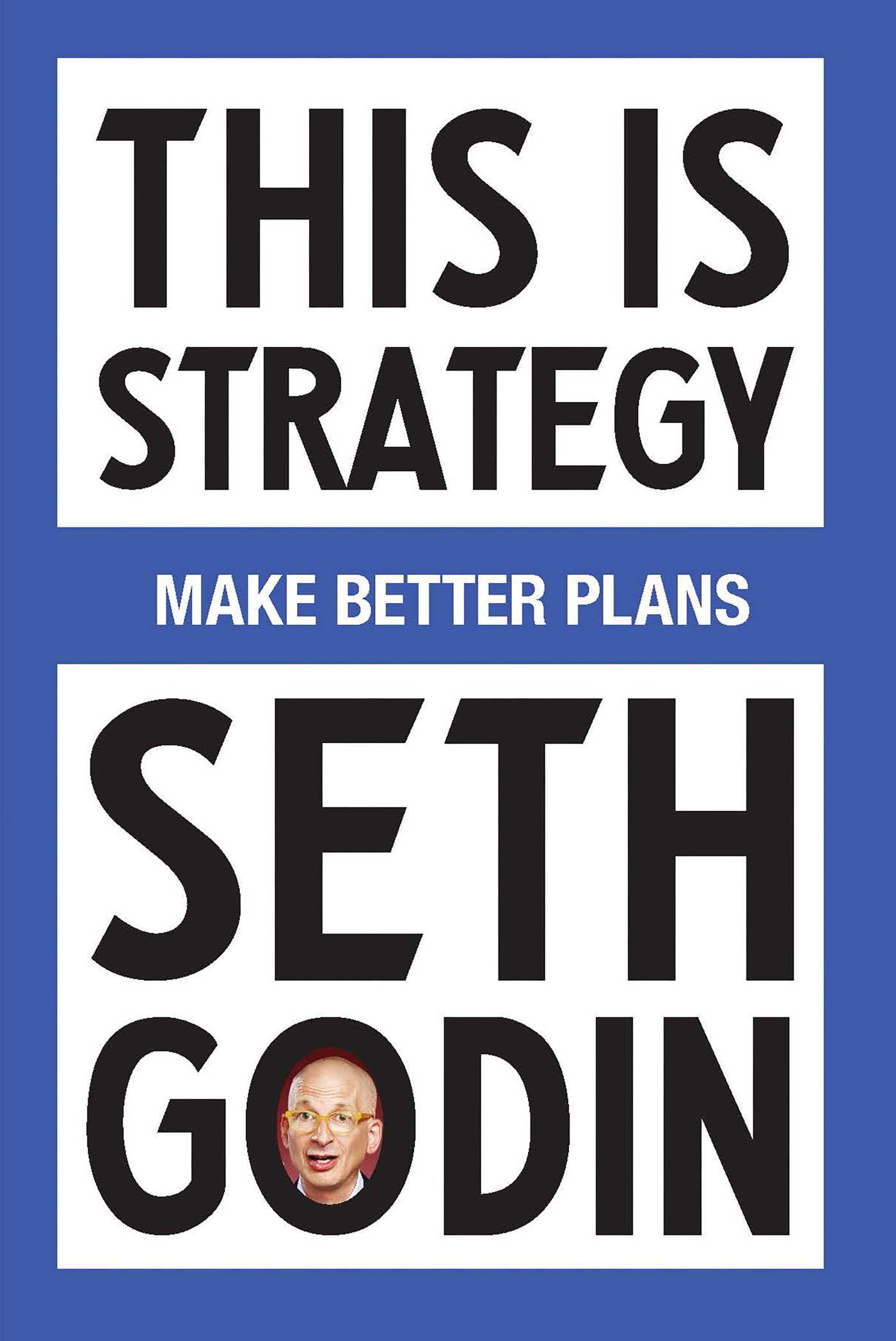
This Is Strategy: Make Better Plans (Create a Strategy to Elevate Your Career, Community & Life)
This is Strategy is a modern classic that offers perspectives you'll find yourself returning to again and again. Rather than providing step-by-step formulas, Godin offers something more valuable: a new way of seeing and thinking about the challenges you face.
You’ll discover how to:
Identify your "smallest viable audience" and make remarkable work they can't ignore
Understand and influence the systems shaping our world
Prioritize long-term thinking over instant gratification
Make smart, purposeful choices that shape a better tomorrow
Who this book is for:
- Leaders who want to think more deeply about their impact
- Entrepreneurs tired of conventional business advice
- Change-makers seeking lasting transformation in their career and community
- Anyone feeling stuck in outdated systems and looking for a fresh perspective
Resources
-
- Verywell Mind: How to Overcome a Fear of Rejection
- Anxiety & Depression Association of America: How to Stop Perfectionism and Anxiety in their Tracks
- Journal of Behavioral Addictions: Social comparisons: A potential mechanism linking problematic social media use with depression
- Personality and Individual Differences: Depressive symptoms and upward social comparisons during Instagram use: A vicious circle
- European Journal of Personality: A Meta-analytic and Conceptual Update on the Associations Between Procrastination and Multidimensional Perfectionism
- Frontiers in Psychology: Examining Procrastination Across Multiple Goal Stages: A Longitudinal Study of Temporal Motivation Theory
- Cleveland Clinic: Atychiphobia (Fear of Failure)
- Healthline: Explaining the Fear of Success
- Stat Pearls: Imposter Phenomenon
- University of Washington: 4 Ways Women Can Conquer the Confidence Gap
- The Management Center: Stop Micromanaging: A Guide for Managers
- Psych Central: What's the Difference Between Excellence and Perfection?
2 Million Readers.
1 Life-Changing Newsletter
Simple and Straight-to-the-Point...
Just Like Mel.