Episode: 384
The Business Expert: How to Make More Money, Beat Self-Doubt, & Reinvent Your Life
with Barbara Corcoran
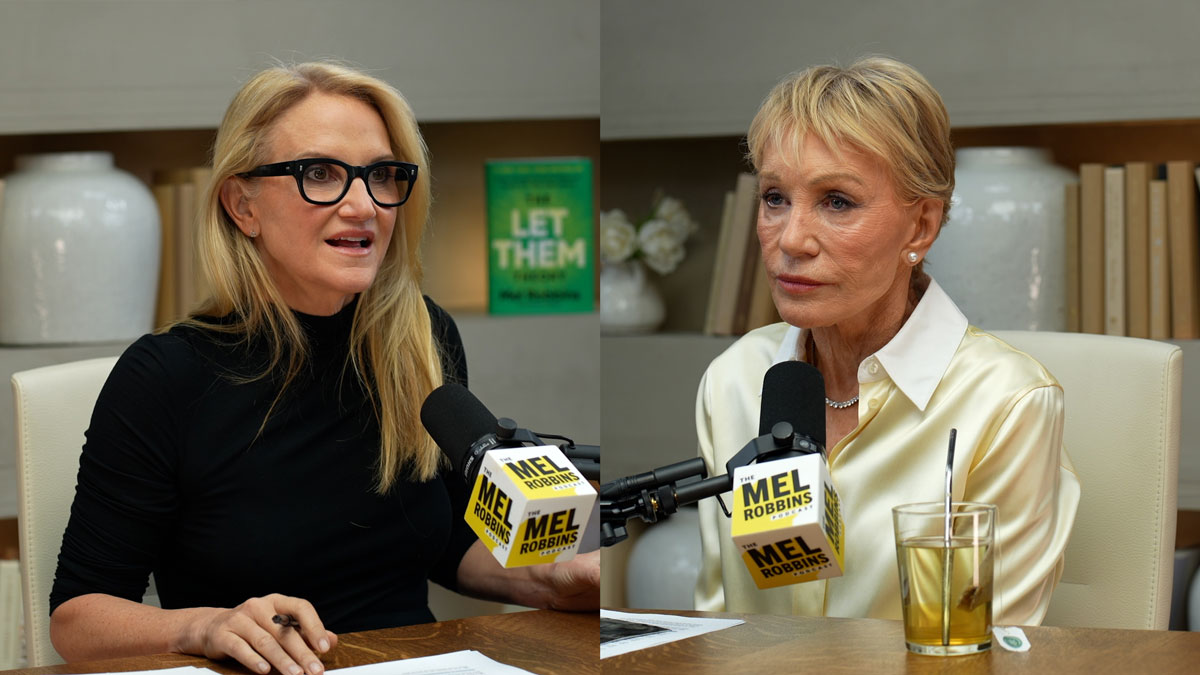
If you’ve ever felt behind, stuck, overlooked, or doubting yourself, you need to hit play.
This episode is a MUST listen.
Today, Mel is joined by Barbara Corcoran.
Barbara is one of the original Sharks on Shark Tank, a real estate mogul, and one of the most influential self-made women in business.
This episode will show you how to create an extraordinary and successful life, even if you’ve been underestimated, rejected, dumped, or doubted.
She’ll remind you it’s not too late and you’re not too old - you can reinvent your life, achieve more, and go after what you want using the playbook she shares in this episode.
In this conversation, Barbara will give you the mindset, the strategy, and the no-BS truth you need to bet on yourself when the world doubts you and when you’ve been doubting you, too.
This is a masterclass in confidence, reinvention, and gritty resilience.
By the time it’s over, you’ll stop making excuses, stop playing small, and start moving.
Listen on:




You don’t have to get it right - you just have to get it going.
Barbara Corcoran
All Clips
Transcript
Barbara Corcoran (00:00:00):
... Gave me $1,000 to start my business. That was a lucky break. When he said, "You'll never succeed without me, " I knew I'd rather die than not succeed. Thank God he said that. He was wrong. I sold my business for $66 million, about 20 years later, and he was out of business in three years.
Mel Robbins (00:00:17):
Today, our guest is the one and the only Barbara Corcoran. She is one of the original sharks on Shark Tank. She's a real estate mogul, one of the most influential, self-made women in business. She's gonna look you straight in the eye and call you out on every single excuse that you've been hiding behind. And if you've been telling yourself you're too old and it's too late, you better buckle up because she's got some things to say to you.
Barbara Corcoran (00:00:43):
When I was building my business at Corcoran Group in New York City, you have to appreciate that all the businesses are owned by men. None of the big boys watched me and I creeped up on them, bit their from behind. They never knew what was coming.
Mel Robbins (00:00:55):
How did you become a judge on Shark Tank?
Barbara Corcoran (00:00:58):
Well, I was hired and then fired before I had a chance.
Mel Robbins (00:01:01):
Wait, what do you mean? Why did they fire you?
Barbara Corcoran (00:01:03):
Well, they fired me because they ... I actually had a very happy childhood. I was very poor, but I was happy. My mother had 10 kids. It was crowded and it was competitive. I was always competing for my mother's attention, so I got good at talking. That's a gift I got out of beating dyslexia. Oh, I think dyslexia made me successful. I don't think I would have been successful without it. You can create exactly what you want. But I think the key there really is moving on something, anything, just get yourself moving, and then the idea becomes itself.
Mel Robbins (00:01:32):
Barbara Corcoran, welcome to the Mel Robbins podcast.
Barbara Corcoran (00:01:35):
Thank you very much.
Mel Robbins (00:01:37):
I have been looking forward to this because I have met you in passing a number of times. I admire you so much. I'm a fan of Shark Tank. I've heard your keynote address. It's extraordinary. How might my life be different if I take everything to heart that you're about to share with us and teach us today, and I apply it to my own life or my business?
Barbara Corcoran (00:01:59):
I would love people to f- appreciate and believe that you're far more capable than you think you are. Mm. I've never met a person who wasn't more capable than they gave themselves credit for. And I'd like people to really understand that you don't have to do it the way everybody else does. It's not the way that you're gonna do it. You're free to do it exactly as you please.
Mel Robbins (00:02:19):
I know that so many people are gonna listen to this, and they're gonna share it, particularly with the women in their lives- mm-hmm. ... that are doubting themselves, that don't think they're capable. So could you speak directly to the person who maybe received this from a friend or a sister? And they're feeling full of doubt, they've lost some confidence, they're feeling a little stuck. What do you wanna say to that?
Barbara Corcoran (00:02:41):
Well, I think everyone feels stuck. I'm probably feeling stuck four or five times a month.
Mel Robbins (00:02:46):
Really?
Barbara Corcoran (00:02:46):
It's not important whether you feel stuck or not. Just assume it's a human condition. We all feel that way. But I think you can do a lot to change yourself to being unstuck. And one of the best ways to do it, or at least I started with it, is to change tape in your head. I had a tape in my head like intimidation all the way until I decided to change it from, "Barbara, you're overstating. Barbara, you can't get there. Barbara, you can't, can't, can't, can't, can't." And replace it with, "Barbara, you're incredible." <laugh> Now, did I believe it? No, but I made the habit of changing it every time my mind went down that hole. I changed it to Barbara, you're incredible. And eventually, I started believing it. We all have lousy tapes in my head, leftover from childhood. Man, I have a little ... I think the, the woman that gave me the worst tape in my head was Sister Seller Marie, the nun from hell in third grade who said, "You're always gonna be stupid because you can't read." It took me probably eight years to get over that.
(00:03:40):
And I said, "I'm not gonna be stupid." And that's, I decided not to be. I mean, it's a shame that, how dare someone make you feel less than you are. You've gotta come back strong.
Mel Robbins (00:03:50):
Well, and oftentimes, Barbara, and I think you know this too, because you just talked a little bit about how you were like, "Barbara, you're doing this. Barbara, you're doing that. " And he started saying, "Barbara, you're incredible." And then the more you repeated it, you started to believe it. But oftentimes the person that's beating us down the most is ourselves.
Barbara Corcoran (00:04:06):
Yes, very much. And so
Mel Robbins (00:04:07):
For the person who's listening right now who feels like, okay, Mel, Barbara, I love both you ladies, but it's too late for me. I have screwed up too many
Barbara Corcoran (00:04:17):
Times.
Mel Robbins (00:04:18):
Wow. I have not gotten myself together. It's too late. I'm too old. What do you wanna say to that person?
Barbara Corcoran (00:04:24):
I'm not ... It's never too late, obviously. You know that, I know that. But I think you just have to pause and realize I have always done a, a, a simple exercise. I've counted the years I have left and think of how many more mese can I get in those years. So when I was 46 and sold my business, I thought I sold the golden goose and I thought I would never ever create another business again like that. I thought I had sold my best business. Not that I didn't want to, I wanted to. But then I realized I was a golden goose. You can create exactly what you want. I mean, I laid eggs again and again, and I reinvented myself over and over again. But I think the key there really is to believe that you really have to get good at trying because the minute you try an opportunity is right there and you go, "Whoa, I didn't think of that.
(00:05:09):
" But it's when you're in that still position, or at least for me, when I'm in a still position, I could sit at my desk and try to invent an idea, forget it. It's about moving on something, anything, just get yourself moving, and then the idea becomes itself. And by the way, about failing at stuff, which I find just stops a lot of people. They feel they've had two or three failures and, "Oh, I'm not gonna do it. " I just don't believe in that. I think they just didn't hang around long enough to see the flip side of failure, because all my good stuff happened after a big failure. It almost seemed like, for me, the bigger the failure I had, the bigger the upside. But I was dogged enough to just stay there and see there's gotta be something, you know, there's gotta be something.
(00:05:50):
And I think just waiting around for the something to find it and believing there's something there, I don't think you're ever wrong. I think there's always something there and you could get something started again.
Mel Robbins (00:06:01):
You said something that really caught my attention, which is you do this thing where you count the years you have left.
Barbara Corcoran (00:06:08):
Yes, I do. So
Mel Robbins (00:06:08):
Do you have a number in mind for how long you're gonna live?
Barbara Corcoran (00:06:11):
Yeah, about 105.
Mel Robbins (00:06:12):
Okay, 105. So let's just take that away as something you can grab from Barbara. You're gonna live to 105. You've got that many years left. That's a lot. 35
Barbara Corcoran (00:06:24):
Years.
Mel Robbins (00:06:24):
That's a ... How many mes can I pack into?
Barbara Corcoran (00:06:27):
Probably about another two. But they've got to be different. They've got to suit who I am at that juncture in my life.
Mel Robbins (00:06:32):
Ooh, I love that.
Barbara Corcoran (00:06:33):
I could never build another real estate business with the energy it took, the people I had to hire, the financial stress I went through. I'm older now. I just can't handle that. It's gonna be appropriate to who you are and true to yourself at that point in time because your experience changes you. You're still the same Barbara, but you're slightly different, so it's gotta fit you very well.
Mel Robbins (00:06:52):
How do you know what fits you and what doesn't?
Barbara Corcoran (00:06:54):
It feels right. I don't have a plan necessarily. I might have a vague plan, but I have confidence that I'll find something and that it will feel right when I see it. Like I did this last go around when I saw the Corcoran group, I tried cooking lessons. I was gonna be a chef. I tried artistic lessons. I, uh, I was gonna be an artist. I have all those capabilities, but nothing felt right. I started a PR company for about three months, didn't feel right, threw that away. And the fourth one I landed on, I became a, an expert in real estate on the Today Show. And all of a sudden, I was getting work. And I said, "Hey, this feels right. Let me do it. I'm good at talking on TV and off I went."
Mel Robbins (00:07:32):
And that right there is an example of exactly what you just told us to do. Mm-hmm. You have to try. You're also known as one of the most accomplished investors and founders today, but what people don't know is how the story begins. And so what I wanna do is go all the way back to growing up in New Jersey and talk about what life really looked like. I got a little photo for you of you and your siblings.
Barbara Corcoran (00:08:01):
Oh, sure. I love this photo. That was my sister, Ellen's idea. Thank God we posed for it. <laugh>
Mel Robbins (00:08:06):
Yeah. You
Barbara Corcoran (00:08:06):
Don't get those opportunities easily enough.
Mel Robbins (00:08:09):
Talk about what life really looked like when you were growing up in New Jersey.
Barbara Corcoran (00:08:14):
Well, I actually had a very happy childhood. I was very poor, but I was happy. My mother had 10 kids. Her father was, my father was her 11th child. I think <laugh> she, he was the hardest to manage of all of us, but it was crowded and it was competitive. I would say those two words come to mind, always crowded. So you had to make do all the time and finesse all the time, and competitive. You had to compete for my mother and father's attention. We each got very little tension. It was doled out in tiny little pieces. And I really believe that's the reason I've needed a lot of attention my whole life, making up for that or something. <laugh> But it was chaotic. But my mother had a great ability for systems. She had a system for everything in the household. And with her systems, we were always well-dressed.
(00:08:57):
We were always had good meals. We always celebrated holidays, and we felt like we were the rich kids in town, really, but we weren't. But what a great upbringing I had, really.
Mel Robbins (00:09:08):
So you grew up in a two bedroom flat with 10 siblings. How did that shape the way you approach life? I
Barbara Corcoran (00:09:15):
Was always competing for my mother's attention, so I got good at talking. I got good at entertaining the kids, entertaining my parents, and I was always wanted in the group. You know, you kind of had to be invited in. When you have 10 kids, you play with whoever you want. I was always one of the kids they wanted to play with because I was fun, fun loving. So I learned how to make fun. And I just carried that forth to my business. I think I was the most fun boss in the world, and that made a big difference. It made people love me.
Mel Robbins (00:09:43):
Did having a ton of siblings and growing up in an environment that was crowded and competitive help you learn how to read people? 'Cause I think one of the things that I've noticed about you, especially in your role as a judge on Shark Tank, is you seem to be an instant judge of good or bad character, uh, of a founder you wanna invest in and somebody you don't.
Barbara Corcoran (00:10:06):
You know, when we were kids, my mother was a great judge of people. She had a crazy thing she did when she brought the kid home from Holy Name Hospital. She'd unrapped them and say, "Meet your brother Tommy. He's gonna be a magnificent dancer. Wow, a dancer in the family." And she coined what everybody was gonna be when they grew up. She was amazingly accurate. The reason she made that prediction about my brother was he had fat legs and he was kicking like hell. <laugh> But he became a ballet dancer for Alvin Ally Dance Theater.
Mel Robbins (00:10:32):
He did for Alvin Ally?
Barbara Corcoran (00:10:34):
For me, she said, when I came home crying out of school, that sister Stella Marie had told me I was stupid again. She said to me, "Don't worry about it. You have a wonderful imagination." And she announced that when I was born and she put me in that role all the time. And she said, "With it, you'll fill in all the blanks." So I grew up really thinking I had the best imagination in the world. So judging people, I think we're all in our family great judges of people because my mother was, my mother could judge anyone from a mile away and she was accurate. I remember when I was running my business, I hired bookkeepers to be salespeople, salespeople to be bookkeepers, switch things around because I just envisioned them in a different role. I saw that capacity and I had the empathy to walk in their shoes and understand them.
(00:11:20):
And as a result of that, I really hired good people. I really think that was my secret, but I got it from my mother. I never had a mentor, but I had my mother.
Mel Robbins (00:11:28):
You
Barbara Corcoran (00:11:28):
Know,
Mel Robbins (00:11:29):
I, you told the story about that awful nun who said you were stupid
Barbara Corcoran (00:11:33):
When- The non from hell. The
Mel Robbins (00:11:34):
None from hell. And what you didn't know at the time is that it wasn't that you couldn't read, it was that you had dyslexia.
Barbara Corcoran (00:11:41):
Yeah.
Mel Robbins (00:11:41):
And likely-
Barbara Corcoran (00:11:42):
They didn't have a name for that. I don't think then.
Mel Robbins (00:11:44):
They, they definitely didn't because they really weren't talking about it much when I was in school and I'm a couple decades younger you, just a couple. They
Barbara Corcoran (00:11:51):
Had a special class or not.
Mel Robbins (00:11:52):
They did down the hall.
Barbara Corcoran (00:11:53):
Ah.
Mel Robbins (00:11:54):
Yes. But I found out that I had dyslexia late in life just like you did because our sons were being diagnosed.
Barbara Corcoran (00:12:00):
Yes, that's usually when you find out.
Mel Robbins (00:12:02):
So do you think being underestimated or having to figure out different ways to solve problems is part of what's made you successful? I
Barbara Corcoran (00:12:12):
Think dyslexia made me successful. I don't think I would have been successful without it. You know, a lot comes with being dyslexic. You look at the world differently, you interpret it differently. You're over prepared constantly, or I am. I'll prepare like seven hours for a one hour speech. It's ridiculous. Do I know this stuff? Of course I do, but I'm so insecure because I never wanna be called on again and not know the answer. You know, nothing's worse than being a dyslexic child and being judged by how well you could read or write. The worst thing for me was being asked to read out loud in front of the other kids, you're the, the, the ... You're definitely looking stupid. But you know what it brings with you? A different way of thinking. I sat in that classroom six hours a day and just imagined things I never paid attention and it's right that today I could think of an idea a minute.
(00:12:59):
I could just think of solutions really fast. That's a gift I got out of beating dyslexia. I think also that with dyslexia, people underestimate you. Mm. So you don't read at the board meeting and they write you off because you're, you're stumbling, but they don't know your imagination and what you're thinking about and how you express yourself with your mouth as a result of not being able to write. I mean, I got very goofed by mouth. I got very funny.
Mel Robbins (00:13:22):
You and I are h- so similar.
Barbara Corcoran (00:13:24):
Really?
Mel Robbins (00:13:24):
Yes. And if you can't do what's being asked of you, you find other ways- Yes. ... to matter. You find other ways to express yourself. Yes, you do. I mean, it's not s- there's no
Barbara Corcoran (00:13:34):
Way- You get a bigger muscle somewhere else.
Mel Robbins (00:13:37):
Yes. Do you think ... It's interesting because I think a lot of people are afraid of being underestimated. But for you and me- Come on. Talk to me about what it means to be underestimated.
Barbara Corcoran (00:13:47):
When I was building my business a Corcoran Group in New York City, you have to appreciate that all the businesses are owned by men. All the people who worked for the businesses were well connected. I hired everybody that nobody else wanted. People wrote me off. They weren't watching me for like 10 years. None of the big boys watched me. I was a girl that wasn't gonna do any, anything really spectacular. And I creeped up on them. They weren't watching. I bit their ass from behind. They never knew what was coming. I was able to try marketing ideas that they never thought of. I did business a different way. You know, I was able to hire gay men. No one was hiring gay men, but what dedication I had for my gay salespeople. I hired everybody who did wanna, but what a team we felt, and everybody was getting even, proving that they could be a somebody.
(00:14:34):
And I was there to tell them they were better than they ever were, and they were really gonna be a somebody. And guess what everybody did? Even a guy I hired as a concierge desk at the Pierre Hotel became my secretary, and he later went on to run my art rival and almost put me out of business. My God, I just had a gift of knowing what people would do well.
Mel Robbins (00:14:52):
You know, one of the things that I also love about you is I think there's very few people that could outwork me, but you might be one of them. Oh,
Barbara Corcoran (00:15:01):
I could outwork you. No doubt. I've never met anyone who could work harder.
Mel Robbins (00:15:05):
Yes. You worked very, very hard. You worked 22 jobs. Yes, I
Barbara Corcoran (00:15:08):
Did.
Mel Robbins (00:15:08):
Before you started that real estate business, including being a receptionist, a waitress. I want you to walk me through that chapter and what did those early jobs teach you?
Barbara Corcoran (00:15:20):
The early jobs are invaluable. And, you know, today people think they should know what they wanna be when they grow up and they get right into that track. I think it's such a terrible mistake. I spent those 22 jobs, most importantly, learning what I was good and what I was bad at. So I was a great waitress. I, at times, had three waitress jobs at once, but I could charm anybody. I could serve them faster than anybody, get that coffee there, call the guy handsome if I couldn't remember his name from the day before. And it helped me tremendously. I was a nurse's aide, and I had to post-temperature charts, and I got the numbers mixed up. I knew I didn't belong in a business with numbers at all. <laugh> I learned that I could sell more hotdogs at a hotdog stand than the next kid, because I had the gift of gab.
(00:16:03):
I learned exactly what I should be at, and I learned, really, most importantly, I was great at sales, and that's what I wound up being. When I went into the real estate business, I knew nothing about real estate, and never really learned anything about real estate, but I knew how to make people happy with their real estate and talk them into things they really loved and were afraid to make the choice about. What, what do you think makes someone good at sales?
(00:16:28):
I think it's being genuine. Hmm. I don't think you can fake it. I think people know when you're selling, selling them something they don't wanna buy, talking them into it. I think you just have to make someone comfortable with what they're gonna choose anyway. Give them reasons why it's a great choice. Make them feel justified in going up to a higher price that they deserve that apartment at a higher price or they deserve the better view or whatever. I think it's making them feel comfortable with you. It's really more what sales is about comfort.
Mel Robbins (00:16:59):
I agree. Yeah. And
Barbara Corcoran (00:17:00):
I think
Mel Robbins (00:17:00):
That's a lot of what comes through those early jobs-
Barbara Corcoran (00:17:03):
Yeah. ...
Mel Robbins (00:17:03):
Is getting comfortable with yourself and comfortable with people of different moods as you're serving them.
Barbara Corcoran (00:17:08):
Mm. But thank God I had the chance to try out 22 jobs. You know, when I went into Bloomingdale's to buy my first coat, which was an extravagant coat with my first commission check, I didn't know what I'd look good in. I tried on a million coats, and it's kind of the same way with jobs. I think you gotta just try on a million stuff to see what you're good at. It just doesn't come naturally.
Mel Robbins (00:17:27):
You know, I have a photo of you, um- Where are
Barbara Corcoran (00:17:30):
You getting these photos? I haven't seen this- When you're 23 years
Mel Robbins (00:17:34):
Old. Wow.
Barbara Corcoran (00:17:35):
That's the coat I was telling you about.
Mel Robbins (00:17:37):
Are you kidding me? Yeah,
Barbara Corcoran (00:17:38):
I swear to God. It's a nice phone. That's
Mel Robbins (00:17:39):
The first coat you bought at
Barbara Corcoran (00:17:40):
Bloomingdale's. Yeah. $530 and I had a $340 commission check. <laugh>
Mel Robbins (00:17:45):
Okay. Hold on a second. So you earned $340 on your first real estate transaction- Yes. ...
Barbara Corcoran (00:17:51):
And you
Mel Robbins (00:17:51):
Spent 330 of it on a coat.
Barbara Corcoran (00:17:54):
Yeah, I blew it.
Mel Robbins (00:17:54):
And so what would you tell that version of you, the 23-year-old Barbara about what's possible?
Barbara Corcoran (00:18:03):
I would've told myself you're dead on. You look and feel like a million bucks, you're gonna act like a million bucks. I wanted to be the queen of New York Real Estate on day one in the business. I saw it like I could taste it, touch it, saw it in living color, but I had a ratty alphan on, you know? Yeah. So once I put that coat on, I wore it for the next six years, up and down the streets of Manhattan, but I felt like a fancy lady. Everyone would've told me what a stupid thing to do when you only had $1,000 to stretch. It wasn't a stupid thing. It was probably the best thing I ever bought.
Mel Robbins (00:18:36):
How come?
Barbara Corcoran (00:18:38):
Because it made me feel like who I wanted to be. Well,
Mel Robbins (00:18:40):
You know what I love about this story? There's really important wisdom to pull out of it that I wanna make sure as you're listening or watching that you don't miss. So Barbara, even at the age of 23, you had this sense of clarity to be able to say to yourself, "This is what I want. " And without that sense of clarity and the permission that you give yourself to say, "You know what? I want to be successful in real estate. I want to be the queen of real estate in New York City. Why the hell not? " Declaring it is the first step, and then you started to think about what are some of the small things I need to do to feel like- The close first one. And the coat was the first one, to embody it, to look like it, to feel like it before you were it.
Barbara Corcoran (00:19:22):
Yes.
Mel Robbins (00:19:23):
So let's fast forward seven years.
You're 30 years old. Your boyfriend, who also becomes your business partner, why the hell are you in business with your boyfriend, Barbara?
Barbara Corcoran (00:19:33):
I was a diner waitress, and he came in one night and he was charming. He had jet black hair, aviator shades on. He was sexy. I had never had a boyfriend. So at 23, I really wanted a boyfriend. Yep. And he later, two months later, once I was his, his girlfriend, gave me $1,000 to start my business. Where the heck would I get $1,000? That's true. That was a lucky break. That was a lucky break. And I started the company first with him. I needed him. I didn't have the confidence at the time to think I could really do it, but he told me I could, and then I believed it. He told me he was successful in business. He was charming, and he said, "You'd be great at real estate sales." So I said, "Okay, that's good enough. I could always go back to the diner." And that's exactly what I did.
(00:20:17):
I started the business.
Mel Robbins (00:20:18):
So he left you.
Barbara Corcoran (00:20:20):
Yes.
Mel Robbins (00:20:21):
Married?
Barbara Corcoran (00:20:22):
My secretary, that bitch. <laugh>
Mel Robbins (00:20:26):
Well, now you wanna thank her probably.
Barbara Corcoran (00:20:27):
Yeah, probably.
Mel Robbins (00:20:28):
But he also told you that you'll never succeed without me.
Barbara Corcoran (00:20:34):
Well, I don't blame him. Why? 'Cause I was going out the door. I divided the business in half and left him on a Friday afternoon and took my half of my business out with me. And I think he was angry. I don't really think in the hindsight when I think about it that he meant it, but thank God he said it because when he said, "You'll never succeed without me, " I knew I'd rather die than not succeed. And when I was in bad times and didn't know how to keep the business through all the upheavals in New York City going bankrupt, the stock market crash, nine eleven, when I would always be out of cash, I would think of his words. I would just come back on me. And I would always think of some other angle to keep in business. So thank God he said that.
(00:21:16):
He was wrong. I sold my business for $66 million about 20 years later and he was out of business in three years. So go sh- go figure.
Mel Robbins (00:21:25):
Go f- I, you know, what you almost said, I heard. So <laugh>- <laugh>.
Barbara Corcoran (00:21:30):
Yep, yep, yep.
Mel Robbins (00:21:31):
So how do you build confidence when you're scared or when you're unsure?
Barbara Corcoran (00:21:40):
You know, I have all my confidence for one thing only, and I don't think people appreciate it. They think if you're successful at what you attempt, even in a particular chapter in your life or a day in your life, you grab from that and your confidence and you have more confidence for the next time. It's never worked for me that way. I've tried everything. I've failed, you know, most things, but most things in my real estate business were flops. But when I had a success, I found my confidence wasn't built. But what did build my confidence and made it rock solid is I knew I could outwork and outtry anyone, and I knew I'd be back. If I failed, I just knew in my heart I was gonna stand right back up. And knowing you always stand back up and try again, you're confident. You, you look confident because you are confident.
(00:22:26):
You might not win again, you might fail again, but the next one will be a win. So I just keep trying, trying, trying, trying. I try so much today. Anything that's new out in the social space, I try it. That's where I get my confidence from.
Mel Robbins (00:22:39):
That's the best definition of confidence, because I think most people say, "My confidence is in the thing I'm accomplishing." And you just said, no, confidence, true confidence, is knowing that you can count on yourself to keep going and to pick yourself back
Barbara Corcoran (00:22:56):
Up. You take that away from you.
Mel Robbins (00:22:58):
That's right. Nobody can take that away from you. What is the biggest failure that you've had? You keep talking about failure. And I was like, "Whoa, God." Well,
Barbara Corcoran (00:23:06):
Any of my failures, the biggest ones were always my biggest success. Probably the one I, what, lost the most money on, would you say was a failure?
Mel Robbins (00:23:15):
Sure. What was that?
Barbara Corcoran (00:23:16):
Okay, that was Homes on Tape. I announced to my salespeople, "You know, we're gonna take all your apartments and put them on videotape." This was before the advent of the internet. That sounds brilliant. It sounds brilliant. They cheered me on and I felt like a goddamn genius. So I put everybody on videotape, including my salespeople, did their makeup, did their hair made them look beautiful, and no one handed out the tape. I, I couldn't believe that it would be ... I spent $77,000, which was my first profit on the, what I thought was a great idea. It failed miserably, but I was with my husband that weekend right after the failure and feeling sorry for myself for about a minute. And he mentioned he was playing war games on this new government thing called the internet in real time. And I took my tapes and put them on the internet that Monday morning, and I registered all my competitors, URLs, so I own them.
(00:24:07):
And we sold two apartments in, out of London in one week. Boom, boom, it just hit. And that was the advent of the internet, which was gonna change your real estate business more than any other thing has changed it. But I had almost two years to play around on the internet before my competitors woke up. And when they woke up, they always called me asking for the URLs back. That's how I knew they were waking up, you know? <laugh> But now look at that. That was the worst disaster money-wise, because it was my whole profit. But in the long run, or even in the short run, it was my biggest success. The internet took me from t- maybe 12th, 13th position, and maybe number three. Wow. Well, I was coming within shooting range after the internet- Yes. ... because I was there early, and it was simply happenstance.
(00:24:51):
I hung around. That's all I did. I hung around and used it.
Mel Robbins (00:24:55):
What's your advice to somebody who's listening right now, who's just starting their career, who's trying to figure out their future?
Barbara Corcoran (00:25:04):
You're not gonna figure it out from afar. Just try a lot of stuff on. Forget about what mom and dad said or whatever. Just figure out ... I think a good guide is to figure out what you're good at, and figure out what you're not good at. And if you don't know, get out and play in the traffic and find out, see if you're good at this or that, and that makes for a happy and successful career. If you could wrap a career choice around something you're naturally good at, you have nothing to do but win. You really will win with it because that's what I did. I only, I only use, utilize in my business a few traits that I have, and that's good enough.
Mel Robbins (00:25:39):
What are the few traits?
Barbara Corcoran (00:25:40):
Judging people, marketing, and salesmanship. That's what I do well. When I sold the Corcoran Group, I sat down with a legal pad and wrote down everything I was good at and everything I was bad at to try to think of what I would do. And there were only three things I could do. One of them was TV, one of them was PR agency, and one was an advertising agency, would utilize my traits of being good on camera, being a good salesman, and liking a public speaking. Those were the three that were on the list. And I went into the TV business, thank God. I could've done it in the PR and advertising space, I think, just as well.
Mel Robbins (00:26:15):
Well, you said you tried it, but you didn't like it. It didn't feel right. Yeah,
Barbara Corcoran (00:26:18):
I didn't. Yeah.
Mel Robbins (00:26:18):
That's why you gotta get in traffic and play around because then you're gonna figure out what actually feels right and what doesn't.
Mel Robbins
You know, there's a lot of people that are losing their jobs right now. And also, I read this stat that 69% of Americans would quit their job today if they could afford to.
Barbara Corcoran
Wow. Is that true?
Mel Robbins
Yep.
Barbara Corcoran
I didn't realize that. 'Cause they do not like what they do.
Mel Robbins
What do you think the single most valuable skill right now is that someone should focus on learning?
Barbara Corcoran (00:26:47):
Well, technology, of course, AI in particular. I've, I can't imagine running my business without it. I've just gotten on it six months ago or so. You know, that's important. But I think far more important for anyone thinking of how they should spend their time. I think when you pick a job, you shouldn't be choosing what job you want, but you should be looking for a good person to work for. When you've got a great boss, it's far, far more important than a great job, because the boss has got your back, he pushes you ahead, he believes in you, and you have a heck of a fun time working for him. But most people choose a position over the boss or the chances of promotion over the boss. When you have a good boss, you got the right thing in your own corner. How do you
Mel Robbins (00:27:31):
Know who is a good boss? Like, what would you look for? If you were going out and you're not ... Well, obviously, you're Barbara Corcoran, so you're not going out looking for a job, but- I may be. <laugh> Well, maybe, who knows. But if you were looking and assessing, you know, who do I wanna work for? What would you want that boss, him or her to have in terms of making them a good boss?
Barbara Corcoran (00:27:52):
I would say the most important trait is have them speak about who works with them. Who do you have working for you now? Who's your favorite person? What do you do with them? You know, how long have they been here? Like, you're actually finding out if they're working for the people versus the people working for them, which I think is really the key to being a good boss, is to work for your people. You want someone who's gonna say he's got, this guy got promoted, blah, blah, blah. If you just get a guy who wants you to do your job and that's it, and you don't prod him to tell you about the people, you really won't learn about his attitude toward people. Mm-hmm. And you don't know what you're working for.
Mel Robbins (00:28:27):
What do you think the difference is between somebody who's a boss versus somebody being a good leader?
Barbara Corcoran (00:28:35):
Well, I guess a boss tells you what you ought to be doing, which is valuable, you wanna know what your job is. But a leader inspires you and gets you to believe in their dream and see things the way they do- Mm. ... and makes you willing to climb up the mountain behind them. I think being a leader is not easy. It doesn't come to everybody. Yeah. But I think it has to be 100% genuine, and you have to be on the employee's side. If, if they feel that, they'll follow you anywhere. They really will.
Mel Robbins (00:29:04):
How can you be a good leader? Like for somebody who's listening that wants to be better in a leadership role or to just be a good leader, what are some of the things that you would tell them to think about and to
Barbara Corcoran (00:29:15):
Practice? I think the most important thing is to speak genuinely. I mean, you know when you're being conned and bosses are great economy, but if you're a great leader and you speak genuinely as to why what you want them to do is good for them, not for you, they'll listen to you and they'll follow you. I think you have to put it in their terms why it's good for them because the b- the good leader is always working for their employees if they have their head on straight, and that's how you get it done.
Mel Robbins (00:29:43):
What are the characteristics that would make you fire somebody like you're
Barbara Corcoran (00:29:48):
Out? Wow. Only one thing. I don't mind an aptitude, I don't even mind people who aren't putting in the effort. I can change that. I can inspire them and change it, but I can change a complainer. If you're a complainer, I get rid of them. It's like a cancer in a company. One complainer feeling sorry, oh, poor me needs oh poor you. And it, it's contagious. It catches on and becomes inceptuous as a company. I don't tolerate complainers. I got rid of them as fast as I could because they were dangerous and they were attacking my people. I felt the negative attitude was attacking my positive people, so I got rid of them.
Mel Robbins (00:30:22):
And you know, why does teamwork matter so much? You've talked so much about team. Why does teamwork matter and how do you build trust with your team? Because especially like if you think back to building your real estate company, people go between real estate companies all the time. Yeah. They get poached all the time and it takes trust to
Barbara Corcoran (00:30:43):
Stay somewhere. It does. Well, in the real estate business, there's tremendous turnover roughly 60% a year. I never had anyone leave unless I fired them. They never wanted to leave. They were having the most fun at my company. They liked me more than any of the boss out there. And they most importantly liked each other. It was their family. So they stayed around. And how do you inspire that? By letting them know at every turn along the way that you're for them. I'm here to serve you. What do you need lately? How can I make your job easier? What would you like to be when you grow up? Where do you wanna be promoted to? What do you wanna do? I just had their viewpoint in my head. It didn't make a difference what I thought. But what happened naturally was they became ferocious and on my side.
(00:31:26):
And besides which, you know where you basically need a team? Because you can't build a business without it. I've never seen anything without people building. So you have to inspire your people.
Mel Robbins (00:31:36):
Well, I think people forget that companies are actually people. It's
Barbara Corcoran (00:31:39):
Made up of the people that work
Mel Robbins (00:31:40):
There.
Barbara Corcoran (00:31:40):
It's easy to forget the hire up.
Mel Robbins (00:31:42):
It's very easy to forget. What is the most effective way, Barbara, to ask for a raise?
Barbara Corcoran (00:31:49):
Tell the person what you were hired for with a list of what you did, what you were hired for, specific, as specific as you could be. If you have 30 items, put it on a list. Walk in and show them that list compared to the list you're actually doing. 'Cause people are always hired for less work than they're actually given. And you say, "I'm doing all these other duties now. 20%, I'd like a raise," and you name the amount. You name the amount. Most girls don't name the amount. Most girls don't ask for raises. Men ask for raises. Women don't. It's been my experience. In running the Corcoran group, we had a thousand people, 1,025 or so working there. And I can tell you twice, did a woman ask me for a raise. Wow. In the 15 years, yet the men always asked for raises and told them how, told you how great they were.
(00:32:34):
And I had women that were much better than the men. You just have to get in there, make the appointment, show them what you're doing, and ask for a specific amount. And you can't fall for the typical thing that big companies say is there's no, not in the budget. Someone's getting a raise, but it's not you, but someone's getting a raise.
Mel Robbins (00:32:51):
You know, one of the things that, um, I always think about a lot too, because I think that's excellent advice to document everything you're doing- mm-hmm. ... because your boss has no clue. Yeah. And you're doing a lot more than anybody realizes. You keep feeling
Barbara Corcoran (00:33:01):
Sorry for yourself over.
Mel Robbins (00:33:02):
Yes. And if you don't have a big list, you have no business going and asking for a
Barbara Corcoran (00:33:06):
Raise. No. I don't wanna pay you more for the same thing you did
Mel Robbins (00:33:08):
Yesterday. Yeah, or less than what I'm actually expecting you to do. Yeah. But I also see people making the mistake of doing one of these glass door searches and looking at comparable positions in a company, and then coming in- Gives
Barbara Corcoran (00:33:19):
You a barometer.
Mel Robbins (00:33:20):
Maybe. I wanna see what you're doing.
Barbara Corcoran (00:33:23):
Yeah.
Mel Robbins (00:33:23):
I wanna actually see what you're doing because if you've got evidence of all the things that you're doing, now I know what the value is. Yes. Not title to title.
Barbara Corcoran (00:33:31):
You're right. You don't wanna walk in and quote the average price that people are being paid for your position.That's what you mean by that, right? Yes.
Mel Robbins (00:33:38):
Yes. If you ... I'm sure, you must get asked this question a million times,
which is, "I have no money, I have no connections, but I wanna start a business." Where do you start?
Barbara Corcoran (00:33:47):
Start online. You don't even have to have a product. You could have a drawing of a product and sell it and make it once you get orders. I mean, the world is open to you. Everything is equal today. When I started, you needed to have the right competition, the right person supporting you, the right money, the right connections. Uh, today it's really not worth anything. I hear more people say, "How do I get the right connections?" I'm like, "The right connections is not such a thing." You know, everybody you meet, for me, was a connection. I talked to everybody, but when I was talking to them, I really wasn't talking to them. I was interviewing them. I wonder what they could do for me. I wonder what their talent is. How could I use them? And then I would take them into my firm and employ them in the best use of them.
Mel Robbins (00:34:32):
I wanna make sure that as you're listening and watching- Okay. ... that you got that amazing piece of wisdom that Barbara just dropped. She basically said, "Stop obsessing about connections." Crazy. Because every human being you're talking to is a connection.
Barbara Corcoran (00:34:45):
You've got the best one on the internet, connection to the whole world.
Mel Robbins (00:34:48):
Yes. But what I love that you said is you're like, when we were talking, I wasn't talking. I was listening and I was interviewing them. Yes. I'm interviewing them from how could this person help me? H- are they interesting? Are they not? Are they wasted time? I'm interviewing
Barbara Corcoran (00:35:00):
You now, even though you think you're interviewing me.
Mel Robbins (00:35:03):
Ooh. What are you looking for?
Barbara Corcoran (00:35:04):
I'm gonna hire you as my assistant. <laugh>
Mel Robbins (00:35:08):
I don't know if you can afford me. No, I'm just kidding.
Barbara Corcoran (00:35:09):
No, I can't at all. I actually,
Mel Robbins (00:35:10):
You wanna know something? Yeah. I'd be a horrible assistant.
Barbara Corcoran (00:35:13):
Yeah, you probably would. No,
Mel Robbins (00:35:14):
I would be a horrible assistant.
Barbara Corcoran (00:35:15):
It's probably not your skillset at all.
Mel Robbins (00:35:16):
Not my skillset. I'm terrible at managing-
Barbara Corcoran (00:35:18):
But boy, can you talk?
Mel Robbins (00:35:19):
I can talk.
Barbara Corcoran (00:35:20):
I would send you out my sales force. You'd be number one.
Mel Robbins (00:35:22):
Probably.
Barbara Corcoran (00:35:23):
Without a doubt.
Mel Robbins (00:35:24):
Yeah, I would, because I understand-
Barbara Corcoran (00:35:25):
If you could take the heat. There's a lot of heat in that business.
Mel Robbins (00:35:28):
How so?
Barbara Corcoran (00:35:29):
You know, you get, like, 10 rejections for every one yes, and then the most important trait you have is not feeling sorry for yourself, or at least if you feel sorry for yourself, give yourself an hour and get back up. You know, my best salespeople had just as many leads as a worst salesperson, and the worst salesperson always kept in- house for about a week feeling sorry for themselves when they lost a good customer. My best salespeople would lose customers all the time and dust off and stand up and get back in the game. And that wound up dividing the people making three, four million dollars a year from my average salesman at the time who's making 60, $62,000 a year.
Mel Robbins (00:36:10):
Yeah, I think in life, there's a, there's kind of two different types of people. There's the kind of person who looks, who gets, you know, in sales, you get delta hand because here's your leads, here's your, here's your, like, whatever, your region, your this, you're that. And so you get handed cards and there are people that either bitch about their cards and blame their lack of results on the cards that they're holding.
Barbara Corcoran (00:36:33):
Boss isn't being fair.
Mel Robbins (00:36:34):
Yes, boss isn't fair. These are bad leads, blah, blah, blah, blah, blah. And then there are people that realize it's how you play the game. And if the cards suck, you gotta move through them fast so you can get another leader hand.
Barbara Corcoran (00:36:44):
Or
Mel Robbins (00:36:44):
Leave.
Barbara Corcoran (00:36:45):
Go somewhere else.
Mel Robbins (00:36:46):
Yes. Yes.
Barbara Corcoran (00:36:47):
But you're in control. You're in control versus the boss in control. That's what fools people. People think when they're working for someone, that is their definition of their opportunity. Their real opportunity is in their own chest. They could leave that day if they chose.
Mel Robbins (00:37:01):
You know, one other question I had, because I, I hear this a lot, especially with people to wanna start a business or somebody that's trying to reinvent themselves and they're like, "I really wanna do something, but trying to come up with an idea. I'm trying to think of a problem. I'm trying to think of a, of a product that's not out there. I'm trying to ... If you could give somebody advice about how to think about the idea-
Barbara Corcoran (00:37:21):
Mm-hmm.
Mel Robbins (00:37:21):
... itself,
what is the way to generate ideas around a business to start?
Barbara Corcoran (00:37:28):
I think you could do anything you do in your day-to-day life. Stop examine everything that's happening and think, is there a better way to do this? Not just by yourself, but what other people are doing. If you're at a local store and it's taking too long to check out the, on the cash register, or if you're, you know, whatever you're, you're encountering in your daily life, just look at it and say, how could I do that better? And within that are great products. All the great products at Shark Tank are better ways of doing the same old, same old. Even it's just making a pizza pie with a new pizza box. I mean, as ridiculous as it is, I invested in it because it was a better way of delivering pizza. You know, that kid, that's o- his only idea, and that's what he ran on Shark Tank with, and that's why he's built a bus- business, just making pizza boxes, but he was trying to solve a problem better than the last guy.
(00:38:17):
And that's always where you find your solution to a new business.
Mel Robbins (00:38:21):
So Barbara, what do you think the worst advice is that you could give somebody starting a business?
Barbara Corcoran (00:38:26):
Oh, the worst advice, the same advice my mother gave me, and yet my mother usually gave me great advice. She told me when I was a waitress, when I announced I was starting my own business with Ray Simone, she said, "Why don't you hold onto your job? You changed so often you need a resume. Build up your resume. And if you still feel that way in a year, go on to business, but you should have a good resume." She was preparing me for a mundane job, actually. She didn't know it, but that's what she was aiming at, you know? I ignored her and started my business, you know? It's so sad. I meet so many entrepreneurs that plan and plan their business for months, and the best time to do is the second you have the thought. And the minute you get out in the field, you find out what's wrong with your plan and change everything, but you don't have to get it right.
(00:39:11):
You just have to get it going. And my mother did not understand that mantra. She thought I should wait a while. Boy, if I had waited a while, I would have thought of five reasons not to do it, but I didn't wait. I jumped right off and did the business and I was successful from the beginning.
Mel Robbins (00:39:25):
And what would you say is, like, the best advice you can give to somebody that is starting a business?
Barbara Corcoran (00:39:30):
Get going. I give that advice all the time. Even with a half baked plan, I say get going because I know when you're in the field, you find out the real plan, what's gonna work and what's wrong with your idea and what's wrong with you and everything else that comes out, because it's the real world. You can plan things. I think business plans are so overrated, my God. But to plan from afar and think I've gotta get it right before I jump out, forget it. It just never happens. You think of reasons why not to do it, and you've wasted all that valuable time.
Mel Robbins (00:40:01):
You know, one of the things you said earlier is so true and it's brilliant, which is with all the technology and the internet today, you don't even have to truly quote start the business.
Barbara Corcoran (00:40:10):
Yes.
Mel Robbins (00:40:11):
You can create a prototype that's even built by AI. You can create a wait list.
Barbara Corcoran (00:40:17):
You can.
Mel Robbins (00:40:17):
And so somebody comes to you with an idea, they say, "We've got 100,000 people that have signed up for the wait list to be notified when the product is about to drop." That wait list demonstrates that people are interested in the offering, whether it's a service or it's a product. And so th- th- that was not even possible a couple decades
Barbara Corcoran (00:40:35):
Ago. No, not at all. What really happens on Shark Tank is entrepreneurs will come in once in a while with nothing more than a prototype, and they'll pitch how great it's gonna be. They have no proof of sales. They don't know who they're gonna sell it to. They don't know what they're gonna do with it, but they believe in it. And if I believe in the person, I'll buy in. Now, once they're on Shark Tank, people call in to order. They go on their line and they order thousands of copies of whatever they said. They don't even have it, but people will wait. They say, "Oh, I'm sorry. We've had an overwhelming response. We'll have it ready in three months." And they'll ... That's exactly when they'll build a product. And their businesses started late, you might say, but they had the courage to get out there with the prototype or a drawing or something like that and people believed in it.
(00:41:19):
And that's a great barometer that they're gonna be successful right from the get- go.
Mel Robbins (00:41:22):
How did you become a judge on Shark Tank?
Barbara Corcoran (00:41:25):
Well, I was hired and then fired before I had a chance.
Mel Robbins (00:41:28):
Wait, what do you mean? Why did they fire you?
Barbara Corcoran (00:41:30):
Well, they fired me because they landed on another woman. They said they preferred her after I signed the contract, which I reminded them. And they said, "Yes, but we didn't sign it. " I had already told all my friends I'm going to Hollywood. I was so embarrassed. I bought two new outfits, new luggage, there I was going to Hollywood, and it was canceled. So I suggested to the producer that all my good luck came after rejection, and I considered his rejection a lucky charm. And I wrote a short terse email to him and suggested he invite me out with her and compete for the seat. And that's exactly what he did. Thank God. You're kidding me. Really? I turned my good fortune around by doing what I did best, what I always do best, getting back up, taking another swing. Just took another swing. Do you know what, the first day on Shark Tank, my producer said, "You know, we rejected 42 men that wanted the position in the other seats." I said, "You kidding?" He said, "Not one wrote to me.
(00:42:25):
" Not one wrote to me objecting to the rejection. I, these are successful millionaires, billionaires. That's amazing that they didn't.
Mel Robbins (00:42:34):
You know what I find interesting is so many people are not willing to ask for what they want, and that's one thing about you. You do ask for what you want.
Barbara Corcoran (00:42:41):
Well, I've learned, not easily, not easily. Women have a hard time asking for anything. You know, what happens, I find you could wanna climb a mountain with your team. When the men are halfway up, they'll say, "I'm the king in the mountain," and they'll brag about it. Women will climb all the way up, set up the tent, make sure the kids are fed, everybody's happy and say, "I had all the help of my team to get here." Women don't take credit. They don't ask for help. They're shy. What a waste. Open your mouth. My God, opening your mouth gets, got me everything I got. Without opening my mouth, I would have nothing.
Mel Robbins (00:43:18):
How many seasons have you been at Jorche? Like
Barbara Corcoran (00:43:21):
18, something, whatever, out from the beginning.
Mel Robbins (00:43:24):
So I would love to have you kind of put us right at the scene because every single pitch is a founder.
Barbara Corcoran (00:43:32):
Yes.
Mel Robbins (00:43:33):
And an idea. And yeah, you got a sales story or not.
Barbara Corcoran (00:43:36):
Yes.
Mel Robbins (00:43:36):
But when you're sitting there as an investor and a judge-
Barbara Corcoran (00:43:39):
Yes.
Mel Robbins (00:43:40):
... what are you evaluating?
Barbara Corcoran (00:43:41):
I'm just evaluating the entrepreneur. I couldn't give a damn about the picture of the business that they're painting.
Mel Robbins (00:43:46):
Really?
Barbara Corcoran (00:43:47):
Usually, very often the numbers are exaggerated. Everything, you know, you, you're getting a sales pitch. I'm looking at that entrepreneur and saying, "Do I believe them?" And in most instances, I'm not believing the sales pitch, but now I'm looking at the person and focusing on the person as to whether they're a capable entrepreneur. And what I look for is something they've done in their life that was hazardous, something they did in their life that they failed miserably. They have a father who was drinking, some mother who damned them to hell, something that they have to prove. And if I find that fire in them, they might not have anything but that, but I buy in because they will always be successful. They wanna get even. They haven't had a chance. They wanna get even and that burns so deep that I believe in them and they're great partners because when the business is sold, they're so appreciative of their success, their dream come true.
(00:44:38):
They're so thankful. And it's so satisfying for me to see that full circle of success.
Mel Robbins (00:44:44):
When you are listening to a pitch, what is the difference between somebody that has that fire in their belly and they're really confident versus somebody that is so overbearing?
Barbara Corcoran (00:44:55):
Well, one is, do you wanna spend any time with them? With, when someone's overbearing, that's the last thing I need in my life. They're out right away. I won't say I'm out right away. I have to stay in the show. But you know, I have a, a simple test I do many times on Shark Tank when I'm not sure about the person. I think, would I put my baby in their arms and could I come back and find my baby in good shape? <laugh> And that's my test. I think, yeah, I would trust them, so they become my partner. I make a big-
Mel Robbins (00:45:21):
That's actually an excellent- Yeah. ... way to judge anybody.
Barbara Corcoran (00:45:23):
Well, it sizes everything up.
Mel Robbins (00:45:25):
How do you know if you're built to have your own business versus being somebody that should just work for somebody else and be great at building a career inside somebody else's company?
Barbara Corcoran (00:45:38):
I think it's a real dividing line. I think someone in their own business loves risk. They're not afraid of the risk, whether it be money, people, what they do with their day, their ideas that they have. They're not afraid of risk. It turns them on. It's kind of like a trait in their personality. And I think someone who's good in business has a good time getting back up. It's almost like a jack in the box. If you're the type that says, "Hit me again. I'm a jerk. Hit me again." Chances are you should be an entrepreneur. But if you're not enjoying risk and you can't take a hit, you're better off working for somebody else. It's hard to develop that skill in you if you don't have it.
Mel Robbins (00:46:13):
I think you either have it or not.
Barbara Corcoran (00:46:14):
Yeah. I, I do agree with you on that.
Mel Robbins (00:46:16):
I do.
Barbara Corcoran (00:46:16):
That's what I'm trying to size up on Shark Tank all the time. Do people have those two skills?
Mel Robbins (00:46:21):
How do you figure that out?
Barbara Corcoran (00:46:22):
I asked them, you know, we have an hour and a half on Shark Tank, like-
Mel Robbins (00:46:25):
Really? That's how long the pitch is?
Barbara Corcoran (00:46:27):
It's eight minutes at home, but it's an hour and a half on Shark Tank in real time.
Mel Robbins (00:46:30):
Wow.
Barbara Corcoran (00:46:31):
So we get a chance to ask them all kinds of questions that don't make good TV, but are very good for us as investors. And I ask, "What did you do before? What did you think about that? Did that feel? Oh, how did you feel about that failure? What did you do after that? " So I'm trying to find someone who's strong, who's capable of running a business and someone who put all their bets on their business and they lost, what do I care? That's a good sign. They're willing to put all their bet on one business and they lost. I love it. But a guy who's telling me he's gonna go back to mom pawn, get family and friends financing again, and he's gonna change direction, means they're gonna lose your money again. I hate that kind of stuff. I never invest in rich kids.
(00:47:08):
I always invest in poor people on Shark Tank because they have a burn in their belly on something to prove and they're my kind of people, and I wanna give them the opportunity that I was given. I mean, the one ticket that they might have their dream come true and I can make it happen is much more exciting than putting myself in line with the rich parents who funded the first business. Forget it.
Mel Robbins (00:47:29):
What are some of your favorite things that you've invested in?
Barbara Corcoran (00:47:32):
My favorite entrepreneurs, and it's always about the entrepreneurs, not the businesses. I almost forget at times what business they're in, even though I'm helping them all the time, is, uh, the Cousins Main Lobster. I love those guys, because the day they came on Shark Tank, they lied to me, and I love them for the lie. They say- What did they
Mel Robbins (00:47:49):
Lie?
Barbara Corcoran (00:47:49):
They told me what their sales were per month, but they never told me they were only in business for a week. I thought I was buying into a big business. <laugh> No, I was not. It was just one little opster truck and they had been only open one weekend. But they had taken all the questions from Shark Tank for three years and they had practice answering them and they were slick. They could sell. I love them and how to buy them.
Mel Robbins (00:48:11):
What is your three-month rule?
Barbara Corcoran (00:48:13):
After three months, when I close on a deal on Shark Tank, I invite the entrepreneur into my office, and we review where he's gonna go with the business. That's always the time when something goes wrong. The prototype didn't come in right, the order was promised, it wasn't delivered. Something goes wrong. So I just sit there and ask, "What do you think about what went wrong?" And the people who blame somebody else, I drop. I mean, I, they still have my money, but I take their picture off the wall, or I turn it upside down more often. But the people who take it in the chest and take the blame that they should have thought of this, or they should have anticipated it, and they, I know they're gonna be successful, because those are the people who are always successful. The people are honest and say, "I'm in charge.
(00:48:56):
I should've been in, in charge of this, and I'm taking the blame."
Mel Robbins (00:48:59):
I agree. Let's talk about preparation. Yeah. Because you and I are both people that will outwork anybody, preparation, preparation,
preparation. Why is that such an underrated habit and skill to understand that over-preparing-
Barbara Corcoran (00:49:20):
Mm.
Mel Robbins (00:49:21):
... is a key to being
Barbara Corcoran (00:49:24):
Successful? Do you know why? I think when you over-prepare, you don't realize it, but you're building your confidence. And when you build your confidence, you come across more naturally, more believably, and you usually get the order. I've over-prepared for everything in my life. I remember going and speaking with the Corcoran Group agents at junctures along the way, where I had cold sores over both my lips because I was so nervous preparing for two weeks for an one-hour presentation- To
Mel Robbins (00:49:52):
People who work for you.
Barbara Corcoran (00:49:53):
Yes, they did. They were gonna accept whatever I said, but I wanted to impress them. I wanted them to be motivated. How will I do it? Will I say it this way, that way? I had to go on vacation right after the sales meeting, I would've had a heart attack. But I over-prepared so I could stand up there with confidence. And did I come across with confidence? You betcha. Did I cover all the millions of points I wanted to cover? No. Did I motivate them, motivate everybody there? Yes, I did. Because I was confident. They wanted to be me.
Mel Robbins (00:50:21):
And you were confident because you prepared. And I think it's such an important story because here, these are people that work for you.
Barbara Corcoran (00:50:28):
Yeah.
Mel Robbins (00:50:28):
And you're not winging it. You're preparing because it matters to you. And you wanna do a good job.
Barbara Corcoran (00:50:35):
Well, the more you know people, the more difficult it is to impress them because you take it more personally. You
Mel Robbins (00:50:40):
Know, one of the things I'm curious about is, you know, having such a big public career- mm-hmm. ... and being somebody who's so competitive and entrepreneurial, how have you been able to have successful rel- romantic relationships,
Barbara Corcoran (00:50:54):
Marriage- Oh.
Mel Robbins (00:50:55):
... when you're out in the world, this is something let a lot of women navigate these days. Like, how do you balance Barbara out there in the world versus Barbara the mom and Barbara, the wife?
Barbara Corcoran (00:51:07):
Honestly, it's probably the largest challenge to a successful woman. Now, I married Bill in a second marriage and he was the right husband. Bill is Bill. He's not gonna change whether he's talking to a porpa or a pope. Bill is Bill. And when I got really heady at times, he would squeeze my head in and tell me to keep it in. Don't get too confident. So I loved him for that. But the thing that worked the best out of everything I tried was getting a separate bedroom, honestly, and getting a separate bed from Bill, because I would invite him in and added the romance into the marriage, and that's really the best advice I could give. It's really hard to be powerful and have a man who's not demasculated. You have to pick the right guy. It's so true. You know, my, my husband Bill would call me and pretend he was a New York Times reporter if he wanted to speak with me.
(00:51:55):
I so expertly separated business from home. You wouldn't dare call me when I'm working. And my kids didn't dare call me unless they were dying and then I would hear from them. I don't think they ever died. But likewise at home, people at work would never call me at home. It's my family time. So separating the two pieces was the only way I survived. And I didn't do a great job of it, but I did the best job I could.
Mel Robbins (00:52:19):
I'd love to talk a
little bit more about your just insights about women and success. Mm-hmm. And being successful, because there is a lot of pressure. There is bias in the workplace, but you have always seemed to just pick yourself up, shake it off, and plow forward regardless of what was going on around you. You built one of the most successful real estate businesses in a male dominated business. How do you want women to think about both the very real things that are against us in terms of the way that business is structured, but the opportunity that that creates and what kind of mindset you need to have?
Barbara Corcoran (00:52:58):
Well, you know, there's always real things against you, but I did it a little differently than most. I never thought of myself as a woman. Not a single day did I think of myself as a woman. I thought of myself as a competitor, just like a man. I was a competitor and I was gonna put you under the table without a doubt by the time I finished, all right? So not having that liability or thinking I was weak or had a disadvantage of some kind or another was an advantage to me. You
Mel Robbins (00:53:24):
Know, I'll say that when we started this podcast, I had my own goal. I'm like, "Okay, I wanna be the number one ranked female podcast- Well, look at you. ... in the world." But what happened is a friend of mine said, "Well, why female? Why not just number one?"
Barbara Corcoran (00:53:40):
Mm.
Mel Robbins (00:53:41):
And then
Barbara Corcoran (00:53:41):
I was like- Great comment.
Mel Robbins (00:53:43):
Actually, yeah, why am I putting myself in a category? Why am I not just saying, "No, I'm gonna go out and be number one," which I'm proud to say we were for 81 days last year.
Barbara Corcoran (00:53:54):
Good for you.
Mel Robbins (00:53:55):
And I just, you limit yourself in that regard. And I see so many women I was doing it to myself doing that. Like, I'm only just a mom or I'm only gonna be able to compete against women or I'm only limited to this amount of success because I'm thinking about it in a certain way.
Barbara Corcoran (00:54:15):
Yeah.
Mel Robbins (00:54:16):
How does thinking about you just going out and competing?
Barbara Corcoran (00:54:20):
It freed me. Because when the boys would ignore me, I could've done two things. I could've said, "Oh, they're not being respectful because I'm a female and there's all men in this room." That would only make me weak. I take my chips and go home, but when I stood there and said, "You'll be sorry. I'm gonna outcompete you and I'm gonna take your bacon." That was a whole different ... I conducted myself differently. I acted differently. Imagine how different it would've been if I said, "Treat me with disrespect because I'm a woman, that's unfair. How am I gonna change that? " But I'm a competitor. I have the ability to get even, and I did get even, not, I make it sound like a vicious thing. It's just I didn't wanna be put down or curtailed against what I was capable of. So the minute they wrote me off, boy, that fired me up.
Mel Robbins (00:55:06):
Is that what gave you the confidence to go, to keep going? 'Cause you, you literally started with a thousand dollars and built a company that you sold for what, 66 million dollars?
Barbara Corcoran (00:55:16):
Yes. That's a lot of money. Cash. I wanted the cash in my pocket.
Mel Robbins (00:55:19):
That's a lot of cash.
Barbara Corcoran (00:55:20):
Yeah, it stayed in the bank for three years. I didn't spend a dime. <laugh>
Mel Robbins (00:55:23):
Not even on a coat?
Barbara Corcoran (00:55:24):
No, I already had the coats. <laugh> By then, I was a good coat person.
Mel Robbins (00:55:28):
So was it that I'll show you that gave you the fire and the confidence? 'Cause I think so many people don't have the, uh, to keep going.
Barbara Corcoran (00:55:36):
Well, it egged me on because each look at me or each demeaning way they treated me was so insulting I wanted to get even because I was vicious and competitive by nature. But that didn't give me the confidence to go on. The confidence that gave me was everything I tried, even if I tried 10 things, five would be incredible. And they had never thought of them, and they would look and say, "How silly," until it was working, then they all imitated me. And they were too late. By the time they imitated my Corcoran report, which I was publishing for four years and collecting press on it and becoming the sweetheart of the New York Press, they started all publishing reports. What a joke. The space was taken, not by a girl, but by a competitor, myself. And that's just the way I saw myself. I chose not to see myself as a woman ever.
(00:56:25):
Well,
Mel Robbins (00:56:26):
You know, as soon as I see people imitating me, that's when I know it's time to pivot.
Barbara Corcoran (00:56:30):
Yes, you're absolutely right, which is gonna happen soon. I think
Mel Robbins (00:56:33):
It's already happening.
Barbara Corcoran (00:56:34):
In fact, I'm gonna start a podcast for women only. <laugh>
Mel Robbins (00:56:36):
Well, I'll tell you what. <laugh> I would love to have you be a competitor. And here's the other thing. You do better. I will teach you everything that we do, because I know that even if you have the formula, you still have to do it. Yes. And it's very difficult, and nobody's gonna do it the same way you do, even if they have the formula. And I find people to be very, very stingy-
Barbara Corcoran (00:56:57):
Yes. ...
Mel Robbins (00:56:57):
With sharing information. And the, what I've learned about business is the more generous I am with what we're doing, what's working, the- Yes. ... big mistakes that we've made, the bigger our businesses. Yes, you are. It's not a hiding things and being, like, scarce about things. It's almost like that philosophy that there's blocks in New York City where there's lots of restaurants- mm-hmm. ... and they're all successful.
Barbara Corcoran (00:57:20):
Yes.
Mel Robbins (00:57:20):
Because more restaurants bring more customers- Right. ... for everybody.
Barbara Corcoran (00:57:24):
Yes.
Mel Robbins (00:57:25):
Do you have a similar philosophy about- Well,
Barbara Corcoran (00:57:27):
You know, something happened to me as a young salesman that I never forgot. I wanna start a marketing company, so I went in disguise with a wig on- <laugh> ... To a competitor's office, which is owned by a woman, an onsite marketing company for the first time owned by a woman, and I got copies of all of her forms, and I actually stole them, and I went back to my office, and I was fully equipped to start and go in competition, and she called me on the phone in the morning. I died. She said, "I understand you're in my office yesterday. Come over and make an appointment. I'll show you everything I know. " She was so gracious. I was so ashamed of myself, and I realized what a mistake that was. Generous people who give it away have no threat. They know they're the best.
(00:58:08):
They're always the people who give it away. So I've always been trying to be gracious to imitate that one-time experience that I had.
Mel Robbins (00:58:15):
I hadn't thought about the fact that when you're generous, it's because you have confidence in what you're doing, so you're not threatened by what other people are doing. No. For somebody that's feeling like they're too old, I mean, you, uh, you know, you're a mom at 46, you found the most success in your career. Well, actually, in your 50s, 67, like, and you're contin- you're not slowing down.
Barbara Corcoran (00:58:34):
I hope not.
Mel Robbins (00:58:35):
No. Uh, what gave you the courage? And w- how can somebody else find the courage if they're at a point where their life where they're hearing you? 'Cause I know a lot of daughters and sons are gonna be listening to this- mm-hmm. ... sending this to mom, saying, "Hey, mom, 50 or 60 years old, you're not old. Get going. Listen to Barbara." Mm-hmm. Like, how do you muster up the permission or the courage to go for something when you've already, always pushed yourself into a certain role, you know?
Barbara Corcoran (00:59:05):
You know, I think the times when I was stopped or hesitated about trying something new, it was because I was afraid of failing, and I was afraid of a f- as life went on, more of a public failure. I didn't wanna get out there and let everybody see me fail. And you can't help when you're scared to think you're gonna fail. It might not be real, but you think you're gonna fail. What I learned as a young woman and nobody was watching and nobody gave a damn, they admired me for trying. So all you wanna do is get the brownie points for trying, getting out there and getting going. Your kids aren't gonna love you less. Your friends aren't gonna say, "Oh, poor her." They're gonna admire you for it, even if you fall flat on your face. But I think you really just have to get out there.
(00:59:45):
I mean, so many people just don't get out there when they have a dream and what they wanna do, just get out there and you'll find all the answers usually. But even if you fail, what's so bad about that? I remember I used to ask myself constantly, "What happens if I fail?" And I always say, "Well, Well, I could always get the job as the waitress at the Fort Lee Diner again. I was happy then. That got me to do a lot of stuff in the early years because I knew I could be a waitress again. I was a great waitress so I could go back there. So I don't really think there's much to be afraid of. The worst that happens is you go home. Big deal, you're back where you were. You lost nothing really. And if you think you lose face, you don't.
(01:00:21):
People admire you for trying things. They just do. They don't hold the failure against you. You hold it against yourself though.
Mel Robbins (01:00:28):
It's so true.
Barbara Corcoran (01:00:29):
Mm. What a waste of time.
Mel Robbins (01:00:30):
What a waste of a life.
Barbara Corcoran (01:00:32):
What a waste of a life. Isn't that true?
Mel Robbins (01:00:34):
Yes. What are you most excited about right now?
Barbara Corcoran (01:00:37):
Going forward? What I'll do for my next business, I feel like there's a next business in the offing and I can feel it in my bones. And as usual, I don't know what it is, but I know it's gonna show me the face so I'm looking around every corner and I feel something good every day. But, you know, that Maria song on West Side Story, that's how I feel like something's coming. So something good, but what it is I don't know?
Mel Robbins (01:01:01):
Oh, I love that as just an attitude about life.
Barbara Corcoran (01:01:04):
Well, it is what life is about. There's always something around a corner. If you're curious enough to take a peek, always something around the corner. You are so cool. Sometimes. Talk to my husband, Bill. He wouldn't always agree with you. <laugh>
Mel Robbins (01:01:18):
Well, neither would my husband, Chris.
Barbara Corcoran (01:01:20):
Oh, good.
Mel Robbins (01:01:21):
If you had to distill down everything that you have shared with us today-
Barbara Corcoran (01:01:25):
Oh, boy.
Mel Robbins (01:01:26):
And there is, like, one takeaway that you think is the most important thing for the person who's been with us listening to just take away from this, what would it be?
Barbara Corcoran (01:01:36):
Always the same. You're much more capable than you think you are. I don't care who you are, who's listening. You're more capable than you think you are. You just have to think that way and find out what it is, really. I hate people wasting their life on what they're not really liking. It's
Mel Robbins (01:01:54):
Such, it's sad. Makes you cry. It do- it makes me- Yeah. It's why I do this. It's really why I do this, because I feel like the biggest thing that I'm trying to change is the discouragement that people feel- Yes. ... that makes them never do or try anything- Yeah. ... that makes their life better.
Barbara Corcoran (01:02:13):
Yes.
Mel Robbins (01:02:14):
I agree with you.
Barbara Corcoran (01:02:15):
That's kind of like what I'm doing on Shark Tank.
Mel Robbins (01:02:17):
Yes.
Barbara Corcoran (01:02:17):
Yes, same kind of thing.
Mel Robbins (01:02:19):
Barbara Corcoran, what are your parting words?
Barbara Corcoran (01:02:21):
I think to waste a life is such a shame to have a dream about what you may have been, what you could be, what you didn't grab ahold of and what you regret is such a waste of time. It's just a now. And just think about how many years you have left to be the new you. The new year might say, "I could never do that while you're mistaken, you can do it. If I, from New Jersey, a poor kid <laugh> could become the queen of real estate, that's perfect proof that you could really become anything you wanna be, anything. There's no barrier. Nobody's in control of you but you. " That's all. That sounds hokey though when you say that, right?
Mel Robbins (01:02:59):
I don't think it does.
Barbara Corcoran (01:02:59):
No. Okay, good. 'Cause I do feel that way, but it sounds like- Why
Mel Robbins (01:03:02):
Do you, why do you feel it sounds hokey?
Barbara Corcoran (01:03:04):
Because I feel I've heard it all before and it sounds like rah, rah. I'm not doing a rah-rah. I'm doing a reality check on what really is possible and what's not. And because I see it as real, it hurts me so much when people don't really accomplish it for themself when they desire it. Yes. It just seems wrong. It just seems wrong that they should have a life that's fulfilling and have a life that's exactly the way they want it to be. And I really do believe people could just make their life what they want.
Mel Robbins (01:03:32):
I do too. And I, I, like, I don't think it's hokey at all. I think it's the most important thing you could say. And the reason why is you and I have done it.
Barbara Corcoran (01:03:40):
Yeah, so we have the right to say it, I guess.
Mel Robbins (01:03:42):
And we also know how it's a matter of stepping through something that you've erected in front of your ability- Oh, gosh. ... to just start trying and to have the clarity to say, "You know what? I'm tired of the way my life feels."
Barbara Corcoran (01:03:59):
Mm-hmm.
Mel Robbins (01:03:59):
I want it to be like this, and I'm gonna just wake up every day and do something to walk toward that until I freaking get there. And
Barbara Corcoran (01:04:06):
You're right about doing something to walk toward it. Most people find it insurmountable like, "How could I ever get to be? " It's not that it's the first baby step is everything that counts. And the next baby step, the next baby step, it's believing a step at a time. It just never comes overnight, you know?
Mel Robbins (01:04:23):
It never does. And what I also love that you said over and over is you can always go back to where you are. You could always go back. What's the worst that could happen?
Barbara Corcoran (01:04:31):
If you could do that, you can do it.
Mel Robbins (01:04:34):
Absolutely. The worst that could happen is that you never tried.
Barbara Corcoran (01:04:37):
Yeah.
Mel Robbins (01:04:38):
Barbara Corkin.
Barbara Corcoran (01:04:39):
Thank you so much.
Mel Robbins (01:04:40):
I love you. You're the best.
Barbara Corcoran (01:04:41):
I love you back. <laugh>
Mel Robbins (01:04:43):
And I love you. I love you for making the time to listen to something that can help you see a bigger possibility for your life and help you achieve the dreams that you have. I hope you really took to heart what Barbara said. What a waste of a life if you just sit back and think about what you want. Take everything that you learned and get out there, follow the rules that Barbara taught you and do it. And in case no one else tells you, I wanted to be sure to tell you as your friend, that I love you and I believe in you and I believe in your ability to create a better life. And it would be a waste if you didn't get out there and try to create a better life. I really hope you do. Alrighty. I will be waiting for you in the very next episode.
(01:05:27):
I'm gonna welcome you in the moment you hit play. I'll see you there. All righty. Thank you for watching all the way to the end here on YouTube. I really love being here with you. Thank you for sharing this episode with everybody in your life who needs a little Barbara Corcoran. And one more thing, if that subscription light is lit up, it means you're not a subscriber. So here's my ask of you. Please hit subscribe. It's free and it is the best way to tell me and the team here at the Mel Robbins Podcast and Barbara Corcoran that you love what we're doing here, and it helps me achieve my goal that 50% of you who watch the Mel Robbins podcast on YouTube are subscribers, and that way you don't miss a thing. So thank you for doing that for me. I really appreciate it.
(01:06:04):
All right. The next video you're gonna wanna watch is this one, and I'll welcome you in the moment you hit play.
Key takeaways
When you feel stuck, stop treating it like a problem and start seeing it as human, then change the negative tape in your head until you actually begin to believe something better.
You build real confidence by knowing you will stand back up, keep trying, and outwork anyone in the room, not by stacking wins or waiting until you feel ready first.
The moment you stop moving and sit still trying to figure it all out, you kill your chances, because every real opportunity only shows up after you start trying something.
If you’ve had failures, you didn’t fail, you just didn’t stay long enough to see the upside, because the biggest wins are always hiding on the other side of the mess.
You waste your life when you keep waiting to get it right, because success comes from getting in motion, testing things, and letting the real world show you what actually works.
Guests Appearing in this Episode
Barbara Corcoran
Barbara Corcoran is an entrepreneur, investor, and original Shark on ABC’s Shark Tank.
She founded The Corcoran Group, one of New York City’s most successful residential real estate companies, and is the New York Times bestselling author.
-
Shark Tales: How I Turned $1,000 into a Billion Dollar Business
The inspiring true story of Shark Tank star Barbara Corcoran--and her best advice for anyone starting a business. After failing at twenty-two jobs, Barbara Corcoran borrowed $1,000 from a boyfriend, quit her job as a diner waitress, and started a tiny real estate office in New York City. Using the unconventional lessons she learned from her homemaker mom, she gradually built it into a $6 billion dollar business. Now Barbara's even more famous for the no-nonsense wisdom she offers to entrepreneurs on Shark Tank, ABC's hit reality TV show.
Shark Tales is down-to-earth, frank, and as heartwarming as it is smart. After reading it don't be surprised if you find yourself thinking, "If she can do it, so can I." Nothing would make Barbara happier.
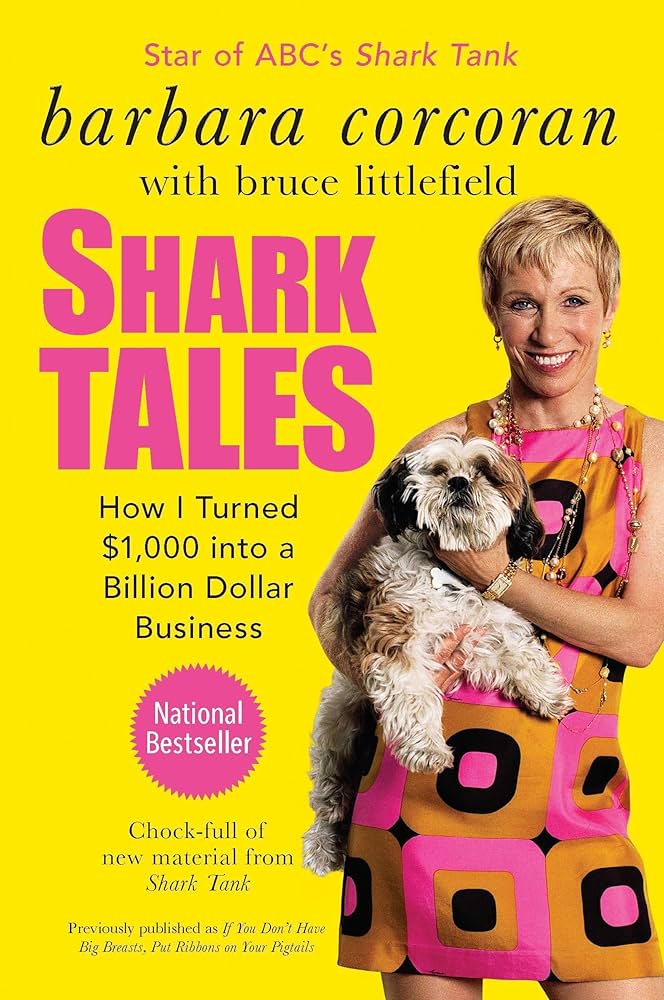
Resources
-
- Barbara Corcoran: What is your entrepreneur IQ?
- University of Washington: 4 Ways Women Can Conquer the Confidence Gap
- Harvard Kennedy School: Do women avoid salary negotiations? Evidence from a large-scale natural field experiment.
- Journal of Experimental Social Psychology: Enclothed cognition
- Association for Psychological Science: Effect Size Magnification: No Variable Is as Important as the One You’re Thinking About—While You’re Thinking About It
- Current Directions in Psychological Science: Self-Control and Grit: Related but Separable Determinants of Success
- Harvard Business Review: A Beginner’s Guide to Networking
- The New York Times: The Secret to Unshakable Confidence
- Harvard Business Review: How to Pitch a Brilliant Idea
- Entrepreneur: How to Pitch Your Business, Product or Idea to Industry Experts
- Psychological and Cognitive Sciences: Cognitive and noncognitive predictors of success
- Association for Psychological Science: Beyond willpower: Strategies for reducing failures of self-control.
- Harvard Business School: Growth Mindset vs. Fixed Mindset: What's the Difference?
2 Million Readers.
1 Life-Changing Newsletter
Simple and Straight-to-the-Point...
Just Like Mel.