Episode: 386
The Best Money Advice You Will Ever Receive: 4 Rules From the Top Financial Minds In The World
a Solo Episode
If you’ve ever felt stressed, confused, ashamed, or behind when it comes to money, this episode is for you.
Whether you’re living paycheck‑to‑paycheck, trying to pay off debt, building credit, wondering how you’ll ever afford a home, or doing “okay” but still feeling anxious about the future, this episode will show you exactly what to do next.
This episode delivers the most important money advice you need to hear right now.
And it’s your guide to taking control of your money: how to make it, how to save, and how to invest no matter where you’re starting from.
Today, Mel shares the best money advice from four of the most trusted and influential experts in personal finance.
After listening, you’ll walk away with a clear plan, a healthier relationship with money, and the confidence to make smarter financial decisions starting today.
This is simple, practical, and research‑backed financial advice that actually works.
Listen on:




When it comes to money, you either have a plan for your money or someone else has a plan for your money.
Mel Robbins
All Clips
Transcript
Mel Robbins (00:00:00):
Four world-renowned financial experts are here for you. They're going to give you their number one rule on how to take control of your money starting where you are with what you got. This is the best money advice we have ever featured on the Mel Robbins podcast. Tiffany Aliche. She is known as the Budganista. Tiffany Aliche is a New York Times bestselling author who has helped over two million people learn how to save, manage your money, and pay off debt.
Tiffany Aliche (00:00:29):
Your budget is like your mom. She's there to say yes when, if, after. So it's really a say yes plan, but one that's safely implemented so you can maintain the thing that you want.
Mel Robbins (00:00:42):
Ramit Sethi. Ramit is a New York Times bestselling author and one of the most trusted money experts in the world.
Ramit Sethi (00:00:49):
So many of us shrink our lives and we agonize over some stupid $5 purchase. You really think coffee is going to change your life? It's irrelevant. It does not matter. So know the four numbers and you will suddenly feel totally in control.
Mel Robbins (00:01:04):
Morgan Housel is the best selling author of the Psychology of Money and one of the most trusted financial thinkers in the world.
Morgan Housel (00:01:12):
A lot of your money woes and a lot of what you're feeling in terms of falling behind is solely a factor of your expectations. It's very easy to just say, "A good life is one in which I have more money."
Mel Robbins (00:01:24):
David Bach, one of the most respected voices in personal finance for over 30 years.
David Bach (00:01:30):
So I'm holding $10,000. How much money does it take to blow $10,000 in a year a day? It's $27.40 a day.
Mel Robbins (00:01:43):
Say that again.
Mel Robbins (00:01:44):
I am so excited for you to learn the best money advice you've ever heard, but first, my team was just showing me these numbers that 58% of you who watch here on YouTube are not subscribers. My goal is to get that number to 50%. If you hit subscribe, it would mean so much to me personally, and it's the best way that you can say, "Hey, Mel, thank you so much for showing up here on YouTube. Thank you for bringing us world-renowned experts for free. Thank you for helping me create a better life. I deeply appreciate you taking the time to do that. Thank you, thank you, thank you. " All right, this episode is insane. You're going to love it, so let's jump into the best financial advice you've ever heard. Hey, it's your friend Mel, and welcome to the Mel Robbins podcast.
(00:02:30):
I am thrilled about the conversation you and I are going to have. It's always an honor to be together and to spend this time with you. And if you're a new listener or you're here because somebody shared this episode with you, I just want to take a moment and personally welcome you to the Mel Robbins podcast family. You have picked a home run of a conversation to listen to because today four world-renowned financial experts are here for you. They're going to give you their number one rule on how to take control of your money starting where you are with what you got. You will feel more financially secure when you follow these simple rules and you will also finally create a plan that you can stick to. This is the best money advice we have ever featured on the Mel Robbins podcast, and today I am summarizing it for you.
(00:03:16):
And I know for a fact that this is the most powerful advice because I went back and relistened to every episode we have ever done about money and finances since we started this podcast three and a half years ago. My team and I selected the absolute best, the most powerful moments, the most tactical and easy to follow and impactful advice. Then we went further. We crunched the data on what you rewatched, shared, and commented on the most, especially on YouTube. So that these four rules about money that you're about to learn, they're going to change your life. They certainly have changed my life, and I am so glad that you are here right now with me so you can hear them, you can learn them, and you can apply them. And I'm going to tell you something before we jump in. There is something that one of these four experts are going to say that you need to hear right now, because it's going to be the exact solution or mindset shift or simple tactic that changes everything about your current financial situation, whether you're living paycheck to paycheck, whether you've made a ton of financial mistakes, you're trying to get out of debt, you can barely make ends meet, or whether you just want to get better with investing your money.
(00:04:36):
There is something in this that's meant for you. And I also want to point something out. The conversation today is going to give you four rules to get you started, but it's also going to make you realize, holy cow, there's so much I want to learn about taking control of my financial life. And so I want to remind you that the moments these four rules come from four incredible episodes. So if you want to go deeper and listen to the full episodes with each one of the four extraordinary experts, I've made it super simple for you. You can get a link to all four of these extraordinary episodes and all of the resources that we discuss in the episodes right in the show notes, and that's always there for you as a free additional resource. These are the foremost trusted money experts we've ever had on the Mel Robbins podcast.
(00:05:27):
And what I love about them is they don't just teach us the math. They're going to teach you the mindset. And one of our experts says something that I love so much. You don't have to pay off all your bills or have a million dollars in savings to start feeling better. You will start feeling better about your financial life if you simply follow one of the rules today, because it will be a sign that instead of feeling at the effect of everything, that you are now taking a proactive step to take control, and that's what's going to put you in charge immediately. So let's get into it.
Mel Robbins (00:06:02):
The first world-renowned expert that is here to help you today is the incredible Tiffany Aliche. She is known as the Budjetnista. She is one of the most trusted money experts in the world. Tiffany Aliche is a New York Times bestselling author who has helped over two million people learn how to save, manage their money, and pay off debt.
(00:06:23):
Now, when she first appeared on the show and that episode is linked below in the show notes, you loved her because she's one of those people you could just listen to all day. Her advice is insanely practical. It's so easy to listen to and understand, and she can help you solve one of the biggest money problems most people don't even realize they have, which is that money stress builds when you're kind of guessing about what's happening. If you don't even know what's kind of coming in or going out of your bank account, everything feels scary and overwhelming. I mean, stop and think about that for a minute. Do you even know where your money is going? How much you spend on groceries every month or electricity or transportation or your cell phone bill or streaming services or apps or subscriptions? Do you have any clue what's going in and out of your bank account every single day?
(00:07:28):
I'm sure you don't because you haven't had any time to think about it. But Tiffany Aliche is going to tell you that when it comes to money in your financial life, one of the biggest mistakes is that most of you are trying to earn more money. You're trying to earn your way out of the situation you're in, but you haven't even done the first required step, which is to get clear where your money is going. So how about we just rip off the bandaid when it comes to your finances? You need a budget. Yep. I said that word. I know you hate that word, me too. But you've never heard Tiffany Aliche explain a budget in the way that she does. And she's going to tell you, a budget is just like your mom. A budget helps you understand what's coming in versus what's going out.
(00:08:24):
And hearing her explain why this is the first step, it's going to give you more freedom and peace than you thought was possible. So let's take a listen to our first money rule from world-renowned money expert, Tiffany Aliche.
Tiffany Aliche (00:08:41):
So your budget is like your mom. She's there to say yes when, if, after. So it's really a say yes plan, but one that's safely implemented so you can maintain the thing that you want. So you could call it a money list. That's what I usually start with because people hate that name.
Mel Robbins (00:08:59):
I like the name money list. Yes. What does a money list mean?
Tiffany Aliche (00:09:01):
A budget.
Mel Robbins (00:09:02):
Okay. I love this reframe because I hear the word budget and I hear no and restriction. And you're saying no, that the budget is how you say yes to what's important to you.
Tiffany Aliche (00:09:16):
Yes. It's not there actually to tell me no. It's there to find the yes in the safest way possible.
Mel Robbins (00:09:21):
So for somebody hearing you say that and they're like, "But I've never made a budget or I've never stuck to one. I don't know what my budget should be. " Where do you begin?
Tiffany Aliche (00:09:36):
Step one is to write everything down, just the words of what do I spend money on? Don't think about the month, just in general. So it's like, "Oh, the kids, oh, credit card. Oh, grooming, going out. " I want you to just write the words. Don't think about the money, just words.
Mel Robbins (00:09:49):
Okay.
Tiffany Aliche (00:09:50):
So that's the first part.
Mel Robbins (00:09:50):
Step one.
Tiffany Aliche (00:09:51):
Yes. Then step two is, now you say these words on my money list, how much am I spending approximately monthly? Some stuff you'll know like your mortgage or your rent. Some stuff you might not be sure. Go pull out your bank statement and see on average the last few months how much you're spending on groceries or eating out or grooming.
Mel Robbins (00:10:08):
Or electricity or water.
Tiffany Aliche (00:10:09):
Yes.
Mel Robbins (00:10:10):
Or any of those things that you don't even really think, "Oh my God, I got that bill."
Tiffany Aliche (00:10:13):
Exactly. So then that's within a month frame on average. So that's step two.
Mel Robbins (00:10:17):
Okay.
Tiffany Aliche (00:10:18):
Then step three is to write down how much you make on average every month from all of your areas. So maybe you get alimony, maybe you get child support, maybe you have a job, whatever that is, how much are you making monthly? Then you add up, step four, you add up how much you're spending monthly and subtract it from how much you're making monthly. I call that the tears and tissue step because usually people get there and they're like, "Can I have a tissue?"
Mel Robbins (00:10:43):
And should you do this with a friend?
Tiffany Aliche (00:10:45):
Yes.
Mel Robbins (00:10:45):
Should we call Linda?
Tiffany Aliche (00:10:46):
Yes. Get yourself a Linda. So literally, when I used to do one-on-ones, we would do all of that and people would be like, "Okay." And then I would literally just grab a box of tissues and just put it here because I'm like, it's about the water works. It's coming. Because they add it up. I remember it was a nurse, I'll never forget, I'll call her B. And I came to her house and it was a beautiful condo. And so we did that step and she started crying. And then I started crying because baby, I'm a baby. And she was just like, "I didn't realize how much over I was spending." And she said, "As a matter of fact, I can't even afford the air conditioning. That's all. Can I turn it off?" And I was like, "Yes, yes." So we sat with the fan on because she just turned on the air conditioner because I was coming over.
(00:11:27):
So I was like, "Turn off the AC. A fan is fine. That tears and tissue step allows you to see what do you need to do now."
Mel Robbins (00:11:34):
And so let's say you've done that, right? And you've made the money list and you see what's coming in and what's coming out. You're faced with the reality, tears and tissues. Yes. And you see that you are outspending every month what's actually coming in. What is the next step?
Tiffany Aliche (00:11:55):
The next step is I want you to categorize your expenses before you get to slashing and dashing, because that's what people want to do. I won't eat out. I won't.
Mel Robbins (00:12:03):
Yeah. I'm never going to eat again. Never going to turn the lights on in this house. Get the candles.
Tiffany Aliche (00:12:08):
So I'm like, categorize your expenses into three categories. One, I want you to write a B next to all the bills on your list. So bills are, if you don't pay it, someone's going to come knocking on your door and say, "Where's my money?" So put a B next to all those things.
Mel Robbins (00:12:23):
And give me an example. I know that sounds like a basic question, but is your mortgage a bill?
Tiffany Aliche (00:12:27):
Yes. Mortgage is a bill. Rent, car note, your credit card, student loans. So if you don't pay, you're likely to be sued. Think about that.
Mel Robbins (00:12:37):
Gotcha. When you were standing at Walmart or Sephora and you're like, "Yeah, I'd like 10% off this. " And then you're like, "Oh wait, that's a credit card."
Tiffany Aliche (00:12:43):
Yes.
Mel Robbins (00:12:43):
That's a bill. Got it.
Tiffany Aliche (00:12:45):
So a B next to all your bills. And those are really fixed expenses, so that way you understand. And then I want you to put a U in front of any B that fluctuates based upon your usage.
Mel Robbins (00:12:57):
Oh, I love that.
Tiffany Aliche (00:12:58):
So I call these like the U stands for usage or utility.
Mel Robbins (00:13:01):
So your student loan does not have a U. Your mortgage or rent does not have a U, but the-
Tiffany Aliche (00:13:08):
Water.
Mel Robbins (00:13:09):
Water.
Tiffany Aliche (00:13:10):
Electricity.
Mel Robbins (00:13:11):
So your usage. Yes. The data on your phone bill.
Tiffany Aliche (00:13:14):
Yes. And so it's important to separate those two because you'll see that I want you to understand the level of control you have on these expenses. And whatever's not a B or U B, everything else is a C. C stands for cash or choice, meaning that you have full choice of how you spend here. So grooming might be left over, groceries might be left over.
Mel Robbins (00:13:35):
How much eating out with friends?
Tiffany Aliche (00:13:36):
Yes. And so entertainment. And so now before you get to slashing, I want you to ask yourself, where's most of your money going? For many people, most of their money might be going to the Bs and UBs, but for some people it's actually all the Cs.
Mel Robbins (00:13:50):
Yes.
Tiffany Aliche (00:13:51):
So then we have to identify, you have a don't make enough issue or spend too much issue. And so if most of your money's going to the Bs and UBs, you might not make enough. So it's not about slashing because these are your bills. But if most of your money's going to your Cs, your choices and your cash expenses, then you probably have a spend too much issue. So now we need to slash because it's entertainment and grocery and all those things where your money is going. Because what I find is that frugal people want to get more frugal when things are tight. I'm like, that's not the answer that instead I want you to put your energy toward learning how to earn more if all of your money's going to your bills because we're cutting the mortgage? What are we cutting?
Mel Robbins (00:14:32):
That's true.
Mel Robbins (00:14:33):
One of the things that I worry about, and I'd be curious to hear your perspective, is that you and I both had the experience of being in college and it's that opening week. And literally at the opening registration fair, there were banks with credit card tables. You get your Snickers bar when you sign up for one and then it's free money. But I worry a lot about the fact that in today's world, particularly for people who are in their 20s and 30s, that social media has become like shopping with a click. And you and I had to leave our house to go spend money back in the day. And when I think about TikTok or Instagram, every other fricking suggested thing has a shop down button and stuff gets sent to your house. And have you seen a big increase because you've been doing this for a while in people in the spending category that spending has gotten so easy because of social media, it's always in your face.
(00:15:45):
You always see what you're missing out on. There's an influencer that has the product for free who's like, "This changed my life and go click, click, click. It's 11:30 at night."
(00:15:53):
So do you see a spike in this or is it just-
Tiffany Aliche (00:15:57):
Absolutely. Overconsumption is the new way. We all have so much that we don't need. I mean, even I sometimes, I'm like, "Tiffany, you do not need another ... You don't even vacuum." I'm like, "But that one is so cool." And I'm like, there's this influence for who I follow who I love her because so aesthetically pleasing.
Mel Robbins (00:16:16):
Yes.
Tiffany Aliche (00:16:16):
But you know the ones that were like, everything in the kitchen is aesthetically pushing.
Mel Robbins (00:16:19):
Yes, this is these Amazon Shops. So I can click through to my Amazon thing. So I've got to sell for free, but I'm going to make money on you buying it.
Tiffany Aliche (00:16:25):
A container for the container.
Mel Robbins (00:16:27):
Yes.
Tiffany Aliche (00:16:27):
It's like, well, who wants to eat cereal out of a cereal box? We want to eat it out of an aesthetically pleasing glass container.
Mel Robbins (00:16:32):
Yes.
Tiffany Aliche (00:16:33):
Do I need an aesthetically pleasing? You don't.
Mel Robbins (00:16:35):
Don't you love her? Don't you love her? As she's explaining, I'm laughing at myself because yes, I want to eat cereal out of an aesthetically pleasing glass container that I do not need. And then I wonder, why do I not know where my money's going? Because I'm not clear what I'm spending it on. I'm spending it on all these things I don't need. I just love the way she explains things because she calls you out and then puts her arm around your shoulder and laughs with you. I mean, who knew that budgeting could actually be fun? And now that you've listened to Tiffany Alice, doesn't it make sense? Of course this is the first rule. You have to look at where your money is going because when you look at where your money is going, now you're empowered to understand the actual issue that you're facing.
(00:17:22):
And I want to highlight this because I want to make sure that you get the takeaway here from this first rule. And that is, what is your issue with money? Is it that you don't make enough money? Is that the issue? Maybe not. The issue is probably the second one, at least this is the issue for me, and that's, wow, I spend way too much. Those are the two places you could be in. I don't make enough or, whoa, I'm spending too much. And once you understand what's happening, now you can take the next steps forward. That's why this is important. And here's the other thing I love about Tiffany. She says your money list is there so that you can find the yes, so that you can say yes to the things that you want to say yes to. And that's so important because so often when you and I think about money and taking control of our finances, we think restrict, restrict, restrict, be frugal, don't spend on yourself bad, bad, bad.
(00:18:26):
And you assume that's the only way to feel less overwhelmed, less stuck and more in control, but that isn't true and now you know it. Your home should reflect who you are, not who you used to be or what you think it's supposed to look like, just you now. And Ashley has pieces that fit whatever your style is. In fact, I was scrolling Ashley earlier and I was immediately drawn to the pieces in the Serene Bay Outdoor Collection. Now, my personal style is cozy and functional, and the pieces in this collection feel elevated, but still livable. And what I love most about Ashley is that every piece, it doesn't just look great. They're built for real life with features like stain resistant fabrics that are easy to clean and even machine washable cushion covers. Plus, Ashley offers white glove delivery, so everything's brought right into your home and set up where you want it, making the entire process easy from start to finish.
(00:19:22):
Visit your local Ashley store or head to ashley.com to find your style. Okay.
Mel Robbins (00:19:28):
Now that we have a clear idea of where things are and we feel a little bit more in control, let's build on that clarity with Ramit Sethi. Ramit is a New York Times bestselling author and one of the most trusted money experts in the world. He is also the host of How to Get Rich on Netflix, and he has such incredible and empowering approach to money because he simplifies the topic of what to do with your money and helps make it so easy to understand. Rami says that there's only four buckets that you need to understand when it comes to your money, and he's going to share those with you right now. And here's what I love about this. Once you understand what these four buckets are and why they matter when it comes to taking control of your finances, you're going to feel empowered.
(00:20:15):
One of the things that you're going to love in particular is that one of these buckets helps you spend money on things that you love guilt-free. So in this next clip from the Mel Robbins podcast, you're going to hear Ramit explain these four buckets, but before he does, he's going to talk about an important issue because once you follow Tiffany Aliche's advice and you understand whether you have a spending problem or you have an earning problem, and you take some of the steps to stop all the unnecessary spending, which of course makes you have more money to play with, Ramit says you might be surprised by how much money you have leftover, and that means you're going to be ready to understand exactly what to do with it now that you see that you have it. So let's take a listen to Ramit Sethi when he last appeared on the Mel Robbins podcast.
Ramit Sethi (00:21:11):
You'll be quite surprised that a lot of people discover they have more money than they actually realized once they go on offense with their personal finances.
Mel Robbins (00:21:19):
Oh, wow. Okay. So what are the four things that we all need to go through?
Ramit Sethi (00:21:24):
Everybody needs these four numbers. These are all part of my conscious spending plan. The first is your fixed costs. Okay. So that would include your rent or mortgage, your utilities, car payment, gas, insurance, anything that's fixed, even groceries every month, that goes there.
Mel Robbins (00:21:41):
And what about the minimum debt payment or is that part of another category?
Ramit Sethi (00:21:45):
Yeah, that counts there. Exactly. Thank you.
Mel Robbins (00:21:47):
Okay.
Ramit Sethi (00:21:48):
And that number, you should try to get it between 50 to 60% of your take home pay.
Mel Robbins (00:21:55):
Okay.
Ramit Sethi (00:21:57):
Let me run through these all and then I'll tell you what they mean. 50 to 60% of your take home pay for fixed costs. Next up, your savings. How much money are you saving every month? This should be roughly five to 10% of your take home. And savings would be an emergency fund or money you don't need for at least one to five years, things like a down payment for a house, et cetera. Next up would be investments. Roughly five to 10% of take home, although I like to see it higher because investing early in life pays dividends later.
Mel Robbins (00:22:34):
Okay.
Ramit Sethi (00:22:35):
And then finally-
Mel Robbins (00:22:35):
Little shame for Mel Robbins. Did not invest early in life. Just wanted to acknowledge that when you said that because people say that, and I'm like, I didn't do that. Okay.
Ramit Sethi (00:22:44):
Well, I wish I started deadlifting when I was 13 years old, but I didn't even know what that was. So we all start from the place we start at.
Mel Robbins (00:22:50):
That's true.
Ramit Sethi (00:22:51):
Okay. The last category is my favorite one of all. It's guilt free spending. This is 20 to 35% of take home pay.
Mel Robbins (00:23:01):
What?
Ramit Sethi (00:23:02):
Yeah, that's right. Desserts. Mel, go get them. Beautiful cashmere coat. That's for me. Go get them. You want to get roller skates. You want to go to your gym, 20 to 35% of take home. Now, let me tell you why I love this and why I'm getting excited about four numbers. Okay. So many of us shrink our lives and we agonize over some stupid $5 purchase. You really think coffee is going to change your life? It's irrelevant. It does not matter how much coffee you buy. So please stop thinking about that. The same people who ag, and I go, "Oh, I'm so overwhelmed. I don't know anything." I go, "What's your savings rate?" They go, "What's that? How much are you investing?" "Well, I try, but I don't really know. "Okay, how are you supposed to feel not overwhelmed if you don't know any key numbers?
(00:23:48):
So know the four numbers and you will suddenly feel totally in control. Some of you aren't going to be able to hit these numbers. That's okay. At least we can work with it. We got the puzzle pieces on the table. Now we can start assembling your rich life.
Mel Robbins (00:24:03):
Wow. Okay. I think I can do this. So you just carve out some time on the weekend and get your arms around these four things.
Ramit Sethi (00:24:12):
Yeah. Which should take 15 minutes. Do not overthink it.
Mel Robbins (00:24:15):
It's going to take me a while. Really? It takes 15 minutes?
Ramit Sethi (00:24:18):
Yeah. Here's what people do.
Mel Robbins (00:24:19):
How do you do it?
Ramit Sethi (00:24:20):
Because the biggest challenge is people don't have the right logins. So their logins are spread all. They got their Fidelity account or some old 401k or whatever. So I would recommend breaking it up into two days. The first day is just get all your stuff assembled.
Mel Robbins (00:24:35):
Love
Ramit Sethi (00:24:36):
It. It's like cleaning the garage. And then the second day, 15 minutes and done. Do not overthink it.
Mel Robbins (00:24:41):
Okay.
Ramit Sethi (00:24:41):
We're going for approximate numbers. That's it.
Mel Robbins (00:24:44):
I love you. I love you, love you, love you. You have that, what is it? The 85% rule? Get 85% of this right. You're good.
Ramit Sethi (00:24:52):
Yeah, get on with your life. You don't need to sit there and optimize everything. It's a waste of time.
Mel Robbins (00:24:56):
And I also love this because it can feel so insurmountable when you've made major financial mistakes in your life, that this gives you a place to start that you can then start to get better from. And I just actually had a huge wake-up moment. The fact that I can't answer those numbers like that at this stage in my life, for me, it used to be because of fear and shame and how bad the numbers were. I used to be one of those people that the bills would arrive and I would just not open them.
Ramit Sethi (00:25:32):
Yeah, common.
Mel Robbins (00:25:33):
And because it was confronting to see the debt and confronting to see how much I had spent because I was basically shopping to escape my life with money that I didn't have. And then you'd open up the bills and be like, " I don't have that money. "And so it used to be that, but I think now that I've paid off all the debt and I have savings and I've maniacally saving, I don't look at it at all still.
Ramit Sethi (00:26:05):
Okay.
Ramit Sethi (00:26:06):
Let's talk about a couple things that are so interesting about what you just said. I love the honesty. All of us have something in our lives that we feel like we should be doing better. And we kind of push the envelopes away. And I deeply understand this because for me, it was fitness. And I grew up half joking, calling myself a skinny Indian guy. And I really wish I had not said that because it became part of my identity. And if any of us say something like, " I'm bad with money, " I would gently encourage you to not say that. Maybe reframe it and say," Gosh, I haven't learned the skills of money yet, but I'm changing that now.
Mel Robbins (00:26:52):
"This is so important. If you just heard Ramit say," I'm bad with money, "I want you to pay attention loud and clear because he's absolutely right. Or if you say something like, " I don't understand. "It's overwhelming.
Ramit Sethi (00:27:13):
Yeah. I'm not good with math.
Mel Robbins (00:27:14):
I'm not good with math. What are other things that your students say, Ramit, that really crystallize a terrible psychology around money?
Ramit Sethi (00:27:22):
My family's never been good with money. We're all bad. I'm never going to get out of this debt. We always fight about money and I'm just an overspender.
Mel Robbins (00:27:33):
Or my husband took care of the finances.
Ramit Sethi (00:27:38):
Oh, classic. Oh, that drives me insane. Hold on. I'm getting mad, but I'm getting mad at multiple things right now, so let me take them each in turn. Okay. First off, what you said about not opening envelopes is totally common, but what I do want and what I do for myself is I spend one hour per month on my finances. That's it. Just one hour. I review the CSP, my wife and I talk about money.
Mel Robbins (00:28:03):
Hold on. The CSP was that conscious spending plan of the four things.
Ramit Sethi (00:28:07):
Correct. So all those things, when you have money carved out for guilt-free spending, it is literally defined so that if you want to eat and get an extra cheesecake or you want to go to the movies, you don't have to feel guilty because you know my debt is being paid off, my rent or mortgage is being covered. I'm even saving money. I'm not trying to save money just like I don't try to brush my teeth. It is happening automatically. It's even better than brushing. If you're listening, I hope that's a sense of relief that you don't have to feel bad about having debt. You do not have to track a gajillion numbers that you don't even care about. You do, and I would highly encourage you to focus on four key numbers that will totally transform your life.
Mel Robbins (00:28:55):
Holy cow.
Mel Robbins (00:28:57):
Ramit is full of incredible advice. And I'm sure as you were listening, you're like, oh my gosh, oh my gosh, oh my gosh. And I want to remind you, the link to that complete episode is in the show notes if you want to dig in deeper, but let's focus on what he said. There are four buckets, and that's the only thing that we need to worry about right now. And these buckets are so important that I want to list them off one more time for you to make sure you really got this rule of understanding where your money needs to go once you understand how much money you have. So first bucket, fixed costs. That's rent, mortgage, utilities, insurance, car payment, minimum debt payments, groceries. These are the things that you have to pay. And I also want to remind you of what you learned from Tiffany Aliche, that there are all sorts of these silly things that you do not need in your fixed budget like glass containers on Amazon that we are all buying.
(00:29:54):
They feel like a necessity. They are not. Fixed budget, very black and white. It is the thing Things you must pay and cannot live without. That's bucket one. Bucket two, savings. That's your emergency fund. Plus the money that you may need in the next one to five years if you've got some big goals like wanting to make a down payment for an apartment or a house. Bucket number three, investments. That means long-term investings, retirement, 401k, IRA, brokerage accounts. And by the way, if you're thinking, Mel, I can barely pay my bills. I can't even think about savings. The next expert that you're going to meet is going to teach you amazing rule around how you can start saving now. Even if you're living paycheck to paycheck or working an hourly job, this is a genius trick you're going to love. And that fourth bucket, guilt-free spending.
(00:30:47):
This is money set aside to enjoy your life so that while you're working hard to pay off your bills, to put away savings, you're not depriving and punishing yourself. This is the bucket that allows you to buy those glass containers on Amazon if it makes you happy. Because I remember when my husband and I were nearly a million dollars in debt. It was all one big glob of shame and stress. I felt like I couldn't spend money on anything and I mean anything, even on things that brought me joy. The fact is that if I had had a clear plan, if I had made a minimum payment, if I had gotten my life in order faster by having a target that I could hit, understanding how long it was going to take, I would have seen that I had an extra 20 to 50 bucks every month to work with, money that I could use to go to the movies or go get a latte with the friend or take the kids to the half day admissions day at the zoo in Boston.
(00:31:51):
But I lived in such a state of overwhelm because I didn't understand that there were these four buckets. So every single dollar felt like life or death and that it had to go towards paying off debt. I felt like I had to say no to everyone and everything, including myself, because my only priority was debt, debt, debt. God, I wish I had had this framework back then. Because if I had had these four buckets, these four numbers, I would've had a very clear picture of the debt I was in, a realistic plan and timeframe for paying it off and a way to build a life and small pockets of money to still enjoy my life at the same time. Because when you're in a situation of crushing debt, you start to believe that unless you get to a zero balance, you don't deserve to spend money on anything else.
(00:32:44):
And that's the trap. And that's why I love this framework because when you've made major financial mistakes like my husband and I have, money feels impossible. And the second rule gives you a place to start and a way to take control step by step by step.
Mel Robbins (00:33:03):
And because this is one of the most asked about topics as it relates to money, I wanted to dive even deeper into savings with very tactical insights and specific things you need to do from David Bach, who is going to make this part of your financial life feel doable. And I mean, even if you're starting from zero, you've never saved a dollar. David is one of the most respected voices in personal finance for over 30 years. He's the author of 10 New York Times bestselling books, including The Smash Hit, The Automatic Millionaire. His books has sold over seven million copies.
(00:33:45):
They have been printed in 21 languages, and he has made a career out of helping millions of people just like you and me get out of debt, build real wealth, and stop making the mistakes that are holding you back. And here's why I love David. I love David because he has this way of just meeting you where you are. And although a lot of you want savings advice, you also find yourself feeling like you have no money to save because you're barely getting by. And right now, everything costs more. Just think about the price of gas and how that's rippling through the price of groceries or buying the small luxuries like a plane ticket or trying to do something fun over the weekend. Buying a house right now probably feels completely out of reach. If you're falling behind or if there are people in your life who are struggling, what I love about David Bach in this third rule that you're about to learn is that he makes savings feel possible even when you're starting from what feels like an impossible place.
(00:34:46):
He is going to show you how small daily savings can accumulate into millions of dollars over time. Yes, millions. And he will also explain why it's never too late to start or to catch up. And one thing I want to just set up before we jump into this moment from his appearance on the Mel Robbin podcast. As he's talking, I want you to imagine that David Bach is holding $10,000 in cash in his hand because he is. He brought $10,000 in cash to the studio. So let's take a listen to David Bach when he was on the Mel Robbins podcast and shared rule number three and this incredible advice.
David Bach (00:35:35):
A lot of people right now are missing hope when it comes to their money, which is impacting their life. So I believe that nobody should be left behind when it comes to money. That's why I've spent 30 years of my life teaching people about money. And so the challenge right now in this country, honestly, Mel, we're leaving people behind. In this country right now, seven out of 10 people are being left behind because they're living paycheck to paycheck.
Mel Robbins (00:36:02):
Wait, seven out of 10 people in the United States live paycheck to paycheck?
David Bach (00:36:05):
Stop for a moment and take that in, because that means if you're driving down a street and there's 10 houses, seven of those 10 are living paycheck to paycheck. So if you're living paycheck to paycheck, if you've got credit card debt, you maybe have student loans and you don't have hope. I promise you, you will see the light at the end of the tunnel. Compound interest is the eighth miracle of the world. That's what Einstein said. So I actually brought a prop for us.
Mel Robbins (00:36:28):
Okay.
David Bach (00:36:29):
Okay. Went to the bank yesterday, kind of shocked them.
Mel Robbins (00:36:33):
Wow. How much money is that?
David Bach (00:36:35):
For those of you who are listening and you can't see me, how much money would you guess that is, by the way?
Mel Robbins (00:36:42):
Are those-
David Bach (00:36:43):
This is real money.
Mel Robbins (00:36:44):
That's real money. I have no idea how much money. I mean, I don't know. That's a couple thousand dollars.
David Bach (00:36:48):
So interestingly, so I'm holding $10,000.
Mel Robbins (00:36:50):
You're holding $10,000?
David Bach (00:36:52):
It's $10,000 in real cash. This is a very important amount of money I'm holding here for many reasons that people will probably understand. When we've done surveys and we have asked people, how much money would change your life? The number one answer has been $10,000, which is fascinating. It's not 100,000, it's not a million, it's 10,000. And usually the reason is it would help them either pay off their credit card debt or give them enough financial freedom to leave their job or in a relationship they don't want to stay in.
Mel Robbins (00:37:24):
Got it. So $10,000 buys freedom from a job or a relationship.
David Bach (00:37:29):
For many people buys freedom. Now here's the really interesting question.
Mel Robbins (00:37:31):
Okay.
David Bach (00:37:32):
How much money does it take to blow $10,000 in a year a day?
Mel Robbins (00:37:39):
I don't know.
David Bach (00:37:40):
How much money do you have to spend a day to blow $10,000? So I'm holding a brick here of 10 grand.
Mel Robbins (00:37:45):
Okay.
David Bach (00:37:46):
A lot of people would like this brick.
Mel Robbins (00:37:48):
Yes.
David Bach (00:37:49):
It's $27.40 a day.
Mel Robbins (00:37:52):
Wait a minute.
David Bach (00:37:54):
$27.40 a day
Mel Robbins (00:37:56):
Is 10 grand.
David Bach (00:37:59):
Okay. Now what happens, Mel, if you invest $27 and 40 cents a day? This explains compound interest. And if you invest $27 and 40 cents a day and you're in your 20s and you do this for 40 years at a 10% rate of return, which is what the stock market has averaged for a hundred years, you use that fund I told you about, the VTI fund. You'd have $4,424,000.
Mel Robbins (00:38:27):
Say that again.
David Bach (00:38:29):
If you invested $27.40 a day, which comes up to $10,000 a year, in 40 years, you'd have $4,424,000. That's a fortune. Now the question is, are there people who are blowing $27.40 a day on stupid shit?
Mel Robbins (00:38:49):
Yes.
David Bach (00:38:50):
Yes.
Mel Robbins (00:38:50):
Every one of us.
David Bach (00:38:52):
Well, probably there are people listening, they're like, "I'm not. " But there are people, there are a lot of us doing it because everything's so expensive now. It takes nothing to blow $27.40 a day.
Mel Robbins (00:39:02):
Now, give me examples of how you can find that money because I think when you feel having been somebody that not only was in paycheck to paycheck for decade, but then was in a situation where I had no money and was in massive amounts of debt, but when you're in paycheck to paycheck, where can you find the 20? Give me some examples of where it's hidden.
David Bach (00:39:24):
You've got to go through your lifestyle. I mean, everything today is about convenience, right? So people are getting food delivered to them every single day. They're not really paying attention to what that's costing. People are taking Ubers every single day. I mean, you got to look at your own lifestyle. Everybody's got something that they're wasting small amounts of money on. People don't think like, if I spend $5 a day on something, that's $150 a month. That's well over $1,000 a year. It's five bucks. But if you're spending, again, $27.40, it's 10 grand. I've done podcasts in the past where I've talked about a hundred day savings challenge.
Mel Robbins (00:40:04):
All right, let's do a hundred day savings challenge. What is that?
David Bach (00:40:06):
The hundred day financial challenge that I have for people is this, especially people who do not have $1,000 in savings because there's a lot of people who don't have $1,000 in savings. So for a hundred days, save $10 a day.
Mel Robbins (00:40:23):
Where am I putting it in a savings account?
David Bach (00:40:25):
Literally, you could just start off by putting it in a jar in your house, but you could put it in a savings account. Save like my grandmother where she put the money in a coffee can. Save it for 100 days. And what- Pick anything. It could be a dollar just to prove to yourself.
Mel Robbins (00:40:39):
I actually like the idea of putting it in a jar because you can see it. And then you're like, oh, I'm doing it.
David Bach (00:40:44):
Yeah. So go and think about your life and see, am I wasting $27 a day, $27.40 a day on something?
Mel Robbins (00:40:54):
I guarantee you I am because I guarantee you there are subscriptions I don't even know about that are draining out of my bank account every month that probably add up to $27 a day.
David Bach (00:41:05):
So I'll tell you a classic story.This is a really funny story actually. One of my first book signings that I did for the Automatic Millionaire was in New York City at Barnes & Noble. So I do the book event and then I take questions from my audience. And this woman stands up and she's like, "David, I love you. I've read all your books. I've read Smart Women Finish Rich, Smart Couples Finish Rich. I got the finisher's workbook and I'm going to get the automatic millionaire." And she says, "But you haven't written the book that I need." And I go, "Oh, well, all my book titles for the most part have come from readers. What do you need?" And she goes, "I need start late, finish rich." And the room cracked up. And I'm like, "Okay, I hadn't thought about that, but how old are you? " And she says, I think she was in her 50s.
(00:41:51):
And I said, "Okay, well, let me ask you a question." I can go, "Are you married?" She said, "Yes, I am." I said, "So my question to you would be, could you save $20 a day? More than what you're saving, could you save $20 any more?" She's like, "Yeah, I could." I said, "Could your husband save $20 a day?" She goes, "I would make them." Everybody laugh, right? I go, "All right, so that's a lot of money actually. That's $40 a day between the two of you. If you just put that in, I gave her an example of a mutual fund and invested that for the next 15 years, here's what it could be worth." And the answer is it could be worth close to a half a million dollars.
Mel Robbins (00:42:27):
Wow.
David Bach (00:42:28):
And she's like, "Okay, so you're telling me that I could catch up a little bit, right?" I go, "Let's just play this out. At 65, is it better to have a half a million dollars or have nothing?" She's like, "It's much better to have half a million dollars." I said, "Great. So start with the $20 a day." She's like, "Okay, I can do that. " Because that's the whole thing. You got to figure out what can you do. Some people who are listening to me right now can do more than $20 a day.
Mel Robbins (00:42:55):
Yes.
David Bach (00:42:56):
You got to come up with what can you do. But here's a big thing. Your 50s are a beautiful time to save and invest and catch up.
Mel Robbins (00:43:02):
I love that David explains things the way that he does. I mean, as you listen to him and he's so passionate and the other thing that I love about him, don't you believe him? You believe him because he's spent three decades helping people just like you and me do this. That's why he's so passionate. He knows it works. And don't you want to do this? Don't you want to take advantage of compound interest? Of course you do. Don't you want to automate this? Of course you do. And I really hope you follow this advice. Now here's the thing. After hearing rule number three and listening to this incredible recommendation from David Bach, I know the number one question that you're going to write to me about, you're going to put in the comments wherever it is that you're listening or watching this podcast right now.
(00:43:50):
And that question is going to be, Mel, how do I possibly automate savings when I am paycheck to paycheck? He said $20 a day. I can't do $20 a day. When I just do the advice of Tiffany Aliche, when I divide what I have into these four buckets, you know what I got, Mel, for savings? I got pocket change. What do I do when I just have pocket change left after my fixed costs? Great question. David Bach has a recommendation. So here he is explaining that you and I live in what's called the automatic economy. Basically, if you don't have a plan for your pocket change, someone else is going to steal it. And he's also going to recommend some savings apps that weren't even around a decade ago when my husband and I were crawling out of debt, living paycheck to paycheck. These are savings apps that can help you start saving automatically today.
(00:44:43):
Even if you're talking about nickels, quarters or a dollar, and David Bach will tell you, just taking control of that tiny amount of change in your pocket, it will immediately make you feel better and more in control about your money. So let's take a listen to David Bach explaining what is the automatic economy that we're living in and how do you start automatically saving when you're struggling to make the ends meet? Let's take a listen to David's appearance on the Mel Robbins podcast.
David Bach (00:45:17):
So let me tell you what's really going on in this economy, because this is probably the most important thing you're going to hear in this podcast.
Mel Robbins (00:45:22):
Okay.
David Bach (00:45:23):
We are living in what I call now an automatic economy.
Mel Robbins (00:45:27):
Automatic economy.
David Bach (00:45:27):
Automatic economy.
Mel Robbins (00:45:28):
Okay.
David Bach (00:45:29):
An automatic economy either makes you rich or it keeps you poor. And there are a lot of people, Mel, right now, becoming rich. In fact, we're going into a decade where I believe more wealth will be created in the next decade than in any time in our lifetime.
Mel Robbins (00:45:44):
Really?
David Bach (00:45:45):
100%. There's two escalators to wealth in America because the system's rigged. You need to hear this, especially young people. There's two escalators to wealth. They are real estate and stocks. You have to own real estate and you have to own stocks. And this market's now more rigged than it's ever been. And when I say rigged, what I mean is everything in our country is designed for those two asset classes to go higher. All the tax laws, all the incentives, all the opportunities that exist are for investors. If you're not an investor, you are being left behind faster than you've ever been left behind. Anyone who's in their 20s today can start investing their change.
Mel Robbins (00:46:31):
That's true.
David Bach (00:46:31):
You can start investing literally today. You can open an app like Acorns and be investing your change. Every time you spend money, you can be investing a dollar at a time in diversified portfolios. You can click a button at almost no cost. And that was not true 20 years ago. 20 years ago was hard to sometimes become an investor with a small amount of money. Today with technology, the whole playing field's been democratized.
Mel Robbins (00:46:55):
What are some of the biggest mistakes that people make when it comes to money that keep them stuck?
David Bach (00:47:03):
Okay. Number one, when it comes to money, you either have a plan for your money or someone else has a plan for your money. Oh, what do you mean? Let that sit for a second. Either you have a plan for your money or someone else has a plan for your money. Lots of people have a plan for your money. The automatic economy is driven by your phone. Okay. That phone that we hold all day long is a money magnet. Think about that as a money magnet. What do I mean by that? That means this tool is either helping you build wealth or it's taking wealth away from you.
Mel Robbins (00:47:40):
Oh, hold on. So the phone is either helping you build wealth
David Bach (00:47:43):
Or it's taking money away from you. And by the way, in both cases, it's automatic. So what's happening today, there's never been greater technology ever in the history of our lifetime to separate you from your wealth. But nobody wants to separate you mail from your wealth once. They want to separate you from your wealth for your lifetime. They call it the lifetime value of a customer.
Mel Robbins (00:48:02):
Okay.
David Bach (00:48:03):
So when I bring you into whatever I'm selling you, I don't want you to buy from me once. I want you to buy from me on a subscription level. I want you to be paying me whether everybody, think of it, Netflix, the gym, every single service, your vitamins, your creams, your lotions and your potions. Everyone's got you signed up to pay them automatically. If you go through, open up your credit cards or one of your people in your office already told me they did this, use a system like Monarch or YNAB. These are different software systems where you can track all of your expenses and you can see who are you paying monthly. People have lost touch with how many people are attached to their paychecks.
Mel Robbins (00:48:44):
Oh. When he said this on his appearance on the Mel Robbins podcast, I felt like the money creepers were coming from the grave to steal my money from my pocket. Didn't you? I remember the second this interview was over, I picked up the phone and called Chris and was like, "We have to get control of our money." And I was shocked by the number of subscriptions that I was paying for that I wasn't even using. I had no idea that I was still paying for it. And that's why it's so important for you to hear this. And it loops all the way back to Tiffany Aliche's money, that if you do step one and you get a handle on where's your money going? This is what David's talking about. It's going to the automatic economy. And if you're not aware and you're not specific and you're not looking at the money that you have and being intentional about it, taking control of it, if you don't have a plan for your money, someone else is going to steal it from you.
(00:49:46):
This is a huge wake-up call, but I also love that he gave you practical strategies for how to start saving now and why it matters. So daily choices, they set you up for a better future. So here's your simple question. For the next week, just notice your small spending. The subscriptions you forgot about, delivery fees, convenience spending, like getting Uber Eats instead of walking or driving to pick up your takeout, those little, "Ah, it's only ah." Then choose one tiny action, cancel one subscription or download the app like Acorns. In fact, there's a couple sponsors that offer free apps that help you identify subscriptions and cancel them. I mean, anything that helps you take control, stop somebody from just draining the money from your paycheck and build a little breathing worm, even if it's $5, even if it's a dollar today, it sets you on the right track to save more.
(00:50:50):
And then you can accumulate compound interest, which is how you can grow your savings easily, effectively, and automatically. So David just gave you the eighth wonder of the world, which is compound interest. He also gave you kind of a cold bucket of water in the face about the importance of really getting a handle on who's taking your money because you live in the automatic economy. He also gave you strategies to start saving pennies on the dollar every day. Tiffany gave you the budget. She gave you the question, "Do I need to earn more or do I have a spending problem?" Ramit gave you the four buckets, but here's the thing, I realize we have to go a layer deeper because you just got the tactics and the math and the buckets and exactly what to do. Now we got to change the way you think about your life and you think about money.
(00:51:46):
We got to change your mindset. And that's why I wanted to introduce you to Morgan Housel. Now, when Morgan Housel appeared on the Mel Robbins podcast, there were so many listeners from around the world that wrote in saying, "I am forever changed." And I can tell you, Morgan is unlike any other expert we've ever had on the Mel Robbins podcast. Morgan Housel is the best selling author of the psychology of money and one of the most trusted financial thinkers in the world. His insights are really profound because it's not about what to do with your money. It shifts entirely how you view the role that money plays in creating a fulfilling life. So let's take a listen to New York Times bestselling author of The Psychology of Money, Morgan Housel, when he appeared on the Mel Robbins podcast and taught us how to shift our mindsets and your expectations and how that helps you take control of your financial life.
Morgan Housel (00:52:48):
What happens with expectations for a lot of people is, look, if I said, "I want to be a 10% better dad." That's a good goal, but what does that mean? What does that even mean? How do I track that? How do I measure that's impossible? But if I said, "I'm living in a one bedroom apartment and I want a two bedroom apartment." That makes sense. If I said, "I want three new pairs of jeans," that's easy to wrap your head around. Money is so quantifiable. It's so easy to just say, "Right now I'm making $20 an hour. I want to get to 25." Got it. I can measure it so quickly that it becomes this thing where we chase money because it's so easy to measure and we chase spending because it's so easy to contextualize. And so if you don't have a good idea of what a good life looks like, it's very easy to just say, "A good life is one in which I have more money." Because it's so much easier to understand then, how can I become a better dad?
(00:53:39):
How can I become a better parent, a better spouse, a better friend, a better worker? That's hard to wrap your head around. Will Smith had this great, I thought he was so astute and profound. He wrote this in his biography. He said when he was depressed and poor, he could tell himself, "If only I had more money, all my problems would go away." And that gave him hope. I just need to go out and make more money. And once I have more money, all of my depression, all of my doubts will go away. And then he became rich and he was still depressed. And then he said he lost hope because he couldn't say if only I had more money. And so we chase money because it's so easy to wrap our heads around and we chase it with the idea that it's a solution to all of our problems.
(00:54:16):
Even if it can solve some problems, but not the biggest ones, the hole that you're trying to fill, the psychological hole that you're trying to fill is probably not going to be filled with money.
Mel Robbins (00:54:26):
So the takeaway that I've got from what you just shared, which is much deeper, is to ask yourself is, what is the hole that money is trying to fill for me? Yes. And are there things that I can do right now in terms of redefining what it means in my 20s or my 60s to be a good friend or to have a good life or to take better care of myself that don't involve hitting myself over the head about my financial life?
Morgan Housel (00:54:54):
Exactly. That's it.
Mel Robbins (00:54:55):
Got it.
Morgan Housel (00:54:56):
The first step is realizing that a lot of your money woes and a lot of what you're feeling in terms of falling behind and a lot of your gap between what you have and what you want is solely a factor of your expectations. Because I think the pull is so profound in our heads that if only I had more money, these problems would go away. It seems like, how could that not be true? And I think the people who have experienced it would say, no, it can be true, just much less than you thought.
Mel Robbins (00:55:24):
What if you don't think you're good with money though? Because for a long time I had a story in my head, I'm just not good with money. I'm bad with money. And let's say you're somebody who's gone through a divorce, you're financially wrecked, you gave all the power to your partner, now you're starting over. Can anyone get good with money for real?
Morgan Housel (00:55:44):
You can if you want to. And I think the people who say, "I'm not good with money don't want to be. " They use that as their excuse to say-
Mel Robbins (00:55:52):
Come on now. Really?
Morgan Housel (00:55:53):
I think that they use that as their excuse. This is not a difficult thing to wrap your head around. This is very basic arithmetic. Spend less money than you make, save the difference, be patient.That's it. This is what we're talking about. You can explain this to a five-year-old. And so if you're saying, "I'm not good with money," you're making a choice to not get better.
Mel Robbins (00:56:11):
Wow.
Mel Robbins (00:56:13):
I wanted to end his clip there, and I'm going to tell you why. The reason why is he is so matter-of-fact, and I want to repeat some of the words that he said to you. This is not a difficult thing to wrap your head around. This is very basic arithmetic. Spend less money than you make. That's Tiffany Aliche. Save the difference, which is Ramit and David Bach. Be patient. That's compound interest. Those were all the tactics. And I also wanted you to hear him be very blunt with you because while it sounded harsh, he was telling you the truth. If you're saying, "I'm not good with money," you're making a choice to not get better. You are listening to this episode. You are sharing this episode with family members, with your spouse, with people that you care about because you want to get better.
(00:57:14):
You now have a roadmap for exactly what to do to start spending less money than you make, saving the difference and being patient. That is the advice that has been around since the beginning of time. It's boring and it works. You can get good with money. You can do this and you've invested all this time to listen up until this point so I know you want to. And I hope you heard the last thing he said because he just put into words something that most of us never realize that we're doing, that you turn money into a scoreboard for a good life. When money becomes a scoreboard, you can never win because there's always someone with more money. So here's the takeaway. Your money stress isn't only about what you have. It is about the gap between what you have and where you are right now and what you think you should have compared to other people.
(00:58:11):
If you don't define what a happy, content life is for you right now, your brain will turn money and chasing money and buying things into something that you will never actually reach because you will keep moving the goalpost. You will keep feeling behind. You will keep seeing everyone else and everything that they have as more, better, something that you're missing. And you'll keep chasing a number instead of starting where you are, doing the three simple things that you've just learned that you need to do, and then following this fourth rule and flipping your mind around money and use the money that you have to start building a life that you're proud of where you are.
Mel Robbins (00:59:02):
So here is the assignment. Finish this sentence right now. Enough for me is, and maybe for you, it's enough for me is bills paid on time. Enough for me is no missed credit card payments.
(00:59:19):
Enough for me is a thousand dollars saved over the next six months. Enough for me is contributing to retirement or opening up one of those apps and starting to save change. Enough for me is I can take my kids on a trip this weekend without guilt. Enough for me is I can buy myself something without guilt because I know where my money is. Enough for me is following the advice on this podcast and giving myself a pat on the back because I, for the first time in years, sat down on a Saturday or a Sunday and spent half the day following all this expert advice and now I actually feel a lot better. Once you define enough based on where you are, money stops being a measure of your worth and it becomes what it was always supposed to be, a tool, a tool for peace, for options, a tool that gives you back time, a tool for the people you love.
(01:00:25):
And because of everything that you've learned in this episode from these four amazing financial experts, that's what you can achieve. And I want to make sure that you have all of these takeaways at your fingertips that our extraordinary experts taught you today. So let's just go through them. First, rule number one, you cannot change what you will not look at. So start taking control by following Tiffany Aliche's guidance on creating a money list. It will help you understand where your money is going and I want you to be honest with yourself, whether you have a I don't make enough money or if your problem is I'll spend too much money. Second, the second rule came from Ramit, know your four buckets. He taught you about the numbers, these four buckets that money fall into, and that simplifying your money into these four buckets is the fastest way to stop guessing, to be intentional, and to feel in control of what you got.
(01:01:33):
And those four buckets are very simple, fixed costs, savings, investments, and guilt-free spending. And third, David Bach taught you about the eighth wonder of the world, compound interest, and how tiny daily automatic choices create massive outcomes in the future. He also taught you about the fact that you live in the automatic economy, which is why you need a plan, because if you don't have a plan for your money, someone else is going to have a plan for stealing your money, and you don't need a perfect plan. You need a consistent one. Whether you're starting to save a dollar a day, $5 a day, $10 a day, $20 a day, it doesn't matter. The amount isn't the point, the habit is. And I loved his specific recommendations on how you can achieve this regardless of how little or much you make and make it automatic. And the fourth rule, define enough for yourself, because if you don't, you will chase money forever and you will never have enough.
(01:02:41):
Comparing yourself to others, chasing money, chasing things that you need to buy, it steals your happiness and it keeps you feeling overwhelmed, stuck, and dissatisfied. If you can learn how to be content and happy where you are by defining what enough is for you right now, you create happiness and control starting today. And if you need more support, I'm going to remind you that the links to all four of these incredible episodes with these world-renowned experts are linked right in the show notes, along with all the resources we discuss in this episode. I promise you, they are so worth your time no matter what your relationship with money is, no matter what your balances are in the bank, how long it's been since you've opened up the banking app or never at all, regardless of what you're dealing with, these experts are here to help you feel more powerful and in control and to give you the step-by-step plan to build the life you want using money as a tool.
(01:03:44):
And if no one else has told you this today, as your friend, I wanted to be sure to tell you that I love you and I believe in you, and I believe in your ability to create a better life. And there's no doubt in my mind that if you take absolutely everything that you learned today, these four rules from these amazing world-renowned experts, and you put it into practice like for real, not for money's sake, but for your sake. For a more meaningful life's sake, I promise you you can do this and you will start feeling better the second you do. Alrighty. I'll see you in the very next episode. I'll be waiting for you there the moment you hit play. Alrighty. And thank you for watching all the way to the end on YouTube. Thank you for being generous with sharing this link with your family members, anybody in your life who needs to take control of their money.
(01:04:39):
When you share this episode with people that you care about, you're giving them a free gift. This could literally be the lifeline that changes the trajectory of their life. How cool is that? And I know you want to know, okay, what should you watch next? In just a second, I am going to tee up Morgan Hausel's episode because the mindset thing will really help you feel motivated to do the tactical steps that Tiffany, Ramit, and David walk you through. But first, if that subscribe button is lit up, would you please hit it? It means you're not subscribed. And my goal is that 50% of people who watch this channel here on YouTube and watch the Mel Robbins podcast, you're subscribers. This is a personal ask for me. It is the best way that you can support your friend Mel Robbins and my team and these world-renowned experts who show up here for free to help you create a better life.
(01:05:27):
Thank you for doing that. I truly mean it. Thank you. It means a lot to us and it's the free fastest way to say thank you. So let's start with Morgan Hausel's episode, and I will welcome you in the moment you hit play.
Key takeaways
You are feeling overwhelmed, but if you stop guessing and actually look at where your money is going, you will gain clarity, control, and finally see what needs to change.
You keep trying to earn more, but until you face your spending, track your habits, and understand your choices, you will stay stuck in the same financial stress loop.
When you divide your money into fixed costs, savings, investments, and guilt-free spending, you stop feeling chaotic and start feeling intentional, clear, and back in control.
Even saving a small amount daily builds momentum, and when you let compound interest work over time, your future wealth grows from simple, consistent, automatic habits.
If you don’t create a plan for your money, the automatic economy will quietly drain it through subscriptions and habits you ignore, leaving you feeling powerless and behind.
Guests Appearing in this Episode
Tiffany Aliche
Tiffany Aliche, known as "The Budgetnista," is a financial educator, author, and advocate for financial literacy and empowerment.
-
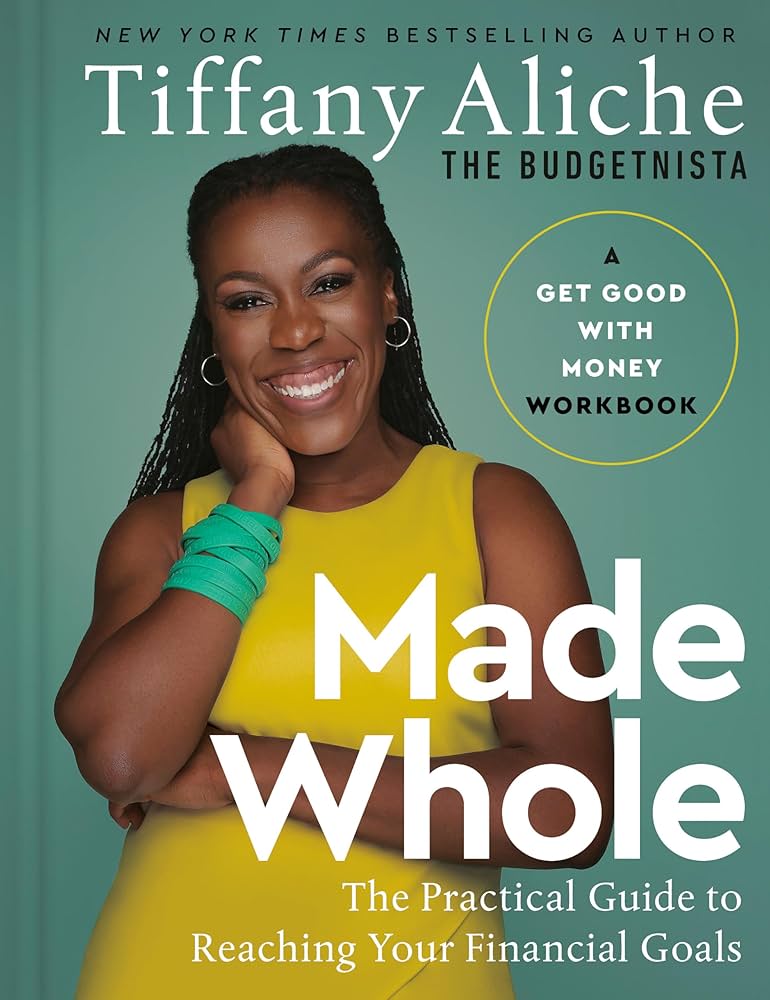
Book: Made Whole
The ultimate hands-on workbook for anyone looking to get their finances in order—from budgeting to investing and everything in between—by Tiffany “The Budgetnista” Aliche, the New York Times bestselling author of the smash hit Get Good with Money.
A masterclass in taking charge of your money, Made Whole has what every reader needs to achieve financial savvy, stability, and security.
-
Podcast: Brown Ambition
The first money & career podcast for women of color, by women of color -
Brown Ambition
helps you unapologetically build wealth by saving, investing and making smart career choices
-on your own d@mn terms! Published every Monday, Wednesday and Friday. It's time to secure the bag sis!!!
Ramit Sethi
Ramit Sethi is a financial advisor, bestselling author, and entrepreneur dedicated to helping people design rich lives and master personal finance.
-
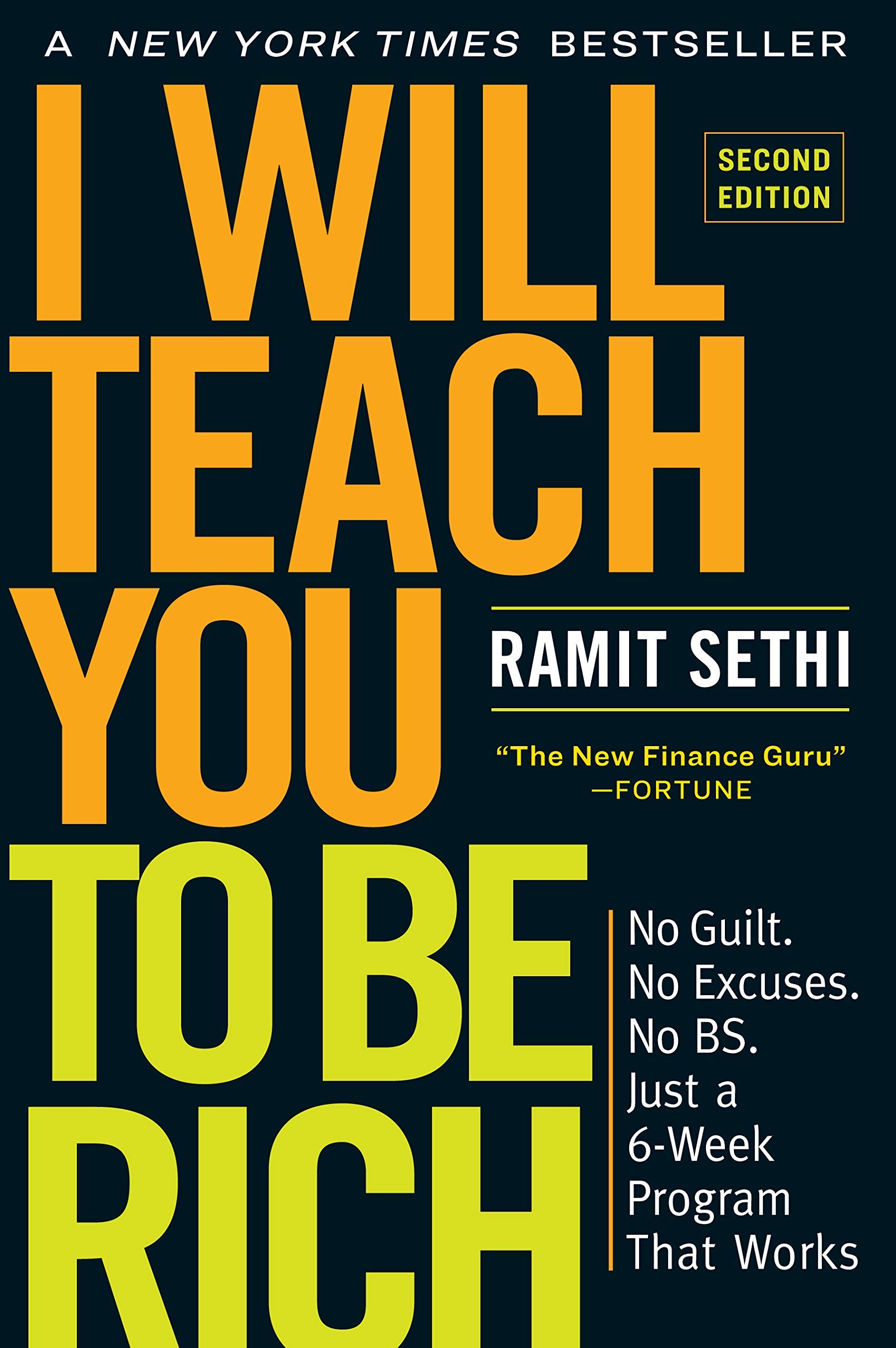
I Will Teach You to Be Rich
Buy as many lattes as you want. Choose the right accounts and investments so your money grows for you—automatically. Best of all, spend guilt-free on the things you love.
Personal finance expert Ramit Sethi has been called a “wealth wizard” by Forbes and the “new guru on the block” by Fortune. Now he’s updated and expanded his modern money classic for a new age, delivering a simple, powerful, no-BS 6-week program that just works.
-
Netflix: How To Get RichMoney holds power over us — but it doesn't have to. Finance expert Ramit Sethi works with people across the US to help them achieve their richest lives.

David Bach
David Bach is a 10-time New York Times bestselling author and personal finance expert, helping millions build wealth with simple habits.
-
The Automatic Millionaire
Fully updated and revised for today’s world, this is David Bach’s timeless, no-budget, no-discipline, no-nonsense system to help people finish rich automatically.
When Bach, the #1 New York Times bestselling author of Smart Women Finish Rich, Smart Couples Finish Rich, and 10 other bestselling books first shared the secret to getting rich 20 years ago in The Automatic Millionaire, the book helped millions of Americans build wealth. Today, this secret is just as relevant to a new generation. It’s about a timeless system and tiny changes that produce millionaire results.
If you want to be financially free, then your time is now. The #1 New York Times multimillion copy bestseller is back better than ever. The Automatic Millionaire Twentieth Anniversary Edition includes the latest tax changes, investment companies, technologies, websites, resources, and bonus chapters so you can put in place quickly and easily the system to becoming an Automatic Millionaire.

-
The David Bach Show
The financial podcast that can help you take control of your money and your life, hosted by one of America's favorite financial experts and #1 New York Times bestselling author David Bach. With 10 consecutive New York Times bestsellers under his belt, it's no wonder that beginners and pros alike turn to David to help them turn their money woes into real wealth. Now he's bringing that treasure chest of wisdom straight to you, anytime, anywhere. The David Bach Show is your key to financial freedom, one episode at a time.

Morgan Housel
Morgan Housel is the author of The Psychology of Money and The Art of Spending Money.
He’s a two-time winner of the Best in Business Award from the Society of American Business Editors and Writers, and a former columnist at The Wall Street Journal and The Motley Fool.
His work has been read by millions and has changed the way the world talks about money.
- Follow Morgan on Instagram
- Visit Morgan’s Website
- Pre-order The Art of Spending Money
- Pre-order the UK Edition of the The Art of Spending Money
- Read Morgan’s Articles for the Motley Fool
-
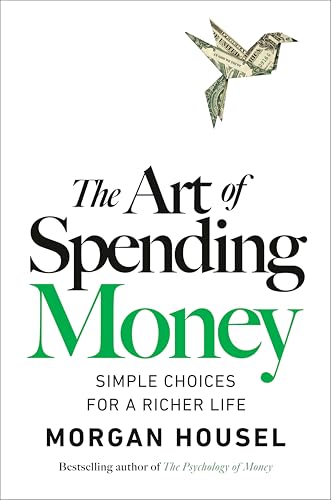
The Art of Spending Money
The Art of Spending Money doesn't provide budgets, hacks, or one-size-fits-all solutions. It gives you an understanding of how your relationship with money shapes your decisions—and how to reshape it so money works for you.
-
The Psychology of Money
Doing well with money isn’t necessarily about what you know. It’s about how you behave.
In The Psychology of Money, award-winning author Morgan Housel shares the different ways people think about money and teaches you how to make better sense of one of life’s most important topics.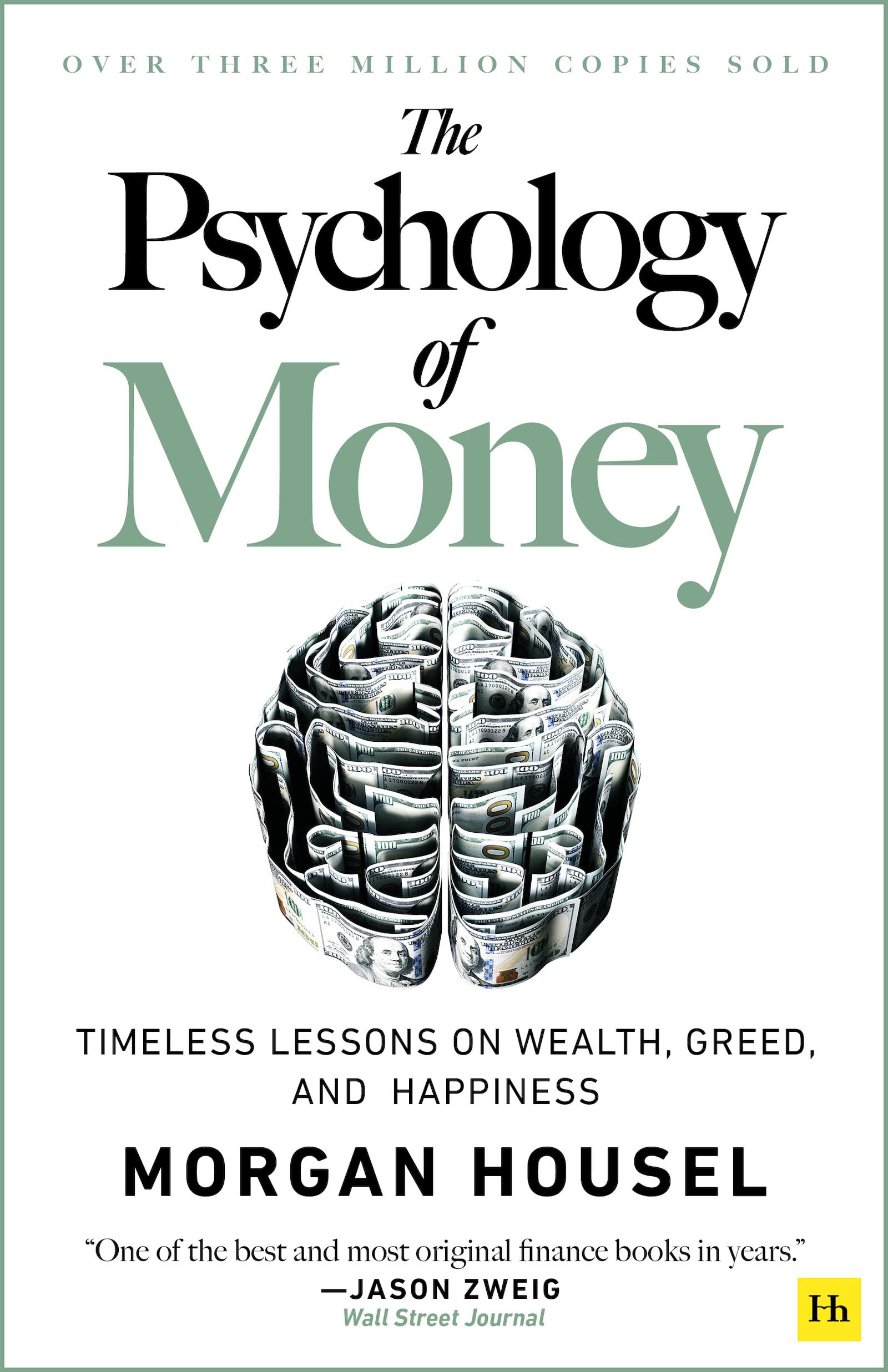
-
The Morgan Housel Podcast
Timeless lessons on wealth, greed, and happiness.

Resources
-
- Collabra: Psychology: Understanding Individual Attitude to Money: A Systematic Scoping Review and Research Agenda
- Navigator: A Majority Feel Behind Financially
- CNBC: The average American has $90,460 in debt - here’s how much debt Americans have at every age
- U.S. News & World Report: How Much Money Should You Have in Savings?
- Investor.Gov: Index Funds
- University of Pennsylvania: Does more money correlate with greater happiness?
- Applied Economics Letters: Exponential Growth Bias and Financial Literacy
- Forbes: The Psychology of Money: What You Need To Know To Have A (Relatively) Fearless Financial Life
- New York Times: Wait a Minute. How Can They Afford That When I Can’t?
- The Guardian: Meet the people trying to save enough to retire by 40
- The Atlantic: How to Use Money to Make You Happier
- New York Times: The Rich Are Not Who We Think They Are. And Happiness Is Not What We Think It Is, Either.
- Yale School of Management: As Incomes Rise, Variability in Happiness Shrinks
- Vox: Will I just keep spending more and more money forever?
- Morgan Housel: The Psychology of Money
- Morgan Housel: Getting Wealthy vs. Staying Wealthy
- Harvard Business Review: Money won’t make your life meaningful
- CNBC: Americans spend too much money on housing.
- Bloomberg: What’s happened to our pickup trucks?
- The Atlantic: Why Americans don’t talk about money.
- Investopedia: The Ultimate Guide to Financial Literacy for Adults
- Fidelity: What is financial literacy?
- U.S. News & World Report: How Much Money Should You Have in Savings?
- Fidelity: What's a 401(k)?
- Discover: How to spend money wisely: Create a values-based budget in 3 steps
- Forbes: Want To Be An 'Automatic Millionaire'? David Bach Has Some Tips
- PNC Bank: Understanding Contributions: Pre-Tax, Roth and After-Tax
- IRS: Rollovers of retirement plan and IRA distributions
- IRS: 401(k) limit increases to $24,500 for 2026, IRA limit increases to $7,500
- Consumer Financial Protection Bureau: An essential guide to building an emergency fund
- Vanguard: ETFs vs. mutual funds: A comparison
- Vanguard: Understanding the basics
- of estate planning
- Nerdwallet: Compound Interest Calculator
Nerdwallet: What Is a Debt Management Plan?
2 Million Readers.
1 Life-Changing Newsletter
Simple and Straight-to-the-Point...
Just Like Mel.