Episode: 388
Stanford Luck Researcher: How to Manifest the Life You Want
with Dr. Tina Seelig
Luck isn’t random. It's a skill you can build with a few small moves starting today.
Feeling like life never breaks your way even though you’re doing everything “right”?
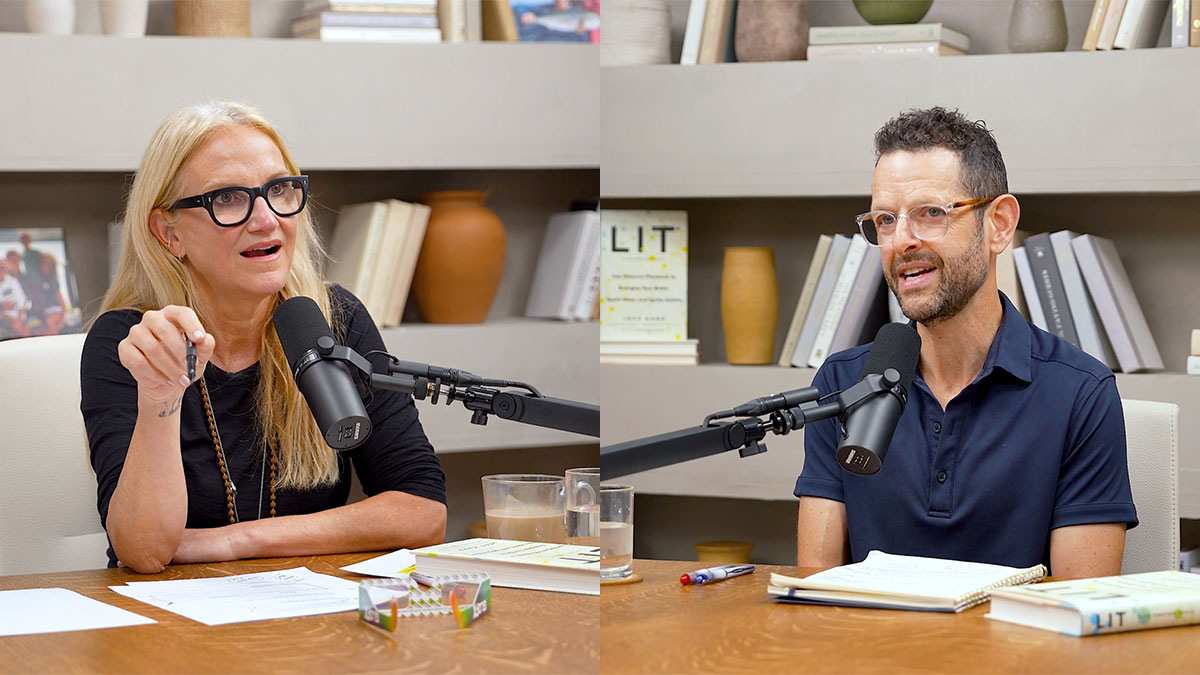
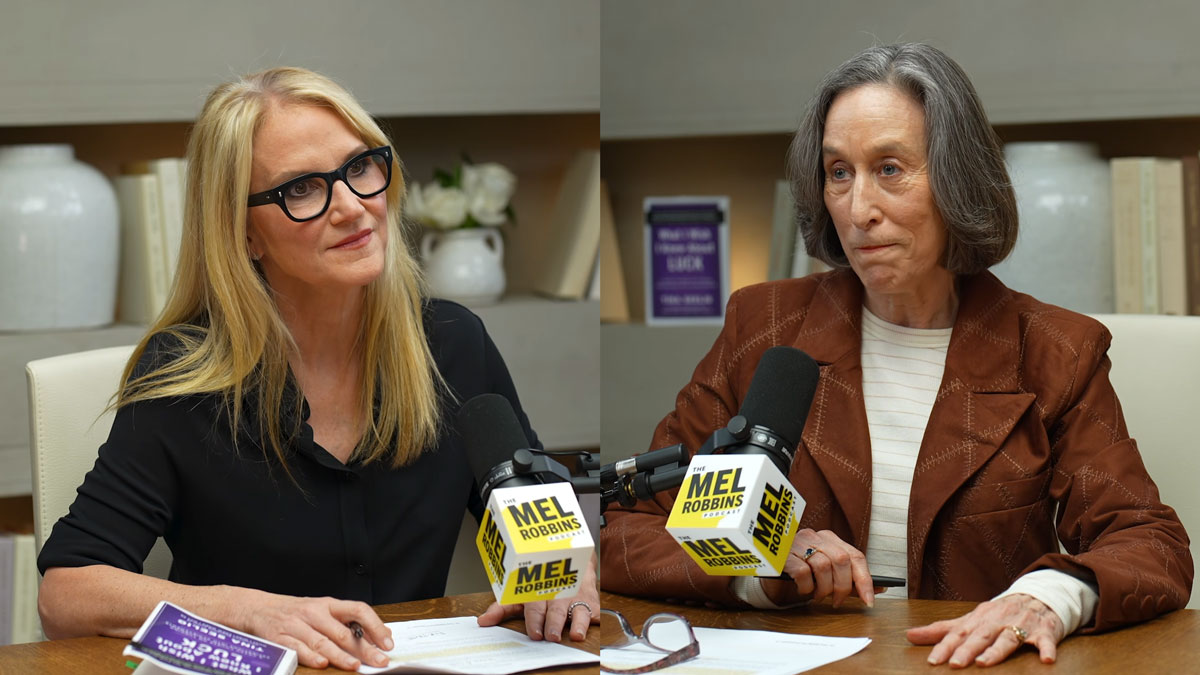
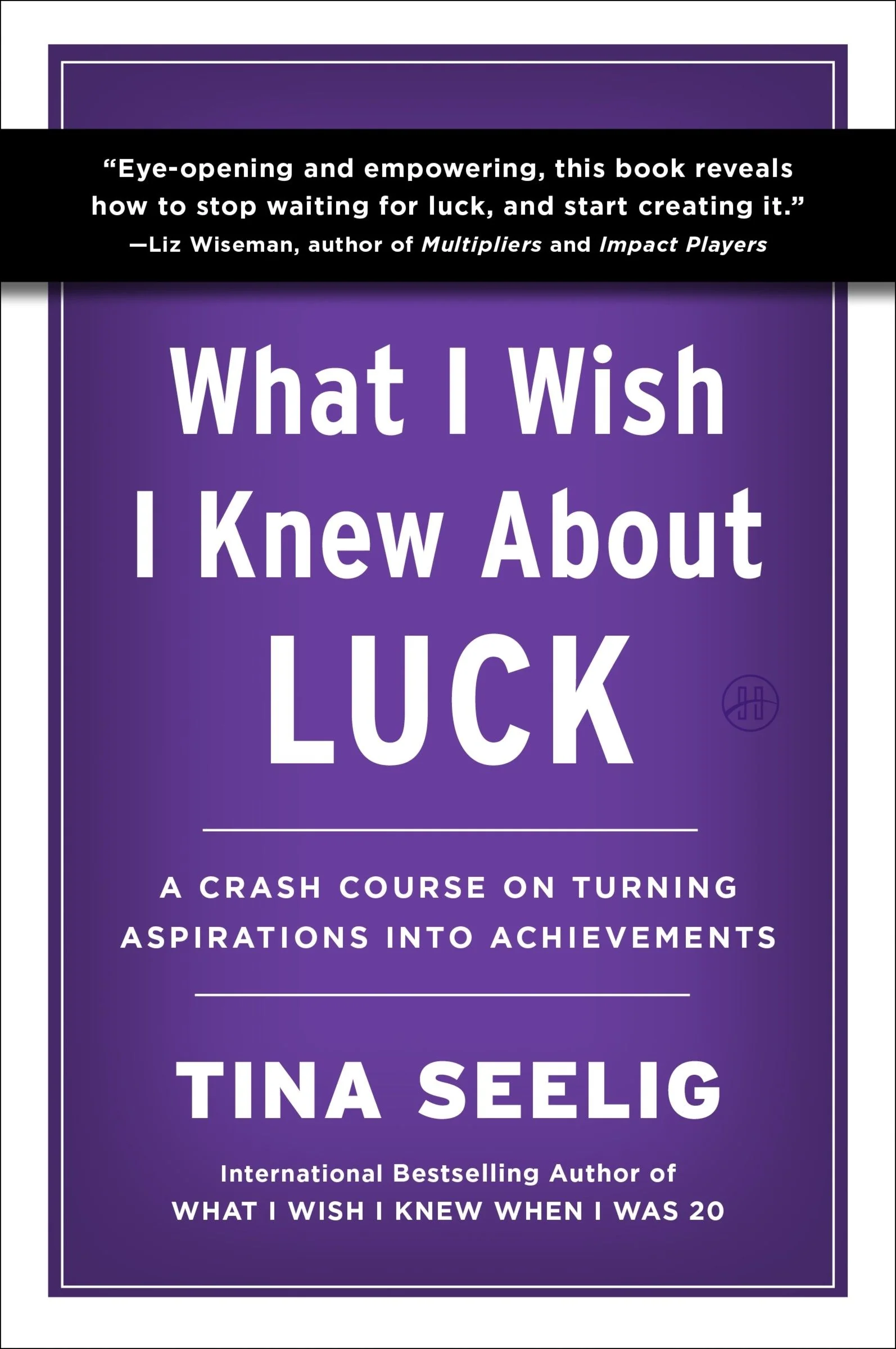
In this episode, Mel sits down with Dr. Tina Seelig, Stanford professor of entrepreneurship and author of What I Wish I Knew About Luck, to unpack the science of getting “luckier.”
You’ll learn the difference between fortune (what happens to you) and luck (what you create), why opportunities are “like the wind,” and Tina’s simple 3-step framework: build your sailboat, recruit your crew, hoist the sail.
Mel and Tina also break down the 6 kinds of risk (and how your personal risk profile may be keeping you stuck), why asking for a 5-minute favor can change everything, and practical ways to “stir the pot” this week so new opportunities can find you.
If you’ve been thinking, “Nothing ever works out for me,” this episode will shift how you see your choices, and your future.
Listen on:




We are always one decision away from a completely different life.
Dr. Tina Seelig
All Clips
Transcript
Mel Robbins (00:00):
Have you ever looked at someone else's life and thought, how do they get so lucky if you could turn your luck around? Wouldn't you? Today's guest is Dr. Tina Seelig. Her work is all about the science of luck. You can learn how to become a luckier person. Dr. Seelig earned her PhD in neuroscience at Stanford Medical School. She's also the author of 18 books.
Dr. Tina Seelig (00:26):
Luck is success or failure apparently caused by chance?
Mel Robbins (00:32):
Success or failure apparently. What is he apparently in there for?
Dr. Tina Seelig (00:36):
And that's the point. I mean, this is really important. It looks on the surface as though it's chance, but really underneath there are things that you have done to tempt good luck your way. There's something very, very important to keep in mind. Fortune is the things that happen to you. Luck is what you control.
Mel Robbins (00:56):
If somebody feels really unlucky right now, what's the first thing they should do this week?
Dr. Tina Seelig (01:02):
I would say if you were going to pick one thing.
Mel Robbins (01:06):
Hey, it's Mel. And before we get into this episode, my team was showing me 57% of you who watched the Mel Robbins podcast here on YouTube are not subscribed yet. Could you do me a quick favor? Just hit subscribe so that you don't miss any of the episodes that we post here on YouTube. It lets me know you're enjoying the guests and the content that we're bringing you because I want to make sure you don't miss a thing. And I'm so glad you're here for this episode because this is a really good one. All right, let's dive in.
Mel Robbins (01:35):
Dr. Tina Seelig, welcome to the Mel Robbins podcast.
Dr. Tina Seelig (01:39):
I could not be more delighted. Thank you so much for having me.
Mel Robbins (01:42):
I am thrilled about the topic that we're going to talk about. I love your research and thank you for taking time out of your schedule to come and share all of this research around luck and how we can use it to improve our lives. And I think that's where I want to start. So could you talk to me and the person that's here with us right now and just tell us what might change about our lives if we really apply everything you're about to teach us today?
Dr. Tina Seelig (02:14):
I couldn't be more delighted to share this information because when people understand that they have more agency in their lives, they realize that they have levers they can use every single day to make themselves luckier.
Mel Robbins (02:30):
When you talk about luck, Dr. Seelig, what are you talking about? What does that mean?
Dr. Tina Seelig (02:35):
First of all, please call me Tina. The definition of luck is success or failure apparently caused by chance.
Mel Robbins (02:44):
Success or failure apparently.
Dr. Tina Seelig (02:47):
Exactly.
Mel Robbins (02:48):
But what is he apparently in there for?
Dr. Tina Seelig (02:50):
And that's the point. I mean, this is really important. The word apparently, it looks on the surface as though it's chance, but really underneath there are things that you have done to tempt good luck your way.
Mel Robbins (03:03):
Oh, okay. So I want to make sure that I am tracking and I want to make sure that as the person who's with us is listening, we got that because I think that there is a little treasure buried beneath that, which is oftentimes the things that we attribute to luck, are you saying that once we understand everything you're about to teach us, that those things we once just attributed to luck, bad luck or good luck, we could trace back and say, "Actually, there was something that I set in motion that I'm not giving myself credit for that made this chance thing happen."
Dr. Tina Seelig (03:43):
Exactly. And in fact, we often use the word luck to humbly say, "Oh, I didn't have anything to do with this. " But if you actually unpack it, you'll see what actually happened to bring that good luck your way. Or people don't understand the things they did to make themselves luckier. And so what I've been doing is unpacking all the things that are in that apparently to show the things that people actually are doing to make themselves luckier.
Mel Robbins (04:10):
Okay. So you have done all this research. You've written this massive bestselling book, What I Wish I Knew About Luck, and you also have concluded that there is a science to becoming a luckier person. What's the number one thing that drives the lucky breaks that people get?
Dr. Tina Seelig (04:29):
Well, first of all, you have to realize that there is a physics to luck. Ooh. All of the world is cause and effect, right?
Mel Robbins (04:37):
Yes.
Dr. Tina Seelig (04:38):
Fortune is the things that happen to you. Luck is what you control. And it's very, very important to distinguish between those two things because people conflate the concept of fortune and luck and they make a mistake in thinking that everything is just happening to them. Well, of course, there's some things that are out of your control, how tall you are, where you're born, who your parents are. Those are things that are out of your control. That's you're fortunate or you're unfortunate and the world is spinning and things are happening. There might be an earthquake, there might be a war. There might be
Mel Robbins (05:14):
Systematic racism.
Dr. Tina Seelig (05:15):
Exactly. There might
Mel Robbins (05:16):
Poverty.
Dr. Tina Seelig (05:16):
There might be all kinds
Mel Robbins (05:17):
Of things.
Dr. Tina Seelig (05:17):
Exactly. A pandemic.
Mel Robbins (05:19):
Yes.
Dr. Tina Seelig (05:20):
But you have more control over how you respond to it.
Mel Robbins (05:23):
Okay. So I want to make sure I understand this because I would've thought it was the opposite because when I hear the word lucky, I think things that happen by chance, things that happen out of the blue, things that happen to certain people that don't happen to me. But when you say there's a big difference between fortune, which to me sounds like the things that you said you don't have control over, but there's a huge group of things that are either positive things of fortune or things that feel unfortunate that are not your fault. You can't change it, but you want us to focus on creating more luck and making things go our way, which is in our control.
Dr. Tina Seelig (06:08):
Absolutely. That's
Mel Robbins (06:08):
A completely different version of luck than I thought.
Dr. Tina Seelig (06:11):
Well, it's really important. It's critically important to distinguish between the things that happen to you and how you respond. I mean, there's this fabulous, very famous quote by Victor Frankel about the fact that the world is happening to you and you have this time between stimulus and response where you get to decide how to respond. And that's where luck comes in. It comes in by taking the time to think about how you actually engage with the world. We are in a constant dance with the world where we are either leading or we're following, and there are times in which the world is leading. The pandemic happened and our world's all turned upside down, but then you get to decide what you're going to do with it.
Mel Robbins (06:57):
I've never thought about luck this way. I've always thought about luck as just something that kind of happens to you, or if you're unlucky, that happens to you too. And so really thinking about the fact that yes, there are lots of things that happen that are unfair and yes, there are very real problems and that is true and unfortunate. And we can take the science of creating your own luck, if you will, and use it to respond in a different way.
Dr. Tina Seelig (07:29):
Exactly. And I am so excited to share the things that people can do to unlock luck in their lives.
Mel Robbins (07:35):
All right. I want to read to you from your bestselling book, What I Wish I Knew About Luck. This is on page six. Luck requires taking a chance, a calculated risk. It begins the moment you decide to act in the face of uncertainty, whether it's throwing your hat into the ring for a competitive opportunity, moving to a distant city without a clear plan or simply introducing yourself to someone new. Each action is a leap of faith beyond the familiar. These moments may seem small, but they're pivotal, creating openings to capture lucky opportunities. What does that mean?
Dr. Tina Seelig (08:18):
Every decision you make opens the door to something brand new. We are always one decision away from a completely different life. I think about this all the time. Some of the closest friends I have made in my life are people who were standing next to me in line, who I started a conversation with, and we found that we had something in common, and then we started working together, and then we became best friends. If I had not started that conversation, that entire world would not have existed. Okay,
Mel Robbins (08:51):
Let's stop right here, because I love this kind of thing. Okay? Okay.
Dr. Tina Seelig (08:54):
So
Mel Robbins (08:55):
I was standing in a bar in ... Well, it was in a bar. I was standing at a United Way benefit in 1994. I was a brand new legal aid attorney in New York City, and I walked up to the bar and I ordered a bourbon on the rocks to go. I wanted it on a plastic cup because I was going to bounce from the party. And behind me, I heard somebody say, "That sounds great. Make it too." I turn around and it was Christopher Robbins, who I will be celebrating my 30th wedding anniversary with this year. Let's unpack that moment in the framework of luck versus fortune. Do you see
Dr. Tina Seelig (09:40):
What I mean? Okay. Exactly. Well, I think it's a great example because A, he saw you, he was intrigued. He said, "I'll take the same," and you started a conversation. Yes. It could have been the end. Think of the number of conversations that went nowhere. Thank you very much. I'll see you later. I'm going home.
Mel Robbins (09:57):
Think about the moments where you see somebody who's interesting, but you don't walk across the room.
Dr. Tina Seelig (10:03):
Exactly. And I have so many examples. Let me tell you one that is ... Well, in fact, this book is the result of a conversation I had with someone sitting on an airplane next to me. Really? I was flying across the country, early, early morning flight, could have just shut my eyes and gone to sleep.
(10:20):
The man sitting next to me was a publisher. And I started chat with him. We've talked for a good long time. And at some point I pulled out a book proposal. I took a little risk and I said, "Guess what? I've got a book proposal right here on my computer." And he was kind enough to look at it. And he said, "This is very nice, Tina, but not really for us." Said, "Okay, no problem." But guess what? At the end of the flight, we exchanged contact information and he sent me a text as I was walking off the plane. I stayed in touch. I was teaching a class, my creativity class at Stanford, and I thought, "Gee, I'm doing a project this quarter. What should it be on? Maybe I'll do it on the future of publishing." So I called him up again and I said, "Hey, guess what?
(11:07):
I'm doing a project on the future of publishing. Would you come to class?" He said, "Sure." So he came, he met my students. We had a great opportunity for everyone. I followed up again with some videos of some projects my students had worked on. Some were as part of a global innovation tournament. They were pretty cool. He said, "Wow, there is a book in here for the students." And he wanted to meet the students who had worked on this project. I said, "Okay, that sounds pretty cool." And I set up a lunch. And at the end of the lunch, which he had brought one of his editors to, his editor turned to me and said, "Hey, would you ever consider writing a book?" And I gave him the exact same proposal I had given his boss, I don't know, it was either one, two years earlier, but I kept that relationship going.
(11:57):
That was the point. There were all these little choices I made that ended up leading to the publication of what I wish I knew when I was 20, starting with the conversation with the man sitting next to me on the plane.
Mel Robbins (12:10):
So do you want us to think about luck really more as something you create through the actions you take?
Dr. Tina Seelig (12:19):
Exactly.
Mel Robbins (12:20):
Versus something that just happens to some people versus others?
Dr. Tina Seelig (12:25):
Exactly. But here's the important thing now.
Mel Robbins (12:27):
Okay.
Dr. Tina Seelig (12:28):
Luck is ubiquitous.
Mel Robbins (12:30):
What does that
Dr. Tina Seelig (12:31):
Mean? Opportunities are ubiquitous. Opportunities are like the wind, but you need a sail to catch it. And what I am passionate about is teaching people how to catch the winds of luck.
Mel Robbins (12:47):
So I would love to have you, Dr. Seelig, just speak to the reality for some people that opportunities don't feel ubiquitous and they historically haven't been ubiquitous if let's say you're being discriminated against or you are in a situation where something through no fault of your own, you're being sexually harassed at work or you've got ... There's very serious problems that people are facing. And so they might hear this research, which I think could be very helpful in how you respond to things that are very real. How do you want somebody to think about the opportunities that are out there, even if you've had a lifetime of feeling like the door is always closed in your face because of the color of your skin or because you're a woman and you haven't been paid what you're ... You know what I mean? Because I don't-
Dr. Tina Seelig (13:47):
Of course, of course. And honestly, life is not fair. I mean, people are born into very terrible circumstances. There are people who have medical problems. There are people who have dysfunctional families, but we have choices we make. I've been doing work for the last, I don't know, 10 years working with a group at San Quentin State Prison called The Last Mile. It's an amazing program where they teach innovation and entrepreneurship and coding to men and women who are incarcerated. Now, these are folks who have had very, very difficult lives, often starting with very unfortunate circumstances. And the people who were in this program are given a chance to learn these skills and to develop the mindset needed to be successful when they are released from prison. And it's remarkable to see how people can change. People can change their attitude and their actions to unlock possibilities that they didn't see before.
Mel Robbins (14:48):
I think that's so important to understand. And I can tell based on the passion and the just intensity of what you're like, no, this is real. And it doesn't mean that there won't be challenges that you face in life. Those are very real, but you have a choice in whether you just throw in the towel and say, "This is just how things are, " or you lean in and say, "Okay, how I respond to this and how I think about creating my own luck." And as you said, that there's opportunities everywhere, but you've got to open the sail to catch them. Can you unpack that analogy of catching the winds of luck?
Dr. Tina Seelig (15:31):
Right. Can I show you a graphic?
Mel Robbins (15:33):
Please.
Dr. Tina Seelig (15:33):
Okay.
Mel Robbins (15:34):
So I want to describe this for the person who is listening, so you don't miss a thing. Dr. Seelig is holding up a painting and there's a hot air balloon, there is a sailboat, there is a windmill, and there is a church sitting on the shore, and the sailboat's sailing on the ocean, and the hot air balloons over the ocean, but on the shore is the windmill and the church.
Dr. Tina Seelig (15:56):
Yeah. To me, it actually looks like a house. It's a house with a wind vein on the top.
Mel Robbins (16:02):
Oh, is that what that is?
Dr. Tina Seelig (16:03):
That is a wind vein. On the top of the house. Yeah, yeah. But it could look like that at a distance. The idea is that the winds of luck are ubiquitous. They are always blowing, and there are different ways in which we engage with them. Some people stay inside the house and they shut the shutters and they don't even pay attention. They don't even see them. They might open the shutters and see them, but they might not even do anything. Okay, I'm just going to turn the other way. Now, there are some people who are like a wind vein. They're at the top of the house. They're noticing the opportunities. They're swiveling on their access, but they're not doing anything with it. They're just looking. Oh, there's an opportunity there and there and there. They're not doing anything.
Mel Robbins (16:46):
Oh my gosh. If you're the kind of person that has been thinking forever about applying for that job or using social media to market yourself, or you're the kind of person that has been thinking about going back to school or thinking about getting an online dating profile, you are the weather vane spinning around in the wind doing nothing.
Dr. Tina Seelig (17:03):
Exactly.
Mel Robbins (17:04):
Going nowhere.
Dr. Tina Seelig (17:04):
Exactly. Or you could be a hot air balloon. Now, hot air balloon, the winds are luck are taking you where they may. You don't really have much control, but you know what? There are times in our life when it's reasonable to be a hot air balloon to be a leaf in the wind and say, "I'm just going to see where my interests take me. " So that's a reasonable thing to do. But then once you start seeing an opportunity where you go, wow, there's something here there, you can become a windmill. And a windmill is where you are really capturing the winds of luck in that local area and you are harnessing all of the- So give me an example of that. Okay. You get a job somewhere and you go, okay, I am going to be the best I can in this job. Got it.
(17:49):
I am going to see what I can make of this. And in fact, one of the things I tell my students is you don't get a job, you get the keys to the building, you go, okay, I'm going to see where this takes me.
Mel Robbins (17:59):
Oh, I love that. Hold on a second. I want to make sure that you really got what Dr. Seelig just told you because this is something that I am sending this to all three of our adult children right now. You do not get a job, you get the keys to the building.
Dr. Tina Seelig (18:14):
You bet.
Mel Robbins (18:15):
And you create your own luck in that job, even if you hate the job by showing up to that job every day and doing the things you're about to tell us to do and bringing a certain type of energy and a certain level of excellence and a certain attitude in order to capture the opportunity that is swirling around that office that you're dragging yourself into.
Dr. Tina Seelig (18:41):
Exactly. Exactly. So you can
Mel Robbins (18:42):
Choose the bad attitude or you can choose to have a different attitude, but what you're here to say is, trust my research. There is opportunity everywhere for the taking if you wake up and recognize it.
Dr. Tina Seelig (18:57):
Right. And you can take it further though.
Mel Robbins (18:59):
Okay.
Dr. Tina Seelig (18:59):
You can become a sailboat.
Mel Robbins (19:01):
And how do I do that?
Dr. Tina Seelig (19:02):
The sailboat is looking for the luck. It's out there searching for the winds of luck. You can be capturing the luck like a windmill where they are locally, or you can be a sailboat where you're out there with a goal, a specific goal in mind and you're saying, "How do I get to those wins to get me to that destination?"
Mel Robbins (19:24):
Got it.
Dr. Tina Seelig (19:25):
So let me put this down because it's kind of big and
Dr. Tina Seelig (19:27):
I want to talk to you about how to become a sailboat.
Mel Robbins (19:30):
Okay.
Dr. Tina Seelig (19:30):
I want to talk to you about that because if you want to be a sailboat to capture the wins of luck, there are three things you need to do. First, you need to build that sailboat. The next is you need to recruit your crew, and third, you need to hoist the sail.
Mel Robbins (19:46):
Okay.
Dr. Tina Seelig (19:46):
And this is very important to separate these three things. You build your sailboat, that's all the internal work. It's funny. Whenever I tell people I'm writing a book about luck or I'm doing work on luck, they go, "Oh yes, yes. Fortune favors the prepared mind." Well, I love that quote. Louis Pasteur, great quote about Fortune favoring the prepared mind, but what is the prepared mind? I
Mel Robbins (20:09):
Don't know.
Dr. Tina Seelig (20:09):
That sailboat is your prepared mind.
Mel Robbins (20:11):
Okay.
Dr. Tina Seelig (20:12):
That is all the internal work that you need to do to be ready to ultimately catch the winds of luck.
Mel Robbins (20:19):
Okay. So let's stop right with building the sailboat, okay? Because I know as you're listening and watching right now, you're like, "All right, I'm with you, Dr. Seelig, but how do I build a sailboat? What does that actually mean? How am I doing the internal work to turn this brain of mine that's told me my entire life? Oh, things like that don't happen to a person like me. Well, I'll never get out of this debt. I'm not going to be this way. I'm not smarter. I'm not good because I can tell you right now that doesn't sound like you're building a sailboat. So what are the specific things that we need to do or know or change in order to take advantage of step one, which is you got to build that sailboat in yourself?
Dr. Tina Seelig (20:55):
Exactly. And it's very, very important. One is you need to know what your core values are. If you do not have those core values, which are like the keel under your boat that keeps you steady, you are going to be manipulated by people who ask you to do things that are not ethical. They're not legal. I mean, this is how people get caught when they don't have their core values. And in fact, I can tell you a story about what happened to me when I was young and I didn't know how to do this. I had taken my first job right out of graduate school and it was a company, it was a med tech company and I was so eager. I just wanted to do everything right. And the president of the company asked me to go to a conference and it was a conference actually being hosted by a competing company.
(21:42):
And he asked me to go
(21:45):
Not as a member of the team of this company, but as Dr. Seelig from Stanford. And he was my boss. Why should I question him? Yeah. I had never thought about whether this would be ethical or not. So I said," Sure, of course I'll go. "So I got on a plane, I went to Chicago, I registered Dr. Seelig from Stanford, went to the conference, and as a conference started, it was a relatively small conference. At the end of every session, I raised my hand and asked all sorts of probing questions because I knew a lot about this technology because I was working at a competing company and they started getting suspicious and they called up my company and they said," Is Tina Seelig there? "And of course, the receptionist said," Yes. No, no, no, she's not here. She's at a conference in Chicago. "And so I was getting into the elevator to go up to my room and two people followed me in.
(22:46):
The door shut and one of them turned and hit the stop button.
Mel Robbins (22:52):
What did
Dr. Tina Seelig (22:53):
You think was
Mel Robbins (22:53):
Happening?
Dr. Tina Seelig (22:54):
I had no idea. I turned around and they looked at me. They backed me in the corner and they said," Are you a spy? "I mean, I burst into tears, honestly. I was like, " Oh my gosh. "But they said," We called your company. "They were very funny. They said," We understand you're the VP of marketing, the company, which was sort of a joke since I was an intern, but they escorted me out very quickly. And I sat on the sidewalk thinking, what happened? "And I realized it was because I hadn't even taken a minute to think about my values and to think about ... And I was very unlucky, wasn't I? Because I should have said to my boss," Of course I can't do that. I can't misrepresent myself. "And so one of the first things you need to do is really think about what your core values- How
Mel Robbins (23:41):
Do you figure that out? Is there a simple way to really think about what your core values are? Because I can think about moments in my life, for example, a period of my life where when we were struggling financially as a young married couple with kids, my core value was safety and security. And so I said yes to lots of stuff I wouldn't do right now because I wanted to pay the bills and it was aligned with my values then. My values now have shifted because I still value security and safety, but it's not on fire right now. And so I have different values, but I think it's one of those things where it's not something that people stop and think about. So how would you recommend if the person's listening right now? Because I think we all want to be luckier and we certainly want to open up the wins and capture as much opportunity as we can, but how do you figure out what you actually value?
Dr. Tina Seelig (24:42):
So there are a lot of ways to do it and a lot has to do with taking the time to actually think about it in advance.
(24:49):
Think about what your values are. Are you going to misrepresent yourself? There's a slippery slope. Once you make one decision to do something that's not ethical, it's much easier to make the second decision. Once you've done the first one, that door is open and you have to think about who you want to be in the world. You also can put together a personal board of advisors. This is a really helpful tool. Who are you going to go to when you're asked to do something where you have a kind of a spider sense where you go, "You know what? This doesn't smell right. Who do I go to to get some feedback?" And it's also really helpful to have the ability to walk away, to have now it's really difficult when you're in a situation where you're feeling financially really vulnerable and you go like, "I don't know what to do.
(25:38):
" But oftentimes there's a case we used to use with our students many years ago about somebody who had taken on a lot of financial debt, bought an expensive house, moved to a new city, did all sorts of things that were expensive. And then when the company he was working for started doing things that were legal, he couldn't leave because he couldn't afford to give up the job. So think about not putting yourself in a position where you're so tied to an organization or to some situation where you can't walk away if you're asked to do something that you find is unethical.
Mel Robbins (26:16):
Well, I can give another example, and
Dr. Tina Seelig (26:17):
Let's
Mel Robbins (26:18):
See if this one checks out Dr. Seelig with the research you've done. I was talking to a friend over the weekend who's in a relationship and this person knows that they don't want to be engaged to the person that asked them to be married. And she was going on and on and on about it because it's a very difficult decision. And she said, "Well, the problem is I just really am a peacekeeper." And I said, hold on a second. That's what you were in your first marriage, which is why you were miserable. You kept the peace and you never told the truth. You, in this chapter, have made it very clear that what you value more than anything is being a truth teller. And I would imagine that if you don't understand what your core value is in terms of why you want to be even in a romantic relationship, I want to be with somebody where I can be fully myself versus constantly suppressing what I feel and what I need in order to make somebody else happy.
(27:24):
You will never, ever, ever build this internal sailboat and the wins of chance are going to steer you to all kinds of relationships because you don't realize you actually value that rather than just companionship. Does that make sense?
Dr. Tina Seelig (27:36):
Exactly, exactly. And that's just one piece of the puzzle is your core values. You need to know, which is sort of tied into what you just said, the story you tell about who you are in the world. We each have a story of who we are and that story is always shifting depending upon who we're with and how we feel about ourselves and the ability to own that story.
Mel Robbins (27:59):
This message is brought to you by Apple Card. Spring always feels like a reset. Clearing things out, simplifying what you don't need. Apple Card is built with that same idea in mind. No annual fee, no late fees, and no foreign transaction fees. No fees, period. Get started and apply in the wallet app on your iPhone today, subject to credit approval. Variable APRs for Apple Card range from 17.49% to 27.74% based on credit worthiness. Rates as of January 1st, 2026, existing customers can view their variable APR in the wallet app or at card.apple.com, AppleCard issued by Goldman Sachs Bank, USA, Salt Lake City Branch, terms and more at applecard.com. If your story is really awful, I'm not smart, I'm not good enough, nothing ever works out for me,
Mel Robbins (28:58):
How do you start building this sailboat?
Dr. Tina Seelig (29:01):
Great. So you need to understand that you can do little experiments every day.
Mel Robbins (29:07):
Okay.
Dr. Tina Seelig (29:08):
You need to be willing to take some risks, to get out of your comfort zone and to try something different.
Mel Robbins (29:15):
Okay.
Dr. Tina Seelig (29:17):
Now, let me ask you now.
Mel Robbins (29:18):
Yes.
Dr. Tina Seelig (29:19):
And please call me Tina.
Mel Robbins (29:20):
Okay, sorry. I keep calling you Dr. Seelig. Sorry. It's okay.
Dr. Tina Seelig (29:25):
Are you a risk taker?
Mel Robbins (29:26):
Absolutely.
Dr. Tina Seelig (29:27):
Okay. Most people answer yes or no, but risk is much more nuanced. They're all different types of risks.
Mel Robbins (29:35):
I should have said depends.
Dr. Tina Seelig (29:37):
I know, but you said yes. See, you're so smart. Okay. It depends. I'm like, yes, I take a risk. No, I
Mel Robbins (29:42):
Always take a calculated risk.
Dr. Tina Seelig (29:44):
Exactly. But think about the
Mel Robbins (29:45):
Types of higher balloon just going throwing caution to the wind.
Dr. Tina Seelig (29:49):
Exactly. But think about the different types of risk. Let me show you something. Okay. This is the risk ometer that we use in our classes where students map The risk
Mel Robbins (30:01):
Profile. Okay. Now I want to just explain for the person who's listening right now because we're going to walk you through this. And as Tina walks us through each of the six different types of risk that you're going to be faced with in life, I want you to think whether you have a high or low tolerance because you're ranking at zero to 10 and all she has is a circle and there are six different points on it and she's going to walk us through it right now. And as Tina walks through each of the six types of risks, I want you to be answering this for yourself because I think this is a really interesting way to get into values.
Dr. Tina Seelig (30:38):
Exactly, exactly. And to figure out what type of risks you're comfortable taking and where you want to stretch.
Mel Robbins (30:43):
Okay, great. So let's go through each one.
Dr. Tina Seelig (30:45):
Right. So this is called a spider chart. It looks like a spider web. Yes,
Mel Robbins (30:48):
It
Dr. Tina Seelig (30:48):
Does. Where the center is zero and the outside is 10.
Mel Robbins (30:52):
Okay.
Dr. Tina Seelig (30:52):
So you map yourself on it. So let's try that. Okay. Try to do this
Mel Robbins (30:56):
Together.
Dr. Tina Seelig (30:57):
Okay. So I think you and I are actually pretty similar. Are we? Okay. Yes. So physical risk, where would you be on a scale of one to 10? Oh
Mel Robbins (31:04):
Gosh. I'm probably like a six.
Dr. Tina Seelig (31:09):
Oh, really? Okay. Great.
Mel Robbins (31:11):
And I want you to be thinking as you're listening or watching, okay, where am I? Zero to 10 on physical. Are you a big risk taker? My husband and my son. I'm just like, can we please bring it down from a nine to a five, please?
Dr. Tina Seelig (31:26):
Exactly, exactly. My son was a very competitive cyclist and every time he would go out on his bike, I would just hold my breath to leave that home. My husband's
Mel Robbins (31:33):
A cyclist
Dr. Tina Seelig (31:34):
Too. I'm
Mel Robbins (31:34):
Like, "Can you not listen to music as you're cycling down the road at 40 miles an hour? At least you were as a helmet."
Dr. Tina Seelig (31:39):
Okay. So let's talk about emotional risk, telling someone how you feel.
Mel Robbins (31:44):
Oh,
Dr. Tina Seelig (31:45):
I'm a 10.
Mel Robbins (31:45):
I'll
Dr. Tina Seelig (31:46):
Take
Mel Robbins (31:46):
Any ... Because it doesn't feel risky to me to share how I'm feeling.
Dr. Tina Seelig (31:50):
Great.
Mel Robbins (31:51):
How
Dr. Tina Seelig (31:51):
About
Mel Robbins (31:51):
You?
Dr. Tina Seelig (31:52):
I'm very high. I mean, I'm happy to tell you that I love you.
Mel Robbins (31:56):
Oh, I love you too. And I love you as you're listening and watching. For somebody though that is lower on the emotional risk, what might that feel like in your life that you would be scared of?
Dr. Tina Seelig (32:06):
It feels vulnerable to tell someone how you feel, that maybe you feel anxious or maybe you feel scared or maybe maybe you really like someone and you're afraid to tell them. Got it. And so someone who has a high risk profile there and was like, "I'm going to tell you.
Mel Robbins (32:24):
"
Dr. Tina Seelig (32:25):
I always feel that you tell people things and you get data, right? Yes. You get some data back. Social risk.
Mel Robbins (32:32):
Now talk to me about social risk. What falls in the category of social risk?
Dr. Tina Seelig (32:35):
Being willing to get up and give a toasted wedding, giving a talk. Talking in
Mel Robbins (32:39):
A meeting at work.
Dr. Tina Seelig (32:40):
Exactly. Being out in front of the world, being out there. And it's not emotional, but you're going to get out there and do something very public.
Mel Robbins (32:50):
I'll tell you. So the sort of things where I am giving a toast or I'm talking in a meeting or certainly because I've developed the skill of giving speeches in arenas, I have zero fear about it. So I would put myself at a 10. However, when this show was nominated for a Golden Globe, I had never walked a red carpet. I am not at all comfortable putting myself out there in terms of a beautiful dress and look at me. And I would say I was about a two.
Dr. Tina Seelig (33:28):
So isn't that interesting? Yes. I think this is fascinating, Mel, because you had never done it before.
Mel Robbins (33:34):
No.
Dr. Tina Seelig (33:35):
But if you had done it two, three, four times, it would've been natural.
Mel Robbins (33:40):
Yes.
Dr. Tina Seelig (33:40):
It would've been easy. You are happy to make social risks because you've been doing it so much. That's true. This is super important. If you start out saying, "Oh my gosh, this is uncomfortable for me. " You can stretch. You started as a two, but the next time you do it, you'll be a four and then you'll be a six. And I'll tell you what I'm not buying the
Mel Robbins (33:57):
Dress. I'm going to borrow it next time.
Dr. Tina Seelig (33:59):
It
Mel Robbins (33:59):
Turns out a lot of people borrow from designers,
Dr. Tina Seelig (34:01):
But I was the idiot who bought it.
Mel Robbins (34:02):
Yes.
Dr. Tina Seelig (34:03):
Okay. For the next time you'll be ready. There is next
Mel Robbins (34:05):
Time.
Dr. Tina Seelig (34:06):
So okay, let's talk about financial risk.
Mel Robbins (34:09):
Okay. So this is one where I would be a zero. I don't want to take any risk financially because earlier in my life, the first 40 years, I took all kinds of risks. I was stupid with my money, racking up the credit cards, maxing out the home equity line, living in some sort of fantasy. Somehow I'm just going to get lucky. And even though I'm making all these dumbass decisions, this is going to somehow to all ... So now that I've experienced the pain of driving myself ... Now, you know what's interesting about this too? I can look backwards and see how my decisions created a situation where I was very unlucky.
Dr. Tina Seelig (34:50):
Yes. But I can see- But it was your behavior. It was the choices you made.
Mel Robbins (34:53):
Yes, not everything. There are some things that swing that are unfortunate, but my decisions certainly put me within striking distance of having a major catastrophe, and that's what happened.
Dr. Tina Seelig (35:07):
Exactly. So I have to say, I have to assume you take some financial risk because you're business, you have to be ...
Mel Robbins (35:17):
I don't ever want to be in a situation where I have scaled a business too quickly that I then have to lay people off. There are people and their families that depend on the decisions that my business partner and I make. And so I think we're both very, very risk adverse when we think about the implications of what we say yes and no to.
Dr. Tina Seelig (35:41):
Great. Okay. Fabulous. Well, now it's interesting because you might think that some people like venture capitalists have a really high financial risk profile, but they're always trying to squeeze all the risk out, right? Just like the person who's jumping out of the airplane, they're going to make sure the parachute is packed properly.
Mel Robbins (36:00):
Yes.
Dr. Tina Seelig (36:00):
So it's very interesting that the more prepared you are, it doesn't feel like a big risk. You have this company with 50 people who depend on you. You feel like it's a low financial risk. Someone on the outside will go, "Wow, that's risky." But you've squeezed all the risk out by testing and doing lots and lots of experiments and scaling really slowly so that it doesn't feel like it's a financial risk.
Mel Robbins (36:26):
Great. And the next one's intellectual.
Dr. Tina Seelig (36:28):
Intellectual. Yeah, you're going to go try something new, stretch, think about things you haven't thought about before, solve a problem that's intractable.
Mel Robbins (36:39):
I don't even consider ... I'm so intellectually curious. It's a 10. Let me ask you about intellectual risk. What are some everyday examples of what intellectual risk looks like in your life?
Dr. Tina Seelig (36:49):
It's usually problem solving. You've got a problem that is in front of you and you're willing to tackle. It's like, okay, I can figure this out. I'm a huge believer that every problem is an opportunity. The bigger the problem, the bigger the opportunity, and that's a real entrepreneurial mindset.
Mel Robbins (37:06):
Yes.
Dr. Tina Seelig (37:07):
And you can foster that. You can really develop the ability to take on more intellectual risks.
Mel Robbins (37:13):
So taking a risk means instead of feeling like life is running you over or there are no opportunities or nothing's going to ever work out, it would be an intellectual risk to say, "Well, maybe there's something I can do here."
Dr. Tina Seelig (37:26):
Well, let me give you a story. Please. I was asked to teach one week
(37:31):
About entrepreneurship in the new design school at Stanford. And I was like, "What can I do in one week?" So I had 14 teams and I gave them each an envelope with $5 in it. And I said, "You can brainstorm as long as you want, but as soon as you open this envelope, you have two hours to make as much money as possible. What are you going to do? " And this was, I basically gave them essentially nothing, a few dollars, and they needed to figure out what value they could create. Now, there were the people, I knew you could do something. I could have a lemonade stand or a car wash or do something small. And there were the groups that did that. Then there were the groups who said, "Hey, you know what? That $5 is a red herring. I don't need the $5.
(38:12):
I've got all sorts of skills." And they set up a stand to pump bike tires in the middle of campus and they made $200 because ... And halfway through they said, "Hey, let's not charge people. Let's just ask for donations and people paid them more." Or they made reservations at restaurants in Palo Alto with long lines. And as the reservation came up, they sold the reservations. Oh, to people
Mel Robbins (38:36):
Waiting in line.
Dr. Tina Seelig (38:37):
Waiting people line. Yeah. But then there were the people who said, "You know what? The $5, the two hours was a red herring, the $5 was a red herring. Maybe my three-minute presentation class is where the value is. " And they sold it for $650-
Mel Robbins (38:57):
What do you mean?
Dr. Tina Seelig (38:58):
... to a company who wanted to recruit the students in the class.
Mel Robbins (39:01):
Oh my gosh. So they took their slot where they were going to present their findings
Dr. Tina Seelig (39:07):
And they
Mel Robbins (39:07):
Called a company and said, "Do you want to come and pitch a Stanford design class?"
Dr. Tina Seelig (39:11):
Exactly. And the reason I call this an intellectual risk is they had to be creative. They had to come up with creative solutions. What do I do when I have nothing? And this is also tied to luck because guess what? Opportunities are everywhere. Most people think, "Oh, I don't have any money." But these students created all this value with nothing looking around and seeing the problems that were around them and figuring out how they could come up with solutions.
Mel Robbins (39:37):
Why does taking risks, whether it's a small financial risk or it's a small social risk or it's a small physical risk, small intellectual risk to put yourself out there, why does that create luck?
Dr. Tina Seelig (39:53):
Oftentimes it's because you get yourself out of your comfort zone. There's such great examples. Let me tell you a story that sort of encapsulates a number of these principles. There was a young man who reached out to me a few months ago, actually, maybe it's about a year ago. This young man, his name is Oliver, and he reached out to me after he watched my TED Talk on Luck. And he said, "You know what? I really resonate with all of this and I want to become a luck coach." I said, "A luck coach, that sounds like a great idea." And he said, "Could I just have five minutes of your time? I just want to talk to you. " And I said, "I would be delighted." So I set up a time to talk to him and we had a really nice chat. And
Mel Robbins (40:37):
By the way, you could either look at that one moment and say, "Well, he was really lucky that you said yes." Of course. He was really lucky that it was you and not some curmudgeon professor. But I think your point is, if he hadn't taken the risk to ask for the meeting, it never would've happened. Of course. And so he's creating the luck just to kind of get you to understand because most people think, "Oh, I should reach out to Tina." And then you go, "But she's so busy and she's not going to have time and I don't want to be a burden. And what do I actually say with the email and da da da da da da." So you talk yourself out of doing the thing that could actually create the luck that you want.
Dr. Tina Seelig (41:21):
Exactly. And it could have been that I didn't respond because there's so many examples where you have to send a letter to 500 people before you end up getting a couple people who respond to you. Of
Mel Robbins (41:31):
Course.
Dr. Tina Seelig (41:31):
But here's the thing, I did respond. I was intrigued. I had just started working on this book and I said, "Oh, that's interesting. A luck coach, let me find out what he's doing." And he told me, and I spent literally five, 10 minutes on the phone with him, and this is important. He asked for a five minute favor, a very small thing that was going to be an easy thing. He made himself easy to help just five minutes of your time. So afterwards, what did he do? He sent me a thank you note. Now, do you know how many people do not send thank you notes? It is the most amazing thing. When someone does something for you, it is a huge missed opportunity if you do not send a thank you note. So he did the right thing. He sent a thank you note, but he didn't stop there.
(42:22):
He sent me a long list. He sent me a document with all these ways he could help me. He said, "I understand you're writing a book on luck. Here are different ways I can help you. " I was so intrigued. Now, nothing that he listed was exactly what I wanted, but I thought, "Oh, this guy, he really took the initiative here and I hired him as a research assistant for the book." Now, I had never, ever used a research assistant for any of my books ever. But I thought, "I think he might be able to help me. " So I hired him as a research assistant. Over the next months I got to know him and our calls, there's a whole chapter in the book about him. Now, this all started with him asking for a five-minute favor.
Mel Robbins (43:08):
I love the thank you note example. Do you know what I love about the way you're teaching us this is the risk assessment that you do on yourself reveals the things that you value and how your actions are probably holding you back. And that's a core part of really building the sailboat of who you are. And the second part was the crew. So how do you build the crew?
Dr. Tina Seelig (43:31):
Exactly. Exactly. So asking for what you want, but also helping other people. The more you help other people, it comes back in wave up upon wave upon wave. It's really important to understand that the more you give to other people, the more comes back to you. And I can tell you so many examples because when I talk to people about what makes them lucky, you start realizing that one of their key characteristics is their generosity, their generosity to others. How can I help you? How can I help you seeing someone as a problem and helping them? It comes back. Oftentimes when you help somebody in a little way, it was so meaningful. You might've even forgotten you did it. The resulting feedback you get, the resulting impact is so much more.
Mel Robbins (44:23):
Why does helping other people make you luckier?
Dr. Tina Seelig (44:27):
Because so few people do it. So many people are just thinking about themselves. I have a great example of a fellow named Nir Ayal, who when he was younger, he was selling solar panels and he was going at door to door and door.That's a hardjob soldier. Solar panels. And there were so many people who didn't really want solar panels and they go, "But I do want to save energy. I'm looking for a heat pump." Well, he noticed that someone else in the neighborhood was putting in heat pumps. He didn't know this guy at all. But he said, "I saw this other guy putting in heat pumps doing a really good job and started recommending him." Well, this guy found out, said, "Wow, you're recommending me. I don't even know who you are. " He said, "Well, I saw you were doing good job on heat pumps." And guess what?
(45:13):
This guy started recommending him for solar panels and his business boomed. And it came from just being generous in recommending someone else.
Mel Robbins (45:22):
Do you have another example, Tina, of something that I could do today that would also help me experience this?
Dr. Tina Seelig (45:31):
There's so many things you can do to show appreciation to others. One of the biggest gifts you can give someone is to introduce them to someone else. And the warmer and the more positive the introduction, the more powerful it is as a gift. It's one of the things that we so often miss that opportunity, but when you introduce someone to someone else in a really warm and wonderful way, you've not only created a great opportunity for them, but I can promise you it comes back to you in many ways because people are so incredibly grateful to have had that generous introduction.
Mel Robbins (46:10):
Another thing that I just thought of, and you'll have to tell me if this is an example, is if I'm standing in a line or if I'm ordering coffee at a coffee shop, I always compliment something that the person's wearing or their nails or their haircut or their smile. And it always opens up both this positive energy exchange.
Dr. Tina Seelig (46:33):
I agree with you, totally. In fact, I think it's one of the best things you can do is say, "I love that color on you. " Or, "Wow, your hair cut. Did you get a cut?" And honestly- Well, I mean listening with strangers,
Mel Robbins (46:47):
I'm like, "I love your nails
Dr. Tina Seelig (46:48):
Or you have the
Mel Robbins (46:48):
Best smile and people just light up."
Dr. Tina Seelig (46:52):
I agree with you, but it should be authentic. It's not that you're doing it to be manipulative.
Mel Robbins (46:58):
No.
Dr. Tina Seelig (46:59):
It's like really you do love their nails. Of course. Or their haircut. Of course. Or the purple sweater.
Mel Robbins (47:03):
Yes.
Dr. Tina Seelig (47:04):
Yes, exactly. But
Mel Robbins (47:05):
Also I experience something coming alive and the energy shifting with a stranger while I'm standing in line. And I feel that just that simple thing, try it today. If you're standing in a line, see something authentically about the person in front of you or behind you and give them a compliment. And if you make this a habit, you'll start to have the doors of luck open up for you. Before I had a podcast and I was depressed in a new town and I had no friends, I forced myself to stir the pot because I realized after six months of sitting alone as a 53-year-old woman with no friends in the middle of nowhere, because we've just moved after living somewhere for 26 years, feeling sorry for myself. Funny, that didn't make friends fall out of the sky, but I still licked my wounds and felt sorry for myself.
(47:58):
And I'm so unlucky because now I've moved and I don't have friends. I started changing my luck by forcing myself to get out of the house and going to a coffee shop, complimenting the person, making the coffee, making myself remember their name, going back the next day, saying their name, complimenting something else, making small talk, one move day after day after day and slowly I made my own luck. I met friends. I built a community. I now walk into that coffee shop. I probably get more free croissants than anybody else because not that I'm lucky, I created the opportunity for what I actually wanted, which was community and friendship. What is the third thing that we need to do to catch the wins of luck?
Dr. Tina Seelig (48:54):
Great. So the first was building your ship, right? Yes. This is all the internal stuff and the internal things like your values, the story you tell about yourself, your risk profile, your goals. Then the second part is recruiting your crew. I like to say luck seldoms sales solo. Luck usually comes as a result of your engagement with other people. And so this is asking for what you want, helping others, showing appreciation, all sorts of things that allow you to build your team. The third is based on the quote that we hear all the time. "The harder I work, the luckier I get. "Have you ever heard that?
Mel Robbins (49:37):
Of course.
Dr. Tina Seelig (49:38):
Of course.
Mel Robbins (49:38):
It's true.
Dr. Tina Seelig (49:39):
Okay. But, but, but there's a missing part there. Just as Fortune favors a prepared mind, you need to know what a prepared mind is. The harder I work, the luckier I get, you need to know what that hard work is.
Mel Robbins (49:53):
That's true.
Dr. Tina Seelig (49:54):
Okay. You need to know what it is. It's easy to say that. I've had a debate for decades with my father about this.
Mel Robbins (50:02):
Actually, I agree because I've worked very hard spinning in place. So I'm excited for you to unpack that there's a certain type of hard work.
Dr. Tina Seelig (50:12):
There's so much. There's so much you can do and so much has to do with taking some risks, stirring the pot, introducing yourself to the person standing next to you in line for coffee, stretching beyond your comfort zone.
Mel Robbins (50:28):
One of the other ones that I loved is that you need to quote capture luck, that luck favors those who ask questions. Why does asking questions increase your chance for luck?
Dr. Tina Seelig (50:43):
Great.
Mel Robbins (50:43):
This is chapter 14 of your book.
Dr. Tina Seelig (50:46):
One of the biggest tools we have for capturing luck is being curious. And boy, you are so curious, right? I really am. And it really leads to a lot of luck because you ask lots of questions. And the more questions you ask, the more curious you are, the more you learn. I always like to tell my students that before something's your passion, it's something you know nothing about. And this is really important. People just want to sit around and say," Oh, I need to find my passions. "Well, what a crazy thing. Go out and do things. Be curious. Try lots of things. Keep what works. The more curious you can be, the more questions you can ask and the better listener you are. The more you meet people and listen and learn from them, you are going to walk away with things that you never knew before and opportunities that will present themselves that you never even imagined.
Mel Robbins (51:44):
Well, I love that we keep coming back to this framework that's reminding me, and I'm sure it's reminding you as you're listening or watching, that this research and this framework that you're teaching us about luck and becoming a luckier person is really about intentionally making decisions to put yourself in a position to have the things that you want. Because I think common sense tells you, if you want to meet the love of your life, you're probably not going to do it sitting alone on your couch, binge watching television.
Dr. Tina Seelig (52:22):
Exactly. And
Mel Robbins (52:25):
Then you can sit there and just, " Well, I'm just really unlucky in love and I've just met the wrong people. "That may be true about your past, but that doesn't have to be true about your future. And there are specific things that you're teaching us to do that can make you one of the lucky ones to meet that person at the bar in your pajamas, but it's going to require something of you.
Dr. Tina Seelig (52:46):
Exactly. We each have more agency than we may think. And there are so many levers at our disposal. There are 20 different things you can do every single day, whether it's asking for what you want, helping others, showing appreciation, taking some risks, learning to be more resilient, on and on and on, resolving conflicts.
Dr. Tina Seelig (53:09):
But there's something very, very important to keep in mind. Luck is a long game. Luck is like investing money. You start out putting little deposits and it compounds over time. You need to trust the process that the more deposits you make by doing these things that increase the possibility of good things happening, that they do. But I see people all the time walk right by opportunities. This is why I wrote this book is because I see so many people, it's like their gold coins sitting there and I see them walk by it.
(53:51):
You have to have a mindset that there's a prize in every room. It's up to you to find it.
Mel Robbins (53:55):
Yes.
Dr. Tina Seelig (53:56):
And with that mindset, you find it. It's like the $5 project, right? Oh, not everybody is sitting there saying," I should set up a bike tire pressure monitor in the middle of campus. "But once you were given the challenge, create some value, people did.
Mel Robbins (54:13):
Of all the tools that you're sharing, which as you're listening, and you're probably just like me, as you're listening to Tina, Dr. Seelig talk, you're probably like, " Okay, I could take a risk. I get it. I see how sitting back, staying silent, hoping somebody finds me, not asking for what I want, not stirring the pot, not getting out of my house. I can see how I need to shift things. "But if you're listening and you're feeling skeptical, maybe you're feeling a little beaten up by life, what do you want the person to know about how this truly makes a difference over time?
Dr. Tina Seelig (54:58):
Yes. It is critically important to realize that the choices you make today determine the choices you are going to have in the future.
Mel Robbins (55:09):
If somebody feels really unlucky right now, what's the first thing they should do this week? I
Dr. Tina Seelig (55:16):
Would say if you were going to pick one thing, do something to stir the soup. Do something to add something new to your life. Remember, we are all one decision away from a completely different life. Apply for the job. Introduce yourself to the person in line. Do something to stir the soup, to open the door to something new.
Mel Robbins (55:43):
Dr. Tina Seelig, what are your parting words?
Dr. Tina Seelig (55:48):
I wish everyone the very, very best of luck. And I know that the choices you make today are going to be reflected over and over again in waves and waves of good luck into the future.
Mel Robbins (56:04):
Thank you so much for being here. I love you. I appreciate you. I'm so grateful you're doing all this research for all of us. And there's no doubt in my mind that if you apply this, you will be luckier.
Dr. Tina Seelig (56:18):
Thank you so much.
Mel Robbins (56:19):
Well, thank you. Thank
Dr. Tina Seelig (56:20):
You. And I
Mel Robbins (56:20):
Also want to thank you and I want to point something out and I bet that Tina is going to say, Mel, that's right. The fact that you hit play on this episode, especially if somebody shared this episode with you, the fact that you stirred the pot in your own life, you took a risk and hit play and you spent time watching or listening all the way to the end is an example of what you are talking about, Tina, that you took an action aligned with something that you want, which is you do want to be luckier in life. You do want life to break in your direction. You do want to open up the sale and capture the wins of opportunity. And I'm grateful that you spent the time listening and watching something that is really going to help you do that. And in case no one else tells you today, I wanted to be sure to tell you as your friend that I love you and I believe in you and I believe in your ability to create a better life.
(57:18):
And if you follow the formula that Dr. Seelig shared with us today, there's no doubt in my mind that you will create a better life because you're going to be a lot luckier because you will have created it. All right. I will see you in the very next episode. I'll welcome you in the moment you hit play. And thank you for watching all the way to the end. Didn't you love this? I hope you're generous sharing this episode with people that you love so that they can learn all of this research and apply it to their life to create more luck. We all deserve that. And one more thing I wanted to ask you, if that subscribe button is lit up, would you please subscribe? It is free. It is the number one way that you can tell me and the team here at the Mel Robbins podcast that you love what we are doing.
(58:07):
Remember, Dr. Seelig said, you got to ask for what you want, so I'm asking you for what I want. I want you to be a subscriber, that way you don't miss a thing. And it's how we know that you are loving all of the world renowned experts that we bring you here on YouTube. Alrighty. I know you're thinking, thank you by the way for doing that. Mel, what's the next video I should watch? I'm loving this. You definitely want to check out this one, and I will welcome you in the moment you hit play.
Key takeaways
You think luck just happens, but you’re ignoring the choices you make, the risks you avoid, and the actions you delay that quietly shape every opportunity that comes your way.
Luck isn’t something you wait for, it’s something you create through your mindset, your decisions, and your willingness to act even when there is no guarantee things will work out.
You may not control your circumstances, your background, or what happens to you, but you always control your response, and that is where your real power to create luck begins.
Every time you stay silent, avoid reaching out, or don’t take a chance, you are closing doors on possibilities that only open through action, effort, and a willingness to be seen.
You build luck by taking small, consistent risks, getting out of your comfort zone, and doing things that feel uncomfortable because that’s exactly where new opportunities are created.
Guests Appearing in this Episode
Dr. Tina Seelig
Dr. Tina Seelig is a Stanford entrepreneurship professor and author who teaches the science of creating luck through mindset, action, risk-taking, and opportunity.
- Check out Dr. Seelig’s Stanford Profile
- Visit Dr. Seelig’s website
- Connect with Dr. Seelig on LinkedIn
- Read Dr. Seelig’s blog
- Watch Tina’s Ted talk on luck
-
What I Wish I Knew About Luck
What I Wish I Knew About Luck is filled with memorable examples, personal anecdotes, and behavioral science research. You will learn:
- how to stay steady in turbulent waters
- how to sail past your limits
- how to see problems as opportunities
- how to build ladders to larger wins
- how to clear clutter on your path to success
- how to turn setbacks into stepping stones
- how luck is amplified over the course of a lifetime
As a professor at Stanford University, with expertise on leadership, entrepreneurship, and innovation, Dr. Seelig teaches her students how to see and seize opportunities, especially those hidden in plain sight. Opportunities are everywhere, waiting to be discovered!
Resources
-
- Richard Wiseman: Luck
- Advances in Complex Systems: Talent Versus Luck: The Role Of Randomness In Success And Failure
- The Guardian: Down on your luck? How behavioural neuroscience could help
- Personality and Social Psychology Bulletin: Psychological Approaches to Good Luck: The Role of Rituals in Uncertainty
- Psychology Today: The Science of Luck
- Nature: Investigating the relationship between luck beliefs causal attributions and well-being through a card game experiment
- Experimental Psychology: Illusion of Control
- Stanford Magazine: Out of Luck? Try This.
- Forbes: The Science Of Luck: Why Luck Isn’t To Be Found, But Fostered
- Frontiers in Psychology: A normative theory of luck
- Frontiers in Psychology: Why Do We Take Risks? Perception of the Situation and Risk Proneness Predict Domain-Specific Risk Taking
- Cognition and Emotion: The Influence of Fear on Risk Taking: A Meta-Analysis
- Neuron: The psychology and neuroscience of curiosity
- Entrepreneur: Fortune Favors the Prepared Mind
2 Million Readers.
1 Life-Changing Newsletter
Simple and Straight-to-the-Point...
Just Like Mel.