Episode: 390
Nervous System Reset: Do THIS Every Day to Rewire Your Brain From Stress and Anxiety
Dr. Nadine Burke Harris, MD

If you’ve ever wondered, “Why am I always so emotional?” or “Why can’t I just handle my life?”, this episode gives you the real answer.
Dr. Nadine Burke Harris explains what’s really happening in your body when you get reactive, shut down, people-please, procrastinate, or feel dread for no reason: your stress response got wired as a kid and it never fully turned off.
You’ll learn how trauma and chronic stress shape your health across a lifetime. You’ll walk away with a practical playbook to start rewiring your nervous system today, including a powerful 3-word sentence that helps your body return to balance fast.
Listen on:




Toxic stress is a silent epidemic - but your body and your brain and your nervous system can learn to respond differently to stress; be more resilient, calm, and happier.
Dr. Nadine Burke Harris
All Clips
Transcript
Mel Robbins (00:00:00):
Dr. Burke Harris is here to teach you how to break free from the patterns in your past so you can finally heal yourself and feel in control of your emotions, your thoughts, your actions, and your life. Dr. Nadine Burke Harris, who's one of the most important voices in trauma science and public health. She is a medical doctor, a pediatrician who trained at Stanford University, and she holds a master's in public health from Harvard.
Dr. Nadine Burke Harris (00:00:29):
Stress is no longer going to be in the driver's seat of your life. I think if folks really apply this science to their lives, what they'll find, number one, it can improve their health and wellbeing. Number two, relationships will become less reactive and more connected.
Mel Robbins (00:00:53):
What is trauma?
Dr. Nadine Burke Harris (00:00:54):
At its core, trauma is the biological response to overwhelming stress. So a lot of us think of it as the stress or the thing that happened to us, but it's actually the body's reaction to that stress.
Mel Robbins (00:01:09):
Oh, I think I had this wrong for a long time. I always thought trauma was the thing that happened. You're saying trauma is your body's response to the thing that happened?
Dr. Nadine Burke Harris (00:01:21):
That's right.
Mel Robbins (00:01:22):
And not only in the moment that it happened, but that it continues to respond in similar ways.
Dr. Nadine Burke Harris (00:01:30):
Exactly right. People used to think that stressors or traumatic experiences that happened in infancy, like, "Oh, if you don't remember it, it didn't affect you. " Yes. And it turns out it's the exact opposite. The younger you are, those experiences that happen in infancy, they can actually shape the way that your stress response is wired. So you may not remember the actual event, but the body remembers.
Mel Robbins (00:01:57):
Where do you start?
Dr. Nadine Burke Harris (00:01:58):
Okay.
Mel Robbins (00:01:59):
Dr. Nadine Burke Harris, welcome to the Mel Robbins Podcast.
Dr. Nadine Burke Harris (00:02:04):
Thank you so much for having me.
Mel Robbins (00:02:07):
I am a tremendous admirer of your work, and I would love for you to start by explaining how might my life be different. If I take everything to heart that you're about to share with us about this extraordinary research related to experiences in your childhood and how they manifest in your behavior as an adult and what you can do to set yourself free, what could change about my life if I really apply what I'm about to learn from you?
Dr. Nadine Burke Harris (00:02:37):
The biggest thing that will change in your life if you apply this is that stress is no longer going to be in the driver's seat of your life. So what that means is understanding how stress gets under our skin and changes our biology allows us to use that biology and work with it instead of working against it. And so it'll help us understand ourselves better and also to be able to understand the people in our lives better. And so I think if folks really apply this science to their lives, what they'll find, number one, is that it can improve their health and wellbeing. Number two, relationships will become less reactive and more connected. And number three, it's a guidepost around how to set up your life for the support that we need to be functioning in a way that's just more balanced and less effortful going forward.
Mel Robbins (00:03:57):
That would be nice to be able to move through your day without feeling like you're dragging the way to the world or that you're in a street jacket that you seem to have put yourself in. And I believe you because your work has had a huge impact on me. In fact, understanding both in myself when there were patterns that I didn't quite understand or things that would trigger me or I would get easily emotionally flooded and pissed off and screaming at people, and then I'm apologizing, and then I didn't understand why, and I just felt like I couldn't change my behavior. I thought there was something wrong with me because I felt like somehow I was choosing to be this way. And a lot of what your work has done for me is to help me see that there are a lot of things about my behavior, at least that used to be present, that were part of the biological and the neurological conditioning that happened during my childhood, and that this is true for everybody.
(00:04:56):
And so what I'd love to dig into, because I do think everything that you're going to teach us today is profoundly life-changing. You'll never look at yourself, your childhood, or anybody around you the same again. Let's talk a little bit about
Mel Robbins (00:05:14):
What is trauma, and your work specifically talks about adverse childhood experiences.
(00:05:23):
What is trauma?
Dr. Nadine Burke Harris (00:05:25):
At its core, trauma is the biological response to overwhelming stress. So a lot of us think of it as the stressor, the thing that happened to us, but it's actually the body's reaction to that stress.
Mel Robbins (00:05:41):
Oh, I think I had this wrong for a long time. I always thought trauma was the thing that happened. You're saying trauma is your body's response to the thing that happened.
Dr. Nadine Burke Harris (00:05:54):
That's right.
Mel Robbins (00:05:55):
And not only in the moment that it happened, but that it continues to respond in similar ways.
Dr. Nadine Burke Harris (00:06:03):
Exactly right. Yeah.
Mel Robbins (00:06:04):
After it. Okay, I get it now.
Dr. Nadine Burke Harris (00:06:06):
Yeah.
Mel Robbins (00:06:07):
One of the things that's really amazing about your work is you are the first researcher to connect childhood trauma and chronic stress to all kinds of things like heart disease, autoimmune disorder, diabetes, cancer, substance abuse, and things that are even more subtle that we struggle with in our adult lives that we may not realize are tied to something deeper. What was it that made you lean in in terms of what you were seeing in your patients to start to put these pieces together, Dr. Burk Harris?
Dr. Nadine Burke Harris (00:06:44):
Well, to be honest, what really happened for me was I started my career, my clinical practice, opening a clinic in one of San Francisco's most underserved neighborhoods because I was really motivated by improving health outcomes for the vulnerable. And what I was seeing was that over and over again, patients were being referred to me for ADHD or attention deficit hyperactivity disorder. And as I was doing what I was trained to do, history and physical, just for a lot of my patients, it felt like there was a disconnect because I noticed that the patients who were struggling the most were also the ones who were dealing with some of the most difficult things in their lives, the most stress and trauma going on around them. But really the thing that kind of broke it open for me was
Dr. Nadine Burke Harris (00:07:50):
A patient who was a little boy who stopped growing.
Mel Robbins (00:07:55):
Stopped growing?
Dr. Nadine Burke Harris (00:07:56):
Who stopped ... Literally. So this was a seven-year-old child who was referred to me by the school nurse and he was having difficulty with behavior and focus and paying attention in class. But when he walked in to my exam room, the thing that I noticed about him was that he was itty bitty. He was seven years old, but his height and weight were at the 50th percentile for a four-year-old.
Mel Robbins (00:08:23):
What?
Dr. Nadine Burke Harris (00:08:23):
Yeah. So when I sat down and I asked his mom, I said, "Okay, so when did you notice these behavior problems started?" And she said, "Really?" It was right when he was four. And I was like, wait a minute, this is so weird. Behavior problems started when he was four. I look at his growth chart, he's a growth arrest when he's four. And so I'm starting to put it together. And I said, "Did something happen when he was four?" And his mom was just waterworks. And so we had took my patient, took him to the waiting room, and his mom went on to tell me the story that he experienced a serious trauma. So he had a sexual assault when he was four years old, and he had growth arrest, he had struggled with learning. And also after that, his asthma and his breathing problems had gotten a lot worse.
(00:09:27):
So if a kid's not growing, you call the endocrinologist, right? That's the hormone specialist. And I called the endocrinologist. I said, "You know what? This is so weird. Is this possible that this child could have had all of this could be because of this trauma?" And she said, "Yeah, absolutely. Absolutely. The effect of stress hormones could do that. " And I said, "Okay, so what does that mean in terms of treatment?" And she said, "The treatment, if that's the case, is not hormonal therapy, it's talk therapy. You need psychotherapy and best practices with therapy for kids, developmentally appropriate therapy for kids. That will help his stress hormones to normalize, and that is what is necessary for him to grow again." And literally that's what we did.
Mel Robbins (00:10:22):
Did it work?
Dr. Nadine Burke Harris (00:10:23):
It did work. It improved his growth. It improved his asthma. The challenge was for that particular family, there were more stressors and more stressors. And this is a big part of the reason why I've ended up dedicating my career to studying the science of stress and resilience.
Mel Robbins (00:10:47):
I want to make sure that as you were listening to Dr. Burke Harris, that you really got one of the key takeaways there, because I think it's fascinating to call the endocrinologist and say, wait a minute, I'm having this insight that something traumatic on the outside impacted the physiology and the chemical structure of this kid, and now we're seeing a physical manifestation of that because his growth has been arrested.
Dr. Nadine Burke Harris (00:11:16):
That's right.
Mel Robbins (00:11:17):
What are some surprising ways, Dr. Burke Harris, that traumatic or adverse experiences can show up in your adult life, but on the surface, particularly if you're one of these people, you're like, "I'm going to work, I'm doing my thing, I'm not going to ... " That show up that could be tied to something deeper.
Dr. Nadine Burke Harris (00:11:40):
I would say one of the most common ways is how it shows up in our relationships, because our relationships are where our stress response gets tested over and over. Are you talking about marriage?
Mel Robbins (00:12:00):
Raising children,
Dr. Nadine Burke Harris (00:12:01):
Going
Mel Robbins (00:12:01):
To work.
Dr. Nadine Burke Harris (00:12:02):
Correct. Yes. Correct. So I am talking about marriage and raising children and going to work.
(00:12:12):
These are the most common ways because what happens in our relationship is that when we have an overactive stress response, a couple of things can happen. One, it can get triggered when there's a reminder of something, or if we somehow in some way don't feel safe. And so that means that the stress hormones that are designed to save our lives from a mortal threat can go from zero to a hundred. And so that can show up with your partner says something and you snap at them. Or truthfully, and this is why this work is so important, your child does something that triggers or activates you, and we maybe respond in a way that we're not proud of. One of the things that's important for me to add is that it can show up as us saying something to someone else, or it can be really internalized.
(00:13:25):
So for some folks, they don't say anything to anybody else, but they get headaches, they get neck pain and neck tension, they have gastrointestinal challenges, they get autoimmune disease because that stress response is activating over and over again. And when it activates, it also activates our immune system.
Mel Robbins (00:13:48):
That makes sense.
Dr. Nadine Burke Harris (00:13:49):
Yeah.
Mel Robbins (00:13:49):
I want to make sure that I have the terminology as we dive deeper into what to do. And as you're listening, just stay with me on this because I think it's very important that we open up the aperture and that you allow yourself to really hear what Dr. Burke Harris is going to explain in just a second about the things that can be present in your childhood
Dr. Nadine Burke Harris (00:14:16):
That
Mel Robbins (00:14:17):
You think didn't impact you, but are proven through research to be adverse childhood experiences that you should really think about and take in.
Mel Robbins (00:14:31):
And so what I'm learning so far is that there are very adverse and tragic and unfair and scary things that may happen to you and that do happen to people. And the way that your body responds to that threat is the trauma, what your body remembers, how it responds.
Dr. Nadine Burke Harris (00:14:53):
Yes.
Mel Robbins (00:14:54):
And would you just explain for the person listening, what are the top 10 adverse childhood experiences that can have a traumatic imprint on you and that can create an overactive stress response as an adult?
Dr. Nadine Burke Harris (00:15:13):
Absolutely. So as I was caring for patients and seeing that my patients who had experienced more stressors, more adversity, more difficulties at home were also having increased risk of asthma, autoimmune disease, behavioral challenges, learning disorders, all these different things. I started diving into the research and saying like, okay, well, I'm the doctor here, so I got to figure out how to ... What do I do about this? And so one of the seminal pieces of research is the Adverse Childhood Experiences Study. It was published in 1998, so now almost 30 years ago, it was conducted by the CDC, Centers for Disease Control and Prevention and Kaiser Permanente. And what they did was they asked 17 and a half thousand people, that's a lot of people, Mel, for a research study, about their history of 10 categories of adverse childhood experiences. These included physical, emotional, or sexual abuse, physical or emotional neglect, or growing up in a household where a parent had a mental health disorder, substance dependence, was incarcerated, where there was parental separation or divorce or intimate partner violence.
(00:16:42):
So those were the 10 ACEs that they looked at. And what they found was shocking. The first was that ACEs were incredibly common. Two thirds of people had experienced at least one ACE. One in eight folks had experienced four or more.
Mel Robbins (00:17:04):
Four or more of those?
Dr. Nadine Burke Harris (00:17:05):
Yes. In fact, the CDC just updated this research. Now, nationally, it's one in six individuals have experienced four or more of these traditional ACEs. But the second thing that they found was that there was a dose response relationship between these ACEs and health problems. So a person with four more ACEs was four and a half times as likely to experience depression, was seven times as likely to experience alcohol dependence, was 10 times as likely to be dependent on opiates, but they were also two and a half times as likely to develop heart disease, almost three times as likely to develop chronic lung disease. And at first, people thought, "Oh, okay, you have a rough childhood. You're more likely to drink and smoke and do all these things that affect your health."That's what it is. But it turns out that some very smart researchers actually looked at what happens when you remove the impact of health damaging behaviors, and that was only about 50% of the risk.
(00:18:23):
So the good news is that if you've experienced these ACEs and you don't engage in any health damaging behavior, you're not sedentary, you eat really healthy, you exercise regularly, that removes about 50% of the risk.
(00:18:38):
But the other half the risk- Was just
Mel Robbins (00:18:41):
The adverse childhood experience?
Dr. Nadine Burke Harris (00:18:42):
... was just the impact of the overactive stress response, right?
Mel Robbins (00:18:47):
Whoa.
Dr. Nadine Burke Harris (00:18:48):
Because when we activate our stress response, it also activates our immune response. So we get increased inflammation in our bodies, and that's part of the reason why we see increased risk for things like heart disease and autoimmune disease. And the good news is there's a lot that people can do to prevent adverse outcomes. And one of the key is buffering.
Mel Robbins (00:19:22):
Dr. Burke Harris, what exactly is buffering?
Dr. Nadine Burke Harris (00:19:25):
Buffering is a set of interventions that helps the body be able to reregulate itself. So buffering can be a safe, stable, and nurturing presence. Buffering can be an intervention like a therapeutic intervention. And as a physician, I would say that even biological buffering can even include, for example, pharmacotherapy. I'll just give you an example. So my husband and I have four kids. So when something scary or stressful happens with one of our boys, what's the first thing that we do? We grab our kids, we bring them in and we say, "You're okay." And we are calm, we're regulated and we say, "You're okay. It's going to be okay." That was scary, wasn't it? We acknowledge the fear, we let them know that they're safe and we pull them in, maybe we pull them into a hug. What does that do? First of all, the hug releases oxytocin.
(00:20:47):
Oxytocin directly blocks the activation of the biological stress response. So we're literally releasing hormones in their bodies to be able to inhibit the activation of the stress response. But the other thing that we do is help them understand, okay, what happens when we feel all these big feelings? We feel them, we see them, we recognize them. And then if you're our kids, you get help and then that brings things back to baseline again. And so that is essentially that's buffering.
Mel Robbins (00:21:35):
So let me just see if I'm tracking with you. So if trauma is not the thing that happened, it's your body's response to it and it creates this overactive stress response. Buffering is what you intentionally do to lower that stress response when you experience it in your life. It's like kind of soothing your ... Is that what
Dr. Nadine Burke Harris (00:21:58):
It's like? Buffering is what you intentionally do to bring yourself back into balance.
Mel Robbins (00:22:06):
Oh, I get it.
Dr. Nadine Burke Harris (00:22:07):
When we talk about the impact of adversity or stress or trauma, one of the most important things that the science shows is that adversity and stress can lead to trauma in absence of adequate buffering caregiving system. What it does is that it helps our kids learn how to process, how to regulate themselves and how to get back to baseline. And so that's what buffering does.
Mel Robbins (00:22:49):
Is there a way you can illustrate buffering?
Dr. Nadine Burke Harris (00:22:52):
Yes. Okay. I have a great example of this.
Mel Robbins (00:22:55):
Okay, good. Because I like visual examples,
Dr. Nadine Burke Harris (00:22:57):
And I'm going
Mel Robbins (00:22:57):
To explain this. If you're listening, don't panic. I got you. I'm going to
Dr. Nadine Burke Harris (00:23:00):
Explain
Mel Robbins (00:23:00):
This.
Dr. Nadine Burke Harris (00:23:01):
So a great example or a visual someone could think of in their mind, it's like a teeter-totter.
Mel Robbins (00:23:07):
Oh, like a
Dr. Nadine Burke Harris (00:23:08):
Seesaw
Mel Robbins (00:23:08):
Kind of thing
Dr. Nadine Burke Harris (00:23:09):
Goes up
Mel Robbins (00:23:09):
And down on a
Dr. Nadine Burke Harris (00:23:09):
Playground? Exactly. Okay, got it. Exactly. And I happen to have one right here.
Mel Robbins (00:23:13):
Okay, great.
Dr. Nadine Burke Harris (00:23:14):
So when you think about stress or adversity, if you have a teeter-totter and it's balanced on a fulcrum, you can think of stress or adversity as kind of like a downward force on one end of the teeter-totter. Okay. So
Mel Robbins (00:23:36):
Something happens, now the teeter-totter's down.
Dr. Nadine Burke Harris (00:23:38):
Right, exactly. Then the way that our body's biological stress response works is that we want to maintain balance. That's what keeps it healthy. Our stress response is designed to save our lives from a mortal threat, and it works best when we keep it in balance. So on one side, there's stress and adversity. And then on the other side, we have safe, stable, and nurturing relationships. We have regulating practices like breathing techniques and exercise and mindfulness. We have trauma-informed systems and trauma-informed care, and that keeps us in balance. Now, one of the things that a lot of people don't realize is that where this fulcrum is set, this fulcrum on the bottom of the teeter-totter-
Mel Robbins (00:24:41):
Yeah, it's normally in the middle
Dr. Nadine Burke Harris (00:24:42):
On a playground. Right. On the playground, it's in the middle. The age at which you experience a major stressor or a trauma can actually change the location of that fulcrum.
Mel Robbins (00:24:56):
Making either the adversity more pronounced
Dr. Nadine Burke Harris (00:25:01):
And harder
Mel Robbins (00:25:01):
To balance out of.
Dr. Nadine Burke Harris (00:25:03):
Right, exactly. So what that means is that the younger you are when you experience a stressor or a trauma or adversity, you need way more buffering on the other side to be able to balance that out. So if I move this fulcrum over, right?
Mel Robbins (00:25:24):
And what Dr. Burke Harris is doing is she's moving the base of the teeter-totter over to one side, so it's not an even teeter-totter anymore.
Dr. Nadine Burke Harris (00:25:32):
Right. So you have a short end over here, which is on the buffering side,
(00:25:37):
And then you have this really long end over here on the adversity side, because what we understand is that adversity when we're younger, which is a time where we're more biologically plastic, right? Yep. It actually can shape the developmental trajectory. Your brain and body become wired to respond to stress. So you need way, way more buffering on the other side. And that's a big part of the reason why if some of your listeners are like, "Sure, I experienced some adversity, but that was way back when." And now I'm fine and I don't know why this should even still be bothering me. I got a good job. My life seems like it's great, but I notice that I'm still triggered sometimes. It's because the adversity that we experience needs to be balanced out by a lot more buffering in order for us to be- Because you didn't
Mel Robbins (00:26:44):
Get it back then.
Dr. Nadine Burke Harris (00:26:45):
Right, exactly. People used to think that stressors or traumatic experiences that happened in infancy, like, "Oh, if you don't remember it, it didn't affect you. " And it turns out it's the exact opposite. The younger you are, those experiences that happen in infancy, they can actually shape the way that your stress response is wired. So you may not remember the actual event, but the body remembers.
Mel Robbins (00:27:16):
Your home should reflect who you are, not who you used to be or what you think it's supposed to look like, just you now. And Ashley has pieces that fit whatever your style is. In fact, I was scrolling Ashley earlier and I was immediately drawn to the pieces in the Serene Bay Outdoor Collection. Now, my personal style is cozy and functional, and the pieces in this collection feel elevated, but still livable. And what I love most about Ashley is that every piece, it doesn't just look great, they're built for real life with features like stain-resistant fabrics that are easy to clean and even machine washable cushion covers. Plus, Ashley offers white glove delivery. So everything's brought right into your home and set up where you want it, making the entire process easy from start to finish. Visit your local Ashley store or head to ashley.com to find your style.
(00:28:09):
Well, you know what's interesting about this is I immediately just thought about the fact that if you think about your own experience in life, and wherever it is that you were born, whatever household that you grew up in, there was probably a predominant language that was spoken. From zero to two, you probably don't even remember the adults who were speaking it or the experiences of it, but your brain and your body and your nervous system absorbed all those voices and it encoded itself in your brain and your body and you started responding with that language that was in your household. And so it does make sense that even if you don't remember something and it stressed you out and your body biologically still freezes
Dr. Nadine Burke Harris (00:29:02):
Or
Mel Robbins (00:29:02):
Remembers it or got triggered or it was threatening, that of course it would still remember it now.
Dr. Nadine Burke Harris (00:29:07):
Right, right.
Mel Robbins (00:29:08):
Is that kind of how it works?
Dr. Nadine Burke Harris (00:29:11):
Yeah. In fact, it's actually a little bit more interesting than that, right? So you're like, of course your body remembers it now. So there's been some really fascinating research on this. This was really powerful.
Dr. Nadine Burke Harris (00:29:27):
What they did was researchers took these baby rats and they stressed them out by handling them, and then they gave them back to their moms. And some moms naturally did a lot of buffering, so lots of licking and grooming. That's what rat moms do. And some moms, not so much. They didn't do a lot. And then when those baby rats grew up, they did all these tests on them. And what they found was that the rats that had a lot of buffering did better on cognitive tests. They were more stress tolerant, so they were more able to explore. They were more adventurous. When they actually measured their biological stress response, their stress response shut itself off more normally after the stressor was gone.
(00:30:28):
And this was really important. When those rats had their own babies, they were more likely to do lots of buffering, lots of licking and grooming. And the ones who didn't receive a lot of buffering care, it was the opposite. They were less stress tolerant. Their stress response would stay on longer after a stressor. So after a stressor's already gone, they're still fired up with the stress hormones. And when they had their own babies, they were less likely to do the buffering care. And what was wild about it was that these behaviors, they could actually, they were tied to markers on the epigenetic marker. So markers not changes to the genetic code, but markers on the DNA to tell the body which parts of the genetic code get read. Wow. So here's the really cool part. So then what they did with the next generation of rat babies, I don't know if they were watching Lifetime TV, but they switched them at birth.
Mel Robbins (00:31:42):
What? Okay.
Dr. Nadine Burke Harris (00:31:43):
So the-
Mel Robbins (00:31:45):
The ones that
Dr. Nadine Burke Harris (00:31:46):
Grew
Mel Robbins (00:31:46):
Up with rat moms and dads that gave a lot of cuddling and licking.
Dr. Nadine Burke Harris (00:31:50):
Right. They went to a low buffering mom. And the ones that were from a low buffering mom, they cross-fostered them to a high buffering mom. And what they found was they took on the stress reactivity of their rearing mother, not of their biological mother. And then even the epigenetic markers were of their rearing mother, not of their biological mother. And what that showed was that experience of receiving buffering actually changed the epigenetic markers for these baby rats. So it actually changed the way their DNA was read and expressed. And that was what translated into changes in behavior.
Mel Robbins (00:32:48):
That's really exciting because if I'm tracking correctly, and you tell me if I've got this or not, you're basically saying that even if you have had a lot of adverse experiences or traumatic experiences and you did not receive the support and the nurturing and the intervention that you needed at the time, that the research shows that if you recognize that and you provide that to yourself now, that changes you and it changes your DNA almost in terms of what's firing, and it opens the door to a completely different way to experience your life. Is that what you're saying?
Dr. Nadine Burke Harris (00:33:34):
That's exactly right. It changes your biology. So
Dr. Nadine Burke Harris (00:33:38):
When we experience something stressful or traumatic, it activates our biological stress response. And it actually involves a lot of our body system, like the brain, the immune system, our hormonal systems, even the way our DNA is read and transcribed. And in absence of adequate buffering caregiving systems, what can happen is that our stress response can actually stay on high alert. And then that increases the risk for not only some of the stuff we typically associate with trauma, maybe anxiety or depression, mental health or behavioral health challenges, but it turns out that it also increases the risk for things like headache, asthma, autoimmune disease, heart disease, cancer. And that is because of these changes that we see to our biological systems when we don't have enough buffering.
Mel Robbins (00:34:41):
Well, it kind of makes sense because if you have something that flipped on your fight or flight survival mechanism and you didn't have any buffering that helped you flip it off and start to feel safe again, your body starts to run at that rate, always under threat. I mean, I woke up for ... My God, I had an incident in the fourth grade where I woke up in the middle of sleeping during a sleepover and found an older kid on top of me and immediately possumed and disassociated and froze. That was the response in your definition to what was happening in my body. I didn't remember it. I didn't remember it for over a decade and a half.
Dr. Nadine Burke Harris (00:35:26):
Wow.
Mel Robbins (00:35:26):
And then had this moment where I was listening to somebody else tell a similar story and the whole thing came flooding back. And it took me another decade and a lot of therapy to recognize that the experience that I had from being in the fourth grade to being a grown woman with a job and kids and I'm married and I'm able to mostly pay my bills and I'm somewhat functioning. But every single morning for three decades, I would wake up and have this intense sense of dread, no matter what was going on. It could be the most beautiful day, it could be a weekend, we could have incredible plans. And in my body, I felt this like, ugh, something's wrong. Someone's mad. Just this deep thing. And what I've come to learn, and your work has been a huge part of this, is that is what you're talking about.
(00:36:28):
My body was remembering the experience of waking up the morning after it happened, and I didn't tell anybody what had happened. So there was nobody to buffer me. And it stayed with me and I didn't even remember it. And so I feel like understanding that there are experiences that your body remembered,
(00:36:54):
And if there's aspects of your adult life that just don't seem to make sense, they're not how you want them to be, this is a door you can open to really start to heal and take control. And one of the key is buffering. And even if you didn't get it back then, we can use buffering techniques to be able to calm down an overactive stress response
Dr. Nadine Burke Harris (00:37:21):
That
Mel Robbins (00:37:21):
You've probably had since childhood.
Dr. Nadine Burke Harris (00:37:23):
Right, right. So that's exactly right. So let me give an example.
Mel Robbins (00:37:28):
Okay.
Dr. Nadine Burke Harris (00:37:30):
So there's ... Well, let me not be hypothetical here. So Mel, real talk. When I read about the ACE study and I was working on trying to find solutions for my patients, part of the reason why it was so important to me is because I grew up in a household with a mom who had untreated mental illness. My mom suffered from paranoid schizophrenia. It was buckwild sometimes. So let me just tell you, even worse, I will say in my own personal experience, even worse than it being Buckwhild all the time was that sometimes my mom was the best mom in oral. My mom taught me how to hit a backhand in tennis. My mom was the biggest educational champion, but she was unpredictably violent, just dysregulated all of the above. That was the big motivator for me to say to see the data on ACEs and was just like, these are my patients.
(00:38:56):
I'm going to scour the science to figure out what these interventions are. And the ironic thing about it is that the more research I did and the more I put into practice for my patients, the more I was like, "Ah, I might try that at home." And so for myself, as I started putting in some of these self-regulation practices,
(00:39:27):
We know things like mindfulness,
(00:39:30):
Meditation, regular exercise, spending time in nature, all of these things kind of reduce the activity of our fight or flight response, that's our biological stress response, and increase the activity of our parasympathetic nervous system that is like counteracts the fight or flight. It's resting and digesting. So I start doing all this stuff. It's great. And I think for most people and for most of your listeners who are out there, you do this and it's just what that's doing is it's stacking stuff on the other side of the teeter-totter. You're building self-regulation into your own life. I start every day with a meditation and journaling, literally every day.
Mel Robbins (00:40:23):
What does it do for you?
Dr. Nadine Burke Harris (00:40:26):
Oh, so for me, it helps me start the day from a place of calm and regulation, and it helps me remember what that place feels like so that when I start to move away from it, I notice it. Because one of the things that happens when we kind of have this stress response that's going all the time is that for most of us, we don't even notice
Mel Robbins (00:41:03):
It. Well, I think that's the thing about your work that is so profound because it's not like you're some slouch. I mean, you're going to the best schools in the world and you have all these degrees and you're opening this clinic and we think we can outwork or we can out degree or we can somehow run away from this.
Dr. Nadine Burke Harris (00:41:28):
Outearn.
Mel Robbins (00:41:29):
Outearn.
Dr. Nadine Burke Harris (00:41:29):
Yes.
Mel Robbins (00:41:30):
And what I found is that there was nothing that I did that involved running away from it that made it disappear.
Dr. Nadine Burke Harris (00:41:42):
That's right.
Mel Robbins (00:41:43):
And I'm happy that you just shared that because if you're listening right now and you think you've kind of outrun a lot of this stuff, but you've never fully thought, huh, maybe it would feel good to not have my stress response on all the time. Maybe it would feel good to not have the response of every headline or every email send me through the roof, that I maybe should try some of these buffering things. Because what you're doing as I really listen to it in the context of your adverse childhood experiences, since your mom was incapable due to her mental illness of providing that calm, safe, routine start to the morning, you now as an adult woman are providing
Dr. Nadine Burke Harris (00:42:38):
It
Mel Robbins (00:42:38):
For yourself.
Dr. Nadine Burke Harris (00:42:39):
Coorect. So I start with these self-regulating practices of mindfulness, journaling, go for a walk, do my workout. And then we also know that for some of us, for some of us, that's enough. That's fantastic. For some of us, we also need therapy. So we add things on top of that. Myself personally, I've used EMDR. It's
Mel Robbins (00:43:14):
The best way you explain for the person listening what that is because it is a game changer.
Dr. Nadine Burke Harris (00:43:19):
What EMDR is, is it's called eye movement desensitization and reprogramming. And essentially someone who's trained in EMDR, a therapist will help someone be able to go back to a past memory and then using a process of bilateral stimulation. So some people do tapping, some people use a TheraTapper, which is what I use, and you have alternative bilateral stimulation. The brain actually processes that experience differently when you're having this bilateral stimulation. And then as part of the process, one of the really important things is having a corrective experience. So when you go back and you have the memory, then you identify what should have happened. And in my corrective experience, when I went back, there's this moment when little me from my childhood is sitting there and terrified, and adult me comes in and just sits down on the bed and says, "I'm here." And that for me, when I think about all of the research, all of the science about buffering, trauma-informed care, regulating the stress response, all of that, essentially all of that can be summed up in this, I'm here effect.
(00:45:06):
It is a regulated presence who says, "I'm here." And that can be adult you showing up for little you who didn't get it.
Mel Robbins (00:45:20):
And adult you showing up for adult you right now.
Dr. Nadine Burke Harris (00:45:23):
Correct. So for me, I'm here on a daily basis means starting my day with these regulating practices, mindfulness, journaling, exercise, time and nature, and that's how I do. I'm here for myself.
Mel Robbins (00:45:46):
Talk to the person who right now is kind of going, because I think the person listening around, I can almost hear you being like, "Oh my God, I have so much. I need buffering. I have an overactive stress response. I got to do something." Where do you want the person who's now having this epiphany? This is me, this is me, this is me.
Dr. Nadine Burke Harris (00:46:08):
Yeah.
Mel Robbins (00:46:08):
Where do you start?
Dr. Nadine Burke Harris (00:46:09):
Okay. Is this-
Mel Robbins (00:46:10):
Yeah,
Dr. Nadine Burke Harris (00:46:10):
It's right there. Girl, I see you. Okay. But I think, so number one, I want to say that it starts really simple. So what does I'm here look like in your own life showing up for yourself? Whether that means taking a walk every day for 20 minutes or starting with some mindfulness or getting out in nature. These are some of the basic self-regulation practices that anyone can do.
Dr. Nadine Burke Harris (00:46:53):
And there are actually seven evidence-based interventions to help buffer the biological stress response that I include that I actually wrote about in the surgeon general's report. And these include sleep, exercise, nutrition, mindfulness, mental health, and healthy relationships, and time in nature. So these are the seven evidence-based interventions that help to regulate the biological stress response. So that's, I would say, step one. And then Mel, I would say step two is really connecting and intentionally building for yourself, these safe and stable relationships.
(00:47:46):
That is key. We all know, we all have the one girlfriend we talked to when we are about to say something that sounds crazy and we know that she's not going to overreact or the brother who was there drew in all the madness and can validate our experience and just be present. So really identifying who are the people in our lives. And sometimes it's one person and one person is enough, right? That's the good news. One person is enough, but oftentimes it's more than one person that we can talk to, be authentically vulnerable and feel safe. And sometimes it means that we're going to need more. So we may need to reach out to a therapist or we may want to try trauma-focused cognitive behavioral therapy or internal family systems therapy or EMDR. But any of these different interventions can also help us to establish internal safety and regulate ourselves.
(00:49:01):
And then finally, for some people, medication is helpful. And so that's the other thing. We can talk to your doctor.
Mel Robbins (00:49:08):
I love that you said the first step is starting with yourself. And the reason why I love that is I can think back, and it's more recent than I care to admit, to me having an overactive stress response, me not having started EMDR yet, me still, I'm the kind of person that when I get emotionally triggered by something, the stress response is like a volcano. And I can think of moments with my husband. I would walk in the door, pressure, got a great amount of evidence for why I deserve to be stressed and barking at everybody, and then the poor man just shuts down. And so how could I possibly buffer him as he's going through his stuff if I can't even buffer myself?
Dr. Nadine Burke Harris (00:50:00):
Yeah.
Mel Robbins (00:50:01):
And I also feel like it's a really important thing if you have challenging people in your life because I do think almost every one of us has somebody that has an overactive stress response
Dr. Nadine Burke Harris (00:50:11):
And
Mel Robbins (00:50:11):
Isn't shutting down. They're the ones yelling at you. They're the ones who are unpredictable and you're not going to be able to deal with them if you don't start buffering and creating safety for yourself and being the, I am here in your words for yourself as a way to feel safe even around somebody chaotic. I hate admitting that I was the chaotic person. I hate admitting that I was the asshole. I hate admitting that-
Dr. Nadine Burke Harris (00:50:40):
Oh my gosh, I love that you're admitting that. You want to know why? Because I feel like for a lot of people, the biggest obstacle to being able to address a dysregulated stress response is even acknowledging, right? People say, "Oh yeah, I had these difficult experiences, but it didn't affect me because look, I've got a great job. I'm making good money. I have this nice house and I even have a great spouse, and so it didn't affect me. " And you're like,
Mel Robbins (00:51:21):
"Is that why you drink a bottle of wine every night after work?"
Dr. Nadine Burke Harris (00:51:23):
Right, right. And so that first step of being able to say, and let me just tell you something, that piece is a part of saying, "I'm here for yourself," is to be able to see, "Gosh, I did just kind of react a little heavy-handed there, didn't I? " That's not the mom I want to be. Yeah. That's not the partner I want to be. That's not the self I want to be. Or wow, I did feel really dysregulated because one of the things that happens when we experience trauma and adversity is that we become the ones who can't see ourselves.
(00:52:16):
And so that piece of it, being able to say, "Yeah, I felt really overwhelmed and I responded in a way that I wasn't proud of. " So the next thing that you do for yourself, and it just depends on how much it's affecting you. So it can be making a plan with your partner about ... So it's how do you get that buffering for ... How do you set up an infrastructure of buffering for yourself? Oh, I know that when a certain thing happens, so many of us have these code words or a hand squeeze or something to be able to help us regulate and get out of the situation. But honestly, it sounds like that's a really good time to maybe explore it with a therapist and understand what that trigger is for you and then understand what is that corrective experience Because one of the pieces that we understand is that these corrective experiences can then help to rewire our stress response.
(00:53:32):
So maybe it's that I actually didn't feel safe holding a boundary that ... And so maybe I got to say to my mother-in-law, "Actually, you know what? We're not coming for Thanksgiving this year. I know that it's very upsetting for you, but this is what our family's choices." So really understanding how do you show up for yourself in those moments in a way that creates a corrective experience for you.
Mel Robbins (00:54:06):
One of the other things about your work, Dr. Burke Harris, that I think is important for you to explain because you're very clear about the fact that willpower, motivation, and mindset often fail when you have an overactive nervous system. So could you, as a doctor, just kind of explain if you're dealing with this issue of motivation,
Dr. Nadine Burke Harris (00:54:29):
You can't
Mel Robbins (00:54:29):
Get your resume done, you can't seem to do the get up and go. You're in that loop of thinking about what you need to do, but you can't quite get the juice to do it. What is going on when that's happening that relates to this overactive stress response?
Dr. Nadine Burke Harris (00:54:47):
Yeah. So the analogy that I like to give is the way that our stress response works is that you can imagine if you're walking in the forest and you see a bear, what happens in our brains and bodies?
Mel Robbins (00:55:01):
Yes.
Dr. Nadine Burke Harris (00:55:02):
Well, the first thing is our amygdala, which is our brain's alarm system sounds the alarm and tell our brain and body to release stress hormones. So we release adrenaline and cortisol. So our hearts start to pound, our pupils dilate, our airways open up, we shunt blood to our big muscles for running and jumping and away from that itty-bitty muscle that holds your bladder clothes, so you may pee your pants, but there's no judgment. And so you're ready to either fight the bear or run from the bear.
Mel Robbins (00:55:38):
Yes.
Dr. Nadine Burke Harris (00:55:39):
But if you were to think about it, fighting a bear would not seem like a good idea, would it? No. No. And that's why the amygdala actually sends neurons. It sends projections to the prefrontal cortex. That's the part of the brain that sits right here behind the forehead. And this is the part that's responsible for judgment, impulse control, executive functioning, and it turns it way down because the last thing you want, if you're in a forest and there's a bear, is some impulse control getting in the way of survival.
Mel Robbins (00:56:11):
Right. Because if you were to make a rash, stupid decision to then
Dr. Nadine Burke Harris (00:56:18):
Go
Mel Robbins (00:56:18):
Try to fight a bear, you would be dead.
Dr. Nadine Burke Harris (00:56:20):
Right, exactly.
Mel Robbins (00:56:22):
And I take it when you're a little kid, if you're in a situation where you're under threat that the same mechanism is happening, which is why a lot of us freeze or hide or run or do something different than put up the dukes and go after dad.
Dr. Nadine Burke Harris (00:56:39):
That's exactly right. Now, that is what we call the fight or flight response, or you're absolutely right. The other thing that can happen is that you can freeze. So there's a fight, flight, or freeze. And then the other thing that happens, and especially it's more common with women, is that you can fawn. It's the affiliative response. What did that
Mel Robbins (00:57:02):
Mean?
Dr. Nadine Burke Harris (00:57:03):
So that means is that you become compliant, people please for your own safety.
Mel Robbins (00:57:10):
Yes.
Dr. Nadine Burke Harris (00:57:11):
Right?
Mel Robbins (00:57:11):
Yeah. All of these are driven by safety.
Dr. Nadine Burke Harris (00:57:15):
All of them are driven.
Mel Robbins (00:57:16):
Because in
Dr. Nadine Burke Harris (00:57:16):
That
Mel Robbins (00:57:16):
Moment when it's the bear or it's dad or it's systemic racism or it's bullying at school, no one's there.
Dr. Nadine Burke Harris (00:57:25):
Right, right. And so you're having to figure out how to survive this situation. And so this is the ways in which our stress response become wired for survival. Got it. Right. For the folks who really just can't get themselves organized or are procrastinating, even though that is when we see that prefrontal cortex is really just having a really hard time engaging because the amygdala is on overdrive and that's actually biologically what happens. And that's why buffering is so important.
Mel Robbins (00:58:10):
This is so important because if you're trying to power through your own biology, you probably are always going to exhaust yourself and not win. But if you recognize that your biology is subconsciously so quickly causing you to either freeze or whatever, the buffering allows you to downregulate your stress so you can reengage a part of your brain that helps you. Is that right?
Dr. Nadine Burke Harris (00:58:36):
Mel, I'm going to say it's even worse than that. In my experience, so if you are trying to power through and you're struggling to do it because of your biology, but you don't know, you're going to say, why can't I do it? Look at that guy over there. Yes. He can do it, but I can't do it. I suck. And that's where the shame layer comes in. And what does shame do? Shame doesn't only increase our stress,
(00:59:09):
But it also isolates us. So it makes us less likely to connect to the thing that we actually need to be successful. And that's why understanding the biology is so powerful because it takes out where you're like, oh, oh, this is just my overactive stress response, and this is how it shows up for me. That's a sign that what I need right now is buffering, connection, support. It means that I need to do these self-regulation practices. I need to do some mindfulness, some journaling, go for a walk, go for a workout, and I need to be able to get support from someone who I feel safe with.
Mel Robbins (00:59:57):
Dr. Burke Harris, this is so Awesome because you're explaining how the biology is keeping you stuck without even realizing it, but you offer a very hopeful message because the same biology that puts you in an overactive stress response that over time compounds into these things that we experience as an adult, whether it's autoimmune disorder, chronic procrastination, the shame cycles that you get yourself caught in because you see other people do, "Why can't I do it? What the hell's wrong with me? " But your message is hopeful because you say that the same biology that basically became overactive can adapt.
Dr. Nadine Burke Harris (01:00:39):
Can adapt. And one of the most important things for that adaptation is corrective experiences.
Mel Robbins (01:00:48):
Okay. So
Dr. Nadine Burke Harris (01:00:48):
What
Mel Robbins (01:00:49):
Does that mean?
Dr. Nadine Burke Harris (01:00:51):
So this is something that I learned from very smart researchers. One of them, Dr. Frank Anderson is a psychologist who focuses on internal family systems, but we see this also with other trauma therapies like EMDR. And essentially what it says is whatever it is that you learned, I learned that if I asked for help, no one would come to my aid. Then the corrective experience is asking for help and actually getting it. And then your body and your brain and your nervous system can learn that.
Mel Robbins (01:01:36):
How do you do that if even the idea of asking for help sends your nervous system into an overactive state?
Dr. Nadine Burke Harris (01:01:43):
Right. So for someone who's really struggling, I really recommend getting support. Getting support, whether that is from a licensed professional or even in the context of talking with a great girlfriend who you really trust and say, "You know what? I'm telling myself this story that if I ask for what I need, I'm not going to get it. " Sometimes that support is with pharmacotherapy. So sometimes we need a little something to help us be able to balance and regulate our stress response so that then we can learn. Our biology can learn, "Oh, wait, there's a different outcome here."
Mel Robbins (01:02:48):
If the person listening starts to use these tools and you start to provide the buffering for yourself, "I am here."
Dr. Nadine Burke Harris (01:02:59):
What
Mel Robbins (01:02:59):
Are some of the small little glimmers that you might notice that are signs that this is working?
Dr. Nadine Burke Harris (01:03:07):
Honestly, some of the things that I've noticed in my own life and in my own relationships is that we can be less reactive and more responsive. What I've seen in my clinical practice is that when we add this buffering to whatever the standard treatment is, whether it's ADHD or a child's not growing or whatever, then we see clinical improvement. So whether it's headache or abdominal pain, just when we add that layer of buffering, when we're able to regulate the stress response, we see the impacts both behaviorally in terms of how we show up both for ourselves and in our relationships, and then we also can see the difference in our health.
Mel Robbins (01:04:10):
That makes sense to me because I know in my own experience that there are still things almost daily that trigger me. It knocks me off my balance for a moment. Then I can take a deep breath because I've been practicing the buffering skills without really truly understanding it as a complete way to be there for yourself and to heal yourself. Your response time is so ... I don't snap at my kids anymore. I'm faster to apologize. I'm more patient. I'm way more compassion with annoying people in my life and I can just exhale and be there for myself. And it's shocking how much things change.
Mel Robbins (01:04:54):
Can you speak to the person that's been listening who is realizing that somebody that they love has a lot of adverse childhood experiences and they can see that this person that they love is in an overactive stress response.
(01:05:14):
What is one thing that you want them to know that they could do to support this person in their life other than sending them this episode?
Dr. Nadine Burke Harris (01:05:23):
One of the most important things, in addition to being there for ourselves, so being a regulated presence, so regulating ourselves can also be just being a witness to their experience and being able to recognize and say, "Wow, I can see how that impacted you. " And then letting them know that we love them and that healing is possible.
Mel Robbins (01:06:07):
I love that. I love that.
Dr. Nadine Burke Harris (01:06:09):
Yeah.
Mel Robbins (01:06:09):
Dr. Burke Harris, if the person listening takes just one action based on all of the wisdom and love and buffering that you've poured into us by being here today with us, what do you think the most important thing to do is?
Dr. Nadine Burke Harris (01:06:30):
I think the thing that enables all of this is really having the courage to look and say, "Do I have some ACEs?" And is that showing up in my life right now? And then go from there and say, "Okay, well, if that's the case, what does that mean about how I show up for myself? What kind of supports do I need so that I can be well-supported and then so that I can show up for the people in my life?"
Mel Robbins (01:07:08):
Dr. Burke Harris, what are your parting words?
Dr. Nadine Burke Harris (01:07:14):
Well, because I am a super public health nerd, I will say, I believe infrastructure is love in action. What we build, the systems that we build in our personal lives for ourselves, whether it is connecting to a strong group of friends who we feel safe with, but building it ahead of time and not waiting for the wheels to fall off the cart, that would be one of the most important things.
Mel Robbins (01:07:54):
Well, Dr. Burke Harris, thank you. Thank you. Thank you. You are a global treasure. I am so appreciative of the time that you took to come here and to teach everything and share everything that you did with us. And I cannot wait to see how this one conversation creates a positive wave of change in people's lives around the world.
Dr. Nadine Burke Harris (01:08:22):
Mel, it has been my pleasure, my joy. Thank you so much.
Mel Robbins (01:08:27):
And I also want to thank you. Thank you for making the time and spending time listening to something that not only might've rocked your world, but I hope it opened your eyes and it opened your heart to a completely different possibility. And I love the fact that Dr. Burke Harris gave us a research-backed playbook that you can follow so that you can start to do the healing that you deserve, so that you can start to buffer yourself now so that you can use this I am here method to start with yourself. And there's no doubt in my mind, I believe her, that it begins with the systems you put in place for yourself, for your family, for community. And from there, by taking care of yourself, I think we actually take care of improving the world. And in case no one else tells you, I wanted to be sure to tell you as your friend that I love you and I believe in you, and I believe in your ability to create a better life.
(01:09:25):
And one way that I can prove that is you took the time to listen to this. And if you follow what Dr. Burke Harris said, you will create a better life. Already, I will see you in the very next episode. I'm going to welcome you in the moment you hit play. And thank you for watching all the way to the end on YouTube. Thank you for being generous and sharing this with people in your life, people who you know have more potential, but they keep getting in their own way. I hope this episode brought you not only science and frameworks, but a lot more compassion about the fact that a lot of people are stuck in biological and neurological patterns. So thank you for sharing this as a life-changing resource, and thank you for investing the time and watching it for yourself. I know you want to know what video to watch next, but before we do that, I'm going to recommend something.
(01:10:12):
I just want to ask you, if that subscribe button is lit up, would you please hit subscribe? It's free. It is the fastest way for you to support me and the team here at the Mel Robbins Podcast and world-renowned experts like Dr. Nadine Burke Harris, who are showing up here on YouTube to support you in creating a better life. That way you don't miss a thing. It tells us you love what we're doing and it's one simple thing that you can do to say, "Job well done. I appreciate it. " So thanks for doing that. And that video that you want, it's right here and I'll welcome you in the moment you hit play.
Key takeaways
You are not “too sensitive.” Your body, nervous system, and stress response learned these patterns in childhood. When you feel triggered, it’s biology replaying, not a personal failure.
Trauma isn’t what has happened to you, it’s how your body responds to the incident. If that response never resets, you keep living in survival mode, reacting to normal life like it’s still a threat.
When your stress response is overactive, your brain literally shuts down focus, judgment, and motivation. So you’re not lazy. You’re just biologically stuck in a loop your body thinks is keeping you safe.
The reason you snap, shut down, or overreact in relationships is because they constantly test your sense of safety, activating old patterns where your body reacts first and your thinking brain comes second.
Even if you don’t remember what happened, your body remembers, and early experiences shape how your brain, immune system, and emotions respond, which is why your reactions today can feel confusing but deeply familiar.
Guests Appearing in this Episode
Dr. Nadine Burke Harris, MD
Dr. Nadine Burke Harris, pediatrician, pioneering trauma researcher, former Surgeon General of California. Her important work is about Adverse Childhood Experiences and how they impact health across a lifetime.
- Visit Dr. Burke Harris’ website
- Follow Dr. Burke Harris on Instagram
- Check out Dr. Burke Harris on Facebook
- Connect with Dr. Burke Harris on LinkedIn
- Watch Dr. Burke Harris’ TED Talk
- Check out Dr. Burke Harris’ TED Profile
- Check out Dr. Burke Harris’ Paul & Daisy Soros Foundation Profile
-
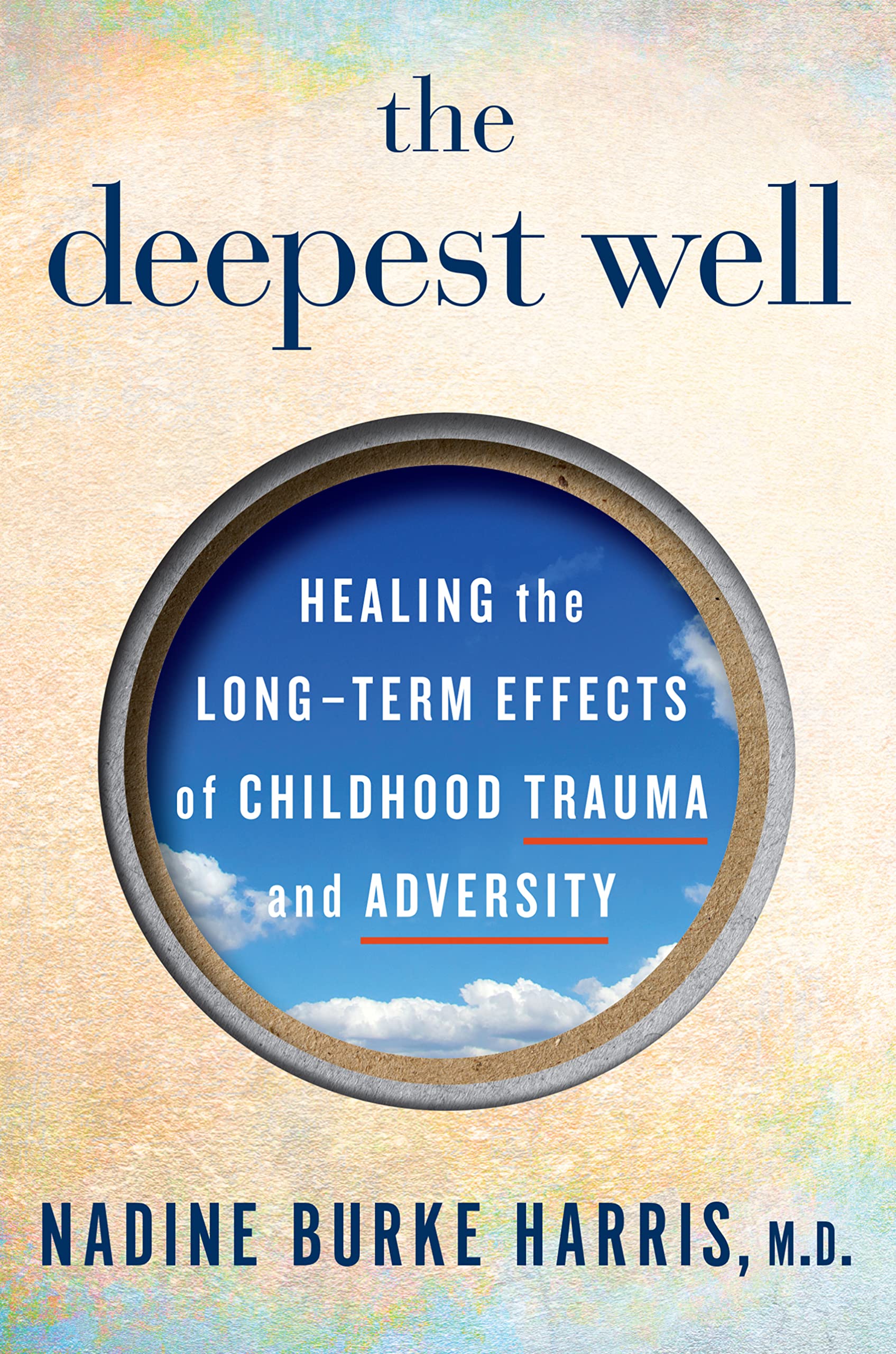
The Deepest Well
Dr. Burke Harris’s groundbreaking research offers a new framework for understanding childhood adversity and a clear path toward healing:
- Adverse Childhood Experiences (ACEs): Discover the stunning connection between childhood adversity—like abuse, neglect, or parental addiction—and the lifelong risk for diseases like cancer and heart disease.
- Toxic Stress: Understand how repeated stress in childhood changes our biological systems, from brain development to our immune response, and what can be done to reverse the damage.
- The Science of Resilience: Learn how simple, science-based interventions focused on sleep, nutrition, mindfulness, and healthy relationships can interrupt the cycle of adversity and promote healing.
- A New Public Health Approach: Follow Dr. Burke Harris’s journey from a community clinic in Bayview to a national movement aimed at transforming pediatrics, education, and public policy for generations to come.
Resources
-
- Dr. Nadine Burke Harris: ACE Resource Network
- CDC: About the ACE Study
- CDC: About Adverse Childhood Experiences
- Dialogues in Clinical Neuroscience: Environmental programming of stress responses through DNA methylation: life at the interface between a dynamic environment and a fixed genome
- Johns Hopkins: ACEs Resource Packet
- Child Abuse & Neglect: Adverse childhood experiences research: The path forward
- Harvard University: ACEs and Toxic Stress: Frequently Asked Questions
- JAMA Neurology: Adverse Childhood Experiences, Toxic Stress, and Trauma-Informed Neurology
- Harvard University: Take The ACE Quiz — And Learn What It Does And Doesn't Mean
- National Conference of State Legislatures: Adverse Childhood Experiences
- The Lancet: The effect of multiple adverse childhood experiences on health: a systematic review and meta-analysis
- Mayo Clinic: Overcoming adverse childhood experiences
- American Journal of Preventive Medicine: Relationship of childhood abuse and household dysfunction to many of the leading causes of death in adults. The Adverse Childhood Experiences (ACE) Study
- World Health Organization: Adverse Childhood Experiences International Questionnaire (ACE-IQ)
- Science Direct: Adverse Childhood Experiences
- “Lick Your Pups” Study: How rats’ maternal behavior alters the epigenetic code
2 Million Readers.
1 Life-Changing Newsletter
Simple and Straight-to-the-Point...
Just Like Mel.