Episode: 399
If You’re Feeling Uncertain & Stressed, You Need to Hear This
with Dr. Tara Narula
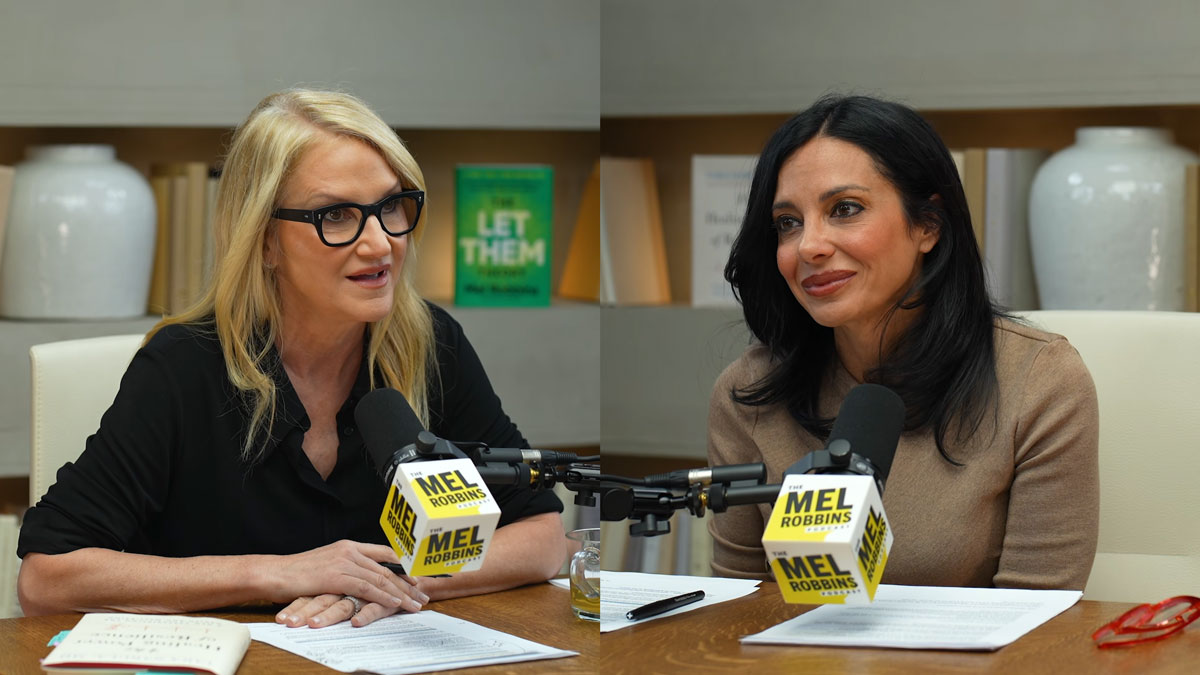
If you feel overwhelmed by life right now, this conversation will help you find steady ground.
When life gets hard, you feel it in your body: racing thoughts, tight chest, shallow breath, and the constant pressure to keep going.
In this reassuring conversation, Dr. Tara Narula, board-certified cardiologist and stress expert, shares research-backed tools to lower stress, train your nervous system, and build real resilience – not the kind you were probably taught.
You’ll learn how to turn off stress, stop overthinking, adapt to change, and find strength, joy, meaning, and purpose — even when life feels like too much.
It’s time for you to recognize the strength you already have inside so you can face whatever life throws your way.
Listen on:




You are so much stronger than you think.
Dr. Tara Narula
All Clips
Transcript
Dr. Tara Narula (00:00:00):
Things happen. Things go wrong, things go bad. We face challenges. A lot of people think if I get hit with something, I'm going to fall apart. We are so much stronger than we think we are.
Mel Robbins (00:00:09):
Dr. Narula is a board certified cardiologist. She's here to teach you how to handle the stress and pressure of life right now and become more resilient.
Dr. Tara Narula (00:00:19):
There are patients where I can't give them back the heart cells that have died. I can't give them back the movement of their arm when they've had a stroke. We can't go back, but we can still help them find a different path towards meaning in their life if they have that flexible thinking.
Mel Robbins (00:00:35):
We talk about stress and it's like, I feel stressed, but what is stress actually?
Dr. Tara Narula (00:00:39):
I think people just think of stress as this invisible force that we don't really understand. But Mel, a whole cascade of events happens inside your body, particularly in your cardiovascular system, which are all negative and cardiovascular disease is already the leading cause of death for men and women. So you add to that the stress and it's just a recipe for disaster. This is so important and we are not talking about it.
Mel Robbins (00:01:03):
Why is hope important and what does it actually mean?
Dr. Tara Narula (00:01:06):
You have to find hope in the small moments of every single day. It's not losing the vision of what you want for your life. It's holding onto that.
Mel Robbins (00:01:19):
Are you a subscriber? If that subscribe button is lit up, it means you're not. My goal is that 50% of you are subscribers and my team showed me that 57% of you who watch on YouTube are not. So if it's lit up, do your friend Mel Robbins a favor and just hit subscribe. It helps me reach my goal. It's free. That way you don't miss a thing. Thanks for doing that. I really appreciate it.
(00:01:40):
Please help me welcome Dr. Tara Narula to the Mel Robbins Podcast.
Dr. Tara Narula (00:01:44):
Thank you for having me. It's a pleasure to be here.
Mel Robbins (00:01:47):
Well, thank you for writing this extraordinary bestselling book, The Healing Power of Resilience. I cannot wait to dive into the research, the tools, but I want to start by having you explain to me, how could my life be different and feel different if I really take to heart everything that you are about to teach us today and I apply it?
Dr. Tara Narula (00:02:10):
Yeah. Mel, we have on precious life, one. And in the time that we're here on earth, everybody wants to be able to take the most out of every moment, every experience, every day. I know that's what I want, that's what my family wants. That's what my patients tell me they want is that quality of life. The problem is that as you know during life, things happen. Things go wrong, things go bad, we face challenges. And so for many people, that challenge, that traumatic event, whatever that may be, a divorce, a financial loss, a medical diagnosis, it stuns us and we get frozen and stuck and we're not able to really take all of the things out of life that we want. And so resilience is really about finding your way to that space where despite what happens to you in life, you can still call and glean and take everything amazing from your experience in life and not let life take over you.
(00:03:06):
And I obviously have so many examples of resilience that I've seen in my life as a doctor, as a journalist, as a friend. I think about often a friend of mine actually from college, we met Stanford, our intern year. She's from Massachusetts and she was single. She wanted to have a child for many years and she finally went through IVF. She got pregnant and about three months into her pregnancy, she called me and told me she was diagnosed with ovarian cancer.
Mel Robbins (00:03:33):
Oh my God.
Dr. Tara Narula (00:03:34):
So if you can imagine waiting and pushing and struggling so hard to have a baby finding out during your pregnancy you have ovarian cancer. And it was one of those moments where, I mean, she had a choice, right? Where do you go at this unimaginable moment? And she was resilience, personified. She finished her pregnancy. She delivered her beautiful baby. She lived those last two years that she was alive with her daughter full. And she wrote about her journey. She was present for her daughter. She made plans for what would happen for after she passed. It was this incredible, beautiful story, my friend Kaz, as we called her, of resilience despite the literally unimaginable happening. And so that's what I want for people. No matter what I get hit with or slammed with, I can still enjoy my life. I can thrive. That is the word that I think about.
Mel Robbins (00:04:26):
Just in that story of your dear friend, Kaz, I think every one of us can think of somebody in our lives or somebody that we've seen as they've had tragedy hit their lives. They somehow seem to be able to rise to the moment and meet that moment in an extraordinarily inspiring and kind of in some ways jaw dropping way. And yet you wonder personally, I don't think I could do that. If that were me, I would be breadcrumbs on the floor.
Dr. Tara Narula (00:05:01):
Exactly.
Mel Robbins (00:05:02):
And yet we are all one phone call, one diagnosis, one accident, one tragedy away from having life run you over. And I love in that story how you combine the medical piece, the hope and aspiration of getting pregnant and going through IVF, the devastating news and the fact that despite, and I thank you for saying the word despite, despite all that, there is still this well of strength, this fight that can be brought out inside you when this happens.
Dr. Tara Narula (00:05:38):
And when I started to dive into the research psychologically, what fascinated me was exactly what you said that I think a lot of people think if I get hit with something, I'm going to fall apart. And when I interviewed psychologists and they said to me, "No, that is actually the small fraction of people that develop PTSD in the setting of trauma. The majority of people are going to be okay when something happens." And I thought, why don't we tell people that? That's actually really empowering to know that no matter what happens, I'm going to be okay. And then the second thing they taught me, which is that resilience is a skill. It is something that is not just fixed. You either have it or you don't. It is something that you can absolutely strengthen and build just like a muscle. And again, it was like, again, here's something that's really powerful information that people don't know.
(00:06:27):
And so it was really important for me to kind of tell people both of those things. You have this real amazing gift inside you, but also you can practice it, you can grow it, you can build it. And that's a really important, empowering thing for people to understand.
Mel Robbins (00:06:42):
Well, Dr. Narula, maybe where we should start is what is resilience? How do you define it?
Dr. Tara Narula (00:06:47):
Yeah. And that's another interesting question. And I think when you listen to or read the psychology research, they all have different definitions. And so for me, it was important to cultivate my own definition. And what became clear to me was what we just talked about, which is resilience is the ability, in my opinion, to retain your wonder, joy, excitement, investment, engagement in life despite what happens to you. So you are not ever going to go back to where you were, you're going to move in a different direction. And this again comes out of my clinical experience. When I am telling someone who has no idea they have heart disease, that they have coronary artery disease or plaque in their arteries and they thought they were completely healthy, or I'm telling someone your heart function is 20%, not 50%, you have heart failure. The look that I see on their face, Mel, is the same every time.
(00:07:37):
It is kind of a look of just fear and paralysis. And they ask me, "When am I going to be myself again?" That's what they want to know.
Mel Robbins (00:07:45):
What do you say?
Dr. Tara Narula (00:07:46):
And I say, "You will never ever be yourself again."
Mel Robbins (00:07:49):
I don't want that answer.
Dr. Tara Narula (00:07:50):
You will.
Mel Robbins (00:07:50):
I don't want you to tell me that.
Dr. Tara Narula (00:07:52):
You will never be yourself again, but, and here's the big thing, you can be a beautiful, different version of you. Your life can be an incredible different version or chapter. And I think a lot about the quote of Michelangelo, which I used in the book about how he said he carved the marble to set the angel free. He saw the angel in the marble and he carved until he set the angel free. This idea that we are this piece of marble and life is sort of changing us and we're evolving, but there's still something beautiful that can come out of it. And I just thought that's such a beautiful visual image. If we could just think of our lives that way, that change is inevitable, adversity's inevitable, bad things are going to happen, but we can still emerge as this beautiful creation.
Mel Robbins (00:08:34):
Well, if you hold onto that vision that there is an angel inside you to be set free, it is very empowering.
(00:08:42):
And what I also love about the way that you're explaining this is that you're not saying that you deserve to have this happen. You're not saying that you needed to have this happen. I hate it when people are like, "Everything happens for reason." I'm like, "Well, sometimes things happen because it's just really horrendous what's happening, you didn't deserve it. " You have to find a reason to keep going despite what happened. I want to read to you from your bestselling book. This is in the introduction and you talk about resilience. You say, "Resilience is not the capacity to return to the same place you began after trauma or tragedy. Neither our minds nor our bodies are built like rubber bands. We do not bounce back. We are influenced and affected. We recover, we grow, we change. This, I believe, is what the core of resilience is the ability to embrace change.
(00:09:38):
We are constantly being shaped by our experiences, change affecting the composition as a whole, even as we remain ourselves. We are the marble and we are the angel.
Dr. Tara Narula (00:09:52):
Exactly. We're both.
Mel Robbins (00:09:53):
It's so beautiful because oftentimes I think when you hear the word resilience and it's kind of thrown around loosely a lot, I always just thought it was the ability to bounce back.
Dr. Tara Narula (00:10:05):
Or to not feel, to just put my head down in the sand and keep going forward without processing what's happened. Just keep moving.
Mel Robbins (00:10:13):
And you're saying no inside you is the ability to adapt to the change and not lose yourself, but to remember how to and to learn how to still find joy and wonder and connection despite all of what's going on.
Dr. Tara Narula (00:10:30):
It's a different version of you, right?
Mel Robbins (00:10:31):
It's beautiful. And that what I also love about our conversation today is that you have very specific skills that you're going to walk us through, a bunch of them that will help you adapt and change when this happens. Can you give me some examples of smaller moments like maybe that happened to kids in school or that happen at work when you get an email or just the little things that are also quietly building resilience in you?
Dr. Tara Narula (00:10:55):
Yeah. I mean, Mel, it's everywhere. And so the common denominator, and again, the reason it was important for me to talk about this is stress. So our lives are full of stressful events.
Mel Robbins (00:11:07):
Now you're a cardiologist.
Dr. Tara Narula (00:11:08):
Yes, I am.
Mel Robbins (00:11:08):
Could you medically explain to me what stress is? Because I think we talk about stress and it's like, I feel stressed. I feel stressed because of the headlines. I feel stressed because of what's happening to my kid at school. I feel stressed because I'm mad at my spouse right now. But what is stress actually?
Dr. Tara Narula (00:11:23):
Stress in and of itself is not a bad thing. We all need some stress in our lives. Why? Stress can be positive because it can push us. It can push us to evolve and change. The point is that there's a tipping point where the stress then becomes negative. One of my favorite professors from Stanford, Robert Sopolski wrote a book called Why Zebras Don'tGet Ulcers and he studies primates and studies the stress response and talks very openly about this idea that our stress response is meant to be a place or a function for us to survive so that if we're escaping a line in the wild, we turn it on, our heart rate goes up, our blood pressure goes up, our respiratory rate goes up. We turn off all the non-essential functions, our digestion, our reproduction, our growth so we can live. The issue is that when you're in the wild and you're escaping an animal and then you escape, your stress response goes off.
(00:12:16):
In our current day society, we turn on the stress response for all those things you just talked about. We get a bill in the mail that's difficult to handle. We hear something at school. Our friend says something to us. We feel bullied. We go to work and our boss is tough on us. Every little insult during our day causes a stress reaction. And you can imagine how damaging this can be to our bodies on the inside. So the point is, even though we have this stress response, guess what? We are not victim to it. We can mount a resilient response. We can actually turn it off, dial it down and counteract it. That's the purpose of the resilient response. But I think it's important to understand how negative and destructive stress can be. And I hear it from my patients all day long that they're stressed.
Mel Robbins (00:13:05):
Dr. Narula, how can a person tell the difference just like normal everyday stress, modern life and stress and pressure that is becoming a problem?
Dr. Tara Narula (00:13:15):
Yeah. Well, the stress is there all the time every day. And so it's really, again, our reaction to it. So if you are able to take on the stress and then within a few minutes you fel the same way that you did, it's probably not an issue, but that's not how it works for most of us. And so for most of us, it is that that stress response days on. We sort of feel our muscles clenched. We're not breathing as much. Our heart rate is a little bit faster. Our mind continues to cycle and think about it. So it's when that's happening over and over again throughout the course of the day that it becomes an issue. And I will say this, Mel, I mean, there is such a thing as a stress-induced heart attack from an acute stress. Women tend to be more prone to this than men.
(00:13:57):
So even acute stress can cause problems. But yes, we think more about that chronic low grade constant stress that's happening day after day, couple hours during the day on and off, on and off. So I always tell people you need to find time to turn your stress response off. And whether that is a walk, music, meditation, exercise, breathing exercises, meeting a friend, like those moments where you're dialing it down from 10 to zero, that is going to help your body on the inside be able to move through the stress.
Mel Robbins (00:14:27):
Dr. Narula, I would love to have you speak to the person listening and to me who not only just feels the pressure of their own life and the stress of getting through the day and dealing with things going on in their family, but the ongoing pressure and stress of all the events going on in the world, all of the global unrest, just this tremendous pressure that comes from a sense of hopelessness and a lack of power and an inability to feel like you can do anything to change. Why does paying attention to your resilience, why is it critical in a moment like now?
Dr. Tara Narula (00:15:11):
Because you can't change the world around you. You cannot stop what's happening around you from happening. You can't change those stressors. I tell people, maybe you can't leave your job that's stressful. You just can't. You can't get out of the situation. We don't have control over that. What do we have control over? We have control over how we respond to the stress. It's not the stress that kills us. It is our reaction to it.
Mel Robbins (00:15:37):
So what do you think is a really great just first small way to think about the stress that so many people feel about the state of the world? What is one recommendation when it comes to something that you see going on, whether it's in your community or the world at large that's really bothering you?
Dr. Tara Narula (00:15:58):
Well, I think one is you don't have to take it all in. So for a lot of my patients, I'll say, don't ... I mean, I'm on the news. Don't turn the news on. I mean, if that means it's going to give you that piece, you're entitled to not watch morning television if you don't want to, right? Yes. I think also finding ways that you can make those small changes. So maybe it means going out and marching for something you believe in. Maybe it means writing an essay and you again, have agency and power to cause change in the opposite direction, even those small little steps. So there's so much I think we can do. We just need to give people the ability to do it. We need to give them-
Mel Robbins (00:16:35):
Well, let's go back to your friend Kaz. What a terrifying and horrendous set of circumstances and still she said, "This is horrible and I have a choice about how I respond to it."
Dr. Tara Narula (00:16:49):
Correct.
Mel Robbins (00:16:49):
Well, one of the things that you write about just right in the introduction and we're going to unpack all of the skills, but one of the first one is getting to a point where you accept your current situation. And on that note of acceptance, because it is one of the stages of grief to just be in denial of this can't be happening. How could I possibly have ovarian cancer? I just got pregnant. This can't be happening. We live in the United States. How is this happening here? This can't be happening. I work so hard. How am I losing my job? What do you mean that there are layoffs? Acceptance doesn't mean you're giving up, right? What does it mean?
Dr. Tara Narula (00:17:25):
Yeah. And in laying out the book and figuring out what skills, what blueprint did I want to give people, acceptance had to be the first one. It had to be the first tool because you can't do anything else until you've accepted what happened. And one of the women that I interviewed for my CBS News story who I also feature in the book is Lucy Hone, who is an incredible resilience researcher of her own right. She studies resilience. She writes about it. She talks about it. Her 12-year-old daughter died in a car accident and suddenly the resilience researcher had to use the skills that she had learned to move forward. And she's given one of the most watched TED Talks in the country and the first thing she says is adversity doesn't discriminate. And I think that is such an important thing. We're all going to get hit.
(00:18:08):
At some point in time, something bad's going to happen, but we can't change that. We have to accept it. And so to your question, when I was in medical school, I had my own experience where I had to learn acceptance. I was in my second year of medical school. I was in the lecture hall, started to se colored lights in the bottom part of my right eye when they would di lecture hall lights, didn't know what was going on, went home to Miami over Christmas break and suddenly discovered through a battery of tests that I had a visual field loss in the bottom part of my right eye. I was a healthy 23-year-old and suddenly I was blind. The bottom part of my eye, nobody knew why. They told me I might've had a stroke, I might have multiple sclerosis. So I went back to medical school thinking I might have multiple sclerosis.
(00:18:52):
I might not be able to walk, see, finish medical school. It was Mel the absolute worst, most scary moment in my life because again, I had fought really hard to get to medical school. I was excited to be there and now I thought the whole trajectory of my life is going to go in a different direction. And my mother sent me on a card in the mail, the Serenity Prayer. And the first line is, God brought me the serenity to accept the things I cannot change, the courage to change the things I can and the wisdom to know the difference. And I read her words and she called me. She said, "You can spend every day the next two years of your medical school worrying about what might happen and wasting that time. Or you can imagine it might never happen your worst thoughts and just put one foot in front of the other and go day after day." And that advice really saved me and that is advice I give many of my patients when things happen to them is put one foot in front of the other.
(00:19:44):
This happened, now we're going to move forward day by day by day. And the farther you get away from the event, the further the pain and the fear becomes. Just a few weeks ago, I had a patient who went in for a routine surgery, sort of been in and out. Something went wrong in the operating room and he came out 70% blind. I saw him six months ago in the aftermath of that and he was sort of broken. I mean, he was as anybody would be. And then I saw him a couple weeks ago and there was a lightness to him and he was smiling and I said to him, "How did you get to this point? It's been six months and you seem so different from where you were." And he said to me two things. He said, "One was acceptance. I couldn't change what happened and I had to learn to accept it." And then he said social support and his friends, those two things. But acceptance is the beginning of your journey. It is the opening of the door to everything else.
Mel Robbins (00:20:43):
So for somebody who's listening right now and you have felt so much pressure, you've been under stress. You can't even remember a time when you weren't stressed. Maybe you're caring for aging parents, maybe you've got the new class of stress, which is parenting young kids.
Dr. Tara Narula (00:21:02):
That's me.
Mel Robbins (00:21:02):
Yeah, maybe you don't even remember a time. Is what you're about to teach us for that person and can you talk to the person who doesn't even remember life when they didn't feel pressure?
Dr. Tara Narula (00:21:18):
It is for everyone. What I'm going to tell you is for everyone. The resilience is something we can all use and it is so critically important because we have stress at every angle at every point in our life. Caregiver stress is real. And again, it's something I see, especially in a lot of my female patients. In the last month, I had three female patients who are married to male patients of mine talk to me about the stress that they are having because they're caregiving for their husbands, their kids and everyone else in their life. I had one whose husband was diagnosed with Parkinson's and she's trying to manage his failing health and dementia that's developing. Another one whose husband had a stroke is no longer who he was. And the third one was a woman who said her husband had his own mental health issues the last six months.
(00:22:08):
And so all three of these women were talking to me about the massive stress that they were facing being caregivers. And we talked about how to manage that stress and how to handle that stress and the fact that they needed support and help in order to continue to be caregivers to their spouses, but also to protect their own health.
Mel Robbins (00:22:26):
Why do you think it's so hard when you're in the caregiving role to really understand the critical nature of taking care of yourself?
Dr. Tara Narula (00:22:37):
Because you're so overpowered and overwhelmed by the care and love and empathy and responsibility that you feel for another human being. And so that's an amazing thing to have so much love for someone that you're giving up everything, but you can't. We have to take care of ourselves in order to be able to be there for someone else. You have to.
Mel Robbins (00:23:00):
Why?
Dr. Tara Narula (00:23:00):
Because it is critical to your survival and it's going to be critical to the survival of the person that you're caring for because if you decompensate, if your health declines, it's game over. And so again, I think people just think of stress as this invisible force that we don't really understand. But Mel, I mean, I will tell you from a cardiovascular perspective, a whole cascade of events happens inside your body, particularly in your cardiovascular system, which are all negative. And cardiovascular disease is already the leading cause of death for men and women. And I'm telling you, I'm seeing it every day in my exam rooms. I'm hearing it. This is so important and we are not talking about it. We're not educating about it. We're not helping our patients manage it. We are totally living in a world where we have a divide between psychology and clinical medicine.
(00:23:49):
We got to do a better job. We cannot have a siloed world of psychology and clinical medicine and no one bridging this gap.
Mel Robbins (00:23:57):
The Mel Robbins Podcast is proudly sponsored by Amica Insurance, our exclusive auto, home and life insurance partner. Insurance is one of those things you hope you never need, but when you do, the experience matters. And that's where Amica really stands apart. When it comes to taking care of people, they go the extra mile from answering your questions to customizing your policy to checking in after a claim Amica leads with empathy. They listen, they follow up and they make sure you feel supported at every turn. And here's something else that really stands out. Amica's a mutual insurer. That means they're built for their customers not shareholders. You're the priority, your needs, your protection, your peace of mind, empathetic, thoughtful, and focused on you. It's the way insurance should be. Protection that always puts you first. Visit amica.com and get a quote today.
(00:25:00):
Can you talk more about the role that resilience plays in your overall health?
Dr. Tara Narula (00:25:05):
What's fascinating about resilience is it's not just a tool for healing, which the book is called the Healing Power of Resilience, but it is a tool for prevention. So the more that you practice these tools of resilience and utilize this blueprint and this roadmap, the more likely you are to not go down the road of developing chronic disease because you are going to be less stressed and have less inflammation and have your lower levels of cortisol, less vascular reactivity of your blood vessels. You are going to do those things we talked about that are going to keep you healthy like exercising and eating well and sleeping well. So it really is both prevention in terms of chronic disease and also a way that you can move out of a diagnosis or a disease process.
Mel Robbins (00:25:47):
Well, that's why you're here, Dr. Narula. And I want to just bring back that beautiful image that you talked about both as we've been speaking and that you write about in your book, that if you are under this chronic pressure, you are both the block of marble and the angel within it. And you talked about the first step being acceptance, accepting that you are in this chapter of your life, you are in the role of a caregiver or you are under the gun of severe financial pressure in order to pay off debt or whatever it may be. There's tons of ways that people find themselves in a state of chronic stress. Maybe you're dealing with a long-term diagnosis yourself for chronic pain, but acceptance that this is the way things are and I can't change that fact right now is step one.
Mel Robbins (00:26:38):
In your book, you also talk about a flexible mindset being the next step.
Dr. Tara Narula (00:26:44):
That flexibility of saying, "I thought my life was going down this course, but now it's going down a different course or direction and I'm okay with that. "
Mel Robbins (00:26:53):
But I'm not okay with that. That's the problem with the flexible mindset. Part of it is I don't want this.
Dr. Tara Narula (00:27:00):
I know. And that's where acceptance commitment therapy and CBT therapy and other forms of mindfulness and meditation can help. But truly, again, referencing back to Lucy Hohn, who I talked about earlier, she gave a great analogy of imagining you have these goalposts in front of you, you're kicking the ball in a certain direction through the goal. And she said she realized when her 12-year-old daughter died and she still had her husband and sons, she had to live for them. She had to keep going. So she picked up the goalpost and moved it somewhere else. And I thought that was such a great, easy to understand image. Good. You can still have a goal, you can still aim for it. It's just in a different place. And I see this a lot in medicine. There are patients where I can't give them back the heart cells that have died.
(00:27:44):
I can't give them back the movement of their arm when they've had a stroke. We can't go back, but we can still help them find a different path towards meaning in their life if they have that flexible thinking. I thought I might be able to do this. Okay, I can't do that, but I'm going to shift and I'm going to do this. And so really that flexible thinking is sort of the second key to remodeling, reshaping the vision for what you thought your life was going to be into something else and that's okay. But the point is whatever life hits you with, if you can pick up that goalpost and put it somewhere else and know you can still move forward towards it, that image can be lifesaving.
Mel Robbins (00:28:25):
Dr. Narula, I personally feel that the image of the goalpost is probably going to cause the single biggest change in people's lives that listen to this. And as you're listening, I want you to think about just in your own life, are you still trying to aim for a goalpost that's no longer there Because you can see how if you're looking at a goalpost that's no longer there, you're not going to find joy, you're not going to find meaning, you're not going to find all the things that you deserve in your life if you keep moving in that direction. So from a medical perspective, how does choosing to change the goalpost accepting that you have a different life now, how does that help you get through a challenge?
Dr. Tara Narula (00:29:19):
It's like the lighthouse that draws you forward. It pulls you forward and that kind of goal, we all need that. We all need something to continue to strive for that gives us meaning in life. We all have our different meanings for why we're here. But I think when you lose that meaning, you lose that sense of like, I don't know why I'm here, it kills you on the inside and you feel stressed. But when you say, "Okay, I thought I was here for this reason, but now I'm here for this reason," it's like a light that turns on inside. And so it's just a reframing and reshaping of what you, again, the marble and the angel, it's a reframe The reshaping of who you thought you were, what your life would be and recognition that no, life is change. It is constantly changing.
Mel Robbins (00:30:08):
If something in your life has changed, somebody's died, you didn't get into the dream school, you lost your job, the divorce has happened, here's the diagnosis, your kid's really struggling and you are so stubborn or scared or whatever that you continue to look at the old life that you wanted, you're creating more stress for yourself.
Dr. Tara Narula (00:30:32):
That's right.
Mel Robbins (00:30:33):
Because you're resisting what's actually happened.
Dr. Tara Narula (00:30:36):
You're resisting the change. You're fighting against it. We use the analogy in the book of be the river, not the rock. You have to flow with life to get the most out of life.That malleability, that flexibility is really critical. One of the exercises that one of the psychologists I interviewed told me about, which again, I loved because it was very visual, was the identity pie. He said he has this patients draw a circle and cut into the circle pieces of a pie. I'm a mother, I'm a writer, I'm a dog owner, I'm an athlete, I'm a baker, and a small slice of the pie is their medical diagnosis. And when you look at that and you see, that's right, I am not my diagnosis. I am so much bigger than that. I am so much more than that. And again, it lets you see my life is so much more full.
(00:31:30):
It has so much more meaning. It has so much more direction for where I can go. I'm not stuck in that vision of being a victim of my disease process.
Mel Robbins (00:31:39):
That's really helpful because you're right, kind of like the goalpost that when something happens, we kind of laser focus on that thing and you forget there's all these other aspects to who you are and what your life contains.
Dr. Tara Narula (00:31:52):
That's right. And what your life can be. You have to see that.
Mel Robbins (00:31:55):
Now what happens? You talked about the kind of be the river. Don't be the rock in the river resisting everything. You got to learn to go with the way that life is taking you. What effect does that have on your stress and on the physical impact in your body when you really start to accept and you have a flexible mindset and you use some of these tools like the identity pie to say, "Well, I'm more than this diagnosis. I'm more than this moment. I'm the kind of person that can get through something like this."
Dr. Tara Narula (00:32:30):
Yeah. Well, two things. I mean, when we turn off the stress response, it means that we are using our parasympathetic, for example, nervous system. So the one where we lower our blood pressure.
Mel Robbins (00:32:39):
So does accepting and does doing these tools help you turn on the parasympathetic response?
Dr. Tara Narula (00:32:46):
It helps you turn on the paraspinal.
Mel Robbins (00:32:47):
It's not just intellectual?
Dr. Tara Narula (00:32:48):
It's not just intellectual.
Mel Robbins (00:32:49):
Oh.
Dr. Tara Narula (00:32:49):
But also you're not then activating the stress response. So there is a clear pathway when we activate a stress response, our amygdala, this very basic structure in the brain that senses threat and fear is kind of the signal that sends a signal to the hypothalamus in our brain, these deep structures that then send signal to the pituitary and the adrenal glands and that whole cascade where you're essentially then releasing cortisol, the stress hormone from your adrenal glands, epinephrine, adrenaline, norepinephrine, that's all turned on when you're under stress. But if you counteract that, and that's where things like therapy and meditation and mindfulness can come in or your thought process, you're not allowing that pathway to turn on. You're turning it off, number one. Number two, when you're not living in a state of stress, you're actually making lifestyle choices, which we haven't talked about that help you live a healthier life.
(00:33:39):
So you are exercising, you are eating healthier, you are getting more sleep, you're not missing your medical appointments, you're not maybe using substances. So it all kind of goes together. What's happening on the inside, you're dialing everything down, but also you're making choices that are also helping you be healthier and lower your stress response. If you exercise, you're decreasing your stress. If you sleep more, you're turning down a lot of these hormones. So it all goes hand in hand. I talk to my patients about sitting down with a therapist and many times they say, "Well, I don't have anxiety or I'm not depressed. I'm just caregiving and I'm under stress." And I say, "That's enough. That's enough of a reason to sit down with someone who you can just download on somebody objective who can be there for you so you can just let go of your thoughts because that in and of itself will lower your stress.
(00:34:31):
You are allowed to spend an hour a week or once every two weeks talking to someone who's in your corner to help you. So therapy can be just to help you through a stressful time. Maybe you don't do it forever, but do it while you're in this period of stress to help you get through the caregiving journey. And then people are really surprised when I say they're like, really? I should see a therapist for that? Yes. Yes, you absolutely should.
Mel Robbins (00:34:57):
Let's talk about just ways to calm yourself when you get that wave, how it comes in waves, whether you're like, oh my God, the text that comes in or layoffs are coming. I need to see you in the office tomorrow morning, or a million ways you could fel stressed out. Is there something that you love, Dr. Narula, that you do when you feel the quick wave?
Dr. Tara Narula (00:35:19):
I love exercise. So for me, finding a way to get my heart rate up and exercise and move my body is my stress relief. So I find time to carve that out. Being outside, I feel like in nature is a very underrated way to feel better. So we have a home in Connecticut, which is very rural, just taking a walk, seeing the birds, seeing the trees, getting the fresh air. I feel like nature is extremely powerful. And then breathing exercises. And I think some of the techniques that I've learned about taking five breaths in and then letting them out. A lot of these things we can do, the breathwork can actually help, again, in the moment, really turn down the stress response.
Mel Robbins (00:36:02):
This message is brought to you by Apple Card. For a limited time, when you get a new Apple Card and purchase AirPods Pro3 at Apple, you can earn back the cost up to 250 daily cash, new AirPods Pro and up to $250 bonus daily cash back. Now that's music to my ears. Subject to credit approval, limitations and spend requirements apply. Apple Card is issued by Goldman Sachs Bank USA Salt Lake City Branch, terms and more at apple.co/AirPods.
Mel Robbins (00:36:36):
I'd love to talk about negative and positive self-talk and how the way that you talk to yourself in your own head can compound the stress and make it worse. What did you discover about the way that negative self-talk versus positive self-talk can increase stress or even have a physiological do damage to you?
Dr. Tara Narula (00:37:00):
Nobody's perfect. We're a flawed human beings, but that's okay. And I think the moment we show ourselves the same love and the positive talk that we would show our child or our spouse or anyone else that we care about, that is the moment where we start to become more resilient because we see ourselves in the same way that we would see someone that we're caring for as a caregiver. But that positive self-talk is really critical, that's self-love.
Mel Robbins (00:37:28):
I always tell people, "I don't know what's going to happen, but you're not going to go through this alone, and you are capable of managing this. You are."
Dr. Tara Narula (00:37:35):
Yes. You're so much stronger than you think. And that is really what the book also was about, was this idea that we are so much stronger than we think we are. We all have this capacity and we're not going to crumble and fall apart. We can get through it. Again, if we put one foot in front of the other.
Mel Robbins (00:37:51):
Let's talk about social support because it is one of the pillars in the book. I know when I'm stressed out, if I'm going through something traumatic, I tend to become a little bit of a hermit and what does love and support from other people do and how do you get it?
Dr. Tara Narula (00:38:12):
Social support, again, is something that's so underrated but so easily accessible to all of us. And my friend, my former resident at the Brigham Vivek Murthy, I was his intern. He thankfully, I think, opened our eyes in this country to how negative loneliness can be and how important it is for us to cultivate social relationships for our health. The famous study out of Harvard, Robert Waldinger's study that followed men for years, what was it that sort of translated into the best quality of life? It was the quality of their social connections. It wasn't anything else. And so we have just this growing body of data and literature showing the power of social connection. And I think for a lot of people they think, "Oh, well, I need to have a big group of friends." And so for a lot of my patients, we talk about it doesn't have to be a large group of friends.
(00:39:04):
It can be one friend that you pick up the phone and call. It can be joining an art class because you love art. And so there's so many outlets that we can explore to find that. I recently told the story of, I get another patient of mine who retired and he started smoking marijuana and felt very depressed wondering, where am I going with my life? And one of his friends said, Central Park is right there. They have a group, the Central Park group that goes and picks up the garbage and trims the trees and we meet every, you know twice a week. And he joined the group and he said just that one step of joining that group, and now he does it twice a week for about an hour, saved him because it gave him a group of people who he could meet every week. He was outside and he started to feel so much better about his life.
(00:39:49):
So it's these micro small changes that we can make and all of us could do it every single day.
Mel Robbins (00:39:54):
It is easy to sit on the couch and feel sorry for yourself. It is easy to feel overwhelmed by the state of the world. It is easy and it's an apropriate response to be shocked by life when it's not how you want it to be.
Dr. Tara Narula (00:40:09):
That's right.
Mel Robbins (00:40:10):
But at some point you got to do something and just this social support going to bingo night, joining a ... It seems so dumb, but when you're in the throes of the stress and the overwhelm, you don't feel empowered to do it, but it works. And that's an example of you putting a deposit in the bank of resilience.
Dr. Tara Narula (00:40:34):
It is an investment. I tell people resilience training and the skills we're talking about, it's work.
Mel Robbins (00:40:40):
Yeah.
Dr. Tara Narula (00:40:40):
It's work just like exercising. I hate getting up at five in the morning and exercising during the week.
Mel Robbins (00:40:46):
I knew I liked you.
Dr. Tara Narula (00:40:48):
I don't like looking at the nutrition labels to figure out how much saturated fat it is. Do I want this one or this one? But every single thing we do in life, everything, whether it is for our career, our family, our health, it's an investment and it's hard. And no one is going to say that becoming more resilient is easy, but the investment, the payoff that will come by building this toolbox of skills is so important because the next time something happens, you will reach back in and say, "I can do this."
Mel Robbins (00:41:21):
I think it's also important to say if you're going through a very difficult time, it is human nature to not want to reach out and you shouldn't have to, but if nobody knows what's actually going on, they don't know to show up to support you, and they might be drowning in their own issues. I know a lot of the times if you're really struggling, the last thing you want to do because you've been thinking about it all day, you've been talking about it all day, particularly if you're dealing with a diagnosis, you don't want to call a friend and then have to talk through it all again today. And that's really understandable, but also recognizing that if you simply were to text them and to say, "I have a lot going on, it's exhausting to share the details, but I could really use a morning out on Saturday with a friend right now."
Dr. Tara Narula (00:42:15):
That's right That's right. Just those small little tiny changes. And speaking to what you said about a diagnosis, that's a whole nother topic. But for patients who've been diagnosed with something, joining a group of other survivors can be really a powerful way to build connection. I volunteer for the American Heart Association and Go Red for Women and seeing a community of other female cardiac patients and connecting with them and learning that you're not alone and sharing your struggles, those kinds of community advocacy groups for whatever your concern or health issue is can be really helpful as well.
Mel Robbins (00:42:51):
You have a entire chapter, chapter nine on the critical importance of finding hope. And I'm reading to you from page 191, "Sometimes a health event can be so scary that a patient can't believe another day will come. Sometimes a diagnosis can be so dire that a patient can't imagine what the next day will look like. When we learn we don't have much future left, or if what lies ahead looks completely unlike the life we have known so far, what happens next? That's when we need hope the most. Hope is the foundation that allows us to build a resilient response in the moment whatever happens next. What is hope and why does having hope, especially in moments, whether it's the world at large that feels lost and things feel hopeless or something going on in your family, makes you feel like all is lost. Why is hope important and what does it actually mean, Dr. Narula?
Dr. Tara Narula (00:44:01):
I had a patient in my office, again, I told you a wife and a husband. The husband was diagnosed with Parkinson's and he looked at me, Mel, and he said, how do I not lose hope?
Mel Robbins (00:44:10):
Yes.
Dr. Tara Narula (00:44:11):
He said to me, how do I not lose hope? And you can imagine as a doctor, that's a very, very hard question to answer. And I'm a cardiologist and this was about a neurologic degenerative condition. It's not my field, but I could see that he was struggling and his wife was in the room with him and he said, "I still have so much I want to write. I love my wife so much. I have so much I want to do with her. I'm getting emotional thinking about it and I'm falling apart from my disease." And so I just sat there with him and I said, "You have to find hope in the small moments of every single day." So every day that you wake up and you see your wife and you can say, "I love you and hear her say I love you," that's hope, right?
(00:44:54):
Every day that you can sit at your computer and still write your book that you're writing, that's hope. It is the fact that there could be a treatment tomorrow that you don't know about that comes down the pipeline for your condition. It is literally finding those small moments of joy and looking for something that you may not know that exists and believing in that, something that is further down the future That's hope. And I want you to lean into that, I said to him, "I want you to kind of fall towards the side of hope and not towards the side of despair."
Mel Robbins (00:45:29):
One other thing that I think helps a lot, or at least this helps me in regard to the state of the world is if I read something that makes me feel despair, I then look for someone doing good.
Dr. Tara Narula (00:45:39):
I think you're totally right. And as someone who works in the news, I've had several conversations with the networks that I've been at about how we need to tell more stories of hope.
Mel Robbins (00:45:48):
Yes.
Dr. Tara Narula (00:45:49):
We need to put that out there because people need to see it.
Mel Robbins (00:45:52):
Is there a daily habit that you can practice to help you cultivate this hopefulness as a skillset and a mindset? Because I refuse to succumb to the despair and that's not being naive, it's I just choose to believe there's always something you can do.
Dr. Tara Narula (00:46:12):
So my husband gave me the book, The Secret and The Magic, because he knows I believe in manifesting and dreams and all that sort of stuff.
Mel Robbins (00:46:20):
Proven by neuroscience.
Dr. Tara Narula (00:46:21):
Exactly.
Mel Robbins (00:46:21):
I mean, it's not even believing in it. It's proven. Yeah.
Dr. Tara Narula (00:46:24):
So one of the exercises says in the morning when you wake up or before you go to bed at night, you think about six things that you're grateful for. And at first when I started doing it, I thought, oh my God, six, that sounds like a lot. I can find six things. But then you start to think about it and they're small things there. My daughter told me about something that really great that happened really great in her day today. My patient, I helped them with this. I was able to get up and exercise on the treadmill today and walk because I'm able to use my legs. The subway came on time today and I didn't have to wait 10 minutes. And suddenly as you're doing, you start realize, there's actually a lot of things that really went well that I'm grateful for and your mindset shifts.
Mel Robbins (00:47:06):
Well, the way you described it, Dr. Narula, you're intentionally directing and programming your mind to notice what's going well, which if you notice things that are going well, you naturally start to feel more hopeful. Is that how that
Dr. Tara Narula (00:47:23):
Works? That's what I'm saying. Yes, exactly. You start to feel more hopeful. I think putting out, we talked about manifesting, but putting out into the universe the energy that you want to bring back to you, that gives me hope because you feel control. You feel like I'm putting out this and that's going to help me get what I want.
Mel Robbins (00:47:42):
So as a medical doctor and a cardiologist, talk to me a little bit more about using the tools of manifesting, which is really getting intentional about what you want to see. We've moved the goalpost. How could you use this to help you move toward a goalpost that has shifted in your life and to change your own attitude?
Dr. Tara Narula (00:48:05):
Yeah. I mean, my kids and everyone talked to me about, you're a cardiologist, but you talk so much about psychology.
Mel Robbins (00:48:11):
Yes.
Dr. Tara Narula (00:48:11):
And that's because they really are intertwined.
Mel Robbins (00:48:14):
Do you think it has a health benefit, to manifest?
Dr. Tara Narula (00:48:17):
I do. I mean, I think again, anything that gives us a sense of agency over our life I think helps us feel better and less stressed. And so when you feel like you have the power to get things that you want by simply believing in them, that makes us feel better.
Mel Robbins (00:48:36):
Well, if you really think about it, stress is the same thing as manifesting, it's just doing it in the negative.
Dr. Tara Narula (00:48:42):
That's right.
Mel Robbins (00:48:43):
Because you're allowing all of the things that are happening outside of you to become the things you're expecting to have happen.
Dr. Tara Narula (00:48:50):
And that you're focusing on an endless loop and thinking about.
Mel Robbins (00:48:53):
But is there anything specific that you personally do, Dr. Narula, as a manifesting practice to really train your mind? I'm serious. I love this stuff.
Dr. Tara Narula (00:49:04):
I have written down things that I want and put them on a piece of paper and put them up in my home or in my office. And then I look at it and I say, this is where I want to be and this is what I want and there it is. That's it. I'm putting it out in the universe.
Mel Robbins (00:49:19):
So when you write something down that you really want and you're signaling to your mind, Dr. Narula, is there a specific time of year you do it? Is there-
Dr. Tara Narula (00:49:29):
No, it's whenever there's something that I want to achieve in my life.
Mel Robbins (00:49:32):
Okay. And is there a certain way that you write it down?
Dr. Tara Narula (00:49:34):
I just write it on a piece of paper and take a little thumbtack and put it up on the wall. And I have my kids doing it now too. And we sit at the dinner table and I'll say, let's manifest that this is going to happen. We talk about it out loud in my family because I want them to start to do it at this age, they're 13 and nine, to believe that they have control and power over their future and what they want. And yes, I agree with you. I think when you're living in a state of constant stress, you can't refocus your mind. And the brain is plastic. We keep saying that. It is plastic, it can change, we can rewire it. And part of the way we do that is by the thoughts we choose to focus on.
Mel Robbins (00:50:12):
Dr. Narula, can manifesting help even during times of stress?
Dr. Tara Narula (00:50:16):
Manifesting can help at all times, Mel. Why? Because again, you're taking your mind and you're taking it from one thought process and you're literally picking it up and putting it in another thought process.
Mel Robbins (00:50:26):
Oh my God, it's like moving the mental goalpost.
Dr. Tara Narula (00:50:28):
It's moving your mental goalpost from a negative thought process to a positive, I want this thought process. Again, the hope is that people start to recognize we have so much more power over our bodies, over our lives by what we do up here, by how we think, by what we believe, by how we talk to ourselves. We have that ability. We just don't teach people to harness it. We don't teach people to use that.
Mel Robbins (00:50:53):
Well, I agree with you. Even the identity pie, which forces you to see that your life is bigger than the current circumstances or the caregiving role or the job that you have, that there are so many different parts of you and taking a moment to remind yourself of that lowers your stress, it reminds you of who you are. It gives you an access point to start to shift your life in a different direction. I believe that the intentional act of manifesting and allowing yourself to say, even if you're writing down, I am capable of getting through this, I want to carve out six hours a week, which seems unthinkable just for me. I am going to be singing in the choir this fall again. There are ways that you can grab onto what you're talking about because stress and pressure and the world around us is bombarding us and it's changing the way we think about what's possible.
(00:51:54):
And so I think you need to fight back and this is an important tool.
Dr. Tara Narula (00:51:57):
Yes. Yeah. And it's so simple. We can all do it.
Mel Robbins (00:51:59):
And it's free.
Dr. Tara Narula (00:52:00):
It's free. My daughter showed me her, my daughter's turning 10 and last night she took my laptop and she came and showed me and I said, "What are you doing?" And she said, "I made a vision board. My 10-year-old daughter for where she wants her 10-year life to go and what she wants to happen." And I thought, "Okay, I'm doing something right."
Mel Robbins (00:52:16):
Oh, you're doing a lot right. You're doing a lot more than that, but you're doing a lot right. That's fantastic. Why shouldn't she?
Dr. Tara Narula (00:52:21):
It was very cute. Why shouldn't she? That's what I said. I said this is great.
Mel Robbins (00:52:24):
Otherwise society's telling her.
Dr. Tara Narula (00:52:24):
That's right.
Mel Robbins (00:52:25):
And her friends are telling her she can have a vision for her life. Great job, mom, great job. I want to read you again from your bestselling book, this page 211, chapter 10, Pursue Your Purpose. It happens to all of us. We find ourselves at a moment when the life we know and are accustomed to is suddenly inalterably changed. It often arises unexpectedly. It may be that we don't get into the college of our dreams or land the job we have been working toward for all of our career or our partner of 30 years announces that she wants a divorce or we're diagnosed with heart disease and we're told that if we don't alter our lifestyle quickly as soon as possible, we run a high risk of soon having a heart attack or stroke. These moments create a sense of great vulnerability. Our sense of who we are, our identity is called into question.
(00:53:17):
What all of these wake-up calls offer us is a chance for introspection to take a closer look at our priorities and our path and to see if they are aligned toward what we might call our purpose. How does having a sense of purpose help you live a happier and more fulfilling life, especially when the world or when life just feels really awful?
Dr. Tara Narula (00:53:47):
Yeah. I mean, this, as I said, was purposefully the last chapter in the book because as I mentioned, I call it your purpose is your lighthouse. When things are dark, when you can't see how you could possibly be happy or have meaning in your life, your purpose calls you there. And we all have it. We all have something that really drives us in this life. And for everyone, it's a little bit different. I think what can happen is when something happens to us that challenges us, that stresses us, it forces us to either reevaluate the purpose that we never pursued. So for a lot of people, they have the purpose, but they were too afraid to go after it. They didn't think they should, they didn't think they deserved it. And a stressful, traumatic event will open your eyes to saying, "My life is short and I'm going to make the most of it.
(00:54:34):
I'm going to go after that purpose." The other thing it can do is really open your eyes to a purpose that you never thought would be your purpose. So we talked about advocacy. So for a lot of people, it shows them that they want to become the voice for other people who have survived what they have survived and that becomes their purpose for living, for kind of changing the way other people see whatever the disease process is or whatever the issue is that they're fighting for. And so the purpose is just such an incredibly amazing force and I think I would just encourage everyone to seek that out inside of them.
Mel Robbins (00:55:09):
So Dr. Narula, for the person who's listening is like, I have no idea what my purpose is right now. Do you have any really small examples of how some of your patients might've found a sense of purpose while they're going through a really difficult time that you might overlook? Because I could see a sense of purpose might be, my purpose this year is to take better care of myself while I'm caring for my parents. A sense of purpose might be, I want to be part of the wave of positive change that needs to happen in the world. A sense of purpose might be, I don't know, going back to school because you haven't really learned anything new in a very long time. I mean, can you give us just a sense, because I think that, how do I vote my verb? That's a big topic.
Dr. Tara Narula (00:55:56):
Yeah, no, and I think I see it in all of those aspects in my patients. I do have patients who've had something happen to them and they were in one career and they have said, "I am going to go back to school and study something else that I didn't pursue before, but now I'm going to do it. " Or other people who have been maybe miserable in their jobs close to retirement, didn't want to retire, but say, "You know what? It's time. I'm going to stop. I'm going to travel. I'm going to spend time with my husband and my dogs and I'm going to enjoy my life." So I think purpose can be as simple as that. It can be as simple as finding what you want to do at that point in your life and going after it.
Mel Robbins (00:56:31):
Well, it's kind of a reason to get out of bed. And if we go back to the story in the beginning about your friend Caz, her sense of purpose became to live the biggest, fullest, boldest life she could with the time that she had.
Dr. Tara Narula (00:56:42):
Exactly, exactly.
Mel Robbins (00:56:44):
For the person who's listening right now and is just kind of wanting to know what to do, what's one small thing you could do today to start to build the skill? Is it to start with acceptance?
Dr. Tara Narula (00:56:59):
I think acceptance would be key of whatever your condition or state is, but I think the social connection is a big one and that is the easiest one I think to start. I mean, some of these tools are inward and some of them are external, right? Some of them are, yes, flexible thinking and acceptance, but some of them are getting fit and getting up and exercising or eating healthier or sleeping more. That's something that people can easily start to do is changing those little things in their lifestyle or reaching out and developing your social connections. And it's maybe just saying, "I didn't talk to this person in the last six months, but I've been wanting to. I'm going to pick up the phone today and give them a call and have a conversation."
Mel Robbins (00:57:34):
Well, I think it's really helpful to hear that because think about it, you've already mentioned this word like an investment, that you're making a deposit in the bank of resilience.
Dr. Tara Narula (00:57:44):
That's right.
Mel Robbins (00:57:45):
And if your world's not falling apart at some point, you're going to be just like the rest of us and it will at some point.
Dr. Tara Narula (00:57:51):
At some point.
Mel Robbins (00:57:52):
And reaching out to somebody or finding an interest and getting into a group or getting yourself out of your house and going for a walk with somebody is a small investment that you can make in terms of the resilience that we all need to tap into when the fight comes.
Dr. Tara Narula (00:58:11):
That's right. And again, not to bring love back into this, but I think we all usually have someone in our lives, whether it is a sibling who is still living or a parent or your spouse and that love, that deep, intimate connection is something that we can, again, easily focus on and cultivate. I think of the story that we put in the book of my colleague at ABC, Will Reeve's father, Christopher Reeve and his wife Dana. And if you haven't seen the documentary about their life, I suggested it's beautifully done, but there's a moment in time where she says to him, "You're still you and I love you. " And he said, "Had she not said those words, I don't think I would be here." And it just speaks to the power of one person in your life, one sentence, one love that can kind of draw you out of something so devastatingly difficult and deep.
(00:59:03):
And so that's worth the investment. Those relationships in your life are worth the investment.
Mel Robbins (00:59:09):
Well, Dr. Narula, I cannot thank you enough. The visual examples, the framework that you gave us, the redefining of what resilience isn't bouncing back, what it is adapting to change and being able to adapt and still find all the meaning and purpose and joy in the life that you now have and the strength that we have inside each and every one of us to do it. But you have laid out a roadmap for us to be able to tap into this innate strength and I am so grateful that you spent the time to write the book and that you're here today sharing it with us.
Dr. Tara Narula (00:59:51):
That's worth everything. So if one person comes away feeling that they are better off because they realize their resilience and how They can build it to tackle life, then I've done my work. So thank you.
Mel Robbins (01:00:04):
Well, you did your work because there's no doubt that as you've listened today, you have come away feeling stronger and more resilient and able to face whatever it is that life is going to bring your way. One of my favorite things that Dr. Narula said, I'm going to come back to this over and over, you are the marble and you are also the angel. And if you put the tools to work, there is no doubt in my mind that whatever it is that you're facing or seeing in the world, you will be able to adapt and change and be part of the positive wave that comes with it. Alrighty. In case nobody else tells you as your friend, I wanted to be sure to tell you that I love you and I believe in you and I believe in your ability to create a better life.
(01:00:44):
And the fact that you spent time listening to this particular episode proves to me that you will create a better life because you got the tools that you needed in order to adapt to any change that's coming. Alrighty. I'll see you in the very next episode. I'll welcome you in the moment you hit play. And thank you for watching all the way to the end and you're going to love this next video and I'll be waiting to welcome you in the moment you hit play.
Key takeaways
You keep assuming you’ll fall apart when life hits hard, but your brain and body are built for resilience, and most people adapt and recover.
You think resilience means bouncing back, but it’s really your ability to adapt to change, hold onto joy and meaning, and keep engaging in life despite what’s been taken from you.
You don’t control the stressful world around you, but you do control your response to stress, and it’s that reaction pattern that determines whether you burn out or build strength.
You stay stuck because you resist reality, but the moment you accept what happened, you unlock the ability to move forward, reduce internal tension, and start rebuilding your life.
You keep aiming for a life that’s gone, but when you move the goalpost, you create new meaning and direction, and that shift is what pulls you out of stress, frustration, and despair.
Guests Appearing in this Episode
Dr. Tara Narula
Dr. Tara Narula is a board-certified cardiologist, cardiology professor, ABC News chief medical correspondent, and New York Times bestselling author of The Healing Power of Resilience.
- Follow Dr. Narula on Instagram, Facebook & LinkedIn
- Visit Dr. Narula’s ABC News bio
-
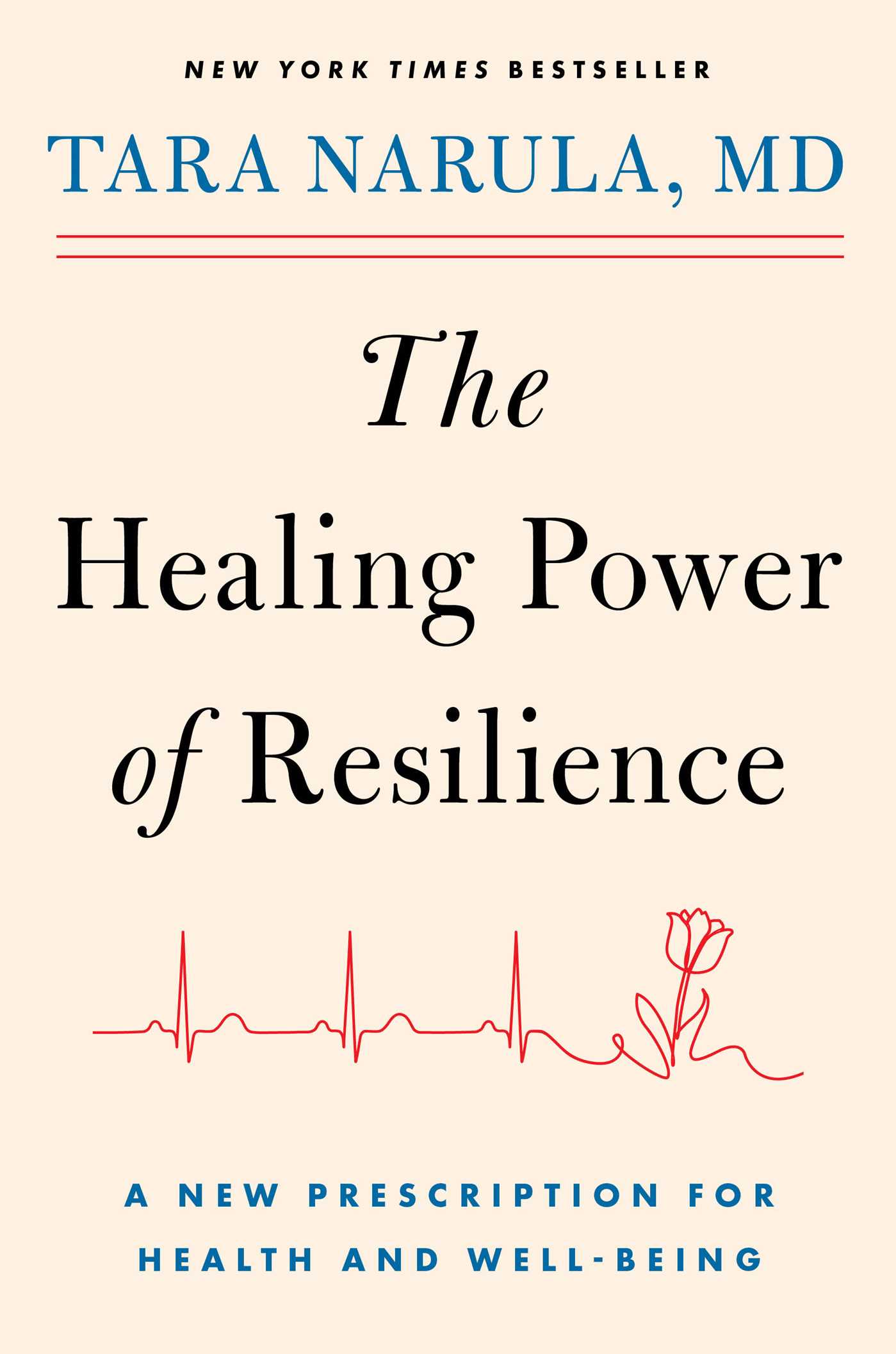
The Healing Power of Resilience: A New Prescription for Health and Well-Being
As the number one leading cause of death in the United States, heart disease has several common prescriptions from cardiologists, such as medication, surgery, diet, and exercise. There is, however, one treatment that is consistently overlooked: resilience. We need resilience to get us to face new diagnoses, to show up to doctor’s appointments, to take those medications, to make it through surgery (and to recover from it), and to stick to that diet or new workout plan.
That’s where this paradigm-shifting book comes in, connecting the worlds of medicine and psychology. Its application goes beyond heart disease to other difficult diagnoses and traumatic health events, and overall well-being.
Over the course of her decades-long career as a board-certified cardiologist and journalist, Dr. Narula noticed there was something missing in patient care: the need to address mental health alongside physical health. To thrive when faced with a medical challenge, a patient must be mentally prepared to face it. This realization transformed Dr. Narula’s career and led her down an eye-opening path, studying landmark medical trials and the latest advancements in the field as well as interviewing patients, doctors, researchers, and thought leaders.
The Healing Power of Resilience is the culmination of this work, offering practical tools to build your resilience, which Dr. Narula calls the “Resilience Response.” Challenging situations can lead to a stress reaction in the body. Learning to practice the “Resilience Response” when that happens can mitigate it, and therefore help prevent disease, promote healing, and improve quality of life. This set of tools leads you to the following: an acceptance of your situation; a flexible mindset; a change in lifestyle; an ability to face fears; a pursuit of purpose; a hopeful outlook on the future; a commitment to seeking connection; embracing a love of self and others. Through scientific research, pioneering medical journalism, and personal stories, this book presents a revolutionary new approach to living well—whether you're facing a health challenge or simply striving for a healthier life at any age.
Resources
-
- Time: Can Resilience Improve Your Health?
- American Psychological Association: Building your resilience
- PLOS Medicine: Social Relationships and Mortality Risk: A Meta-analytic Review
- Behavioral Sciences: Emotional Regulation, Coping, and Resilience in Informal Caregivers: A Network Analysis Approach
- Yale Medicine: Yes, Stress Can Hurt Your Heart: 3 Things to Know
- Heart.org: Stress and Heart Health
- Cureus: Psychological Stress as a Risk Factor for Cardiovascular Disease: A Case-Control Study
- Robert Sapolsky: Why Zebras Don't Get Ulcers
- Mayo Clinic: Resilience: Build skills to endure hardship
- Harvard Health: "Stress" cardiomyopathy: A different kind of heart attack
- The Loss Foundation: Acceptance
- Journal of The Intensive Care Society: Resilience in survivors of critical illness: A scoping review of the published literature in relation to definitions, prevalence, and relationship to clinical outcomes
- World Journal of Psychiatry: Harnessing resilience in patient treatment and long-term recovery: Psychosocial and neurobiological pathways to enhanced outcomes
2 Million Readers.
1 Life-Changing Newsletter
Simple and Straight-to-the-Point...
Just Like Mel.