Episode: 407
Try it For 1 Week: Small Ways to Make Your Life Fun & Exciting Again
with Priya Parker

Make every moment with the people you love feel more fun and meaningful.
Summer is all about long days, warm nights, and time with the people you love.
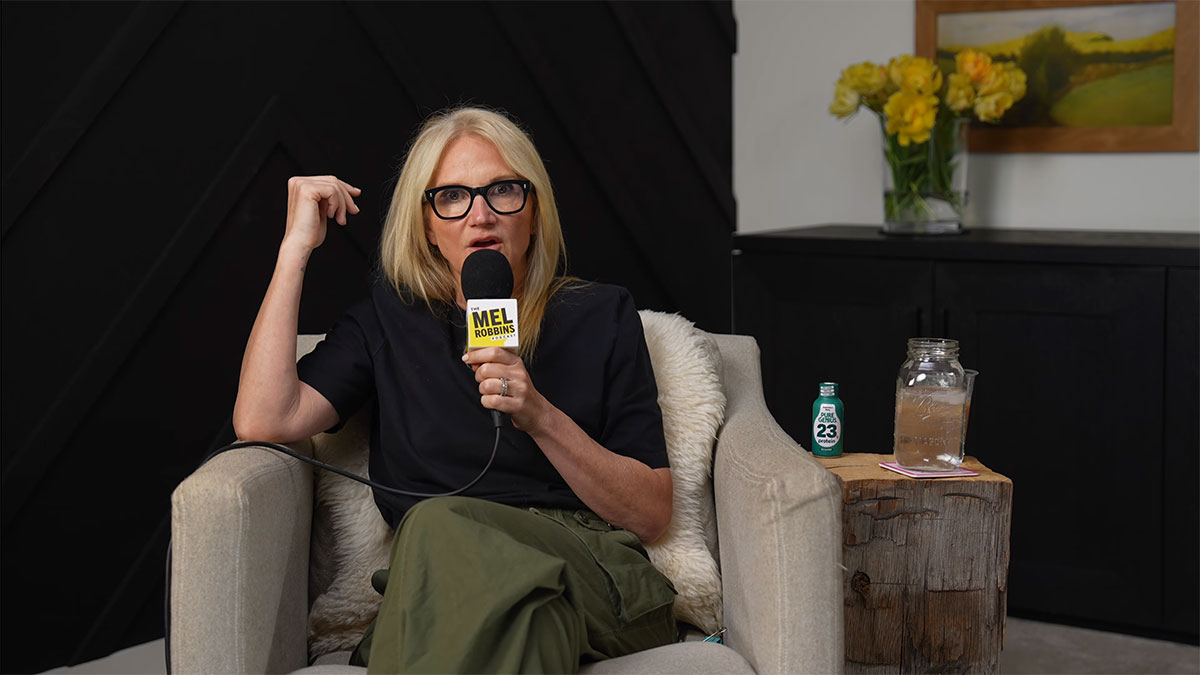
In this episode, Mel sits down with Priya Parker, author of “The Art of Gathering,” to show you how to make that time more fun, meaningful, and memorable.
You’ll learn simple ways to create better conversations, deepen friendships, make family time less tense, meet new people, and bring more joy and connection to every dinner, party, meeting, and gathering.
You’ll learn how to be a better host and a better guest and how small, simple shifts can turn ordinary moments into memories people never forget.
Listen on:




When you stop leaving connection to chance, you’ll have a richer, more connected, more delightful life.
Priya Parker
All Clips
Transcript
Priya Parker (00:00:00):
There's almost nothing lonelier than being with other people and feeling alone.
Mel Robbins (00:00:06):
You're about to learn how to deepen your relationships with the people that you care about most, how to build community when you feel like you don't really have any, how to meet your neighbors, how to throw great parties and have more fun in real life. Today you and I are here with the bestselling author of The Art of Gathering Priya Parker. How do you move people past small talk?
Priya Parker (00:00:27):
Ask a magical question.
Mel Robbins (00:00:28):
Give me your top five magical questions.
Priya Parker (00:00:30):
Ooh, okay. What is something you own that you're pretty sure no one else in this group owns? Oh, that's a good one. What is your favorite way to eat a potato?
Mel Robbins (00:00:42):
Oh, I know immediately.
Priya Parker (00:00:44):
What is it? Human connection can be as threatened by unhealthy peace as it is by unhealthy conflicts.
Mel Robbins (00:00:51):
Unhealthy peace. Oh, I just thought of by five marriages I know of.
Priya Parker (00:00:56):
Unhealthy peace is choosing to not touch something you care about because you're afraid of loss and you're afraid of what might happen.
Mel Robbins (00:01:07):
What is the first step to do if you're recognizing that unhealthy peace is in your life?
Priya Parker (00:01:16):
When you're going out on adventure, when you're in a city or you're in a new place, you actually have a third element to interact with. Talk is actually sometimes not good for connection.
Mel Robbins (00:01:27):
Ooh, hold on. Hey, it's Mel. And before we get into this episode, my team was showing me 57% of you who watched the Mel Robbins podcast here on YouTube are not subscribed yet. Could you do me a quick favor? Just hit subscribe so that you don't miss any of the episodes that we post here on YouTube. It lets me know you're enjoying the guests and the content that we're bringing you because I want to make sure you don't miss a thing and I'm so glad you're here for this episode because this is a really good one. All right, let's dive in. Priya Parker. Welcome to the MalRobbins Podcast.
Priya Parker (00:02:01):
Thank you so much for having me.
Mel Robbins (00:02:03):
I'm really excited because I feel like I want to have more fun and see people more.
Priya Parker (00:02:07):
Fun is good for our families. Fun is good for our health. Fun is not only fun, it's actually crucial to our relationships and to our communal life.
Mel Robbins (00:02:18):
Amazing.
Mel Robbins (00:02:19):
Well, we all want to have it, but for some reason it seems kind of hard to be making fun and gathering and connecting with people. And so I want to read to you from your bestselling book, The Art of Gathering: How We Meet and Why It Matters. This is from the introduction. We spend our lives gathering, first in our families, then in neighborhoods and playgroups, schools, and churches, and then in meetings, weddings, town halls, conferences, birthday parties, product launches, board meetings, class, family reunions, dinner parties, trade fairs, and funerals. And we spend much of that time in uninspiring, underwhelming moments that fail to capture us, change us in any way, or connect us to one another. Any number of studies support a notion that's obvious to many of us. Much of the time we spend in gatherings with other people disappoint us. For the person who is nodding their head, you've had that experience of being in a room full of people and you feel alone.
(00:03:22):
You force yourself to go out because you know it's good for you to get out of the house and you spend money eating at a restaurant you don't want to be at. You have boring conversation with people that are slightly annoying that you don't connect with. And then you get home and you're like, "Why did I even do that? "
Priya Parker (00:03:37):
Why do I even try?
Mel Robbins (00:03:38):
Why do I even try? I just spent $73 on my meal. I put
Priya Parker (00:03:41):
Pants on.
Mel Robbins (00:03:41):
Yes. I put pants on.
Priya Parker (00:03:43):
I put my makeup on.
Mel Robbins (00:03:44):
Yes.
Priya Parker (00:03:45):
Why do I even try? Yes.
(00:03:47):
There's almost nothing lonelier than being with other people and feeling alone. And so part of the opportunity we have is so much of modern life and our thinking about hosting or gathering has always focused on the logistics, right? Whether it's the food, whether it's the infrastructure, whether it's the table, whether it's the venue, and all of those things matter. But we're basically told that you leave the rest to chance, right? You hope for the best when it comes to people. And I'm a convict resolution facilitator. How do you help people connect without having to be the same? And so much of what my peers and I are taught as facilitators isn't taught in modern culture. And so we are taught, we're trained, it's a whole profession of how do you help people get off their scripts? How do you create a dinner where people actually, instead of saying what they always say, pause for a second and think, and then something new happens.
(00:04:42):
But so often because we assume we're just supposed to leave people to themselves or it's awkward to impose or who am I to try to steer the conversation, we are leaving people less well off than if they had just stayed at home.
Mel Robbins (00:04:55):
And I take it this also applies to family since even though y'all share DNA potentially-
Priya Parker (00:05:03):
Absolutely.
Mel Robbins (00:05:04):
... that you don't have the same belief system and that you are very different.
Mel Robbins (00:05:08):
And maybe this is a dumb question, but what do you mean when you say gathering? Because when you say the word gathering, I thought you meant throwing a party.
Priya Parker (00:05:15):
So I define a gathering as anytime three or more people come together with a beginning, middle, and end for a reason. And so much of what I'm trying to work on as a facilitator is our country, our culture is awash in self-help and self-help is important. Those tools have deeply helped me. I am in therapy. I have deeply benefited from many individual tools, but when the lens is basically, how do I just improve myself? How do I count my steps? How do I take my sugar intake? All of those things are important, but we actually also need group help. How do we actually help the groups of our life? And so many of our problems are shared problems. They're not going to be solved by just the individual. They have to be solved by the group. And so as an invitation to start getting interested in the group help business too.
Mel Robbins (00:06:05):
Oh, I love that. The group help business. I think we all can agree we need some helps with the groups, whether it's our group of friends or the group that is the family or the group that is the in- laws or the group that is your neighbors or the group that is your colleagues at work and that's what you're going to teach us today.
Priya Parker (00:06:23):
Absolutely.
Mel Robbins (00:06:24):
How to have better connections in the groups we're in and how to create new groups of people and how to show up in groups.
Priya Parker (00:06:33):
And how to diagnose when something is off, how do you have the tools and the confidence to do something? Whether it's a high school or a college reunion. So many people get onto an airplane to go to this reunion sometimes across countries and then you go and like nothing much happens and it's almost like breaks your heart. It's like everyone's here. If we just put a little bit of structure in it, if we just thought of it in a different way, you can move this entire night from everyone feeling sort of isolated and repeating high school all over again to imagine having the best conversations of your life with the people that you grew up with 40 years ago.
Mel Robbins (00:07:07):
Well, I also thought of another example. How many times have you traveled to go see family and everybody sits inside and kind of catches up and then within hours a day you're kind of irritated and bored, kind of like looking at our watches, traffic's going to be building up. We should probably leave a little earlier than we thought. And you've checked the box but you actually didn't get anything.
Priya Parker (00:07:37):
You haven't watered the garden. Well,
Mel Robbins (00:07:38):
That group needs help. Let me tell you.
Priya Parker (00:07:40):
Absolutely.
Mel Robbins (00:07:41):
We all have that particular family member's house that we're thinking about right now where you know a small part of you goes to die and to show up and we all kind of hope it's going to be a little bit different, but I'm starting to gather, no pun intended, that there are specific strategies that we can be using in those situations and those situations are all over our lives.
Mel Robbins (00:08:07):
So you say there are three ways to spice up or have more fun in any gathering of people, make it more meaningful. Let's talk about the first way.
Priya Parker (00:08:17):
So the biggest mistake we make when we gather is we skip defining the purpose.
Mel Robbins (00:08:22):
Oh,
Priya Parker (00:08:22):
What is the purpose of this gathering? What is the purpose of this family reunion? What is the purpose even of coming together for Thanksgiving or Shabbat or whatever category you have in your head? And the simplest way, if you remember nothing else from our conversation is to first ask every single time, what is the need here? What are we craving? And so often we skip defining the purpose that we go back into these old forms that are no longer serving anyone.
Mel Robbins (00:08:51):
I would love to have you break down purpose. I know you have a physical prop to show us and I will explain what this is. She has yoga blocks and Priya has just put up one that says purpose.
Priya Parker (00:09:06):
So the first step in thinking about how to have a meaningful gathering is to ask what is the purpose? Why in this case that you're talking about, why am I coming to this? Why am I visiting my parents? Why do I do this? And it may sound kind of wild to say like, why am I visiting my parents, but hear me out. The reasons why you might visit your parents 20 years ago might actually be a different reason than you're visiting now. And so 20 years ago, it might have been depending on your age or stage in life to get some help with your kids, right? I'm visiting my parents so that they can bond with my kids and I'm willing to deal with everything else because what is important to me is making sure that there's a connection there. And 20 years later, your kids may be out of the house and you're still visiting your parents.
(00:09:54):
The need that I might have now might be different. The purpose might be to start asking them about their lives as I'm starting to think about their mortality. I don't need to tell them that, but there are a lot of ways to actually flip the script when you bring in new ways of being together. So I'll give a simple example. I was visiting my father, he lives in Florida and I was taking my children and we sat down at a restaurant. We don't live in the same state. It's a rare moment, right? We could talk about the weather, we could talk about the beach we just went to and I knew inside of me like this is one of the few times of the year my children are going to be with my father. And so I said to them, "Kids, you want to ask grandpa a magical question?" And a magical question, and you all can use this, is a question that everyone in the group would be interested in answering and everyone in the group would be interested in hearing each other's answers.
(00:10:50):
That part is important. And my daughter looks up and her eyes are bright and sparkly and my father looks and says, "What's that? " And she goes, "I have one. What's the naughtiest thing you've ever done that was worth it?
(00:11:08):
" And my father looks eyes gets bright and then she goes, "Before the age of 12." And we were off to the races and I laughed and I shared something my kids had never heard. They each kind of decided what they were going to confess in front of me. I heard stories from my father I'd never heard before. We were laughing and those were two completely different lunches. And so part of thinking about what is my purpose when I'm about to enter into a room like that. And for me, it's to connect my children and to my father and particularly to connect my father to the present version of my children and to connect my children to the complex being my father is and has been over his seven decades on this planet.
Mel Robbins (00:11:57):
What I love about this because it's so obvious once you hear it.
Priya Parker (00:12:02):
Not rocket science
Mel Robbins (00:12:03):
And deeply personal and profound. I have this saying that I say a lot, which is if you change nothing, noth changes. And we spend a lot of time anticipating and hoping to have fun and wishing that the connection will happen and fingers crossed that this lunch is somehow magically going to be different than every lunch that we do three times a year that we've done for the last decade and then somehow we're surprised and disappointed that it is not any different
(00:12:34):
And it comes down to the opportunity that you're teaching us today, which is to wake up and realize that you have a lot of power here, but if you change nothing, nothing changes. And the first thing you need to change is just take a beat and be like, "What's the purpose?" If I'm actually going to go, what is the purpose? There is some need in my life that I can fill with this gathering. That's the purpose. I don't need to tell anybody else. I'm not telling my dad. I just need to figure out, okay, what are some things that I could do so that I get that need filled?
Priya Parker (00:13:06):
Yes.
Mel Robbins (00:13:07):
And I love that. You said there are three different layers to the purpose, ways to think about it.
Priya Parker (00:13:13):
So the first is to think about the gathering being specific, meaning lies and specificity. So one of the reasons often we're not sure how to gather is either feels too complicated or there's too much to do. Your gathering, this is a real example, can literally be a woman I know her basil plant bloomed. She literally realized she had too many basil leaves in her little window basil plant and she decided to invite her friends over to help her eat her basil. She had a margarita pizza party and basil mocktails. That was it, but it was specific.
Mel Robbins (00:13:51):
You just gave me an idea for gathering.
Priya Parker (00:13:53):
There you go.
Mel Robbins (00:13:54):
Three years ago, I planted these bulbs for a foxtail lily, which grows like five feet tall and it's got this gorgeous feathery cone of a flower that goes from like orange to light yellow. They're just so extraordinary. I remember reading on the package that they will be basically dormant and boring for three to four years. This is the summer. When I left for this studio, those suckers were coming up and they're starting to do this and I could throw a cocktail party.
Priya Parker (00:14:31):
Yes, a viewing party. A viewing
Mel Robbins (00:14:32):
Party for the foxtail. I have three of them, only three. These were expensive bulbs. And I've waited three years
Priya Parker (00:14:39):
For these suckers. Yeah. Oh, by the way, write this into the invitation. And so the invitation becomes this opening to this story, right? I bought these three years ago. There are only three. They are expensive and on June 21st they're going to bloom and won't you come witness this spectacle of beauty with me. You can tell them to wear the colors of the flower. But specificity allows us particularly in modern life to have meaning together.
Mel Robbins (00:15:08):
What is the next piece of purpose?
Priya Parker (00:15:10):
Okay. The next piece of purpose is unique. So a good purpose for a gathering is specific, it's unique. And part of a gathering is like, how is this gathering different than all other gatherings? How is me turning 37 different than me turning 56? What is it that uniquely I need or want in this moment of life? And part of thinking about even if it's that same family dinner every Sunday, or if it's visiting the parents or even if it's a team meeting, people are different from week to week. The needs that you actually have might be different from week to week. I had a friend who was turning 50 and he realized that what he wanted for his 50th birthday, he thought again, "What is my purpose? What is my need in this moment?" And he thought to himself, he got kind of scared. He was feeling sort of depressed and he realized he doesn't usually get mopey around his birthday.
(00:15:58):
And so he started thinking about it, he talked about it with his wife and he realized so many people in his life he saw once they turned 50 started taking less risks and he's a journalist and it really scared him and he said, "I don't want to be somebody who starts contracting after I'm 50." And so he decided to throw a birthday party and invite everybody in his life who represent adventure. So that was a unique thing. He didn't need that at 49. He didn't need that at 51. The third part of purpose, I'm moving this block over here, is being disputable. What
Mel Robbins (00:16:29):
Do you mean disputable?
Priya Parker (00:16:30):
Part of having a gathering that's about something is it's creating boundaries. It's actually saying that for this night, this is what we're actually going to be doing. And also if you're not up for it, that's okay. Not everyone has to come to everything. Not every gathering is for everyone. And so part of modern life is we actually often overinclude in part because we haven't thought about what our purpose is and we back into it and then we think, well, we actually had a different conversation because they brought these other friends and so we weren't able to have the conversation we would normally have because that would've excluded the guests who were here. And so often we get kind of scrambled and convoluted in our gatherings because in trying to be nice and generous and the spirit of generosity, we tend to actually kind of dilute our gatherings because we haven't thought about what is this for.
(00:17:19):
Our most precious thing we have is our time. And so part of the invitation is to think more deeply ahead of time about what can you do with the people in it and are they game for it? And when you start with purpose, it changes everything.
Mel Robbins (00:17:33):
Okay. So did you hear that more people than ever can bring in their current mobile bill for a better deal at Verizon? Nice. I mean, I already have Verizon, but nice for all those people who don't got AT&T or T-Mobile, you can get a better deal Got Xfinity or Spectrum, you too. Wow, that's a lot of people. I'm telling everybody about this better deal. My friends, my parents are in Michigan, my brother who lives in Illinois, my team here at the Mel Robbins podcast. Heck, even the guy in line behind me at the coffee shop needs to hear about this. You all can bring in your AT&T, T-Mobile, Xfinity, or Spectrum Bill to Verizon and get a better deal on the best network. So stop by Verizon today and give me a ring once you've switched. Best network based on Root Metric's best overall mobile network performance US second half 2025 all rights reserve.
(00:18:29):
Must provide recent consumer mobile bill in the name of the person redeeming the deal. Additional terms, conditions, and restrictions apply.
Priya Parker (00:18:38):
Okay. I'm going to put these blocks to the side.
Mel Robbins (00:18:41):
Okay. Let's put this to the test. Okay. Selfishly, I'm going to extract some advice for myself and hopefully as you're listening.
Mel Robbins (00:18:49):
So this summer I'm hosting a bunch of different people at our home in Vermont and one of the reasons why this is happening is it's our 30th wedding anniversary.
Priya Parker (00:19:00):
Wow.
Mel Robbins (00:19:00):
And instead of, I know I'm surprised too.
Priya Parker (00:19:03):
Congratulations.
Mel Robbins (00:19:03):
Thank you. Instead of throwing a party where I stopped and thought, let's throw a big party and a dance party. I love a dance party. And I thought, well, wait a minute. I'm not going to talk to anybody. So do I really want to have a big party to celebrate or do I want to celebrate in a different way? And so we reached out to groups of friends that don't live near us and then invited them to come over certain weekends. And we have a bunch of my husband's college friends coming because there's a bluegrass festival nearby us.
Priya Parker (00:19:39):
Amazing.
Mel Robbins (00:19:40):
And there'll probably be 20 people at our house. And I said to everybody, "Bring tents and please leave your dogs at home." But beyond that, I haven't thought about it.
Priya Parker (00:19:49):
I mean, you've already thought a lot about it. That's beautiful. So you have a purpose, right? You have a need, which is to celebrate your 30th anniversary. Is that, would you say that's the need?
Mel Robbins (00:19:57):
The need is really, I think like everybody, the years of 2020 through 2025 basically hit delete on almost all of our social lives between hybrid work and people moving and empty nesting and job changing and just getting reclusive because you're at home on Zoom calls and who wants to drive into the city to see people? Well, makeup. Everyone's tired. Everyone's exhausted. And so I think the purpose that this is fulfilling is I miss seeing friends. It's beautiful. I miss these experiences. I miss the things that Chris and I used to do when we had either little kids that we could drag everywhere, the parties that you have when you're young adults and every kid's running around in diapers
Priya Parker (00:20:56):
And
Mel Robbins (00:20:57):
It doesn't matter if you're sleeping on a couch, we're all just kind of together that I miss that in my life and I realized it's not going to fall out of the sky. I need to create this. It's
Priya Parker (00:21:07):
Beautiful. It's a gift to them and you're also naming something. There's so much I'm a conflict resolution facilitator and sort of conflict resolution 101 is name it, like name the thing, name the grief, name the loss, name it. And so part of what's so beautiful about you naming this thing and saying, "Wow, we haven't done this since 2019 is you're naming something that other people also experienced." And so you can almost feel like your throat sort of tightening in a good way that's saying, "Yes, I have that too." And so when you're bringing your people together, almost the excuse of your 30th anniversary, right? Like this is a big moment, maybe I'll use this as an excuse to bring everyone together, to be together in spectacle and joy and bluegrass and remembering that like we can be alive and we can be together. That's enough.
(00:21:58):
It's so beautiful.
Mel Robbins (00:22:00):
Here's another one because I think this is one we can all relate to. So another thing that I could use help with is we have family coming in from out of town and one of the patterns that I've noticed is that we tend to go to someone's house and then hang. And I notice that when we go on a trip somewhere where there are things to do, there's les conflict.
Priya Parker (00:22:29):
Definitely.
Mel Robbins (00:22:30):
There is more fun.
Priya Parker (00:22:31):
Definitely.
Mel Robbins (00:22:32):
That somehow going to people's houses
Priya Parker (00:22:35):
And
Mel Robbins (00:22:35):
Hanging becomes a cauldron for all kinds of short tempers and frustrations and criticism and ...
Priya Parker (00:22:46):
I mean, think about the difference between even just your body language describing your 30th anniversary of people are coming and we're pitching tents and I said, no dogs and we're going to bluegrass. And then you're like, versus this other thing that you're going to go and you're going to sit in this couch and you're going to sink deeper and deeper into this couch. Part of groups are groups and whether it's family or whether it's friends, people love adventure, right? Actually, when you're going out on adventure, when you're in a city or you're in a new place, you actually have a third element to interact with. And so talk is actually sometimes not good for connection.
Mel Robbins (00:23:22):
Ooh, hold on. Talk is not good for connection. I
Priya Parker (00:23:27):
Had my mentor, Hal Saunders, he created this process called Sustained Dialogue. Literally his entire profession was about helping people talk better to each other. And what he would always tell us baby facilitators is dialogue is not always the right tool. Sometimes people need to play a soccer game. Sometimes people need a dance party. Sometimes they need to go out and have an effing blast together.
Mel Robbins (00:23:53):
Or go antiquing or go drive and-
Priya Parker (00:23:55):
Go gardening. Yes. Go on a walk. Sometimes what people actually need is to talk less because we get into these loops, we get into these same patterns and often there's a whole element of talk that actually creates much more distance. And so particularly with families, particularly with people that you spend a lot of time with where you sort of get stuck in a role, even more important is that the time to have fun, to go do something you wouldn't normally do. I had a friend for Thanksgiving last year who was bringing together in- laws for the first time, multiple uncles and aunts, and she organized a collective sound bath for the entire group. She literally created a sound bath. They're not going to talk. They're going to sit together in silence for 90 minutes.
Mel Robbins (00:24:42):
That sounds amazing.
Priya Parker (00:24:43):
Right?
Priya Parker (00:24:44):
And so even when you think about whether it's your family, where you think about is your friends coming for your 30th anniversary party, one of the best ways to lower your anxiety about hosting is to share the burden. And what I mean by that is to in some way make everyone be a sub-host or a co-host in a way that would delight them.
(00:25:06):
So with your friends, there's just one example, you don't have to do this. If you say you have three days together, sometimes I do this with friends' birthday parties, particularly for a big one when people are traveling, to invite everyone to bring some kind of gift or offering for the group. And that could be, I've done this before at a 40th birthday party, one person brought their favorite tiny little drops of a specific sunblock and their offering for the entire group was making sure that everyone didn't get a sunburn and someone else brought their favorite game from their childhood and they introduced this game for 20 minutes.
Mel Robbins (00:25:42):
You know what I love about that is that you gave people a specific assignment that can get creative and then you don't end up with 14 bagels that nobody ate and tubs of potato salad that people want to jam in your fridge.
Priya Parker (00:25:57):
Or tap dancing the entire time trying to entertain everyone. Yes. Someone else brought beautiful little tiny bars of organic chocolate and just literally the act of going around to 35 other guests at some point over the course of the weekend, it makes people look towards each other. It gives them a tiny little sense of like, "This is my gathering too." And so part of thinking about spending time together is finding ways to help people have a shared experience without needing to be the same. Another very simple thing is fun dress codes. Fun dress codes meaning wear the single best thing in your closet, no shopping.
Mel Robbins (00:26:32):
I love the no shopping.
Priya Parker (00:26:34):
I once did this for a birthday party. Three people showed up in their wedding dresses.
Mel Robbins (00:26:37):
Oh, that's killer.
Priya Parker (00:26:39):
I know a woman who threw a no pants party in Chicago in her apartment. It was July, her AC wasn't working. I think it was from like a Simpsons episode. People showed up and everything from bathing suits to skirts to dresses. Her father showed up in overalls and a good natured fight broke out about whether or not overalls are pants. It was a total hit because there was shared context.
Mel Robbins (00:27:05):
One thing I want to circle back to, because I think it's advice that is going to profoundly change for the better gatherings with our family, which is I want you to really think about the some people don't want to talk. They need to either go on a walk or go to a museum or play a soccer game that oftentimes it's not that deep. And my husband and I tend to be deep people that want to talk. And I can see how when you try to engage somebody that does not like to talk, that does not want to discuss feelings or their plans for when they die or whatever it is that my husband, the death doula, would like to really get deep in there and that it creates tension and how can you shift so that you can make them more comfortable and maybe let's keep moving, nothing to see here.
(00:28:07):
Okay.
Priya Parker (00:28:08):
Groups are like accordions and a group of gatherings are like accordions. Sometimes you want a lot of density in the conversation and everyone having a shared experience and sometimes you need to kind of loosen it out and pull it back out. So if you think about a family reunion or a friend's reunion for three days, actually some of the best gatherers I know are introverts. Some of the best gatherers I know don't recharge alone. And in my research, so many of the gatherers that other people told me create amazing gatherings, self-identified as introverts, self-identified would often be on the outside of things. And I asked one of them, "Why do you think this is? " And she said, "I am so uncomfortable at so many of the gatherings that I come to, that I started designing gatherings I actually want to be at."
Mel Robbins (00:28:52):
So what are some of the attributes of a gathering that introverts like? Structure. So I'm walking and knowing-
Priya Parker (00:29:03):
So the first element is not relying on your personality and your tap dancing to like be the person who's connecting everyone and being the person who's giving all the toast and being the person who has to basically be the infrastructure of everyone else. It's actually thinking about the thoughtful structure ahead of time that will allow people to connect with each other. I was once at a birthday party that had a quiet corner and it literally said quiet corner and there's two hammocks and all day long. Part of the thing is we all need breaks. And so sometimes they're really good at saying, "You know what? " And they put two people together in the family who don't necessarily know each other. We all go out and just get some eggs. "We need some eggs. Just chew, choo, choo, choo, choo. "Then they'll go and have a conversation in the car that they would never otherwise have.
(00:29:47):
Introverts think at least the ones that I've spent time with and that are really great gatherers, they really think about shared context, they think about meaning and they also have the The empathy to know that there's many ways to connect and it's not just through conversation.
Mel Robbins (00:30:04):
That's great.
Mel Robbins (00:30:06):
You say that another thing that a really good gathering requires is good controversy. What the heck does that mean?
Priya Parker (00:30:20):
I should start by saying I am a conflict averse conflict resolution facilitator. So I'm a conflict resolution facilitator and I hate conflict. And when my parents are divorced and when they first separated-
Mel Robbins (00:30:35):
I bet you have a lot to talk about with your therapist.
Priya Parker (00:30:37):
I have a lot to talk about with my husband. You know what I'm
Mel Robbins (00:30:40):
Saying?
Priya Parker (00:30:41):
Absolutely. That was
Mel Robbins (00:30:42):
A very interesting-
Priya Parker (00:30:44):
I mean, basically when my parents separated, everyone was shocked because they never fought. They never fought. And so I learned from a young age that there's great loss and avoidance and that human connection can be as threatened by unhealthy peace as it is by unhealthy conflicts.
Mel Robbins (00:31:03):
Unhealthy peace. Oh, I just thought of about five marriages I know of.
Priya Parker (00:31:09):
And friendships and work relationships.
Mel Robbins (00:31:13):
Unhealthy peace.
Priya Parker (00:31:14):
And so part of- Can
Mel Robbins (00:31:15):
We just talk about that for a minute?
Priya Parker (00:31:17):
Yes.
Mel Robbins (00:31:18):
Give me some examples. Unhealthy peace.
Priya Parker (00:31:20):
Unhealthy peace is being hurt by somebody and holding onto it and choosing to not say something and then a story about them grows in our head and then eventually we're so scared to say something we leave or we ghost or we exit rather than trying to get to what I call healthy heat or healthy conflict. Unhealthy peace is often in teens where everybody knows that it's a terrible idea to launch this product, but no one's willing to actually say it. Unhealthy peace can be in a family at a multi-generational family gathering and somebody uncle is belligerent towards another cousin, maybe their own child and everyone freezes and just looks down under the table. You can have strategic avoidance, but unhealthy peace is choosing to not touch something you care about because you're afraid of loss and you're afraid of what might happen. And our society oscillates within our friendships and our families.
(00:32:33):
We oscillate between unhealthy peace and unhealthy conflict. We either avoid exit ghost or we burn the fricking house down. And I know this because my house was burned down, but metaphorically through unhealthy peace.
Mel Robbins (00:32:50):
Because your parents never fought and then all of a sudden they
Priya Parker (00:32:51):
Got divorced. My parents never fought. They both came from conflict averse families. One is white American from Iowa, from the Midwest, one is Indian, totally different cultures, but this inherited culture that conflict is dangerous. Wow. I have such deep empathy for the people in the room who want to flee. And I've learned that you can hold heat. I've learned it's a learnable skill, but we're not taught it.
Mel Robbins (00:33:15):
So if you're listening right now and you're like, oh my God, my whole life is full of unhealthy peace. There's all kinds of stuff at work. I never say anything. I am in a marriage where I feel like roommates. I hold resentment toward friends that I never express. I tolerate disrespect and other stuff from a parent. What is the first step to do if you're recognizing that unhealthy peace is in your life?
Priya Parker (00:33:47):
So first is to know you're not alone. This is very, very, very common. And part of the reason so many of us, myself included, are like this is because we're taught that conflict is immoral. We're taught that conflict is sin metaphorically. We're taught that conflict is dysfunctional. We're taught that conflict is for people who are all messed up. And so the first element is to pause and to actually be curious and invite the idea that conflict is actually necessary for connection. Healthy communities hold healthy heat. And so the first thing is just to just pause and if you are like me, which is I was raised where if any of the heat starts to rise, we all just stick our head in the sand like ostriches, that it is not only okay to have conflict, that it is conflict is relevance. Conflict is we don't fight about the things we don't care about.
(00:34:50):
And so when you're starting to get upset about something, if something rubs you the wrong way, that means that it's getting to the things that you value. It's the things that actually give you life. And so as a conflict resolution, one of the things we often look for is what the conflict resolution facilitator called calls relational longing. And relational longing when as facilitators in any type of fight, we're not brought in with people who hate each other because they just leave. Facilitators work with people who still want to belong to each other. And so part of the essence of getting into any type of relationship, friendship, long-term community is finding the relational longing that still exists at the center of the fight and coming from there to begin to say, "Hey, I'm going to speak this dangerous truth. I'm going to say this thing that scares me in part two because as an investment in you, because otherwise I may just leave."
Mel Robbins (00:35:52):
What would your advice be for that moment when you are the one keeping the peace but you're really scared to say anything or to try to shift the dynamic?
Priya Parker (00:36:08):
Get curious about what this conflict actually is and don't assume that it's going to end the relationship. Conflict is actually quite intimate. When you actually get into a conflict with someone else, it's doing things like admitting that you're affected by the other person, admitting that you're vulnerable to the other person. One of the reasons conflict is so scary is because it's admitting that we affect each other. And so the first thing to think about is you're actually your own body and before you figure out what you're going to say or when you're going to say it or how you're going to say it, I have a friend and facilitator, Prentice Hemphill, who says the most powerful body we have is a relaxed body. And so the first thing I'll tell you as a facilitator, I actually write about this in the Art of Fighting that's coming out this fall is I break down what we as facilitators do to prepare for a fight we're going to hold and a huge amount before I enter a room to hold a fight I'm not even a part of is physical.
(00:37:13):
And we think of fights as physical, but actually the biggest physicality of a fight is in our own bodies. And so to think first is to breathe, to put ... I literally put both feet on the ground. I think about my own purpose and intention in coming in and then I'm still kind of shaky and my voice may still shake. And then to say, "Hey, do you have a moment? Can we talk about something? Do you have a moment to chat? I wanted to just share with you something that didn't sit well with me. " And part of modern life is we actually oscillate between, again, saying nothing and suing each other. So in our cultural context where we don't have a lot of healthy heat examples, sometimes people do freak out. And so if you're listening and you're part of a team, you can actually start creating healthier cultures in your team for heat.
(00:38:04):
Simple example, I had this manager do it is I said, "Start your weekly meetings, your staff meetings just for 10 minutes, no more, or you zip around and everybody does rose and thorn." It's just parents- Oh, your parents
Mel Robbins (00:38:15):
And the family.
Priya Parker (00:38:16):
Exactly. So best part of your week, worst part of your week. And I said, "Just do that 10 weeks in a row. Don't change anything else, just do that for 10 weeks in a row." And she came back and she said, the first few weeks some people were really into it, other people weren't. Then week three, week four, they started realizing like, "Okay, we're really doing this. " For some people, what was risky was sharing stuff outside of work. For some people, it was risky, was sharing stuff inside of work. But by the eighth week, the rest of the meeting began to change because they started normalizing thorns. And so part of thinking about the cultures that you're creating in your families, particularly if you're somebody with some amount of social power or authority is whatever your relationship to conflict is, is going to be the group's relationship to conflict.
Mel Robbins (00:38:58):
This message is brought to you by Apple Pay. Pay with your card on iPhone using Apple Pay. It's accepted at millions of places anywhere you can tap a physical card. And with privacy and security features built in, it's more secure than using a physical card. Look, we all know somebody who is constantly losing their wallet, or maybe you're a litle bit like me. You're always forgetting to bring your wallet into the store with you. Well, that can't happen when you choose Apple Pay. I mean, just the other day I was in line at the plant store. I've got this huge cart full of geraniums and impatience and other perennials. I'm waiting in line forever. I get to the front of the line and I think, "Oh my God, I left the wallet in the car." So now I'm going to have to explain to everybody, "I'll be right back, please hold my space." And then I always, "Wait a minute, Mel, you can just pull up Apple Pay on your phone." So that's what I did.
(00:39:48):
Tap. There you go. Problem solved. I love how quick, safe, and easy it makes paying for things and now I use it all the time. I don't even need my wallet. Just add your debit or credit card to the wallet app and when you're ready to check out, double click the side button to authenticate with face ID and tap. It's that easy. Set up Apple Pay on your iPhone today. Terms apply.
Mel Robbins (00:40:10):
So I want to go back to the moment that we've all had where you are at a family gathering and you are sitting at the table and all of a sudden somebody who we all know who the difficult person is in the extended family, they do their thing like whatever they sound off about and you are now in your unhealthy piece and you're thinking about Priya's art of gathering and the art of fighting and you're starting to feel the heat and you're thinking, "I would rather be on the planet Mars than sitting at this dining room table right now.
(00:40:57):
How on earth does healthy heat or a little bit of conflict make the gathering better?"
Priya Parker (00:41:07):
First of all, that moment is really scary.
Mel Robbins (00:41:09):
Yes.
Priya Parker (00:41:12):
Most of us go back into the roles that we've always played.
Mel Robbins (00:41:15):
You know what I do? I start busting the table.
Priya Parker (00:41:16):
Yeah. Yeah.
Mel Robbins (00:41:17):
Totally. And then I get a drink. Yeah. Which is not a way to handle healthy conflict, by the way.
Priya Parker (00:41:24):
So this may sound like a cop out, but it actually isn't, which is these moments in time are actually few and far between and the best way to change them is before anyone enters the room.
Mel Robbins (00:41:36):
Oh, okay. I love that. The best way to change the dynamic
Priya Parker (00:41:39):
Is before anyone enters the room.
Mel Robbins (00:41:41):
Okay. What am I changing?
Priya Parker (00:41:42):
So first of all, if this is something that's happening at your dinner table once a year over and over again, first find your allies. Find your allies that also at every moment feel like, "I hate that he does that or I hate that they do that, but I don't know what to do in that moment. It feels so scary. This is also a multi-generational family ritual. Who are we to come in? " Absolutely. You know who those people are?
Mel Robbins (00:42:03):
They're the ones that are looking at you across
Priya Parker (00:42:05):
The table. Exactly. Find your allies. Find your allies. The second is sometimes the old structures actually no longer work. Can I give a simple example? Yeah, please. So I had a family who there was a lot of conflict and often about politics and it was just sort of over and over and over again. I think that's all of us right now. It's exhausting. It sort of felt- Can we just get along with that? We all have to just suck it in and go do this thing. And so what this family did was there was two people in it and they're like, "Okay, we still want to spend time as a family because it goes back to the purpose. I may not agree with everything in this large extent of family, but this is also, these are my people. " And what they ended up doing was they found their allies.
(00:42:48):
There's a few other siblings and cousins who were on board with changing, just like everyone basically drinking for three hours and then sitting at a table and drinking more. So they decided and they created a cooking championship where the next year at the family reunion they put together teams ahead of time of different people, including the people who were like, "I don't know how to cook." And it's like, "Well, here's a spatula." They put together the cooks and the non-cooks and every different team was responsible for a different meal. It took more time. The prep time took more time. Then everyone was excited about what everyone was eating. They focused on the food rather than what you squeeze out the politics conversation by arguing about who made the best salsa. And so one of the things I talk about is like fight, but about other stuff.
Mel Robbins (00:43:37):
I love that. The activity is such a great diversion.
Priya Parker (00:43:40):
Yes. Basically, or another thing, this is particularly to change conversation, host a hot takes party where you argue about stuff that does not matter. It's adding warmth to heat. It's saying, I did this with my team years ago, we hosted a hot takes party as our end of the year dinner and people come with their most controversial opinion that does not matter.
Mel Robbins (00:44:07):
Give me an example.
Priya Parker (00:44:07):
There should be only one type of pasta. Tuesday is the best day of the week. Winter is the best season and you have to defend it to the end. And what happens, and I've seen this in teams is people start laughing and it gives them permission to be like, "How could you say there's only one type of pasta? My Italian heritage is deeply offended." But you're actually learning that you can argue there can be juice, there can be warmth, there can be banter. And I've seen teams do this where you're starting to help people have warmth and humor in how they fight and realize that you can actually add juice, water the ground and realize again, there's a lot of energy here, but fight about other stuff.
Mel Robbins (00:44:46):
I freaking love that. You're a genius. You are. So we've talked about purpose. We've talked about a good controversy. You're going to have your hot takes.
Mel Robbins (00:44:56):
What is the third thing that can really create meaning in your next gathering?
Priya Parker (00:45:02):
Thinking about how you open and how you close.
Mel Robbins (00:45:05):
Okay. Give us some examples.
Priya Parker (00:45:06):
So I think about a gathering as the creation of a temporary alternative world. And as a host, you're creating that world. It could be a mosh pit. It could be a rave. It could be a picnic by the river, but these are actually different worlds. And so part of as a host is to think about how do you actually open the first 5% of a gathering deeply matters. So when you're hosting a gathering, really deeply thinking about how do you open and what are you doing in those first few moments when people are arriving, whether it's to the 30th anniversary, whether it's to a dinner party, because we actually are looking to see how do we behave in any of these moments. And when a host comes and says, "Hey," either introduces people to each other or brings people around and says, "Hey, would you be our wine minister for the night?
(00:46:01):
Whenever you see a cup, would you mind just filling up our water minister?" Those first 5% is when people actually realize, "Oh, this is how I behave here."
Mel Robbins (00:46:12):
Give us some fast ideas for those first few minutes when they're coming into your house.
Priya Parker (00:46:19):
Stand there. Stand there. Take a moment, have a greeting committee, meaning literally your two friends. I had a friend who was having a birthday parties years ago and she asked three friends who love doing this, this is important, to be the greeting committee. I'm saying that in quotes. All that meant was we stood by the door and as people came in there, we were like, "Hi, welcome to so- and-so's birthday party. We've heard so much about you. " And the way people respond like, "Oh my gosh, you've heard so much about me?
Mel Robbins (00:46:51):
" How about a Zoom meeting? Give us a bunch of fast ideas for the best way to open a Zoom call at work without it being cheeseball and also pulling people in, like how you set that intention.
Priya Parker (00:47:08):
Yeah. So Zoom is such a great context to learn from. And one of the things that creates connection is informal activity and Zoom is like the enemy of informal. We're all in these squares, you have to mute on, you mute off, you're not sure if you're supposed to talk. You can't talk to someone else. So you enter an in- person meeting, you can go, you can choose the seat you sit in, you can be like, "Hey, can I get you a coffee?" There's all of this informal stitching that actually binds a group. And so in these virtual contexts, that's taken from us. And so the host needs to actually create that. And so simple examples. First is if you are hosting this Zoom, be fully on. Once it's on, once the time is start, be on time and then be there. It's almost like, I mean, I say this as a facilitator that does a lot of Zooms, it's almost like you're a live sportscaster.
(00:47:57):
And so it's like, "Hey, how's it going? You know what? I'm going to have a sip of this water and I'm curious, you're all in different time zones. Just pop into the chat. What are you drinking right now?" "Oh, Earl Gray Tea. Oh, right. You're actually warming up the group, but on Zoom it's through your language. It's not unlike a podcast host. The second is to invite people to come on camera. I work with a lot of leaders and managers who say like, " I don't know how to get my team on camera, but I can't actually read their faces. "So I had a leader who told me that one of the things he did was he told his team that they could be camera off if they sung a Neil Diamond song.
(00:48:41):
I was with his team when they didn't. They all started laughing and it was like, it was this playful pop-up rule. They all know he loves Neil Diamond. And the reason he did that and it worked for the team is because he wanted to know that they were engaged, right? The reason he wanted the camera on is to know that they're not sitting there doing something else. One of the things I often do with my team and my students is I have them ask a magical question in the chat while people are waiting, what's the first concert you ever went to and who took you? And people start populating in the chat. It creates a completely different world. It helps you understand sort of who's here and who's not here. So I have a friend who runs a tutoring company, her name is Marcella and she started doing this.
(00:49:24):
She would ask a magical question every week, but at some point it's kind of like the boss is asking a magical question again. And so she started rotating who everyone each week-
Mel Robbins (00:49:34):
Oh, you're assigned the magical question.
Priya Parker (00:49:36):
Yes. Got it. Each week a different team member was assigned coming up with a magical question and asking it in the first three minutes of the chat and everyone answers it.
(00:49:46):
She's building leadership skills. She's sharing the weight. We actually are excited to hear what one another is going to ask. We can learn from that practice We start understanding and getting to know each other as a group. And part of why this is important is particularly in virtual teams, when the going gets tough, when there's some mistake, as there will be in every team, the likelihood that I'll pick up the phone and be like, " Hey Mel, I actually wanted to talk to you about something. "You're creating psychological community through knowing things about each other within appropriate boundaries that is relevant to the work, but that actually helps people understand who each other are and has some cross stitching between the group.
Mel Robbins (00:50:27):
You say that the endings matter. How do you end?
Priya Parker (00:50:33):
Most gatherings don't end. They stop.
Mel Robbins (00:50:37):
What's the difference?
Priya Parker (00:50:39):
You're at a conference, you've had this beautiful kind of arc of an experience and then all of a sudden it's like, " Oh, thanks for coming. Coats got to run. Coats are in the back. Okay. Over out. Thanks everybody. "And actually, as I said, every gathering is a temporary alternative world and the more different it is from everyday life, the more you also have a responsibility to close it. I had an improv teacher called Dave Sawyer actually here in Boston and he would often say," Good actors think about how they enter a stage. Great actors also obsess about how they exit, how they leave. And so thinking about, again, very simply, walk people out. If somebody's coming to your home, walk people out. It's so touching. Sometimes people walk me out of their home and I'm like, thank you. It's an extra piece of care.
(00:51:29):
Thank you for walking me out. Sometimes you need to get people out of your house.
Mel Robbins (00:51:35):
Let
Priya Parker (00:51:35):
Me walk
Mel Robbins (00:51:36):
You out. Yes.
Priya Parker (00:51:38):
And so issuing in bars, the last call, so they ding the button. Last call, last drink. It's a way to actually prime people to start leaving. And so thinking about what your last call is, my husband and I argue a lot about this and he comes from a household. It's like, you would never signal to your guests that they should leave. And I come from a family culture where you would never as a guest leave until your host releases you. So you have this chicken game where everyone's like, "Do we leave now? Is it over? How do we close?" And so finding simple ways to allow people to exit when one way is if you're having people for dinner and you're not really sure if it's time to leave, you can say, "Well, thank you all so much for coming. From you, it's a school night, but for those of you who can stay and we really hope you will, let's move to the living room for a nightcap." So finding ways to sort of allow people to exit, whether it's a life of a conversation, whether it's a party, you can kind of feel when it's coming to an end.
(00:52:38):
And so part of it is like, give it an honorable death. Allow people to leave, whether it's a final song, whether it's a final dance, whether it's just simply as a facilitator, sometimes we do this in work is like we're asking people, okay, best moments of the night. Okay, best jokes of the night. Okay, who is the MVP? And just finding ways to help people meaning make together and then slowly be like, "What transpired here?" And in a work context, I do this with all of my Zooms, "What did you most learn over the last hour?" Summer camps do this really well. They don't just- Well,
Mel Robbins (00:53:16):
Because they have campfires. I mean,
Priya Parker (00:53:17):
Come on, they
Mel Robbins (00:53:18):
Should do it really
Priya Parker (00:53:18):
Well. They should do it really well, but they think really deeply about closing and they're closing day and the day before money, closing ceremonies, right? Tiny little ways to bring ritual back. We're sort of a ritualist culture and-
Mel Robbins (00:53:32):
Not now because you just taught us
Priya Parker (00:53:34):
How to bring it back. And now we are ritual full and part of modern life is realizing that we still need and want ritual. And when our institutions are fraying and when more people can be part of many institutions, which is also a good thing, for better or for the worse, we actually need to start inventing these rituals. And when rituals that no longer served us because they were either oppressive or because they no longer make any sense because the village has changed, it doesn't mean you end all ritual. It means you ask now, what now do we need and how might we together bring about something that allows us to break bread together, have meaning together and be alive in this precious time that we have.
Mel Robbins (00:54:19):
So if you're the kind of person who doesn't really consider yourself to be a host or you are kind of like, you recognize you're waiting for the invite, but you don't typically think of yourself as the host, what is your message?
Priya Parker (00:54:40):
Hosting is not an identity. It's an activity. Groups and when people feel like they're not meaningfully contributing or it's not being meaningfully contributing back, basically a lack of reciprocity. And so to not think about it as like this big archetypal thing of like, oh, I'm a host, but to actually think about it as effort, thinking about also host something you would love to attend, host something that you want to do and invite one other person to join you. Start small, start simple. If it feels like an obligation, don't do it.
Mel Robbins (00:55:15):
What are your recommendations for someone who is living in an apartment building or moved to a new neighborhood, doesn't really know the neighbors.
Priya Parker (00:55:25):
Just this week I saw on Instagram a woman who posted that she hosted a chair and share in her neighborhood. She didn't know any of her neighbors. She sent out all analog invitations, flyers under her neighbor's doors and the invitation was to bring a chair and share your name. 40 neighbors show up and they had a great time. But again, it sounds silly. A chair, it's actually a symbol. It's specific. I can bring a chair. Great people bringing lawn chairs. Somebody brought their wheelie office chair. It gives us something to sit on and it's showing the initiative. Also, a lot of people feel this way to find one or two other hosts, co-hosts ideally, because it can be scary to do something alone. You can also using flyers, use the occasion of either of holidays invented or not. There are many public institutions that have lots of free programming that actually exist over and over and over again.
(00:56:34):
But the key is to keep going to the same event over and over again, because proximity and repetition creates safety and community.
Mel Robbins (00:56:42):
Your home should reflect who you are, not who you used to be or what you think it's supposed to look like, just you now. And Ashley has pieces that fit whatever your style is. In fact, I was scrolling Ashley earlier and I was immediately drawn to the pieces in the Serene Bay Outdoor Collection. Now, my personal style is cozy and functional and the pieces in this collection feel elevated but still livable. And what I love most about Ashley is that every piece, it doesn't just look great. They're built for real life with features like stain resistant fabrics that are easy to clean and even machine washable cushion covers. Plus, Ashley offers white glove delivery. So everything's brought right into your home and set up where you want it, making the entire process easy from start to finish. Visit your local Ashley store or head to ashley.com to find your style.
Mel Robbins (00:57:37):
You're at a gathering or you're at dinner with your friends and then you have caught up. How's kids? What's going on with work? Yeah, your parents, they still doing okay. Awesome. What are you doing this summer? And now there's that pause and you're kind of thinking about, and I realize you're going to tell me I should have thought about this before I'm there, but now that I'm there and we've done the small talk, what's a fast trick to get us to go in a different direction?
Priya Parker (00:58:09):
To ask a magical question.
Mel Robbins (00:58:10):
Okay.
Priya Parker (00:58:12):
You can keep them in your pocket. I have a subset called Group Life. We have like more than 50 magical questions like take it in your pocket.
Mel Robbins (00:58:19):
Give me your top five magical questions.
Priya Parker (00:58:22):
What is something you own that you're pretty sure no one else in this group owns? Oh, that's a good one, right? A
Mel Robbins (00:58:32):
Tractor.
Priya Parker (00:58:33):
Why do you have a tractor?
Mel Robbins (00:58:35):
Because I live on a mountain and we have a field that needs stuff and a long driveway that needs to be plowed. And I think my husband looks really sexy on it, honestly.
Priya Parker (00:58:46):
So what you just gave me there is like six different conversational doorknobs. A couple other magical questions. What's a movie film or TV show that you could never watch again?
Mel Robbins (00:58:59):
Probably Jaws because that came out my fifth grade summer or fourth grade summer and there was something so terrifying about that movie that just about every person that I know in their mid to late 50s had a terrorizing summer, would not get in swimming pools that shot from below. Oh my God. Yes. I still to this day think about it.
Priya Parker (00:59:22):
Totally. So do I. And so Jaws as a movie, then you can see all of this conversation. What should film be? Is that one of the greatest movies that have ever been created or that terrorize an entire generation and change our relationship to the water?
Mel Robbins (00:59:35):
Both. All right. Give me the other three.
Priya Parker (00:59:38):
What is an outfit you could have thrown away a long time ago but you still keep and what does it mean to you? If your life was a movie, what would the opening credit song be?
Mel Robbins (00:59:50):
That's amazing. What's another one?
Priya Parker (00:59:53):
What is your favorite way to eat a potato?
Mel Robbins (00:59:55):
I like a baked potato that's double stuffed where you stir Hard in the cheese and the sour cream into the middle and then you packed it back in and we get fresh scallions on top and bacon on top, maybe a little horseradish too and then you cut it in half and you can eat it like a potato like taco, especially if that outside is super crispy. And if I'm having a clamrole or a burger or a lobster roll, it's got to be shoestring fries.
Priya Parker (01:00:27):
I mean, right now I learned about your regional preferences. I learned about your passionate beliefs about a potato. I could hear that you have time in New England, but I also could hear maybe you had time in the Midwest. I remembered my double stuffed potatoes from my childhood. I had memories of my stepsister putting those things in, coming out. There's so much context in that.
Mel Robbins (01:00:48):
And who can forget a tater tot?
Priya Parker (01:00:49):
I mean,
Mel Robbins (01:00:50):
Come on now.
Priya Parker (01:00:50):
And in diverse groups and actually in global teams, this question, this humble question is beautiful because you think it's super simple and then all of a sudden people have everything from samosas to-
Mel Robbins (01:01:03):
Snoki.
Priya Parker (01:01:05):
Absolutely. And what about you? For me, it would be aloupuri, which is an Indian foo. And when I- Is that
Mel Robbins (01:01:13):
Potatoes and peas?
Priya Parker (01:01:14):
It can be, but it's one of those recipes where it's like everyone has their own secret. Allu is usually, this is just potato. It's not just potato, but it's a potato kind of spiced. I'm half Indian. My mother growing up when I was growing up would always take me to India for multiple weeks, sometimes multiple months to spend time with my Indian family. And my grandmother would be standing there in her nightcap and her long night gown and she'd hear us come and she'd shuffle into the kitchen and she'd microwave the alupuri that she had made for me and she'd make more warm puris on the stove and it'd be three in the morning and I would sit there and I'd eat her alupuri and I was like, all is well with the world.
Mel Robbins (01:01:57):
You gave us so many great things that we can do. I also love the fact that it doesn't have to take a lot of effort for you to get a massive, massive return.
Mel Robbins (01:02:12):
If the person listening takes just one thing away from all of the things that you have shared with us, the tactics, the questions, the different ideas, the fun, the inspiration, what do you think is the most important thing to do after you're done listening to this that will have your next gathering be very different?
Priya Parker (01:02:37):
To pause and ask, what is the need? What is a need that I have or what is a need I'm seeing in this community? Why are we coming together? And the purpose need not be serious. In fact, probably better that it's not. But to pause and ask, how do I want to spend my time? And if this all feels overwhelming, just the next time you're in a gathering, the next, whether it's a meeting, whether it's a family reunion, whether it's a wedding, just start observing. Just start observing. Are people happy to be here? Is there thought behind this? What are moments where people are starting to come alive? How am I feeling in this moment? Is there a way, is there a simple technique? I may be at a wedding table that I've been sat at with strangers and we don't know each other. Is there a tiny thing I could do whether it's a person next to me or across that might for this one moment make this more interesting?
(01:03:34):
And if this all feels overwhelming, start by being a really good guest. Guests have a lot of power.
Mel Robbins (01:03:40):
Well, since you said that endings really matter, I though maybe we'd end in a different way.
Priya Parker (01:03:45):
Ooh.
Mel Robbins (01:03:46):
How about you end by asking the person who is with us a magical question.
Priya Parker (01:03:52):
So if I was sitting here and I was deeply thinking about your community, I would ask something like, what is a specific moment or insight from a Mel Robbins podcast that changed your life and what action did you take in your life because of it? But specifically, what action did you take and how to go? That's the story part of it.
Mel Robbins (01:04:21):
Oh, I'd love to hear the story and you can either put it in the review or you can send it in at melrobbins.com or you can post about it on social. That's a great one. Priya Parker. Absolutely fantastic.
Priya Parker (01:04:34):
Thank you so much for having me.
Mel Robbins (01:04:35):
Thank you so much for the work that you're doing. The whole team has been so excited for you to come and we have a lot of fun around here, but we all could have more meaningful and more intentional and purposeful connections in our lives. And I'm super excited because the things that you suggested seem super simple and that they would make an enormous difference and I cannot wait. I'm going to particularly use the piece about sometimes people just need to go on a walk or to do soccer or to play badminton and not have a deep talk.
(01:05:15):
And sometimes we need to take ownership over changing the way we're doing things and finding allies. And the entire section about the unhealthy peace, holy cow, that was incredible. And I also want to thank you. Thank you for listening to something that will truly change the way you are showing up with your family, the kind of fun you can have and connections that you can make with your friends, your neighbors, work. There were so much here that I know I'm going to apply. I truly hope you apply it. And if you do, I guarantee you, you're going to have more fun and more meaningful connections and you deserve that. And in case no one else tells you today, I wanted to be sure to tell you as your friend that I love you and I believe in you and I believe in your ability to create a better life.
(01:06:07):
And you just heard Priya share with you that part of living a better life, it requires a little bit of heat from you. It requires you to change some things. It requires you to think about what you actually want and need and then take responsibility for being the one that creates it because you can and I really hope you do. Alrighty. I'll see you in the very next episode. I'm going to welcome you in the moment you hit play. And thank you for watching all the way to the end and you're going to love this next video and I'll be waiting to welcome you in the moment you hit play.
Key takeaways
Before you walk into any gathering, ask what need, purpose, or connection you’re hoping to create, because if you change nothing, nothing changes.
When conversations feel stale, ask a magical question that sparks curiosity, reveals hidden stories, creates real laughter, and helps you truly connect.
If you feel lonely despite spending time with other people, stop relying on chance and add thoughtful structure, because meaningful connection rarely happens by pure luck.
Avoiding hard truths can quietly damage a relationship and creates unhealthy peace, while healthy heat can bring you closer to the people you care about most.
Avoiding hard truths can quietly damage a relationship and creates unhealthy peace, while healthy heat can bring you closer to the people you care about most.
Guests Appearing in this Episode
Priya Parker
Priya Parker is a bestselling author and leading expert on how to gather, connect, and navigate conflict with more meaning and purpose.
-
The Art of Fighting: The Transformative Power of Conflict
In The Art of Fighting, Priya Parker explains that we can’t form and grow effective relationships without a fight. She rejects the idea that conflict is abnormal or that good groups don’t fight. All groups change and evolve; indeed, it’s because people disagree that good groups flourish.
Parker draws on her far-reaching experience as a conflict facilitator, her own detailed research, and real-world examples to lay out the ways that people can identify disputes, determine how to address them, and what to do if they are insurmountable. Whether people disagree in the boardroom or the locker room, on a playground or in church, online or in person, conflict is a part of life, and understanding healthy conflict and how to harness its power is more important than ever. The Art of Fighting is a vital primer to help all of us understand how to do that.
-
The Art of Gathering: How We Meet and Why It Matters
In The Art of Gathering, Priya Parker argues that the gatherings in our lives are lackluster and unproductive—which they don’t have to be. We rely too much on routine and the conventions of gatherings when we should focus on distinctiveness and the people involved. At a time when coming together is more important than ever, Parker sets forth a human-centered approach to gathering that will help everyone create meaningful, memorable experiences, large and small, for work and for play.
The result is a book that’s both journey and guide, full of exciting ideas with real-world applications. The Art of Gathering will forever alter the way you look at your next meeting, industry conference, dinner party, and backyard barbecue—and how you host and attend them.
Resources
-
- Priya Parker: An Equation for Magical Questions
- Priya Parker: Meetings are now your culture carriers
- Forbes: Going To The Extreme: Gathering As An Art With Priya Parker
- Harvard Business Review: The Value of Belonging at Work
- TIME: How to Make Friends as an Adult — and Why It's Important
- Greater Good Magazine: Why You Need Rituals in Your Life
- Scientific American: Brain Waves Synchronize When People Interact
- Current Opinion in Psychology: The many minds problem: disclosure in dyadic versus group conversation
- Innovation in Aging: Family Relationships and Well-Being
- Clinics in Geriatric Medicine: Social Isolation, Loneliness, and Cognitive Health
- The Journals of Gerontology, Series A: Biological Sciences and Medical Sciences: Associations of Loneliness and Social Isolation With Health Span and Life Span in the U.S. Health and Retirement Study
- Families, Systems, & Health: A descriptive examination of international family/shared meals: Prevalence, meal types, media at meals, and emotional well-being
- Behavioral sciences (Basel, Switzerland): Intergenerational Synchrony and Its Effect on Bonding and Group Closeness Among Young and Older Adults
- Social Cognitive and Affective Neuroscience: Interactional synchrony: signals, mechanisms and benefits
- Human Nature: How do rituals affect cooperation? An experimental field study comparing nine ritual types
2 Million Readers.
1 Life-Changing Newsletter
Simple and Straight-to-the-Point...
Just Like Mel.