Episode: 410
Create a Happier Version of Yourself: Redirect Your Energy for Positive Thinking
with Oakley Robbins
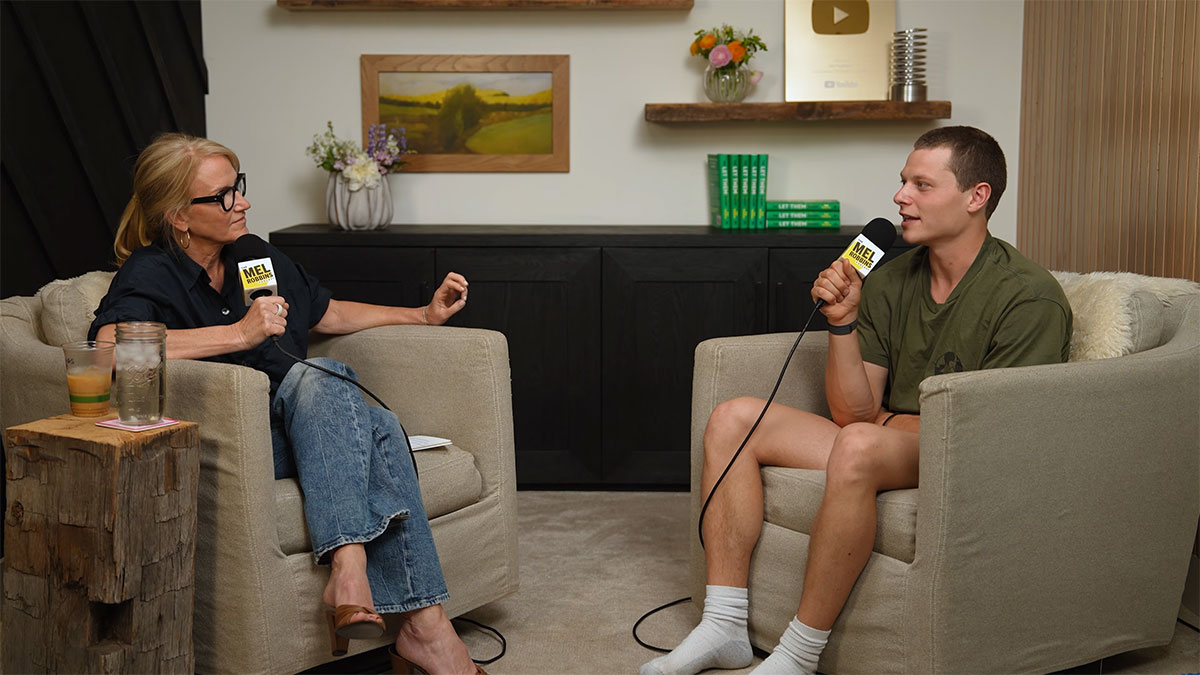
In this episode, you will learn how to take back your power when you’re in the midst of change, stress, or uncertainty, and then redirect your energy for self-transformation
If there’s an area of your life that you’re feeling unhappy about and want to take control over, today’s episode with Mel and her son Oakley will show you exactly what to do.
In this episode, you’ll learn:
- How the fantasy version of your past keeps you from seeing what’s possible now
- How to know whether it’s you or the situation that needs to change
- Why it’s unfair to criticize where you are if you haven’t done this one thing
- How long you should give a new situation before deciding if it’s the right fit
- The 4 things you may be doing to keep you stuck and unhappy
- The signs that you’re “quietly quitting” the situation you’re in
- The science of luck and what happy people do to make their own luck
- The first thing you need to do when you’re unhappy and want your life to feel different
Here’s the hard truth: nobody is coming to rescue you - and that’s good news.
It means you have more power than you think.
The moment you see what’s keeping you stuck, you can start changing it. After today, you’ll know exactly what needs to change first.
Listen on:




Nobody is coming to rescue you. And that’s good news, because it means you have more power than you think.
Mel Robbins
All Clips
Transcript
Mel Robbins (00:00:00):
I have a personal story that I am dying to share with you. Our 21-year-old son, Oakley, is gonna be joining me on this episode. He's been miserable at school for about 18 months, like the lowest I have ever seen my son in his entire life. Couple weekends ago, our son came home, he's a sophomore in college, and I was so shocked at how happy he was. As he started to detail the things that had changed, there were four specific takeaways that emerged. As you go through them one by one, it helps you understand, okay, is it truly the situation that's making me unhappy or is it me?
Oakley Robbins (00:00:44):
I needed to get off my high horse and stop assuming that the place I was in was going to become the place I was once at.
Mel Robbins (00:00:53):
You can't open a new door if you're gripping the old one. Yeah. And you cannot be content where your feet are if you're constantly comparing it to where you've been. When you get yourself in a situation where you're comparing the old to the new and you start judging it, you cross your arms and you gotta really check your energy. Are you shrinking or is your energy expansive? Yeah. And you're leaning in. So let's move on to the next piece because this is takeaway three on our checklist. Is it me or is it the situation? Yeah. Do I need to change or do I need to change the situation? Are you 100% in it? Because it's very hard to be content and happy when you're only throwing in 40%. That brings me to the fourth thing on the checklist. If you lower expectations and you stop comparing and you expand your energy and you say yes and you close the exits and you really just be where your feet are in this chapter, you'll be shocked by what can happen in a year.
(00:02:00):
I am so thrilled you're here. You're gonna love this episode. But before we jump in, my team was showing me something. 57% of you who watch the Mel Robbins podcast here on YouTube are not subscribers. My goal is that we get that number to 50% and I know you're the kind of person who loves supporting people who support you, so if the subscribe button is lit up, it means you're not a subscriber. Please hit subscribe. That's how you can show your support to your friend Mel Robbins and the team here at the Mel Robbins Podcast. It's free, that way you don't miss a thing and it tells me and the team that you love the guests that we're bringing and the content that we're putting here in an attempt to support you in creating a better life. Alrighty. Thank you so much for doing that.
(00:02:39):
You are gona love this episode, so let's jump in. Please help me welcome my 21-year-old son, Oakley Robbins, to the Mel Robbins Podcast.
Oakley Robbins (00:02:49):
Hello, everybody. Thank you for having me. I'm really excited to be here.
Mel Robbins (00:02:53):
So Oakley, the reason why I wanted you to come on is because about a month ago you came rolling in after work, uh, in your window washing business and we had just wrapped taping a episode for the podcast here in Vermont and you were just so bubbly and so happy and, uh, one of our team members, I think it was Ben- Yeah. ... asked you like, "Dude, what happened?" Because you had been very open about the fact that the first year and a half of your college experience basically sucked.
Oakley Robbins (00:03:27):
It was horrible.
Mel Robbins (00:03:28):
Well, what, and, and, and so Ben started asking you questions like, "What changed? Like what, did you transfer?" You're like, "Nope."
Oakley Robbins (00:03:34):
Mm-mm.
Mel Robbins (00:03:36):
And we kept peppering you with questions, like, what was it exactly that had you go from hating where you were feeling lost, feeling down, and we started to pick apart these things that were changing that you changed, and there were four themes that emerged. Mm. Those four things that you shared about are a checklist that anybody could use to look at a situation that they're in where they're really unhappy and figure out, is it me or is it time to change the situation? Do I need to change or does the situation need to change? Sometimes it's both.
Oakley Robbins (00:04:17):
Yeah.
Mel Robbins (00:04:17):
Okay? So for the person that's here with us-
Oakley Robbins (00:04:19):
Yeah.
Mel Robbins (00:04:20):
Why don't you tell them Oak basically what you thought was gonna happen when you went to college and then what the reality was and how you felt for the last 18 months. I
Oakley Robbins (00:04:30):
Think before I can get into what changed, I need to talk about kind of what it, like where it all began in a
Mel Robbins (00:04:36):
Sense. Yeah. Great.
Oakley Robbins (00:04:37):
And so it all started in high school. Uh, I loved high school, like more than anything. High school was just so great. I had great friends, great family. Um, I really felt valued there and I really valued the place that I was in. Um, I was challenged academically. I was on sports teams. I was the team captain of both sports teams I was on. Um, and every single day was just pure joy, you know, waking up and being like, "Ugh, like this is the best. Like I'm so excited to go in and see all these people that I love so dearly and I just, I cannot wait."
Mel Robbins (00:05:10):
And I wanna say one thing.
Oakley Robbins (00:05:12):
Yeah.
Mel Robbins (00:05:13):
Prior to high school.
Oakley Robbins (00:05:14):
Oh, I did not like school. Prior to high school, I hated school, like hated it with a burning passion. Um-
Mel Robbins (00:05:21):
Did you have a lot of friends?
Oakley Robbins (00:05:23):
No. And I wasn't very, I wasn't very, uh, good in the academic field. Like everything was kind of just downhill middle school and elementary school was all pretty, pretty tough for me. I, I, I believe that I would never be a school guy. And then when I got to high school, something just kind of switched for me and, um, I really started to dive into the academics. I really dove into the friendships and I really just like, uh, immersed myself in the world of school and it all became this wonderful thing that I fell in love with. And that's also probably why I say I love high school so much because it was the first time in my life where I had something like that that I was like, "Wow, this is amazing." Um, and I had never felt so strongly about a place and people before.
(00:06:02):
So that was, that was incredible.
Mel Robbins (00:06:05):
And it sounds like you also felt very strongly about yourself.
Oakley Robbins (00:06:07):
Yes. I was also very happy with me and who I was in that place and that setting and how I operated and moved through that world.
Mel Robbins (00:06:15):
Were you outgoing?
Oakley Robbins (00:06:16):
Yes, very. I was super outgoing. I knew everybody at my school. Um, we had about 900 kids at my school, um, and I knew everyone in my class, everyone in the class below, um, and just everybody. I was a senior mentor so I kind of looked after a group of freshmen and that provided me a lot of purpose. Um, I went to a soup kitchen after school and I was able to help out the local Vermont community. I really inserted myself in the community, you know, I really put myself in there and I really made sure that I was doing all the things and getting busy and meeting people and just kind of saying yes to everything I could.
Mel Robbins (00:06:52):
Now one of the reasons why I wanted a little bit of detail is because I think one of the magical things about life is that periods of your life in the past where you were happy or content or fulfilled provide clues- mm-hmm. ... about how you can access those feelings again in your present life.
Oakley Robbins (00:07:16):
Yeah.
Mel Robbins (00:07:16):
And that brings me to the next question, which is what happened when you went to college?
Oakley Robbins (00:07:22):
So senior year rolls around and college decisions, the applications, they're not great, but, you know, <laugh> you get through them. I still loved my life, you know, I still had a lot of fun. Um, anyways, it, it, it comes time to, uh, pick where I wanted to go and I, you know, I, I was excited about some colleges I wasn't about others and because I had so much joy and love for the current place that I was in, I honestly didn't wanna go anywhere and I wasn't too excited about any of the decisions I made. So it comes time to go to college and I am already dreading it. I am not excited to leave my home. I'm not excited to leave my friends. I had just gotten into a relationship and I was very, very, very like smitten with this girl. She was incredible. And so I had so many reasons not to leave.
(00:08:14):
Um, and the only reason why I felt like I should go is because everybody says you should go to college. And so going into it, I was really shooting myself in the foot because I didn't even wanna go in the first place. And so I got there and I was immediately miserable. <laugh> I was so sad. It was raining the day we moved, we moved in and I just remember moving all my stuff into my room and feeling excited for this ... I was telling myself I was excited for this new chapter in life and that it was gonna be super exciting because everybody always says that college is the best four years of your life. And so I was trying to hype myself up and say, you know, "This is gona be great. You're gonna, you're gonna love this. It's gonna be better. It's gonna be better than what you once had.
(00:09:01):
And, you know, even though you just l- let go of everything that you loved, you're gonna, you're gonna find much better and you're gonna enjoy it even more." And so obviously day on I didn't have that and I was so scared and I would've given anything to go back to the feelings and the things that I had before I got there.
Mel Robbins (00:09:21):
I think we all do this. Like and this is kinda,
Mel Robbins (00:09:23):
This gets us to take away one, which is you can't open a new door if you're gripping the old one. Yeah. And you cannot be content where your feet are if you're constantly comparing it to where you've been.
Oakley Robbins (00:09:43):
Yeah.
Mel Robbins (00:09:44):
You just can't do that.
Oakley Robbins (00:09:45):
No, you can't.
Mel Robbins (00:09:46):
But I want you to put us at the scene because as you're listening to Oak, you may be comparing your life before something happened. Like maybe you lost somebody you loved and you're constantly looking back and it's been years. Mm-hmm. Maybe you change jobs and you are comparing this to the old. Maybe you're in a new relationship and you're comparing it to an old relationship. You know, I've had a very similar experience, Oak, and I'll share more about this, that when we moved from the Boston area to Vermont, you were on Cloud nine.
Oakley Robbins (00:10:26):
I was on Cloud nine. It was amazing.
Mel Robbins (00:10:28):
I needed professional help. <laugh> You did. I was so unhappy. I hated it here. I hated everything about it. The second my feet hit the state, I was convinced we had made a mistake and if you're unhappy where you are right now, you have to ask yourself honestly, am I spending a lot of time comparing this to that? Am I spending a lot of time holding something from the past over the present? Mm. Because that is a guaranteed way to make you super unhappy now if you're constantly comparing what happened in the past to what is in front of you in the present. Yeah. And so I want you to put us at the scene- mm-hmm. ... of how this would affect your day-to-day life.
Oakley Robbins (00:11:18):
Okay.
Mel Robbins (00:11:19):
Like you wake up in the morning, what are you thinking?
Oakley Robbins (00:11:21):
I'm immediately like, "Wow, I'm, I miss my room and I miss my dogs and I miss my cat." Um-
Mel Robbins (00:11:27):
You're walking down the, the hallway or you're walking across campus to class.
Oakley Robbins (00:11:32):
Yeah, and I'm immediately met with this sense of loneliness. You gotta take into account that this is still the first few months of school, so I'm walking to class and I'm thinking, "G- goodness, this would be so much better if my hometown friends were here and I was walking to class with my hometown friends instead of walking to class with these mutuals or with nobody."
Mel Robbins (00:11:51):
What's a mutual?
Oakley Robbins (00:11:51):
Like a friend that's, you don't really know, but you've like met him a few times and so you're like, "You're mutual friends, but I'm not gonna like, I'm not gonna go out of my way to hang out with you. But if I see you, I'll say hey," you know?
Mel Robbins (00:12:02):
Whoa, okay.
Oakley Robbins (00:12:03):
But I-
Mel Robbins (00:12:04):
I think we're starting to get a lens into whether it's a situation or it's you, but keep going.
Oakley Robbins (00:12:09):
Um, there, yeah, a lot in the whole friendship department where I was wishing my friends were here. And my, my girlfriend and I continued to stay dating into college and so, uh, there was a lot of, I wish she was here, I wish I could go see her, this would be so much better if I could come home and she would already be at my dorm instead of just on the phone. And then another example is a sports team.
Mel Robbins (00:12:32):
Okay.
Oakley Robbins (00:12:33):
So I played, uh, Frisbee in high school and I came to college thinking I'm gona try out for the Frisbee team. And so I go to tryouts and immediately I'm, I'm met with this feeling of the sense that it doesn't feel like how my high school team felt and that was a huge turnoff for me. I, I remember being a tryouts and just thinking, "This sucks. This sport that I loved so much doesn't feel like how it did in high school and I don't wanna play it anymore." And so for the first year of college, I didn't play Frisbee, uh, because I felt like it didn't feel the same and so it wasn't worth my time and that really shot me in the foot. That was a, that was a big one that shot me in the foot. Meal times, I'd be sitting around a table with my friends and I would just be feeling so much sadness again, wishing that my home friends could be there instead of having to make these new friends because I felt that they weren't the same or we weren't as close or they didn't, they just weren't ... I, I, I, I, I had a un- I gave them an unfair start because from the beginning I, I told myself that they would never be the people that I wanted them to be because they weren't the same people that were from my hometown.
Mel Robbins (00:13:47):
Well, what I'm like thinking, I'm just gonna be honest with you- Yeah. ... because I think you can hear it.
Oakley Robbins (00:13:53):
Uh, yeah.
Mel Robbins (00:13:53):
It's shocking how judgmental you are.
Oakley Robbins (00:13:55):
Oh my God, it was hor- horrible. It was horrible. Even in the moment, I remember I'd come back to my dorm at the end of the day and go, "Wow, this is very unlike me. Like I feel very judgemental as of lately, and this is not, this is not the type of person that I normally am."
Mel Robbins (00:14:07):
And this is why this first takeaway is so critical. When you start asking yourself, "Is it the situation or is it me? " You have to ask yourself first, am I comparing this current chapter to something else because it is so unfair to the new person or the new apartment or the new neighborhood or the new job or the new chapter of your life to hold something from the past over this new thing. Yeah. And if you're kind of nodding along that you're really robbing yourself of the opportunity to experience something new because you're so busy comparing it to something that you know, you're the one that is making yourself miserable. Yeah. And the judgmental piece comes from the comparison Because comparison by its very nature causes you to judge because you're comparing one thing against the other and then it becomes this snowball effect where if all you're doing is looking for the reasons that something doesn't measure up, what are you gonna see?
Oakley Robbins (00:15:22):
Only the things that don't measure up.
Mel Robbins (00:15:23):
Correct. Yeah. And you miss what?
Oakley Robbins (00:15:25):
The great things about the place that you're in.
Mel Robbins (00:15:27):
Yes, which is why you can't fully open up a new door if you're gripping tightly to the old one.
Oakley Robbins (00:15:35):
Yeah.
Mel Robbins (00:15:35):
And this didn't just last the first couple months.
Oakley Robbins (00:15:38):
No, this lasted all the way up until the very start, uh, yeah, this-
Mel Robbins (00:15:44):
Yeah, January of this year. Yeah,
Oakley Robbins (00:15:46):
This, this lasted up until January 2026 and I went into college in, uh, September 2020.
Mel Robbins (00:15:53):
It doesn't matter. I can do math on this podcast. It
Oakley Robbins (00:15:55):
Doesn't matter.
Mel Robbins (00:15:55):
So you did this your entire freshman year-
Oakley Robbins (00:15:58):
Yes.
Mel Robbins (00:15:58):
... and the
Oakley Robbins (00:15:58):
First half of my sophomore year.
Mel Robbins (00:16:01):
And watching you do this was painful.
Oakley Robbins (00:16:05):
Yeah.
Mel Robbins (00:16:05):
And the other thing that's really sad about this is that another trap that we can fall into is believing that the best days of our life are behind us.
Oakley Robbins (00:16:14):
Yeah.
Mel Robbins (00:16:15):
And you started to convince yourself of that.
Oakley Robbins (00:16:17):
I did. I really did because I saw no reason that the place I was in was gonna be better. I just couldn't, I couldn't find those reasons.
Mel Robbins (00:16:26):
You know what? I actually oak, I'll tell you what.
Oakley Robbins (00:16:29):
Okay.
Mel Robbins (00:16:30):
The reason why I can see this on the outside is because first of all, I wasn't experiencing it. Yeah. And I also knew that you weren't quote yourself.
Oakley Robbins (00:16:42):
Mm.
Mel Robbins (00:16:43):
But I've also experienced this.
Oakley Robbins (00:16:44):
Yeah.
Mel Robbins (00:16:45):
So when we moved from outside of Boston where your dad and I lived for 26 years and we moved up here for you to go to high school up here, I hated it. <laugh>
Oakley Robbins (00:16:56):
You did.
Mel Robbins (00:16:57):
I hated it and like you, all I did was look around this tiny little town where there are more cows than people and compared it to where we had lived for 26 years outside of Boston. I'm like, where is Target? Where is Whole Foods? <laugh> Where is the movie theater? <laugh> Where are the people? What do people do here? Like where are the things that I know? And every time that I woke up in the morning, I'm like, "This doesn't feel like I want it to feel like I don't like this. It's new. Like it doesn't feel right." And I started to get very critical of everything that I didn't like and it started reinforcing that this wasn't going to be right for me. Yeah. That it felt wrong, therefore it's not right. And I started to blame the place instead of seeing that my inability to let go of the door that had closed prevented me from seeing the wide open door in front of me.
(00:18:06):
Yeah. And one of the reasons why it's important to really examine periods of your life when you were happy is because it does provide clues about what you can bring forward to this chapter to help you be happy. The past is full of lessons. The present is full of opportunities. The future has both lessons and opportunities. It has both. Yeah. But it's an applying the lessons to the opportunity of the present that you actually change the present and how you feel in it, but I wasn't doing that. Yeah. I knew damn well that what would make me happy is making friends, but I sat in the house and bitched about how much I hated this place compared to where we lived. I
Oakley Robbins (00:18:46):
Did the same thing in my dorm.
Mel Robbins (00:18:48):
Correct. And so the comparison actually amplifies judgment and the comparison isolates you and the comparison also inflates the fantasy of the old life because here's the truth. For me, this wasn't the case for you and I don't know as you're listening if this is the case for you, I had gotten bored of our old life. I was tired of, of living in suburbia. I did wanna change. Uh, I did want something new. I didn't wanna spend the rest of my life in that version of my life. Yeah. I knew I was ready for a change, but when that change came, holy cow, it did not feel like I thought it was gona feel. And so then all of a sudden I'm like, "I don't want this change." Yeah. <laugh> Yeah. When you're comparing your current situation to something in the past, I personally felt a couple things happening.
(00:19:43):
Number one, I got very judgy.
Oakley Robbins (00:19:45):
Yeah, very judgy.
Mel Robbins (00:19:46):
Number two, I started crossing my arms and I started leaning back.
Oakley Robbins (00:19:53):
Mm-hmm.
Mel Robbins (00:19:55):
And I started overfantasizing about the past.
Oakley Robbins (00:19:59):
Mm-hmm.
Mel Robbins (00:20:00):
And I also started unfairly j- like, I don't even have the right word's judging. It's like I was unfairly painting the life in front of me with a very unfair brush.
Oakley Robbins (00:20:14):
Yeah.
Mel Robbins (00:20:14):
Like I was seeing it through a lens that actually wasn't accurate.
Oakley Robbins (00:20:17):
Yeah.
Mel Robbins (00:20:19):
And I can see that now. I didn't even give it a chance and that's the thing, you have to ask yourself, "Have I even given the situation a chance?" Mm. "Have I given the person a chance? Have I given the job a chance? Have I given the school a chance? Have I given this neighborhood a chance? Or have I been confronted by the change and I started comparing and now I've got my arms crossed and I'm like super judgy and I'm sitting back?"
Oakley Robbins (00:20:48):
Yeah, totally.
Mel Robbins (00:20:49):
Okay. So takeaway number one, if you're unhappy or someone else is unhappy in your life is the first question you have to ask yourself is, am I actually in the present or am I drag in the past here and using it as a measuring stick? Yeah. And so the thing that I want, um, you to do with this first takeaway is to really apply it to where you are right now. And are you sitting in comparison, which very clearly robs you of the opportunity in front of you and what is in your control is to stop yourself from comparing where you are to where you've been, to stop holding some fantasized version of your past over the reality that's in front of you because it's only when you stop comparing that you have an opportunity to let go of the past and to reach for the door in front of you and to open it.
(00:21:48):
It's only when you stop comparing yourself that you have the opportunity to do a couple other simple things that might make you feel more content. But if you are saying, "No, I haven't been comparing myself. I, I was doing that beginning, but I'm not doing that anymore. I just really am not sure if this is the right situation," then you've checked the box and that's step one on deciding if it's you or if it's the situation. There you go. Right? Thank you to today's partner, Expedia. You know, if you haven't booked your next trip yet, now's the time. Let me, your friend remind you, you deserve to go do something exciting because travel can make you feel alive in so many different ways. In fact, research tells you in me that travel's one of the most important things that you can do for yourself, your happiness, your health.
(00:22:36):
In fact, most people make a big life decision after traveling and you don't have to go that far. Yeah, you could fly halfway around the world, but it could just be a quick weekend getaway or even exploring the neighboring town. It all counts as travel because you're getting out of your day-to-day and experiencing something new and Expedia makes it easy. Flights, hotels, vacation rentals, cars, activities, all in one place and when you bundle, you can save up to 30% with everything you need in one app. Life is short, so stop waiting and book the trip. And the beauty of having everything in one app with Expedia is that you can go from an idea to booked in minutes, no jumping between sites, no hassle. Sign in to save savings vary, Expedia, the on place you go to go places.
Mel Robbins (00:23:21):
So let's move on to the second one, because we've already alluded to it, which is when you get yourself in a situation where you're comparing the old to the new and you start judging it, you cross your arms and you gotta really check your energy.
(00:23:36):
So this is takeaway number two. Are you shrinking or is your energy expansive?
Oakley Robbins (00:23:43):
Yeah.
Mel Robbins (00:23:44):
And you're leaning in.
Oakley Robbins (00:23:45):
Yeah. I got that I was really stubborn <laugh> and, and when, when I made the change because I had so many wonderful people in my life saying, "Oakley, just go and try new things and go say yes to all these people. And you know, your friends right now might not be the greatest, but who knows, go meet, go try and meet more people. " And I was like, "No, everyone of your sucks." <laugh> And this place sucks and everything at this school sucks. I hate everything and I wanna go home. And everybody was, was feeding me the information and the, the, the tools that I needed to, to succeed and to love this place and all I wanted to do was cross my arms and complain and say no. And I was being so, so stubborn and it was so bad of me because I, I, things could've changed a lot quicker.
Mel Robbins (00:24:30):
Ooh, that's a great insight. That's very honest because you were stubborn for a year and a half.
Oakley Robbins (00:24:35):
Yes, stupid. So dumb with me. It was so dumb. <laugh> Like I wish someone had like slapped some sense into me.
Mel Robbins (00:24:43):
I tried.
Oakley Robbins (00:24:43):
You'd vary what you did try and I was very, very ... I just didn't wanna move from my position.
Mel Robbins (00:24:50):
What, what, what could I have done differently? Mm. Because I would call you on a Friday night and you are a college freshman.
Oakley Robbins (00:24:59):
Yeah, guys. I was, I was, I would sit in my dorm every Friday, Saturday, Sunday. I was actually scared of the weekends because the weekdays were great because we had our schedules, you know, and we went to class and we did all that and then the weekends would come and everyone would be like, "All right, like let's go party." And I'd be like, "Oh, I don't wanna, I don't wanna do that. Like I don't wanna, I don't wanna go out and I don't wanna go party." So the weekends were really hard because it was like, uh, someone was holding a mirror up to my face being like, "You're doing something that you shouldn't be doing because it's hurting you right now and you know what you should be doing and you're actively going against what you need." And
Mel Robbins (00:25:34):
You and I are so similar.
Oakley Robbins (00:25:35):
Yeah, I know. It's great. <laugh>
Mel Robbins (00:25:37):
Well, not great when you're torturing yourself. Oh,
Oakley Robbins (00:25:39):
Well, yeah, in the stubborn world, but you know, and-
Mel Robbins (00:25:41):
Well, because when I moved here and we got here and I started comparing it to our old life and I started hating it and get, getting very unhappy and I started convincing myself that the place was wrong. We needed to move back. We had made a mistake. I started what sounds like you did, which is quietly quitting- Yeah. ... on the decision. I started turning against the place I was in and I spent so much energy crying, sitting alone, convincing myself this was a huge mistake. Yeah. I had two friends, Amy and Jesse, and we all hated it. So we also talked a lot about how we had made a mistake and that our husbands had tricked us into coming here and now we hated them too. <laugh> And I also spent a lot of time, um, watching my friends on social media. Yeah. And it felt like they were on a party barge in the Boston Harbor waving goodbye to me from my old life- mm-hmm.
(00:26:50):
... as I was slowly dying a, a long and torturous death here in the winters of Vermont on a mountain here with no friends. Mm-hmm. And when you're quietly quitting a relationship, you're sitting in judgment and you're pulling away. When you're quietly quitting a job or a career
(00:27:07):
And you're withdrawing, when you are in a friend group that you feel like you've outgrown and you're kind of on the outside of it, you also shrink your energy and you pull back when what is needed in these moments is the opposite. You need to expand yourself and expand your energy and expand out of your comfort zone and expand through your stubbornness. Yeah. And this is why this is the second thing on your checklist. Is it me or is it the situation? Are you shrinking away or are you in a period of expanding and pushing yourself? Yeah. Because you had some good friends but you kept saying, "I haven't found my people. I haven't found my people. " And yet that circle of friends was not a cage. Mm-mm. This is the thing that I think is really interesting to ask yourself too. Why would you rather be right that the situation is wrong for you and be stubborn about it than just try?
Oakley Robbins (00:28:13):
I think in my stubborn mindset there was this, this annoyance in the fact that everybody seemed to have the answer, uh, that answer being all you have to do is get your, get your butt off the floor and go do something. And I, I think internally, not, not actually knowing this, but I, it just kind of annoyed me that it, it seemed like everybody knew what was up and what I should be doing. And so I, I wanted to kind of prove to that where I was like, no, like things aren't gonna change. And I do actually remember there were times where I would go and try something like once in a blue moon where maybe I'd show up to a club or I would go out with some friends one night and I would always come back from it with an even worse feeling in my gut just being like, "That was horrible." Like I remember there was one time where I went out with my friends and immediately we get there and they're having the time of their lives and I was like, "This sucks.
(00:29:06):
Like this place sucks. I, I don't feel like I belong here." And so I just left and I went back home and I was like, "That was horrible." And I was looking for so many reasons why it was the worst time or a club where I went, I showed up to a brand new club and I didn't know anybody and I didn't know what was going on and it felt so foreign and so immediately I went back to my dorm and I was like, "That was horrible. I'm not gonna do that again." And I just wanted to, I kind of had this thing where I wanted to prove that I did try and even in trying, it didn't work for me and like I was just a hopeless, a hopeless case.
Mel Robbins (00:29:38):
Well, I think that's one of the reasons why a really good piece of advice in these kind of situations is you have to give it a year.
Oakley Robbins (00:29:45):
Yeah. You have to, you have to keep trying at it. You can't just do it once and then be like, "All right, no, never again." You have to try it a few, few good times.
Mel Robbins (00:29:54):
And another great piece of advice is when you are shrinking And your energy is pulling back and judgy, you're a no. Yeah. And when you're expansive and you're saying, "All right, I'm gonna give it a year. I gotta like really lean into the opportunity. I gotta be here." You're a yes. Yeah. When you think about 18 months of being there, you showed up in January. Mm-hmm. And you stopped judging.
Oakley Robbins (00:30:23):
I did.
Mel Robbins (00:30:24):
How did you stop judging?
Oakley Robbins (00:30:26):
I, I came to the realization over that break that I needed to get off my high horse and stop assuming that the place I was in was going to become the place I was once at. And I just kind of showed up January 1st and I was like, "All right, this is its own place. It's its own time. I can't go back to who I once was. And so I'm just going to appreciate and see who I am going to become in this new place." And I kind of operated with that mindset each day.
Mel Robbins (00:30:57):
Wow.
Oakley Robbins (00:30:58):
Yeah.
Mel Robbins (00:30:58):
And what did you start saying yes to?
Oakley Robbins (00:31:02):
Everything. Like- Give me
Mel Robbins (00:31:03):
Examples.
Oakley Robbins (00:31:04):
Literally everything. So I, I rejoined the, the Frisbee team that I thought wasn't similar to my old high school Frisbee team. Love you guys. I started going to, I started hanging out with my friends way more on the weekends. They would always be going to a house party or they'd be going out and I'd say yes, I'd go to each one. Um, during the weeks, I'd get lunch with new people. Um, on the weekends, if it was during the day, again, new people. I'd always be trying to find new people. If I met someone cool ... You know, I don't know if you guys have ever done this. There's always those people in your life where you see them every once in a while and you're like, "Oh, we have to get lunch. Like we have to get lunch or we have to go hang out.
(00:31:39):
" And you say it to them and you're like, "All right, but I'm not actually gonna text you. Like I'm not actually gonna make the first move and I'm not gonn go get food or anything with you because that's awkward. I don't really know you. " The mutuals, you know? The mutuals. And so I started actually reaching out to those mutuals and saying, "Hey, let's hang out. " And-
Mel Robbins (00:31:56):
What happened?
Oakley Robbins (00:31:57):
Well, obviously, like, I'm gonna honest, you know, the first one or two times, they were a little awkward, you know, you're getting to know somebody. It's always not, it's never the easiest. And then it would just happen where every day I'd be like, "Hey, are you free?" And it would just, we'd start hanging out and it would just become so natural, so easy. Um, and that's because I kept working at it. I kept putting myself out there to try and talk to them.
Mel Robbins (00:32:15):
You know, I love this example, Oak, because it reminds me of really incredible research that, that this professor, Tina Selig from Stanford came on this podcast and shared about the science of luck. And people aren't just quote lucky. People who seem to be lucky have this particular habit and the habit is intentionally putting yourself in the current- Yeah. ... of the things that you want. Intentionally taking small actions that help you collide with the thing that you want. And intellectually, we know that the more people you say hello to, the more people that you, uh, reach out to for lunch, the more parties you go to and you uncross your arms and you walk in and you have an attitude like, "You know, my favorite person that I've ever met in my life might be in this room."
Oakley Robbins (00:33:08):
Yeah, it's true.
Mel Robbins (00:33:09):
You know, they might. Like you have this open-mindedness that you put yourself in a position to be lucky because you're in the same room, but you have to stop comparing yourself to your old life. Yeah. You have to be more expansive, you have to give it a year and you have to start saying yes- mm-hmm. ... while you have that attitude, and then what happens? You get lucky.
Oakley Robbins (00:33:36):
You do.
Mel Robbins (00:33:37):
What happened to you?
Oakley Robbins (00:33:39):
I mean, over time, slowly, slowly, I started to accumulate friends that I really, really began to care about and love and I began to slowly look around and be like, "Wait, like, this place is, this place is pretty cool." <laugh> You know, like, I'm living near everybody who's my age and all I have to do is just walk down a few doors and see them. Like, this is, this is awesome.
Mel Robbins (00:33:59):
Well, I think that can happen just about everywhere.
Oakley Robbins (00:34:01):
Everywhere.
Mel Robbins (00:34:01):
Because if you're in a new job, for example, the first month you're not gonna feel like you suddenly have really good friends at work, you're probably gonna, like, put your head down and, like, get into it and try to ... But the fact is, if all you ever do is put your head down and hope you fit in, then you're gonna start to pull back and you're gonna start to feel like you're on the outside of something. Yeah. If you take this advice to heart and you really look in the mirror if you're feeling on the outside, you could literally look up and be like, "Well, how many people have I asked if they wanna go out for a cup of coffee or go walk around the block at lunch or- Yeah. ... how many times have I raised my hand to do something that isn't directly related to my job?
(00:34:44):
How often am I asking my colleagues about their life? Have I scheduled any one-on-ones with people even over Zoom just to get to know people? " Yeah. And so instead of taking a posture in life of sitting back and hoping it falls out of the sky or just magically happen-
Oakley Robbins (00:34:58):
That's, I was waiting for someone to just show up for things to click and for it to be like, "Wow. Like, I, I love this place now. I was waiting for just one person to show up, but it's, it's on you. "
Mel Robbins (00:35:08):
Well, that's who you were waiting for.
Oakley Robbins (00:35:10):
Yeah. I was waiting for me to get my butt in gear.
Mel Robbins (00:35:14):
Yeah.
Oakley Robbins (00:35:14):
Yeah.
Mel Robbins (00:35:14):
Well, can you say more about that?
Oakley Robbins (00:35:16):
A little while ago, you're like, "What could I have said to you to inspire you to change or inspire you to do something?" And I think the biggest thing that I don't think you ever said to me, but what would've gotten me to get moving was just you saying like, "It's on you. " Like these four years or this next chapter, however long it may be, like if you want it to be great, then that's on you and you
Mel Robbins (00:35:41):
Can't
Oakley Robbins (00:35:41):
Wait for some person or some event or just something to change your mind about that. It's, it's your job to, to get up and to go and to meet these people and to do these things and to change your outlook because no one can do that for you. You have to stand up and you have to start moving forward and once you start doing that, it'll become easier and it will become great, but right now you have to put the work in and you have to take that first step.
Mel Robbins (00:36:05):
And I think that's the takeaway. Ask yourself, are you actually here in the present moment really seeing this as an opportunity and number two is check your energy. Have you been expansive? Have you been a yes? Have you given this a year? Like are you really putting in the effort and taking full responsibility for the way you're showing up to this chapter or this relationship or this job or this new neighborhood or this school? Because if you're not, then it's on you. Yeah. If you have been, now we're starting to go, "Well, maybe it's the situation." 'Cause every time I asked you if you wanted to transfer, you were like, "No." No.
Oakley Robbins (00:36:50):
Yeah. I was, I was, I was confident that the school I was at is the place I should be. Um, and I knew that the people that I wanted to be friends with were there somewhere, but I just hadn't found them yet.
Mel Robbins (00:37:01):
And you weren't doing much to make it happen?
Oakley Robbins (00:37:03):
No.
Mel Robbins (00:37:03):
So let's move on to the next piece- mm-hmm. ... because this is takeaway three on our checklist. Is it me or is it the situation? Yeah. Do I need to change or do I need to change the situation? Uh, and that is, are you 100% in it? Yeah. Because it's very hard to be content and happy when you're only throwing in 40%. Yeah. And obviously comparing where you currently are to your past means you're not 100% there. Your energy and shrinking and crossing your arms and being judgy, expecting something to be amazing within the first month or two, you're not 100% there, but there's also another thing that keeps you from being 100% there. And I like to think of this analogy that are both of your feet in the present chapter or do you have one foot somewhere else while you have one foot here and straddling two Clydesdales running in different directions can be painful.
(00:38:08):
And for you, you also were not 100% at school.
Oakley Robbins (00:38:15):
I was not, no I, I mentioned a little bit earlier in the episode how I had just gotten into a relationship right before I went to college. Um, and she was in the grade below me and so for the first year of college, um, I was able to kind of like commute home and see her on weekends, which made it easy for the relationship, but it obviously didn't make it easy for, uh, the place that I was in.
Mel Robbins (00:38:40):
Now why?
Oakley Robbins (00:38:42):
Because, you know, my mind ... I, I thought about her twenty four seven. <laugh> She, she's amazing and she, I, I always just had my mind on her and I couldn't ... I, I just wished more than anything that we could be in the same place together and I spent so much time just wanting to either go home or wanting her to come up to me and just-
Mel Robbins (00:39:03):
Or running to your dorm room at 7:00 PM so you could have your call. Yeah,
Oakley Robbins (00:39:06):
On a Friday or a Saturday, you know, like going late into my dorm and just kind of lock myself away from all my friends just so I could have a conversation with her and it was in the, in the moment, you know, I, I, I, I would, I would tell myself that this is what I need to be doing. Like this is the best thing in my life and I wanna maintain that and arguably it was. So it made sense that I could just kinda keep that up and maintain the one good thing that I still had going for me. Um, but because of that, it really, without me knowing, of course, like it caused me to shut out, shut out everything around me and everyone around me because on those nights where all my friends would go out to party and all those things, I had an outlet where I could stay in my dorm and I could call my girlfriend because it allowed me to kind of have this excuse where it's like, "Oh, well, I don't need to because I, I need to call my girlfriend and maintain this connection."
Mel Robbins (00:39:58):
I think it's really unfair to criticize where you are if you don't give it 100%. Yeah. Or to blame your unhappiness on the situation you're in if you haven't given the situation you're full 100%. Yeah. And I can see in my example of when we first moved here that I was not giving it 100% because like you, I would drive back to Boston a lot of weekends to see my friends, which means I was not here trying to make new ones. Yeah. I was actively campaigning against the current situation by finding the exit. Yeah. And that's why you have to ask yourself, "Am I giving it 100%?" There's this famous author, Oak- Yeah. Harvel Hendrix. He wrote this, like, landmark bestseller, How to Get the Love You Want, and he has this phrase about being in a relationship and you need to close the exits.
(00:40:56):
Yeah. And I can see that retreating to my old life kept me from actually learning how to be happy and creating my new life.
Oakley Robbins (00:41:09):
Yeah.
Mel Robbins (00:41:11):
What do you see?
Oakley Robbins (00:41:13):
For me or for you?
Mel Robbins (00:41:15):
Either. I'll take, I'll take your insights.
Oakley Robbins (00:41:18):
The, the relationship, wow, amazing, um, definitely s- hurt me and stopped me from appreciating the place that I was currently in and because I was able to keep going back to that outlet, I, I never truly had to, to work to get out there to, to go do these things.
Mel Robbins (00:41:39):
And what's interesting is you and I are both talking about kind of physical examples, like, I'm going back to Boston, you may be coming back here, you're on the phone, you're physically with somebody, but you can do this mentally. Yeah. Like you can be in a relationship, like I know a couple people right now that are in marriages and they're really not that happy and they, you know, after a couple glasses of wine will be like, "You know, I sometimes wonder like what would've happened if I would've just, you know, stayed with my colle-" And I'm thinking, "Uh-oh, you're mentally not 100%- Yeah. ... in this. " And so if your energy is starting to shrink and you're starting to compare and now you're not even 100% in this, you are mentally somewhere else. In our case, we're like often physically- Yeah. ... in other places, then it's not really fair to judge the situation you're in.
(00:42:30):
No. 'Cause you haven't given a year, you haven't said yes, you haven't stepped into the reality, you're like in your mind in some fantasy, you're in the exit.
Oakley Robbins (00:42:39):
Mm-hmm. It's true.
Mel Robbins (00:42:42):
So what changed?
Oakley Robbins (00:42:44):
What changed is at the start of second semester, so that month of December, January, I made the choice against, you know, it's the last thing I wanted to do, but I, uh, we, my girlfriend and I decided to break up and to go full no contact, because we tried it freshman year when I actually first went to school and we broke up, but we would still talk to each other so we were very much like still in it, you know? <laugh> Like we didn't like, we said we were out, but we were, we were in. And trust me, like freshman year Oki would be like, "Oh, it's amazing." You know, it's the only thing I wanted. Um, but before, before school started in January, we decided to end the relationship and go full no contact so-
Mel Robbins (00:43:28):
Why was the no contact thing important?
Oakley Robbins (00:43:31):
Because you can break up and you can stay in contact, but then I would argue that the exit is still technically there. Like you can still fall back on it and you can still go back to what ... Again, that's what happens freshman year because freshman year we broke up and then two months in we got right back together because the exit was still right there and I was itching to, to take it and so I took it. And so when we did it a second time, I, we, we made the choice that we, we were gonna burn the exit and we were gonna say, "If this is gonna happen again, like it'll happen way down the line. And if it's meant to be, it's meant to be. " But for now we're in two different places and we need to be in those places.
(00:44:06):
And so the exits were taken away and that's why no contact is so important. And obviously it sucks at first. I can, I can agree with any of you who are in a relationship or are currently breaking up that no contact sucks because all you wanna do is talk to them, but it does become a million times easier. I would also like to add that I was not amazing in the relationship. Like I was so unhappy in the place that I was that on those weekends when I would show up on a phone call or I would see her in person, like I was miserable and I was not fun to be around and I was just not a good person to be in a relationship with to begin with. I think it's really important to say that also while I was in the relationship, I was a firm believer that I could make things work.
(00:44:51):
You know, I was, I believe that I could, everybody says like, "Oh, long distance isn't always the best and it's important to be where you are. " And I was a firm stubborn believer that I could be the 1%, like I'm different, you know, like I can rise above and I can be in this relationship and I can love this place that I'm in. And I gave that the shot and it really didn't work out and so I, I, I knew deep down that like I had to switch it up and I had to tr- change something and try this new thing.
Mel Robbins (00:45:23):
When you close the exits and you go back now 18 months into a place you can't stand or you're miserable, lost and you hate it-
Oakley Robbins (00:45:30):
Yeah. ...
Mel Robbins (00:45:31):
And you've got a brand new attitude which is this will never be that, but I can make it something- mm-hmm. ... you are now saying yes. Like what shifted almost immediately?
Oakley Robbins (00:45:43):
Making those decisions to change the way I've been living kind of inspired me in a sense to actually like get myself out the door. What do
Mel Robbins (00:45:52):
You mean? 'Cause
Oakley Robbins (00:45:53):
I was like, I just broke up with my girlfriend and I am like trying to have this new mindset. And so it would be a disservice to me and everyone else to just continue living the same way I have been. If I were to have just like broken up with her and may, and like trying to go into school with a new mindset and then continue to just sit in my dorm every day, like that, it would do nothing for me. And so I was like, I owe it to me and, and them to, to keep going and to try these new things.
Mel Robbins (00:46:20):
Well, that brings me to the fourth thing on the checklist.
Oakley Robbins (00:46:22):
Here we go.
Mel Robbins (00:46:23):
If you change nothing.
Oakley Robbins (00:46:25):
Nothing will change.
Mel Robbins (00:46:26):
Correct.
Oakley Robbins (00:46:27):
Yeah.
Mel Robbins (00:46:28):
And I love that you said it's a disservice to you.
Oakley Robbins (00:46:32):
Yeah.
Mel Robbins (00:46:33):
Because imagine a world where you could look at any chapter you're in and say, okay, whether it feels good or not, whether it feels like I thought it would or not, that's beside the point. Yeah. If you look at life like everything about life is for the experience, it's not for the purpose of being happy, it's not for the purpose of achieving the goal, it's not for the purpose of anything but the experience, then every chapter you're in can have something positive. Yeah. And maybe the experience is learning that you can create new friends. Maybe the experience is learning that there's strength within you that you didn't realize. Maybe the experience for you is, "Man, wow, I'm really stubborn." Mm-hmm. "And I need to like have a breakthrough in that or I miss out on life." Yeah. And what I love about this fourth takeaway is if you change nothing, noth changes is it really helps you with that question.
(00:47:41):
Is it me or is it the situation? Because if you've changed- Yeah. ... but nothing has changed about the situation, guess what? It's time to change the situation. Yeah. It's not you. It's time to get out of there. It's the college, it's the job, it's the ... Like I have another example. Um, you know, your oldest sister worked for a massive multinational cybersecurity tech firm. Yeah. She was there for three years and it was rough. It kind of had a company culture where they worked hybrid. It was super engineering. It was, uh, very, very, very international and a lot older- Yeah. ... employee base. Yeah. And so as a 20 something starting her career, she just was struggling to meet people her age, to have any kind of life with colleagues. Mm-hmm. And she poured herself 150% into it. She got promotions. She started the young professionals group at the company.
(00:48:42):
She got money to be able to do, you know, stuff for the group. Yeah. She got bonuses called, like she threw 150% and because she had never had a corporate job, she had nothing to compare it to. Yeah. At the end of a three years- She still did not like that. She changed everything. She still didn't like it. <laugh> Yeah. Guess what? She left. You can leave that job knowing, I have no regrets. Yeah. That was the right decision. Yeah.
(00:49:07):
If you're in a relationship and you've changed and you've stopped comparing it and you've accepted the person in front of you and you've shifted your energy and you're expansive and you've done that for a year in a long-term relationship, you've gotten now all this data. Guess what? Yeah. If that didn't change the situation, then it's time to change the situation you're in. Yeah. But I think more often than not when you go through this checklist, what you're gonna see is that you haven't changed yet.
(00:49:40):
Mm-hmm. And if you haven't changed and nothing changes, then the situation is gonna change either. Yeah. And your only power is in the changes you make. And whether it changes the situation or not, I think is irrelevant. I personally think it's irrelevant that you started loving college. The more important breakthrough here is you recognizing that at any moment that you're unhappy, you have agency to change things about how you're showing up. Yeah. And in changing how you show up, you change, you grow, you experience yourself differently and m- almost every time it changes the situation for the better, but even if what it shows you is you're in the wrong situation, that's an amazing change too.
Oakley Robbins (00:50:32):
Yeah. I think one, one thing looking back that I learned is that I, I'm capable of living through the discomfort of being upset and I'm capable of, I'm capable of doing something about it or like not. Like I, I, I was able to live through this sadness and loneliness for a year and a half and do nothing about it and-
Mel Robbins (00:50:59):
Does that scare you?
Oakley Robbins (00:50:59):
It s- really scares me because <laugh> I, I, I, I mean, I wonder how many people are currently doing that, but I also, I, I, I think I could have done it longer as well, which also scares me.
Mel Robbins (00:51:13):
Well, that scares a hell of me. Yeah.
Oakley Robbins (00:51:15):
Um, and I don't know if that's a, that's a good take. I think that's a decent takeaway to have to know
Mel Robbins (00:51:20):
That- Well, I don't know that it's a, it's a good thing. I think it's an important insight about yourself-
Oakley Robbins (00:51:26):
Yeah.
Mel Robbins (00:51:27):
... that your tolerance for unhappiness, you have a capacity for that- Yeah. ... that you ... It's not that you should take it seriously. I think it's a very wise insight to say, "Wow, I could have been miserable for a lot longer." Yeah. "Because I became very complacent around it.
Oakley Robbins (00:51:48):
" mm-hmm.
Mel Robbins (00:51:49):
And very, like, right about it. Yeah. And that scares me that I will allow myself to sit in misery for that long. Yeah. Especially now that you know that you also have the ability at any point to decide that you don't wanna live like that anymore.
Oakley Robbins (00:52:12):
Yeah. That's the, that's the next takeaway is just that I'm fully capable of making that change and appreciating the place that I'm in. And I know that if I find myself in a similar situation, I can use the checklist and I can-
Mel Robbins (00:52:27):
What would you ask yourself? Because you'll find, you're gonna have this happen to you again?
Oakley Robbins (00:52:33):
I will, yeah.
Mel Robbins (00:52:33):
When you leave college- I got it. ... because now you love it. Yeah,
Oakley Robbins (00:52:36):
I
Mel Robbins (00:52:36):
Know. And then you're gona find yourself adulting in your 20s and your friends are gonna scatter and then you're gonna have another one of these periods. Yeah. And so, and you'll have another one of these periods if you go through a breakup. Yeah. And then you're in the period where you're single again and it's scary to, like, take a risk and you might have this feeling again if you move somewhere, you know, after college and you're like, "Did I go to the right city?" Yeah. Like life is full of chapters that feel good and that feel terrible. And we can't control that, but you can develop this skill of really navigating change because change always is uncomfortable.
Oakley Robbins (00:53:22):
Yeah, exactly.
Mel Robbins (00:53:24):
One question I wanted to ask you is when you went back to school after 18 months and you've closed the exits-
Oakley Robbins (00:53:33):
Mm-hmm.
Mel Robbins (00:53:33):
... and you- This is
Oakley Robbins (00:53:34):
Before things started to get good and this
Mel Robbins (00:53:35):
Is- Yeah. Yeah, yeah,
Oakley Robbins (00:53:36):
Yeah.
Mel Robbins (00:53:36):
Yeah, because you don't just, like, shift your attitude and you're like, "Okay."
Oakley Robbins (00:53:40):
It's true.
Mel Robbins (00:53:41):
You know, somewhere in the 8,000 students here is my most favorite person that I haven't, that I've ever met in my whole life. I'm gonna find them today. Like, you don't just, like, spring out of bed.
Oakley Robbins (00:53:52):
Yeah.
Mel Robbins (00:53:53):
How hard was it?
Oakley Robbins (00:53:54):
It was hard.
Mel Robbins (00:53:56):
Describe what does that mean?
Oakley Robbins (00:53:58):
I remember, I remember how I was feeling when I, when I was first coming back and I, I had two, two prominent emotions and the first one was fear. I was very scared, you know, I didn't have my outlets anymore and I was going in all alone. And then the second one was excitement though because I had this 18 months of hardship and I was like, "If things are ever gonna get better, like, now's the time." And I was excited for the, the, the idea that things were probably going to get better and they were definitely gonna get better. And so first few weeks, they were tricky, you know? I was freshly out of a relationship. You guys know how that goes, you know, it's, it's hard. <laugh> It's really hard. Um-
Mel Robbins (00:54:46):
Well, because you're unlearning life with another person. Yeah, you're
Oakley Robbins (00:54:49):
Unlearning life and it's so difficult.
Mel Robbins (00:54:52):
You know what's, I found hard-
Oakley Robbins (00:54:54):
Yeah.
Mel Robbins (00:54:55):
... is that when I finally stopped comparing life here to life where I'd lived for 26 years and when I, um, really started saying yes to everything and when I like checked my energy and I was expansive, there's this period where you are letting go of what was.
Oakley Robbins (00:55:25):
It's, it's sad.
Mel Robbins (00:55:26):
It's like, it's almost like this grief. Like you- It's,
Oakley Robbins (00:55:28):
There's a grief in it to, to finally come to terms and accept the fact that-
Mel Robbins (00:55:32):
This is where you are now.
Oakley Robbins (00:55:33):
This is where you are now and that you can't, you can't go back and it's sad and it's scary, but it's also beautiful in a way because you're about to create this new, wonderful chapter
Mel Robbins (00:55:50):
I think sometimes the reason why we don't see the full opportunity of the new chapter is we're not ready to say goodbye to the old one. Yeah.
Mel Robbins (00:56:05):
You know, Oak, I, I wonder, was there a moment where you all of a sudden realized, wait, I'm really happy.
Oakley Robbins (00:56:17):
Yeah. There, there is one specific moment and it was just like a normal school day. You know, I went to class and I got lunch with some, some friends that I would consider like close friends now at that point and we were just going about our days and then come the end of the day there was a sports practice and then after that, a friend and I, uh, we decided to jump in the car and go get food and we came back and we just parked on campus and we sat in my car in like the pouring rain for four hours and we just talked about our lives and we really, like, we really got to know each other and he, we, I, it, it just like in that moment I was like, "Oh my God, like this ... " I remember looking around and listening to the ranges being like, "This is amazing.
(00:57:00):
Like th- I'm so, I'm like happy. Like I'm so happy." And it was just like every ... Because for, for, for the first 18 months of, of college, all I wanted was like a super close guy friend that I just could talk about anything with and like have these like super cool moments with and like that was it. And I had that where I was just like, "Oh my God, like this, I, I did it. Like I, I got this. Like this is incredible." And then from that point on, like every day it was just like, "Ugh, this is, this is great." Like I have these people and like I, I have all these friends and like this, I feel valued and it's just, like this is incredible, so ...
Mel Robbins (00:57:39):
It does take time.
Oakley Robbins (00:57:40):
It takes time.
Mel Robbins (00:57:41):
And that's why I think if you lower expectations and you stop comparing and you expand your energy and you say yes and you close the exits and you really just be where your feet are in this chapter, you'll be shocked by what can happen in a year. Yeah. That some of the most favorite people that you have ever met in your life, you can meet in a town where there are more cows than people. <laugh> Yeah. And you can surprise yourself by how you can be content and happy in the chapter that you're in, even if it's not the same as some of the chapters in your past where you were wildly happy. And I think that's a beautiful thing to know that anytime in life where you're questioning, is it me or is it the situation? What I know for sure is that if you change nothing, nothing changes.
(00:58:40):
Yeah. And if you change the one thing that you can, which is you, your attitude, your energy, your actions, your mindset, everything changes. And I also love this list because if you're really questioning whether or not you are at the wrong job or this relationship has run its course or it is time for a change and you are questioning, "Should I move? Should I not move? Should I change?" You can go through this list and if you go, "Check, nope, I'm not comparing." Check, uh, yes, I'm bringing energy. Check, yes, I'm putting in 100%. Check, yes, I've changed to try to change how this feels and nothing's changed, I want you to know it is time to make the decision and change. Yeah. And you should feel good about it because you did everything you could to make it work and now it's time for something different.
(00:59:35):
You know, C.S. Lewis said there are far, far better things ahead than any we leave behind. It's true, especially when you realize you have the power to make the things ahead far, far better than any that you're leaving behind. So go show up to your life and to ... To this chapter. Use this checklist and I promise you things will change. And in case no one else tells you, I wanted to be sure to tell you as your friend, that I love you and I believe in you and I believe in your ability to create a better life. And you know what, Oak? I love you too.
Oakley Robbins (01:00:17):
I love you, mom.
Mel Robbins (01:00:18):
And I believe in your ability to create a better life no matter what chapter it is that you are in. Thank you. Thank you and thank you. I hope you use this checklist to make decisions. I hope you use this checklist to lean into the chapter that you're in and I'm certain that if you do, your life will get better. Alrighty. I'll see you in the very next episode. I'll welcome you in the moment you hit play. Alrighty, thank you for watching all the way to the end on YouTube and by the way, if you're wondering, Mel, what should I watch next? You will love this episode. Check it out.
Key takeaways
When you keep comparing this chapter to the one you loved, you stay stuck, miss new opportunities, grow more judgmental, and make yourself unhappy in the present.
If your energy is shrinking, your arms are emotionally crossed, and every idea gets a no, you block the very experiences, people, and growth you need.
You cannot discover what is possible where you are if part of you is still living, longing, or escaping into another chapter instead of being fully present.
The moment you start saying yes; meeting new people, joining new groups, and taking small risks, you create more chances for meaningful connection and change.
If you want a different experience, you have to stop waiting for the right person, perfect moment, or sudden breakthrough, and take responsibility for your own actions.
Guests Appearing in this Episode
Oakley Robbins
Oakley Robbins is Mel's son and speaks from his perspective as a 21 year old navigating today’s challenges.
Resources
-
- Forbes: Navigating Life’s Transitions: A Practical Guide To Managing Change
- American Psychological Association: Understanding anticipatory anxiety during key life transitions
- Psychology Today: Navigating Life Transitions: Turning Change Into Opportunity
- Better Help: When To Move On: How To Know When It's Time For A Change
- Mental Health America: Processing Big Changes
- Psychology Today: How to Know if It’s Time to Make a Change
- Frontiers in Psychology: Emotion and cognition: on the cognitive processing model of nostalgia
- Journal of Happiness Studies: Nostalgia and Temporal Life Satisfaction
- Current Psychology: The effects of social comparison orientation on psychological well-being in social networking sites: Serial mediation of perceived social support and self-esteem
- GQ: How to Get Lucky: The Secrets to Creating Your Own Good Fortune
- Stanford University: Improving student success through social belonging
- Greater Good Magazine: Two Keys to Helping College Students Feel Like They Belong
2 Million Readers.
1 Life-Changing Newsletter
Simple and Straight-to-the-Point...
Just Like Mel.