Episode: 423
World Leading Psychologist: How to Manifest Anything & Create the Life You Want
with Dr. Cassandra Vieten, PhD
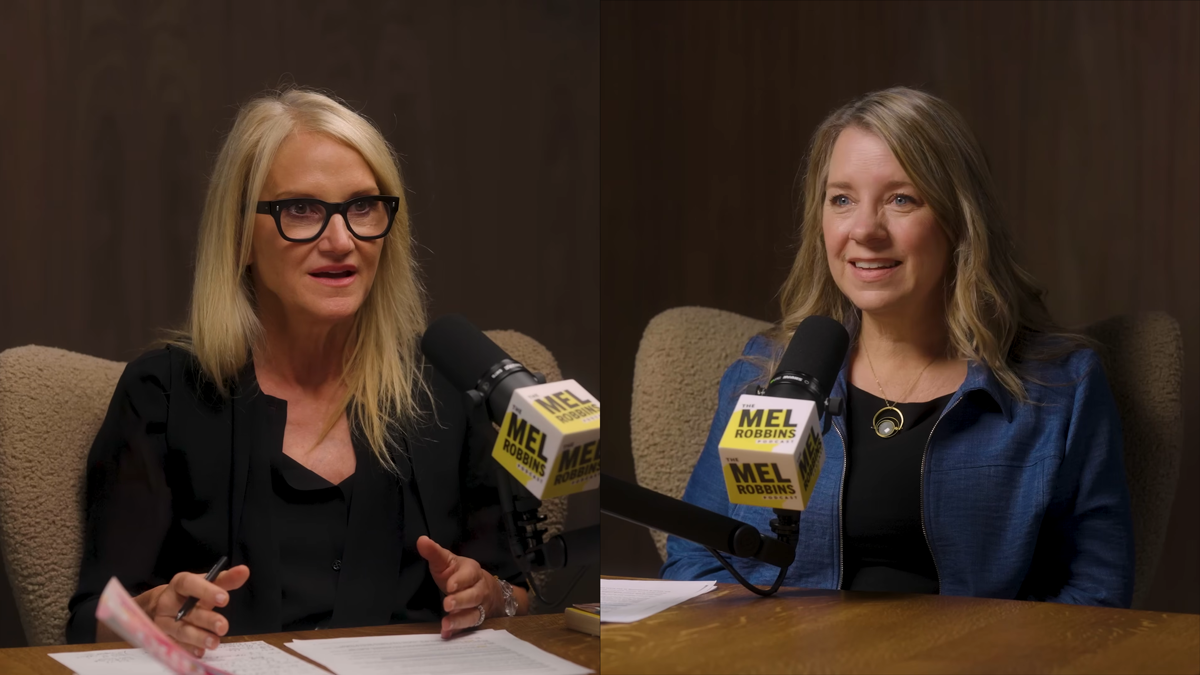
Today, you are going to learn the science of manifestation, visualization, and imagination - and the steps you can take to start creating the life you want.
In this powerful episode, Mel sits down with Dr. Cassandra Vieten, PhD, a clinical psychologist, professor at UC San Diego, and one of the world’s leading researchers on imagination and consciousness.
Dr. Vieten directs the Center for Human Imagination at UC San Diego, leads the Center for Mindfulness at UC San Diego’s Centers for Integrative Health, and her research has been cited more than 5,000 times.
Together, Mel and Dr. Vieten unpack the science behind creating change.
You’ll discover how your mind shapes your reality and learn practical, research-backed techniques to shift your thinking and create new possibilities.
By the end of this episode, you will know how to get off autopilot, break free from the stories holding you back, and use imagination, visualization, and manifestation to start creating a more intentional and hopeful future.
Listen on:




You are the author of your life. You become the person who creates the world that you want to live in.
Dr. Cassandra Vieten, PhD.
All Clips
Transcript
Mel Robbins (00:00:00):
Today on the Mel Robbins Podcast, how to manifest anything and unlock the power of your mind to create the life you deserve with world-leading psychologist, . Okay, before we jump into this extraordinary episode, my team was showing me something. They brought up a lot of emotion. 58% of you who watch the Mel Robbins podcast here on YouTube are not subscribers. It would make me feel so supported, seen, and grateful if you would subscribe. If that subscribe button is lit up, it means you're not a subscriber. Will you help me achieve my goal of getting that number to 50%? It's free. That way you're not going to miss a thing. And most importantly, it's one way that you can tell me and the team here at the Mel Robbins Podcast that you love all the content that we're putting here on YouTube for free.
(00:00:53):
This episode is going to be one of your all time favorites. I can just feel it. So let's jump into it. Cassandra Vieten, welcome to the Mel Robbins Podcast.
Dr. Cassandra Vieten (00:01:04):
Thank you. I'm so happy to be here.
Mel Robbins (00:01:05):
I am thrilled that you're here. The subject of your research is so fascinating. And what I want to start with is what could change about my life? If I take everything to heart that you're about to teach us about the power of our imagination, visualization, manifestation, consciousness. If I apply everything you're about to teach me, what could change?
Dr. Cassandra Vieten (00:01:29):
Well, I mean, I think it's a couple of things. One is that you become the author of your life. You become the person who creates the world that you want to live in. And the second is sometimes you'll hear the phrase, the magic is gone from a relationship or from a job or something. I really believe in imagination's power to bring the magic back into your life. And I don't mean magic in a fake sense. I mean the vitality, the awe, the wonder, the mystery, the beauty, just the fun parts of life, the spices that make life so interesting and bring back that curiosity.
Mel Robbins (00:02:07):
I love that. I want to put a giant highlighter on what you just said. The power of your imagination to bring magic back into your life.
Dr. Cassandra Vieten (00:02:19):
Yeah.
Mel Robbins (00:02:20):
Is that possible?
Dr. Cassandra Vieten (00:02:22):
Absolutely. Absolutely. I work with hundreds and hundreds of people every year who feel like as you grow up, you become nine, 10, 11 years old and people say, okay, time to stop imagining. Time to get real. That's imaginary. That doesn't really happen. None of that actually happens. And so you're trained over time to become this very serious, logical, rational, reasonable type of person. And what happens, unfortunately, is that it's almost like the pendulum swings too far in that direction, and you lose that sense of awe and wonder and mystery. And even noticing synchronicities that happen or noticing things that are amazing, you're sort of like, "Oh, filter that out. Just stay focused." When those are the things that people actually, when they look back at their lives, they remember those moments as some of the most important things that happened to them.
Mel Robbins (00:03:14):
I would love to have you speak to the person who's listening right now who feels like they're just reacting to life because 70% of the millions of people that listen to this show every single week responded to a survey that we just put out saying, "I feel like I'm reacting. I'm not really living my life. I'm not creating anything." Dr. Vieten, based on your research, what can they learn to do that will help them switch out of that mode of like, "I'm just trying to survive here. I didn't even realize creating something different was possible."
Dr. Cassandra Vieten (00:03:48):
Yeah. I mean, first of all, it's not your fault. Society and culture right now has been set up in a way that is encouraging us to be reactive. I call it the great flattening. I can't tell you how much of my day I spend in front of a Zoom screen or in front of a TV screen or in front of my phone screen. So a lot of people are waking up in the morning and all the way until the evening, all they're doing is reacting to what comes at them. So how does imagination help with this? Well, I like to think of life as sort of like a tapestry. So let's say you have threads that are weaving into the tapestry, and these are the actual constraints of your life, all of the stuff that you have no control over. It's your genetics, it's what networks you have, what opportunities you have, et cetera.
(00:04:36):
But then you've got the part of life that you create and you weave in. And a lot of that is imagined. I mean, first of all, some of the threads that come into your life that you perceive as reality, you're actually imagining. You think they're reality. The limits - Give me an example.
Mel Robbins (00:04:51):
What do you mean?
Dr. Cassandra Vieten (00:04:52):
Well, so how about the only thing that I can do to be successful is work at a 40, 50, 60 hour a week job. That's what it is. That's the deal. That's the only way that anybody's ever successful.
Mel Robbins (00:05:03):
That's not true?
Dr. Cassandra Vieten (00:05:04):
No, there are tons of different people who do work in many, many, many different ways. So some of the limits that we think are hard and fast are either individually imagined or collectively imagined. And you can decide, I want to imagine something different. But even more important, there are real constraints. There is reality. But throughout our day, when we encounter our reality, I like to call it Swiss cheese reality. And so we see some things, we observe them, but there are a lot of gaps. So let's say I run into a new person at my job and she walks up and she's really well-dressed and extremely well put together. And I look at her and immediately I'm observing, but then I'm also imagining, oh, this is somebody who really has their shit together or they know what they're doing or they come from a lot of privilege or they probably think they're better than me.
(00:05:56):
I mean, I'm already off to the races. I'm not even noticing that imagination. I'm seeing that as reality, but I'm weaving that in to what reality really is. What could I do instead? I could decide that the threads of imagination that I weave into my reality, I want them to be something different. I want to imagine that everybody's pretty much doing their best, that most people are excited about helping if they are asked for help.
Mel Robbins (00:06:25):
As I was sitting here thinking about the example about meeting a new colleague that's dressed to the nines, you don't stop to consider that your opinion and immediate impression of this person is something you've imagined.
Dr. Cassandra Vieten (00:06:40):
You've imagined it.
Mel Robbins (00:06:41):
And it's a helpful example because when you hear the word imagination, I tend to think about Disney or Avatar or these worlds that don't exist, but you are challenging me and the person who's here listening to consider that a lot of the opinions that you have about yourself or the way that the world works or who other people are or are not are examples of things you've imagined and you just live as though it's fact.
Dr. Cassandra Vieten (00:07:14):
Yeah. We are inherently storytellers and we only have a little bit of the available information at any given point in time. And so we can say to ourselves, "I want to retrain the way I tell a story about my life. I don't want this to be my story anymore."
Mel Robbins (00:07:32):
Dr. Vieten, what are the specific mindset tools that you're going to teach us today that can help you stop reacting to your life and start creating the life that you want?
Dr. Cassandra Vieten (00:07:45):
Today I'm going to talk about visualization, manifestation, and imagination. How you can visualize, manifest, do all of these practices to help you be more skillful about your imagination once you've recognized the science and you know you have it and it's influential. And the third is to tap into a territory of your being that is not your usual way of being, that holds information and energy for you that you cannot access any other way.
Mel Robbins (00:08:17):
Oh my God, I love this.
Mel Robbins (00:08:18):
Let's just jump right in. What is visualization?
Dr. Cassandra Vieten (00:08:22):
So for most people, visualization is one of the easiest ways to access their imagination. There's so much brain real estate that's dedicated to vision that we can actually use that even when our eyes are closed. And I want to expand the definition of that to say it's not always pictures in your mind. Sometimes it's a feeling that you want to imagine or it's a movement or an environment. So when we talk about visualization, let's think about it in terms of where do I want to be? How does it feel? Not only what does it look like? Because there's a lot of people out there who their visualization is kind of blocky, right?
Mel Robbins (00:09:02):
I always thought you had to picture it in your mind.
Dr. Cassandra Vieten (00:09:05):
No, and it's hard for people because when I used to teach workshops in the early days, I would make everybody visualize and we'd always have these four or five people who were like, "I didn't see anything." And I had to learn, not everyone visualizes. Some people are much better at storytelling. So let's say that your story of your life is that you're a pinball in a pinball machine and you get shot out of that little tunnel every morning and then bam, bam, bam, bam, bam, ching, ching, ching, ching, ching. And you don't get to decide, you just get blasted around all the time. You might then say, "I don't want my future to be the pinball machine future. I want my future to be the hiking through the Alps woman. I engage with everyone I encounter along the way. I have uphill battles, but when I do that, I breathe deeply and I walk methodically.
(00:10:03):
And then when I see a beautiful view or a moment of joy, a small little flower coming up from a rock, I sit and spend time with that, that the walker becomes your new story.
Mel Robbins (00:10:15):
I think it's so helpful to know that you could use the power of visualization by writing a story versus closing your eyes and trying to see the movie scene of it. I'll give another example because this is something that I've been working on for a long time, which is I think for a very long time, like a lot of people, I had a story. It's all up to me. It's all up to me.
Dr. Cassandra Vieten (00:10:36):
All up
Mel Robbins (00:10:36):
To me. It always comes back to me. It's up to me. If I don't do it, nobody's doing it. Oh, they didn't do it, so I got to do it. And it's not empowering. And it just plays on repeat. And I didn't realize it was visualization. I have been working on a different story, which is I don't have to do it alone. There's a lot of help. All I have to do is ask for help. There's a lot of people that want to help. It is not all up to me.
Dr. Cassandra Vieten (00:11:06):
Yeah. And it's not even skillful to have it be all up to you. I was working with a client the other day where we were using the metaphor of an obstacle course, and you know those military obstacle courses where you're crawling underneath the ropes and then you got to get over this gigantic wall. How do they get over that gigantic wall?
Mel Robbins (00:11:24):
Somebody else pushes
Dr. Cassandra Vieten (00:11:25):
You up. That's right. Yeah. So you could say, I got to do it all myself, but you could also be stuck at that wall for many, many years because you simply will not ask someone to give you the boost.
Mel Robbins (00:11:36):
I've never thought about visualization as writing a different story. I've always thought I have to close my eyes crisscross applesauce with my feet and try to see the movie. And it's very frustrating if you're in a position in your life where you want things to change, but you can't actually see the movie of the change. But I do think it's accessible and easy if you start with, okay, what about my current story do I hate and I'm tired of? And if it were just the opposite of that, what would that look like? If I weren't a pinball, if I didn't have to do it all alone, what's the opposite story? And then write that out.
Dr. Cassandra Vieten (00:12:19):
And here's a super fun exercise because part of imagination is also what we call thought experiments. And that does kind of use the thinking mind. So let's say that you are stuck in a situation that is really, really difficult, whether it's a job or family matter, whatever it is. Write down 10 ways that you could make it worse. You could make it worse? Write down 10 ways that you could make the situation worse, that you could make the situation worse. And the exercise is after you write down the 10 ways, flip it. What's the opposite of the thing you wrote that would make it worse? And it is fascinating because you come up with answers that you wouldn't come up with by just saying, "What should I do?" You force yourself to be like, "Okay, let me make this as bad as it could possibly be."
Mel Robbins (00:13:11):
I could light the house on fire. That'd be pretty
Dr. Cassandra Vieten (00:13:13):
Bad. Exactly. I could spend all my
Mel Robbins (00:13:14):
Money gambling. Well, that would make this a lot worse.
Dr. Cassandra Vieten (00:13:16):
And then you write the polar opposite. And when you look at that list of opposites, you have a roadmap.
Mel Robbins (00:13:23):
Wow. And that's a form of visualization.
Dr. Cassandra Vieten (00:13:25):
Yeah, that's a form of imagination. Yeah.
Mel Robbins (00:13:28):
So is imagination the big category and visualization is a technique in it? That's right. That's right. Okay.
Mel Robbins (00:13:34):
A lot of people talk about manifestation. And we also did an extraordinary episode on the neuroscience of manifestation with the late Dr. Jim Doty, who I know was a really good friend of yours. How does that fit in to your research around imagination, what we just talked about with visualization?
Dr. Cassandra Vieten (00:13:56):
I love how Jim talks about manifestation. And I believe he's absolutely right that it's not so much about just picturing something I want in the future and then magically having it appear, but it is about visualizing purposely, intentionally, what direction do I want to move in? Where do I want to be in my life? How do I want to show up? And the more we visualize that, we write about it, we draw it, we think about it, we conjecture about it, we tell other people about it. The realer and realer it becomes to our mind and to our brain. And what we're trying to do is get everything in there rowing in the same direction. Because a lot of times people are moving into the future. They have one foot on the gas and they have one foot on the brake. And they're like, "Why am I not getting anywhere?
(00:14:48):
And what's that noise?" And you don't even know you have the one foot on the brake. So to keep that foot on the gas and to take the risk of lifting the foot off the brake, you've got to keep telling your mind and your brain, "This is in fact where we're going. This is going to happen. I am going to be okay. I'm not going to lose something important by pursuing this dream or this goal." And that's what people are often scared of is if I pursue this dream, I am going to lose something. I'm going to look foolish. I'm going to betray my family who said the only thing you should do is become an accountant, a doctor or a lawyer. So many things. And so also having a lot of compassion for yourself about the things that you are unconsciously imagining might go wrong to hold that part of yourself closely and to say, look, I know you're scared, but we are doing this.
(00:15:47):
How can I make you feel more comfortable? Because it's non-negotiable. We are going to manifest this thing that we're working toward. But be aware, there's going to be a part of you that's like, I can't do that. How can you take care of that part?
Mel Robbins (00:16:00):
What's helpful in the way you just described that is that visualization feels like a very accessible tactical tool. And as I was listening to you, especially talking about one foot on the gas and one foot on the brake, so relatable, manifestation all of a sudden seemed like this very necessary thing for you to do for yourself every day in modern life because there is so much external noise from the world, from friends, from family telling you who you should be, what you should be doing, where you should be by now. And manifesting, at least for me, is a very intentional daily practice for me to get clear about who I am, what I want, how I want to feel, and where I'm actually going. And in a world that's constantly telling you not to be the person that you really feel internally you want to be, it's vital because it's the only way that you tune into yourself and you can hear yourself.
Dr. Cassandra Vieten (00:17:04):
Yeah. I mean, there are two main ways to shift perspective. One of them is training. You repeat it to yourself over and over and over again. And practice means the combination of intention, setting an intention for what you want and what you're doing. Attention, paying attention to it on purpose every day, and repetition. And that's what retrains the brain. When you have a clear vision of what you want to do, where you want to go, what is trying to come through you, and this is personal, not scientific, how many of us start to have synchronicities and feelings that you're getting signs from the universe and that somehow the universe is conspiring to help you? And sometimes I kind of like to imagine that there's like a, "We got a live one over here in sector five. They've got their vision. They're going for it. Everybody get over there and try to help." Because you are trying to do something.
(00:18:10):
And I think it has to be something that is serving humanity, that's serving the planet, serving all beings. I don't think that this works when you're trying to manifest something that's going to harm others or that's going to cause more fear or constriction or division or hatred.
Mel Robbins (00:18:24):
What is the difference between visualization versus a manifesting practice of training your mind
Dr. Cassandra Vieten (00:18:35):
To
Mel Robbins (00:18:35):
Be in alignment with the things that you want to attract or create in your life?
Dr. Cassandra Vieten (00:18:41):
I think it's a dance between effort and hard work and commitment and discipline and affirmation and staying focused on one hand. And this is going to sound like the complete opposite. Surrender, letting go, letting be, going with the river, not trying to boil the ocean, all of those phrases. And these two, even though they seem counter to each other, when you go back and forth between them and you navigate between them and you use both, that is really the pathway toward what we can call manifestation or creating the life that you want.
Mel Robbins (00:19:20):
I'm kind of picking at this point because there are so many people around the world that are interested in having a daily practice. And I am somebody that has a daily manifestation practice. And I specifically think about the things that I want. I then pick up a pencil and I write them down. I write down five things every morning that I want to create in my life. And then I read them again and I sit in my body and think about how I'm going to feel as I'm doing the work to create those things. And time and time again, that practice of intentionally organizing my thoughts and mind from the mental to the physical of writing it, to the rehearsing of it, to the flooding my body with the feeling of what is it going to feel like when X happens?
Dr. Cassandra Vieten (00:20:18):
What
Mel Robbins (00:20:18):
Is it going to feel like when Y happens? And then I close my eyes and I think about all the little. I see myself doing the annoying steps. A simple example would be if you have on your bucket list climbing Mount Kilimajaro or running a half marathon, yes, write it down. But then when I close my eyes and think about it, I think about the boring 6:00 AM training run when it's raining.
Dr. Cassandra Vieten (00:20:51):
I
Mel Robbins (00:20:52):
Think about huffing and puffing at the bottom of the mountain and how heavy the pack is and not enjoying it. And I see and feel myself in a future state as a person working toward this thing. And what I believe is that when you intentionally take the time to identify the things that you want and you go from mental to physical, and then you go and kind of flood your body with feeling what the future you is going to be doing on the road there, something crazy happens in your brain and the filters in your mind. And you see patterns and you see connections and you see the future differently. And I don't believe it's woo-woo at all. I think it's very hard science.
Dr. Cassandra Vieten (00:21:42):
Yeah, that's exactly what we're talking about. And the only difference is I would say you're using your imagination to completely embody, we call it embodied imagination. You are embodying the future you want to see, you're embodying the goals. And I love how you said you're also imagining the hard parts because so many people just imagine the result.
(00:22:05):
Embody in your imagination all the steps it's going to take to get to where you want to go. It's like the future's already happened and you are reverse engineering it through giving your brain and your body the signals that this is what we are up to now. And it takes that level of work because the programming and the conditioning that you have from the previous parts of your life, so much of it, right? It's hardwired. So that daily practice is you literally using your imagination to retrain your brain and get it to cooperate with you in these activities that you're going to pursue.
Mel Robbins (00:22:43):
I'll give you another example because I think this is such a useful tool because what you're also fighting against is your own discouragement
(00:22:51):
And your excuses and fear. So let's just take the example of you're moving to a city and it's hard to find an apartment and you're worried about not being able to afford it. I did this actually when we were looking for our first house because we could not afford a house in the town that we wanted to live in because they had great public schools. And every night I would write down, we are going to find an old house and we're going to be shocked and it's going to be beautiful and we're going to have to paint it ourselves. And it's going to be a magical thing where we find out through. And it took six months of doing that. And sure enough, we found a house that wasn't on the market yet that had a lawn that had grass that was 27 inches high and it was completely abandoned and locked up in a battle between the people that were still alive from the person who.
(00:23:47):
It was just on and on and on. But I think what it does is it doesn't make the house magically appear. It makes you have more tenacity and belief that something's possible.
Dr. Cassandra Vieten (00:23:58):
That's right. I love that. Yeah. It reminds me of when I first moved to the Bay Area for grad school. We couldn't afford to buy anything in the Bay Area even back then. And so I imagined this little tiny house and behind it was this ocean. And I'm like, Cassie, how are you going to get an ocean view? You can't even afford, right? So we're looking everywhere. What did we find? We found a 640 square foot houseboat floating on the ocean. That's what we moved into. No way. Yeah. So I was like, oh, okay. It wasn't the ocean view. It's going to be literally on the ocean.
Mel Robbins (00:24:34):
This message is brought to you by Apple Card. Ice cream by the beach. Going to mini golf with the family. Checking out a new restaurant in town. They're more than just items to check off the summer bucket list. There are also opportunities to earn 2% daily cash back when you use your Apple Card with Apple Pay. Apply for Apple Card now and use In Minutes with Apple Pay. Subject to credit approval. Apple Card is issued by Goldman Sachs Bank USA Salt Lake City Branch. Terms and more at applecard.com. For the person who's feeling stuck and now is leaning in because they're starting to imagine something else might be possible,
Mel Robbins (00:25:20):
What is the first step to starting to use the practice of manifestation in their life to get unstuck?
Dr. Cassandra Vieten (00:25:27):
Yeah. Well, here's one thing that I find very useful. This is a tool where if you can't do it inside yourself initially, you can imagine someone who loves you tremendously, really has your best interest at heart. This could be someone who's alive. It could be someone who's passed away. It could even be a fictional figure. I'll
Mel Robbins (00:25:51):
Volunteer. I'll be the fictional person in your mind.
Dr. Cassandra Vieten (00:25:54):
Well,
Mel Robbins (00:25:54):
I guess I'm a real person, but I could
Dr. Cassandra Vieten (00:25:56):
Be the person. Absolutely 100%.
Mel Robbins (00:25:57):
Yeah. Wha Mel tell you? What would Mel tell you is possible?
Dr. Cassandra Vieten (00:26:00):
Yeah. So you are sitting there and you explain your whole situation to this person and ask them, "What do you see is possible? What do you see as possible for me?" And you'll be surprised at what you hear back from that person because it just kind of tricks your mind into getting out of the tyranny of your critical judging mind and allowing this person who's a million percent behind you and believes in you, in your imagination to tell you, "Here's what I see." And you can recognize, again, as we were saying, it's not going to be harsh. It's not going to be an argument. It's not going to be a ton of questions. And it'll probably be something really short and pithy that you'll hear from this person as well as feeling the love and the cheerleader in that person. I'm 100% behind you. His is what your next step is.
(00:26:55):
That's one.
Mel Robbins (00:26:56):
What does manifesting change about your life?
Dr. Cassandra Vieten (00:27:01):
So when you decide that you are going to pursue a dream and that becomes the orienting principle of your life, you become motivated in a different way. You have access to energy that is not coming from fear of consequences. It's not coming from your anxieties. It's not that you're being. Have you ever had that feeling where you're just pushing so hard that you're just running low on energy?
Mel Robbins (00:27:33):
That was last week, but
Dr. Cassandra Vieten (00:27:34):
Yes. Well, yes, we have that, right? Even when you're driven by purpose, even when you're driven by vision, you can have that. But there's overall a different sense of motivation, energy, direction, momentum when you have that. It's more about what you're going toward than what you're going away from. Whenever you're trying to get away from something, there's kind of a mad dash and a scramble and it's all defined by what you don't want. When it starts to become defined by where you're going and what you do want, then there's this sense of walking into the future with energy and with commitment. I like to say Martin Luther King Jr. did not say, "We have a problem." He said, "I have a dream." And he invited people into that dream. And more quickly than anyone thought, at least a lot of that dream has been realized there's still a long way to go.
(00:28:27):
That's what motivates people is imagining a future that's different. And I think this is very important for those of you who are listening. When you criticize yourself, when you punish yourself, when you focus on what is not working and how you need to do it better and the weight you need to lose and all the stuff, I would spend about 10 to 15% of your time accurately seeing what are the issues, what are the problems? And then the rest of your time on what are potential solutions and what is my vision for the future should those solutions come to pass? What will it feel like? What will it look like? Where will I be? What colors will be around me? What kind of people will be around me? What language will I be using toward myself or toward other people? How much further could I go with just that one change?
Mel Robbins (00:29:24):
That just gave me a visual, speaking of imagination, because in periods in my life where I have been in utter survival mode, don't even know how I got through the day. Young kids can't pay the bills. So many of us have been there. It's like you're treading water in the middle of an ocean with no land in sight. And that's why it feels like you can just keep your head above water and that's all you can do. And these tools have really helped me because what they've done is Is by using tools like your imagination, visualizing a future state, starting to manifest and intentionally program your mind for where you want to go.
Dr. Cassandra Vieten (00:30:13):
It's
Mel Robbins (00:30:14):
Almost like a lighthouse in the distance appears. And now even though you're still just barely able to keep your head above water, you now have a direction to move toward.
Dr. Cassandra Vieten (00:30:25):
Yeah, 100%. Yeah, absolutely. And for me, sometimes it goes back to story. So I'm drowning, I'm exhausted, I can barely get through this. One story is to say I can see myself drowning. The other is I'm on mile 19 of a 26-mile marathon that I volunteered for, and I am going towards the finish line, but mile 19 sucks. It's painful, it's hard, but I am the runner who's doing this. What do I need? Sometimes I need my pit crew to hand me some water along the way. All of that stuff. Another is even when you are facing something that is so difficult, so hard, so even shameful that you feel like you have to keep it a secret, one of the things that I'll work with people on is imagine that there are 1000 women in a semicircle behind you and they have all faced the same thing.
(00:31:28):
I have a kid in trouble. I lost someone. That you have an entire group of people throughout history who have faced the same thing and now they are walking behind you and helping you make your way through it. So yes, going towards the vision, going towards manifesting the future, and also using these other metaphors to help you navigate towards it.
Mel Robbins (00:31:56):
What's the difference between manifestation and magical thinking?
Dr. Cassandra Vieten (00:32:00):
Yeah. So magical thinking often has to do with the stuff that I want other people to do or the stuff that I want to have. It has to do with things I don't have any control over. I just want these things to appear in my life. And manifestation, as I understand it, is more about how do I want to show up? How do I want to be as I move into the future? I want to be honest. I want to be supportive. I want to be empowering of other people. I want to lift other people up with me. I want to be genuine. I want to be authentic. I want to set boundaries. I want to have a different energy level. Those are things that I can actually do. And so manifestation, I think the best use of it is to picture who and how you want to be and what results that might have.
(00:32:56):
Because a lot of times when we think about things we want in the future, it's because we think they're going to give us a sense of freedom or vitality or love or connection or worthwhileness. And they may, and it's good to move towards those. But the other thing you can do is flip it and say, what could I do today to give myself a sense of those things that I think the future thing are going to bring me?
(00:33:22):
What freedom can I bring into my life today? What vitality? What are the things that I could do right now that would bring me what I think that future thing is going to give me?
Mel Robbins (00:33:32):
What's a daily practice or routine? The person who's listening right now can start to put all this into their life?
Dr. Cassandra Vieten (00:33:43):
One thing.
(00:33:44):
Yeah. When I wake up in the morning, I do my meditation practice and then I take myself through my day. I imagine it. I look into what am I going to do? How am I going to get there? What am I going to eat? What are the meetings I'm going to have? Where am I going to be sitting? So that's that simulation form of imagination of just walking through the day. And then how do I need to be today? What do I want to bring to that? And then looking into something in my past and when did I feel what I want to bring in today? So if I want to bring balance into today or emotion regulation or I want to bring a warrior spirit and some firm boundaries, or I want to bring compassion and empathy, when did I last feel that way?
(00:34:30):
Embody that completely and then move into your day with that quality.
Mel Robbins (00:34:36):
Dr. Vieten, I want to take a step back because all the things that you've been teaching us about visualization and manifestation fall under the larger umbrella of your research around the science of imagination. So can you explain what exactly is imagination?
Dr. Cassandra Vieten (00:34:56):
Imagination is the way that we simulate, reconfigure, and transcend reality sometimes through visualization and oftentimes through other forms of imagination.
Mel Robbins (00:35:10):
What are those words mean? What do you mean it's simulate, reconfigure, and transcend reality?
Dr. Cassandra Vieten (00:35:17):
Okay. So simulate is when I think about something in my mind, I bring it into my mind's eye. Let's just think about your house right now. Imagining your house, when you open the door, when you walk into it, what rooms are in it? Where's the kitchen? What do you love about it? What do you still want to fix about it? What's in the yard? That's simulation imagination. You are like a copy machine. You're just trying to copy what things are like so that you can game things out. What am I going to make for dinner tonight? What am I going to say to my kid tonight? That is very important. Us being able to simulate reality, and you and I are sitting here right now. As far as we know, there's nothing outside of this room. We're imagining. We're simulating all of it. And so it's very helpful to simulate.
Mel Robbins (00:36:04):
I think a lot of us simulate negatively.
Dr. Cassandra Vieten (00:36:07):
Right.
Mel Robbins (00:36:07):
We wake up, we think about the day ahead. We start bracing. We start thinking about what's going to go wrong or the thing we're dreading. And you are saying that you can first start training yourself to simulate having a good day or showing up a certain way.
Dr. Cassandra Vieten (00:36:22):
Right.
Mel Robbins (00:36:23):
And then the second thing you said was reconfigure. Now
Dr. Cassandra Vieten (00:36:26):
What am I doing? Reconfigure. So now what you can do is say, I know what it's probably going to be like, but I know I'm going to have some hard meetings in the morning and I know I'm going to have another tricky situation in the afternoon that I have to face. What would make me feel vital? You know what I'm going to do? I am going to go out and get my favorite sushi. I'm just going to go out, get it, bring it back, sit with a cup of tea, eat the sushi, and know that that is me taking care of myself. I need a little bit of extra care today. So you're adding something to the reality. You're adding something to what you're imagining. Another way of reconfiguring goes a lot further than that, and it's reconfiguring your story about who you are and how you want to be.
Mel Robbins (00:37:15):
The third part you said was transcending.
Dr. Cassandra Vieten (00:37:17):
So transcending is the most fun, which is what can I do that's completely outside of what I think is possible? I have a client who went through the unimaginable, which is that she lost her son to an overdose. And this was quite a long time ago. And she has suffered since then from extreme guilt because she also had an addiction at the time. And she's sure that her addiction caused his addiction and that his overdose was completely on her shoulders. And so this was really, really entrenched. And she felt like punishing herself was the right thing to do. And so as we worked together for a long time, we started to change the story into we both suffered from the disease of addiction. And it went far back in their family, totally genetic. And we started turning it into a story where our family and my ancestors, it's almost like we live in a village and every now and then a dragon comes in and breathes fire and lays waste to the land.
(00:38:30):
We lose people, people die, it destroys things. But that has been happening in my family for many, many generations. And the dragon came while I was there with my son and it got me and we lost him. And so now what I do in my life instead of punishing myself is I help other people who are facing the unimaginable because I've been through it and I can be by their side while they go through it. Totally different story. The dragon metaphor really, really helped. And so when we talk about transcending reality, it's not always about going into a complete la la land. It's about finding a story that's big enough to match what's actually happening in your life and help you transcend that and have it be different for, not that the situation was different, but the way you look at it is different. Well,
Mel Robbins (00:39:26):
It's a super helpful image, especially for anybody who's trying to break generational patterns.
Dr. Cassandra Vieten (00:39:32):
Yeah.
Mel Robbins (00:39:34):
Why is the skill of imagination critical to creating a better life?
Dr. Cassandra Vieten (00:39:42):
Well, the only thing that has ever led to inventions or breakthroughs or things that have changed the world, both individuals and in our society, like cell phones or electricity. Going to
Mel Robbins (00:39:59):
The moon.
Dr. Cassandra Vieten (00:40:00):
Right. Going to the moon. Somebody somewhere said, "What if? What if we could go to the moon? What if we could talk to each other using a machine?" There's a super cool story about Alexander Graham Bell and the inventor of the telephone. And so he actually had this experience where he somehow knew his sister was in trouble. And this is before the phone, this is like mail was on the Pony Express. He just had a sense, "Something's wrong with my sister. Something's not okay." And he did find out through letter like three weeks later she had had a carriage accident. And he said, "I wish we had a machine that would let us communicate with each other." And he just dedicated his life to making that machine. And so that's a big one, right? But in your own life, there are things that you could create or invent solutions that you could come to that, again, can only begin in your imagination.
(00:41:03):
Imagination is like the workspace in your mind where you can simulate, reconfigure, go beyond current reality and say, "Hey, there's probably a different way to do this. I want to find out what it is." Is everybody capable of imagining?
(00:41:20):
100%. So when people say, "I'm not very imaginative," or worse, they're told, "You're not very original, you're not very imaginative." Usually what people mean is you don't know how to visualize things in great detail. You can't seem to visualize things that are different in great detail. The good news is there is a neurodiversity of imagination where each of us has our own particular unique brand of imagination, like a fingerprint. We each have our own profile. So you may not know that you are actually less of a visual imaginer and more of a social emotional imaginer. Those kinds of imaginers might not have very vivid images, but they sure can tell you how someone feels. They can tell you how someone across from them might be feeling or thinking, or if I do this behavior, this is how it's going to come across to the other person or this is the response you might get if you do that.
(00:42:21):
They're just really good at that. Then there's other senses besides vision, like even smell imagination and gustatori imagination. Chefs are really good at imagining what something might taste like. And it's part of how they imagine their new concoctions that they make. So what I want people to know too is all these imagination profiles are strengths. We need every type of imaginer. We need the fantastical visual vivid imaginer, but we also need that practical imaginer who knows exactly how things will fit.
Mel Robbins (00:42:57):
When we first got you to agree to come on the show and I started digging into your book and your work, I immediately thought of this quote in Trevor Noah, who I love, his number one New York Times bestseller born a crime. And I want to read to you from Noah's book. It's on page 73 where he's talking about imagination. We tell people to follow their dreams, but you can only dream of what you can imagine. And depending upon where you came from, your imagination can be quite limited. Growing up in Soueto, our dream was to put another room on our house, maybe have a driveway, maybe someday a cast iron gate at the end of the driveway, because that is all we knew. But the highest rung of what's possible is far beyond the world you can see. I think intellectually we know that, but if you're in a moment in your life where you feel very stuck and you feel that there's a lot of evidence that this is all that there is and that this is what your life is and what it's always going to feel like,
Mel Robbins (00:44:15):
Dr. Vieten, what do you want to say to the person who really believes that the highest rung of what's possible in your life is where you are?
Dr. Cassandra Vieten (00:44:27):
When we feel stuck, it's often accompanied by the feeling of, I don't know what to do. I don't know what's next. I got nothing. And the linear logical ego mind really hates that. Does not like it. But there's another part of us that when we are in a place of, I don't know, I have no idea what to do, imagination does like that. And so you've probably seen the book by Pema Chodron, Uncomfortable With Uncertainty. And I had a teacher that was very important to me, Angela Sarian, who would say, spend more time in the land of I don't know.
Mel Robbins (00:45:10):
But I don't want to be in that land because I don't like feeling like I don't know.
Dr. Cassandra Vieten (00:45:14):
Right? Yes. Spend some time there. But also I teach a workshop called The Next You, and we take people to meet their future selves.
Mel Robbins (00:45:25):
How do you do that?
Dr. Cassandra Vieten (00:45:26):
Right. So first what you do is get yourself into a state, whether it's through meditation or listening to music or being in nature where you're really open-minded and kind of let go of some of the busyness and all that stuff. So you might do some breathing for five or 10 minutes. And then what we want you to do is five years, 10 years, 15 years into the future, imagine that you are at your front door and you are about to meet the future you that has already embodied a lot of the qualities and goals and accomplishments that you hope to do. Now I wouldn't get too locked down on exactly what it is because if you put an overlay on it ahead of time, you're going to be kind of controlling it too much. Okay. So instead of saying, "Well, she's got a mansion and she has a Jaguar," you just say, "This is someone who feels the way that I think the mansion and Jaguar would give me.
(00:46:27):
This is someone who feels free. They have a lot of spare time. They feel balanced. They feel vital. They feel healthy. They have positive relationships." Whatever your goals are, right? Whatever your goals for how you want to be are. Open the door, see your future self, and then you can ask them some questions. What is the one thing more than any other thing that you did to get you to where you are today? And you'll be surprised at what they answer. They'll give you some direction. The great thing is you don't have to do this once. You can actually have that future self be your ally, your best friend, your golf caddy. Sort of like, "Hey, I wouldn't do that. That's going to get you into a sand trap." They can become a coach for you as you move into your future. It can become a sort of a true north on the compass, and it can help you make decisions now.
(00:47:24):
Is this taking me closer to my future self or further away from my future self? And people might think that sounds, I don't know, frufu or woo-woo or something like that. But we know from the science that when people imagine their futures, they act differently, they show up differently, they make different decisions. And so there's very interesting data showing college students and they have them meet their future self and they actually take a photo of them and they age the photo. And so they see themselves, what they might look like when they're older. And then they ask them, "Do you want to start a savings account for the future?" And the kids who saw their future selves want to save more money for the future.
Mel Robbins (00:48:13):
What's happening in your brain when you are using the skill of imagination to visualize a whole different reality?
Dr. Cassandra Vieten (00:48:24):
The most important thing about what's happening in the brain when you are imagining is that the brain differentiates much less than you might think between something that actually happens and something you imagine. So when you imagine seeing something, your visual cortex lights up. When you imagine hearing something, your auditory cortex lights up. When you imagine moving, your motor cortex lights up. And so when you imagine something, you are actually giving your brain the signal that in a way it's happened. The great tennis player, Billie Jean King said before she went to sleep, she would just imagine the ball coming at her and every single angle and how she would hit it. And so what we know from research is that athletes who imagine practicing basketball game, soccer game, they have better performance than athletes who don't imagine. And so when you add imagination to your rehearsal for life, you're giving your brain the signal, "I'm still training.
(00:49:31):
Even though I'm just sitting here next to my window drinking my tea in my pajamas, I'm still practicing in my imagination." And so those parts of your brain are lighting up. The other things that are happening in your brain is if you imagine something that is very scary or threatening or what might go wrong or the worst, you're releasing cortisol the same way you would if it happened. Not quite the same. It approaches it. But if you're imagining the worst all day, every day, you are giving your brain the signal that those things are happening. There's this great quote that I think comes initially from Seneca, but it's attributed to Mark Twain and it's like, "I've experienced many terrible things, most of which have never happened. And so even though they haven't happened, you're still giving your body the same stress signals as if they did happen."
Mel Robbins (00:50:25):
Let's apply this. So let's say that the person listening is bracing all day long because they think they're going to get laid off, or they're bracing because they're worried that they're going to never meet somebody and fall in love again. And so they're imagining a future state, right? Because if you are driving to your job today, you still have it. And so I take it if you have trained yourself to be somebody that worries, "What if this? What if that? This going to go wrong. What if this person thinks that?" That's evidence that you could train yourself to imagine in the positive.
Dr. Cassandra Vieten (00:51:05):
That's right.
Mel Robbins (00:51:06):
And what changes about your life when you get very serious about training yourself to imagine in the positive?
Dr. Cassandra Vieten (00:51:13):
Well, I mean, my personal experience is that I have experienced maladaptive imagination. There was a time in my life where I had everything I wanted. I had a beautiful place to live. I had an incredible job. I mean, absolutely incredible. There was a lot of pressure and I did go through a divorce. And so when the stress increased a lot, I started drinking very heavily. And at that point I started to tell myself, "It's going to be okay as long as you don't ever tell anyone about this."
Mel Robbins (00:51:46):
Now, let me stop because that it's going to be okay if you don't tell anybody. You imagine that.
Dr. Cassandra Vieten (00:51:52):
Is that what you' saying? It's a story I told myself. I can do this as long as I don't tell anyone. So it's getting worse and worse and worse. It's having more and more consequences. And still my story is if you tell anybody about this, if you ask for help, you are going to get a black mark on your record forever. People are going to think you are the worst, that you have completely lost your mind, you're untrustworthy, you're damaged. So it goes on and on and on. It gets very bad. Finally, out of desperation, I call one of my colleagues and say, "Hey, I can't stop drinking." And he says, "I'll be right over." I said, "Look, I know I can't take any time off work. There's way too much responsibility." He said, "Oh no, you're already off now for the next 60 days.
(00:52:41):
You go take care of yourself. We got it. We are all behind you. Come back well." Did I imagine that would happen? Never in a million years. And so these diseases of despair is what my colleague Lisa Miller at Columbia University talks about, where you begin to despair addiction, depression, anxiety. Your mind starts telling you stories that are not true, but you start believing them anyway. And it's very hard to get yourself to tell a different story, but it's partly because you don't know you're telling yourself a story. You just think it's real. And so there's a colleague of mine who's at the Arizona State University. He's at the Center for the Science of the Imagination. And he's doing something called the VIP Project, the Veterans Imagination Project. His name is Bob Beard. And what he does is has veterans come in, and these are folks who have faced severe combat trauma.
(00:53:37):
They've had PTSD, they've had brain consequences because of what they've experienced. And so they're feeling like, "I don't know if there's anything for me after all that." He sits them down, he has them imagine their futures, and then he pairs an artist with them who sketches it all out for them in this very detailed painting or drawing. And after they go through this, they're like, "I have hope. I have vision. I have a compass. I have a true north. I have a direction." And that is the best gift you can give to anyone.
Mel Robbins (00:54:14):
It reminds me of a passage in your blockbuster bestseller, Imagine That. It's in the introduction. And I want to read to you from your book and have you dig a little deeper into the power of imagination. You say that your primary goal with your work, Dr. Veden, is to help people re-enchant their lives, to re-enliven their world, spark new hope, and reveal new possibilities through the science and practice of imagination. To help you escape the confines of your current reality tunnel and envision hopeful futures while experiencing more awe, wonder, and the ability to chart a new course for yourself and society. Because the antidote to despair isn't just hope, it's the skill to generate hope. So the first thing I wanted to ask you after reading that is what is a reality tunnel and how do I know I'm in one?
Dr. Cassandra Vieten (00:55:21):
Right, right. So this is a concept that came up in the '60s, and this was when consciousness was starting to explode and people were doing psychedelics. And this was like Timothy Leary and his colleagues were like, "Hey man, you're stuck in a reality tunnel." So it sounds kind of like, dude, right? But it's true. We are actually stuck in a reality tunnel. And all of us have our own reality tunnel. What we think is real, what we think is possible, what we think is impossible. And part of our job is to break free from these limited ideas about reality, open up our aperture and say, "If I'm stuck in a relationship and I'm like, should I stay? Should I go? Should I stay? Should I go? Should I stay?" Or a job, let's say. It's only two choices, stay or go. The truth is there's probably 10, 15, 20, 25 possible choices that you could make to break out of that tennis match inside of your mind.
(00:56:16):
And I see people who have been in this tennis match for decades, for years, for months. And so one of the practices they can try is to sit down and write 50 possibilities and don't make them practical necessarily. Some of them can be practical, but some of them can be completely impractical. Like, "I'm going to open a cozy bookshop in Scotland. I'm out of here. Or I'm going to join the circus." Whatever it is. Just don't edit, write them all down. And what happens then is that when you start to look at all 50, you might notice every single one of them had an element of travel in it. Why is that? I guess I want to travel.
Mel Robbins (00:56:58):
Or I want to escape this person in
Dr. Cassandra Vieten (00:57:00):
This relationship.
Mel Robbins (00:57:01):
So traveling means I'm somewhere else.
Dr. Cassandra Vieten (00:57:03):
Yeah. But let's say, so maybe you do, right? Yeah. Maybe you say, "Hey, you know what? I'm out of here." Or maybe you say, "I don't want to be out of here. I want to work on this. I got three kids. I'm not leaving. But you know what I'm going to do? I'm going to travel for a month every year. I'm going to go with my girlfriends, and that is going to change my life." That's practical. That's possible for some people. Maybe it's a week. Maybe you just say, "I'm not taking a vacation with my family. I'm taking a vacation with my girlfriends." There are small things that are real that can come out of those big, crazy 50 possibilities that you didn't notice before.
Mel Robbins (00:57:36):
Well, going back to the very beginning where we talked about the fact that 70% of the people who listen to the show around the world feel like they're reacting to life. What I love about what you're teaching us is so many of us are looking outside of ourselves for the signals when transformation is an inside activity. And these tools help you turn inward and go deeper inward into your subconscious, into your spirit, into your heart, into the things that you can't explain, and tap into those signals for guidance rather than constantly looking outside yourself for them. You are one of the most sighted researchers alive on the conscious mind. What is consciousness?
Dr. Cassandra Vieten (00:58:25):
Consciousness is what you experience, what you believe, what you intend, your intuition, your inner life. It's at the very basic level, just everything you're aware of. But then there's sort of a bigger sea consciousness where it's what you don't even know that you're assuming, believing, intending. And so one of the things about becoming more conscious is to start to pay attention to what are all of my beliefs? What are my values? What are my commitments? What's inside of me? How do I bring my consciousness into the world every day? And so I worked at the Institute of Noetic Sciences for about 18 years, and this was founded by Apollo 14 astronaut Edgar Mitchell, who was the sixth man to walk on the moon. And when he was on his way back to earth from space, he's viewing the earth and the stars and the sun and the moon.
(00:59:26):
And he had this epiphany where he recognized that my consciousness isn't just mine, but I'm actually connected to the molecules that make up my body are the same as the ones in the stars and in the space capsule and the sun and the earth. And there's this deeper sense of interconnectedness. So there is an outer world, and we all know what that is. This table, the lights, the walls, things that are real. Then there's an inner world. And that inner world. Is also real. It's our experience. It's what we perceive, it's what we believe, it's what we intend, it's our whole worldview. How do we view things? And that consciousness affects our bodies and our brains, our hormones, our neurotransmitters, the way our brain is built, the way we behave in the world.
Mel Robbins (01:00:25):
What does it mean though to become more conscious in your everyday life?
Dr. Cassandra Vieten (01:00:30):
Becoming more conscious in your everyday life means that you are not automatic as much. You are working as you move through your life with intention, with attention. You are, instead of just being kind of a pinball in a pinball machine, deciding that I want to bring a certain intention to this meeting that I'm about to have. I want to bring in a direction that we can go together and I want to elicit this from other people's.
Mel Robbins (01:01:04):
How do you tap into the unconscious mind?
Dr. Cassandra Vieten (01:01:08):
Well, it's interesting. When I started to do a lot of work on imagination, I went out to the desert in Enza Borrego and it's this gorgeous desert landscape and hiked to this top of this mountain. And at that point, I had this 360 degree view of everything. And I asked what I guess I would call the spirits, but let's just call it the universe or other people might call it something different. It's like, what does the world need to know about imagination? And the answer was immediate. It was, tell them it's the place where we can most easily talk to them.
(01:01:43):
And I love that because I feel like there is an inner wisdom, a deep inner wisdom that each one of us holds that's not accessible by typical linear logical thinking. It's accessible through imagination. And as we practice imagination more purposefully, as we create the conditions in our lives where imagination is more welcome to spontaneously arise, we start to get messages from that deeper inner self that are meaningful, that are influential, that are outside the box, and that allow us to make fundamental shifts in the way that we view the world and therefore in the way we show up in the world. And that changes everything.
Mel Robbins (01:02:33):
All right. So do you have a way that you could show me what experiencing this is like?
Dr. Cassandra Vieten (01:02:39):
Yeah. So actually we have created a number of virtual reality experiences for people, especially it's great for people who don't have a ton of visualization ability to have this training wheels of this. But the other thing that's great about VR is it can allow you to go to places that you couldn't ever go in this world. Virtual reality is a way that we can help people with their imaginations. So I could have taken you on a guided visualization and said, imagine that you're lifting off from the moon. Now imagine that you're coming closer to the earth. But putting you in there really gives you a little bit of the sense of what it might be like out there. And so in this particular experiment, what we're looking at is when people have that experience of coming back to the earth slowly like an astronaut who describes the overview effect, meaning that once they see the earth from space and they see there are no boundaries between countries, that it's so small in a sea of blackness, they often come back to earth feeling like the only thing they want to do is help maintain and make the earth sustainable and help other people on the planet.
(01:03:46):
And they lose that sense of separation because it's so small. We're all one family. And so we're trying to give people a little echo of that overview effect.
Mel Robbins (01:03:55):
Well, I'll tell you, it's a very interesting experience because there's no way that you can feel like you're out in space looking back down on the earth and not understand that you are just a visitor. That in terms of the timeline of humanity, you're here for a blink of an eye. And that a lot of the things that you're struggling with right now are not unique to you. That as you said, you don't see the borders between countries. You just see this massive, beautiful planet.
Dr. Cassandra Vieten (01:04:32):
And
Mel Robbins (01:04:32):
You feel simultaneously tiny and limitless at the same time. How can you apply this experience to your daily life?
Dr. Cassandra Vieten (01:04:43):
Yeah. Well, I think for people who are living in their daily lives, one of the things they can do is absolutely pull back and gain a bigger perspective. So one of the VR experiences that we're producing right now is you all know about the train of thought. One thought after another, just chugging along, taking you to Chicago when you didn't even mean to go there. And so people who feel overwhelmed by rumination or by those kinds of thoughts, what we'll have them do is put their thoughts on the train and it'll be right up next to them, like going by very, very loud.
(01:05:19):
Kind of like our thoughts are. And then we'll have them pull back and pull back and pull back until the train is just like a little tiny toy train in the distance and they're looking at this Grand Vista, the Grand Canyon or some huge mountain range. And realize that that train of thought, even though it's kind of like the CNN announcer in your mind, it shouldn't really be taking up as much space as it is. It could be that your thinking patterns could be just kind of like a radio playing in the background or a train off in the distance. Yeah, my thoughts are important, but how about if I was just right here right now sitting in the studio with Mel? Do I also want this massive narration that often tends towards the negative to be there? Not really. I don't want to lose it.
(01:06:05):
I just don't want it to be dominating every moment of my life. So that perspective is what we're trying to train.
Mel Robbins (01:06:13):
Well, one of the amazing things that you've done for us today is you've taught us how to use the innate skill that we have of imagination, visualization, manifestation to see a world that we want to live in and to see a future that we want to create. For somebody that's feeling very discouraged, because the news is horrendous. People are really, really struggling. Maybe you're in a moment in your life where you do feel like things are falling apart. Why is that a moment that it's more important than ever to tap into the power and the science of your imagination to imagine a better future? Why does this matter right now more than
Dr. Cassandra Vieten (01:07:01):
Ever? Yeah. I mean, there's not much you can do about the external pressures or the way that
(01:07:07):
So many things seem to be going kind of insane. But what you can do is shift the way that you choose to navigate the moment in time that we are all in. And that requires your imagination. How do I want to show up in the world? Imagination can be framed as an act of resistance. Your imagination is something that no one can ever take away from you. The story of Victor Frankl, for example, the Holocaust, he's in a concentration camp. The only thing he has left is he imagines himself in the future teaching a classroom of students. They could not take that away from him. And indeed, after surviving, that is where he ended up. That was what he could hang onto. And so I would tell people who feel despair, who feel a loss of hope, what can you imagine that you can put in your home, in your environment that would make you feel like there is still hope, that there is still contributions that you can make?
(01:08:19):
And then what might that be? Because I know a lot of us are just feeling helpless and there's almost nothing worse than feeling helpless when you see people you love in trouble or in pain. What is your contribution, small or large? One thing I want to say about imagination is that it doesn't follow the same rules as the logical linear mind. It doesn't care a lot about time moving forward. You can go back in time in your imagination and do some healing work with your younger selves. You can go forward in time. It doesn't care a lot about distance or space. I can imagine being with somebody that I'm distant from. So in the world of imagination, use the different rules. Don't worry about time, don't worry about space, don't worry about scale. What are you here to do? And just taking those small actions, even just imagining is your act of resistance.
Mel Robbins (01:09:19):
Dr. Vieten, what are your parting words?
Dr. Cassandra Vieten (01:09:22):
I just want everyone at home to know that you have something inside of yourself that is available to you. It's free. When I introduce people to their imagination, sometimes it's like I point out a small door in their house that they didn't know was there and open it and all of a sudden there's a giant new wing. And that wing of your house, your imagination offers you information and energy that it's not frivolous. It's not just for kids. It's not just for artists. It is for you. And you may as well notice it because you are using it all day every day. Use it more frequently, use it purposefully, and also take the time to spend a little bit more time every day in this territory of imagination, and it will bring more magic back into your life.
Mel Robbins (01:10:12):
Well, Dr. Vieten, thank you. Thank you. Thank you for the work that you do. Thank you for flying here and taking the time to teach us and to explain how specifically we can use these tools to bring more magic back in our lives. And I certainly feel it, and I know the person who's with us feels it too. So thank you.
Dr. Cassandra Vieten (01:10:32):
Thank you.
Mel Robbins (01:10:33):
You're welcome. And thank you. Thank you for making the time to listen to something that will help you access this skill inside of you. You deserve a better future and using these tools, you can first start to visualize it and experience it, and that's going to help you actually create it. All right, in case nobody else tells you, I also wanted to be sure to tell you as your friend, that I love you and I believe in you. And I believe in your ability to create a better life. And maybe, just maybe, if you start visualizing the life that you want and you start allowing yourself to feel what it's going to feel like now, that's the first step to you being able to create it. I actually believe it is. Alrighty, I'll see you in the next episode. I'm going to welcome you in the moment you hit play.
(01:11:21):
Thank you for watching all the way to the end here on YouTube. And if you're asking yourself, "Okay, what should I watch next?" You're going to love this video and I'll welcome you in the moment you hit play.
Key takeaways
Manifestation works when you repeatedly focus on who you're becoming, practice the feelings and actions required, and gently release what you can't control.
Visualization isn't only seeing pictures; you can rewrite the story you're living so your future becomes something your brain begins helping you create.
You stop reacting to life when you realize many of the limits you believe are imagined stories, and you can intentionally create a more empowering one instead.
When you imagine yourself doing the difficult steps, not just the outcome, your brain rehearses the future and makes your desired direction feel more real.
If you feel stuck, ask your future self what one action mattered most, because imagining that conversation can reveal a clearer next step today.
Guests Appearing in this Episode
Dr. Cassandra Vieten, PhD
Dr. Cassandra Vieten is a clinical psychologist, professor, and one of the world's leading researchers on imagination, consciousness, and mindfulness. She is a Clinical Professor and Director of The Center for Human Imagination at the University of California, San Diego.
- Visit Dr. Vieten’s website
- Check out Dr. Vieten’s Research
- Visit Dr. Vieten’s UCSanDiego Profile
- Connect with Dr. Vieten on LinkedIn
- Follow Dr. Vieten on Instagram
- Visit Dr. Vieten’s Institute of Noetic Sciences Profile
- Discover Your Imagination Profile
-
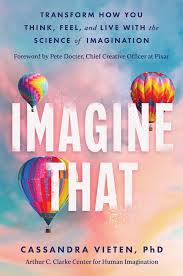
Imagine That: Transform How You Think, Feel, and Live with the Science of Imagination
What if the most overlooked key to mental health, innovation, and human connection wasn’t a pill, a device, or a productivity hack—but your own imagination? In Imagine That, psychologist and imagination scientist Dr. Cassandra Vieten makes a radical claim: imagination is not just for artists and dreamers, it’s the operating system behind how all of us think, act, and live. And it exists within everyone.
Readers of this book will gain the ability to:
- Open their mind to new possibilities to help alleviate depression, anxiety, and other mental health struggles.
- Boost their workouts, sports, and physical training.
- Enrich relationships.
- Be more creative in work, school, hobbies, art, and music.
- Deepen spirituality or other existential explorations.
- Develop more joy and creative energy through a more colorful way of seeing and being.
Resources
-
- UC San Diego Magazine: The Unlimited Possibility of Human Imagination
- Scientific American: Where Imagination Lives in Your Brain
- Scientific American: How the Brain Tells Imagination from Reality
- Greater Good Science Center: Best Possible Self (Practice)
- National Institutes of Health: Mindfulness for Your Health
- NASA: The Overview Effect: Astronaut Perspectives from 25 Years in Low Earthfxm Orbit
- Greater Good Science Center: Eight Ways You Can Feel More Hopeful—Even in Dark Times
- Nature Reviews Neuroscience: Remembering the past to imagine the future: the prospective brain
- American Psychologist: Harnessing the imagination. Mental simulation, self-regulation, and coping
- Emotion: From memory to motivation: Probing the relationship between episodic simulation, empathy, and helping intentions.
- Stanford Report: James Doty on the neuroscience of manifestation
- Creativity Studies: Dreams, Embodied Imagination And The Creative Mind: A Pilot Study
- Philosophical Transactions of the Royal Society B: Imagining predictions: mental imagery as mental emulation
- Strategy Science: The Imagination Advantage: Why and How Strategists Combine Knowledge and Imagination in Developing Theories
- Wiley Interdisciplinary Reviews: Cognitive Science: Imagination and social cognition in childhood
- Stanford University: Connecting to Your Future Self: Enhancing Financial Planning among Diverse Communities Using Virtual Technology
- Evolutionary Perspectives on Imaginative Culture: Imagination, the Brain’s Default Mode Network, and Imaginative Verbal Artifacts
- Frontiers in Psychology: The benefits of guided imagery on athletic performance: a mixed-methods approach
- Harvard Medical School: Understanding the stress response
- Arizona State University: Veterans Imagination Project (VIP)
- Personality and Social Psychology Bulletin: From Thought to Action: Effects of Process-Versus Outcome-Based Mental Simulations on Performance
- Behavioural Sciences: The Effects of Imagery Practice on Athletes’ Performance: A Multilevel Meta-Analysis with Systematic Review
- Cortex: Lives without imagery – Congenital aphantasia
- Neuron: Mental imagery and perception overlap within transmodal association networks
- Current Directions in Psychological Science: Narrative Identity
- Clinical Psychology Review: Effects of Mindfulness on Psychological Health: A Review of Empirical Studies
- PLoS ONE: Future directions in meditation research: Recommendations for expanding the field of contemplative science
2 Million Readers.
1 Life-Changing Newsletter
Simple and Straight-to-the-Point...
Just Like Mel.