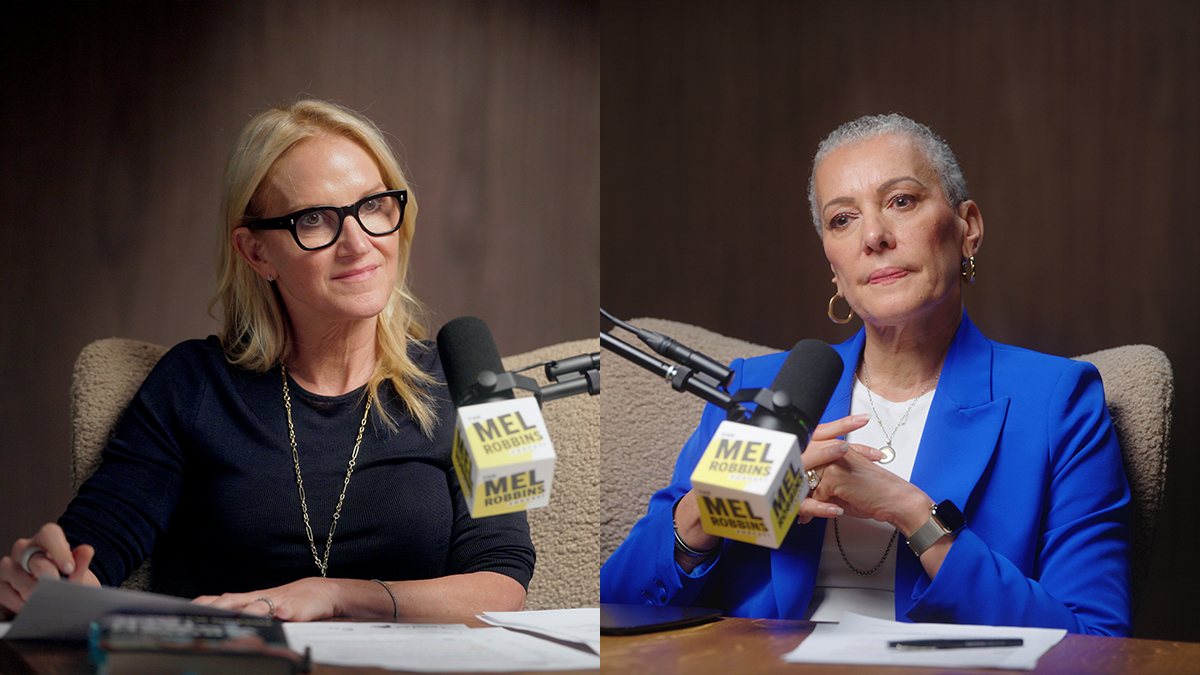
Episode: 426
The ADHD Doctor: How to Focus, Stop Procrastinating, Manage Your Emotions, & Feel in Control
with Dr. Sasha Hamdani

This is the ultimate guide to Adult ADHD.
If you have ever been told that you are too emotional, sensitive, anxious, hormonal, disorganized, or simply not trying hard enough, this episode is for you.
There’s a chance that the root cause of what you’re struggling with is actually ADHD.
Today, Dr. Sasha Hamdani, MD, a board-certified psychiatrist and leading expert on ADHD, gives you the full and comprehensive explanation you deserve.
She shares that ADHD is not just about attention. It can affect your emotions, motivation, energy, sleep, appetite, relationships, and ability to handle the demands of everyday life.
And these symptoms often get completely missed in women and girls.
Mel gets deeply personal about being diagnosed at 47, the anxiety she experienced for decades that was due to untreated ADHD, and the emotional overwhelm she never realized was connected to ADHD.
In this episode, you’ll learn:
- Why ADHD is not just attention and focus; it’s also about regulating your mood, sleep, motivation, and energy.
- Why anxiety, depression, OCD, burnout, and ADHD are often confused (even by medical professionals)
- Why criticism feels so overwhelming for anyone with ADHD
- Why perfectionism, overworking, and people pleasing can be signs of ADHD
- What is happening inside the ADHD brain
- Why ADHD is not always a “superpower”
- The four critical steps to take if you think you or someone you love may have ADHD
- The medication, therapy, coaching, tools, and systems that may help ease symptoms of ADHD
- What you can start doing while you wait for professional support
- The difference between the way ADHD can look externally and how it can feel internally
- How hormonal changes during puberty, postpartum, and perimenopause can intensify ADHD symptoms
Listen on:




ADHD is a regulation issue. Yes, difficulty regulating attention is a part of it, but also difficulty regulating motivation, difficulty regulating energy, difficulty regulating emotion — that's a huge one — difficulty regulating sleep, difficulty regulating appetite.
Dr. Sasha Hamdani
All Clips
Transcript
Mel Robbins (00:00:00):
Today on the Mel Robbins Podcast, world-renowned ADHD doctor and psychiatrist, Dr. Sasha Hamdani is here with the six signs you may have missed your whole life. How to focus, stop procrastinating, and finally feel in control. This is the ultimate guide to adult ADHD. Please help me welcome Dr. Hamdani to the Mel Robbins Podcast.
Dr. Sasha Hamdani (00:00:28):
Thank you for having me.
Mel Robbins (00:00:30):
I am beyond excited that you're here. I have been wanting to do a comprehensive and eye-opening and helpful episode about the topic of ADHD with a medical doctor for over two years. This is a topic that impacts me at a deeply personal level. It impacts my children. It impacts my husband because he has to live with me. Where I want to start is if we take everything to heart that you're about to teach to us about what ADHD is, what it isn't, and more importantly, what to do if this is something that sounds like you or someone that you love, what's going to change about my life?
Dr. Sasha Hamdani (00:01:19):
If you are dealing with this chronic overwhelm and it's been hard for you to place a name to what you've been experiencing and you've been beating yourself up for years, I think this is going to give you the clarity to see that number one, your brain isn't broken. This is just a different wiring. And number two, it's going to give you the language and the tools and the steps of where to go next so that you can actually start navigating this condition.
Mel Robbins (00:01:48):
You said something that just struck me because I think when you talk about the topic of ADHD, you immediately think about attention and you think about focus, and maybe you think about the little kid who can't sit still. But you said overwhelm and beating yourself up. Could you speak a little bit to the emotional side of what we're going to talk about and what might change based on what you're about to teach us?
Dr. Sasha Hamdani (00:02:20):
How much time you got? Because I feel like that is a huge overlooked part of ADHD. I think ADHD at its base. First of all, I hate the name ADHD. I think it's stupid.
Mel Robbins (00:02:32):
So Dr. Hamdani, what is ADHD?
Dr. Sasha Hamdani (00:02:36):
Yeah. So ADHD is a neurodevelopmental condition, which stands for attention deficit hyperactivity disorder. I think ADHD at its base is a regulation issue. Yes, attention is part of it. Difficulty regulating attention, but also difficulty regulating motivation, difficulty regulating energy, difficulty regulating emotion. That's a huge one. Difficulty regulating sleep, difficulty regulating appetite. And anybody with ADHD has felt this. And if I'm speaking to you, these are things that you've probably experienced too because it's not as simple as, well, it's hard to stay on task today. It's, okay, I am so overwhelmed and I have beaten myself up about this, and now I feel paralyzed with this guilt and shame and this overlay of this emotional component. And I think unless we really, really get on top of this and start looking at the emotional regulation part of ADHD, we're never going to fully encapsulate the full picture.
Mel Robbins (00:03:43):
I'm looking at our executive producer, Tracy, who I've worked with for 10 years. And I'm smiling at you, Tracy, because I canceled two days of taping last week because I found myself in this state where the word I was using is I am so overwhelmed right now and I feel so flooded with emotion. I don't even feel like myself. I can't function right now. But I didn't think that was related to ADHD. It feels very affirming to hear that, well, actually the wild swing of emotion, Mel, is a core part of how ADHD can present because it's not just an issue of your ability to direct your attention. It's also your inability to process emotion in a way that is somewhat modulated. It goes in wild swings. And because if you truly are somebody that has this condition, you have always lived with wild swings.
Dr. Sasha Hamdani (00:05:00):
Always. I
Mel Robbins (00:05:00):
Don't even know what it's like to regulate your emotions. What does that even mean in your world, Dr. Hamdani? What does regulate mean? Because if you do have ADHD or you love somebody who does, we are having a completely different experience of life than somebody who goes through life without an ADHD brain and body.
Dr. Sasha Hamdani (00:05:22):
For sure. For sure. And I think when you drill down and actually look at what regulation is for mood, right? If this is kind of normal baseline and this is down in the depths of depression and this is so happy and elevated, right? Yeah. People generally, they have a normal ebb and flow that can happen situationally. With ADHD, it can feel like ups and downs and ups and downs. And it's usually coupled with anxiety and productivity issues and all of this mashed together and so overwhelming.
Mel Robbins (00:06:05):
Yes. It's like you feel like a hurricane.
Dr. Sasha Hamdani (00:06:08):
You feel like a hurricane.
Mel Robbins (00:06:10):
I can start cleaning the closet, but then all of a sudden I crash and I've got clothes off hangers everywhere. And now I'm like, what did I do again?
Dr. Sasha Hamdani (00:06:19):
Yeah. I think a lot of people can argue, well, sometimes people have emotional dysregulation or emotional swings because they're not getting enough done. I'll tell you, even in my own case, I can feel these kind of emotional swings and I can feel extremely overwhelmed. And I might get to a spot where I'm getting all of the stuff done, all of the stuff I've delegated or I've gotten rid of, and it's off of my to-do list. And I still feel that overwhelm and that pit in my stomach and that just like, I want to hide. I can't do anything right now. I just want to hide. That is emotional dysregulation. Where it's like I have the logical part of my brain that's like, you don't have anything to worry about. You're fine. Things are going well. You're okay. But still you're having these big ups and downs that you're dealing with at the same time.
(00:07:11):
And I think that's so vital to talk about because that's what gets misdiagnosed.
Mel Robbins (00:07:16):
Well, my greatest wish for this episode, other than the person listening, really feeling empowered and seen and having your expertise to really help you take the next step to get the support that you deserve and to better understand yourself. And my second bigger mission
(00:07:41):
Is that this sparks a change in the way that ADHD is defined. Because you can see that if society thinks ADHD is jitteriness and kind of the typical little boy like our son was bouncing around in a classroom that can't sit still and can't focus. And if that's all that we think it is, then doctors and pediatricians don't have the right definition for it. So of course they're going to continue to go, well, only if you're jittery does it look like this, but anything in the realm of dealing with emotions must be something related to
Dr. Sasha Hamdani (00:08:21):
Anxiety
Mel Robbins (00:08:22):
Or depression. We're going to keep seeing this problem.
Dr. Sasha Hamdani (00:08:25):
Originally, the ADHD criteria was developed looking at hyper young boys. Our criteria is not even built to look at everyone else. It's not built to look at girls. It's not built to look at adults. I think part of the biggest flaw in this is that when you just moving on from the hyper young boys, part of the issue is they're looking at these highly observable behaviors. These are the kids that are disrupting classes and these are the kids that can't stay in their seat. But what about all those other presentations where the only people they're disrupting are themselves? And they're just getting passed from class to class to class to class. And then later, Mel, those are the people that are getting diagnosed with anxiety and depression because by the way, you're too old to have it now.
Mel Robbins (00:09:14):
That was me.
Dr. Sasha Hamdani (00:09:15):
Yeah.
Mel Robbins (00:09:15):
I've also never heard anyone say that the way that you can present, there's the external disruption, but I hadn't ever heard anybody say, or you could be somebody that's internally disrupting yourself with your thoughts, with your inability to stay on task, with your emotions. That's exactly how I felt all the time.
Dr. Sasha Hamdani (00:09:48):
And that's what I hear day in and day out when I'm hearing from women over and over and over again that my whole life, I have felt like something was off. There was something missing and they have never put together those pieces. And then their child gets evaluated and that's when the pieces kind of come together.
Mel Robbins (00:10:09):
I'd be curious to hear your thoughts about something. ADHD in kind of culture and society kind of feels like an eye roll because people have thrown the word around so much and live in a world where everybody has fragmented their attention by being online. And at the same time, we have a neurological condition, which here in the United States is classified as a protected disability.
Dr. Sasha Hamdani (00:10:42):
Yes.
Mel Robbins (00:10:43):
We have all of this research around it. And so the term is kind of in popular culture and thrown around. You know what I mean though about the eye roll? Oh yeah, you got ADHD.
Dr. Sasha Hamdani (00:10:56):
It's not even that. They get those eye rolls from their doctors.
(00:11:00):
I have heard from another physician when I was talking about, I've been doing some advocacy work online talking about ADHD. And he made, he, it was obviously a he, made the comment, "Oh, so you can give Adderall to all the housewives who need it." And I was like, "You're gross. I got to get out of here." But that is kind of what this feels like. It feels like that's just kind of the medication is the easy way out and everybody has it and it's easy to qualify. You talk to anybody who is trying to get a good ADHD diagnosis. There are so many hoops in place. It is hard to get a diagnosis because people are turned away from or discouraged, just openly discouraged.
Mel Robbins (00:11:52):
Or hostile. The thing that I experience as a parent is, well, oh, you're just trying to get your kid extra time on a test so you can get him into a good school. I'm like, no, I'm trying to have him not struggle with depression and hate himself because he feels like a freak in school. He's not a behavioral problem, you idiots. This is a kid who's struggling.
Dr. Sasha Hamdani (00:12:13):
And
Mel Robbins (00:12:13):
Why do I have to cry in front of a bunch of administrators to get him properly assessed? And so I also feel because of parents pushing their kids and trying to game the system, there's also a little bit of like, oh, do you really have ADHD or does your parents just push for this so that you could get the extra time and accommodations that way? And it's really hurt people and hurt our ability, I think, to get heard and to be diagnosed. And I think that's part of it.
Dr. Sasha Hamdani (00:12:44):
For sure. I think there is. People ask me a lot, is this underdiagnosed or overdiagnosed ADHD? And my answer to that is it's both. It's overdiagnosed in some populations and it's wildly underdiagnosed in some. There's some racial and socioeconomic populations where ADHD is so far down the list of what it could be and it's just immediately, this is oppositional defiant disorder. This is a behavioral issue. This is some other kind of weird attachment thing. So these kids aren't getting help. And then there are other people where it's almost like they're entering a pill mill situation where I know this one doctor and he's really loose with Adderall. There's a wide range. And I think that truly, I think that if we had better criteria that properly nailed down what we're looking at more comprehensively, then people wouldn't give these eye rolls. They wouldn't give because we would be treating what we're looking at.
Mel Robbins (00:13:49):
I agree with you.
Mel Robbins (00:13:50):
What exactly is happening in the ADHD brain?
Dr. Sasha Hamdani (00:13:55):
So this is going to be extremely oversimplified, but I think it's important. The way that I describe it is there's a couple of areas of the brain that you really need to know about. And the first one is the frontal lobe. So directly under your forehead. Think of that as the very smartest part of your brain. Decision-making, judgment, processing, that's your frontal lobe. Then you have this amygdala, which is this little almond-shaped central area of the brain, and that's in charge of all of that emotional data. So with ADHD, you're dealing with a couple of things happening. Number one, you're dealing with a prefrontal cortex, smartest part of the brain. It's a little bit thinner and a little bit less responsive.
Mel Robbins (00:14:41):
Oh, really?
Dr. Sasha Hamdani (00:14:42):
Yes. And then you're dealing with an amygdala that's a little bit more hyperreactive. And then you're dealing with the connection between the two, which isn't as strong. So what you're going to get is you feel things strongly because that amygdala is like alarm chemicals, something is happening. And that prefrontal cortex is sometimes slow to filter and figure out exactly what to do with it. The other thing that's happening in the brain alongside all of that is you have to talk about dopamine. And again, when you think about ADHD in general, that's very oversimplified, but dopamine is that neurochemical that's in charge of alertness and attention and emotional regulation and mood. So it's present and doing many different things at once. And a lot of people think that it's a lack of dopamine. You have low dopamine and that's what's causing all this. It's really that the dopamine you have present isn't in the right place at the right time.
(00:15:48):
And so that can change with hormones, that can change with age, that can change with stress, that can just be an underlying deficit or dysregulation. So when you have those kind of factors all at once, you're dealing with just a tremendous amount of input that you're getting and a kind of weak filtering system. And so you're doing the best you can.
Mel Robbins (00:16:14):
When you talked about the prefrontal cortex and being kind of the thinking and the secretary of the brain, the processor, and then you talked about the amygdala, the little almond, it made a lot of sense to me where you're like, the input is overloaded and the connection between those two things is weak, which is why it is hard for somebody that has this neurological condition called ADHD to actually regulate the signals coming into here and all the sensory crap coming into here.
Dr. Sasha Hamdani (00:16:43):
Correct.
Mel Robbins (00:16:43):
So that makes perfect sense why it would be hard if the connection's weak for us to take all the input into the thinking part of the brain and process it. And at the same time, take all the input into the sensory part, the amygdala, and also appropriately regulate and process that too and send signals to your body and your mind. Now, when you use the word regulation,
Dr. Sasha Hamdani (00:17:07):
Let's
Mel Robbins (00:17:07):
Just say the person that's listening has never really heard that term or doesn't quite know what you mean. How do you want us to think about what the word regulation looks like? Because I'll tell you, as I'm hearing you talk, I immediately had a flashback to going to Baker Library at Dartmouth College, got my books, fully intending on studying Dr. Hamdani. I go to sit down. Now all I can do is hear my stomach. Now all I can do is hear the people in the corner over there. Now I'm looking at the person and an hour or two goes by. And then I start to think, why can't I just do what everybody else is doing? What is wrong with me? And I have example after example. And the emotional side of this and the wreckage that it caused internally for me and the self-hatred that it causes, there's a level of when you finally get a diagnosis, there's almost like relief and grief at the same time.
Dr. Sasha Hamdani (00:18:14):
For sure.
Mel Robbins (00:18:14):
Because you start to understand how much unnecessary suffering you inflicted upon yourself because you didn't know what you were dealing with.
Dr. Sasha Hamdani (00:18:25):
And it's the same story you hear over and over again. I have had people who have come to me and they knew something was off. They have felt this guilt, this shame. And so they go to their doctor. The doctor is like, "This is anxiety. You're anxious about something or you're depressed about how things are. They're started on medication. Medication doesn't work. Okay, go back to the doctor. This isn't working. Try another medication. Go back to the doctor." I've had people that have been on 10 different medications. They have never found relief or they found very partial relief. And then you actually evaluate them for ADHD and you get to the bottom of like, "Oh, okay, you're having this emotional dysregulation that's happening. All right, let's treat the ADHD." And all of this gets significantly better, better than any other medication. The way that I describe it is for people who have diabetes and they start to lose their vision.
(00:19:29):
Now all of a sudden they go to their doctor and they're like, "Huh, I'm losing my vision." And then this would be like if the doctor was like, "All right, cool. Let's get you some glasses." No, the correct answer is let's work on the diabetes. Let's fix this underlying problem. And that underlying problem is that ADHD that's causing all of these things.
Mel Robbins (00:19:49):
You just described my life story. So undiagnosed ADHD, super hard on myself, studious, hardworking, and had no idea what was going on, but had lots of anxiety. And the anxiety started growing from middle school through high school, got worse and worse and worse. And I got put on Zoloft at the age of 22. I took Zoloft until my mid - 40s because I was diagnosed with anxiety. And while the Zoloft for me at least kind of turned down the volume of the chronic state of alarm that I lived in, it never really -
Dr. Sasha Hamdani (00:20:40):
Solved.
Mel Robbins (00:20:40):
Solved anything. And it wasn't until our son Oakley was diagnosed with ADHD that I'm like, wait a minute. I went, I got a neuropsych evaluation. I got a clinical diagnosis. I stopped taking anxiety medication. I haven't had a panic attack since. I haven't had anxiety problems since. Because the entire time we were treating the wrong thing.
Dr. Sasha Hamdani (00:21:04):
Correct.
Mel Robbins (00:21:05):
The Mel Robbins Podcast is proudly sponsored by Amica Insurance, our exclusive auto, home and life insurance partner. It feels so good to be understood. And that's something Amica really delivers on. Because when you're choosing insurance, you want someone who listens, someone who takes the time to understand what you need. Amica goes above and beyond to customize coverage that fits your life. They make it simple. They make it clear, and they make it feel like you're talking to someone who genuinely cares because they really do. Creating peace of mind is truly at the heart of their mission. And whether you're protecting your home, your car, or everything in between, Amica knows it's not just about where you're going, but who you go with. When you choose Amica, you're choosing a partner who's with you every step of the way. Peace of mind starts with the right partner. Visit amica.com and get a quote today.
Mel Robbins (00:22:11):
I read in your work that there are three different types of ADHD. I didn't know that. What are the different types of ADHD?
Dr. Sasha Hamdani (00:22:18):
Okay, let me show you.
Mel Robbins (00:22:19):
Okay.
Dr. Sasha Hamdani (00:22:21):
First one, inattentive ADHD. And we touched on this briefly. Inattentive ADHD typically are the daydreamers. They tend to be forgetful. Difficulty with organizing things. Difficulty with remembering where you play something. Difficulty with initiating tasks. Difficulty with if there's a big task coming up in front of you, you tend to avoid that. So typically, this is how females assigned to birth present.
Mel Robbins (00:22:53):
Okay. Inattentive ADHD.
Dr. Sasha Hamdani (00:22:57):
Inattentive. Check. Hyperactive or impulsive ADHD. This is the second form of ADHD. And this is, well, one of the ways that males can present. And this is both physically and verbally impulsive. These are the kids that are having difficulty, kids and adults, difficulty staying in their seat. They're fidgeters. They are impulsive in speech in that they're interrupting. They are blurting out answers in conversation. They have difficulty participating in conversation. So this is that hyperactive type. And then the third type is the combined type picture. Oh. And combined type picture is just a combination of both of those features. So you can have inattentive features and you can also have the hyperactivity component. Fun fact, this is what I am.
Mel Robbins (00:23:57):
How do you know? You know what I'm saying? Because it feels like it's a little general, like all of it, so you can kind of find situations for yourself, but how do you know what you are and why is it important to understand which of the three you might be?
Dr. Sasha Hamdani (00:24:12):
So I mean, you really are going to know once you get a good solid evaluation. Because I think that part of getting a great evaluation, a very sound evaluation is equal parts, yes, ruling in ADHD, but also ruling out everything else. I want to make sure that this isn't anxiety, that this isn't depression, that this isn't bipolar, that this isn't some thyroid issue or some medical issue underlying it. So there's within the evaluation where you're talking about ADHD, you go from childhood and you kind of look at longitudinal patterns. Because again, with women specifically, it's hard because every month we look different hormonally. So catching you at one spot in your cycle versus another spot, you might look different and you might present a little bit differently. So you're looking for longitudinal patterns.
Mel Robbins (00:25:03):
Can you break apart how does the emotional side impact girls?
Dr. Sasha Hamdani (00:25:09):
When you're looking at females, they typically fall into this pattern of more the inattentive presentation. So these are the daydreamers. They're forgetful. They have difficulty organizing things. They have difficulty with routines and motivation to get tasks done. And so these are the people that in general can be a pleasure to have in class. They're getting passed along and they're doing well. But internally, they're working so hard, so hard. And you know what? That doesn't get better. You get through your elementary school years, you get to puberty. Then all of a sudden you get smoked by hormones. And now hormones immediately change things. Now instead of physicians, and again, not the fault of physicians. This a fault of criteria. But now instead of physicians looking at this child and saying, "Whoa, we missed something. You're having all these mood swings and school is hard for you and friendships are hard for you and all of that." They're saying, "You're a teenager.
(00:26:19):
These are hormones. Get used to it. This is what you hear as a 13-year-old girl." And then they have to get through it. So you just kind of just bear it and then you get into college and your demands get harder. You start getting into more serious relationships. And then maybe you get into a situation where you're trying to start your own family. Okay, now you're getting hit with another wave of hormones. And actually during pregnancy, estrogen levels are a little bit higher. Dopamine levels are a little bit higher, so you might do okay. But then postpartum comes and rocks your world. And so you get this drop in estrogen, drop in dopamine, so you can't regulate the way you used to. And so now you go to a doctor again, you're like, "Things are bad." And they're like, "It's hormones. Let's put you on an antidepressant because you're depressed.
(00:27:10):
This is postpartum depression." And so it gets missed again. Then you get through all of that and you get through your reproductive years and now you're in perimenopause and things are chaotic because your estrogen drops again. And you're like, "Something is wrong. Something is wrong." And now it's, "Well, you're hormonal. Give it 10 years. We'll see you later." Brain
Mel Robbins (00:27:34):
Fog.
Dr. Sasha Hamdani (00:27:35):
Yeah. There
Mel Robbins (00:27:35):
You go. This happens during perimenopause. In fact, you've described my whole life.
Dr. Sasha Hamdani (00:27:42):
I know.
Mel Robbins (00:27:42):
I had postpartum depression, crashed. I started having severe brain fog and other symptoms during perimenopause. So you get hormones, which help, but didn't help the brain fog. And again, it was just diagnosed with anxiety, living with anxiety, struggling, struggling, struggling, pushing through postpartum depression. Oh my God, the sobbing is you're breastfeeding. I don't feel like myself. And then perimenopause, then the creams, and then all of a sudden ADHD diagnosis. And it's like, wait, what? And it felt as soon as I was not only diagnosed, but found the medication that worked for me, it's like all of a sudden after 47 years, I felt like I was in my body.
Dr. Sasha Hamdani (00:28:31):
Yeah. And that gets missed. It get missed over and over and over again because our criteria doesn't catch that.
Mel Robbins (00:28:38):
Is it common in women that if you have undiagnosed ADHD, that it can cause anxiety and depression?
Dr. Sasha Hamdani (00:28:46):
Yes.
Mel Robbins (00:28:46):
Why?
Dr. Sasha Hamdani (00:28:48):
A lot of times when you look at ADHD, there can be anxiety and depression that is a separate thing that travels along with it. That can happen. But for a lot of people, because again, circling back to that emotional regulation part of ADHD that everyone seems to miss, and that is so critically important to getting a comprehensive picture of ADHD. Number one, if you've gone through your whole life and you've thought that there's something wrong with you and you're less than and you're broken, that's going to make you anxious. If you can't do the things that you know perfectly well that you are capable of, that's going to make you anxious. And you know what? It's probably going to make you pretty depressed too. If you're going through these huge moments of this energy dysregulation where you are getting tons done and then it's like you've hit your max and then you - And then you
Mel Robbins (00:29:43):
Crash.
Dr. Sasha Hamdani (00:29:44):
You have this huge crash and then you feel like, okay, I have literally nothing left in my tank. That looks like depression. But these are all emotional dysregulation issues that are happening. And so that's why you see that with ADHD.
Mel Robbins (00:29:58):
I'm Is there a connection between undiagnosed ADHD and eating disorders?
Dr. Sasha Hamdani (00:30:05):
Yes, there is. But I think that again, that stems from dysregulation and it stems from a lot of ADHD, you're not able to be mindful about certain things. So sometimes it's not actually. When people think about eating disorders, they think about on one extreme that you're not eating enough and on the other extreme you're eating too much. For the extreme where you're not eating enough, a lot of times with ADHD, sometimes it can be like you don't really have hunger cues. And this is outside of the medication. It's just your body isn't communicating, telling you you're hungry. And I know personally, if I get invested in a task that I'm truly interested in, I can go eight hours and I'm not eating, I'm not drinking, I'm not getting up. On the flip side, with binge eating disorder and things like that, there can be a time where you're trying to stimulate your own dopamine.
(00:31:01):
You're trying to get things going without even knowing that's what you're doing. And you're grabbing for things and you're eating and you don't even know. And you can look down and you're like, okay, that was a whole sleep of Girl Scout cookies. So you can be on either end. So yes, there are linkages with disordered eating on both ends.
Mel Robbins (00:31:20):
And what's interesting is, again, this kind of distinction that you're seeing, Dr. Hamdani, of the external presentation versus the internal turmoil.
Dr. Sasha Hamdani (00:31:30):
How I describe it is it's like the outside of your house is on fire versus the inside of your house is on fire. It just feels like both are on fire. Both are literally in flames. The way we look at it now is we only care if we can see the flames. Flames are going on inside the house.
Mel Robbins (00:31:52):
What would you say to somebody who has received this episode from someone that cares about them?
Dr. Sasha Hamdani (00:32:00):
Yeah.
Mel Robbins (00:32:01):
Because the person who cares about them sees these patterns and has sent this episode in a text saying, "Hey, I'd love for you to listen to this because this sounds a little bit like what you might be dealing with." What do you want the person who's hit play and is starting to really process what you're saying for the first time?
Dr. Sasha Hamdani (00:32:24):
I think if you are listening to this episode, I don't want this episode to push you one way or the other. This is not meant to convince you that you have ADHD. This is not meant to push you in one direction. It's meant to ask you questions about your own internal environment so that you can start digging deeper and figuring out, is there something here or is there something that needs to be addressed? And what I want to reiterate about all of this is that I think good, compassionate care and diagnosis stems from a very non-judgmental and shame-free place. And so just being able to look at this episode and whatever other research you do in a very compassionate and self-compassionate way, I think you'll be able to receive information and actually start to put together patterns about your own behavior a little bit better.
(00:33:19):
And that might be ADHD, it might not be.
Mel Robbins (00:33:21):
What do you think the biggest misconception is about ADHD that keeps people, especially women, from getting help?
Dr. Sasha Hamdani (00:33:29):
That you have to treat it with medication. I don't think you have to. There are some people that are on medication and it is life-changing for them. And so I'm never going to. And even when I was talking about antidepressants before, same thing, that can be life-changing for some people. So I'm never going to go back on that because medication is a tool and can be wonderful. But also being able to actually commit time and figure out therapeutic tools that might work, it is also so critically important. And some people don't need medication. They get through with doing cognitive restructuring and work through therapy that can be extremely beneficial.
Mel Robbins (00:34:13):
I so appreciate your answer. What I find reassuring about what you're saying is there are other ways you can support yourself. And we're going to get into that very specifically about what to do and how to get a diagnosis and what are the things that you can do and what are the medications. I remember when I got my diagnosis, it was both an extraordinary relief and I had a lot of grief and anger.
Dr. Sasha Hamdani (00:34:41):
Yeah.
Mel Robbins (00:34:42):
Is that common to feel a sense of grief when you finally understand what's been there the whole time?
Dr. Sasha Hamdani (00:34:52):
Yes. When I evaluate people, I actually tell them about that. I don't know what this evaluation is going to show or if it's ADHD, if it's not ADHD. But depending on what we go through, this is just a deeper exploration of what's going on in your body. And you might feel like this is an answer. This is what I've been looking for. And it might feel like I wasted so much time and I'm grieving that loss of time and potential and all of that stuff. And to them I say, that is normal. You are allowed to feel those things. That's perfectly normal. And there should be space for that because that is a very valid expression of what's happening. But I also tell them that in that time, it wasn't wasted because you were doing the hard work. You were building routines, you were building structures, you were building workarounds that eventually as you have the right tools and scaffolding, those are going to come in handy for you.
(00:35:54):
Those are going to make this process a little bit easier because I've also seen on the flip side of things, when people are started on medication and they don't have that scaffolding in place, and then when they're off medication, it's like they're floundering again. So I think this multifactorial approach of doing lifestyle and behavioral modification with medication, if that's appropriate, can be extremely helpful.
Mel Robbins (00:36:19):
It was life-changing for me. I'd love to talk about the connection between being high achieving and how that, especially in women, can hide ADHD, especially from ourselves.
Dr. Sasha Hamdani (00:36:34):
Yes.
Dr. Sasha Hamdani (00:36:36):
So I'm going to introduce you to the concept of masking. Have you heard of that?
Mel Robbins (00:36:40):
Not in the context of ADHD.
Dr. Sasha Hamdani (00:36:43):
So masking is when you have, it can be conscious or unconscious camouflaging of your symptoms. And this is something that women do exceptionally well because I think from a young age, we're sensitized to do this because we don't want to be in trouble. We don't want to stick out of a crowd. We don't want to bring a lot of attention to us. I'll give you an example with me. I was a combined type presentation, so I was very hyperactive. I couldn't stay in my seat, a big fidgeter, but I learned I can't get up all the time in class. I'm getting in trouble constantly. So I would squish my thighs down on the seat or I'd grab the bottom of my chair and try to suction cup myself to the chair because I'm like, "I need to physically restrain myself from getting out." Now from a productivity and a masking perspective, you also see things like perfectionism.
(00:37:40):
I don't want to get in trouble. You see things like overcompensating. I'm going to stay at work extra long and I'm going to over-prepare and I'm going to get things ready because I don't want to get in trouble. I know I'm going to miss something, so I'm going to prevent that from happening. You see things within relationships and knowing that there's that emotional regulation. You see a lot of women just kind of accepting stuff that they might not think is appropriate for any of their peers, but they're like, "I was probably in the wrong. I was a little bit too emotional. I chased them away." And so in order to protect that emotional sensitivity, they don't want to get into conflict. They don't want to fight. They don't want to do things like that. So I mean, there's lots of different ways that are directly impacting and harmful to someone who is continuing this mask for a long time.
(00:38:39):
Eventually that mask gets too heavy to hold.
Mel Robbins (00:38:41):
Is ADHD a superpower?
Dr. Sasha Hamdani (00:38:43):
No. Everyone asked me that. I am so jealous of the people who say that it is. I'm jealous of the people who say that it is. And the reason for that is I feel like there are some things that ADHD has brought me that I wouldn't have otherwise. Being on social media, going to the White House, getting book deals, that is because of my ADHD. That's because of that hyper focus. That's because I was interested in something and it bled into this area. But there's also things on a day-to-day scale that I feel so limited by. And I feel like the analogy that I give is it's like a superpower that I have very little agency over. Because it's like you can fly now and that's your superpower, but you can't choose when or where. So you're just going to blast off into space at any given time.
(00:39:36):
Oh my God. So I feel like I love the concept of a positive reframe. And I think there is some beautiful, beautiful, beautiful, beautiful things about ADHD. I really do. But I think there's also some things that are really difficult to deal with. And I think when people continuously focus on that superpower trope, for me, it diminishes a struggle. And so I feel like the best way to approach ADHD is just realistically. They're good. Just like anything else, there's good stuff, there's bad stuff, and it's how you deal with it. I
Mel Robbins (00:40:15):
Appreciate you saying that because I always thought that it sounded like toxic positivity by somebody who doesn't have ADHD. And when you also consider Dr. Hamdani, what you are teaching us, which is for decades, medical professionals, society, the DSM has not included the full scope of ADHD, especially the emotional dysregulation. There is no superpower to feeling constantly overwhelmed in your life. And yes, there are some small benefits. And I love the analogy that you said it's like having a superpower you can't be in control of. I would love to be able to throw fire from my palms, but I don't want it going off at the wrong time. And there's a lot of anxiety that comes with going through life thinking you can't trust yourself. You can't trust yourself to follow through. You can't trust yourself to be on time. You can't trust yourself to remember.
(00:41:22):
You can't trust yourself to not screw this up yet again. And so I really appreciate you saying that.
Mel Robbins (00:41:31):
Is there something surprising that you've discovered in your practice that most people with ADHD struggle with and may not even realize it?
Dr. Sasha Hamdani (00:41:42):
Yes. So we've talked a lot about the emotional regulation side of things.
Mel Robbins (00:41:47):
Yes.
Dr. Sasha Hamdani (00:41:48):
There is a neurological phenomenon that you see in almost a hundred percent of people with ADHD, they experience some component of rejection-sensitive dysphoria.
Mel Robbins (00:41:56):
Rejection sensitive dysphoria. What does that even mean? That's a big thing.
Dr. Sasha Hamdani (00:42:00):
It's a big thing. It's a mouthful. Rejection sensitive dysphoria is this incredibly robust emotional response, sometimes physical, but mostly emotional response to real or perceived rejection or criticism or this fear of disappointing someone. It is this internal emotional response, flooding of neurochemicals that happens.
Mel Robbins (00:42:27):
How do you define this, what this is?
Dr. Sasha Hamdani (00:42:30):
It is a neurological phenomenon when you look at emotional sensitivity. And you have -
Mel Robbins (00:42:36):
What you have if you are somebody struggling with ADHD.
Dr. Sasha Hamdani (00:42:40):
I'm saying just part of the human condition, right? Emotional sensitivity in general. If you're saying this is kind of normal emotional sensitivity, you have emotions down, emotions up, situationally appropriate, you're right in the middle. You have lack of emotional sensitivity where people really aren't responding in the way that they should be. They don't feel big highs, they don't feel big lows, maybe not situationally appropriate. Then you have people that are highly emotionally sensitive, and they are the people who feel things quickly and deeply and for a long time. And I would put rejection sensitive dysphoria as the ending point of that as most emotionally sensitive because when they feel something, even if it's not actually happening, if they perceive that there is a risk that I'm disappointing you or that there's some rejection or the person doesn't like me, their world caves in. They start turning inwards and it becomes this flooding of neurochemicals and alarm chemicals that are happening that literally paralyze other areas of the brain.
Mel Robbins (00:43:45):
Wow. Holy cow. You have a brand new bestselling book, Too Sensitive. I love the title. Thank you. Why is this rejection sensitive dysphoria important to dedicate an entire book to this?
Dr. Sasha Hamdani (00:44:04):
Because no one talks about it. So we don't have the tools and the language to treat it appropriately.
Mel Robbins (00:44:11):
Can you show us what this may look like in day-to-day life?
Dr. Sasha Hamdani (00:44:15):
Yes, I can. I can show you with text messages from you.
Mel Robbins (00:44:20):
Oh God.
Dr. Sasha Hamdani (00:44:22):
Okay.
Mel Robbins (00:44:23):
So the team has screenshot my phone. Okay, go ahead. Or actually screenshot their phone and something that I've said.
Dr. Sasha Hamdani (00:44:29):
Okay. So if we're looking at just this screenshot with you responding to something that I'm saying, and all it says is no worries. For me, what is happening in my brain is, is she mad at me? Is she unhappy with me? Does she want me on the podcast still? I am spinning because in my brain I've attached a level of uncertainty because I'm afraid that there is rejection and criticism underlying this. And that to me is a direct reflection of my own self-worth. So I am going to spin on this. I'm going to ask other people about it. I'm going to show my phone to other people and be like, What do you think about this message? And I am going to waste a tremendous amount of emotional energy on this. Now, the things that I could do with this is that I could chew on it for hours and hours, which is what I love doing.
(00:45:26):
And that's what I usually do. Alternatively, I could do things like I could overcompensate. I could send you a text message back and be like, okay, I'm just making sure that we're cool. Or, okay, I want to reiterate our plans. And you're like, I am busy. So there's a lot of emotional handholding I would need in that moment. I might do things like I get that text message, I've already decided that you're mad at me. I'm done now. And that has been my trajectory in my 20s with relationships. I would read into neutral interactions. I would read them as threatening in some capacity, and I would be like, I don't need this. I'm studying. I don't need this. And I would end the relationship because you're not going to push me away. I'm going to leave first. You see different patterns. And it is truly when you take a neurologically emotionally sensitive person, which is something you see a lot of in ADHD, and you put them in these everyday kind of situations, because of that emotional dysregulation, they have a hard time filtering that information because that emotional part of their brain is popping off before that logical part.
(00:46:42):
So they are just running with this flooding of emotional chemicals. And if you think about that, this is the stuff that keeps me up. This is the stuff I worry about. This is the stuff I reality test with people and they get so annoyed because I'm constantly going and asking them, is this normal? Is this not? There's so much, I don't want to say life loss, but that's what it feels like. I'm just spending so much time doing that.
Mel Robbins (00:47:07):
I have spent a lifetime doing this, and yet at the same time, I'm just doing the best I can to manage all the inbound anyway. If you relate and you read messages like this, what do you do?
Dr. Sasha Hamdani (00:47:23):
Yeah. And for the record, it's not just messages. It can be things like for me, I'm so sensitive to tone, to shifts in tone. I'm sensitive to body language. I'm sensitive to I can pick up an energy in a room before I go in. Same. So this is one of those things about being emotionally sensitive and then simultaneously being emotionally dysregulated is that those things hit hard. Yes. So recognizing it is huge. That's a big, big, big thing that I think is really important. The other thing that we see is important are things that work in the moment to reduce activation. Some easy ones are things like movement. And it doesn't have to be like do heavy cardio or lift weights. Do some sort of movement that's going to increase that oxygenated glucose to get to that frontal lobe. Okay. So
Mel Robbins (00:48:17):
I see the text message and I'm like.
Dr. Sasha Hamdani (00:48:20):
Yes.
Mel Robbins (00:48:21):
I do squats?
Dr. Sasha Hamdani (00:48:22):
You can. You can. Because think about what you're doing. Once you understand neurologically what's happening, you're dealing with this overactive amygdala and this underperforming frontal lobe.
Mel Robbins (00:48:32):
Oh, I see. Oh my God, I just got it. So in that moment, the input from just a simple text message is like.
Dr. Sasha Hamdani (00:48:40):
Yes.
Mel Robbins (00:48:41):
And that floods your brain.
Dr. Sasha Hamdani (00:48:43):
Yes.
Mel Robbins (00:48:43):
And your thinker, your prefrontal cortex is like, "I don't know what to do. I can't come online. Something's going on." And so neurologically, even though a text message seems stupid and inconsequential, neurologically, your brain is screwed.
Dr. Sasha Hamdani (00:49:05):
You are responding to a threat like you have seen a murder. When you are actually assessing threat, whether it's a social threat, whether it's a physical threat, your brain doesn't know the difference in that moment. Your body's responding in the same way. So you're having this flooding of neurochemicals. And so what you need to do now is understanding, okay, my emotional center is overwhelmed. My frontal lobe is not working as well as it should. And then you look at that situation and whether it's like, okay, I can utilize movement and that's going to get some oxygenated glucose to my frontal lobe where it's supposed to be. And hopefully we can get that thinking back on board. The other thing you could do, delay the reaction. And this is something that it took me so long. I understand neurologically, I am flooded right now. I know that in 10 to 15 minutes, I'm going to feel different.
(00:49:54):
And so in 10 to 15 minutes, I will reassess this. And I will even do things like I'll set an alarm. I'll set an alarm, 10 to 15 minutes, I'll come back. And gosh, darn it, I do feel different. But I think what's important is that with this book, Too Sensitive, I don't want to make you less sensitive. I want to help you be more in control. I
Mel Robbins (00:50:20):
Love that. I don't want to make you less sensitive. I want to help you be more in control. That is the perfect statement for us to then talk about how you feel more in control. Because I'm sure as you've been listening or watching, and you're really taking in everything that Dr. Hamdani is teaching you and me today, you are thinking of 13 people in your life, or you are thinking, wow, this sounds like me.
Mel Robbins (00:50:56):
So what are the steps you should take if you think you or someone that you love may be dealing with ADHD that's not diagnosed?
Dr. Sasha Hamdani (00:51:08):
Yeah. Let's go through this because I think a visual will help. So I'm going to pull up a visual. Great. So if you think you have ADHD, let's start with the first step. So first step, track your symptoms. It is so important to, number one, know your baseline. Number two, it's also needed to understand how your treatment is progressing. And whether that's therapy or whether that's medication, are those holes being fixed?
Mel Robbins (00:51:38):
Yes. So what symptoms am I tracking?
Dr. Sasha Hamdani (00:51:41):
Okay. So if you do these things, you get a gold star from me. I want you to track initiation of tasks, distractability during the task. Are you getting pulled out of the task? Completion of tasks. So I would lump that all into one, but I think it's important to make those distinctions. Where is a problem? Is it starting? Is it staying in the task? Is it actually getting it done? That's important. Number two, I think that is vitally important is sleep. Sleep. Track what you're doing with sleep. I want to know how long you slept. I want to know if your sleep was fragmented. Are you waking up in the middle of the night? Is it hard to fall asleep? So give me as much data as you can. This can be notes on your phone.This doesn't need to be something super formal. Okay. And the third thing that I want you to track that I think is really important is mood.
(00:52:30):
I actually don't give a lot of guidance on this because it's almost an interesting diagnostic fact to see how you track mood. However you want to track your mood, just give me some sort of mood data point. Okay. Because I want to see, number one, how that pattern progresses over time. And then especially for women, if you cross-correlate that with your hormonal cycle, want to see that too. Got it. Because if there's a strong hormonal component, we need to look at that as well.
Mel Robbins (00:52:55):
Got it. So if I were to do this for a couple weeks, you'd get some good data because then you could go, and has it been like this in the past?
Dr. Sasha Hamdani (00:53:02):
Ideally. Ideally, I don't want a couple weeks. I want enough for two hormonal cycles. Oh, so you want two
Mel Robbins (00:53:09):
Months? I want
Dr. Sasha Hamdani (00:53:09):
Two months.
Mel Robbins (00:53:10):
Okay, great. You can have two months. It's going to take me that long to get an appointment with you anyway. Okay, track your symptoms for two months and we're doing kind of productivity, initiation, distractability, completion, sleep patterns, and mood.
Dr. Sasha Hamdani (00:53:23):
Yes.
Mel Robbins (00:53:23):
Boom.
Dr. Sasha Hamdani (00:53:24):
Boom. Okay. Step two, talk with a qualified professional about an ADHD. What
Mel Robbins (00:53:31):
Is a qualified professional?
Dr. Sasha Hamdani (00:53:32):
I know. Who do
Mel Robbins (00:53:33):
I go to?
Dr. Sasha Hamdani (00:53:33):
I know. So here's the deal. There are, especially now, there are lots of different roads to get to where you need to get to, right? Okay. Let's start from my favorite. I'm biased because I'm a psychiatrist. I feel like going to a psychiatrist sometimes gives you the best evaluation. And the only reason I'm saying that is because you have the benefit of going to a medical physician so they understand medical background. You have the benefit of going to a psychiatrist. So they've done the psychiatry residency where they've done the therapy side of things and they've done the medication side of things. So it can be if that person is appropriate for an ADHD medication after this evaluation and has ADHD, this could be a one-stop shop kind of thing.
Mel Robbins (00:54:22):
But there is a desert and deficit of access. Access is a problem. Access in many communities, many countries for many people. And sometimes we're like, do I go to my primary care? Do I go to a pediatrician? Do I go to a nurse practitioner?
Dr. Sasha Hamdani (00:54:39):
Absolutely. We're only as good as what our system allows because access to care is a huge issue. And there's so many barriers to care, whether that's there's literally not enough psychiatrists, whether that's a cost issue, whether that's they aren't taking your insurance. There's so many different things or that they're saturated. They can't see patients. You could go to your primary care doctor or your pediatrician. And that's a beautiful place to start. That's a beautiful place to start. Generally, there's a lower barrier to access with that. A lot of times they'll do an assessment that involves getting information from collateral resources. So talking to, for kids, they'll talk to parents, they'll talk to teachers, they'll get scales to look at ADHD behaviors. So depending on what is available to you, that's another road. Then you could do the therapist road, there's many different layers. You could do a neuropsychologist who could do neuropsych testing where you do a comprehensive evaluation of everything that's going on.
(00:55:46):
Is this ADHD? Is this depression? Is this anxiety? Is this bipolar? So they will do a full, it's super long.
Mel Robbins (00:55:54):
And expensive.
Dr. Sasha Hamdani (00:55:54):
And expensive.
Mel Robbins (00:55:55):
That's what I did. That's what we did with two of our kids.
Dr. Sasha Hamdani (00:55:58):
And
Mel Robbins (00:55:59):
It was expensive. I would not have been able to do it had all of this started happening and I was aware of what was happening even just a couple years before that.
Dr. Sasha Hamdani (00:56:08):
So here's the deal. There are other resources. So besides the therapist route, besides the neuropsychologist route, there are other layers of therapists that could potentially do the evaluation. Some of them with nurse practitioners, not a therapist, a nurse practitioner is something different. Some of them can prescribe, some of them cannot. With therapists, generally, they cannot prescribe. But again, we're not talking about prescription.
Mel Robbins (00:56:36):
Well, we just got to get the actual actual assessment done first so you know what you're dealing with. And I do find that this is a big roadblock.
Dr. Sasha Hamdani (00:56:45):
Here's what I will tell you about any provider that you see. To save you time, to save you heartache. One of the most important things that I tell anybody who's starting this process is look up the provider ahead of time. Look at their reviews, look at what they treat, look at all these things because it's unbelievable how strongly some people feel about ADHD. Some people are completely unwilling to even address it. And so it gets to be really difficult when you're going into an evaluation and it's hard to even get that evaluation from them. And so I think that the people who really enjoy treating ADHD, looking at ADHD, evaluating ADHD, they put it pretty prominently on their information. So I think that's important. You can look at reviews, you can get word of mouth. And honestly, you deserve that. You deserve a good assessment that is personalized for you.
Mel Robbins (00:57:45):
Right. You're worth that.
Dr. Sasha Hamdani (00:57:47):
Yeah.
Mel Robbins (00:57:48):
Step three.
Dr. Sasha Hamdani (00:57:48):
Step three, discuss options.
Mel Robbins (00:57:52):
And there's lots of options on that board. Medication, therapy, coaching tools, systems. Let's talk about the options.
Dr. Sasha Hamdani (00:57:59):
Yeah. A lot of people, they immediately think, "If I have ADHD, I'm going to be put on Adderall and that's what's going to happen." No. So let's go through some of the different options. Number one, if you're looking at ADHD management, there is medication and there's non-medication. So let's start with the medication side of things. Medication broken up into two big classes. There are stimulants and they're non-stimulants. Stimulants, the stuff you've heard about, Adderall, Ritalin, Vyvanse, those are all in that stimulant class of medications. They work in two different ways. One is to help with alertness and to fight off those sleepiness cues. And two is to point towards reward. There was a beautiful Washington University study that was done on this just like Christmas of 2025, so it's relatively recent. Stimulants, the issue with them, number one, they're controlled substances, so that gets a little weird.
(00:58:59):
But number two, you can't stimulate a person 24 hours a day. It's like you got to eat, you got to sleep, you got to do normal human functioning things. So even the long-acting stimulants, really, you're getting about six to eight hours of coverage, if that. Usually it's four to six hours. Short-acting, two to four hours. So you're getting these tall peaks of coverage where it's, okay, I feel like I am completely regulated at this point, but it crashes down pretty quickly. But you move next into the non-stimulant class of medication. So stimulants are one side. Non-stimulants. Non-stimulants, those are generally agents that work on a couple of different things. There's some that are antidepressants, so they help with anxiety and depression at the same time. There's some that are blood pressure medications. They're all these different types of medications that have multiple usages. And the thing that I generally like about non Non-stimulants is that a lot of times it's 24-hour acting, which people don't know about because a lot of times they're like, "Oh, if I have ADHD, I'm going to have to be started on this medication, which I'm going to hate." Non-stimulants, you're not going to have this two hours of coverage, you're going to get a 24-hour -
Mel Robbins (01:00:18):
What
Dr. Sasha Hamdani (01:00:18):
Are
Mel Robbins (01:00:18):
The names of non-stimulants?
Dr. Sasha Hamdani (01:00:20):
So guanfacine is one. Stratera is one. One you might have heard of is Wellbutrin, that's a non-stimulant for ADHD. So there's lots of different agents that you could potentially think about adding that give you full coverage, that possibly cover more than just the attention component, that don't crash you down in two hours and instead just kind of raise that baseline. So they're beautiful agents. It really depends on what you need.
Mel Robbins (01:00:51):
If the person who's listening is thinking, "I am really resistant to the medication because I'm concerned about the side effects." If they were a patient in your practice, what do you say to a patient in your practice when somebody raises that concern?
Dr. Sasha Hamdani (01:01:09):
Then don't do medication. So if I explain exactly how those medications work and what the intended effect and what the side effects are and how to get on them, also how to get off of them, if I'm giving you all that information, you're like, "No, thank you. I don't want that." That is a perfectly reasonable choice. We go based on what you feel ready for. It's not my job to push medication on you. It's not my job to get you there sooner. Do the tools. The tools are going to help you anyway.
Mel Robbins (01:01:41):
So what are the top tools if you are dealing with ADHD and that diagnosis that are the most effective place to start?
Dr. Sasha Hamdani (01:01:52):
It can sometimes be really nebulous and hard to figure out exactly where to start, what lever to pull. That's when I think a therapist can come in very, very, very handy because they are able to take that data from your patterns, synthesize it, figure out where the holes are, and then figure out how to optimize and approach that. And I'll tell you from my own experience, I really started to drill down and work on the therapy side of things. And what are the skills? What are the tools? How can I explore my own behavior so I can figure out what to fix? And that I think was life-changing.
Mel Robbins (01:02:28):
What is the fourth step if
Dr. Sasha Hamdani (01:02:30):
You think
Mel Robbins (01:02:30):
You have ADHD?
Dr. Sasha Hamdani (01:02:32):
Okay. Step four. Use trusted resources while you wait. I think this is important because I think a lot of getting assessed, it can take a while. It can take a long time. And if it happens, right? I mean, there's some people that don't have access to it. And so I feel like in that interim, learning and exploring your own internal environment, and also relying on resources that you know are reputable, that are going to help you, that aren't just some random person on the internet that's talking, you want to get information from things like journal articles or news. And again, some news. So newspapers that cite journal articles. Well,
Mel Robbins (01:03:22):
I actually, this is one of the things I appreciate about you, that you put a lot of content online.
Dr. Sasha Hamdani (01:03:26):
Yeah.
Mel Robbins (01:03:27):
And so if you're having trouble gaining access and you are in the waiting game, following somebody like you,
(01:03:40):
A medical doctor who's talking about this, who lives with this, that's a way for you to learn more and to understand that this is not a deficiency in you. This is something you are just going to learn more about. And there are tools that you can use while you're waiting. And you can learn more and become smarter about this while you're figuring it out. And that's the whole point. And that's why I actually wanted you here because you do put out a lot of content.
Mel Robbins (01:04:09):
For somebody that's listening and is thinking, "Well, this is definitely me, but I'm now 40, 50, 60, it's just too late." What would you say?
Dr. Sasha Hamdani (01:04:22):
If I had 10 minutes left of my life, I would want to know if I had ADHD. Why? Because I want to understand my brain. I don't think it's ever too late to understand your brain. I just want to know for me going through that ADHD experience, I know firsthand how it feels to have that guilt and that shame compounded at every single thing. And for me to analyze every turn I've made and to think about it and where did I go wrong and what was happening and how could I have done it better? To know that I did do my best. This was a neurological phenomenon that was underlying all of this, that was making it difficult. You still did a great job. You got through this. You built on this. I want other people to feel that.
Mel Robbins (01:05:16):
I do too.
Dr. Sasha Hamdani (01:05:17):
Yeah.
Mel Robbins (01:05:18):
Dr. Hamdani, what are your parting words?
Dr. Sasha Hamdani (01:05:22):
It's never too late to understand your brain.
Mel Robbins (01:05:29):
I am so grateful that you're here.
Dr. Sasha Hamdani (01:05:32):
Thank you for having me.
Mel Robbins (01:05:33):
I cannot believe how much I learned today that I did not know. I feel more confident. I feel like I understand myself so much better. This episode is an extraordinary gift that you just gave us because we got to sit down in a private session one-on-one with a psychiatrist as renowned and as passionate and committed as you are. And I appreciate the accessible and realistic way that you talked about what to do next and what to do while you wait and while you figure this out. And so just from the bottom of my heart and from people all around the world that you will never meet, whose lives will be forever changed because of what you shared with us today, thank you.
Dr. Sasha Hamdani (01:06:28):
Thank you for having me.
Mel Robbins (01:06:31):
And thank you. Thank you for making the time to learn about ADHD. I hope you share this with people that you care about. This is a conversation that is for all of us, and these tools that we discussed today are things you can start to implement in your life or the lives of people that you love immediately. And in case no one else tells you, I wanted to be sure to tell you as your friend, that I love you and I believe in you, and I believe in your ability to create a better life. I cannot wait to see your comments. I can't wait to see this shared around the world. So thank you, thank you, thank you. I'm going to welcome you in to the very next episode, the moment you hit play. I'll see you there. Thank you for watching all the way to the end here on YouTube.
(01:07:13):
And if you're asking yourself, "Okay, what should I watch next?" You're going to love this video and I'll welcome you in the moment you hit play.
Key takeaways
ADHD is not a broken brain. It is a different pattern of regulation that deserves understanding.
If your emotions swing from calm to overwhelmed in seconds, don't dismiss it as weakness because emotional dysregulation can be a core part of ADHD.
When you feel paralyzed by shame even after finishing everything on your list, stop assuming you're lazy because emotional regulation, not effort, may be the real struggle.
If you constantly question yourself after a text, a tone, or a look, pause before reacting because your brain may be flooded and your thinking needs time to catch up.
Stop assuming you must live with years of anxiety before asking about ADHD, because treating the underlying condition may change everything for you.
Guests Appearing in this Episode
Dr. Sasha Hamdani
Dr. Sasha Hamdani, MD is a Board-Certified Psychiatrist and ADHD Clinical Specialist
- Follow Dr. Hamdani on Instagram, TikTok, YouTube, & Facebook
- Take Dr. Hamdani’s “Where Do I Start?” quiz
- Check out Dr. Hamdani’s website
- Download Dr. Hamdani app, FocusGenie
- Subscribe to Dr. Hamdani’s newsletter
-
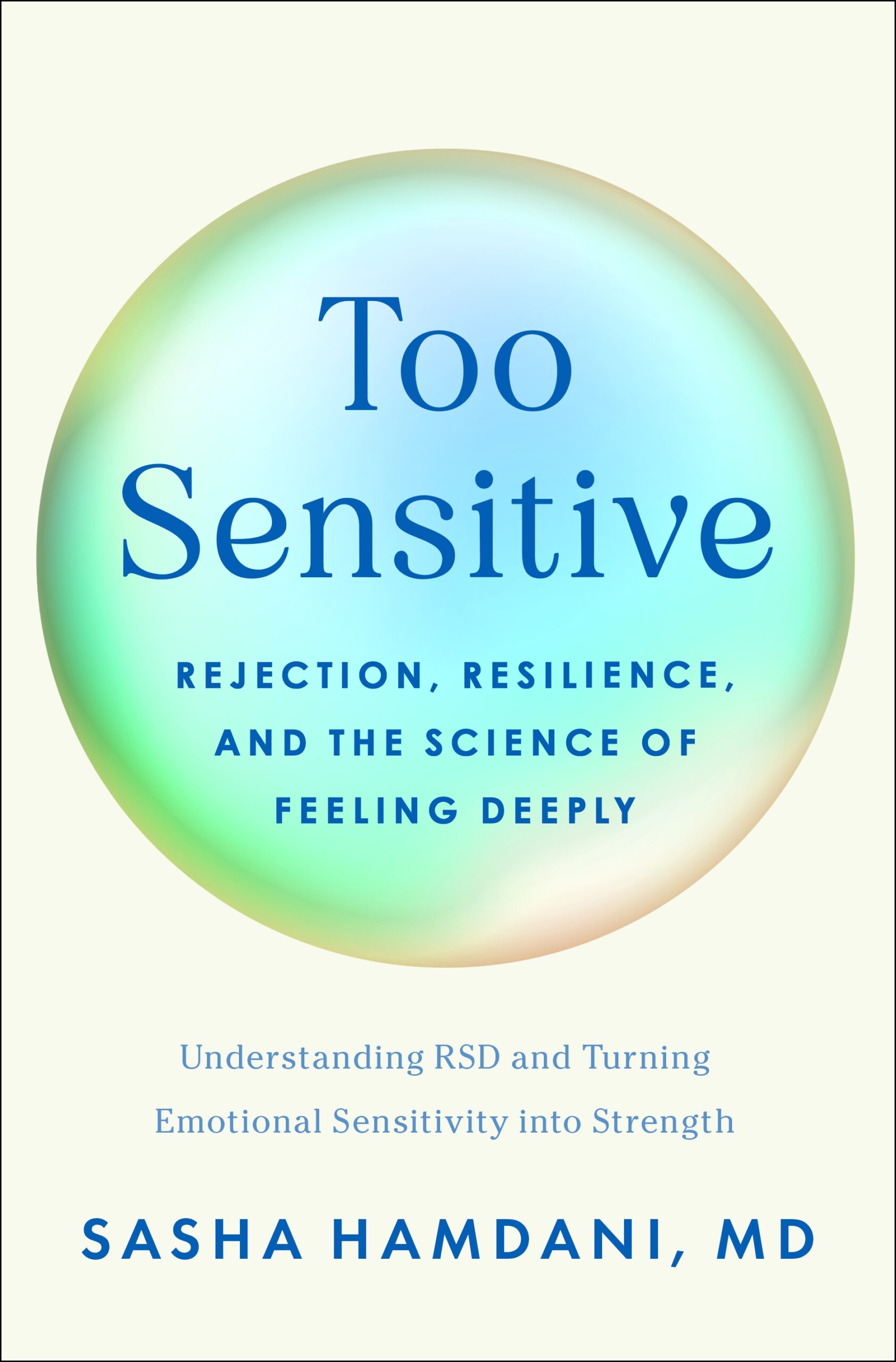
Too Sensitive: Rejection, Resilience, and the Science of Feeling Deeply
Overly dramatic. Irrational. Too sensitive. These are some of the labels applied to those of us who are emotionally triggered by everyday moments. Whether it’s a delayed text message, a last-minute invite, or a subtle shift in tone, what begins as a flicker of uncertainty can spiral into self-doubt, shame, or withdrawal.
From the outside, these reactions may seem overblown. But what if emotional sensitivity is not a personality flaw but rather the result of a highly responsive and attuned nervous system? In Too Sensitive, Dr. Sasha Hamdani―known to her online following as @thepsychdoctormd―offers an accessible explanation of emotional sensitivity as well as practical guidance for how to manage it. For many people, especially those with ADHD and other forms of neurodivergence, emotional sensitivity may be recognized as Rejection Sensitive Dysphoria (RSD). Feelings of being excluded, overlooked, or dismissed are not all in our heads―they are based in our biology. In her groundbreaking book, Dr. Hamdani introduces the first assessment tool to discern where you fall on the emotional sensitivity spectrum and offers practical tools to restore calm to the nervous system.
Drawing from psychiatry, neuroscience, and the gentle compassion of lived experience, Dr. Hamdani shares research-informed strategies to regulate emotional surges, interrupt spirals, and build self-worth and resilience in relationships and at work. Most importantly, Too Sensitive reframes sensitivity not as fragility but as a powerful form of emotional awareness that can be understood and transformed into strength.
-
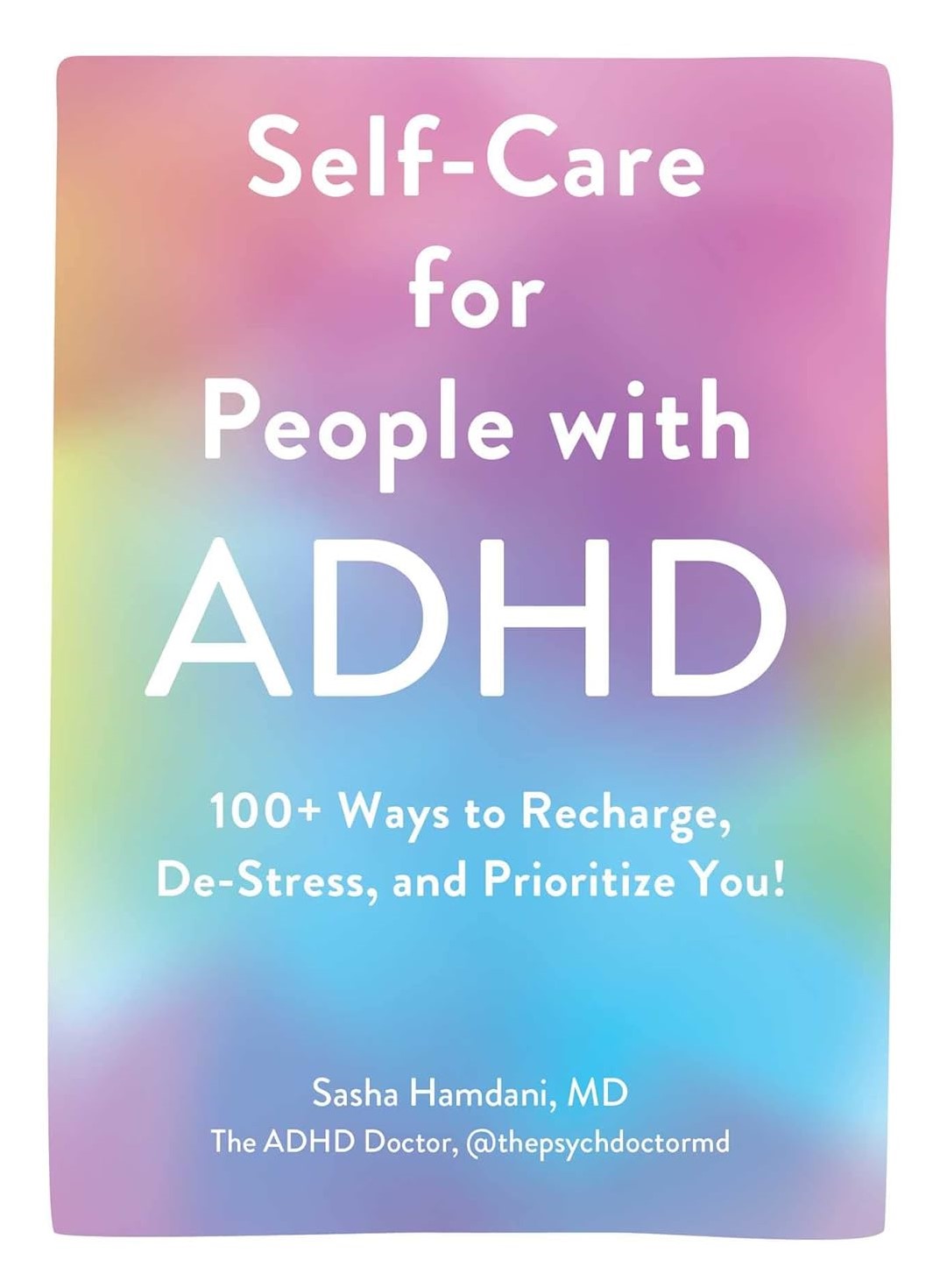
Self-Care for People with ADHD: 100+ Ways to Recharge, De-Stress, and Prioritize You!
When you have ADHD, it can be hard to stay on top of your wellness. Self-Care for People with ADHD is here to help!
This book can help you engage in some neurodiverse self-care—without pretending to be neurotypical. You’ll find more than 100 tips to accepting yourself, destigmatizing ADHD, finding your community, and taking care of your physical and mental health. You’ll find solutions for managing the negative aspects of ADHD, as well as ideas to bring out the positive aspects. With expert advice from psychiatrist and clinician Sasha Hamdani, MD, Self-Care for People with ADHD will help you live your life to the fullest!
Resources
-
- Children & Adults with ADHD: ADHD Fact Sheets
- Children & Adults with ADHD: The Ultimate Guide to ADHD Coping Mechanisms: 19 Practical Strategies
- National Institute of Mental Health: Attention-Deficit/Hyperactivity Disorder (ADHD)
- American Psychiatric Association: What is ADHD?
- Cedars Sinai: Why ADHD Goes Undetected in Girls
- Journal of Attention Disorders: Miss. Diagnosis: A Systematic Review of ADHD in Adult Women
- Attention Deficit Disorder Association: Types of ADHD in Adults: Understanding the Differences
- Brown University Health: Understanding the Different Types of ADHD: What Parents Should Know
- Cleveland Clinic: Rejection Sensitive Dysphoria (RSD)
- Attention Deficit Disorder Association: High-Functioning ADHD: The Reality Behind Success
- Cleveland Clinic: Executive Dysfunction
- Frontiers in Psychiatry: Arousal dysregulation and executive dysfunction in attention deficit hyperactivity disorder (ADHD)
- Harvard Health: 5 common problems that can mimic ADHD
- Children & Adults with ADHD: When Depression Co-occurs with ADHD
2 Million Readers.
1 Life-Changing Newsletter
Simple and Straight-to-the-Point...
Just Like Mel.