Episode: 417
#1 Women’s Hormone Doctor: Take Control of Your Body, Balance Hormones, & Feel Amazing
with Dr. Sharon Malone, MD
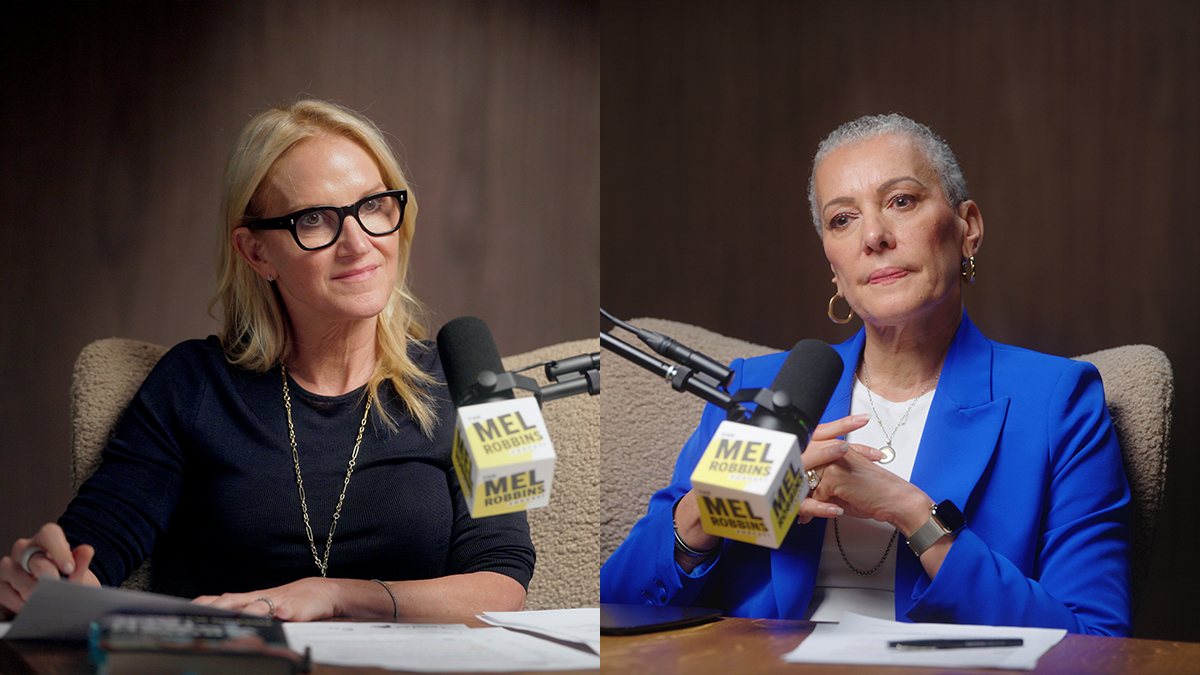
Today’s episode is your ultimate women’s hormone health guide for every age.
If you are dealing with painful periods, infertility, endometriosis, PCOS, struggling with perimenopause, menopause, or confused about birth control - this episode is a MUST listen.
From PMS to menopause, this episode will teach you how to use science to hack your hormones, reset your body, and feel amazing again.
Today, Mel sits down with Dr. Sharon Malone, MD, one of the most trusted medical experts in women’s health today, to cover health topics we have never discussed on this podcast before.
Whether you’re 25, 35, 45, 65, or even 85 - this is your playbook to understanding what is happening in your body so you can take better care of your health.
Dr. Malone is a board-certified OB-GYN, a nationally recognized expert in menopause, perimenopause, and reproductive health, and she has been in clinical practice for almost 40 years.
And today, she is unpacking the science of women’s hormones in a way you’ve never heard before.
Listen on:




Puberty is not disconnected from your reproductive years. It's not disconnected from perimenopause and menopause. It is one continuous story, and the sooner you know the story, the better you're able to craft a better ending for you.
Dr. Sharon Malone, MD
All Clips
Transcript
Mel Robbins (00:00:00):
Today, you're going to get a masterclass with one of the most trusted medical experts in women's health today. Whether you're 25, 35, 65, heck, 85. This is your guide to understanding what's happening in your body. Dr. Sharon Malone is a board certified OBGYN and nationally recognized expert in menopause, perimenopause, reproductive health. I'm getting so many listener questions about PCOS.
Dr. Sharon Malone, MD (00:00:28):
With polycystic ovarian syndrome, a lot of women will find that they have signs of what we say androgen excess.
Mel Robbins (00:00:34):
That sounds terrible. What is that?
Dr. Sharon Malone, MD (00:00:36):
Acne, facial hair, weight gain, higher levels of insulin, irregular cycles. Those are all signs.
Mel Robbins (00:00:43):
What, Dr. Malone, are surprising reasons for infertility?
Dr. Sharon Malone, MD (00:00:47):
The thing about infertility that we don't talk enough about is that it's not just a me problem. Upwards of 50% of infertility cases sometimes is male factor infertility.
Mel Robbins (00:00:59):
What's the connection between fertility and perimenopause?
Dr. Sharon Malone, MD (00:01:03):
Suppose you've talked to your mom and you find out, "Oh, my mom had an early menopause. She was menopausal at 42." Back it up. That means that for you, you might be perimenopausal in your 30s, your early 30s when you think relatively speaking, I should be pretty good on the fertility front.
Mel Robbins (00:01:21):
Yeah. Let's talk about menopause. What do you want women to really know and take seriously?
Dr. Sharon Malone, MD (00:01:28):
Well, women who have more severe hot flashes and more frequent hot flashes, sometimes it is a marker for impending cardiac issues. Women need to understand that misery should not be your resting place. The most effective treatment is hormone or estrogen particularly for the symptoms of menopause.
Mel Robbins (00:01:51):
What the hell was I doing? Why didn't I start this sooner?
Dr. Sharon Malone, MD (00:01:54):
Why didn't I start this sooner?
Mel Robbins (00:01:58):
Hey, it's Mel. And before we get into this episode, my team was showing me 57% of you who watch the Mel Robbins podcast here on YouTube are not subscribed yet. Could you do me a quick favor? Just hit subscribe so that you don't miss any of the episodes that we post here on YouTube. It lets me know you're enjoying the guests and the content that we're bringing you because I want to make sure you don't miss a thing and I'm so glad you're here for this episode because this is a really good one. All right, let's dive in. Dr. Sharon Malone, welcome to the Mel Robbins Podcast.
Dr. Sharon Malone, MD (00:02:31):
Well, thank you so much for having me.
Mel Robbins (00:02:33):
I am so thrilled that you're here. The team is buzzing and we have so many questions from our audience and we're going to go through them one by one.
Mel Robbins (00:02:43):
And I think one of the places that I would love to start is I would love to have you speak directly to the person that's here right now and explain a little bit about what might change in their life for the better or their health for the better if they take everything to heart that you're about to share with us.
Dr. Sharon Malone, MD (00:03:03):
I think the most important thing that women should understand is that we are hormonal beings from the moment we start puberty to the day our periods stop forever. And these hormonal changes and undulations that happen affect every part of our body and they're not disconnected. Puberty is not disconnected from your reproductive years, is not disconnected from perimenopause and menopause. It is one continuous story and that the sooner you know the story, the better you're able to craft a better ending for you. Whether you're 20-something, 30-something or 60-something, there will be something in this conversation that will apply to you, whether you're a mother dealing with a daughter with endometriosis or struggling with infertility, or you're a daughter and you're watching your mother age or worry about fractures as she gets older. There are multiple entry points into this conversation and I hope that we will hit them all and there will be something that we can all take away from it because we're all grown women.
Mel Robbins (00:04:11):
As I'm sitting here in this chair, you are going to share things that I will likely learn about my body for the first time. And it startles me how much I didn't know about menopause, perimenopause. It startles me as a mom of two daughters in their 20s, how much I don't even know how to explain to them about what's going on in their bodies. Why do you think there's so little education when it comes to women really understanding both the beauty and complexity and the very explainable things that are happening?
Dr. Sharon Malone, MD (00:04:48):
Well, I think that we don't have the conversations. I mean, intergenerationally we don't have the conversations. Yo barely got a period talk. And the period talk is not just about how to put in a tampon or how to use a pad. It is a fundamental change in a girl's body. She is transforming from a girl to a woman and all the things that sort of happen after that. Do we talk about cramps? Do we talk about PMS? No, we don't. Most of us are left to figure it out. And it starts there. We've gotten a little bit better about having the conversations about birth control and pregnancy, but really when you get into the phase of life when you need the most advice, you are having that same sort of total body transformation in perimenopause and menopause. No one warns you. You don't even know what the signs and symptoms are.
(00:05:44):
And most women are just caught flat-footed on this. I think it has a lot of historical basis for it in that women are taught that the things that our bodies do are either shameful or disgusting. And so we don't have open conversations and it starts at the beginning and it goes all the way to the end.
Mel Robbins (00:06:04):
Well, what I also love that you just said is that it's this continuum and it is true when I think about being 57 or I think about my daughters who are in their mid-twenties, it is almost like episode by episode. I'm having problems with my period now, so now I'll go get help. Or I am having trouble losing weight or sleeping or brain fog, so then I'm going to go get help. But I've never really thought about it like what's the whole picture here? And how do the dots connect from the very beginning when you get your period all the way through till the end of your life? And that's why you're here, Dr. Malone. And so I want to go decade by decade and really have you talk about that sort of continuum medically speaking related to women hormones health.
Mel Robbins (00:06:54):
And let's just start with your 20s. Okay? One of the things that I've noticed, Dr. Malone, is there has been a wave of women in their 20s who are going off birth control, who have a lot of fear that birth control is dangerous or that birth control is making them infertile, and they're now using natural methods. And I would love to have you just unpack this for us.
Dr. Sharon Malone, MD (00:07:23):
I would love to do that because that drives me absolutely insane when I see these posts and they're saying, oh my God, birth control pills, they're going to give you, you're going to be depressed or you're going to have sexual dysfunction as a result of taking birth control pills. And I would say this to the young women out there, you don't understand birth control pills are probably one of the greatest modern inventions in the history of womankind because it is the first time that we have reliably, reliably been able to control when and what time we choose to have our families. And that is something that historically we've never had. So being able to decide when and where to have your children, major innovation. So anything that really sort of chips away at that notion or takes away options for young women about being able to make that decision is problematic for me.
(00:08:25):
And if birth control pills, if the only thing they did was control your fertility, that's enough. But birth control pills are quite helpful whether or not you have cramps or you have heavy periods or for women who even have PMS, believe it or not, birth control pills help even out some of the hormonal fluctuation with PMS. So I don't want to give the impression that birth control pills are for everybody. Every medication, it has benefits, it has some risks. The risks are small, particularly for young women. And I don't want them to shy away from the most reliable, accessible birth control option because they're afraid of something or a post that they've seen on social media. And here's the other good news is that now we have other options. If you choose not to do birth control pills, that's fine. We have lots of other contraceptives for young women that are reliable, much more reliable than these natural methods.
Mel Robbins (00:09:26):
What are the other methods other than taking a birth control pill that as a medical doctor, you say these are options that you should consider before you look at the quote natural methods?
Dr. Sharon Malone, MD (00:09:38):
Well, one of the things that's really kind of gone by the wayside are diaphragms and condoms. Those are considered barrier contraception. Now, either one alone is about 80% effective, but together they're actually quite good. That's probably the least used options in young girls today. But let's not forget the sexually transmitted infection issue where condoms should always be a part of whatever that regimen is. So regardless of your birth control that you choose. But we also have something that has really taken whole with young women and that is what we call LARCs. That's long-acting reversible contraception.
Mel Robbins (00:10:19):
What is that?
Dr. Sharon Malone, MD (00:10:20):
IUDs.
Mel Robbins (00:10:21):
Oh, that's what I had.
Dr. Sharon Malone, MD (00:10:22):
That includes IUDs. You have either a hormone releasing IUD or you can have a copper IUD that has no hormone in it. There's also injectables. You can use the Depo Provera, which is shot every three months. And then there are also the implants that young women can use that you put them in three years, change them out. So it takes the user error out of it with the LARCs because again, birth control pills are only as good as the reliability of the person who's taking the pill. But these sort of take the user error out of it, and that's why they're a little bit more effective than the pill. So yes, we have options.
Mel Robbins (00:11:02):
What are the medical benefits, Dr. Malone, of taking birth control? Hat are the positives? Because I think if you're in your 20s or your 30s, you do not remember a time when this was not something that was accessible to you. And I saw this chart that tracked what happened in society when birth control, safe birth control became a viable medical option for women to have so that you could control the most important decision that you may or may not make as a woman, which is when you want to have a family. And I found it incredibly striking. It is a hockey stick. I'm holding up a graph that shows that when birth control was first made widely available right around 1970, within a decade there was a statistically significant hockey stick spike in women who were able to enter college, complete college, enter law school, medical school, because they were able to control when they had children.
(00:12:12):
And so I would love for you, Dr. Malone, to just be very scientific about what are the medical benefits of birth control. And then I want to get into what are the lies that are being spread about this important option for women that we need to know?
Dr. Sharon Malone, MD (00:12:33):
Okay. Well, I think that the positives of birth control pills, one is that suppose you have really heavy periods and there are women who have very heavy debilitating periods and there's no structural problem. So it's not like it's fibroids or something like that that you could fix. It decreases the amount of bleeding that women have every month. So guess what? Not only is your life and your ability to do the things not impacted, but anemia is a problem for women who chronically bleed heavy. So you're able to control your periods, they're lighter, they're more predictable. That's a big plus. Also, as I said with PMS, some women have really severe PMS and it happens, you know because it happens reliably about a week or a few days before their periods. And what's happening in that case when you're in a natural cycle, your estrogen level goes up, it peaks around ovulation, and then if you do not conceive, it starts to go down.
(00:13:36):
And we think the trigger for some of the PMS is not the estrogen itself, but the falling estrogen that triggers it. The same is true for migraines for people who get menstrual migraines. It's the falling hormones. So when you take birth control pills, you can sort of even out that precipitous decline that you get. So that's very helpful. And it's also first line for even when there's suspected endometriosis or cramping. And some people have very, very painful periods and birth control pills do help with that as well.
Mel Robbins (00:14:09):
Do birth control pills cause infertility?
Dr. Sharon Malone, MD (00:14:11):
No, they do not. You're not accelerating the aging. You're not doing anything deleterious to the ovary itself. Let's just say you start birth control pills when you're 20 and you take them until you're 35
(00:14:25):
Because you're not ready to have a baby until you're 35. Well, your fertility at 35 when you stop taking the pills is not what it was at 20. So if you are having difficulty conceiving at 35, it's not the 15 years of birth control pills that did it to you. It is the fact that you are 35. And that is something that we have to take into account. Your fertility changes decade by decade, but it's not the pills. And sometimes we blame the pills for things that really we shouldn't. But let me say, I think this is an important point to make is that some women do react negatively to birth control pills. I get it. I have two daughters. One, it works fine on the other one not. I believe her. But we find an alternative for women who do not tolerate birth control pills.
(00:15:15):
And let's be clear, there are about 20 different birth control pill options out there and you can play around. Sometimes this is not the science of it, it's the art of it. You may react better to one particular progestin that's in one pill and not to the other. So if you have a litle patience, don't say, "I took birth control pills once when I was 20 and I had a bad reaction, so I can't take them ever again." That's not true either. It's just knowing that we've evolved, have different pills, they're lower doses. There are a lot of tweaks we can make along the way that will make that option a more viable one for you.
Mel Robbins (00:15:54):
Well, I think a lot of young women are worried about falling fertility rates and are opting to go off this safe medication because they are reading online or they're being told by an influencer that birth control is responsible for falling fertility rates and they're opting for natural birth control with the assumption that doing natural birth control somehow preserves your fertility for whenever it is that you think you're going to get pregnant. Is that what's happening when you use natural birth control, that you're protecting your fertility?
Dr. Sharon Malone, MD (00:16:36):
You are not. And let me say another thing. I went to Catholic school. This new iteration of natural birth control is really nothing more than modified rhythm method. And having gone to Catholic school, let me tell you, rhythm method doesn't work that well. There are a lot of kids in Catholic school and they were trying to follow the dictums of the Catholic church and to be able to say, okay, yes, no birth control. And it just is unreliable. And I think that when you use catchphrases or words like natural, you automatically assume that it's better. And there are a lot of things that are natural. Death and disease are natural, but we don't really want to go down that path either, do we? So you have to watch what the agenda is. And I think you have to go a little bit deeper into why is there when we are in a time when we have the most reliable and varied birth control options available in the history of womankind, why are we regressing?
(00:17:42):
And going back to something that we know for a fact didn't really work that well to begin with.
Mel Robbins (00:17:46):
Well, and as a medical doctor, Dr. Malone, you're stating that it's not reliable. And I guess I'm hovering here because I really want to respect somebody's decision to do what they want to do with their body. And if you are using a method, whether it's called rhythm or it's called pullout, or it is tracking your cycle, or you're using some ap that is marketed to you as natural birth control, then what that tells me is you don't want a baby right now.
Dr. Sharon Malone, MD (00:18:15):
Exactly.
Mel Robbins (00:18:16):
And if you're doing it because you think it's safer than a birth control pill, because you have been told by people that it will ruin your fertility, you have been told a lie. Is that what you're saying, Dr. Malone?
Dr. Sharon Malone, MD (00:18:30):
I am saying that. And to give you an idea of is it safer? And I think that safer than what? Pregnancy is a very complicated and can be a very dangerous time in women's life, just from my health point of view. A lot of what comes up about birth control pills is like, yeah, but it increases your risk of blood clots by two to three times over not being on birth control pills. Pregnancy increases your risk of blood clotting six times over what it would be if you were not pregnant. So again, you have to look at it in terms of relatively birth control pills are way safer and less deleterious to your health than being pregnant. And that's why it's so important that you choose the timing. And Mel, just like you said earlier, you gave that graph about what happened to women and what professionally and educationally they were able to pursue after birth control.
(00:19:32):
It is a stark line
Mel Robbins (00:19:34):
For the person that thinks that, okay, I've got a journal, I have an ap, I can track my cycle, I can take my temperature. I've got the smartwatch and the ring. Will that prevent me from getting pregnant?
Dr. Sharon Malone, MD (00:19:50):
No, it won't. The circumstances that it works the best in are people that have extremely regular cycles. So if you say 28 days, I know where I am. My period's coming. I can feel it. I can feel ovulation. And there are people who feel that who say that they do that. But what about if your period is 28 days this month, it's 31 the next month, or your cycles are very irregular, then all the temperature taking in the world is not going to help you prevent pregnancy. Because here's the thing about taking your temperature. Your temperature goes up after you've ovulated, not before. So if you had sex yesterday and your temperature goes up today, oops, that's a little too late for that information. So the cycle tracking is helpful in retrospect. You do it and then you say, okay, three, six months, I see where it is and when ovulation may happen here.
(00:20:49):
That's when it's helpful. Now we've progressed a little bit. We've got sticks you can pee on for ovulation. Those are way more helpful when you are trying to conceive than when you're trying to prevent pregnancy. And the amount of time that sperm will survive even before you've ovulated, it's like 72 hours.
Mel Robbins (00:21:09):
Wait, so if you're practicing the natural method and let's say your partner pulls out, if a little sneaks in there, it's going to live in there for three days
Dr. Sharon Malone, MD (00:21:20):
Up to 72 hours. And so you're just like, "I'm good. I didn't ovulate today. Well, what about tomorrow or the next day?"
Mel Robbins (00:21:27):
Or the next day. Or
Dr. Sharon Malone, MD (00:21:28):
The next day. So that's why I said it's not as reliable. And I just want women to be able to make good choices. Make choices based on evidence, science, not fear.
Mel Robbins (00:21:44):
So Dr. Malone, if someone's listening right now and they've been using the natural quote method and they're now thinking, wait a minute, I don't want to get pregnant right now. Wait a minute. The options that have been around for 60 years are medically safe and reliable. Wait a minute, they're not going to impact fertility. What are the top three things you would recommend to the person who's now thinking maybe I should consider the IUD? Maybe I should take... Hat would you
Dr. Sharon Malone, MD (00:22:25):
Think about the timeframe that you're trying to not get pregnant in? If you say, "Absolutely, I don't want to have a baby for five years," then I think the LARCs or the IUDs or the implants are fantastic because again, the margin error is so small because it's not like, "Oh, I forgot to take my pill." But if you say, "I don't want to get pregnant now, but maybe within the year," then it doesn't make sense to get a long-acting reversible contraceptive because you can leave them in place
Mel Robbins (00:22:55):
For
Dr. Sharon Malone, MD (00:22:56):
Years. That's a situation where maybe a birth control pill may be useful. But again, what are the consequences? This is also, I think, is really important. What are the consequences of you getting pregnant inadvertently? If you say, "Well, I want to get pregnant in a year, but if I got pregnant in six months," it'd be like, "Oh, well, not what I planned, but it's okay." Versus if I am in the middle of defending my dissertation or I've got a trip planned to Antarctica. Or I'm
Mel Robbins (00:23:30):
Living paycheck to paycheck
Dr. Sharon Malone, MD (00:23:31):
And
Mel Robbins (00:23:31):
I can barely take care of myself.
Dr. Sharon Malone, MD (00:23:33):
What are the consequences? How would that affect my life if it happened? Not just what would happen if I did, what would happen if I didn't? How would my life be changed by that? And I think that central question will determine which one you choose and when.
Mel Robbins (00:23:52):
And how quickly could you get pregnant after you stop taking the pill?
Dr. Sharon Malone, MD (00:23:58):
The first time you ovulate, which is usually most women who have regular cycles will get another cycle usually within a month or a month and a half of having stopped the pills. So it's pretty quick. All you need to do is ovulate.
Mel Robbins (00:24:12):
PCOS has recently been renamed to PMOS, and I'm getting so many listener questions about PCOS. Could you explain what this is? I happen to have a daughter that was diagnosed with this in her late teens, but there's a lot of misinformation and this is a really important thing that impacts a lot of women.
Dr. Sharon Malone, MD (00:24:37):
I have thoughts on this, Mel. I'm not surprised, Dr. Malone. But PCOS, I'll give you just a little bit of the history of PCOS. PCOS is polycystic ovarian syndrome. Before it was polycystic ovarian syndrome, it was polycystic ovarian disease. So we changed the name from disease to syndrome because disease makes
Mel Robbins (00:24:59):
It better. Sounds
Dr. Sharon Malone, MD (00:25:00):
Terrible. Yeah, sounds terrible. So that was the first name change. And then now we've gone from polycystic ovarian syndrome to polyendocrine metabolic syndrome.
Mel Robbins (00:25:13):
Okay.
Dr. Sharon Malone, MD (00:25:14):
Ovarian syndrome. PMOS is what it is. Okay. Well, that's great. We've changed the name. Have we changed the diagnostic criteria for PCOS? No, we haven't. It's the exact same things. How I would make the diagnosis today is the same way I would've made the diagnosis 20 years ago. We just changed the name.
Mel Robbins (00:25:33):
Dr. Millon, what are the symptoms that somebody who has PMOS or PCOS?
Dr. Sharon Malone, MD (00:25:38):
PCOS. Okay. Generally speaking, I think what get people derailed is when you say polycystic ovarian syndrome, that means poly just means many. Normally in the course of a menstrual cycle, you'll start recruiting eggs, one will take over and you'll ovulate from one egg. Well, with polycystic ovarian syndrome, you don't really ovulate regularly. So they get the signal, okay, but no one takes over and it's not just one egg that ovulates. So you get this sort of chronic overproduction of estrogen. You also, because you don't ovulate, you also don't get that second half hormone, which is your progesterone that you kick in the second half. And so it makes your cycles irregular. They're irregular, maybe once every three months it may be once a year. So irregularity of cycles is usually the first point. The second point is that there are also other things going on.
(00:26:42):
A lot of women will find that they have signs of what we say androgen excess. That just means that your ovaries are also making testosterone. They
Mel Robbins (00:26:50):
Make
Dr. Sharon Malone, MD (00:26:50):
More than just estrogen and progesterone. They make testosterone. And so when you don't ovulate, you get this sort of chronic overproduction of testosterone. And what happens when you get a lot of testosterone?
Mel Robbins (00:27:02):
You grow hair.
Dr. Sharon Malone, MD (00:27:03):
Acne.
Mel Robbins (00:27:03):
Oh, acne.
Dr. Sharon Malone, MD (00:27:04):
Acne, facial hair. Women will find that they start to get chin hair or hair around the nipples. So there's more of a male pattern hair growth. It can also lead, because you've got that, it can also lead to hair loss. But the endocrine part of it is that we've also realized that it's not just, again, it's never just the ovaries. There are other organ systems that are affected. And the endocrine part is there's an overproduction of insulin. So there's a degree of insulin resistance because you're not responding to the insulin, so you're overshoot it and you're making too much insulin. So acne, weight gain, higher levels of insulin, irregular cycles, those are all signs. Those criteria are basically the same. And I think that when you get caught up on the polycystic part
Mel Robbins (00:28:03):
Of it, you
Dr. Sharon Malone, MD (00:28:03):
Think you're going to do an ultrasound and see instead of seeing one follicle, you're going to see 20 little ones. Well, you don't see it and that's not an integral part of making the diagnosis. So we've made a lot of progress in terms of changing the name, but you know where we haven't made a lot of progress? Finding out why it happens and having new treatments for how to deal with it. That's where the attention needs to be focused. So when I say I have thoughts, it's like, yeah, great. I'm glad you changed the name. But we need to focus on, okay, now what are we going to do about it? We need more research.
Mel Robbins (00:28:45):
It almost sounds like it's a hormone imbalance that is just wreaking havoc on your body, your menstrual cycle, your ovaries, other organs, insulin, sort of like menopause does. Yeah.
Mel Robbins (00:28:57):
You write about endometriosis in your bestselling book, and I was really surprised to hear that it affects one in 10 women and it's also one of the leading causes of painful periods and infertility. Can you explain what endometriosis is and what are the symptoms?
Dr. Sharon Malone, MD (00:29:18):
Yes. Endometriosis is simply that same tissue that lines the uterine cavity. The tissue that gets stimulated every month with estrogen before you ovulate and sloughs every month if you don't conceive during that cycle. That's endometrial tissue, which is why it's called endometriosis. Well, it belongs in the lining of your uterus, but for reasons that we don't really know why, it can migrate or spontaneously generate in places where it doesn't belong. So it can be on your ovaries, it can be the lining of your abdominal cavity, it can be on your bladder, it can be on your bowel. It Anywhere, but it's just not supposed to be there. We don't know how it got there. There are a lot of theories, but it's there. And so those same hormonal triggers that you are getting every month to tell the lining of your uterus to grow and shed is happening.
(00:30:17):
Remember, it's talking to that endometrial implant that's on your bladder and it's doing the same thing. And chronically it can lead to scarring because remember when you get your period, you're sloughing that tissue out. Well, what happens? It has nowhere to go. So it's there and that chronic inflammation really can cause pain, scarring, and in the worst cases infertility. And as I said, a lot of women walk around. I think it is probably more underdiagnosed than PCOS because when you say one of the signs is painful periods, well, do you know how many women walk around with painful periods and they just figure, well, I'll take more Motrin or I'll do something else or I'll just assume that that's normal. Now, the other thing about endometriosis is that it's called really the great masquerader. Because suppose you have it, it's on your bowel and your symptoms may be, oh, I have really bad diarrhea or bowel issues or sometimes even on your bladder.
(00:31:29):
So it is causing the problems where it lands. If you have really bad endometriosis, the scarring can make sex unbearable for women. So again, you need to have someone to talk to who says, yeah, I kind of see the pattern here, but women are often treated individually for their symptoms. So you've got bowel symptoms, you go see a GI doctor. Oh, you have a bladder thing, you go see a urologist. And not really understanding that it all goes together. And that's why it's a delay in diagnosis for most women. The delay in diagnosis is seven to nine years before they're adequately diagnosed and treated for their endometriosis. Yeah, it's a long time. Women with endometriosis have had multiple, multiple trips to the doctor. It's not like they were not complaining about it. It's just that being able to make the diagnosis and as physicians, we like objective data.
(00:32:29):
We like to be able to do some lab work and see it or do an ultrasound and see it or a CT. And the problem with endometriosis, the reason why a lot of times it's not visualized on a scan is because the little spots of endometriosis will be so small
(00:32:47):
That they're below the resolution of whatever you're trying to do to look at it. So you can't see it on a scan. Well, then how do you diagnose it? Well, you have the clinical presentation, but sometimes if you're really concerned, you need to do a laparoscopy, which is that's where you just take a look, go through a scope and look in there and you see it. And that's how you can definitively make the diagnosis. The one thing that the laparoscopy will allow you to do is that if you see it in addition to being able to treat it medically, if I see endometriosis, I can go in with my laser and I can zap it and correct the things that I see then do the medical treatment afterward.
Mel Robbins (00:33:31):
That is so helpful.
Mel Robbins (00:33:35):
Since you also said that endometriosis is one of the big causes of infertility, let's just talk more about fertility. What do you want women in their 20s and 30s to understand about how fertility changes as you age?
Dr. Sharon Malone, MD (00:33:54):
Well, your peak fertility years are really in your 20s, probably in your late teens to through your 20s. And then when you get into your early 30s, it's a little different, but it's not markedly different.What's the difference between 32 and 28? Probably not that much. But once you get to about 35, 36, then we start to see some of the more of the age related fertility decline. Our fertility is declining, but it's more rapid once you get to your mid - 30s to the point where by the time you get to your early 40s, then it's even lower. I mean, the likelihood that you'll conceive at 40 is way less than what it would be if you try to conceive at 20. So we have two things. We have number of eggs, and that's more of an issue when you're 50. But when you are in that window of declining fertility, like between 35 and your 40s, there's also another component that we don't think of that some of it's genetic, some of it's environmental, and that is your eggs have an expiration date stamped on them.
(00:35:03):
So you don't know when yours is. It is helpful to know your family history. That's why I encourage young women, I said, "Please talk to your mother. Ask your mother, Mom, did you have trouble conceiving? How old were you when you had your last baby? When did you stop using birth control?" That tells you a lot of things. It tells you knowing your family history about endometriosis, about fibroids, about infertility is important, helps you be proactive going forward. It helps you perhaps make a decision. Maybe I won't have my first baby at 37, maybe I'll have it at 34. I say it's data and you do with that data what you will.
Mel Robbins (00:35:47):
Does freezing your eggs impact the expiration date?
Dr. Sharon Malone, MD (00:35:51):
No, it does not. Remember I told you your peak fertility years are in your 20s.
(00:35:56):
So if you were going to freeze eggs, if I were just saying theoretically, when would I get the best yield from egg freezing and retrieval? It'd be in your 20s. But the flip side of that is, well, what's the likelihood that I would ever come back for those eggs? Because if you're in your 20s, you've got a whole life in front of you. So you meet someone at 30 and you get married and you get pregnant. If you get pregnant on your own, are you ever coming back for those eggs that you've spent tens of thousands dollars for? So even though the yield is better, the likelihood that you will ever need them goes
Mel Robbins (00:36:32):
Down. Got it.
Dr. Sharon Malone, MD (00:36:33):
So I think the sweet spot is somewhere probably late 20s, early 30s for freezing. But let me be clear about egg freezing. Egg freezing gives you the possibility of pregnancy. It does not guarantee anything.
Mel Robbins (00:36:52):
That makes a lot of sense.
Dr. Sharon Malone, MD (00:36:53):
Yeah.
Mel Robbins (00:36:53):
What Dr. Malone are surprising reasons for infertility?
Dr. Sharon Malone, MD (00:36:57):
I think the most surprising and frustrating one is unexplained infertility. Now we do a whole workup. We've done an ultrasound and we looked at the lining of the uterus and we know your tubes are open, all of that. And sometimes every single thing checks off on the list. You're good, your spouse or your partner's good and you're still not pregnant. That I think is probably more frustrating to people than saying, oh, I have fibroids, or I had a polyp, or my tubes were blocked. Because everybody likes to have a reason. And I think that's frustrating. I think the other thing about infertility that we don't talk enough about is that it's not just a me problem, it's an us problem. And upwards of 50% of infertility cases, sometimes it' male factor infertility.
Mel Robbins (00:37:49):
50%?
Dr. Sharon Malone, MD (00:37:50):
Yeah. Women get blamed, but it's like, it may not be me, maybe you. But again, but their answers even for how did that, that's what IVF is for. That's what's something called icsy. When you have male factor infertility, then that's just intracytoplasmic sperm injection icy. You see why we say icy?
Mel Robbins (00:38:14):
Yes, I do. Yeah.
Dr. Sharon Malone, MD (00:38:16):
But all you're doing is now you're just giving that sperm some, you're like, "I know you're not going to get there on your own, so I'll just directly put it into the egg." That's helpful. You're
Mel Robbins (00:38:25):
Giving it pre-workout, basically. Oh, you're just
Dr. Sharon Malone, MD (00:38:27):
Going ahead giving a whole head start. But that's helpful
Mel Robbins (00:38:31):
And that
Dr. Sharon Malone, MD (00:38:32):
Has helped a lot of couples. So it's not just like, "Oh, poor me. " The more you know, the better choices you're able to make. And I would also say to young women who are thinking about where they are in their careers and should I do it now? Should I do it two years from now? The other important point to make here is that freezing embryos, which is what we do in IVF where you've already got a known egg and a known sperm, and then we freeze them and come back for them later, that's more successful than egg freezing. The procedure is the same. You have to take all the same medications for IVF that you would for an egg retrieval. You're retrieving eggs, that part of the procedure is the same. The only thing is what are you doing after you've retrieved the eggs?
(00:39:22):
Are we fertilizing them now or are we freezing the eggs? And fertilizing them now with a known partner is always the better option if you have a known partner.
Mel Robbins (00:39:33):
Dr. Malone, what's the connection between fertility and perimenopause?
Dr. Sharon Malone, MD (00:39:37):
Oh, well, they go together and it's an age related thing. Now here's the connection that I think a lot of people don't understand. Remember I told you there's a natural age decline in your fertility associated with age. Well, suppose I tell you, we'll do a little thought experiment here. We say the average age is 51 for having gone through menopause. Completed. End of discussion, shop is closed. Oh, nothing's happening there. No ovaries.
(00:40:07):
No estrogen from those ovaries. 51. Well, perimenopause, that window, that long span between your peak reproductive years and the end of your reproductive years, it can be four to 10 years. So if I tell you you're menopausal at 50, all right, then perimenopause can start as early as 40 and then it takes you 10 years to go through that process. And there is also diminished ability to conceive because again, now you're 40 something in addition to these hormones are changing. But suppose you're menopausal, you've talked to your mom and you find out, "Oh, my mom had an early menopause. She was menopausal at 42. Back it up four to 10 years. That means that for you, you might be perimenopausal in your 30s, your early 30s when you think relatively speaking, I should be pretty good on the
Mel Robbins (00:41:03):
Fertility
Dr. Sharon Malone, MD (00:41:04):
Front." But you can't predict where you are in that spectrum necessarily. So that's why I say it's important to know your family history so you can say, "All right, mom, well, I did not know, mom, that you were menopausal at 40." It's not a one-to-one, but it is a very important data point if you're the daughter.
Mel Robbins (00:41:25):
If you're listening and you have not talked to your mom or your grandmother, she's still here, what are the questions you want every daughter to ask their mother?
Dr. Sharon Malone, MD (00:41:38):
You want to know all about their medical history, but particularly you want to know about things. Mom, did you have cramps? That's a sign. Did you have these painful, awful periods that could be indicative of endometriosis? Because we know that daughters of women with endometriosis have a higher incidence of endometriosis. You want to know about whether or not your mom had fibroids. You want to know because again, that increases your risk of having fibroids at some point in your reproductive life. You want to know what age she was when she conceived? Was it difficult? And you also want to know what was your pregnancy like? Because again, these are very, very important points that may affect your history, whether they do or do not. It makes you aware such that if any of those things come up for you, you don't wait two or three years to go get that diagnosed.
(00:42:35):
You mentioned that to your doctor by the way. Oh yes, my mother had endometriosis. Well, guess what? That's going to help me get to the diagnosis point with you sooner than if you don't know that.
Mel Robbins (00:42:46):
So even just knowing makes you recognize that, okay, this is something I need to pay attention to, which is really important.
Mel Robbins (00:42:52):
If you've gotten a diagnosis of PCOS or PMOS earlier in your life, will that potentially impact your fertility as well?
Dr. Sharon Malone, MD (00:43:02):
It may. Because in PCOS, as I told you, the treatment depends on what's your goal.
(00:43:09):
And if you have PCOS and you're trying to get pregnant, you may ovulate irregularly and you don't know when that is. So you may are going to ovulate three months from now. So when you're trying to get pregnant, and that's a very different situation than for someone who has a period once a year, your opportunities for pregnancy are less. For someone who has a monthly cycle, well, at least you have the opportunity every month. For someone who has PCOS, maybe you ovulate three times a year. So yes, that affects your fertility, but we do have medications that we can induce ovulation with.
Mel Robbins (00:43:44):
Let's talk about menopause. What is it really? And Dr. Malone, what do you want women to really know and take seriously when this change starts to happen in your body?
Dr. Sharon Malone, MD (00:44:00):
What I want women to understand is this, is that menopause is not an event. It is a life stage. You will spend 30 to 40% of your life after you have completed menopause. You will spend more time in menopause than you did in your reproductive years. It is probably if you're lucky enough and you don't get hit by a car, that will be the longest of your reproductive phases that you are in. That's why I don't like the term postmenopause because when you say postmenopausal, and I get it why we say it that way, but I don't want you to think of it that way. It's because that gives the impression that you're over menopause
(00:44:43):
And you're not. You're never over menopause. The effects of the lack of estrogen and hormones in your body will affect you from that point forward, your bones, your brain, your skin, your hair, all of it. So that's why I said I don't want people to go, oh, I'm over it. And you know what they mean when they say I'm over menopause? They're usually they're saying that their hot flashes went away. And menopause is so much more than a hot flash. I mean, that's the least of the things. But hot flashes are often harbingers of things to come.
Mel Robbins (00:45:19):
Wait, hold on a second because harbingers of things to come sound like the orcs are rattling over the mountain. And I do have a question here. Why do I still have hot flashes at 58? I haven't had my period in over two years. So if you're still having hot flashes, what is this a signal of things to come, Dr. Malone?
Dr. Sharon Malone, MD (00:45:40):
Well, women who have more severe hot flashes and more frequent hot flashes, sometimes it is a marker for impending cardiac issues because what happens to women who have a lot of hot flashes and who has the most hot flashes? Black women do. They have hot flashes that are more severe. They last longer and they start earlier. So when I told you perimenopause is four to 10 years, if you're an African-American woman in this country, it's closer to 10 years. So you are most symptomatic during perimenopause. So all the time you may be still getting your period. That's the worst. I'm getting my period and hot flashes, but it can happen. And then there's also about 20% of women whose hot flashes will continue into their 60s, 70s, and beyond. Dr.
Mel Robbins (00:46:30):
Malone, don't be telling me this. Really?
Dr. Sharon Malone, MD (00:46:32):
Yes.
Mel Robbins (00:46:33):
Why?
Dr. Sharon Malone, MD (00:46:34):
See, who knows why?
Mel Robbins (00:46:36):
Do you think there's a connection with stress? When I hear the stat that you said about Black women having more severe hot flashes, it's starting earlier, lasting longer, what came into my mind was the statistic that Dr. Gabormate shared on this episode about autoimmune diseases and the 4X rise of them in the last 20 years. And it was his theory, and I know there's a lot of research around this, that chronic stress and chronic caregiving and micro traumas and aggression and bias that Black women deal with that I don't have to deal with because I'm not being discriminated against in microaggressions every day. That chronic stress creates conditions in your body that impact your immune system. Do you think that is contributing to these symptoms?
Dr. Sharon Malone, MD (00:47:34):
I think it is a big factor because I think that the reason why Black women tend to experience these symptoms more, and this would be true of any chronic disease, it's not just perimenopause and menopause, is that chronic stress is toxic to whether you're talking about weight gain, whether you're talking about your cancer risk. It accelerates the aging process even for Alzheimer's or dementia. People who have chronic stress, all of this tend to have a risk. Who has higher risk of stress if anything? Black women. We have twice the risk of dementia than white women. I did not know that until I wrote the book because I was like, wow, I never knew that. I never knew that women had twice the risk of Alzheimer's or dementia than men. So it's clearly something that's happening and it starts somewhere in our midlife. But getting back to the hot flash and the connection to chronic disease, the hot flash is women who have a higher incidence of hot flashes.
(00:48:43):
This is what we know. Women who have hot flashes have night sweats. People who have night sweats have disrupted sleep. We know that disrupted sleep is a risk factor for cardiovascular disease. We know that women who have disrupted sleep are more likely to have hypertension.
Dr. Sharon Malone, MD (00:49:00):
Women who have disrupted sleep are more likely to develop type two diabetes because it leads to when your sleep is disrupted for months, years on in, chronic fatigue. If you're chronically fatigued, guess what you're not going to do the next day? You're certainly not going to go to the gym. You're not going to get up in the morning like I think I'm going to go on a three-mile run. So that's why I said a hot flash is often the inciting event for a lot of other things and behaviors that will increase your risk for heart disease as you age.
Mel Robbins (00:49:35):
I would love to hover just a little longer on the hot flashes and maybe it's selfish because this was something that was chronic for probably seven years for me. I would wake up and the entire side of my bed, it was almost as if somebody had thrown a bucket of water under me and they've mitigated thanks to HRT. What would you say, Dr. Malone, are the top three things you want someone to be aware of that you should be checking out to mitigate this?
Dr. Sharon Malone, MD (00:50:11):
One, I would say this, know that hot flashes are not benign. That's what we've been socialized to believe, that suffering, pain, misery, they're just part of womanhood. So we should just grin and bear it and don't worry, close your eyes. It'll be over in a decade or so. That's ridiculous to me. And I do this all the time because now people have these little portable fans that they walk around with.
Mel Robbins (00:50:39):
I had one.
Dr. Sharon Malone, MD (00:50:41):
And I will see a portable fan and I will just walk up to somebody and say, girl, you know we have something for that, don't you? We don't have to walk around with a fan. Fix it. Do it. What do
Mel Robbins (00:50:54):
I do?
Dr. Sharon Malone, MD (00:50:55):
It's hormone therapy. I mean, the most effective treatment FDA approved is hormone or estrogen particularly for the symptoms of menopause, vasomotor symptoms or hot flashes. It works. But it's the fear factor that keeps women away from the most effective treatment for the symptoms of menopause.
Mel Robbins (00:51:21):
You know what's interesting is it's happening to women in their 20s because there's so much misinformation and lies being spread about birth control, which in many cases is low doses of estrogen.
Dr. Sharon Malone, MD (00:51:33):
Yes.
Mel Robbins (00:51:33):
And the same thing is happening to women in our 40s and 50s when it comes to the misinformation and lies related to hormone replacement therapy, which is not only safe for the vast majority of women, but it is shockingly effective. I remember when I started hormone replacement therapy, it took about five weeks and all of a sudden I though, oh my God. I feel like myself. What the hell was I doing? Why didn't I start this sooner?
Dr. Sharon Malone, MD (00:52:05):
Why didn't I start this sooner? And there's really even more of a medical benefit for starting sooner because the sooner you start and treat those symptoms, the more benefit you get in the long term.
Mel Robbins (00:52:19):
What do you mean?
Dr. Sharon Malone, MD (00:52:20):
I mean in terms of your cardiovascular risk, in terms of weight gain, in terms of being able to sleep, all of those things, perimenopause does not have a bright line that defines it the way menopause has a bright line that says when you're done. Okay. But when to start treatment, when to use hormone therapy in some form or fashion in perimenopause, again, depends on what your treatment goals are and it depends on how bothered you are by your symptoms. And that is what I want women to understand. If you're between the ages of 35 and 45, which is usually about the time that perimenopause or the menopausal transition starts, you seek treatment when you are bothered by your symptoms.
Mel Robbins (00:53:06):
I wish I had known you five years ago
(00:53:10):
Because when I think about how revelatory it is to me that I didn't even consider the age range of 35 to 45 and that there's no benefit to waiting until you're suffering. And if you just don't feel like yourself, the world is hard enough. And if this is something that can help you feel like yourself again, it's going to make you feel better equipped to handle what's going on in your life instead of... Because what ends up happening is you describe any of those symptoms. I can't really sleep. Something's wrong. I'm gaining weight. I don't know what's going on. Oh, here's an SSRI. You might be depressed.
Dr. Sharon Malone, MD (00:53:49):
Here's a sleeping pill. Goodnight.
Mel Robbins (00:53:50):
Yes. Versus this is clearly something going on with hormones because women's entire life... In fact, when we did a poll online, have you ever felt like your hormones are affecting your mood, energy, sleep, wait, or cycle? 98%? Yes.
Dr. Sharon Malone, MD (00:54:05):
See, they could have just asked women. We would've told you. I think the reason why women tend to wait, there are probably two reasons. One is they don't realize that this is all part of perimenopause and the menopausal transition. And the second thing is that we have been laboring, women have been laboring under the misconception for a very long time that they can only take hormone therapy for a small amount of time because the direction once was, we'll take the smallest amount for the least amount of time possible. That's not true. You can start getting treated when you're symptomatic. You can take it for as long as you like. There is no time limit on how long you can take hormone therapy. Now bear in mind, there may be some subtle differences in terms of how we prescribe in perimenopause and how we prescribe in menopause, because you remember sometimes we have different mission.
Mel Robbins (00:55:04):
Your
Dr. Sharon Malone, MD (00:55:04):
Perimenopausal, remember I told you your fertility is decreased. It's not gone. So do you need birth control or no? The bad PR campaign that's going on about birth control pills in 20-somethings also happening about people really disparaging the use of birth control pills in perimenopause. So women need to understand that misery should not be your resting place. Lord knows there's enough of that in the world that you cannot control. But for things like this, when you are feeling out of control, why wouldn't you fix that? I don't get it.
Mel Robbins (00:55:49):
I love that you're reminding us that you don't need things to get worse before you can start feeling better and that there are such safe, effective, and almost immediate things. I love my patch so much, I will be wearing it on my deathbed. I am not ever spending any time without that sticker on my body because it has made such a difference.
Mel Robbins (00:56:12):
And in fact, it has been on the headlines that there's a shortage of estrogen patches. What is going on, Dr. Malone, and what should you do if that's affecting you? Women are waking up.
Dr. Sharon Malone, MD (00:56:24):
I know. I mean, I'm delighted because it means that there's more demand for it. And I think what is distressing to me is that you didn't see this coming? I mean, when I tell you, I have personally been out here in this space talking about menopause publicly for over five years. I've been talking about it privately for 35 years. So the notion that now that women are aware, that's the only difference, that more women are aware. We've knocked down a lot of the misconceptions about breast cancer and all the bad negative press about HRT. Could you not have seen... Can you not read the room here that there was going to be more demand for hormone therapy?
(00:57:10):
Well, again, I think that there's not a lot of attention being paid to women's health, but that's another issue. But the point is that the estrogen patch is not your only option. Systemic estrogen falls into two categories. There's transdermal of which the patch is transdermal, just means it just goes through the skin. So if you're out of patches, if you want to say, "Oh, but I really want to stay with the transdermal," you can use a spray, you can use a gel. Those are readily available. And even different doses of the patch are available. So I don't think anyone needs to panic because you can't find a patch. We have options. Then there's also oral. And again, oral hormone therapy gets maligned as if that's something terrible. It's like you can use oral. Most of the information and the data that we have on the benefits, all of the things about hormone therapy really comes from the data that we have on oral.
Mel Robbins (00:58:13):
I really just appreciate that you are explaining this in a way that's easy to understand with a level of depth that doesn't make me feel like an idiot for really going either I've never heard it that way or I actually understand it at a deeper level.
Mel Robbins (00:58:29):
And one of the topics that I recently feel like, oh wait, I never really understood that there's a difference between HRT and what vaginal estrogen might do. And it was after learning about the benefits of vaginal estrogen for UTIs, for overall health in your sexual health that I started taking vaginal estrogen as a supplement. I can't believe the difference. And so could you explain, Dr. Malone, what the vaginal estrogen supplement is for, how it relates to HRT and how you want women to think about this, especially as we get older?
Dr. Sharon Malone, MD (00:59:24):
Right. That's an excellent point because sometimes it gets all mushed in together. But when I'm talking about HRT, generally we're talking about systemic, which means that you are using estrogen and a progestogen of some type at a level that again, controls the symptoms, hot flashes, the mood swings, all the brain fog that we typically associate with perimenopause and menopause. So we're taking estrogen at a level that will take care of those symptoms. So you can do it orally, you can do it transdermally as a pad But it says systemic because it is going throughout your body, your blood.
Mel Robbins (01:00:04):
Got it.
Dr. Sharon Malone, MD (01:00:05):
Okay. Topical or vaginal estrogen is used just locally. You put it in your vagina and you can use it even on the outside, on the vulva, on the labia, on the labia mace basically because it is addressing the genital urinary syndrome of menopause or GSM. That's vaginal dryness, painful sex, urinary frequency urgency, and frequent urinary tract infections. You can treat that using local topical vaginal estrogen and it will take care of those symptoms, but it basically stays where you put it. It's not going anywhere. And so it's not enough in vaginal estrogen. If you have hot flashes and you're using vaginal estrogen, you'll still have hot flashes. You' still have sleep.
Mel Robbins (01:00:52):
Because not systemic.
Dr. Sharon Malone, MD (01:00:53):
It's not going through your whole
Mel Robbins (01:00:54):
Body?
Dr. Sharon Malone, MD (01:00:55):
No, it's
Mel Robbins (01:00:56):
Like a pimple patch. You're putting it here, but it's not in your whole
Dr. Sharon Malone, MD (01:00:58):
Body. You put it where you want it to work.
Mel Robbins (01:01:00):
Got it.
Dr. Sharon Malone, MD (01:01:01):
Okay. And the same is true of topical estrogen that you use for your face. Remember, one of the things that happens in menopause with estrogen depletion, you lose 30% of your collagen in your skin in the first five years of menopause. So what we know is that the skin has estrogen receptors. Your vagina, your vulva has estrogen receptors in it. So you can use it at a level that increases the hydration, collagen formation. And again, we've known this for quite some time, but again, it's not enough to treat your other symptoms. So that's why even women who are on systemic hormone therapy may still need to use a little bit of extra vaginal estrogen.
Mel Robbins (01:01:45):
Wow. Dr. Malone, talk to us about the importance of muscle loss and bone health and strength.
Dr. Sharon Malone, MD (01:01:55):
That is so important because one of the things that happens in menopause is you start this cycle of bone loss because remember, estrogen affects everything, your skin, your muscles, your bone.
Mel Robbins (01:02:08):
So that starts in menopause?
Dr. Sharon Malone, MD (01:02:10):
That really starts in late perimenopause and certainly continues through menopause at a more rapid clip once you are finally done with menopause. You tend to lose muscle, you lose bone and you gain fat.
(01:02:23):
So that even when you are weight neutral in menopause, you are still changing your body composition, which means that's why it's like, wait a minute, why do I all of a sudden have this weight around the middle? Why do I have this spare tire? It is because the lack of estrogen causes this sort of redistribution of body fat and loss of muscle. So now if you go through the next 20 years and you're losing muscle and you're losing bone, well, now you're more susceptible to osteoporosis. Why is that important? Because then you're more likely to fracture a bone, be it your spine, be it your hip or wrist. Your bones are thinner and more fragile. Now, this is where it's a dangerous combo. If you are not careful and mindful of your muscle mass, now you're weaker. So now you've got less muscle, less bone.
(01:03:22):
What happens if you trip and fall? You're weak. You've got no cushioning, you're doing whatever. So when you go down, you go down like a tree and you break things. And that is really why I think our goals as we age, yes, we do hormone replacement therapy because hormone replacement therapy of the estrogen component is the only medication that we have that prevents osteoporosis.
Mel Robbins (01:03:48):
Wait, estrogen is the only thing that we have that can prevent osteoporosis?
Dr. Sharon Malone, MD (01:03:53):
Estrogen in the hormone replacement therapy that you take has an FDA indication for the prevention of osteoporosis. So if you are at risk for osteoporosis -
Mel Robbins (01:04:06):
Aren't we all?
Dr. Sharon Malone, MD (01:04:07):
Well, not everybody. Not everybody's going to break something. I mean, it just depends. And see, there's a genetic component that you bring to it. I have great bone density because I'm a bigger person than I have, but it's dependent on your exercise level that you have growing up. How much bone did you form in the first place? Some of it's genetics, some of it's from your activity. How much calcium were you a milk drinker as a kid? That's why your mom always says drink your milk. Whether or not you've had enough calcium and vitamin D to actually
(01:04:41):
Create that bone and then whether you've been able to maintain it. And exercise matters, not just cardiovascular exercise, but that's where the weight training comes in because your bones will respond to whatever load you give it. So the more stress you put on it, the better your muscles are, the more weight-bearing you can do, you tend to preserve more of your bone mass. So that's where you enter menopause. But regardless of where you start, you're going to start to lose it after menopause. And if your bone density is really high, it may take me 35 or
Mel Robbins (01:05:17):
40
Dr. Sharon Malone, MD (01:05:17):
Years to get to the fracture point. But if you start really low, you're going to get there sooner.
Mel Robbins (01:05:23):
If you're already losing bone density, maybe you have a diagnosis or not, maybe you just feel frail or nervous about it, will weight training pause what's happening? Will it help you regrow?
Dr. Sharon Malone, MD (01:05:37):
Here's the thing about most bone loss. Most of it, when it happens, you very rarely get back to where you started. So once you're coming in 10 years after the fact, you may be able to sort of slow the train down a little bit. But for the most part, what's lost is lost. You can maintain your bone
Mel Robbins (01:05:56):
Density. Okay. And estrogen and resistance training building muscle helps you?
Dr. Sharon Malone, MD (01:06:02):
Yes. The estrogen, I'll give you an example where I think it will be helpful
(01:06:08):
For women to know. Right now, the current recommendation for getting a bone density is they said recommendation is do it at 65. Why would you do it that late? Isn't that a good question? Why would you wait? Remember I told you the most rapid phase of bone loss happens in the first five years after menopause. By the time you get it at 65, that's 15 years of bone loss that you're not going to be able to recoup. It makes more sense to me. And what I would advise my patients to do is that once you get to menopause, you don't need to do a bone density when you're 30, but once you get to menopause, say, let's do a snapshot right now and see what my bone density is. It's going to be good, not so good, or maybe it's fantastic. If it's not so good, that doesn't necessarily mean that also doesn't mean that you're going to fracture.
(01:07:02):
But I would be more aggressive in terms of saying, all right, well, what we can do to prevent you losing further
Mel Robbins (01:07:09):
Bone
Dr. Sharon Malone, MD (01:07:09):
Is to do hormone therapy at that point.
Mel Robbins (01:07:11):
Got it.
Dr. Sharon Malone, MD (01:07:12):
You see?
Mel Robbins (01:07:12):
Yes, I do see
Dr. Sharon Malone, MD (01:07:14):
It. And if I wanted to say, oh, I don't know if I want to do it, then I would do it once at menopause and I'd say, let's do it at 18 months to two years later.
Mel Robbins (01:07:21):
And see if you're declining. And if it's
Dr. Sharon Malone, MD (01:07:22):
Declining, then now I can make the case to you that see what's happening, and then you might want to reconsider at that point.
Mel Robbins (01:07:30):
Even if you are in a place where, all right, we blew it and I now am in osteoporosis, or I am losing bone density, how would weigh training or building up your muscles, how would that protect you and impact your health positively in that case?
Dr. Sharon Malone, MD (01:07:54):
Your muscles help protect and support your bones. I think we kind of think of our bones as once you've grown to adult height and whatever and your bones are just your bones, your bones are constantly remodeling. They're being broken down and they're building up and they will build and break down depending upon the stress that you put upon them. So if you're exercising, if you're doing weight-bearing exercise, you will build stronger bone in the earlier phases than someone who does nothing. I think about this a lot as being an older person and on the road and traveling all the time. It's like, I need to be able to put that carry-on in that overhead compartment here. And that's a matter of just being able to know that I have enough upper body strength to be able to lift. I need to know that if I trip, that I'm not going to go down like a tree.
(01:08:51):
You have some core strength to be able to prevent you going down like that. I mean, think about that. If you were 20 years old and you tripped on the sidewalk out front, you are very unlikely to break your hip.
Mel Robbins (01:09:07):
Correct.
Dr. Sharon Malone, MD (01:09:08):
Because one, you know how you can break a fall, you can do all these things, reaction time, all this stuff as you're older, not there, and your bones are more fragile. So that's why you need strong bones and strong muscles. Got to have core strength for maintaining your balance.
Mel Robbins (01:09:24):
Wow, this is so, so good. You're so smart and you have such an incredible way of explaining this. And I hear both the passion and the commitment to women's health and the anger and frustration that you feel on our behalf that the information and the access to these tools has not been as readily available and understood as women around the world deserve it to be. And so I appreciate the depth to which you went in each of these topics because I think it can be really confusing. And we do live in a world where there is so much information flooded into the public space that it is easy to be gaslit. It's easy to have somebody prey on you and your fears and to have you start to question established medical science to your detriment. And I guess that brings me to a question that I'm curious about.
Mel Robbins (01:12:36)
Step one is giving somebody access to a world-renowned expert like you in a way that makes you feel empowered, that makes you understand what's happening, that makes you understand the various options and levers you can pull, that can help you take control of your life, your health.
Dr. Sharon Malone, MD (01:12:58):
The message that I really want women to have is that you deserve to feel better. You deserve with every tool available to be able to age healthfully and gracefully. That should be the new goal, not all the negativity that's associated with aging. Some of that is going to come, but the reality is that you have way more control over how you navigate this final phase of your life than you think. That's
Mel Robbins (01:13:32):
Why
Dr. Sharon Malone, MD (01:13:32):
I'm grateful
Mel Robbins (01:13:32):
That
Dr. Sharon Malone, MD (01:13:32):
You're
Mel Robbins (01:13:33):
Here. Dr. Malone, what are your parting words?
Dr. Sharon Malone, MD (01:13:36):
My parting words would be this. Menopause is inevitable. It is the one universal femal experience. So know what that is. Know it's coming. Don't be afraid because I will guarantee you this. I'll tell any 47-year-old out there now, and I'm 67, I'm having way more fun at 67 than I was at 47, really. But you got to feel well enough to be able to do it.
Mel Robbins (01:14:06):
Well, Dr. Malone, thank you for giving us the no BS science-backed medical truth that we needed to hear so we can make informed decisions and understand what's going on. And I cannot wait to see how this impacts the lives of women and the people who love them around the world. Thank you. Thank you. Thank you.
Dr. Sharon Malone, MD (01:14:32):
You are so welcome and thank you for having me. I really enjoyed this conversation.
Mel Robbins (01:14:37):
I did too. And I also want to thank you. Thank you for taking the time and making the time to listen to something that will improve your health. I know you want to feel better. I know you want to do better. And what you learned today from Dr. Malone is going to give you the tools that you need to understand what's happening in your body and to make informed decisions so that you can feel better. And in case no one else tells you this today, as your friend, I wanted to tell you that I love you and I believe in you and your ability to create a better life. And as Dr. Malone just said, holy cow, you can create a better life, but you have to take responsibility for advocating for yourself and getting the support that you deserve. And I promise you, if you do that, you will have a better life because you're going to feel a lot better.
(01:15:27):
Alrighty, I'll see you in the next episode. I'll welcome you in the moment you hit play. And thank you for watching all the way to the end and you're going to love this next video and I'll be waiting to welcome you in the moment you hit play.
Key takeaways
Your hormones shape every stage of your life, so when you understand the continuous story from puberty through menopause, you can make better health decisions.
Don't let fear or social media misinformation stop you from using birth control, because it does not cause infertility, and you deserve evidence-based choices.
Ask your mother about fertility, endometriosis, fibroids, and when menopause began, because that family history helps you recognize risks and act sooner.
If your periods are painful, don't assume that's normal, because endometriosis can affect far more than your uterus and often goes undiagnosed for years.
You don't need to wait until you're miserable to seek treatment, because perimenopause symptoms deserve attention as soon as they start bothering you.
Guests Appearing in this Episode
Dr. Sharon Malone, MD
Dr. Sharon Malone is a board-certified OB/GYN and nationally recognized expert in menopause, perimenopause, reproductive health, and women’s health equity. She is the New York Times bestselling author of Grown Woman Talk and is known for making complex women’s health science clear, practical, and empowering.
-
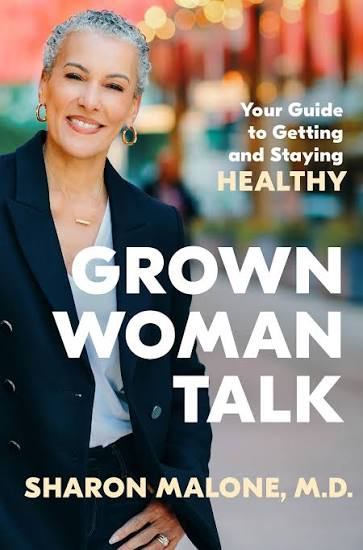
Grown Woman Talk: Your Guide to Getting and Staying Healthy
Grown Woman Talk is for every woman who has felt marginalized or overwhelmed by a healthcare system that has become more impersonal, complex, and difficult to navigate than ever. It’s also for any woman who is simply standing at the intersection of aging and health, anxious and wanting solutions.
Part medical handbook, part memoir, and part sister-girl cheerleader, this book is filled with useful resources and real-life stories of victory and defeat. It not only highlights the current data around women’s health issues, but it also places that data in a helpful context.
Most important, Grown Woman Talk seeks to eradicate the silence that surrounds women’s health by facilitating discussion between women of all ages and encouraging more accurate and productive medical insights. It is Dr. Sharon’s belief that giving women more agency can, literally, give them life.
-
The Second Opinion with Dr. Sharon
Menopause isn't a moment, it's the rest of your life. Hosted by leading OBGYN Dr. Sharon Malone, a perimenopause and menopause expert with over 30 years of experience, The Second Opinion with Dr. Sharon is where women take back the conversation on hormones and aging.
Each week, Dr. Sharon will be joined by well known guests, board-certified experts, and women just like you, to tackle all things menopause- from joint ache, muscle pains, and heart health to brain fog, fertility, weight gain and more.
Hormone changes touch almost every aspect of women's health, and Dr. Sharon is here to give you the right tools to reclaim the rest of your life..
Resources
-
- NPR: This is the period talk you should've gotten
- Cleveland Clinic: Perimenopause: Age, Stages, Signs, Symptoms & Treatment
- Cleveland Clinic: Menopause: What It Is, Age, Stages, Signs & Side Effects
- National Institute on Aging: What Is Menopause?
- Mayo Clinic: Choosing a birth control pill
- CDC: Contraception and Birth Control Methods
- Yale Medicine: What Women Should Know About Intrauterine Devices (IUDs)
- Mayo Clinic: Depo-Provera (birth control shot)
- Mayo Clinic: Contraceptive implant
- Healthline: 6 of the Best Birth Control Options to Ease Heavy Periods
- Children’s Hospital of Philadelphia: Managing Menstruation with Hormonal Contraceptives
- Contraception and Reproductive Medicine: Return of fertility after discontinuation of contraception: a systematic review and meta-analysis
- MGH Center for Women's Mental Health: Do Oral Contraceptives Cause Mood Swings or Depression?
- Mayo Clinic: Polyendocrine metabolic ovarian syndrome (PMOS)
- Mayo Clinic: Endometriosis
- Endometriosis Foundation of America: Endometriosis: Defining It, Recognizing It, and Treating It
- Planned Parenthood: How is endometriosis diagnosed and treated?
- Journal of Obstetrics & Gynaecology: Time to Diagnose Endometriosis: Current Status, Challenges and Regional Characteristics—A Systematic Literature Review
- Healthline: A Look at Your Fertility Timeline
- Penn Medicine: Egg freezing
- Cleveland Clinic: Unexplained Infertility
- Penn Medicine: Intracytoplasmic sperm injection (ICSI)
- Menopause: Mother’s Menopausal Age is Associated with her Daughter’s Early Follicular Phase Urinary, Follicle Stimulating Hormone Level
- John Hopkins Medicine: PMOS and Infertility
- Harvard Medical School: Are hot flashes a warning sign?
- AARP: Women of Color Experience Menopause Differently
- Mayo Clinic: Hormone therapy: Is it right for you?
- USDA: Hormone Replacement Therapies Can Help Women with Bothersome Menopausal Symptoms
- NHS: When to take hormone replacement therapy (HRT)
- Women’s Health: How Young Is Too Young For Hormone Therapy?
- Mayo Clinic: Estradiol (transdermal route)
- Mayo Clinic: Estradiol and progesterone (oral route)
- Mayo Clinic: Estradiol (vaginal route)
- The Menopause Society: Oral or Transdermal Hormone Therapy? The Mental Health Risks Are Not the Same
- NHS: Common questions about vaginal oestrogen
- Brigham and Women’s Hospital: Genitourinary Syndrome of Menopause
- Journal of Pelvic Medicine and Surgery: Local Effects of Vaginally Administered Estrogen Therapy: A Review
- Endocrine Society: Menopause and Bone Loss
- Mayo Clinic: The reality of menopause weight gain
- Post Reproductive Health: Prevention and treatment of osteoporosis in women
- Harvard Medical School: Strength training builds more than muscles
- Mayo Clinic: Exercising with osteoporosis: Stay active the safe way
- Endocrinology and Metabolism: Effects of Resistance Exercise on Bone Health
2 Million Readers.
1 Life-Changing Newsletter
Simple and Straight-to-the-Point...
Just Like Mel.