Episode: 428
30 Years of Marriage: 3 Things About Relationships I Wish Someone Told Me Sooner
with Chris Robbins
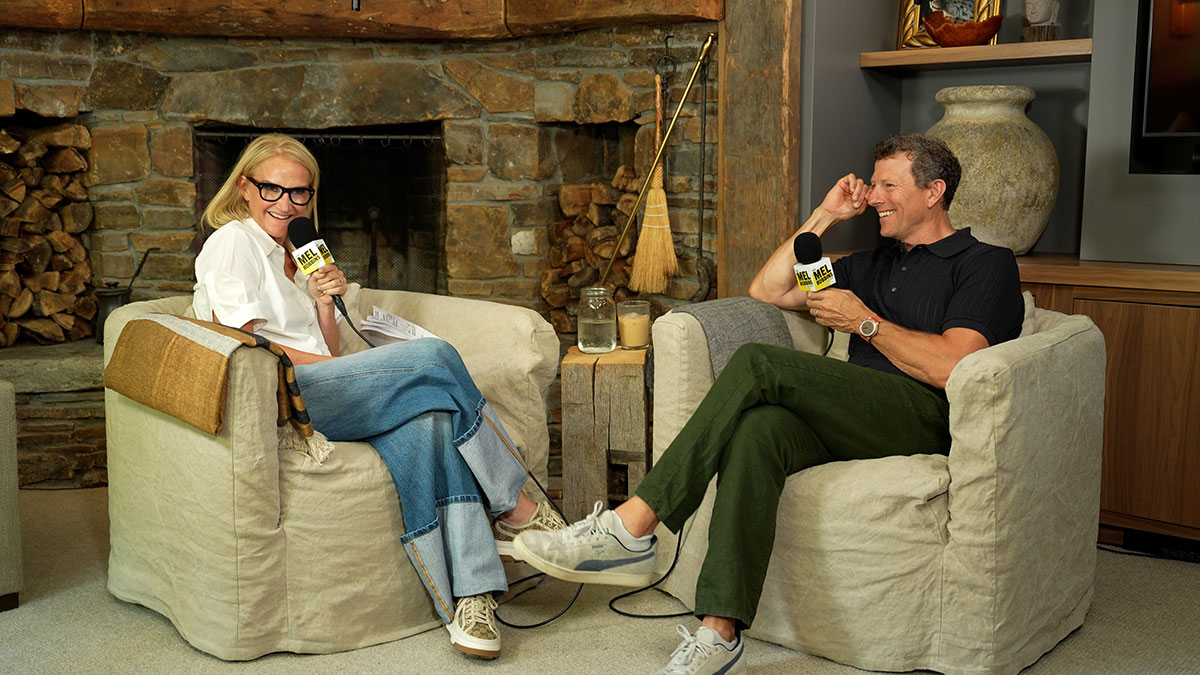
On their 30th anniversary of marriage, Mel and her husband Chris are sitting down for their most honest conversation about what it really took to stay together for so long.
They get personal about the periods when their marriage started to unravel, what they misunderstood about each other for years, and the small acts of connection that helped them rebuild closeness.
If you've ever felt disconnected from your partner, wondered whether a difficult chapter can be repaired, or wanted to understand what helps love last through decades of change, this episode will give you practical tools and a more honest way to think about relationships.
Because lasting love is not about never going through rough patches. It's about learning how to find your way back to each other during them.
Listen on:




You can’t solve what you won’t talk about.
All Clips
Transcript
Mel Robbins (00:00:00):
Today on the Mel Robbins Podcast, my husband, Chris and I are reflecting on 30 years of marriage and sharing the three things about relationships we sure wish somebody had told us sooner. I get angry and vent and get flooded and then I'm a jerk.
Chris Robbins (00:00:17):
Welcome to our marriage.
Mel Robbins (00:00:19):
I've been with you the majority of my life.
Chris Robbins (00:00:21):
And I love you more than ever.
Mel Robbins (00:00:23):
Okay. We're not going to get through this. Okay. I love you too. Okay. So here, should we start this? Hey, it's your friend Mel and my husband, Christopher Robbins. Welcome to the Mel Robbins Podcast. I am absolutely thrilled that you're here for a once in a lifetime conversation because today my husband and I are talking and reflecting on our 30th wedding anniversary. And this is only going to happen once, not because we're breaking up, but because you only have your 30th wedding anniversary once. And it's such an honor to be together with you to spend this time with you if you're new here or if maybe somebody you're in a relationship with sent you this episode or they've trapped you in a car with them right now and you're listening and this is their form of therapy or a date. Welcome. I've done that to my husband too.
Mel Robbins (00:01:15):
Welcome to the Mel Robbins Podcast family. You are going to love this conversation because today my husband Chris and I are celebrating our 30th wedding anniversary with you. And we're going to share three lessons that we have learned over the last three decades. These are lessons that I wish somebody had just foamed, summed up for us when we got married 30 years ago. We learned this stuff the hard way. It explains so much about the years of our life, Chris, where we were really struggling. It also explains the roadmap for how you find your way back to the person that you fell in love with. And so I'm super excited about this. Welcome to the podcast, Chris.
Chris Robbins (00:02:03):
Thanks. Thanks for having me. I'm happy to be here. And I'm looking forward to these little lessons because they do help crystallize all that we did go through.
Mel Robbins (00:02:13):
Yeah. Yeah. Boy, we went through a lot.
Chris Robbins (00:02:16):
Yes, we have.
Mel Robbins (00:02:17):
It's impossible to be in a long-term relationship and not experience so many ups and downs. And what does 30 years feel like for you? When you really think about 30 years going by, and if you're brand new to the show, I should just say that we also have three kids. They're 27, 26 and 21 years old. And we have been through so many ups and downs and been in and out of financial crisis. And we've both been fired from jobs and struggled and had moments where we feel lost. We have kids that have struggled. We've navigated your father dying. Just 30 years of your life, you navigate a lot. When you think about the fact that we've been married for 30 years, what comes to mind for you, Chris?
Chris Robbins (00:03:11):
Honestly, the visual of a flip book where you flip it through and it's like. And all of those scenes that in the moment feel so acute, so profound, either whether you're elated or we're feeling on top or feeling at the bottom, they all are meaningful. And the speed at which they have passed is quite remarkable, honestly. To think that it's been 30 years is a bit jaw dropping.
Mel Robbins (00:03:47):
When you first fall in love, you have this assumption because of all the fabulous love chemicals, that's a technical term I just made up, that are flooding through your body and the attraction that you kind of gaslight yourself into thinking, oh, it's always going to be like this. And if there's one thing that we've learned the hard way and everybody learns in life is that things are always changing. And that the true test of your relationship is not how you are together when things are good. I mean, you could be with a not great person in a not great relationship, but if things are going really well, you don't really have to lean on the relationship. The true test is what happens when things fall apart. When you lose the job, when a parent dies, when a child is sick, when the pressure hits, when the bank account is bouncing, when life makes you hard.
(00:04:48):
And life does that. I'm already crying. I don't know because I'm just thinking about how many freaking hard periods of our life we've had. And one of the things that I really struggled with in our relationship is how often when life hardened me, I brought that edge into our relationship. And if you're going to go the distance with somebody, it's really because you have picked somebody that you can do the difficult things with, that you can struggle with, that you can lean on. And when I look back, one of the biggest lessons that I've learned, and I'm going to explain it first in my words, and then I'm going to share the way one of the incredible relationship experts summed it up, is when life got hard, I became very hard on you. When life really started to beat me up, I started to take it out on you.
(00:05:56):
And I think that's an extremely common mistake that people make. And if you stop and reflect and think about your own relationship, how often you've blamed stress of the day, in fact, I just did this last night, on how emotional or how volatile or how just mean you might be to the person that you love.
Mel Robbins (00:06:19):
And the first lesson that I really learned that is both the reason why relationships end, and it's also the simple lesson that brings you back to the person you fell in love with. And it's this, you're my favorite person. That is the best relationship advice I have ever heard. Four words, you're my favorite person. And so the first takeaway for me is if you're in a relationship, can you say that about the person that you're with? Because if you fundamentally have never felt like this is your favorite person, then you're in the wrong relationship.
(00:07:05):
And if you're going through a very rough time, what I love about these four words, you're my favorite person, is this is the lifeline. It's like a toe rope that you can grab onto to pull you back to what is still true. Because even when life is hard, that person that you fell in love with is still in there. And I also love this question because you not only ask yourself, you're my favorite person. Is Chris my favorite person? Of course, I just hate my life right now, but he's still my favorite person. And then you ask yourself the second layer, which is, am I treating him like my favorite person? No.
Chris Robbins (00:07:49):
That's kind of where the rubber meets the road, I think for me. Because when I think about when we first met, absolutely you were my favorite. All the way up until, in fact, after we got married, which was a couple years later. But in that timeframe, you were my favorite every moment of every day because, and to some extent, we really hadn't hit anything hard. We had no concept of how we might harden or how we might behave in those tough times, which I think is what makes relationships challenging because in the early days, it is a honeymoon period as they call it. And everybody's everybody's favorite until the shit hits the fan.
Mel Robbins (00:08:43):
I know the moment that you know what hit a fan. And you started going from my favorite person to, not my favorite person, to somebody that I was mad at. And it was when we were in our 20s and we had met in New York City and we were early in our careers and you decided to make a career change. And then you didn't like that. And then you decided to launch a business and it didn't do well. And then you decided to scramble and get a job. And there was a point where we were so struggling with paying our bills. I was a public defender working for legal aid. You had not had a job for a while. Do you remember this? We were talking about moving in with your parents as a new married couple and we were going to have to move into the basement walkout part of their retirement house.
Chris Robbins (00:09:41):
I don't actually remember that, but it's funny that you bring this up because when you asked me to think about a moment in time, that's about the same timeframe that I thought about myself, both in the context of me also beginning to hate on myself, but also recognizing that that's when I stopped listening to you because. No, no, no. It had nothing to do with you. I was so focused on me and what I thought I should be achieving or producing that you barely even existed. And so I really wasn't listening to you or your needs or your interests. And so anyway, when I was thinking about that incident, that was really where things started to unwind a little bit when I said, "Hey, you know what? I want to go get my MBA and I want to do it in Boston. And I want to move out of New York City." And you said, "Are you kidding me?
(00:10:55):
I love my job. This is great. Why are we leaving?" And you were miserable when we moved up there. And honestly, in the moment, I was so blind to what I thought I should have been doing for you that I was oblivious to the fact that you were even unhappy with the idea.
Mel Robbins (00:11:14):
Wow. You've never even brought this up in therapy before.
Chris Robbins (00:11:17):
No,
Mel Robbins (00:11:18):
But you prompted me to
Chris Robbins (00:11:19):
Think about this.
Mel Robbins (00:11:20):
You know what's crazy about this, Chris, is that I always called you stoic. I called you a thinker. I called you a slow processor when I was really annoyed with you. I just sort of put your sequestering into a box that was about you. And I had no idea that you tuned me out. And what happens when that starts to happen is for somebody like me, I just get louder because then I feel alone and unsafe. And for somebody like you, you just sequester more into your head. I think that there was like, what, a full decade where we were like this.
Chris Robbins (00:12:04):
Yeah. Anyway. Do you
Mel Robbins (00:12:04):
Think it was longer?
Chris Robbins (00:12:05):
No, that sounds about right. Anyway, 10 years, but that's enough to cause enough damage. And it did.
Mel Robbins (00:12:12):
And the thing that's important about this is this is, I think, a period of our marriage that you would describe as we were just roommates. We would say that we do logistics really well. So we can get the kids where they need to go. We can get the dogs fed. We can get the groceries on the table. We can show up at the holiday celebration. We can check the boxes. We can - I don't think
Chris Robbins (00:12:37):
The roommate phase set in that early because we were beginning to have kids. And so we were learning a new challenge of being parents to newborns. And so the roommate thing didn't quite settle in until I think once all three, or at least two had arrived, and then the sequestering began for sure.
Mel Robbins (00:13:01):
Well, I think I'm kind of using a word maybe that doesn't resonate. It felt like logistics and life took over and our connection. And these four words, you're my favorite person, stopped being the central organizing principle of our marriage. And I truly believe that these four words as a lesson and a philosophy that you can anchor yourself to immediately reveals whether or not the connection is frayed. Because if you don't feel that way about your partner and you once did, that's a sign that life has hardened you and you're in this phase where you've pulled apart. And being able to then go, how do I start treating this person like my favorite person again? Even if things have gone down, even if there are still a lot of struggles, even if we are fighting about money, which we did for decades, absolute decades.
Mel Robbins (00:14:08):
But I want to play this moment from the Mel Robbins podcast when a world-renowned divorce attorney, James Sexton, said those four words on the show.
James Sexton (00:14:24):
At its core, marriage should boil down to four words that I think are potentially the most beautiful words you could say to someone and mean or have someone say to you and know they're true. And that is you're my favorite person.
(00:14:44):
What could be more beautiful than being told and knowing that when this person says it, they mean it. You are my favorite person. And to say to someone back, yeah, you're my favorite person. What would be better in the world than having that? And so I like to think about kind of the end of things and then reverse engineer. And to me, at the end of your life, if you could look at another person and say, you helped me become the most authentic version of myself and you're still my favorite person. That's the greatest wedding toast you could ever have. That's the greatest blessing you could have in your life. And I think it'd be the greatest asset you could have in your life.
Mel Robbins (00:15:29):
Do you want to react to that?
Chris Robbins (00:15:32):
I think he just said that's the greatest wedding toast you could have. And that's my point is that when I boiled down what has you be my favorite person, it was, and it does make me cry because I can say that in those first few days when we met, you brought out the authenticity in me. I felt almost like somebody had unlocked the real me and that the fake me had gone away. And that freedom I felt was definitely one of those things that made me feel like you were my favorite. What's interesting about that though is your point about hardening. And then you get into, let's now call it 30 years where we're going through the ups and the downs and the twists and the turns. And that's where the hard work is, I think, is being able to wake up and say, "This is originally why this person was my favorite." And trying to presence that in the face of the tough stuff that's going on.
Mel Robbins (00:17:43):
Well, I think that's why the tough periods are so painful because when you fall in love and you fall in love with somebody who is truly your favorite person, they are your favorite person because of how being with them makes you feel about you. And that's why it's so painful when your favorite person turns on you and you start to feel
(00:18:11):
As if either they are no longer your favorite person because of things they've done or because the world is just pressure testing you and you're now bringing it to the relationship and taking it out on them. Or something has happened with you and you're no longer treating this person that you once treated as your favorite person. You don't treat them that way anymore. And one of the reasons why I was so struck by this advice that James Sexton shared on the Mel Robbins podcast, because it kind of strikes you as odd. Why on earth would you get relationship advice from a world-renowned divorce attorney? And he basically said, "Because who do you take a car to fix it? A mechanic. Because a mechanic has seen everything break in a car. So a mechanic can spot the signs that things are headed towards a serious thing.
(00:19:07):
This can be fixed, this can't be fixed, this is a total wreckage." And one of the things that James also shared that I would love to share with you is the surest indicator of a divorce because it does tie to this first lesson, you're my favorite person. So let's hear James Sexton reflecting on that.
James Sexton (00:19:32):
I often tell people, to me, the surest indicator of a divorce is not anything anyone says. It's a sound. And it's this sound. It's just that when the other person's talking and there's just this? Yeah, what? Yeah. Okay. Why are you bothering me with what you're saying? Or that kind of eye rolling. It's just those subtle discourtesies and disrespects. It's the tone, it's the body language.That's a huge piece. So when you're looking at signs, look at how you physically relate to each other. I mean, you've seen couples, I'm sure. I'm like, why are they? Even when they touch each other, it's like when you're first together, you touch your skin and it's like an electric bolt through you of like, oh my God, this person touched me. It's like, oh my God, our legs touched. It's just that. And thank God that passes or we just never get anything done.
(00:20:32):
But it's supposed to sort of pass and become still something comfortable and connected because all that person, maybe you don't like holding hands, that's okay. But maybe they're trying to connect with you. So do you want to connect with them? And if it's that I don't like sweaty hands, okay, so put your arm around me. Lean in and do something. Meet each other halfway. There's a lot of these little tiny physical and verbal disconnections.
Mel Robbins (00:20:58):
I can immediately think of five couples right now, can't you, Chris? Like the eye roll. You're bothering me. And I was that way with you for probably a decade. Not all the time. But I threw that at you. That discourtesy, that kind of. I'm sorry.
Chris Robbins (00:21:27):
Thanks for saying that. I felt it.
(00:21:43):
I mean, I think I could say the same that I had those things certainly on you as well. But I think the difference between us is that I internalized things way more than you ever did. You would lash out. Your reaction to these things would be external. Whereas my reaction would be quite internal. That's not to say that I wasn't or whatever those noises were that were going on under my breath. But half the time they were aimed at myself more than they were at you, which I think is the thing that compounded your either anger or distrust or whatever it was towards me.
Mel Robbins (00:22:32):
Yeah, because when you went silent and I'm lashing out because I'm sad or upset or scared or whatever, and anger's the fastest valve, and then you go quiet, I feel even more disconnected.
Chris Robbins (00:22:46):
Correct. Really what you needed was a hug and I'm running in the opposite direction.
Mel Robbins (00:22:50):
Which I don't blame you for.
Chris Robbins (00:22:52):
Yeah. But still, when you talk about meeting people where they are, that wasn't always going down.
Mel Robbins (00:23:00):
I want to give you, as you're listening or watching, a very real application of how you start to apply this first lesson. You're my favorite person. This is both a test of are you with the right person? Because if you've never felt that way about the person, you're not with the right person. It's also a way for you to just take the temperature of your relationship. What's.
Chris Robbins (00:23:27):
Carry on. I'm just. Oh, I though
Mel Robbins (00:23:29):
You were about to cry.
Chris Robbins (00:23:30):
I was about to, but that's because I'm thinking about all the moments in our life. They're racing by in my head right now.
Mel Robbins (00:23:38):
There were a lot of them. And there were so many. Even during the crappy decade, there were so many incredible, joyful, it's like violent ups and downs that we experienced. And the thing that you can do to start to apply this, and we are going to get into the deeper issues, what if the person has done something and you resent them for it? What if somebody really hurt you and you can't let go of the grudge? We're going to talk about that in a minute, but I want to give you something that Chris does that I want you to steal. It is free. And I will tell you right now that you can use a Post-it note to make your relationship better starting today. Because writing notes and hiding notes to the person you're in a relationship with is the single coolest and fastest way to start to recreate a connection.
(00:24:40):
And Chris, I swear to God, Chris has been hiding notes in my wallet. Look at how old this one is. It says, "Me again, just thinking about how much I love you. Look how old this thing is." And he doesn't tell me. He just pops it in something. You have hidden this one. He hid this Post-it note. Mel, I love you. Thank you for loving me. He hid that Post-it note in my freaking pill case. I was on a trip and I opened the sucker up to take all the things that all the experts tell us we need to take in order to live to be a hundred and be energized and healthy and all that stuff. And there it is. And when you see a note like that, "Oh my gosh, here's another one. Did I mention how much I love you? Look at how old these things are.
(00:25:29):
Here's another one. Hi there. Look, it's my bursting heart. Oh my God, you're kind of Chris. Or here's another one. They're literally all over the place. He's been doing this for years. I'll pop open my glasses because I'm basically need them. Did you know how much I love you? When I get one of these notes, I feel like your favorite person and you immediately become mine. And it reminds me of our connection. Does it solve the massive problems that we may be facing? No. Does it remove the financial debt that is crushing us? No. Does it erase the issues that our kids may be struggling with that are causing us to argue over what to do about? No. But in that moment, that singular note is your way to use you're my favorite person in a busy life. And it's free. You could leave it like I leave it on your desk when you go and lead your soul degree retreats.That's how you have infiltrated and created a connection with me that no matter where I am, when I find one of these things, I'm like, oh my God, he thought about me.
(00:26:57):
He loves me. He stuck that in there knowing I would find. Oh my God, he's my favorite person.
Chris Robbins (00:27:03):
I didn't realize that the notes you sometimes leave on my own desk were inspired by my notes. That's cool.
Mel Robbins (00:27:09):
Of course they were. Got it. Those
Chris Robbins (00:27:10):
Feel
Mel Robbins (00:27:10):
So
Chris Robbins (00:27:11):
Good when I come back.
Mel Robbins (00:27:12):
You just tucked one in to the credit card thing that I don't think I've ever found. Holy cow. I wonder how long this has been in here. This is from an Omni Hotel and Resort somewhere that you were, I guess. I don't know. I love you. That was right in the little credit card slot. I've never even seen that one. That's an old one.
Chris Robbins (00:27:32):
I can't remember the last time we were at an Omni. So yeah, it is an old one.
Mel Robbins (00:27:37):
Wow.
Chris Robbins (00:27:38):
You do that with flowers.
Mel Robbins (00:27:39):
What do you mean?
Chris Robbins (00:27:40):
For me.
Mel Robbins (00:27:41):
Do you even like flowers?
Chris Robbins (00:27:44):
Well, I do -
Mel Robbins (00:27:45):
Explain what I do so I know to do more
Chris Robbins (00:27:47):
Of it. I do like flowers, but I mostly love them because I get to live vicariously through the love you have for flowers. And it's a little -
Mel Robbins (00:28:02):
So explain what I do so that everybody can steal this.
Chris Robbins (00:28:07):
Well, you just have such a love of flowers. And you come into my office when I'm not there and you put one little flower, whichever your favorite of the day is, and slide it into a tiny little vase or however you like to present it. And you leave it right on my desk. And then I come back and there's you. It's not even the flower. I just see you. And it's funny because that's another thing that makes you my favorite person. Not just the flower, but when we first met. Also makes me cry. First date, walking down the sidewalk.
Mel Robbins (00:29:08):
New York City.
Chris Robbins (00:29:09):
We're in mid-conversation after dinner. Can't even remember what we were talking about. And you took off running. And I though, what the hell is this woman doing? When I caught up to you, you've got a leaf in the palm of your hand shaped like a heart.
Mel Robbins (00:29:27):
It was a yucca tree, I think it's called. Ginkgo
Chris Robbins (00:29:28):
Tree.
Mel Robbins (00:29:29):
Oh, ginkgo tree. See, I don't even know what's happening.
Chris Robbins (00:29:31):
And you were jumping for joy as if the Good Humor truck just showed up. Like you were so excited about this heart-shaped leaf and this tree and how it was your favorite. I mean, talk about authenticity and sort of that joie de vis that I felt from you. So when you put a little tiny flower on my desk, that brings me right back. I To your own love affair with flowers, but makes me feel like I'm your favorite.
Mel Robbins (00:30:06):
Amazing. This message is brought to you by Apple Card. Ice cream by the beach. Going to mini golf with the family. Checking out a new restaurant in town. They're more than just items to check off the summer bucket list. There are also opportunities to earn 2% daily cash back when you use your Apple Card with Apple Pay. Apply for Apple Card now and use In Minutes with Apple Pay. Subject to credit approval. Apple Card is issued by Goldman Sachs Bank USA, Salt Lake City Branch. Terms and more at applecard.com. So that's the first lesson. You're my favorite person, and those are two simple ways that you can start to apply it. And that brings me to the second lesson. And the second lesson is really relevant because a lot of what we've learned over the years, or I should just say I've learned over the years, is how important softening is.
(00:31:05):
So you hear the relationship experts that are world renowned talk about kindness and curiosity and having an open heart. And oftentimes when you're in the thick of life, it's like, well, how the hell do you do that when this person's freaking pissing me off right now? And for me, one of the reasons why I think our marriage is stronger than ever, I love you more deeply than ever, is that I have learned the importance of softening and remembering the person I married.
Mel Robbins (00:31:35):
And this comes to the second lesson. If you want your relationship to go the distance and be meaningful and deeply connected, always remember you did not marry the adult who is standing in front of you. You married the eight-year-old version of that person. And there are pieces of you as a little kid that never got the real, I don't even know what the technical term is, that there are parts of you, like the reason you run into the corner is because that's what you did as a kid.
(00:32:12):
The reason why you go into your head is because that's what you did as a kid. The reason why you don't ask for what you need, Chris, is because you grew up like a lot of people did in a family as the youngest with a lot going on where it didn't matter what your needs were because people didn't care or they cared, but they didn't listen. And so you just stop talking. And it's easy for me to get mad at you when I look at the 57-year-old version of you and be like, "The man's a grown ass adult. Why is he acting like this? Why doesn't he just tell me what he needs? Why does he have..." And not stop and go, "Okay, hold on. This is my favorite person." And I'm not dealing with a 57. I'm dealing with the part of him that's ate.
(00:32:57):
Just like you're dealing with the part of me that is a little girl. And this is really important because one of the things that I've learned from the experts and what I've learned from our own therapy, you and I have been working with a therapist for five years, that what's very important about this is it softens you. Because I think it's easy to be like, "That person's a dick. That person's a bitch." And you start to get super judgy. And because the world can make you hard, you don't want the way the world hardens you to be the part of you that you bring into the relationships. And I find that the moment that I think about the fact that I know who you are at your core.
(00:33:47):
If you've been with somebody for a year, you knew who they are at their core. And when you can remember that most people aren't intentionally trying to hurt you or intentionally trying to make you resent them or intentionally trying to piss you off, they're just doing the best that they can in a very difficult world that we live in. And I've really been able to soften by thinking about the fact that there are times that you get scared. There are times that you're overwhelmed. There are times that you don't know what to ask for. And it's helped me really stop being so fricking judgy and angry and resentful when you're not doing exactly what I want you to do or behaving how I want you to behave and just slow the roll a little bit.
Mel Robbins (00:34:50):
Because you and I have struggled with something that the world renowned couples therapist, Terry Real, talks about.
(00:34:58):
He came on the Mel Robbins podcast. I know you know Terry very well. And he talked about something that was like, whoa. He has this term. Let's see if this rings a bell, Chris. Normal marital hatred. Let's hear Terry Real on the Mel Robbins podcast talking about normal marital hatred.
Terry Real (00:35:27):
Normal marital hatred.
Mel Robbins (00:35:30):
Normal marital hatred.
Terry Real (00:35:31):
Normal marital hatred.
Mel Robbins (00:35:35):
Why? God.
Terry Real (00:35:37):
And I got to tell you, I've been around the world talking about normal marital hatred for four. Not once has anyone come backstage and said, "What do you mean by that?" And I just say, "We all marry our unfinished business."
Mel Robbins (00:35:52):
Whoa. Hold on. We all marry our unfinished business?
Terry Real (00:35:59):
You got it. You know what? Young Mel could have had a guy that would have done everything she wanted him to do. I guarantee you, there were guys you dated who you would not have gone through this crisis with. They did not blip on your screen. I call this the mysticism of marriage.
Mel Robbins (00:36:20):
The mysticism of marriage?
Terry Real (00:36:21):
Yes. We have the opportunity to heal our deepest wounds. Falling in love means, oh yeah, this person's going to give it to me. I'm going to be healed. They're going to give me everything I didn't get. Good luck. A real relationship comes. I like to say, when you realize your partner is, here's my quote, "Exquisitely designed to stick the burning spear right into your eyeball." That's the crisis. That's not a bad relationship. That's a real relationship. The question is, now what? Are you just going to repeat the same old, same old? That's hell. Or are you going to wake up and do something different? The crisis can wake you up if you allow it, but you have to do it. And so there's a lot that goes into why we don't wake up, how to wake up. And if we do stay awake, what the hell do we do then?
Mel Robbins (00:37:22):
What does unfinished business mean? Because it's true. The person that you're in a relationship with has an uncanny way to get under your skin, piss you off, frustrate the hell out of you. You love them, but you want to kill them at times, right?
Terry Real (00:37:39):
Yeah.
Mel Robbins (00:37:40):
Definitely want to change him.
Terry Real (00:37:41):
Yeah.
Mel Robbins (00:37:42):
But what does unfinished business mean exactly for us?
Terry Real (00:37:47):
It means that you are now exactly in the childhood wound that that son of a gun that you picked was supposed to never put you in. You have been fundamentally betrayed. You are back, you're four, you're with your crazy family, and your partner is just as chaotic, it turns out, as your dad was. Your partner is just as betraying as your mom was. Whatever the wound is, all of a sudden it's in your face and that's not what you signed up for. And you hate that son of a gun.
Mel Robbins (00:38:28):
When you hear normal marital hatred, what comes to mind, Chris?
Chris Robbins (00:38:37):
Driving down the road with you in the passenger seat, head down, doing whatever you're doing, silent, feeling like, or I should say, I'm feeling like you are a million miles away even though you're two feet from me. And that's so on point, what Terry is saying, because as I think they say, you either marry your mother or your father or something to that effect. And a lot of my struggle was the physical and emotional absence of my dad that really, I think, was at the crux of our hardest times because we were both running scared, trying to do what we were doing.
Mel Robbins (00:39:36):
Millions
Chris Robbins (00:39:36):
Of
Mel Robbins (00:39:36):
Dollars in debt.
Chris Robbins (00:39:37):
Like roommates, financial pain, all of these things that had us be in our separate corners, which only exacerbated what I experienced, which was a lot of physical and emotional absence from you. And so yeah, that's whatever he said, the sharp poker in the eye or what have you. That's how it felt.
Mel Robbins (00:40:03):
I want to just really unpack this because I think it's a very common thing that people feel. When things get hard, you turn on the person that was your favorite person. And you immediately feel that shift in a relationship and you start to feel the distance. And then you both go into your corners. And what ends up happening, at least for me, is when you stop talking and you're silent and withdrawn, I feel alone. And it really makes me feel unsafe. And then I get mad that you're not just fixing everything. And that's where it goes way deep. And it never occurred to me until you and I started working with a therapist and Terry put those words, normal marital hatred, out there. I'd never heard that before, that I really understood what he was talking about. And I started to realize, wait a minute.
Mel Robbins (00:41:15):
When I get scared, it's typically because you're also scared. And my little eight-year-old version gets anxious and angry and feels alone and yours probably feels the same way, but I start going a million miles an hour and you just get quiet. And that's when you can identify it, not as something somebody's doing intentionally, not as something that somebody's out to get you. This is the compounding effect of all of these smaller moments that creates this massive distance and disconnection. That's where you can go to work. And what's really helped me is basically going, "I married the younger version of you. You have unfinished business with yourself. I have unfisiness business with myself. And we have an opportunity when we come at it that way to work together to help each other finish that business and be more supportive of one another."
(00:42:16):
What do you want to say?
Chris Robbins (00:42:19):
Just feeling a whole lot of gratitude that we've had 30 years together to move through it versus throw in the towel.
Mel Robbins (00:42:33):
If the person listening, let's start with the person listening who is in a relationship with somebody who shuts down like you do. What would your advice be to that person about what you want them to know when a partner is shutting down and not communicating? Because I'm the opposite. I get angry and vent and get flooded and then I'm a jerk and then I apologize and then I get in that cycle and I then feel more and more alone. And I know that it just shuts you down more.
Chris Robbins (00:43:11):
Do you even take a moment to notice how you're feeling?
Mel Robbins (00:43:14):
Is
Chris Robbins (00:43:14):
There -
Mel Robbins (00:43:14):
No. Well, I didn't back then. If I did, if I had simply for many years paused in the driveway and taken a deep breath and said, "Okay, remember Mel, Chris is your favorite person. Life is hard right now, but you two are going to get through this together. And supporting each other right now and trying to be kind to each other and caring and considerate and curious of one another is going to make it way more likely that you two can get through this together. Do not let the world and the stress and the overwhelm that is very real overwhelm your marriage and your relationship and the power of the two of you standing together. So he's your favorite person. Chris is your favorite person. And he's probably just as scared as you are. He's probably just as stressed as you are. Take a deep breath and walk in that door and you can be tired and still be kind.
Chris Robbins (00:44:21):
I mean, that's beautiful and beautifully said and easier said than done for most of us.
Mel Robbins (00:44:27):
I said I wish I did it. I didn't say I
Chris Robbins (00:44:29):
Did it. So I don't really have a succinct answer to it.
Mel Robbins (00:44:32):
Well, what do you want somebody to know? Let's say somebody's listening right now and they've always thought, wow, I'm just married to somebody who doesn't talk. I'm just married to a thinker. I'm just married to somebody who doesn't really talk about how they feel. What I think is very important about what you're talking about is that somebody who's quiet on the surface is still feeling deep, deep, deep emotion. And how do you help your partner? Because I used to say to you, "What are you thinking? What's going on up there? What are you thinking about? What's on your mind, Chris?" And you would still deflect. Probably because you didn't want me to yell at you if you were about to open up about something.
Chris Robbins (00:45:19):
Yeah. But I mean, maybe there was a period there where I didn't want to say anything, but I think it gets back to my own. Yes, there was deep thought in there. And this is not a great answer because it's not easy to do in the moment, but understanding why it is that, let's say in the instance where I'm being quiet, what is that?What's the origin of that for me? And that's where I think there was a lot of work that I did to recognize what I was missing or what I wanted. And a lot of the time, I mean, I think one of my light bulbs was in those years where it was tough and we were running around like chickens, it was rare that we would come together and actually have a powwow. In fact, the only time we did it was when we needed to go over our calendars, which I used to kind of scoff at because I remember watching my parents do that when I was a kid and
Terry Real (00:46:36):
Thinking,
Chris Robbins (00:46:36):
"That is so stupid." And then here we were on Sunday night trying to do that for ourselves. And as much as I didn't like that that's what was pulling us together, that was a great moment for me because there was an attempt to be close, to be aligned, to be in communication. And I use that as an example because it's one of those things that was like, "Oh, this is what's missing for me," is that connection. And not just communication, but even just touch. I didn't grow up with a lot of touch. And so it took me whatever, 30, 40 years to realize just like you reaching out and holding my hand or putting your hand on my shoulder or that simple level or simple act of intimacy was the greatest thing in the world for me. And it takes a little bit, at least it did for me to recognize that this is what I need.
(00:48:08):
This is what I want. And some of that may have come in the form of the struggles and the breakdowns and even the breakthroughs and some of the work that we've done together. But again, the reason why it doesn't sound like a great answer is because some of it is time and recognition of being able to stop and slow down a little bit to even recognize the emotion or the feeling, which is why I asked you, do you think that? Because you are a very ready, fire, aim kind of person.
Terry Real (00:48:37):
Yes.
Chris Robbins (00:48:38):
And I am definitely more like ready, aim, okay, aim again, then fire.
Mel Robbins (00:48:43):
Yes.
Mel Robbins (00:48:44):
I think there's a lot that I want to really dig into there because it kind of brings us to the third lesson. You used the word simple intimacy. And one of the things that we have learned the hard way is that when we are in a chapter in our relationship where we're really connected and we feel supportive of each other and life feels manageable and I feel like you are my favorite person and I'm also treating you that way. There's something that is very obvious and present. And it is simple points of connection throughout a week. And you mentioned the calendar because this is something I never expect you to cry over, but I understand why you did. Because if you really think about why you fall in love with somebody, it's because not only does this person make you feel safe and make you feel like the version of you that you can be yourself.
(00:49:50):
You don't have to compromise your values or who you are. They bring out the best in you. But there's also this incredible thing that in the beginning, you have all these shared goals and dreams. You have a vision. You have a way you think your life is going to turn out. And there's a lot of time spent about what are we going to do? And what are we doing this weekend? And you see your friends and there's this scaffolding and these points of connection every week in the beginning of a relationship that remind you of why this relationship matters and why two can feel like one when you have these points of connection. And the thing about a calendar, whether you're young parents or you've just moved in together is that life does trample you with logistics. And it's way worse today with texting and social and Slack and Monday and work and email and cell phones and all that stuff.
(00:50:45):
The volume of input that can act like a tidal wave to wash you away from your partner is endless. And so a calendar meeting on a Sunday night, not the sexiest thing in the world, brings you together and gets you aligned against a shared vision. That's why that matters. And there are a couple things that are always present, Chris, I notice in the periods of our life where things are really good. And this is not complicated stuff. Number one, we do the calendar meeting because one of my resentful accommodations is feeling like it's all up to me or I didn't ask for help or whatever. And that's a moment where you can start to ask, is there something that you need for support? Is there something you need this week? You had a huge week last week and I remember saying, let me take all the dinners.
(00:51:40):
Let me support you that way. Now you would never have come up to me and said, Hey, I have a big week. Could you do dinners? But that calendar meeting allowed us to remind ourselves we're in this together. And what help do you need? And you always ask me, what can I do to help you this week? What do you need? The second thing that I notice is present is we take a walk a couple mornings. Not seven days a week, but we actually, two or three times a week, we just get a short walk in. Another thing that I notice is we have a couple meals together. And if we're lucky, we cook together. And we have this ritual where we ask the high, the low of the day. Lots of people have a version of this, whether it's rose, thorn, bud or whatever.
(00:52:29):
It just kind of prompts you to share more about what you're looking forward to. And then the final thing, and I think this is really important because we neglected this for a while. Your relationship does not exist in a vacuum. And if you isolate your relationship from the structures that reinforce the power of being in a committed and loving and supportive relationship, that isolation starts to tear away at your connection because you start to feel like it's me against you. It's us against the world. All I do is work and then come home and that's my existence. And one thing we have done that I noticed in a remarkable distance is for our 30th wedding anniversary, instead of having a party, we said, "You know what we're going to do? We're going to prioritize seeing friends. And we're going to prioritize seeing people that, God, were in our wedding 30 years ago.
(00:53:32):
We're going to prioritize seeing other couples or other families or other friends that have been there because making time, whether it's with family or old friends or new friends, making time for that reinforces the memories. It reinforces the network that you've created together. Fun and connection is such a huge part of it. And when I look back at the times when we were really at each other's throats, we were not doing that. We were isolated. We were barricaded with our problems. We were at each other. We were locked away in your head, my anger. And there's something about getting out of your rhythm and into an intentional cycle of having plans to look ahead to. And it could just be making dinner with friends this weekend. It might be going to a live concert like we did with one of our friends that we hadn't seen these friends for two years.
(00:54:42):
We're like, why don't we go for a concert with them? That's part of our 30th wedding anniversary. And to me, it's made a huge difference. And it does something that really, again, takes me back to the beginning of when we met. And when the whole future was just wide open. And you feel when you're with your person like we have a shared vision and we're going to do this together. And you can find your way back to that, I believe. And you can find your way back to it with these three things we're talking about. That four words, you're my favorite person. This lesson around softening and remembering you are in a relationship with your partner's unfinished business. Just think about them as little eight year old and you probably won't scream at them. And there's an opportunity to grow together instead of to hold grudges and to lean into each other.
(00:55:45):
That's the opportunity. And then the final thing is it's like really thinking about the fact that your relationship is a third person in the relationship. It's you and you're responsible for certain things for yourself and me, and I'm responsible for certain things for myself. And you're responsible for supporting me and I'm responsible for supporting you in ways, but there is this relationship that needs our attention, otherwise it's going to die. And so those things that reinforce alignment, things to look forward to, planning the calendar every week, checking in, how can I help you this week? What do you need? Prioritizing seeing friends and family that reinforce the good years and the memories and what you've all been through. Because there's so much value in being reminded that, yeah, you've been through things and you can come out the other side.
Chris Robbins (00:56:50):
Yeah. The only thing I would add to that is just the constant recognition of the changes that are occurring because in the honeymoon phase, you don't want anything to change and you don't imagine anything changing. And the reality is that change will occur. And coincidentally, many of us are seeking change over time, but we certainly can't anticipate all of the ambiguities that are going to pop up when these changes are occurring, whether we are forcing the change or they are being forced upon us. And I think stopping and acknowledging those along the way as being sources sometimes of things like grudges and what have you can be helpful.
Mel Robbins (00:57:41):
I'm thinking about the fact that our daughters will often say to me, "I really, really want to find someone like dad. I really hope I have a marriage that's like your guys. Oh my gosh." And you know what I say to them? I say, "First of all, the man you see at 57 is not the man I met at 26. So there've been a lot of skill building. There've been a lot of water under the bridge. There's been a lot of growth. Our marriage when we started did not look like it looks today. And so if you're in that spot where you're like, is this my person? Is it not my person? Will I ever have the..." Do you think that you could spend 30 years with the person that you're in a relationship with? And over the course of 30 years, is this person the kind of person that's willing to lean in and work on it and grow with you?
Chris Robbins (00:58:34):
That was clear from day one was our mutual interest in growth and learning and understanding first and foremost of ourselves, about ourselves. But the fact that we wanted to jump into that pool together was very, very attractive.
Mel Robbins (00:58:57):
I think that's how you know you're with the right person. You feel like yourself. You see a shared vision of growing old together. You share values and have some overlapping goals and dreams about the way you think about your life and the things you want out of your life. And you're both willing to lean in and grow together. You have that. You have one of the single greatest gifts that you will ever experience in life. Chris, is there anything else you wanted to say?
Chris Robbins (00:59:31):
No. I mean, it sounds trite, but I just love the fact that we've had 30 years, even though lots of them were tough. I love that we're still in it together. I love that we took the time to learn some of these things, to give each other the space to learn these things, which Which I know at times didn't come easy, but I am feeling lots of gratitude for our 30 years.
Mel Robbins (01:00:13):
Well, we definitely grew together.
Chris Robbins (01:00:15):
Majorly.
Mel Robbins (01:00:16):
And I do remember times where I'm like, this is just a moment. This is not the whole marriage. This is just a moment. We will get through this. Things will be better again.
Mel Robbins (01:00:29):
And I really do wish though that the three things that we shared today, you and I had had going into this marriage. And I'm grateful that we have these tools as we continue forward in it because I know we're celebrating 30 years, but I was thinking about it today. I can't do math very well, but I would really. I'm trying to think of the math here, guys. If I live to be a hundred years, what would 75 be? So 75 would be 45 more years. Oh God, that's 102?
Chris Robbins (01:01:07):
No, it'd be another 20. What?
Mel Robbins (01:01:09):
No, we've been married 30.
Chris Robbins (01:01:11):
Oh, in our marriage.
Mel Robbins (01:01:13):
Yeah. Wouldn't it be cool to celebrate our 75th wedding anniversary? Is it even possible to live that long? How old is that? I'm 57.
Chris Robbins (01:01:19):
45
Mel Robbins (01:01:20):
Years. We need
Chris Robbins (01:01:20):
Another 45 years.
Mel Robbins (01:01:22):
Wow. 45 years I could spend with you?
Chris Robbins (01:01:27):
As long as I'm not drooling on myself, yeah, that'd be awesome.
Mel Robbins (01:01:30):
You'd still be my favorite person.
Chris Robbins (01:01:36):
I wonder about that.
Mel Robbins (01:01:42):
Oh God. I would love to reach our 75th wedding anniversary. That would put us at 102. Do you think we can make it?
Chris Robbins (01:01:50):
I think we're doing all the right things to try to get there, for sure.
Mel Robbins (01:01:55):
All right. Well, let's put it in the calendar.
Chris Robbins (01:02:04):
Well, I just want to remind you that on our second date, when we declared we were going to marry each other, I hesitated to say that I wanted to spend the rest of my life with you. I really thought about it in the moment. Should I tell her that because I'm feeling that? And the reason why I did feel that and I said something on our second date was because in that moment, I had a visual of you and I very old in two rocking chairs on the front porch of an old house. And that vision popped up in my head and I thought, I really do want to be in those rocking chairs together. And that's what compelled me to even say, I want that. So yeah, amen to 102. Hope we're there.
Mel Robbins (01:02:56):
Let's create a Chris Robbins. Let's create it. I am so happy that you were here with me and Chris. Thank you for taking the time to listen to this. Thank you for watching it. You cannot listen to or watch this conversation with the person you're in a relationship with and not feel compelled to have a deeper conversation. There's just no way. Based on what Chris shared, based on what I shared, based on these lessons, based on the topics that we covered, that I'm sure I could almost feel you nodding along like that's me, that's my partner. And if there's one thing that we kept coming back to over and over and that we've come back to is that you can't solve problems you're not willing to talk about. And you'll never process feelings that you keep burying. And hardening isn't going to improve your relationship.
(01:04:01):
So if you really do want to go the distance with one another, and of course you do, that's why you're listening, why not soften? Why not find your way back to this person that you fell in love with? And we are here to tell you because we've been through hell and back. It is absolutely possible. And these simple lessons that we shared and some of the simple tools that we've used have helped us do that. And in case no one else tells you, I wanted to be sure to tell you as your friend that I love you and I'm sure Chris loves you too. And we believe in your ability to create a better life. And part of what makes for a much better life is more fulfilling relationships. And I know that what we shared with you will give you the tools to create them.
(01:04:51):
All right, I'll see you in the very next episode. I'm going to welcome you in the moment you hit play. All right. Thank you for watching all the way to the end on YouTube. And I know you want to watch another video and I know you're thinking, all right, Mel, what episode should we watch next? Oh, you're going to love this episode of the Mel Robbins podcast. I'll welcome you in the moment I hit play.
Key takeaways
When life gets hard, you can stop treating your favorite person like the enemy by asking whether your stress is changing how you show up in the relationship.
If you once knew your partner was your favorite person, ask whether you still treat them that way, because connection can disappear when life takes over.
When you feel resentment building, remember you may be reacting to the eight-year-old part of your partner, and that perspective can help you soften again.
You can create connection in the middle of a hard life with a tiny note, because being thought of reminds your partner that they still matter deeply to you.
When your partner goes quiet and you get louder, you may both be reacting from fear, and recognizing that pattern can stop the distance from growing further.
Guests Appearing in this Episode
Chris Robbins
Chris Robbins is a business leader, entrepreneur, and advocate for personal development, inspiring others to reach their full potential through his wellness project, Soul Degree. He is also Mel's husband.
Resources
-
- The Gottman Institute: The Four Horsemen: Criticism, Contempt, Defensiveness, and Stonewalling
- The Gottman Institute: Want to Improve Your Relationship? Start Paying More Attention to Bids
- American Psychological Association: Happy couples: How to keep your relationship healthy
- American Psychological Association: Four ways to strengthen couples’ relationships now
- Harvard Health Publishing: Fostering healthy relationships
- Harvard Health Publishing: More touching can build a stronger relationship
- Harvard Health Publishing: Could couples therapy be right for you?
- Greater Good Science Center: Want to Satisfy Your Partner? Give them Some Gratitude
- The Family Institute: Normal Marital Hatred
- Journal of Personality and Social Psychology: What do you do when things go right? The intrapersonal and interpersonal benefits of sharing positive events
- Journal of Personality and Social Psychology: Creating Good Relationships: Responsiveness, Relationship Quality, and Interpersonal Goals
- Clinical Psychology Review: Dyadic coping and relationship satisfaction: A meta-analysis
- PLOS One: Stress, dyadic coping, and relationship satisfaction: A longitudinal study disentangling timely stable from yearly fluctuations
- Journal of Personality and Social Psychology: Couples' shared participation in novel and arousing activities and experienced relationship quality
- Journal of Social and Personal Relationships: Maintenance Strategies and Romantic Relationship Type, Gender and Relational Characteristics
2 Million Readers.
1 Life-Changing Newsletter
Simple and Straight-to-the-Point...
Just Like Mel.