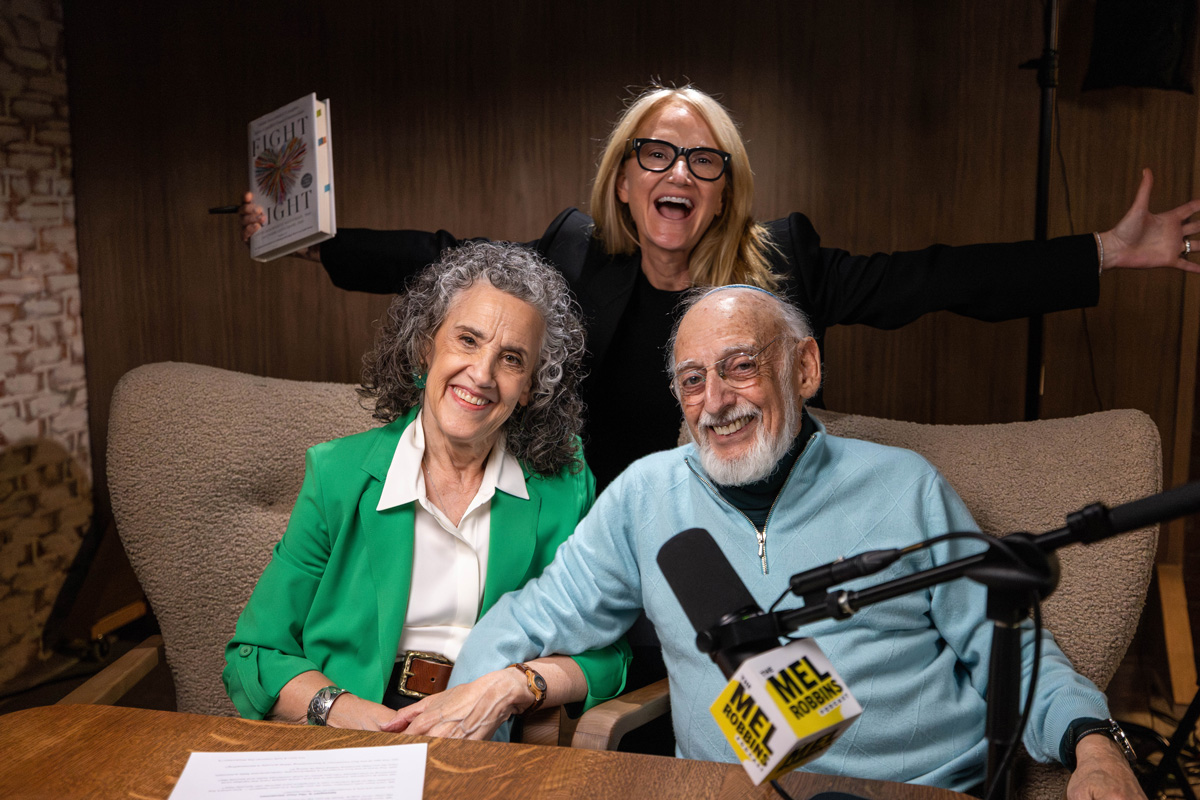
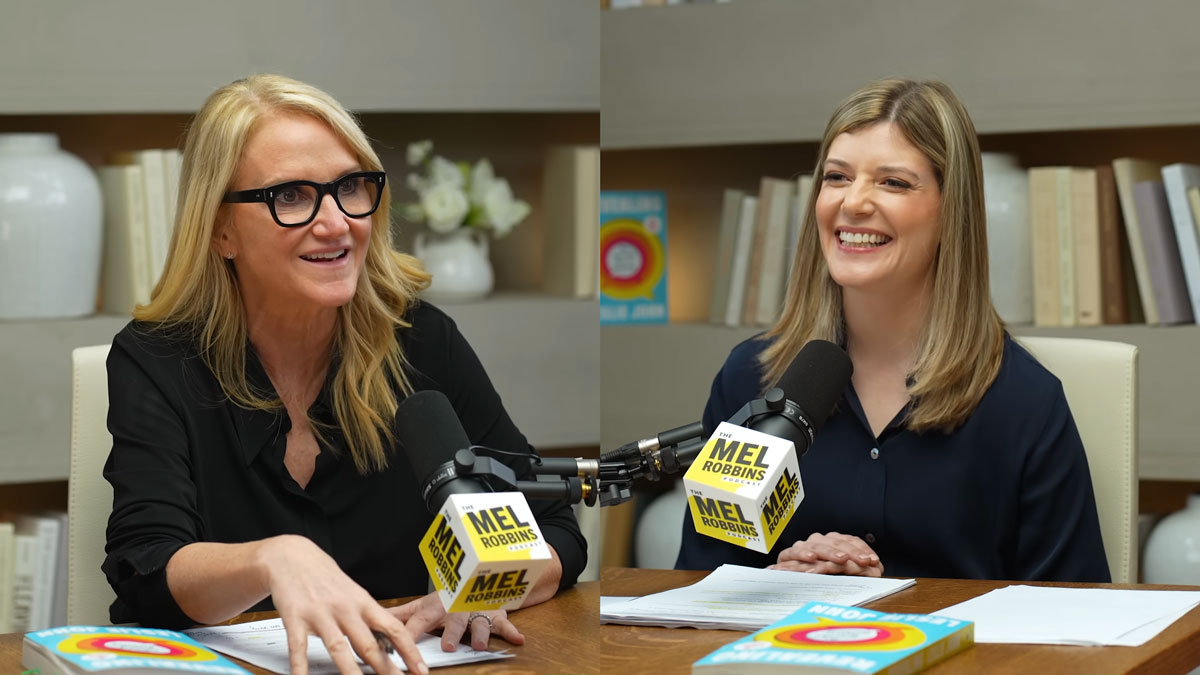
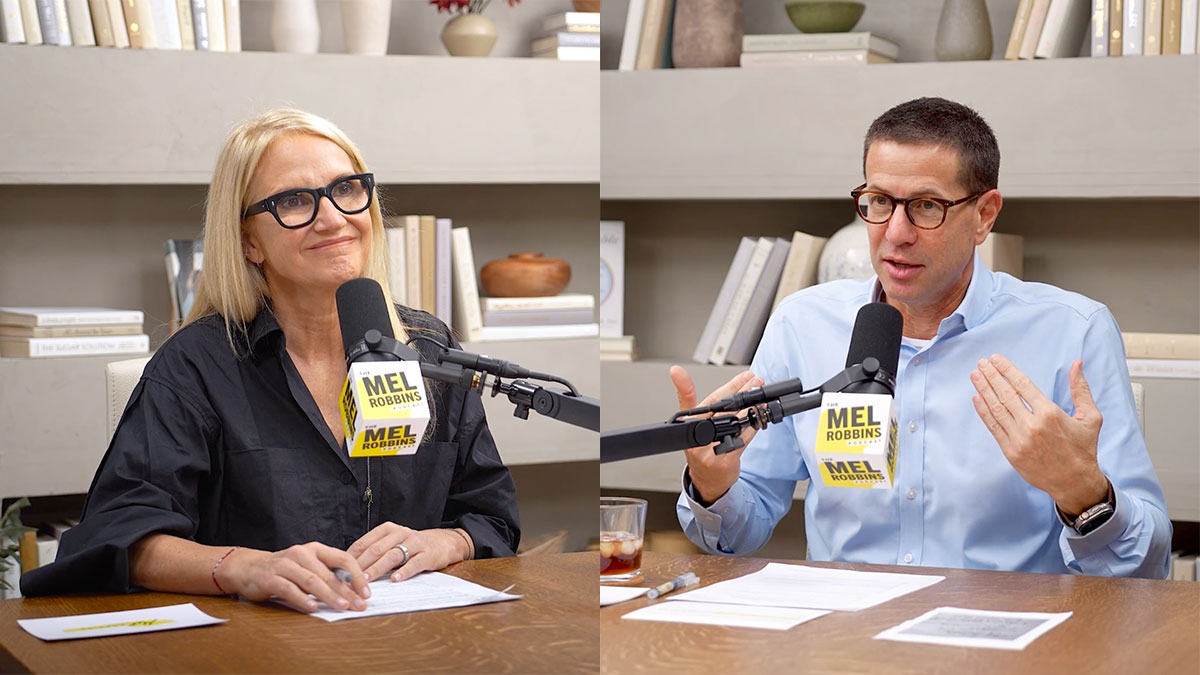
Episode: 429
Stop Wasting Your Time: How to Deal With People Who Won’t Change & What to Do Instead
with Dr. Dolly Chugh

Stop wasting your energy trying to change people who won’t change. There’s a better way.
There’s someone in your life who won’t change and you’re tired of wasting your energy trying to make them.
In this episode, Mel sits down with behavioral scientist and NYU Stern professor Dr. Dolly Chugh to reveal why people resist change and what really helps.
You’ll learn the two “bodyguards” in your brain, why it’s so hard to unlearn patterns, how to give advice without making things worse, what people really need in hard moments, and how to stop “helping” in ways that keep people stuck.
You’ll walk away with a lighter, more hopeful way forward.
Listen on:




Ask yourself, ‘What have I learned today?’ Not ‘What did I get right or wrong today?
Dr. Dolly Chugh
All Clips
Transcript
Mel Robbins (00:00:00):
Today on the Mel Robbins Podcast, how to deal with people who won't change with NYU Stern School of Business professor, Dr. Dolly Chugh. She'll teach you how to stop wasting your energy and do this instead. Please help me welcome Dr. Dolly Chugh to the Mel Robbins Podcast.
Dr. Dolly Chugh (00:00:21):
I'm so thrilled to be here, Mel. Thank you for having me.
Mel Robbins (00:00:24):
I'm thrilled that you're here too. And I know that this topic is going to resonate with the person who's listening right now and it's going to be incredibly helpful. Could you start, Dr. Chugh, by telling the person who's here with us what could change about their life and their relationships if they take everything to heart that you're about to teach us about dealing with the people in your life that are not changing?
Dr. Dolly Chugh (00:00:53):
You're going to feel lighter. You're going to feel more hopeful. You're going to see a path because you're going to have tools that will help you both when you're trying to make changes in yourself and when you're trying to make changes in other people. You're going to realize you're not alone in those moments, those messy human moments, and you're going to drop some of the frustration that you have and the expectations that you have of other people.
Mel Robbins (00:01:23):
I love that. I want to feel more free. I want to feel lighter. That sounds fantastic because the people in my life drive me crazy. And the other thing is I know that I drive the people in my life crazy.
Dr. Dolly Chugh (00:01:34):
Right.
Mel Robbins (00:01:35):
There's that famous quote, "When you know better, you do better." Maya Angelou said that. And I think that's true when you look backwards at the lessons that you've learned the hard way. But when I think about myself, I will admit that I often know better, but I don't do better. And your research really sits at the heart of knowing better, but we don't do better. Why is it, Dr. Chugh, that we can know better? We know we should not be drinking tonight. We know we should go to the gym this morning. We know that we shouldn't spend money on that thing that we don't need because we're supposed to be saving for somebody. We know we shouldn't snap at our kids, but we don't do It.
Dr. Dolly Chugh (00:02:22):
There's two key insights that really help me from the science of human behavior here. And I like to think of these insights as understanding our mind as having bodyguards.
Mel Robbins (00:02:36):
Okay, hold on. Our mind has bodyguards?
Dr. Dolly Chugh (00:02:38):
Our mind has these two big bodyguards that are keeping out change and keeping out growth. And here's what those two bodyguards are all about. I call one of them energy and one of them ego. Energy bodyguard is trying to preserve my energy. They're trying to make my life as easy as possible. And that means that a lot of what we do is on autopilot. Let me give you an example. I'm going to snap my fingers and in that snap of a fingers, you just had 11 million thoughts.
Mel Robbins (00:03:15):
Wait, what?
Dr. Dolly Chugh (00:03:16):
Right.
Mel Robbins (00:03:17):
11 million?
Dr. Dolly Chugh (00:03:18):
Yes. There's a study that says that there is so much of our mind on autopilot. For example, let's say you had a long day and now you're heading home, you're driving or you're taking a subway or a bus or you're riding the bike or you're walking and you get home, you walk in the door and you realize you don't remember anything about that commute home. Oh my God, I know. You don't remember red lights or green lights or did you get a seat on the bus? You just did it because you've done it a million times. Well,
Mel Robbins (00:03:47):
You know what I think is I literally say to myself, oh my God, what just happened?
Dr. Dolly Chugh (00:03:51):
What just happened?
Mel Robbins (00:03:51):
Where was I?
Dr. Dolly Chugh (00:03:52):
Right. But the good news is that's your body and your brain doing everything it should conserving energy. Meaning what? That's the bodyguard, putting you on autopilot, letting you do the things you know how to do without having to think too hard about it.
Mel Robbins (00:04:06):
Okay, got it.
Dr. Dolly Chugh (00:04:07):
So I call those little T thoughts. Little T though. Not capital T thoughts. And even right now, the fact that you and I can understand each other, that we sort of know which direction to face, that we can detect the temperature in the room and the feeling of our clothes on us, but we're not necessarily big T thinking about it. So in that snap of the fingers, 11 million little T thoughts, they say maybe like 40 big T thoughts, actual thoughts like you're thinking, what should I say next? Is this microphone the correct distance? All those are big T thoughts I'm having. And these
Mel Robbins (00:04:41):
Are all happening simultaneously
Dr. Dolly Chugh (00:04:43):
And I'm not even
Mel Robbins (00:04:44):
Really aware of
Dr. Dolly Chugh (00:04:44):
It. We're not even aware of it because that's the brilliance of being a human being is that we are able to do that and that's because we have this mental bodyguard that's protecting our energy and some people refer to it as our unconscious mind is doing a lot of the work. So when we talk about, if we go back to the question of why when I know something, don't I do it? Yes. Sometimes knowing is talking about those capital T thoughts, the 40, not the 11 million. But there's still a whole lot going on in our unconscious mind, in our habits, in our reflexes that are going to keep us in a space that isn't closing that gap between knowing and doing.
Mel Robbins (00:05:26):
Okay.
Dr. Dolly Chugh (00:05:27):
So that's one thing.
Mel Robbins (00:05:27):
Energy.
Dr. Dolly Chugh (00:05:28):
Energy.
Mel Robbins (00:05:29):
Yes.
Dr. Dolly Chugh (00:05:29):
There's a second bodyguard and this one's even bigger. This bodyguard is trying to protect, call it our ego, call it ourself, call it our identity. It's whatever it is that makes us feel like the person we mean to be. There's a study that looked at how much we value having affirmation, having sort of validation of these identities we care about, whatever they are, more than your favorite food, more than time with a friend, more than your favorite sex act. We really, really like to protect our identity and our ego, whatever that means.
Mel Robbins (00:06:12):
So can you give me an example?
Dr. Dolly Chugh (00:06:13):
Let's say that I consider myself an identity I care about as being considered kind and warm. That's how I define being a good person. I am walking around my neighborhood one day, it's beautiful out and I think, you know what? Let me take this work call. It's audio only. Let me just put the little AirPod in. I'm working from home today and do this call while I'm walking. It's an important work call. I'm listening intently. I unknowingly blow off a neighbor. I'm in my work call. My little AirPod's tucked in my ear. They probably don't see it. They wave and I hear later that they reported that I blew them off to someone else. They tell other neighbors that there she is being a bit standoffish. That bothers me a lot. A lot. Now there are other people whose identity isn't as tied up and being seen as kind and warm and friendly and that kind of neighbor that says hello to everybody, they may not care.
(00:07:15):
But for me, that really bothers me. So we've got these two bodyguards that are going to always want to push away anything that suggests changing what we're doing or growing into being someone else if it threatens our energy or our ego in the moment.
Mel Robbins (00:07:36):
So you just explained to me why the people that I love who I'm worried about don't take better care of themselves. Okay. So for example, it takes a lot of energy to lift weights, to eat healthy, to go for a walk, especially when you haven't. And if your ego and something that you value is I'm in control of me, nobody tells me what to do.
Dr. Dolly Chugh (00:08:00):
Yes.
Mel Robbins (00:08:01):
My desire for you to now lift weights because your doctor said so or to start walking because I think it's important for you to prevent dementia or for you to eat healthy because I'm worried about the weight you're putting on, I'm now threatening one of your core values, which is I'm my own person, don't tell me what to do.
Dr. Dolly Chugh (00:08:19):
Wow, you just nailed it. And that's called agency. It's a fundamental human need that I'm my own person, don't tell me what to do.
Mel Robbins (00:08:28):
Now, can you do that to yourself? Because I often feel like I'm such a, whether you call it control freak or rebel, that I even rebel against my own attempts to make myself. You know what I'm saying? I'm the world's worst employee because I hate being told what to do unless I understand why I need to do
Dr. Dolly Chugh (00:08:51):
It.
Mel Robbins (00:08:51):
And even when I try to tell myself what to do, I notice I negotiate with myself and push back. And I think you just explained why.
Dr. Dolly Chugh (00:09:01):
I think that's right. I think that's right. It's the
Mel Robbins (00:09:03):
Bodyguard of the ego. Nobody tells Mel Robbins what to do, not even Mel Robbins. Can you show me, Dr. Chugh, this gap between knowing better, but not doing better?
Dr. Dolly Chugh (00:09:18):
All right, Mel, I'm going to ask for your help with this. I'm going to pull out a little prop. You ready?
Mel Robbins (00:09:21):
Okay, got it.
Dr. Dolly Chugh (00:09:22):
Okay. All right. So what I'm going to show you here is this poster board has words written in different color fonts. You might notice that there's red, there's orange, there's green, pink, blue, and we've got about 15 words. And what I want you to do is I'm going to point to a word and you just tell me what color it's in.
Mel Robbins (00:09:46):
Okay.
Dr. Dolly Chugh (00:09:46):
All right, Mel, you got it. Go.
Mel Robbins (00:09:48):
Red, orange. I'm just doing color, right? Yep. Green, pink, blue. Green, blue, red, yellow, green.
Dr. Dolly Chugh (00:09:57):
Crushing it.
Mel Robbins (00:09:58):
Blue, yellow, pink, green, orange.
Dr. Dolly Chugh (00:10:01):
Oh, you did so well,
Mel Robbins (00:10:02):
Mel. Now here's what I want to point out to the person listening. The word is the same as the color. So she's pointing to the first word. The word is red, but it's also red.
Dr. Dolly Chugh (00:10:12):
Yeah.
Mel Robbins (00:10:12):
When you pointed to the second, the word is orange and the color of the word is also orange. Okay. Now
Dr. Dolly Chugh (00:10:16):
What's happening? I think you're catching on here, Mel, because now I'm flipping the chart and - Now let
Mel Robbins (00:10:22):
Me just tell the person listening, every word is a color, but the actual color that the word is written in is different from the word. So
Dr. Dolly Chugh (00:10:34):
She's
Mel Robbins (00:10:34):
About to point to the word green, but it's actually printed in the color orange.
Dr. Dolly Chugh (00:10:38):
Exactly. And I want to point out before you do it, Mel, that right now what you just did was you were able to narrate to me exactly what we're doing. So that's the knowing. We talked about the different people and know and do. So you know what we're doing.
Mel Robbins (00:10:55):
Yes.
Dr. Dolly Chugh (00:10:56):
Let's see if you can do it.
Mel Robbins (00:10:57):
Okay. This is like a brain scramp.
Dr. Dolly Chugh (00:11:02):
Oh, it's all right. Wait,
Mel Robbins (00:11:03):
Am I reading the word or telling you the
Dr. Dolly Chugh (00:11:04):
Color? I' telling you the color.You're asking my mind to do two different things. I know you could do it. Try it again. Wait, I'm
Mel Robbins (00:11:08):
Telling you the color?
Dr. Dolly Chugh (00:11:09):
Telling me the color.
Mel Robbins (00:11:11):
Of the word.
Dr. Dolly Chugh (00:11:12):
The color of the font.
Mel Robbins (00:11:13):
Is orange the right answer?
Dr. Dolly Chugh (00:11:15):
Yes.
Mel Robbins (00:11:16):
Oh God. Even though the word is green.
Dr. Dolly Chugh (00:11:17):
Okay.
Mel Robbins (00:11:20):
Red.
Dr. Dolly Chugh (00:11:21):
Good.
Mel Robbins (00:11:21):
Pink.
Dr. Dolly Chugh (00:11:22):
Yes.
Mel Robbins (00:11:24):
Yellow. Oh, blue. Orange. Blue. Red.
Dr. Dolly Chugh (00:11:32):
Yes.
Mel Robbins (00:11:34):
Green. Orange.
Dr. Dolly Chugh (00:11:36):
Yes.
Mel Robbins (00:11:38):
Pink.
Dr. Dolly Chugh (00:11:38):
Yes.
Mel Robbins (00:11:39):
Green. Blue. Yellow. Red. Okay. My brain all of a sudden went like it got it by the last column.
Dr. Dolly Chugh (00:11:46):
Right.
Mel Robbins (00:11:46):
I was not faking that by the way.
Dr. Dolly Chugh (00:11:48):
So Mel, what you just did is called the stroop test. Stroop,
Mel Robbins (00:11:52):
Like
Dr. Dolly Chugh (00:11:52):
Strep
Mel Robbins (00:11:52):
And poop is one thing. Stroop. Yeah,
Dr. Dolly Chugh (00:11:55):
That's a good way to remember it.
Mel Robbins (00:11:57):
And why did you show us that and what does it have to do with change?
Dr. Dolly Chugh (00:12:01):
What you were trying to do is take two things that happened really quickly for you. One of them is detecting color and one of them is reading. So those two effortless activities were no longer effortless because they conflicted with each other. They contradicted each other. So what I asked you to do in that moment was unlearn reading.
Mel Robbins (00:12:23):
Whoa. And what you experience when being asked to do something that you have to unlearn, and I bet as you were watching on YouTube, you felt the same thing as I felt this internal friction and resistance.
Dr. Dolly Chugh (00:12:37):
Exactly.
Mel Robbins (00:12:38):
And that's always there. Whenever I have to do something that I've either never done before or I don't want to, whether it's getting off the couch or putting the phone down or trying something I've never tried before, I feel that same.
Dr. Dolly Chugh (00:12:57):
That's right, because that's what unlearning feels like. That's what change feels like. That's what growth feels like. Unlearning is a two-step process because first I've got to let go of the thing I already know how to do, and then I've got to learn the new thing. And so when we're asking other people to change, I'm not saying we shouldn't ask for that and that we shouldn't hold people accountable, especially if their actions are hurting us. Absolutely. But the empathy that we can have for what we're asking of them is going to go a long way in that moment.
Mel Robbins (00:13:32):
Because we know how hard it is for us to change, but we just assume other people can do it like
Dr. Dolly Chugh (00:13:38):
That. Totally. And
Mel Robbins (00:13:39):
That if they don't do it like that, they're a jerk.
Dr. Dolly Chugh (00:13:41):
We want grace for our own mistakes and learning curve, and we want accountability for everyone else's.
Mel Robbins (00:13:51):
My God, I'm so guilty of that.
Dr. Dolly Chugh (00:13:53):
Okay. I'm going to put this visual away.
Mel Robbins (00:13:55):
Super cool. Thank you for bringing that.
Dr. Dolly Chugh (00:13:57):
Absolutely.
Mel Robbins (00:13:59):
So what is the biggest mistake that you make when you know what you should be doing, but you're still not doing it? That we forget that you can't learn from a mistake
Dr. Dolly Chugh (00:14:13):
You're still defending.
Mel Robbins (00:14:15):
Oh wait, what do you mean by that?
Dr. Dolly Chugh (00:14:18):
That we get in a space of trying to prove ourselves rather than trying to improve ourselves.
Mel Robbins (00:14:28):
Hold on. Did you hear that? She said we get into a space where we try to prove ourselves instead of trying to improve ourselves.
Dr. Dolly Chugh (00:14:38):
Right.
Mel Robbins (00:14:39):
Oh my gosh. I do that. I can think of a million examples where I got very defensive.
Dr. Dolly Chugh (00:14:47):
Me too.
Mel Robbins (00:14:48):
Proving why this is too hard or why I couldn't follow through tonight or why -
Dr. Dolly Chugh (00:14:52):
Me too.
Mel Robbins (00:14:53):
We get into a space of proving ourselves instead of trying to improve ourselves.
Dr. Dolly Chugh (00:14:59):
And by the way, Mel, the people we're trying to prove ourselves to are sometimes other people and defending, but sometimes it's ourselves. It's why didn't I get that right? Why didn't I know how to do that? Why am I so bad at this? Why can't I be as good as so-and-so at it? Why isn't my life like other persons?
Mel Robbins (00:15:22):
How do you get out of that, Trav?
Dr. Dolly Chugh (00:15:24):
One thing I like to say is that when I say I study the psychology of good people, it's a little bit of a gotcha because my work focuses on helping people let go of being good people, whatever that means to them, going to the gym, being nice to neighbors, whatever it is, that you need to let go of it in order to become better people.
Mel Robbins (00:15:51):
What does that mean? Because aren't we supposed to be good people?
Dr. Dolly Chugh (00:15:54):
Of course we are. And the problem is as soon as we decide we're a good person, we're trying to prove it instead of trying to improve towards it. And this game never ends. Life goes on day after day, throwing new challenges, new curve balls at us. Even if you though you did it today, you crushed it today, tomorrow's a new day. And so getting in a space where we realize this is an ongoing process for ourself and for other people, we're not trying to prove we've already figured it out. We're trying to improve on an ongoing basis. We're not trying to see ourself as good people, especially things that are kind of got some moral charge to it, like are you nice to your children? Are you a good parent? Those things have a lot of moral charge to them and we feel like we should just know how to do it and you should just know how to do it.
(00:16:49):
That's not good enough. These are skills and skills require practice and improvement. So good people things we tend to view as it's a belief you should have. It's a value you should have. How can you not know how to do that? Why do you keep interrupting me? If you cared, you wouldn't interrupt me. That's like a, you should just know how to do it, prove it to me, as opposed to you're trying to get better at it and it's a skill that you're working on.
Mel Robbins (00:17:18):
Well, I can see certainly how I hold this over other people's
Dr. Dolly Chugh (00:17:23):
Head,
Mel Robbins (00:17:24):
That if you're not doing the things that I wish you would do, you're not a good person. But if I turn it on myself first, because we're going to get to other people and I think, okay, and I invite you as you're listening to really think about what have you held over your own head in judgment where you believe that if you got to every email today, you're a good person.
(00:17:53):
If your laundry is done, you're a good person. If your house is clean, you're a good person. If you can both be at work and volunteer at the school and take care of your parents, you're a good person. And you are saying that even trying to quote, be a good person by some standard you've set is a recipe for feeling miserable about yourself and you want us to switch our mindset to, no, no, no, I'm improving all the time. I'm learning all the time. I'm doing the best I can all the time. Is that kind of more of the switch?
Dr. Dolly Chugh (00:18:30):
That's exactly it. So the distinction I make is between being a good person and a goodish person. Being a good person is ecstatic. You either are or you're not. A goodish person is someone who's always trying to get better. So good person is trying to prove they're a good person, goodish person is constantly trying to improve. And so the irony of it is even though goodish sounds like, okay, well, you're not as good as good, goodish is actually better than good because you're constantly getting better.
Mel Robbins (00:19:01):
And you're giving space for the days where you blow it.
Dr. Dolly Chugh (00:19:04):
And you take ownership for it.
(00:19:06):
So there's a difference between giving space. Let's say I say something that hurts someone. Let's say I use a term that I don't realize has some offensive meaning or history to it and I get called out on it. The idea here is not to let myself off the hook. Well, they're too sensitive. I'm goodish. I'm goodish. They were a little too sensitive. I'm sorry you were so offended. The idea is for me to say, okay, there's something I didn't know. I'm going to own that I did some harm there that I didn't intend to. It's not that I'm a bad person, it's that I didn't know, and now I'm going to learn, take ownership for that and do better the next time. So the ownership piece is really important. It's that I'm a goodish person who keeps trying to get better and in doing that, I'm going to improve myself, not just prove myself.
Mel Robbins (00:20:00):
This is such a helpful framework because it really reveals to me anyway, and probably to you as you're listening right now, how hard you are in yourself.
Dr. Dolly Chugh (00:20:11):
Oh my gosh.
Mel Robbins (00:20:13):
And what impossible standards you hold yourself to.
Mel Robbins (00:20:18):
And I would love to have you, Dr. Chugh, just speak directly to the person who feels weary when you say constantly improving because there's a nuance to what you're saying. You're not saying you got to be constantly pushing yourself, constantly improving, constantly going to the gym, constantly trying to do better, constantly grinding it out because you're not doing enough.
Dr. Dolly Chugh (00:20:43):
It's
Mel Robbins (00:20:44):
A different mindset. And I'd love to have you put that in context because I'd be willing to bet that the person that's listening and is making time to be with us right now is probably exhausted.
Dr. Dolly Chugh (00:21:01):
Totally.
Mel Robbins (00:21:02):
They're trying very hard. They end the day feeling like they didn't do enough. And as you're starting to have this realization like I am that, wow, I'm probably the hardest person in the world on myself because I'm trying to be a good person, but I've defined this in a way that's impossible to reach.
Dr. Dolly Chugh (00:21:18):
Exactly.
Mel Robbins (00:21:19):
So I always have at least 10 things at the end of the day
Dr. Dolly Chugh (00:21:22):
That make
Mel Robbins (00:21:23):
Me feel like a bad person
Dr. Dolly Chugh (00:21:24):
Because I
Mel Robbins (00:21:24):
Didn't get to them. So how do you want us to really think about what that means going from proving that you're good and then annihilating yourself at the end of the, I'm bad, I didn't do this, versus this change in your mindset that you're just constantly trying to improve. Exactly.
Dr. Dolly Chugh (00:21:45):
Exactly. Well, I think you just nailed it in what you said. So what's exhausting, and we're all so exhausted for a lot of reasons right now, but what's particularly exhausting is feeling like a failure.
(00:22:02):
It leads to what psychologists call learned helplessness. If you keep trying, keep trying, keep trying, don't feel like you get anywhere, eventually you just learn that you're helpless and you give up. What we're talking about here is yes, something that takes a little bit of effort, but it's less exhausting because what you're at the end of the day evaluating is, have I grown, not have I succeeded? And that's a very different question. It's what have I learned today, not what did I get right or wrong today? There's a million things I'm sure I've done wrong as a parent, but one of the things that I'm happy that my husband and I implemented early on with our kids is when they would bring home any sort of grade or test or paper from school, we would try really hard not to react to the grade. All we would say is, "Do you understand what you did?
(00:23:08):
Do you understand what you got wrong? Did you try your best?" And I think those are actually great questions for us all to ask ourselves at the end of a day, not did I get it right or wrong? It's what did I learn and did I try my best?
Mel Robbins (00:23:24):
What did I learn and did I try my best? That's a beautiful thing. So two questions to ask yourself at the end of every day, what did I learn and did I try my best?
Dr. Dolly Chugh (00:23:35):
Yeah.
Mel Robbins (00:23:36):
One of the things that we hear from our audience in 194 countries is one of the things that people struggle with the most is this sense of I'm not good enough. And when I listen to you and what you're teaching us and that we hold moral standards over ourselves and we judge ourselves every day, let's just be honest, as you're listening right now, think about how many times you've sent a text and then you say, "I'm an idiot. I shouldn't have written that." Think about how many times you walk out of a party and then you judge yourself for what you were wearing. Think about how you leave work at the end of the day and you tell yourself you didn't do enough and yet you didn't even give yourself credit for the hundred emails and Slack messages and Zoom meetings that you attended. And we're constantly holding this judgment over ourselves, so no wonder we don't feel good
Dr. Dolly Chugh (00:24:29):
Enough.
Mel Robbins (00:24:30):
Here's what it's also making me realize. If I'm this judgy of myself, I'm now realizing how judgy and opinionated I am of other people. Sure.
Dr. Dolly Chugh (00:24:45):
Yeah.
Mel Robbins (00:24:46):
And if I have a standard for what Mel Robbins needs to do every day to be a good person, can you imagine what the list looks like for what my husband Christopher Robbins needs to do to be a good husband? If the list is impossibly long that I hold over my own head, imagine how long that list is for my husband and my
Dr. Dolly Chugh (00:25:12):
Kids
Mel Robbins (00:25:14):
And the people I work with and the stranger in front of me.
Dr. Dolly Chugh (00:25:17):
So I mean, the question is how do we help others change?
Mel Robbins (00:25:22):
I love how you said help
Dr. Dolly Chugh (00:25:23):
Because
Mel Robbins (00:25:24):
I'm trying to force, manipulate,
Dr. Dolly Chugh (00:25:26):
Control, control,
Mel Robbins (00:25:26):
Bribe, whatever it takes.
Dr. Dolly Chugh (00:25:28):
So one of the things we talk about, I mean, I'm all for bribery. My most effective parenting technique to date in a couple of decades has been that I sing to my kids. How
Mel Robbins (00:25:47):
Is that effective?
Dr. Dolly Chugh (00:25:48):
Because I'm a terrible singer and they really don't like it. So if I'm saying, "Do this, do that, nobody's listening, I'm not getting anyone's attention," and then I start singing You Are My Sunshine, I could do it for your audience, but you'd lose listeners. Let's
Mel Robbins (00:26:01):
Hear it.
Dr. Dolly Chugh (00:26:02):
You are my sunshine.
Mel Robbins (00:26:05):
Now I want
Dr. Dolly Chugh (00:26:05):
To
Mel Robbins (00:26:05):
Pick up my stuff and clean my room like anything mom, but
Dr. Dolly Chugh (00:26:09):
Stop. And I'll keep going till they do the thing. Oh my
Mel Robbins (00:26:11):
God, I love
Dr. Dolly Chugh (00:26:11):
This. Isn't that good?
Mel Robbins (00:26:13):
Why does that work?
Dr. Dolly Chugh (00:26:14):
It's a little bit of a pull versus a push, right? So a push is saying, "Go clean your room." A pull is creating the conditions in which you want to go clean your room.
Mel Robbins (00:26:23):
Because they want to leave you.
Dr. Dolly Chugh (00:26:25):
Yeah. Oh, wow. And this is a big - That
Mel Robbins (00:26:29):
Feels more like a rappel,
Dr. Dolly Chugh (00:26:30):
Honestly. It might be. Yeah, that's fair. It's fair. But the push versus pull distinction is a really important one with the leadership classes I teach, that
(00:26:40):
When we're trying to influence others, sometimes we do need to push, and that means we're directing them, we are telling them, we are forcing them. That's a push technique, and we see it in the workplace. We see it in our families. It has its place. We tend to overuse it though. And so pull techniques are more about creating conditions under which people want to do it on their own. As you said earlier, where I am the boss of me, where I might be asking questions or I might be being a sounding board for someone else to let them create their own plan, their own desire and purpose around the thing that I want them to do that almost always takes longer than push.
(00:27:34):
However, if it works, it lasts longer as well.
Mel Robbins (00:27:39):
Realistically, what can you do to help someone you love change?
Dr. Dolly Chugh (00:27:46):
Realistically, you can model change, you can invite change, you can reward change, but you cannot make anyone change. Let me give an example of what I mean by model change because I think it's an important one. There's a story that may or may not be true, but it's sort of taken on epic fable proportions. Mahatma Gandhi, who was one of the leaders of the nonviolence movement in India in the 1940s, he became seen as the person that people would go to for wisdom. And in this fable that's told about him, he would receive people who would travel by foot hundreds of miles to come to him and ask for his wisdom. And one day this family came to him with their young child and said, "Gandhi Gi, we have traveled a long way. We've waited a long time for our turn and we need you to tell our son who's withering away, he must eat food and not just sugar.
(00:29:09):
All he will eat is sugar." Gandhi listened to them. He heard their request. He nodded with understanding, and then he said, "Please come back in two weeks." Not the response they were looking for. They had traveled a long way. They had waited a long time. Their son is withering away. "Wait two weeks. Why? "But out of deference, they go back home two weeks later, they make the long journey. They wait the long time for their turn. They arrive at his doorstep. They say," Now, please, Gandhiji, will you help us with our son? He's withering away. He's only eating sugar. "And Gandhi G said to them," My son, you must stop eating sugar. "Well, that seems like a bit of a buzz Kill after all of that. And they say to him, "Thank you, thank you. But with all due respect, why couldn't you say that two weeks ago?" And he said, "Because two weeks ago I was still eating sugar." So the first step when we realistically want to help someone change is to think about what we can do ourselves to model change.
(00:30:26):
Now that doesn't mean I'm not trying to add to our exhausted plate. I'm just trying to say in all the work we're doing ourselves, can we make it visible to others that we know this is hard and this is what we are struggling with. So if your partner's snapping at the kids, you keep telling them stop snapping at the kids and they keep snapping, they get defensive. What if you talked about the struggles you have sometimes with snapping at the kids? What if you mentioned that you noticed when you have a snack in the car before you come in to the house, it helps you take a moment? What if you talked about the things that you've tried that haven't worked and how embarrassed you are by the fact that they haven't worked?
Mel Robbins (00:31:17):
That's a super helpful story and example. The second thing that you said that we could do is invite change. What does that look like? What's
Dr. Dolly Chugh (00:31:26):
An example
Mel Robbins (00:31:27):
Of inviting change?
Dr. Dolly Chugh (00:31:29):
Inviting means creating the conditions under which someone can do it and not feel self-conscious about it. So let's say your partner says, doesn't say, but let's say they are going to go ahead and like, "All right, so I'm not supposed to snap at the kids. Even though I'm tired, maybe what I'll do is try to tell a story about my day or I'll try to be funny and try to say something relatable, whatever." And when they do that, they come off a little awkward. The story goes on too long. They don't quite get it. The kids are tuning out. If I in that moment say, "What are you doing? This isn't helping." That's not inviting change because they just did something. They changed something. It didn't work, but they tried. So inviting change is allowing the unlearning to work through.
Mel Robbins (00:32:32):
Oh, so it's recognizing tiny attempts.
Dr. Dolly Chugh (00:32:36):
Yes.
Mel Robbins (00:32:37):
And having grace.
Dr. Dolly Chugh (00:32:39):
Yes.
Mel Robbins (00:32:40):
And just really understanding, oh, this is the unlearning process.
Dr. Dolly Chugh (00:32:47):
Exactly. They're
Mel Robbins (00:32:48):
Stumbling through it.
Dr. Dolly Chugh (00:32:49):
This is what it looks like. This is what it feels like. They're not going to all of a sudden know how not to snap at the kids.
Mel Robbins (00:32:54):
And what does reward look like? You
Dr. Dolly Chugh (00:32:56):
Said we
Mel Robbins (00:32:56):
Could reward change.
Dr. Dolly Chugh (00:32:57):
What does that look like? Absolutely. In ways, depending on the situation, whether you do it publicly or privately, it's in whatever the love language is in your scenario, telling them you noticed it, you saw it, you appreciate it. If you think it worked, sincerely tell them, I think that really worked. I saw our daughter light up when you gave her that moment of attention. Thank you for hearing me. I know that was hard. You must be tired.
Mel Robbins (00:33:29):
How do you know when your advice is a complete waste of time? For example, you have a friend that keeps dating people that disrespect her. They're complaining about it or they're complaining about their partner of eight years, but they never act on your advice.
Dr. Dolly Chugh (00:33:48):
Right. Stop giving advice.
Mel Robbins (00:33:54):
Stop giving
Dr. Dolly Chugh (00:33:54):
Advice.
Mel Robbins (00:33:56):
How do you know when it's time to stop giving advice?
Dr. Dolly Chugh (00:33:58):
Yeah. So I like the wait rule.
Mel Robbins (00:34:01):
What's the wait rule?
Dr. Dolly Chugh (00:34:02):
Why am I talking?
Mel Robbins (00:34:04):
Oh, wait. Why
Dr. Dolly Chugh (00:34:06):
Am
Mel Robbins (00:34:07):
I talking?
Dr. Dolly Chugh (00:34:08):
Right. So I didn't come up with this. I don't think we know exactly who came up with it. It was popularized by Michael Bungestanier in his book, The Coaching Habit. The wait rule reminds us that when we're talking, especially if we're talking about someone else's problem, we're almost always talking at them, which means that agency, that sense of I am my own boss, we're taking it away. So the first question is, have they even asked for our advice? Most of us want to help the people we love solve their problems. That doesn't necessarily mean they asked us for help to solve their problems. And another great little rule of thumb I've heard is to ask people when we feel tempted to solve their problems. This one probably won't work in the workplace, but I think it works really well in families. Do you want to be heard, hugged, or helped?
(00:35:12):
And then my addition to that rule is or high-fived. Heard means they need to vent. In your example, the partner needs to vent. Hugged means they need to feel loved. Helped, they need my advice and they want it. They're asking for it. And the high fived piece that I've added is sometimes a lot of us want people to notice how hard we're trying, how exhausted we are, how well we're doing. And especially as women, we're not really given permission to just say that's what we need. So we kind of keep dropping the breadcrumbs, hoping someone will high five us. So heard, hugged, helped or high fived. So friend is complaining, they're never taking my advice. My first question is, did they ever ask for it, the advice? The second, let's say they are asking for the advice and they're not taking it. To name that, say, I know you've asked for my advice.
(00:36:13):
I'm really flattered by that and I'm always happy to offer it, but I got to ask you a question. When you ask for my advice, do you mean you want to be helped or do you want to be heard? Do you want to be hugged? Are you in pain? Do you want to be high-fived for the fact that you're a great partner and you're not getting the attention you want at home? Can you tell me a little bit more about what you mean by advice?
Mel Robbins (00:36:41):
This is so helpful and I love those four categories because I think when I'm in distress or I'm emotionally flooded, I often don't know what I need. And so when somebody asks those four things, I might even surprise myself. One mistake I've absolutely made is when somebody comes to me and they're feeling down, I make the mistake of trying to immediately lift them back up.
Dr. Dolly Chugh (00:37:06):
Ah, me too.
Mel Robbins (00:37:08):
Oftentimes when people come to you in a moment when they're down, they just want a hug.
Dr. Dolly Chugh (00:37:12):
They want to hug.
Mel Robbins (00:37:13):
They don't want the pep talk. They don't want to be told to be strong. They don't want you to fix this. They want to be reassured and comforted. And so I also like the heard, hugged, helped and high five because it stops me from stepping over a line.
Dr. Dolly Chugh (00:37:28):
I like that a lot. Yeah, absolutely. The funny thing is when I've asked this question, I mean, I haven't actually counted, but I think 90% of the time the answer I receive is heard.
Mel Robbins (00:37:43):
Let's talk about difficult people.
Dr. Dolly Chugh (00:37:44):
Okay. So let's
Mel Robbins (00:37:45):
Talk about somebody who is always crossing the line. I have someone in my life that just has this love of the jab. I don't know if it's conversational style, but I bet as you're reflecting upon difficult people in your life that there are just some people that when they are there, you're on edge. You're just waiting for it. You're waiting for the political mark, you're waiting for the dismiss, you're waiting for them to say the passive aggressive thing. How do you handle somebody that is insulting
Dr. Dolly Chugh (00:38:26):
Or
Mel Robbins (00:38:27):
Difficult?
Dr. Dolly Chugh (00:38:27):
I think a lot of people can relate to what you're describing and sometimes it's at the level of you're dreading the family gathering because that uncle is going to jab and often jab down, punch down. And by the way, they want you to take the bait. Now, listen, we do need to be careful because that person may be doing real harm to people in the room and to people out in the world, but what we can do in that moment with that person is rather than giving them more oxygen by going back and forth, we can take some of the oxygen out at the moment. How do you take the oxygen out? So he says the thing, you can say, ouch, or whoa, or my gosh, you don't look old enough to be that old-fashioned. Now realize what I'm not doing is inviting an argument.
(00:39:20):
What I am doing is telling everyone else in the room, that's not okay what we just heard.
Mel Robbins (00:39:26):
The only thing that I've ever said is something that I once heard Jefferson Fisher say, and it works like a charm, which is, did you actually mean to say that out
Dr. Dolly Chugh (00:39:33):
Loud? Yes, I like that too.
Mel Robbins (00:39:35):
Because what are they going to be like? Yes, I meant to sound like a dickhead. And no, there's kind of a weird silence thing that happens and then you get up and clear the table. But often I just find it's not worth a response.
Dr. Dolly Chugh (00:39:51):
It's another example of you're not giving them oxygen, but you're also not endorsing it.
Mel Robbins (00:39:59):
Let's talk about dealing with somebody who gets really defensive.
Dr. Dolly Chugh (00:40:03):
Okay.
Mel Robbins (00:40:04):
The kind of person that is so hard to talk to because the second you try to give feedback, whether it's at work or it's to one of your adult siblings, they immediately get defensive. What do you do in that situation?
Dr. Dolly Chugh (00:40:22):
So this happens all the time. I get defensive when I get feedback. I've noticed other people get defensive when I give them feedback. Sometimes the problem isn't the defensiveness, it's the feedback.
Mel Robbins (00:40:35):
Oh.
Dr. Dolly Chugh (00:40:36):
And so let -
Mel Robbins (00:40:37):
But I want them to be the problem. I
Dr. Dolly Chugh (00:40:38):
Don't want my
Mel Robbins (00:40:39):
Feedback to be
Dr. Dolly Chugh (00:40:40):
The
Mel Robbins (00:40:40):
Problem,
Dr. Dolly Chugh (00:40:40):
Doctor. Trust me, they are the problem, but let's figure out how we can show them that they're the problem. So feedback is a word that's often equated with adjectives. So what do I mean by adjectives? I might say to someone, "Your work isn't polished enough or it's not thorough enough. Polished and thorough are adjectives." There's a lot of ways to understand what polished means. They might think that means there's no typos. They might think that means there's good animation in their slides. They might think that means the way they talk to the customer. They might think that means that they're wearing certain clothes to work. I mean, polished could mean a lot of things. And so when we give feedback that's in adjectives, it's really easy for other people to become defensive because it's easy for them to argue with it.
Mel Robbins (00:41:42):
Oh, so how do you give feedback that somebody can't argue with?
Dr. Dolly Chugh (00:41:46):
The feedback that's hard to argue with and that's actually easier to act on. So if you're looking for a change, you'll actually get the change you want is it focuses on the behavior. So I might say, I've noticed that on the slides there are inconsistencies in the way we refer to the client's business. On one slide, it said they were in the hospitality business and in the other slide it said food and beverage. To me, that looks like we haven't gone through and done a thorough proofread. It's not polished enough. So do you see how once I laid out the actual behaviors, it's indisputable. It says hospitality here, it says food and beverage there. It's a specific behavior. And now I can say that's what I mean by it's not polished enough.
Mel Robbins (00:42:43):
Oh, you know what I felt as you were saying that?
Dr. Dolly Chugh (00:42:45):
What's that?
Mel Robbins (00:42:45):
I started to feel defensive.
Dr. Dolly Chugh (00:42:47):
Oh, really? Say more.
Mel Robbins (00:42:51):
Because I was realizing I am guilty of speaking in adjectives, especially with my family, because I get emotionally flooded when I see particularly just things that are a mess. And oftentimes when we're giving feedback, we're already in a state where we're annoyed, and that's how I can see that things could become very vague. I'm going to give you an example.
Dr. Dolly Chugh (00:43:22):
Let's do it.
Mel Robbins (00:43:22):
So I think I did a pretty good job on this. Okay.
Mel Robbins (00:43:26):
So we have a bunk room at our house in Vermont, and one of the things that I love more than anything is that our son Oakley, who's 21, is home from college and he and his best friends from high school have a window washing and odd job business. It's year four, shout out Sparkle Boys. And they are employing like 15 kids. They're cranking it out and they hang out at our house a lot and I freaking love it. And I am very clear with them. I'm not your maid. I'm not your mother. You are always welcome here and the fridge is stocked and the door is open and the arms are open for a hug, but if you turn me into your maid or your mom, you are not going to be welcome here. I work so hard that I do not appreciate coming home from a long day of work and seeing this place looking like a frat house. And so the other day, and they've normally been really, really good, but the other day I came home from being gone for eight days and I walked into the bunk room and it looked like they had been hazing people in there. I was just like, and we all know how bunk bed seems like the most amazing thing in the world until you have to make a bunk
Dr. Dolly Chugh (00:44:40):
Bed. Oh,
Mel Robbins (00:44:40):
Right. So normally
Dr. Dolly Chugh (00:44:43):
The
Mel Robbins (00:44:44):
Old Mel volcano would pick up the phone and call Oakley and be like. And I took a deep breath and I put them all on text and I said, "Hey guys, just got home and wanted to share something with you." I took a photo of the beds and the towels on the floor and the wet bathing suits on the couch. And I said, "Does this look like leaving this in the way you found it? Is this representative of what you're capable of in terms of taking care of this house in the way that I've asked you to do?" "No, no, no. We can do better. "And I said," Great, because after being gone for eight days and working as hard as I do, walking in here and seeing that you've left this for me, doesn't feel good.
Dr. Dolly Chugh (00:45:53):
Right. Mel, that's amazing.
Mel Robbins (00:45:57):
I don't know how I had the restraint. I can even show you all the photos because once you see it, you're like, oh my God, we left the house like that? Uh-oh, she was coming home today? "If it was like that for seven days, I don't care, but not on the dynamic. You're not that dumb.
Dr. Dolly Chugh (00:46:15):
So what you did was another important dimension of feedback is to state your expectation. Good feedback at the workplace or at home includes a few elements. One, people have to know what good looks like, what the expectation is. So either they have to know in advance or if they didn't know in advance or you didn't know in advance how to convey it, once you saw what it wasn't, you were able to convey it. Then they have to know what you saw, heard, the actual behavior that was the photo for you. The photo was the behavior. So you stated the expectation, you gave what you observed in the behavior, and then you described the impact it had. And from what I heard in your example, there was no adjective and you didn't need one. The adjective is the least useful part.
Mel Robbins (00:47:07):
Yes. Let me give you another example. Let's say you are having trouble getting your family to help, whether it's help with the laundry or when you walk in the front door, don't just disrobe and drop it all right at the entry. They're cubbies. If you have a mudroom for a reason, can the shoes go in, the cubbies? You know what I'm saying? Can you get the laundry moving so that it doesn't sit after you do the wash and then rot in there and stink? Can we get some help? How do you get your family to help?
Dr. Dolly Chugh (00:47:48):
I use this when I'm teaching conflict resolution and negotiation classes to my MBA students, and I use this one in my own family in my marriage. It's the one to 10 rule. The question to ask myself and ask someone else, particularly when we disagree on something or I'm asking something of them, like in your example, asking them to do certain things around the home is on a scale of one to 10, how important is this? 10 is the most important. Sometimes what I'm asking for when I'm asking them to hang the things up, the hanging up is not the 10. It's the me feeling heard is the 10. Me not being expected to do it for them is the 10. Sometimes maybe the hanging up is a 10. Maybe there are people coming over and no way am I going to be judged because you know I am going to be the one who's judged when someone comes to our home by this is how I maintain a home.
(00:48:52):
So maybe it is a 10 in that moment, but it's not always a 10. And I think sometimes the people around us hear everything as a 10 from us.
Mel Robbins (00:49:02):
And if everything's important, nothing is.
Dr. Dolly Chugh (00:49:04):
Exactly. Exactly.
Mel Robbins (00:49:06):
So you stop and ask yourself one
Dr. Dolly Chugh (00:49:09):
To 10
Mel Robbins (00:49:09):
And what number am I acting on?
Dr. Dolly Chugh (00:49:11):
Exactly. No, I mean it.
Mel Robbins (00:49:13):
Which language?
Dr. Dolly Chugh (00:49:13):
Yeah. And if you and the person in your family are having a discussion about this thing on the ground right now, on a one to 10 scale, how important is it to them that it be dropped on the floor?
Mel Robbins (00:49:26):
Well, see, I assume it's a one and that's why I'm offended and it's a 10 because it's important to me, but it's not important to them. And if it were important to them, they would pick it up. Do you see what I'm saying? And this gets back to the -
Dr. Dolly Chugh (00:49:36):
No, but how important is it to them to not listen to you?
Mel Robbins (00:49:39):
Oh, probably a 10 because their value might be, I'm my own person and you don't tell me what to do.
Dr. Dolly Chugh (00:49:47):
I've
Mel Robbins (00:49:48):
Been at college for two years, so I'm now an adult.
Dr. Dolly Chugh (00:49:51):
And this is my space. And when I come home from college and I don't feel like this is my space anymore and I don't feel like these are my rules anymore, need something to be mine.
Mel Robbins (00:50:01):
Ooh, you're really good. And also, if I've been working all day in the hot sun, washing disgusting windows in other people's houses and I've had to pull it together and manage people, I'm freaking exhausted and I don't care about your damn house because I'm coming in and I want to relax for a minute. Ooh, wow. I'm arguing about the thing on the floor, but we're completely missing each other.
Dr. Dolly Chugh (00:50:28):
Maybe.
Mel Robbins (00:50:29):
Because the 10 that's important for me is, "Hey, I need help around here." And the 10 that's important for the person you're trying to change are completely different topics.
Dr. Dolly Chugh (00:50:37):
I mean, what we do with my husband and I is if both of us are between one and seven, then whoever's the higher number wins and why are we even talking about this? Life is busy. Let's move on. And if either of us is an eight, nine or 10, there's something to be understood here and discussed. It's worth our time. It's worth my effort.
Mel Robbins (00:51:00):
I love that.
Mel Robbins (00:51:01):
How do you know when you're supporting somebody versus enabling them?
Dr. Dolly Chugh (00:51:06):
Oh gosh. Oh Mel, this feels like a dream sequence because I feel like this is a central growth area of my life. Adult
Mel Robbins (00:51:14):
Children. Is that
Dr. Dolly Chugh (00:51:14):
What you're about to talk
Mel Robbins (00:51:15):
About?
Dr. Dolly Chugh (00:51:16):
Yes. And the universe is trolling me and I've learned so much from your work on this very issue. So let me step a little bit outside of my expertise as a social psychologist and more into just my lived experience of seeing how the science of growth works. My definition of hell on earth is watching someone I love suffer and not being able to do anything about it, being helpless. I honestly don't think there's any greater pain in this world. And I know that a lot of people have been in this position where in an instant we would take their pain, we would take their suffering, we would take their distress, but all we can do is bear witness to it. And that's what feels like hell. Sometimes what we think is supporting other people is us trying to deal with that feeling of hell. We're just trying to lower the pain of it by doing something.
(00:52:30):
And while it might make us feel slightly less helpless, it's probably making things worse.
Mel Robbins (00:52:42):
Why does it make it worse if you're providing the financial support or you're giving a place to live or you're doing the things that we want to do because we're trying, I think you're right, to feel like we're doing everything we can to support this person, but actually that soft cushion of support is keeping the person from hitting the edge of their experience and truly having to reckon with the consequences of the decisions that they're making and the patterns that they haven't been unwilling to unlearn yet or haven't been able to.
Dr. Dolly Chugh (00:53:29):
Yeah. I think that the way you described it is exactly my sense of it as well. I'm also centering my own needs in that moment. I don't mean to. I love this person so much, that's why this is happening. But by me doing the things that make me feel better, it's a little harder for me to see what they need.
Mel Robbins (00:53:49):
Have you figured out, because I know this is deeply personal for all of us and nobody can actually tell you when is the appropriate time to keep doing and offering support and paying for things and stepping in because that's the thing that makes you feel like you're doing what you can do and that's the thing that is the only part of this that you can control. And when is it that you say, "I recognize that this person does not want to change, they are not ready to change, and I am a participant at this point in propping up the dynamic. And the only thing I can do now is remove myself from the dynamic so this person has both the dignity of their own experience and they also have to feel the consequences of the way they're moving through life." It's so personal and I don't know if there's any kind of sliding scale rule or self-reflection to be able to really wrestle with yourself.
Dr. Dolly Chugh (00:54:59):
I think though, just recognizing that we know it's hard for us to grow, and then we've talked about having empathy for how hard it is for others to grow. Sometimes it's hard for us to let others
Mel Robbins (00:55:16):
Grow. I love that. You end two practices, Dr. Chugh, in your classes, you call it shout-outs and own its. Yeah. So what is shout-outs and own its and how can I and the person listening apply this?
Dr. Dolly Chugh (00:55:32):
Absolutely. Yeah. So one of the classes I teach is about how to be a good boss. And one of the things in that sort of leadership type of class that we talk a lot about is noticing what people are doing well and expressing it to them. Now, this is leadership. I'm talking about how to be a good boss in the workplace, but it applies broadly. We are leaders in our families. We're leaders in our communities. We are leaders in our religious organizations. And so what we're doing at the end of this class is asking for volunteers to shout out a classmate.
Dr. Dolly Chugh (00:56:10):
Again, it's often the things that they shout out. I really appreciated when Mel asked that question because I was thinking it too, but I was really afraid to ask it. And the person who asked the question may not have thought twice about asking it, or they may have felt a lot of anxiety about asking it.
(00:56:29):
And now that they hear that someone else was also sitting with that question, they feel less anxiety that was that question, a dumb question.
Mel Robbins (00:56:36):
You know what I'm going to do? I'm going to take a photo of those bunk beds when those boys make it, and I'm going to put it in the group tax and shout it out. Great job,
Dr. Dolly Chugh (00:56:42):
Guys. I love it. I love it. And then own it is taking ownership for a way in which you didn't kind of get it right that day. By get it right, I mean someone might say, "Listen, I want to own it. I had my phone out a lot during class today. I just had trouble being engaged and I'm really sorry. And I know it kind of affects everyone else when someone takes their phone out." Or, "I was late today. My small group had to get going without me and then spend time catching me up. I didn't manage my time right. I'm sorry."
Mel Robbins (00:57:14):
I love the own it.
Dr. Dolly Chugh (00:57:15):
I love the own it. And I have to say in class, one thing I was thinking about this coming semester is we get a lot more shout-outs than ownits, which makes sense. I mean, there's a lot more good than not going on, but I think I need to do more ownits myself to sort of motivate more ownits for my students as well, which is another thing we know about being a good boss is we want to be bringing out the best in others, but doing it in a way that shows we're taking accountability from when we're not at our best.
Mel Robbins (00:57:45):
Well, one of the things that you've taught us is that when it comes to trying to change other people, you can model, you can invite and reward. And shout outs are really. I'm really good at shout-outs. I notice all the things going well to a fault.
Dr. Dolly Chugh (00:58:03):
Okay.
Mel Robbins (00:58:04):
And if you over compliment people, then you create an inability to hear criticism or to hear feedback. And so the own it piece as a parent, as a colleague, as a friend, owning it where you didn't show up, where you flubbed something, where you threw your crap in the entry after yelling at everybody else, to me, that's modeling change and accountability.
Dr. Dolly Chugh (00:58:42):
I like that a lot.
Mel Robbins (00:58:43):
I do too.
Dr. Dolly Chugh (00:58:44):
I like that a lot.
Mel Robbins (00:58:45):
That's a big thing. I'm taking a lot of things from this conversation, but I am going to pull that and own it. I love
Dr. Dolly Chugh (00:58:51):
It. I love it.
Mel Robbins (00:58:52):
In my life as a parent, as a friend, and I think we may do shout-outs and own its here in our meetings. I love that. Because I feel like the muscle of owning it when things aren't going well is something we can work on.
Dr. Dolly Chugh (00:59:06):
Nice.
Mel Robbins (00:59:07):
So thank you for that.
Dr. Dolly Chugh (00:59:09):
Absolutely.
Mel Robbins (00:59:10):
For the person who's listening, you have poured so much into us. I mean, when I think about what you've taught us about the difference between knowing better and doing better, this subtle but serious moment of needing to unlearn behavior before you can change it, oh my gosh, the two questions to end every day, the tool after tool after tool that you gave us from pushing to pulling to the one to 10 rule. There was just so much here.
Mel Robbins (00:59:45):
If the person listening takes just one action, what is the most important thing to do after you have listened to this episode, other than sharing it with everybody you want to change? I
Dr. Dolly Chugh (00:59:59):
Love it. We're
Mel Robbins (00:59:59):
Going to let Dr. Chugh, change him.
Dr. Dolly Chugh (01:00:02):
I would say, I bet everyone in your audience considers themself a lifelong learner. What would it mean to be a lifelong learner and a lifelong unlearner?
Mel Robbins (01:00:15):
Oh, simply by listening today and investing the time in yourself, you learned so much and having that I'm a lifelong learner, I need to unlearn some things to continue to grow and to not prove anything, but as you said, to be improving the way that I feel about myself and the way that I approach life and the way that I connect with other people.
Dr. Dolly Chugh (01:00:41):
Right.
Mel Robbins (01:00:41):
Amazing. Dr. Chugh, what are your parting words?
Dr. Dolly Chugh (01:00:46):
I would say that hope and energy lies in growth, to just lean into that. There's all this pressure on us. We're so exhausted. We're being pulled in every direction. And sometimes that makes us feel like there's no more to do. I cannot do anymore. And I promise you that when we allow ourselves into this space, this space of growth, of improving rather than proving, we will feel more hope and more energy.
Mel Robbins (01:01:15):
You promised at the beginning, Dr. Chugh, that we would feel lighter and we would feel a little bit more in control.
Dr. Dolly Chugh (01:01:26):
Yeah.
Mel Robbins (01:01:27):
And I feel that after talking to
Dr. Dolly Chugh (01:01:28):
You. You
Mel Robbins (01:01:29):
Do? Yeah. I want to thank you because I learned so much today. The conversation was not exactly how I thought it would be. Interesting. Even though we put a tremendous amount of upfront research in to get to the point to have the conversation. But what you really did for me today, and I bet I'm speaking on behalf of you as well as you're listening, is I really reflected on myself. I thought that I was going to come in here and get all the tips and tricks to diffuse the jerks out there and to manipulate people to change and to have everybody stop draining my energy. And what I realized is I'm actually draining my own energy. I'm the one who's holding this impossible standard over myself. And then to fulfill my own needs to feel good, I'm pressuring everybody else. And there's a very different way you can go about this.
(01:02:25):
And you made us smarter about change, the reality of it. And you also, I think, opened up this window of true compassion and empathy by helping us understand the dynamics. And I also appreciate the tactics.
Dr. Dolly Chugh (01:02:41):
Thank you. I love your synopsis. Thank you, Mel. This was great. Thank you for being you and thank you for having me here.
Mel Robbins (01:02:47):
Oh my gosh, it's such a pleasure. And thank you. Thank you for making the time to listen to this. I hope you found it as fascinating and as helpful. I hope you reflected on how hard you are on yourself, that good, goodish balance, that whole distinction between constantly trying to prove that you got it all done and that you're good versus just exhale. What if you're just unlearning and learning and improving and don't forget those two incredible questions. I love those. Did I do my best today and what did I learn? You start asking that and I promise you, you're going to learn a lot about yourself and you're going to grow into the person that you are meant to be. And in case no one else tells you as your friend, I wanted to tell you that I love you and I believe in you and I believe in your ability to create a better life and the tools that Dr. Chugh taught you today will help you create a better life and feel better in your life. I am certain of it. Alrighty. I'll see you in the next episode. I'll welcome you in the moment you hit play. Alrighty. Thank you for watching all the way to the end here on YouTube. Thank you for sharing this with people in your life who you're trying to change or who are really hard on themselves and need to change the way that they talk to themselves. There was so much in this. I know that your life is going to get better and so I'm thrilled that you have this as a resource. All right, you want to see something next? This is the next episode of the Mel Robbins podcast you're going to love, and I'm going to welcome you in the moment you hit play.
Key takeaways
When you know better but still don't act, remember that change requires you to overcome the mind's pull toward energy, old habits, and protecting your identity.
When change feels uncomfortable, remember that you're unlearning what once felt automatic before you can learn something new, so give yourself grace while you grow.
You can't learn from a mistake you're still defending, so stop trying to prove you're a good person and focus instead on how you can improve and take ownership.
When you want someone to change, stop trying to force them; you can model change, invite change, and reward their effort, but you cannot make them change.
Before giving someone advice, ask yourself why you're talking, because they may want to be heard, hugged, helped, or simply high-fived for how hard they're trying.
Guests Appearing in this Episode
Dr. Dolly Chugh
Dr. Dolly Chugh is a behavioral scientist, social psychologist, NYU Stern professor, and bestselling author who studies how people change, learn, and grow.
- Visit Dolly’s website
- Check out Dolly’s NYU Stern Profile
- Discover Dolly’s research
- Take Dolly’s Leadership for Real Life Quiz
- Follow Dolly on Instagram
- Connect with Dolly on LinkedIn
- Subscribe to Dolly’s newsletter
-
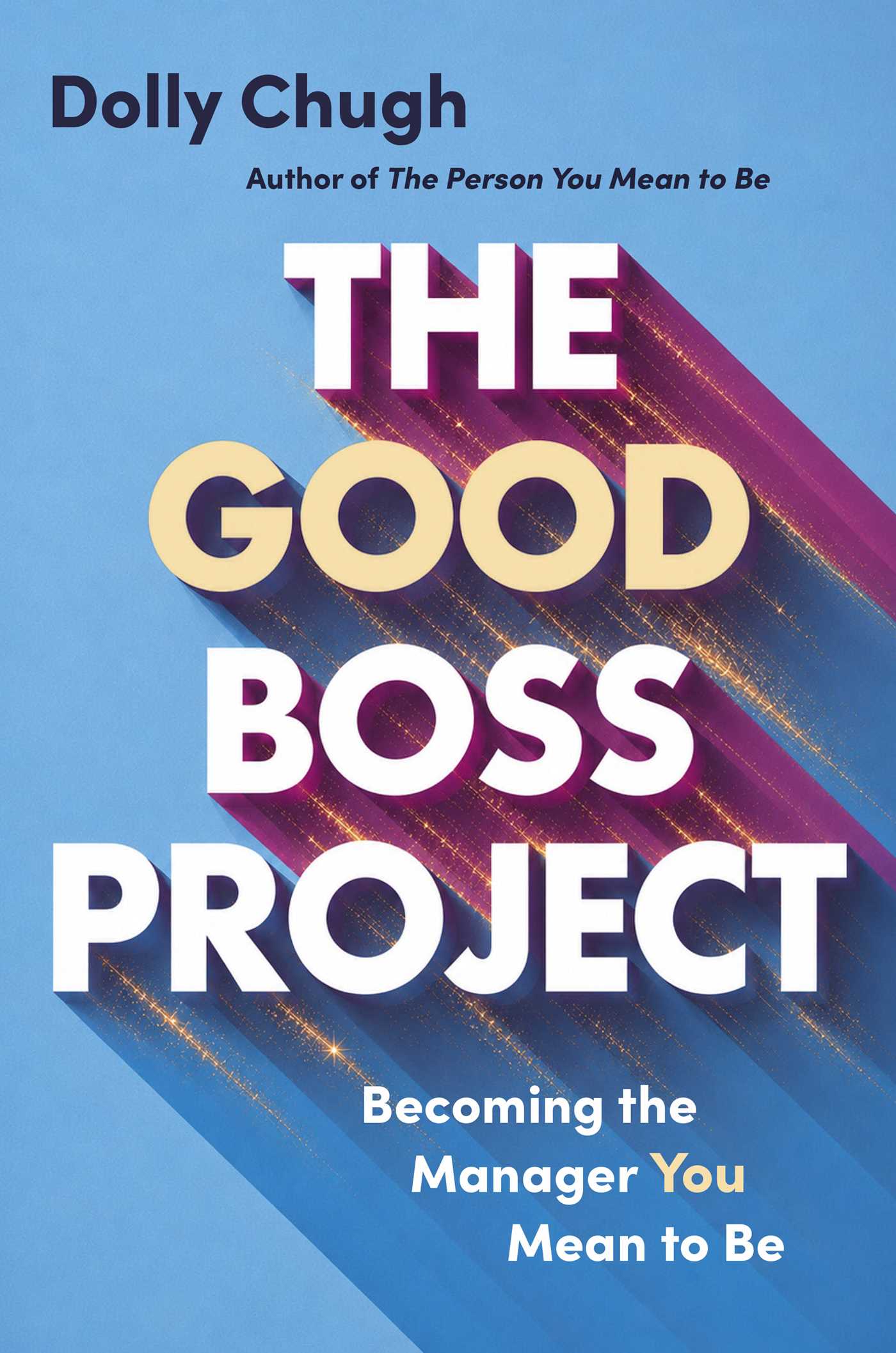
The Good Boss Project
Good bosses manage people, not just performance, and they leave behind legacies while boosting the bottom line. NYU Stern School of Business professor Dr. Dolly Chugh calls this sacred work.
In The Good Boss Project, Dr. Chugh uses leads from employees to track down managers known to be good bosses. By interviewing both the managers and the people who work for them, she unpacks how good bosses refuse to choose between high standards for performance and high standards for humanity.
Being a good boss is sacred work. The kind that leaves a legacy. Whether you’re a new manager, a not-so-new manager, or a seen-it-all manager, The Good Boss Project is your pep talk and toolkit for becoming the boss you mean to be.
-
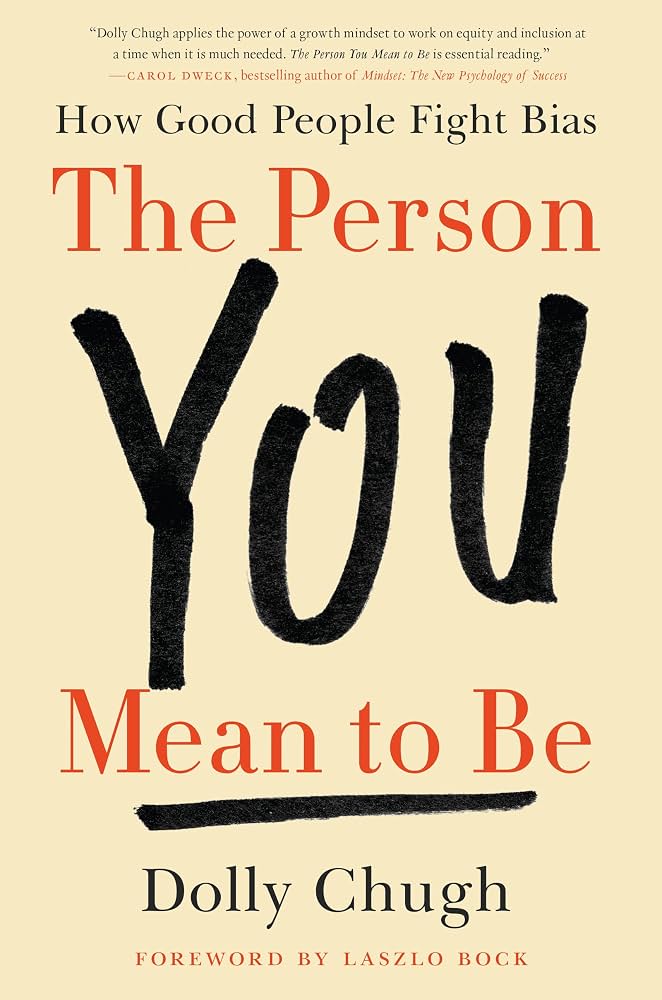
The Person You Mean to Be: How Good People Fight Bias
An inspiring guide from Dolly Chugh, an award-winning social psychologist at the New York University Stern School of Business, on how to confront difficult issues of equity and justice—including sexism, racism, and inequality—so that you can make the world (and yourself) better.
Whether you are a long-time activist or new to the fight, you can start from where you are. Through the compelling stories Dolly shares and the surprising science she reports, Dolly guides each of us closer to being the person we mean to be.
This book moves beyond theory to offer a clear, science-based path from being a well-meaning believer to becoming an effective builder.
Resources
-
- TED: How to let go of being a "good" person — and become a better person
- Harvard Law School: The Person You Mean To Be
- The Harvard Gazette: Want to be a good person? Stop trying so hard.
- Cleveland Clinic: You’re Not the Boss of Me! Why We Don’t Like Being Told What to Do
- American Psychological Association: Self-determination theory: A quarter century of human motivation research
- Center for Creative Leadership: How Feedback Conversations Can Strengthen Organizations
- VeryWell Mind: How to Give Feedback Effectively and Respectfully
- Ethics Unwrapped: Bounded Ethicality
- Trends in Cognitive Sciences: Interdimensional interference in the Stroop effect: uncovering the cognitive and neural anatomy of attention
- Annual Review of Psychology: Psychology of Habit
- Perspectives on Psychological Science: Snapping Out of Autopilot: Overriding Habits in Real Time and the Role of Ventrolateral Prefrontal Cortex
- American Psychologist: Self-determination theory and the facilitation of intrinsic motivation, social development, and well-being
- Zeitschrift für Psychologie: Understanding Psychological Reactance
- International Journal of Behavioral Nutrition and Physical Activity: Motivational Interviewing: moving from why to how with autonomy support
- Nature: A national experiment reveals where a growth mindset improves achievement
- Psychological Science: Mind Your Errors: Evidence for a Neural Mechanism Linking Growth Mind-Set to Adaptive Posterror Adjustments
2 Million Readers.
1 Life-Changing Newsletter
Simple and Straight-to-the-Point...
Just Like Mel.