Episode: 433
Stanford Psychologist: 7 Small Things You Can Do Right Now to Enjoy Life More
with Dr. Kelly McGonigal
Learn 7 powerful ways to bring more joy and hope into your life.
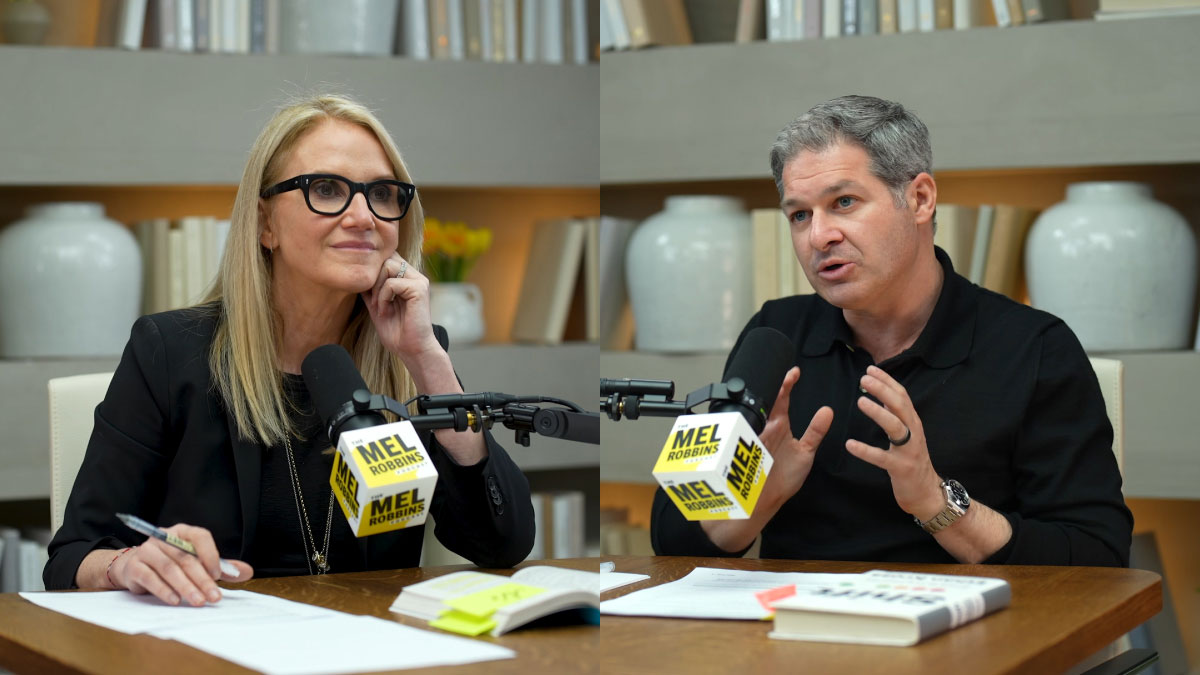
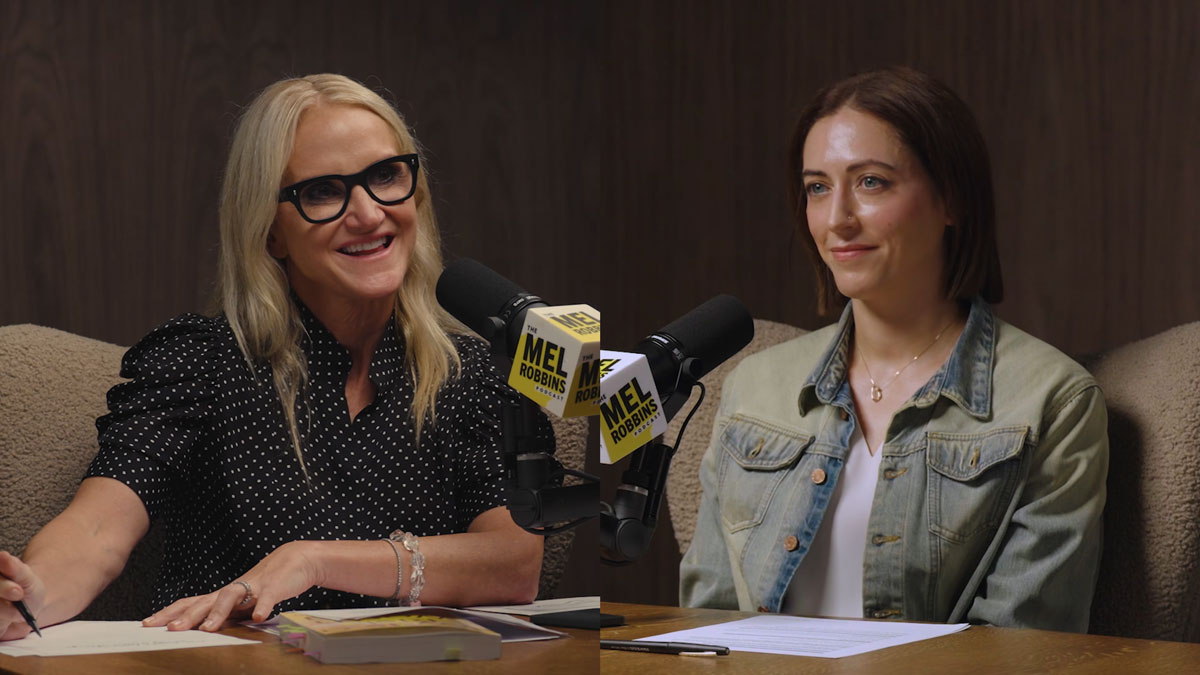
Mel sits down with renowned health psychologist, Stanford University lecturer, and bestselling author Dr. Kelly McGonigal to show you how to use your body’s built-in resources to feel more connected, courageous, and alive.
You’ll learn how to make stress your friend, tap into your muscles’ “hope molecules,” and train your attention to notice the good.
From the way you move to the memories you revisit, Dr. McGonigal is sharing the small shifts you can try today—and explaining why everyday moments of laughter, connection, and meaning do so much for you.
You’ll also understand why joy isn’t something to push off until life is “perfect.”
Dr. McGonigal says it’s a survival instinct.
And while it won’t erase what’s hard, it can give you the strength to keep going and feel like yourself again.
Listen on:




The core function of joy is to make you want to be alive.
Dr. Kelly McGonigal
All Clips
Transcript
Mel Robbins (00:00:00):
Today on the Mel Robbins Podcast, how to feel like yourself again, get your spark back and bring more joy into your everyday life with world-renowned expert on stress, resilience, and joy, Stanford University's Dr. Kelly McGonigal. Dr. Kelly McGonigal, welcome to the Mel Robbins Podcast.
Dr. Kelly McGonigal (00:00:26):
Thank you. It's great to be here.
Mel Robbins (00:00:28):
I'd love for you to start by just setting the record straight about what we're going to talk about and how the person who's here with us is going to feel when they're done and how their life might change. Because you hear the word joy and you think, oh my gosh, is this a to-do list for being happy?
Dr. Kelly McGonigal (00:00:42):
But
Mel Robbins (00:00:42):
What are we going to talk about based on your research about how to feel like yourself again and to use this science of joy to do that?
Dr. Kelly McGonigal (00:00:50):
My core hope is that when you wake up in the morning, you want to be alive, you're happy to be alive, you feel like you have things to look forward to, you know that what you do matters, that who you are matters, that your existence in the world is a good thing, and that no matter what challenges you're facing, that you can handle them. And even in those challenges, it's possible to laugh, it's possible to feel close to others, it's possible to have things to look forward to, it's possible to do things every day that make life better for yourself or that make the world better. Psychologists sometimes use this term existential courage because that's what I really hope comes out of this conversation is that you feel more courageous to create a life of meaning and a stronger capacity to appreciate not just what's good in your life, but also what's good in you and what's good in others and what's good in the world.
Mel Robbins (00:01:56):
My favorite thing that you just said was this ability to appreciate not just what's good in your life, but what's good in you. Yeah. Can you expand on
Dr. Kelly McGonigal (00:02:09):
That?
(00:02:10):
I think everything that I do, I'm trying to be an antidote to despair and there's a particular type of despair that people are comfortable talking about, which is looking out at the world and feeling like the world is falling apart. There's so much wrong with the state of the world and other people are so disappointing. And I think people have a harder time admitting or recognizing. Sometimes we wonder what's good about us, whether what we do makes a difference, if our existence has a reason, if other people care or even know that we're here. And I think that when we are better able to recognize and trust the better parts of ourselves or even just the parts about ourselves that bring us joy, and we're more comfortable sharing that with the world, it's a brave act and it's a transformative act.
Mel Robbins (00:03:04):
I had this moment, Oprah calls it a light bulb aha moment when you were talking because I've never heard anybody so simply and profoundly explain that there are two types of despair and discouragement that you experience in life. I love that you have just aimed our focus at something that's hard to talk about, which is the despair quietly and the discouragement that we feel often alone as we wonder, as we lie awake at night. And I suppose that where we're going is, and I know where we're going because I've read your next blockbuster bestseller and I love your research and your work is that you're going to shine a light on the interior life that you have.
Mel Robbins (00:03:54):
Dr. McGonigal, what is the definition of joy?
Dr. Kelly McGonigal (00:03:57):
Let me start by something that is very easy for most people to understand. I'm going to give you the opposite of joy first. Okay. I've learned through experience to walk my way into joy. So imagine, you know the feeling when you get bad news or something goes wrong or someone says something that hurts you and immediately it's like a punch to the stomach, your heart sinks, you feel heavier, you feel more pessimistic, you just immediately feel worse about yourself or worse about life. And it often happens in a flash, but it can linger. It has this residue. So joy is the opposite of that. It's when something goes right or you notice something wonderful or something good happens or someone says something nice and you immediately, your heart lifts, you feel lighter, your gut is telling you this is a moment that matters. You feel like you can breathe and no matter how small or big the moment is, you have more positive outlook, you feel better about yourself and better about life.
(00:04:57):
That's joy. And I've asked thousands of people to tell me what's something that brought you joy in the last 24 hours. And also people have published research from all over the world. It's so consistent what brings people joy. And I think sometimes knowing what the categories are also helps people understand what I'm talking about.
Mel Robbins (00:05:15):
Yeah, what are the categories?
Dr. Kelly McGonigal (00:05:16):
Number one is feeling connected or close to someone. And one of the easiest examples of that is people will tell me about a moment when they laughed with someone and that just in that moment, it's a biological reality. You are connected, you feel close to someone. The number two is when you do something that makes you feel good about yourself and who you are. It could be that you made progress on a goal and you got good news or it could be that you did something that you've been putting off or it could be you did something that's aligned with your values. It could be you helped someone or someone tells you that you did something that made things better. And then we have the third category is noticing something wonderful or beautiful in the world. It's often nature. It's amazing how many joy reports I get from people.
(00:06:02):
I heard a bird sing. I just be like, why? Why are there so many birds in these joy reports? But people in that moment feel connected to the good in life itself. And then the next biggest category is moments where you are enjoying something that you love, whether it's an activity or that thing that you love beyond reason or you're just in the moment doing something you enjoy and you're able to feel in that moment or be in that moment.
Mel Robbins (00:06:34):
Can you put this into context for why this truly does matter and it's critical for your life and your meaning in your life?
Dr. Kelly McGonigal (00:06:43):
Yeah. I mean, people sometimes hear the word joy and they think that what we're talking about is that moment when everything in your life is perfect, no problems, no pain, nothing you're worried about. And we think that joy is the emotional reward you get when everything aligns in your life and in the world. And if that isn't true, it's irresponsible or it's foolish or it's naive or it's actually impossible to feel anything that we would call joy. The place that I often think about to start with joy is in that internal close to home place that even when the world is in chaos, your full humanity is still available to you. And I know this is true because when I teach classes about joy, I often have people joining from war zones who have lost loved ones in war and are being bombed in the middle and they're taking an online class.
(00:07:37):
And what they tell. It's so funny because I will often have some students write me and be like, "Isn't it irresponsible or actually impossible to be talking about joy right now when there's a war going on?" And then someone living in that war will send a message that I share with the class that says, "This is why we need joy because life is so uncontrollable and so many terrible things are happening and they're experiencing this thing that is true for all of us that even in that context, there's a part of you who can still find things to laugh about. There's a part of you who wants to connect with others and is absolutely capable of it. There is a part of you who is capable of noticing beauty in the world and putting beauty in the world that you don't need to wait for external circumstances to align, to experience those parts of yourself."
Mel Robbins (00:08:27):
Wait a minute. I just saw something and I want to give this back to you to see if I'm tracking. So if you have moments in life where there's external forces that cause you to feel despair and that then makes you feel despair internally, when it comes to the positive, experiences of joy, of love, of beauty, those things are external in your life, whether it's weddings or puppies or sunsets or dancing at a concert with your friends to your favorite band. And of course that impacts how you feel internally. I just understood why the science of joy matters so much because if the signaling from the world is overwhelmingly negative, you're going to feel internally so heavy and negative. And in those moments, tapping into signals that there's still good, there's still happiness, that there's still a reason to move forward, that there's still something you can do, that is what balances you out when life gets very heavy, when the world is very heavy.
(00:09:42):
This isn't like jazz hands and happiness and something on the surface. This is deep within us. Is that what you're saying?
Dr. Kelly McGonigal (00:09:50):
The core function of joy is to make you want to be alive. Joy would not exist if life were not hard. We wouldn't need it actually. Joy is a particular type of uplift that pulls you up from when you're feeling stuck or sad or hopeless. And that is why you have the capacity to be uplifted by things that are good. It's why you have the capacity in a moment when you're laughing with someone else and your brain start to synchronize and you feel connected to someone. Your body and brain are wired to have that moment of closeness because the reality is that it's hard to be human.
Mel Robbins (00:10:28):
And you're here to remind us that we have wiring in our bodies, brains and resources in us to tap into this fundamental need. You said the core function of joy is to make you want to live, to push through, to keep going, to evolve and grow. And that's a beautiful way to think about this.
Dr. Kelly McGonigal (00:10:50):
It's
Mel Robbins (00:10:50):
A
Dr. Kelly McGonigal (00:10:50):
Survival instinct.
Mel Robbins (00:10:52):
I've never heard anybody say that, but it makes sense because if there's too much negative input, of course you're going to
Dr. Kelly McGonigal (00:11:01):
Give
Mel Robbins (00:11:01):
Up.
Dr. Kelly McGonigal (00:11:02):
So I often collect these joy reports where I just ask people what's something recent that brought you joy. And then I collect some of the ones that I think would surprise people. And some of the ones that really stood out to me that I received recently, one was taking care of a spouse who was going through chemotherapy and it was messy and gross. And she said, "I think I could do this for the rest of my life because I feel so much love and what I'm doing matters." And then another was a student who talked about being in a bomb shelter and talking with neighbors and saying that he had never felt so close to other human beings as he had in that moment and that it was one of the most joyful experiences of his life. Now nobody wants that experience. Nobody would describe that as a happy moment or a positive moment, but it's things we have this capacity and actually all of those were examples of the most common source of joy, which is to feel close or connected to others and also to feel like who you are matters.
Mel Robbins (00:12:07):
Those are beautiful examples and it also makes your definition of joy, which is the core function is to make you want to live,
(00:12:18):
Really powerful.
Mel Robbins (00:12:20):
I want to read to you some of the things that listeners in the 194 countries that watch and listen to this show wrote in about, and maybe as you're watching right now or you're taking Dr. McGonigal and I on a walk or in the car or you have us with you as you're busy working, maybe you feel some of these things. Maybe people in your life feel these things. I don't feel like myself. Nothing excites me. I feel flat. I am always waiting for something bad to happen. I'm tired of feeling exhausted all the time. When you hear that, what do you hear?
Dr. Kelly McGonigal (00:13:06):
I hear something that's very easy to relate to. It's hard to be human. And the first thing I want to say is it makes a lot of sense to feel that way as a response to life. And also it's not a fixed permanent state. Your brain is hardwired to find meaning or make meaning. Your nervous system is primed to connect with people. And even at the level of your muscles, your muscles can manufacture and secrete something called hope molecules that when you just literally engage with life using your body that travel through your bloodstream to your brain and act like an antidepressant. There are so many resources we have and we have the will to connect, the will to find meaning, the will to celebrate, the will to experience pleasure even in dark moments. And these are parts of yourself that you can learn to harness.
Mel Robbins (00:14:02):
Now, is the research that you're about to share with us, is that the pathway to making the hard moments day-to-day easier?
Dr. Kelly McGonigal (00:14:09):
The research that I focus on is the resources you already have because you're a human being and part of that's going to be your body. Part of it's going to be your brain. Part of it is your attention, which is a resource that we can use and train. Part of it's going to be instincts that we can harness. Having agency is the opposite of feeling like there's nothing you can do to change a situation, to make things better, to get closer to what you want, to help people you care about, the sense that there's nothing I can do. I don't see any way forward or out. And I think the most beautiful thing about human nature is that some part of us wants to survive and to survive we need things like meaning and hope and connection. And so we do have all of these resources.
Mel Robbins (00:14:59):
So the good news is, Dr. McGonigal, as I was listening to you, there were seven things that you have right in front of you that you have the ability, and you're going to teach us how, to use as free resources to take control of where you are and to start feeling more like yourself and
Dr. Kelly McGonigal (00:15:17):
Better. And to help the people in your life feel that way too.
Mel Robbins (00:15:20):
Amazing. You said the body, the brain, your attention, instinct, emotions, choices, relationships. That's seven things, and I think that's such a hopeful and amazing place to begin.
Mel Robbins (00:15:32):
So the first resource that we have is our body.
Dr. Kelly McGonigal (00:15:34):
Yeah. Two ways I think about the body. I mean, one is you can literally place your hands on your body. You're breathing already. You can feel that.
Mel Robbins (00:15:45):
I put my hands in my heart. So even if you have a steering wheel in one hand, you can put the other hand in your heart. Yeah, I feel I'm breathing.
Dr. Kelly McGonigal (00:15:51):
So you're already breathing. That's your connection to life. Your body is working so hard to support you.That could be a very simple way of just connecting to this idea that your body is a resource and you are already here and you have that ability to engage with life. So
Mel Robbins (00:16:10):
Much of your work is around the research related to stress, and you have one of the most popular TED Talks of all time on the science of stress, and you think that we all completely misunderstand stress. So Dr. McGonigal, what do people misunderstand about stress?
Dr. Kelly McGonigal (00:16:29):
The number one thing people misunderstand about stress is when they feel stressed, they think it is their brain and their body betraying them and that the most important thing they can do in that moment is to try to feel less stressed. The reality is stress, what you experience as stress is your brain and your body trying to help you in a moment that matters. And every symptom of stress we don't like is your body and brain trying to do something that is useful. So feeling your heart racing or sometimes we feel like our blood pressure rising, that is the sign that. Two things, your body is trying to give you energy. Literally, that's all that is. Your heart is possibly pounding faster or it's contracting out more blood with every pump so that you have the energy you need to deal with whatever matters to you.
(00:17:21):
But also what's really fascinating is in moments of heightened stress, your brain actually prioritizes sensory information from your heart. It can actually sense your heart more. So even if your heart wasn't pounding faster, you might feel your heart more clearly. And that's a sign that your brain is actually trying to connect you to your heart, almost metaphorically, to help you think about what you care about, to think about who and what matters most. So what I would say is that even just that first symptom, when you feel your heart racing, the first thing you can do is think, okay, thank you body for trying to give me energy. I have the ability. That means some part of me believes I can do something here. It's not hopeless or I'm not trapped. And then also thank you brain for telling me, trying to bring me back to my heart because in a moment of stress, there are a lot of things we can do to cope, but one of the best things you can do to cope is to think about who or what matters most to you, what you care about, and in this situation, what's the opportunity that I have to do something that reflects who or what I care about most?
Mel Robbins (00:18:30):
Dr. McGonigal, you talked about something called a hope molecule. What is a hope molecule?
Dr. Kelly McGonigal (00:18:36):
I'm so glad you asked. This is one of my favorite scientific findings I've ever come across. You have muscles throughout your body, and if you'd asked scientists a couple decades ago, "What are your muscles for?" They would've said, "Well, to move your bones around, to stabilize your skeleton." But now we know that your muscles actually are like a pharmacy and they are a part of your body that manufactures all of these chemicals that are good for you. Your muscles can manufacture chemicals that fight cancer cells, that boost your immune system, that are good for your heart, that regulate your blood sugar, that help you build strength, and also they release chemicals that travel to your brain and work to help you recover from stress, that make you more resilient, that boost motivation, again, that are essentially functioning like antidepressant molecules, and they are released from your muscles when you use them.
(00:19:29):
Muscle contraction pushes these hope molecules into your bloodstream where they can then course through your body and arrive at your brain, which you might actually need those molecules. And again, the thing why I love this, we're so used to hearing scientific findings that are like, "Here's how your body can go wrong. Here's how your body can betray you. Here are all the things you need to worry about." We almost never get the opportunity to experience our own physical being as a resource, as something we can trust rather than something we have to fix. And so I love this idea that by going for a walk, by lifting heavy things around your house, by having a dance party in your living room, whatever you want to do to use your body, every time you use your body to engage with life, you're actually accessing this pharmacy that wants to give you a little more courage, a little more resilience, a little more hope.
(00:20:24):
This research comes out of the field of exercise science. So sometimes people think, "Well, that means I have to go to the gym or I have to do the most strenuous workout that I can imagine." But that's not how your body and brain think about it. Your body just thinks, "Oh, I'm engaged with life, so I better give all my systems something that's going to help me thrive." And when you are less active, your body gives you less of this resource. So going from nothing to anything is the biggest step you can take. And then really, I mean, look, we could sit here and wave at each other and be releasing. It's true.
Mel Robbins (00:21:03):
I'm waving right now and I feel like my body shift. If you've ever had an experience where you're at a wedding, and it's very interesting because at really great weddings, the band just plays a banger out of the gate and you've got somebody pulling people on, but -
Dr. Kelly McGonigal (00:21:19):
That would be me, by the way. I'd be the one being like you, come here.
Mel Robbins (00:21:22):
Yeah, I'm like that too. It probably surprises no one that I drag my poor husband, Christopher Robbins, who is deep in conversation right out onto the dance floor. But we've also had the experience where you're the one on the edge going, "Do I join?" The second you step on the floor and just move your shoulders, you feel different.
Dr. Kelly McGonigal (00:21:42):
You get pulled into this force field of connection and joy, and you have to let yourself be pulled in. With almost anything that is good for you, and I don't mean in the moral way, but you actually will feel better if you do it, almost everyone feels resistance beforehand. You always are going to feel like you have less energy or you're always going to feel more socially anxious and withdrawn because you haven't done the thing yet that's going to help you feel less self-conscious and connected to others. You haven't done the thing yet that's going to give you energy or help you feel braver. And so I always tell people when you have that clear signal that says, "I don't know whether I can or should join in or I don't have the energy for this," but it's a real signal, but it's the opposite of how you're interpreting it.
(00:22:30):
That is the signal that you need it and you need to draw on some kind of commitment to yourself rather than an in the moment feeling that says, "I'm ready or I want to." And for me, what I usually recommend to people is add music. It is one of the simplest ways to change people's - Do you have a song you always know? Well, it depends on what I want. Right now, I'm really loving Madonna's Danceteria, which it's a fabulous song that one of the lyrics is about how everybody hears a work of art, which is just a lovely idea, but I like music that I can dance to.
(00:23:06):
But we know that when you listen to a song that you love, it is the fastest way to get a burst of dopamine that gives you more motivation and optimism, releases endorphins and endocannabinoids that make you feel better. Literally, when neuroscientists want to study joy in the brain, the easiest way to do it is to play a song that people love, they say they love. And the same thing if you want people to feel less pain, if someone is going through something painful like a medical procedure and you want them to feel less pain, the easiest way to do it is to have them listen to music they love. It's such a powerful intervention. And so you put on a song that you love and then you do anything that is the opposite of lying down or sitting down if you're physically capable of it.
(00:23:49):
And if you aren't, then just listening to the song, it activates the part of the brain that thinks it's moving anyways, so you get the benefit, but it's the feel better effect and there's no dose too small. The smallest studies that I've found have been two to three minutes. That's a pretty achievable dose.
Mel Robbins (00:24:03):
That's one song.
Dr. Kelly McGonigal (00:24:04):
Yeah, it's less. I mean, well now TikTok era, that is about one song.
Mel Robbins (00:24:07):
Wow, that's pretty. I love that. Okay. And my favorite thing, and I noticed this is what my family and my colleagues do, is when I get particularly down or stressed or in a bad mood, they're like, "Let's take a walk. Mel, come on, let's take a walk because I'm not going for a run right now. We don't have time." Walking down the driveway and back up, I'm a different spouse. Yeah. I'm a different mother. I am a different Mel Robbins. Walking around the block here by our studios, I come back feeling different.
Dr. Kelly McGonigal (00:24:42):
Yeah. Yeah.
Mel Robbins (00:24:43):
Okay.
Dr. Kelly McGonigal (00:24:43):
And it's for some of the reasons we've talked about. I mean, first of all, you've got those hope molecules going, but you're also creating a state change. When we are physically active, our brain reads that as a signal that you're moving forward, that there are steps you can take. I mean, it's so fascinating. Movement is such a great metaphor and our brain just takes it literally. You can move forward. There are steps you can take. You can breathe. It's the things that you do with your body. You can do hard things. There's reasons to celebrate. Go move with somebody else. Your brain understands you're not alone. Movement is so interesting. I guess it's just because it's how humans evolved and it's how we exist in bodies, but our bodies really reward us for acknowledging that.
Mel Robbins (00:25:31):
Well, I think if you even just ask yourself if you're feeling not like yourself and disconnected and flattened, have you gotten out of your chair?
Dr. Kelly McGonigal (00:25:39):
Yeah.
Mel Robbins (00:25:39):
Simply just standing up. Okay, I'm standing up now. I'm kind of wiggling and now I'm sitting back down and I feel just a little bit different. I'm kind of positioned in the chair different
Dr. Kelly McGonigal (00:25:50):
Now. And if you can't get out of a chair, you move whatever parts of your body you still can.
Mel Robbins (00:25:54):
Yeah. Lift your arms, do something. All right, so that's resource number one, body.
Mel Robbins (00:25:57):
What is another thing we can do with our brain? So the brain is also a resource
Dr. Kelly McGonigal (00:26:02):
That
Mel Robbins (00:26:03):
Can help you plug into signals of joy and hope and meaning.
Dr. Kelly McGonigal (00:26:07):
You probably know that your brain monitors all sorts of processes in your body. It's measuring your heart rate, your breathing, your blood sugar, and it's trying to make sure everything's good enough to keep you alive. Well, your brain also monitors these other big existential questions like, "Does anybody care about me? Are there people I care about? Am I alone or am I connected? Does what I do matter? Is there beauty in the world? Is there a reason to smile? Are there things to look forward to? Are human beings good?" There are all these things that we actually need to know to want to be alive. Our brain is monitoring things in our body that allow us to be alive, and our brain is monitoring things about our life that make us want to be alive. And in a crisis, when you're getting so much information about how hard things are, how bad things could get, and you're starting to feel emotions like overwhelm or maybe loneliness, fear, anger, you need signals that say there are good things in the world, what you do matters, you aren't alone.
(00:27:16):
There are people you care about who care about you. You need experiences that tell you that as much as you need to eat and as much as you need to breathe. And so even the smallest uplifts, the smallest moments of joy, meaningful pleasure, connection, moments where you feel proud about yourself for something you did, even if it was small, it's so fascinating is as a coping resource, the size doesn't matter. You could be in a situation where the suffering is huge and you experience an uplift that is objectively small, like noticing something beautiful out your window or someone thanked you for something that you did.
Mel Robbins (00:27:53):
I'll give you one. When I had severe postpartum depression with my daughter Sawyer, I remember the day I actually got out of bed and took a shower, and then I went back to bed. But that one moment of standing in that hot shower after 11 days in that bed was the smallest moment that made me feel like, "Okay."
Dr. Kelly McGonigal (00:28:21):
And sometimes it's the sensory aspect of it, like the hot water on your skin, and maybe there's relief for a moment, or sometimes it's the meaning that you make out of it. Maybe some part of you is like, "I couldn't do this yesterday or the day before, and I did it today." And it's that meaning that your brain. I mean, when I said that one of the resources is that your brain is really good at making meaning is your brain can have these generous interpretations of small moments or experiences. It's also something you can train yourself to do. That hot shower wouldn't really have provided the same kind of hope if there wasn't some part of you that could put it in the context of your not being able to do it yesterday, and that means something. It means that change is possible or it means that you are capable.
(00:29:06):
The brain has all sorts of processes it can do, visualization, imagination, memory, problem solving. So let's go with memory because we know that when you bring to mind a memory that either makes you feel good or makes you feel good about yourself, so it doesn't necessarily have to be a happy memory, but a memory that means something to you, that it gives you an instant increase in hope. It can bring up positive emotions like gratitude or enthusiasm. People have reported using memories when they can't be with people they love in order to remind themselves that there are people who care about them and that there are people who they can depend on. So you can use whatever treasure trove of memories you have, remember something that makes you smile or makes you laugh or makes you feel close to someone. You can even collect memories that become.
(00:30:00):
Sources in that way. When I'm feeling really scared and I don't want to do something, but a more important part of me does want to do it, it's just getting the other part that wants to be in control or avoid discomfort. That part is a little too loud right now. I can bring up a memory of when I felt glad that I did this hard thing before, or I can bring up a memory of someone who loves me, encouraging me and telling me that I can do it. Yeah. So let's make that our brain resource. I
Mel Robbins (00:30:30):
Love that one. I think I have one that just came to mind. When I feel lonely and I feel discouraged or I feel like I don't know how I'm going to get through something, a memory I often come back to was 21 years ago, Mass General Brigham Hospital here in Boston. Our son Oakley was five days old and had been medevaced to the hospital. And the docs in the suburban hospital had said, "Pack your bags. We don't know if he's going to make it." So we went home, packed our bags, and when we got to Mass General Brigham, it was like 11 o'clock at night and the doors swung open to the NICU. And there were my friends, Robin and Lisa. And I'll never forget it. They had both had babies prior in the NICU and they know how hard it is. And we didn't know if he was even alive at that point.
(00:31:26):
He made it. But I come back to that. And the funny thing is that I don't even see them as much as I am dying to see them. We're all in our late 50s and kids that have moved out of the house and everyone seems oddly busier at this stage in life. But it does remind me, even though they're not in front of me, of a moment when I wasn't alone and I did get through it.
Dr. Kelly McGonigal (00:31:47):
So it's funny, you're doing what is the next step when psychologists are trying to help people use memories as a resource. This one question that I learned from a psychologist at Take a Contractor, she asks her clients, "What is an important thought or feeling this memory gives you?" And so I was going to actually ask you, that memory came to mind, what's an important thought or feeling that gives you? And you mentioned that you aren't alone and that you can get through this.
Mel Robbins (00:32:15):
Yes.
Dr. Kelly McGonigal (00:32:15):
And that's -
Mel Robbins (00:32:16):
And it also makes me want to be the kind of person
Dr. Kelly McGonigal (00:32:20):
That
Mel Robbins (00:32:20):
Shows up in those moments.
Dr. Kelly McGonigal (00:32:21):
Yeah, that's so great. So that's the next step. With a lot of these things, I think sometimes people think the intention of what we're talking about is just to feel better, but often it's about helping us be the person we want to be in the moment too. And so just asking yourself that question gave you almost an orientation or a
Mel Robbins (00:32:41):
Mission. You called to do something. And I think that's kind of the point of what we're talking about, particularly that a good life is not one where you're happy all the time. A good life is not one where everything is going well or perfectly or everybody's healthy or you're thriving. A good life includes these moments that are terrifying. And I think it's really important that when you recognize that even in those moments when your life feels horrible and scary, it can still be a beautiful life. And I really find it helpful personally, and I hope you do too as you're listening or watching, this idea that there are signals that are scary and then there are signals that are hopeful. And at any moment you can use these seven resources inside of you, whether they're not even here in the present. You can go back 21 years like I just did in this conversation and remind yourself that this moment too, you can get through and that there are people there to help and that you aren't going to be alone even though you feel it right now.
Mel Robbins (00:33:47):
Let's talk about the next resource, which Is your attention.
Dr. Kelly McGonigal (00:33:51):
Attention. So there's way too much going on in any given moment for your brain to process. It's always making choices and your brain is just discarding huge amounts of information about what's happening in this moment. And a lot of people like me have a negative attention bias where our brain has made a decision. It's just a little more important to be vigilant for things that could go wrong or to pay attention to things that are not right or maybe it's self-criticism or criticism outwards or anxiety. And you can just filter that by making a choice that in this moment I want to bring my attention to something that's going right or to find a signal that is encouraging. So when I teach classes on joy, I'll often have people practice this by saying, "Right now, I want you to look around this room wherever you are, including your body for something that reminds you of someone or something you love." You could do that.
(00:34:51):
Or you could say, "Right now I'm going to look around in this moment for evidence that somebody did something to make life better for me. Or I'm going to look around right now for something that I enjoy, that I'm having a positive response to." It really depends on your personality. You get to choose what you bring your attention to, but there will probably be certain aspects of reality that are true that if you don't remind yourself to pay attention to them, it's so easy to have a kind of, you're just blind to them. It's like if you're shopping, you're at the grocery store and you're looking for a type of cereal, if you know you're looking for that cereal, everything gets kind of blurry and then that cereal logo jumps out at you. It was already there, but you had to tell your brain, "I'm trying to find that cereal now, so help me."
Mel Robbins (00:35:36):
I am curious, Dr. McGonigal, in a moment in your life where either your personal life has so much external despair or the world around you that you're living in has so much external despair, so there's so much grabbing at your attention that's real, that's there, does your negative bias in your mind become bigger?
Dr. Kelly McGonigal (00:36:07):
It depends. If you're asking me, yes. Well, I
Mel Robbins (00:36:10):
Mean it because I would think if all the input's negative, this is in periods of grief, you've just been laid off, you feel terrible about it, you're drowning, you've been broken up with. These moments that are crushing or you read the headlines for too long and now you're like, "I can't do anything about this." And now all you see is negativity.
Dr. Kelly McGonigal (00:36:30):
So two things can happen.
(00:36:32):
One is your brain initially is going to think this is reality, so it's going to be really important to pay attention to this, to stay on guard. I've got to keep track of all the things that I have to take care of. Two years ago, I think almost to this date, my father was diagnosed with a terminal untreatable cancer and my mom went through a health crisis that required a lot of help. And that was, I think, the most intense period of my life in terms of the chaos and the crisis unfolding all at once and requiring so much more from me than I was used to just day-to-day being able to function and take care of stuff and manage things going wrong and trying to prevent the worst possible outcomes. But there's this other instinct that often can float up and if it doesn't float up, you can pull it up, which is I'm not going to survive this if I do not have at least one moment today when I laugh.
(00:37:31):
I am not going to survive this unless I have a moment where I let somebody touch me who cares about me or whatever it is for you that brings you a little moment of peace or joy or meaning. I remember I was taking a shower and I started getting texts and phone calls at the same time from family and healthcare providers and social workers. And I was in the shower, so I turned the water off and I sat on the floor of the shower for three hours because I though I do not have time to dry myself off. I couldn't even, that sort of coping. But as things progressed, I realized that to survive I needed to hold onto a few things that were renewing and sustaining. And part of it's attention. At the end of the day, looking back for one highlight instead of my mind going to sleep, it would say your job now is to think about everything that could go wrong tomorrow, everything you have to do tomorrow.
(00:38:28):
And definitely don't put your phone to sleep because you're going to be getting texts from at three o'clock in the morning. But I could use my attention in that moment to think about one highlight of the day, which really functions well to also remind your brain that good things are possible or that you aren't alone, whatever that signal is that you need.
Mel Robbins (00:38:46):
I also appreciate that you just said, because as you're listening, you or somebody that you love may be in that moment where you're sitting in the shower for three hours dealing because you don't have time to take a shower. And I love that we keep framing this like the external signals come in that overwhelm you and super challenging moments, that's how life works. And you can dig up something when you realize I'm drowning here and I need to laugh. Let's go to the next one.
Mel Robbins (00:39:15):
The next free resource is your instincts. How do you use your instincts as a resource to find meaning, purpose, to support yourself through these challenging moments?
Dr. Kelly McGonigal (00:39:25):
Here's my favorite instinct that is deeply underappreciated because we have instincts for courage. We have instincts to help others. Those are lovely, but there is some part of you who loves something beyond reason. I don't know what you're a fan of, but there is something that probably you like more than is easy to explain.
Mel Robbins (00:39:43):
Fantasy fiction.
Dr. Kelly McGonigal (00:39:44):
Okay, great.
Mel Robbins (00:39:45):
Listening,
Dr. Kelly McGonigal (00:39:45):
Dramatic audio. So I think most people have something that they just love beyond reason, and often it's something that is accessible. And when life is difficult, we often think I don't have time for this or it's frivolous. Maybe the people in our lives don't really understand why it's so important or helpful to us. And you should trust what you love. It's a beautiful part of who you are, especially if you've had a relationship with it over time, if it's been there for you, that in moments when you need it to let it be that thing that keeps you going or lifts you up.
Mel Robbins (00:40:19):
And I love it if it's a little weird.
Dr. Kelly McGonigal (00:40:21):
Yeah.
Mel Robbins (00:40:21):
One of the reasons why I love fantasy fiction is it allows me to escape. I'm living in a different world as I'm listening to this movie acting out in my mind. I also love knitting. I love needlework. I love gardening. All those kinds of things. And so your instinct that gets ignited by something that's just for you, that kind of reminds you, what does it do when you're sitting there doing needlepoint during a stressful
Dr. Kelly McGonigal (00:40:43):
Time? It's so interesting. If you ask people about the things they love, they will. I play this game with my students where I make a list of activities and knitting is one of them, playing board games is one of them. And then researchers have asked people, "Explain why this is so meaningful to you." And people say things like, "In a moment when I was in such deep pain and agony to be able to feel something that wasn't that, it was like love." I'm like, "What activity do you think they were describing?" That quote that I just paraphrased, that was about playing board games. This is why I said it's sort of without reason that there will be activities that just when you do them, you feel better about yourself, better about life, you feel like you have a place to show up. Whatever the reason is, they fulfill really important core human needs and you shouldn't have to justify that to anybody else.
(00:41:34):
It's so easy to dismiss these things, but if they brought in a puppy right now or a kitten - Can we? Tracy, come on. Come on, could we? If you want to see some unbridled joy. Oh my
Mel Robbins (00:41:45):
God. Even just imagining puppies running or I'm imagining little baby corgis. I love corgis. They're like big, little, they're low to the ground. I just love corgis. I'm imagining puppies right now. Now I'm happier.
Dr. Kelly McGonigal (00:41:59):
I want to tell you about some research too with this. I'm a huge proponent. Everyone should have an animal in their life. I'm trained as an adoption counselor. If you want to rescue pets, please hit me up.
Mel Robbins (00:42:08):
Why should you have an animal in your life?
Dr. Kelly McGonigal (00:42:10):
This is such amazing research. First of all, if you want to look for the moments in people's lives when they smile or laugh or experience play or experience affectionate touch, core human needs that of anything you could do in life, you are most likely to experience those things when you are interacting with an animal and especially your pet. And they've done studies too looking at places where people are suffering, like in a hospital or in hospice. You bring in an animal and these things just come out of us. We are still capable of smiling, laughing, playing, and engaging in caregiving and affectionate touch. It's a wonderful opportunity we have as humans. Everyone should adopt a pet.
Mel Robbins (00:42:54):
I agree. It's so true. And when you bring in the pet, what's interesting is my resigned, frustrated, exhausted, judgy, pushbacky self goes right out the window. I'm like, "You're absolutely right. I do feel better when I see my pet." And that's a signal of things that are good. That's a signal of meaning. The signal of the good experience of being human, which you said, Dr. McGonigal, is hardwired in you.
Dr. Kelly McGonigal (00:43:18):
I know. And it's a sign of what's good in you too. So especially if you're a dog person, the way that dogs look at you is what we really all crave. We want people to kind of see us for who we are and be like, "I'm so glad you are here." And dogs are really good at that. Now, I'm a cat person. What cats are really good at, they're good at saying, "I trust you." That's a trust-based relationship. When you get a cat who's willing to trust you, it gives you this sense of like, "Wow, I'm a special person. I created a real bond here." And then when you interact with animals and you feel that way about yourself, it just leaves a sense of that being true outside of just that one relationship. I mean, we're talking about animals now. There are lots of ways we can experience this.
(00:44:11):
What I actually really want people to do is trust the experiences that give them that feeling. So if you're thinking, "I'm not an animal person, but I feel that way when I'm in nature or I feel that way when I'm making music or I feel that way when I'm cooking for people," is to find the things that make you feel that way about yourself where who you are is a good thing and there's a fit between who you are and what's happening in that moment.
Mel Robbins (00:44:37):
Emotions is another one of these free resources that help you tap into the signals of life that you're wired to feel, meaning, purpose,
Dr. Kelly McGonigal (00:44:44):
Joy.
Mel Robbins (00:44:46):
How do you
Dr. Kelly McGonigal (00:44:46):
Use
Mel Robbins (00:44:46):
Your emotions?
Dr. Kelly McGonigal (00:44:47):
Let's see. I mean, one way is to start with where you actually are. That's where you ask yourself what emotions are present and what is that emotion trying to help me reflect on or what is it calling me to do? I feel like that's a really advanced skill though.
Mel Robbins (00:45:03):
When you shut down emotionally, what does that mean?
Dr. Kelly McGonigal (00:45:07):
It is a moment where your body and brain reading the situation can think that there's actually nothing you can do. And if you feel like you are unsafe, don't have a lot of power, don't have a lot of control or options, your body and brain will try as an act of kindness to make you less present for what's happening. And so you can start to shut down. You can start to be less. In some stress responses, it heightens all your senses because those stress responses want you to fight or flee or help someone or rise to the challenge. But some stress responses are just trying to take care of you in a difficult moment and make it less awful to be in. And in some situations it's helpful, but a lot of us who have had experiences where it was helpful at the time, it can become a kind of chronic way to relate to life where anytime things get difficult, the body and brain is like, let's go into that place where we can't feel it as much.
(00:46:10):
And often the coping strategies I had to learn that someone who experiences this kind of withdrawal or shutdown, you have to start to really cultivate these other stress responses, these other stress resources that are more about engaging with life.
Mel Robbins (00:46:30):
How do you do that?
Dr. Kelly McGonigal (00:46:31):
There's two types of strategies. One is the more global, what you do in your life to train yourself, and then there is in the moment. I really believe that what you need to do is train for these moments. I
(00:46:43):
Mean, I could tell you something to do, but the number one thing I would tell you to do is you need to go in your mind to the memory of the thing you were able to do when you were training. So let me give you an example. Yes.You thanked me for getting on a plane to get out here, and I mentioned I hate flying. I have huge fear of flying my entire life to the point where I refuse to fly, have panic attacks, even thinking about booking an airline ticket. I would dissociate or hope to dissociate even when I had to think about giving up my bodily autonomy in that way and being on an airplane.
Mel Robbins (00:47:18):
It felt unsafe.
Dr. Kelly McGonigal (00:47:19):
Yeah. So here's how I trained when I decided I wanted to be able to fly. I though, how do I feel when I'm on a plane, which is completely out of control? I'm having a panic attack, so my heart is racing. I'm sweating. All I want is to get out of this space. I want the freedom to leave and I'm trapped and I can't. I though, where have I ever felt like that? That's not on a plane because I'm not ready to get on a plane. I remembered going to a spin class, an indoor cycling class and hating it and feeling like when I was on that bike, I just wanted to get off the bike. I wanted to get out of this sweaty room with stelle air. My heart was pounding and I though, I'm going to go back and I'm going to go to that spin class and I'm going to practice staying on the bike and feeling all the things that I feel on an airplane.
(00:48:07):
In that moment, I'm going to tell myself I'm doing this because I want to choose a life where I can get on planes. As much as I try to protect myself, I can't protect myself from things I don't want to experience. Actually, I'm suffering just as much by avoiding it as I ever would be by doing it. I'm going to practice this kind of, for me, it was just the physical courage to stay put and tolerate the pounding heart and tolerate the sweat and feeling trapped. I'm going to tolerate that in the service of something that matters to me. I know it'd be so nice if I could tell you when you're dissociated. I mean, there are things you can do like feel your feet on the floor. There are things you can do to ground, and I've heard a lot of wonderful people on your show talk about those in the moments, but I really want you to have a memory of you being that version of yourself and that's what you call to mind.
Mel Robbins (00:48:55):
Is there something you can say to yourself? Because if you're saying to yourself, "There's nothing I can do," could you start saying to yourself, "Well, there's something I can do?"
Dr. Kelly McGonigal (00:49:05):
You could, but here's what I'd rather start with. The function of that shutdown is some part of you is trying to take care of you. Yeah. It is compassion for yourself the same way that you would want to protect someone you love and you'd want to scoop them up and shelter them. If something terrible was happening, you'd throw your body over them so they didn't have to experience it. So that's what is real and true in that moment is there's a part of you who cares about yourself that much.
Mel Robbins (00:49:31):
Oh, I love that.
Dr. Kelly McGonigal (00:49:32):
And that's the part of me that got on a bike, and that's the part of me that gets on an airplane even when I don't want to. It's a different form of self-compassion. And so what I would say is rather than saying, "I do have control." Well, that's also true, but to start with the thing that's closer to what's happening, which is there's a part of you who really cares about you and wants the best for you, that part of you, if you've thought about it, who do I want to be in this moment? What do I want to bring to this moment?
Mel Robbins (00:50:02):
I love what you said. I think it's extraordinarily powerful to not make yourself wrong, but to recognize the moments that you go silent and shut down and start to shrink as a sign that you love yourself and you're protecting yourself. And what I heard you say is then start to ask yourself, how do I want in the future to feel and show up in these moments? What does a little courage look like even when I'm a little afraid? I don't have to do it right now. But if you can start to imagine what you want to feel like in those moments, then you can find opportunities to practice that in little moments where you're
Dr. Kelly McGonigal (00:50:45):
Not
Mel Robbins (00:50:45):
As shut down. Is that what
Dr. Kelly McGonigal (00:50:46):
You're saying? In the same way that someone who loves you would, the person who's going to be like, "All right, Kelly, you don't want to get on that plane, but I know you can do it. You've done really hard things before. I trust you and you want this. You can do it." And you can talk to yourself in the same way as someone who cares, because you are someone who cares about you. And then it can move from protection to encouraging and curiosity about what is possible? And so often hopelessness or despair is trying to get you to give up. And in some situations that could be a functional response, but how we often end up generalizing, if it was just saying, give up on this job, this specific job, move on to the next, or there's something better waiting for you. If that were how we felt hopelessness, it would be more useful.
(00:51:40):
But how we often feel it is we just transfer it to life. We're like, "It's time to give up on life or it's time to give up on the belief that things will get better."
Mel Robbins (00:51:50):
Or my dreams. Oh,
Dr. Kelly McGonigal (00:51:50):
I think
Mel Robbins (00:51:51):
A lot of people are there, so I think this is important. And what I like about what you're saying is the mistake, if I parse through this, is that if you're feeling hopeless or discouraged, like this isn't worth it, it's never going to get better, which a lot of people do, and then you go wide and you look around and you say, "Nothing is going to matter. There's nothing that I can do," then you've taken an emotion that's trying to give you a signal from intelligence and you've made it way too
Dr. Kelly McGonigal (00:52:25):
Broad. Instead of trying to pull your. It could be hopeless to stay in a relationship that is very harmful to you. Of course. That relationship may not change, but there is hope
Mel Robbins (00:52:38):
That
Dr. Kelly McGonigal (00:52:38):
You can get
Mel Robbins (00:52:39):
Out. Here's what I'm hearing from you, and I think this is really actually helpful. Hopelessness is a signal that the way you're approaching this doesn't work, and you should change the approach rather than the goal. And so if what you want is to be loved, but you're in a relationship that's hopeless, staying in that relationship won't give you what you want. You have to change your approach.
Dr. Kelly McGonigal (00:53:04):
Flexibility as a response to hopelessness is a very helpful response that is to not give up on what you want or what you care about. Just change
Mel Robbins (00:53:12):
The way you're approaching it because if you've sent 300 resumes on an online platform and got nothing back, of course you're going to feel hopeless. But what the signal is saying is, "Hey, ding, ding, ding. This strategy isn't working and let's get creative about how we can approach how you want to get better differently."
Dr. Kelly McGonigal (00:53:32):
And sometimes it's actions, you have to try something different. But when I used to advise a lot of freshmen at Stanford, they would often come in feeling hopeless like the first time they fail an exam or when they realize they can't actually be pre-med, and they have this sense that there's only one way for them to have a good life or a happy life or make other people proud. And I always felt like my job was like, there are so many ways to have a life where you contribute. There's so many ways to have a life where you wake up and you enjoy yourself that day. The opportunities to have a life worth living are vast.
(00:54:10):
When you're feeling hopeless, the more you fixate on the specific version you though had to be, that is when the hopelessness becomes overwhelming.
Dr. Kelly McGonigal (00:54:20):
And also you can, since we're talking about emotions here, so if you're feeling hopelessness, you can also use your capacity for hope as a resource. Tell me how. And there's great. I love global research because I always feel like sometimes studies will look at one small sample and who knows if this is really a human thing or just a thing for that group. So there's a study called, is it the Hope Project where they ask people all over the world, "What is a source of hope for you when life is hard?" There were very common themes, but one of the biggest sources of hope, two of the biggest sources of hope were doing something to help someone else. Actually, let me give you three.
(00:54:59):
Doing something to help someone else,
(00:55:02):
Being thanked by someone you helped, or seeing somebody else do something to help someone. Now look, all of those are possible when you're feeling hopeless. I always say one of the most underappreciated acts of kindness you can do or acts of courage or joy or hope is to let somebody else help you because in the moment you let someone help you, you receiving the support of someone is another source of hope, but then that person feels better, they feel more hopeful, you have an opportunity to thank them for helping you. That's a huge source of hope and you make hope possible for you and for the person who helped you. And then if you can help someone else out, it's just another way into that cycle.
Mel Robbins (00:55:46):
Well, and I think it's important to be reminded as you're listening or watching this that your brain is wired to pick up signals that you're doing this because when your brain sees you doing these acts of good or appreciating them or allowing other people to help you, it reminds you that you're good. It reminds you that life is worth living. It's this kind of through line that gets you to use these resources in you to get you through this. And you, by doing this, you're making a choice, and that's another one of these free resources, the choices you make. So let's give an example of how to use the power of a choice.
Dr. Kelly McGonigal (00:56:20):
Yeah. I think there are certain. I often talk about acts of joy. There are things you do that make joy possible for yourself or for others. And by that, I really mean you can do things that make people feel connected or less alone or yourself. You can create a sense of meaning. You can create a moment where people have something to laugh about. And so in a simple version could be, I'm going to do something to put something beautiful in the world that might surprise someone if you're somebody who responds to beauty, or I'm going to send somebody a note to encourage them and let them know that I'm thinking about them.
(00:56:58):
These are acts that you don't have to feel joyful, you don't have to feel hopeful. You just have to think, I'm going to do something where I know the most likely consequence is joy, hope, meaning, connection. And if you do that, almost always you end up being the recipient of it yourself too, because the person you encourage is going to be encouraged and they'll respond in a way that makes you feel good or you'll delight in imagining or seeing somebody else understand that you went out of your way to make their day better or to give them something to laugh about. It just
Mel Robbins (00:57:34):
Occurred to me that another choice that is a free resource is to do any one of the things you're recommending because then
Dr. Kelly McGonigal (00:57:40):
By
Mel Robbins (00:57:40):
Choosing to do it, you're reminding yourself that you're capable and you have a bit of agency right
Dr. Kelly McGonigal (00:57:46):
Now that you deserve to laugh. What you pay attention to, what you bring to mind, what you do with your body. The memories, the music, all of it.
Mel Robbins (00:57:54):
And the final free resource is your relationship. How would you recommend that you think about the relationships in your life as a resource to help you through the very challenging moments? Because I've been struck by the number of people that write in and say they don't have anybody, and I don't know that that's true. It may feel like it's true.
Dr. Kelly McGonigal (00:58:25):
It often feels like it's true. When I think about using relationships as a resource, there's two directions. So you're pointing to a willingness to ask for help or let people know what's going on. That's very difficult for me. I mean, I was really brought up to believe that you are not supposed to be a burden. So sometimes I think one of the ways you use your relationships as resources is you actually invite the possibility that people in your life want to be there for you and that it actually is not just a gift to yourself, but it's a gift to other people. And if you feel like you don't have close friends or family that you can rely on, it's amazing. There are people who might be around you who've been through something similar and are waiting to turn that horrible experience into a source of meaning for themselves.
(00:59:20):
I see this happen all the time. I teach at a community center. I see people who were strangers. Suddenly when one person is honest and says, "I'm going through grief, I'm going through cancer treatment, I'm going through a divorce," somebody else who's been through that, who was a stranger, suddenly becomes somebody who wants to show up for that person with moral support, advice, resources. And so part of it is maybe had the idea that there are people who, if you just start being more transparent about what you're going through, there are people who want to be there for you because they care about you, but also there are going to be people who it makes their life more meaningful and easier to deal with it because they're able to turn that into An opportunity to connect with or help you.
Mel Robbins (01:00:02):
I think it's very common to not want to feel like you're burdening somebody else. And I remember my dad had a health incident a couple years ago, and when they finally figured out what it was, which was an intact brain aneurysm that was going to require him to have a major surgery at UMish, and my parents had been dealing with this for a month before they told me and my brother. And I remember them saying, "We didn't want to worry you." And I was actually mad because I felt like you, by wanting to protect me, denied me the opportunity to love you and support you through this. And I understand both sides of it, but because I've always been the kind of person that doesn't want to ask for help, doesn't want to burden people, but when I really experience this feeling of, wait, but I didn't get to support you.
(01:00:58):
I love you. I want the opportunity to do that for you. It makes me upset that you went through that alone and felt like it was a burden to tell me. It's generous in my opinion to share with people what you're going through
(01:01:16):
And to really allow them in.
Dr. Kelly McGonigal (01:01:19):
Yeah. It's interesting. There's the sense of not wanting to be a burden when things are bad. And then people also have a fear of not wanting to brag when things are going well. And they're like two sides of the same coin. Just like you were saying, you can deprive someone of the opportunity to be there for you in your worst moments. And so one of the ways we use our relationships as a resource for all of us, I mean, if you're going to use your relationships as a resource, you really need to be in that mindset of interdependence because it's not just for you. It's for the relationship. You are letting people be there for you strengthens the relationship, and also you are helping the person you're in a relationship with. So if you're going to try to use your relationships as a resource, you really got to get into that mindset that actually it's bigger than you.
(01:02:06):
And that can make it easier to ask for help, but also it can make it easier to recognize that people want to be there for you in your good moments too.
Mel Robbins (01:02:14):
Well, I want to read to you from your bestselling book, Joy is a Risk Worth Taking. I am on chapter seven, and this is page 167. People don't want to be alone in their happiness.
Dr. Kelly McGonigal (01:02:26):
Yes.
Mel Robbins (01:02:27):
And you write about this. Someone else's happiness can make you genuinely happy and the person you are happy for can receive your joy as evidence that you care about them. Importantly, humans crave company in their best moments as much as we need comfort in our worst moments. When something positive happens, people don't want to be alone in their joy. They want others to celebrate with them. Your ability to support others in this way is as important as your ability to offer compassion to somebody who is struggling. Taking joy in other people's happiness is also a rich source of pleasure, meaning and connection for you.
Dr. Kelly McGonigal (01:03:07):
Yes.
Mel Robbins (01:03:09):
How do you do that?
Dr. Kelly McGonigal (01:03:10):
Especially when you're
Mel Robbins (01:03:11):
Struggling.
Dr. Kelly McGonigal (01:03:12):
When people ask me what's the single most important thing I could do if I want more joy in my life, I give them a mantra, meet joy with joy. You have to actually treat other people's joy like a signal that is your opportunity to connect with them and strengthen that relationship. So it really kind of starts with a goal. Taking joy in other people's happiness is about strengthening relationships and letting other people know that they matter, that their happiness matters, and that you care about them.
Mel Robbins (01:03:44):
How do you do that if you're miserable? How do you do that if you are struggling
Dr. Kelly McGonigal (01:03:49):
Or
Mel Robbins (01:03:49):
Your kid is the one struggling and it is falling behind in life or not thriving, they're not going to prom, they're not graduating? How do you do that and what does it give back?
Dr. Kelly McGonigal (01:04:02):
So you're talking in a situation where your kid is struggling or a
Mel Robbins (01:04:05):
Friend - Or you're struggling and a friend is thriving. I've spent a decade of my life not being happy for other people because I was not happy in my life. And I felt like their happiness just reminded me of how miserable I was.
Dr. Kelly McGonigal (01:04:18):
That's because it's activating envy, which is another emotion that has a function that often goes awry. It's meant to remind you of what you really want, but too often it triggers these feelings of comparison or sense like I'm falling behind in life. And there's a real sadness, the sadness of envy. Why does this person have this experience and why can't I? I want this. It can even be grief if you think it's not possible for you. I mean, you went to the really hard place. I always do. In those moments, if it's a friend or a family member who's experiencing something that you long for and you don't have - It could
Mel Robbins (01:04:59):
Be, I can't get pregnant and my
Dr. Kelly McGonigal (01:05:00):
Friend is
Mel Robbins (01:05:01):
Pregnant. I want to be married and I'm still the single one at all the weddings.
Dr. Kelly McGonigal (01:05:04):
Yeah. You have to, in that moment, make a decision about whether you value that relationship. You don't have to start by trying to force yourself to feel happy for them. It's a mistake to be like, I should be happy for them. I'm just going to be happy for them. You have to go to the thing that actually will allow your happiness to emerge authentically. You have to think, I care about this person. I want this person to be able to enjoy it. To know that actually probably the people in your life, they're going to be aware of this. They may be trying to hide their happiness from you to not hurt you.
(01:05:43):
And I mean, it works both ways. It's not like they're trying to rub it in. People understand the complexity of this type of situation. So you can go to the part of yourself who values the relationship or wants the other person who also has suffered, but in different ways. Maybe they are pregnant now, but they also lost a family member recently or they're struggling at work. We all have the zones of suffering and how important it is for this person to be able to appreciate this good thing and feel supported in it. You have to go to that motivation. It has to be real. And then if you connect to that motivation, then what you do is you express something as authentically as you can. Again, don't try to fix your feeling first. Go to an expression, I'm so happy for you. Tell me more about it.
(01:06:32):
I want to be there. Don't skip the shower or the wedding because you know it's going to bring up mixed feelings for you. You have to trust that you are strong enough to tolerate those mixed feelings and that you want the opportunity to also experience the connection of being there.
Mel Robbins (01:06:49):
We talked about that life is not perfect and it's not about happiness, that there's this huge range of the heartbreak and the joy, the sunsets and the funerals, that everything that you've been teaching us helps us move through it and access these signals of meaning and joy and purpose.
Dr. Kelly McGonigal (01:07:12):
That's the thing. If you do it, there's going to be a part of you that wants to distance yourself to be away from their happiness because it's going to hurt you.
(01:07:21):
But if you prioritize the relationship and you show up in some way, you send the text message, you go to the event, you call them up, whatever it is, and you do your best to meet their joy with joy, you will receive a signal back that makes you feel connected to that person, that makes you feel. When you connect in that way, then you also feel less alone in what you're going through, even though it feels like that can't be possible. You could feel connected to a friend who is pregnant when you are grieving the fact that you cannot have a child and that feeling connected to them can make you feel less alone in the fact that you can't have a child, even though it seems like that's so illogical that that could happen. So to prioritize that connection and do your best, you will receive signals back to you that bolster your own sense that you can get through what you're going through or that you can get what you want.
Mel Robbins (01:08:19):
Well, it makes sense to me that if you want more joy in your life, that shutting down and closing yourself off from moments of joy is going to not help you feel joy. You've got to meet joy with joy. So Dr. McGonigal,
Mel Robbins (01:08:33):
If the person who's listening or watching takes one thing away from this conversation, what is the most important thing?
Dr. Kelly McGonigal (01:08:46):
I think the most important thing you can take away is that joy is not selfish, that joy is the profound act of care for yourself and collective care. It is a way of supporting yourself through hard times. It is absolutely possible even when life is hard and that this capacity for joy that you have, even if it feels diminished, is still in you.
Mel Robbins (01:09:17):
What are your parting words?
Dr. Kelly McGonigal (01:09:20):
One of my most meaningful memories as a student was this exercise where the teacher had everyone in the room think about what they really needed to hear, what they really hoped was true, they wanted to believe, and then she just simply said it back to that person. And so I think when I think about what people have shared with me, the fears that they have, I just want to say some things that I know are true that maybe are hard for you to feel as true, but some part of you also knows they're true. You are capable of joy and you deserve joy, that your joy can be a source of joy to others, that your existence in this world is a good thing and a source of joy.
Mel Robbins (01:10:14):
Dr. McGonigal, your existence in this world is a source of joy. Thank you, thank you, thank you for your research, for your work, for getting on a plane, for pouring into us and for teaching us how to tap into this wiring and these resources inside of us to experience more joy in our life. And I also want to say thank you. Thank you to you for making the time to devour this episode. I hope that's what you did with it. I hope it hit you in your DNA and then you send this to everybody in your life that you care about. This was so remarkable. I'm so joyful about it and here's why. There is no doubt in my mind that everything that you just learned will make your life better and more meaningful and it will give you a lifeline to help yourself through the very challenging and difficult times.
(01:11:18):
And I'm excited for you to have this as a resource to come back to and to be reminded of the power that you have inside of yourself to live a beautiful life despite how it may feel right now. And in case nobody else tells you, I wanted to be sure to tell you as your friend that I love you and I believe in you, you are capable of joy and you can create a better life. And the tools that you learn today will help you do that starting today in the day-to-day moments, and that's where you build a life. Alrighty, I will see you in the very next episode. I'm going to welcome you in the moment you hit play. Alrighty, and thank you for watching all the way to the end here on YouTube. I love being here with you. Thank you for being a subscriber.
(01:12:03):
It's the single best way you can say thank you to me and the team and all these extraordinary experts. And I know you want to watch another episode of the Mel Robbins Podcast. You're going to love this one and I will welcome you in the moment you hit play.
Key takeaways
Joy isn't the reward for a perfect life; its core function is to lift you when life feels hard, reminding you there is still something worth living for.
Moving your body releases “hope molecules” from your muscles that travel to your brain, helping you recover from stress and build resilience, motivation, and hope.
When you resist moving, connecting, or joining in because you don't have the energy, that resistance can be the signal that you need the very thing you're avoiding.
Your attention is a resource you can train: when your brain fixates on what's wrong, look for one signal that you aren't alone or that something is going right.
When hopelessness hits, don't automatically give up on what you want; treat it as a signal that your current approach isn't working and get flexible about the path.
Guests Appearing in this Episode
Dr. Kelly McGonigal
Dr. Kelly McGonigal is a health psychologist, Stanford University lecturer, and bestselling author whose work explores stress, resilience, willpower, and joy.
- Visit Dr. McGonigal’s website
- Check out Dr. McGonigal’s Stanford profile
- Watch Dr. McGonigal’s videos
- Follow Dr. McGonigal on Instagram
- Follow Dr. McGonigal on X
- Follow Dr. McGonigal on Facebook
- Check out Dr. McGonigal’s TED Speaker Bio
-
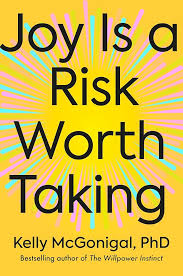
Joy Is a Risk Worth Taking
As psychologist Kelly McGonigal reveals in this paradigm-shifting book, joy gives life meaning, sustains hope, and helps us feel close to others. It is the emotion that tells us life is worth living, good things are possible, and you are not alone.
And yet, many people find it difficult to allow themselves to feel, show, or even seek joy. Instead, we worry: Is it selfish to want joy? Is joy even possible when life is hard? Instead of turning to joy as a resource, we try to protect ourselves from the perceived risks of caring too much. What if, instead, you were able to trust the feeling of joy and appreciate the good in your life? And what if you were able to help others experience the benefits that joy provides?
Joy Is a Risk Worth Taking shows that seeking and sharing joy is an act of courage and compassion, and one you can take even when life is difficult.
Resources
-
- TED/Kelly McGonigal: How to make stress your friend
- Stanford University: Embracing stress is more important than reducing stress, Stanford psychologist says
- TED Ideas: How to be good at stress
- Greater Good Science Center: The Power of Positive Emotions
- Harvard Medical School: How can you find joy (or at least peace) during difficult times?
- Harvard Medical School: Fostering healthy relationships
- The Guardian: The secret to why exercise is so good for mental health? ‘Hope molecules’
- American Psychologist: The role of positive emotions in positive psychology. The broaden-and-build theory of positive emotions
- Journal of Personality and Social Psychology: What good are positive emotions in crises? A prospective study of resilience and emotions following the terrorist attacks on the United States on September 11, 2001
- Journal of Personality and Social Psychology: Resilient Individuals Use Positive Emotions to Bounce Back From Negative Emotional Experiences
- Motivation and Emotion: The Undoing Effect of Positive Emotions
- Evolutionary Psychology: Performance of music elevates pain threshold and positive affect: implications for the evolutionary function of music
- PLoS Med: Social relationships and mortality risk: a meta-analytic review
- Psychological Bulletin: Rewards of kindness? A meta-analysis of the link between prosociality and well-being
- Journal of Personality and Social Psychology: When helping helps: autonomous motivation for prosocial behavior and its influence on well-being for the helper and recipient
2 Million Readers.
1 Life-Changing Newsletter
Simple and Straight-to-the-Point...
Just Like Mel.