Episode: 450
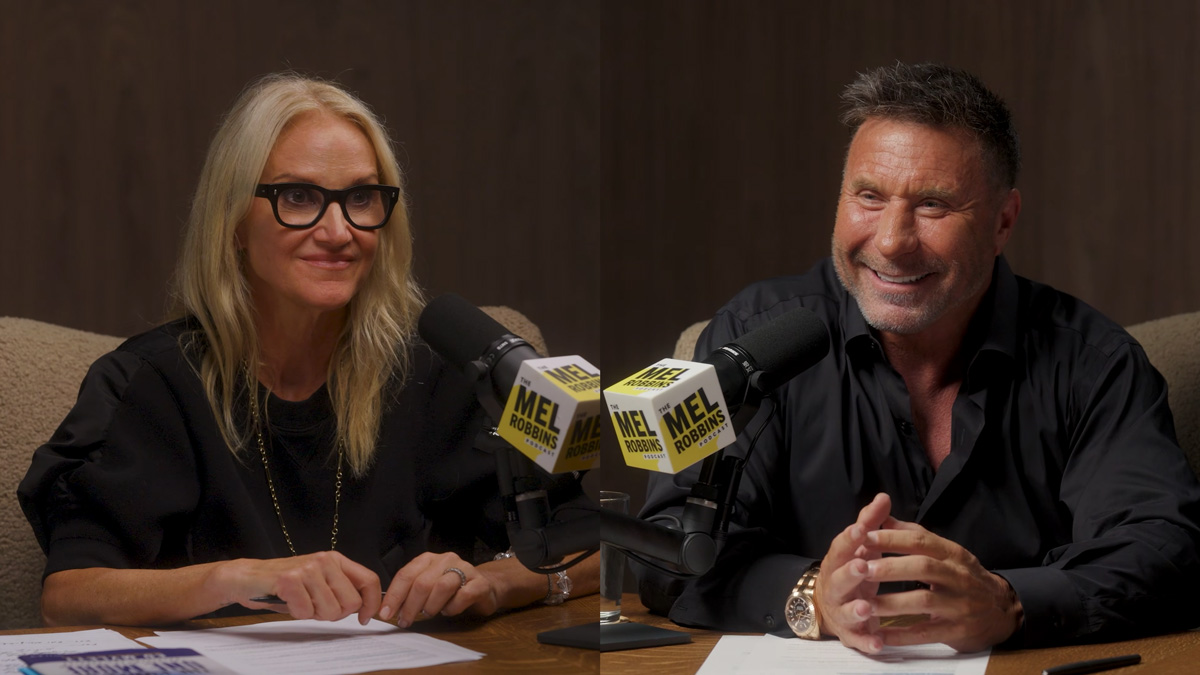
It’s Not Too Late: The 5 Shifts That Will Change the Rest of Your Year with Ed Mylett
with Ed Mylett
What if the best part of the year hasn’t happened yet?
If you’ve been feeling stuck, behind, and sick of your own bad habits, this conversation is for you.
In this powerful and deeply personal episode, Mel sits down with bestselling author, entrepreneur, and one of favorite people Ed Mylett.
Ed says building a great life isn’t about doing more, achieving more, or adding another goal. He knows:
The most powerful thing you can do is make room for the life you want by letting go of what is keeping you stuck.
Listen on:




Sometimes creating a better life is not about adding a bunch more stuff… it's about taking things away.
And when you begin to take away things, a whole new you emerges and you get a new life.
Ed Mylett
All Clips
Transcript
Ed Mylett (00:00:00):
The highlight reel of your life is not your mistakes. It's not your setbacks. It's not who left. It's not who betrayed you. It's the fact that you're still standing after they did, and that makes you incredible.
Mel Robbins (00:00:11):
Today on the Mel Robbins Podcast, Ed, this is the first interview that you've done in almost two years. What happened?
Ed Mylett (00:00:19):
I've never said this. It's pretty personal. I'm going to get more clear on what I want. I'm going to take away and pluck out of my life the things that don't serve me anymore. You are literally one decision away from changing your life, and it's not too late.
Mel Robbins (00:00:35):
The extraordinary Ed Mylett. It is such an honor to welcome you, my dear friend, Ed Mylett, to the Mel Robbins Podcast.
Ed Mylett (00:00:54):
I am so happy to be here. It is so good to see you. I love you, and I'm so proud of all you've been doing.
Mel Robbins (00:01:01):
I am so excited to have you here because when I feel down, when I feel discouraged, when I overcomplicate my life, you're the person I turn to.
Ed Mylett (00:01:11):
Oh, wow. Thank you, Mel, so much. It means the world to me coming from you.
Mel Robbins (00:01:14):
Well, that's why I wanted you here, because I feel like you have this magical ability to lift people up when they feel very low. And if the person who is listening right now feels like the best of their life is behind them, or they just feel stuck and discouraged, if they were to truly take to heart everything that you're about to share with us today from your remarkable life and the things that you've learned the hard way, what could change?
Ed Mylett (00:01:45):
Well, I think everything can change. I'm a big believer, and I know you are as well. You are literally one decision away from changing your life, and that is not rhetoric to me in any way. You're one new relationship, one new idea, one breakthrough. You truly are one opportunity, one decision away. But here's the hook. If you don't live a life expecting those one mores to show up, you're going to miss them. And all it is is a decision. Hey, I'm going to get up expecting some good crap to happen. I'm going to get up expecting someone to come in that's going to make a shift. I'm going to get up, maybe coming up with a new idea. I'm going to expect listening to this podcast today between Ed and Mel, I'm going to come up with a new idea, a new thought, a new perspective.
(00:02:24):
If you expect it, your mind goes to work on confirming that belief. You have to say, you know what? The way I've been thinking, unfortunately, has got me where I'm at. What do I have to lose by just maybe just imagining a different... You don't even have to believe it's going to happen yet. I didn't say believe it yet. We'll get to that later. It starts with imagining it. Here's the other thing I would say. You are probably already imagining things now. They're just not the things that serve you.
Mel Robbins (00:02:52):
So give me some examples.
Ed Mylett (00:02:53):
Well, I can tell you the way that I was raised with an alcoholic and a drug addict dad, and by the way, we're recording this in Boston. We were on welfare when we lived here in Boston as a little boy. So I really kind of think I know what it's like to not feel good about yourself. To this day at 55, walking in here today, I still struggle, which is amazing. I don't know if I've ever said this on any show out loud. Driving over here, I was like, "Why would they listen to me?" I still struggle with massive insecurity, self-confidence, all of those things. They're things that I don't know that I'm ever going to leave all of them. So if that was a requirement to have a decent life, I would never have one. The one thing I would say, at least in my own life, because I have felt that way many times, even recently I felt that way,
Ed Mylett (00:03:41):
When you feel the most helpless, attempt to become the most helpful.
(00:03:45):
In other words, move your frame of reference off of yourself temporarily and do whatever you can to just go serve in some way, in a quiet way. It can even be small. It can even be just calling someone out of the blue that you've not talked to in a long time and saying, "Hey, just want to remind you," which I do with you from time to time. "I love you. I'm thinking about you. "Just somehow get out of self for a second. And so when you feel helpless, get helpful. When I was at my lowest of my life, I remember thinking," I'm going to literally say a prayer for this person that's walking by me, literally on the street, just peace me with them. "And it made me feel good about me. It's like I have some value, some worth. I could tell you something, maybe it's too much, but I was with my dad when he died, Mel, and I literally held my father's hand when he took his last breath.
(00:04:30):
It was pretty personal, but we were in my dad's house, Mel, and I walked in there and immediately something dawned on me. That was my dad there, but it was not really my dad anymore. That was his body. I just knew there's more to us than our bodies, whatever your faith beliefs are, but there's a spirit to you. There's a soul, there's an energy, there's a frequency that you were put here to do something in your life that's great for a reason. You're supposed to be happy. You're supposed to get some of those dreams out of your life. You're supposed to have some memories. We were in my dad's house, Mel. My dad's car was parked in the driveway. He didn't take any of those with him. You're not your possessions. My dad had some awards literally in the room he passed away in. You're not your accolades or what other people think about you or say about you.
(00:05:21):
He took none of that with him. But there's another thing my dad had when he died that he also didn't take with him. My dad had fears, problems, worries, insecurities. None of those went with him. So you are not those things. Not only are you not your body or your possessions or what other people say about you, but you're not these worries. You're not these fears. You're not your insecurities. So at any time you can make a decision to begin to separate from them. You don't have to wait till the end like my dad did. And I say that to everybody because I think sometimes we think every condition we have is forever. Nothing's forever. This life isn't forever. So why not begin to think a little bit differently? Why not to imagine and dream because you're not going to take any of that stuff with you anyway.
Mel Robbins (00:06:10):
How did that experience and revelation shift you?
Ed Mylett (00:06:15):
You know what occurs to you when a parent passes away? You're next. I'm next. I've only got so much time here left. And so what it did for me is it made me audit my life. What matters to me? What's important? Who do I want to be when this thing's over with? I know we're getting heavy early, but it did do that for me. But the biggie for me was I'm a worrier.
Mel Robbins (00:06:41):
People wouldn't know that about you, but it's so true.
Ed Mylett (00:06:43):
It's true. I worry and I know where it comes from too, but I just think so many of the things I worried about in my life, I made bigger than they were. And I've spent so much of my life not giving myself the gift of peace that was always around me. It was always around me. And I though, man, once I get that, I can be happy. Once I get that, I won't worry anymore. Once I have enough money saved or once... I remember thinking when I was so broke and all this money on credit cards, if I could just get these credit cards paid off, if I could just get the... And I kept moving the end zone all of the time. And so when my dad died, I literally decided I'm going to enjoy the gifts that are around me. And it turns out it's the people and just looking into their eyes a little bit longer, spending a little bit more time telling them I love them.
(00:07:30):
And I know that may sound hokey, but it brings me great joy to do that in my life now. That's not that I don't think you should go for your big dreams and have achievement and make a difference. This show makes a huge difference. I'd like to think my show makes a difference in people's lives, but I don't ever want to do that again at the expense of the people around me that are closest to me. And I know you feel that way too. It's like sometimes just there are blessings around us if we'll just acknowledge them. I think sometimes we think, well, once I'm happy, then I'll get that thing. What if it's the reverse? What if you could actually feel some of the emotions of gratefulness and gratitude and joy and bliss and peace now that the things you want will find you rather than you having to go get all these things, thinking if you get them, you'll get the emotion.
Mel Robbins (00:08:17):
You said a couple things that I want to make sure that I have you unpack because they're really important.
Ed Mylett (00:08:21):
Okay.
Mel Robbins (00:08:23):
I told you when we first started talking, I said, "I think that as you're listening to this, you're going to have goosebumps because you're going to feel like this conversation at this exact moment is exactly what you needed to hear." And I already feel that way for me personally. So what you just said about your dad, because I do think a lot about time and how it's ticking and that if you're not careful, you'll miss the things that matter most because you were busy thinking you had more time.
Ed Mylett (00:08:56):
That's right.
Mel Robbins (00:08:58):
But you also said you had regrets around it, but you then recalibrated. So could you explain why that's a powerful pivot when you are brave enough to see your regrets, but then you use the regret to recalibrate how you move forward?
Ed Mylett (00:09:16):
There's two things that move you I found in this life. One is moving towards pleasure and dreams. The other one is moving away from pain. Sometimes this pain can kind of be a gift in the sense that I'm not a big drinker. I have a cocktail as you know, but I'm not a big drinker. And one of the reasons I'm not is because of the pain of watching my father do too much of it. So some of these things actually that are brought into our life can teach us a lesson. I'm a big believer that at any stage of your life, you have full permission to re-audit it and just ask yourself, "Is this still my dream? Is this still what I want? Is this still serving me? I have an island." There was these two bald eagles on the island, Wilma and Fred, and they were there about 15 years before I bought it.
(00:10:00):
I found Fred one day under a tree and he was struggling and I put some food out and he didn't come out before. I finally came out and I though, "Something's wrong. I don't know bald eagles very well, but something's wrong." We called the bird sanctuary and about two days later they had to put him down and he went to heaven. Afterwards, the lady from the bird sanctuary came out and she said, "Just so you know, Wilma will go soon. Usually when they lose their mate, they'll go soon." About five weeks later, I'm taking a walk and I'm hearing this banging against the rocks like a woodpecker, and I'm like, "What is going on here?" And I look and it's Wilma literally ramming her beak into these rocks and I'm like, "Oh my gosh, she's trying to take her life." And then I saw her about five weeks later and she had half her feathers and I'm like, "Oh no." So I called the lady from the bird sanctuary and she says, "Let me come out." The lady from the bird sanctuary begins to cry pretty heavy.
(00:10:55):
I said, "What's going on?" She goes, "Oh my gosh, she's doing it." I said, "What's that?" She goes, "Ed, about 5% of the time when they lose their mate, they'll go through a complete remaking of themselves. And what they do is they have to first sharpen their beak." So that banging on the rocks, she was sharpening her beak. And then what they do is she's plucking all the feathers off of her that no longer serve her.
Mel Robbins (00:11:21):
Oh my God.
Ed Mylett (00:11:23):
And what will happen is new ones will grow in and she would add about 10 years to her life. And sure enough, she ended up coming back about six months later. All of these feathers were back. She ends up finding a new mate. She's had three babies. They lived there on the island. She's remade her life. The lesson is sometimes in life, it's not about adding a bunch more stuff, it's the reverse. It's about re-auditing and saying, "I'm going to sharpen my beak. I'm going to get more clear on what I want. I'm going to take away and pluck out of my life the things that don't serve me anymore, the beliefs that don't serve me, maybe some of the relationships that are toxic that don't serve me anymore, the environments that I'm in." And when you begin to take away things, a whole new you emerges and you get a new life.
(00:12:04):
And that's what happened to Wilma, and that's sort of what happened when my dad passed.
Mel Robbins (00:12:09):
How long ago did your dad pass?
Ed Mylett (00:12:10):
Three years, three and a half.
Mel Robbins (00:12:12):
And you said you did an audit. So is there a specific way that the person listening can take audit of their life?
Ed Mylett (00:12:19):
Simple. I actually wrote down the things that I though I wanted in my life. I made a list of the things that I wanted in my life and I actually literally ranked them on what juiced me anymore and that when life was over, which one of these am I going to... And I got to the point where here's my new thing in my life. What do I want to leave here? And for me, what I want to leave here is I want to leave here great memories with my family, great dreams with my family, far deeper relationships with my friends. And I also want to leave here feeling like I used to say, max out your life, get everything. And to me, that meant climbing. To me now, the biggest commodity in my life is people and time. And so I made a list of the things and I found to myself that a lot of the things that I wrote down didn't juice me anymore.
(00:13:02):
And then what I did, here's the biggie. I wrote down what I was afraid of because although maybe people might not think this, I'm loaded with fears, loaded with worries, loaded with anxiety. And so I wrote those things down and I began to ask myself, how real were they? And once I wrote them down, they lost a lot of their power over me. I became really aware of how silly most of these things were that I was worried about simply by writing them down, getting them out of my mind and onto a sheet of paper tactically is what I did different. I'm like, "That's hilarious. That one's dumb. That one's valid. That one's maybe. Maybe that one. This one's never going to happen, dumb dumb. You've been carrying this one forever and writing them down almost like they were thoughts I had. They were not me once I put them on the paper.
Mel Robbins (00:13:47):
Ed, this is the first interview that you've done in almost two years and you have millions of people that follow you online, millions of people that listen to your podcast and have for 10 years. What happened?
Ed Mylett (00:14:04):
Well, the big thing that happened, I had two, what I would call, we'll call them cardiac events. And that was God awakening me like shake like, "Okay, you're not going to hear what I'm telling you. You're not going to slow down. We're going to physically slow you down." But the other part of it, Mel, honestly, was that during that exact same time though, I was already evaluating what do I really want anymore? We had dinner the other night and I'm like, "Gosh, I say yes to a lot of dinner." And then it's the night of the dinner and you're like, "I wouldn't be brokenhearted if they canceled." You know what I'm saying? There's so many things in my life at this. I really am on this thing now where I don't think success is about adding more. People are tired. They're tired, they're fatigued. And what I'm saying is I don't think it's adding a bunch of stuff.
(00:14:50):
I think it's making room for stuff.
Mel Robbins (00:14:54):
What's the difference?
Ed Mylett (00:14:55):
The difference is cleaning out your closet. We just moved and I had to clean out my closet. Had all this stuff in my closet was loaded with all this stuff. 90% of the stuff I don't wear is weird, is outdated. I'm keeping it around because it's going to come back someday. And once I took all this stuff and it was very hard, I'm practically a hoarder, all this stuff out of... I have tennis shoes, like 15 years old, very malodorous tennis shoes I'm never going to wear again, but somehow if I lose the pair I've got, I'm going to wear it. It was silly and I got rid of a lot of it. I'm like, wow, first off, this closet's way bigger than I remember it being, and there's room now in my closet to add one or two things that are quite good looking that I would actually wear.
(00:15:39):
Once you start to eliminate thoughts that don't serve you, maybe a couple people, some relationships, maybe it's a habit or two you have. When you remove them, now you've created some space. Oh, now I can add one or two things that do serve me. So that was sort of the process for me. It also gives you some clarity like what matters now? There's this space in my life to think and breathe. And by the way, I know a lot of people are like, "Man, I got to pay this bill. I've got this thing. I've got my kids to soccer. I've got my grandkids over here.
Mel Robbins (00:16:08):
I've
Ed Mylett (00:16:09):
Got this." I 100% do that. That's why you got to fight even harder for clarity and space. And a lot of it is probably thoughts that ruminate in your mind that you have picked up that do not bring you peace. They bring you chaos, stress, and tension in your life. And it's giving yourself the gift of some spring cleaning of the closet of your mind. And most of this you're not going to take with you anyway. So evaluate it, audit it, give yourself... You can literally start a life over at any point you want, even in the worst time. Wilma started her life over when it all was going away. She lost her home. She had lost the man of her dream. She had lost her life. It was almost over and she went, "You know what? I'm going to sharpen my beak. I'm going to create some space.
(00:16:57):
I'm going to get rid of these feathers that don't serve me anymore." And I think it's such a crazy metaphor, but it literally allowed her to soar and to fly again in her life. It wasn't adding stuff. It was eliminating stuff.
Mel Robbins (00:17:08):
What I love about what you're sharing about the recent revelations that you've had is that there is so much that takes up space in your mind and in your life that actually isn't helpful and isn't important to you.
Ed Mylett (00:17:27):
Amen. That's right.
Mel Robbins (00:17:28):
So if you were a huge worrier and still are.
Ed Mylett (00:17:33):
Oh, I can help all the worriers.
Mel Robbins (00:17:35):
So for the worrier that's listening that isn't even aware, Ed, of how much space worrying is taking up, you mentioned that you have a sense of peace that you haven't had before.
Ed Mylett (00:17:48):
Yeah.
Mel Robbins (00:17:49):
What's the first thing that you could do if you're lost in your mind, you're behind enemy lines?
Ed Mylett (00:17:55):
I think the reason that I worry is my dad worried. And let me tell you the biggest reason why I stopped. I think with children, things are caught, not taught. I caught that from my old man, and I decided once I had my cardiac events that I no longer wanted my children to catch this from me. I think very few people will make changes for themselves, but they'll make big changes for the people that they love. And this way you are being, this worrying you're doing, this ruminating of thoughts that don't serve you, just so you know, it doesn't just affect you. It's affecting your children. It's affecting your spouse. It's affecting everybody around you. There's a frequency to those thoughts and it's reducing the frequency. See, my dad's drinking. There was a lot of things wrong with my dad's drinking. Obviously there's abuse that comes with it, but you know the number one thing?
(00:18:44):
I told my dad this once he got sober. I used to worry about my dad. I'd worry about him. Is he going to come home? Is he going to be in a car accident? Are mom and dad going to get divorced? Is dad going to hurt himself? Is dad going to hurt anybody? So from the age of a little boy, I learned to worry about my dad. Those of you that are worrying, okay, not only is it affecting you, it's affecting everybody around you. This is picked up. It is caught. It's not taught and you can't hide it. And so the first thing I would tell you is if you won't do this for yourself, you need to do it for the people that are around you. And the technique to stop worrying is to actually look back on your life and realize that 99% of the things you worried about never came to fruition, were never as bad as you did.
(00:19:26):
Worrying allows you to live through an event multiple times that even if it happened, should only happen to you once. So even the 5% or 1% of the things I worried about, Mel, that actually did happen, which I'm pretty sure I created them by worrying about them all of the time, I actually lived through them hundreds of times instead of the one time I had to. So I lived through it over and over and over again, and then it happened and then I lived through it again. I used to think if I just worry about this enough, it won't happen, or when I get there, I'll be prepared. Turns out that's not true. If crap's going to hit the fan, crap is hitting the fan. But I lived the bad events of my life hundreds of times as opposed to just the one time when it actually happened.
(00:20:07):
So not only did most of the stuff I worried about never happened, but when it did happen, it was hundreds of times my body, my spirit, my heart. Do you think it's by coincidence that this guy who worries all the time, who carries all this insecurities, heart broke down in his early 50s? My heart broke down. I physically think my heart just could not take any more stress. Right when I wake up, first question I ask myself, what do I need to worry about today? What am I going to get done? What could go wrong today? Now this is someone who millions of people listen to to better their lives. But if I'm being honest, I was always moving away trying to get away from these worries, and I'm really happy to tell everybody that that can change and has changed for me. I worry from time to time.
(00:20:57):
That guy rears his head every once in a while, but I know to slap him back now pretty good by feeding him the thoughts that do serve him and writing down the ones that are silly and they lose their power over me.
Mel Robbins (00:21:07):
That's the tool.
Ed Mylett (00:21:08):
Yeah, that's my tool.
Mel Robbins (00:21:09):
If you could literally go back in time and say, "Hey, dummy."
Ed Mylett (00:21:11):
Write it down.
Mel Robbins (00:21:12):
Just write down all this stuff in your head and you're going to see in the piece of paper how stupid half this stuff is.
Ed Mylett (00:21:19):
Not half, 98%. 98%. In my case, 98%. I'm a professional worrier.
Mel Robbins (00:21:25):
Well, the best thing about this advice is it's free. You take out a piece of paper.That's
Ed Mylett (00:21:29):
Right.
Mel Robbins (00:21:30):
Just write all the stuff keeping you awake at night, notice how dumb half of it is. And then do you write down the things you want to believe?
Ed Mylett (00:21:37):
I do. I write down the things that I want to believe, which for me is... Can I show you a prop on it?
Mel Robbins (00:21:42):
Sure.
Ed Mylett (00:21:43):
Okay. The number one way that I think you can shift yourself is that you have a thing inside of you called your identity.
Mel Robbins (00:21:49):
Okay.
Ed Mylett (00:21:49):
Okay. So when I use that term God, you kind of weave in whatever your beliefs are. I believe next to God, the most powerful force in the world is to be consistent with the way you view you. So your identity is like your thoughts, beliefs, self-concept, et cetera. Here's what I found out about at least me.
Mel Robbins (00:22:06):
Okay. Okay.
Ed Mylett (00:22:07):
If that thing is set at 75 degrees, like we're in the studio, it's probably about 75 in here right now. Externally, what's going on does not dictate the temperature in here. This place is set at 75 degrees. The external does not matter. I think it's probably about 85 degrees here today while we're doing this.
Mel Robbins (00:22:23):
Oh, outside the studios?
Ed Mylett (00:22:24):
Yeah.
Mel Robbins (00:22:24):
Okay.
Ed Mylett (00:22:25):
That's nice. Outside the studio, let's say it's 85 degrees. That does not affect the temperature in here because what happens? When the external happens, this thing turns the thermostat on, kicks the air conditioning on and regulates it back to what it's set at. Okay. That's our lives. You have multiple thermostat settings in your life. You have one for love, you have one for peace, you have one for money, you have one for fitness, and whatever that thermostat setting is, that identity you have, you'll do everything in your power subconsciously and unconsciously to get your thermostat of your life back to that setting. So that's why so many times in life you'll see people, they do pick up a new habit. They got a new tip on the show. They've listened to something, but if they're at 75 degrees, let's just say of mental health, that I'm set at 75 and all of a sudden, man, I'm feeling some peace.
(00:23:11):
I'm feeling some joy. I'm at 85. I'm at 90. I'm at 100. Things are going great. If you don't change what you believe you're worth, if you don't adjust that thermostat setting that 85 or 90, over time, you will turn the air conditioner on of your life and you'll cool it back down to what you believe you deserve to get. There's one lead character in this sucker, you. And if your thermostat setting of happiness is 75 degrees, you can change all the external conditions you want. You're going to be at 75 degrees. You will turn the air... By the way, you'll also turn the heater on. If it gets really, really bad, you probably won't starve. You'll turn the heater on and get it back up to 75 degrees. The key is adjusting what you believe you're worth, what you deserve in life. If you don't change these thermostat settings, it's everything.
(00:23:53):
It's the governor. So the reason Ed Mylett worried all the time, I got about a 50 degree piece thermostat most of my life. So of course, no matter how good my life got, no matter what was going great, I'll find a way to get my stress. I'll find a way to get my worry.
Ed Mylett (00:24:07):
We all have five, six emotions that are our dominant emotions.
Mel Robbins (00:24:11):
What are they?
Ed Mylett (00:24:11):
Well, there's different for each people. So for me, I think my primary emotions are stress, worry, anxiety. Those were my dominant ones. When I was younger, anger. And so no matter what happened in a given week, I'll find... By the way, these emotions, when we have them, even if they don't serve us, we're going to get them. Why? They're familiar. Our brains and our minds want to constantly move to what's familiar because it conserves energy. So the key thing for me in my life is I'm going to stop worrying about getting stuff. What are the things I want in my life to feel? I want to feel more peace. I want to feel more ecstasy, joy, bliss. I want to have more optimism in my life, abundance in my life, and I've made those my intentions, and over time I shifted what my lens delivers to me.
(00:25:07):
And so now my lens doesn't always deliver to me the familiar. I used to brag, "I'm amazing under stress. Man, you watch me under stress, I'll function." At one point, my wife goes, "Do you think that's because you constantly find a way to bring it into your life? No matter how good it's doing, you got to find a way to get..." I was like, "Gosh, you're really right." So these emotions that may be familiar don't serve us. Here's the good news. Your past doesn't equal your future. Writing down the emotions you want and the ones that you're most familiar with is really an incredible process in your life.
Mel Robbins (00:25:37):
We haven't talked about this, but I had a very similar revelation where if I were to list the dominant emotions that I would feel any week, I would say this would be in my late 40s, like peak misery, it would be anger and frustration, anxiety, fear, jealousy, and I kind of need six because there was a lot of insecurity in there, but there was also this sense of I'm in it alone. Kind of that I'm on the outside, I have to do this on my own. It's all on me.
Ed Mylett (00:26:15):
How'd you change it?
Mel Robbins (00:26:17):
You said that you either move toward the positive or you move away from the negative. If I use your thermostat example, which I'm just learning for the first time, what I would say is I got tired of freezing because I said to my... I don't want to be this person and I'm not stuck as this version of myself, but there is absolutely nobody that's going to do this for me and there's nobody stopping me from changing either. And so I love the analogy of the thermostat because if you realize that you're freezing in your life, using this imagination to dial it up and then asking yourself, if I'm at a 75 or an 80 or a 90, what are those emotions that I'm going to feel? And you could start there. And I think it goes back to also one of the things that you said, that if you feel stuck or helpless in your life, go help somebody else because just the act of helping somebody else, opening a door, smiling, saying a silent prayer, whatever it may be, volunteering in your community, it gives you hope that there's something more for you.
Ed Mylett (00:27:24):
Yes.
Mel Robbins (00:27:25):
And that's like the dial going up and showing you that something else is possible. Let me tell you about Verizon's brand new simplicity plan. It's one plan, one price, $30 a line per month, even for a single line with their best 5G network for all. That's it. That's the plan. And when it comes to your phone, you can do what works for you. Already love your phone? Great, keep it. Or it's easy to buy a new one, or you could upgrade to the newest phone every year for a monthly charge. So let's get this straight. One plan, one price, $30 a line per month, plus your phone, your way, and their best 5G network. I guess the simplicity plan is just that. Super simple. Maybe that's why they named it that. One plan, one price, and the best network for everyone. Switch to Verizon today.
(00:28:17):
For new customers, $30 a line includes autopay and switch discount. Additional taxes, fees and terms apply. Unlimited data is restricted to on-device smartphone usage, domestic data roaming at 2G speeds.
Mel Robbins (00:28:32):
I'm curious, Ed, you talked about your dad's sobriety. You also write about it in your number one blockbuster, the power of one more. How did that impact you, your dad getting sober?
Ed Mylett (00:28:47):
I think when you grow up with any dysfunction, divorce, stress in your home, yelling, drugs, alcohol, which I had the combo, not the divorce, my parents stayed married. You carry a little piece of it with you all your life. I'm driving to a little league game. My dad, who was an aggressive, I would even say, I think I can say in my father's honor because he came a beautiful, wonderful man in sobriety. My father was, I would even call him violent. And we're driving to a little league game, I'll never forget it, Mel, and my dad's crying driving the car. I'm looking at my dad like, "What the heck? What's going on here?" Pulls the car over. He's still tearing up and crying and not looking at me. And then he turns to me when he says one more. It's why it always stayed with me.
(00:29:26):
He goes, "Eddie." I said, "Yeah, daddy." He goes, "I'm going to try to get sober one more time." And he looks at me and I said, "You are?" He said, "Yeah, son." I said, "Dad, why would this be any different than the other times? You've tried a lot of times." And he goes, "Well, Eddie, I think sometimes in life you got to give everything one more try. I think it's a huge lesson just because it hasn't happened before. You're one try away." And then he goes, "I think this is the key to life." He goes, "Eddie, he never said this before the This day, Mel, he goes, "I love you and you deserve a dad you can be proud of. That's why I'm going to try harder this time." What my dad did is he linked his love for me and my sisters and my mom to making this change in this decision.
(00:30:18):
And I'm a believer that love is the most powerful of all emotions. It overrides fear. It overrides anxiety. It overrides stress. It overrides worry. If you want to
Mel Robbins (00:30:28):
Make
Ed Mylett (00:30:28):
One of these changes in your life, you've got to link it to your love of someone else that you care about, your love for yourself or your love of God, and you link that. And if you could truly make that connection, it will be bigger than your fear. But if you don't link it to something bigger than that fear, bigger than that worry, bigger than that, I'm not good enough, what are people going to think about me? What are they going to say? I'm probably going to fail again. I've always been average. I've always been ordinary. That's just who I am. If you don't link it to something bigger than that emotion, it's probably not going to happen. My dad finally anchored it to the love of his family and that love, thank God, was greater than that addiction, was greater than that desire to go do something that didn't serve him.
(00:31:11):
But the crazy part, when my dad got sober, he came back from rehab. He looked good. I went, "Dad, are you never going to drink again?" And he says to me, I'll never forget it, Mel. He goes, "I can't promise you that, son." And I remember feeling disappointed. He goes, "But Eddie, here's what I can tell you. I'm not going to drink for one more day at a time." And my dad stacked up those one more days the rest of his life. Never had another drink, never used another drug. Why does that matter? You don't have to make huge big decisions. You just got to decide for today. My dad every day made this decision. I'm not going to drink. I love my family more than I want to drink. It doesn't have to be this huge monumental thing. It's just today. It's just today.
(00:31:56):
When my dad died, I woke up in the middle of the night one night crying, surprised me. And my wife's like, "What's going on? It's the fog of night." And I'm like, "Someone helped daddy." She's like, "What are you saying?" And I said, "I can't believe I never dawned on me before." I'm like 52 years old. I go, "My dad didn't get sober alone. Someone helped my dad." And by the way, the night my dad got sober, he was going to take his life. I remember we were at the church. The police were looking to find my father. He was going to kill himself that night. And I said, "Someone intervened and helped my dad. They changed our whole family. They saved my dad's life. They saved our whole family. I'm probably kind of a speaker and a coach because of this person. They don't probably know I'm his son." The ripple effect of helping one human, my dad, I got to find him.
(00:32:44):
And I found him. I found the guy. I can't tell you everything about him because it's an anonymous program my dad was in, but God's got a funny sense of humor. My name's Ed, not a cool name. My dad's name's Edward, not a cool name. My grandfather was Edward. This dude's name, Ed. God's just up there laughing at all of us, right? That's not the coolest part of the story, Mel. Here's the cool part. What qualified this man to help my dad? What were his qualifications? You think he was a perfect resume, never sinned, never made a mistake? No. You know what his qualifications were? He was also a drunk. He had also been a drug addict. He had also been a liar. He also lived in the shadows. He had also carried shame the majority of his life. The reason that that qualified him is you're most qualified in life to help the person you used to be.
(00:33:39):
We think in life that our biggest setbacks, our biggest mistakes, our divorce, our financial mistake. Heck, it may not even be any of that. We just think we're disqualified because we've always been average. We've always been invisible and nothing could be further from the truth. Those are the very things that qualify you to help somebody else. And living a great life may not be on Instagram or having your own show or having an island or a jet. It might be like in a really quiet moment when no one's watching, you're helpful. That man, by the way, was only sober 31 days, the day that he helped my dad. So you don't have to have it all figured out. You don't have to have a whole big old plan. You don't have to know every single step. There's 12 steps in that program. This dude didn't even know what the fifth step was because he hadn't done it yet himself.
(00:34:29):
You don't have to have it all figured out. What you have to have is a heart that says I want to help people and I'm not disqualified because of my mistakes or my setbacks or my failures. In fact, those are the very things that do qualify me. My dad went on to help about 4,000 people get sober himself because you're most qualified to help those you used to be. You start to look at your life very differently. What if all of this stuff has happened to literally prepare me for this decision I'm about to make to change my life, that I'm not going to hide from my failures or my screw ups or my averageness or my invisibility. It's actually what qualifies me the most to do something great in my life and that's to help other people. And that's what you were born to do.
(00:35:09):
It's the greatest lesson of my life is watching this Ed help my precious Ed so that I'm actually here today with you, hopefully helping one person as well. That's the ripple effect.
Mel Robbins (00:35:17):
It is my most favorite thing that you say by far. You're most qualified to help the person you used to be.
Ed Mylett (00:35:24):
It's true.
Mel Robbins (00:35:25):
For the person who's listening that still is having trouble kind of believing that, what would you say to them?
Ed Mylett (00:35:33):
That's the biggest question in the world. I will flip it on you. Then why else are you here? Then why else are you here? There's a reason that you're here. I'm really good at this because I've screwed up so many things in my life. I'm immensely qualified. You want to talk about worry and screw up? I can do that. You want to talk about screwing up financially? We can do that. You want to talk about being a jerk? I'm qualified for that one too. I can anger, whatever you want, pick a topic. I'm pretty much, I've messed it up. You know the truth is those times in your life where you have helped someone or you did encourage somebody, you feel so good about yourself. You feel at home. You can't worry fear or stress in the moments when you've made a difference for somebody else.
(00:36:14):
So you've already done this in your life and you're a good person and you don't give yourself enough credit for being a good person. I'll tell you a quick thing. My mentor in my life was Wayne Dyer. If you don't know who he is, my friend listening to this, you should go look him up. But I'm running on a beach in Hawaii. I'm 30 and I'm kind of doing okay in life and I'm running down this beach. It's like 6:00 AM. This guy's got no shirt on, he's running towards me. It's a bald guy, but he's got a hairy back and I'm like, "Oh, I'm going to have to bump into this dude." And I avoid him and he runs by me and I'm like, "Oh my gosh, that was Wayne Dyer." Wayne Dyer would be like Mel Robbins right now.
Mel Robbins (00:36:49):
Oh, that's not true. Wayne Dyer, are you kidding? Is like a legend. His book sold like 40 million copies or something. What is his book called?
Ed Mylett (00:36:59):
Yeah. The Let Them Theory, I think. But anyway, pretty much Mel Robbins right now. So anyway, so he runs right. I think he just described you. So he runs right by me.
Mel Robbins (00:37:09):
I don't have a hairy back.
Ed Mylett (00:37:11):
You do not have a back.
Mel Robbins (00:37:11):
I just waxed. That's why.
Ed Mylett (00:37:13):
Love it. So we're wearing Sony Walkman, that's how long ago it was. And I take my Walkman off and I go, "Dr. Dyer." And he stops and he turns around, he's got his headphones. He goes, "Yeah." I go, "You changed my life." And he goes, "I doubt that. I bet you changed your life, but how did I help?" That's what he said. And he walked towards me and we sat on the beach. You imagine this? And we watched the sun come up together. But here's the lesson from the conversation. At the end of it, he goes, "Ed, you're going to live a great life. In fact, I think you're going to change the world." Now, at the time, I'm thinking he has definitely never said this to anybody else. Looking back, he may have said that to everybody. He said, "Ed, the reason you're going to have a great life and make a huge difference is you're a good man." And he stopped.
(00:38:04):
He had blue eyes, very similar to my dad's. That was the first time, Mel, in my life, in 30 years at that time, someone gave me a compliment that I believed.
(00:38:16):
He'd have told me I was talented or smart or... I didn't believe any of that. But he said, "I think you're a good man. I kind of believed that." And he goes, "I want you to always get your confidence from your intentions, Ed. You intend to do good. When you walk into a big speech, focus on your intentions to help. When you walk into a one-on-one meeting, I want that confidence to come from you. Remind yourself, I intend to do good. I intend to make a difference. My intentions are good." He goes, "You should beam with confidence over your intentions, Ed, not your ability." And I got to tell you, walking into the podcast today, any speech, if you asked me, "Hey, you're so smart, you're so this," I'd come in here really insecure, but I feed myself with my intention. And I would say our friend listening to this, you know what?
(00:39:01):
You can shift your confidence in an instant with your intentions. Remind yourself you are a good person. You do want to make a difference. You do want to help. You should be beaming with confidence because of your intention. Now I didn't know he's writing a book called The Power of Intentions literally at that time, but I have to tell you, I have walked through this life with all these insecurities and all these worries, but in the moments where I need it, I'm a pretty confident dude.
Mel Robbins (00:39:24):
What's really cool about that story is he was previewing the lesson that you learned when your dad died.
Ed Mylett (00:39:30):
Wow. I never thought about that. You're right.
Mel Robbins (00:39:51):
You are a good dude.
Ed Mylett (00:39:57):
I never thought about that.
Mel Robbins (00:39:58):
What comes up for you when you think about that?
Ed Mylett (00:40:12):
I wish I would have given myself a lot more grace in my life. So I did heed that lesson in the big moments, like before a podcast or a speech or whatever, a business meeting or something, but not every day of my life, not the majority of me walking around with me. Me walking around with me, I wish I would've given myself a whole lot more grace every day of my life. Just remind myself you're a pretty good guy. Everything will be okay. And I didn't give myself that grace. And as a consequence, I probably hurt people around me, probably hurt my friends. I'm sure all those relationships could have been a lot deeper had I been more present instead of worrying about all the things I was worried about all the time. So I also just think of I can't ever get one of those days back with my dad.
(00:41:11):
I would love to have just had more time with my dad and told my dad when he was here, how much I love him, how proud I was of him, how much I cherished him. There's so many times people we love, they just walk in a room and you don't know when the last time they're going to walk in that room is. We act like they're going to keep walking in a room. My sister gave birth to twin identical boys about a year ago, Cassius and Justice, beautiful boys. And about an hour after something happened with Cassius, something wasn't good. And the doctors came in and grabbed him and about an hour later they came back in and told us that he had passed. And in fact, my sister named the twin that survived justice because now it's just us. We don't know how much time we have.
(00:42:05):
Cassius got one hour. We all act like we're going to get around to being happier. I'll get around to telling my dad how much I love him. I'm going to get around to calling Mel and just saying, "Hey, are you okay?" I'll get around to it. I'll get around to giving myself some joy. I'll get around to having some peace. I'll get around to making that one memory in my life. I'll get around to it. Until you don't, you don't know when the last time someone's going to walk in a room that you love. You don't know when the last time is the last time. I should have just given myself the gift of fully enjoying it. This is awesome, isn't it? Let's just take it all in, not like, where do I got to go next? Well, what about this? You know what I'm saying?
(00:42:42):
Just enjoy these moments.
Mel Robbins (00:42:44):
Yes.
Ed Mylett (00:42:44):
None of them that cost any money. None of the good ones have cost money. It doesn't cost any money when my mom walks in a room. It doesn't cost any money to just have a great conversation with God alone. It costs nothing. And yet I'm waiting around to getting around, aren't we, in our life?
Mel Robbins (00:43:03):
Well, you're not anymore.
Ed Mylett (00:43:05):
I'm not anymore. Do it now. Do it now. Don't act like you've got forever. Right now, take some action on something we've talked about today. Like now, like now, a small one. Take a step, get some progress, move the car a little bit. I can't teach you to drive a parked car. Get moving. Just do something.
Mel Robbins (00:43:24):
You gave the most powerful tool on the planet, and I want to make sure that as you're listening to Ed, that you really grab this and you start to use it. When you double down on your good intentions, it doesn't mean you're always going to get it right. It doesn't mean you're going to succeed. It doesn't mean you won't inadvertently hurt people or piss them off because you don't do what they expect. But if you know your intentions and you know they're anchored in your values and doing the best that you can and trying to be a good person, that is the single best and most powerful way to start to build confidence in yourself. And I have gotten to a point in my life where I used to be crippled by criticism or crippled by what people might think or crippled by public perception or crippled by what are my friends going to...
(00:44:18):
And really knowing myself and my intentions has allowed me to move through life in a way where I know who I am and I'm proud of myself and I know why I'm doing what I do. And if people criticize me, they clearly don't know my intentions.
Ed Mylett (00:44:37):
And that's the one thing, that's why I think a lot of people make a little bit of progress and then the criticism comes and they're like, okay, I'll shrink my dream. I'll shrink myself back to your small thinking.
Mel Robbins (00:44:47):
Yes. This goes to the thermostat. You start to feel the pressure from... Are you sure you want to not drink? Are you sure you want to work on that business this weekend? You sure you want to go for that run instead of just hanging here with me and watching the game?
Ed Mylett (00:44:57):
Exactly. Yeah. Who do you think you are?
Mel Robbins (00:44:59):
Yes.
Ed Mylett (00:44:59):
All of a sudden you're happy. Oh, now you're the fitness expert, huh? And at some point in a great life, you decide, I will not shrink myself for your acceptance because this life isn't about your acceptance. It's my own acceptance. It's God's acceptance. You know the number one impact on your thermostat setting? Associations. If your five best friends eat really clean, drink a bunch of water, take a walk every day, do some stretching, if that were the five people you around, you're probably going to be a little bit more fit, right?
Mel Robbins (00:45:28):
Yes.
Ed Mylett (00:45:29):
So the number one thing that dials that thermostat down is who you're around. And so if you have to be around these people that don't serve you, you have to find a way that your self-worth is not connected to their approval, and it's a biggie.
Mel Robbins (00:45:40):
It's like a snake shedding a skin. That's why it feels really awful to step into a new chapter of your life because there are parts of you that you're shedding. And so I want to go back to intention because the more you know thyself and you know your intentions and you know the background and you know what you've put into it and you know why you're doing something, you're the only person's opinion that actually matters.
Ed Mylett (00:46:06):
I love the way you just said that. That's the crazy thing. It's so true.
Mel Robbins (00:46:11):
If you were to, in the millions of people that you've coached and inspired and the mega bestseller that you've written, if you could recommend one habit that really has that domino effect for somebody, if they're listening to you and they're like, "Okay, you're right, Ed."
Ed Mylett (00:46:26):
For me, it's moving my body early in the day.
Mel Robbins (00:46:29):
Okay.
Ed Mylett (00:46:29):
It's just a really simple thing. When I move my body early in the day, that is a catalyst habit for me because I don't like to do it. I've lifted weights for 35 years. I've enjoyed maybe seven of those days, but I've enjoyed walking out of the gym when I'm done almost every single time once I've accomplished it. So to me, why does that matter? It's one of the few areas of my life I can control. I can't control whether someone shows up for the meeting. I can't control whether we close a sale. I can't control how somebody feels about something. I can't control... I can control that I got up and I moved my body. It gives me energy. It also says to me, I'm willing to do something most people aren't willing to do, so maybe I'm going to get things most people aren't going to get.
(00:47:12):
So my catalyst habit is that. My new one, I'll give you my new one. My new one is writing. I don't like to write. I'm not a good writer, and I used to use that as an excuse. I'm not good at this. I'm not good at this. People use that as an excuse. So what? I have to get good at it because guess what happens when I write? It's a form of self-expression. I get things on paper that tell me, "Hey, what you're doing with that worry you have is completely dumb and you're wasting time on. It's not real." But it's also like in our industry, because I've got better at writing, it's stimulated more prayer. It's stimulated more thinking of content, of things I can share on shows, things I can put in books. But that moment of peace with my cup of coffee in front of me and I just write, and it's become for me a great cathartic form of expression of me just getting out of my head and onto this piece of paper.
Mel Robbins (00:48:02):
How does writing create peace in your mind?
Ed Mylett (00:48:06):
Okay. I'll tell you, for me -
Mel Robbins (00:48:07):
And I want you to put me at the scene.
Ed Mylett (00:48:08):
I'm just candidly, I get up and I get out of my bed and I get on my knees and I get on my knees and it's usually between 30 seconds and three minutes, and it's just some prayer time. It gives me perspective. So I do that. And then for me, I go do my workout first because it's a thing I don't want to do the most in the world. And then I get my cup of coffee and I sit down and I sit in the same spot. By the way, I think that spot after you do it for a while becomes a trigger, becomes an anchor to a particular state of mind. So I do sit in the same spot and I have my cup of coffee and I begin to write. It's usually about 30 minutes. And my thing is I have to write within one minute.
(00:48:43):
I have to put something on that paper. Some mornings it's a worry that I have, but it's going to be on that paper within a minute. I do do this now, I can honestly say, every day.
Mel Robbins (00:48:52):
How has it changed your mindset and worry and anxiety like this anchor practice?
Ed Mylett (00:48:56):
It's a great release for me, and I actually just write to one person. So different days I pick different people. Some days I may be writing to me in my current state of life. Some days I'm writing to young me. Some days I'm writing to my children. I'm into this new thing where I observe people and I'm in love with a particular person that I can't take my eyes off of, and it started about four years ago. I had a flight canceled and I was stuck in a delay in the airport. My eye caught this woman. I probably can't get through this without telling you this, but I write to her a lot. I noticed her and she was wheeling a trash can around and she was picking up the trash around the airport and going in and cleaning the bathrooms. I watched her and I could not take my eyes off her.
(00:49:41):
Remember, there's thousands of people walking around her and I just started to think about her life.
(00:49:48):
She looked to me to be in her late 60s. I just projected her life in my mind, but she got up that morning, probably in an apartment, probably by herself. She got up in the dark because that's when she gets up. She made herself a little breakfast. Her big hope for the day is maybe her kids will call, maybe her grandchildren will call her. Long ago she had dreams in her life, and just in my mind, this man she loved left. He left and she stayed and finished raising those kids and all these hopes and dreams she had for her life, they didn't all come together the way she hoped. She prays every morning. She loves God. She's never hurt a soul. She got up that morning, she got in her car in the dark and she drove to a parking lot. She then has to get on a bus to get to the airport with a bunch of other people in there that maybe that day is not their dream day.
(00:50:54):
No one says hello to her. No one acknowledged her. They give her a name badge. They assign her a trash can for the day. They send her off into the airport and all day long no one sees her. She's tired. She's weary.
(00:51:10):
No one says hello. No one says, "I love you." No one says, "Great job." Meanwhile, around her, everybody's on their way to their dream vacation, their big business meeting, they're chasing their dreams in their life. She goes her whole day invisible. At the end of the day, she brings her trash can back, puts the name badge on, gets back in her car, drives home, and she's just hoping her kids call. She's hoping her grand babies might call her tonight. She's going to get up and do that again. I thought how resilient she is. She doesn't complain. She just gets up every day and does what she can to make her life better. So like you would do or anybody would do, I just walked over and... You know what I found out, by the way? She's everywhere. She cleaned your hotel room this morning.
(00:52:02):
She's a he today too. He got in a truck this morning to go somewhere to pay the bills for his family. Maybe he's not going exactly where he thought he was going to be going 20 years ago, and he just wants his wife to be proud of him. He just wants to be his kid's hero, and he doesn't feel great about himself right now and he wants to be happier and he wants to... That's who I'm writing to now. I want to tell him I love you. It's not too late. It's not over yet. You have value. You matter. You the hero of my family, Mel, isn't my dad who I write about all the time. It's my mom. My mom's the one whose husband was gone many nights and she's the one who did homework with us and I never knew anything was wrong.
(00:52:43):
She's the one who went to bed most of those night when my dad was out somewhere and still made us lunch for the next day, got up and made us breakfast, took us to school, made us feel safe. She got no credit for that, no credit, but she held our family together. She was the glue. A lot of these people are the glue in their family. They were the strength. They were the quiet person who held that family together the entire time. I want to write to them. I want to say to them, "It's not over. You matter. You're a good person. Good things come from you." People say, "That's too late. It's over. I didn't make it." In many people's cases, it may be a little bit from now before anybody really appreciates what you've done, but at some point, I promise you, the people that love you, it took me a long time to figure out my dad's not the hero of our family.
(00:53:28):
It's my mom. She didn't make any of the mistakes. She didn't make any of the noise. She just loved us. She just served us every day quietly and got no credit. These are the heroes. These are the people that I want to write to, to give hope to, to give the tools to, and just to say, "Hey, I see you. You're not invisible. It's not too late. You're not disqualified. Yo're immensely qualified and you're changing people's lives probably more often every day than you realize. And you don't earn your way into heaven, you just got to get there, whatever you believe about that, but you earn the line of people waiting to thank you when you get there. And people like my mom and like Roselda, that was her name, there's a long line of people that'll be thanking them someday. So I want to write to them.
(00:54:12):
I picture her a lot when I write.
Mel Robbins (00:54:14):
What are you saying to her or to him, the guy driving the truck? What do you say to the person who's listening that really resonates with that? Because I could see myself in scenes of my own life. I could see my parents. I could see my grandparents. I often look at people when you're at a stoplight and I wonder, where are they driving?
Ed Mylett (00:54:33):
So do I.
Mel Robbins (00:54:34):
What job are they going to? What are they thinking about right now? What struggles do they have? What dreams have they given up on? What do you say to people?
Ed Mylett (00:54:42):
I do too, Mel. It's caused me to really see people. First off, the great gift of it is with everybody I'm with, I think I spend a little longer seeing them and a little less trying to make an impression on them. I used to walk in a room and go, "Here I am." Now I tend to walk in a room and go, "There you are." And what I write to them is that you're making a bigger difference in the world than you give yourself credit for. And like my mom, it's who I am. If there is goodness in me, that good me, I got from her. I caught that. She never taught it. She never got on a soapbox and said, "I just watched it every day." And I think so many of these people in life need to know, one, it's not too late and there is a dream and a memory in your life coming and you deserve it.
(00:55:47):
And what we have to do is to get you to love yourself without conditions so that we can change that thermostat setting. And the more that I can write to them and say, "Just so you know, what you're doing is the most important thing, which is helping the people you love the most, what a world-class father you are. What a world-class mother you are. Those are the most important things in life, and from there you can build something great. We have to change this." What happens with these folks that we love so much is their self-love is all... It becomes conditional, and unless they're achieving, unless they're growing, they don't give themselves the gift of the grace of loving themselves like they should have. I can't believe we've gone this deep today, by the way, this many times. And I want them to know that the chance for you and your life to make a difference in your life is to acknowledge the good things you've already done and to stop highlighting all the time.
(00:56:38):
The highlight reel of your life is not your mistakes. It's not your setbacks. It's not who left. It's not who betrayed you. It's the fact that you're still standing after they did. This thing you're carrying with you is what makes you special. You're still standing, and the fact that it's been so difficult and you've carried it with such grace, with such honor, you didn't return the favor. You didn't return the betrayal. You didn't return the hurt. You just got up every day and did what you needed to do, and that makes you incredible, and it's not too late. We can build from that place that you're at right now if you'll acknowledge it, and I want to write to them. That's all I want to write to now.
Mel Robbins (00:57:18):
Ed, I not only think you're a good man, I think you're a world-class human -
Ed Mylett (00:57:24):
Thank you.
Mel Robbins (00:57:24):
Who is changing the world for the better.
Ed Mylett (00:57:26):
Oh, thank you.
Mel Robbins (00:57:27):
And I'm proud to be your friend.
Ed Mylett (00:57:29):
I love you. I'm proud of you. Thank you.
Mel Robbins (00:57:32):
What are your parting words?
Ed Mylett (00:57:34):
I just want to remind you that you were born to do something great with your life. You were. When I was a little guy, my grandfather would pick me up. I remember my dad's missing. My grandfather would pick me up, and we had this blue van, and my grandfather worked for the Boston Globe. He was a pressman, and so he would pick me up on Sundays and we'd go get donuts and pick them up from my other cousins, but I was the oldest cousin. So anyway, he'd pick me up, we're driving in the van, and I would just look at Papa, this big guy, and he would look down at me when he was driving, he'd go, "Eddie." I go, "Yeah, big Papa." He goes, "You're going to do something great with your life." I go, "I am big Papa." He goes, "Oh, you're going to do something awesome.
(00:58:16):
You're my favorite. You're my favorite." Every time one of my cousins was born, he'd call me, he goes, "Oh, hey, cousin Peter was born." And I'd start to feel kind of jealous, and he'd go, "Hey, don't tell anybody." I go, "What, Papa?" He goes, "You're my favorite." I say that to you because if you had anybody in your life when you were a child who believed in you, anybody, your mom, your dad, a grandparent, a coach, whatever, they just looked at you. Remember them? You just felt special. You felt safe when you were with them. Remember that person? Most of you have that person in your life. My final message to you is that they were right. Maybe everybody else missed it, but they were right. They were right about you. And my challenge to you would be, make them proud of you. Make them proud of you.
(00:59:05):
If they're still here, you still have time to show them. If they're gone, honor them with the person you're becoming every day with the choices you make. Make them proud of your resilience, make them proud of your toughness. And if you never had that person, I apply for the position and I can promise you whatever your faith beliefs are, God looks at you with so much pride, so much joy, so much belief, so much love, and there's time left for you. There's time still left on the clock, and all these mistakes, all these setbacks, all these hurts, all the pain, all of those things, we're qualifying you to do something great because you are most qualified to help that person you used to be, and there's somebody somewhere who needs you so badly, start looking for them. You're one person, one decision away from totally changing your life.
(01:00:00):
So start looking for it.
Mel Robbins (01:00:03):
Ed Mylet, I love you.
Ed Mylett (01:00:05):
I love you.
Mel Robbins (01:00:06):
I absolutely love you. I am so proud of you. And I knew you as max out, Ed. I knew you pre-heart attack. And I got to say, this is the best you ever.
Ed Mylett (01:00:21):
Oh, thank you. Wow. That means a lot coming from you, Mel. So thank you.
Mel Robbins (01:00:25):
No, I mean it. I always felt the oozing goodness coming out of you, but there is this expanded capacity and depth and way that you're showing up that is absolutely incredible.
Ed Mylett (01:00:41):
Thank you.
Mel Robbins (01:00:41):
Life changing.
Ed Mylett (01:00:43):
Thank you. I'm here to help you help people. And that means the world to me coming from you. There's very few people, like we've both said, whose opinions matter and yours matters very deeply to me. Thank you so much. I loved today. This exceeded my expectations, so thank you.
Mel Robbins (01:00:59):
Well, we went deep because that's the kind of friends we are.
Ed Mylett (01:01:03):
Yeah. Thank you.
Mel Robbins (01:01:04):
And I also want to thank you. Thank you for making the time and spending it with me and Ed. Isn't he just a treasure? I hope you will share this with people in your life that you love, and you're going to do something great with your life. And I know you are because you're going to take everything that Ed poured into you to heart and you are going to use the tools and you are going to continue to remind yourself that you're a good person and good things are going to happen because you're going to make them happen. And in case nobody else tells you today as your friend, I wanted to be sure to tell you that I love you and I believe in you, and I believe in your ability to create a better life. And there is no doubt in my mind that everything that Ed shared with you was exactly what you were meant to hear at this exact moment in your life.
(01:01:48):
So please just honor it as a blessing that was given to you. And thank you for watching all the way to the end. I really love being here with you. Wasn't that extraordinary? Thanks for being so generous with that, for being a subscriber. All right, I know because he just lit you up, you want to watch another episode of the Mel Robbins Podcast? You're going to love this one next and I'm going to welcome you in the moment you hit play.
Key takeaways
You can change your life with one decision when you stop assuming what you want is far away and start expecting a new idea, relationship, opportunity, or breakthrough to appear.
When you feel helpless, become helpful: call someone, serve quietly, or do one small thing for another person, because getting out of yourself can reconnect you with your value and worth.
You are not your possessions, accolades, worries, fears, or insecurities, so you can begin separating from them now instead of carrying them as if they define who you are.
You can re-audit your life at any stage by asking what still serves you, removing beliefs, relationships, habits, and environments that do not, and making space for what matters now.
When you write your worries down, you can see which fears are real and which are thoughts you have been carrying, and once they are on paper, they can lose their power over you.
Guests Appearing in this Episode
Ed Mylett
Ed Mylett is an entrepreneur and bestselling author of The Power of One More and #MaxOut Your Life. He is known for his work on confidence, peak performance, and personal transformation. Ed is the host of The Ed Mylett Podcast.
- Follow Ed on Instagram, Facebook & LinkedIn,
- Check out Ed’s website
- Tune into The Ed Mylett Show
-
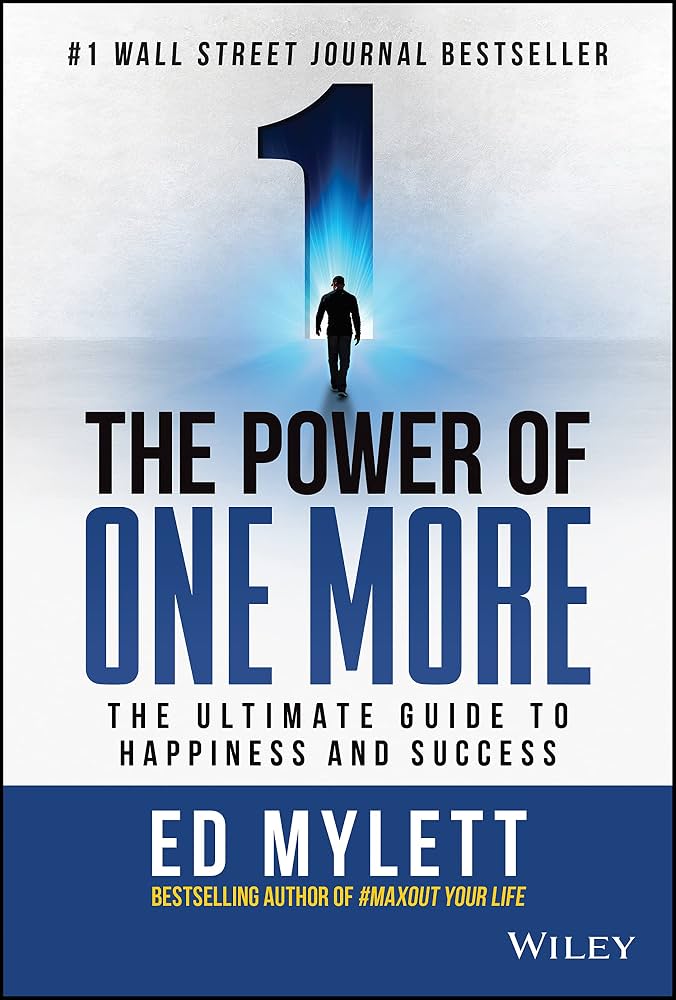
The Power of One More: The Ultimate Guide to Happiness and Success
In The Power of One More, renowned keynote speaker and performance expert Ed Mylett draws on 30 years of experience as an entrepreneur and coach to top athletes, entertainers, and business executives to reveal powerful strategies to help you live an extraordinary "one more" life.
In The Power of One More, you'll:
- Learn why you're closer to your dreams and goals than you think and why using The Power of One More strategies will help you cross the finish line in whatever race you're running
- Understand the psychology and science of how to use The Power of One More in every part of your life to help you solve problems and achieve levels of success you never thought possible
- Discover time-tested and unique solutions to challenges that will remove the mental roadblocks you've been battling for years
- Perfect for anyone who wants more bliss, wealth, or better relationships, The Power of One More is an indispensable roadmap to realizing and exceeding your personal and professional goals by tapping into the superpowers and gifts you already have inside you.
-
#Max Out Your Life: Strategies for Becoming an Elite Performer
A no-nonsense, step-by-step strategy guide to #MAXOUT Your Life and become an elite performer
#MAXOUT YOUR LIFE is for those that are serious about achieving their highest levels of life, and evolving into the best version of themselves. Strategies for:
- Creating Strong Habits and Rituals
- What is the RAS & How to Program
- Raising and Shifting Your Identity
- How to Truly Build Self Confidence
- Elevating Your Physical Body
- Goal Setting Strategies
- Developing Your Will to Win
Become the ultimate and best version of you. The YOU that you were BORN TO BE.
About Ed Mylett:
Ed Mylett is a global keynote speaker on peak performance and is considered one the most inspiring speakers of our time.
He is also the host of the critically acclaimed and top-rated podcast MAXOUT with Ed Mylett. Ed has been sought after, and privately mentored many of the top professional athletes, entertainers and business executives in the world for over two decades. He is considered the success and fulfillment whisperer for elite achievers in helping them to perform at #MAXOUT levels of their lives.
He is one of the country's top 50 wealthiest under the age of 50, and is acknowledged for building one of the largest financial organizations in America today. He has been recognized by multiple publications as the fastest-growing business personality in the history of social media, and continues to connect and mentor top entrepreneurs through the Arête Syndicate.
He has decided to share the strategies and techniques used for elite performers publicly with the world.
Resources
-
- Psychological Science: Writing about Emotional Experiences as a Therapeutic Process
- American Psychological Association: Grieving the midlife loss of a parent
- Journal of Marriage and Family: Recent Parental Death and Relationship Qualities Between Midlife Adults and Their Grown Children
- European Journal of Psychotraumatology: Bereavement, post-traumatic stress and post-traumatic growth: through the lenses of positive psychology
- Psychology Today: How Contemplating Our Mortality Can Lead to Transformation
- Harvard Gazette: Harvard study, almost 80 years old, has proved that embracing community helps us live longer, and be happier
- Addiction Center: How Growing Up With Alcoholic Parents Affects Children
- Forbes: Four Ways To Overcome The Arrival Fallacy: From A Psychiatrist
- American Brain Foundation: Managing Negativity
- Mental Health America: How helping others helps you
- Anxiety & Depression Association of America: Gratitude - A Mental Health Game Changer
- Greater Good Science Center: The Science of Gratitude
- Current Directions in Psychological Science: Making Meaning out of Negative Experiences by Self-Distancing
2 Million Readers.
1 Life-Changing Newsletter
Simple and Straight-to-the-Point...
Just Like Mel.