Episode: 453
How Did Your Parents Mess You Up? My Daughter Got Brutally Honest About What I Got Wrong
with Sawyer Robbins
Have you ever wondered what your kids really think about the way you raised them? Or why your own parents did some of the things they did?
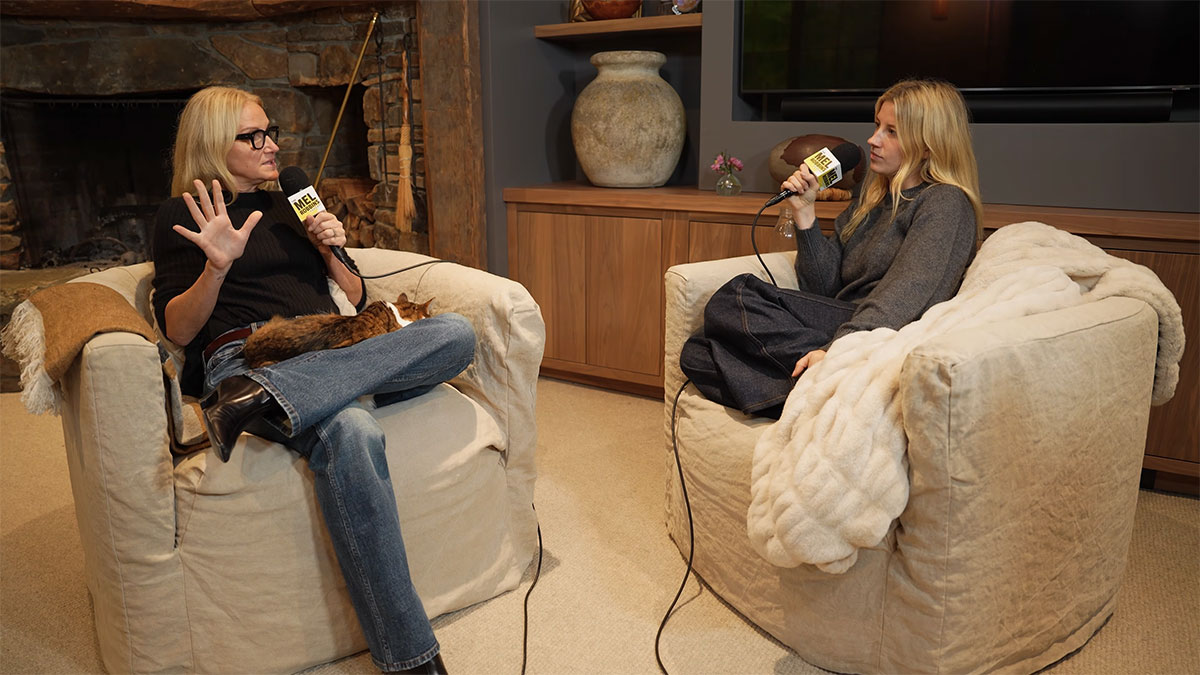
Mel Robbins sits down with her oldest daughter, Sawyer Robbins, co-author of The Let Them Theory, for a funny, brutally honest, and surprisingly emotional conversation about parenting, childhood, and complicated family relationships.
Sawyer doesn't hold back. She tells Mel what she wishes she'd done differently as a mom, while Mel opens up about her biggest regrets, the mistakes she's still making, and what raising three kids has taught her.
Together, they explore how your childhood shapes the way you communicate and show love, why parents and kids can drive each other crazy, and what it takes to break old family patterns.
Whether you're a parent or an adult child, you'll walk away understanding your family differently and knowing how to build a closer relationship with the people you love.
Listen on:


The hardest part of saying no is not the word. It's tolerating your kid's reaction.
Mel Robbins
All Clips
Transcript
Mel Robbins (00:00):
The last episode that we dropped, you asked me a bazillion questions about love and relationships. So this episode, what topic are we covering?
Sawyer Robbins (00:07):
We are covering parenthood. What parts of your own childhood did you want to recreate for your kids?
Mel Robbins (00:12):
Playing in the front yard before and after dinner.
Sawyer Robbins (00:15):
What was your first thought when you saw me come out of the womb? What surprised you most about becoming a mom? What did you deliberately want to do differently from your own parents? What would you do differently if you could parent us all over again?
Mel Robbins (00:29):
That's a great question.
Sawyer Robbins (00:31):
What's one thing me, Kendall, and Oakley each individually have taught you about yourself?
Mel Robbins (00:38):
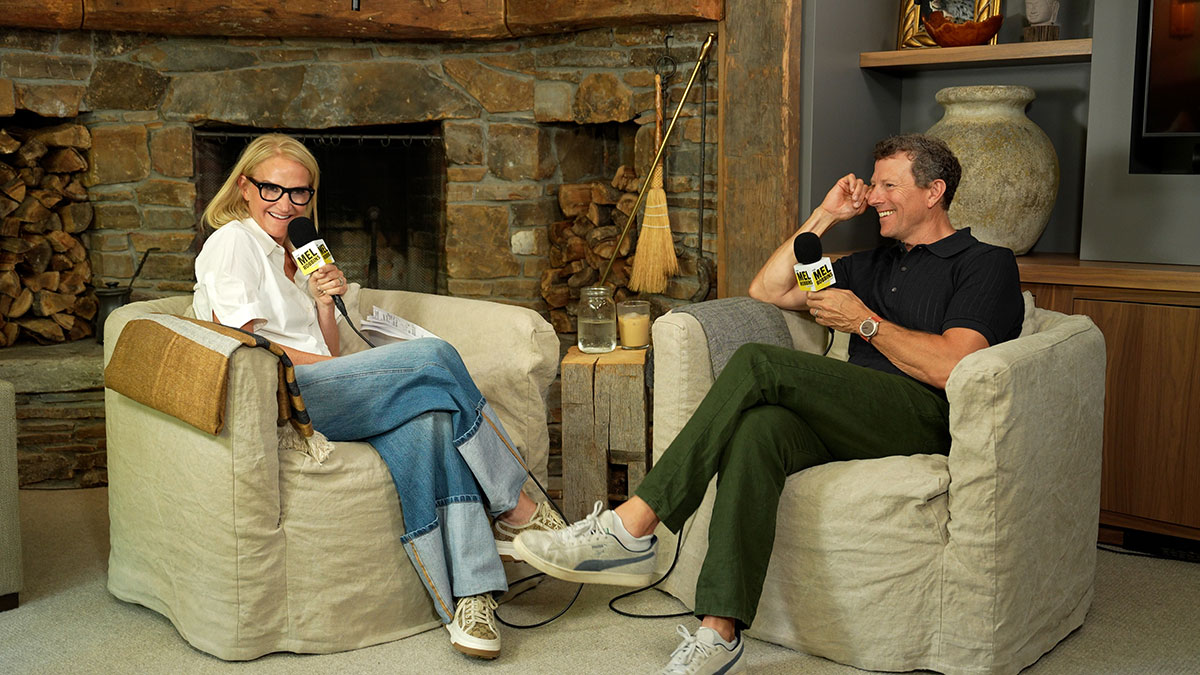
So Oakley almost dying when he was five days old, I think really taught me how much I wanted to be a mom. Hey, it's your friend Mel, and welcome to the Mel Robbins Podcast. I am so excited that you're here. I am sitting in the TV room at my house in Vermont. Our eldest daughter, Sawyer Robbins, who's the co-author of the Let Them Theory is here with me. And I'm fired up for what we're going to do today because you have a ton of questions that you've gathered from friends, from family members, from listeners around the world, Sawyer, and we're going to rapid fire through them today. And I know that you're going to hear something or laugh at something or learn something and you're going to think, "Oh my gosh, I've never thought about it that way." Or you're going to think of somebody that you love and go, "I need to send them this episode right now." And so I'm thrilled that you're here.
(01:45):
And if you're new or somebody shared this with you, welcome to the Mel Robbins podcast family. All right, Soy, let's just jump right into this.
Sawyer Robbins (01:52):
Hi everyone. I'm Sawyer Robbins. I mustered up all these new parenting questions from friends, family, my siblings, my significant other about advice we want on parenting.
Mel Robbins (02:04):
Okay. Now I'm not a parenting expert.
Sawyer Robbins (02:06):
Correct.
Mel Robbins (02:07):
But you have experienced my parenting. So would you like to go on the record and at least give some background? Because I just want to make sure that as you're listening, this is your friend, Mel.
Sawyer Robbins (02:21):
Yes.
Mel Robbins (02:22):
Sharing mistakes made, perspectives gained, things that I did well, things that I didn't do well, but zero, two, 10, how did I do? Throw out the seven.
Sawyer Robbins (02:33):
Mel did with what she could, she was a nine.
Mel Robbins (02:40):
What?
Sawyer Robbins (02:41):
Yes.
Mel Robbins (02:41):
Not an eight?
Sawyer Robbins (02:42):
No, you were such a good parent. And we're going to start off with the first question today.
Sawyer Robbins (02:48):
What do you think parents get wrong about preparing their children for adulthood?
Mel Robbins (02:53):
I believe that I got wrong is underestimating how capable you are and reinforcing the message that you can handle it and that there's a certain amount of struggle that is necessary for you to grow and become an adult and to become responsible for yourself and the life that you want. And what I probably got wrong and what I always work on is the balance between standing on the sideline and making sure you know that I'm here to support you and not rescuing you from the things that are challenging about life, but reminding you that you are capable of figuring it out. You're capable of navigating your way through these challenges. You're capable of learning how to make more money. You're capable of dealing with friend drama. You're capable of figuring out your career, learning from your mistakes. I'm not stepping in and solving it because it robs you of growth.
Sawyer Robbins (03:58):
Before becoming a parent, what did you imagine parenthood would be like?
Mel Robbins (04:05):
Before I became a parent, I imagined that parenthood would probably be like a Norman Rockwell painting. Lots of time for coloring and playing and pushing on the swings, lots of calm, happy moments. Everything just sort of flowing and it's really not like that at all. It's better and worse at the same time.
Sawyer Robbins (04:35):
What surprised you most about becoming a mom?
Mel Robbins (04:40):
My nipples. They turned into sausages that were spraying milk like a spigot. It's disgusting. They literally get this big and this. It's just, oh God, they go back. Not to the full form, but they go back.
Sawyer Robbins (04:59):
What was your first thought when you saw me come out of the womb?
Mel Robbins (05:05):
Thank God it's over.
Sawyer Robbins (05:09):
That's a good answer.
Mel Robbins (05:10):
Well, you had to be vacuumed out of me. You were two weeks late and you did not want to come into this world. You were going to come in on your own time, dammit. And they had to jumpstart the labor with Pitocin. And it was a particularly busy night at Mass General Brigham in Boston. And everything went wrong that could have gone wrong, everything. I remember my mother hitting the button on the wall because I was screaming in pain and they had done three epidural attempts. It was like one o'clock in the morning and I was just a mess. And she hit the button on the wall. Everybody came running and they had to vacuum you out and then the placenta tor and I started bleeding out. So I don't actually remember you coming out. I remember being wheeled out to surgery and I was gone for two and a half hours before I got wheeled back in and I was so out of it that I don't even remember coming back into the room.
(06:17):
I remember waking up in the room the next morning, I guess it was morning by then, and they brought you in. That's what I remember. Everything went wrong that could have gone wrong except for one thing you. That's what went right. You were perfect. You were truly perfect.
Sawyer Robbins (06:34):
Thanks mom. That's crazy that that all happened. I don't think I fully knew that full story.
Mel Robbins (06:41):
Yeah.
Sawyer Robbins (06:42):
I knew the vacuum.
Mel Robbins (06:43):
Yes.
Sawyer Robbins (06:43):
I knew that you lost a lot of blood and then you went into postpartum, but I didn't realize that you immediately went into surgery and then woke up without having known what basically had happened.
Mel Robbins (06:53):
They basically handed you to dad who was in a state of shock and everyone was super traumatized by how much of an emergency it was.
Sawyer Robbins (07:01):
Yeah.
Mel Robbins (07:02):
And my mom, and they sat and waited alone in the delivery room.
Sawyer Robbins (07:09):
Oh my gosh.
Mel Robbins (07:10):
Until I got wheeled back in and I was basically like, my skin was like the color of a dolphin. I had lost so much blood. I was gray. I had really wanted and planned for this beautiful birth experience. I wanted to go natural. I don't know why, but I had a midwife. We were also at a hospital. We had taken all the classes and sometimes that happens. And so I was really scared when I got pregnant with Kendall and we knew some of the medical issues that had gone wrong, so we were able to prepare for them and her birth was just flawless. And I don't say that because there's a competition. I just say it because sometimes things go wrong and that's why you want to be in a major medical facility, at least for your first birth, so you know what you're dealing with because everybody's bodies are different and every birth is different.
(08:11):
And there's this magical thing that happens in your body. I don't know what it is. Some doctor can explain it, but it's true. You forget because I think if women did not forget the pain of childbirth, none of us would have children, not a second one, but you forget and it's worth it all and a hundredfold worth it, a thousand fold, infinitely worth it.
Sawyer Robbins (08:32):
What parts of your own childhood did you want to recreate for your kids?
Mel Robbins (08:37):
Playing in the front yard before and after dinner.
Sawyer Robbins (08:42):
I love that.
Mel Robbins (08:43):
I loved being outside and playing games on our lawn. I loved it. I especially loved it at dusk.
Sawyer Robbins (08:52):
We did that a lot. What did you deliberately want to do differently from your own parents?
Mel Robbins (08:59):
I don't know that I was able to do this, but I really wanted to be a little calmer, a little less reactive. I didn't achieve it, but I think it's a very common experience to feel like... I've even heard my own mother talk about this, feeling like I had no idea what mood my mother was going to be in and don't even get me started about my grandmother. And knowing what it must have felt like for her being in a big raucous family with a grandmother who literally is going to an institution and would come back after shock therapy and then be a little nicer but was mean, I think a lot of people have an experience like that. And even when your parents don't mean to be stressed out, you can be a really sensitive kid, which I was. And so I really wanted to just have a household that felt light and fun.
(09:54):
And mine even was growing up, but I remember being nervous a lot and nervous about people's moods and nervous that people were upset and I didn't want to put that on my kids and I know that I did and I know that I still do. It's definitely something that I work on a lot and it's very challenging because if you really think about it, you're inside your mother and whatever state she's in, I believe this. I believe the medical experts that are now talking about the fact that the state of your mother when you were inside of her has an enormous impact on the way that your nervous system works and how could it not? If your mom was under stress, if your mom was going through anything, of course it's going to impact you. And I happen to have a extremely reactive nervous system.
(10:45):
The second something seems off, I'm on high alert. The second somebody's mood is angry, I'm amplifying. The second there's something stressful at work, I get very agitated and I don't want to be that way. And so I didn't have the tools when I was younger. Nobody went to therapy in their 20s 30 years ago. Nobody could afford it. Nobody knew a therapist either, and there were no resources.You don't go to the self-help section at the public library 30 years ago because you would seem like a nutcase. You kept it private, which means you suffered in private. And I was in this constant loop with myself where I would wake up and be like, okay, you can do it. And then the stress of life would take over and I'd snap at you kids and then I'd apologize and I'd feel like the world's shittiest mother or I'd be mad at your dad because we were struggling financially and I was mad at him because he couldn't get his career together and I felt a ton of pressure, which is kind of similar to a lot of the pressure I feel now come to think of it, that it's all on me and it really triggers me.
Sawyer Robbins (12:02):
I have a question.
Mel Robbins (12:02):
Yeah.
Sawyer Robbins (12:03):
So because I myself am also reactive and I'm also reactive. I blow up, I get very emotionally flooded and then I go silent and I can't process my emotions fast enough to be able to communicate properly. And so I stay silent and then I just blow up. And I've noticed this pattern in me. I will not say where it has derived from, but when I think about my own path and my own journey of becoming a mother, what can I do from now until then to help ease that even though I don't have kids to practice with or et cetera? Obviously I have you and other people who I'm reactive with, but I'm in therapy, I have tools, but I still have not mastered that.
Mel Robbins (13:03):
Do you want me to listen or do you want advice?
Sawyer Robbins (13:07):
Great work. She's learning. No, I want advice. I know that it has taken you a lifetime and you're still working on it and I know it will take me a lifetime and I'm still working on it,
Sawyer Robbins (13:21):
But I guess my ask is what is the number one thing that has helped you?
Mel Robbins (13:26):
Well, the number one thing that has helped me not be as emotionally
Sawyer Robbins (13:34):
Reactive
Mel Robbins (13:34):
As I used to be is recognizing that I didn't want to be. When you make a decision that you no longer want to be this version of yourself, that's the first step to changing. And being in the cycle where you continue to be emotionally reactive and then if you're like me, you blame it on work and then you apologize and then you're emotionally reactive and then you blame it on the stress of work or the stress of your parents or your stress of child or whatever it may be, you're just in a pattern, but you have not made a decision to change it. Do not wait until you are a parent to try to change this. Your everyday life right now provides the opportunity for you to become less reactive. And one of the gifts of having a lot of emotional sensitivity is you are a deeply feeling person.
(14:29):
You have incredible instincts. You care very deeply. It's a matter of going from zero to a hundred in a nanosecond and not being able to get yourself back down to a 50. That's the issue. It's recognizing when it's happening and you're hitting a hundred, and then it is finding tools that get you to a 50 faster and without harming or sliming other people around you. And so number one, make a decision that you don't want to be that way. Number two, if I were doing this in my twenties, I would borrow, may I quote one of the experts on the podcast for this purpose?
Sawyer Robbins (15:16):
Always.
Mel Robbins (15:17):
So I love the Gottmans, Gottman Institute, one of the most esteemed and respected and renowned researchers in the world on relationships, and they've been married for 40 years. And when they came on the podcast, it was literally interviewing the Muppets.
Sawyer Robbins (15:34):
I know.
Mel Robbins (15:35):
A married couple. They were soaked.
Sawyer Robbins (15:36):
I remember.
Mel Robbins (15:37):
I had squeezed them and they role played all of these scenarios where somebody gets emotionally agitated, and that would be me, I'm a volcano, and the other person gets emotionally flooded and shuts down, that's you and your father. And if you're a person that's a volcano like me and you get agitated and you're dealing with somebody like you who shuts down, your shutdown makes me more agitated because I feel more alone.
Sawyer Robbins (16:08):
I know.
Mel Robbins (16:09):
And that just scares you more because you start going, "There's nothing I can do here. I don't know what to do here." Which is exactly what happens to your dad. And we've been dealing with this dynamic for 30 years. This is incredibly common in couples because if you think about it, two volcanoes together is an explosive relationship, doesn't work. But a volcano with somebody that goes silent, both of you have an opportunity to heal these patterns from your past and to work together at moving through moments where you're emotionally flooded and finding that connection. And that's what a great relationship can do is you can start working on it now. And Dr. Gottman did one of the coolest things. He has this trick because he is the one that goes like a turtle. Wipe Michelle. She's mad. Hide.
Sawyer Robbins (16:59):
That's me.
Mel Robbins (17:00):
And dad. Yes. But you guys look stoic. So when you shut down, you have a face that doesn't look scared.
Sawyer Robbins (17:07):
No, I look like I'm going to kill someone.
Mel Robbins (17:09):
Yes.
Sawyer Robbins (17:09):
Yeah.
Mel Robbins (17:10):
And dad just looks like he's on a different planet, which pisses me off because I'm like, "No, you're not here right." Nope. I don't hear anything because I'm shut down and I'm a turtle and a shell right now. But we're both, you probably feel unsafe.
Sawyer Robbins (17:26):
Yeah.
Mel Robbins (17:26):
And the irony is when I get upset about something, I feel unsafe.
Sawyer Robbins (17:31):
So let me just ask you one question. For those of us who shut down and were with someone who blows up, what does make you feel safe when someone yells back at you and someone's like -
Mel Robbins (17:47):
No, no, no, no. I don't want to be yelled at. No, no, no. Don't yell at me.
Sawyer Robbins (17:51):
Okay. So what would make you feel safe in those very heightened moments?
Mel Robbins (17:57):
It's two things. It's to have somebody acknowledge the stress or frustration or the thing that I'm upset by.
Sawyer Robbins (18:08):
Okay. Calmly, of course.
Mel Robbins (18:11):
Yeah, calmly. I understand you have a right to be upset and that acknowledgement immediately makes me feel less alone. And then you saying, "And I'm going to give you a hug and then I'm going to leave the room because you need to calm yourself down before I can help you talk about this."
Sawyer Robbins (18:35):
Great. Okay. Back to the Gottmans.
Mel Robbins (18:37):
So Dr. Gottman is a person that shuts down. He becomes a turtle. And he said whenever his wife, the volcano erupts, "We got to talk about why did you leave the..." And he's like, "Shut down." He has a technique where he has a little notepad and he slowly pulls the notepad out of his pocket and he flips it open and he pulls out a pen as the other person's going crazy. And then he says, "Now slow down a minute. I just want to make sure I'm getting this." And he then starts to write down what the person who's upset about is saying. And he said, "What that does is it slows his heart rate and it helps him organize his thoughts and it signals to you that you're not alone and that he's listening. And it's a way for him to calm himself down and get his thoughts down and stall until he can think of something to say."
Sawyer Robbins (19:42):
Yeah. I love that tool because I feel like that's what's happening when I shut down is I'm just stalling. My brain is not working fast enough than what my body feels. And so it's not that I genuinely don't know what to say.
Mel Robbins (19:58):
Yes. And that means your body is working correctly because if I'm a volcano, you're under threat. So your thinking skills go out the window because if you're under threat, you need to defend yourself. You don't need to be thinking about anything. You need to run, your heart is racing, you have the impulse to get out of there, you don't know what to do. So that's just a sign that you're in fight or flight. And so pulling out an open and be like, "I understand. I know you're upset. You have a right to be upset. Hold on a second. Let me just get my notepad." What that's doing is it's giving you a physical thing to do that helps you create a pause between the stimulus, the other person yelling, and you physically doing something, the notebook, flip it open, get the page out. "Okay, I see that you're upset.
(20:57):
I understand. Tell me what's going on. "And that is how you can start to practice the pause and how you can start to go from a hundred," Oh my God, I'm under threat, "to start to bring yourself back down to 50. That's what I would do.
Sawyer Robbins (21:12):
Incredible.
Mel Robbins (21:14):
You're probably wondering why is Mel surrounded by rainwater products from Mrs. Myers? Well, I'm going to tell you why, because I love Mrs. Myers. I love that they're a sponsor of the podcast and I love finding ways to reset and take a quiet moment for yourself. I personally love flowers. I also love a book. Maybe for you, resetting is taking a walk or just taking a moment to exhale. Well, another way to reset is with Mrs. Myers' plug-in scented oil diffuser, which fills your home with garden-inspired scents made with essential oils and other thoughtfully chosen ingredients. Now, what you're seeing right here is rainwater. I love this. It is so fresh. It's clean. I have their diffusers plugged in around the house. And if rainwater's not your thing, they have garden-inspired favorites like lavender peony and compassion flour. All you get to do is plug it in and you take the amazing scents of the garden and it'll help you reset.
Mel Robbins (22:10):
Pick up a Mrs. Myers premium oil diffuser kit with a warmer and one of their garden-inspired scents and make a little more room to bloom.
Sawyer Robbins (22:20):
What's one thing me, Kendall, and Oakley each individually have taught you about yourself?
Mel Robbins (22:34):
This is a great question. Well, let me start with Oakley. So Oakley almost dying when he was five days old, I think really taught me how much I wanted to be a mom and how much you can love somebody in just five days. And he is such a light, even in the NICU, those big blue eyeballs, and he's still like that. He has taught me to be in a good mood for no reason. That's what Oaks taught me. Kendall, who I would say I'm probably the most, she and I are the most similar, I think she's really shown me what it's like when you have a deep calling and you have no choice but to follow it.
(24:20):
I am extremely moved and proud of her for pushing through all of her fears and pursuing a very, very difficult career of wanting to be a recording artist and a musician and a singer-songwriter, and just watching her do it on her own and figure it out and wake up every day and chart a path in a career that doesn't have one and to know, as she says, there's no plan B. She is a burn the boats person, and she's definitely taught me that a lot of success in life and a lot of meaning in life comes from having something that means a lot to you that you're committed to no matter what, through all the doubt, through the ups and downs.
(25:19):
She's definitely taught me a lot about that. And also, I think what a gift it is to share your gifts with people. I have this friend, Carl, who says, "When you get to heaven, you got to make sure your pockets are empty. You got a lot of gifts to give in this lifetime, whether it's your smile or a book you're going to write, or in her case, a song that you're meant to sing, do not get to heaven with your pockets full. You want to give your gifts while you're here." And so that sounds straightforward, but it's not always that straightforward. There's a lot that you have to confront in order to feel worthy of the gifts that you want to give, to give yourself permission to give those gifts, to keep giving the gift even when nobody wants to receive it, to see the value in it when maybe nobody else does.
(26:12):
And then that brings me to you, Soy, and what you've taught me. You have taught me to be brave. I cannot believe the things that you have taken on. I cannot believe it. The other thing you've taught me is having conviction about something. I remember in seventh grade, we went to visit your grandmother, JJ, and she was living for four months in Cambodia teaching English at an elementary school. This was what she did to find purpose after losing her husband, your grandfather of 40 years. We went over there to visit her and we came back and you turned to us and you said, "I want to go back and go back to Cambodia." We're like, "Well, that's great. That was a once in a decade trip, dude. Calm down. We don't have the money." That's a once in a lifetime trip. We're not doing that again.
(27:12):
And then you're like, "No, no, no. I'm going to the principal. And no, I don't think you understand. I'm going." And then you did it again when you said, "When I graduated from college, I am traveling solo around Asia and you worked for three years and you saved all the money. And then to my complete horror, you and your backpack got on a plane. And what I also love about you is that you have the courage of the conviction and then you make it happen and you spend the first three days hyperventilating and crying.
Sawyer Robbins (27:47):
Yep, always.
Mel Robbins (27:49):
Talk to me about that.
Sawyer Robbins (27:52):
I feel like I know exactly what I want a lot of the time, and I think about those things for years. So the Asia thing when I was 13, that was just a very rare, I have to do this in my body soul. I am going to make this happen. I'm going to homeschool myself. I'm going to go to the principal. I'm going to go for four months and teach English to Cambodian kids. I'm going to bring all my textbooks." That was, I think, set me on a very clear trajectory of always putting myself out there.
Mel Robbins (28:27):
And then just to be clear, for the first two weeks, we did Zoom calls every day where you would be sobbing uncontrollably in this very dark hotel room, and I felt like the world's worst mother, and then I started to have nightmares. What happens if JJ dies and she's over there alone? There is nobody else. What am I doing? I have sent my daughter to Cambodia with a 77-year-old. What kind of mother am I? What happens if something... She has epilepsy. Wha she has a seat? But anyway, within two weeks, you were a different person. You weren't crying.
Sawyer Robbins (29:04):
I think that I always panic. I can get myself there. I can get myself on the plane. I can get myself to do the hard thing. I can get myself in the chair, but once I'm sitting there for the first, it's finally then that I realize that I'm doing it. And then all the fear and all the angst and all the reality of it happening hits me then versus before my decision. And so then I have to own my decision because I'm sitting in it. And I think that there's a lot of experiences in my life that have made me sat in those experiences, whether it's Cambodia, whether it's going to camp and crying for two weeks straight and sending letters home because I have no technology that I hate my life, pick me up. And then after two weeks I'm like, "I love it.
(29:51):
Don't pick me up." And there's just a lot of experiences that I've put myself in that have forced me to move through those really hard moments in the beginning, but I always know that I'm better off for it in the end.
Mel Robbins (30:07):
You know what's really cool about this is that it kind of shows you there's two types of people.
Sawyer Robbins (30:13):
It's the same thing about going on tour.
Mel Robbins (30:15):
What do you mean?
Sawyer Robbins (30:16):
When I literally cried myself to sleep for two weeks straight when we went on tour for the first time and the second time, because I was so nervous about speaking on stage, but I had already committed, I had already planned the whole tour, I had already gotten all the content together. We had co-created this and then it was the night before where I'm about to go out on stage where I have a full-blown -
Mel Robbins (30:41):
Diarrhea attack.
Sawyer Robbins (30:41):
Hyperventilating panic screaming attack.
Mel Robbins (30:44):
It was so bad that in the morning in Australia, I actually thought, okay, she needs to go home. She can't do this. I'm going to have to do this entire thing on my own and it's a tour that's written for two people. Fuck me.
Sawyer Robbins (30:59):
But the whole time that I'm screaming, crying, I'm saying, I'm going to do it. I'm going to do it. I'm going to do it. I just need to move through that.
Mel Robbins (31:07):
What's interesting is that there's two types of people. There are people who feel that fear before they commit and they never commit. And they spend their entire life thinking about what they want, but feeling emotionally flooded and talking themselves out of it before they even do it. And what you are talking about is this ability to be brave and bravery does not exist without fear. You have this ability through the courage of your convictions to commit, knowing that once you land in the seat, you're going to hate it, you're going to get emotionally flooded and become a turtle with diarrhea who's crying for two weeks and regretting it. But you then remind yourself, I can do this, I can do this, I can do this, I can do this. This is just the hard part. And my hard part comes after it starts, not before.
(32:00):
That's a gift that it comes after.
Sawyer Robbins (32:03):
Yeah.
Mel Robbins (32:04):
Wow.
Sawyer Robbins (32:05):
I think it's a gift, but it's also I've trained myself to be like that. I've put myself in situations where I had no out. I was in Cambodia. I'm not flying home tomorrow. We barely have the money to fly me over there. I'm at camp. I have no way of contacting you to come home. I'm going on service trips in other places in the United States and I am unable to leave. So I think growing up has always been, there's no other options. It's always through. You have no out.
Mel Robbins (32:40):
The obstacle is the way.
Sawyer Robbins (32:41):
Yes.
Mel Robbins (32:41):
Hello Ryan Holiday. The Mel Robbins Podcast is proudly sponsored by Amica Insurance, our exclusive auto home and life insurance partner. There's a saying you've probably heard, if you want to go fast, go alone. If you want to go far, go together. And that's really the philosophy behind Amica because with Amica, you're not just buying insurance, you're choosing a partner that's committed to helping you protect what matters most. As a mutual insurer, they're built for their customers and it shows in every experience. Whether you need auto, home, life or more, Amica offers coverage that fits your needs. And what makes them so special is that they take the time to understand your priorities, what you care about, who you're protecting, and what gives you peace of mind. With Amica, you get personalized protection and a team that's truly on your side. That's what going together looks like.
(33:42):
Protect what matters most together. Visit amica.com and get a personalized quote today.
(33:49):
I am so excited that Hyundai is a new sponsor of the Mel Robbins Podcast because winning an award over and over again takes a real commitment to being the best, and that's exactly what Hyundai has done. Hyundai has been named America's Best SUV brand for 2026 by US News and World Report. Now that's the fifth time in six years. So they're on a roll and they're award-winning and they're consistent at doing it. So whether you're driving the kids around town or heading out on a road trip, Hyundai has an SUV for you. There's the Tucson hybrid packed with technology for your everyday life, the Santa Fe hybrid built for that fun adventure that you want to go on, and the Palisade hybrid with premium features and class leading interior space. Plus, with available H-Track all-wheel drive up to an EPA estimated 619 miles of range, view US News best cars at cars.usnews.com and call 562-314-4603 for complete details.
Sawyer Robbins (34:51):
What do you hope I understand about you as my mom that I may not fully understand yet?
Mel Robbins (34:57):
Just how much stress I'm under right now and how hard I'm trying, and that I don't mean to be bitchy or have a terrible tone of voice. It's actually the one thing I don't want to be is harsh and hostile and to take my emotions out on you guys and it's not your fault and it's not your responsibility to fix the things that are stressing me out or to make me happy or to calm me down. And I apologize that for a lot of your life, you probably felt like you had to walk on eggshells or you were tired of having a mom and you didn't know what mood she was going to be in, or you were bracing as I was walking in the door because nine times out of 10 I was stressed or pissed off at your dad because we were struggling.
(35:46):
And I wish I could have handled that better because as a child, it's not fair that I put my adult stress on you and I'm still working at it.
Sawyer Robbins (35:57):
You've come such a long way though, truly. And I've seen you put in all the work. I've seen you regulate your nervous system. I've seen you use the tools that you've been given from your therapist and she's meditating every single morning and night to try to calm it down. So I do really want to give you credit for continuing to work at it and no one's perfect. And like you said, everyone does the best job that they can with what they were given and you have done the best job you have been able to do with what you were given.
Mel Robbins (36:28):
Okay. Well, I am horrified whenever I experience myself acting in a hostile or reactive way because it's the last thing I want to be. And I don't want to leave people in a state where they're nervous around what kind of mood I'm going to be in. And it's a hard thing to manage when you're going through a very stressful period in your life or career, which I am right now. And so it's very much front of mind. And I think you guys see me as somebody who's super strong and very opinionated and bulldozing through life, and that's my outside demeanor. When I come home, I am still want to have fun. I need hugs. I need more compliments. I want to have more girl time and be softer with each other. And you guys favor dad so much and lift dad up. And he's an amazing human and I lift him up too and he's my favorite person.
(37:34):
And I also imagine that because I get so much public attention that you're compensating for what dad may not be receiving and it does feel a little bit like he's everybody's favorite and I'm the monster.
Sawyer Robbins (37:55):
Well, I thank you for sharing that. And I know you've shared that forever and I am sorry that you feel that way. And I think that me, Kendall and Oakleys, we are never intending to make you feel on the outside or making... It is never our intention to make you feel like dad's our favorite. I think that we have grown up receiving love from you and dad in very different ways. Because your mother did this, your love growing up was gifts.
Mel Robbins (38:36):
Yes.
Sawyer Robbins (38:36):
Your love growing up was solving problems. Your love growing up was let's go on a big shopping spree. That is how you showed your love. So we learned that if we want something, go to mom. It is very hard to rewire that. And so if you want that to change, then let's talk about it and let's work on it, but that is in our nervous system. When we grew up with dad, the way in which dad showed us love was listening. He was also the stay at home parent, so he was with us twenty four seven. And as a result, for anything that's joyful or news or whatever, we go to him because he listens. You are a practical problem solver.
Mel Robbins (39:28):
Yes.
Sawyer Robbins (39:29):
And he is a passive problem solver.
Mel Robbins (39:33):
What does that mean? I love this. Okay.
Sawyer Robbins (39:36):
You are a practical problem solver. I come to you for tasks. I come to you for check boxes because I know -
Mel Robbins (39:43):
It checks.
Sawyer Robbins (39:44):
It checks.
Mel Robbins (39:45):
It checks.
Sawyer Robbins (39:46):
I would never go to dad for a doctor's appointment. I would never go to dad for a medical reason. Whenever I've been in the hospital or anything, which has been twice, but I've called you. You are for emergencies, you are for flights, you are for, I need shit to get done. I trust mom. I don't trust dad. And you look at that as a bad thing. We go to dad when we want to be heard because we don't want a solution. We don't want me to come to you with boyfriend troubles or other thing troubles and you to be like, "Well, here's a therapist that you should really get him into. Oh, here's a doctor's appointment that I'll set him up with. Oh, here's five tips from this podcast guest that if you don't listen to that episode, your relationship's not changing." We go to you for different things.
(40:38):
Nothing is better or worse. You look at it as worse.
Mel Robbins (40:41):
Fair.
Sawyer Robbins (40:42):
Dad has expressed he would love for us to come to him for helpful tasks. He wishes that we would go to him for money and we don't ever. It demoralizes him that we don't go to things to him that we go to for you. You guys both feel the same way, but you don't communicate about that. You just feel like dad is our hero and you are a failure.
Mel Robbins (41:10):
Well, I don't communicate with dad about it because it's not an issue that I have with dad. It's an issue I have with you guys.
Sawyer Robbins (41:15):
Well, I think you need to change your perspective or we need -
Mel Robbins (41:17):
That's very helpful.
Sawyer Robbins (41:18):
Because if you want us to come to you for good news, then I think even using that tool we talked about today about, great, let me just listen. And I think another difference between you and dad is, like you said, dad is a slow processor, but -
Mel Robbins (41:34):
I should say deep processor.
Sawyer Robbins (41:36):
Deep processor.
Mel Robbins (41:37):
Slow is judgy.
Sawyer Robbins (41:38):
But he's very... You solve a problem with him, with you, you solve the problem. And it's like I'm going to you when I have five minutes, I'm going to dad when I have two hours. And I feel like because of that, he is forced to listen. He is forced to be there. He is very present with us. And I think sometimes with you, if we come to you, it feels like you have, because of your ADD, ADHD, you literally have 50 million things on your mind, so it doesn't actually feel like you're present with us. So if I want to talk about something that's really hard to talk about or deep or I really want my parents' attention, I'm probably not going to come to you because I don't feel like you're going to give me the presence that I think I want or deserve.
Mel Robbins (42:27):
That makes sense. I can work on that when I have time. I'm just kidding. No, I appreciate that. It makes a lot of sense.
Sawyer Robbins (42:35):
I also feel like it has a lot to do with the fact that for some reason as a daughter, and I know you feel like this with your own mom, I care so much more about your validation than I do dad's, and I care so much more about what you think of me than dad.
Mel Robbins (42:56):
Really?
Sawyer Robbins (42:57):
Yeah. And I know Kendall feels the same way. And I don't think it has to do with the fact that you have a big career. I don't think it has to do with the fact that what you've created in your life or who you are as a person. I see this in all my friends.
Mel Robbins (43:12):
Do you think it's because a lot of us are emotionally -
Sawyer Robbins (43:16):
Dysregulated?
Mel Robbins (43:17):
Yes, and unstable. And so the approval is actually you're seeking calmness and safety and belonging rather than... I don't know.
Sawyer Robbins (43:29):
Well, I feel like there's a lot of women have been suppressed for decades, and I think now we're in a generation and an age where women more than ever are empowered to be choosing their own adventure and making decisions in their life and choosing who they get to marry versus being forced. And I think it's almost like the overwhelming amount of agency we feel as women brings resentment. It's flip-flopped. Before it was all, I have no agency and I'm completely relying on my husband, and now I have all the agency and all the possibilities and all the ability to make my life the best it could possibly be, and I'm the caregiver, and I'm doing the dishes, and I'm doing the lunches, and I'm still taking care of the kids, and I now have to make just as much money as my husband to be able to afford a house.
(44:31):
It's almost like there's so much more added onto our plate, and I don't know why that connects directly to mother-daughters, but I can look around like everyone in this room right now and think about every one of my friends, and there's nine times out of 10 it's about the mother that is brought up. Rarely are my friends talking about their dads. I just feel like there's such an imprint of you on us and such a desire for us to be our own person and find our own way and not feel like...
(45:15):
I don't know. I bet a lot of it has to do with honestly growing inside of you and just feeling so much energetic connection because we talk about this all the time. As soon as my mom rolls her eyes or my tone goes completely angry, we notice it immediately. The energy shifts immediately. I notice it with my friends. We had this huge mother-daughter weekend. I went to Boston College and I had 10 girls and their 10 moms up in Vermont. This was a few years ago at this point. And just looking around, you could tell immediately who was in a fight, who was having fun, who was pissed off at each other. It's crazy how much our energies are intertwined. I have heard stories of some colleagues who don't necessarily have a great relationship with their mom. As soon as someone says one word incorrectly, it's like my whole nervous system is shut down.
(46:15):
I feel like it has a lot more to do with how connected we are than how disconnected we are. What do you think?
Mel Robbins (46:27):
I agree with you. I think there's a much bigger role that society plays in it, in how women are treated and feel and the amount of stress that women are under and shifting gender roles and dynamics and both opportunities as you said it and the pressures that it creates. The thing that I find interesting though is just how hardwired we are to each other's moods.
Sawyer Robbins (46:55):
Yes. And how hardwired we are to take care of each other. You feel so much pressure to take care of your kids and provide and be the mother, but we feel equally as much pressure to take care of you and dad and make sure that you guys are feeling good, your moods are happy, you're feeling positive. It goes both ways and it feels like you as an adult feel this innate need to take care of us, but it flips. You guys get old and then we're taking care of you and wiping your ass. We're all both trying to take care of each other and trying to make sure we're both okay and you feel that responsibility. But I think what parents don't understand about their kids is that we equally feel that. We equally want you to be good. We equally want you to not be going through a hard time and trying to do everything in our power to solve that, but half the time we don't have the tools to do so, but you do.
Mel Robbins (47:57):
Yeah. One thing that I love about our relationship is the ability to sit down and just crack this open and talk openly about it. Is there anything else that I could do that you may be afraid to ask or that you maybe even didn't know that you needed from me or I didn't know that you need?
Sawyer Robbins (48:29):
No, I think what I'll share is something that actually Kendall brought up the other day, which was so helpful and I've never really thought about. And she shared that she learned this from her therapist is to ask for what you need more. And I think this could go for anyone, but so many times we come downstairs and we're in a pissed off mood or we blow up or something's bothering us and we just repeat the pattern that we always do, whether it's shut down or vent or scream or cry or whatever it is, and we become completely irrational and then stomp all over everyone who is around us instead of coming down and being like, "Hey, I need a hug or I need to be alone right now," or, "I need to work for six more hours." And just asking right up front for what you need versus assuming that everyone knows what you need.
(49:29):
Because I think that we had a really long productive conversation about how when one of us goes into one of those tornado modes, everyone else is not only walking on eggshells, but also trying to fix the other person's mood. And so many times we never actually acknowledge when the tornado is over. We just move on with our day and then for the rest of the day, everyone's worried about the one person who's in a bad mood. And instead, just knocking it out of the park right in the beginning of, "Hey, Soy, I need to cry right now." Or, "Hey, Soy, I would love some assistance with organizing my closet. Can you please come and help me?" Versus just blowing up crying, being like, "Oh my God, I'm so stressed out about blah, blah, blah, blah, blah. Let me just flood and vent and puke all over you, and then you're left feeling disheveled and crazy." And so I think that that's something that not necessarily you only need to do, like me, you and Kendall need to do, and our trio dynamic is just ask each other more for what we need right up front.
Mel Robbins (50:36):
That's great. I agree.
Sawyer Robbins (50:39):
Well, I love you. I love you too. Thank you so much for joining me in this amazing conversation.
Sawyer Robbins (50:45):
Is there anything that I need to do differently as your daughter?
Mel Robbins (50:50):
My wish for you, and you're already doing it, is to really go to town and attack that emotional flooding that happens.
Sawyer Robbins (51:07):
So exactly what you need to do also.
Mel Robbins (51:09):
Pretty much, because I basically made your nervous system. So with a combination of dad's DNA plus you being in my body and the birth was pretty scary, so God knows what happened there. But I feel that what a gift that you at the age of 27 can be talking about this and recognizing this in yourself. And so I would say stay focused on that and the rest of your life will work out because you will not be ruled by your emotions, you will feel them, but you will be able to communicate through them and think through them and choose how to respond rather than having them run you over the way they have my whole life. That's what my life has been like for 50 plus years, and that's why I'm working hard to not have it be like that.
Sawyer Robbins (51:59):
Amazing. I love you. Thank you so much.
Mel Robbins (52:02):
Thank you. And thank you, Mr. Moodle, for staying on my lap, and thank you. Thank you for being here with me and Sawyer. Thank you for listening to this. Thank you for sharing it with your daughter or your mother or your sister or anybody in your life that you care deeply about. And in case nobody else tells you as your friend, I'm going to tell you that I love you and I believe in you, and I believe in your ability to create a better life. And so I hope that there was something that we shared today that resonated, that was helpful, that you're walking away from this conversation, feeling closer to yourself and having something that you can start to practice or share with somebody else. And that's it. Thank you for watching all the way to the end here on YouTube. If that subscribe button is lit up, it's the best way you could support your friend Mel Robbins and our team here.
(52:52):
Just hit subscribe. It's free. It tells us that you love the Mel Robbins podcast and the fact that you can watch it here for free on YouTube. Thank you for doing that. And I know you want to watch another episode of the Mel Robbins podcast. You're going to love this one, and I'll welcome you in the moment you hit play.
Key takeaways
If your child comes to you with a problem, ask whether they want you to listen or offer advice; jumping straight to solutions can leave them feeling you aren't truly present.
If you keep blowing up, apologizing, and blaming stress, you're stuck in a pattern; the first step to becoming less emotionally reactive is deciding you no longer want to be that version of yourself.
When you're in a bad mood, tell your family what you need, whether that's a hug, time alone, or help, instead of expecting everyone to read your mind and fix how you feel.
When you shut down under stress, give your body something physical to do, like opening a notebook and writing, so you can slow down enough to think again.
Your children are not responsible for your stress, your happiness, or calming your emotions; when you bring adult problems home, remember they shouldn't have to fix them for you.
Guests Appearing in this Episode
Sawyer Robbins
Sawyer Robbins is the New York Times bestselling co-author of The Let Them Theory, the global phenomenon she wrote with her mother, Mel Robbins, which has sold 11 million copies worldwide and been translated into more than 66 languages. Sawyer is Head of Brand Marketing and Partnerships at 143 Studios and co-headlined and produced The Let Them Tour, bringing candid conversations on personal growth to more than 120,000 people across five countries.
Resources
-
- The Gottman Institute: Physiological Self-Soothing
- The New York Times: Raising Successful Children
- American Psychological Association: How to help kids understand and manage their emotions
- The New York Times: Teaching Your Child Emotional Agility
- TIME: 'Helicopter Parenting' Hurts Kids Regardless of Love or Support, Study Says
- Forbes: New Study Warns Parents Not To Overdo Attunement With Their Children
- Scientific American: Ways to Ease a Child’s Stress
- Clinical Child and Family Psychology Review: Intrusive Parenting and Adolescent Internalizing and Externalizing Symptoms: Three-level Meta-analytic Reviews Considering Parenting Concepts and Methodology
- Journal of Adult Development: Parenting in Overdrive: A Meta-analysis of Helicopter Parenting Across Multiple Indices of Emerging Adult Functioning
- International Journal of Behavioral Development: Parent emotional regulation: A meta-analytic review of its association with parenting and child adjustment
- International Journal of Obstetrics and Gynaecology: A longitudinal study of women's memory of labour pain--from 2 months to 5 years after the birth
2 Million Readers.
1 Life-Changing Newsletter
Simple and Straight-to-the-Point...
Just Like Mel.