Episode: 366
How to Take Control of Your Time: 9 Proven Strategies That Work (Even When You Have No Time)
with Laura Vanderkam
This episode is for you: the person holding everything together.
If your days are packed with work, caregiving, and nonstop demands, this is what you need to hear.
Mel sits down with Laura Vanderkam, one of the most trusted voices on time, a New York Times bestselling author and researcher who has studied thousands of real schedules (and a mom of five, so she is not guessing).
Laura shows you how to see your week differently and make a few small shifts that quickly lighten the load:
- Find hidden pockets of time
- Choose what matters (without guilt)
- Create breathing room
- Tackle what you’ve put off
- End the day with more energy.
Because when you learn to take control of your time, you start taking control of your life.
Listen on:




Time management is about making space for the good stuff, not squeezing more in that you have to do.
Laura Vanderkam
All Clips
Transcript
Laura Vanderkam (00:00:00):
You are a productive person. You are getting a lot done. People depend on you. You are doing the things you have to do. I want you to make time for the things you want to do.
Mel Robbins (00:00:13):
Today, you and I are here with the very wise, very practical and very real Laura Vanderkam. And we're learning how to take control of our free time For so much of my life, whether it was because I had a really stressful job or taking care of kids or taking care of aging parents, I felt like my entire life were things I have to do.
Laura Vanderkam (00:00:32):
There are certain phases of life when things feel more crunched, when they feel more intense, when the choices feel a little bit more fraught. But I promise it is possible. Even in the middle of a busy Tuesday, even when life seems chaotic, we can enjoy ourselves. We can have moments of fun. And not only that, I think people deserve to have moments of fun. I've seen people's lives transformed by finding an hour to do something that they enjoy in the course of the week, and it changes their narrative. My life is no longer out of my control at the mercy of everyone else, I am the kind of person who makes space for things that are fun for me. Next week is gonna have its own problems. Uh, next month is gonna have its own crises. We need to figure out strategies that allow us to live a good life. Now you start to feel more empowered. You start feeling less overwhelmed. Yes, right? Life starts feeling more calm. You feel like you are making progress on your goals, and that's a much better place to be starting from.
Mel Robbins (00:01:34):
Laura Vanderkam welcome.
Laura Vanderkam (00:01:36):
Thank you
Mel Robbins (00:01:37):
To the Mel Robbins podcast.
Laura Vanderkam (00:01:37):
Thanks. Yeah, thanks for having me. I'm, I'm so excited to be here.
Mel Robbins (00:01:41):
So here's how I wanna start. I would love to have you speak directly to the person who's with us right now. Somebody who doesn't have a lot of time, but they have made the time to learn from you. What could you tell them is gonna be different about their life if they take everything to heart that you're about to share based on your research and your expertise about time?
Laura Vanderkam (00:02:02):
I am so happy you are here today. Anyone listening to this show, I know you are a productive person. You are getting a lot done. People depend on you. You are doing the things you have to do. I want you to make time for the things you want to do, right? I want everyone listening to this to wake up in the morning knowing there's something exciting and wonderful waiting for you in the day. That is what time management is about, right? It's not about squeezing more in that you have to do, it's about making space for the good stuff.
Mel Robbins (00:02:39):
Laura, already my mouth is on the floor. You, you said something so simple and I wanna make sure that you got it. As you were listening to Laura or watching this right now, there's a big difference between the things you have to do and the things that you want to do. And for so much of my life, whether it was because I had a really stressful job and jobs always have a lot of have toss or taking care of kids or taking care of aging parents, I felt like my entire life were things I have to do. You're going to teach us that there is time available to do things we want to do, even though there's a lot we have to do.
Laura Vanderkam (00:03:25):
I promise you, even if you have a lot you have to do, and I know everyone does these days, there is space for the things you want to do. And not only that, you deserve to have space for the things you want to do. You are doing so much for everyone. I promise there's time for yourself as well.
Mel Robbins (00:03:40):
Oh my God. Well I can't wait to find these little pockets of free time 'cause
Laura Vanderkam (00:03:44):
I can't wait to find them for people.
Mel Robbins (00:03:45):
Well, it doesn't feel like you have any free time. I mean, is that a common thing that you've found when you're researching these topics that people feel like they have no free time?
Laura Vanderkam (00:03:55):
A lot of people will say, yes, I have no free time whatsoever. I can promise you I have studied thousands of people's schedules. Everybody has some discretionary time. Now it may not be as much time as you want. I totally believe that. But there's a big difference between not as much as I want and none.
Mel Robbins (00:04:14):
Hmm.
Laura Vanderkam (00:04:14):
When people say, I have no free time whatsoever, they mean I don't have as much free time as I want. But when we approach this question from I have some free time, it's just not as much as I want. Well, that suggests some good questions right there. You know, how can I scale up my free time in the long run? You know, how can I make good choices in the limited time I do have, so I feel most rejuvenated?
Mel Robbins (00:04:35):
Okay, so that's the second takeaway that I wanna make sure that you got because I just had a light bulb moment there to quote Oprah, where it is easy to fall into that trap where you're burnt out or you feel overwhelmed, or you have a never ending to-do list. And you start to say to yourself, I have no free time. I have no time. One takeaway already is I don't have enough free time. And simply that change acknowledges that there is some discretionary time to use your words that we can reclaim for ourselves. And that's a really, that feels doable. And so I'm glad we're starting there. Laura, based on your research, what do you think the most surprising thing that the person who is with us right now needs to know about time management?
Laura Vanderkam (00:05:20):
Well, here's a number for you.
Mel Robbins (00:05:22):
Okay,
Laura Vanderkam (00:05:22):
There are 168 hours in a week.
Mel Robbins (00:05:25):
Does it like total?
Laura Vanderkam (00:05:27):
Total.
Mel Robbins (00:05:27):
Okay, so that includes sleeping
Laura Vanderkam (00:05:28):
Well, people say 24 7 all the time,
Mel Robbins (00:05:31):
Right.
Laura Vanderkam (00:05:31):
Nobody ever multiplies it through. Okay? So if you multiply 24 times seven, yep. There are 168 hours in a week.
Mel Robbins (00:05:38):
Okay?
Laura Vanderkam (00:05:39):
And I think this is an important number for people to know for a couple reasons. I mean, one a week is the cycle of life as we actually live it. I mean, if I look at you on a Tuesday, I look at you on a Saturday, these days often look a little bit different from people. Yes. But a week encompasses both. And you know, both are representative of our lives. So we wanna make sure we are looking at all of them. But when we start with the number, 168 hours, just a few numbers to think about with this. If you work 40 hours, so standard full-time job, okay? If you sleep eight hours a night, yep. So eight times seven is 56 hours per week. Okay? If you subtract 40 and 56 from 168, we get 72 hours for other things.
Mel Robbins (00:06:22):
Okay?
Laura Vanderkam (00:06:22):
Now that doesn't mean that those 72 hours are free and clear. Most of us have families we are taking care of, we have community responsibilities, we have house work, we have all sorts of things we need to deal with in those 72 hours. But 72 hours is still a lot of time. And so when people are looking at that, they say, well, could I find three hours to read in the course of the week? Could I find two hours to get together with friends in the course of 72 hours? That starts to seem a little bit more doable than if we're just looking at a crunched Tuesday. I think a lot of us are walking around with this story that we are incredibly busy, we have no time for anything. And I'm not denying that anyone is busy. Um, but I would question the narrative of having no time for anything. And I think sometimes looking from the perspective of 168 hours can help us see that a little bit better.
Mel Robbins (00:07:16):
It is a little eye-opening because you're right. I often when I think about, okay, do I have any time or how much time do I have? Or what am I doing with my time? I'll open up my calendar and be like, and then I'll look at my to-do list and then I don't see any time and then I panic about the time. But what you are going to teach us is, let's just start with the basics. That after a full-time job and getting eight hours of sleep, there's 72 hours. And when you look at the fact that there's 72 hours, we're gonna start to ask ourselves, could I possibly find some pockets of time in there where I could be more intentional about how I'm using it? That feels accessible to me because one of the things that I was concerned about, even though I'm very familiar with your work, is time management can be a very like bro thing. Mm-hmm. Like block your time, set the timer, like get in these time, like all this kind of stuff.
Laura Vanderkam (00:08:14):
Well, we all do have 168 hours in a week, but you are correct. Well, I mean, I'm in the weeds too. I work, I have young kids still at home. Um,
Mel Robbins (00:08:22):
You have five children and a puppy and Spouse.
Laura Vanderkam (00:08:24):
I have all those things. But yeah, we, even with all those things, we can still make choices. Now, will somebody who has five kids and a job have as much discretionary time as one of these perhaps productivity bros. If we wanna talk about them that way? No. But that doesn't mean we have to completely admit defeat.
Mel Robbins (00:08:46):
Hmm.
Laura Vanderkam (00:08:48):
We just need to be intentional about our time and recognize that we can still make some choices.
Mel Robbins (00:08:54):
I love that because you're meeting us where we are and your research in the, in particular the nine rules of time management that you're going to walk us through, help us even in those moments to reclaim time. And so let's turn to the nine rules that you write in your amazing bestselling book, tranquility by Tuesday.
Mel Robbins (00:09:19):
And the first rule of productivity, I love this one, is give yourself a bedtime. Why is giving yourself a bedtime a rule for productivity?
Laura Vanderkam (00:09:32):
Well, I know you are a big fan of bedtimes, correct?
Mel Robbins (00:09:35):
Yes.
Laura Vanderkam (00:09:35):
You give yourself a bedtime.
Mel Robbins (00:09:36):
Yes, I do. I do actually.
Laura Vanderkam (00:09:39):
Yeah. And I think this is important for everyone else because here's a paradox I have noticed with sleep. I mean, it's from studying thousands of people's schedules. Many people are getting enough sleep from a quantitative perspective when you look over the course of the week. So I'd do these time diary projects, sleep experts tell us, you know, we need adults need let's say seven to eight hours of sleep a day. And I'd look at people's time logs and they were generally getting somewhere between 49 and 56 hours of sleep over the course of the week. Right. So that would put us in the seven to eight hours per day.
Mel Robbins (00:10:11):
Mm-hmm
Laura Vanderkam (00:10:12):
Category. And yet people feel really tired. And so it's like, well why is everyone claiming to be so tired? Yeah. When they seem to be getting enough sleep from a quantitative perspective. So I'm puzzling this for a while and then I look at how much sleep people are getting day to day. So there can be a vast difference in how much sleep people are getting day to day. And I'm not just talking Tuesday versus Saturday.
Mel Robbins (00:10:40):
Okay.
Laura Vanderkam (00:10:40):
I'm talking even Tuesday versus Wednesday.
Mel Robbins (00:10:43):
Okay.
Laura Vanderkam (00:10:43):
In one of my time diary projects, I looked at how much sleep people were getting on Tuesday versus Wednesday and about a quarter of people had a 90 minute gap between how much sleep they got on Tuesday
Mel Robbins (00:10:55):
Really
Laura Vanderkam (00:10:56):
And how much they got on Wednesday. And you can see how this plays out. People are up late on one night.
Mel Robbins (00:11:01):
Yep.
Laura Vanderkam (00:11:01):
Um, they have to be up at the crack of dawn
Mel Robbins (00:11:03):
Yeah.
Laura Vanderkam (00:11:03):
For something. And so it's been a short night and then your body forces you to make it up.
Mel Robbins (00:11:07):
Mm.
Laura Vanderkam (00:11:07):
So they are crashing on the couch while watching tv or they're sitting with their 4-year-old who's going to bed and they're falling asleep on the floor there. Yes.
Mel Robbins (00:11:15):
God, I remember those days.
Laura Vanderkam (00:11:16):
Or they're hitting Yeah, they're hitting snooze four times in the morning. You know, that planned workout in the morning isn't happening. Uh, they're getting up, you know, two minutes before they need to be out the door. Um, so which night was typical? Well, they both happened again, but it's disorderly sleep. So most adults need to wake up at set times in the morning for work or family responsibilities. Right. People have been setting alarm clocks since they're 12 years old, since that is the case. In order to get the same amount of sleep every night, which just feels so much better. Right. We don't wanna be on this drop tower carnival ride where you're going up and down and up and down. We need to figure out what time we need to go to bed in order to get the same amount of sleep every night. Got it. So this is just math, right.
(00:12:04):
If you need eight hours of sleep, if you need to wake up at 6:00 AM then you need to be asleep at 10:00 PM If you need seven and a half hours of sleep and you need to wake up at 6:30 AM you need to be in bed or trying to go to sleep at 11:00 PM Right? Yep. Nothing to do with what kind of person you are. Just a math question. So everyone needs a bedtime. And the real pro tip of course, and you know this is you need to set some sort of alarm for a little bit before, right before the bedtimes. And that gives you a chance to wind down, shut the house, brush your teeth, say goodnight, get into bed, feel all cozy. Um, when people did this. So people followed this rule and the rule is just simply give yourself a bedtime.
Mel Robbins (00:12:46):
Give yourself a bedtime.
Laura Vanderkam (00:12:47):
Yeah. The proportion of people who said they were getting enough sleep to handle their responsibilities rose 25% over the course of the study. Really? Yeah. And I would tell you people weren't really getting more sleep. Like I'm not saying you have to devote more hours of your life to sleep, it's just that it's more orderly. You're not crashing one night and making it up the next, you're getting the same amount of sleep every night and that gives you so much more energy.
Mel Robbins (00:13:09):
Well, and also you feel in control.
Laura Vanderkam (00:13:11):
Mm-hmm.
Mel Robbins (00:13:12):
And is that part of it too, that you're choosing how to spend the time so it gives you this sense that you're in control of it?
Laura Vanderkam (00:13:19):
Absolutely. Every one of these rules has an obvious benefit. Like go to bed on time, you get enough sleep. That sounds great.
Mel Robbins (00:13:25):
Yep.
Laura Vanderkam (00:13:26):
But there's a deeper reason for it too. I mean, most of us understand that a day has a beginning.
Mel Robbins (00:13:30):
Right.
Laura Vanderkam (00:13:30):
But we're a little fuzzier around this notion that each day has an end.
Mel Robbins (00:13:34):
Okay. Say that again, because this is actually really important because you're right, it does start at a certain time and you don't often think about how important it is to be intentional about, well when am I actually ending today?
Laura Vanderkam (00:13:48):
Yes. And so having a time that, you know, the day is ending allows you to make more rational choices.
Mel Robbins (00:13:54):
Hmm.
Laura Vanderkam (00:13:55):
And when people do this, they often realize sometimes the evening can be quite long. Like if your bedtime is 10 30 or 11:00 PM and you get off work at five 30, well we've got five hours to do our various things. I mean, to be with our family, do our chores, but maybe have some discretionary time too. But then we have the sense of, okay, here are the five hours I can work with, as opposed to there is some vague ending to the day that I have no idea what it's, it's so true.
Mel Robbins (00:14:21):
Well, the v the the vague ending of the day is whenever I get through the to-do list, which is irrationally long and most of it is not critically important to me anyway or gonna make me happy. And so I can see how not having an end to the day that you're intentional around creates this nebulous thing around time. Wow, that's pretty easy. Just pick a bedtime. So if you already pick a bedtime, 'cause I, this is one of those areas of my life, when my life is working, I actually get to bed very early and I'm the kind of person that my rule is if I want eight hours of sleep, I need to be kind of in that bed around nine hours that give or take. Right. And so the math is pretty easy. It gives me an end time. If you're somebody like me who already kind of has a consistent bedtime, how do you take this rule a step further?
Laura Vanderkam (00:15:16):
I'd love for people to develop a good morning routine. Okay. Now I will caveat this, that morning routines sometimes get a bad reputation because if we're talking about all the productivity bros, they have these like three hour morning routines.
Mel Robbins (00:15:30):
Right. Because they don't have children or pet pets.
Laura Vanderkam (00:15:32):
They don't have children even like a normal job that I can tell. Right. So you you they're getting up and doing a 90 minute workout and some sort of cold plunge and and documenting all of it and like 30 minutes of meditation. And that's great for them, great for them. For those of us with a normal life going, both of us with a normal life, we can have more of a bite sized morning routine. Okay. 'cause mornings still are a great time for getting stuff done. Yes. Often this is when people can have time for themselves before everybody else wants a piece of you. So this is great time for things that life has a way of crowding out. But again, it may not be a ton of time. So if you can even just get 20 minutes for yourself in the morning, you can ask, well what would I like to do with it? And here's a real insight for people that maybe they haven't considered. It doesn't actually have to be the same thing every day. So maybe three mornings you write in a journal, three mornings you get up and do some sort of strength workout. The seventh day you rest. But now you have a morning routine and it's something that feels like you have taken time for yourself at the beginning of the day. And that victory can propel you through to the rest of the day.
Mel Robbins (00:16:35):
You know, one of the things that you write about in your bestselling book, tranquility by Tuesday, is the fact that bedtime is the adult version of sleeping in as a kid. This luxury that we can give to ourselves.
Laura Vanderkam (00:16:49):
We get more energy when we get regular sleep. Okay. Right. And one of the reasons people stay up late is 'cause they feel like they didn't get enough free time. Yes. During the day. Yes. That's classic revenge, bedtime, procrastination. Like I did everything for everyone else today. I didn't have any time for me. Now the house is quiet. Now my boss isn't pinging me. I can do what I want.
(00:17:13):
Yes. Right. So I'm gonna sit here and scroll at this for three hours. I want everyone to have free time elsewhere in your schedule. Right. Okay. And I promise you it is possible. And when you start making time for yourself elsewhere during the day, when you have time for your hobbies, when you have time for your friends, when you have downtime, you don't feel quite that same need to procrastinate bedtime in order to claim just a little bit of time for yourself. Instead, you can view it as a gift to yourself that you are giving your body the sleep you need.
Mel Robbins (00:17:46):
Let me just make sure I understand this 'cause I think this is really important. You are saying that if we can find pockets of time during the day where we can insert a sense of control or find 30 minutes to relax or to take a walk or do something that like brings you a little bit of joy, right. You find that you insert during the day. When you get to that moment at night where the house is quiet, you're not gonna have that sense that you had no time to yourself today. So you're going to be less likely to waste three hours doing nothing. Absolutely. Oh, I love this. So you conducted a time use study to get to these nine rules of time management. Can you tell me about the time use? What, what does time use study mean? What is that, Laura?
Laura Vanderkam (00:18:37):
Yeah. Well a time use study is when you look at how people spend their time, and I've done a lot of projects looking at people's time over the years. I found you can't just ask people how they spend their time. I mean, one of the first problems is people don't know there are 168 hours in a week. Right? So if you don't even know what the denominator is on the fraction, you are just guessing at the numerator for different things. I mean, what proportion of my time do I spend in the car? What proportion of my time do I spend working? What proportion of my time do I spend on housework or on leisure activities? I don't know. If you don't know what the denominator is in the fraction, you are just guessing. And so people will tell you all sorts of stories about where their time goes.
(00:19:18):
And they're almost always inaccurate. So you need to actually have people keep track of their time, um, in a little bit more granular way. So I've done a lot of these over the years, but the nine rules that I am talking about today came out of the recognition from doing many of these time diary studies and talking with people about their time. And people would ask for advice. And yet I seem to be telling people the same things over and over again. And so I uh, sort of hone these down into a list of nine rules that, uh, seemed to be universally applicable. But you know, you don't wanna just tell somebody, right? Like, this is what I think you should do. If I'm gonna give somebody advice, I wanna have at least some sense that it actually works. So I recruited about 150 people to try out these nine rules.
Mel Robbins (00:20:10):
Okay?
Laura Vanderkam (00:20:10):
Over the course of nine weeks, they would learn a rule every week. I would measure them on various dimensions. At the start of the week, at the end of the week, at the start of the nine weeks, at the end of the nine weeks, see how it went. So nine weeks, nine rules, 150 people all applying. And what happened, the good news is they felt better about their time, their general time satisfaction scores rose 16% over the course of nine weeks. Um, their satisfaction with how they spent time yesterday rose 17% over the course of the nine weeks. And maybe that doesn't sound like a lot, but you know, if somebody offered me like, Hey Laura, you're gonna feel 16% better. Like, that sounds good to me. You know, it's, it's, it's not nothing.
Mel Robbins (00:20:50):
Well, and also it builds
Laura Vanderkam (00:20:51):
Yeah, yeah.
Mel Robbins (00:20:52):
On itself. Let's move on to rule number two. Rule number two is, oh, I love this one plan on Fridays.
Mel Robbins (00:20:59):
What do you mean plan on Fridays?
Laura Vanderkam (00:21:01):
The rule to plan on Fridays is really two rules. And the first and most important is to plan.
Mel Robbins (00:21:07):
Plan what? What am I planning?
Laura Vanderkam (00:21:08):
Everybody needs a designated weekly planning time.
Mel Robbins (00:21:11):
Okay.
Laura Vanderkam (00:21:12):
Where they look forward to the next week and ask both what needs to happen, but also what they want to see happen. What is most important to you professionally and personally over the next week when roughly can it happen? What logistical challenges need to be worked out for all this to take place?
Mel Robbins (00:21:31):
Okay. Right.
Laura Vanderkam (00:21:32):
Everyone needs to do that.
Mel Robbins (00:21:33):
So, so just so I know what I'm doing, 'cause I know the person listening is somebody who's like, okay, tell me what to do.
Laura Vanderkam (00:21:40):
Tell me what to do.
Mel Robbins (00:21:41):
So I am planning the week, so I'm looking ahead at the next week and I'm asking myself two questions. What needs to happen and what do I want to have happen?
Laura Vanderkam (00:21:51):
Absolutely. You can ask yourself, looking forward to the next week, what is most important to me? And I recommend people look in three categories.
Mel Robbins (00:21:58):
Okay, what are they?
Laura Vanderkam (00:21:59):
Career
Mel Robbins (00:22:00):
Okay.
Laura Vanderkam (00:22:01):
Relationships and self. And so you can make yourself a three category list of your priorities for the upcoming week. Now I know everyone listening to this is like, well work to do is I know what those are over the next week. I've got my head around that idea. You know, and, and probably you've roughly know what's important for you to do in, in your work over the next week. Maybe, maybe. But people like relationships, self, what is this? But we are people with complex lives. Yeah. We have a lot going on. So we also need to ask what is most important to us for relationships with family and friends? You know, what am I, what do I need to do over the next week? What do I want to do over the next week in that category? And then self, what is most important or meaningful to have happen over the next week for your own personal, spiritual, mental, emotional, physical health? And making a three category list as you're planning your week does something really good, which is that it is very hard to make a three category list and leave one of the categories blank. Oh, our brains don't work that way. Like, I have to put something in each of these categories, right? There's a category I have to fill it in.
Mel Robbins (00:23:11):
Yep.
Laura Vanderkam (00:23:11):
And so that right there is going to nudge you to have a more balanced life, right? That you are gonna set a priority for your relationships. You will set a priority for your own personal self. And the sheer exercise of doing that over time can make life feel better.
Mel Robbins (00:23:26):
So if I'm looking ahead at the week and I'm asking myself what is important to me in career relationships and self that I wanna make time for, what if you see a schedule and you're like, I have no time. Like, we're not doing that yet. We're just asking ourselves what is actually important in these three categories. Correct?
Laura Vanderkam (00:23:49):
And there might be something that's already on the calendar, that is important to you. Okay? And, and sometimes it's recasting something, right? It's that you look forward to the week and you are seeing that you are meeting with someone at work who is a new hire that you would like to mentor. You think she's a really awesome person, you're excited about it. You can see great things happening for her. When you see that meeting coming up, that can be a priority for you. Mm. You be like, oh, I really wanna focus during this meeting and not just get through the Jones proposal while we're talking together. We're gonna talk about what she sees herself doing and any ideas I have for her, um, for doing that. And that right there can elevate this random meeting to something important and you approach it with an entirely different perspective.
Mel Robbins (00:24:32):
I love that. Okay. So I, I get the planning, that's easy, but now what day am I doing it? You said said Friday.
Laura Vanderkam (00:24:38):
Friday.
Mel Robbins (00:24:39):
Why Friday?
Laura Vanderkam (00:24:40):
If you already have a weekly planning time that is working for you and it is not Friday, don't let Laura tell you to do anything differently, right? I want people to do what works for them. So I know a lot of people plan on Sundays, some people plan on Monday mornings. If it is working for you, that is great,
Mel Robbins (00:24:55):
Okay?
Laura Vanderkam (00:24:55):
But if you don't have a designated weekly planning time or you've noticed some trouble with the time that you do have, here's the case for Fridays. Okay? Make it, 'cause I do it on Sundays, we do it on Sunday.
Mel Robbins (00:25:05):
And I'm starting to realize,
Laura Vanderkam (00:25:06):
Well Mel, you're
Mel Robbins (00:25:07):
Maybe it's amping anxiety,
Laura Vanderkam (00:25:08):
I don't know. You're a productive person so probably it's working for you. But here's the upside of Friday.
Mel Robbins (00:25:12):
I know, I think I wanna move to Fridays.
Laura Vanderkam (00:25:15):
Especially Friday afternoon. Most people are not doing anything of consequence.
Mel Robbins (00:25:19):
What are you saying to me right now?
Laura Vanderkam (00:25:20):
You are sliding into the weekends.
Mel Robbins (00:25:21):
I am. It's three o'clock Laura. Why are we even at work?
Laura Vanderkam (00:25:24):
Why are we even here? Right?
Mel Robbins (00:25:26):
Yes.
Laura Vanderkam (00:25:26):
Um, and so if you are just wasting that time, counting the minutes until you can clock out, you may as well repurpose some of this time for planning, right? You can take what might have been wasted time and turn it into some of your most productive minutes of the week. Planning on Friday means you can start Monday morning knowing what you need to do. People mostly have a, a burst of energy at the start of things versus at the end of things. So you'll be able to use all of Monday.
Mel Robbins (00:25:52):
I love that.
Laura Vanderkam (00:25:53):
If you find out in the course of your planning that you need to make an appointment somewhere or you need to set up a meeting with someone, oh my God, you are much more likely to get them on Friday afternoon versus Sunday. Which maybe people will take your calls on Sunday, Mel. But a lot of people don't have that. So,
Mel Robbins (00:26:10):
No. You know what I end up doing Laura? Is I make a to-do list. And now I have to remember to do something that I could have done Friday afternoon while I was planning instead of pretending to work from three to five.
Laura Vanderkam (00:26:21):
Absolutely.
Mel Robbins (00:26:22):
You're a genius.
Laura Vanderkam (00:26:23):
Here's one last reason though. I think this little even more important.
Mel Robbins (00:26:26):
Okay.
Laura Vanderkam (00:26:27):
Even people who love their jobs Sunday afternoon, Sunday evening, start feeling a little bit of trepidation, right? The Sunday scaries. Why do we have that? You know, there is all this stuff waiting for you on Monday morning Uhhuh, but you don't know how you're gonna deal with it.
Mel Robbins (00:26:45):
Yep.
Laura Vanderkam (00:26:45):
And so in the back of your brain, you are working through all the scenarios, working through your to-do list, thinking about what am I gonna do when I get there? If you end work on Friday afternoon with a plan for the next week, you can actually relax and enjoy your weekend.
Mel Robbins (00:27:03):
Uh, you just made the case for planning on Friday afternoons at 3:00 PM I am sold. I am moving from Sundays to Fridays immediately. I love this. It makes so much sense. I especially love the fact that you can knock things off the to-do list by making calls and appointments. Then when you can reach people that is so smart. And then you know the simple things that you could do over the weekend that set you up because you're not panicking on Sunday because you're leaving it to there. Oh my god, this is genius.
Laura Vanderkam (00:27:37):
Wonderful. Hope it works for you. I'll have to let me know.
Mel Robbins (00:27:39):
I will def I'm certain it's gonna work for me. I don't even need to let you know. I'm gonna tell you right now. It's already working Laura. I'm doing it.
Laura Vanderkam (00:27:46):
Excellent.
Mel Robbins (00:27:46):
So I have a couple questions. 'cause as you were talking about the fact that you have people basically write down how they're spending their time, I thought to myself, you're right. I have no idea how I spend my time. Like if I were to try to explain that to you, I would imagine that I would get it completely wrong. Like if I thought about well how much time do I spend on my phone? I'm always shocked when I look at how much time I've actually spent. How much time did you spend working? How much I, I I don't even know. What are some of the most surprising things that you learned as a researcher looking at people's documenting of their time? Like what's the disconnect between what we think we're doing and what people are actually doing?
Laura Vanderkam (00:28:31):
Well the good news is people's lives tend not to look as bad as they might think they do. Um, we have a tendency to overestimate things we don't wanna do and we underestimate things we do want to do.
Mel Robbins (00:28:44):
So give me an example.
Laura Vanderkam (00:28:45):
So many people overestimate how many hours they are working.
Mel Robbins (00:28:49):
Really?
Laura Vanderkam (00:28:49):
Yeah. And obviously if you're getting paid by the hour, you know how many hours you are working. Yes. But if you are not getting paid by the hour, um, there's a little bit of a tendency to one up everyone else over just how many hours you are working. And perhaps you've heard some of these conversations, particularly in people in intense industries. Everyone's talking about their 80 hour work weeks. Right. There's that very, very few people actually work 80 hours a week. It's usually quite a bit less. Um, people tend to sleep more than they actually think they do. Hmm. Um, because we have a tendency to view our worst nights as typical. We're always looking at that crunched Tuesday as opposed to adding in the sleep that might happen over the weekend. Oh. Or over a holiday or something like that. And so people's sleep over the course of a week tends to be more than the mental picture.
Mel Robbins (00:29:39):
Well that's true because you think about what happened yesterday. And if your time starved or crunched or overwhelmed or stressed out like I am 'cause I didn't get through the to-do list, which was completely unrealistic. And then I overestimated how much I'm working. 'cause I'm always thinking about work, but I might not actually be working. What else did you find in these studies that might be bad news?
Laura Vanderkam (00:30:00):
Well, people have trouble estimating time in general.
Mel Robbins (00:30:03):
Okay.
Laura Vanderkam (00:30:04):
And the problem with that is either you try and cram too much into a day. And it doesn't happen because the rules of time are strictly enforced and no one gets more than 24 hours in a day, much as you might wish to have more. And biologically we can't be awake for all those 24 hours either. Um, so time estimation is hard in general. And, and that's one of the reasons people feel like they're constantly behind is 'cause they're overestimating what they can get done in a day. I mean, the good news though is we tend to underestimate what we can do in the long haul. So that's, uh, good. But the here's here's a positive thing.
Mel Robbins (00:30:39):
Okay.
Laura Vanderkam (00:30:39):
People often tell themselves stories about their lives, um, because we have narratives about our time. So one story I hear a lot, um, particularly from women who work full-time, um, is that I never see my family. Hmm. Right? Like I'm working full time, therefore I'm never seeing my family. It's right there in the name full time. But there's 168 hours in a week if you're working 40. If you're working a little more than 40, there are still quite a few hours left over. People will track their time and they are amazed at how much time they are spending with their families. I had one woman tell me, I used to feel guilt. I don't feel guilt anymore. I'm like, that's a good reason to track your time.
Mel Robbins (00:31:23):
Did you have any takeaway when you did these time studies with everybody in terms of how much free time or pockets of time there actually was as a general rule that most people were like, oh wow, I've found on average three hours every week or something like that. Was there an insight around the amount of time that people found?
Laura Vanderkam (00:31:47):
I believe most people can find about an hour a day.
Mel Robbins (00:31:50):
An hour a day. An hour a day?
Laura Vanderkam (00:31:52):
An hour a day. If you think about it,
Mel Robbins (00:31:54):
like in, in like in a compact hour or like pieces of time.
Laura Vanderkam (00:31:58):
No. Often it is not
Mel Robbins (00:31:58):
Okay.
Laura Vanderkam (00:31:59):
But, but some of them might be longer chunks than others. There often are at least, let's say 30 minutes before you go to bed at night.
Mel Robbins (00:32:06):
Yep.
Laura Vanderkam (00:32:06):
Like if you've organized your life that you can read for 30 minutes before you go to bed.
Mel Robbins (00:32:11):
Hmm.
Laura Vanderkam (00:32:11):
Um, maybe it's that you use 15 minutes on a lunch break for something that is enjoyable to you and you know, 15 minutes to eat. Maybe it is a pocket of 15 minutes somewhere else. You know, the kids are distracted, uh, while you know the house and you can, you can seize that time for doing something you'd enjoy instead of just scrolling around on your phone. These little bits of time do add up and you know, we can, when people start using these chunks of time for things that they enjoy, sometimes it lights a fire under them to go find bigger chunks of time. Right. As you know, you start reading a really good book in 20 minutes. You don't wanna stop in 20 minutes. You're like, well let me go see.
Mel Robbins (00:32:46):
Yes.
Laura Vanderkam (00:32:46):
Can I find an hour somewhere? And I
Mel Robbins (00:32:48):
Yes,
Laura Vanderkam (00:32:48):
It's a good hunt. It might be a challenging hunt depending on what time of life you are in, but I think we can make it work.
Mel Robbins (00:32:54):
Well what I love about it is you're starting to wake up to the importance of how you spend your time. And once you start protecting it and you start filling it with things that you enjoy, you mention a good book and we've all had that experience where you're reading a great book and you just wanna get back to it. You can see how that starts to build the positive things that you're adding in make you want to find more pockets of time to add in.
Laura Vanderkam (00:33:19):
So you might try that if you're telling yourself the story that I have no control over my time whatsoever, no discretionary time. Pick up some sort of, you know, gotta find out what happens book start reading it. And you might start to see that there are a few more minutes that you can decide what to do with.
Mel Robbins (00:33:35):
And you know, if you're listening and watching right now and you have a recommendation for a page turner, please put it in the comments below so that we all have a running list that we've crowdsourced of those books that you just can't put down. 'cause that is the perfect example of how when it matters to you and you're present to it, you will find the time.
Laura Vanderkam (00:33:55):
I recall, I mean it was something like 20 years ago now, but I was uh, reading the Da Vinci Code, which you know, oh yeah, that was a good one. Well known for being a page turner. And somehow I found whatever it takes like 10 hours to read this book over the course of like three days. And it's like, where did I have 10 hours of free time? Somehow I had 10 hours of free time.
Mel Robbins (00:34:13):
Uh, your point though that you're challenging us to really confront in ourselves is you probably have 10 hours of free time in the next three days if you got serious about finding it.
Laura Vanderkam (00:34:25):
Absolutely.
Mel Robbins (00:34:26):
And that's the point. The point is not about the fact that you don't have a lot of demands in your life. You're acknowledging the challenge of living in the modern world and the fact that the person that's listening myself, we have big productive lives. We want to feel engaged in our lives and we feel like we have no time. You're here saying actually you do. I want you to hunt for it. Yes. What I'm gathering for myself as I listen to you, even though I'm very familiar with your research, is my narrative about my life and time is about the things I have to do. Which of course sets you up to feel like you have no power. And when you flip it and start to go, okay, there are things I have to do, but what is it that I would also want to be doing this week and how can I find some time in this week in order to fit some of it in you start to feel more empowered. Yes. This is so good, Laura. So good.
Laura Vanderkam (00:35:24):
You feel much more empowered. And the good news is it doesn't even have to be a lot of time. I've seen people's lives transformed by finding an hour to do something that they enjoy in the course of the week. And suddenly this becomes something they're looking forward to and it changes their narrative. My life is no longer out of my control at the mercy of everyone else. I am the kind of person who makes space for things that are fun for me. And that's just a much more empowering narrative.
Mel Robbins (00:35:54):
I love that. It's true because if you have nothing to look forward to and you're constantly telling yourself that you have no time and things are outta control and you're pushing off the little things that actually bring you a little bit of joy, it would make a big difference to flip this. And that's where these nine rules come in.
Mel Robbins (00:47:05):
Your fourth rule of productivity is three times a week is a habit. What does that mean? Three times a week is a habit.
Laura Vanderkam (00:47:12):
So we think of our lives in days. Yeah. But we actually live our lives in weeks. What do you mean? We talked about 168 hours is the cycle of life as we actually live it. Tuesday and Saturday. Both occur just as often. Both have the same number of hours and yet when you look at people's lives, they're often very different on on those two days. But the reason we need to think of our lives in terms of weeks is that it allows us to see that even if things don't happen daily, they can still be a regular part of our lives.
Mel Robbins (00:47:44):
Well this makes so much sense. Because I am one of those people that thinks in absolutes, gotta get the walk in every day.
Laura Vanderkam (00:47:49):
Yeah.
Mel Robbins (00:47:49):
Gotta make sure. Like, and and if I miss a day or miss two days or something happens now, it's no longer a thing.
Laura Vanderkam (00:47:55):
People say to me, there are not enough hours in the day to get to everything I wanna get to. Yes. And I totally agree. There are not enough hours in the day to get to absolutely everything you want to get to, but we don't live our lives in days. We live our lives in weeks and by looking at the whole of the week, we see just how much space there is. So there's many things that people say they would like to do in their lives, they'd like to have in their lives they would like to do more of in their lives. And then they feel discouraged because they get to the end of the day and it didn't happen. Right. You know, and, and, but when I have people look at their time and look at their schedules and thinking about these things that they want to do more of, oftentimes people have done them once or twice in the course of the week.
(00:48:33):
It feels like they never do them. 'cause they're looking at life in terms of days. And so most days if you were doing something once or twice a week, well you didn't do it. So you feel like a failure, like, oh, I'd like to have family dinners, but we didn't do it tonight, Tuesday night. So I'm a failure. I want to exercise more. And I got to the end of this busy we Wednesday and I didn't exercise. I am a failure. That is not a helpful conversation to be having with yourself. Here's the thing, if you're already doing something once or twice a week, it is pretty easy to get to three. You just have to add one more time maybe. So if you want to have family dinners, but between your work schedule, the kids' activity schedules, you're not all sitting down 6:00 PM Monday to Friday. Nobody is unveiling a pot roast Norman Rockwell style. Right. But you look at your schedule and say, well, okay, we actually, we're mostly having pizza together on Friday nights. You know, we're often having pancakes together on Sunday mornings. Now all we need to do is find one more time.
Mel Robbins (00:49:34):
Hmm.
Laura Vanderkam (00:49:35):
So you look at the schedule for the upcoming week, you see, hey, most of us are gonna be there on Tuesday night after a certain time. Maybe if we hold dinner till seven 30 on Tuesday, we can all eat together. And now you are a family that eats together regularly. Three times a week is a habit. It happens three times a week. It can be part of your identity. And I think the reason I came to this rule is one of the occupational hazards of writing about time management, is that people wanna tell you about their great daily habits. Right. Okay. Yeah. You know, they're like, oh, I tell you about my great daily habit. I'm like, okay, let's hear about your great daily habit. And then people are telling me about this. And it turns out that they usually do this habit Monday through Friday, but that is not daily. That is five times a week. Right. And you get dig a little bit deeper and you know, they're not doing it on vacations, they're not doing it on holidays.
Mel Robbins (00:50:33):
Mm-hmm.
Laura Vanderkam (00:50:33):
They're not. So people are telling themselves they have this daily habit. 'cause it happens most of the time Monday through Friday. But I think when we dig down, we say, you know, that's probably three or four times a week. So let's just start with the assumption that we're trying to get to three or four times a week. Three times a week is a habit. It's so much more doable. Can be part of our identity.
Mel Robbins (00:50:51):
I love that. And what I also love is that it builds with the plan on Fridays. 'cause if you are taking Friday afternoon to look ahead and one of the things that brings you joy is to have dinner with family or friends. And you can go, oh, okay. There are two nights where this works. Where can I find a third? Now you're making it a habit. And so these things build on themselves. Very, very cool.
Mel Robbins (00:51:20):
Rule number five of your productivity rules is create a backup slot. What, what is, it's like a rain date for your life. Like what, what is that?
Laura Vanderkam (00:51:29):
Rain dates are one of the most brilliant scheduling inventions ever. If people are invited to an outdoor event, right. Say in the summer, the existence of a rain date, the hosts are acknowledging right there that there is much that can go predictably wrong outside, right. It might rain, but by setting a rain date, you increase the chances that the event happens, even if not when originally planned. And I think there are a lot of things in life that we want to get to, but life happens. And so we can't do it at the time we originally planned. But that doesn't mean we don't get to do it. We can create a rain date for it. Right we can create up a backup slot.
Mel Robbins (00:52:10):
So can you gimme an example of how this works?
Laura Vanderkam (00:52:12):
Well, let's say
Mel Robbins (00:52:13):
Is this is only with the big stuff?
Laura Vanderkam (00:52:14):
Well, let's say you wanna exercise three times a week.
Mel Robbins (00:52:17):
Right.
Laura Vanderkam (00:52:17):
And you carve out time somehow, you know, Tuesday, Thursday and Saturday you're gonna do it. Now what happens Tuesday? School nurse calls.
Mel Robbins (00:52:25):
Yeah. Oh yeah. Uhhuh.
Laura Vanderkam (00:52:26):
And you have to go pick up your kid and the entire schedule for the day is off. Right? You're like, well, I just can't exercise three times a week. But what if we set a backup slot for one of those times? We're gonna have time carved out in our schedules on Tuesday, Thursday, Saturday, and Sunday for a workout. Now you don't have to do itt have to do it. There's only three. Okay. Yeah. If the time is open, it's open. You do something else with it if you want. Right. But when one of those slots is taken away from you Yeah. You still have time. We should get in the habit of creating more open space in general in our schedules, because that way when life happens, there is a place for things to go. So if you are, you know, have all these things that need to happen on Tuesday at work, and again, the school nurse calls, you have to go pick up your kid. Where do all those things go? Well, this is, you know, people start out the window. Out the window, or people start borrowing time from the next week. Right. But next week is gonna have crises of its own.
Mel Robbins (00:53:23):
Yes.
Laura Vanderkam (00:53:24):
Whereas if you have open time on Friday, let's say the things that didn't happen Tuesday can go Friday. You are still on track. You are not borrowing time from the next week. And when you have open space and things don't keep festering on the to-do list. Yeah. Because even when life happens, you can get to the things that happened and the things you want to do, you start feeling less overwhelmed. Yes. Right. Life starts feeling more calm. Like when you say you're gonna do something in the week, you know, probably it will happen. Yes. Because even if it can't happen at the time I originally planned, I have a rain date for it. Yeah. Right. And life starts feeling more calm. You feel like you are making progress on your goals. And that's a much better place to be. Starting from.
Mel Robbins (00:54:05):
Rule number six is one big adventure. One little adventure. What, what, what does that even mean? How do you do that?
Laura Vanderkam (00:54:15):
So as adults, a lot of our life starts to feel pretty routine. You get up in the morning, get everyone off to school and work, collect everyone at the end of the day, go through the, you know, cycle of dinner or baths or homework bed, wake up in the morning, do it all over again. Right? And you forgot laundry and doom scrolling a dog. We're gonna put those in. But, but you know, days aren't really distinguishable from another. And if, if too much of this stacks up, there's nothing wrong with routines. I mean, routines make good choices automatic. So I don't wanna say that there's a problem with routines, but when too much of this sameness stacks up, whole years can disappear into these memory sinkhole, you have no idea where the time went. But here's the thing. We don't say, where did the time go?
Mel Robbins (00:55:01):
Hmm.
Laura Vanderkam (00:55:01):
When we actually remember where the time went.
Mel Robbins (00:55:05):
Okay. Hold on. You don't say where did all the time go when you remember where the time went.
Laura Vanderkam (00:55:11):
And the reason we remember our time is because we have created memories, okay. In our time. What creates memories doing things that are novel or intense. Okay. All right. So this led me to this rule. One big adventure. One little adventure each week. So each week we are gonna aim to do two things that are a little out of the ordinary.
Mel Robbins (00:55:33):
Okay? And so this would go into your Friday planning session.
Laura Vanderkam (00:55:36):
Friday planning. We're gonna say, looking forward to the next week. We're gonna do three times a week as a habit. Where can I do things three times a week? But also, where can I build in one big adventure? One little adventure.
Mel Robbins (00:55:44):
Okay.
Laura Vanderkam (00:55:44):
Now, before anyone complains a big adventure doesn't mean you have to fly off to Italy, though. If you do, great. I mean, I'm, I'm here for it. That's wonderful. But I'm just talking about a couple hours. Maybe half a weekend day is a big adventure. A little,
Mel Robbins (00:55:58):
You can find that every week, a half a weekend day,
Laura Vanderkam (00:56:00):
We'll get to that.
Mel Robbins (00:56:01):
Okay? Laura.
Laura Vanderkam (00:56:03):
And a a little adventure could be even less. It can be less than an hour.
Mel Robbins (00:56:07):
Okay?
Laura Vanderkam (00:56:07):
So doable on a lunch break, maybe a weekday evening. Just as long as it is something out of the ordinary. Okay? And this is a cadence that is enough to make the week feel different. You know, this is the week that we went to the beach and went on that Ferris wheel.
Mel Robbins (00:56:23):
Okay?
Laura Vanderkam (00:56:24):
This is the week where we tried that new gelato place. This is the week where I went to visit my friend in the next town over. And we went to that used bookstore. This is the week where the new colleague and I walked around the block at lunch together.
Mel Robbins (00:56:38):
Okay.
Laura Vanderkam (00:56:38):
All right. Those, those are the kind of adventures we're talking now. It's not a week like any other, it is a week with things that we remembered.
Mel Robbins (00:56:47):
Hmm.
Laura Vanderkam (00:56:47):
Because they were different.
Mel Robbins (00:56:49):
Hmm.
Laura Vanderkam (00:56:49):
And that can make time feel more rich and full.
Mel Robbins (00:56:53):
You know? It's true. 'cause so much of what you're doing in these strategies is just getting us to wake up and be aware that we do have time and to look ahead and to be intentional about what we're adding into it. Because if we don't add in these little pockets, whether it's family dinners or for me, the things that came to mind is I need to go to a bookstore and get a page earner so I have something intentional to fill time with. And there's a ice cream place that I want to try that's near the studios that I wanna do one day this week. Uh, because that is something that I love. But that when you really start to do these in small and big ways, you are reclaiming your time. You are finding these pockets. And then that has this ripple effect that because you're now looking forward to something this week, it shifts your mood and energy around it.
Laura Vanderkam (00:57:51):
We want to always have things that we are looking forward to. And getting into this cadence where we were planning in adventures, things that you are genuinely looking forward to. You're doing two a week. Well, think about that. You've got a hundred things you are looking forward to in the course of the next year. You don't know what all of them are yet, but how exciting. It changes our perspective on ourselves. We're not just marching through the day.
Mel Robbins (00:58:13):
Yeah.
Laura Vanderkam (00:58:13):
Doing everything we have to do. We're the kind of people who do cool stuff. How exciting is that?
Mel Robbins (00:58:19):
And I notice you keep saying, I'm the kind of person who there is something big that's shifting in the narrative, in the story you tell yourself. Because if the story you tell yourself, which I did for most of my life, I have no time. I'm behind. I'm so stressed out, da da. Like it's all for everybody else. I don't have that leads you down one direction. And all of these nine little rules actually help you start telling a different story. Which is, I'm the kind of person that has a lot going on and I still make time to do fun things. I'm the kind of person who has a lot that I need to do, but I still find time to take care of myself.
Laura Vanderkam (00:59:01):
Once we have a story,
Mel Robbins (00:59:02):
Yes,
Laura Vanderkam (00:59:02):
We look for evidence to support it.
Mel Robbins (00:59:04):
Hmm.
Laura Vanderkam (00:59:05):
And so if your story is, I have no time whatsoever, could you find a couple moments during the day where you feel incredibly crunched, where you feel overwhelmed, where you feel behind? Absolutely. All day long. All day long. Anyone can find those points of evidence. But if you have a different story, I have a lot going on and I have time that I can choose how to spend it. Well, you start to see that five minutes in between phone calls completely different. You start to see the 15 minutes that you get home before the rest of your family. Completely differently. Now it's, I have these pockets of time that I can choose how to spend. I'm the kind of person who makes great choices with this time. So I feel differently about my time in general.
Mel Robbins (00:59:44):
Yeah. And I don't have to use it rushing the laundry through because I can do that when I'm distracted doing something else. I can take these 15 minutes and go for a walk or sit down on the back deck or look by the window. That's my favorite window. The apartment. And just take a minute because that's what's gonna make me feel good. Oh, I love how this builds on each other.
Mel Robbins (01:00:04):
Rule number seven, take one night for you. What, what is the impact of carving out a night for you? Going to do?
Laura Vanderkam (01:00:12):
I have to say, this is the rule that I got the most pushback from, uh, with busy people. Because what I want people to do is to take a couple hours a week. Could be a weekday evening, but the equivalent of a couple hours a week to do something that is not work, that is not caring for family members. And that is intrinsically enjoyable for you. So we are talking some sort of hobby more or less, right? Okay. I sing in a choir. Other people might play musical instruments or you know, play pickleball or anything like that. You can choose whatever you want that is intrinsically enjoyable to you. But I would really like people to choose something that gets them out of the house at a certain time every week. And that involves a commitment to other people.
Mel Robbins (01:00:59):
Okay. Why?
Laura Vanderkam (01:01:01):
Because that makes your fun rise up the hierarchy in your schedule. So when I teach this rule to people, they're like, yes, I need more me time. I'm gonna take more bubble baths. Like, okay, let's see how that, how that plays out, right? Because, you know, you decide I'm gonna take a bubble bath at, even if you give it a specific time, you say, I'm gonna take Wednesday night at 7:00 PM I'm gonna have a bubble bath. What happens when work is running late on Wednesday night? I'm doing work. We are doing work. What happens when your kid wants you to drive them to the mall at 7:00 PM on Wednesday?
Mel Robbins (01:01:34):
I'm driving them to the mall.
Laura Vanderkam (01:01:35):
You're driving them to the mall. Things that can happen whenever tend to happen. Never. Right? Your bathtub isn't going anywhere, so you can always push it forward. Whereas if you decide that you're going to play in a string quartet and they meet at 7:00 PM on Wednesday and you don't show up, they're a string trio. We have a problem here, right? Yes. So because of that, you will do a lot to make sure that you can be there at 7:00 PM on Wednesday. You have worked out with a colleague that when work is running late on Wednesday, you will have covered for your colleague on Tuesday. So he covers for you on Wednesday.
Mel Robbins (01:02:14):
Yep.
Laura Vanderkam (01:02:14):
Right? The kid who wants you to drive them to the mall knows not to ask at 7:00 PM on Wednesday. 'cause the answer is going to be no. Right? Because it is a commitment to other people. You will do it. And that way you are building this act of self-care into your life.
Mel Robbins (01:02:30):
Um, what is the excuse that people give you when they push back and are like a night for myself? I couldn't possibly do that. How's the house gonna run? Who's gonna take care of my, like what do people say?
Laura Vanderkam (01:02:45):
Everything will fall apart without me. That is what people are basically saying. And this comes from different perspectives. Sometimes it's arrogance in disguise, right? That nothing can function without me. Just you can't hire good people these days, right? Like, nobody can do anything what I do at home. But it also can be fear, right? Like, well, if I am not necessary for absolutely everything at work, like well, what's the point of me? It'll fire me tomorrow. Right? Or if I acknowledge that people in my household can function without me, maybe they do things a little bit differently, but maybe they can function without me, then it feels like, well, what's the point of me? But everyone has intrinsic worth apart from whatever you do. And I mean, the truth is, earth is not gonna crash into the sun if you take two hours to go play in your pickleball league, right? For the vast majority of us, most things will not change if you take an hour or two away to go do something for yourself. Now, I'm not promising that all the dishes will get done and exactly the way that you would've done them, but it won't be a crisis. The world will keep spinning.
Mel Robbins (01:03:55):
And what will the person who's resistant to going back to a religious service, uh, you know, like on a Wednesday night or volunteering for hospice on a Thursday, what will happen in your life if you start to do this rule where you take one night for yourself?
Laura Vanderkam (01:04:15):
This will allow you to see that you are not just a person who works and has caregiving responsibilities. You are a person who does awesome things in the world. And this can totally transform people's lives. We've talked about it. How it doesn't take much time to make life feel entirely different. One story I remember for this, um, a a woman who learned this rule, she was, you know, very busy, full-time job spouse who works, young kids. She decided to start playing tennis on Tuesday night. Her husband had been encouraging her to find something she, you know, a hobby to, to be less stressed. And all that first time she comes home, her husband's like, you're glowing. You're glowing. All it took is a little more than an hour on a Tuesday night. And it becomes like this tent post in the week. You build your life around that, that requirement that you'd be there because it changes how you view yourself.
Mel Robbins (01:05:14):
Well, I think a lot of us have had an experience where you start to feel like, I don't even know who I am anymore. And everything you're teaching us, to me feels like a way to insert your spirit back into the pockets of time that you can find when you get intentional. Because you're not gonna be able to just take all 24 hours, but you can find 15 minutes an hour here or there over the course of a week in order to start to feel like yourself again.
Laura Vanderkam (01:05:51):
Absolutely. And particularly when peaceful are in phases of life. Like you have lots of young kids.
Mel Robbins (01:05:57):
Yes.
Laura Vanderkam (01:05:57):
Or you are caring for a family member who has a complicated medical condition. I get it's not gonna be easy mm-hmm. To take this time. But if you get support from the other people in your life, I'm guessing you can make it happen. You can trade off with your spouse. Like you offer to take Tuesday night, your spouse takes Wednesday night. Each of you gets one night for you. If that is not in the cards, maybe you trade off with a friend or family member. Right? Like your neighbor takes the kids on Tuesday and you take the kids on Wednesday and each of you get a night off. And you know, I have people push back with this again with things like, well, I'm caring for, you know, a family member who has this complicated medical condition. I can't just walk off. I'm like, well, I'm not saying you can just walk off. Right. Right. We, we do need to figure out the logistics, but it's kind of scary to me if nobody else can take care of this person. That's a bad situation. Something could happen to you. We need backup systems in general.
Mel Robbins (01:06:53):
Yeah.
Laura Vanderkam (01:06:53):
To, to make sure that, uh, people are, are cared for. And, and so if you have that mindset, I think you can figure out a way to, to take an hour for yourself and it will, it will change how you see time.
Mel Robbins (01:07:03):
So tell me about rule number eight, which is give things less time.
Laura Vanderkam (01:07:08):
So many of us start to feel like we are carrying a huge mental load. Right? There's all the things we need to remember to do. Right. And it's, you know, it adds up. The more complicated a life you have, the more things there are. And you'll be sitting there, you know, trying to focus on some deep work project. You're like, did I send in the permission slip? Did I, you know, answer that, uh, invitation to the meeting on Friday? Did I book the tickets for that trip next week? You know, all these things are in your brain.
Mel Robbins (01:07:36):
You just made me remember that I
Laura Vanderkam (01:07:38):
All the things you didn't do today that you're supposed to.
Mel Robbins (01:07:40):
Well, I just like, oh my God, two weeks ago I donated to the local library. I still have not filled out the form. Now I gotta write a note and tell Chris okay. Like, I, so yes,
Laura Vanderkam (01:07:49):
Yes, yes. We're, we're carrying this mental load and you know, there's been many interesting things written about who carries what proportion of the mental load. And I, I am, I'm here for that. But this is not about that. This is about saying whatever proportion you are carrying, you can minimize the mental cost by batching these things. So instead of just doing it, when you think of it, you're working on a project, you're like, oh, I need to send in that permission slip. Just quick, write it down somewhere and get back right back to what you were doing. And then do all these little tasks at a certain low energy time, right. When it's not your prime time, maybe 4:00 PM in the afternoon, take 30 minutes, plow through all of them. So you're protecting your mental energy for the things that matter and you're still getting them done.
Mel Robbins (01:08:30):
So do you like have like a little notebook with you or a note card? Or how do you manage those little things?
Laura Vanderkam (01:08:35):
I keep what I call a Friday punch list. You keep a Friday punch list, a Friday punch list. So a punch list, you know, the, you have a, i anyone has a huge home renovation project at the end. They have all these tiny little tasks that they, that's a punch list. Okay. Got it. Okay. That the contractor has,
Mel Robbins (01:08:48):
It's not something you wanna punch yourself in the face because you don't want to do this stuff?
Laura Vanderkam (01:08:51):
Looking at it, but uh, no, it's a Friday punch list. And I put all these little tasks that aren't immediately time sensitive, like they didn't have to get done right that second. But they do need to get done at some point, you know, in the next week or so. And then low energy time Friday, you know, planning the week. But I take a 30 minutes to an hour and just try to plow through as many of these things as possible. And this does two things. I mean, one, it makes it take less time.
Mel Robbins (01:09:14):
Yeah.
Laura Vanderkam (01:09:15):
Because when you are filling out three permission forms at one point, as opposed to, you know, here and there and everywhere and ordering four birthday party presents at the same point, you, you just achieve economies of scale. All of this takes less time. But here's the thing, we often procrastinate other things. We are doing more difficult things we are doing by getting these easy wins. Like I'll be working on a project, it's, it's not coming. I really need to think about it. I'm like, or I could just order this birthday present, it needs to happen at some point. Yes. Maybe I'll just go do that and get the satisfaction of crossing it off my list. And I get it. I love crossing things off my list. Sometimes I add things to my to-do list just to cross them off. You know, after I've even done them. I put 'em on the list just so I can cross them off. Lauren, you're sick. You're sick in the head. If that's, you've never done that. He's never done that either. Well, I'm not that productive. That's why. So, you know, sometimes we wanna deny ourselves the quick easy hit. Yes. That quick victory so we can really wrestle with the more difficult stuff and then, you know, plow through all of it at some other point.
Mel Robbins (01:10:18):
Well plus if I now go find the form for the library thing or I take time to text to Chris, my husband and make it his problem, it takes me forever to get back to what I was doing. And so I can see how a punch list of all these little things that you do at that slot on Friday, couple things psychologically happen. I can see that when I give time to these things that pop in my mind, I don't feel in control of my time. But when I make a list and I say, okay, this is important, but it's not important right now, I now suddenly feel like I'm the kind of person who uses Laura Vander cam's research. And I am in control of my time because this is not that important right now. And I will remember to do it in the slot that it's designated. So I can see how it changes the way that you think about yourself.
Mel Robbins (01:11:15):
Rule number nine, tell me about effortful before effortless.
Laura Vanderkam (01:11:21):
So there are two different kinds of fun. Effortless fun is stuff that doesn't require you to plan ahead. You can do whenever, however much time you want. You don't have to coordinate with anyone. Gimme an example. What is that? Scrolling around on Instagram?
Mel Robbins (01:11:36):
Oh God, it's so true. Yes.
Laura Vanderkam (01:11:39):
So Instagram,
Mel Robbins (01:11:39):
I don't have to plan to scroll on my phone.
Laura Vanderkam (01:11:41):
Instagram doesn't care what you are wearing. You can do it for two minutes, you can do it for 20 minutes, you can do it for two hours. Whereas effort, full fun requires a little bit more effort. Right? So reading a book or calling a friend, doing a puzzle, doing a hobby.
Mel Robbins (01:11:58):
Mm.
Laura Vanderkam (01:11:58):
And people always say, oh, I'd love to spend more time reading or talking with friends or doing a hobby if only I had the time. And yet you look at the screen time function on your phone, you may be spending three hours a day on your phone. People like, I don't, I Where did that time come from? Well, it came in little bits of chime and it came at very low energy times. And so it was easy and effortless and you did it.
Mel Robbins (01:12:23):
Yeah.
Laura Vanderkam (01:12:23):
So I'm not saying don't scroll around on Instagram. We're both on Instagram. I would love to have people there. Um, but challenge yourself to do just a little bit of effort. Full fun before the effortless. So if you're picking up your phone, when you are standing in line in the grocery store and you're not doing Mel's deep breathing, if you're picking up your phone, put the Kindle app on your phone and read an ebook for three minutes. And then if you wanna stop and go on Instagram, great. Be my guest. But one of two things will happen. One of which is that you'll keep reading the book because it was a good book and you wanna see what happens. I mean, effortful fun is fun. It just takes a little bit of effort to do.
Mel Robbins (01:13:06):
Yeah.
Laura Vanderkam (01:13:07):
Or you know, you'll go do the effortless fun, but then at least you got to do both.
Mel Robbins (01:13:11):
Yeah. I love that. Out of all of the rules that you talked about today, what do people resist doing the most and why?
Laura Vanderkam (01:13:22):
I really do think it is the rule about taking one night for you.
Mel Robbins (01:13:26):
It does seem impossible. Seem like I'm gonna possible, like I'm gonna say right now, like one night a week. I don't know that I could find that. I really?
Laura Vanderkam (01:13:33):
I was telling myself that story and then a couple years ago, um, I, I used to sing in lots of choirs when I was younger and I decided I would like to get back into it.
Mel Robbins (01:13:44):
Okay.
Laura Vanderkam (01:13:44):
And I was tracking my time. Um, and I looked at my schedule and I saw that a great, many of my evenings were very nebulous. I mean, it was halfheartedly hanging out with the kids, but also kind of wishing they would sometimes leave me alone so I could do other things. Right? Yeah. Nothing much was happening. I was like, okay, could I do that with the kids six nights a week and one night I do something different.
Mel Robbins (01:14:10):
Hmm.
Laura Vanderkam (01:14:11):
So I joined a choir meets 7:00 PM on Thursday nights. There's nothing flexible about being in a certain place at 7:00 PM on Thursday nights. Um, so it hasn't been easy, but I have structured my life to make it happen. And I think most people could do that. And maybe it's not a weekday evening, maybe it's an hour on a Saturday morning. Yep. Yep. But it's sometime during the course of the week for something. And if you don't believe me, you don't believe me, just try it. Okay. For a couple of weeks. And if earth crashes into the sun, I'm sorry, I'm sorry. But I'm guessing you will find out that life keeps functioning and then you can keep having your fun and taking one night for you and life will feel different.
Mel Robbins (01:15:03):
I think life will not only keep functioning, I think you'll start functioning in a much more powerful and positive way. And that's the whole point of this because you start to feel like you're reclaiming your life. And I love the suggestion, maybe it's Sunday morning, maybe it's Saturday morning, one of my family members started going back to church and her family does not go with her. She does not care. This is something she does for herself. And it really has been a very big positive thing in her life. And it's one small thing that she does for herself. Um, if you had to recommend one of the rules, that is the most important one. If you're only going to pick one, what do you think has the biggest bang for the buck? I would, that's easiest to implement, you know what I mean?
Laura Vanderkam (01:15:50):
I would say, oh boy, can I give two answers? Yes. Because giving a bed, giving yourself a bedtime is absolutely transformative. And even if you do nothing else that will make you feel so much more control of your time,
Mel Robbins (01:16:02):
Okay.
Laura Vanderkam (01:16:02):
That I think you'll just be inspired to go do the other eight rules. So,
Mel Robbins (01:16:05):
I believe you,
Laura Vanderkam (01:16:06):
We can start with giving ourselves a bedtime, but I think rule number two, to plan on Fridays, to have a designated weekly planning time where you look forward to the next week and see what is most important, what you would like to see happen, what needs to happen. Figure out your marching orders, figure out what you are looking forward to that will make life feel so much more calm. Because I feel like certain phases of life, it's like you're canoeing down this rapidly moving river.
Mel Robbins (01:16:41):
Yep.
Laura Vanderkam (01:16:42):
And it's hard to know how to direct your canoe down there. And if you're just at the mercy of the rapids, you're gonna be banged all over the place. But if you can take just a little bit to get yourself over to the side in the calm, in the shallows and see what's coming up, then you can direct your craft better. And that doesn't mean that those currents aren't there. It doesn't mean the rocks aren't there, but you see them, you have thought about them, at least the ones you can anticipate and you've thought about how you will deal with them and that makes a more productive life possible.
Mel Robbins (01:17:16):
So, cool. So Laura, if the person who's listening takes just one action from all of these simple yet powerful strategies that you've just taught us, what do you think the most important thing to do is?
Laura Vanderkam (01:17:36):
I think getting a sense of where the time really goes is the first step to making mindful choices about how to spend it more in service of the life that you would like. And so I know it is not tremendously fun to track your time, but maybe we can dangle the carrot out there of saying, I bet you will be able to find at least a little bit of time in your schedule for something you've been telling yourself you don't have time to do. And I would love to hear about the amazing and wonderful things that people do when they find even that 30 to 60 minutes for some adventure that makes their life feel more wonderful. And so I'm, I'm excited to hear what comes out of that.
Mel Robbins (01:18:21):
I am too. I am too. 'cause I think something really awesome is gonna come out of that insight. Laura, what are your parting words?
Laura Vanderkam (01:18:33):
I think knowing where the time goes allows us to make more intentional choices and time is so precious, but it is also plentiful, right? How we spend our time is how we will spend our lives. And I know that time management gets this bad reputation. It's about squeezing more in or about these, these people, you know, have these elaborate routines that don't look like the rest of our lives. And that's fine for, for them. But to me, time management is about being a good steward of these hours that I happen to have. And I believe we can make life wonderful.
Mel Robbins (01:19:17):
Well, I am so excited by everything that you shared, I'm actually going to track my time. All right. And I will let you know, okay, what I discover, love, love to see it. I'm afraid that I'm going to be confronted by the fact that I don't work as much as I complain that I do. Um, but I'm excited about finding time and getting more intentional about filling it with things that really matter. And I, I cannot thank you enough for making the time to come here to our studios in Boston for all of the research that you've been doing that has had a huge impact on my life and the lives of millions of people around the world. And for spending the time with us, teaching us what we can do to take control of it. So thank you, thank you, thank you.
Laura Vanderkam (01:20:07):
Thank you so much for giving me this opportunity.
Mel Robbins (01:20:09):
My pleasure. And I also wanna thank you. Thank you for finding the time and making the time and spending it, watching or listening to this conversation, which will improve your life. Laura's right, your life is determined by what you pour your time into. And I am certain that these strategies that you and I learned today based on research will help you take your time back. And when you do that, your life is going to get better. It's gonna feel like yours. And in case no one else tells you today, I wanted to be sure to tell you that as your friend, I love you. I believe in you, and I believe in your ability to create a better life. All righty. I will be waiting for you in the very next episode. I'll welcome you in the moment you hit play. I'll see you there.
(01:20:57):
Thank you for watching all the way to the end. I'm so fired up that you are here. I'm so fired up that you are sharing this with people. And I'll tell you one more thing that would make me very fired up. Hit subscribe. You know, my team just showed me this. 57% of you who watch this are not subscribe. And it's a way that you can show us the same support that we're showing you. It's also a way to make sure that you don't miss a thing here on the Mel Robbins podcast. How do you know if you're subscribed? Well, if you're not, the button lit up. So go ahead and hit that. Thank you, thank you, thank you. Thank you for sharing this episode. Thank you for your interest in creating a better life for yourself. I love that for you. And I also think you're gonna love this video. This is the one I think you should watch next. And I'll be there to welcome you in the moment you hit play.
Key takeaways
You deserve time for what you want, so you wake up knowing something exciting is waiting for you today.
Stop saying you have no time; you have some discretionary time, and when you admit that, you can make better choices that leave you feeling rejuvenated.
When you remember there are 168 hours in a week, finding three hours to read or two hours with friends stops feeling impossible and starts feeling doable.
Give yourself a bedtime so your day has an end, and you stop living like time is out of your control.
Plan on Fridays so Monday starts with clarity. Planning on Fridays helps you avoid the Sunday scaries.
Guests Appearing in this Episode
Laura Vanderkam
Time Management Researcher & Author
-
Tranquility by Tuesday: 9 Ways to Calm the Chaos and Make Time for What Matters
Do you find yourself hoping that someday, life will be less hectic? One day, you say, you’ll finally have time for the activities that you love – writing that book, completing that triathlon, traveling with friends. But if the COVID-19 pandemic has taught us anything, it’s that life is unpredictable. If we’re not careful, dull, unfulfilling tasks can quickly occupy our precious hours, derail our best-laid plans, and make life feel like a slog.
In Tranquility by Tuesday, Laura Vanderkam explains that if you want something to happen, you need to design your life to make it happen. Work crises, childcare emergencies, and home repairs are inevitable, and the mundane tasks of life – cooking, cleaning, laundry – aren’t going anywhere. To make time for what matters, you need a resilient schedule, not a perfect schedule. Based on a time diary study of over 150 people, Vanderkam shares nine strategies for building opportunities for joy, nourishment, and fulfillment into your week, such as:
Three times a week is a habit
One big adventure, one little adventure
Effortful before effortless
This is more than a time management book about “how to do it all.” It’s a look at how real people changed their lives using Vanderkam’s nine rules, and how you can do the same. It’s about intentionally living the life that you want to live, and becoming an autonomous steward of life’s possibilities.
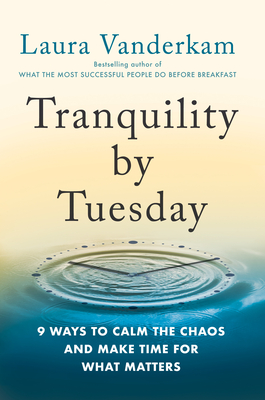
-
Podcast: Best of Both Worlds
Love your career? Love your family? Best of Both Worlds is the show for you! Hosts Laura Vanderkam, author of I Know How She Does It and a mom of five, and Sarah Hart-Unger, a practicing physician, blogger, and mom of three, discuss work/life balance, career development, parenting, time management, productivity, and making time for fun. Tune in each week for strategies to help you thrive in all spheres of life.

Resources
-
- Laura Vanderkam: 168 Hours Timesheet
- Frontiers in Psychology: Bedtime procrastination: introducing a new area of procrastination
- University of Pennsylvania:
- Franklin Covey: Act on the Important, Don’t React to the Urgent
- CBS News: You have more free time than you think
- Frontiers in Psychology: Habit and Identity: Behavioral, Cognitive, Affective, and Motivational Facets of an Integrated Self
- PsyCh Journal: Scarcity makes people short‐sighted? Evidence from intertemporal decision‐making
- The New York Times: How to Beat the Afternoon Slump
- Calm: How to beat the afternoon slump in 8 ways (without coffee)
- The New York Times: Stop Hitting Snooze! Here Are 8 Expert Tips for Waking Up on Time.
- Inc: Why Friday Afternoon Is the Best Time to Plan Your Week
2 Million Readers.
1 Life-Changing Newsletter
Simple and Straight-to-the-Point...
Just Like Mel.